EDFA Technology
FREE SPACE OPTICAL COMMUNICATIONS
High-power, software-definable EDFAs for satellite ground links.
Our EDF-UL platform is the most extensively compatible EDFA available, with both hardware and software configurable to your specs.
Software-definable parameters keep it interoperable with any satellite terminal and compliant with the evolving standards behind them.
The video above demonstrates switching of the high-power laser amplitude modulation to configure to CCSDS or SDA standards - at high-power and across the C and L-Band.
Spec
Value
OPTICAL SPECIFICATIONS
Architecture
Erbium-doped fibre amplifier (EDFA / HPOA), MOPA configuration
Models
EDF-UL-10-C (C-band) or EDF-UL-10-L (L-band)
Internal seed wavelength
1532–1537 nm / 1550–1570 nm (C) · 1588–1592 nm (L)
Wavelength tunability
±2 nm standard; broader on request
Average output power
10 W; higher powers on request
Output linewidth
<+/- 25GHz
Tracking Mode / BEACON Frequency
CW to 10MHz
Tracking Mode Waveform
Sinusoidal or Rectangular Built-in Functions
Tracking Mode Modulation Depth
0-100%
Uplink data rate (OOK)
Up to 10 Mbps with integrated seed; external transmitter limited by modem
Minimum seed power from external transmitter
2mW
Power Control
0-100%
Power Stability
<2%
FIBER DELIVERY
Cable length
Up to 50m
Output termination
FC/PC Divergent Beam to Couple to Collimator or Collimated
Output isolation
Yes
ELECTRICAL, MECHANICAL & INTERFACES
Supply voltage
110-250 VAC
Power consumption
<250 Watts
Control interfaces
USB, RS232, Parallel I/O
Cooling
Air
Dimensions
3U Height 19” Rack Mounted
482.5 x 500 x 133 mm
Weight
<20kg
Satellite Standards Supported
Software-defined across wavelength, modulation and beacon — so one module talks to any of them, and stays compatible as standards evolve.
Interfaces & Form Factor
Standard photonics and industrial interfaces — designed to drop into your rack.
Certifications
Quality management, regional conformity and laser-safety classification — the standards expected of an aerospace supplier.
Three, software-selectable: Acquisition (100% AM tracking tone at your chosen frequency), Data transmission (up to 10 Mbps OOK integrated, or pure power amplification of an external high-rate OOK signal), and Tracking (simultaneous data + AM tracking tone throughout the link). Switching between modes — and combining tracking tone with data envelope — is TTL-driven.
Yes. Wavelength, modulation, beacon, output power, single/dual band, beacon-only or bi-directional. Just let us know your spec.
Yes — as far as we know we're the only supplier that does. Amplitude modulation carries the tracking beacon low and the data above it, shaped to the satellite's standard.
Yes. The integrated seed delivers up to 10 Mbps OOK. For higher rates, the EDF-UL has an external optical input port: bring your own high-speed telecoms transmitter and the EDF-UL acts purely as the power amplifier (drive electronics handle external OOK signals up to 20 Mbps).
Stimulated Brillouin Scattering is the main barrier to delivering high power down long fibre runs from the rack to the telescope. Managing it is one of the things we're known for — full output reaches the telescope with the beam quality the link needs.
Yes. The module supports 2- and 4-emitter arrays with synchronisation, and feeds into multi-station diversity networks.
MTBF figures and qualification data - get in touch with our team.
That depends on configuration and integration requirements. Typical engagements start with a scoping conversation - booking a call with our team is the fastest route.
Quoted per configuration. Let us know your spec and we will be in touch.
Globally. Our technology is built in Southampton (UK) and supplied to integrators and programmes worldwide.


Every module is configured for the ground station.
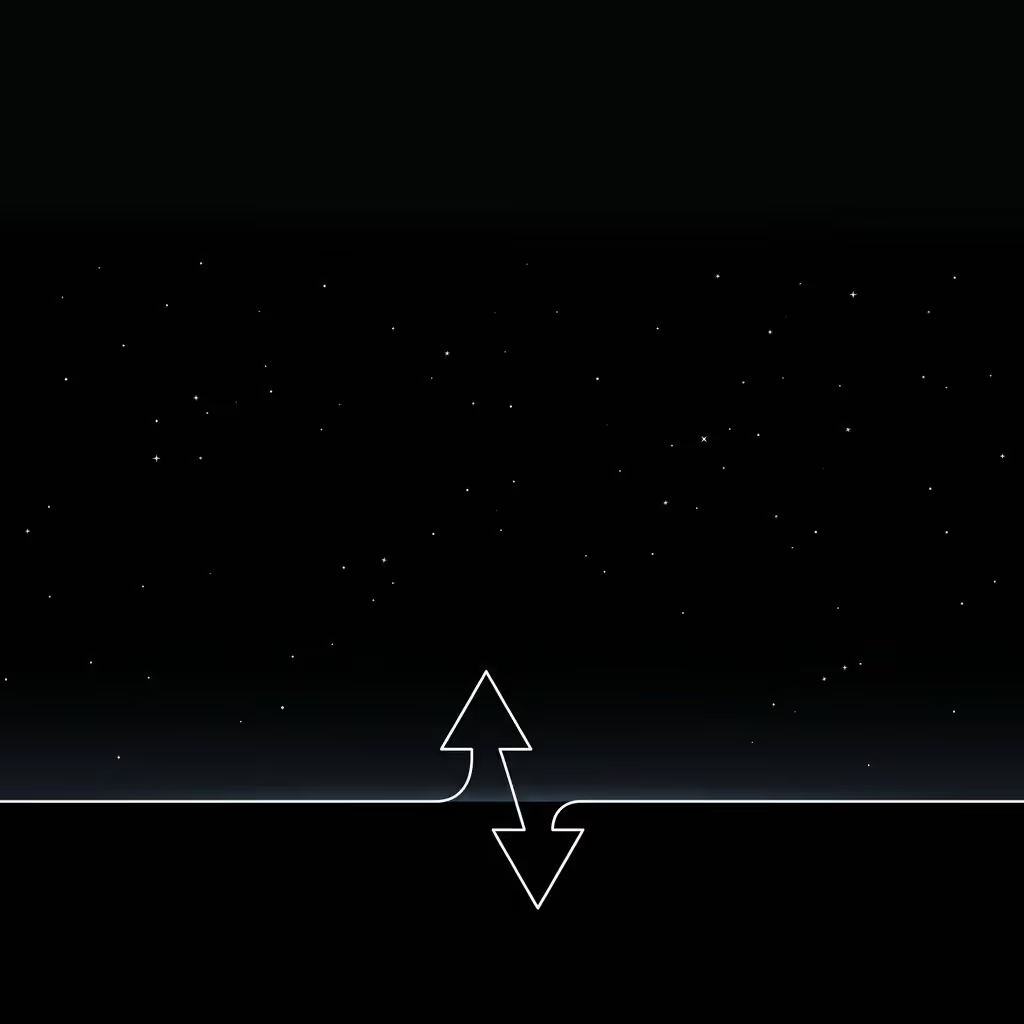
Direction
Beacon-only (downlink stations) or bi-directional (beacon + uplink).
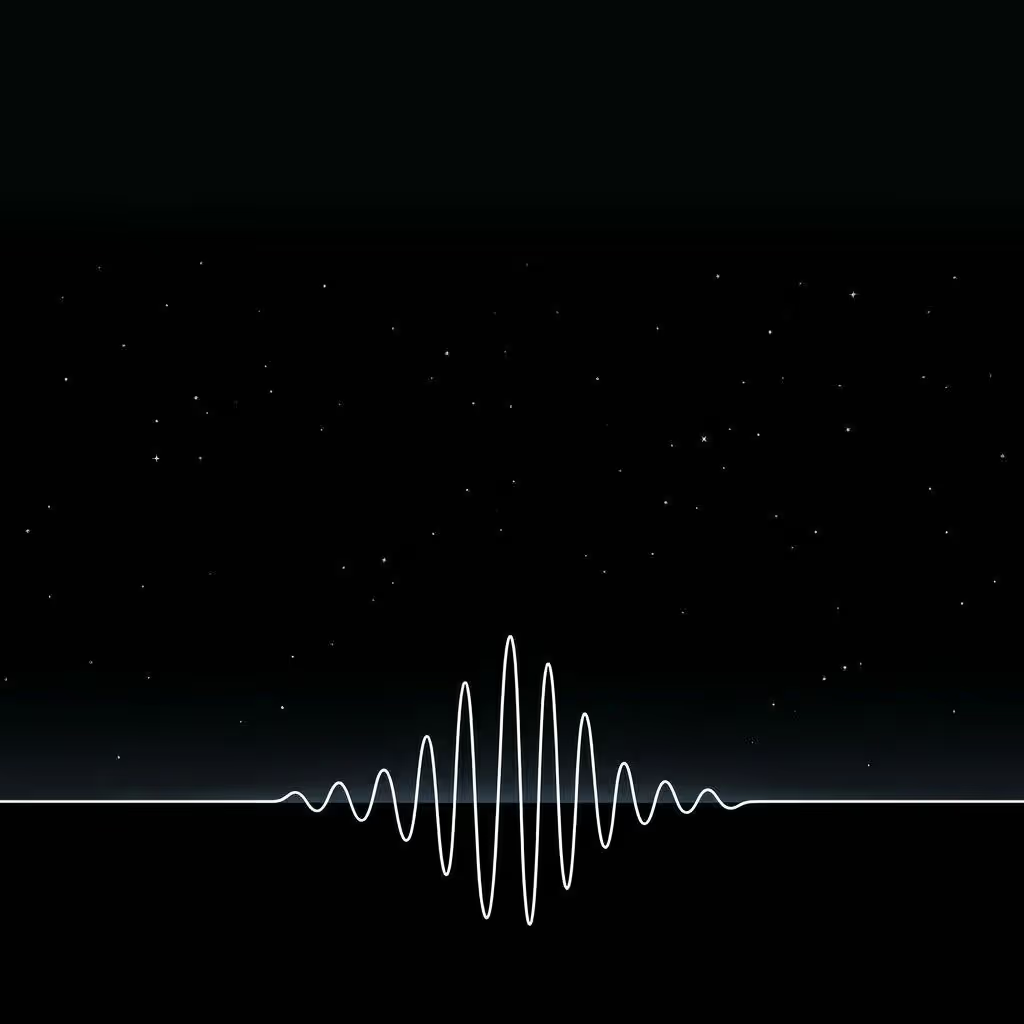
Beacon Design
CW to 10 MHz, sinusoidal or rectangular. Optionally nested with data.
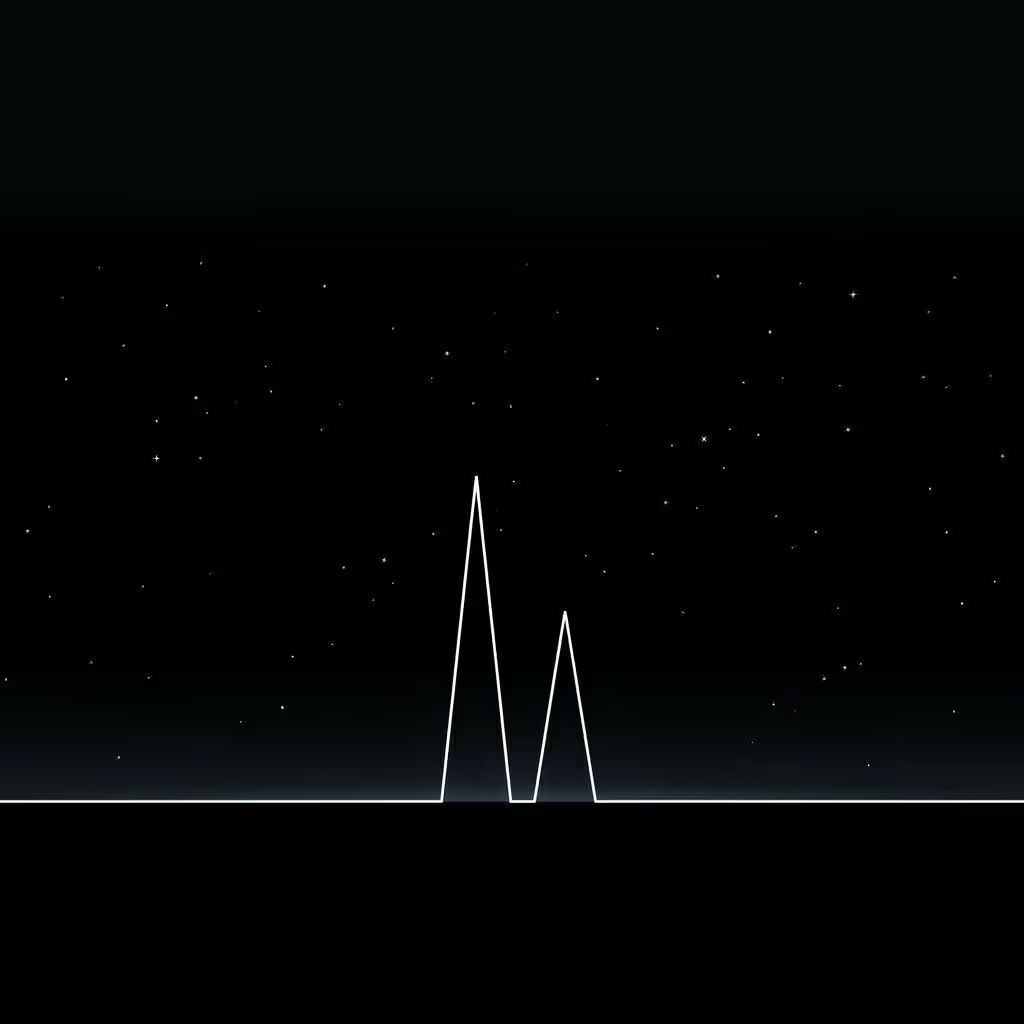
Wavelength / Band
C-band, L-band, or dual-band variant. ±2 nm tunable around selected seed.

Output Power
10 W average standard. Higher powers on request.
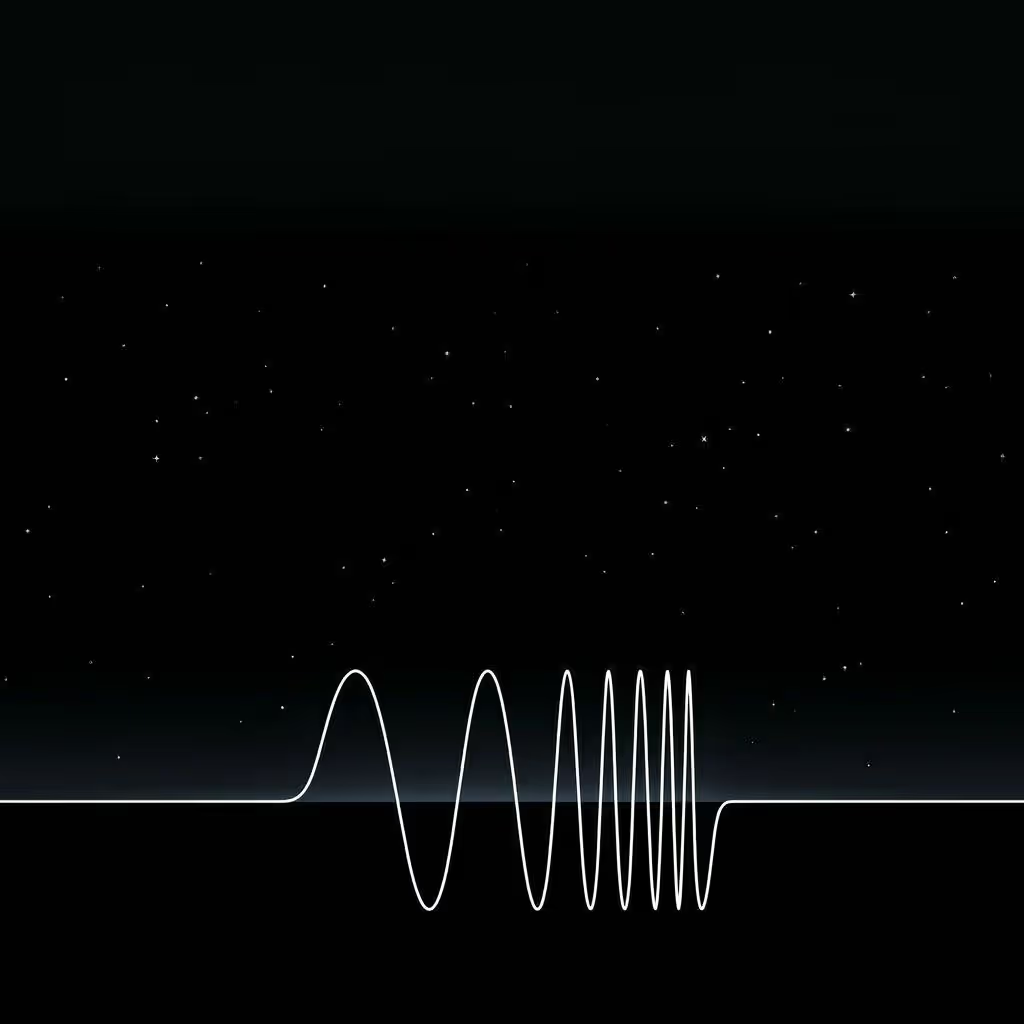
Uplink Data Rate
Up to 10 Mbps (OOK) with the integrated seed.
Diversity Integration
2 / 4 emitter arrays; multi-station synchronisation.

Custom
Broader ranges and further customisations as requested. Just send us your spec.
Woodrow Scientific Limited
The Team Behind It All
Over two centuries of combined experience supporting global space communications.

John Clowes
Founder and Managing Director. PhD from Southampton's ORC, birthplace of the EDFA; 25+ years in fibre lasers.

Matei Rusu
Chief Operations Officer. Two decades scaling fibre laser manufacturing and operations, from R&D through global production; PhD in fibre lasers.

Woodrow Scientific Limited
And many more — this is just a snapshot of our growing team of experts
Ad Astra
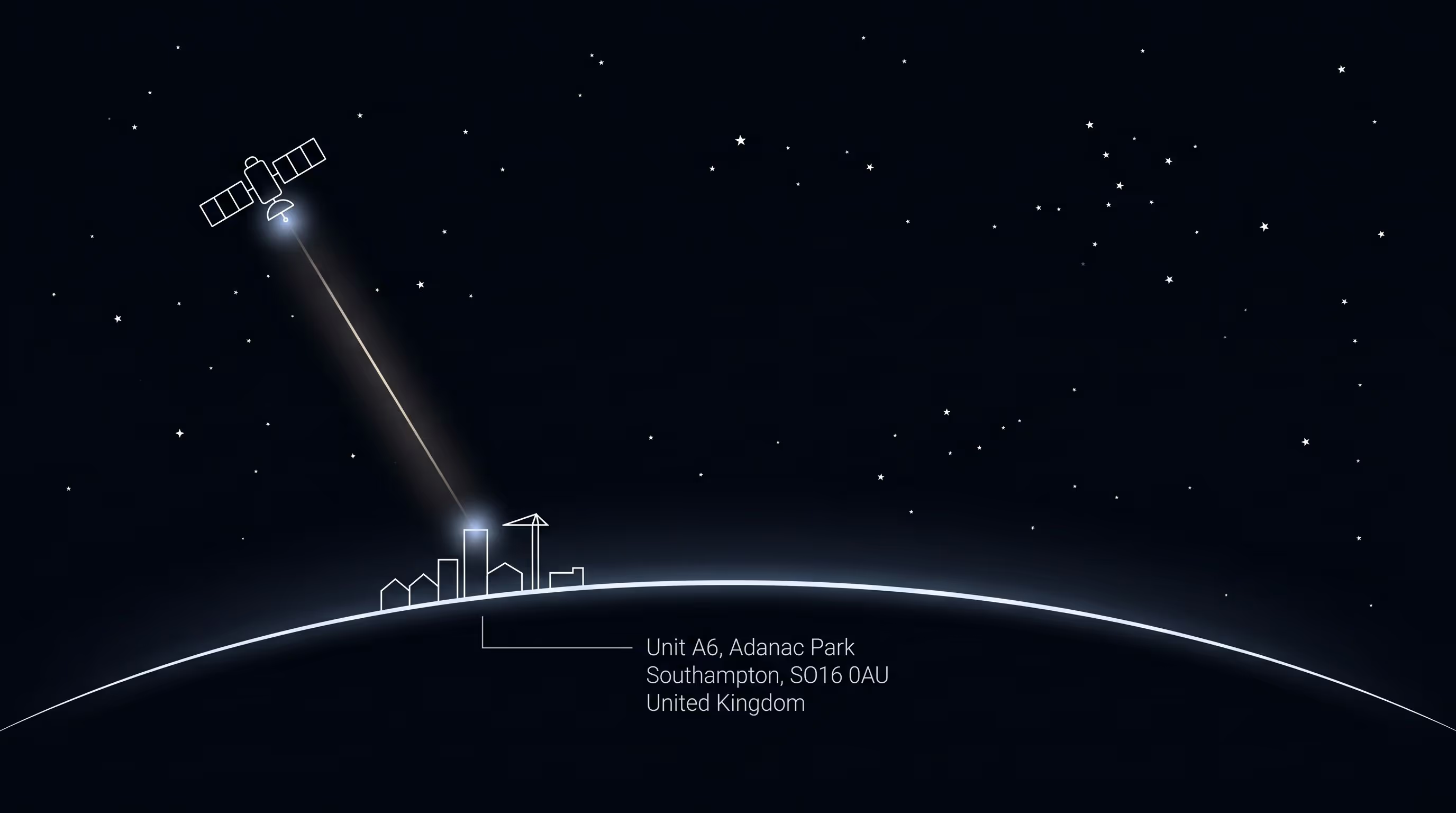
We develop our EDFAs in the home where they were invented: Southampton.
This technology now powers communication across oceans, up to satellites, and into deep space.
Every day, we go further.
Join us.

Let's discuss your project.
Tell us about your requirements — a relevant specialist will come back with all the answers within 1 working day.

John Clowes
CEO, WSL
Woodrow Scientific Limited
Technology That's Designed, Built & Supported by Experts
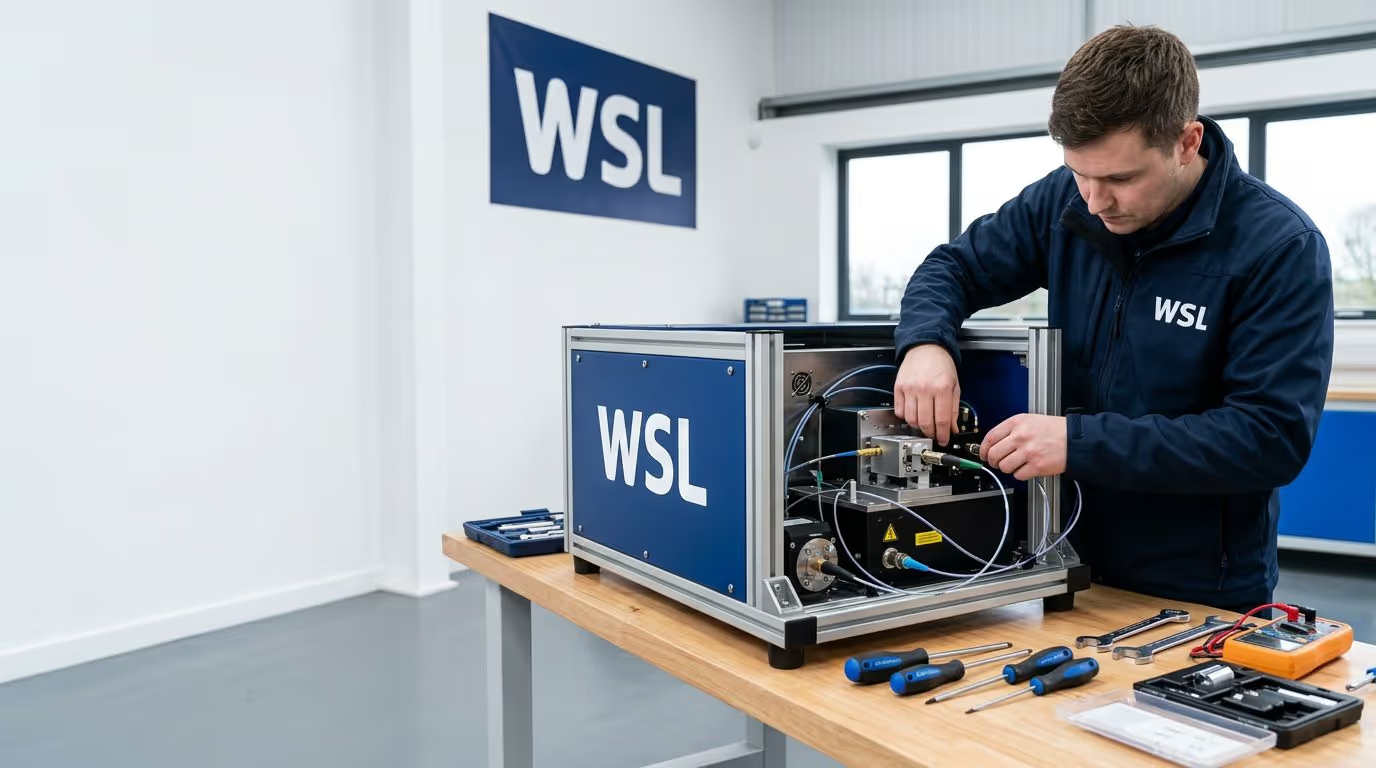
Manufacturer, not reseller
So you get support from the same engineers who built your machine.

British-engineering
Designed and built in the UK — precision hardware, made to last.
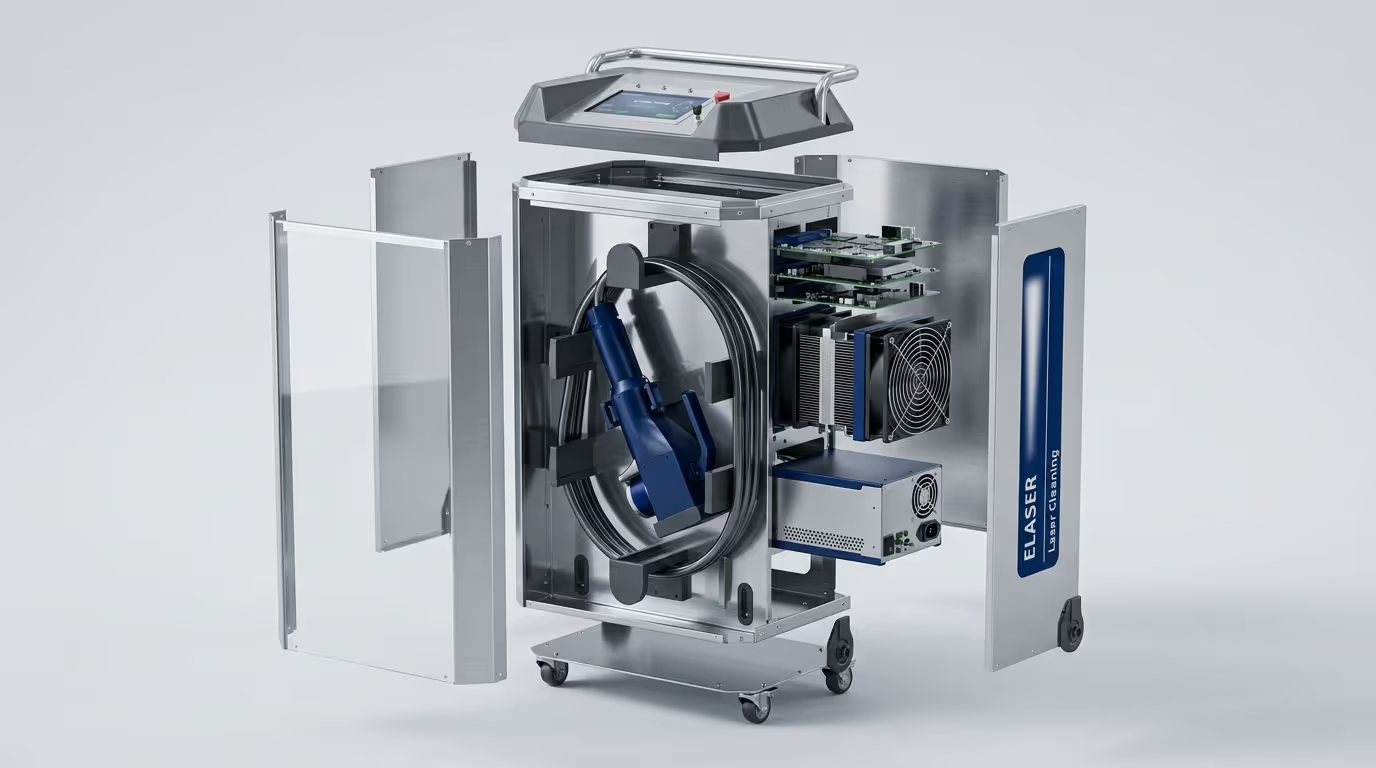
Global technology leader
10 patents and counting, including our world-first "eye-safe" laser cleaning technology.