

Introduction
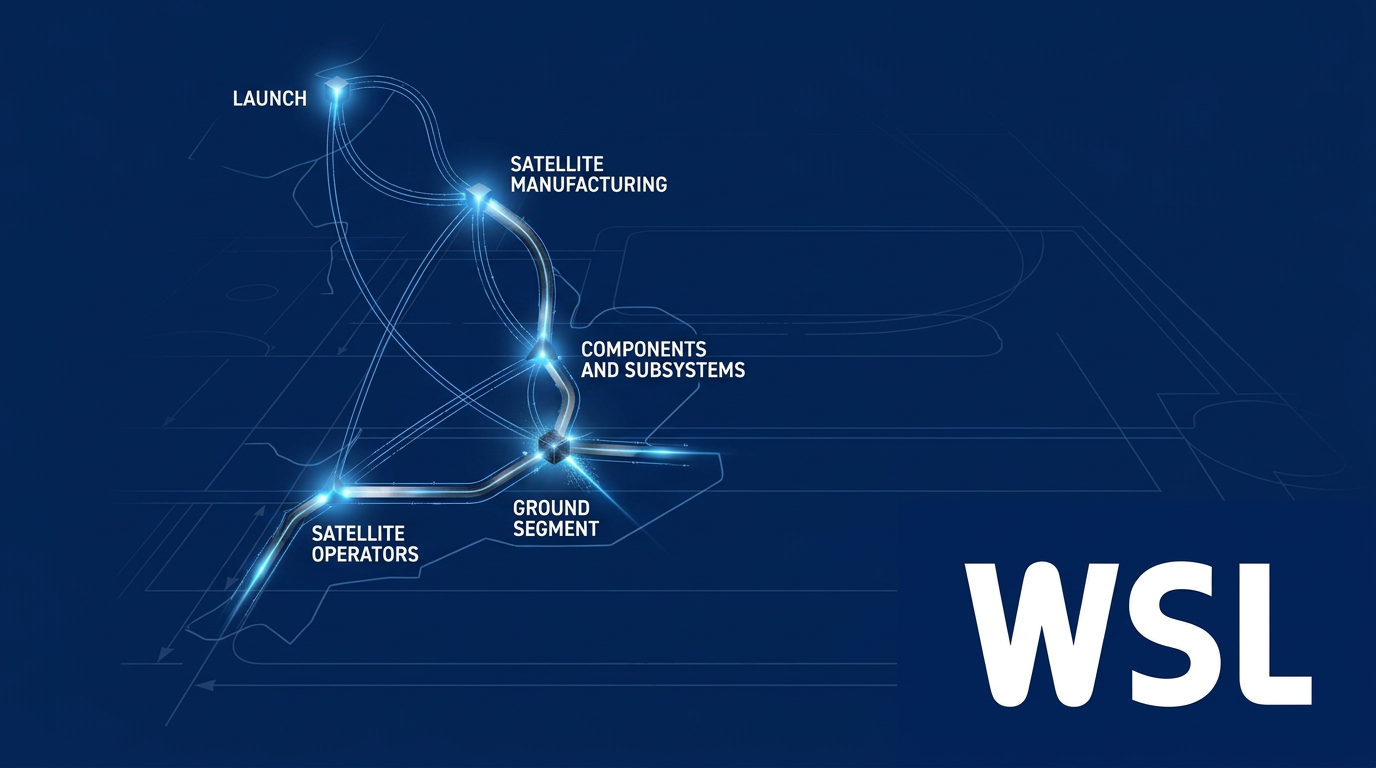
This page is organised as a value chain: five segments that connect sequentially from access to orbit through to services delivered from it — launch, satellite manufacturing, components and subsystems, ground segment, and satellite operators.
Each segment has one representative, chosen for in-house technical capability, programme credibility, and genuine UK rootedness — not for size or name recognition.
Every entry is evaluated on the same four axes: what the company does, what it has built or delivered, where it sits in the supply chain, and why it matters to the UK sector.
This is a map, not a directory or a ranking — use it to understand who does what, and where each player sits in the broader picture.
TL;DR
Revenue rankings tell you who is biggest; they tell you almost nothing about where the UK space sector's real technical depth sits. Mapped segment by segment — from launch through to Earth observation data — the sector looks quite different from the headline names, and the companies that hold it together are not always the ones you would expect.
This article covers:

The UK space sector's five-segment value chain
How each featured company was selected and why
UK launch sector and sovereign orbital capability
UK satellite manufacturing and mission heritage
UK deployable antenna and ground segment technology
UK Earth observation: thermal imaging from orbit
Biggest UK Space Companies: Understanding the Sector's Shape
Ranking UK space companies by revenue gives a misleading picture of where the sector's real technical depth lies — and understanding why is the most useful thing a supplier, investor, or industry observer can do before evaluating individual players.
The UK space sector generated £18.6 billion in total income in 2022/23, directly employing an estimated 55,550 full-time equivalents across 1,907 organisations, according to the government's Size and Health of the UK Space Industry 2024 report.
Those headline figures signal a sector with genuine economic weight — satellite services alone support 18% of total UK GDP, according to the same publication — but they obscure more than they reveal about where UK engineering capability actually resides.
Space Applications — dominated by DTH broadcasting — accounts for 73% of total UK space sector income. Space Manufacturing accounts for just 13%. The largest companies by revenue are often broadcasters, not engineers; a size ranking tells a procurement professional or investor almost nothing about where UK design-and-build capability sits.
The sector breaks into five segments that connect as a value chain running upstream to downstream: launch provides access to orbit; satellite manufacturing produces the spacecraft; components and subsystems supply the building blocks those spacecraft are made from; the ground segment provides the infrastructure that communicates with satellites once in orbit; and satellite operators deliver the services — communications, Earth observation, navigation — that the chain ultimately exists to provide.
Stripping out DTH broadcasting, Space Manufacturing rises to 25% of sector income and Space Operations to 20%, according to the Size and Health report — a distribution that more accurately reflects the balance of upstream engineering activity.
The UK's historic orientation has been predominantly downstream and services-led, with income heavily concentrated in satellite applications and broadcasting rather than in the manufacturing and launch segments.
That is changing in the current decade, with genuine upstream capability emerging in launch vehicles, satellite manufacturing, and advanced ground infrastructure — the segments this page maps directly.
The UK Space Strategy has identified four priority subsectors for accelerated development: Satellite Communications, Space Domain Awareness, In-Orbit Servicing Assembly and Manufacturing, and Access to Space — each selected for growth potential, national security relevance, and the opportunity to build internationally competitive capability.
Selecting one company to represent each segment requires more than a revenue screen.
- In-house design and manufacture: Companies that design and build, not those that resell or integrate third-party hardware under their own name.
- Programme credibility: Hardware delivered to real missions — not prototypes that have not yet left the ground.
- Supply-chain position: Primes, tier-1 suppliers, or specialist component makers with a defined and non-trivial role in the chain.
- UK rootedness: Genuine UK engineering operations — not a registered address fronting work done elsewhere.
These four axes, applied together, distinguish companies that substantively advance UK capability from those that merely participate in the sector commercially.
One technical transition deserves brief mention before the entries begin: in the ground segment, the shift from radio-frequency to optical communications is the defining development of this decade, with free-space optical links offering data throughput that congested RF spectrum cannot match.
The list opens with the ground segment — the connective tissue between satellites in orbit and the services they enable on Earth — where that optical transition is already producing hardware for live programmes.
Option 1
Woodrow Scientific Limited
Southampton-based laser technology manufacturer specialising in high-power EDFAs for satellite optical ground links, with its EDF-UL platform supplied to ground station integrators and programmes worldwide.
Pros:

Beacon and data nested in one amplified beam
Hardware and software both configurable to specification
In-house design, build, qualification and support
CE and UKCA certified, made in Britain
Cons:

Specialist product; quoted per configuration
Class 4 laser — site safety procedures required
Company Background and Engineering Heritage
Woodrow Scientific Limited (WSL) is a Southampton-based laser technology manufacturer, founded in 2012, specialising in erbium-doped fibre amplifiers built for free space optical communications.
Its fibre-amplifier expertise is rooted in Southampton's Optoelectronics Research Centre — the birthplace of the EDFA — and its founding team traces directly to the people who pioneered that technology.
WSL holds 10+ patents and employs a team of 20+ laser specialists, all working in-house: design, build, qualification, and post-supply support are carried out under one roof, with no reliance on third-party manufacturing or resale.
That in-house model is a genuine differentiator in a market where many EDFA suppliers are resellers or importers who can neither configure the hardware to a programme's requirements nor provide substantive engineering support after delivery.
WSL technology is in use in space programmes today, supplied to optical ground station integrators and large programmes worldwide.
The EDF-UL Platform: Capabilities and Specifications
The EDF-UL's defining capability is its single-beam operation: the tracking beacon and uplink data are nested in one amplified beam, with amplitude modulation carrying the beacon at a low level and the data above it.
Three operating modes — acquisition, data-transmission, and tracking — are handled by the same unit, removing the need for separate beacon and uplink hardware.
Configurability runs across both layers of the platform, which is what separates WSL from catalogue suppliers.
- Hardware layer: Band selection (C-band, L-band, or dual-band from a single source), 10 W average output power (higher on request), 2- and 4-emitter array support with multi-station synchronisation, external optical input for third-party transmitters (OOK up to 20 Mbps), and air or water cooling options.
- Software layer: WSL's Modulation-on-Demand: software-selectable waveforms (square or sinusoidal), adjustable frequency and modulation index, beacon and data modulation combined via TTL, switchable to CCSDS or SDA standards at high power across C/L-band.
Because WSL designs and manufactures the amplifier itself, tailoring across both layers is seamless — a configuration requirement is an engineering conversation, not a catalogue constraint.
| Specification | EDF-UL |
|---|---|
| Output power | 10 W average at 1550 nm (higher on request) |
| Beam quality | M² < 1.1 |
| Band options | C-band / L-band / dual-band |
| Form factor | 3U 19" rack — 482.5 × 500 × 133 mm |
| Weight | < 20 kg |
| External optical input | OOK up to 20 Mbps |
| Emitter arrays | 2- and 4-emitter, diversity-network compatible |
| Certifications | CE, UKCA |
| Origin | Made in Britain |
Key published specifications for the WSL EDF-UL platform.
The EDF-UL's Modulation-on-Demand software layer means the amplifier stays compatible as optical link standards evolve — operators are not locked to a fixed waveform or protocol at the point of purchase.
Supply Chain Position and UK Sector Significance
WSL sits as a tier-1 component supplier to optical ground station integrators: its EDFA is the uplink amplifier at the heart of the ground station, enabling the high-power laser link from the ground terminal to the satellite.
It is not an operator or a systems integrator — its role is the specialist component that makes the ground station's optical uplink function.
As satellite operators shift from RF to optical communications to overcome spectrum congestion and throughput limits, the optical ground station becomes critical infrastructure. WSL is a UK manufacturer building the enabling hardware for that transition on patented, in-house technology — contributing to UK technical sovereignty in a segment that will underpin next-generation satellite constellations.
For the UK space sector, having a domestic manufacturer at this point in the optical ground station supply chain — one that designs, builds, and supports on home soil — is a meaningful capability, not a marginal one.
EDF-UL Pricing
Pricing is quoted per configuration, reflecting the platform's depth of hardware and software tailoring.
Ground station integrators and programme teams can contact WSL directly with their specification to receive a configuration-specific quote.
WSL Builds the EDFAs Powering Free Space Optical Links
Woodrow Scientific's EDF-UL platform is engineered specifically for free space optical communications. Explore the FSOC product page to see how the technology works and what it is built for.

Option 2
Skyrora
Scotland-based launch vehicle manufacturer developing the orbital Skyrora XL and suborbital Skylark L, and the first UK-based manufacturer to receive a CAA launch licence for a commercial vehicle.
Pros:
First UK manufacturer with a CAA launch licence
Real suborbital flight heritage from Scotland and Iceland
Vertically integrated manufacturing and testing in Scotland
ESA CSTS funding secured for XL development
Cons:
Skyrora XL inaugural orbital launch not yet conducted
Transition from development to operations still underway
Company Background
Skyrora was founded in Edinburgh in 2017 by Volodymyr Levykin, with a mission to deliver sovereign, sustainable orbital launch capability from Scottish soil. The company has grown to a team of over 150 people across the UK and Ukraine.
Skyrora Vehicles and Engines
Skyrora's orbital vehicle, Skyrora XL, is a three-stage launch vehicle designed to place payloads into sun-synchronous and polar orbits. Its propulsion architecture spans three distinct engines, each developed and tested in-house in Scotland.
| Engine | Role | Thrust | Notable capability |
|---|---|---|---|
| Skyforce-2 | First and second stage of Skyrora XL | 70 kN | Described by Skyrora as the most powerful commercially-produced liquid engine in the UK |
| LEO engine | Third stage of Skyrora XL | 3.5 kN | Multiple-reignition capability; enables space tug functionality |
| Bipropellant engine | Skylark L suborbital vehicle | – see text | 3D-printed components; pressure-fed system |
Skyrora's three-engine propulsion suite, covering both orbital and suborbital vehicles. The Skyforce-2 characterisation is Skyrora's own published claim. – see text: the Skylark L engine thrust figure is attributed in the text below.
The LEO engine's reignition capability is what enables the third stage of Skyrora XL to function as a space tug — repositioning payloads, clearing debris, or delivering multiple satellites to different orbital inclinations from a single launch.
Skylark L is Skyrora's 11-metre suborbital vehicle, built with 3D-printed components and capable of carrying 50 kg of payload beyond the Kármán line. Its engine produces 31 kN of thrust at sea level and 35 kN in vacuum.
Flight Record
Between 2018 and 2020, Skyrora conducted four successful suborbital launches from Scotland and Iceland, using its Skylark Nano and Skylark Micro vehicles. These launches validated avionics, communications, and launch operations in real-world conditions.
In October 2022, Skyrora attempted the first launch of Skylark L from Langanes, Iceland. The vehicle left the pad before a software anomaly cut the flight short, with the vehicle landing safely in the Norwegian Sea. Skyrora's own account notes that all mechanical systems were nominal and that the test yielded real-world data used to inform subsequent development.
In July 2025, the UK Civil Aviation Authority granted Skyrora a Spaceflight Operator Licence for Skylark L — the first vertical launch licence issued by the CAA to a UK-based rocket company. The licence authorises launches from SaxaVord Spaceport, Unst, Shetland, with a maximum cadence of 16 launches per 12-month period.
The CAA licence is a regulatory milestone in UK space sovereignty, not a statement of operational status. A set of pre-launch conditions — including insurance, a data-sharing agreement with the National Space Operations Centre, and spaceport arrangements — must be satisfied before each launch window.
Supply Chain Position
Skyrora operates as a vertically integrated launch provider, handling design, manufacture, testing, and launch operations end-to-end from UK facilities. This model is central to its sovereign launch proposition: the UK does not need to depend on foreign infrastructure at any stage of the development cycle.
- Cumbernauld Vehicle Assembly Building: Described by Skyrora as the largest rocket engine manufacturing facility of its kind in the UK. The 55,000 sq ft facility can accommodate assembly, integration, and launch preparation for up to 16 Skyrora XL vehicles per year.
- Midlothian engine test facility: The largest rocket engine test site of its kind in the UK, spanning over 120,000 sq ft. Used for acceptance and qualification testing of the 70 kN Skyforce-2 engine and other propulsion systems.
- ESA CSTS programme: Skyrora received €3 million under the European Space Agency's Commercial Space Transportation Services and Support (CSTS) programme to support Skyrora XL development.
- Viasat InRange demonstration: In Q1 2024, Skyrora completed a successful static ground demonstration test with Viasat's InRange space-based telemetry relay system — a concrete operational readiness milestone fulfilled as part of the ESA CSTS contract.
Having both its manufacturing and test facilities in Scotland also reduces operational carbon footprint by eliminating the need to transport engines and equipment to third-party sites abroad.
Why Skyrora Matters to the UK Sector
Skyrora's CAA licence makes it the first UK-based manufacturer to hold a commercial launch licence — a concrete regulatory step that no other UK rocket company has yet reached.
Skyrora has stated an ambition to conduct 16 launches per year from SaxaVord Spaceport in Shetland by 2030. Skylark L is, in Skyrora's own words, now technically ready for launch — a position confirmed at SpaceComm Glasgow 2025, where the vehicle was presented publicly in the UK for the first time.
Skyrora XL has not yet conducted its inaugural orbital launch. The company is in active transition from development to implementation: engine qualification campaigns continued through 2025, including multiple firings of the 70 kN Skyforce-2, and the programme is advancing toward a first orbital flight. The licence, the facilities, and the test record together represent genuine and verifiable progress on the path to UK sovereign orbital access.
"To play a significant role in the emerging global space economy, the UK has to develop sovereign launch capabilities. Being able to offer end-to-end domestic capabilities from development, manufacturing, testing, and launch provides the UK with a crucial advantage."
Option 3
Surrey Satellite Technology Ltd (SSTL)
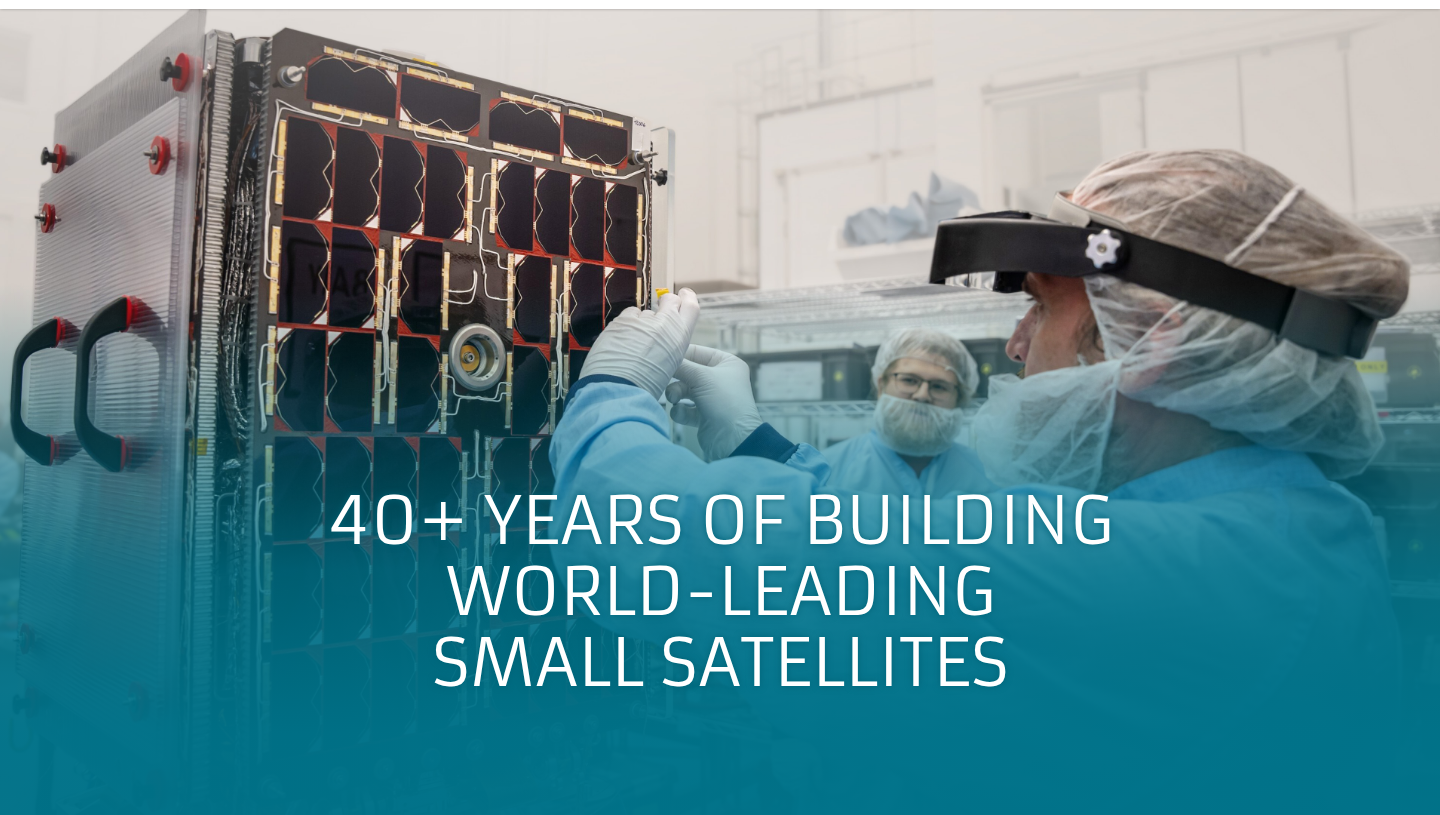
Guildford-based satellite manufacturer, wholly owned by Airbus Defence and Space, with 76 satellite missions since 1981. Prime contractor for complete small satellite programmes across Earth observation, science, communications and navigation.
Pros:
76 satellite missions — deepest UK flight heritage
Missions span EO, science, comms and navigation
Prime contractor and tier-1 supplier roles
Credentialled on UK defence sovereignty programmes
Cons:
Wholly owned subsidiary of a large prime contractor
Company Background
Surrey Satellite Technology Ltd (SSTL), headquartered at the Surrey Research Park in Guildford, has been designing and manufacturing small satellites since the University of Surrey's first experimental spacecraft, UoSAT-1, launched in 1981.
The company was formally incorporated in 1985 as a spin-out to commercialise that research, and is today a wholly owned subsidiary of Airbus Defence and Space.
Across more than four decades, SSTL has delivered 76 satellite missions — a flight heritage record that stands as the deepest among UK small satellite manufacturers.
What SSTL Does
SSTL's capability spans the full mission lifecycle: design, manufacture, integration, environmental testing, launch campaign management, and in-orbit operations, all conducted from its Guildford facilities.
Its published portfolio covers missions from 3 kg to 3.5 tonnes, operating in LEO, MEO, and GEO, across application domains that include Earth observation, science, communications, and navigation.
Alongside hardware delivery, SSTL runs structured know-how transfer programmes — including a Full Know-How Transfer Programme and an Introductory CubeSat programme — through which customer engineers are embedded in the project team and trained across the end-to-end satellite build process.
SSTL describes 20 such programmes delivered to date, with customers including space agencies and governments across multiple continents.
Recent Missions
The table below draws on a selection of SSTL's recent missions to illustrate the range of domains, customers, and platforms the company works across.
| Mission | Year | Customer / Programme | Application | Key Detail |
|---|---|---|---|---|
| TYCHE | 2024 | UK Space Command / MINERVA | Defence ISR — optical EO | First satellite for the MINERVA programme; first EO asset owned by the UK Armed Forces. Built on the Carbonite+ platform, 159 kg, LEO. |
| HydroGNSS 1 & 2 | 2025 | ESA Scout | Earth science — GNSS Reflectometry | ESA's first Scout mission. Twin 75 kg satellites measuring soil moisture, freeze-thaw state, inundation and biomass using reflected GNSS signals. |
| HOTSAT-1 | 2023 | Satellite Vu | Commercial EO — thermal imaging | 3.5 m resolution mid-wave infrared imager with video capability. Built for Satellite Vu's thermal imaging constellation. |
| EUTELSAT QUANTUM | 2021 | Airbus / Eutelsat | GEO telecommunications | SSTL's first geostationary satellite platform. Supplied under contract to prime contractor Airbus Defence and Space for the world's first fully software-defined commercial telecom satellite. |
| CarbSAR IOD | 2026 | Multi-party (OSS, SSTL, Airbus D&S, UKDI-DASA, Dstl, NSSIF) | In-orbit demonstration — X-band SAR | Carbonite platform carrying Oxford Space Systems' Wrapped Rib SAR antenna. The first flight of that antenna design. |
| Galileo navigation payloads | 2005 onwards | OHB / ESA / European Commission | Navigation | SSTL built GIOVE-A, the first Galileo prototype satellite, and subsequently delivered 34 navigation payloads for the Galileo Full Operational Capability constellation. |
A curated selection of SSTL missions illustrating the range of domains, orbital regimes, customers and platforms across the company's recent portfolio.
TYCHE is particularly significant in the UK context: contracted under a £22 million agreement with Defence Equipment and Support on behalf of UK Space Command, it is the first satellite to be fully owned by the Ministry of Defence and the first procurement under the MINERVA programme, which underpins the broader £968 million ISTARI ISR constellation.
HydroGNSS, launched in November 2025, earned SSTL an ESA Excellence Award as prime contractor — recognised for delivering the two-satellite mission on a demanding schedule despite a late change in launch service.
HOTSAT-2, a clone of HOTSAT-1 built for Satellite Vu's growing thermal imaging constellation, is listed on SSTL's portfolio as launched in 2026.
Supply Chain Position
SSTL occupies a dual position in the space supply chain: prime contractor for complete small satellite missions, and tier-1 platform supplier to other primes.
The EUTELSAT QUANTUM programme illustrates the tier-1 role clearly — SSTL designed and manufactured the satellite platform while Airbus Defence and Space served as the programme's prime contractor and built the flexible payload.
For programmes such as TYCHE and HydroGNSS, SSTL held the prime contractor position itself, managing design, build, test, launch campaign, and in many cases ongoing operations. For the Galileo programme, it served as payload subcontractor to OHB as prime, delivering 34 navigation payloads over more than a decade.
With 76 missions since 1981, SSTL holds the deepest verified flight heritage among UK small satellite manufacturers. Its work on TYCHE and the MINERVA/ISTARI programme places it at the centre of UK defence space sovereignty — a stated strategic priority in the Defence Space Strategy. The 34 Galileo navigation payloads delivered for OHB and ESA demonstrate sustained, decade-scale institutional programme delivery at a level few UK space manufacturers have matched. And through its know-how transfer programmes, SSTL's contribution extends beyond hardware: customer engineers trained in Guildford have gone on to build sovereign satellite capabilities in their own countries.
For investors and suppliers mapping the UK space sector, SSTL sits at the manufacturing core of the value chain — between the launch providers and the satellite operators whose missions it builds and, in many cases, continues to operate.
Option 4
Oxford Space Systems (OSS)
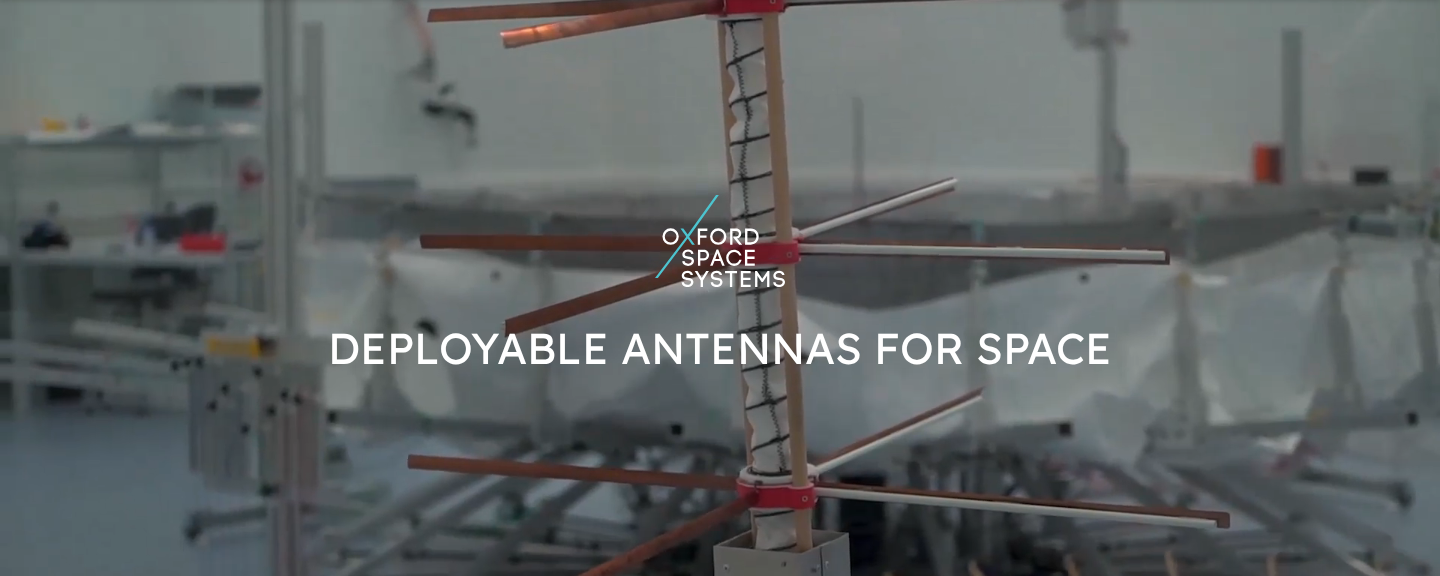
Harwell-based deployable antenna manufacturer whose Wrapped Rib antenna achieved in-orbit demonstration in January 2026, and is now selected as antenna supplier for the UK MoD's Oberon SAR satellite programme.
Pros:
Wrapped Rib antenna verified in orbit, January 2026
Antenna supplier for MoD Oberon defence programme
In-house design, manufacture, and mesh knitting capability
Export contracts secured with international customers
Cons:
Limited flight heritage; first large reflector just flown
VC-backed; growth depends on continued programme wins
Deployable Antennas and the Wrapped Rib Technology
Oxford Space Systems (OSS) was founded in 2013 at Harwell Campus in Oxfordshire, with a proposition that cut against the prevailing logic of the satellite industry: that large antenna apertures require large, expensive spacecraft.
The company designs and manufactures deployable antennas, booms, and structures — components that stow compactly inside a launch fairing and then unfurl with precision once in orbit.
Its signature product, the Wrapped Rib antenna, is a parabolic reflector built from carbon-fibre composite and metal mesh. According to the GOV.UK case study on OSS's journey to Oberon, a satellite carrying the antenna deploys its dish with millimetre precision in orbit, increasing its surface area 16-fold within seconds of deployment.
That stow-and-deploy capability is what makes the antenna commercially significant. High-resolution synthetic aperture radar (SAR) imaging has historically demanded large, heavy satellite platforms — the antenna aperture needed to achieve useful ground resolution simply could not fit on a small spacecraft without a deployable structure.
OSS's approach, as the GOV.UK case study describes it, enables the same SAR capability on smaller platforms that cost a fraction of traditional systems, potentially allowing multiple satellites to work together for better coverage and more frequent revisit times.
The antenna is an entirely British design — developed, manufactured, and tested in-house at OSS's facilities at Harwell Campus, including in-house mesh knitting capabilities built specifically for the programme.
Programme Record: From IOD to Defence Contract
The CarbSAR In-Orbit Demonstration mission, covered in the SSTL entry above, is the centrepiece of OSS's verified flight heritage. OSS supplied the Wrapped Rib antenna; SSTL supplied the satellite and SAR electronics.
SpaceNews reported that the antenna deployed successfully in orbit following launch aboard a SpaceX Falcon 9 on 11 January 2026 — the first time OSS's large deployable reflector had flown in space.
The multi-stakeholder funding behind CarbSAR IOD is itself a signal of institutional confidence. The GOV.UK case study records that DASA Defence Innovation Loans funded the crucial step of getting the antenna hardware to orbit, with Dstl providing technical support throughout the development programme.
DASA's involvement began in 2019 with early-stage funding to develop the parabolic antenna concept, followed by further investment in 2022 and 2023 to secure the in-orbit demonstration jointly with SSTL.
OSS received its first DASA funding in 2018. By February 2025 it had been selected as antenna supplier for the MoD's Oberon programme — a trajectory from startup to sovereign defence capability supplier in roughly six years.
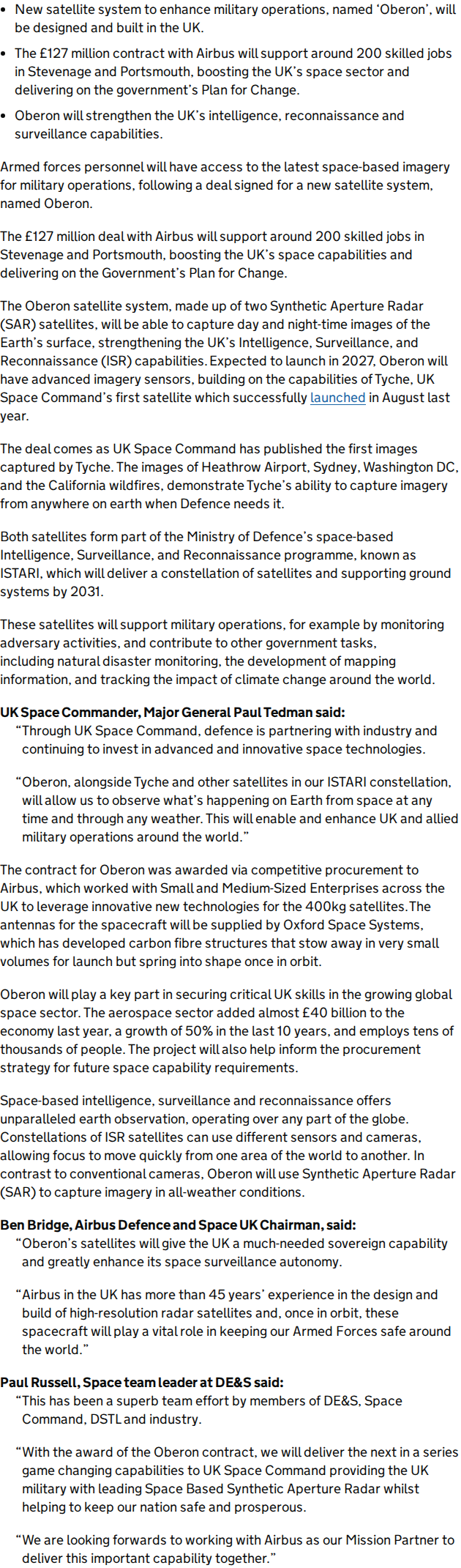
The Oberon selection is OSS's most consequential programme win to date. As reported by SpaceNews, the UK MoD awarded a £127 million contract to Airbus in February 2025 for two 400 kg SAR satellites, with OSS supplying the deployable antennas that make high-resolution imagery possible.
Oberon forms part of the broader ISTARI constellation programme, run by UK Space Command, with an estimated total programme cost of £986 million and a planned constellation completion date of 2031. The Oberon satellites are expected to launch in 2027.
The GOV.UK case study also notes that OSS has secured export contracts with Norwegian, Spanish, and US customers, and that the company has grown from around 50 specialists to over 100 engineers and technologists as its order book has expanded.
Supply Chain Position and UK Sector Significance
OSS occupies the components and subsystems tier of the satellite supply chain. It is not a satellite prime contractor and does not integrate complete spacecraft — it is the specialist manufacturer whose technology enables the prime's mission capability.
In the Oberon programme, that relationship is explicit: Airbus is the prime contractor responsible for the payload and spacecraft; OSS supplies the critical deployable antennas that make the SAR imaging system function.
A SpaceNews article from an earlier period noted that OSS's chief executive described the company as a component manufacturer, not a satellite prime, and that ITAR-free status — meaning no dependence on US-controlled materials — has been a consistent differentiator in commercial discussions with international customers.
For the UK space sector, OSS's significance runs across several dimensions. It holds the full technical capability stack in-house: design, analysis, manufacturing, and ground testing, including the composites and mesh knitting processes that are central to the Wrapped Rib's architecture.
- Sovereign technology: The Wrapped Rib antenna is an original British design, not a licensed or imported architecture, developed and manufactured entirely in the UK.
- Verified space heritage: The January 2026 CarbSAR IOD deployment gives OSS its first in-orbit performance data for a large deployable reflector — a threshold the industry requires before committing to operational programmes.
- Defence programme supply role: Selection for Oberon/ISTARI links OSS directly to UK space sovereignty in the defence ISR domain, supplying a capability that the GOV.UK case study describes as otherwise unavailable to UK defence.
- Government-backed development pathway: DASA funding from 2018 onwards, with Dstl technical support, matured the technology from concept to flight — a model for how UK government investment in the components tier translates into programme wins.
As a relatively young company with its first large reflector only recently flown, OSS's flight heritage portfolio is still building. That is the honest trade-off at this stage of the company's development — and it is the context in which the Oberon programme win, and the export contracts alongside it, carry particular weight.
Laser Technology Built for the Space Supply Chain
Woodrow Scientific builds laser communications and cleaning technology for demanding technical environments. Explore WSL's capabilities or get in touch with the team directly.

Option 5
Satellite Vu (SatVu)
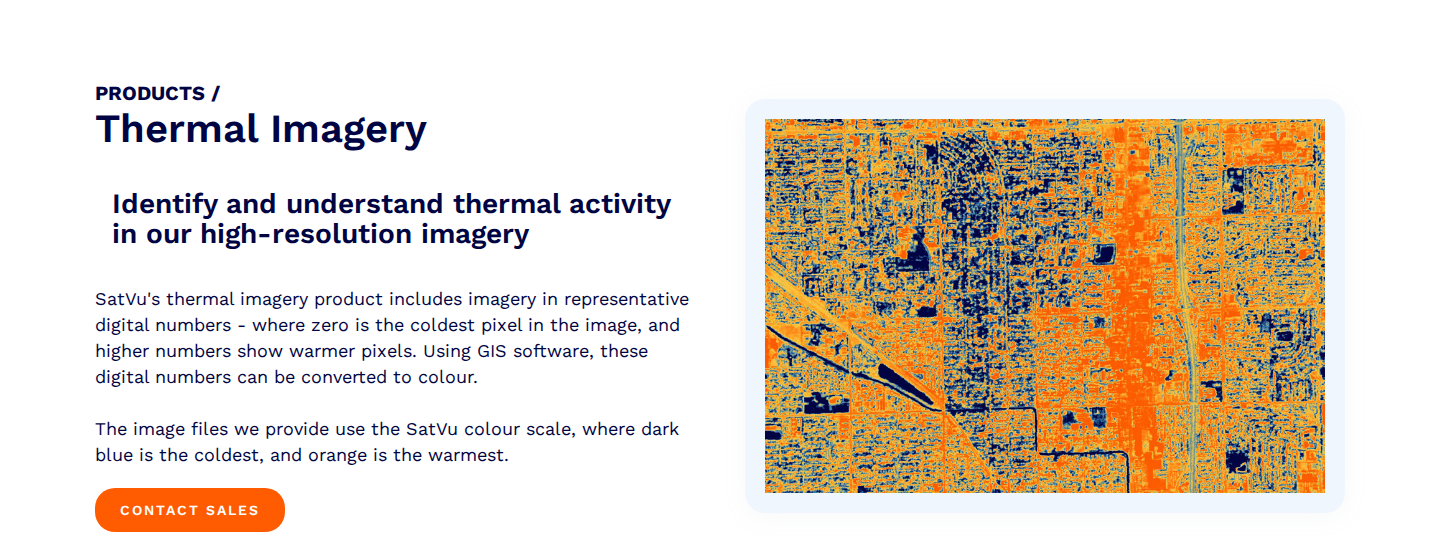
London-based Earth observation operator running two commercial mid-wave infrared satellites, HotSat-1 (2023) and HotSat-2 (2026), delivering high-resolution thermal imagery day and night across national security, economic monitoring, and climate resilience applications.
Pros:
Two satellites in active commercial operations
First Category 1 ESA CCM for UK company
Day-and-night imaging via MWIR sensor
Data accessible via platform, API and Python SDK
Cons:
Constellation still building toward target scale
Thermal-only modality; not a general-purpose EO operator
Company Background
Satellite Vu (SatVu) is a London-based Earth observation company founded to bring commercially available, high-resolution thermal imagery from space to market.
The company's defining technical characteristic is its use of mid-wave infrared (MWIR) sensors, which distinguish its data from conventional optical EO and synthetic aperture radar: MWIR captures heat signatures rather than reflected light, enabling imaging at night, through smoke, and across scenes where optical imagery sees nothing useful.
In 2021, SatVu was awarded £1 million from the UK Space Agency's National Space Innovation Programme to develop the compact high-resolution infrared camera that would eventually fly on HotSat-1.
SatVu's Thermal Imaging Constellation
SatVu's first satellite, HotSat-1, launched on a SpaceX Falcon 9 in June 2023, built by Surrey Satellite Technology Ltd (SSTL). First Light imagery was shared publicly in October 2023.
HotSat-2, also built by SSTL, launched from Vandenberg Air Force Base on 30 March 2026. SatVu subsequently declared the start of commercial operations, with HotSat-2 delivering imagery across defence intelligence, economic intelligence, and climate resilience applications.
The constellation roadmap targets global coverage with 10 to 20 revisits per day. HotSat-3 is currently in final assembly, integration and testing at SSTL, while HotSat-4 and HotSat-5 — along with long-lead elements of HotSat-6 — are under contract.
In June 2025, SatVu was awarded a contract worth up to €3 million by the European Space Agency to supply thermal data to the Copernicus Contributing Mission programme. Spanning three years, it is the first Category 1 CCM contract awarded to a UK company, announced at the Living Planet Symposium in Vienna. The contract covers urban heat monitoring, infrastructure resilience, water resource management, emissions analysis, security applications, and rapid response to climate-related disasters.
SatVu Data Products
SatVu's thermal imagery is delivered through three access routes: a web-based platform for self-service ordering and catalogue access, a RESTful API, and a Python SDK — giving both technical and non-technical users flexible entry points to the data.
The primary image file format is Cloud Optimised GeoTIFF, with accompanying metadata in STAC-compliant JSON. A stacked image product combines multiple frames from a single observation pass, improving signal-to-noise ratio and image clarity.
The sensor specifications below show the core parameters of SatVu's MWIR thermal imagery product, with wavelength bands differing between day and night operating modes.
| Specification | Day Mode | Night Mode |
|---|---|---|
| Spectral band (MWIR) | 4,500 – 4,950 nm | 3,700 – 4,950 nm |
| Pixel resolution at nadir | Up to 3.5 m | Up to 3.5 m |
| Scene size | ~3.5 × 4.5 km (16 km²) | ~3.5 × 4.5 km (16 km²) |
| Image file format | Cloud Optimised GeoTIFF | Cloud Optimised GeoTIFF |
| Imaging modes | Day | Night |
SatVu HotSat MWIR sensor specifications. Wavelength bands differ between day and night operating modes; resolution and scene size are consistent across both.
SatVu targets three primary application verticals: economic monitoring (energy, commodities, and infrastructure activity), climate resilience (urban heat, water resources, and emissions), and national security (activity detection at critical infrastructure, day and night).
SatVu's Position in the UK Space Sector
SatVu sits at the downstream end of the EO value chain: it commissions satellites rather than building them and sells data products directly to end users.
The thermal modality fills a genuine gap in the EO data landscape. Optical satellites cannot image at night, and SAR does not detect heat signatures; MWIR data is complementary to both, making SatVu's product a distinct layer rather than a substitute for other EO types.
The ESA CCM contract is the single clearest institutional signal of SatVu's standing: as the first UK company to hold a Category 1 Contributing Mission designation, it is now embedded in the infrastructure that supplies data to Europe's Copernicus climate and security services.
Conclusion
What the UK Space Sector Map Reveals
Mapped segment by segment, the UK sector looks quite different from its headline revenue figures: the technical depth is upstream, in manufacturing, components, and infrastructure, not only in services.
The ground segment is where that upstream capability becomes usable — the infrastructure layer that turns what is built and launched into data that reaches someone.
For those building or specifying optical ground stations, WSL's EDF-UL platform is the natural next step.
Frequently Asked Questions: UK Space Companies
Common questions about the structure, key players, and institutions of the UK space sector, answered concisely.
By income, the UK space sector generated £18.6bn in 2022/23, according to the government's Size and Health of the UK Space Industry 2024 report. DTH broadcasting alone accounted for 48% of that total — dominated by Sky UK — making satellite applications the largest segment by revenue, well ahead of manufacturing and operations. Revenue ranking is a poor guide to technical depth or supply-chain importance in this sector. The companies that generate the most income are typically satellite operators and DTH broadcasters, not manufacturers or launch providers. The upstream segments — satellite manufacturing, components and subsystems, launch, and ground infrastructure — are smaller by revenue but represent where sovereign engineering capability actually resides. This page maps one verified representative per segment rather than ranking by size, because a company's position in the supply chain reflects its technical role far more usefully than its turnover.
The UK's satellite manufacturing segment spans a wide range of scales and specialisms, from small satellite specialists with deep LEO mission heritage to prime contractors building large GEO telecommunications and defence platforms. Surrey Satellite Technology Ltd (SSTL), headquartered in Guildford, has been designing and manufacturing satellites since 1981 and has launched more than 76 missions across Earth observation, science, communications, and navigation. Airbus Defence and Space UK, operating from Stevenage and Portsmouth, designs and manufactures GEO telecommunications satellites and military communications satellites including the Skynet series, and built ESA's Solar Orbiter and Sentinel 5P in Stevenage. Thales Alenia Space UK operates a Space Propulsion Integration and Manufacturing Centre in Belfast — the first electric propulsion manufacturing facility of its kind in the UK — alongside engineering centres in Harwell, producing xenon propulsion systems for GEO satellite platforms.
"Aerospace" covers both aviation and space; within the space segment specifically, the UK's upstream sector spans satellite manufacturing, launch vehicles, components and subsystems, ground infrastructure, and satellite operations. Several major companies are active across UK space manufacturing. Airbus Defence and Space UK (Stevenage and Portsmouth) builds GEO telecommunications and military communications satellites as well as Earth observation instruments. SSTL (Guildford) is a specialist small satellite manufacturer with over 76 missions since 1981. Thales Alenia Space UK (Belfast and Harwell) manufactures electric propulsion systems for GEO platforms. Moog operates from Reading, UK, where it designs and manufactures slip rings, rotary solutions, and space vehicle components for the aerospace, defence, and space markets, and performs final integration of its Small Launch Orbital Manoeuvring Vehicle. This page focuses on one verified representative per space segment rather than ranking across the broader aerospace sector.
The UK Space Agency (UKSA) is the government body responsible for civil space policy, funding, and international representation — the closest UK equivalent to NASA in institutional role. It does not operate launch vehicles or spacecraft directly; instead it funds programmes, coordinates the sector, and manages the UK's subscription to the European Space Agency (ESA). In 2025, the UK committed a £1.7 billion five-year subscription to ESA programmes at the Ministerial Council. The UK Space Agency's own reporting states that every £1 invested in ESA returns £7.49 in direct economic benefit to the UK. In 2024–25, Agency activity catalysed £2.2 billion in investment and revenue for the UK space sector. The UKSA's remit — policy, funding, and international partnerships rather than direct operations — distinguishes it structurally from NASA, which both funds and operates missions.
The UK is one of ESA's largest contributors. The UK Space Agency reported that the UK secured £7.49 in direct economic return for every £1 invested in ESA in 2024–25, and that Agency activity catalysed £2.2 billion in investment and revenue for the UK space sector that year. In 2025, the UK committed a £1.7 billion five-year subscription at the ESA Ministerial Council. UK companies and institutions contribute to major ESA missions across multiple domains — including the Sentinel Earth observation series, Solar Orbiter, and the Moonlight lunar communications initiative, where the UK leads the communications segment. That leadership position, sustained through successive ESA Ministerial Councils, gives UK manufacturers and operators a platform to compete for industrial contracts across Europe and beyond.