


Introduction
This list is for engineers evaluating suppliers, investors mapping the UK satellite sector, and procurement professionals building shortlists.
Every company here is based in the United Kingdom and operates within the satellite sector, defined broadly to include manufacturing, launch, ground segment, operations, communications services, and earth observation.
Each entry is assessed on four consistent axes: what the company does, where it sits in the satellite value chain, what makes it notable, and what credibility signals it carries — active programmes, in-house capability, or verifiable deployments.
If you have a specific purpose, filter by sub-sector — the entries are structured to make that straightforward.
TL;DR
The UK satellite sector is not a single industry — it is a stack of distinct disciplines, from optical ground station hardware to orbital launch vehicles to thermal imaging constellations.
The five companies profiled here occupy genuinely different layers of that stack, which means understanding one tells you almost nothing about the next.
This article covers:

UK spacecraft manufacturers and satellite builders
Launch services and orbital rocket development
Ground segment and optical uplink technology
Earth observation and thermal intelligence satellites
How to evaluate companies across the value chain
Credibility signals: programmes, capability, deployments
The UK Satellite Industry: Scale, Structure and Strengths
The UK space sector generates £18.6 billion in annual income, employs over 55,500 people directly across 1,907 organisations, and underpins an estimated £454 billion — around 18% — of total UK GDP through satellite services. Those figures, drawn from the government's Size and Health of the UK Space Industry 2024 report, make one thing clear: this is not a niche technology cluster but a significant pillar of the UK economy.
With approximately 1% of global civil space spending, the UK captures around 5% of the global space market — a ratio that reflects the sector's exceptional productivity and commercial competitiveness.
The UK Space Strategy organises the sector into seven sub-sectors, each at a different level of maturity and each relevant to the companies on this list.
- Satellite Communications: The connectivity backbone for defence, government and commercial users, from sovereign military links to broadband in remote communities.
- Earth Observation: Turning satellite data into intelligence about the environment, land use, and human activity — with major commercial and defence applications.
- Space Domain Awareness: Detecting, tracking and responding to threats and hazards in orbit, underpinning the safety of every satellite the UK depends on.
- In-Orbit Servicing, Assembly and Manufacturing: Technologies enabling spacecraft servicing, repair and in-orbit manufacturing — an emerging market with strong UK industrial interest.
- Assured Access to Space: Domestic and partnered launch capability, placing satellites into orbit reliably and on demand. Every other sub-sector depends on it.
- Positioning, Navigation and Timing: Precise PNT services essential to UK economic infrastructure, defence operations and critical national systems.
- Space Discovery: Scientific exploration and research, including instrument development, data processing and the UK's contribution to international missions.
The UK Space Strategy identifies Satellite Communications and Space Domain Awareness among the four sub-sectors prioritised for faster development — selected for their growth potential, contribution to the wider economy, and alignment with national security priorities.
Income across the sector is spread across Space Manufacturing, Space Operations, and Space Applications — a distribution that reflects genuine breadth of activity rather than dependence on any single commercial model.
The sector has also changed structurally in ways that matter for anyone mapping it. According to the UK Space Agency's Annual Report 2025–26, in 2006 just three companies generated over 80% of sector revenues; by 2022/23, it took 53 companies to account for the same share, and total organisation numbers had grown from 227 to 1,907.
That shift from a highly concentrated market dominated by a handful of large actors to a diversified, commercially active ecosystem is precisely what makes a curated guide more useful than an exhaustive directory — the landscape is large enough that navigation adds real value.
The companies profiled below represent a cross-section of that ecosystem, spanning ground segment operations, satellite manufacturing, communications services, and beyond.
Company 1
Woodrow Scientific Limited
Southampton-based UK manufacturer of high-power EDFAs for satellite optical ground links, designing, building, qualifying and supporting every unit in-house on patented technology — supplied to optical ground station integrators worldwide.
Pros:

Single-beam beacon and data — technically distinctive
In-house UK design, build, and qualification
Extensively configurable in hardware and software
CE and UKCA certified; ships worldwide
Cons:

Pricing quoted per configuration, not listed
Specialist component; requires ground station integration
Woodrow Scientific sits in the ground segment of the satellite value chain — a distinct position from the spacecraft manufacturers, launch providers, and Earth observation operators that make up the rest of this list.
Its specialism is optical uplink amplification: the hardware that boosts the laser signal sent from a ground station up to a satellite in orbit, as part of a free-space optical communications (FSOC) link.
FSOC uses laser light rather than radio waves to carry data between ground and space, offering substantially higher throughput and sidestepping the congested, licensed RF spectrum that constrains conventional satellite links — which is why next-generation high-throughput ground infrastructure is moving in this direction.
WSL's EDF-UL platform is a high-power erbium-doped fibre amplifier (EDFA) — a device that takes the optical signal from a ground station's transmitter and amplifies it to the power level needed to close a link with a satellite.
The EDF-UL delivers 10 W at 1550 nm with beam quality M² < 1.1, and is supplied to optical ground station integrators worldwide, serving LEO, MEO, and GEO orbits.
What Sets WSL Apart
WSL's most technically distinctive capability is single-beam beacon and data: the tracking beacon and the uplink data are nested together in one amplified beam, with the beacon carried at low amplitude and the data above it.
The system operates across three modes — acquisition, tracking, and data-transmission — within that single beam, removing the need for a separate beacon channel and simplifying ground station architecture.
The second differentiator is the depth of end-to-end configurability across both hardware and software layers — a meaningful distinction against fixed-build catalogue suppliers who offer set specifications with limited tailoring.
On the hardware side, integrators can specify band (C-band, L-band, or dual-band from a single source), output power, beacon-only or bi-directional operation, 2- or 4-emitter arrays with synchronisation for site and emitter diversity, external optical input for third-party transmitters (OOK up to 20 Mbps), ±2 nm wavelength tunability, and air or water cooling.
On the software side, WSL's Modulation-on-Demand applies software-selectable amplitude modulation throughout the link — square or sinusoidal waveforms, adjustable frequency and modulation index, beacon and tracking tone combined with data modulation via TTL, switchable to CCSDS or SDA standards at high power across C/L-band, with integrated-seed uplink to 10 Mbps (OOK).
Because WSL designs and builds in-house, configuration across both layers is seamless — there is no intermediary between the programme requirement and the engineering team that implements it.
The standards future-proofing angle is worth noting for programme managers: the satellite optical communications standards landscape — SDA, CCSDS, proprietary — is still evolving, and a software-definable platform that can switch compatibility without new hardware is a meaningful long-term investment consideration.
| Configuration dimension | Options |
|---|---|
| Band | C-band, L-band, or dual-band from a single source |
| Output power | 10 W standard; higher on request |
| Direction | Beacon-only or bi-directional |
| Emitter arrays | 2- or 4-emitter with synchronisation for site/emitter diversity |
| External optical input | OOK up to 20 Mbps (acts as power amplifier for third-party transmitters) |
| Wavelength tunability | ±2 nm standard; broader on request |
| Cooling | Air-cooled standard; water cooling available |
| Modulation standards | CCSDS, SDA, or proprietary — software-switchable |
| Integrated-seed uplink | Up to 10 Mbps (OOK) |
Key hardware and software configuration axes available on the EDF-UL platform.
The third differentiator is the company itself: WSL was founded in 2012 in Southampton, with fibre-amplifier expertise rooted in the Optoelectronics Research Centre (ORC) — the institution where the EDFA was originally developed.
WSL's founder holds a PhD from Southampton's ORC and brings more than 25 years in the field; the team collectively holds 10 patents and counting, and carries over 200 years of combined engineering experience.
Many suppliers in this product category resell or import amplifiers rather than manufacturing them — which limits their capacity for deep engineering support, specification-level customisation, or post-supply improvement. WSL designs, builds, qualifies, and supports every unit in-house.
WSL technology is part of active global space programmes today, providing a credible signal of real-world programme integration beyond the laboratory.
UK Manufacturing and Certifications
Every EDF-UL is made in Britain, CE and UKCA certified, and ships worldwide direct from WSL.
For programme managers, UK manufacture means direct access to the engineering team that built the unit — shorter supply chains, faster support responses, and a single point of accountability from specification through to post-delivery.
Woodrow Scientific Pricing
The EDF-UL is quoted per configuration — share your specification requirements with WSL and they will respond with a tailored quote.
EDFAs Built for Free-Space Optical Communications
Woodrow Scientific designs and builds high-power EDFAs for satellite optical ground links — engineered in-house, extensively configurable, and supplied to optical ground station integrators worldwide.

Company 2
Surrey Satellite Technology Ltd (SSTL)
University of Surrey spin-out founded in 1985, SSTL is one of the UK's most experienced small satellite manufacturers — building spacecraft and payloads for customers across more than 20 countries. A wholly owned Airbus subsidiary.
Pros:
40+ years of small satellite heritage
Vertically integrated: design through in-orbit operations
34 Galileo navigation payloads delivered
Active portfolio across defence, science, EO
Cons:
Wholly owned Airbus subsidiary, not independent
Engages via programme-specific contracts
Surrey Satellite Technology Ltd occupies the spacecraft manufacturing layer of the UK satellite value chain, designing and building small satellites, payloads, and ground systems for government, institutional, and commercial customers worldwide.
What sets SSTL apart from a pure-play manufacturer is the scope of its operation: the company takes programmes from initial design through Assembly, Integration and Test (AIT) to in-orbit operations, and also runs know-how transfer programmes that help other nations build their own sovereign space capabilities.
Heritage and Founding
SSTL traces its origins to the late 1970s, when a group of researchers at the University of Surrey — led by a young Martin Sweeting — began experimenting with satellites built from commercial off-the-shelf components.
That work produced UoSAT-1, launched in 1981, and in 1985 the University formally spun out Surrey Satellite Technology Ltd to commercialise the research.
A landmark in SSTL's early history came in 1990 with UoSAT-3 and UoSAT-4, which introduced the first modular 50 kg microsatellite design — a format the company's own brochures describe as now widely emulated across the industry.
Over the four decades since, SSTL has built and launched approximately 70 satellites for customers in more than 20 countries.
Ownership
SSTL is a wholly owned subsidiary of Airbus. Airbus acquired the majority shareholding from the University of Surrey in 2009, and SSTL now sits within the Airbus Defence and Space group — a fact worth noting for anyone mapping the UK satellite ecosystem, since its parent is a pan-European aerospace group rather than a UK-independent entity.
Facilities
SSTL operates from two UK sites. Its headquarters at Tycho House on the Surrey Research Park in Guildford houses engineering, the Kepler Building AIT facility (a 3,700 sqm cleanroom and test hall complex), and the Satellite Operations Centre that monitors spacecraft 24 hours a day.
A dedicated composites and mechanisms facility at Bordon, Hampshire handles the manufacture of composite components and structural panels, completing the in-house manufacturing chain.
SSTL Programmes in Build
The breadth of SSTL's current order book illustrates the range of customers and mission types the company serves simultaneously.
| Programme | Mission Type | Customer | Status |
|---|---|---|---|
| JUNO | Earth observation / ISR | UK Ministry of Defence | Launch Q3 2027 |
| Lunar Pathfinder | Lunar communications relay | – | Launch 2027 |
| HotSat-3 | Thermal imaging (MWIR) | Satellite Vu | Estimated Q4 2026 |
| MicroSAR | Maritime surveillance SAR | Space Norway | In build |
| MULA | Multispectral EO | Philippine Space Agency | Launch 2026 |
SSTL's active spacecraft programmes currently in build, with launch dates as publicly announced. – customer not publicly listed.
JUNO builds directly on TYCHE, the optical imaging microsatellite SSTL delivered for UK Space Command in August 2024 — described by SSTL as the UK MOD's first sovereign Intelligence, Surveillance and Reconnaissance satellite.
Lunar Pathfinder is designed to provide affordable S-band, UHF, and X-band relay services to lunar missions on the surface and in orbit, particularly those targeting the polar and far-side regions that lack direct line of sight to Earth.
Constellation Heritage
SSTL's track record in constellation programmes is one of its most distinctive credentials in the small satellite sector.
- Galileo navigation payloads: SSTL designed and delivered 34 navigation payloads for the deployment phase of Europe's Galileo constellation between 2010 and 2020, acting as payload prime alongside spacecraft builder OHB System AG. The work began with GIOVE-A, the pathfinder satellite SSTL built in 30 months and launched in 2005 to secure Galileo's frequency filings.
- EO constellation platforms: SSTL's space portfolio page lists four Earth observation constellations for which the company has supplied small satellite platforms.
- CYGNSS GNSS receivers: SSTL supplied the GNSS receivers for NASA's CYGNSS constellation, as listed on the company's navigation and GNSS-R capability page.
In September 2025, ESA presented SSTL with its "30 Years of European Satellite Navigation Excellence Award" in recognition of the company's contribution to Galileo, from the GIOVE-A pathfinder mission through to the 34 navigation payloads now operating in orbit.
SSTL works with international customers on programme-specific contracts. Engagement for spacecraft or payload requirements is direct with SSTL's programme teams in Guildford.
Company 3
Airbus Defence and Space UK
The UK arm of a pan-European aerospace group, Airbus Defence and Space UK designs and manufactures large GEO telecommunications satellites, military communications satellites, and earth observation spacecraft at Stevenage and Portsmouth.
Pros:
50 years of Skynet military satellite heritage
~25% share of global GEO satellite design
Strong ESA earth observation programme portfolio
UK supply chain of 2,000+ approved suppliers
Cons:
UK arm of pan-European multinational, not UK-owned
Primarily serves large government and institutional programmes
Airbus Defence and Space UK occupies the large-satellite manufacturing layer of the UK satellite value chain — a distinct position from the small-satellite and ground segment operations covered elsewhere in this list.
Its primary sites are Stevenage, where satellite structures, propulsion systems, and payloads are manufactured, and Portsmouth, which specialises in digital processors, payloads, and radar instrument design.
Airbus describes itself as the largest space company in the UK and, across its global operations, designs approximately 25% of the world's GEO telecommunications satellites — figures published on its own UK space pages.
It is the UK arm of the same pan-European Airbus group that owns Surrey Satellite Technology Ltd, though the two operations address quite different sub-sectors: SSTL focuses on small satellites, while Airbus Defence and Space UK works at the scale of large, multi-tonne GEO spacecraft and military communications systems.
The Skynet Programme
Airbus's involvement with the UK's Skynet military satellite communications programme spans 50 years, and the current programme — Skynet 6A — represents its most advanced iteration to date.
Skynet 6A is being designed and built across the Stevenage and Portsmouth facilities, with its communications and service modules successfully coupled in May 2025 — a milestone achieved at the National Satellite Test Facility (NSTF) in Harwell, Oxfordshire.
The NSTF milestone carries broader significance for the UK sector: Skynet 6A is the first large GEO satellite to be coupled in the UK, and the first spacecraft to use the new NSTF facility during its initial year of operation by RAL Space.
"Skynet 6A is the next-generation, fully-hardened military satellite for the Ministry of Defence. It has three-and-a-half times the capacity of the UK's current Skynet 5 military satellites and is due to enter service in 2027."
Final baseline testing is planned at Stevenage, followed by environmental testing back at the NSTF later in 2025, ahead of the 2027 in-service date.
The Oberon Contract
In February 2025, Airbus was awarded the UK Ministry of Defence's Oberon contract to design and build two Synthetic Aperture Radar (SAR) satellites for Intelligence, Surveillance and Reconnaissance (ISR) purposes.
The satellites will be built and tested at the Stevenage and Portsmouth facilities, with antennas supplied by Oxford Space Systems — whose carbon fibre wrapped-rib structures stow compactly for launch before deploying in orbit.
The Oberon system is expected to launch in 2027, with core mission elements including payload, space and ground systems all designed, built and operated within the UK.
Earth Observation Heritage
Airbus's Stevenage site built two notable ESA earth observation spacecraft: Aeolus (global wind sensing) and Sentinel 5P (pollution monitoring).
The ESA Biomass satellite — currently in build and designed to measure forest biomass from 600 km above Earth — is also an Airbus programme, while the Portsmouth site is described by Airbus as a world leader in radar design and manufacture, with the NovaSAR-1 radar instrument among its credits.
UK Supply Chain
For its space missions, Airbus Defence and Space UK draws on a network of more than 2,000 approved UK suppliers, over 50% of which are SMEs — a footprint that extends the company's industrial impact well beyond its own Stevenage and Portsmouth facilities.
Airbus Defence and Space UK is the UK arm of a pan-European multinational, not a UK-owned company — a relevant consideration for buyers or investors applying UK-ownership or sovereignty-of-supply criteria.
Company 4
Orbex
Scotland-headquartered orbital micro-launcher developer and the only UK-owned launch services company, building the Prime rocket to deliver small satellites to LEO, SSO, and polar orbits from UK soil.
Pros:
Only UK-owned orbital launch services company
Bio-propane fuel; up to 96% lower CO2 emissions
Dedicated SaxaVord launch pad; 10 flights per year
£20m UK Government investment; ESA pre-selected
Cons:
Orbital launch not yet achieved; pre-revenue stage
First launch timeline has shifted from original projections
Sutherland Spaceport construction paused December 2024
Orbex is the only UK-owned launch services company, as confirmed by the UK Government's January 2025 investment announcement. That distinguishes it from every other entry on this page: where SSTL and Airbus Defence and Space UK are subsidiaries of a pan-European multinational, Orbex is an independent, UK-headquartered operation building sovereign access to space.
Founded in 2015 and headquartered in Forres, Scotland, Orbex develops and will operate the Prime orbital micro-launcher, offering dedicated launch services to small satellite customers from UK soil.
Its manufacturing and production facilities are based in Forres, with design and propulsion development work carried out at a facility in Denmark — a European footprint that, Orbex says, shortens supply lines and reduces operational costs.
Orbex Prime: Technical Overview
Prime is a 19-metre, two-stage rocket powered by seven engines, built from carbon fibre composite structures and designed to carry payloads of up to 200 kg to SSO, high-inclination LEO, and polar orbits — the destinations most relevant to the small satellite market it targets.
The vehicle's propellant is bio-propane (BioLPG), a renewable fuel that Orbex claims will produce up to 96% lower carbon emissions than comparable space launch programmes using fossil fuels, based on a study by the University of Exeter.
Two patented technologies define Prime's design architecture. The coaxial rocket fuel tank system nests the bio-propane tank inside the liquid oxygen tank, removing surplus insulation, bulkheads, and pipework to produce a vehicle around 30% lighter than similarly sized launchers. The Petal Fold (REFLIGHT) reusable rocket system repurposes the interstage structure between Stage 1 and Stage 2: after separation, four petals fold out to create drag, reorient the spent stage, and slow its descent for sea recovery and refurbishment.
When Prime was unveiled in May 2022, Orbex described it as the first full orbital micro-launcher to be unveiled in Europe — a claim echoed by ESA Director General Josef Aschbacher at the time.
Launch Infrastructure: SaxaVord Spaceport
Initial launches are planned from SaxaVord Spaceport on Unst in Shetland, which holds spaceport and range licences from the Civil Aviation Authority and describes itself as Europe's first fully licensed vertical launch spaceport.
Orbex has a dedicated launch complex at SaxaVord with capacity for up to 10 flights per year, providing a fixed, exclusive pad rather than shared infrastructure.
Construction of Sutherland Spaceport, which Orbex had been developing as its own home launch site in northern Scotland, was paused in December 2024 while the company focuses resources on SaxaVord. Orbex retains its lease at Sutherland and has not ruled out future development there.
Programme Credibility Signals
For a pre-revenue company, the weight of institutional backing and commercial traction around Orbex is notable.
- £20 million UK Government investment: Announced in January 2025 as part of Orbex's Series D funding round — the first time the UK Government has directly invested in UK orbital launch capability. The total Series D raised to date stands at £23 million.
- ESA European Launcher Challenge: Orbex was pre-selected for ESA's European Launcher Challenge (ELC), a programme providing contractual and financial commitments for institutional launch contracts from 2026 to 2030. ESA subsequently selected Orbex as one of five companies for in-depth mission assessment studies.
- D-Orbit customer agreement: In February 2025, D-Orbit UK signed an agreement for access to two Orbex Prime launches over three years — the most recent customer addition ahead of first launch.
- ESA Boost! co-funding: ESA's Boost! programme has provided co-funding to Orbex across multiple rounds, covering avionics, GNC development, carbon-fibre fuel tank qualification, and integrated testing activities.
On the programme timeline, Orbex's own September 2025 news release confirmed that Prime's inaugural launch from SaxaVord is now targeted for 2026, following a successful end-to-end launch simulation completed that month. Engine testing was continuing as of November 2025.
The honest picture is this: Orbex has made genuine and measurable technical progress, secured serious institutional and government backing, and has paying customers lined up. It has not yet achieved orbital launch, programme timelines have moved from their original projections, and it remains a pre-revenue company. Those are the trade-offs a reader mapping the UK satellite ecosystem needs to weigh.
"With testing underway and launch now in our sights, Orbex's Series D funding round remains open. We are actively speaking to investors for the second tranche of funding to be announced later this year."
Company 5
Satellite Vu
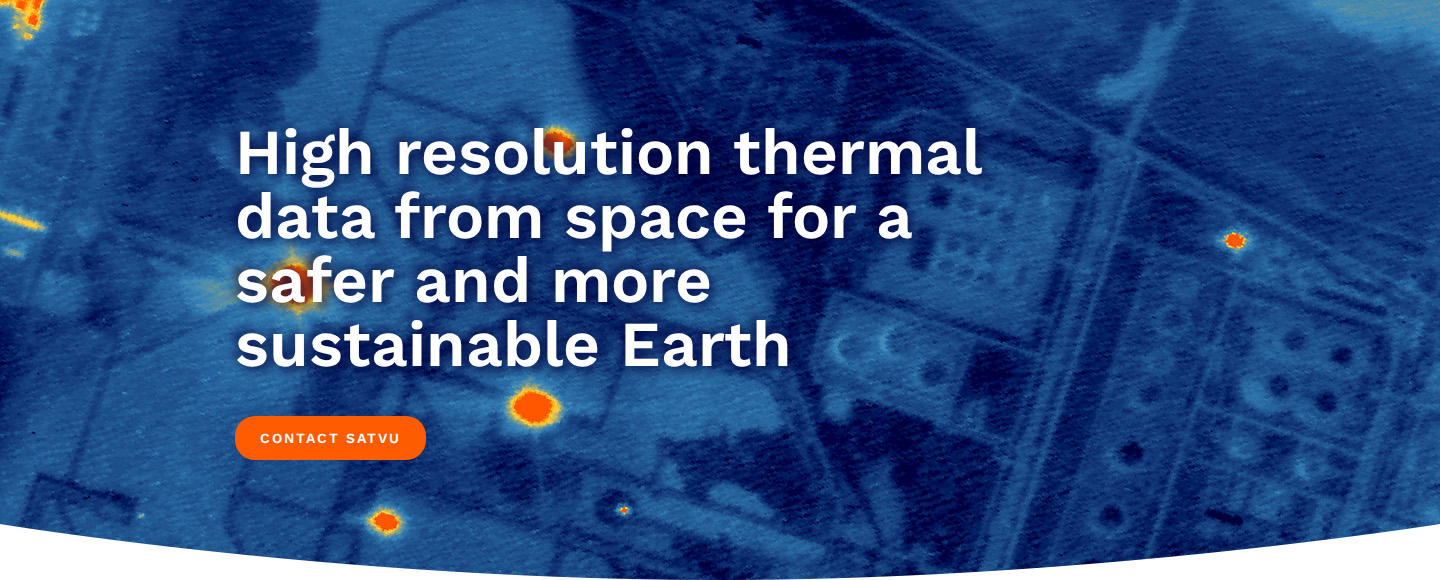
London-based earth observation company building a commercial constellation of thermal infrared imaging satellites, delivering asset-level intelligence at 3.5 m resolution — a step-change from what was previously available from orbit.
Pros:
3.5 m thermal resolution; day-and-night capability
First UK ESA CCM Category 1 contract winner
NATO Innovation Fund and ESA institutional backing
Active satellites in orbit; commercial operations begun
Cons:
Constellation still in early build-out phase
Revisit rates limited until full constellation deployed
Growth-stage company; programme delivery ongoing
Satellite Vu (SatVu) is a London-headquartered earth observation company operating at the application end of the satellite value chain: its satellites are the means, and thermal intelligence data is the product.
The company builds and operates the HotSat constellation — a series of mid-wave infrared (MWIR) imaging satellites — and sells the resulting thermal data to customers across national security, economic monitoring, and climate resilience verticals.
HotSat Constellation
HotSat-1 launched in June 2023, establishing SatVu's initial orbital presence and beginning the company's archive of thermal data.
HotSat-2 launched aboard SpaceX's Transporter-16 rideshare mission in March 2026, with start of commercial operations declared in June 2026, following a period of commissioning after the March launch.
| Satellite | Status | Key Date |
|---|---|---|
| HotSat-1 | In orbit | Launched June 2023 |
| HotSat-2 | In orbit; commercial operations | Launched March 2026 |
| HotSat-3 | Planned for orbit | 2026 |
| HotSat-4 / HotSat-5 | Under contract | – |
| HotSat-6 (long-lead elements) | Under contract | – |
HotSat constellation build-out milestones as published by Satellite Vu. – indicates date not publicly listed.
HotSat-4, HotSat-5, and long-lead elements of HotSat-6 are now under contract, locking in the critical path to a multi-satellite constellation.
With two satellites in orbit, the company currently offers multiple revisits per week at any given location. The full persistence and daily revisit cadence the constellation is designed to deliver requires the remaining satellites to be built and launched — a programme that is progressing but not yet complete.
Thermal Imaging Technology
The HotSat sensor operates in the MWIR band — 3.7–5 µm at night, 4.5–5 µm during the day — capturing thermal imagery at up to 3.5 m ground sample distance (GSD).
SatVu's own published materials note that other commercially available thermal imagery, such as Landsat, operates at around 100 m resolution — making the step to 3.5 m a substantial leap in what is detectable from orbit.
At that resolution, individual industrial assets, vehicles, and infrastructure features become identifiable by their heat signatures — a level of specificity that was not previously available in commercial space-based thermal data.
Because the sensor detects emitted heat rather than reflected sunlight, it operates effectively at night and through smoke, giving it a 24/7 monitoring capability that optical imagery cannot match.
Market Applications
- National security and ISR: Thermal signatures reveal activity at military sites, naval ports, air bases, and critical infrastructure — including in darkness or denied-access areas — without requiring overflight permission.
- Economic monitoring: Industrial operations, power plant output, oil refinery activity, and commodity supply chains can be tracked through heat emissions, providing an independent activity signal alongside optical and SAR data.
- Climate resilience: Urban heat mapping, emissions tracking, water resource monitoring, and rapid response to natural disasters are among the civil applications supported by the Copernicus CCM contract.
SatVu also holds a video capability — publishing thermal data as both still imagery and video clips of up to 60 seconds — which extends the range of motion-tracking and change-detection applications available to customers.
Programme Credibility
In June 2025, ESA awarded SatVu a contract worth up to €3 million under the Copernicus Contributing Mission (CCM) programme, spanning three years. SatVu was the first UK company to win a Category 1 CCM contract, announced at the Living Planet Symposium in Vienna.
SatVu is also a participant in NATO's Alliance Persistent Surveillance from Space (APSS) initiative, and has delivered an Infrared Familiarisation programme to NATO personnel at the NATO Communications and Information Agency (NCIA) headquarters in The Hague.
The NATO Innovation Fund has backed SatVu directly — a notable signal given the company's national security market vertical.
SatVu's June 2025 Copernicus Contributing Mission contract — worth up to €3 million over three years — made it the first UK company selected under the new Category 1 Contributing Missions category, cementing a formal role in Europe's civil earth observation infrastructure.
Beyond European institutions, SatVu signed a Memorandum of Understanding with IHI Corporation of Japan in September 2025, covering collaboration on a sovereign Japanese high-resolution thermal infrared satellite constellation — a partnership that reflects both the bilateral UK-Japan defence relationship and the international reach of SatVu's technology.
SatVu also secured a €1 million ESA Marketplace Support award in January 2025, backing a project to scale thermal intelligence for the energy sector in partnership with an independent energy and commodities trading company.
Laser Technology at the Heart of the Space Sector
Woodrow Scientific builds laser cleaning machines and high-power EDFAs for free-space optical communications. Explore the full portfolio at woodrowscientific.com.

Conclusion
Navigating the UK Satellite Ecosystem: What to Look for Next
What these five entries reveal, taken together, is that the UK satellite sector is not a single industry — it runs the full value chain, from ground segment hardware through spacecraft manufacturing, launch, and on to earth observation data.
For anyone mapping this space, sub-sector is the first filter: the question of whether you need launch capability, a spacecraft, ground station equipment, or data analytics shapes everything that follows.
Woodrow Scientific Limited, the publisher of this guide, manufactures optical ground station amplifiers and free-space optical uplink technology in the UK — contact details are on the WSL site.
UK Satellite Companies: Frequently Asked Questions
Common questions about the UK satellite sector, its key companies, and the technologies — from free-space optical communications to ground segment infrastructure — that define the ecosystem.
Free-space optical communications (FSOC) uses laser light rather than radio waves to transmit data between satellites and ground stations. Because optical frequencies carry far more bandwidth than RF, FSOC supports significantly higher data throughput — and because optical spectrum is currently unregulated, it sidesteps the congested, licensed RF bands that constrain conventional satellite links. Those two advantages make it the direction high-throughput satellite data infrastructure is heading. UK companies operating in the ground segment, including Woodrow Scientific with its optical uplink amplifiers, sit at the heart of this shift — providing the hardware that powers the ground station side of these laser links.
A satellite ground station is the terrestrial infrastructure that communicates with satellites — sending uplink commands and receiving downlink data. It is the essential link between space assets and the users, networks, and systems that depend on them. The ground segment encompasses antenna systems, tracking and telemetry equipment, and — as free-space optical links become more prevalent — optical uplink amplifiers that boost laser signals from ground to orbit. Woodrow Scientific, based in Southampton, is a UK manufacturer operating in this segment, supplying high-power erbium-doped fibre amplifiers to optical ground station integrators worldwide.
Five notable UK satellite companies that collectively illustrate the breadth of the ecosystem are: Woodrow Scientific Limited (ground segment — optical uplink amplification), Surrey Satellite Technology Ltd (small satellite manufacturing), Airbus Defence and Space UK (large satellite manufacturing and mission development), Orbex (orbital launch services), and Satellite Vu (earth observation — thermal infrared imagery). Together they span manufacturing, launch, ground infrastructure, and data applications. It is worth noting that "top" is inherently subjective — this selection is curated for ecosystem breadth and editorial depth, not ranked by revenue or headcount.
The UK satellite industry spans several distinct sub-sectors: satellite manufacturing (spacecraft and payloads), launch services, satellite operations, the ground segment (the terrestrial infrastructure that communicates with satellites), satellite communications services, and earth observation and data. The UK Space Strategy identifies seven sub-sectors in total, adding positioning, navigation and timing, space domain awareness, and in-orbit servicing and assembly to that core list. The five companies profiled on this page collectively span manufacturing, launch, ground segment, and earth observation — a reasonable cross-section of the ecosystem's range.
Yes. The UK Space Sector Factsheet published by the UK government notes that the UK captures approximately 5% of the global space market while investing around 1% of global civil space spending — a notably strong return relative to spend. According to the Size and Health of the UK Space Industry 2024 report, the sector generated £18.6 billion in income in 2022/23, employed over 55,500 people directly, and comprised more than 1,900 organisations. Satellite services underpin approximately 18% of UK GDP — around £454 billion — according to the same government analysis. The UK's particular strengths include small satellite manufacturing, complex payload development, ground segment expertise, and a growing domestic launch capability.