
Woodrow Scientific Limited: A UK Laser Manufacturer
Founded in 2012 and based in Southampton, WSL is a team of more than 20 laser specialists, growing steadily, working across two fields: laser communications (EDFAs) and laser cleaning (ELASER, AutoLASE).
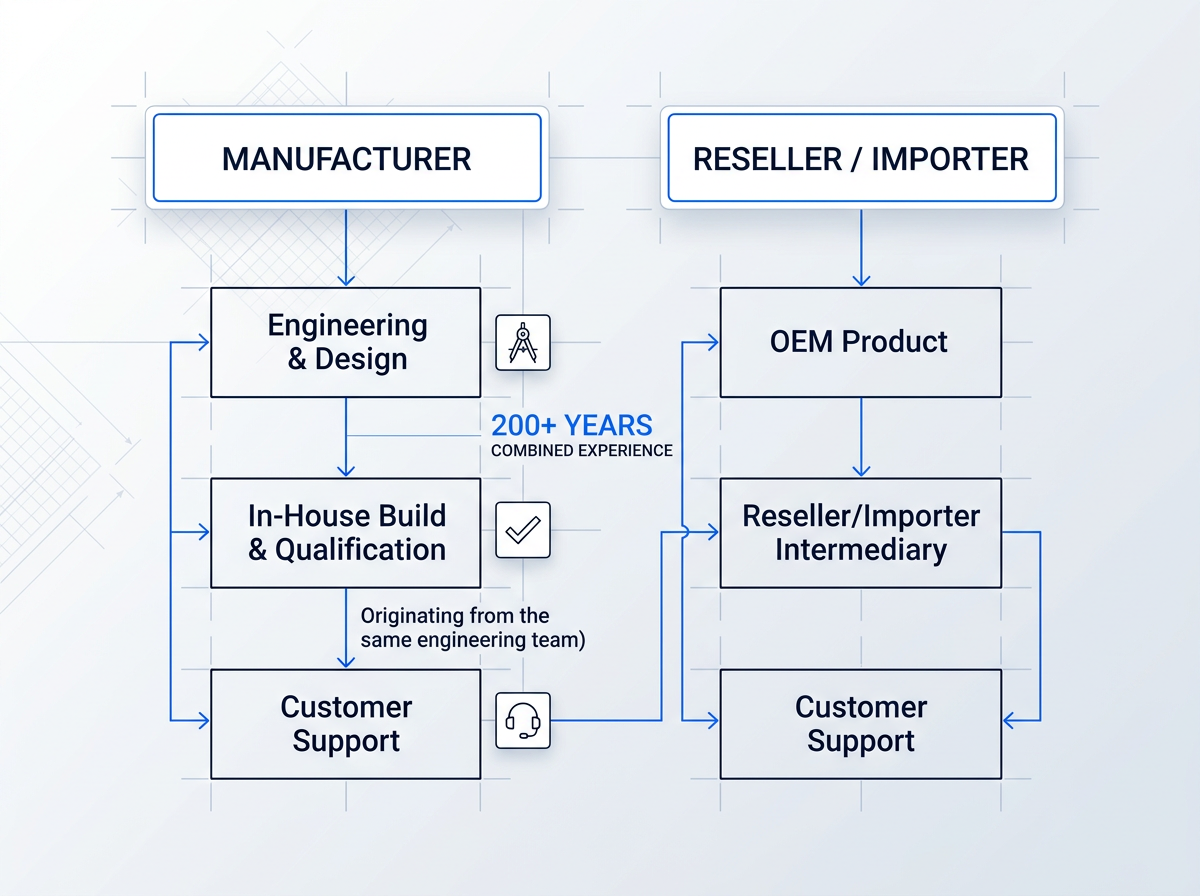
WSL designs, builds, qualifies and supports every product in-house — not a reseller or importer. That distinction matters where many suppliers are neither. 10+ patents underpin proprietary technology rooted in Southampton's Optoelectronics Research Centre, the birthplace of the EDFA.
WSL technology is deployed worldwide across large-scale optical ground station and laser cleaning programmes, including global space efforts, backed by 200+ years of combined engineering experience.

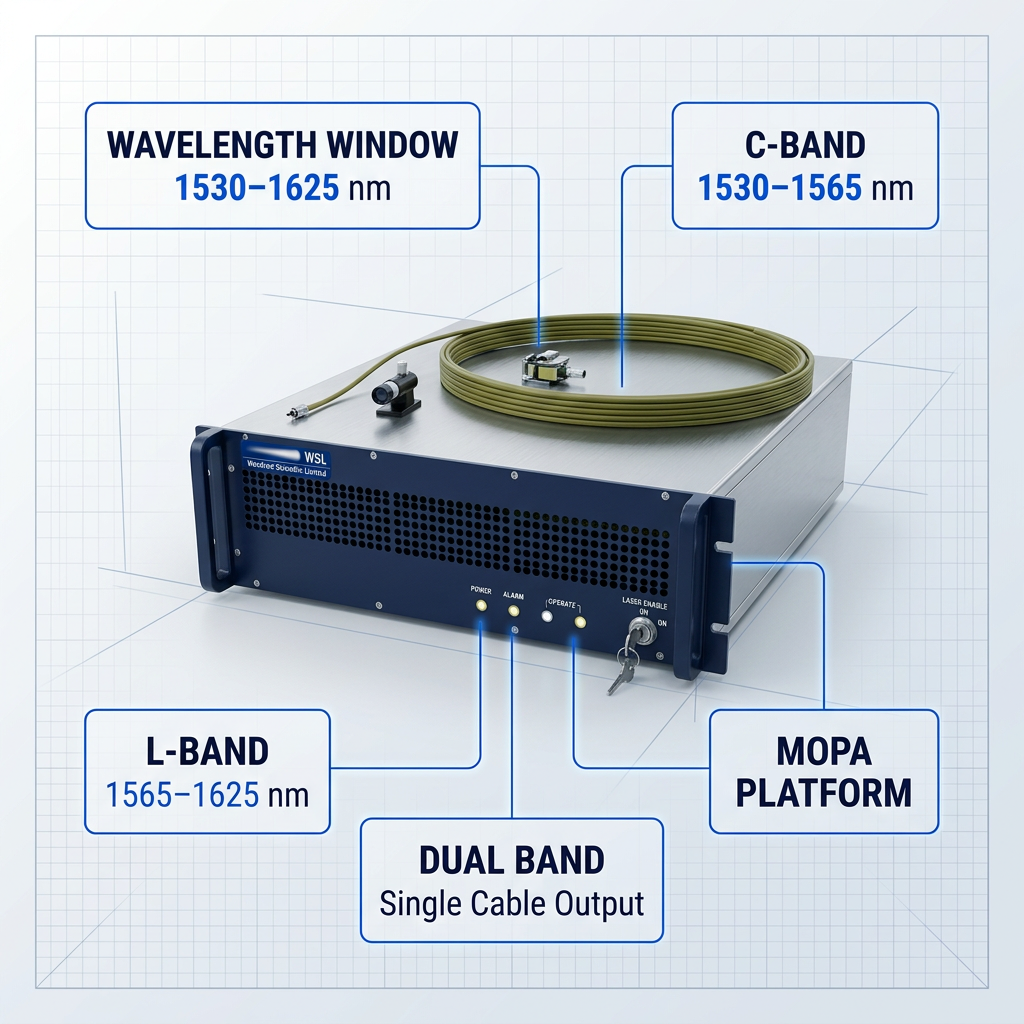
MOPA Platform, C+L Band
WSL's Custom EDFA is an erbium-doped fibre amplifier built on a MOPA (master oscillator power amplifier) architecture, designed and built in Southampton, UK. The gain medium and platform are fixed; every other parameter is configured per project.
The amplifier operates across the full 1530–1625 nm window, covering C-band (1530–1565 nm) and L-band (1565–1625 nm). Both bands are delivered through a single cable from one source — no second amplifier required.
200 W and Beyond
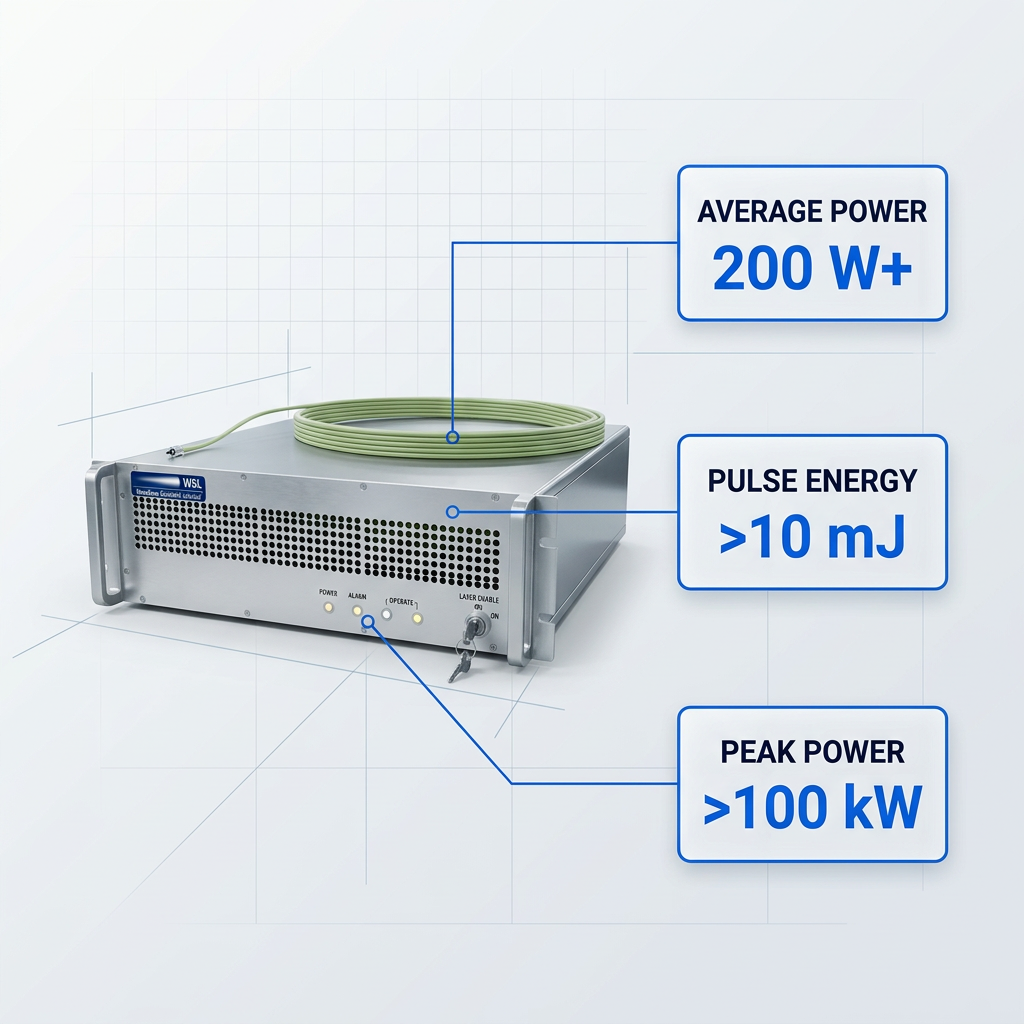
WSL builds to the highest average powers commercially available: from low-power units to 200 W or more average output, with pulse energies above 10 mJ and peak powers above 100 kW. Output is tunable across the full 0–100% range of rated power.
For applications where power is the critical parameter, these figures represent the frontier of what is commercially achievable in an erbium-fibre amplifier. Every build is specified to the client's exact requirement.
Built to Your Specification
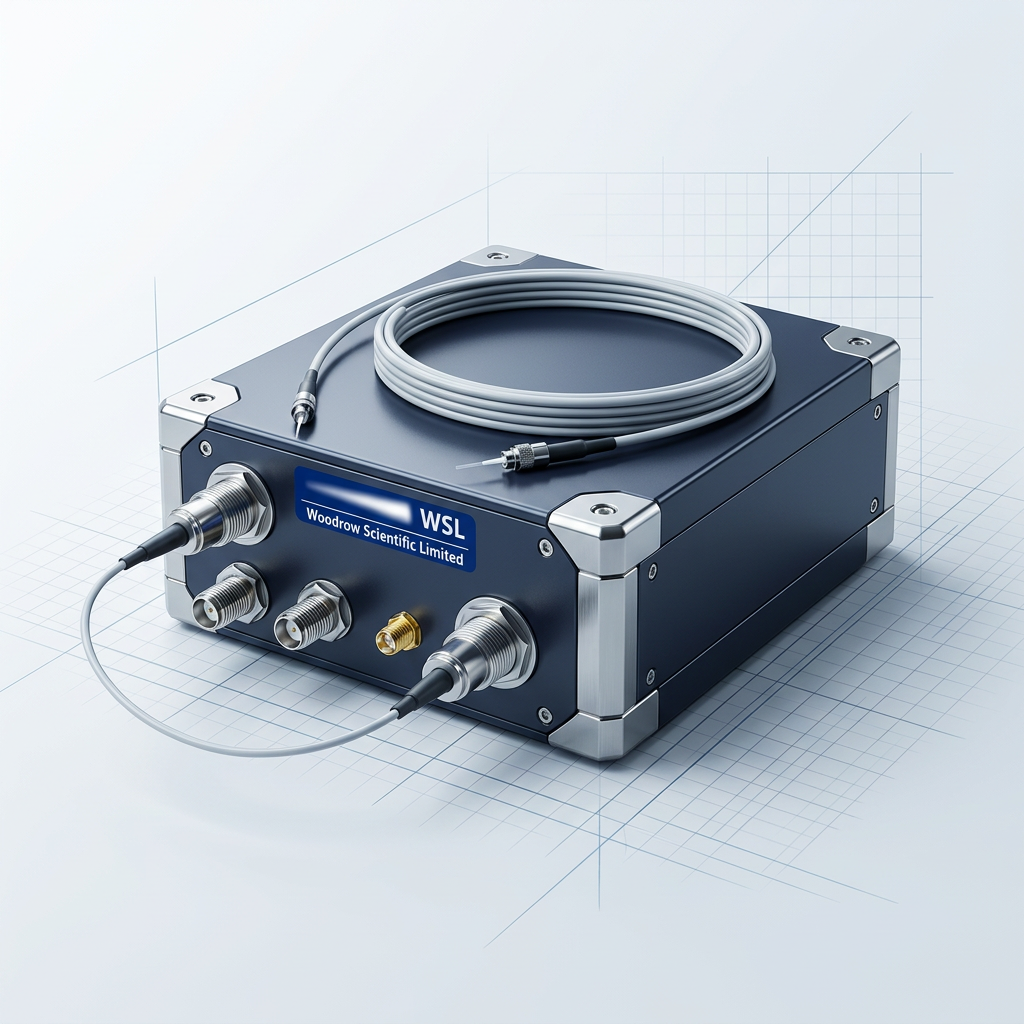
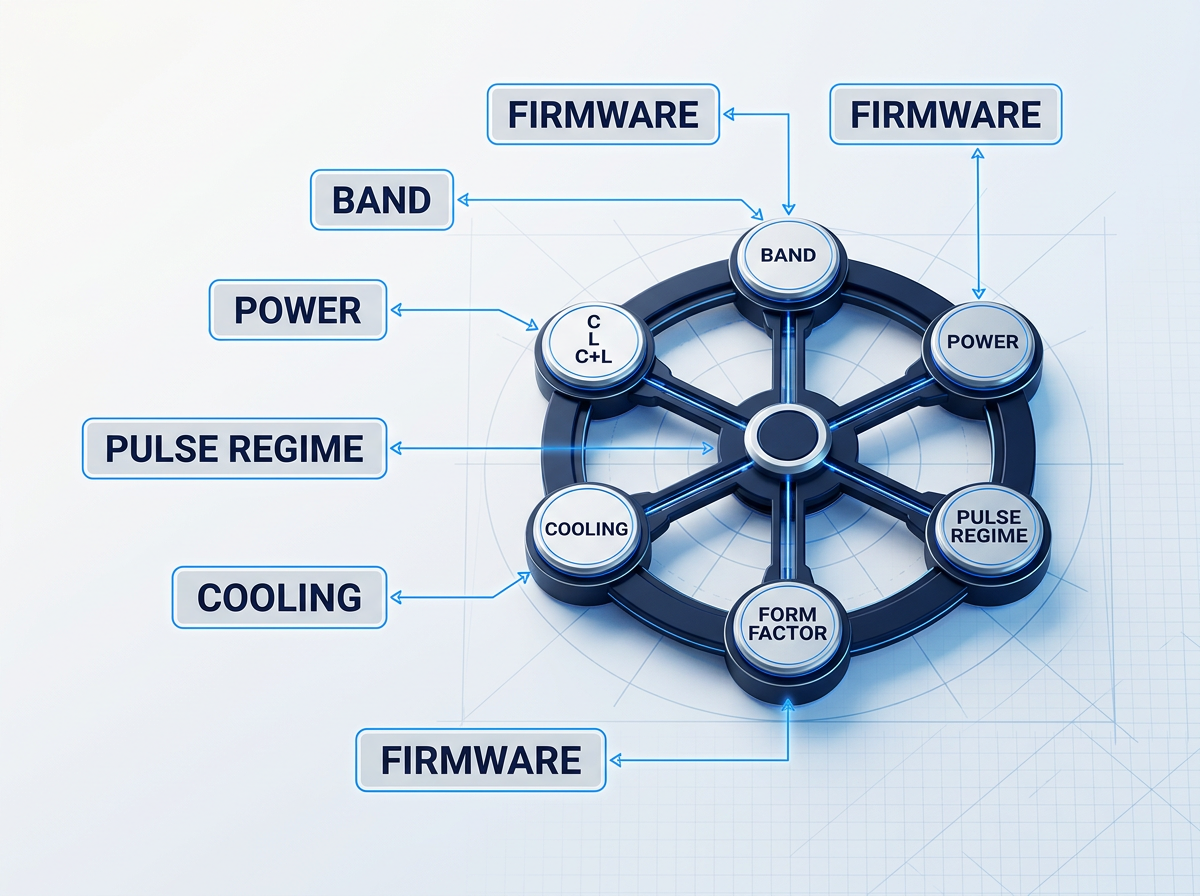
Only the erbium physics and the MOPA platform are fixed. Everything else is engineered per project: operating band (C, L, or dual C+L); output power; pulse regime (CW, short-pulse 100–500 ns, or custom); pulse energy and peak power; cooling (air-cooled as standard — no chiller or coolant loop required — with water cooling available); delivery cable length and termination; form factor and integration envelope; control firmware and communication standards.
Every unit is configured to the client's specification. This depth of tailoring — across band, power, pulse regime, cooling and firmware together — is what sets WSL apart from fixed-catalogue suppliers.
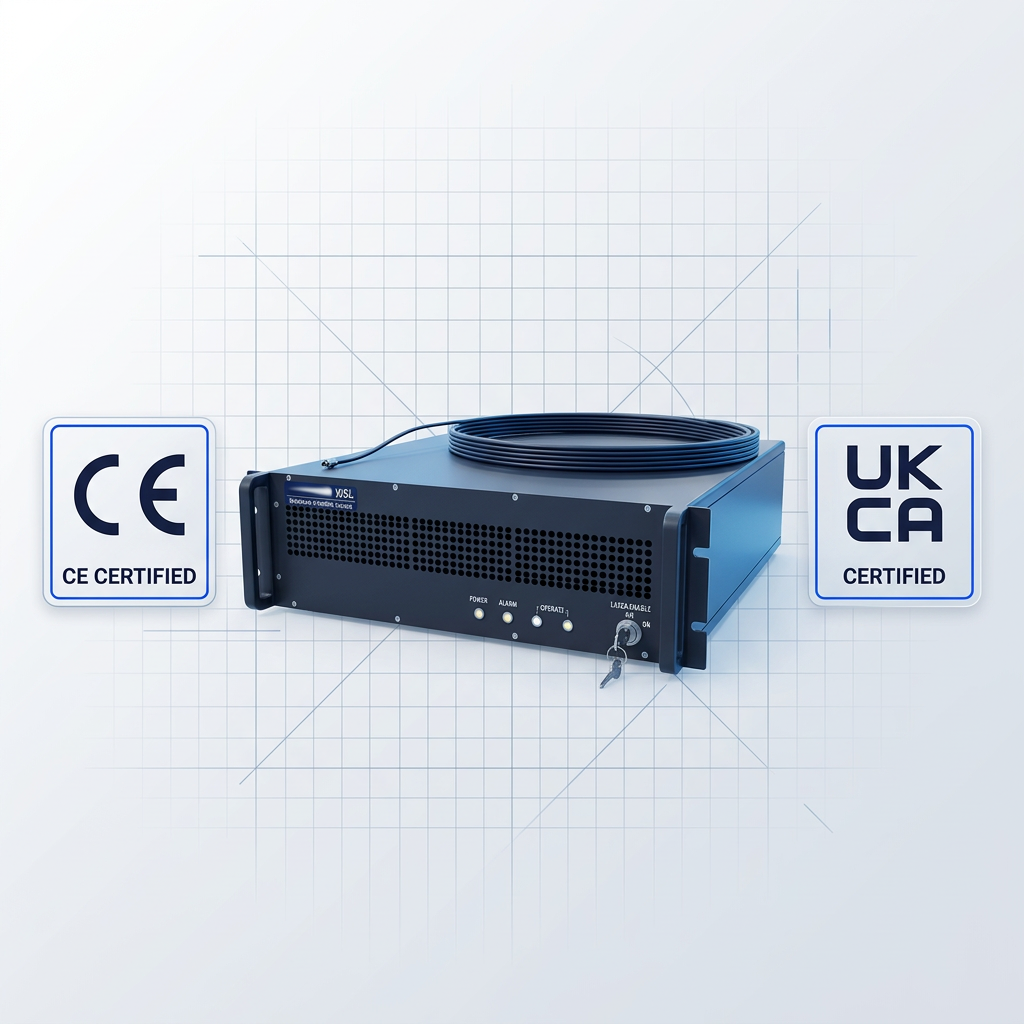
CE and UKCA Certified
WSL's Custom EDFA carries both CE and UKCA certification, covering GB and EU markets from a single product. These are the baseline credentials of a genuine UK manufacturer.
Named reference builds include the EDF-UL-10 and the EDF100, illustrating the range of configurations WSL has delivered. They are examples of what has been built, not a fixed catalogue — every unit is configured per project, and further configurations are available.
Why 1550 nm Is the Wavelength Modern Photonics Demands
1550 nm is not a legacy choice. It is the convergence point where physics, safety, and the demands of the most challenging photonics applications align.

Minimum Attenuation in Silica Fibre
Silica fibre reaches its lowest loss — around 0.20 dB/km — near 1550 nm, making it the natural choice for long-range free-space and fibre propagation.

Eye-Safe Above 1400 nm: Pre-Retinal Absorption
ICNIRP guidelines establish that wavelengths above 1400 nm do not reach the retina, enabling significantly higher permissible exposure levels than shorter-wavelength sources.

Reduced Hazard Zone Builds for Field Deployment
WSL offers Reduced Hazard Zone builds, a practical advantage for outdoor, airborne, and defence deployments where bystander exposure is a design constraint.

The Convergence Point for Modern Photonics
LiDAR, FSOC, quantum communications, and fibre sensing all converge on the 1530–1625 nm window, driven by low attenuation, eye safety, and EDFA gain bandwidth.
MOPA Architecture: Single-Mode Beam, High Power
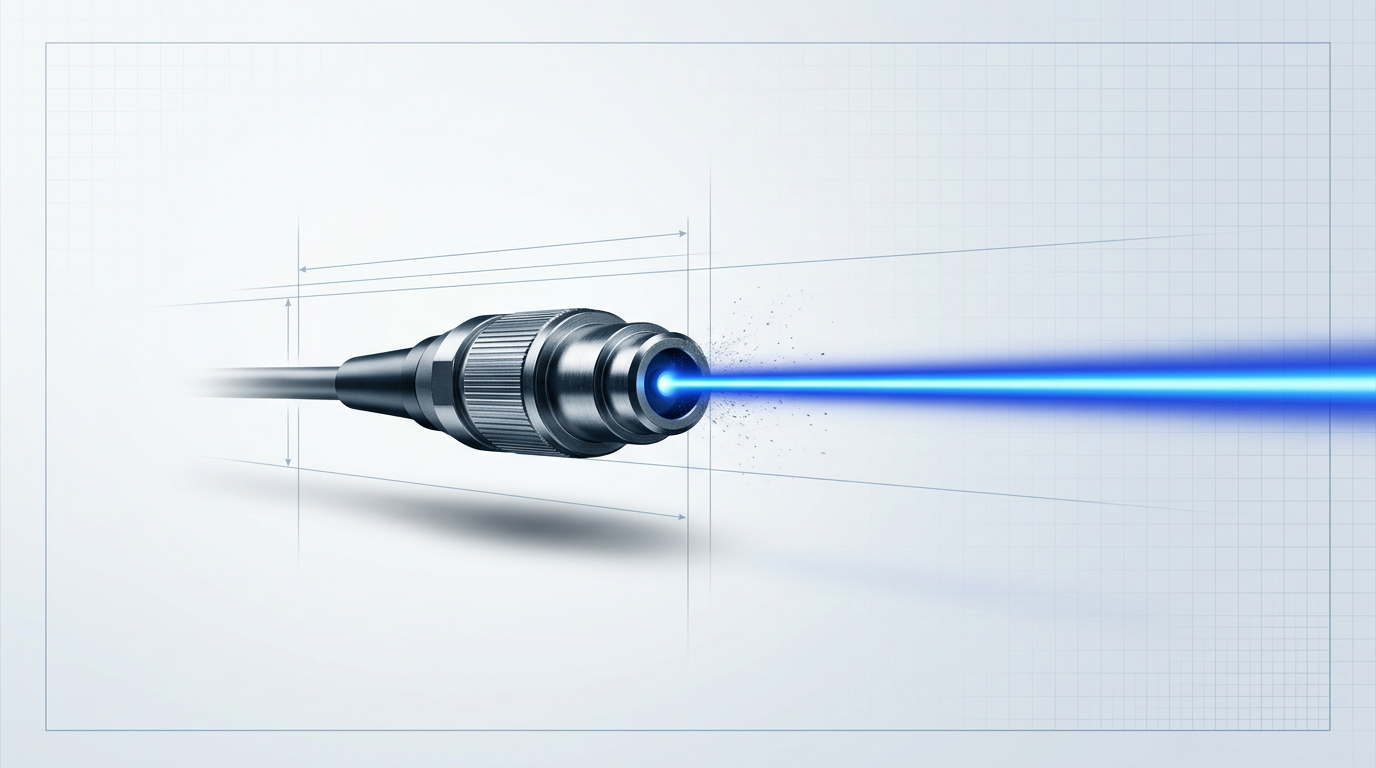
The MOPA platform delivers single-mode beam quality and high power in a fibre-coupled format, simplifying integration and supporting demanding free-space propagation requirements.
Built for the Wavelength Photonics Demands
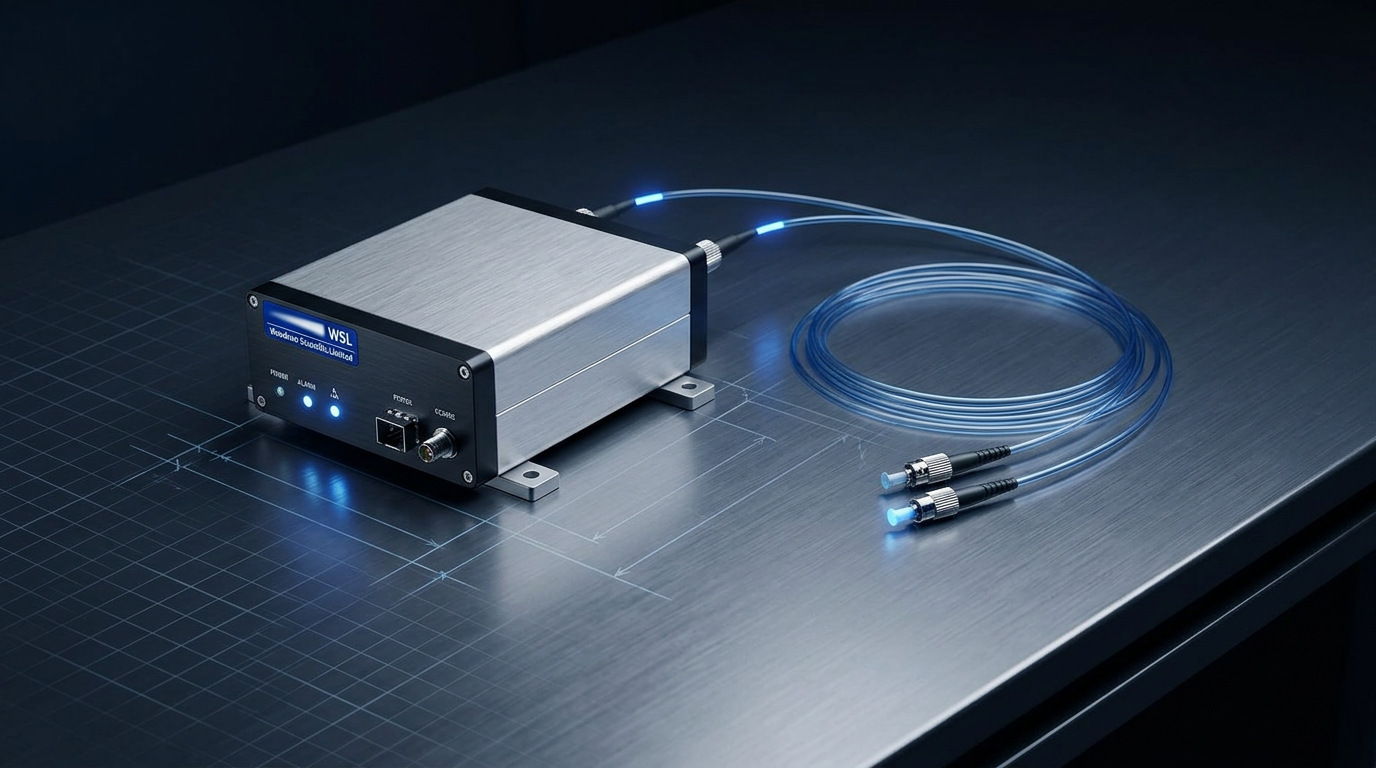
WSL's commitment to the 1550 nm erbium-fibre platform is a deliberate engineering decision — built to where modern photonics converges, not where legacy convention points.
Where WSL EDFAs Are Deployed
WSL's Custom EDFA is deployed across technically demanding fields — from LiDAR and free-space optical communications to quantum, defence, sensing and OEM system building. Each deployment is served by an amplifier engineered end-to-end to the application, at power levels scalable to the highest commercially available.

LiDAR: Eye-Safe High-Power Amplification
Eye-safe, high-power 1550 nm amplification for demanding long-range LiDAR applications.
Free-Space Optical Communications (FSOC)
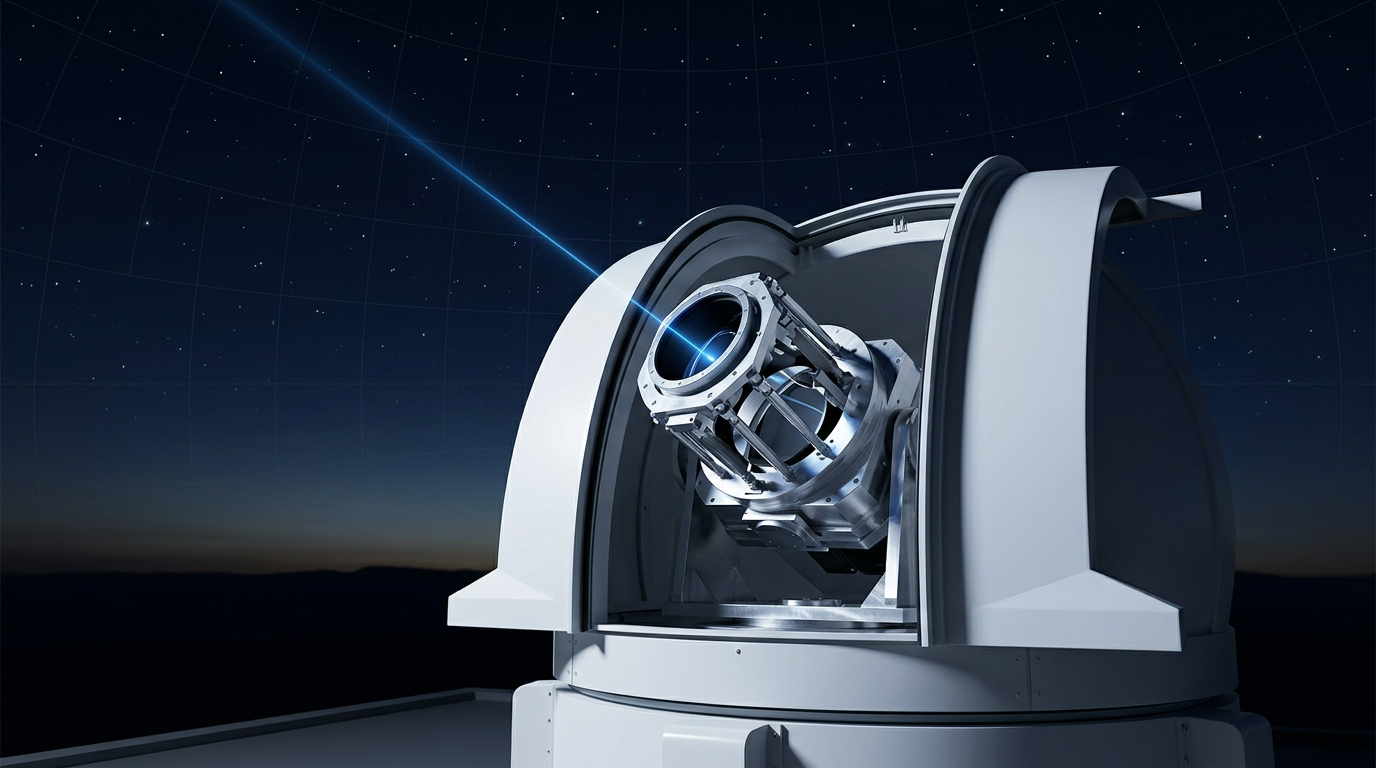
High-power amplification for ground-station uplink and beacon applications across free-space optical links.
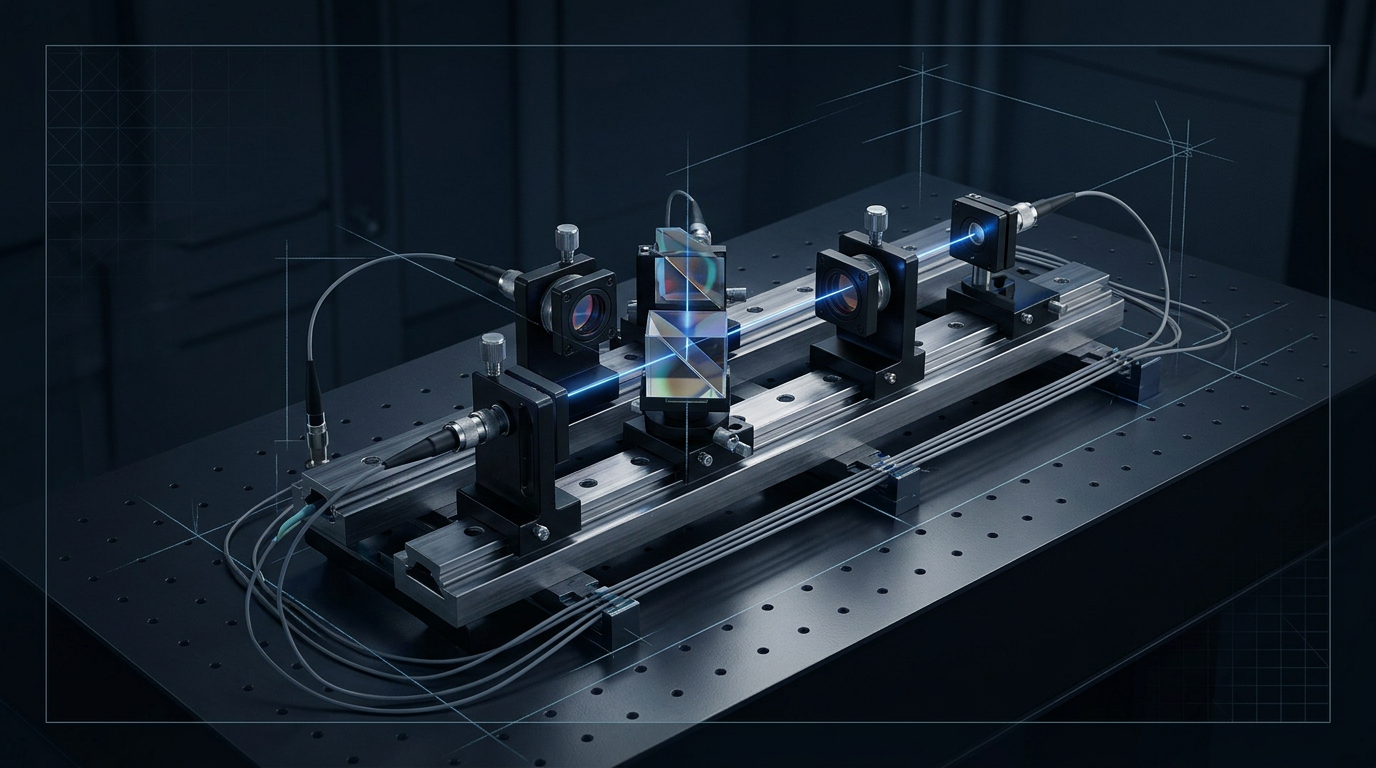
Quantum Sensing and Communications
C/L-band amplification aligned to the 1530–1625 nm window used by quantum photonics systems.
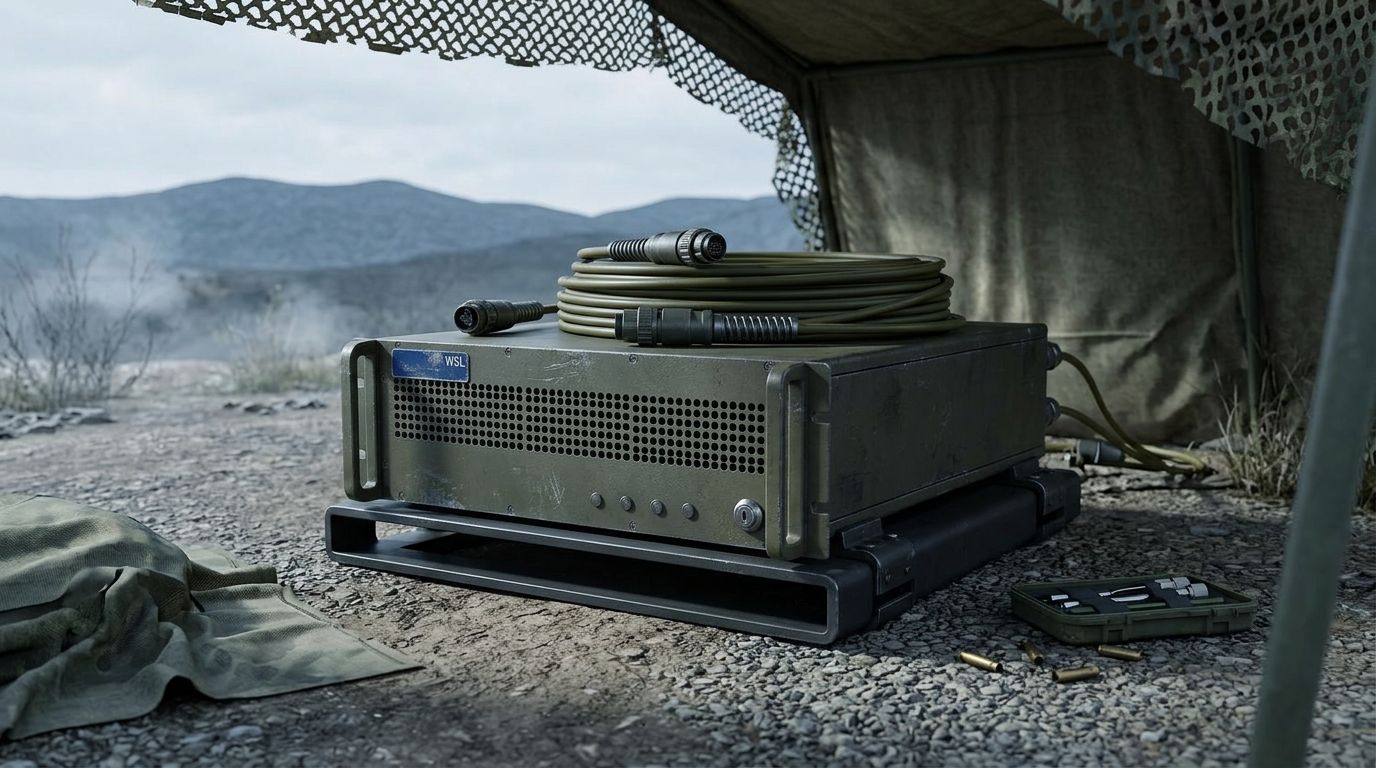
Defence and Directed-Energy Research
High-power, eye-safe fibre amplification built to the demands of defence and directed-energy programmes.
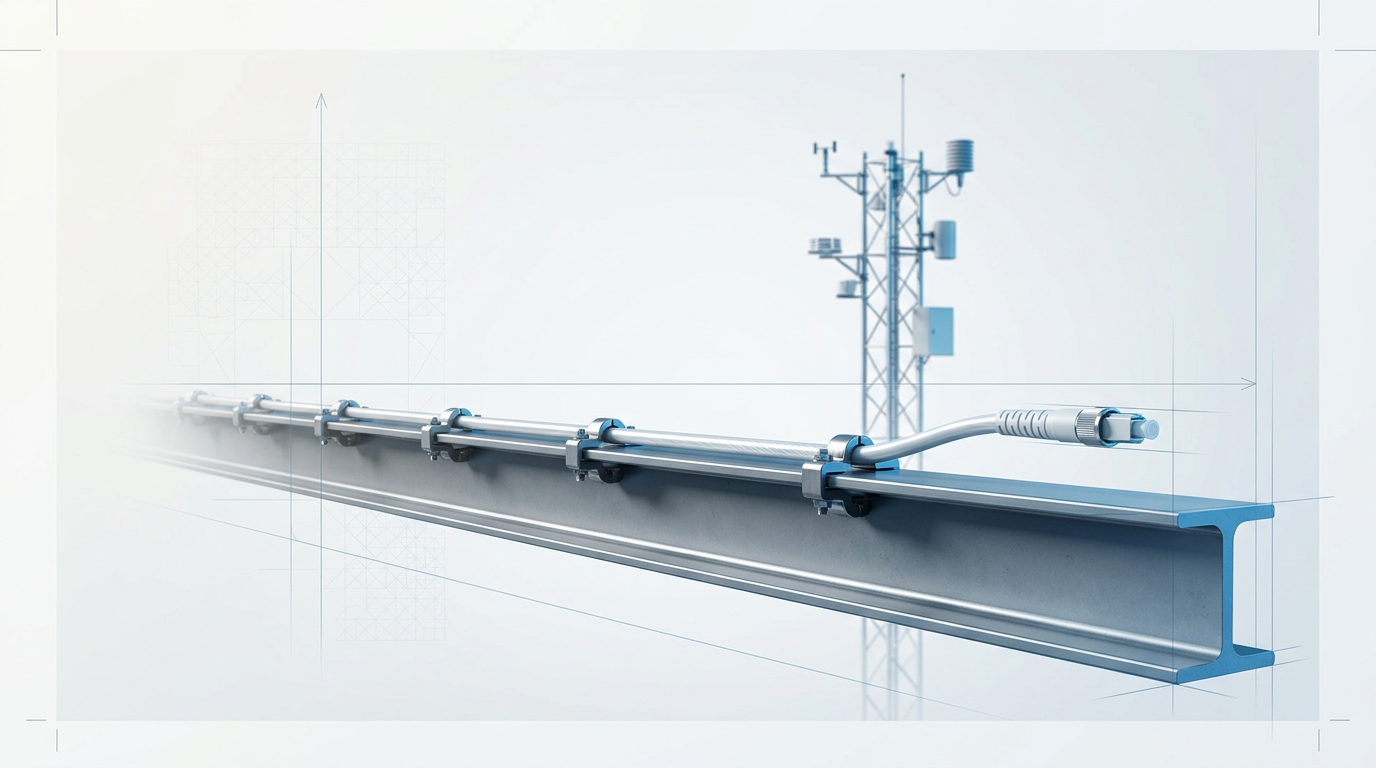
Fibre and Remote Sensing
High-power 1550 nm amplification enabling distributed acoustic sensing, structural monitoring, and atmospheric remote sensing.
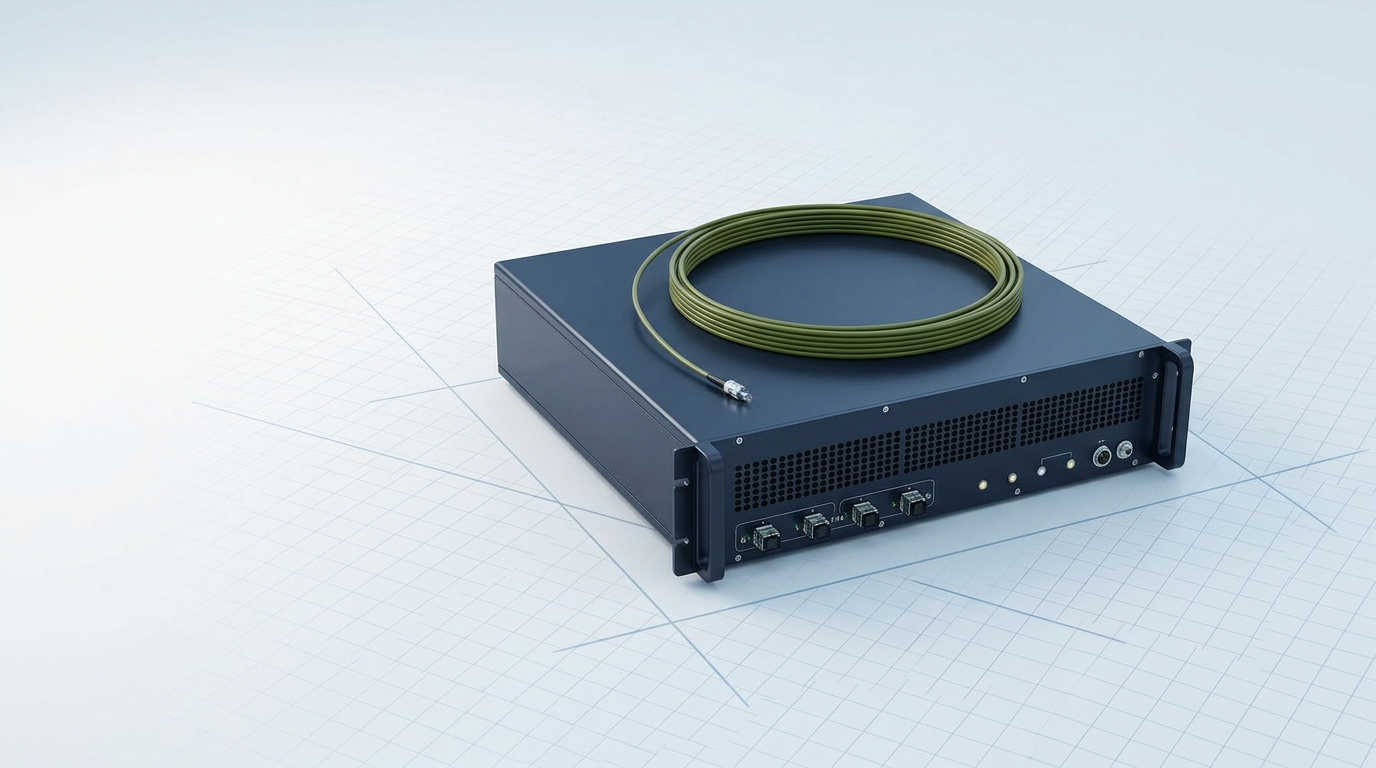
Research Instruments and OEM Laser Systems
Tailored amplifiers for laboratory instruments and OEM customers building their own laser systems.

Further High-Power EDFA Applications
WSL engineers assess any high-power, eye-safe erbium-fibre amplification requirement on its merits.
Explore WSL's Free-Space Optical Communications EDFAs
WSL builds high-power, eye-safe 1550 nm amplifiers for FSOC, LiDAR, and demanding photonics applications. Every unit is designed and built in Southampton to your specification.

Built, Qualified and Supported In-House
WSL designs, builds, qualifies and supports its Custom EDFAs entirely in-house. The engineers who built your unit are the engineers who support it through integration and beyond.
When a specification needs to change, when integration raises a question, or when a fault needs diagnosing, the people who can act are the people you deal with directly — not a helpdesk routing tickets to an overseas OEM.

Structural Difference, Not a Branding One
A significant portion of photonics and laser equipment suppliers are resellers or importers of third-party products. That model has practical consequences: no in-house engineering capability, limited ability to modify the product, and support that depends on the original manufacturer's responsiveness.
The distinction matters most when something needs to change. A reseller cannot modify what it did not design. A manufacturer can — because the engineering knowledge, the technical file, and the team who built it are all under one roof.
Engineered End-to-End to Your Application
WSL's Custom EDFA is configured per project across every axis that shapes performance: operating band (C, L, or dual C+L), output power, pulse regime, pulse energy and peak power, cooling, form factor, delivery cable, and control firmware.
This depth of tailoring is what in-house design and manufacture makes possible. A supplier working from a fixed catalogue has no equivalent capability — the configuration options end where the catalogue ends.
Certification as a Manufacturer Signal
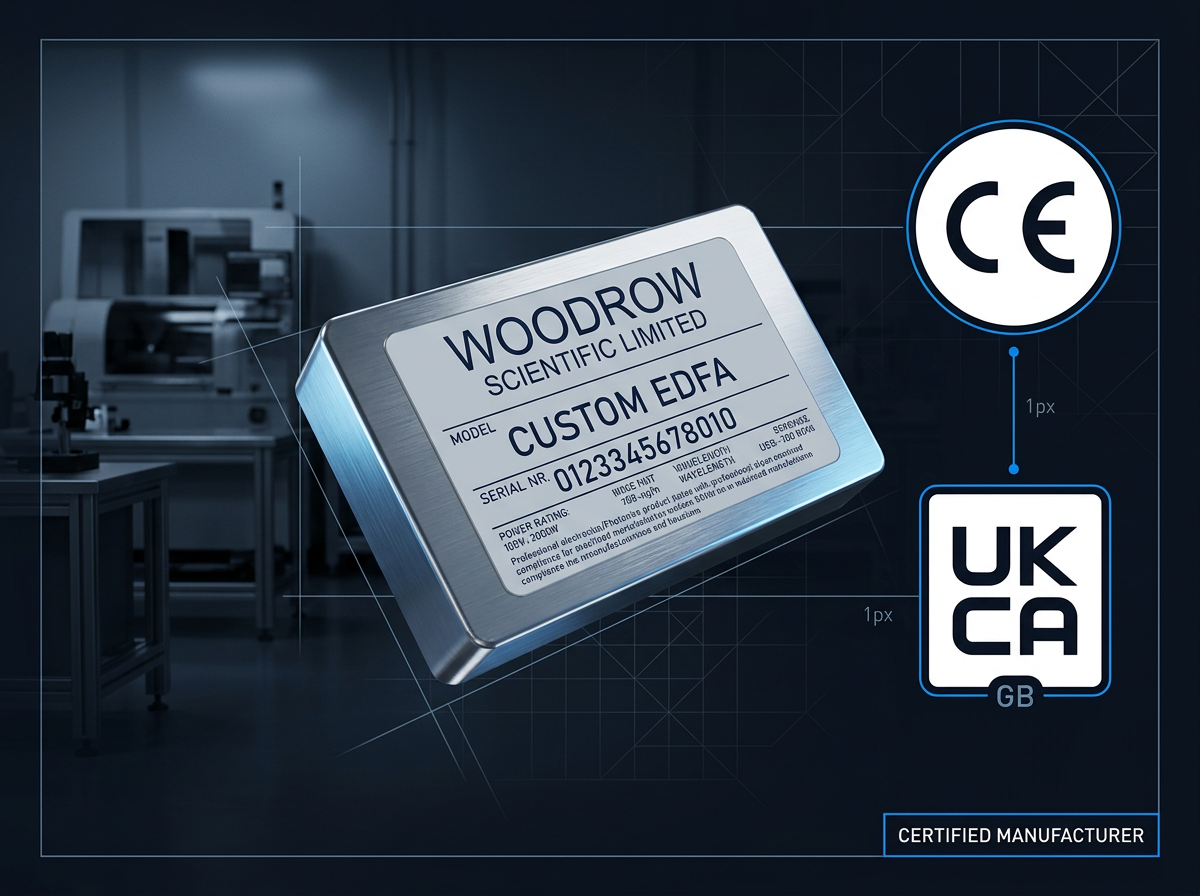
WSL's Custom EDFA carries both CE and UKCA marking. According to HSE guidance, affixing the UKCA marking means the manufacturer takes full responsibility for conformity with the requirements of the relevant UK legislation. The EC's guidance states the same principle for CE: by affixing it, the manufacturer indicates that he takes responsibility for the conformity of the product.
Under both regimes, it is the manufacturer — or their authorised representative — who originates these markings. They are a baseline expectation for a UK manufacturer supplying into regulated environments, not optional extras.
200+ Years of Combined Experience
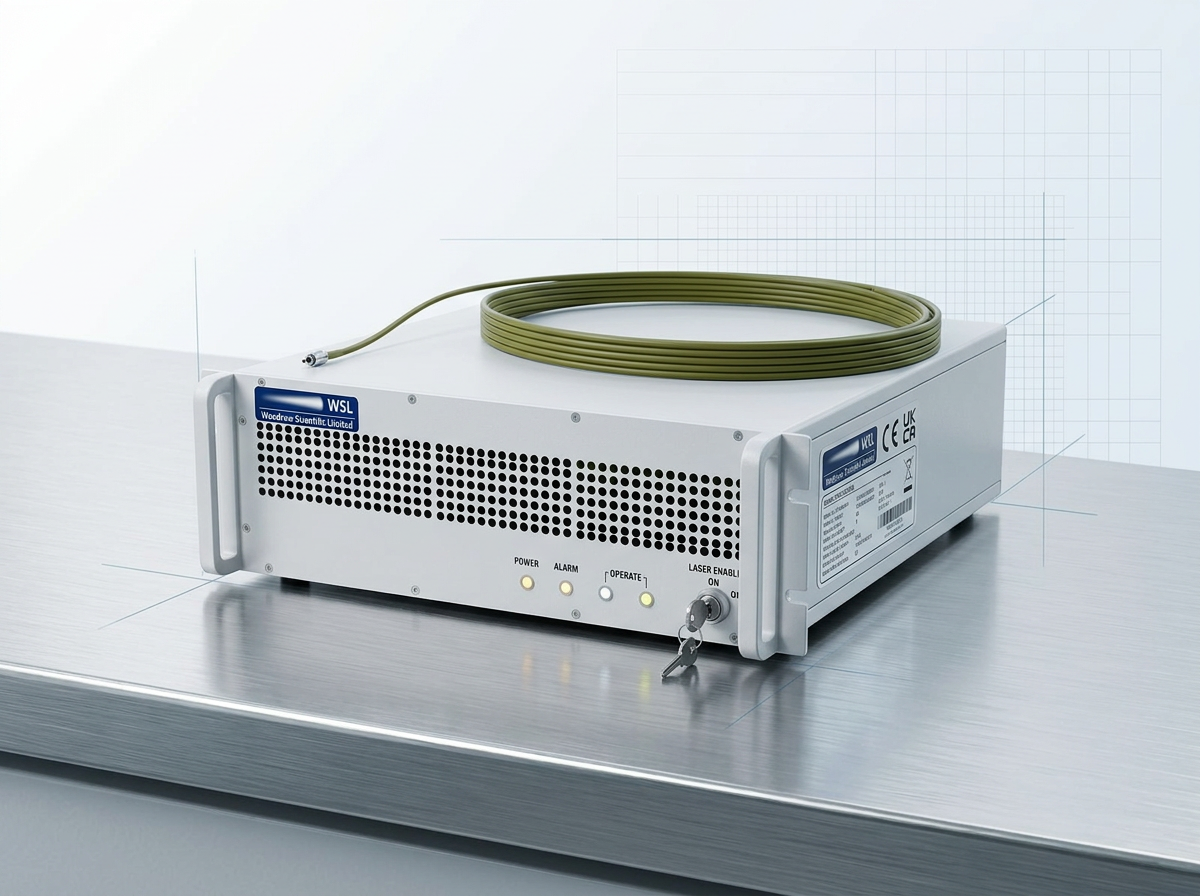
WSL's team brings more than 200 years of combined engineering experience to every project. The company holds 10+ patents — proprietary, in-house technology that WSL owns and continues to evolve.
That expertise is rooted in Southampton's Optoelectronics Research Centre, the birthplace of the EDFA. WSL was founded by a fibre-laser specialist with a PhD from the ORC and 25+ years in the field — a foundation that runs through the company's engineering culture today.

CE Marking: EU Harmonisation
The CE marking on WSL's Custom EDFA indicates conformity with applicable EU harmonisation legislation. According to the European Commission, by affixing the CE marking a manufacturer declares that the product meets all the legal requirements for CE marking and can be sold throughout the EEA. The EC's Low Voltage Directive explicitly lists laser equipment within its scope. For the Great Britain market, GOV.UK guidance confirms that the UK government continues to recognise the CE marking, providing businesses with flexibility to use either UKCA or CE marking to sell products in GB.
UKCA Marking: Great Britain
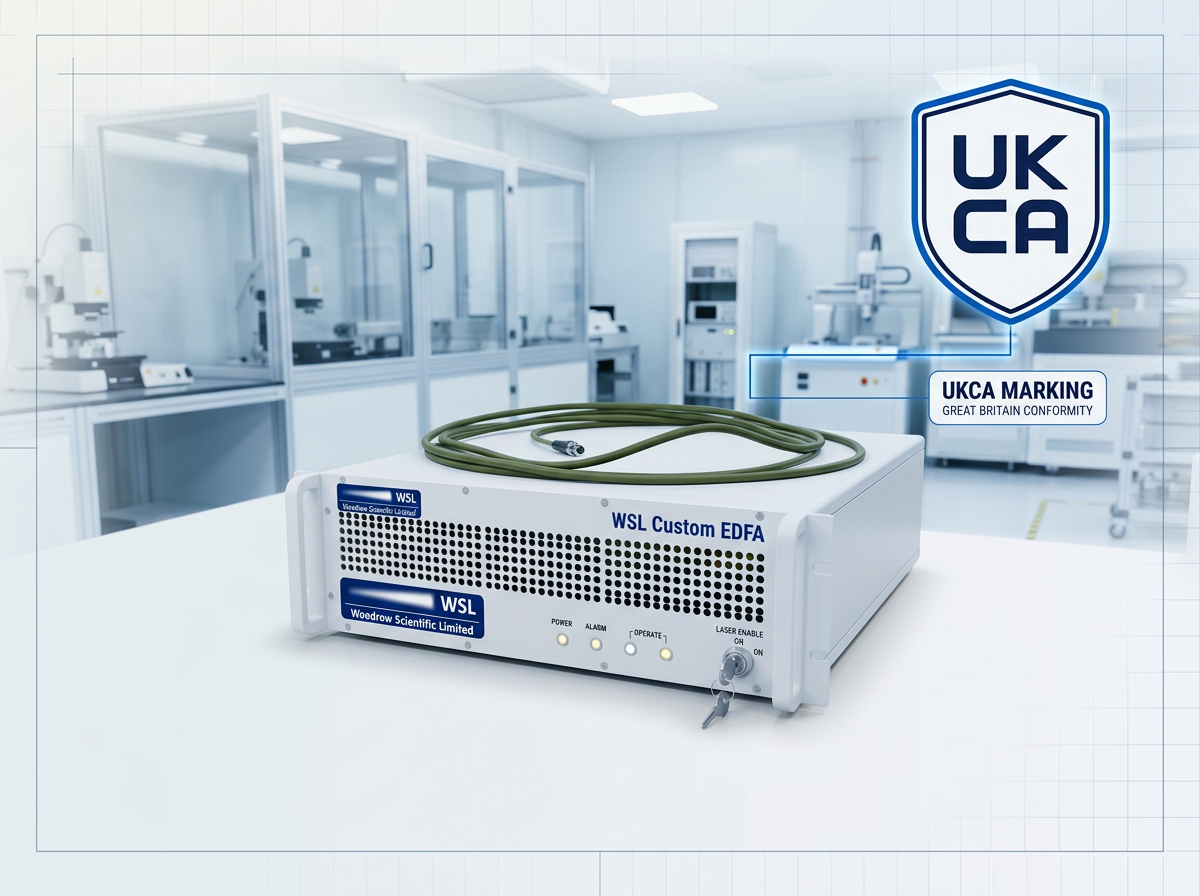
The UKCA (UK Conformity Assessed) marking is used on products placed on the market in Great Britain (England, Scotland and Wales). GOV.UK guidance states it shows that products comply with requirements in legislation applying in GB, covering product types including low voltage electrical equipment and machinery. WSL's Custom EDFA carries UKCA certification. As HSE guidance sets out, when affixing the UKCA marking, the manufacturer takes full responsibility for conformity with the requirements of the relevant UK legislation.
Accountability Rests with WSL
When WSL affixes CE or UKCA markings to its Custom EDFA, it takes legal responsibility for the product's conformity with applicable legislation. GOV.UK guidance requires the manufacturer's Declaration of Conformity to include a statement declaring the manufacturer takes full responsibility for the product's compliance. This is an enforceable, verifiable commitment — not a self-declaration of quality. For a procurement team, that accountability is the operative fact: the marking creates a documented, legally grounded obligation that rests with WSL as the manufacturer.

One Product, Both Markets
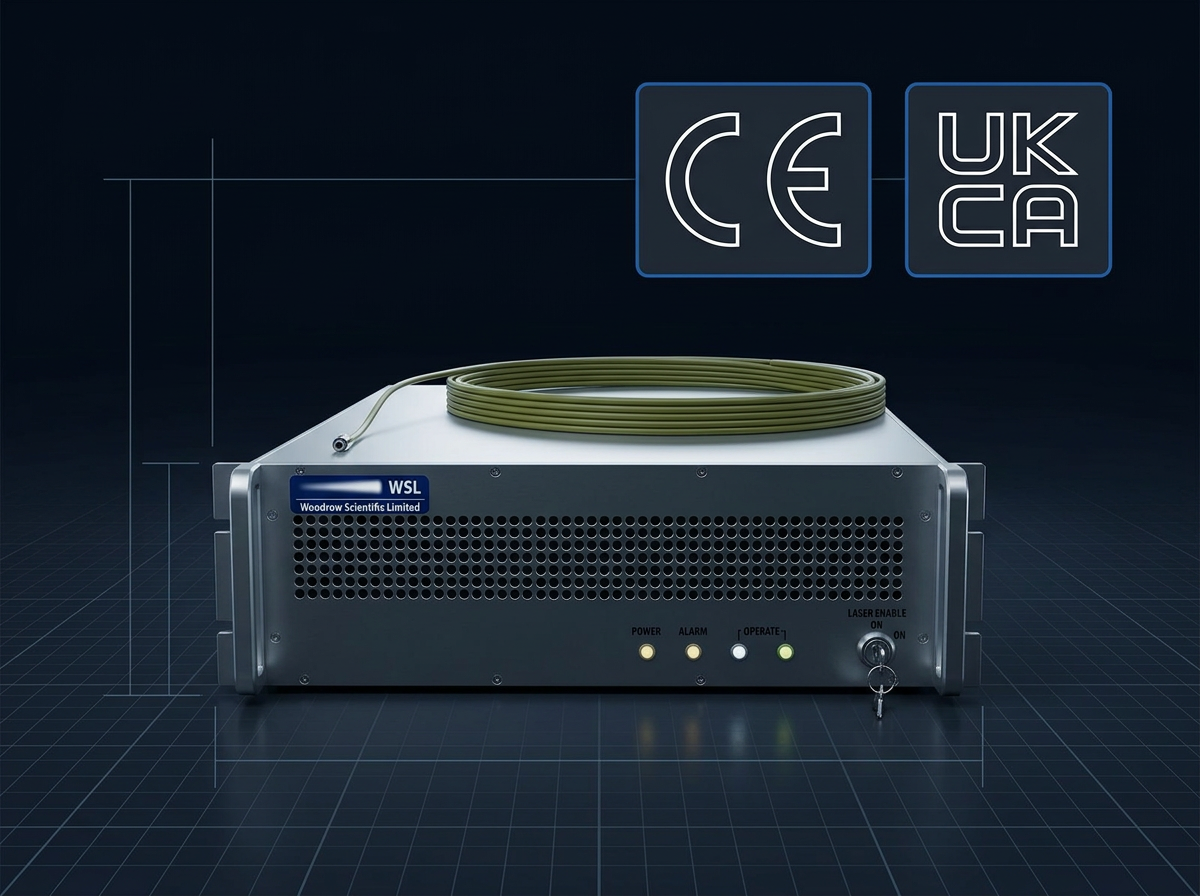
WSL's Custom EDFA carries both CE and UKCA markings. HSE guidance confirms that both markings can appear on the same product, provided neither prevents the other from being clearly seen and the requirements of both GB and EU legislation are met. For buyers who supply into programmes spanning both markets, or who operate across UK and EU regulated environments, this means a single WSL product covers both without requiring separate variants or additional conformity assessments.
Who Can Affix These Marks
Under both the CE and UKCA regimes, conformity markings are affixed by the manufacturer or their authorised representative — not by resellers or importers acting independently. GOV.UK guidance is explicit: it is the responsibility of the manufacturer (or authorised representative as agreed) to mark the product with the appropriate conformity marking. The EC's LVD guidelines confirm the same position for CE. For a buyer verifying supplier legitimacy, the presence of both markings on a WSL product reflects a structural fact about how the regulatory framework operates.

WSL and the UK Photonics Ecosystem
The erbium-doped fibre amplifier was first demonstrated in 1987 by researchers at the University of Southampton. WSL was founded by a fibre-laser specialist with a PhD from Southampton's Optoelectronics Research Centre (ORC), with 25+ years in the field and a team that works closely with the pioneers of the technology. That lineage is the foundation WSL builds on commercially.
The UK photonics industry is one of the UK's most economically productive sectors, achieving £18.5 billion turnover in 2024, with Southampton recognised as a thriving cluster of photonics innovation. WSL supplies worldwide, direct from Southampton.

Specify Your EDFA: How to Engage WSL
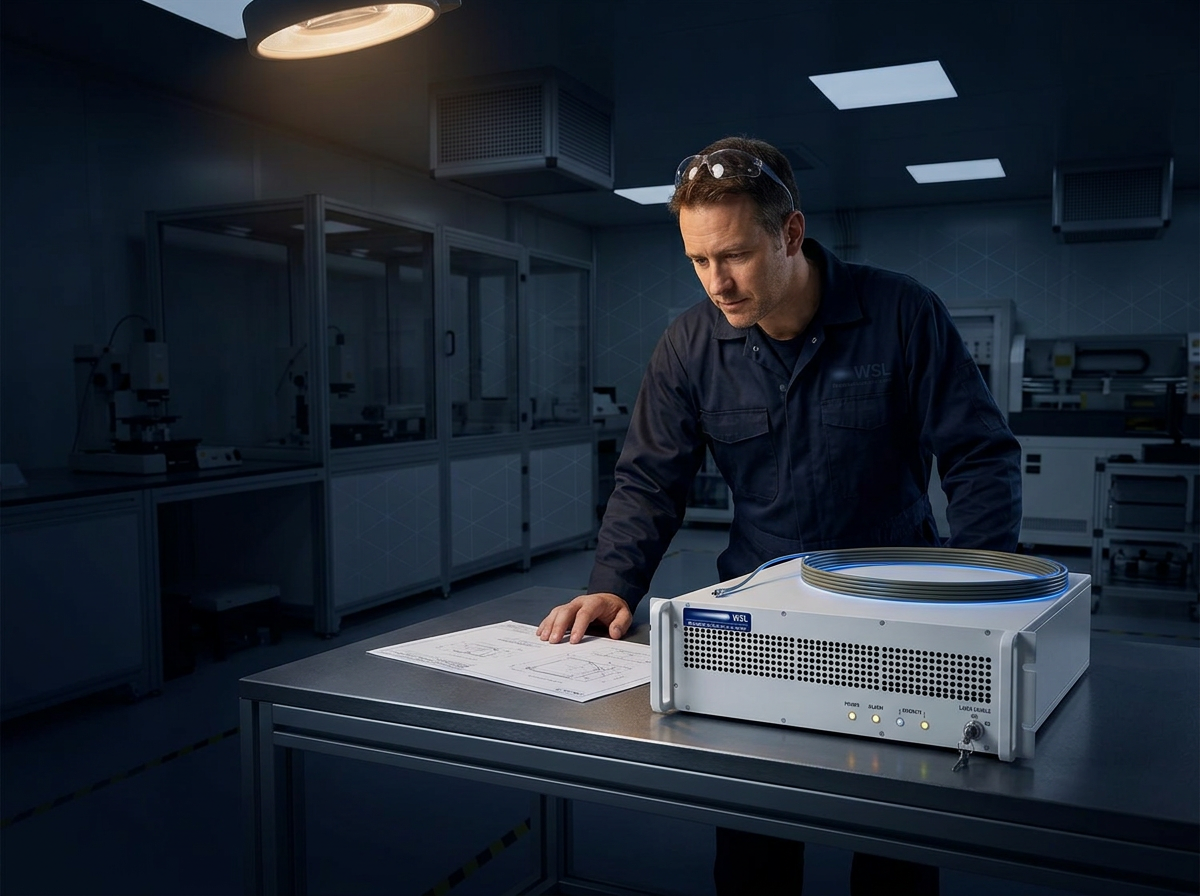
Every WSL EDFA is quoted per project. When you get in touch, you speak directly with the engineers who will design and build your unit. Come prepared with your operating band (C, L, or dual C+L), output power requirement, pulse regime, cooling preference, and any form factor or integration constraints.
WSL's published specifications reflect what has been built so far, not the ceiling of what is possible. Requirements beyond them are assessed directly with the engineering team. WSL supplies worldwide, direct from Southampton.
Frequently Asked Questions
Common questions from procurement teams and engineers evaluating WSL as a UK laser manufacturer.
WSL is a manufacturer. It designs, builds, qualifies and supports its EDFAs entirely in-house, on patented technology, at its facility in Southampton. There is no third-party product behind the label — the platform is WSL's own, protected by more than 10 patents. The distinction matters practically: a manufacturer is accountable for the product, can support it through integration, and can adapt the specification when requirements change. With WSL, the engineers who answer your technical questions are the same people who built the unit.
WSL manufactures custom erbium-doped fibre amplifiers (EDFAs), built to each customer's specification in Southampton, UK. It also manufactures laser cleaning systems — the ELASER (portable) and the AutoLASE (automated). These represent WSL's two product fields: high-power fibre amplification for laser communications and photonics applications, and laser cleaning for industrial use. Both are designed and built in-house by a team of more than 20 laser specialists.
The Custom EDFA is suited to any application requiring high-power erbium-fibre amplification in the 1530–1625 nm window. Primary application areas include LiDAR, free-space optical communications (FSOC), quantum sensing and communications, defence and directed-energy research, fibre sensing (distributed acoustic sensing and structural monitoring), remote sensing, scientific and research instrumentation, and OEM laser system builds. This list is not exhaustive. If a use case requires a high-power EDFA in this wavelength range, WSL's engineering team can assess the requirement and build to it.
The Custom EDFA carries both CE and UKCA certification. The CE marking indicates conformity with applicable EU harmonisation legislation and allows free movement of the product within the European market, as set out by HSE guidance. The UKCA (UK Conformity Assessed) marking is used on products placed on the market in Great Britain and shows that the product complies with requirements in applicable GB legislation, per GOV.UK guidance. Both markings can appear on the same product, provided neither prevents the other from being clearly seen and the requirements of both GB and EU legislation are met — meaning a single WSL unit can be supplied into both markets.
Yes. Published specifications represent what WSL has built to date — not the boundary of what it can build. The Custom EDFA platform is built to order, and requirements that go beyond the published parameters are assessed directly with the client by WSL's engineering team. No requirement is ruled out in advance. If your application calls for a configuration not shown on the website, the right approach is to submit your requirements for evaluation.
Submit your application requirements for a specialist evaluation. The more detail you can provide, the more precisely WSL's engineers can respond. Useful parameters to bring include: operating band (C, L, or dual C+L), output power requirement, pulse regime (CW or pulsed), cooling preference, and any form factor or integration constraints. WSL's engineers assess the requirement and respond directly — there is no sales intermediary. Requirements beyond the published specification are assessed on their merits and are not ruled out in advance.
The UK has a strong and diverse laser manufacturing base. The GOV.UK Chief Scientific Adviser's report on photonics notes that the UK photonics industry achieved £18.5 billion turnover in 2024, with clusters of research and manufacturing capability distributed across the country — including at Southampton, Glasgow, Sheffield, and elsewhere. Laser manufacturers operate across a wide range of technology areas: fibre lasers, solid-state lasers, diode lasers, ultrafast systems, and more. What distinguishes a genuine manufacturer from a reseller or importer is in-house design and build capability, proprietary technology, direct engineering support, and regulatory certifications such as CE and UKCA that the manufacturer takes legal responsibility for. In erbium-fibre amplification, WSL is a UK manufacturer that meets that standard — designing and building its Custom EDFAs in Southampton, on a platform backed by more than 10 patents, with engineering rooted in the University of Southampton's Optoelectronics Research Centre, where the EDFA was first demonstrated in 1987, as documented by IEEE TechNav.