
Introduction
Sandblasting is a capable method — until it isn't, and most professionals who arrive at that conclusion have a specific reason: a substrate that won't tolerate the aggression, a site where dust is simply not an option, or a regulatory environment that has made the traditional approach impractical.
Finding a genuine sandblasting alternative means understanding what each method actually does well, where it falls short, and whether it fits your specific combination of substrate, contamination, environment, and scale.
This guide covers the full realistic set of alternatives in enough depth to support a real decision, and closes with a practical decision framework to help you match the right method to your situation.
TL;DR
No single method is the best alternative to sandblasting. The right choice is determined by a specific combination of substrate sensitivity, contamination type, site constraints, and operational overhead — and each method has a distinct profile of strengths and limits that only becomes clear when those variables are matched honestly.
This article covers:

Six alternatives: wet, soda, dry ice, laser, more
Honest trade-offs for each method vs sandblasting
Matching method to substrate and contamination type
When laser cleaning suits industrial applications
Decision framework for choosing the right method
Why Professionals Look for a Sandblasting Alternative
Sandblasting works by using compressed air to propel abrasive media — historically silica sand, now more often steel grit, garnet, or aluminium oxide — at high velocity against a surface, stripping contamination or creating a mechanical surface profile for coating adhesion.
The core problem is what happens to the abrasive when it hits. Silica sand fractures on impact, generating respirable crystalline silica (RCS) dust at concentrations that, with prolonged inhalation, cause silicosis — a fibrotic lung disease that is irreversible, progressively debilitating, and potentially fatal.
According to the CDC, more than one million American workers are currently at risk of developing silicosis, and the disease continues to claim lives despite its cause being understood for centuries.
NIOSH recommended banning silica sand as a blasting abrasive in 1974. The UK had already prohibited it in 1949, under the Blasting (Castings and Other Articles) Special Regulations — making Great Britain one of the earliest jurisdictions to act. The hazard is not new; the regulatory response simply took different forms in different countries.
In the United States, OSHA's 2016 Silica Rule set a permissible exposure limit (PEL) of 50 µg/m³ for respirable crystalline silica as an 8-hour time-weighted average (TWA) — halving the previous general industry limit and effectively constraining or prohibiting dry silica blasting in many workplace contexts.
In Great Britain, the prohibition is embedded in Schedule 2 of the COSHH Regulations: sand or any substance containing 1% or more free silica is prohibited as an abrasive blasting agent, with no practical pathway to routine exemption for most operations.
Where Sandblasting Creates Problems in Practice
Even where silica has been replaced with alternative abrasives, dry blasting still generates fine particulate that creates respiratory and contamination hazards — the dust problem does not disappear simply by changing the media.
Sandblasting is also abrasive by design: it removes base material along with contamination. For thin-walled components, precision parts where dimensional tolerance is critical, or heritage materials such as soft stone and ornate architectural metalwork, this substrate damage creates downstream rework costs and dimensional problems that the right alternative avoids entirely.
Media cost and cleanup add a compounding operational burden. Spent abrasive must be collected after every job — a process that can take as long as the blasting itself — and where the substrate was contaminated with lead paint or heavy metals, that spent media may constitute hazardous waste under RCRA, requiring specialist disposal rather than routine skip clearance.
Open-air and shared-environment blasting carries its own overhead: physical containment structures, exclusion zones that shut down surrounding operations, Type CE airline respirators for operators, air monitoring equipment, and compliance record-keeping — a burden that makes sandblasting disproportionate or simply impossible on open workshop floors, public heritage sites, and installed field infrastructure.
These five constraints are the evaluation axes that matter when assessing any sandblasting alternative. Each method covered in this guide performs differently against them — some eliminate dust entirely, some preserve substrate integrity, some remove the media equation altogether.
- Dust and particulate generation: Does the method produce airborne particulate that creates respiratory hazards or contamination risk for operators and bystanders?
- Substrate impact: Does it remove base material along with contamination, or does it act selectively on the surface layer only?
- Operational overhead: What infrastructure is required — containment, exclusion zones, PPE, ventilation, air monitoring — before work can begin?
- Media and consumable cost: Does the method consume abrasive media continuously, and what are the supply, storage, and disposal implications at scale?
- Regulatory exposure: Which rules apply, what monitoring is required, and what liability does the operator carry if limits are exceeded?
With these axes clearly in view, the guide turns to the methods themselves — starting with the alternative that most closely resembles sandblasting in principle: wet blasting and vapour blasting.
Wet Blasting and Vapour Blasting
Add water to the dry abrasive blasting process and you immediately address the problem that drives most people to look for a sandblasting alternative in the first place: airborne dust. Wet blasting and vapour abrasive blasting keep the same core mechanism — compressed air propelling abrasive media at a surface — but the introduction of water changes the operational picture substantially. Whether that change is enough depends on what your specific constraints actually are.
How Wet Blasting Works: Slurry vs Vapour Abrasive
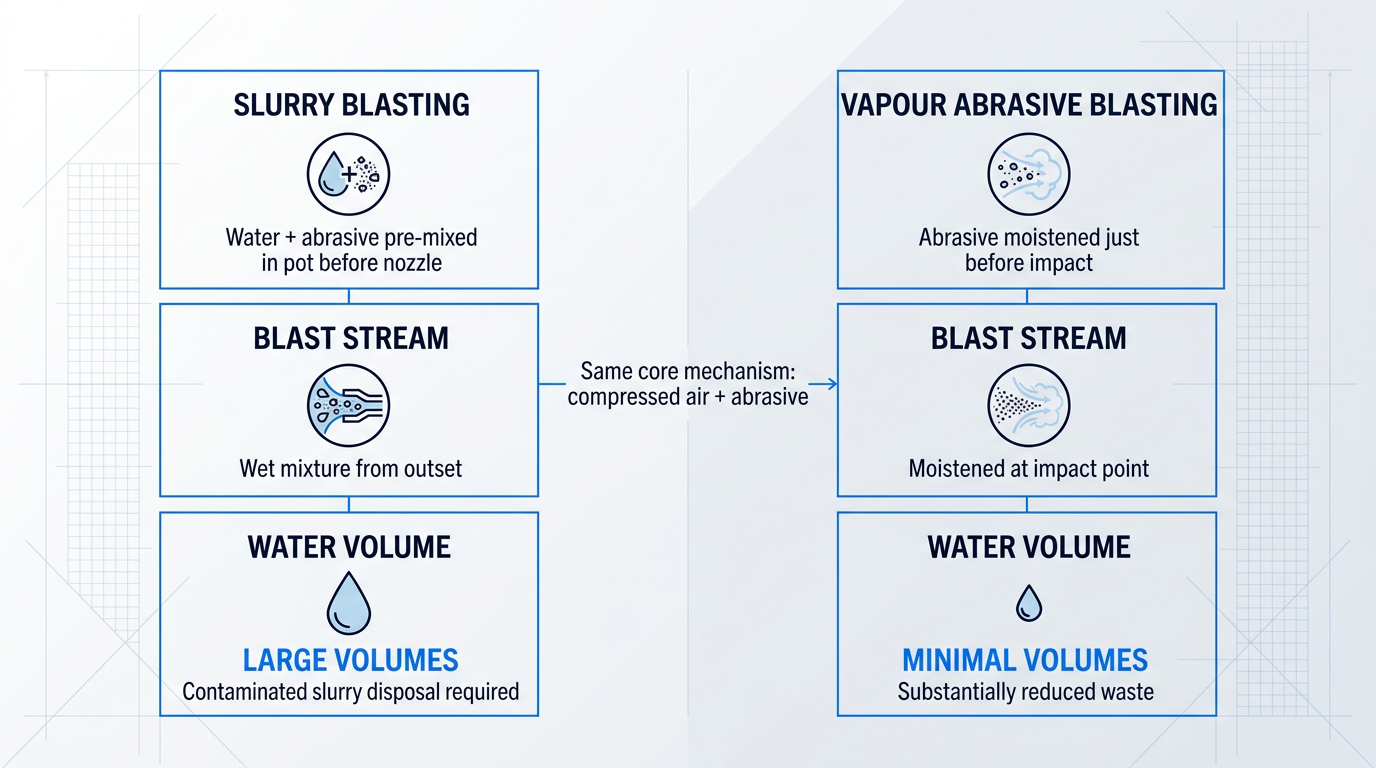
There are two distinct variants, and the difference between them matters practically. In slurry blasting, water and abrasive media are mixed together in the pot before being propelled through the nozzle — the blast stream is a wet mixture from the outset.
In vapour abrasive blasting (sometimes marketed as dustless blasting), the abrasive is introduced into a water-vapour stream and moistened just before impact rather than pre-mixed as a slurry. The physical principle in both cases is the same: water encapsulates the abrasive particles at the point of impact, preventing liberated particles from becoming airborne as a respirable dust cloud.
Dust Suppression: The Headline Claim, Honestly Stated
Vapour abrasive blasting significantly reduces airborne dust compared to conventional dry blasting — a reduction meaningful enough to change what containment and PPE are required on a live site.
The term dustless blasting is widely used in equipment marketing, but it is not technically accurate. Some particulate is always produced. Containment requirements are reduced, not removed, and any site plan that treats this method as producing zero dust is making an unsafe assumption.
This distinction matters for regulatory compliance and site planning: the reduction is substantial enough to allow operations in some shared or semi-public environments where dry blasting would be prohibited, but it does not remove the need for dust management planning altogether.
Surface Profile and Coating Preparation
Unlike some gentler alternatives, wet and vapour abrasive blasting still creates a mechanical anchor profile on the substrate — the surface roughness that coating systems require for adhesion. The water acts as a lubricant during abrasive contact, which typically produces a finer, more consistent profile than dry blasting achieves in comparable applications.
This makes the method genuinely suitable for coating preparation work on steel, concrete, and masonry where a surface profile is a specification requirement, not just a preference.
Flash Rust: The Critical Trade-Off on Steel
Exposing bare steel to moisture is the method's most significant practical constraint. Once the surface is stripped, flash rust can begin forming within minutes to hours depending on ambient humidity and temperature — fast enough to compromise coating adhesion before the first coat is applied.
Rust inhibitors can be added directly to the water tank to slow or prevent flash rust formation, and this is common practice in professional applications. It adds a process step and a chemical cost, but it is a workable solution for most steel substrates when planned for in advance.
On a humid day, bare steel can begin rusting within minutes of being exposed by wet blasting — faster than a coating can be applied. Rust inhibitors in the water tank address this, but the window is real and must be built into the work sequence, not discovered on site.
Water Management: Where Slurry and Vapour Diverge
Slurry blasting generates large volumes of contaminated water that must be contained on-site and disposed of in compliance with local environmental regulations. On a municipal bridge, a marine structure, or any site with drainage controls, this is a genuine operational burden that requires planning equivalent to — and sometimes exceeding — dry blasting containment.
Vapour abrasive systems use substantially less water than slurry systems, which reduces the volume of contaminated waste generated and simplifies both site cleanup and disposal logistics — one of the more meaningful practical differences between the two variants.
Where This Method Fits and Where It Does Not
Wet and vapour abrasive blasting is well-matched to steel fabrication, structural steelwork, concrete, masonry, and marine maintenance — applications where an anchor profile is required, some moisture exposure is tolerable, and dust reduction is the primary driver for moving away from dry blasting.
- Not suitable: moisture-sensitive substrates: Wood, certain composites, and any substrate that warps, swells, or degrades on water contact are poor candidates for this method.
- Not suitable: electrical environments: Water and live or energised electrical equipment do not mix. The method cannot be used safely near electrical infrastructure without full isolation.
- Not suitable: immediate coating windows: If the coating schedule requires application immediately after blasting, the drying window needed post-wet blasting is a hard constraint unless rust inhibitors are used.
- Not suitable: no water disposal route: Sites without a compliant route for contaminated water disposal make slurry blasting impractical and may restrict even vapour abrasive systems.
On sites where these constraints do not apply, vapour abrasive blasting in particular offers a meaningful operational advantage over dry blasting: reduced containment setup, lower PPE burden for the operator, and sufficient dust suppression to allow other trades to continue working in adjacent areas — a real benefit on live infrastructure or occupied facilities.
Ongoing Operational Costs to Account For
Wet and vapour abrasive blasting still requires a continuous supply of abrasive media, which must be purchased, transported, and disposed of after use — the same consumable overhead that applies to dry blasting, with the addition of water management and, where used, rust inhibitor chemicals.
Reducing dust does not reduce consumable complexity; it changes the shape of it. Operators moving from dry blasting to this method should plan for contaminated slurry disposal as a line item, not an afterthought.
For situations where substrate preservation is the overriding concern rather than dust reduction — particularly on softer or more delicate surfaces — the next method takes a fundamentally different approach, one that removes surface profiling from the equation entirely.
Soda Blasting: Non-Destructive Surface Cleaning
Every blasting method covered so far still does something to the substrate — it profiles it, textures it, or removes material from it. Soda blasting is the exception: it is the only blasting abrasive that removes contamination without creating a surface profile or taking any base material with it, making it a genuinely different category of sandblasting alternative for applications where the substrate must be preserved exactly as found.
The mechanism behind this is worth understanding. Sodium bicarbonate crystals are accelerated through a nozzle at relatively low pressure but high velocity, and when they strike the contaminated surface, they fracture rather than bounce or embed.
That fracturing is the key: it spreads the kinetic energy laterally along the surface rather than driving it into the substrate, lifting contamination away without the impacting force penetrating the material beneath — which is why sodium bicarbonate, with a Mohs hardness of just 2.5, generates little to no heat and will not warp, dent, or alter the engineered dimensions of the surface being cleaned.
Soda blasting is the only blasting abrasive that removes coatings and contamination without profiling the substrate or removing base material. That same property is its central limitation: if a coating specification requires an anchor profile for adhesion, soda blasting alone cannot provide it.
This non-destructive characteristic makes soda blasting the decisive choice in a specific set of applications — those where any surface alteration would cause irreversible damage or dimensional change to the substrate.
- Automotive bodywork: Removes paint, body filler, and undercoating from thin metal panels without generating heat, preventing the warping or metal removal that aggressive abrasives cause.
- Heritage and restoration: Safe on soft stone, brick, limestone, and ornate masonry where any surface profiling would cause irreversible damage to historic fabric.
- Graffiti removal: Removes one layer of paint at a time from masonry, brick, block, and metal without disturbing the substrate or the coating beneath the graffiti.
- Fire and smoke damage: Cleans and deodorises soot-affected wood, concrete, brick, and metal back to pre-fire condition without altering the substrate.
- Delicate composites and fibreglass: Strips coatings from carbon fibre, fibreglass, and gel-coated surfaces that cannot tolerate the abrasion of mineral media.
In terms of substrate breadth, soda blasting is genuinely wide-ranging: it can be used on steel, aluminium, alloys, plastics, rubber, composites, fibreglass, wood, masonry, and glass without damaging the underlying material.
One process step that must be built into any soda blasting workflow is thorough rinsing before coating: the sodium bicarbonate residue left on the surface after blasting can interfere with coating adhesion if not fully removed, so a fresh-water rinse is required before any paint or primer is applied.
On the media economics side, sodium bicarbonate fractures into fine particles on impact and cannot be recovered or recycled — it is a one-pass medium, which means continuous media cost and ongoing waste generation for any large-area or repeat cleaning task.
The spent residue is water-soluble, which simplifies cleanup considerably compared to mineral abrasives: there is no grit to collect and dispose of as solid waste, and a rinse-down is typically sufficient.
That said, environmental runoff requires management on outdoor jobs, particularly around vegetation and waterways — the ARMEX manufacturer guidance recommends pre-soaking soil and plants before blasting and continuing to flush after, to reduce sodium ion concentration around root structures and minimise any impact.
Where soda blasting falls short is equally important to understand: it lacks the kinetic force to penetrate deep-pitted corrosion or remove heavy mill scale, and because it creates no surface profile, it is unsuitable as a standalone preparation method for high-performance coatings — industrial epoxies, zinc-rich primers, and similar systems — that require a mechanical anchor profile for adhesion.
For applications where the contamination is heavier, the corrosion runs deeper, or the substrate needs more than gentle surface cleaning, a different approach is needed — and the next method in this guide addresses exactly that challenge.
Dry Ice Blasting: No Media, No Residue
Every blasting method covered so far — wet blasting, vapour blasting, soda blasting — still relies on mineral abrasive media that accumulates as secondary waste after use. Dry ice blasting breaks that pattern entirely. It uses solid CO₂ pellets that sublimate on impact, converting directly from solid to gas and leaving no blast media behind whatsoever.
What makes dry ice blasting genuinely interesting is how it cleans. Three distinct effects act simultaneously the moment a pellet strikes a contaminated surface, and understanding all three explains why the method behaves so differently from everything before it in this guide.
- Kinetic impact: The accelerated CO₂ pellet strikes the surface at high velocity, breaking the mechanical bond between contaminant and substrate.
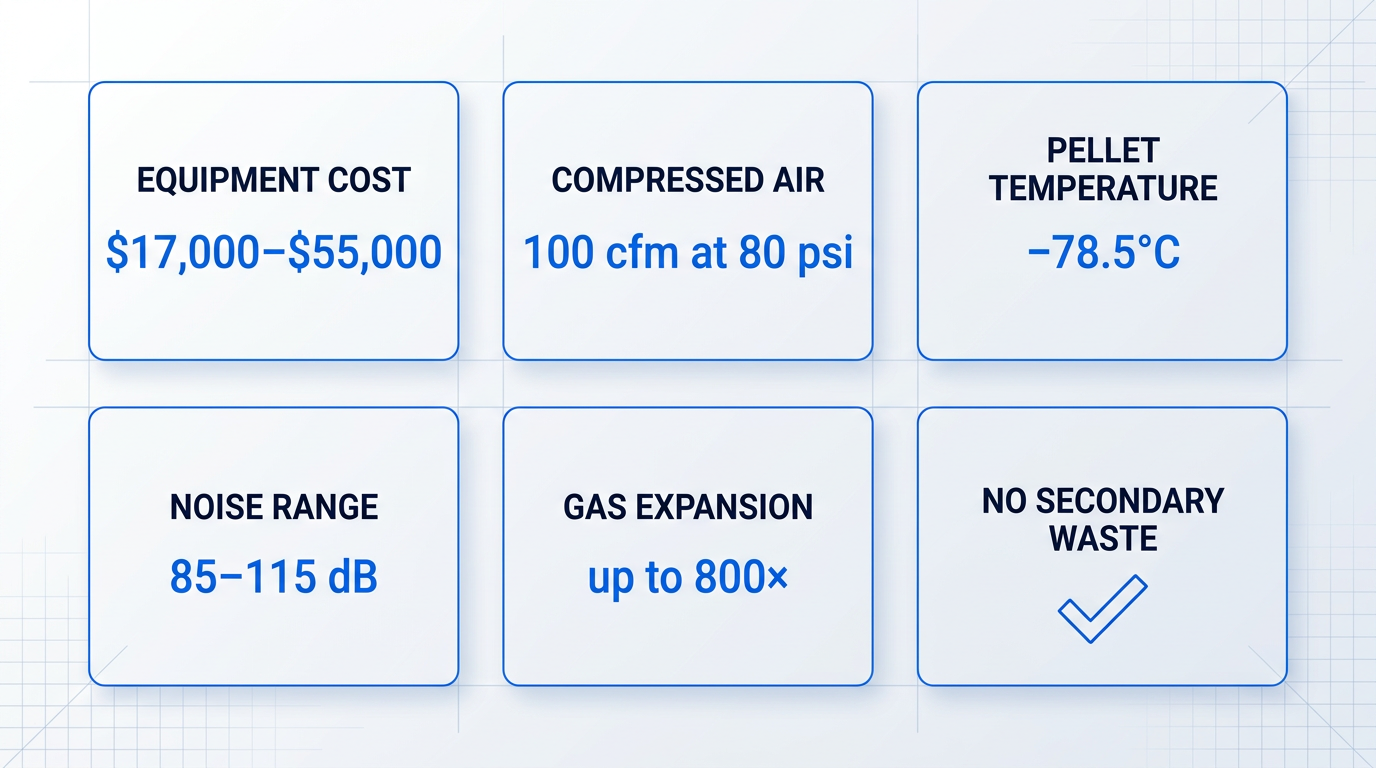
- Thermal shock at −78.5°C: The extreme cold embrittles the contaminant, causing it to contract and crack away from the underlying surface.
- Gas expansion up to 800×: Rapid sublimation expands the dry ice up to 800 times in volume within milliseconds, lifting dislodged contamination away from the surface.
The practical result of that third stage is the defining characteristic of this method: the dry ice converts entirely to CO₂ gas and disperses, leaving no solid residue and no secondary waste stream.
Because dry ice sublimates completely on impact, operators cleaning in-place equipment need only collect the dislodged contamination — there is no spent abrasive to bag, contain, or dispose of. For sandblasting, that secondary waste runs to 70–800 lbs of grit per hour of use.
This sublimation characteristic has a direct operational consequence: dry ice is non-conductive and leaves no moisture or chemical residue, which means it can clean operating machinery, electrical components, and production equipment in place — without disassembly, masking, or shutdown.
In maintenance contexts where taking equipment offline is costly, that capability is significant. Sandblasting the same equipment would require full disassembly and containment; chemical methods would require dwell time, rinsing, and often disassembly too.
Where Dry Ice Blasting Excels
The method's range is genuinely broad. At lower parameters it is gentle enough for delicate surfaces — soft alloys, sensors, electrical wiring, plastics, and composites. Dialled up, it handles heavy contamination including asphalt, corrosion, and weld slag.
- Food and beverage processing: Dry ice is food-grade and EPA, FDA, and USDA certified. Equipment can be cleaned while still hot and running, with no chemical residue left behind.
- Mould cleaning: Injection moulding and rubber moulds can be cleaned in-press at operating temperature, eliminating cooling cycles and reducing cleaning time significantly.
- Fire and smoke restoration: Removes char, soot, and odour-causing carbon deposits from structural timbers and surfaces without reintroducing moisture to already-compromised structures.
- Historical restoration: Non-abrasive media protects delicate carved surfaces and aged materials; used on monuments, historic vessels, and aircraft restoration projects.
- Aerospace and composites: Cleans composite tools, layup moulds, and production fixtures without damaging polished surfaces, delicate coatings, or sensitive geometries.
- General industrial maintenance: Cleans large machinery in-place without shutdown, disassembly, or moisture — covering automotive, foundry, and manufacturing applications.
The common thread across all of these is the in-place, dry, residue-free cleaning capability — particularly valuable wherever chemical residues are unacceptable, disassembly is impractical, or downtime is expensive.
Operational Requirements and Trade-offs
The most significant practical constraint is CO₂ supply chain dependency. Dry ice sublimates continuously — typically 2–10% per day even in insulated storage — so it cannot be stockpiled and must be used shortly after delivery.
Suppliers typically deliver in 500 lb insulated totes, and most metropolitan regions have suppliers covering roughly a 100-mile radius. For operations in remote locations or regions with limited CO₂ supply infrastructure, this is a genuine barrier that deserves honest evaluation before committing to the method.
Equipment cost starts at around $17,000 for a professional entry-level dry ice blaster, with premium machines reaching $55,000. That figure does not include the compressed air source.
Pellet-based systems typically require 100 cfm at 80 psi — supplied by plant air or a portable compressor. When using a diesel compressor, an aftercooler is essential to remove heat and moisture from the air before it reaches the blaster, adding further infrastructure cost.
On safety: sublimating CO₂ is heavier than air and, in enclosed or confined spaces, can displace oxygen and create an asphyxiation hazard. OSHA guidance specifically flags dry ice pellets as a confined-space asphyxiant hazard, and both the UK HSE and NIOSH corroborate the risk. Operators should consult relevant safety guidance for their jurisdiction before working in enclosed environments — this is not a constraint to dismiss.
Noise levels range from 85 dB at lower pressures up to 115 dB at maximum blast pressure, making hearing protection a standard operational requirement across all applications.
Where Dry Ice Blasting Falls Short
Like soda blasting, dry ice blasting cannot create a surface profile for coating adhesion. The process is non-abrasive by design, which means it will not produce the anchor profile that many coating specifications require — sandblasting remains the appropriate choice for that application.
The CO₂ supply dependency, infrastructure requirements, and equipment cost add operational complexity that sandblasting — which uses widely available mineral abrasive and simpler equipment — does not carry. High noise levels are a constant, and the method is unsuitable for any environment where CO₂ concentration cannot be adequately controlled through ventilation.
Dry ice blasting eliminates the secondary waste problem that abrasive methods carry, but it replaces it with a consumable supply chain of its own. The next method in this guide — laser cleaning — takes the no-secondary-waste principle further still, requiring no consumable media at all: no CO₂ pellets, no compressed air for media delivery, and no supply chain dependency of any kind.
Laser Cleaning: No Media, No Chemicals, No Abrasive
Every method covered so far has involved propelling something at a surface — grit, soda crystals, CO₂ pellets. Laser cleaning breaks from that paradigm entirely. It uses pulsed light to remove contamination, with no abrasive media, no chemicals, no water, and no CO₂ supply. The physics, not the operator, determines where cleaning stops.
How Laser Ablation Works
A pulsed fibre laser delivers rapid, high-energy bursts of light to the contaminated surface. The critical concept is the ablation threshold: every material has a specific energy level at which it transitions from solid to vapour.
The laser is tuned so its pulse energy sits above the ablation threshold of the contaminant — rust, paint, oxide — but below the threshold of the base material beneath it.
The contaminant vaporises. The substrate does not. Cleaning stops at the base material because the physics demand it, not because the operator judges it correctly.
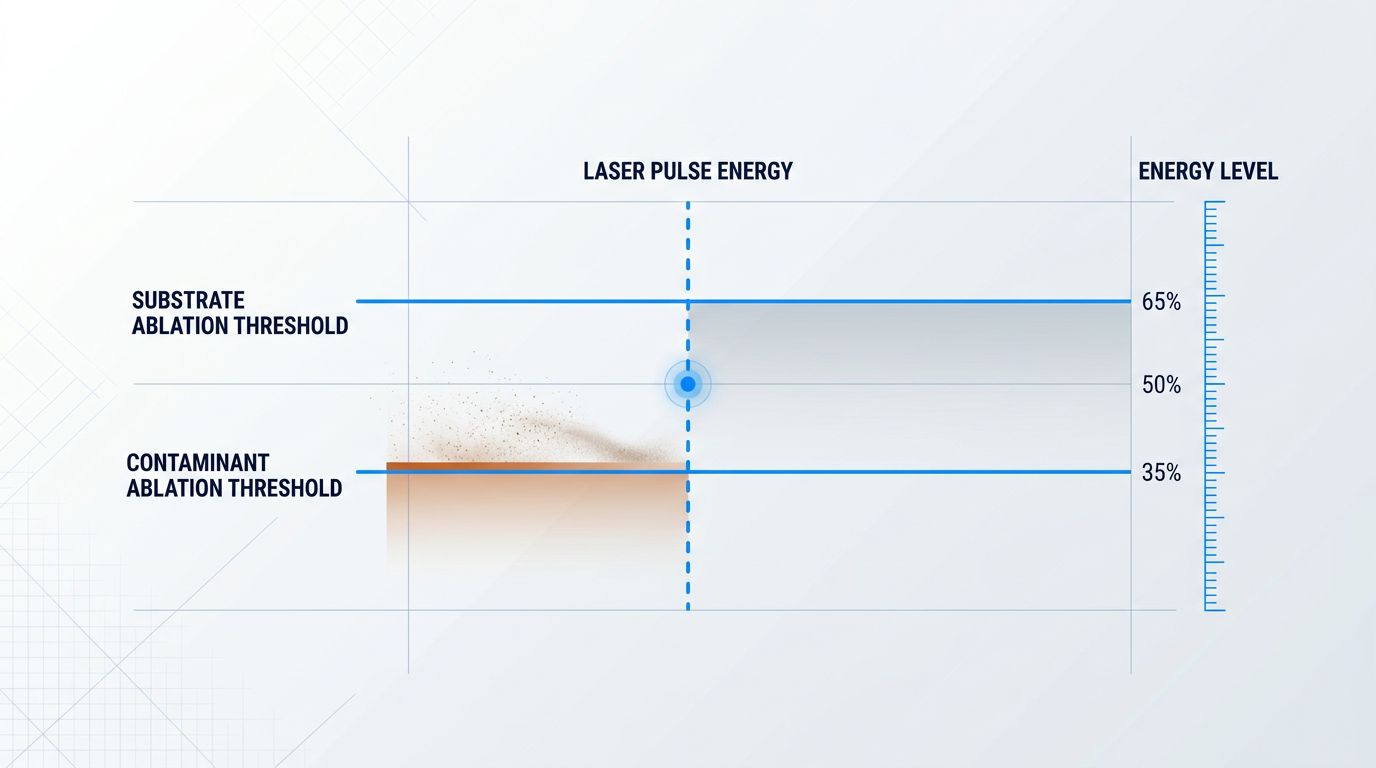
This self-limiting behaviour is what makes laser cleaning fundamentally different from abrasive methods, where over-blasting is an ever-present risk and substrate erosion depends entirely on operator skill and dwell time.
Four Mechanisms, One Cleaning Pass
Laser cleaning does not rely on a single removal mechanism — it draws on four, which is why it handles such a broad range of contamination types.
- Ablation: The contaminant absorbs laser energy and transitions directly from solid to vapour — the primary mechanism for rust, oxides, and mill scale.
- Thermal shock: Differential thermal expansion between the contaminant and substrate causes the coating to crack and detach — effective on paint and powder coatings.
- Burning: Organic coatings combust under the laser pulse, breaking down and releasing from the surface without abrasive contact.
- Boiling: For oils and greases, the laser heats the substrate beneath the oil layer, causing droplets to jump free from the surface.
A fume extraction system captures the resulting vapour and particulate at source — the only byproduct of the entire process.
This multi-mechanism nature is what gives laser cleaning its breadth: one method, across contamination types that would otherwise require entirely different processes.
What Laser Cleaning Can Remove and From What
The contamination and substrate range is genuinely wide — wider than any single blasting method can match.
- Contaminants removed: Rust, oxides, mill scale, paint, powder coating, lacquer, primer, oil and grease, carbon and soot, mould, graffiti, adhesives, tarnish, weld discolouration, and release agents.
- Substrates handled: Steel, carbon steel, aluminium alloys, cast iron, copper, brass, bronze, titanium, galvanised steel, stone, concrete, brick, and masonry.
One system, one method, across that entire matrix — without changing media, adjusting chemistry, or switching process.
Minimal Substrate Loss: A Quality Criterion
Because the beam stops at the base material, laser cleaning does not erode the substrate beneath the contamination layer.
For precision components, heritage surfaces, thin-walled parts, or any application where dimensional tolerance is critical, this is the evaluation criterion that matters most: will the cleaning process consume material it should not?
With laser cleaning, the answer is no — and the rework costs that follow from over-blasting are simply removed from the equation.
Economics: Consumable-Free and Total Cost of Ownership
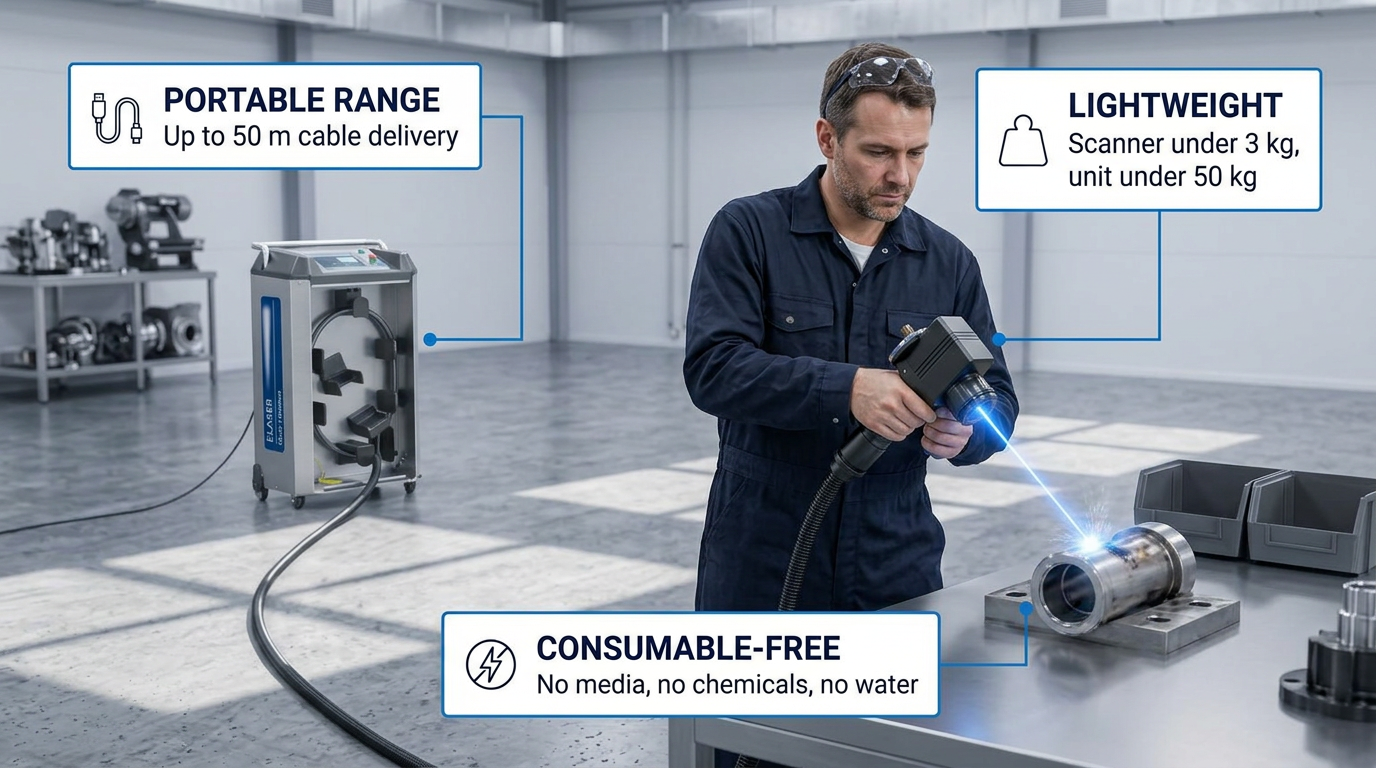
Laser cleaning requires no abrasive media, no chemicals, no water supply, and no CO₂ — the only operational input is electrical power.
The total cost of ownership case is strongest for regular, ongoing cleaning tasks: the continuous consumable spend that compounds over time with sandblasting, soda blasting, or dry ice blasting is simply absent.
Less downtime between jobs, less rework from substrate damage, and zero media management overhead all contribute to a consumable-free cost structure that favours laser cleaning decisively for any operation running cleaning tasks at volume.
Every sandblasting, soda blasting, or dry ice job adds media cost, disposal cost, and cleanup time to the total. Laser cleaning has none of these — the running cost after installation is electricity alone. For operations cleaning regularly, that difference accumulates into a substantial TCO advantage that the upfront investment comparison does not capture.
Operational Practicality
A portable laser cleaning system is self-contained: no compressor, no water supply, no chemical storage, no media hopper.
A single operator can set up, clean, and move on with minimal overhead — and with no secondary waste accumulating, there is no cleanup beyond fume extraction.
For production-line and high-volume batch contexts, automated laser cleaning extends the same approach to repetitive work: WSL's AutoLASE mounts the cleaning head on an articulated robotic arm, delivering the same substrate-preserving, consumable-free cleaning automatically, part after part.
The Hazard Zone Problem — and How RHZ Solves It
Conventional laser cleaning has carried a significant operational barrier: before work can begin, the laser hazard zone must be sealed off and fully evacuated.
In open workshops, mixed-use manufacturing facilities, and public-facing settings, that requirement has historically made laser cleaning impractical — the setup overhead undermines the very portability that makes the method attractive.
Woodrow Scientific Limited's patented reduced hazard zone (RHZ) technology addresses this directly: it collapses the hazard zone to a small area around the work itself, rather than requiring the entire surrounding space to be cleared.
This is a world-first, patented capability — no other laser cleaning system offers eye-safe, open-space cleaning of this kind. It enables cleaning in open-plan manufacturing, shared facilities, and publicly accessible spaces without shutdown or area evacuation.
Applications that were previously impractical for laser cleaning — graffiti removal on public monuments, heritage restoration in accessible spaces, in-place cleaning on active production floors — become straightforward with RHZ technology.
The ELASER and ELASER-RHZ
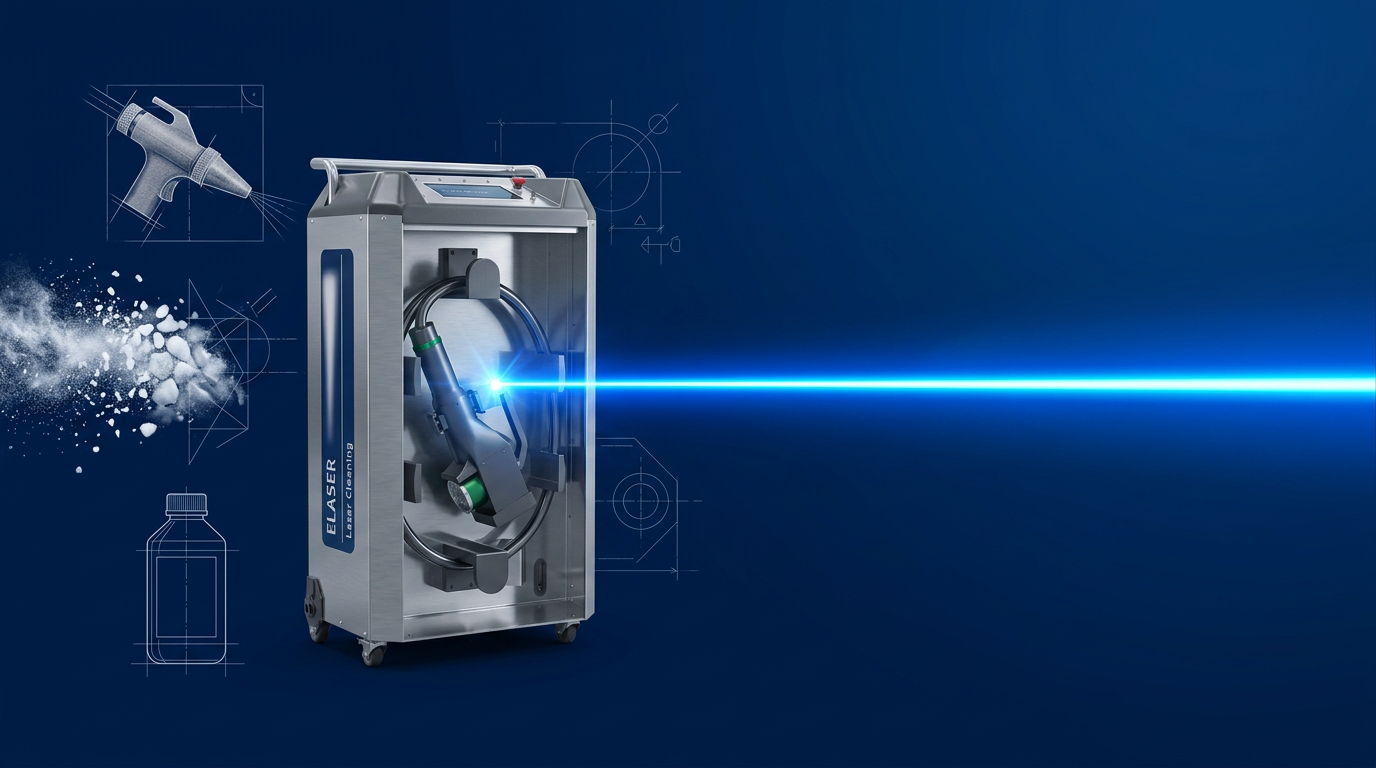
Woodrow Scientific Limited's ELASER and ELASER-RHZ are portable industrial fibre laser cleaning systems built around these principles — air-cooled, consumable-free, and designed for single-operator use.
Both systems run a 300 W fibre laser with power tunable from 0 to 100%, giving a single machine the range to handle everything from light surface oxides to thick industrial coatings without configuration changes.
The handheld scanner weighs under 3 kg and connects via a delivery cable of up to 50 m, so the wheeled system unit — itself under 50 kg — can be positioned well clear of the work area while the operator moves freely around the part.
The ELASER-RHZ operates at a 1550 nm wavelength, the foundation of WSL's world-first eye-safe reduced hazard zone capability — the only laser cleaning system of its kind available anywhere.
Both systems are CE and UKCA certified, and WSL provides full operator training as part of the package — so teams are cleaning confidently from the outset.
It is worth noting a wider market reality: a significant portion of laser cleaning systems sold under various brand names are rebadged imported machines, with no in-house engineering behind them and limited ability to support, repair, or genuinely improve the product.
WSL is the only UK-based laser cleaning manufacturer — designing, building, servicing, and improving its machines entirely in-house. That distinction matters when a system needs a fix, an adaptation, or a bespoke engineering solution: there is an actual engineering team behind the product, not a reseller relationship.
Where Laser Cleaning Excels Versus the Alternatives
Across the evaluation axes that matter for choosing a sandblasting alternative, laser cleaning holds a distinct position.
- No consumables: Unlike sandblasting, soda blasting, and dry ice blasting — no media to buy, store, replenish, or dispose of after use.
- No substrate damage: Unlike sandblasting, the beam stops at the base material. Precision components and heritage surfaces are cleaned without dimensional loss.
- No secondary waste: Unlike sandblasting and soda blasting, there is no spent media to collect and manage. Fume extraction handles the only byproduct.
- No water or drying time: Unlike wet blasting, laser cleaning leaves no moisture on the surface — parts are ready for the next process immediately.
- No chemicals: Unlike chemical stripping, there are no hazardous substances to handle, store, or dispose of under environmental regulation.
- Open-space operation with RHZ: Unlike conventional laser cleaning and most other methods, the ELASER-RHZ needs no area evacuation — cleaning proceeds in shared or public environments.
Where Laser Cleaning Has Limits
Laser cleaning is not the right choice for every application, and a fair evaluation requires acknowledging where it is not the strongest option.
On very large open surfaces with heavy coating build-up, sandblasting remains faster for bulk removal — the sheer coverage rate of a blast pot over wide steel structures is difficult to match with a handheld scanner.
Where a specific surface anchor profile is required for coating adhesion, laser cleaning does not create one by default. Laser texturing is a separate, distinct process that can generate a profile, but it is not the same operation as laser cleaning.
For operations running cleaning tasks regularly and at volume, the economics strongly favour the consumable-free approach over time — even accounting for the higher upfront investment relative to consumable-based methods.
Laser cleaning excels in field, workshop, and structural applications where precision, portability, and minimal overhead matter. For small parts that need cleaning inside blind holes, internal channels, or complex internal geometries, a different approach takes over — which is where ultrasonic cleaning comes in.
See Laser Cleaning in Action
No abrasive media, no chemicals, no secondary waste. The ELASER delivers precise, controllable surface cleaning for industrial applications where sandblasting falls short.

Ultrasonic Cleaning: Reaching Where Other Methods Cannot
Where laser cleaning works on surfaces, ultrasonic cleaning works inside them. Every method covered so far in this guide — blasting variants, dry ice, laser — acts on a surface from the outside. Ultrasonic cleaning works on an entirely different principle: parts are submerged in a liquid bath, and high-frequency sound waves drive a phenomenon called acoustic cavitation that dislodges contamination from geometries no external method can physically reach.
Piezoelectric transducers bonded to the tank convert electrical energy into high-frequency pressure waves — typically in the range of 20–130 kHz — that propagate through the cleaning liquid. These waves create alternating cycles of high and low pressure, during which millions of microscopic bubbles nucleate, grow, and then violently implode. Each implosion releases intense localised energy as micro-jets and shockwaves that fracture and dislodge contamination from the part's surface.
The critical advantage is reach. Those micro-jets penetrate blind holes, threaded features, internal channels, and crevices that no blast nozzle or laser beam can access — the cleaning action propagates through the liquid to every wetted surface simultaneously, regardless of geometry.
Choosing the Right Frequency
Frequency selection is a real operational decision, not a technical footnote. Lower frequencies (20–40 kHz) generate larger cavitation bubbles with more energetic implosions, making them well-suited to heavy contamination — rust, scale, polishing pastes, heavy grease — on robust parts such as engine components and metal tools.
Higher frequencies (80–130 kHz) produce smaller, gentler bubbles that clean with considerably less force — the right choice for precision electronics, PCBs, optical components, medical and dental instruments, and any substrate where aggressive cavitation could cause damage.
Ultrasonic cleaning is standard practice across aerospace (precision components, hydraulic fittings), medical and dental (instruments, implants), jewellery, electronics, and precision engineering. A significant production advantage is batch processing: multiple parts can be cleaned simultaneously to a consistent, reproducible standard — something blasting methods cannot easily replicate at scale.
The Role of Cleaning Chemistry
The liquid medium is not simply water. Cleaning solution chemistry must be matched to both the contaminant type and the substrate — cavitation provides the mechanical energy, but the right chemistry does the chemical work of breaking down and removing contamination.
- Acidic solutions: pH around 5.0 or lower. Effective against rust, scale, mineral deposits, and metal oxides on ferrous parts. Require rust inhibitors to protect base metal.
- Alkaline solutions: pH 10–12.5. Remove oils, greases, salts, and organic soils from metals including steel, aluminium, cast iron, brass, copper, and ceramics.
- Enzyme-based solutions: Break down protein-based contaminants — blood, tissue, saliva — used in pharmaceutical, food-processing, and life-science applications.
Matching chemistry to application is a genuine decision variable. The wrong solution will either fail to remove the target contamination or damage the substrate — particularly relevant where non-ferrous metals, sensitive alloys, or plastics are involved.
Most metals respond well to ultrasonic cleaning: steel, aluminium, copper, brass, titanium, and cast iron are all established substrates, alongside glass and ceramics. Substrate compatibility breaks down with low-density flexible plastics, thermosetting plastics, and any material chemically incompatible with the chosen cleaning solution — the substrate-solution interaction is the key compatibility check before committing to a process.
Ultrasonic cleaning is a workshop or production-line method, not a field method. Parts must fit inside the tank and be fully submerged — which rules out large structural components, in-situ cleaning of installed equipment, and any field application entirely.
In practice, the tank size constraint means parts must be removed from service, transported to the cleaning station, processed, rinsed, and dried before returning — a multi-step workshop process that adds time blasting and laser methods do not require.
Against the evaluation axes applied throughout this guide: dust generation is zero; substrate impact is gentle when frequency and chemistry are correctly matched; operational overhead is moderate (setup, chemistry management, rinsing, drying); solution chemistry is an ongoing consumable cost; and solution disposal may require management depending on chemistry used. Critically, ultrasonic cleaning produces no surface anchor profile, so it is not a substitute for sandblasting where structural steel needs preparation for high-performance coatings.
Ultrasonic cleaning handles the internal geometries and complex three-dimensional features that no blasting method can reach — but for surface coatings on parts or structures that cannot be submerged, chemical stripping offers a different kind of access, and that is the method covered next.
Chemical Stripping
Every method covered in this guide so far has involved some form of energy acting on a surface — kinetic impact, cavitation, laser pulses. Chemical stripping works on an entirely different principle: the active ingredient penetrates the coating film, causes it to swell and soften, and the loosened material is then removed mechanically by scraping, wiping, or rinsing.
The substrate itself is never struck, abraded, or thermally affected. That absence of kinetic energy is what defines chemical stripping's niche — and what makes its trade-off profile so different from every other method in this guide.
Types of Chemical Stripper
Three broad categories are in common use. They are not a ranked hierarchy — the right choice depends on the substrate, the coating system, and the working environment.
- Caustic strippers: Typically sodium hydroxide (lye). Break chemical bonds in paint films. Do not vaporise readily, so respiratory risk is lower — but the substrate must be neutralised before recoating.
- Solvent-based strippers: Penetrate the bond between coating and substrate. Effective across a wide range of coatings, but carry higher VOC and respiratory hazard, especially in enclosed spaces.
- Waterborne macro-emulsions: Lower solvent content and reduced VOC profile. A middle-ground option that trades some stripping speed for a more manageable chemical hazard.
The respiratory and VOC hazard gradient runs from caustic (lowest airborne risk) through waterborne macro-emulsion to solvent-based (highest). That gradient is the primary driver of ventilation requirements and PPE selection in practice.
Rust converters occupy a separate category with a different mechanism entirely. Phosphoric acid-based products react chemically with iron oxide to form iron phosphate, stabilising the rust in place rather than removing it. The resulting iron phosphate layer is a coating in its own right — not bare metal — and the intended topcoat must be compatible with that surface chemistry before application proceeds.
Where Chemical Stripping Works Well
The method's non-abrasive character defines its genuine use cases. Complex geometries — recessed areas, intricate profiles, internal cavities — are difficult or impractical to reach with any blasting nozzle, and chemical stripping handles them without access constraints, as seen in demanding applications such as industrial component remanufacturing.
Thin or delicate substrates that cannot tolerate abrasive impact are another strong fit: the chemistry removes the coating without touching the base material, preserving dimensional integrity where abrasive contact would cause measurable damage.
Small, localised areas also suit the method well. Setting up blasting equipment for a modest repair strip is disproportionate to the task; chemical stripping requires no capital equipment beyond the product itself, appropriate PPE, and sufficient dwell time.
One firm boundary: chemical stripping does not create a surface profile. Coating systems that require a mechanical anchor profile for adhesion cannot rely on a chemically stripped surface alone. Where no profile is needed, this is irrelevant; where one is required, it is a disqualifying constraint.
Operational Constraints and Trade-offs
The defining process constraint of chemical stripping is dwell time. The chemistry works on its own timeline — typically measured in hours, sometimes overnight for heavy or multi-layer coatings — and that timeline cannot be shortened by operator technique or equipment choice.
This makes dwell time a scheduling constraint, not merely a waiting period. Production throughput and workflow sequencing must be planned around it in a way that no blasting or laser method requires.
Operators who move from sandblasting to chemical stripping to avoid dust and respiratory hazard often underestimate what replaces it: chemical-resistant gloves and eye protection across all stripper types, plus solvent-vapour respirators for solvent-based products in enclosed spaces. The PPE burden shifts in character, not in magnitude.
The disposal overhead is the cost element most commonly underestimated in method comparisons. Spent stripper and stripped coating residue may constitute hazardous waste depending on their composition — particularly where F-list solvents are present or where the stripped coating contains heavy metals such as lead. Compliant disposal adds both direct cost and administrative overhead that does not appear in the purchase price of the stripper.
Substrate compatibility introduces further constraints. Caustic strippers must be thoroughly neutralised before recoating — residual alkalinity on bare metal can cause adhesion failure and promote corrosion of the freshly exposed surface. Rust converter users must confirm that the intended topcoat is compatible with an iron phosphate base rather than bare steel, since the surface chemistry differs meaningfully.
Taken together, the method's limitations are clear: chemical stripping is slow by process design; generates regulated chemical waste with real disposal cost; carries a PPE burden that varies by stripper type; does not remove rust or mill scale in most formulations; produces no surface profile; and is not suited to large-area structural work at scale.
With chemical stripping now covered, the full set of alternatives to sandblasting is on the table. The next section provides a practical decision framework for mapping each method to the specific constraints — substrate, environment, scale, and regulatory context — of your application.
Choosing the Right Sandblasting Alternative
Six viable alternatives to sandblasting, each with a genuine claim on the right application — that is a useful landscape to have mapped, but it is not yet a decision. The decision comes from matching your specific variables to the method that handles them best. Get that mapping right and the choice becomes clear; get it wrong and you end up with a method that creates new problems instead of solving the original one.
Five practical axes drive that mapping: substrate sensitivity, contamination type and severity, operating environment and access, scale and frequency, and operational constraints. Work through each one in the context of your application and the field of six narrows quickly.
Axis 1: Substrate Sensitivity
Substrate sensitivity is the first filter — because it eliminates methods outright before any other variable comes into play. The core question is whether the base material can tolerate abrasive impact, moisture, or chemical exposure without dimensional loss, surface damage, or structural compromise.
- Thin metal panels or precision components: Laser cleaning or ultrasonic cleaning. Both remove contamination without abrasive contact, preserving dimensional tolerance and surface geometry.
- Soft alloys (aluminium, brass, bronze, copper): Soda blasting or laser cleaning. Soda crystals are friable and gentle; laser power tunes down to lift oxides without cutting into the base material.
- Heritage stone, brick, or masonry: Soda blasting for general soiling; laser cleaning where precision matters or the substrate is fragile — no abrasive contact in either case.
- Robust structural steel: Wet or vapour blasting remains appropriate — the substrate tolerates abrasive impact and the profile requirement is often a specification, not a preference.
- Moisture-sensitive substrates: Dry ice blasting, laser cleaning, or chemical stripping. Wet and vapour blasting introduce water; these alternatives do not.
If your substrate sits in the delicate or precision category, the abrasive methods are off the table regardless of how convenient they might otherwise be — substrate damage is not a recoverable situation.
Axis 2: Contamination Type and Severity
What the contamination is and how severe it is are two separate variables that together point to the right method. Light surface oxidation on a precision component is a completely different problem from multi-layer paint on a structural beam or mould release agent baked into a production tool.
- Heavy rust and mill scale on structural steel: Wet or vapour blasting. The abrasive energy handles thick scale efficiently and creates the surface profile coatings require.
- Paint on delicate automotive or body panels: Soda blasting or laser cleaning. Both strip paint without cutting into the substrate beneath — no profile, no damage.
- Mould release agents and in-place mould fouling: Dry ice blasting or laser cleaning. Both clean in situ without disassembly; laser cleaning removes residue without abrasive wear on the tool.
- Rust, oxide, and paint on precision metal parts: Laser cleaning or ultrasonic cleaning. Laser power is tunable from light oxide to thick coatings; ultrasonic reaches internal geometry other methods cannot.
- Paint on complex shapes, no profile required: Chemical stripping. Penetrates geometry that line-of-sight methods miss; effective where access for blasting or laser is impractical.
- Weld discolouration, carbon, or light surface oxide: Laser cleaning. Tunable power handles light contamination precisely, leaving the base material intact and ready for the next process.
Severity matters as much as type: a method that handles light oxide may not have the energy budget for thick multi-layer paint, and a method calibrated for heavy contamination may damage a substrate carrying only a thin surface film.
Axis 3: Operating Environment and Access
Where the work happens is frequently the most constraining variable of all — and it is the axis where sandblasting most often fails people, which is why many readers arrive at this guide in the first place. Dust containment on an open site is impractical; media recovery in a public-facing environment is impossible; full area evacuation in a working facility is operationally disruptive.
For open sites, public-facing environments, and mixed-use facilities, laser cleaning with Woodrow Scientific Limited's patented reduced hazard zone technology is the standout option. The ELASER-RHZ collapses the laser hazard zone to a small area immediately around the work — enabling cleaning in open workshops, active production facilities, and publicly accessible spaces without sealing off the surrounding area. No other laser cleaning approach achieves this: the reduced hazard zone capability is WSL's world-first patented technology, and it is what makes laser cleaning viable in environments where conventional methods — including conventional laser cleaning — require full evacuation.
Other environment scenarios map to different methods: enclosed spaces with ventilation constraints suit dry ice blasting (with CO₂ concentration monitoring) or chemical stripping; a workshop with water and drainage opens up wet blasting or ultrasonic cleaning; field maintenance on installed equipment points to portable laser cleaning — the ELASER's sub-3 kg handheld scanner and up to 50 m delivery cable mean one operator can reach plant and infrastructure without repositioning the system — or dry ice blasting where a CO₂ supply is available on site.
Axis 4: Scale, Frequency, and Total Cost of Ownership
A one-off remediation job and a recurring production cleaning task are fundamentally different economic problems. The method that makes sense for a single restoration project may be entirely the wrong choice for a task that runs weekly across a working lifetime.
For high-volume repetitive production cleaning, laser cleaning — automated where throughput demands it — delivers the best total cost of ownership through zero consumables and consistent, repeatable results. Occasional large-area structural work suits wet or vapour blasting. Small batch precision parts point to ultrasonic cleaning. One-off restoration or remediation is well served by soda blasting or dry ice blasting depending on the substrate.
The underlying principle is straightforward: methods with consumables — abrasive media, CO₂ pellets, chemicals — carry a continuous cost that compounds with every cycle. Methods without consumables have a higher initial investment but lower running costs that improve the economics with each use. For any task performed regularly, the total cost of ownership calculation over a realistic working lifetime consistently favours the consumable-free approach.
Every cleaning cycle that requires media, chemicals, or CO₂ adds to the lifetime cost of the method. For regular cleaning tasks, the consumable-free approach does not just break even — it pulls further ahead with every job.
There is a specific combination of circumstances where laser cleaning stops being one option among several and becomes the clear recommendation — where the logic of the framework converges on a single answer.
- Substrate sensitivity: The substrate cannot tolerate abrasive impact or moisture, and dimensional tolerance must be preserved — laser cleaning removes contamination without touching the base material.
- Open or mixed-use environment: The work happens in a shared, public-facing, or active facility. The ELASER-RHZ's reduced hazard zone is the only laser cleaning technology that makes this viable without full evacuation.
- Regular ongoing cleaning: The task repeats on a production schedule. Zero consumables mean running costs stay flat while consumable-based alternatives compound with every cycle.
- Precision and repeatability: Results must be consistent across every part or surface. Tunable laser power and programmable scan patterns deliver repeatable outcomes that manual methods cannot match.
For UK-based operations, there is an additional practical consideration: Woodrow Scientific Limited is the only UK-based laser cleaning manufacturer — designing, building, servicing, and improving its machines entirely in-house. In a market where many laser cleaning suppliers are resellers or importers rebadging third-party hardware, that distinction matters operationally: in-house engineering means faster support, genuine product improvement, and a supply chain that does not depend on an overseas OEM. WSL also provides full operator training, which lowers the barrier to adoption and gets new operators productive quickly.
With the decision axes mapped and the right method identified, the remaining question is where to go next — the conclusion draws together the guide's key takeaways and points toward the clearest path forward.
Explore the Laser Cleaning Alternative to Sandblasting
No abrasive media, no dust, no secondary waste. If laser cleaning is the right fit for your application, the ELASER is worth a closer look.
Conclusion
Finding the Right Alternative to Sandblasting
The right alternative to sandblasting is never a universal answer — it is the method that fits your specific substrate, contamination type, working environment, and operational constraints together.
Across every method this guide has covered, laser cleaning stands out as the option that resolves the most constraints at once: no consumables, no secondary waste, and minimal substrate loss.
For those whose application points in that direction, Woodrow Scientific Limited — the only UK-based manufacturer that designs and builds its own laser cleaning systems in-house — is the natural next conversation.
Frequently Asked Questions About Sandblasting Alternatives
Practical answers to the questions professionals most commonly ask when evaluating alternatives to sandblasting for surface preparation.
For enclosed spaces, laser cleaning with reduced hazard zone (RHZ) technology is the standout option. It produces no dust, no airborne abrasive, no CO₂, and no chemical fumes. WSL's patented ELASER-RHZ collapses the laser hazard zone to a small area around the work, so cleaning can proceed without full area evacuation or shutdown. Fume extraction captures vaporised contamination at source. Chemical stripping is also viable in confined spaces — no dust or abrasive — but solvent-based strippers still require ventilation and careful chemical handling. Dry ice blasting avoids dust and abrasive residue, but sublimating CO₂ can displace oxygen in poorly ventilated enclosures, making CO₂ monitoring and adequate airflow essential. For the lowest combined hazard overhead in enclosed or shared environments, the ELASER-RHZ is the most practical choice. Full operator training is provided by WSL.
Yes — for most industrial applications, laser cleaning is a capable and increasingly preferred alternative to sandblasting for rust removal. The laser ablation process vaporises rust, oxides, and mill scale at their ablation threshold while leaving the base material intact. No abrasive impact, no substrate loss, no secondary waste to dispose of. One honest caveat: laser cleaning does not create a surface anchor profile by default. If your coating specification requires a defined profile — such as Sa 2.5 or equivalent — confirm that requirement before switching. Laser texturing can create a profile where needed, but it is a separate process step. For the vast majority of rust removal tasks where profile is not the primary concern, laser cleaning delivers a cleaner result with less collateral damage to the substrate than sandblasting.
Three methods are genuinely strong for heritage and restoration work, and the best choice depends on the substrate, the contamination type, and site access constraints. Soda blasting is non-destructive by design: sodium bicarbonate crystals fracture on impact, spreading energy across the surface rather than into it. It removes contamination without profiling the substrate and suits soft stone, brick, masonry, ornate architectural detail, and delicate metals. Residue is water-soluble and straightforward to clear. Dry ice blasting leaves zero secondary waste — the CO₂ pellets sublimate on impact — and can clean in place without disassembly, making it well suited to delicate surfaces including wood, masonry, and composites. CO₂ supply dependency and noise levels are worth accounting for on site. Laser cleaning is precise and inherently gentle: the beam stops at the base material, so over-cleaning is not possible. It suits stone, masonry, brick, metal, and mixed-material heritage surfaces. For publicly accessible sites — churches, monuments, civic buildings — the ELASER-RHZ's world-first reduced hazard zone technology is a particular advantage, enabling cleaning without sealing off large areas where full evacuation would be impractical.
Yes — wet and vapour abrasive blasting does produce an anchor profile suitable for coating adhesion. The water in the blast stream lubricates the abrasive, resulting in a profile that is typically finer and more consistent than dry blasting, but it is still a genuine mechanical profile. Wet abrasive blast cleaning is covered by SSPC standards — the WAB equivalents of the standard dry-blast cleanliness grades (SSPC-SP 5, 6, 10, and 7) — confirming it as a recognised, specification-compliant preparation method. One process consideration: once bare metal is exposed to moisture, flash rust can form before coating is applied. Rust inhibitors added to the blast water manage this risk, but the step needs to be planned for. Adequate drying time before coating application is required unless inhibitors are used.
Environmental burden varies significantly across methods. Sandblasting generates spent abrasive media that may be classified as hazardous waste if contaminated with lead paint or heavy metals, carrying disposal costs and regulatory overhead. Silica dust is also a health and environmental hazard. Chemical stripping produces spent stripper and coating residue; solvent-based products carry VOC emissions and potential F-list hazardous waste obligations under Environment Agency regulations. Dry ice blasting generates no secondary waste — the CO₂ sublimates on impact, leaving only the dislodged contamination to collect. The CO₂ used is typically recycled industrial gas rather than newly produced, which reduces but does not eliminate the carbon footprint. Laser cleaning has the cleanest environmental profile: no media, no chemicals, no water — energy-only cleaning with vaporised fume captured by the extraction system. The ELASER operates on this consumable-free basis as standard. Wet blasting suppresses dust versus dry blasting but generates contaminated water and slurry that requires containment and compliant disposal.
Yes — portable laser cleaning systems are self-contained and well suited to outdoor and field use. The ELASER requires no compressor, no water supply, no chemical storage, and no abrasive media hopper. The handheld scanner weighs under 3 kg, the delivery cable reaches up to 50 m, and the wheeled system unit comes in at under 50 kg. It runs on standard single-phase power (110–250 VAC), so a generator is sufficient for remote sites with no mains connection. The critical differentiator for outdoor work is the ELASER-RHZ's world-first reduced hazard zone technology. Conventional laser cleaning requires the hazard zone to be sealed off and cleared before work begins — in open outdoor settings, that means barriers, exclusion zones, and potentially halting nearby activity. The RHZ variant collapses the hazard zone to a small area around the work, making field cleaning genuinely practical without the overhead of cordoning off large areas. Single-operator setup, full operator training from WSL, and no specialist site infrastructure required.
The right lens for this comparison is total cost of ownership, not upfront equipment price. Sandblasting carries continuous running costs: abrasive media purchase, spent media disposal (potentially as hazardous waste), containment and cleanup labour, and PPE overhead — all compounding over every job. Laser cleaning's running costs reduce to electrical power. No media to buy, no disposal fees, no secondary waste, and minimal substrate loss means less rework. For any regular or ongoing cleaning task, that consumable-free model typically becomes more economical over the working lifetime of the equipment. The crossover point depends on cleaning frequency and volume — the more regularly a team cleans, the faster the TCO advantage compounds. The ELASER is the European cost leader among comparable industrial laser cleaning machines, with competitive upfront pricing achieved through in-house design and manufacturing rather than by cutting quality. WSL builds everything in-house — not a reseller — which also means stronger support, faster parts, and genuine product improvement over time.