Do Laser Rust Removers Really Work?
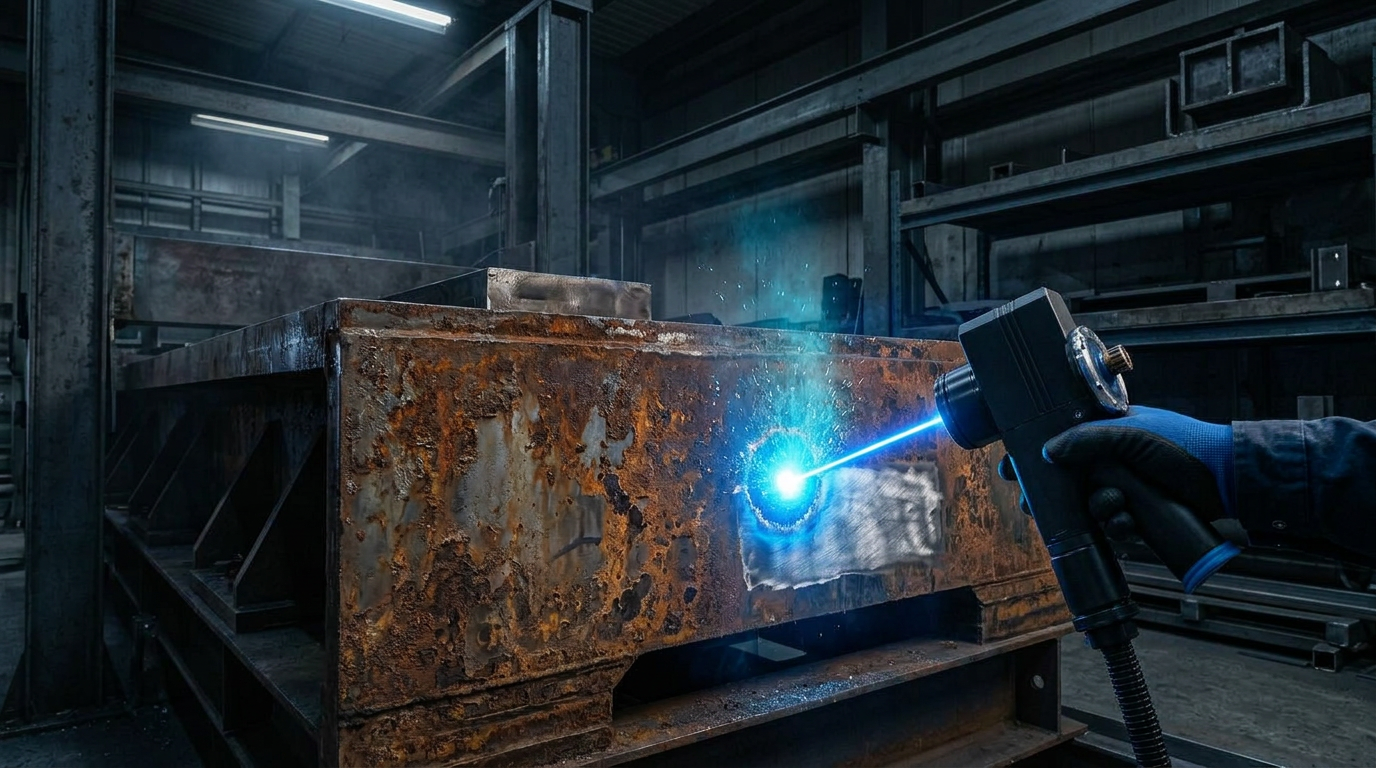
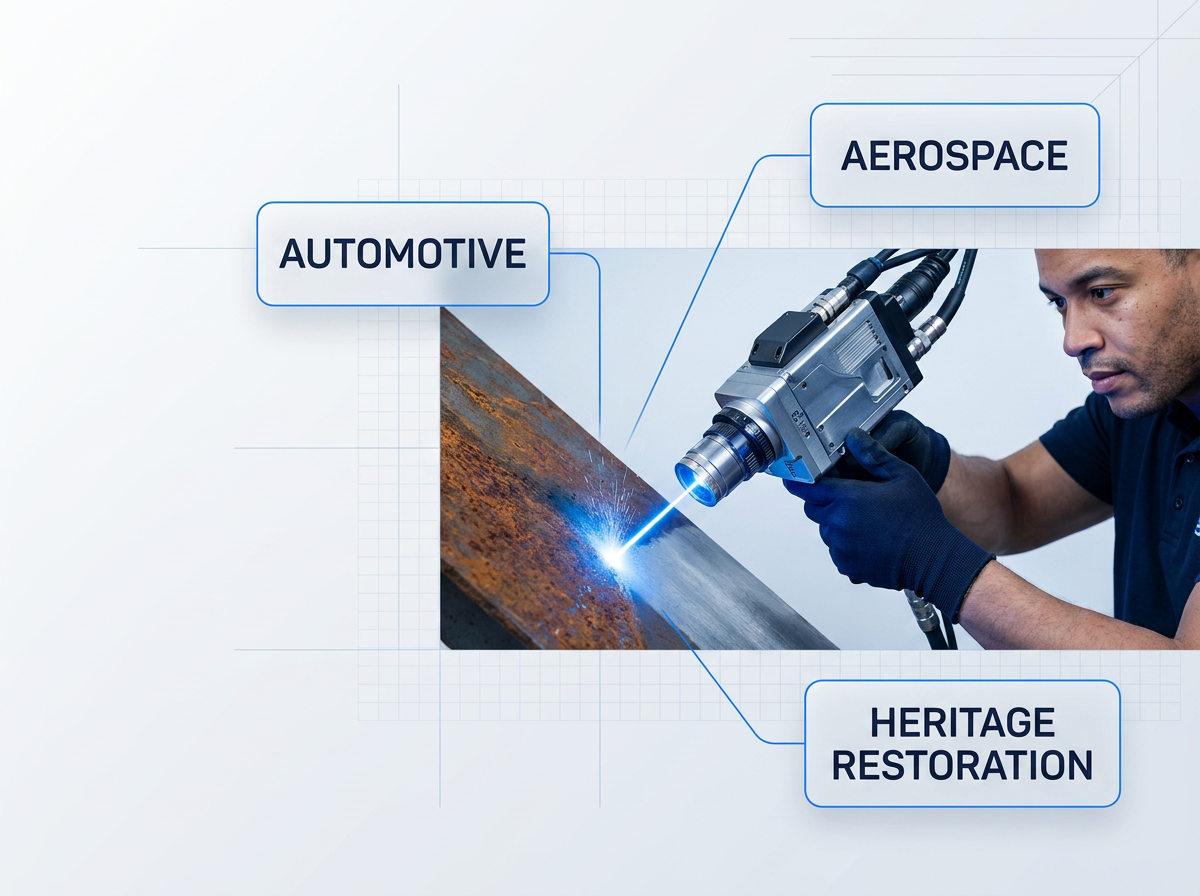
Yes. Pulsed laser cleaning is established industrial technology, deployed in demanding sectors including automotive, aerospace, and heritage restoration. High-energy pulses vaporise the contamination layer at the surface; because the base material absorbs far less energy than the contaminant, the beam stops precisely at the substrate. The result: no abrasive media, no chemicals, and no substrate erosion — the surface is left intact and ready for the next process.
Laser Performance
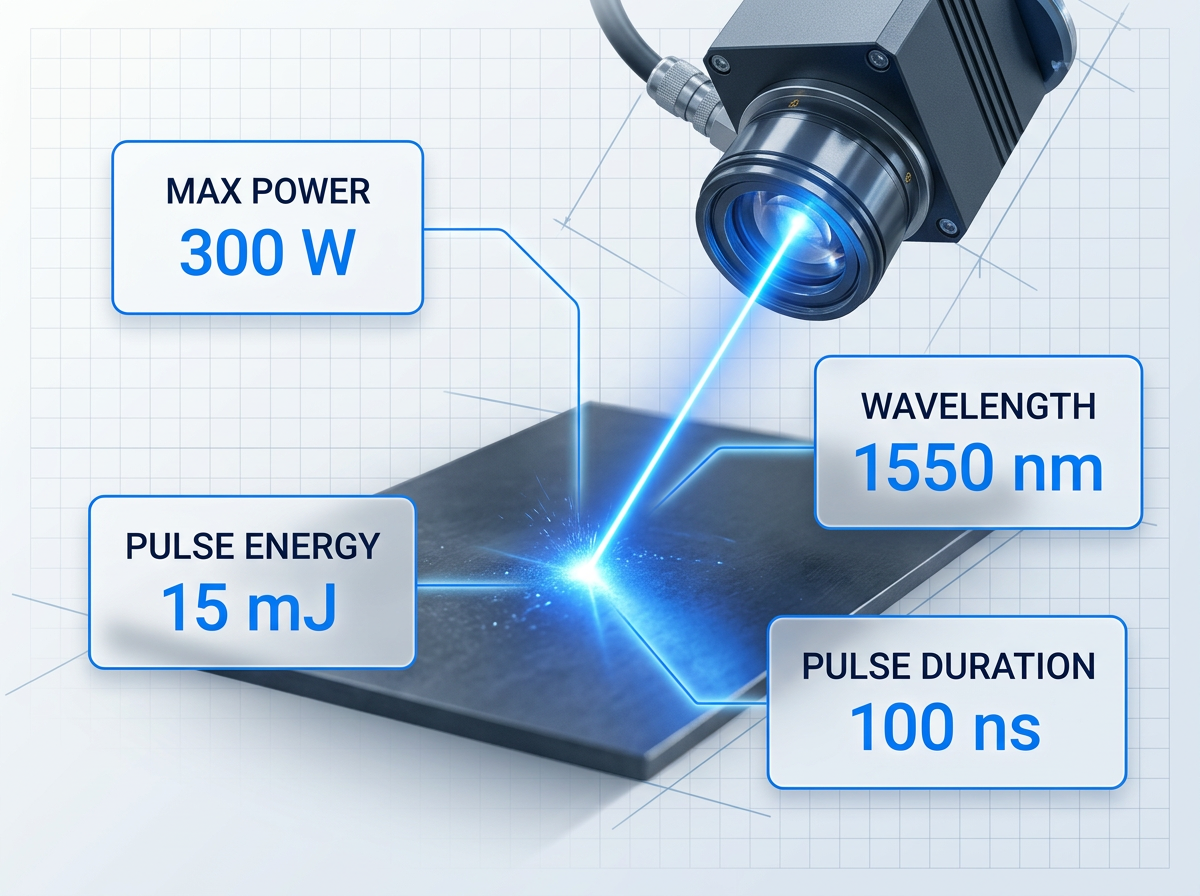
Max power: Up to 300 W. Wavelength: 1550 nm — the retina-safe wavelength underpinning ELASER's world-first Reduced Hazard Zone technology. Power tunability: 0–100%.
Pulse energy: Up to 15 mJ. Pulse duration: 100 ns. Pulse repetition rate: Adjustable up to 200 kHz (CW).
Scanner and Optics
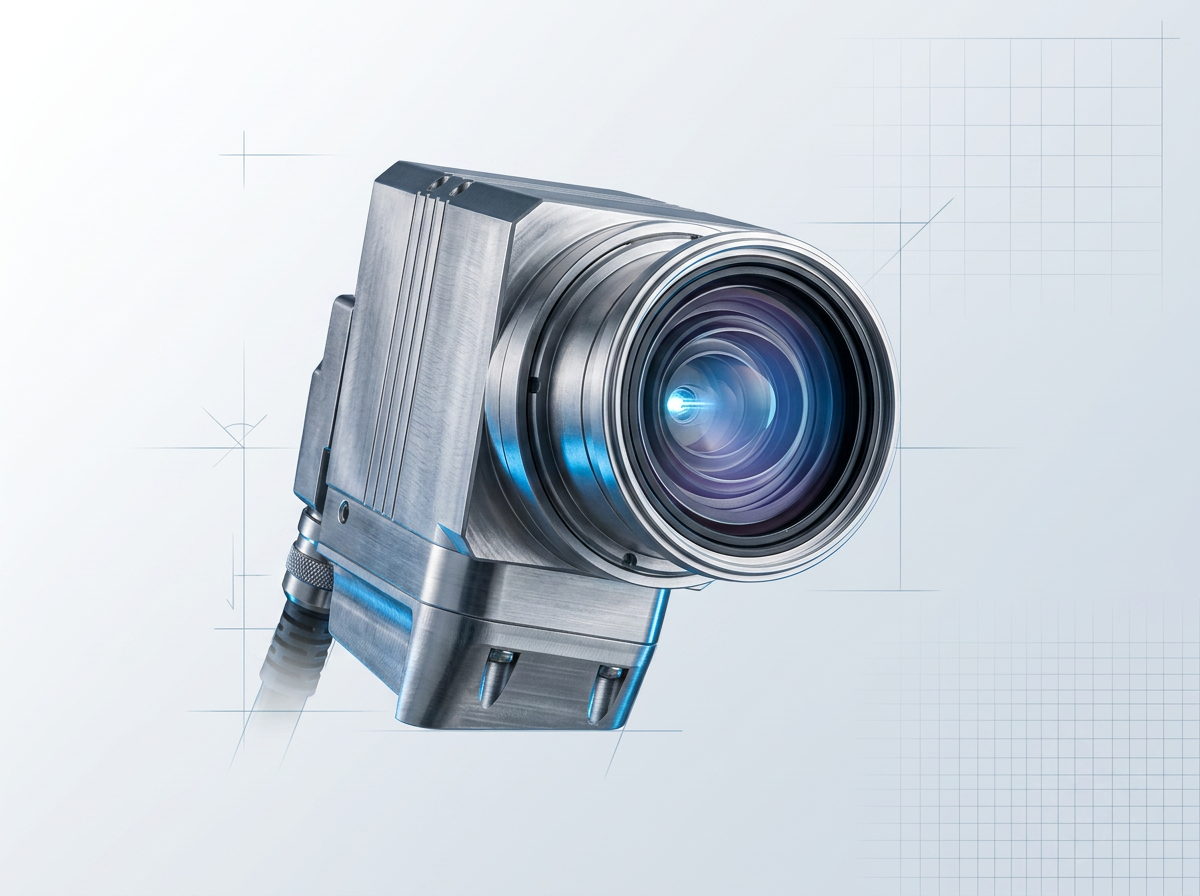
Scanner: 2-D galvanometer. Max scan rate: 10 m/s. Scan shapes: Fully programmable via GUI.
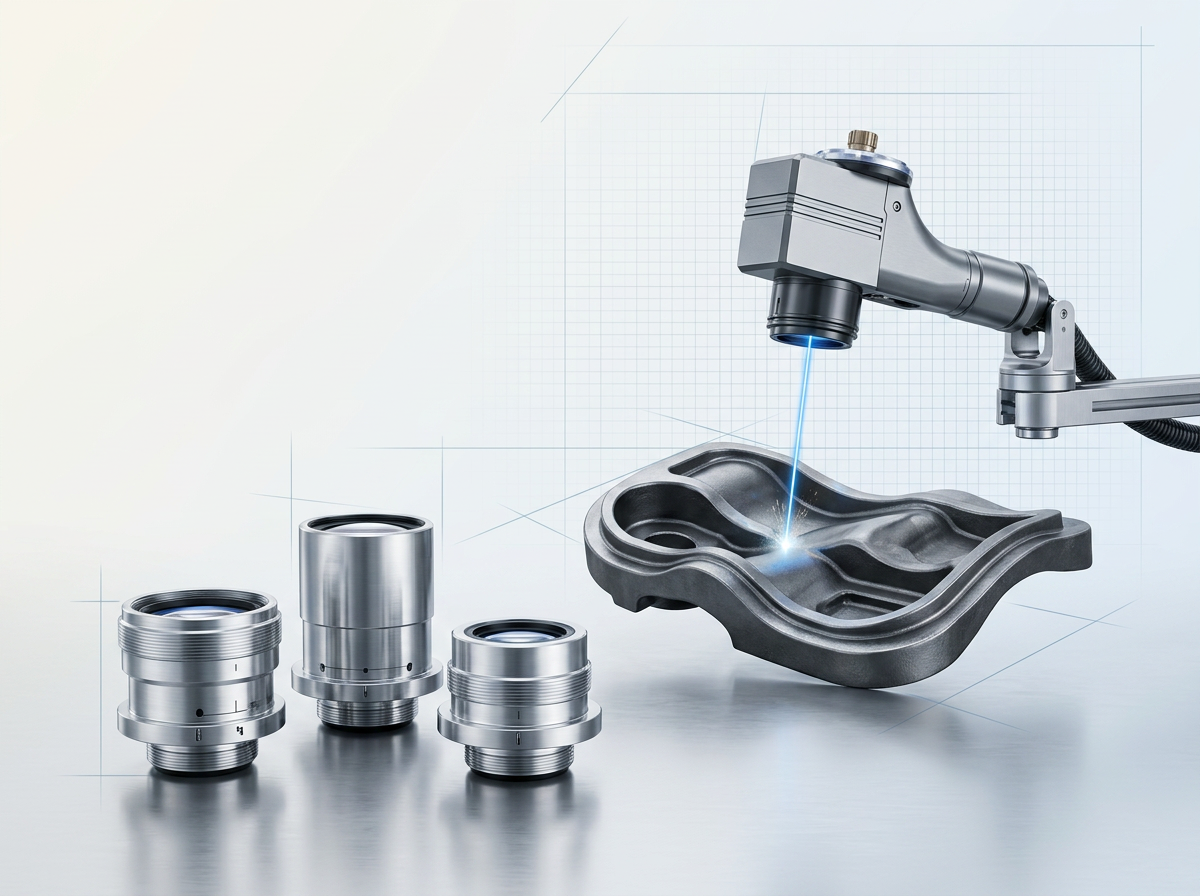
F-Theta lenses: Interchangeable; working distance: 75–500 mm. Delivery cable: Up to 50 m (5 m / 15 m standard lengths).
System and Portability
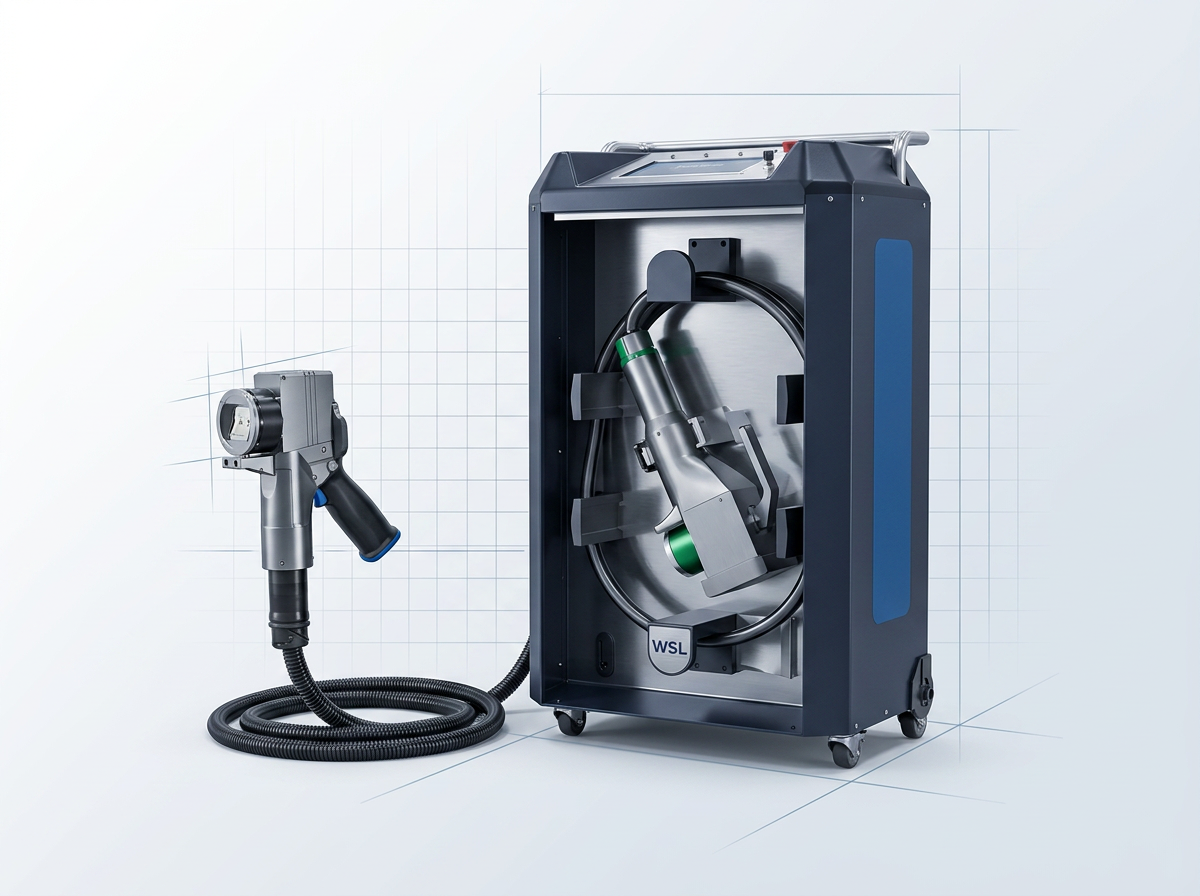
Handheld scanner: Under 3 kg. Full system: Under 50 kg, wheeled. Delivery cable: Up to 50 m.
Power supply: 110–250 VAC single-phase. Power consumption: <2000 W. Interface: Ethernet + touchscreen.
Compliance and Origin
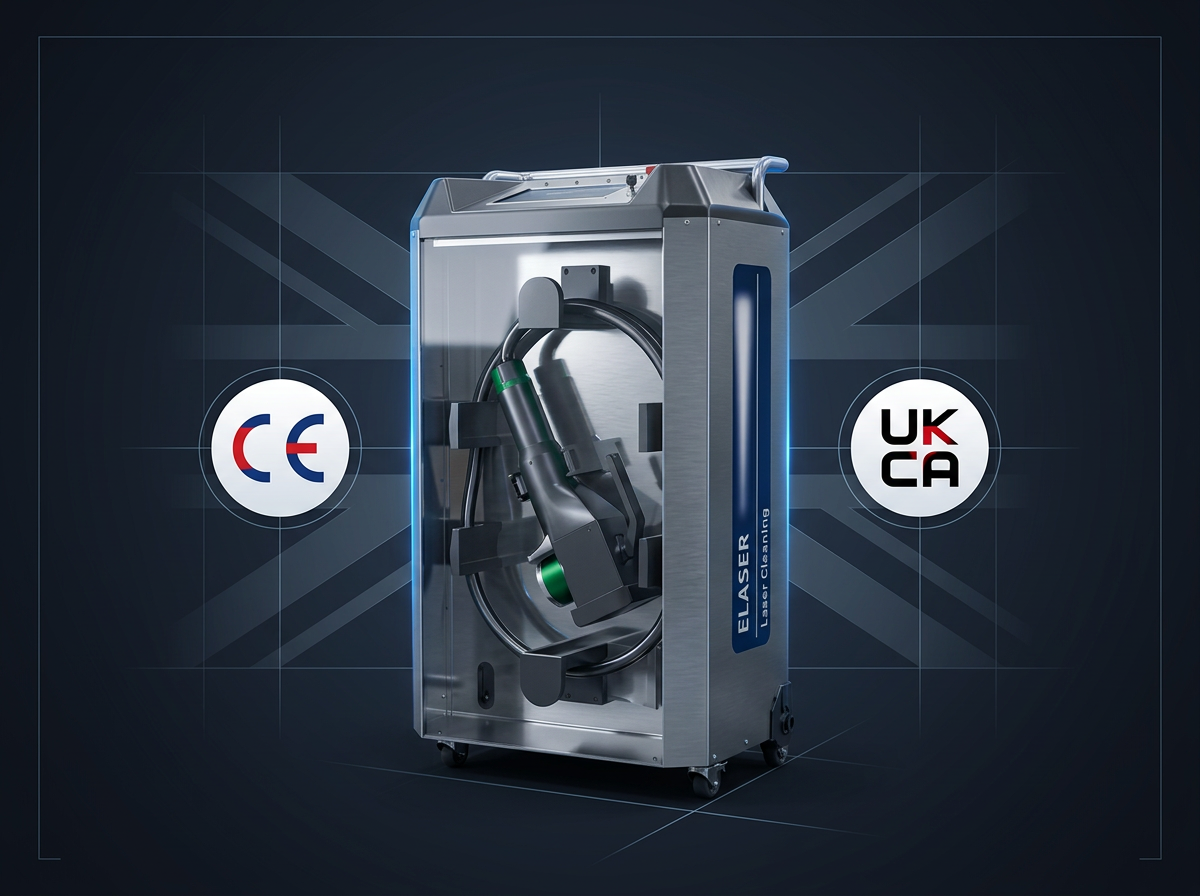
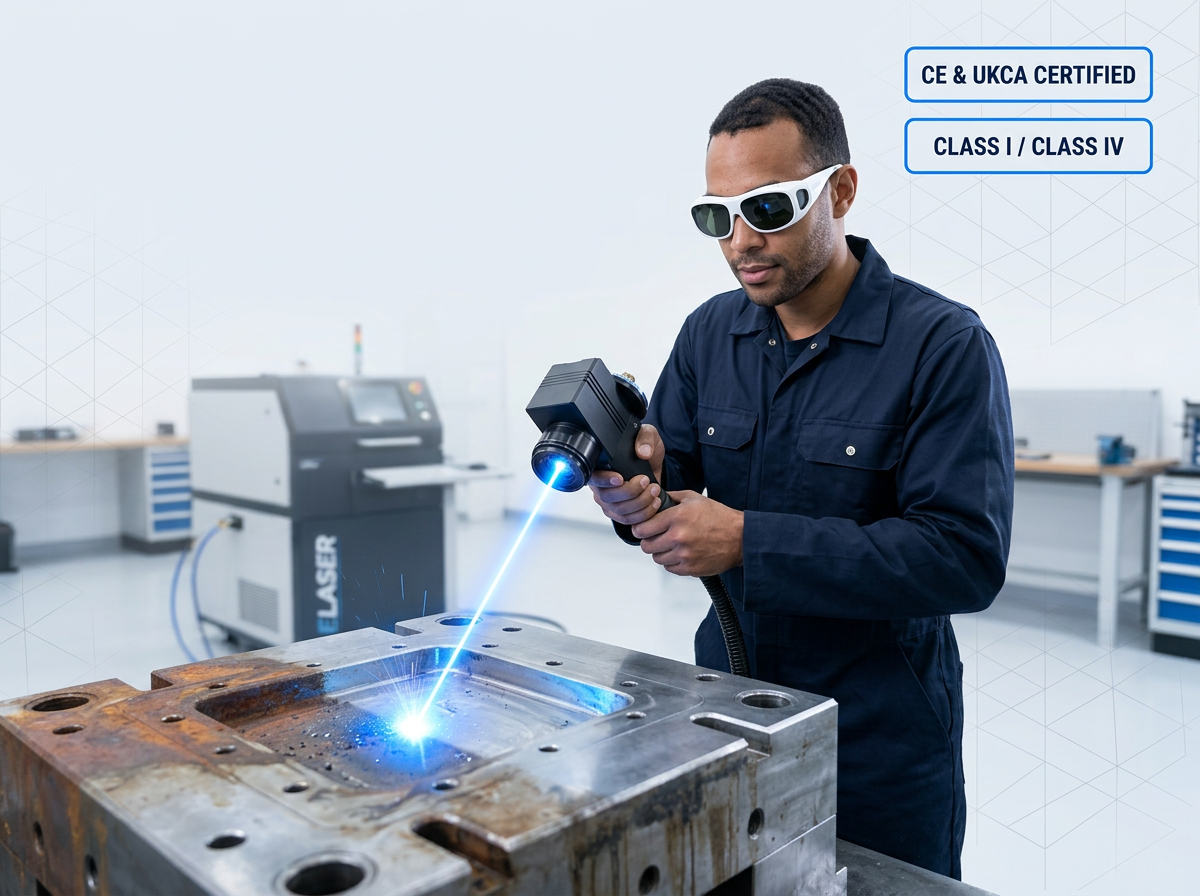
Laser class: Class IV or Class I. CE: Certified. UKCA: Certified.
Manufacture: Designed and built in Britain (UK).
Portable by Design. Industrial by Performance.
Every design decision in ELASER balances two requirements that are often treated as opposites: the freedom to move the machine to the work, and the power to do industrial-grade cleaning when it gets there.
Sub-3 kg Scanner Built for Long Cleaning Runs
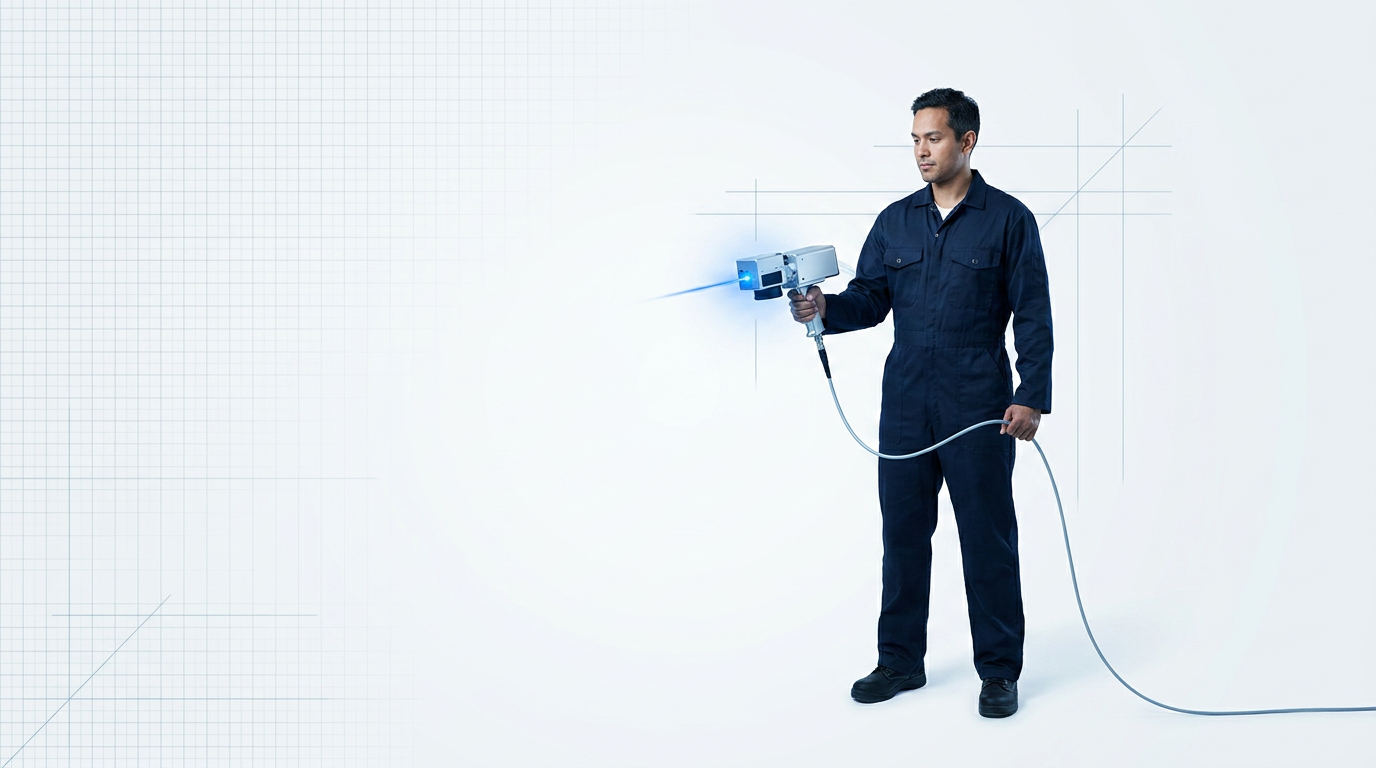
The handheld scanner weighs under 3 kg — a deliberate engineering choice. On extended sessions, that difference compounds directly into operator precision and pace.
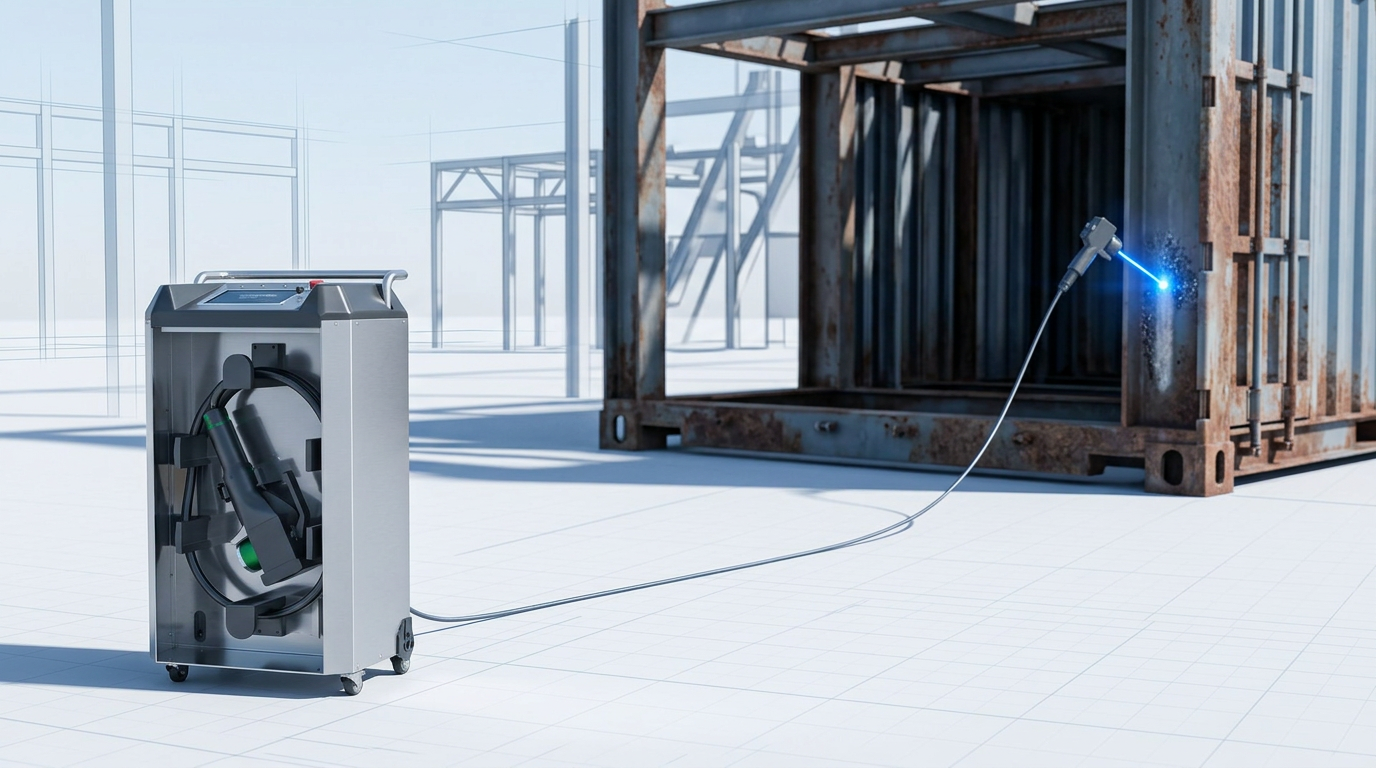
Up to 50 m Delivery Cable — Unit Stays Put
A 50 m fibre cable lets the operator cover large structures and vehicles without moving the main unit — reach that shorter-cable systems cannot match.
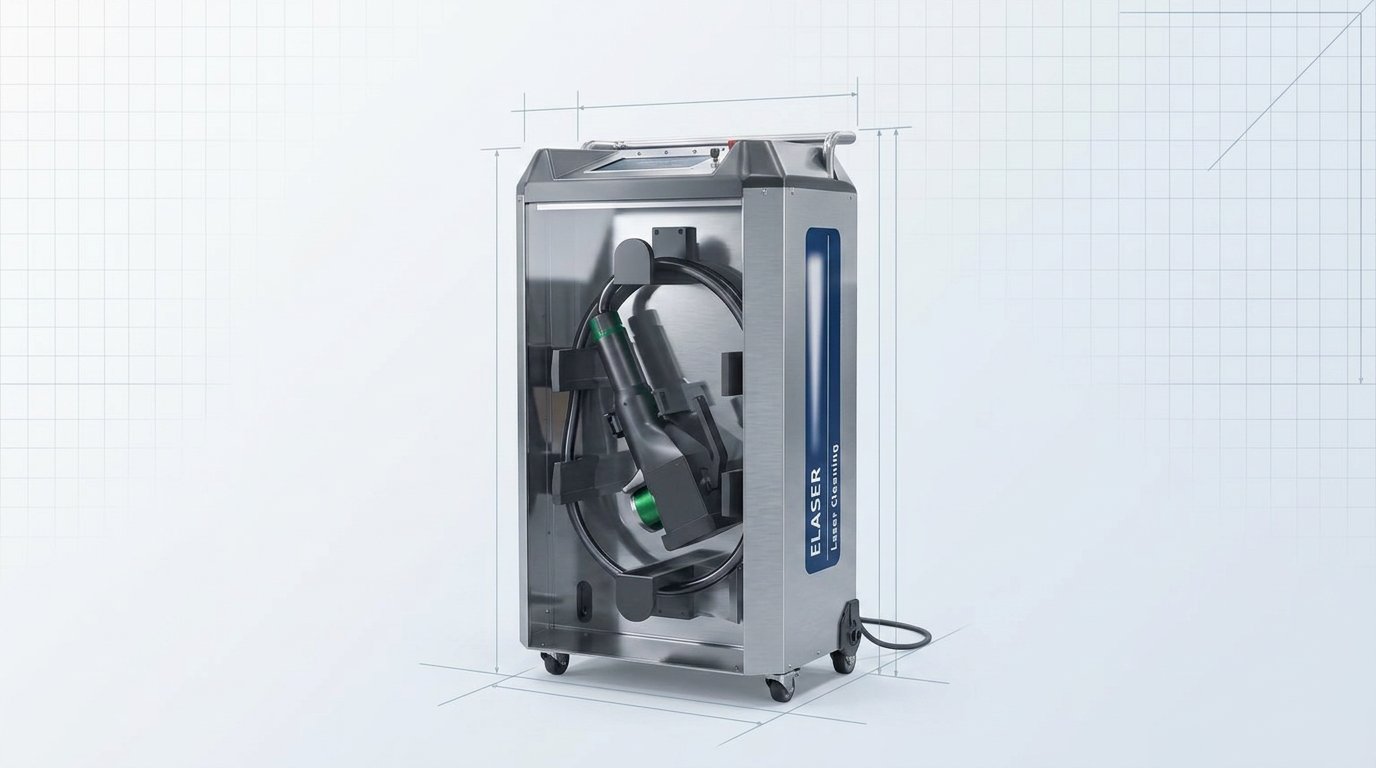
Air-Cooled, No Compressor, Single-Phase Power
No water circuit, no chiller, no compressor. ELASER runs on 110–250 VAC single-phase — wherever there is a standard socket, the machine can work.
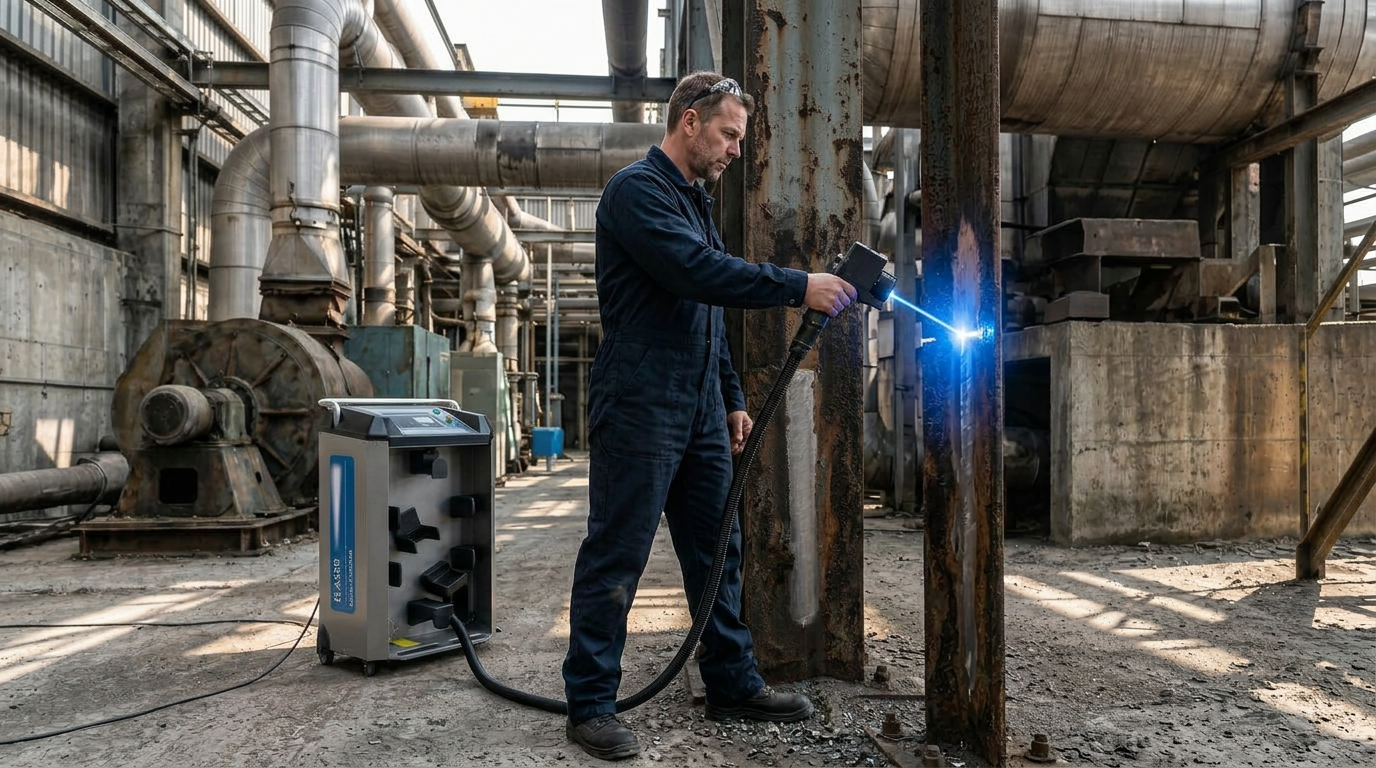
One Operator, No Crew, No Cleanup
Connect to a standard outlet and start cleaning. Afterwards, there is no media to collect, no chemical residue, and nothing to mask off.
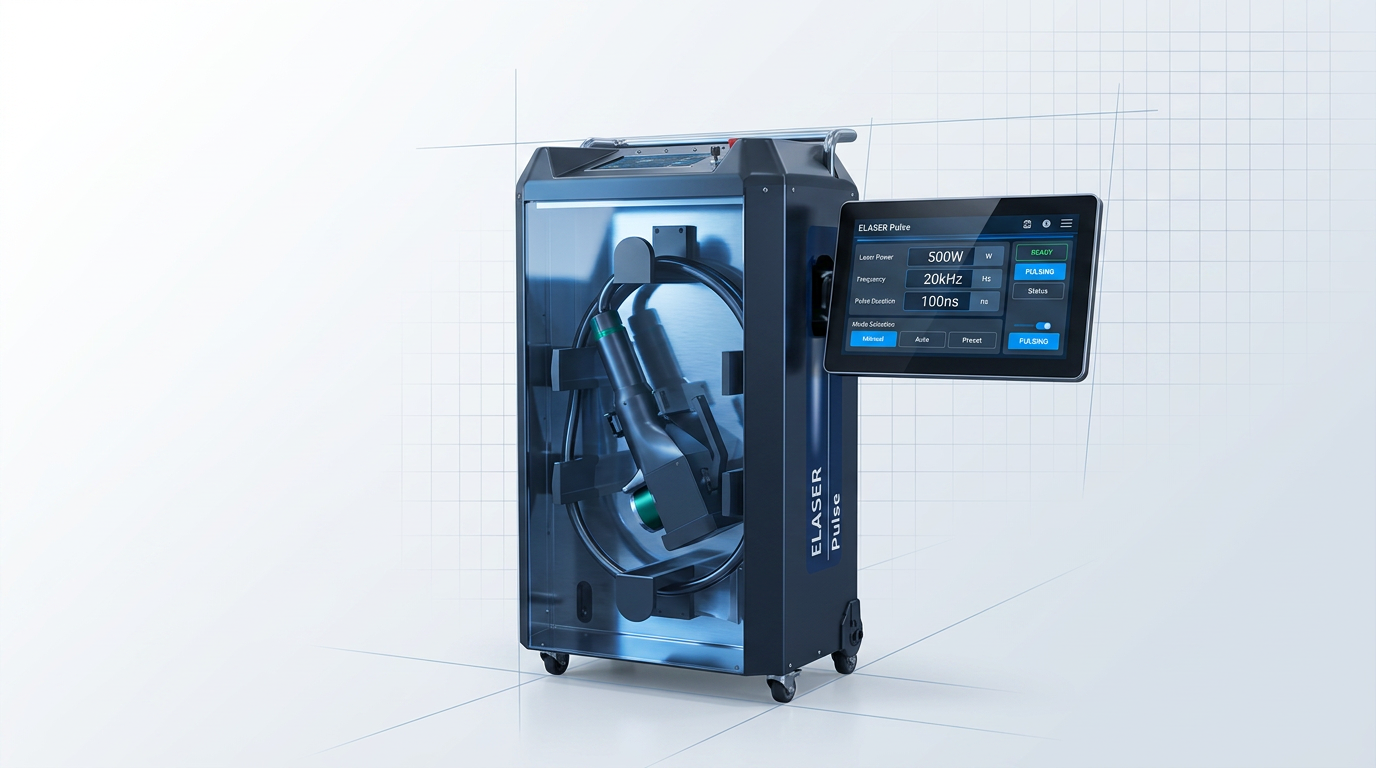
Touchscreen Control with Per-User Login Tracking
The touchscreen GUI puts setup and parameter control at the point of work. Password-protected per-user logins with usage tracking support accountable operation across multi-operator environments.
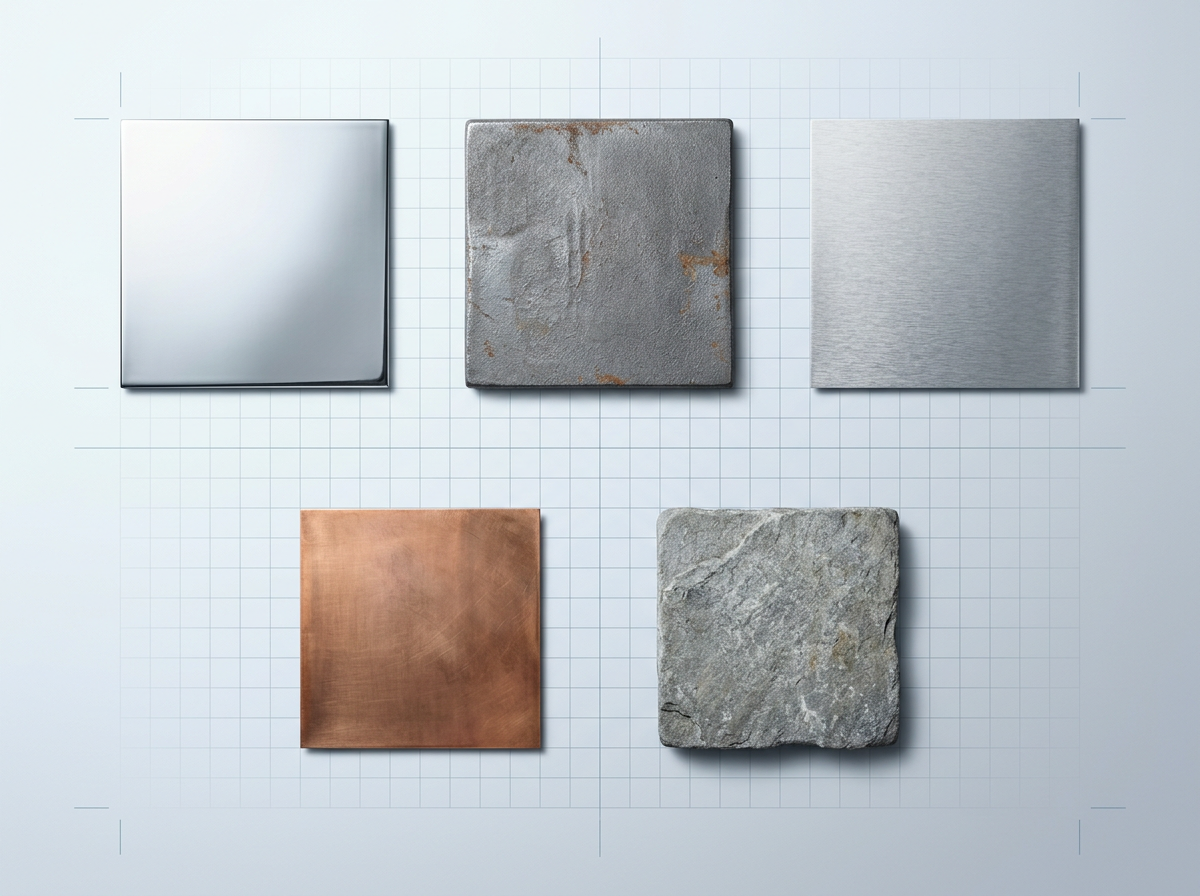
Metals, Stone, Brick, Masonry
ELASER cleans the full range of industrial metals: steel, carbon steel, aluminium alloys, cast iron, copper, brass, bronze, titanium, and galvanised steel.
It also works on stone, concrete, brick, and masonry — making it a capable tool for structural and heritage cleaning tasks, not just metalwork. One machine, one cleaning approach, across all of these materials.
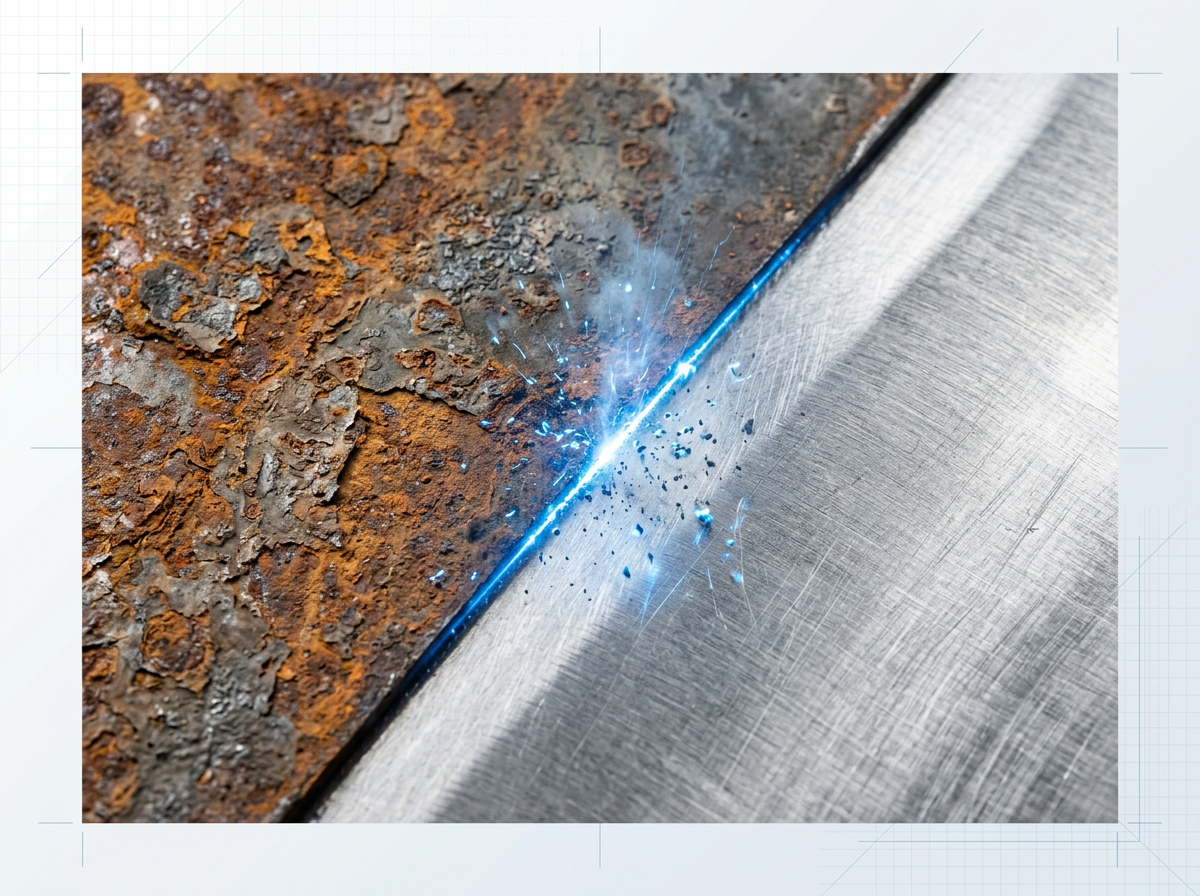
Corrosion, Coatings, Residues
ELASER removes corrosion products (rust, oxides, mill scale, tarnish, weld discolouration), coatings and finishes (paint, powder coating, lacquer, primer), and organic contamination (oil and grease, carbon and soot, mould).
It also clears process residues including adhesives, graffiti, and release agents. Whatever the surface carries, ELASER removes it without chemicals, abrasives, or water.
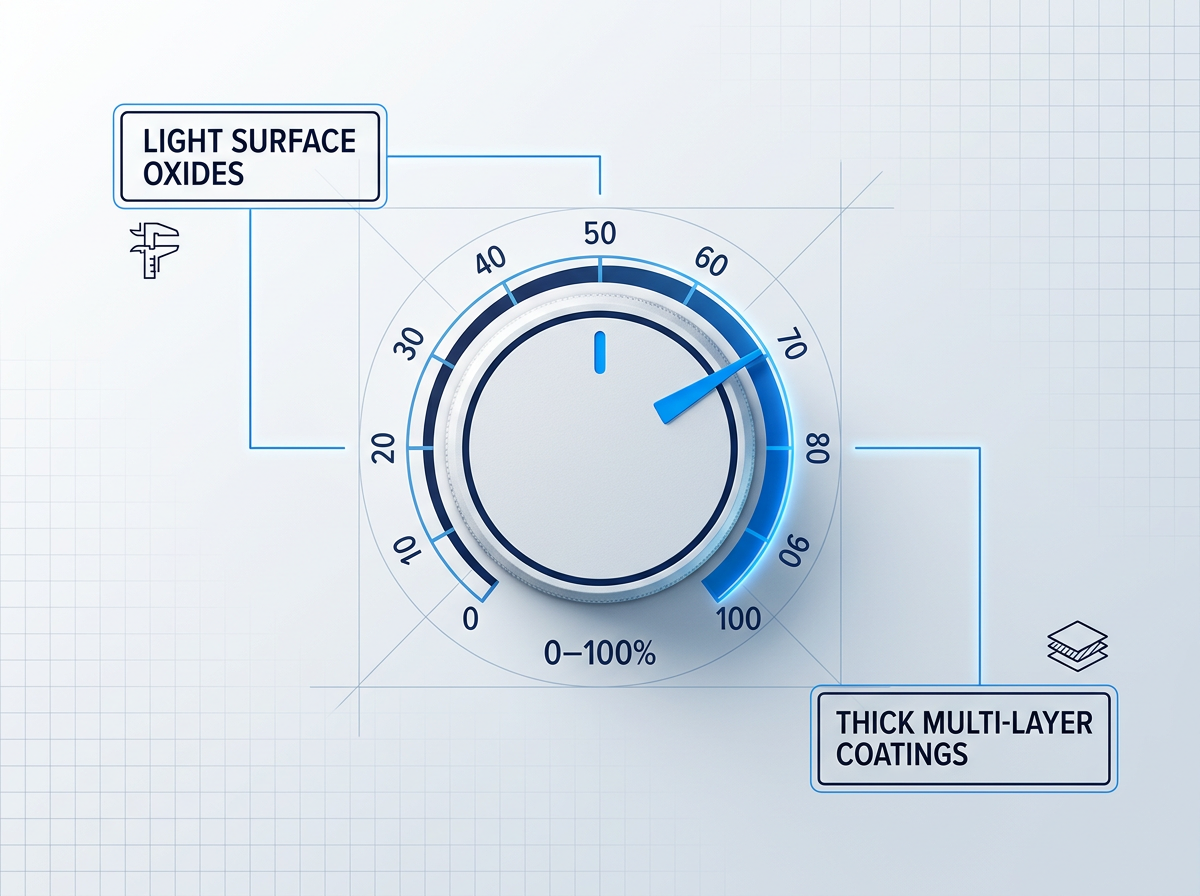
0–100% Power, One Machine
ELASER's fibre laser output is tunable across the full 0–100% power range. The operator dials in exactly the energy the job requires — gentle enough to lift surface oxides from aluminium without marking the metal, or at full output to strip thick multi-layer coatings from cast iron.
No tool change, no second machine. The same system spans the entire cleaning range by adjusting power alone.
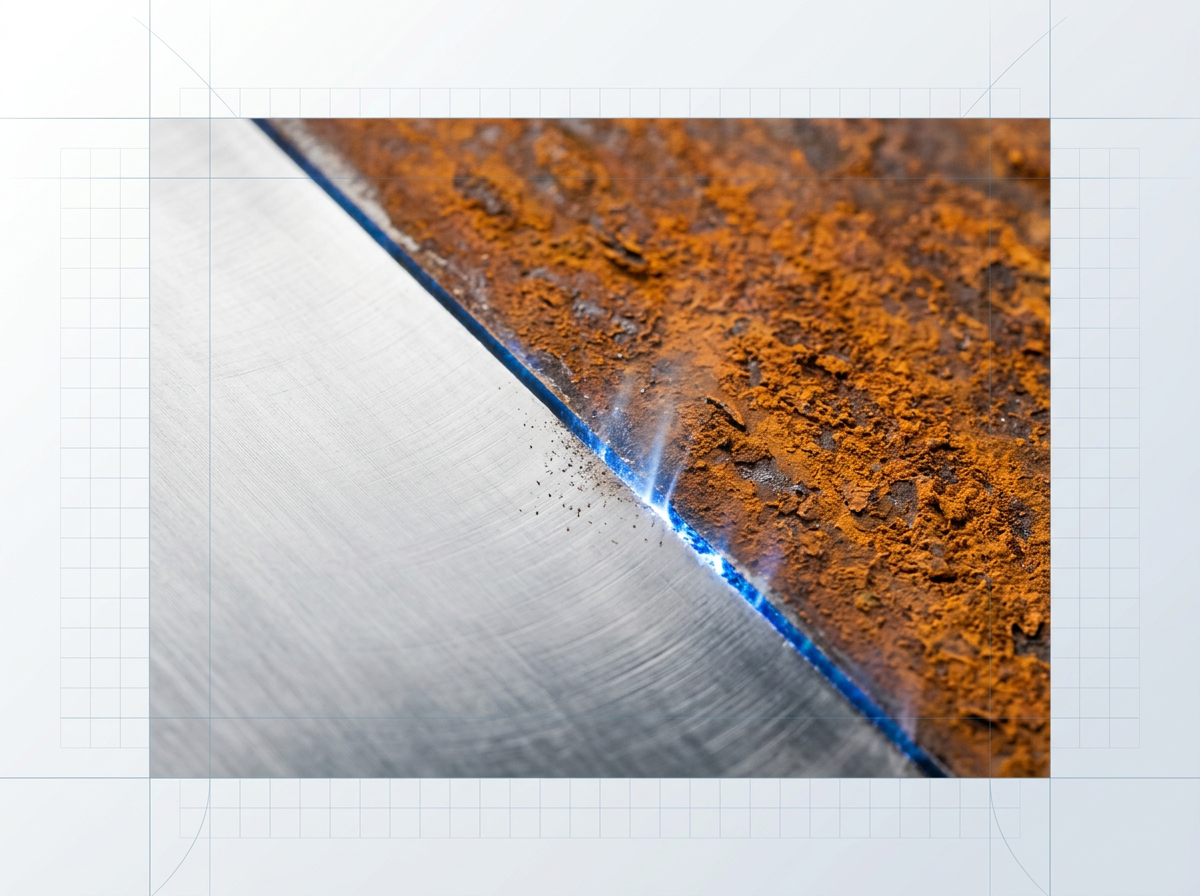
The Beam Stops at the Metal
The laser vaporises the contaminant layer and stops at the base material. Parts come out clean and structurally intact, ready for the next process without rework or remediation.
Abrasive methods remove material indiscriminately — laser cleaning targets only what needs to go. For precision components and finished surfaces, that distinction matters directly to quality and yield.
75–500 mm Working Distance
ELASER uses interchangeable F-Theta lenses covering a working distance range of 75 to 500 mm. Select the appropriate lens for the geometry at hand: close-range cleaning on a flat plate, or a greater standoff on a complex curved component.
The same machine adapts to different surface geometries and standoff requirements by lens selection alone — no separate tool or configuration change needed.
Where ELASER Works: Applications Across Industries
Seven industries, seven specific tasks. Find your working context in the cards below.
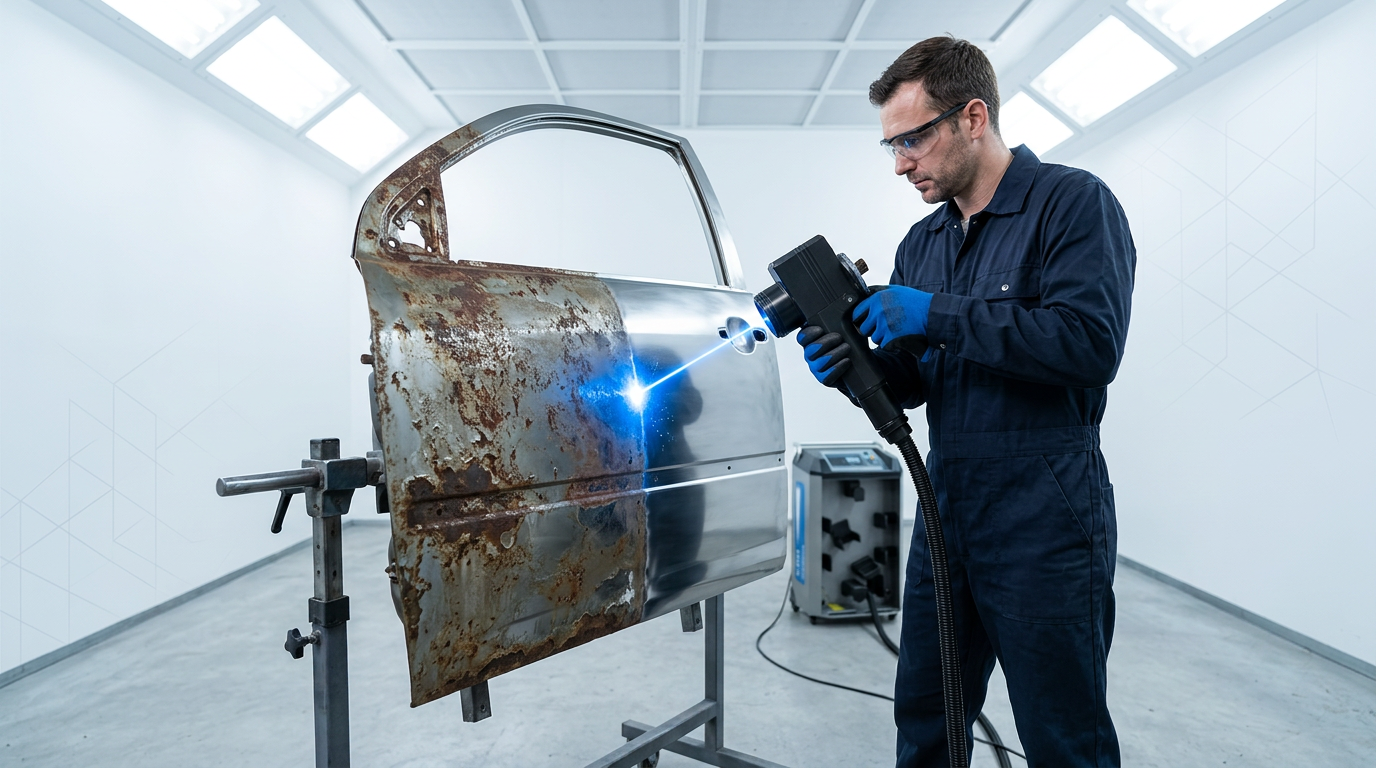
Automotive: Pre-Weld Prep and Bodyshop Cleaning
From production-line weld prep to rust and paint removal in the bodyshop.
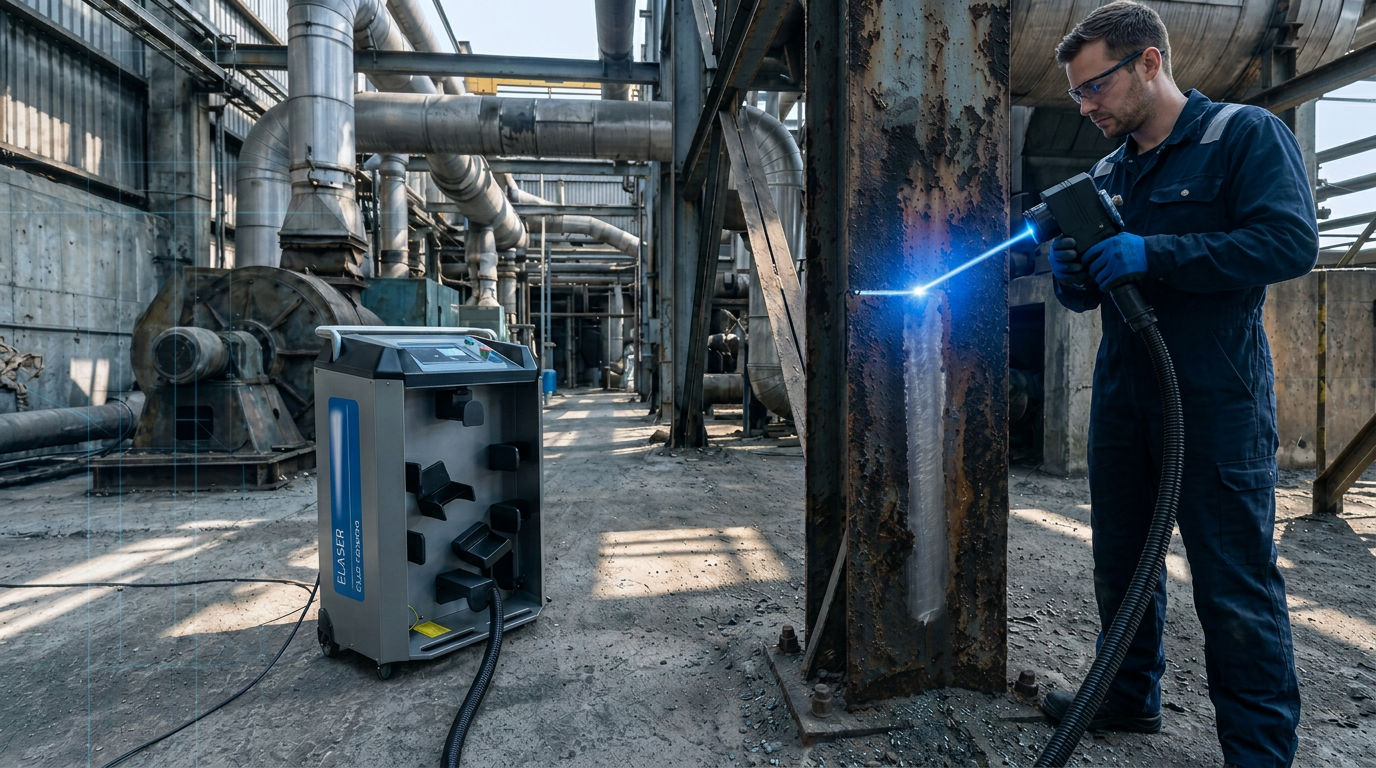
Industrial Maintenance: On-Site, No Masking, No Media
Clean plant and infrastructure on site. Nothing to mask off, no media to clear up.
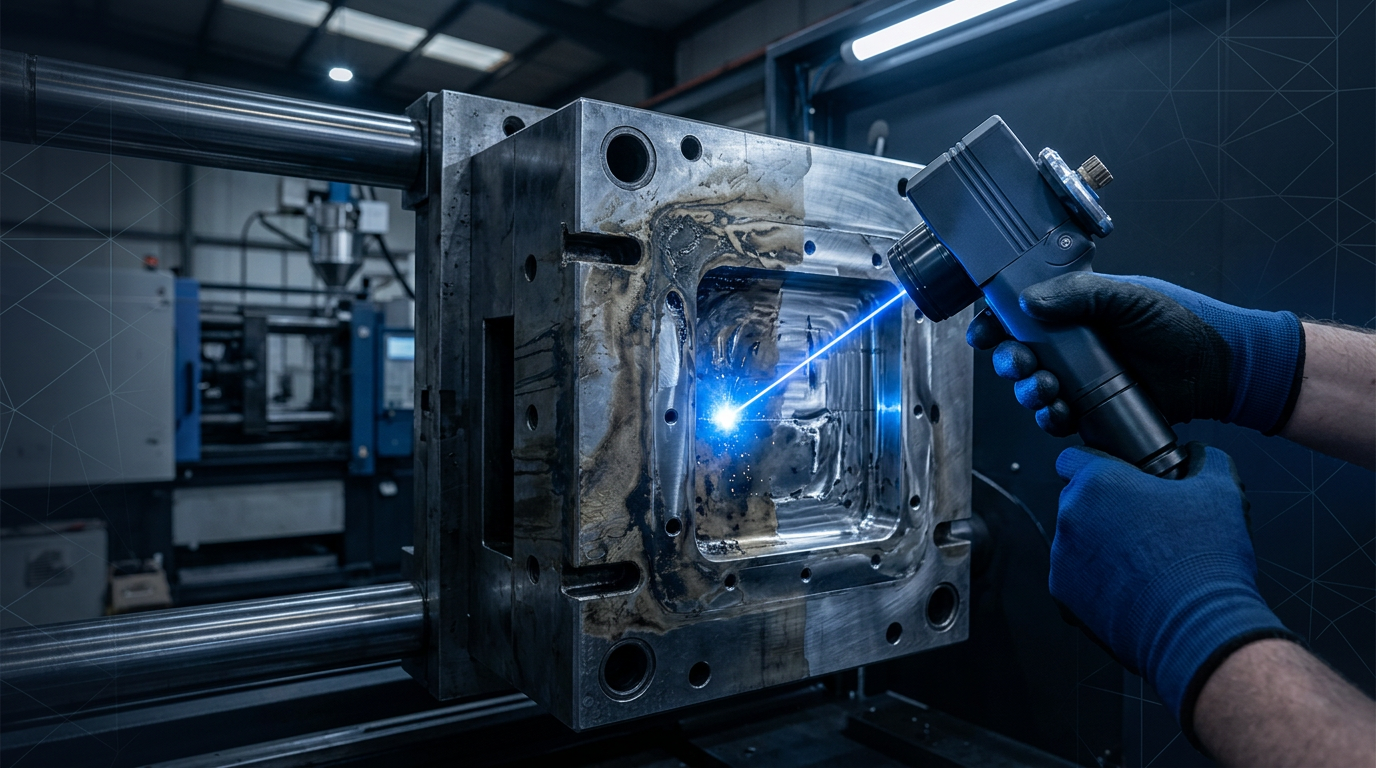
Injection Moulding: Clean Moulds In Place, No Disassembly
Strip release agents and residue from moulds and tooling — in place, no disassembly.
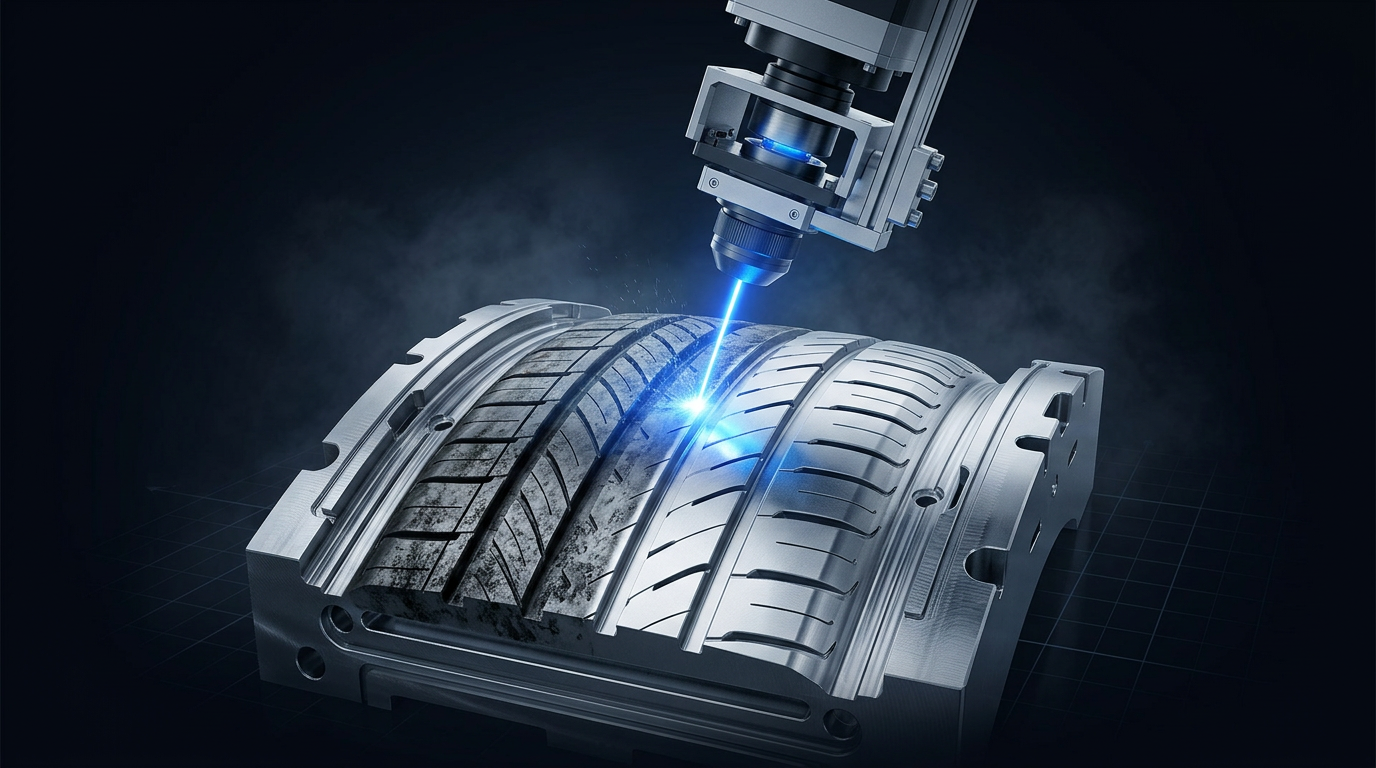
Tyre and Rubber: Mould Cleaning Without Abrasives
Clean moulds, vents and vulcanisation residue with no abrasives and no mould wear.
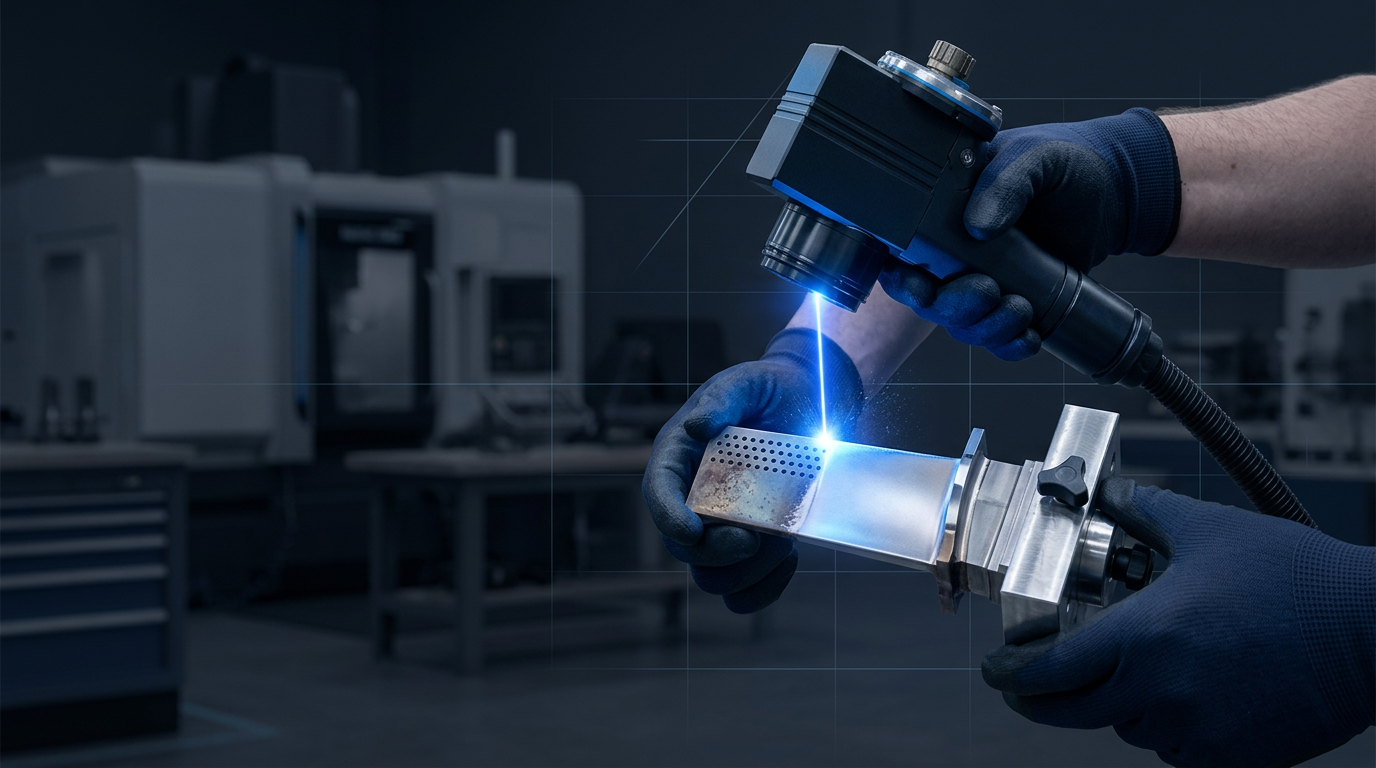
Aerospace: Precision Surface Prep to Tight Tolerances
Precise surface prep and component cleaning where tolerances leave no room for error.
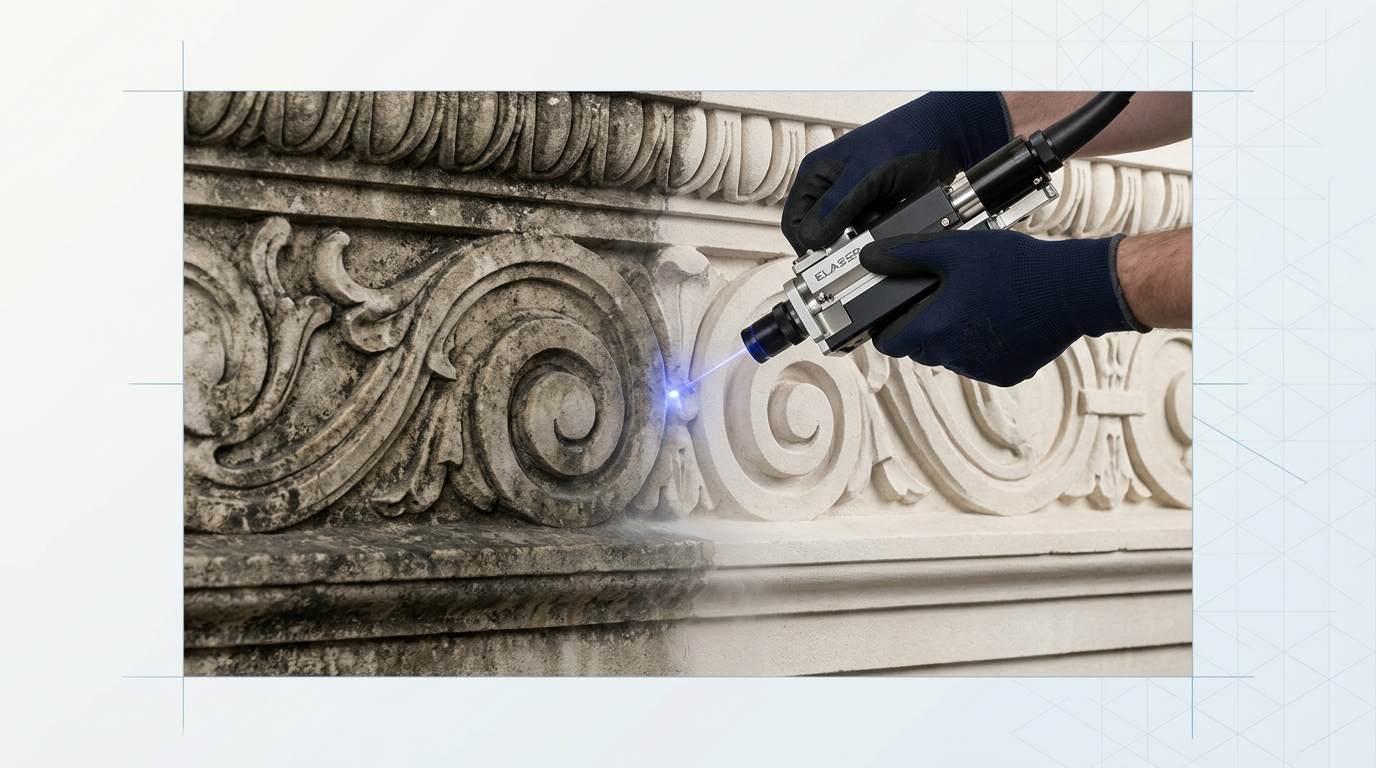
Heritage and Restoration: Gentle Cleaning on Original Surfaces
Lift soiling, paint and corrosion from stone and masonry, gentle on the original surface.
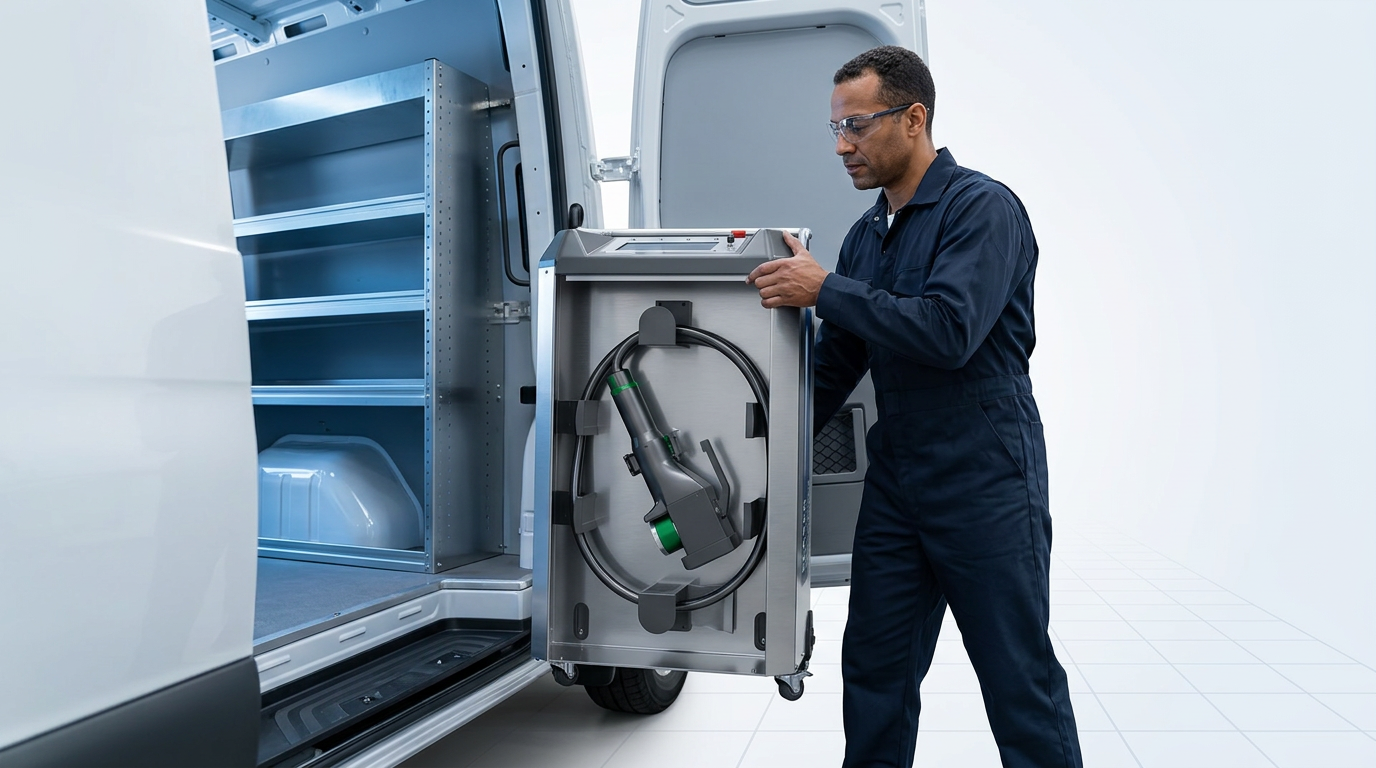
Launch Your Own Mobile Laser Cleaning Service
A portable system and full operator training to launch your own cleaning service.
See the Full ELASER System in Detail
From automotive bodyshops to heritage stonework, ELASER handles the full range. Explore the complete product page or download the datasheet to review specifications and find the right configuration for your application.
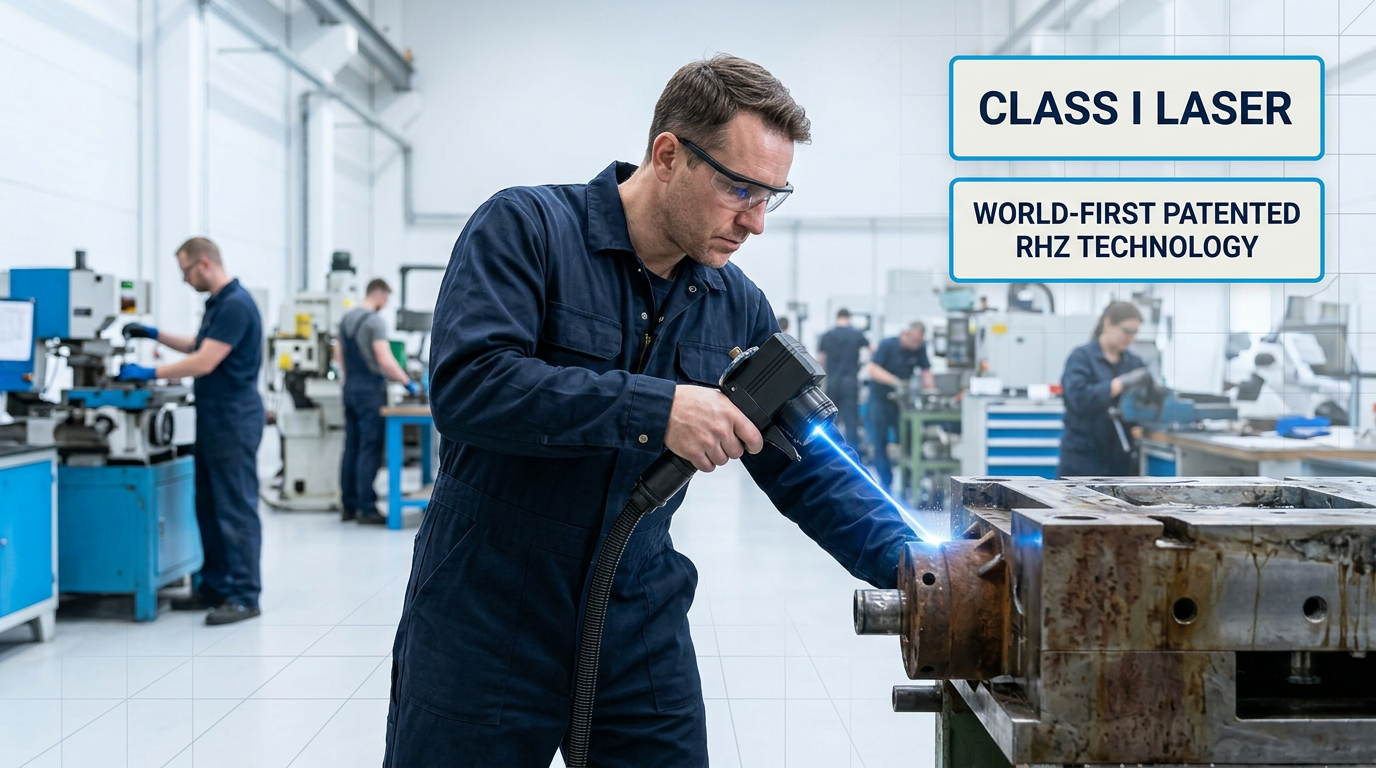
ELASER-RHZ: Cleaning Without Sealing Off the Area
Standard Class IV laser cleaning requires the working area to be sealed off and evacuated before cleaning can begin. In open-plan manufacturing, mixed-use facilities, or publicly accessible spaces, that overhead can make laser cleaning impractical.
The ELASER-RHZ removes that barrier. WSL's patented, world-first Reduced Hazard Zone technology confines the hazard to a small area around the work — no shutdown, no exclusion zone. It achieves Class I laser classification at 1550 nm, enabling cleaning on open factory floors, shared facilities, and public-facing sites.
For buyers whose environment demands it, the RHZ is the natural step up within the ELASER family.
Evaluate on Total Cost of Ownership, Not Sticker Price
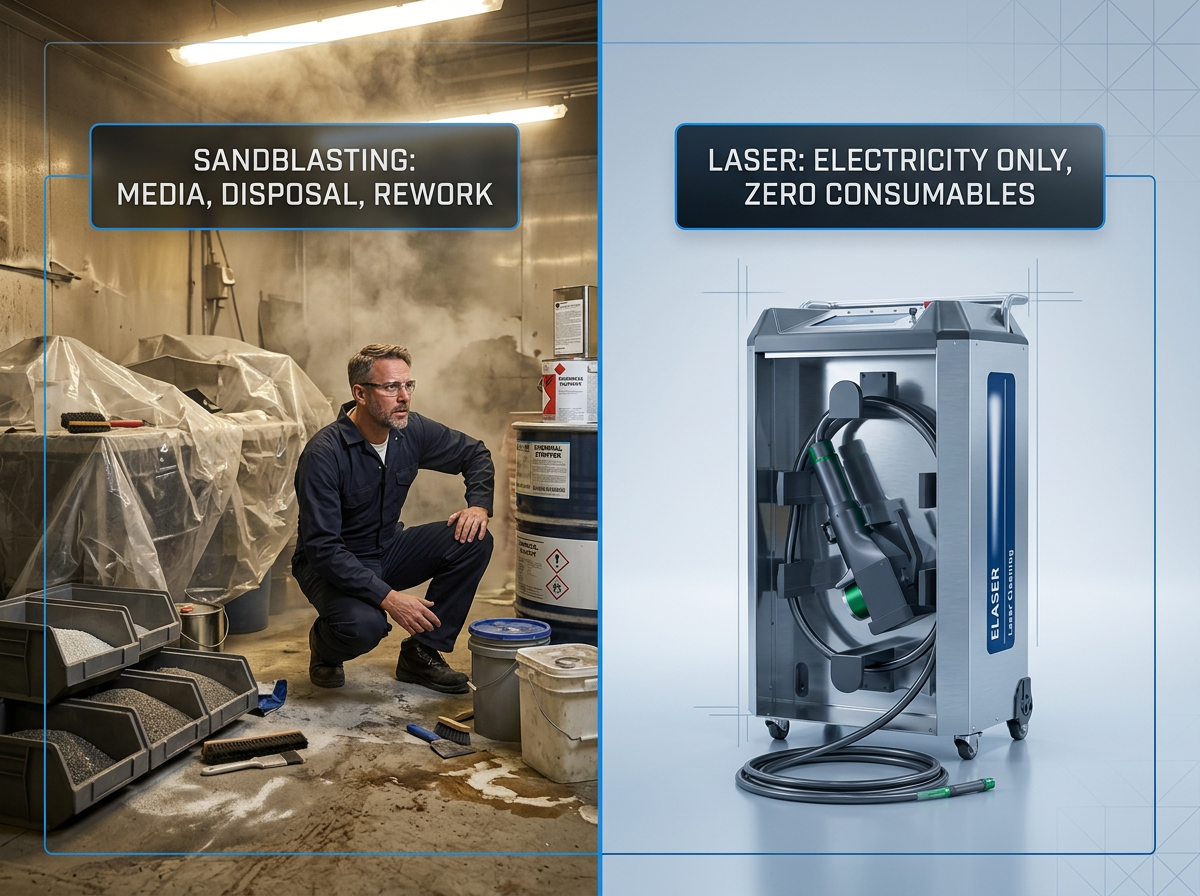
Comparing a pulse laser rust removal machine against sandblasting, chemical stripping, or dry-ice cleaning on purchase price alone is the wrong metric. The financially literate frame is TCO: what does each method cost to run, cycle after cycle?
ELASER runs on electricity alone. No consumables — no blasting media, no chemicals, no dry ice. Fewer systems (no water circuit, no compressor) means fewer failure points and less downtime. Substrate preservation reduces rework that abrasive methods impose invisibly.
ELASER is the European cost leader among comparable industrial laser cleaners — the most competitive upfront pricing in its class, achieved through manufacturing efficiency, not quality compromise.
Built in Britain by the UK's Only Laser Cleaning Manufacturer
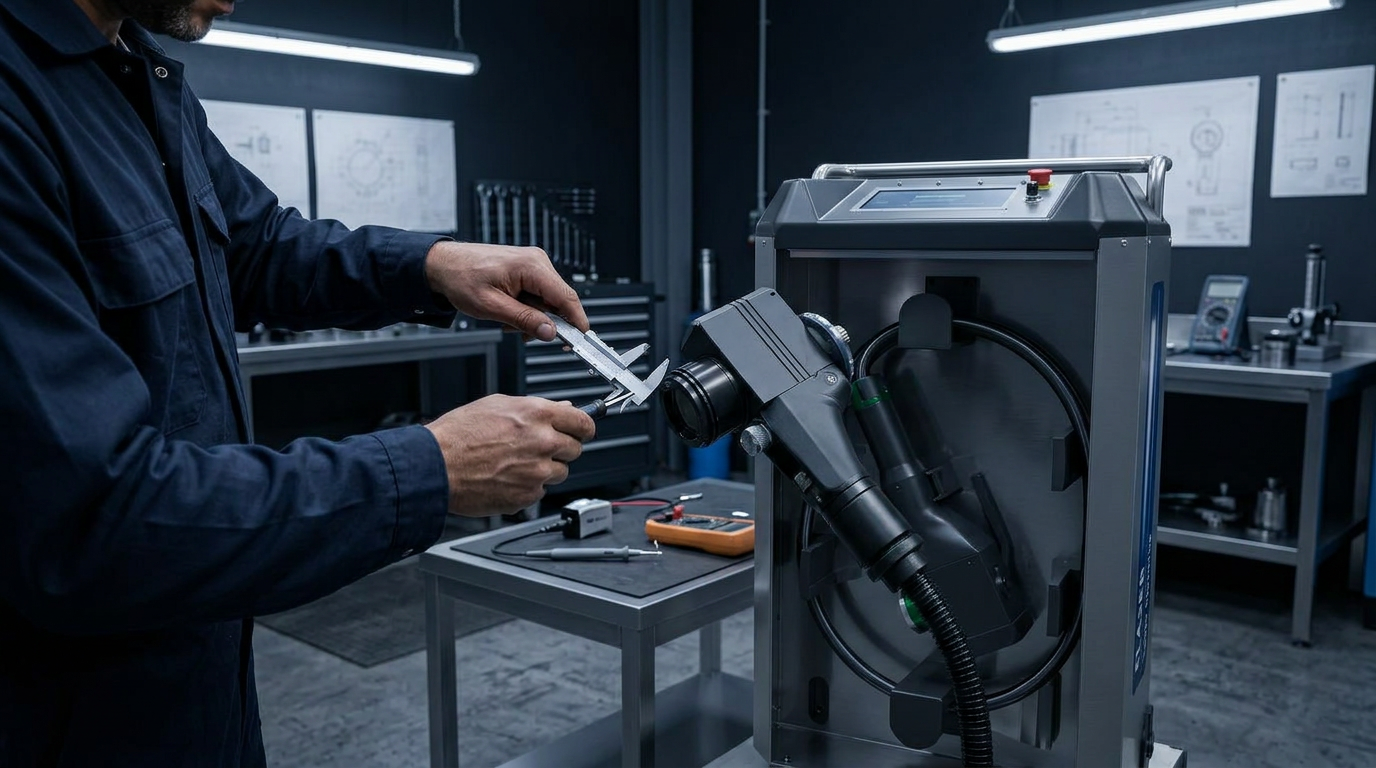
WSL is the only UK-based laser cleaning manufacturer — founded in 2012, with 200+ years of combined engineering experience. Every ELASER is designed, built, serviced, and improved in-house. When diagnosis is needed, the engineers who built the machine are the ones who fix it.
Many laser cleaning suppliers are resellers or importers rebadging third-party machines. Ask any supplier: who actually made this, and who will support it? Without in-house engineering, spares are slower, diagnosis weaker, and genuine product improvement impossible.
CE and UKCA certified, with first-class operator training and bespoke customisation capability. Get in touch to discuss your requirements.
Engineered for Safe, Accountable Operation
ELASER is available as Class IV (standard) or Class I with the ELASER-RHZ — giving you the level of safety infrastructure that fits your operating environment. First-class operator training covering safe operation and process optimisation is included as part of the package.
A professionally configured setup should include fume extraction to capture and filter vaporised contaminants. Factor this into your installation planning.
The touchscreen GUI supports password-protected per-user logins with usage tracking for accountable multi-operator deployment. CE and UKCA certified — built to the standards that matter for UK and European operations.
Need Higher Volume? Meet AutoLASE
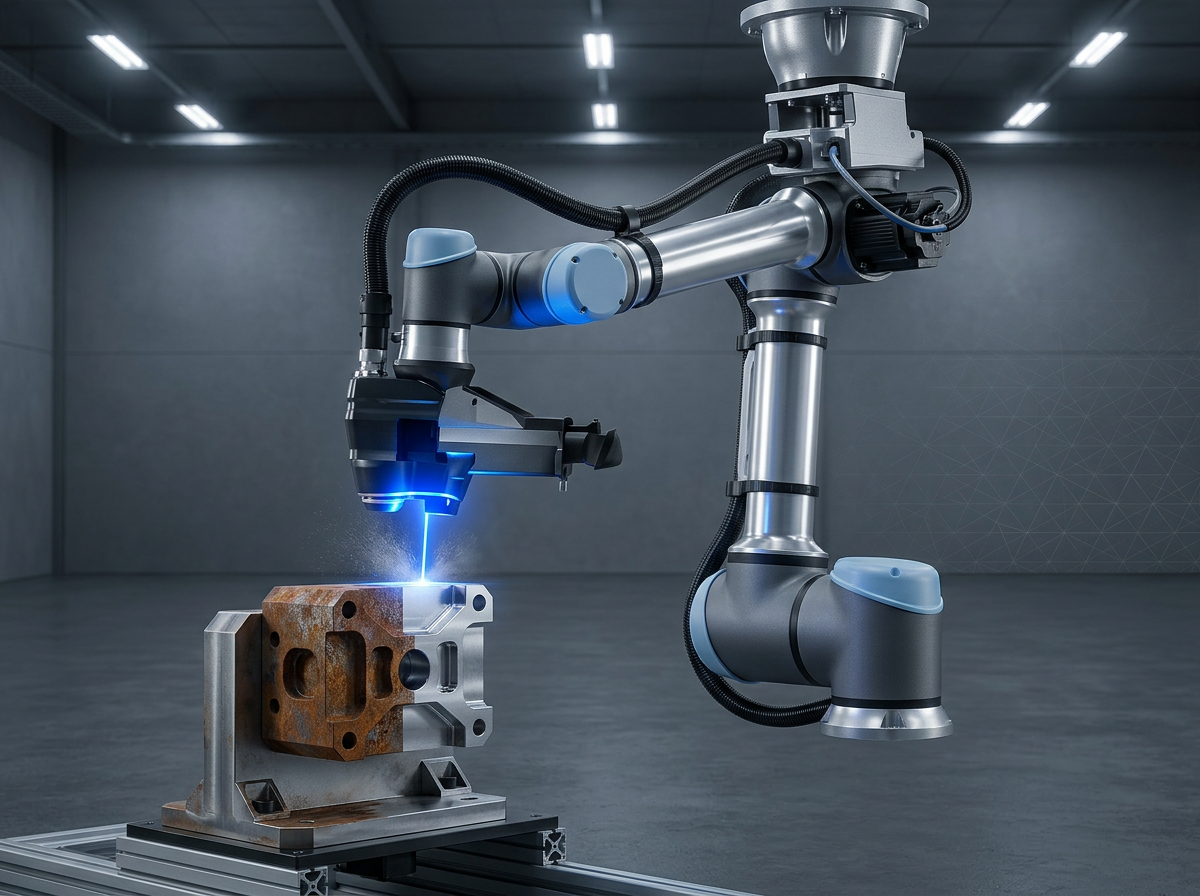
For repetitive, high-volume, or production-line cleaning, AutoLASE is WSL's automated system. Load the part: machine vision scans it, builds a 3D map, and generates the clean automatically. No programming, no path-setting, no technical skills required.
For enclosure-free operation, AutoLASE can be configured with WSL's Reduced Hazard Zone (RHZ) technology — making it the world's only automated laser cleaning system that operates without an enclosure.
If your context is production-scale cleaning, AutoLASE is built for it. CE & UKCA certified, with bespoke integration and full training available.
Frequently Asked Questions
Common questions about ELASER, pulse laser cleaning, and what to expect from WSL.
ELASER is priced on application — contact WSL for a tailored quote. What matters more than the headline figure is total cost of ownership: laser cleaning runs on electricity alone, with no consumables, no blasting media, and no chemicals to procure or dispose of. There are no ongoing media costs, and minimal substrate damage means less rework across the life of the machine. Among comparable industrial laser cleaning machines in Europe, ELASER is competitively priced on upfront cost — not because corners are cut, but because WSL designs and builds everything in-house. Get in touch with WSL to discuss your application and receive a quote.
The handheld scanner is not a separate product you price independently — it is the operator interface included as part of the complete ELASER system. What you are buying is a self-contained portable system: a wheeled main unit, a sub-3 kg handheld scanner, and a delivery cable of up to 50 m. The handheld goes where the work is; the main unit stays put. On total cost of ownership, the system carries no consumable costs and minimal downtime — running costs are electricity only. Pricing is competitive and quoted on application. Contact WSL with your requirements for a tailored figure.
A continuous-wave (CW) laser emits a constant beam at a steady output level. A pulsed laser fires discrete bursts of high-energy light at a controlled repetition rate — delivering far higher peak power per pulse than a CW laser of the same average output. For surface cleaning, pulsed operation is the preferred approach. The intense energy in each pulse vaporises the contaminant layer efficiently, while the gap between pulses limits heat accumulation in the substrate. That thermal control is critical: it protects the base material from distortion or damage that a continuous beam would risk. ELASER uses pulsed fibre laser technology for precisely this reason — effective contaminant removal with minimal substrate loss.
ELASER handles a broad range of substrates: metals including steel, carbon steel, aluminium alloys, cast iron, copper, brass, bronze, titanium, and galvanised steel, as well as stone, concrete, brick, and masonry. On the contaminant side, it removes rust, oxides, mill scale, paint, powder coating, lacquer, primer, oil and grease, carbon and soot, mould, graffiti, adhesives and residues, tarnish, weld discolouration, and release agents. Power is tunable across the full 0–100% range, so the same machine that lifts light surface oxides from aluminium can strip thick multi-layer coatings from structural steel — without changing tools or setting up a different process.
Yes, operator training is required — and WSL provides it as part of the package. Training covers safe operation, laser safety protocols, and process optimisation, so operators are confident and productive from the outset. For buyers choosing the ELASER-RHZ, the reduced hazard zone significantly lowers the safety overhead compared to conventional laser cleaning, which makes day-to-day operation more straightforward in open or mixed-use environments. Training remains important regardless of variant, and you do not need to source it independently — it is part of what WSL delivers.
The ELASER-RHZ is a variant of ELASER built around WSL's patented, world-first reduced hazard zone technology. It confines the laser hazard to a small area around the work itself, removing the need to seal off or evacuate the surrounding space before cleaning begins. It is the only laser cleaner of its kind in the world. The RHZ achieves Class I laser classification — the safest laser class — underpinned by the 1550 nm retina-safe wavelength, without any sacrifice in cleaning performance. It is the right choice for buyers operating in open-plan manufacturing floors, mixed-use facilities where other workers are present, or publicly accessible spaces such as graffiti removal and heritage or monument restoration. If your environment makes conventional laser cleaning impractical, the RHZ removes that barrier.
Yes. WSL offers bespoke engineering and customisation capability. Because WSL designs and builds every machine in-house, there is genuine engineering flexibility — this is not a reseller working from a fixed catalogue. If your application has specific requirements, the right approach is to contact WSL directly to discuss what you need. Get in touch and WSL's engineering team will advise on what is possible.