Where Abrasive and Chemical Rust Removal Fall Short
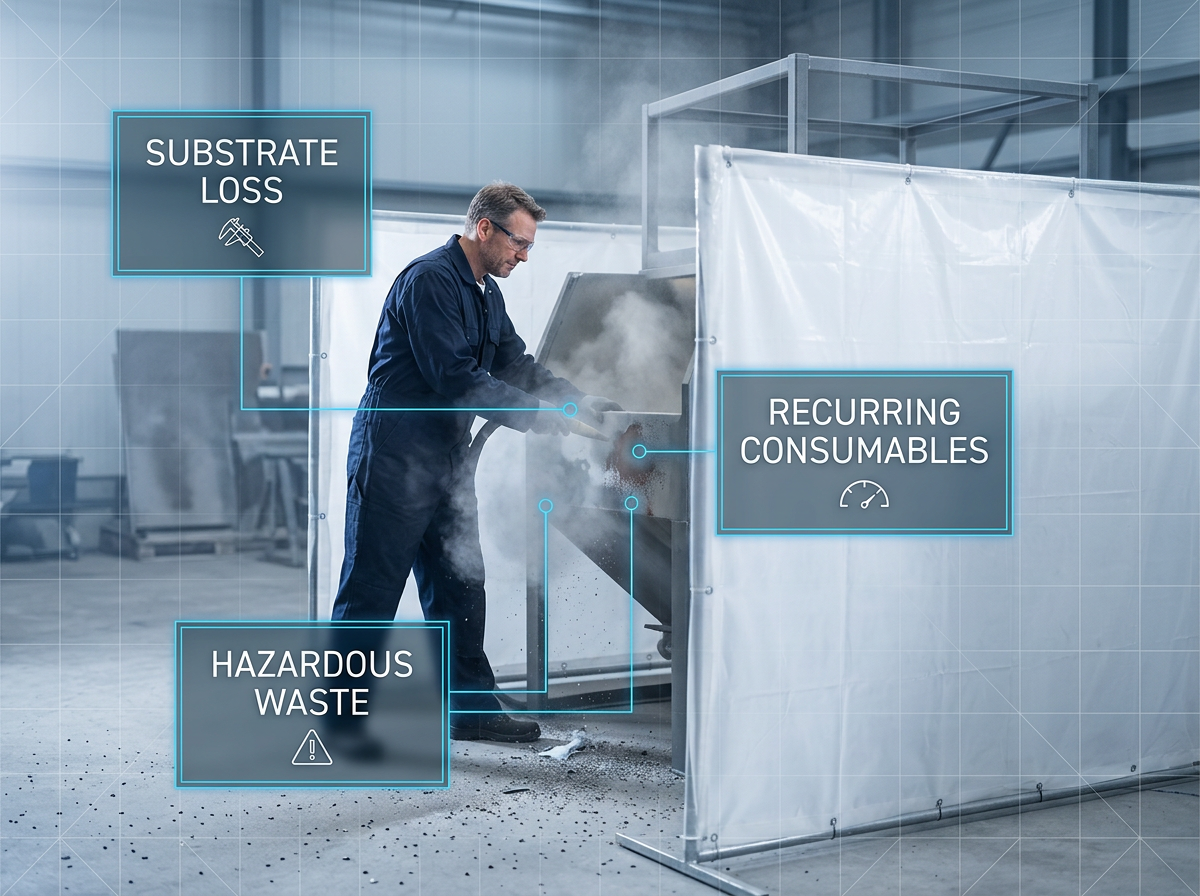
Abrasive methods remove substrate alongside contamination. Sandblasting and grinding cannot distinguish between rust and the base material beneath it — on precision components or heritage metalwork, that dimensional loss is irreversible and creates rework risk that compounds across every job.
Blast media and chemical consumables are a recurring cost at every scale. Grit, shot, and chemical stripping agents must be replenished continuously, and contaminated media or chemical waste carries its own disposal and compliance overhead. These costs do not decrease as volume grows — they scale with it. Laser cleaning addresses each of these constraints directly.
Beam Stops at the Metal
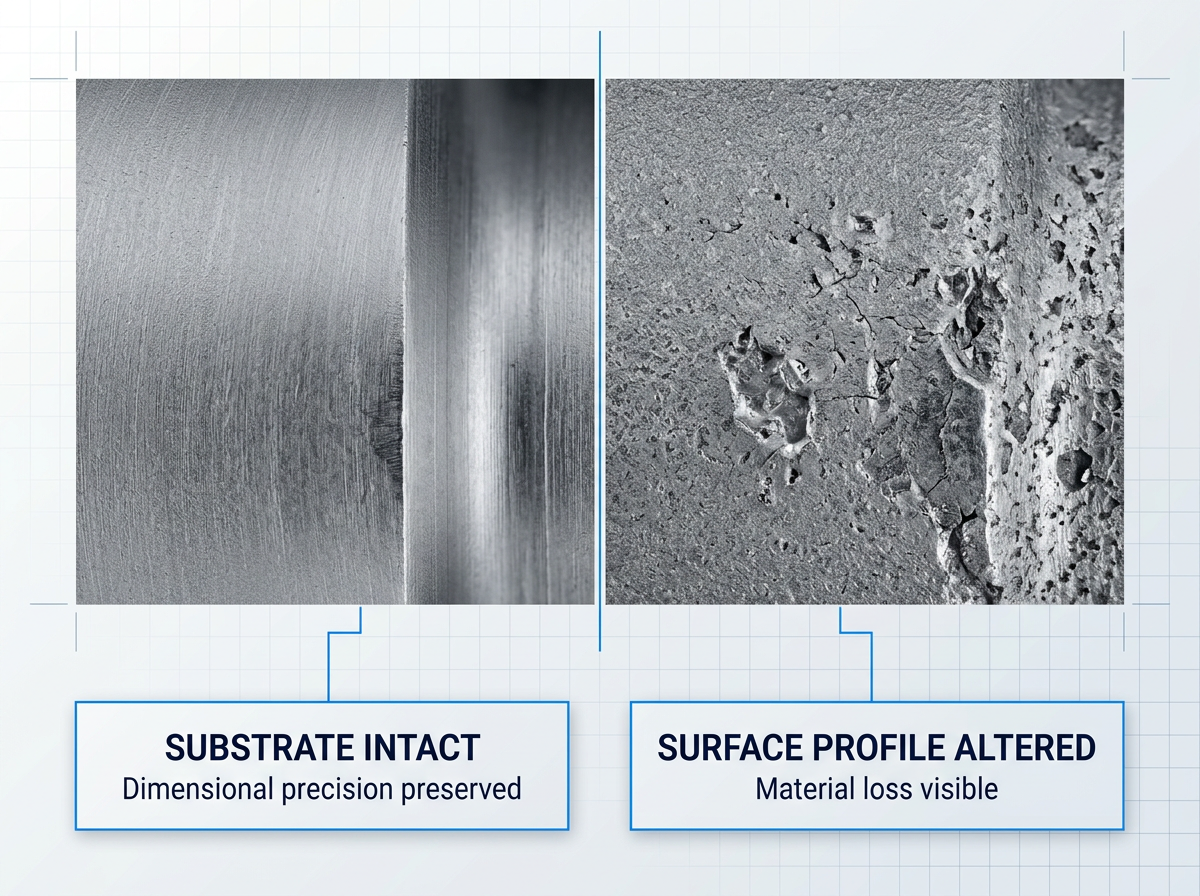
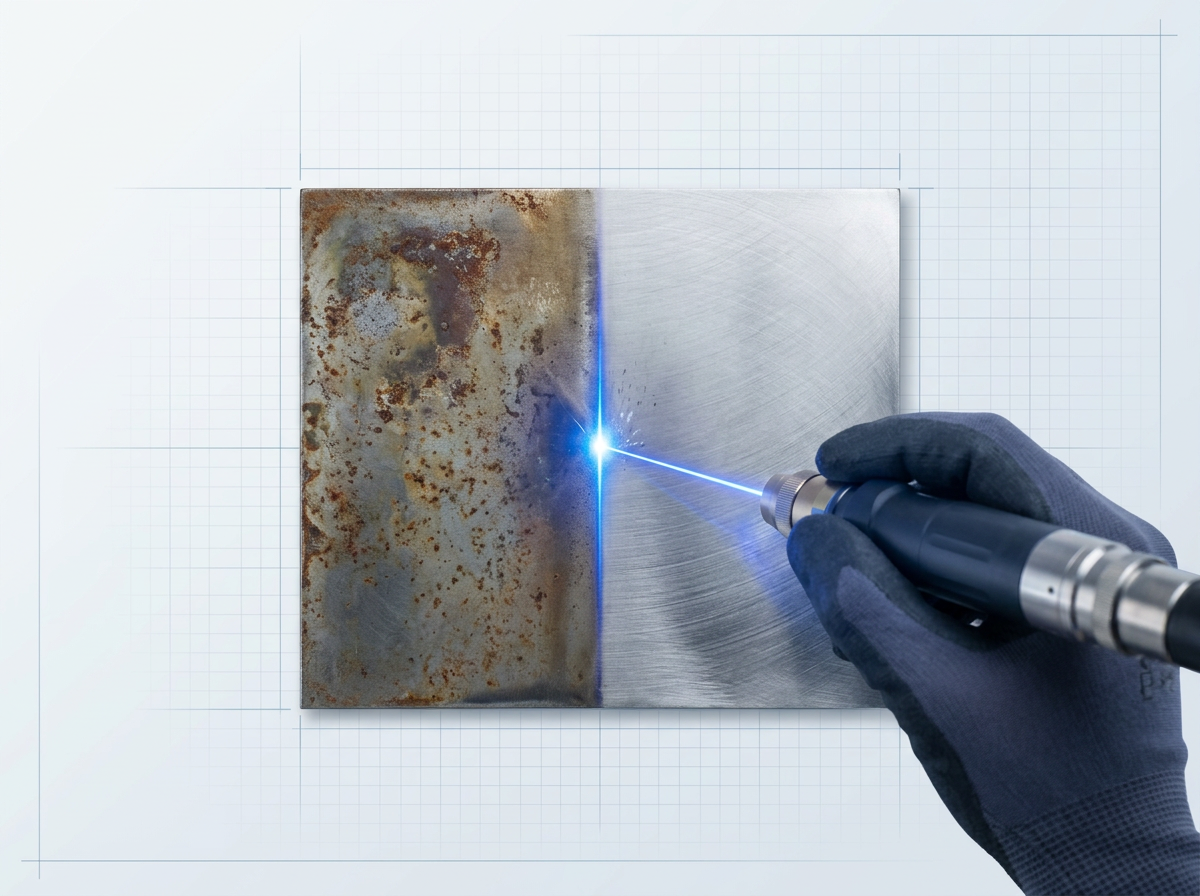
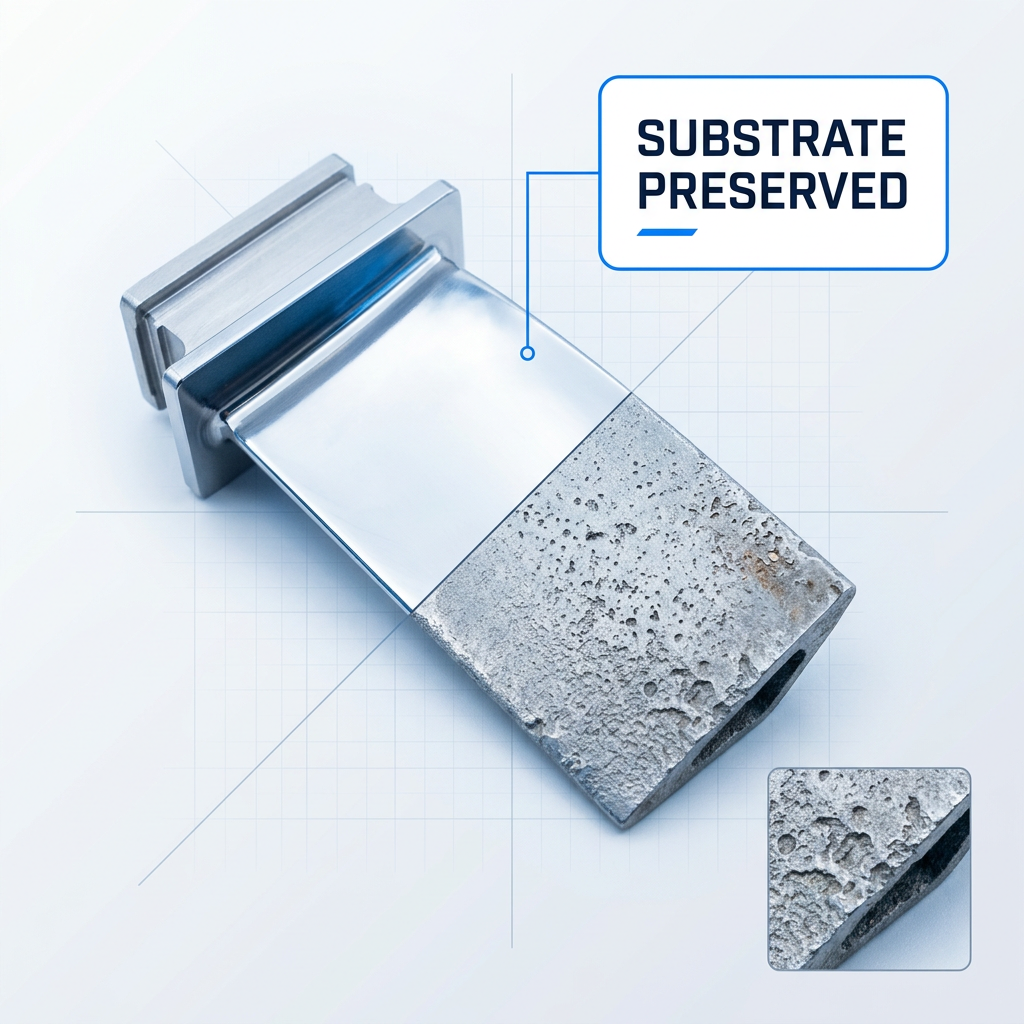
Laser ablation vaporises the contaminant and stops at the base material. The substrate is left dimensionally intact. Sandblasting cannot make that distinction — abrasive media removes surface alongside contamination, altering the surface profile with every pass.
For precision components, heritage metalwork, or any part where dimensional tolerance matters, that difference is decisive. Over-cleaned parts require rework or replacement. With laser cleaning, the surface you expose is the surface you intended to keep.
No Media. No Waste.
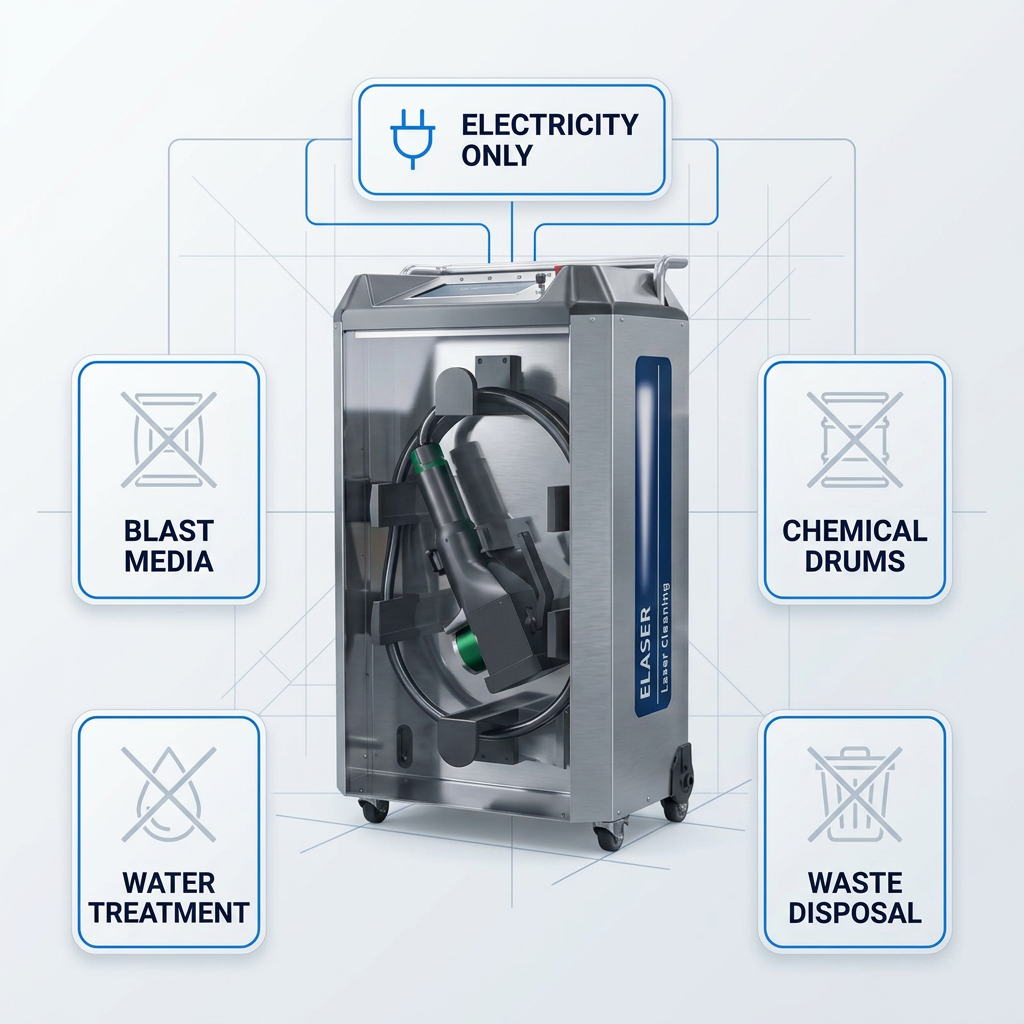
Laser cleaning runs on electricity alone. There is no blast media to purchase, store, or dispose of. Sandblasting requires a continuous media supply and generates large volumes of contaminated waste that must be managed and disposed of under controlled conditions.
The waste stream from laser cleaning is minimal particulate, captured by fume extraction. Over time, the absence of consumable costs and waste disposal costs represents a structural advantage in total cost of ownership — one that compounds across every job completed.
Arrive, Clean, Leave
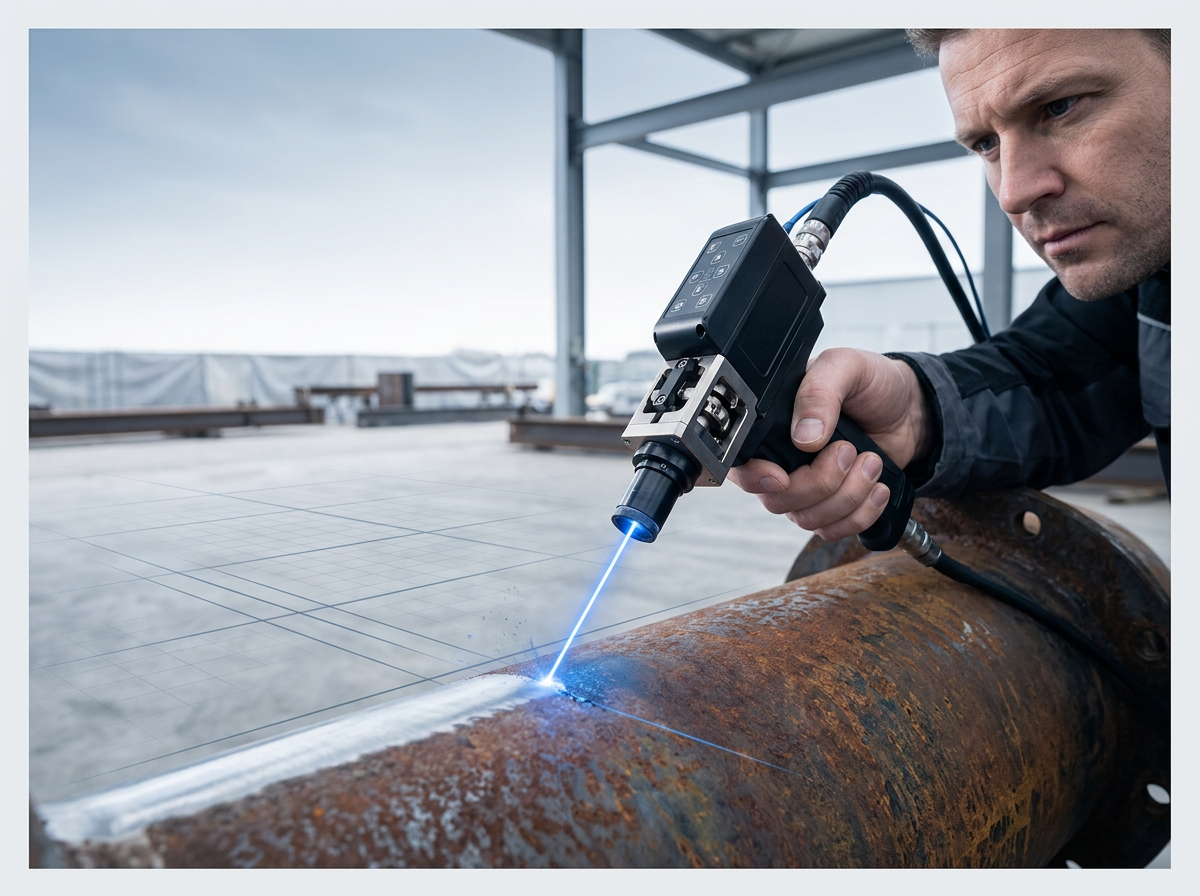
Laser cleaning requires no masking, no containment, and no post-clean media removal. The operator arrives, cleans, and leaves. Sandblasting demands containment setup to protect adjacent surfaces, masking of anything that cannot be blasted, and a full media clear-up before the site is handed back.
For on-site and mobile service work, that overhead difference is commercially significant. Fewer setup hours per job means more jobs completed per day — and a more competitive service proposition for the operator running the equipment.
Tunable Power, One Machine
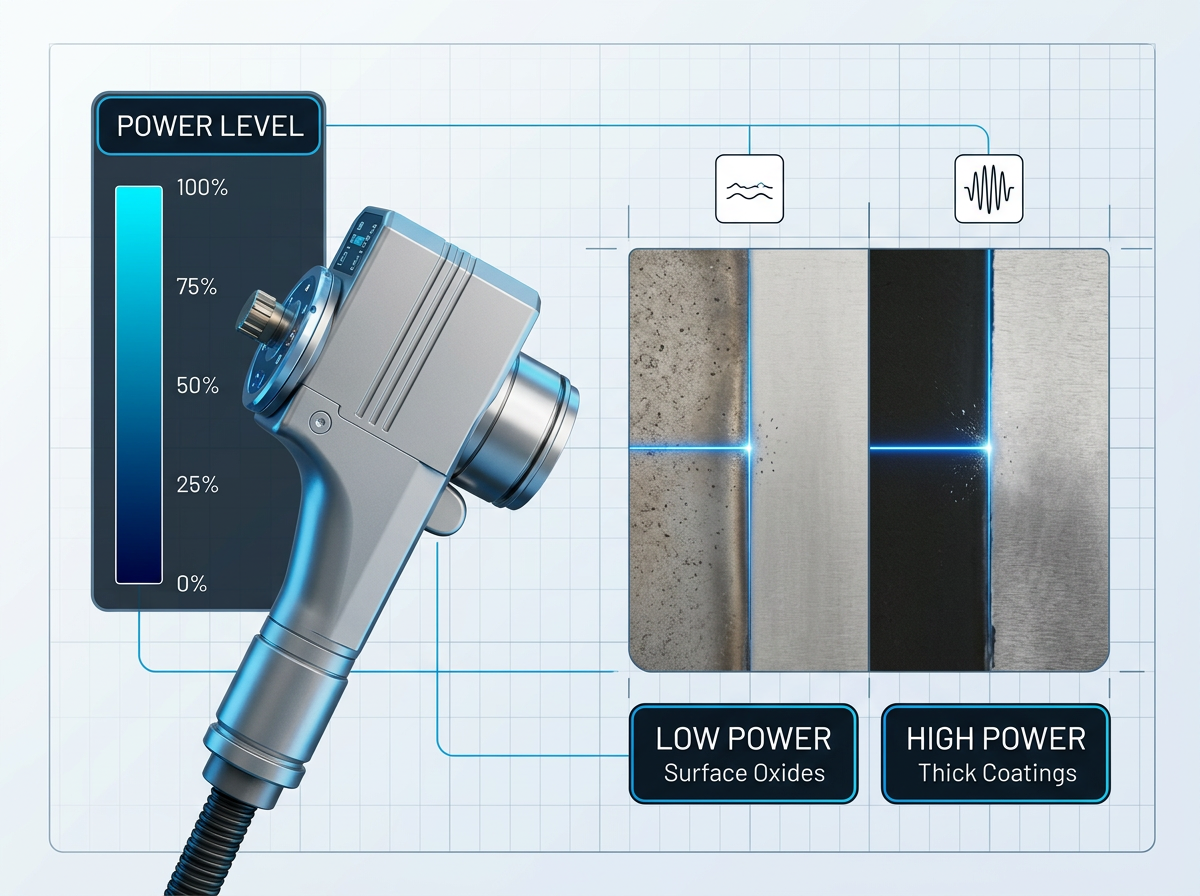
Sandblasting offers no meaningful selectivity — the abrasive process cannot be dialled to lift one layer while leaving another intact. Laser cleaning can. The ELASER's 300 W fibre laser with 0–100% power tunability lets the operator dial from light surface oxides at lower settings through to thick coatings at higher settings, all on the same machine without changing tooling.
That selectivity is what makes laser cleaning the right choice for professional-grade work. One system, fully adjustable, covering the full range of cleaning tasks your jobs demand.
When Sandblasting Still Works
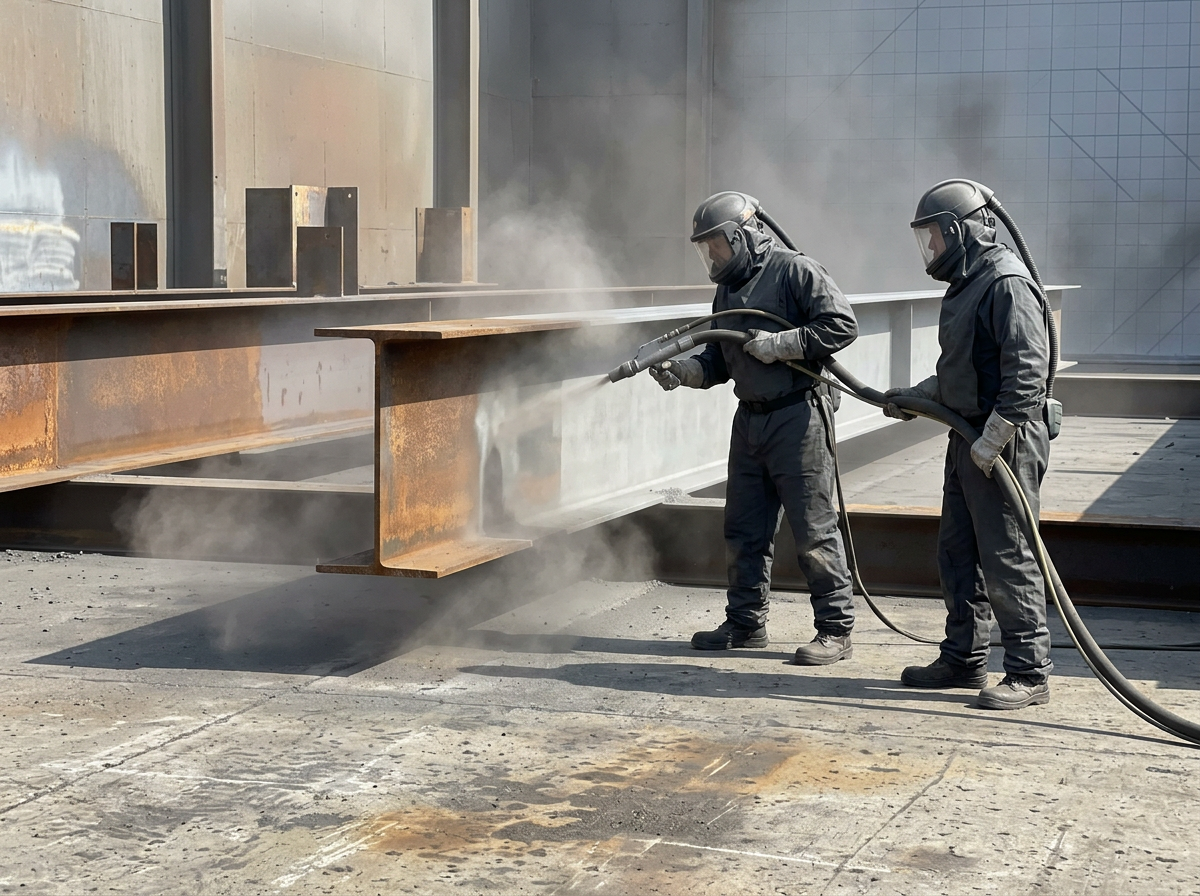
Sandblasting remains viable for high-volume, low-precision, large-area applications where substrate loss is acceptable and the economics of blast media at scale are favourable — bulk structural steel preparation for painting being the clearest example.
Where substrate integrity, dimensional precision, or operational flexibility matter, laser cleaning is the superior choice. Where none of those constraints apply, sandblasting can still do the job. Knowing the difference is what separates professional buyers from those who default to habit.
ELASER-RHZ: Portable Laser Rust Removal for Service Deployment
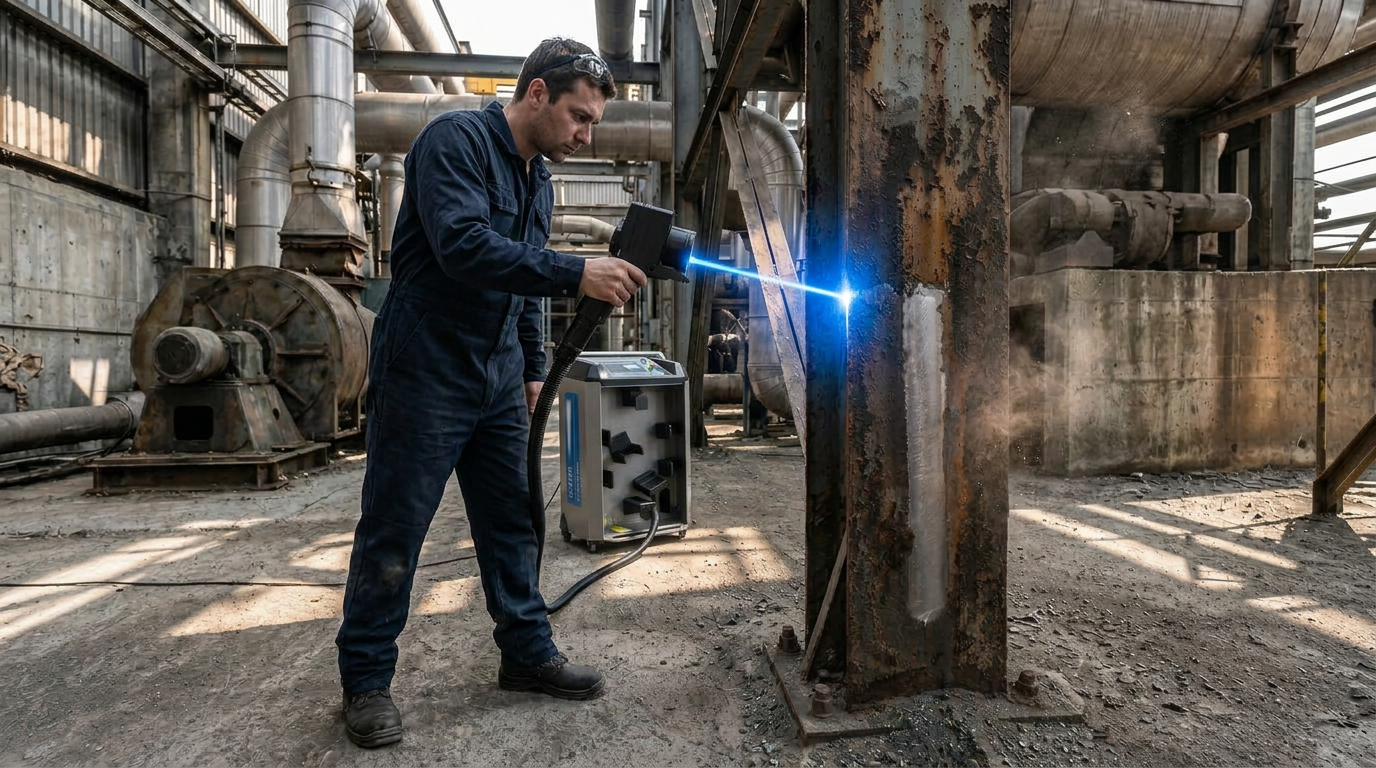
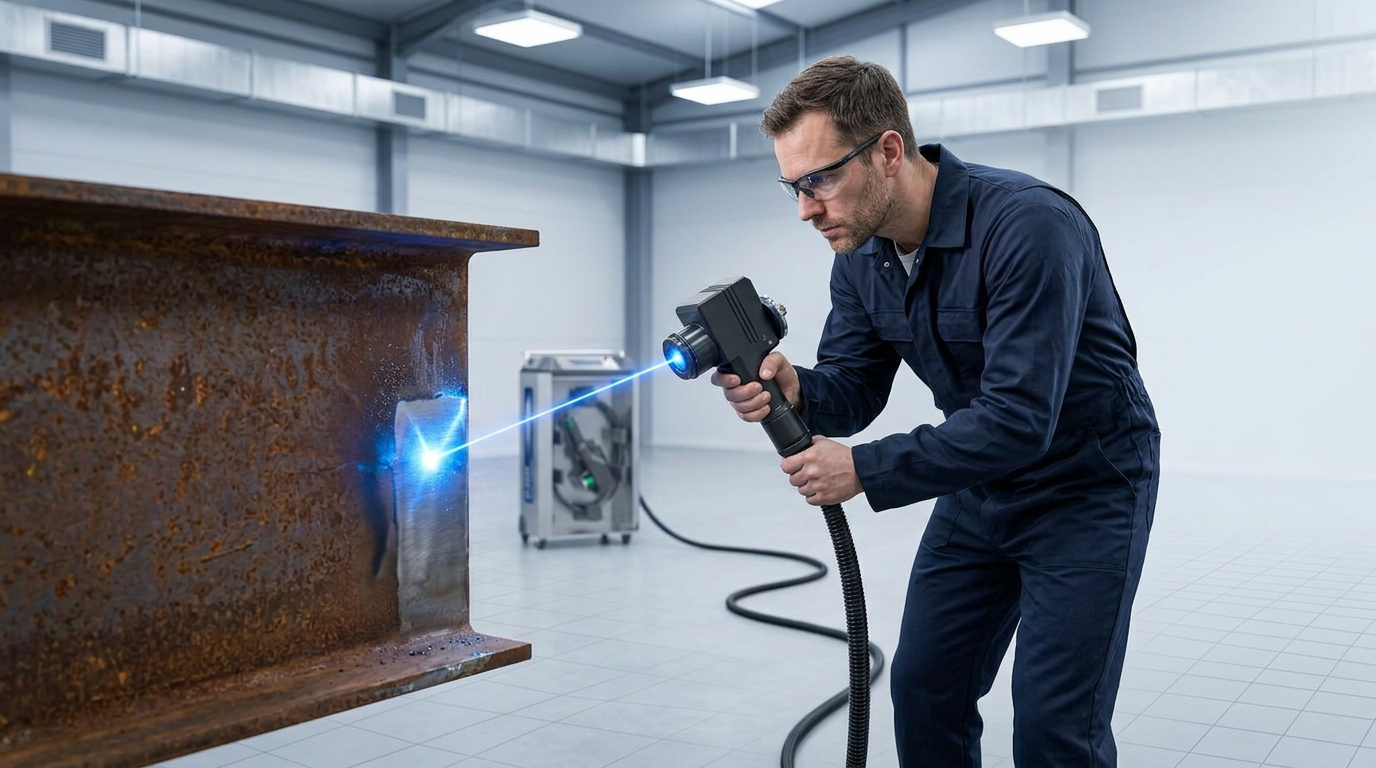
The ELASER-RHZ is the world's only laser cleaner with WSL's patented reduced hazard zone technology, collapsing the laser hazard to a small area around the work. Professional laser rust removal services can operate in open workshops, mixed-use facilities, and public environments — no area evacuation required.
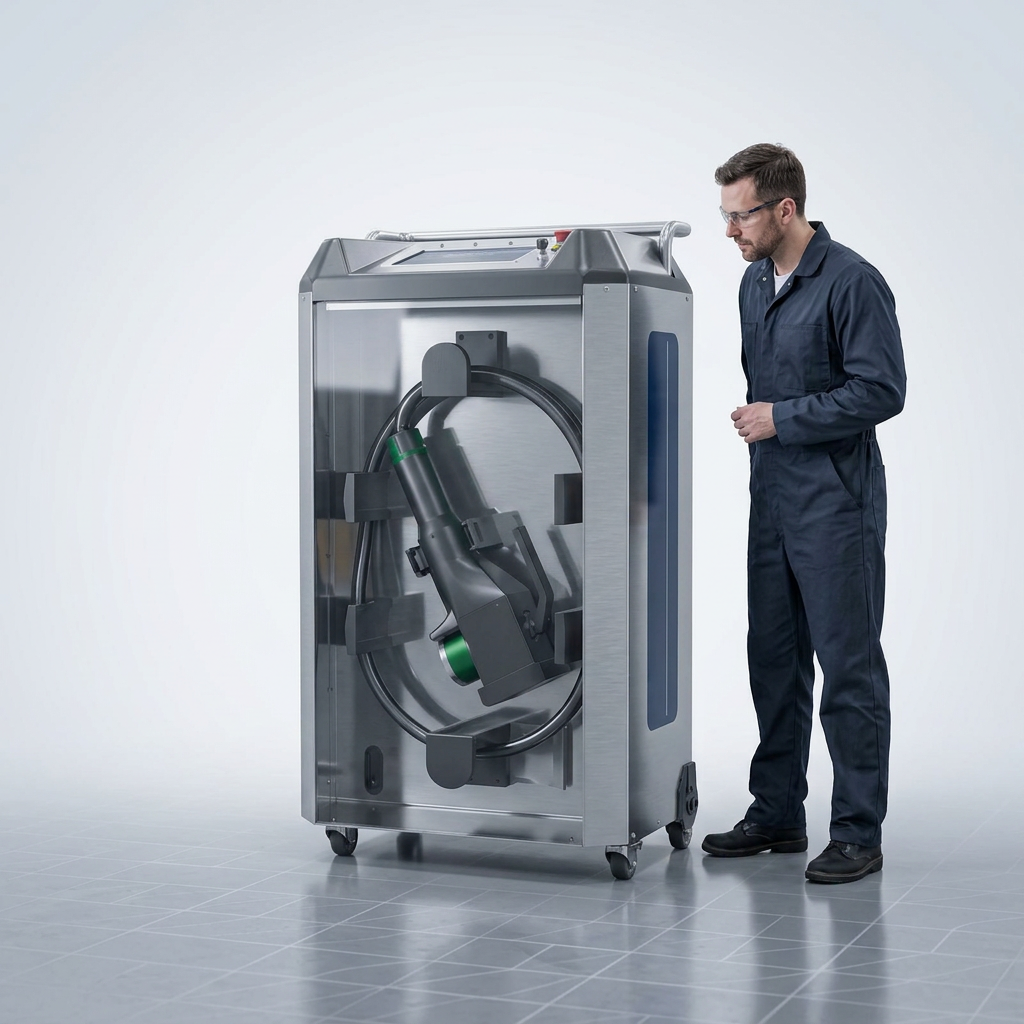
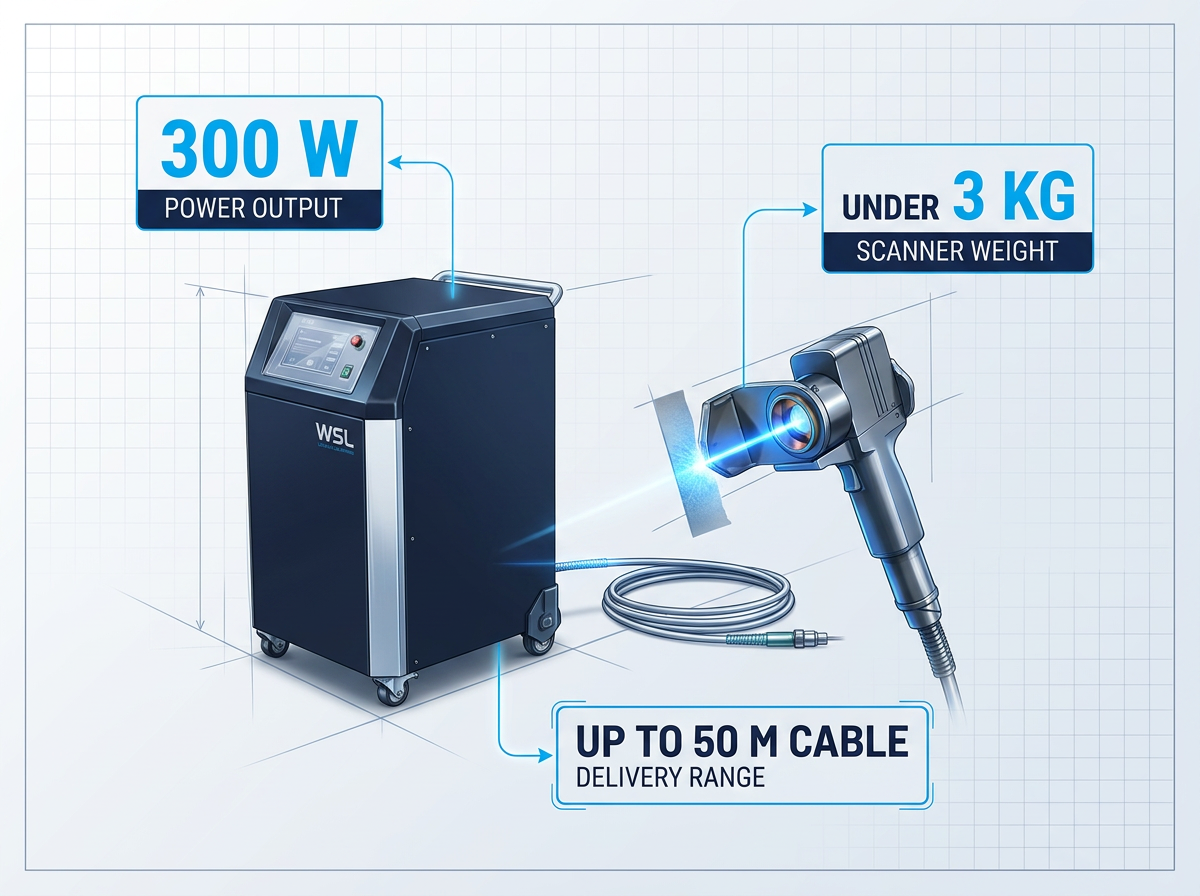
Self-contained and wheeled at under 50 kg, with a sub-3 kg handheld scanner and up to 50 m cable reach — one operator, no consumables, nothing else needed on site.
CE and UKCA certified, Made in Britain by WSL. Full operator training included — everything a service business needs to deploy commercially.
AutoLASE: Automated Laser Rust Removal for Production Volumes
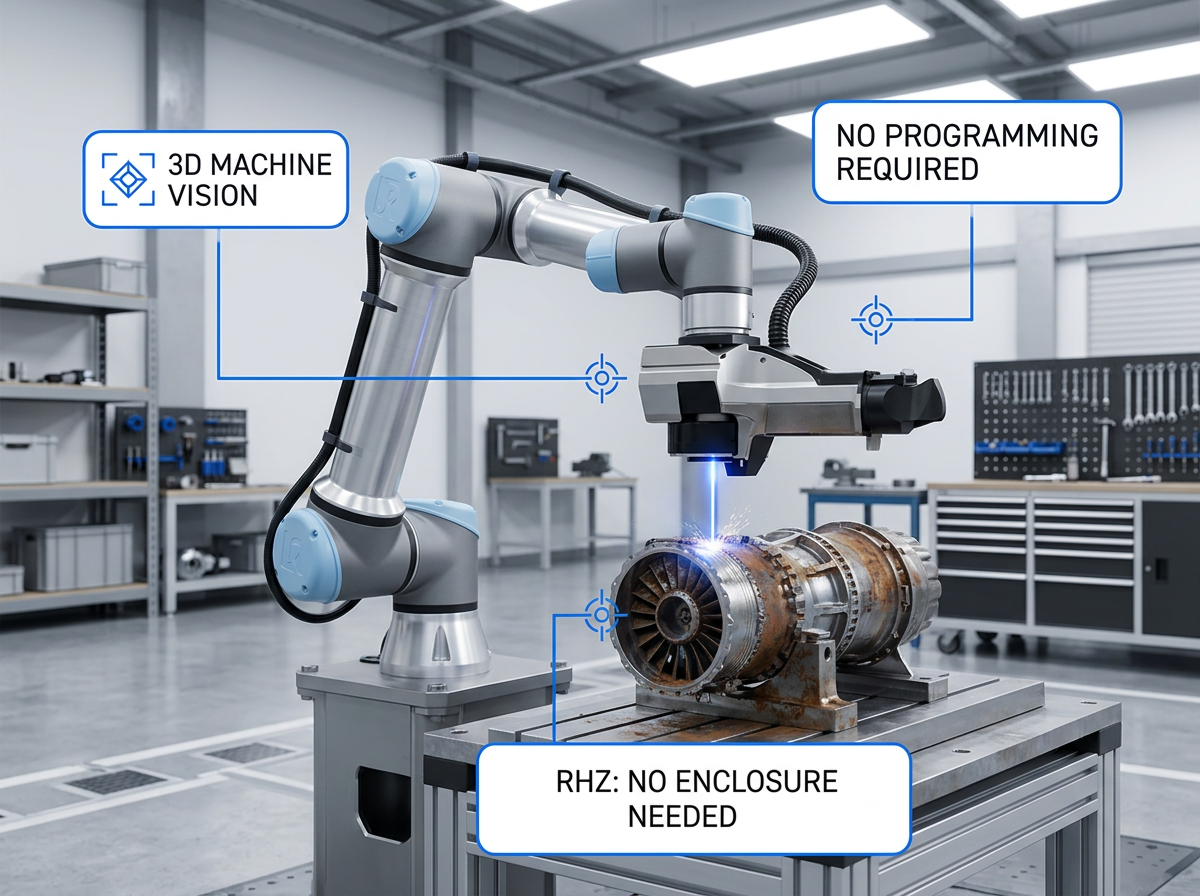
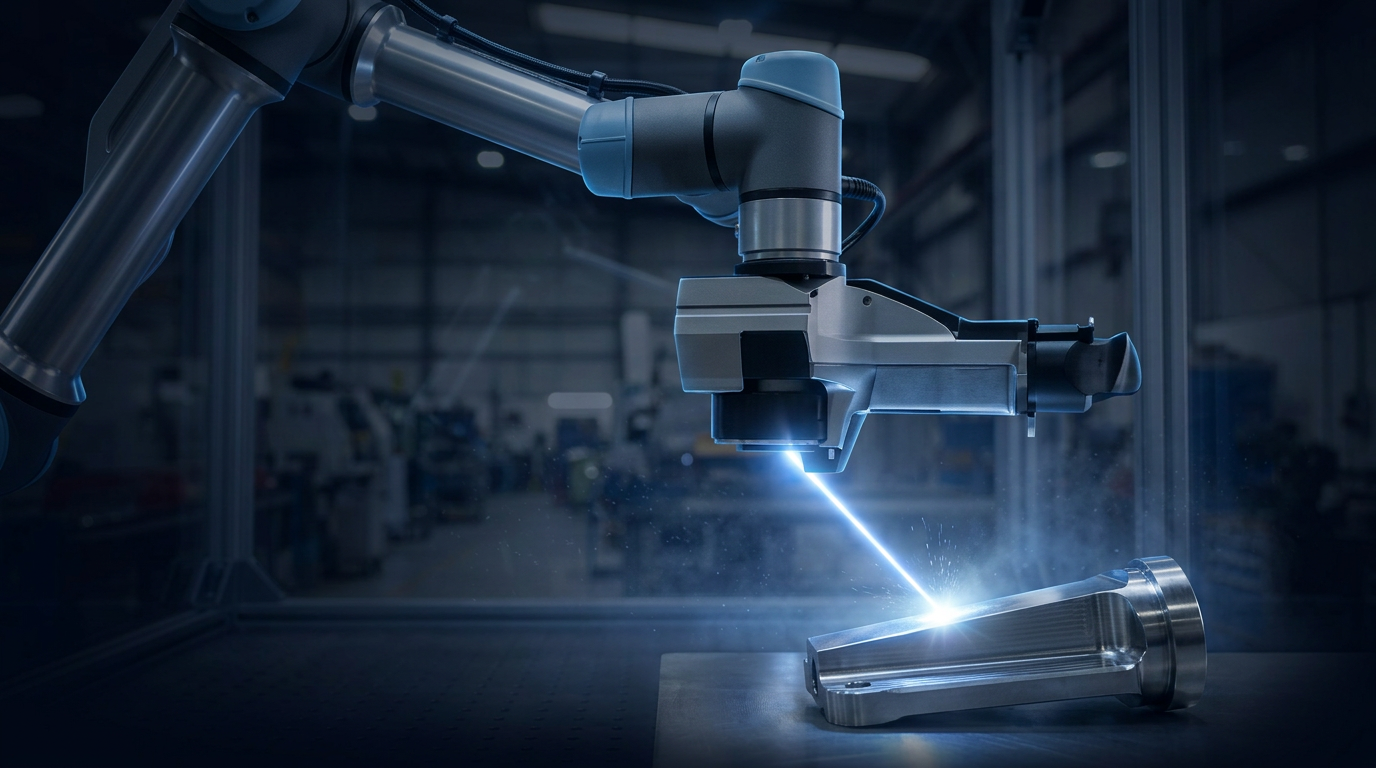
Load the part and AutoLASE cleans it. Machine vision scans each component, builds a 3D map, and generates the cleaning path automatically. No programming, no path-setting, no specialist skills needed — anyone can run it, part after part, to the same standard every cycle.
Optionally configured with WSL's Reduced Hazard Zone (RHZ) technology, AutoLASE requires no enclosure at all — the only automated laser cleaning system in the world with this capability. It attaches to your existing robots or is supplied as a complete custom cell. CE and UKCA certified; bespoke integration available.
See AutoLASE's Automated Cleaning in Full Detail
Machine vision, automatic path generation, no programming required. The AutoLASE product page covers full specifications, deployment options, and how the system fits a production cleaning operation.
Virtually Every Industrial Metal
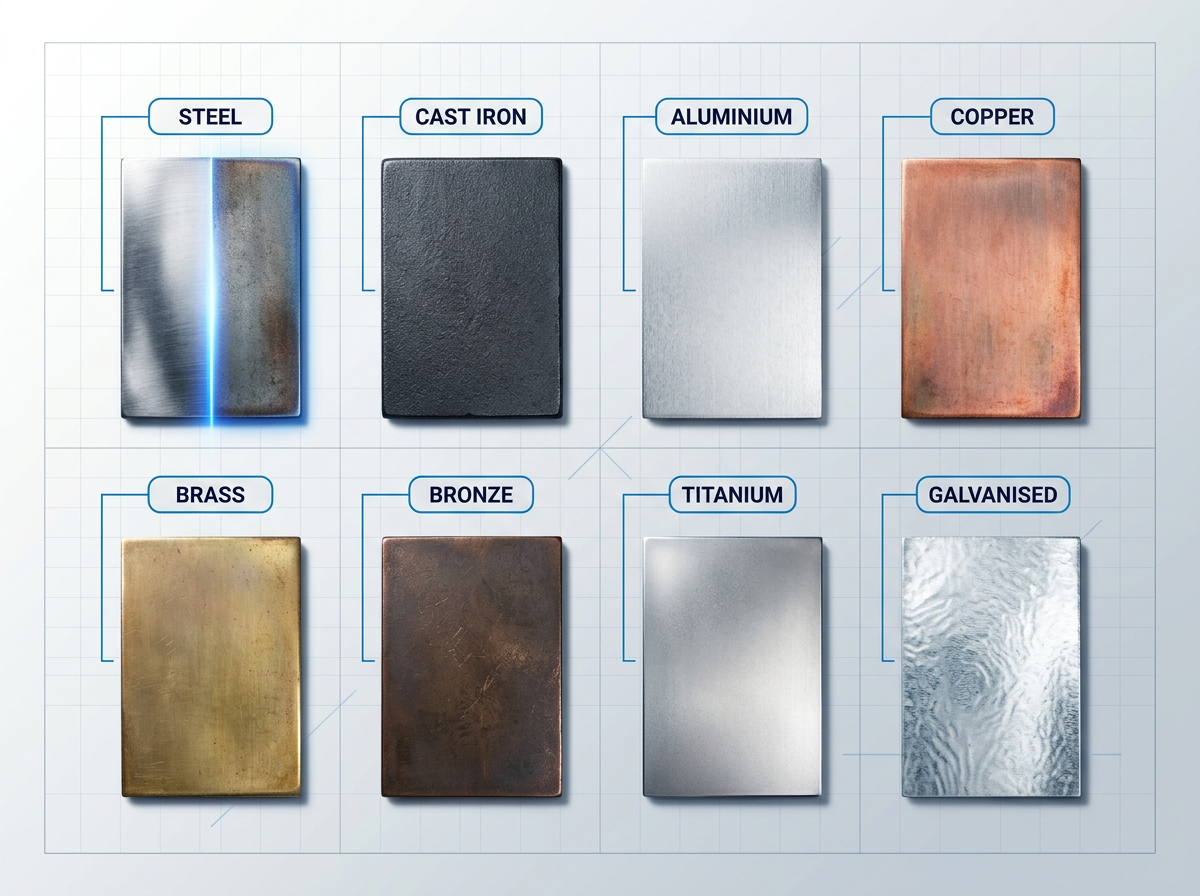
WSL's ELASER and AutoLASE systems clean the full range of metals a professional service operator or in-house buyer is likely to work across: steel, carbon steel, cast iron, aluminium alloys, copper, brass, bronze, titanium, and galvanised substrates. Whether the job involves structural fabrications, precision components, or mixed-material assemblies, the same system covers the substrate. No tooling changes, no material-specific machines — one system handles the breadth of metals encountered across industrial, infrastructure, and heritage work.
Rust to Coatings: Full Spectrum
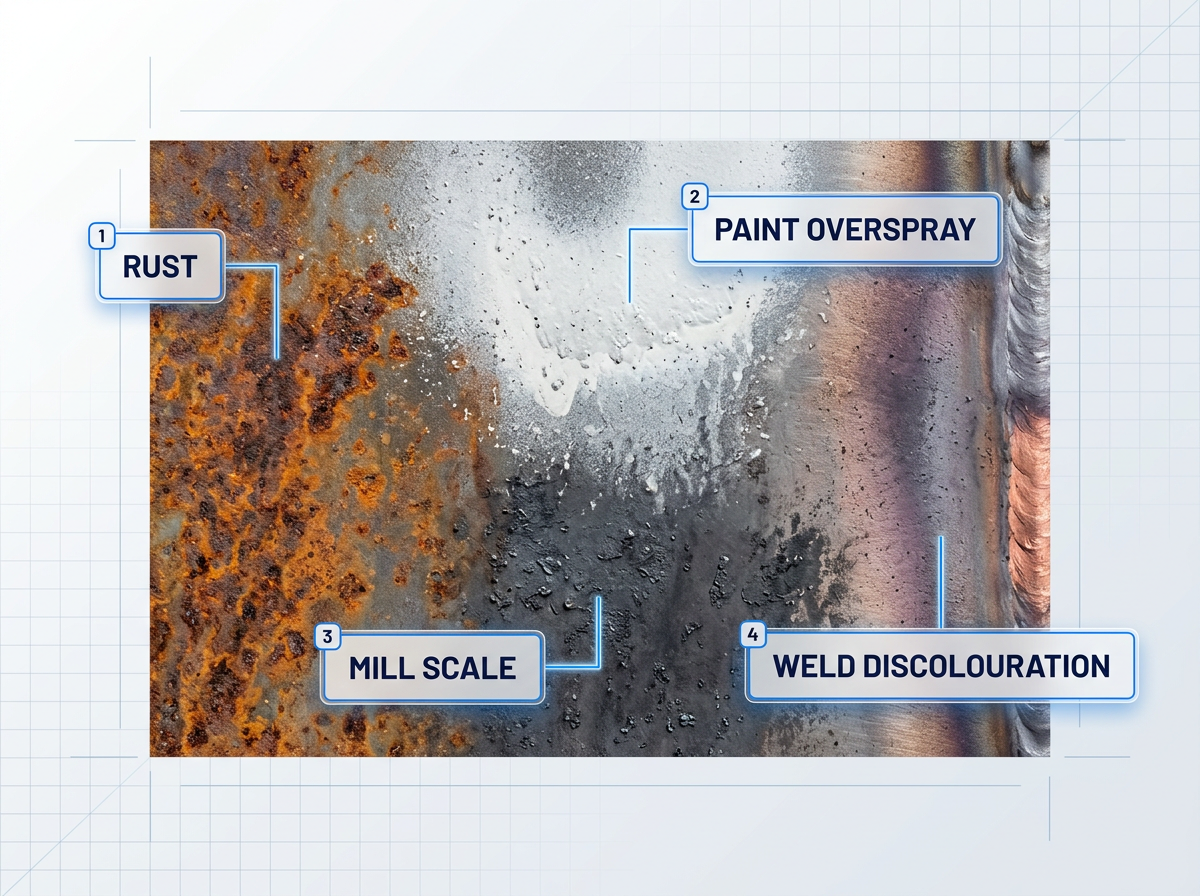
Professional jobs rarely involve a single contaminant type. WSL's systems remove rust, oxides, mill scale, paint, powder coating, lacquer, primer, oil and grease, carbon and soot, weld discolouration, tarnish, adhesives and residues, release agents, and mould — the full spectrum in a single machine. Service operators handling varied contracts and in-house buyers dealing with mixed contamination on the same part can cover every scenario without switching equipment or tooling.
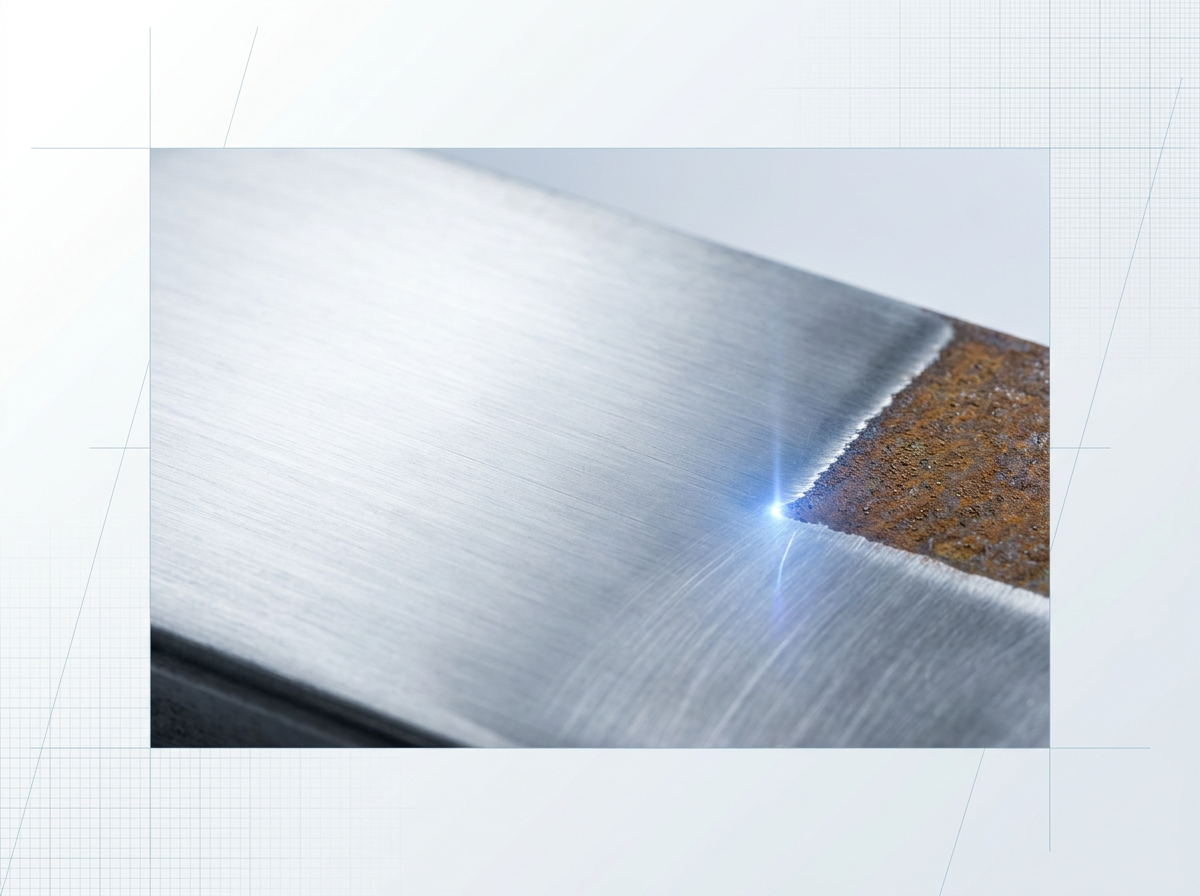
Beam Stops at Base Material
The laser beam vaporises the contaminant layer and stops at the base material, leaving the substrate dimensionally intact. This is the organising principle behind why WSL's systems work across such a wide range of metals and contaminant types: the beam targets the contamination, not the metal beneath it. Part integrity is protected, rework is reduced, and the same principle holds whether the substrate is steel, aluminium, copper, or any other metal in the covered range.
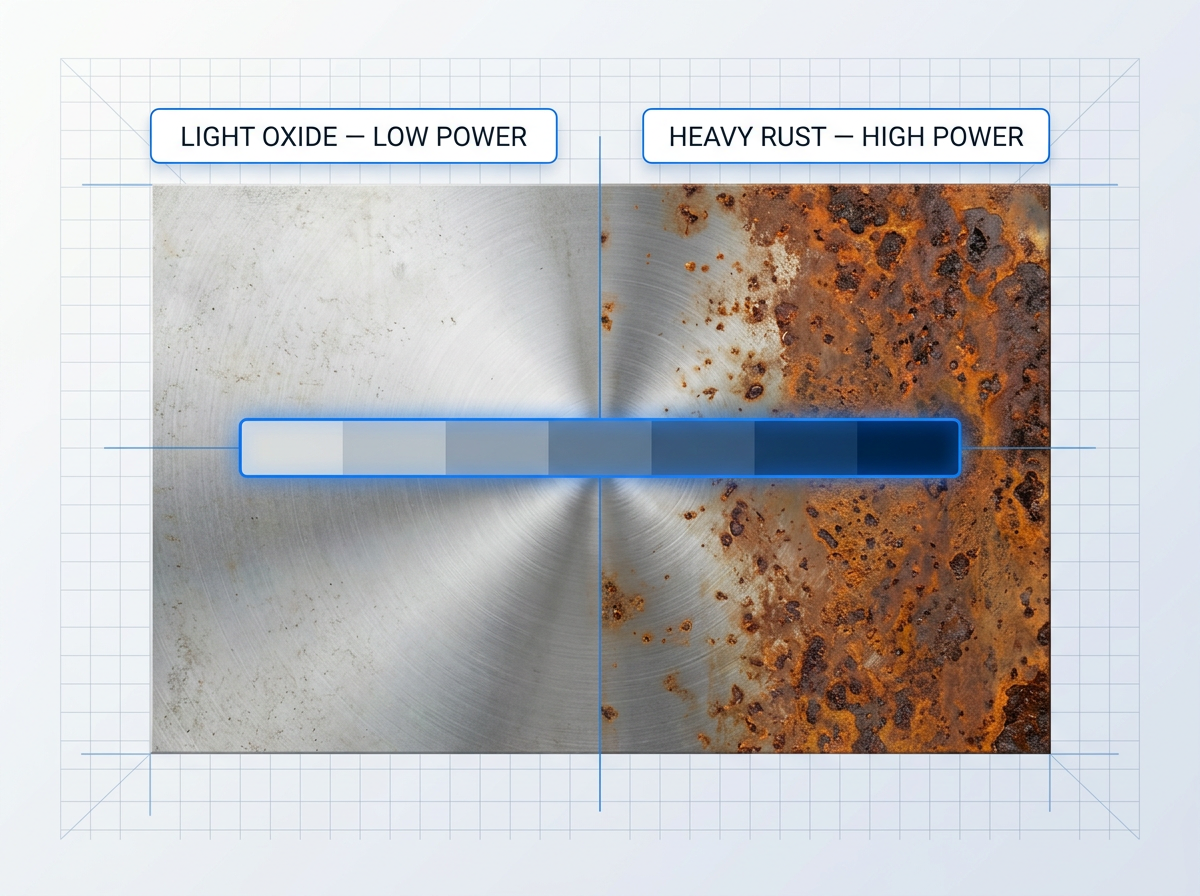
One System, Any Contaminant
Both ELASER and AutoLASE run a 300 W fibre laser with 0–100% power tunability. Lighter settings lift surface tarnish, weld discolouration, and fine oxides without disturbing the substrate. Higher settings tackle thick rust, heavy paint, and mill scale. The operator adjusts power to suit the job — no machine changes, no tooling swaps. For service operators facing varied contracts, and for in-house buyers whose parts carry mixed contamination, this tunability means a single system covers the entire contaminant range from first job to last.
Key Applications for Professional Laser Rust Removal
From automotive bodyshops to heritage monuments, laser rust removal is deployed across industries where precision, portability, and substrate preservation matter.
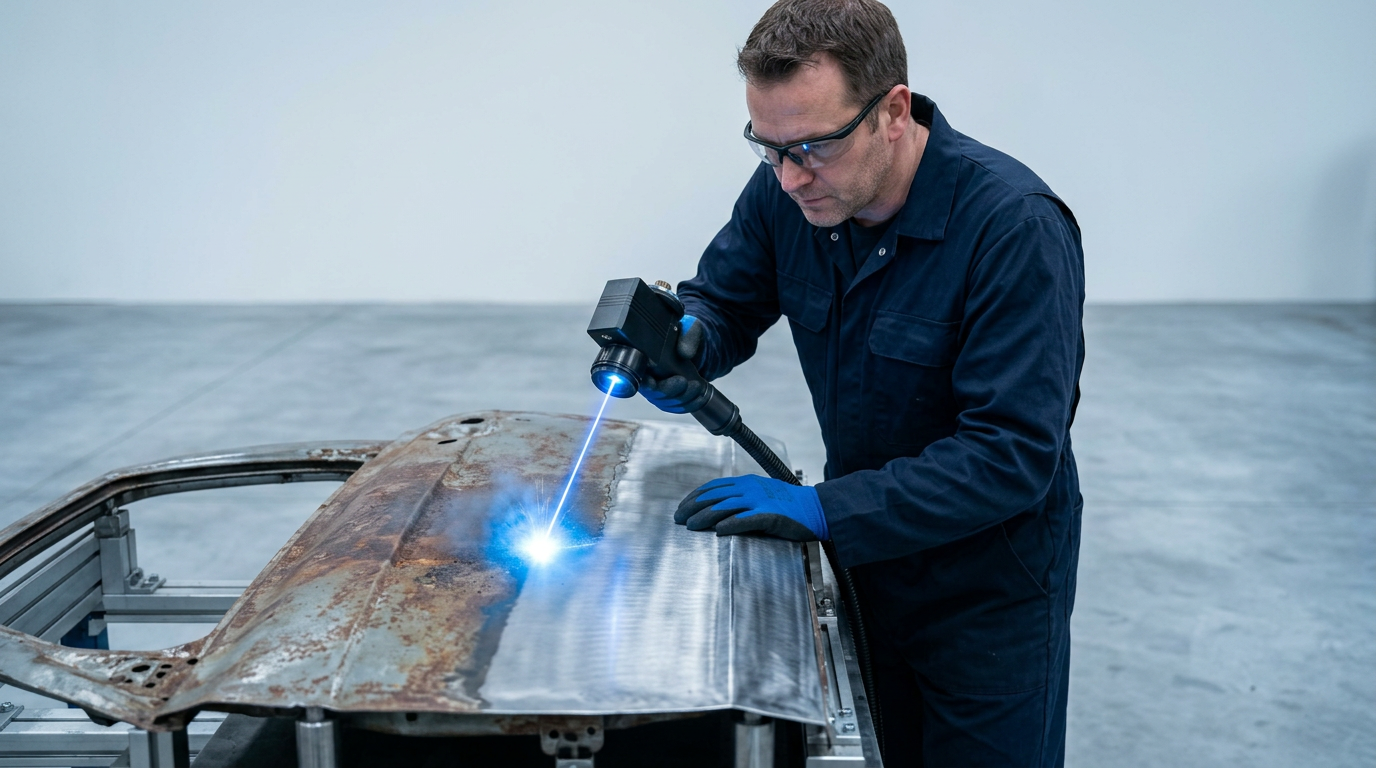
Automotive Bodywork and Components
Precise rust and paint removal from panels and components — no masking, no substrate damage.
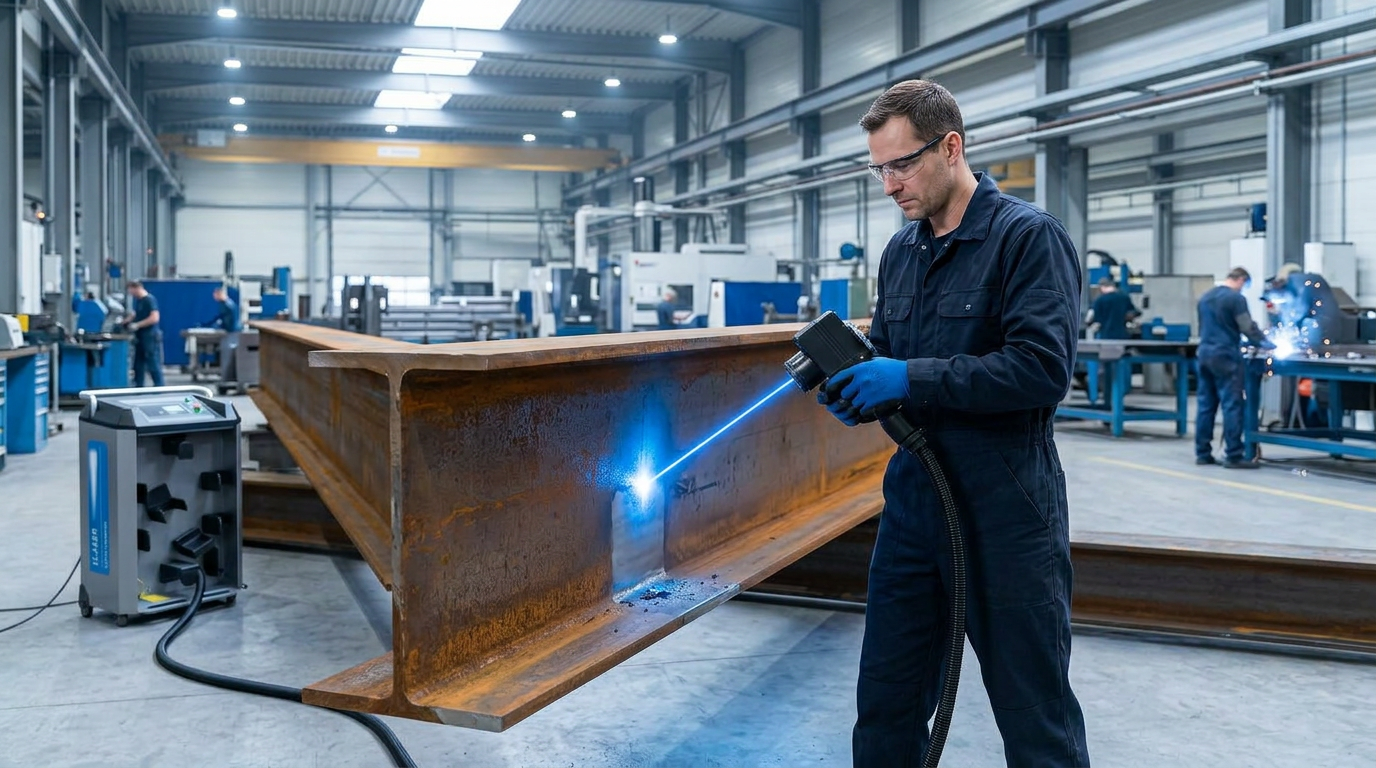
Industrial Plant and Infrastructure
50 m reach and RHZ technology enable cleaning in live environments without shutting down operations.
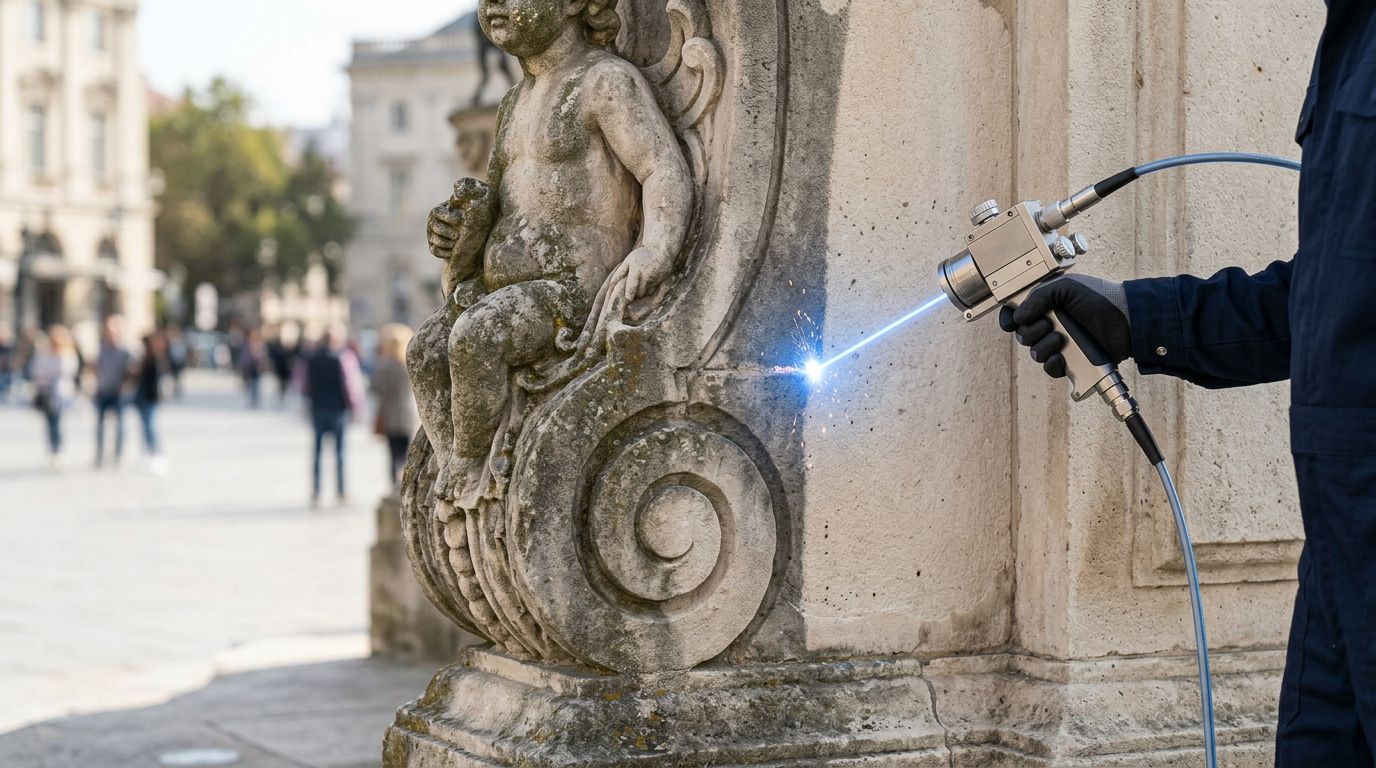
Heritage and Restoration
Gentle enough for irreplaceable surfaces; RHZ keeps publicly accessible sites fully operational.
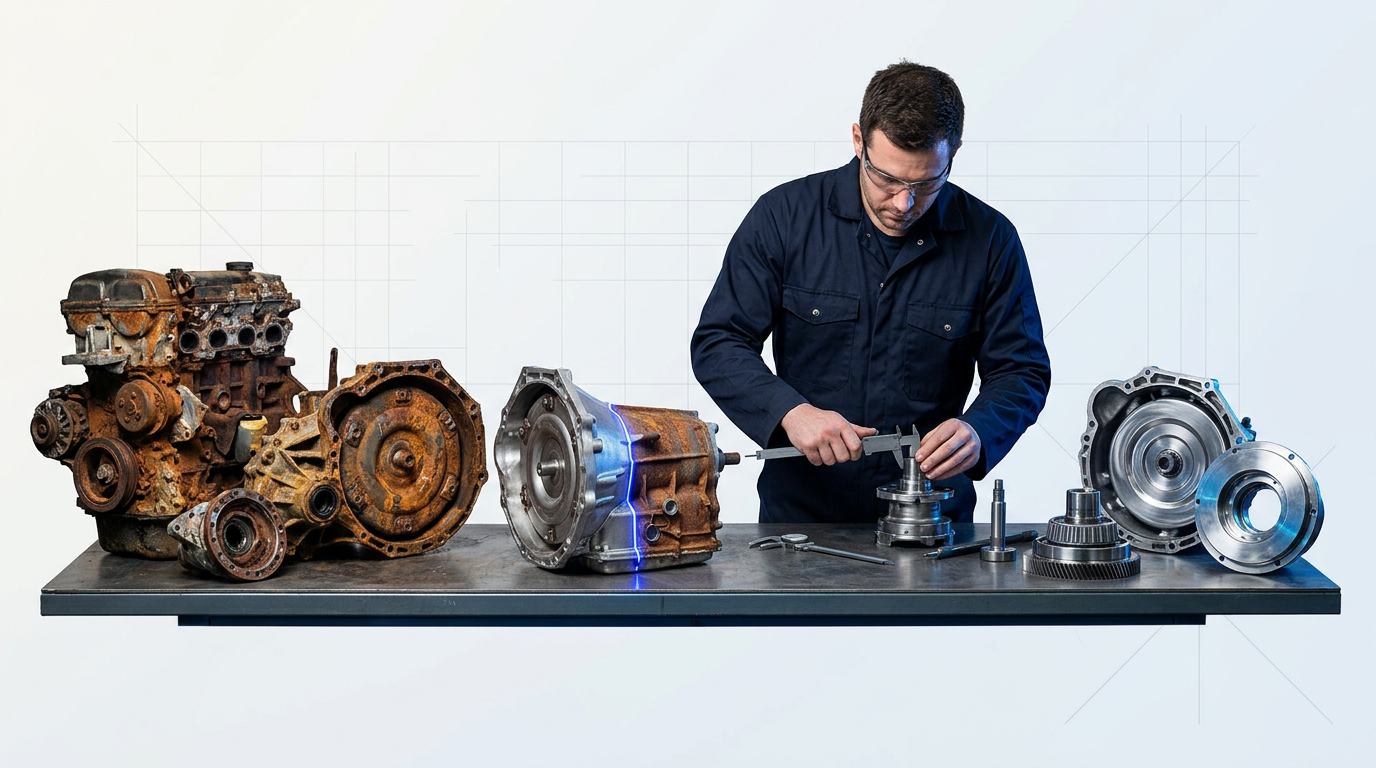
Remanufacturing and Refurbishment
Consistent, inspection-ready cleaning of worn components — manual or load-and-go automated batches.
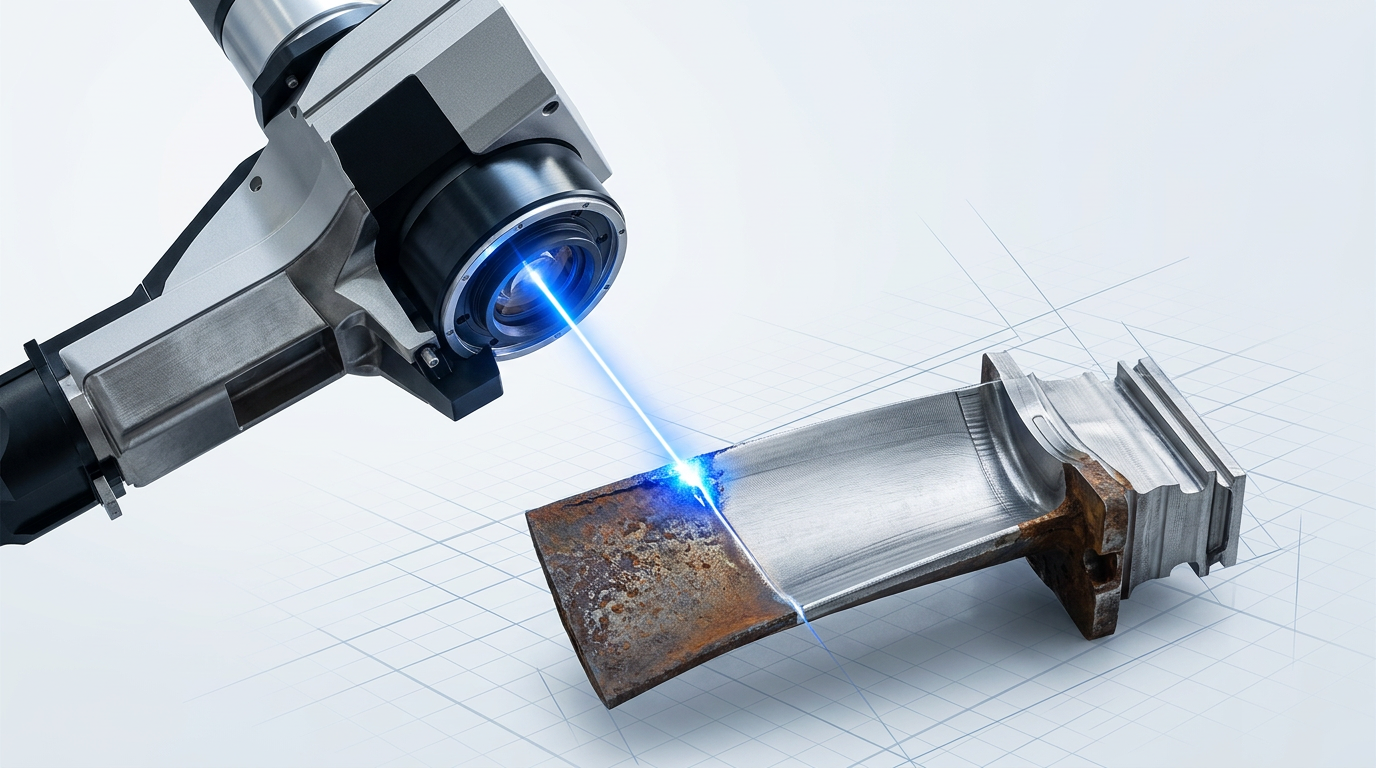
Aerospace
Dimensional integrity is non-negotiable; minimal substrate loss makes laser the only viable method.
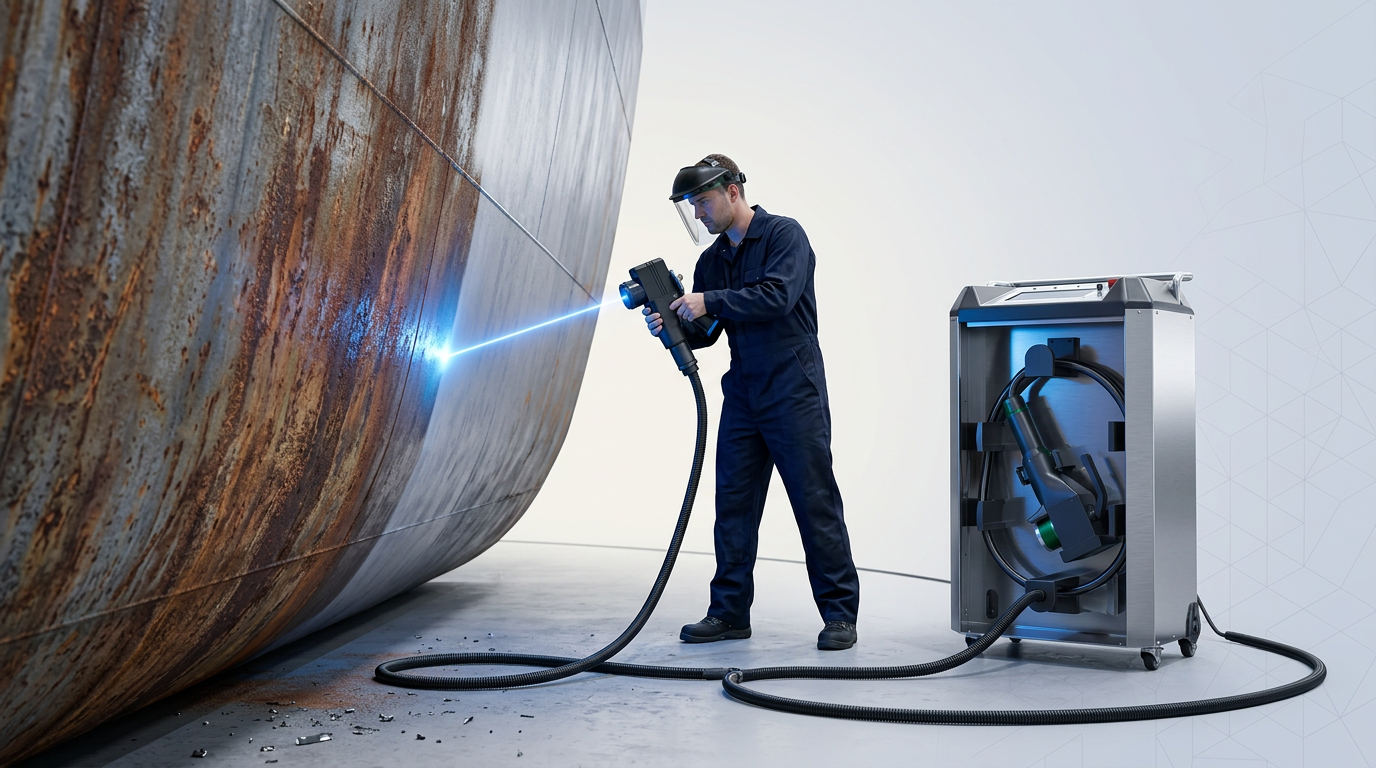
Shipbuilding and Rail
Portable system with 50 m reach tackles rust and mill scale on large steel structures.
Electricity Only. Nothing Else.
ELASER and AutoLASE run on electricity alone — no blast media to buy, store, or dispose of; no chemicals, no water treatment, no controlled waste. Abrasive and chemical methods carry a consumable overhead on every single job, and that cost compounds at scale.
Removing consumables from the cost structure is not a marginal saving. It is a structural difference in how the economics of the work are built.
Ready to Work. Immediately.
Laser cleaning requires no blast containment setup, no masking, no post-clean media removal, and no drying time. The operator arrives and cleans; the surface is ready for the next process step the moment cleaning stops.
Every hour not spent on setup and cleanup is an hour spent on billable work or production output. For service operators running ELASER and in-house teams running AutoLASE, that throughput advantage accumulates across every job and every cycle.
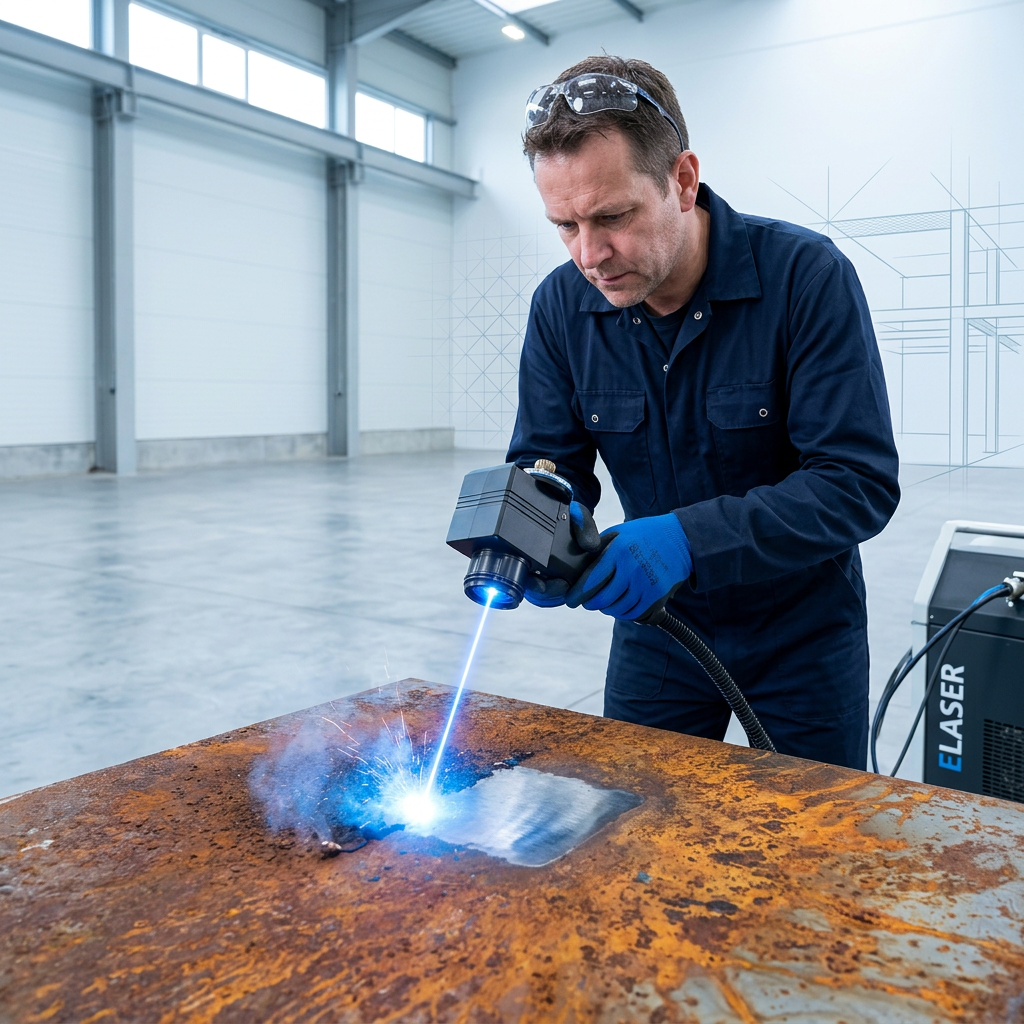
Beam Stops at the Base Material
The laser vaporises the contaminant and stops at the base material. Parts are not over-cleaned, not dimensionally altered, not surface-damaged the way abrasive methods damage precision components.
For buyers using sandblasting or grinding on precision parts, scrap and rework costs are real and recurring. Less substrate loss means less wasted material, less labour on remediation, and faster throughput to the next process step — a quality and cost argument at the same time.
Competitively Priced. Quote-Based.
WSL's systems are competitively priced among comparable industrial laser cleaning machines, and both ELASER and AutoLASE are priced on a quote basis — the right answer depends on the system, deployment scale, and application.
For service operators, the economics of running a laser rust removal service with ELASER are structurally different from consumable-dependent methods: the cost per job is predominantly labour and time, not materials — which changes the margin structure of the business. Contact WSL for a tailored assessment.
The UK's Only Laser Cleaning Manufacturer
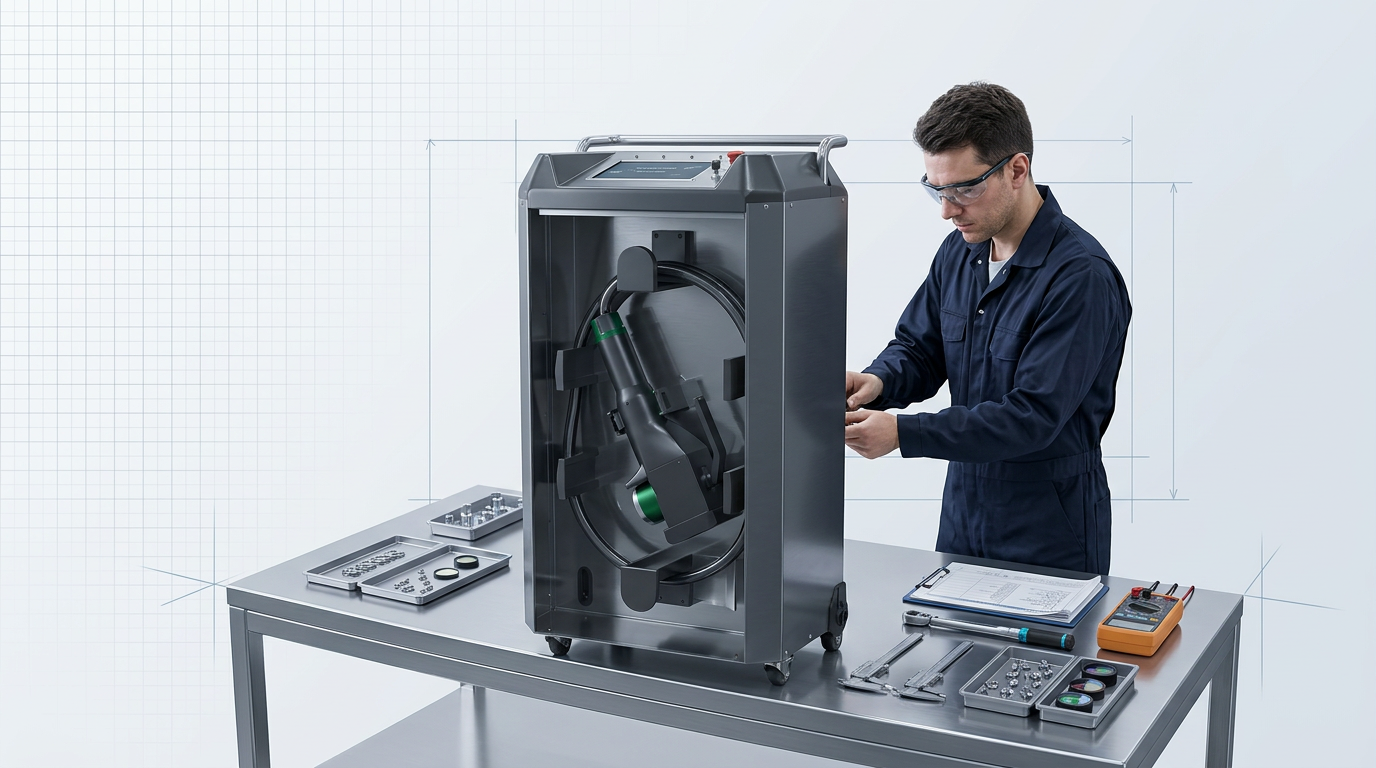
WSL is the only UK-based laser cleaning manufacturer — designing, building, servicing, and improving its own machines in-house since 2012. Many laser cleaning suppliers are importers rebadging third-party hardware: no in-house engineering, slower spares, no ability to improve the product. With WSL, the team that built your machine is the team that supports it.
That depth produced the world's first patented eye-safe RHZ technology. Both systems are competitively priced, CE and UKCA certified, Made in Britain, and backed by 200+ years of combined engineering experience.
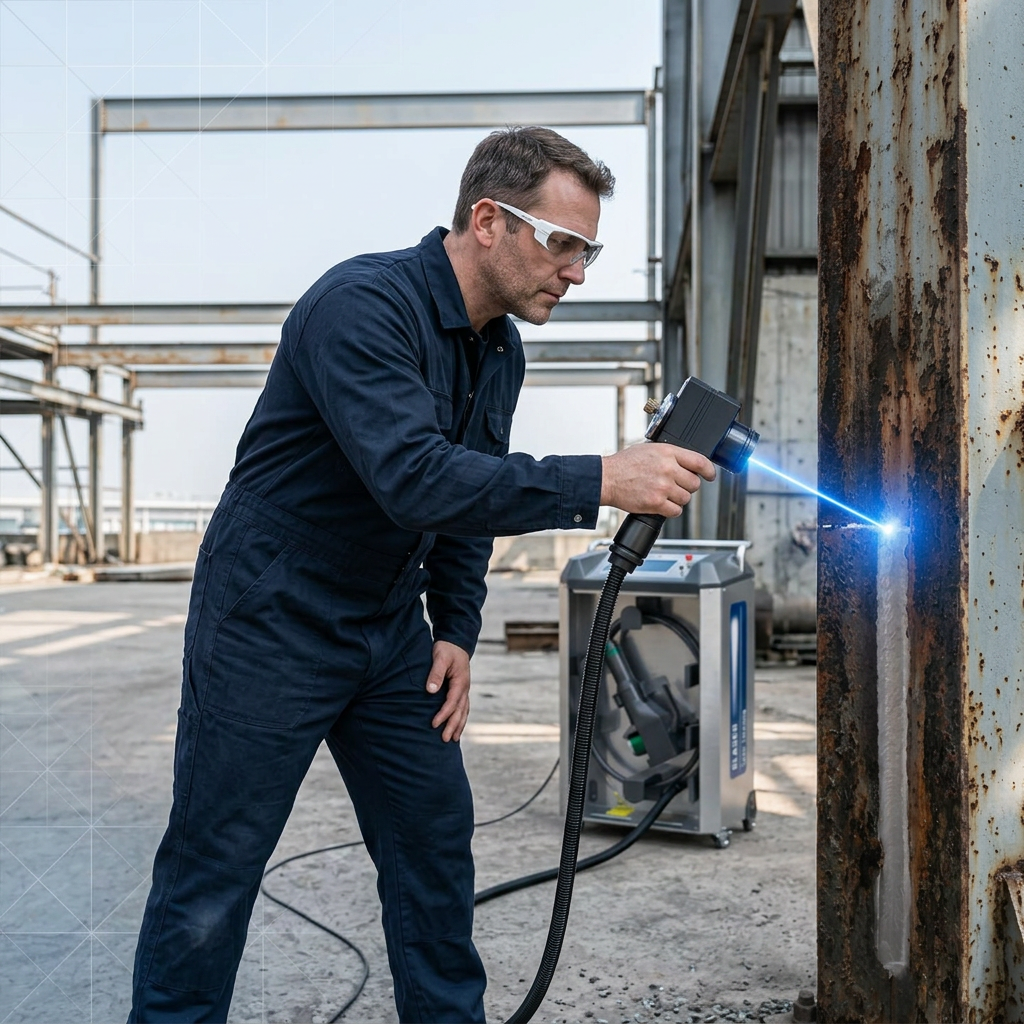
For field and service work.
This is you if your work moves: on-site jobs, varying locations, clients whose parts cannot come to a facility. The ELASER is a single-operator, portable system — wheeled unit, sub-3 kg scanner, up to 50 m cable reach.
If you work in open workshops, mixed-use facilities, or publicly accessible environments, the ELASER-RHZ's patented reduced hazard zone resolves the evacuation problem that makes conventional laser cleaning impractical in those settings.
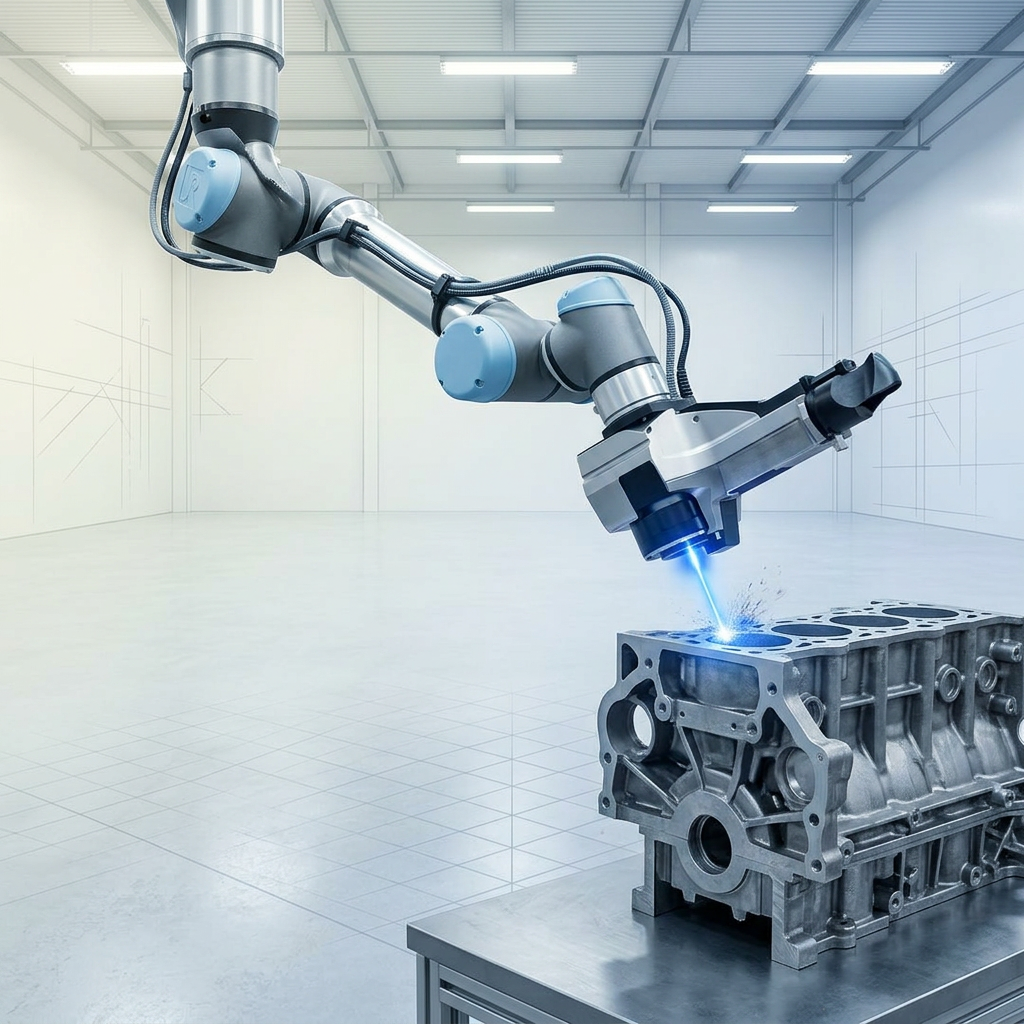
For in-house production cleaning.
This is you if the parts come to the machine: facility-based, high-volume, consistency-critical. AutoLASE eliminates manual labour from repetitive cleaning cycles — just load the part, no programming needed. Machine vision handles the rest, to the same standard every cycle.
For facilities that need enclosure-free automated cleaning, the optional RHZ upgrade is available exclusively from WSL — the only automated laser cleaning system in the world that can operate without an enclosure.
WSL can advise.
Both systems share the same core laser technology, CE and UKCA certification, and are designed, built, and supported in-house by WSL. Neither is universally superior — the right fit depends on whether your cleaning challenge is mobile and service-oriented or fixed and production-oriented.
If the distinction is not yet clear, WSL's team can advise based on your part types, volumes, and deployment context. An application assessment costs nothing and cuts straight to the right answer.
ELASER and AutoLASE: Specifications at a Glance
Both systems: Up to 300 W fibre laser. Wavelength 1550 nm (ELASER-RHZ: retina-safe / reduced hazard zone). Power tunable 0–100%. Pulse: up to 15 mJ / 100 ns / up to 200 kHz. Power supply 110–250 VAC single-phase, under 2000 W. Class IV or Class I. CE and UKCA certified. Made in Britain.
ELASER portability: Delivery cable up to 50 m. Handheld scanner under 3 kg. System under 50 kg.
Laser Rust Removal: Common Questions
The questions professional buyers ask most often before choosing a laser rust removal system or service — answered directly.
Yes — and the mechanism is why. Laser ablation vaporises the rust or oxide layer while the beam stops at the base material, leaving clean metal ready for coating, welding, or inspection without touching the substrate beneath. This is not experimental technology: it is the established method of choice wherever substrate preservation and zero consumables matter. WSL's systems have been deployed across automotive bodywork, industrial plant, heritage restoration, and aerospace applications — each context chosen precisely because abrasive methods could not deliver the same result.
WSL's systems are priced on a quote basis — the right answer depends on the application, scale, and whether ELASER or AutoLASE is the better fit. But the more useful cost question for a professional buyer is what the cleaning costs to run, not just to acquire. On that measure, laser cleaning outperforms abrasive and chemical methods: zero consumables, no blast media, no chemical disposal, less downtime, and less rework. Over a working life, those savings are substantial. Contact WSL for a tailored assessment of the system and deployment model that fits your operation.
For professional rust removal where substrate integrity matters, yes. The laser beam stops at the base material; sandblasting removes substrate alongside contamination — on precision components, that dimensional loss is irreversible. On waste, laser cleaning produces minimal particulate captured by extraction; sandblasting generates large volumes of contaminated media requiring controlled disposal. On setup, laser needs no containment, no masking, no post-clean media removal; sandblasting requires all three. Sandblasting still has a role in high-volume, low-precision large-area work where substrate loss is acceptable — that is an honest assessment. But where quality and operational efficiency are the priority, the total cost of ownership favours laser over a working life.
Conventional laser cleaning requires the surrounding area to be sealed off and evacuated before work can begin — a serious practical barrier for on-site, mobile, or publicly accessible jobs. WSL's patented Reduced Hazard Zone (RHZ) technology collapses the laser hazard to a small area directly around the work, so cleaning can take place in open workshops, mixed-use facilities, and publicly accessible spaces without shutting down the surrounding environment. This is what makes laser rust removal genuinely viable as a mobile service. The ELASER-RHZ is the only portable laser cleaner with this capability, and it removes the single biggest operational barrier to deploying laser cleaning outside a controlled facility. WSL provides full operator training with every system.
Yes. ELASER is designed specifically for single-operator, portable service deployment — one person, one system, no support crew required. WSL provides full operator training alongside the system, so a new service operator has everything needed to start taking on commercial rust removal jobs from day one. The economics are also structurally different from consumable-dependent methods: the cost per job is predominantly labour and time, not materials. That means margins improve as volume grows, without the consumable overhead that compounds with every abrasive or chemical job. Speak to WSL about the ELASER as a service platform.
Both ELASER and AutoLASE cover the full range of metals a professional operator is likely to encounter: steel, carbon steel, cast iron, aluminium alloys, copper, brass, bronze, titanium, and galvanised substrates. On contaminants, the scope goes well beyond rust — the systems remove mill scale, oxides, paint, powder coating, lacquer, primer, oil and grease, carbon and soot, weld discolouration, tarnish, adhesives and residues, release agents, and mould. If your application involves industrial, automotive, heritage, or infrastructure metalwork, it almost certainly falls within scope. Contact WSL to confirm fit for a specific substrate or contaminant type.