
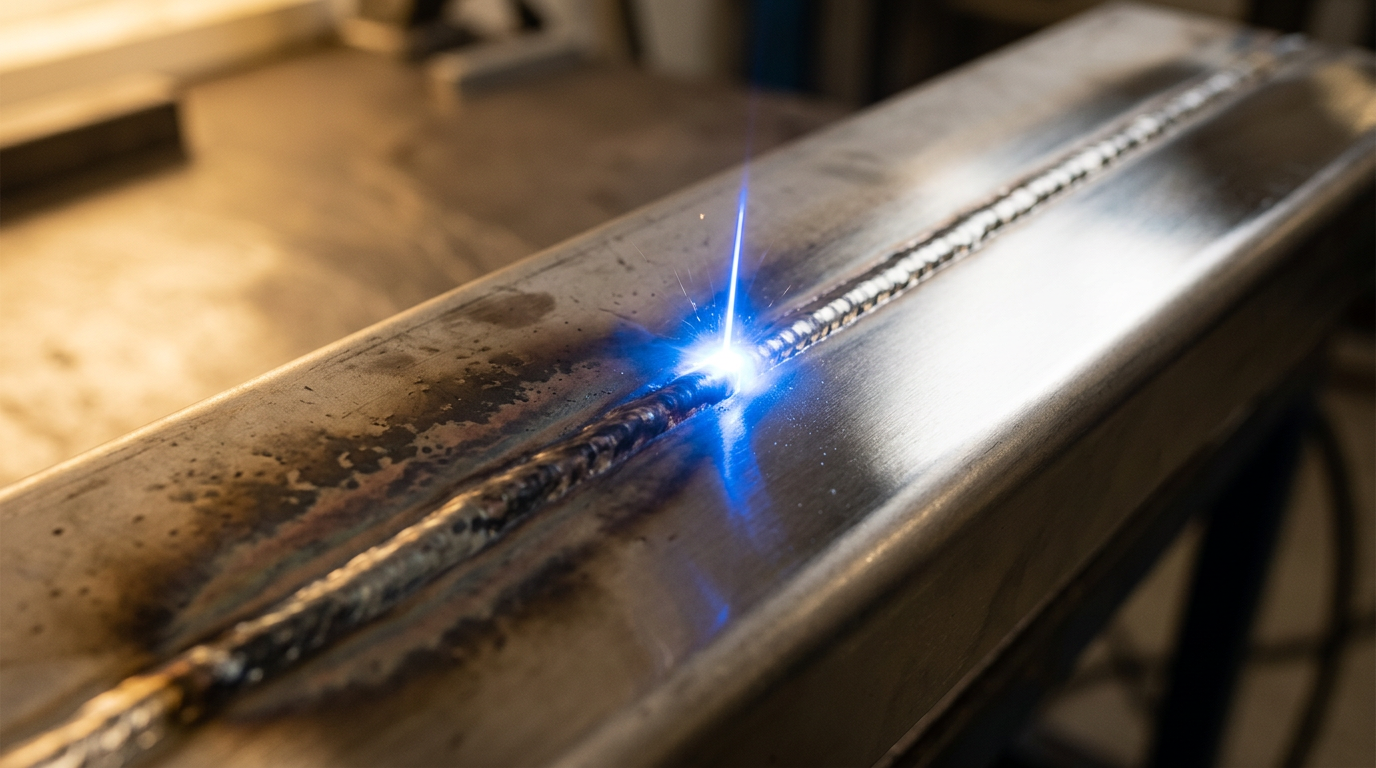
Heat Tint Is More Than a Surface Problem
Welding heat drives chromium to the surface, forming a thickened oxide layer — and leaving a chromium-depleted zone in the metal beneath it. That subsurface zone cannot sustain the passive film stainless steel relies on for corrosion resistance.
The result is localised vulnerability: pitting corrosion, crevice corrosion, and microbiologically influenced corrosion (MIC) are the documented failure modes. Darker tints — brown, purple, blue — indicate deeper depletion and greater risk.
For food processing, pharmaceutical, marine, and architectural fabrications, removing heat tint is a performance and compliance requirement, not a finishing option.
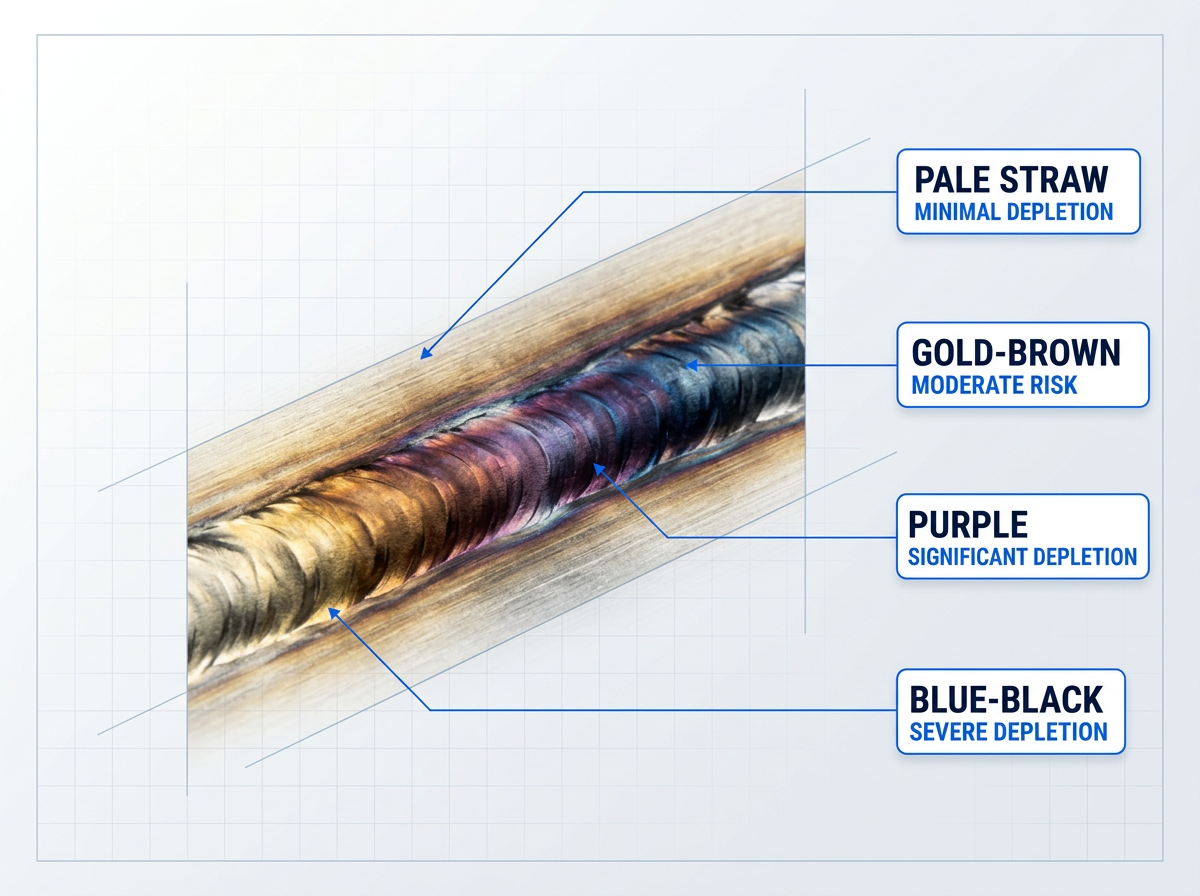
How Laser Cleaning Removes Heat Tint from Stainless Welds
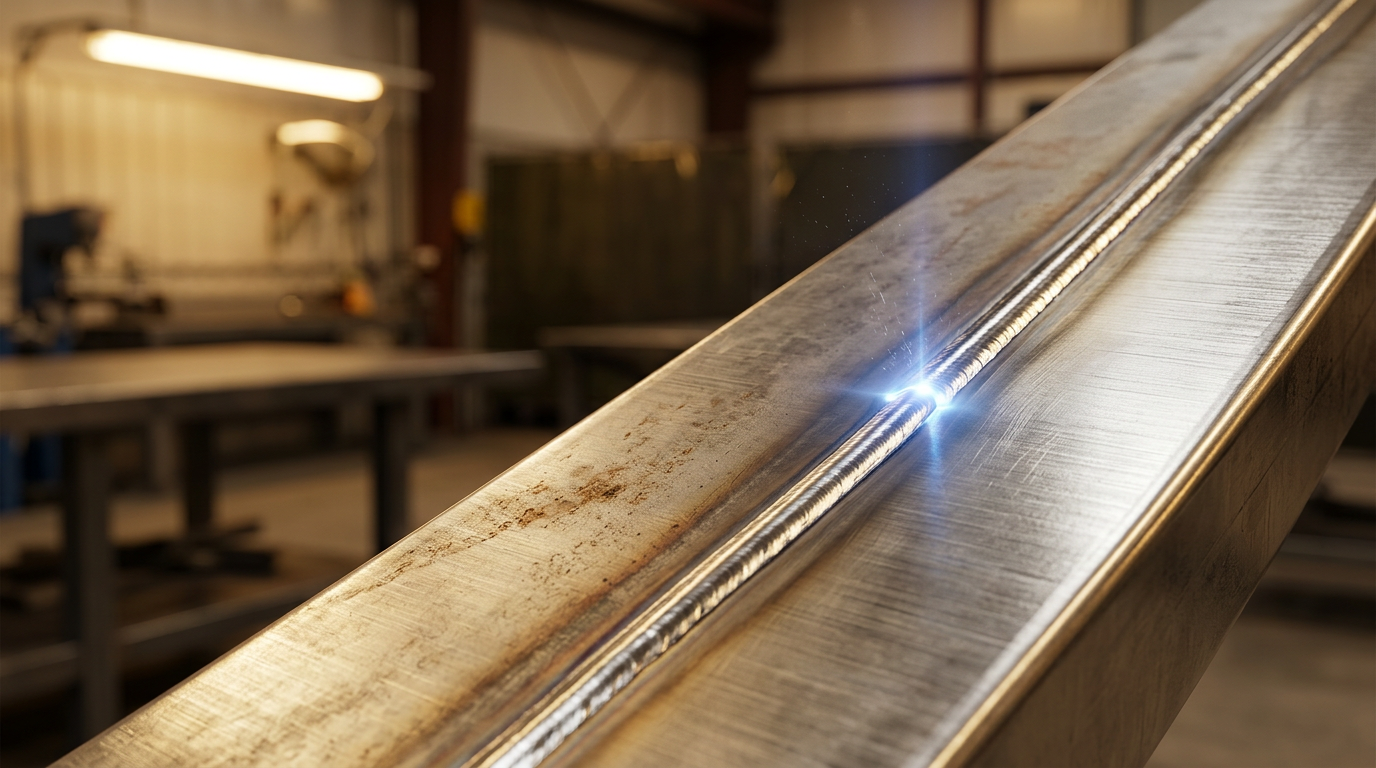
Laser cleaning targets the oxide and discolouration layer directly, leaving the base stainless steel intact. The result is a clean, corrosion-resistant surface — with no chemicals and no abrasion.
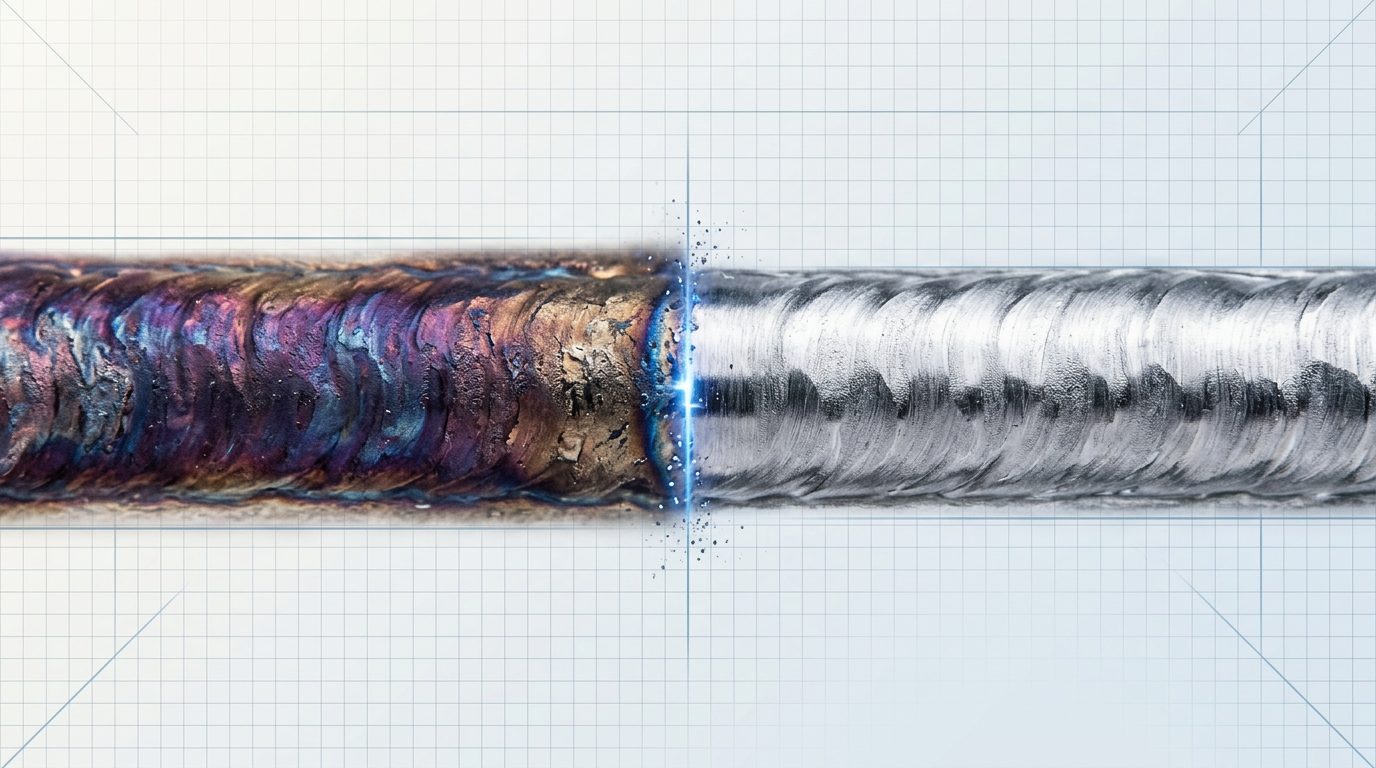
Oxide removed, base steel left untouched
Pulsed laser energy vaporises the heat tint and oxide layer. The beam stops at the base stainless steel — no abrasion, no chemical attack.
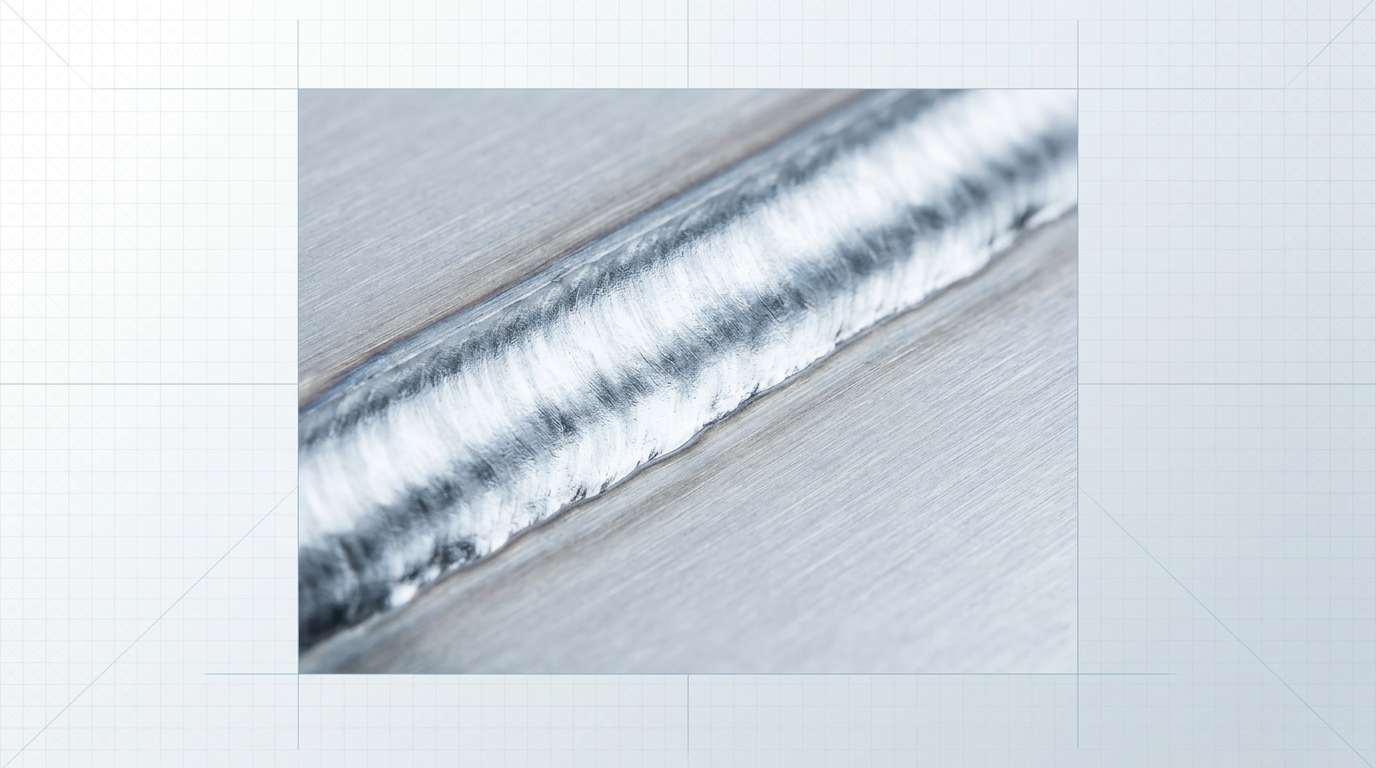
Clean surface, corrosion resistance restored
The stainless surface beneath the heat tint is preserved intact. Exposed to air, it re-passivates naturally, restoring the corrosion resistance stainless steel relies on.
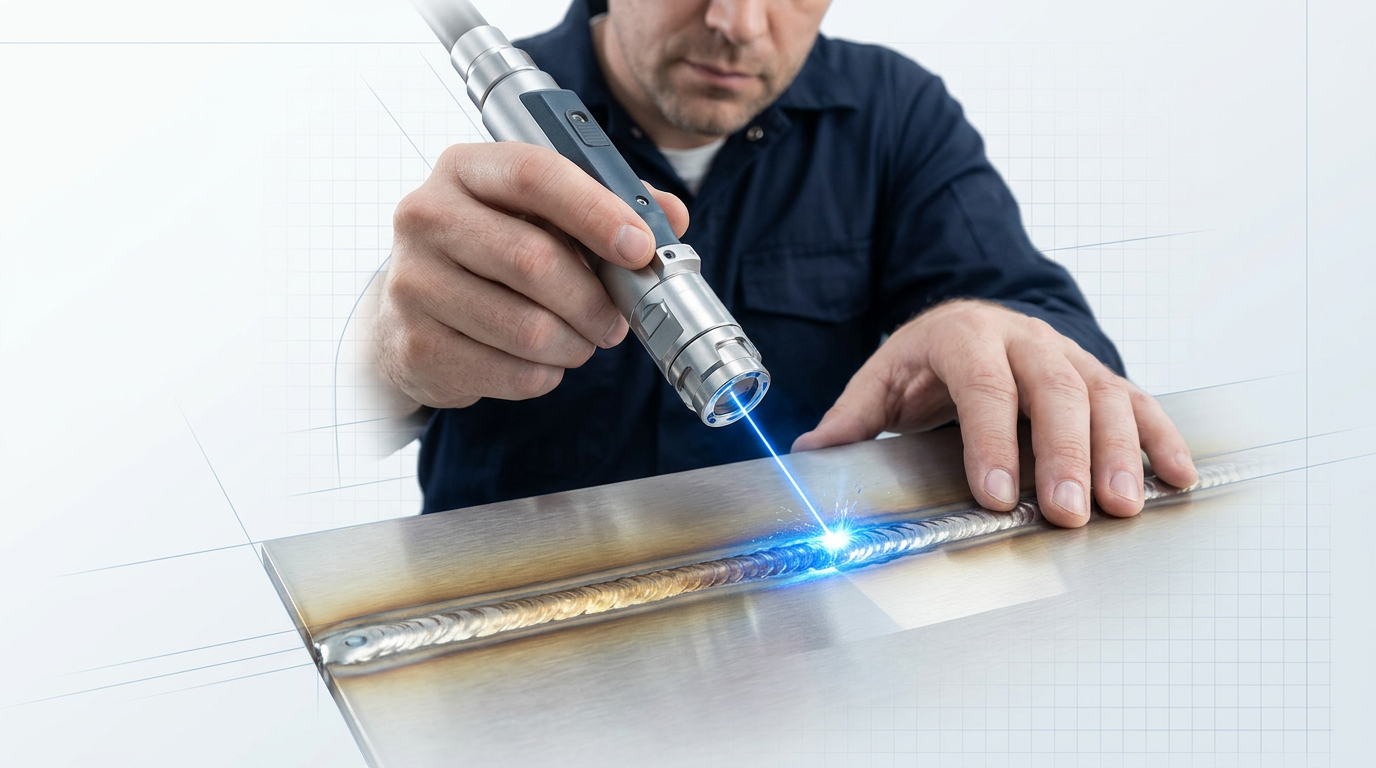
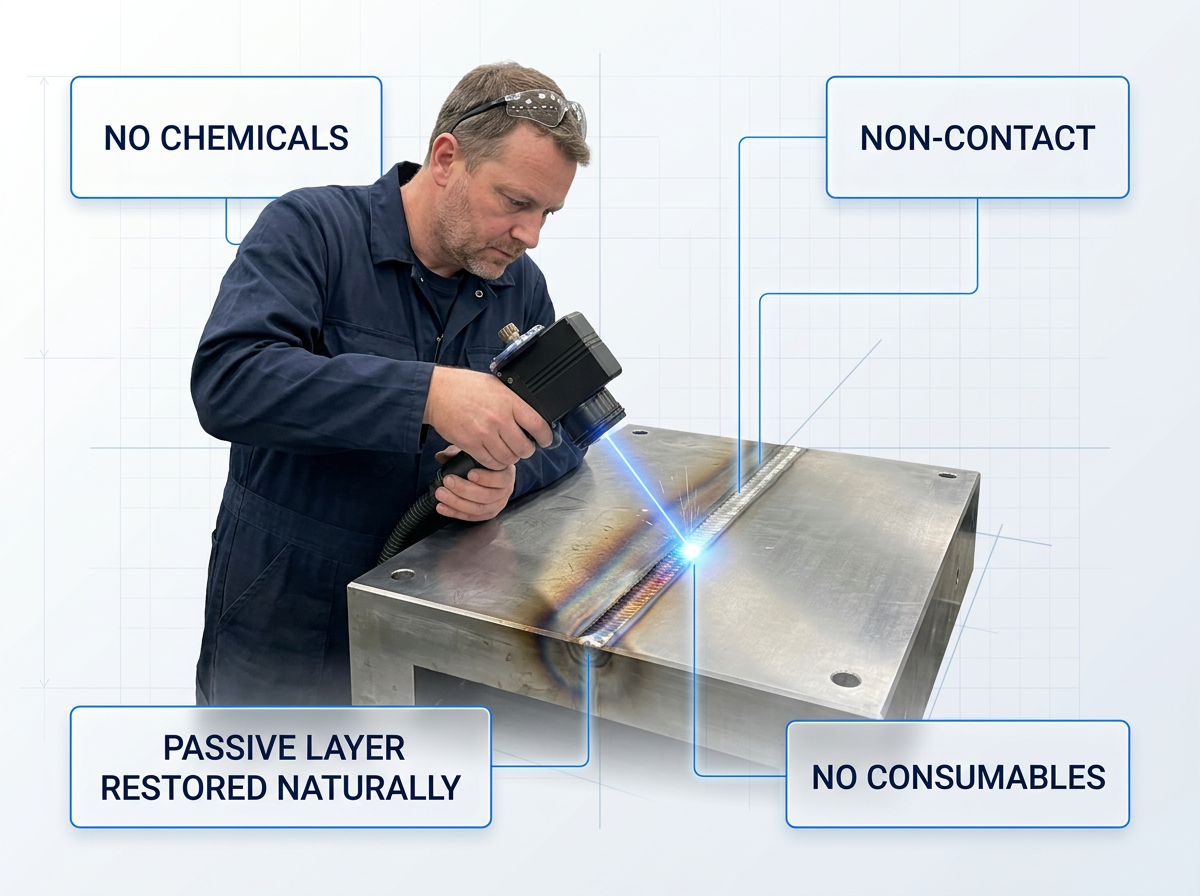
Non-contact: no scratching, no iron contamination
No tool touches the weld surface. That eliminates the iron contamination and scratching that mechanical cleaning methods introduce into stainless steel.
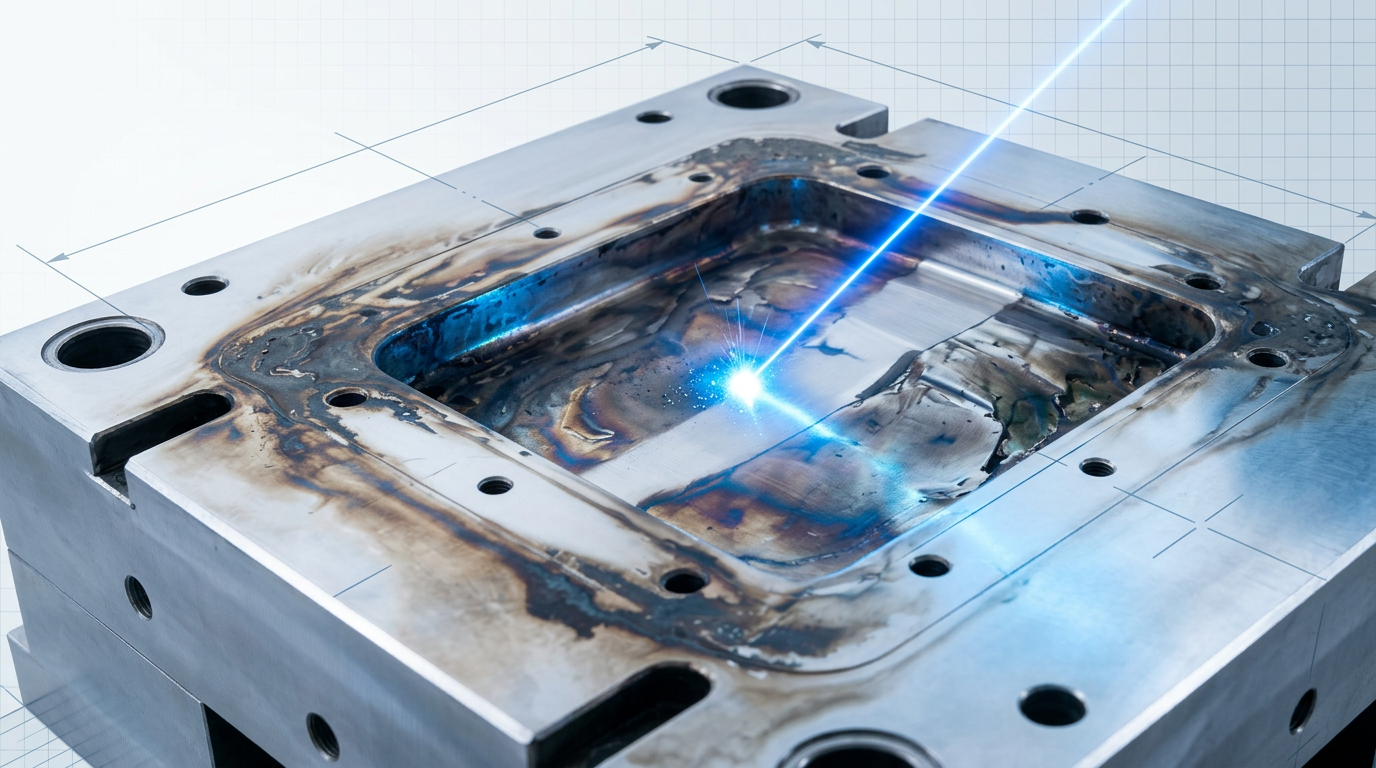
No chemicals, no consumables, nothing to dispose of
The process uses laser light alone. No acids, no pickling paste, no electrolyte fluid — nothing to mix, apply, rinse, or dispose of.
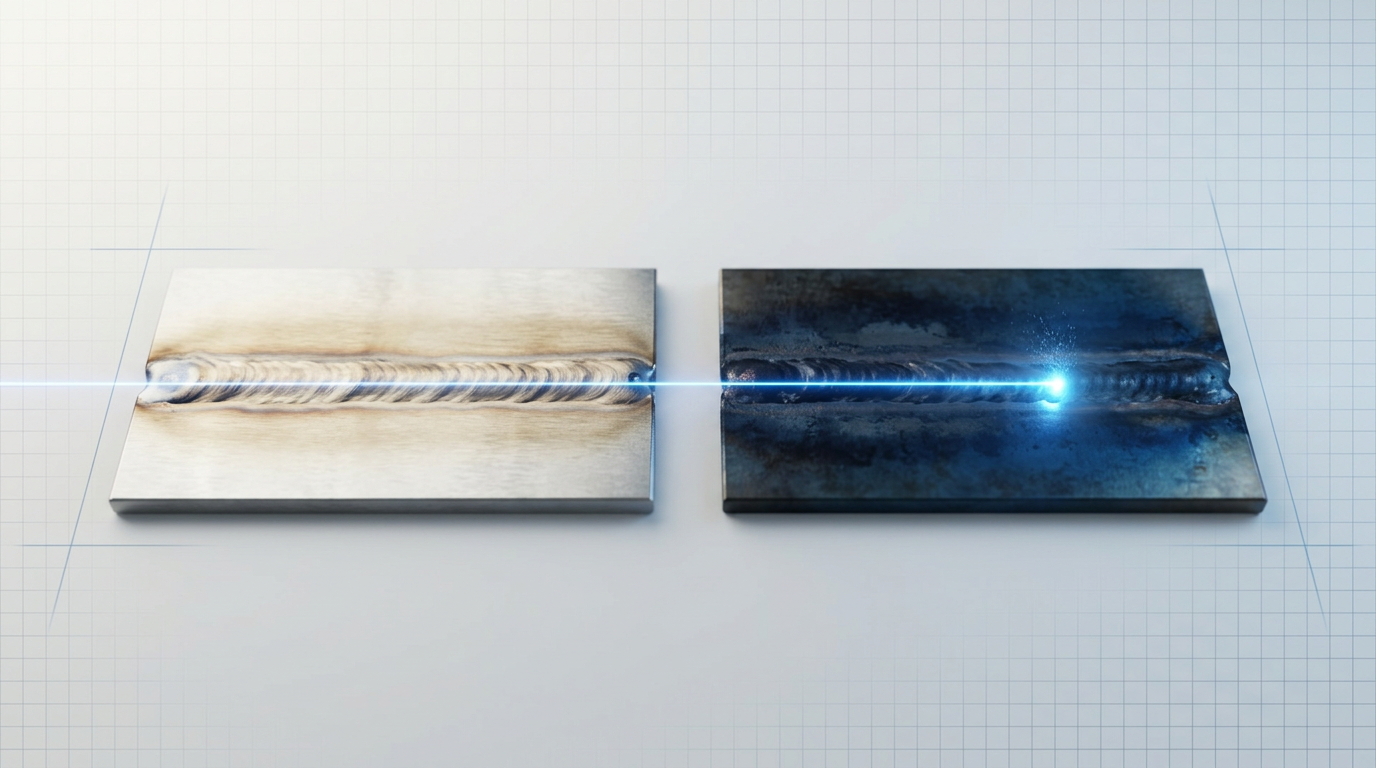
One system, every level of heat tint
Power is tunable 0-100%. The same system handles light straw tint through heavy black oxide — no equipment changes required.
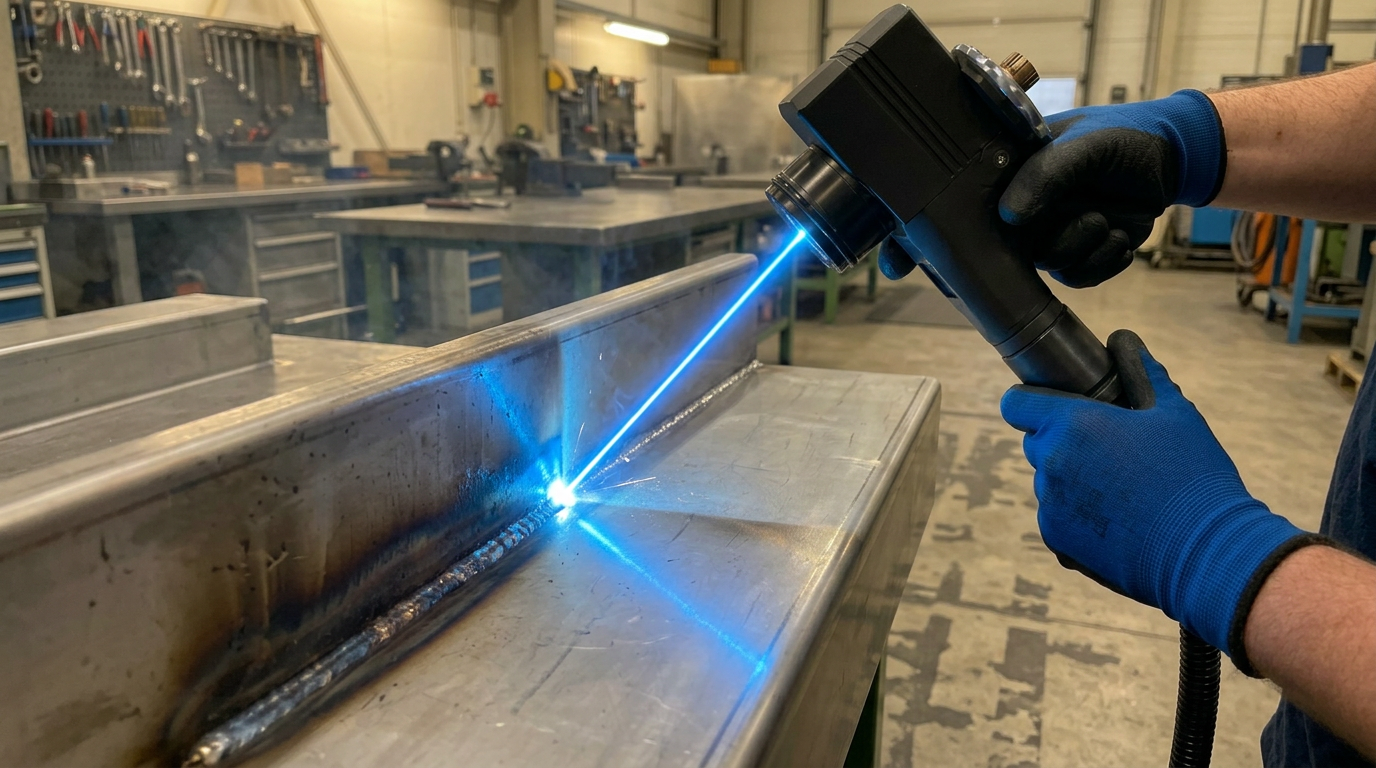
ELASER / ELASER-RHZ: Portable Laser Weld Cleaning
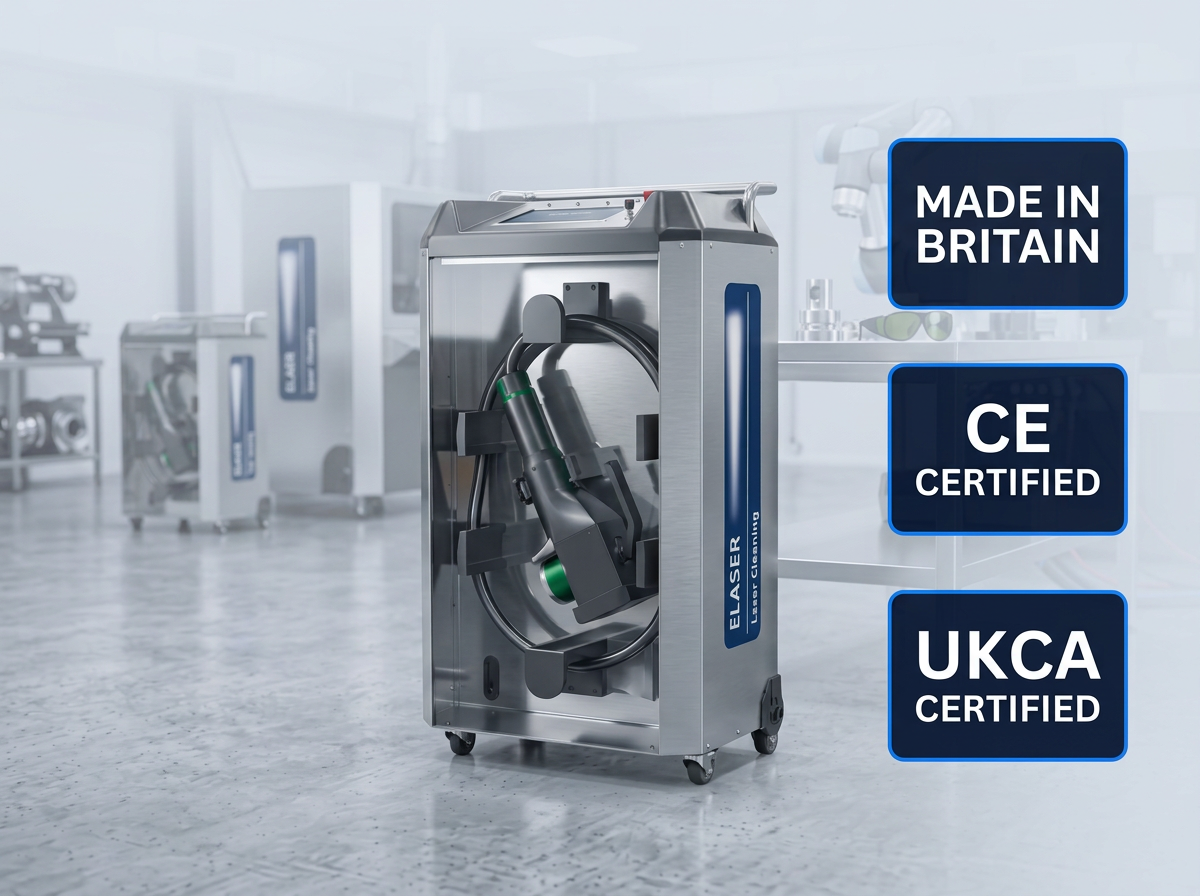
The ELASER-RHZ is the world's only laser cleaner with a patented reduced hazard zone. WSL's eye-safe technology collapses the laser hazard to a small area around the work — so stainless weld cleaning happens in open workshops and mixed-use fabrication environments, with no area evacuation and no shutdown.
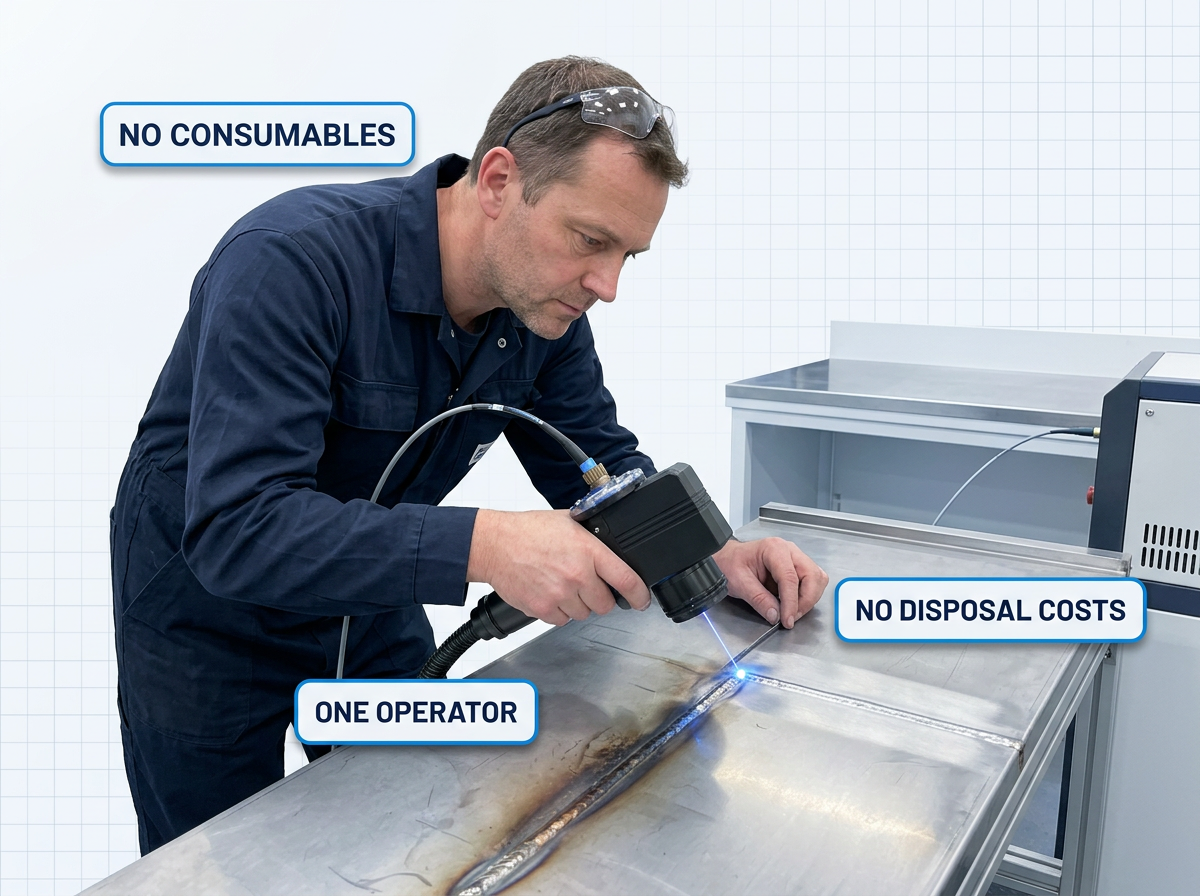
The wheeled unit weighs under 50 kg; the handheld scanner under 3 kg, with up to 50 m of reach. One operator, no consumables. Up to 300 W of tunable fibre-laser power handles light straw tint through heavy oxide. CE and UKCA certified; operator training provided by WSL.
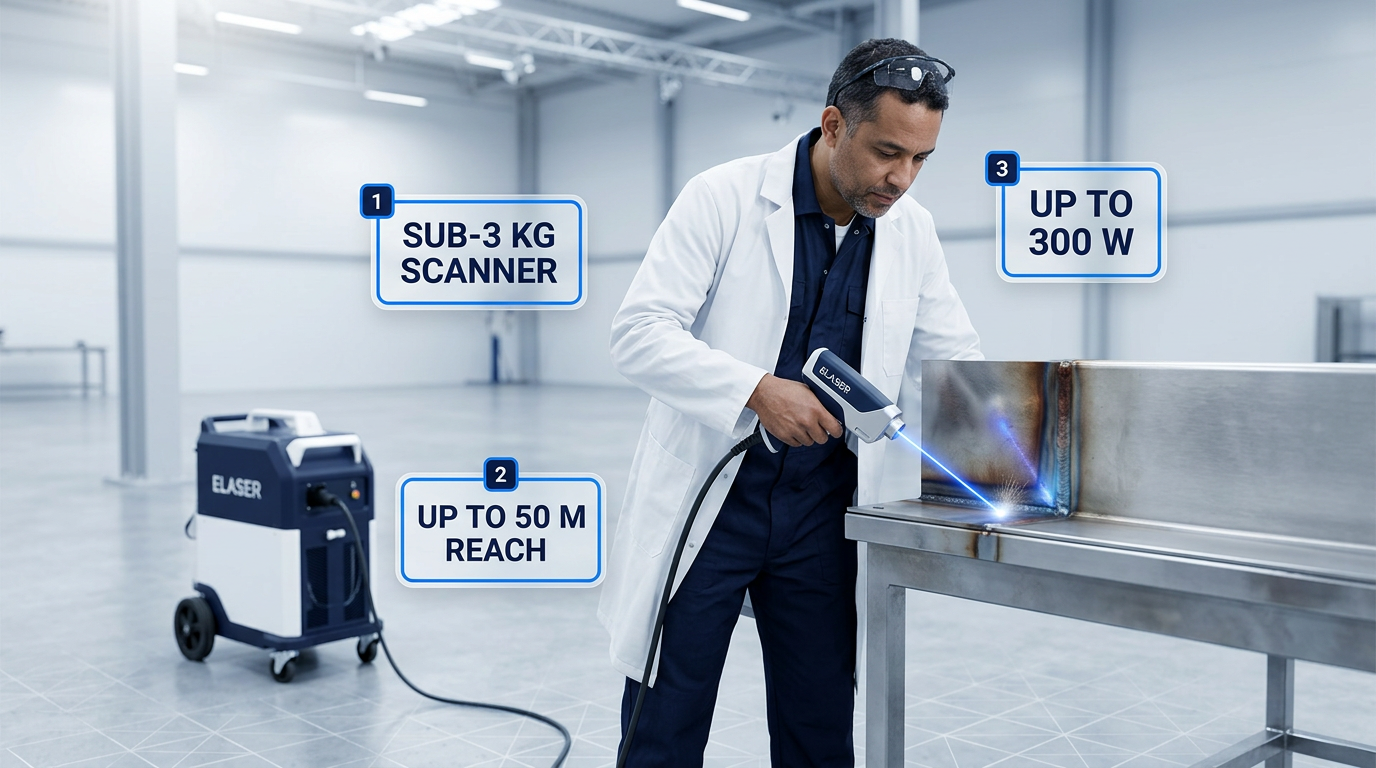
See the ELASER-RHZ in Full Detail
The ELASER-RHZ brings patented reduced hazard zone technology to open workshop stainless weld cleaning. Explore the full specs and capabilities on the product page.
AutoLASE: Automated Laser Cleaning for Production Lines
Where the ELASER serves the fabrication floor, AutoLASE serves the line. Load a stainless weld assembly and machine vision does the rest — scanning, mapping, and generating the clean automatically. No programming, no path-setting, no specialist required. Built for high-volume, hands-off stainless weld cleaning.
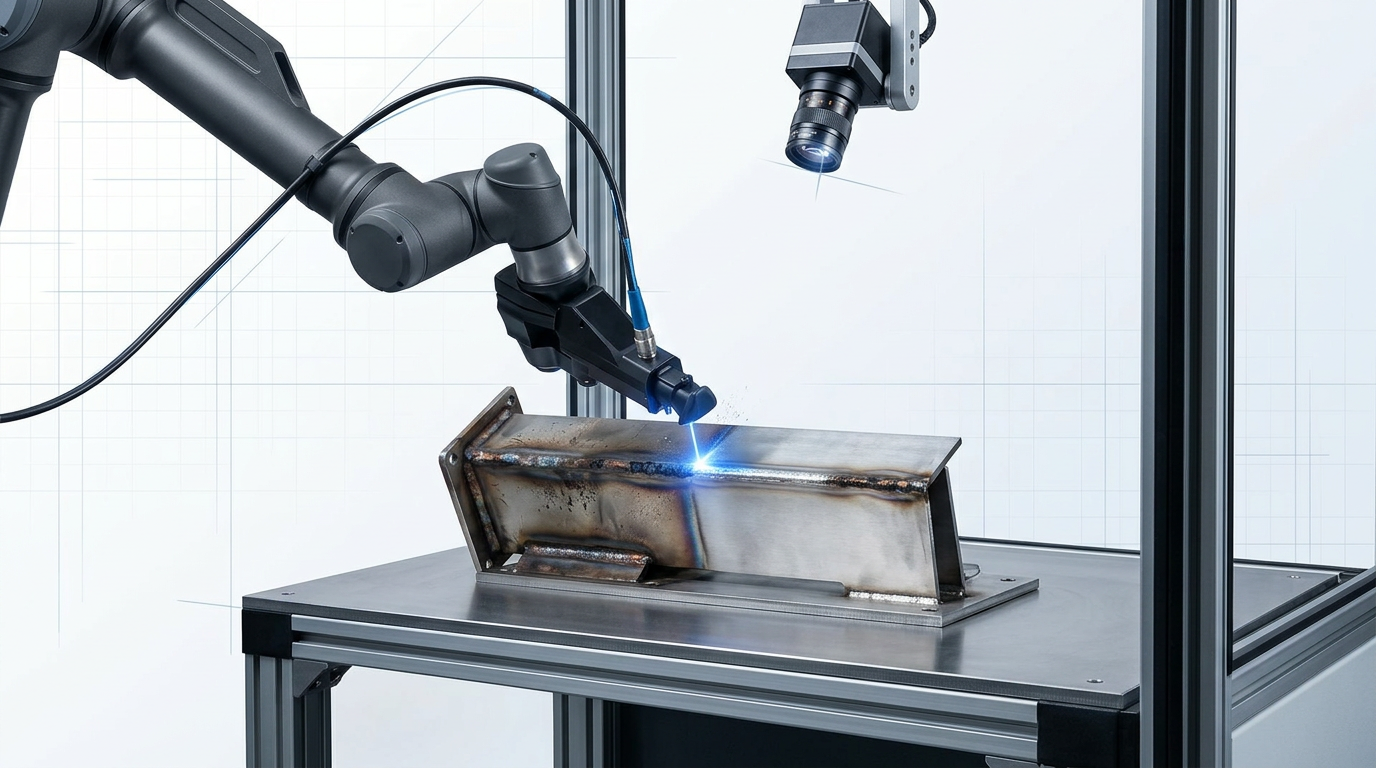
Load the part. It scans, maps, and runs.
Machine vision builds a 3D map and generates the clean automatically. No programming needed.
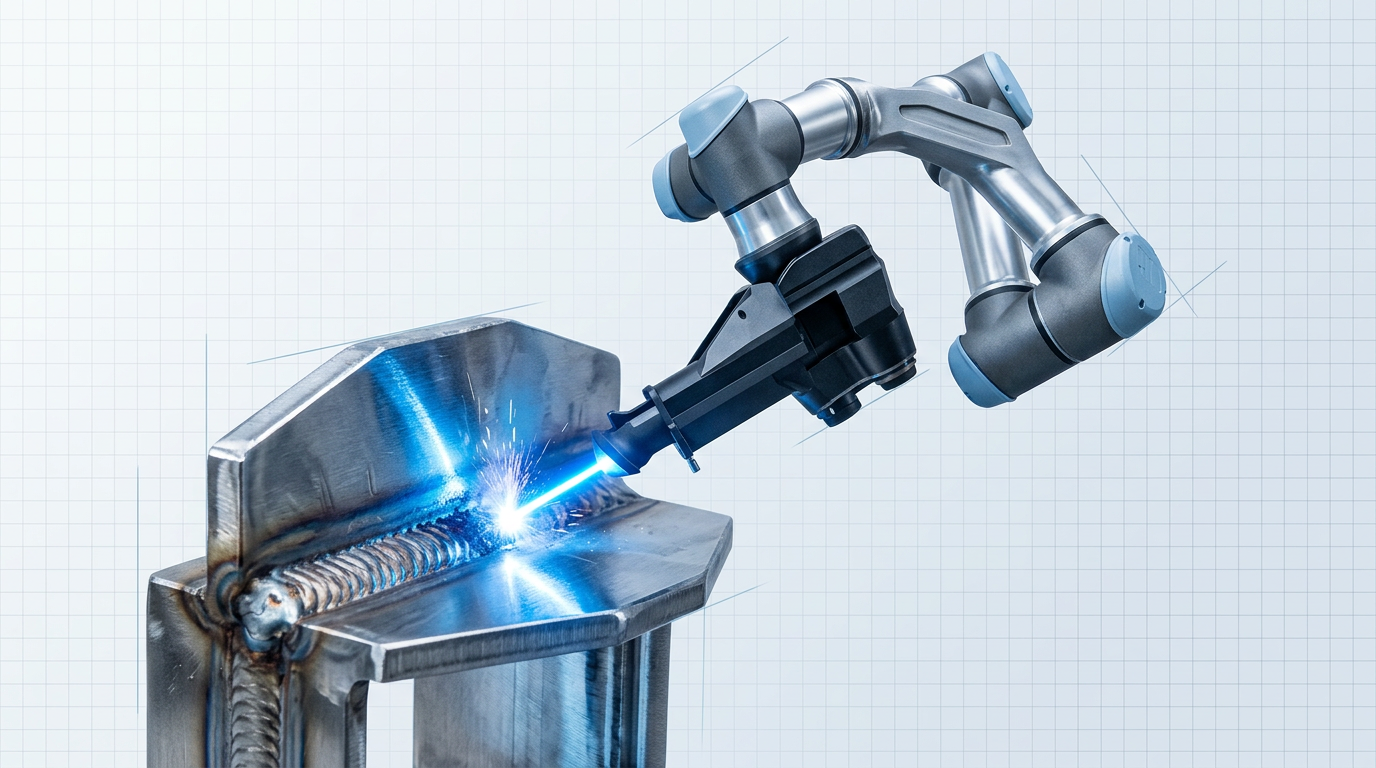
Robotic arm reaches every weld angle
Multi-axis articulated arm navigates complex stainless weld assemblies, delivering consistent results every cycle.
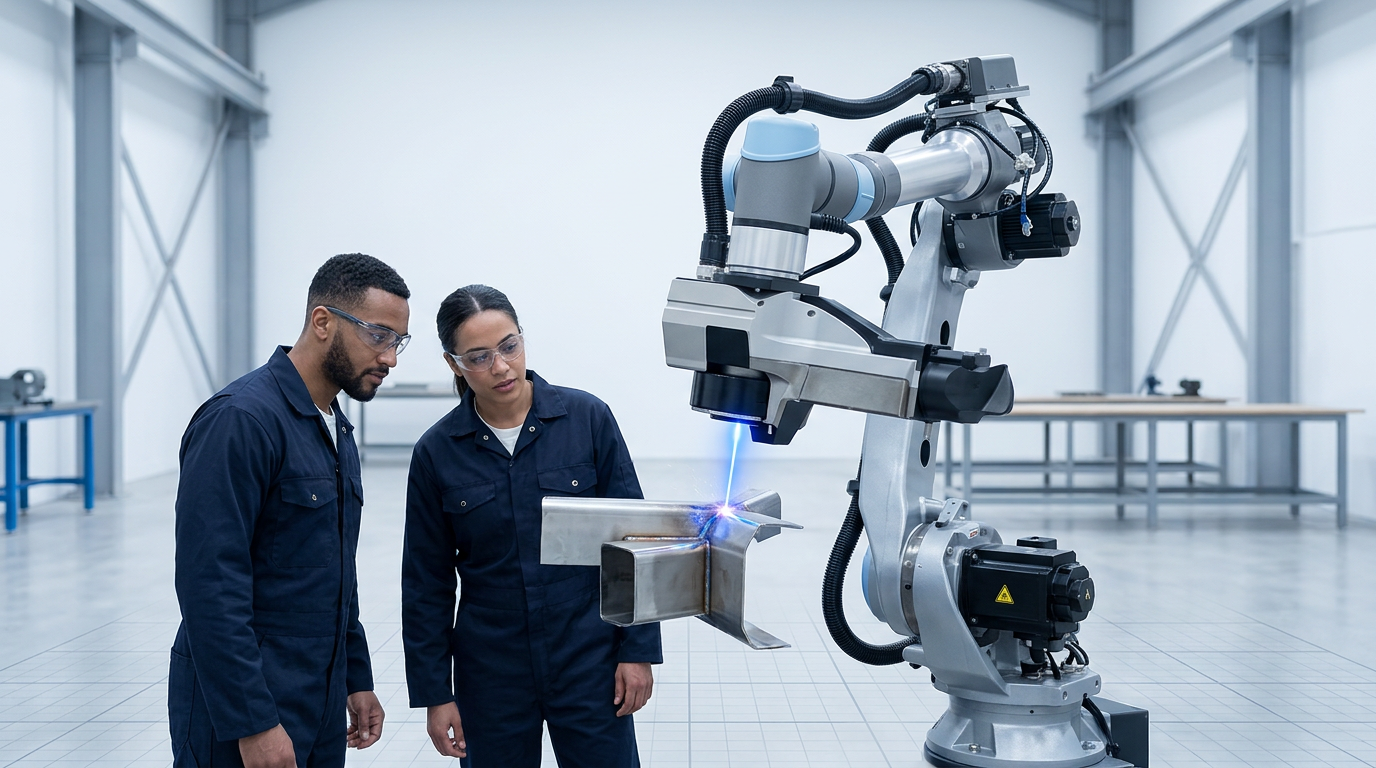
Optional RHZ upgrade: no enclosure required
WSL's eye-safe RHZ technology enables automated cleaning with no enclosure. Exclusively from WSL, worldwide.
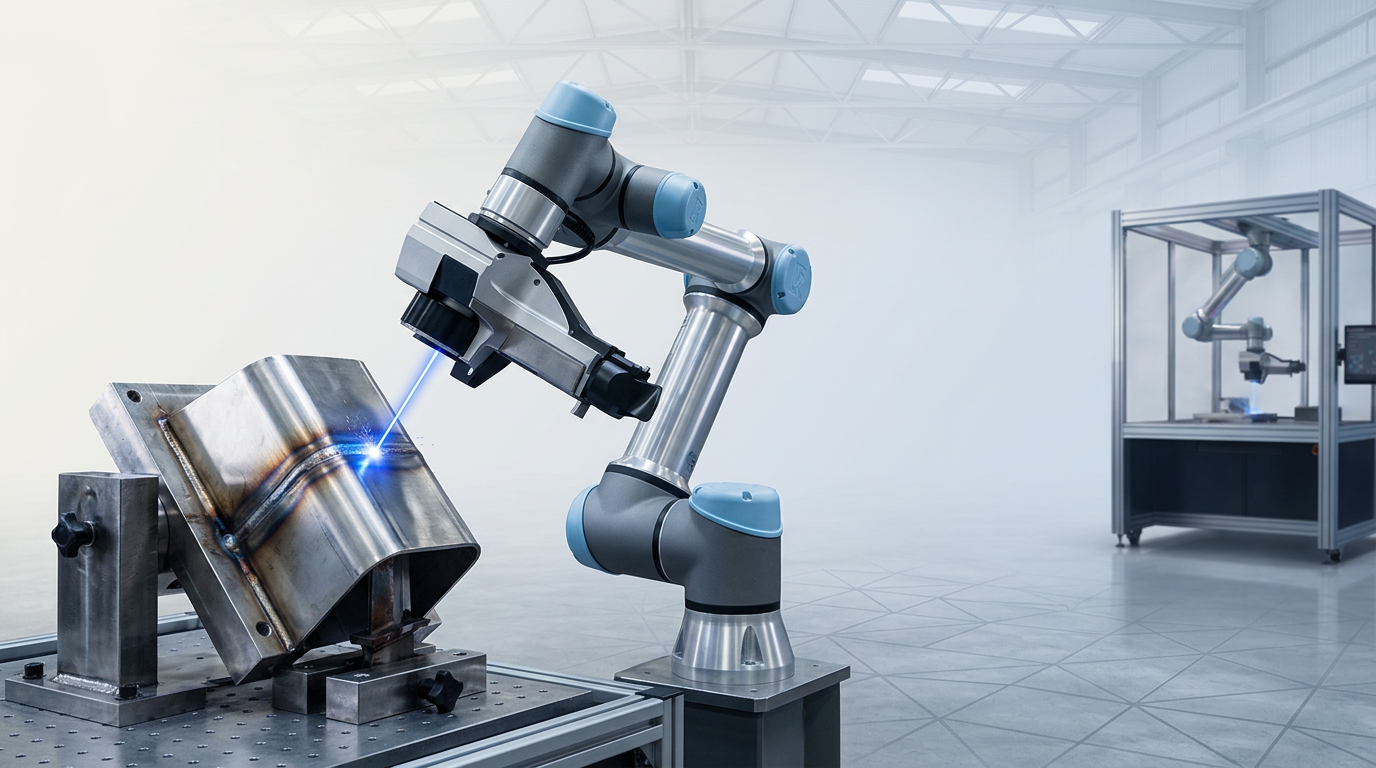
Works with your robots, or supplied complete
Attaches to your existing collaborative or industrial robots, or supplied as a complete custom cell.
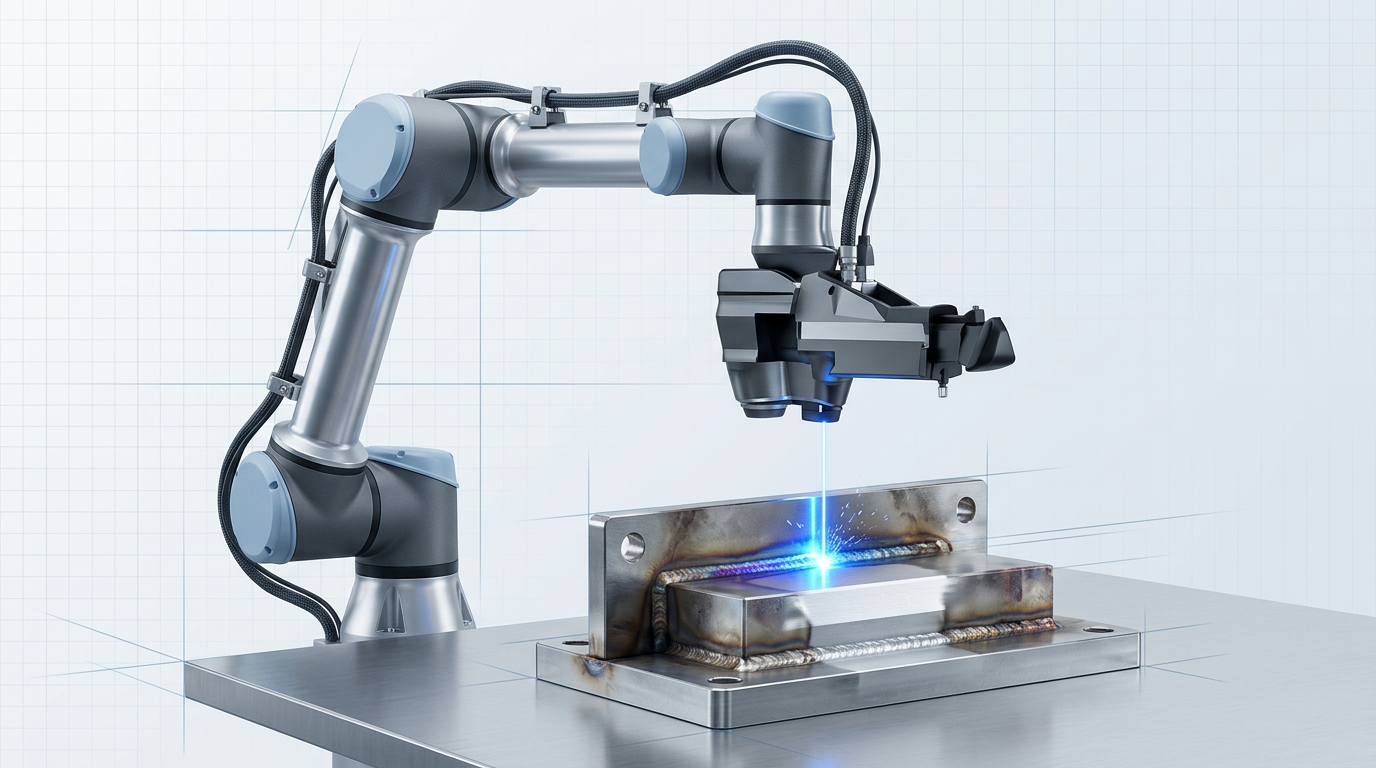
Chemical-free, consumable-free operation
Laser light only. No acids, no abrasives, no disposal costs. Zero consumables on every cycle.
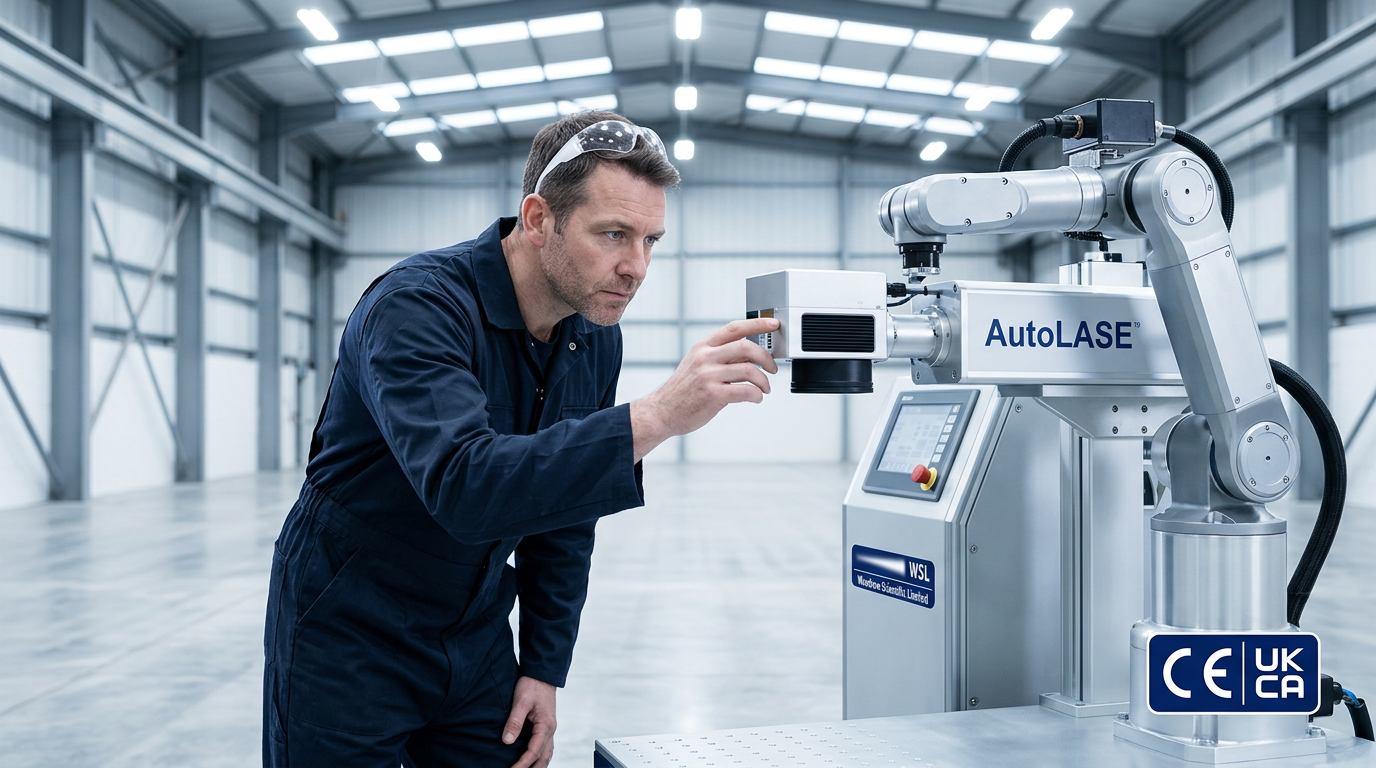
Designed, built, and supported in Britain
WSL makes the laser and the system in-house. CE and UKCA certified. Not an integrator.
Effective, but at significant cost
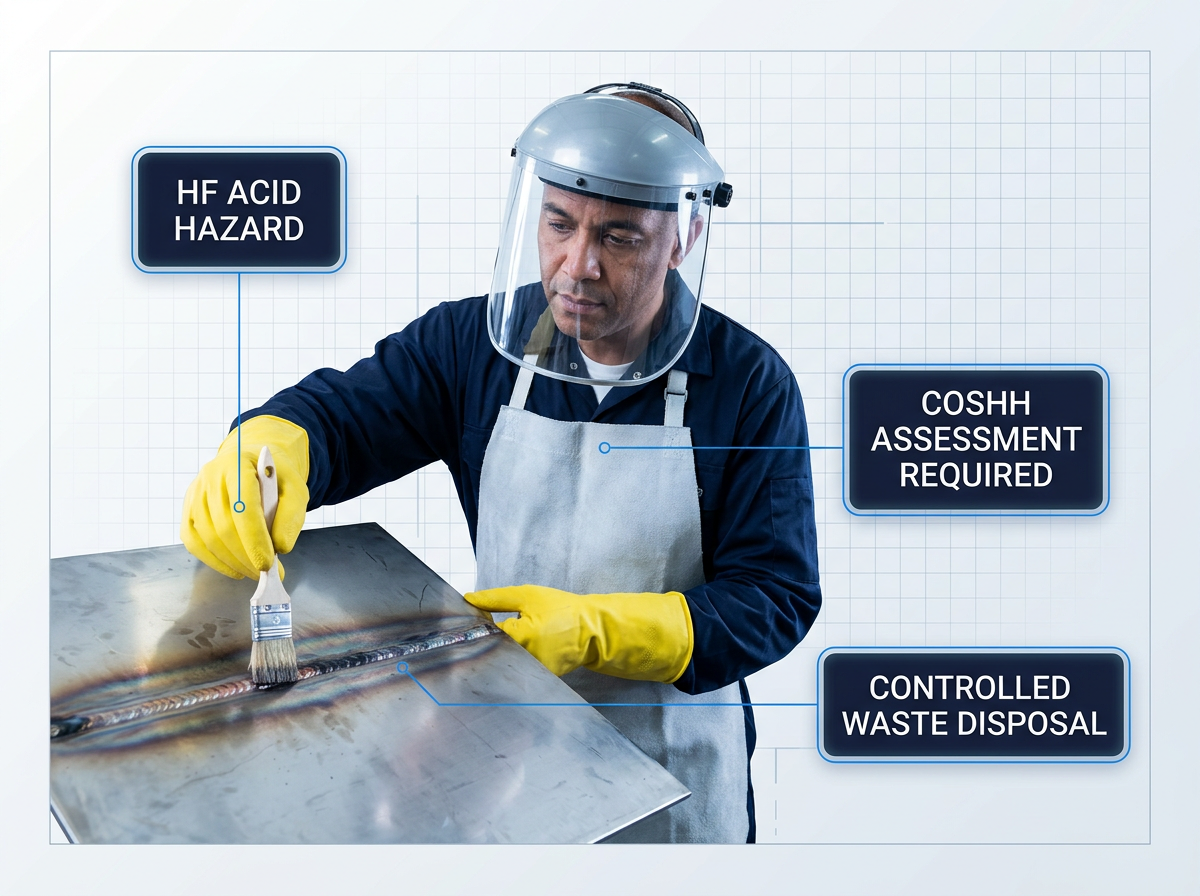
Nitric/hydrofluoric acid pickling does remove heat tint and the chromium-depleted layer reliably — it is effective. But HF acid causes severe burns on contact, and the HSE classifies post-weld pickling as a process requiring full PPE, COSHH assessment, and controlled waste disposal of acidic rinse water.
The safety overhead is real: fume extraction, specialist PPE, and hazardous waste handling are non-negotiable. For many fabrication environments, that overhead is the reason they are looking for something better.
Visible tint removed, deeper problem remains
Grinding, wire brushing, and abrasive blasting remove the visible discolouration, but they carry a well-documented risk: steel wire brushes and abrasive media can embed iron particles into the stainless surface, creating future corrosion sites rather than eliminating them.
Mechanical methods also do not reliably remove the chromium-depleted layer beneath the heat tint, which means a pickling step is often still required afterwards. Surface scratching is an additional concern where finish quality matters.
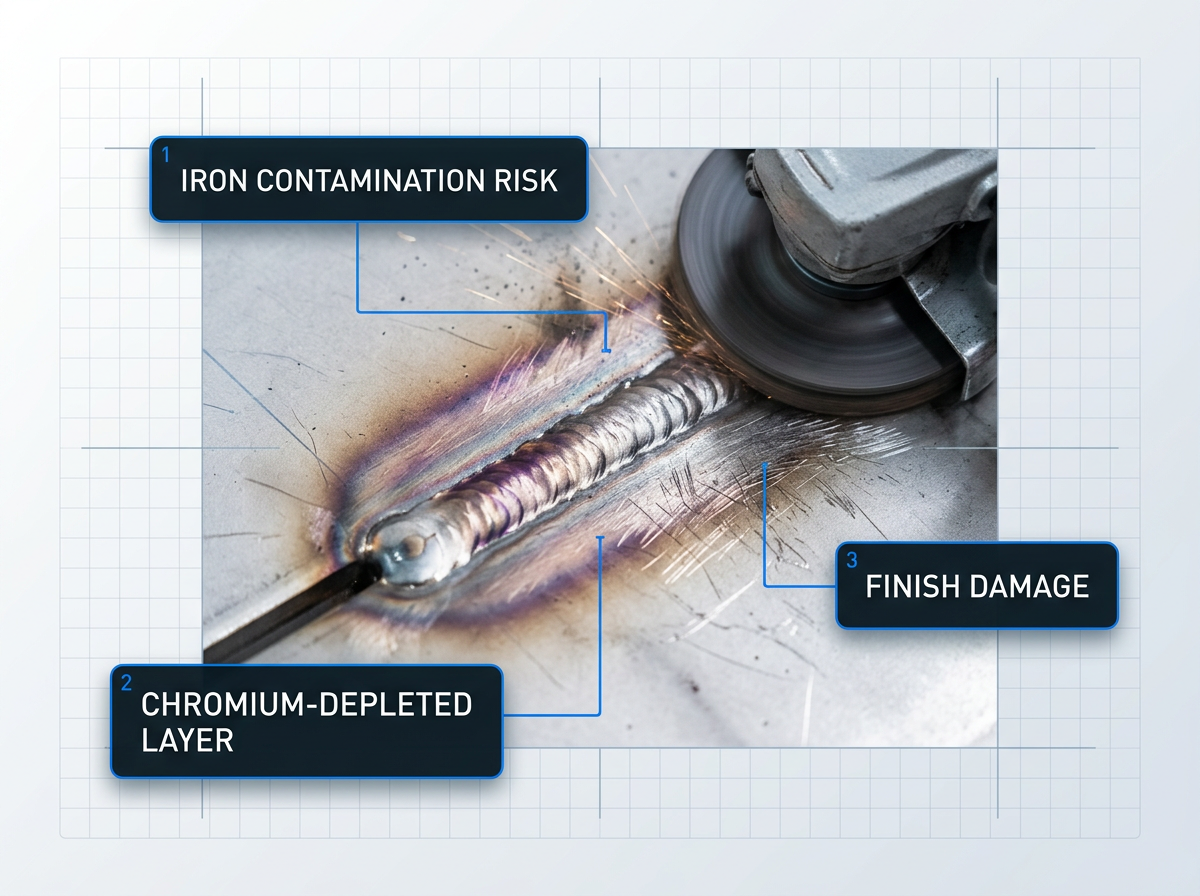
A credible step forward, with trade-offs
Electrochemical weld cleaning uses a mild phosphoric acid electrolyte passed through a carbon brush to remove heat tint. It is safer and more accessible than pickling paste, and its portability makes it a practical choice for many fabrication shops.
The trade-offs are real, though: it still requires a chemical electrolyte, consumable brushes and fluids need ongoing replenishment, and fume extraction is recommended. It is not a chemical-free process, and waste fluids require appropriate disposal.
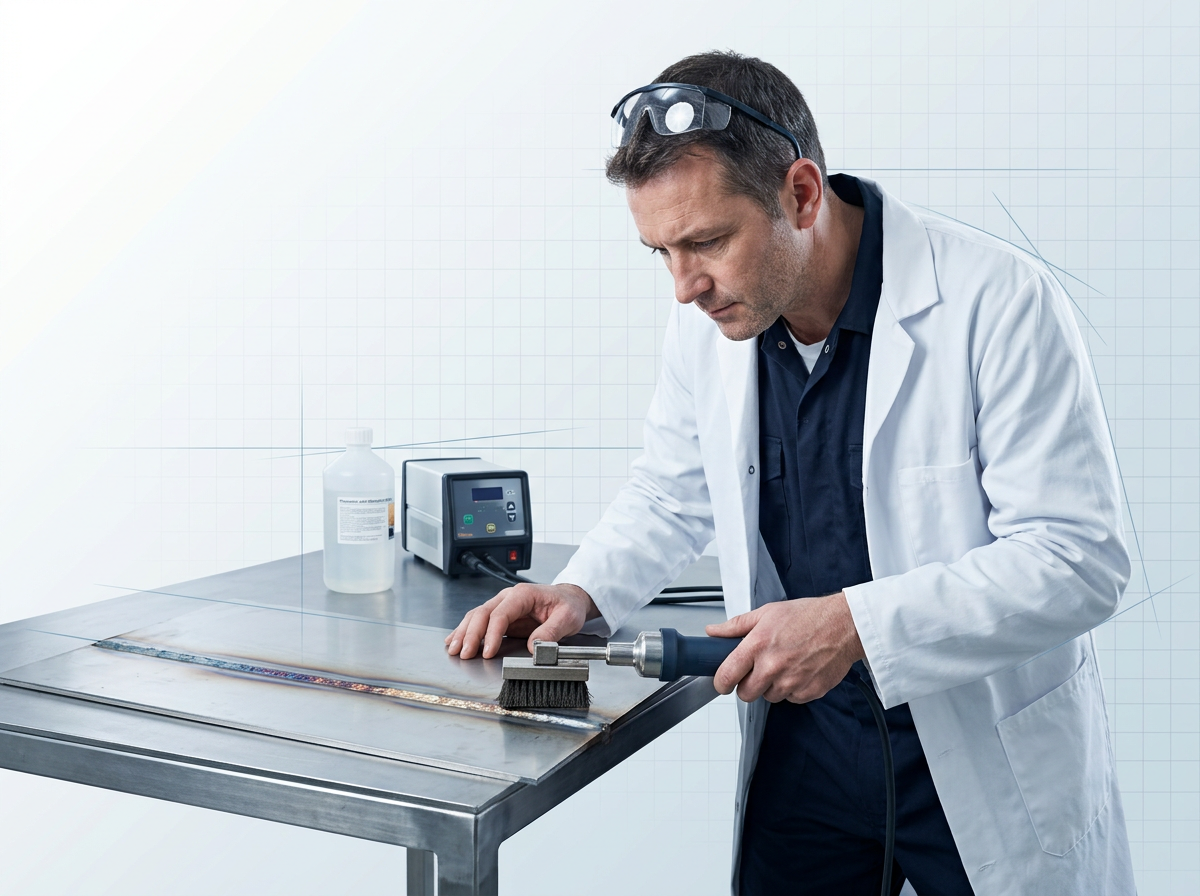
No chemicals, no contact, no consumables
Laser cleaning removes heat tint and oxide selectively, leaving the base stainless steel intact. No acids, no abrasives, no electrolyte fluids — nothing to mix, apply, or dispose of. Because the process is non-contact, there is no risk of iron contamination or surface scratching, and the passive layer reforms naturally on exposure to air.
WSL's ELASER-RHZ adds a world-first reduced hazard zone, enabling stainless weld cleaning in open workshops without sealing off the area — a practical advantage no other method or system provides.
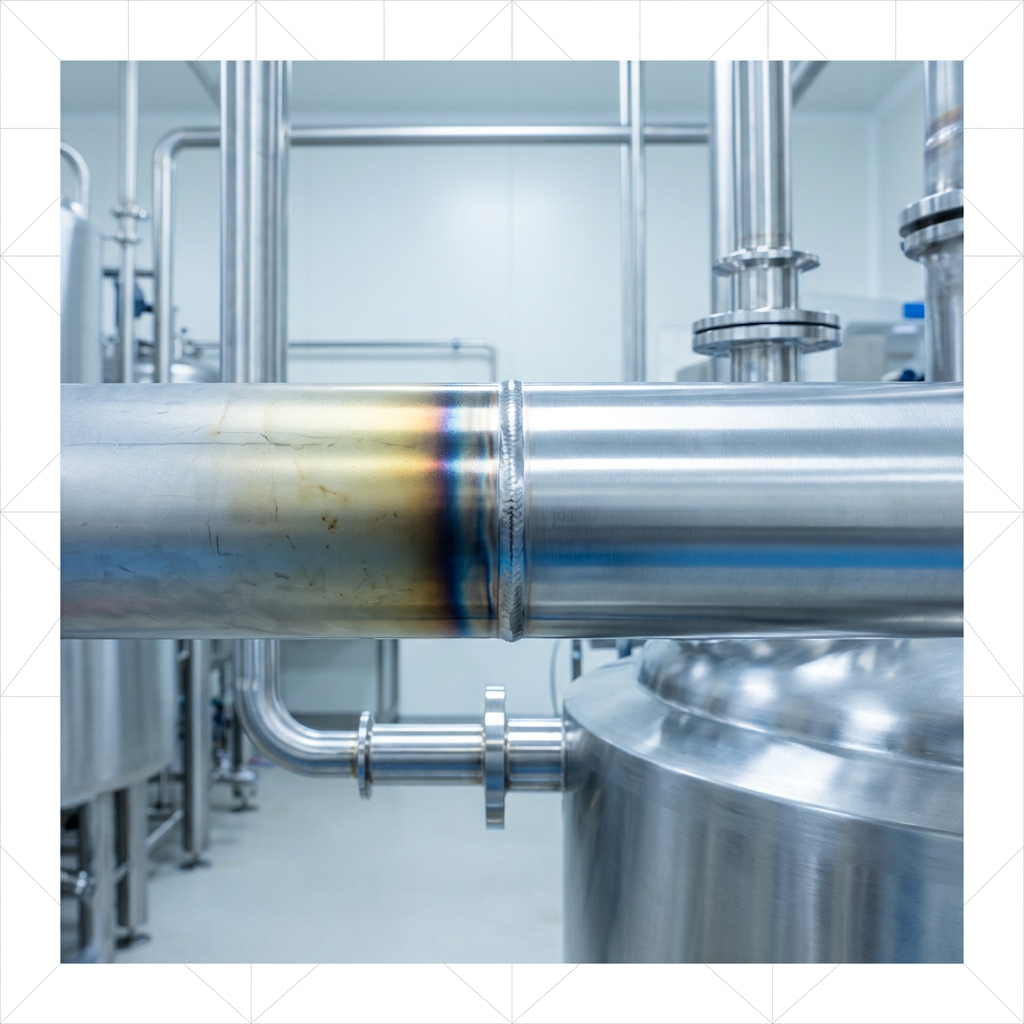
Hygiene compliance demands clean welds
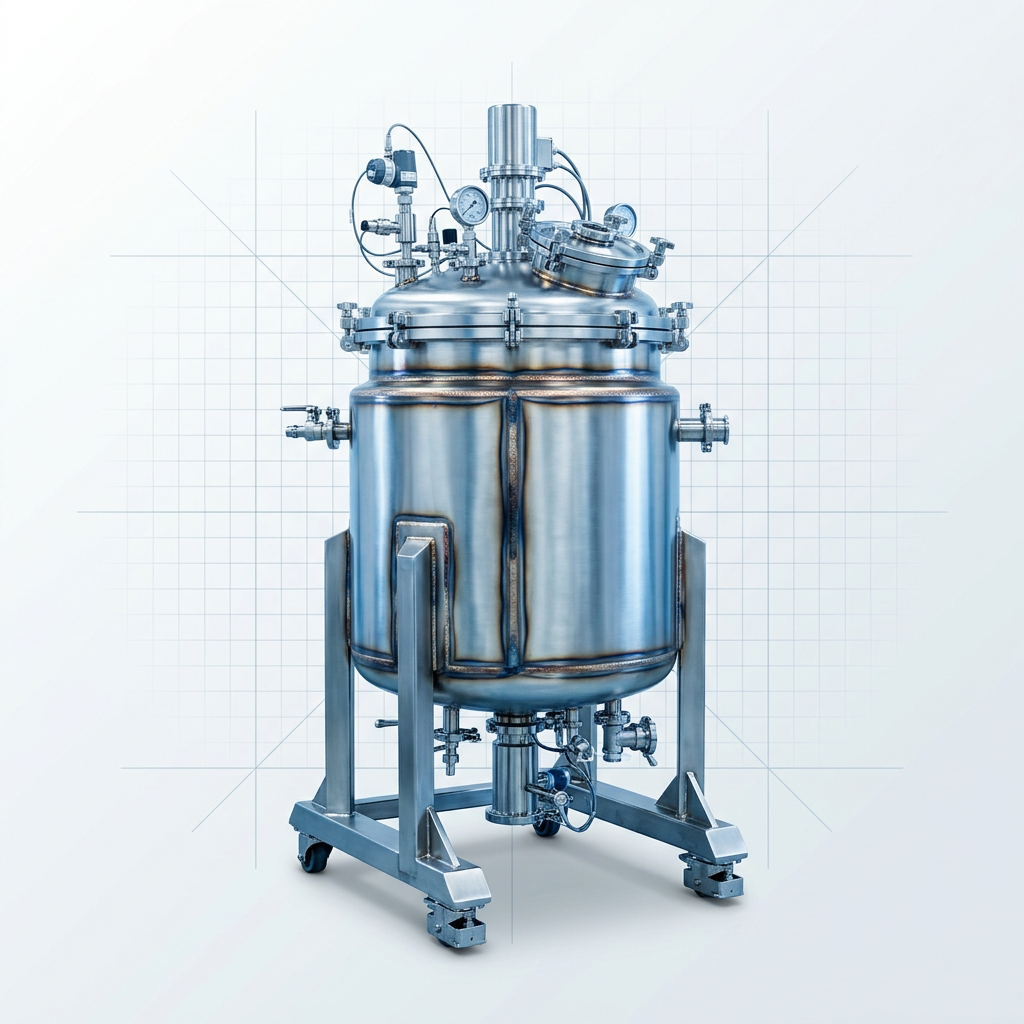
Product-contact surfaces in food and beverage environments must be smooth and cleanable. Heat tint creates micro-topography and chromium depletion at the weld surface — conditions that harbour bacteria and resist cleaning-in-place procedures.
EHEDG guidelines set a maximum surface roughness of Ra 0.8 µm for product-contact surfaces and require that all such surfaces be free of ridges and crevices that can trap organic material. An uncleaned weld fails both criteria. Post-weld cleaning is a hygienic design requirement, not a finishing preference.
Contamination risk starts at the weld
In pharmaceutical and bioprocessing equipment, weld discolouration is not a cosmetic issue. Heat tint oxides and the underlying chromium-depleted zone create initiation points for corrosion and contamination — both directly unacceptable in process contact surfaces.
The ASME BPE standard governs weld quality in bioprocessing systems precisely because weld failures that lead to system contamination carry direct product quality and patient safety consequences. Weld surfaces must be free of heat tint oxides before equipment enters service.
Compromised welds fail in seawater
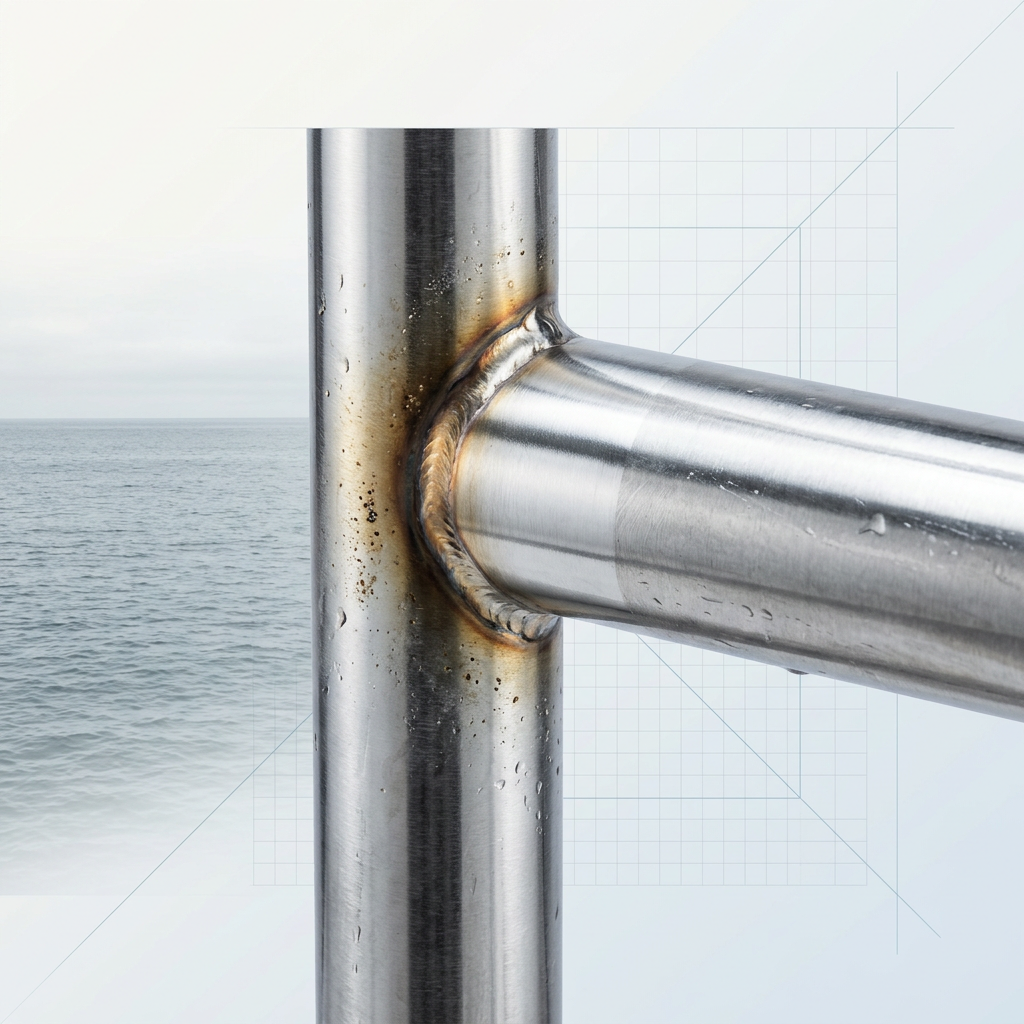
Stainless steel is specified in marine applications for its corrosion resistance — but that resistance depends entirely on an intact passive layer. Heat tint at the weld compromises that layer at exactly the point most exposed to pitting and crevice corrosion in chloride-rich environments.
The BSSA is clear: surface finish and weld quality are critical factors in the successful use of 316-type stainless in seawater service — more important, in some conditions, than chloride concentration itself. Smooth, well-finished welded joints are a structural requirement, not a cosmetic one.
Appearance and durability both require it
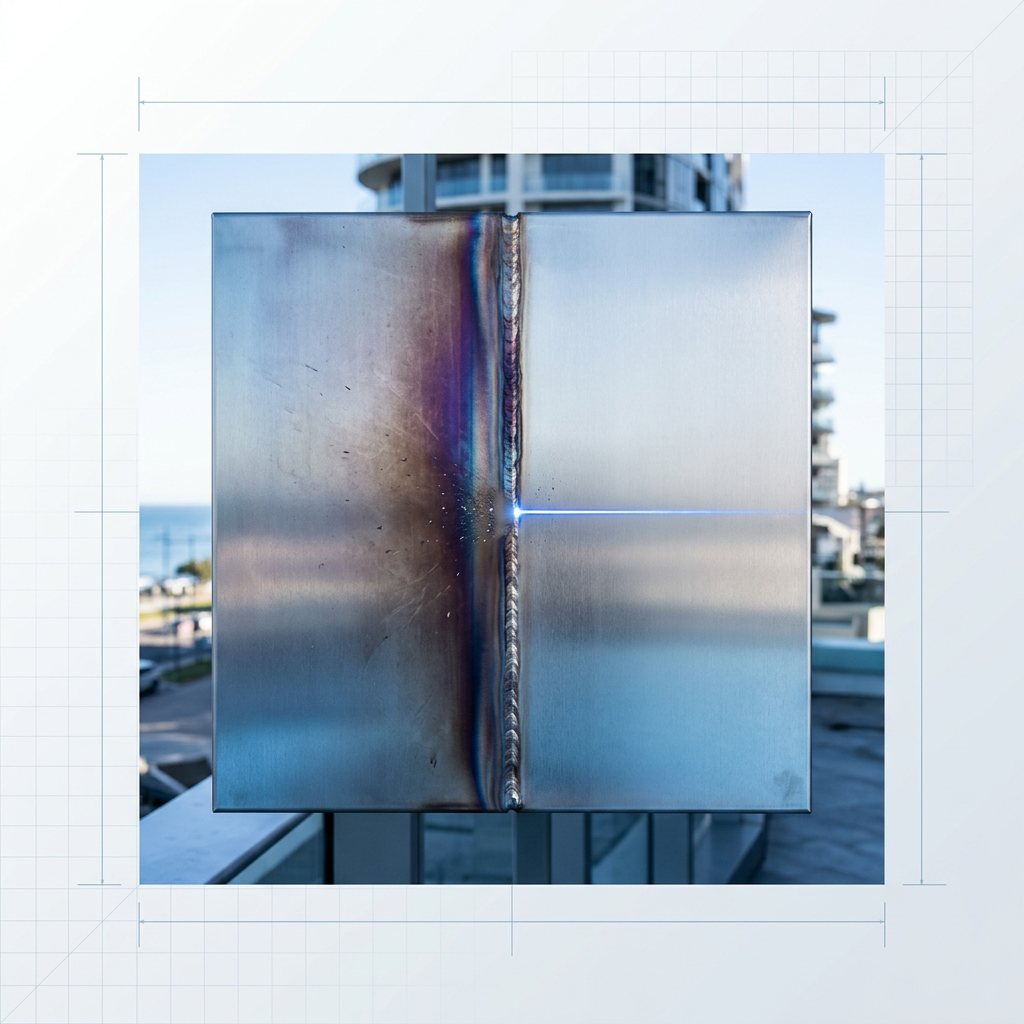
A discoloured weld on an architectural installation is immediately visible and commercially unacceptable. But the problem runs deeper: for external or coastal structures, heat tint means the passivation layer is not restored at the weld, leaving that joint vulnerable to chloride-driven corrosion over time.
Coastal environments subject structural stainless to chloride exposure that mirrors marine conditions in character. An uncleaned weld is both a visible defect on day one and a structural liability over the life of the installation. Both failure modes are avoidable with proper post-weld cleaning.
DWI mandates heat tint removal
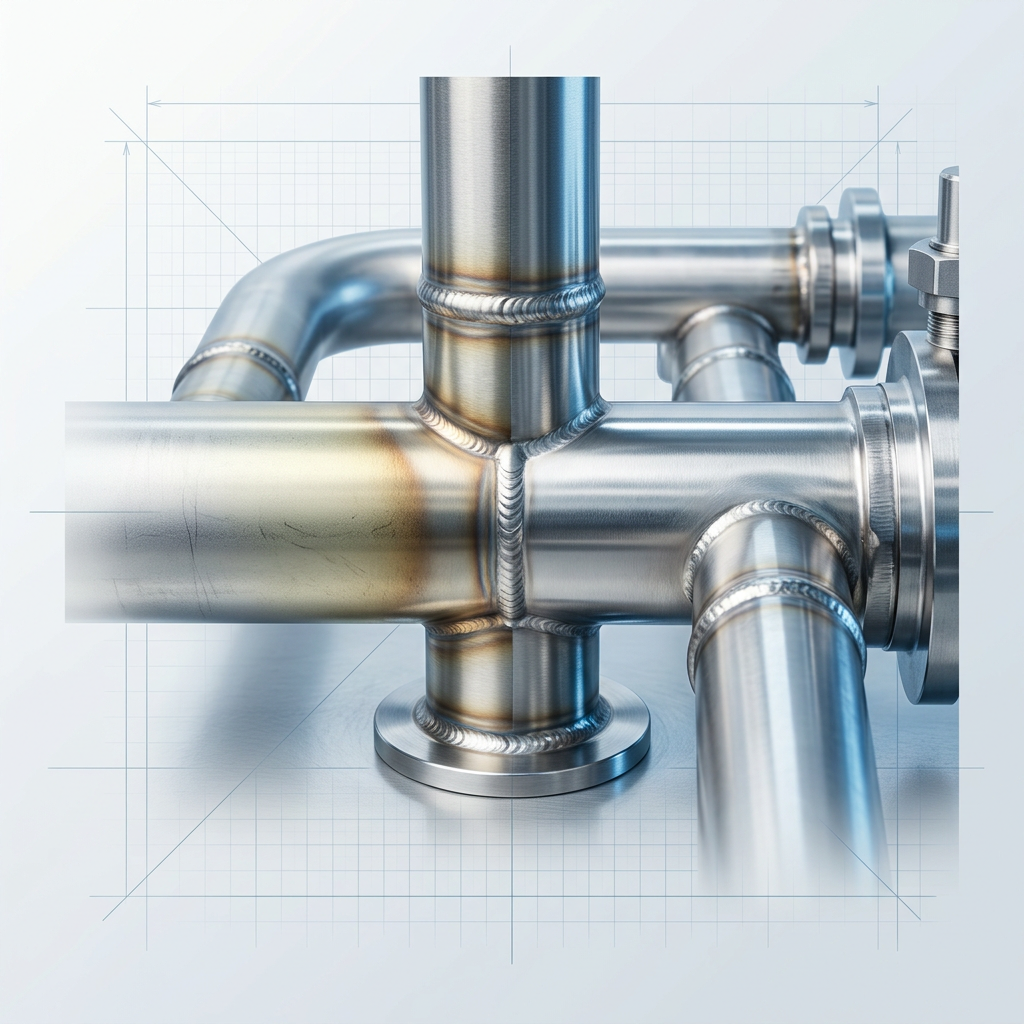
The DWI Code of Practice for stainless steel products in drinking water supply is unambiguous: all weld heat tints deeper in colour than pale yellow must be removed from welded joints to achieve optimum corrosion performance. This is a legal requirement with statutory backing, not guidance.
Buyers in this sector are not deciding whether to clean welds — they are deciding how. The method chosen must remove heat tint reliably without introducing chemical residues into the water supply system.
Britain's Only Laser Cleaning Manufacturer, Built In-House
Woodrow Scientific Limited is the only UK-based laser cleaning manufacturer. Founded in 2012, WSL designs, builds, services, and improves every machine in-house — with 200+ years of combined engineering experience and patented, world-first technology. Many suppliers in this space are resellers or importers rebadging third-party machines: no in-house engineering, slower spares, no ability to improve what they sell.
Both products carry full CE and UKCA certification. Operator training is available directly from the manufacturer — get in touch for details. Standard builds typically ship within one week; bespoke engineering is available, so contact WSL to discuss your requirements.
Laser Weld Cleaning: Total Cost of Ownership
Laser cleaning runs on electricity alone. There are no consumables to purchase or stock — no acids, pastes, abrasive media, or electrolyte fluids. Chemical methods generate acidic waste requiring controlled disposal; laser cleaning produces no liquid waste, so that recurring cost disappears entirely.
Because the beam stops at the base stainless steel, surface loss is minimal — reducing the risk of rework that costs time and material. The ELASER's handheld scanner is a single-operator tool, with no additional labour for setup or cleanup. Both systems are competitively priced among comparable European industrial laser cleaning machines.
Talk to the UK's Laser Weld Cleaning Manufacturer
Whether you need portable floor-level cleaning or high-volume automated production, get in touch to discuss your requirements. Bespoke engineering and operator training are available. UK-based, in-house support, worldwide shipping.
Frequently Asked Questions: Stainless Weld Cleaning
Common questions about post-weld cleaning for stainless steel, laser cleaning methods, and WSL's ELASER and AutoLASE systems.
For fabricators who need a chemical-free, non-contact process that restores corrosion resistance without consumables or disposal obligations, laser cleaning is the technically sound modern choice. It removes heat tint and the chromium-depleted layer beneath it using laser light alone — no acids, no abrasives, nothing to mix or dispose of. For floor-level and portable stainless weld cleaning, WSL's ELASER and ELASER-RHZ are the systems to consider. For production-volume applications where the same weld assemblies repeat cycle after cycle, AutoLASE delivers consistent, automated results — load the part and machine vision handles the rest. The right choice depends on your volume and environment, but both systems run on electricity alone, with no ongoing consumable costs.
Yes. Laser cleaning removes not just the visible heat tint but also the chromium-depleted zone beneath it — the subsurface layer that forms during welding and cannot sustain the passive film stainless steel relies on for corrosion resistance. With that depleted zone removed, the chromium-rich surface is exposed and the passive layer reforms naturally on contact with air, restoring the corrosion resistance the grade was originally specified for. This is the critical distinction: laser cleaning solves the underlying metallurgical problem, not just the cosmetic discolouration.
Yes, across the common grades used in fabrication. The ELASER and ELASER-RHZ feature 0–100% tunable power, which means the same system accommodates different oxide thicknesses and heat tint severities without any equipment changes — from light straw discolouration through to heavy dark oxide. If you have a specific grade or application requirement, get in touch and WSL can discuss the right approach for your situation.
With the ELASER-RHZ, yes. Conventional laser cleaning extends the laser hazard zone well beyond the immediate work area, typically requiring the surrounding space to be evacuated or sealed off before cleaning can begin. WSL's patented Reduced Hazard Zone (RHZ) technology — a world first — confines the hazard to a small area around the work itself. That means stainless weld cleaning can take place in open-plan workshops and mixed-use fabrication facilities without shutting down the surrounding area. WSL provides full operator training, so the safety overhead of getting started is dramatically lower than with conventional laser cleaning systems.
Traditional stainless weld cleaning uses pickling pastes containing nitric acid and hydrofluoric acid (HNO₃/HF). These are effective at removing heat tint and the chromium-depleted layer, but HF acid carries serious documented health risks: it penetrates the skin and causes systemic toxicity on contact, requiring full PPE, a COSHH assessment, and specialist first aid provision. The HSE identifies post-weld pickling as one of the more hazardous tasks in fabrication. Electrochemical cleaning uses a milder phosphoric acid electrolyte and is safer than pickling paste, but still involves chemical electrolytes and fume extraction requirements. Laser cleaning uses no chemicals at all — the beam removes the oxide and heat tint using laser light alone, with no acids, no electrolytes, and nothing to dispose of.
The standard pickling acids for stainless steel weld cleaning are nitric acid (HNO₃) and hydrofluoric acid (HF), typically applied together in a paste or bath. HF is particularly hazardous: it penetrates the skin without immediate sensation and causes systemic toxicity, making it subject to strict COSHH controls in the UK. Nitric acid is a strong oxidising acid that requires appropriate PPE and careful handling. Both acids generate acidic rinse water that must be collected and disposed of through controlled waste streams. Laser cleaning eliminates the need for any acid — the beam removes the oxide using laser light alone.