
A Portable Laser Cleaner Built for the Field
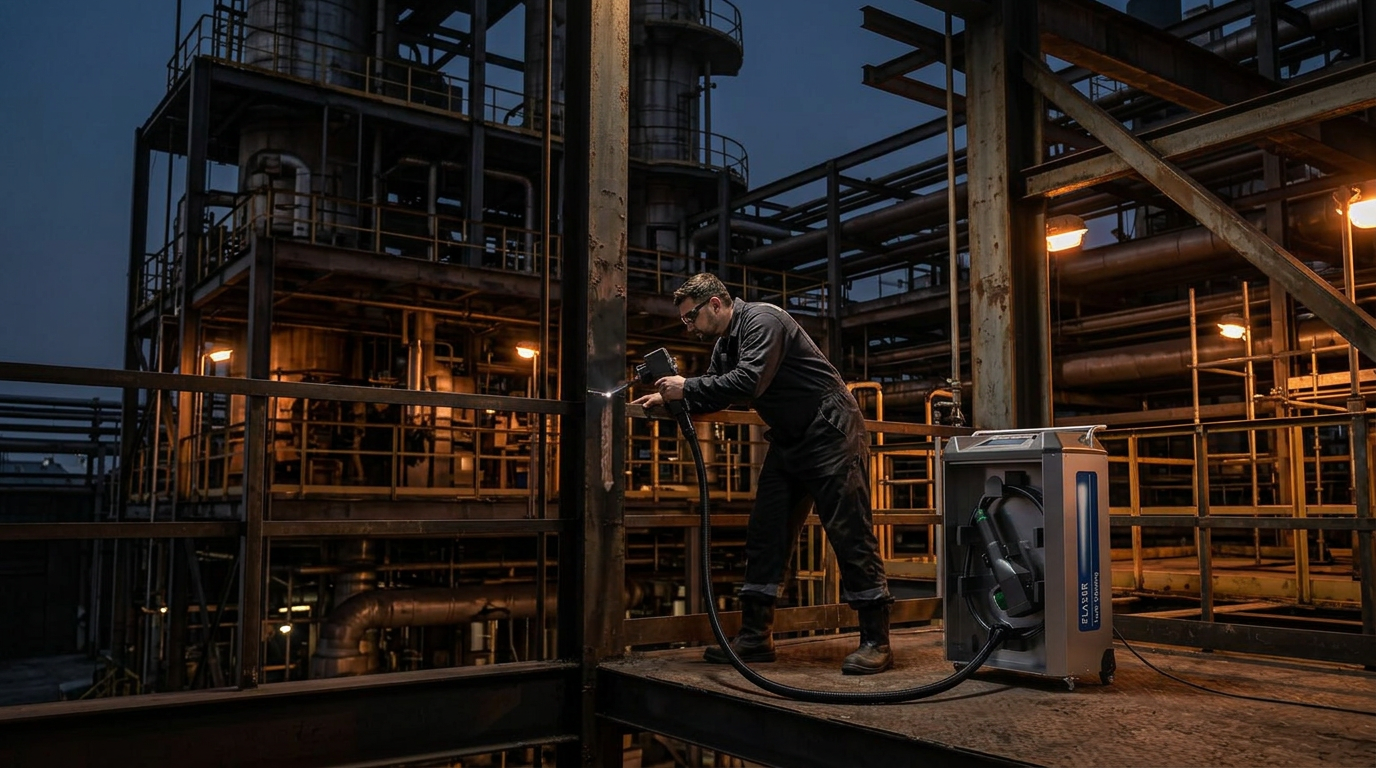
Many cleaning tasks cannot come to a fixed machine. Large structures, on-site infrastructure, and elevated or confined positions demand a system that travels to the work.
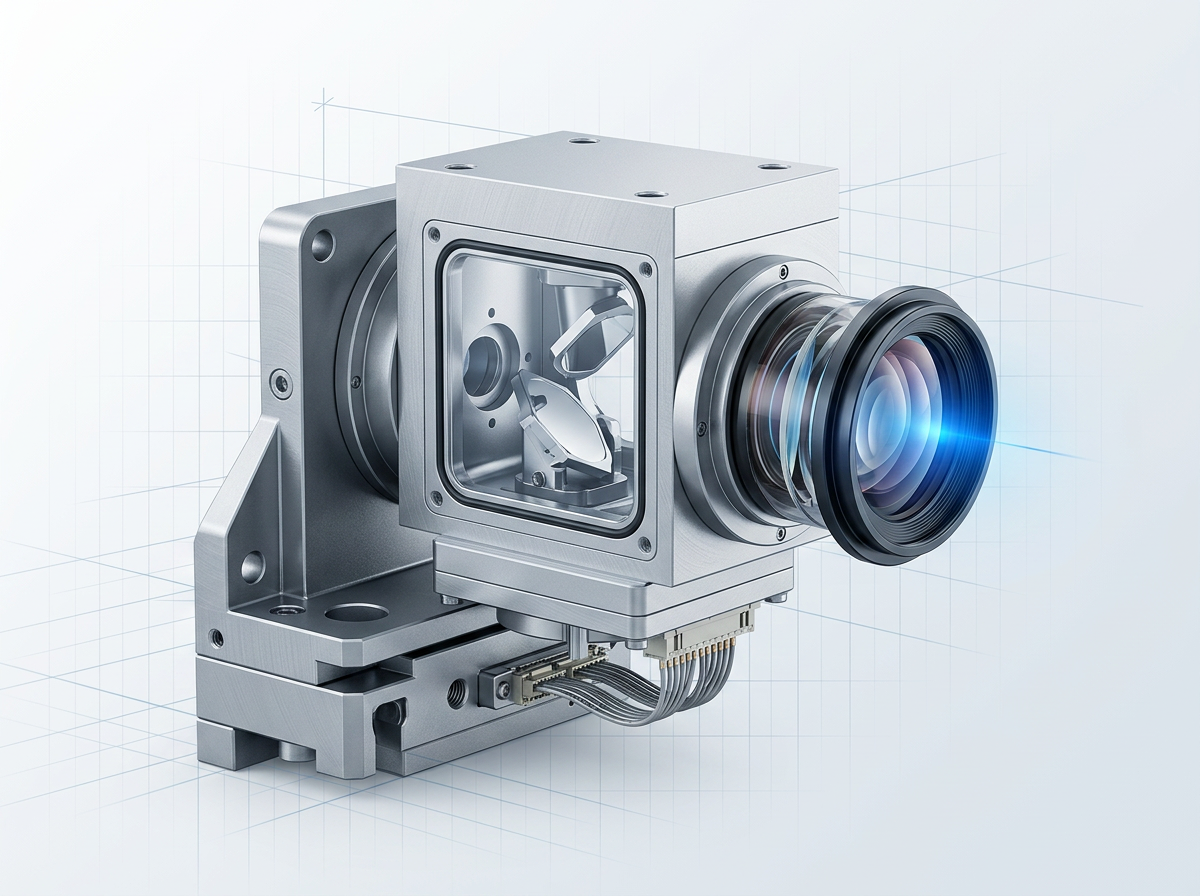
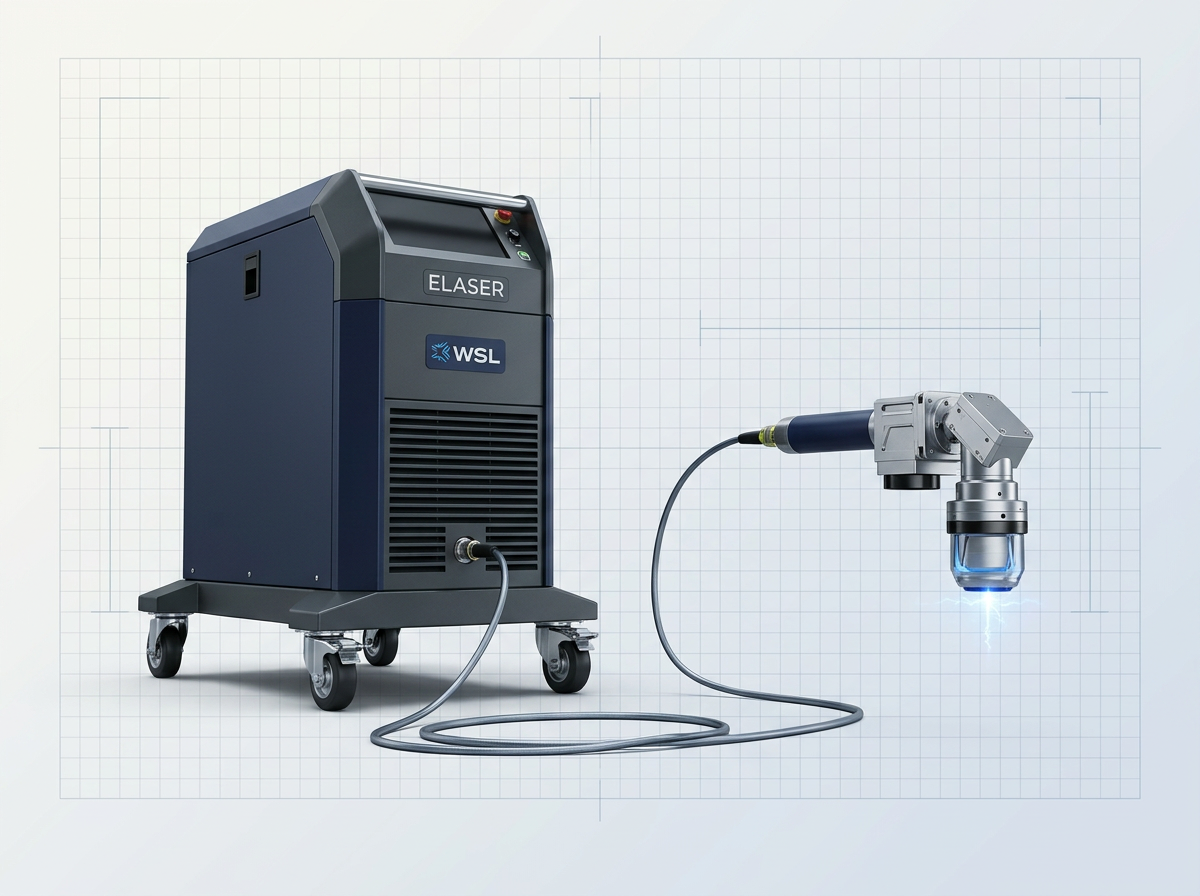
ELASER is a wheeled, self-contained unit under 50 kg, paired with a handheld scanner weighing under 3 kg. A 50 m delivery cable decouples the operator from the main unit entirely — giving access to height, depth, and awkward angles without repositioning the system. One operator. One standard power connection. Air-cooled and consumable-free: no compressor, no water supply, no media.
The machine comes to the asset.
Laser Output Parameters
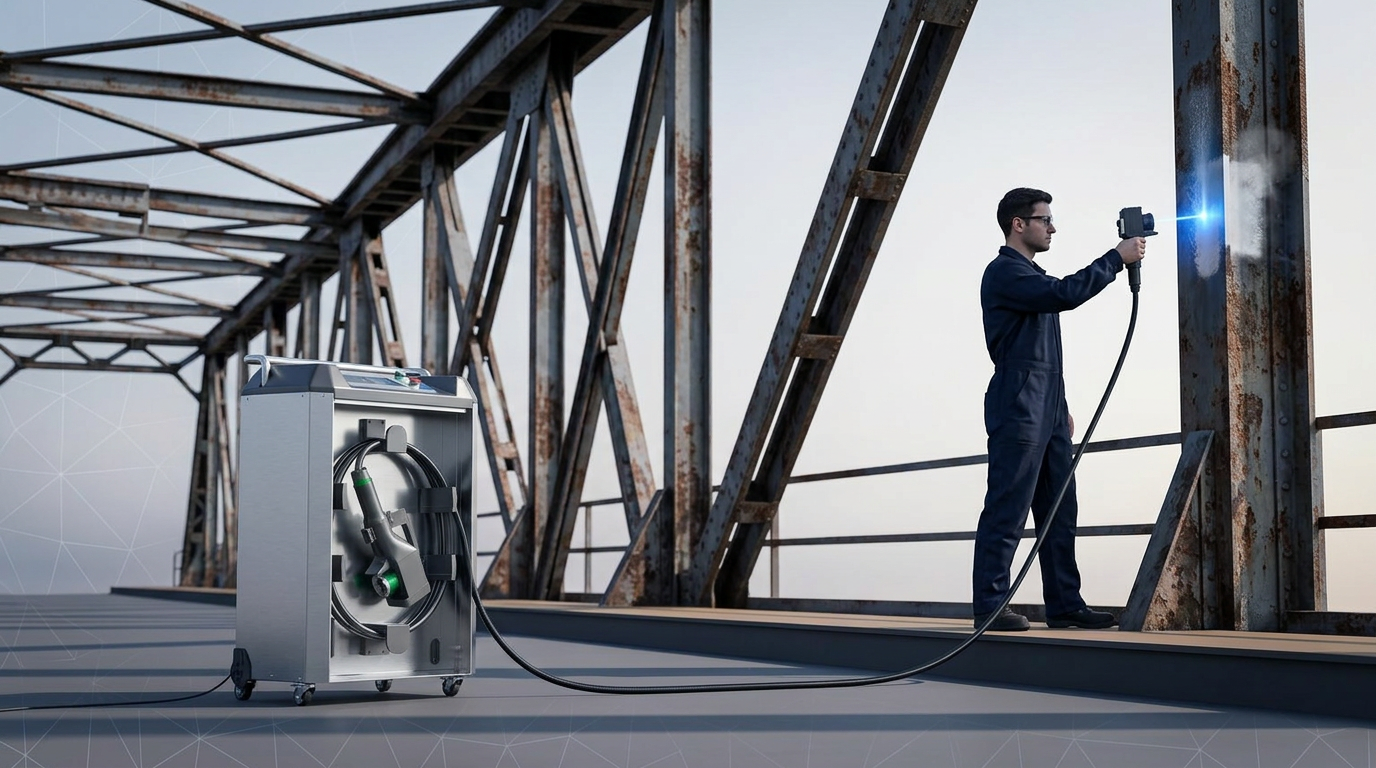
Max power: up to 300 W. Tunability: 0–100%. Wavelength: 1550 nm (retina-safe; underpins the RHZ variant).
Pulse energy: up to 15 mJ. Pulse duration: 100 ns. Repetition rate: adjustable up to 200 kHz (CW).
Scanning System & Lens Options
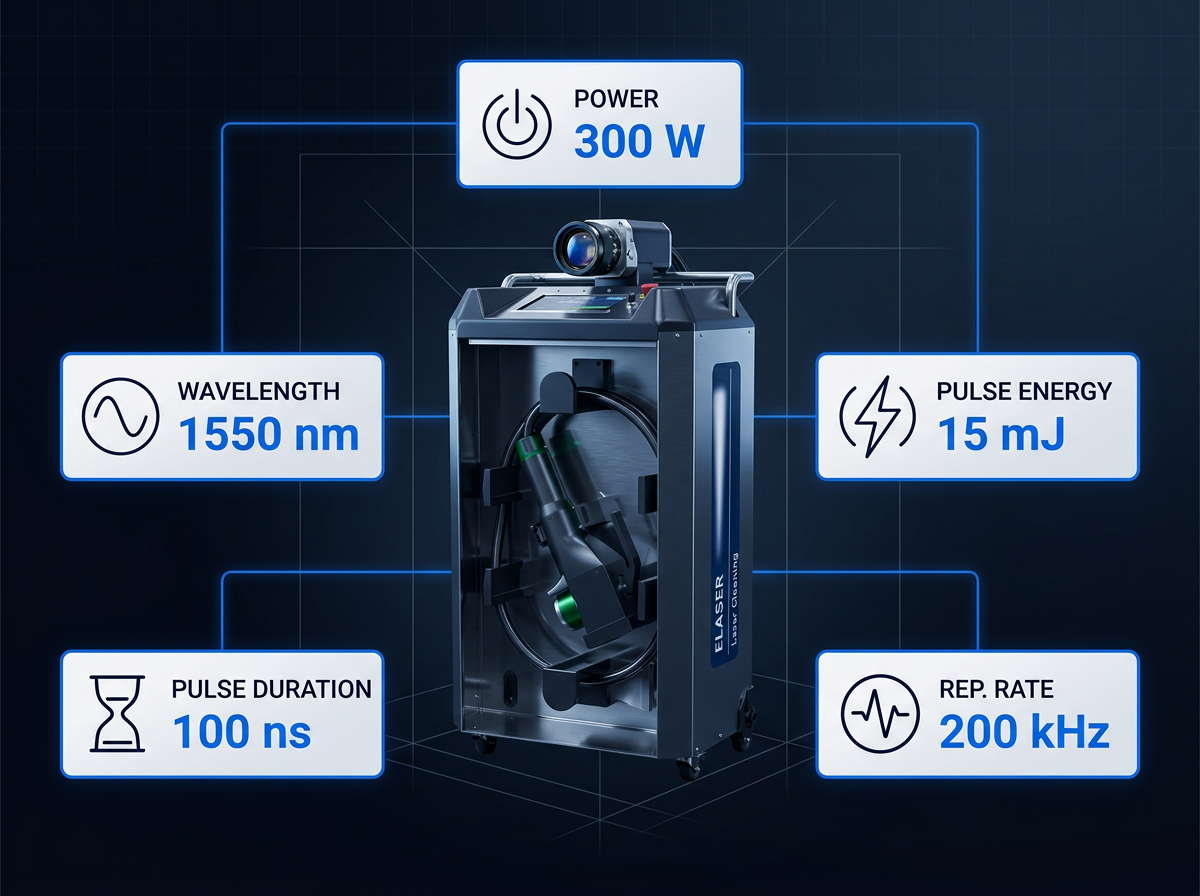
Scanner: 2-D galvanometer, 10 m/s max scan rate. Scan shapes: fully programmable via GUI.
F-Theta lenses: interchangeable, 75–500 mm working distance range. Lens-protection windows: included and replaceable.
Physical Dimensions & Reach
Handheld scanner weight: under 3 kg. System weight: under 50 kg (wheeled).
Delivery cable: up to 50 m (5 m and 15 m standard options).
Power Supply & Control Interface
Power supply: 110–250 VAC single-phase. Power consumption: under 2,000 W.
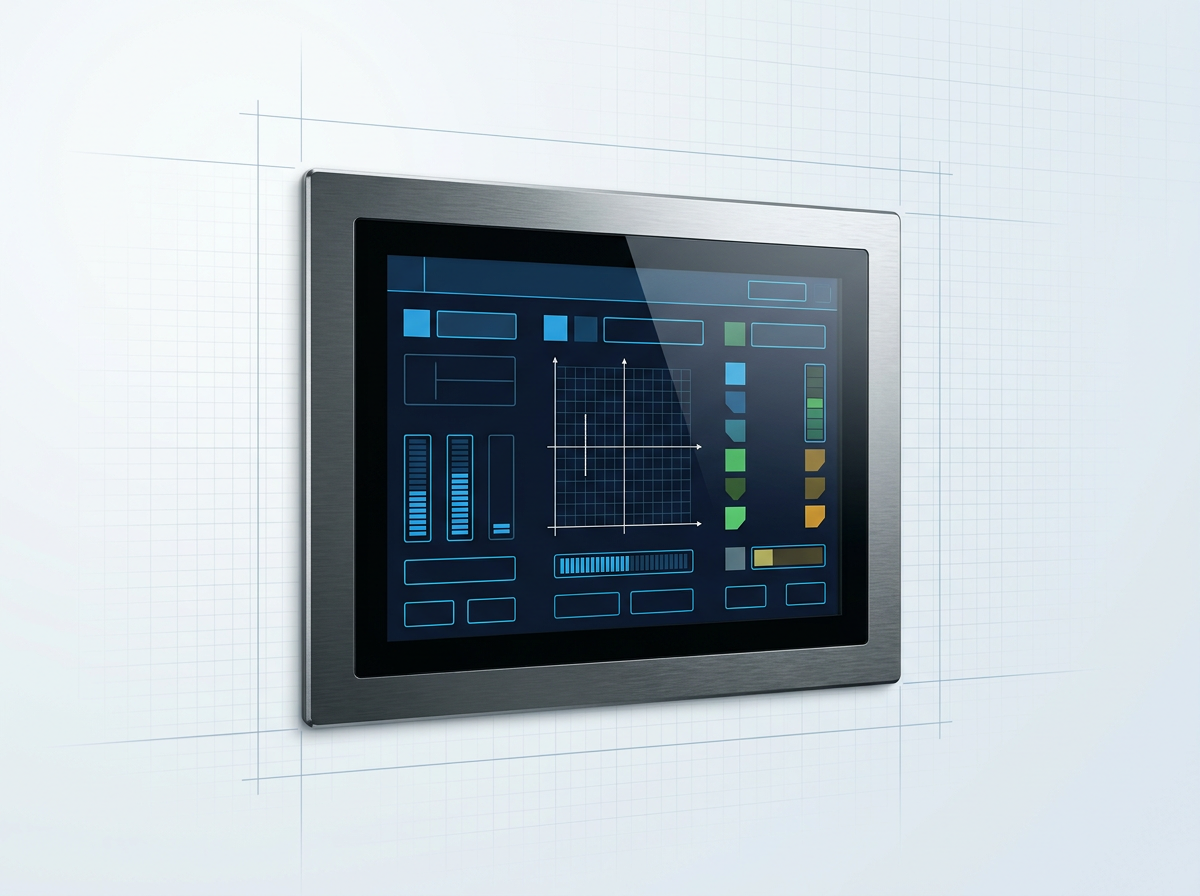
Interface: Ethernet + graphical touchscreen. Access control: password-protected with per-user logins.
Classification & Certifications
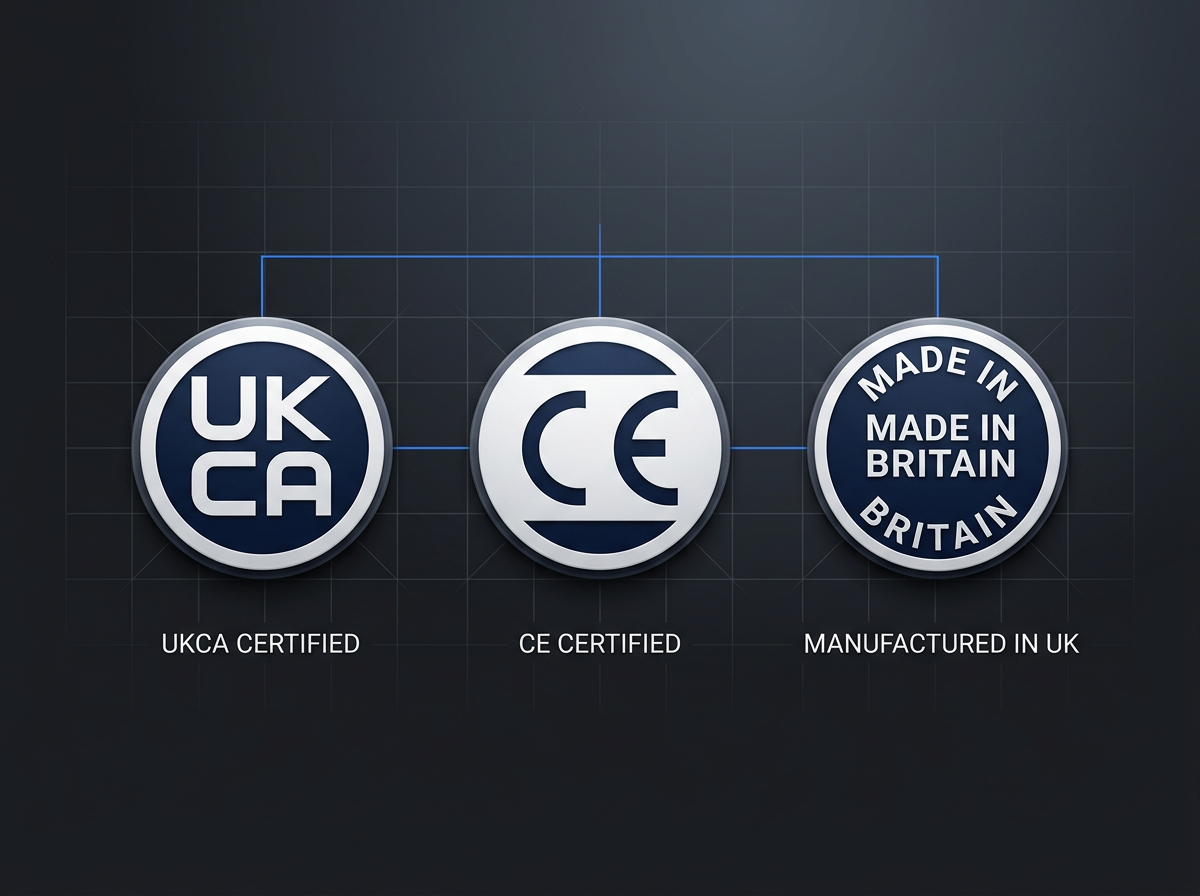
Laser class: Class IV (standard ELASER) or Class I (ELASER-RHZ). Certifications: CE and UKCA certified.
Manufacture: Made in Britain.
Surfaces and Contaminants ELASER Cleans
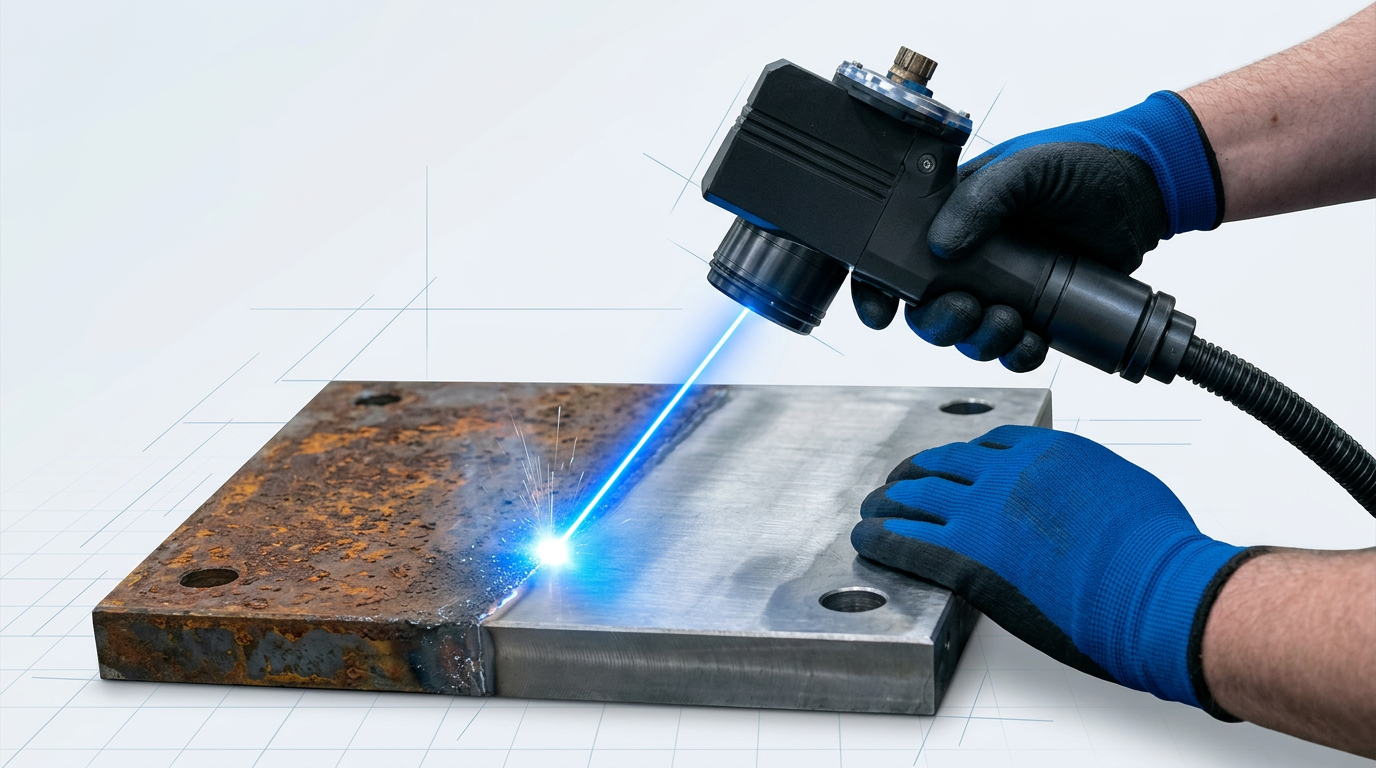
ELASER cleans metals, stone, concrete, brick and masonry, removing everything from light surface oxides through to heavy industrial coatings. Power is tunable 0–100%, so one machine covers the full range. The beam stops at the base material, keeping the substrate intact and reducing rework.
Steel, Aluminium, Titanium and More
Covers steel, carbon steel, aluminium alloys, cast iron, copper, brass, bronze, titanium and galvanised.
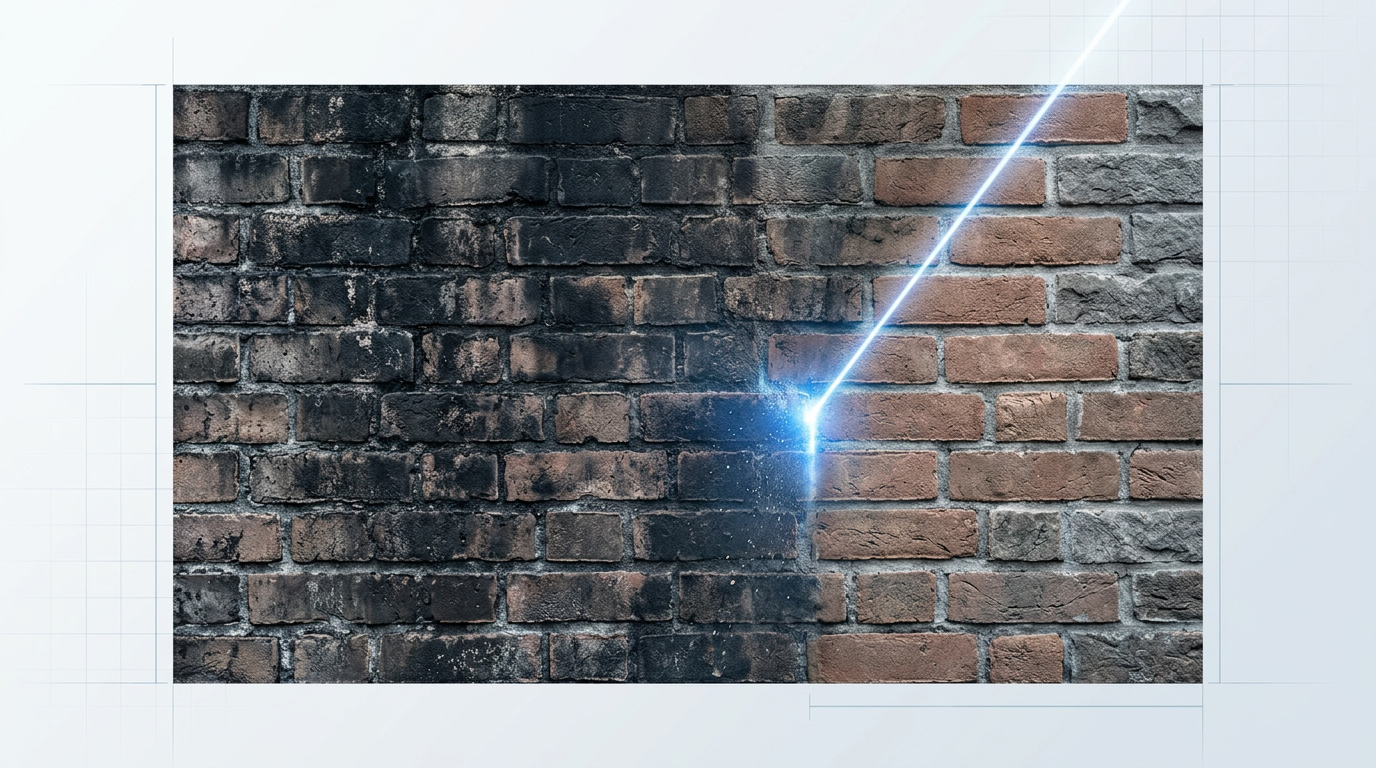
Stone, Concrete, Brick and Masonry
Cleans stone, concrete, brick and masonry without abrasives or damage to the substrate.
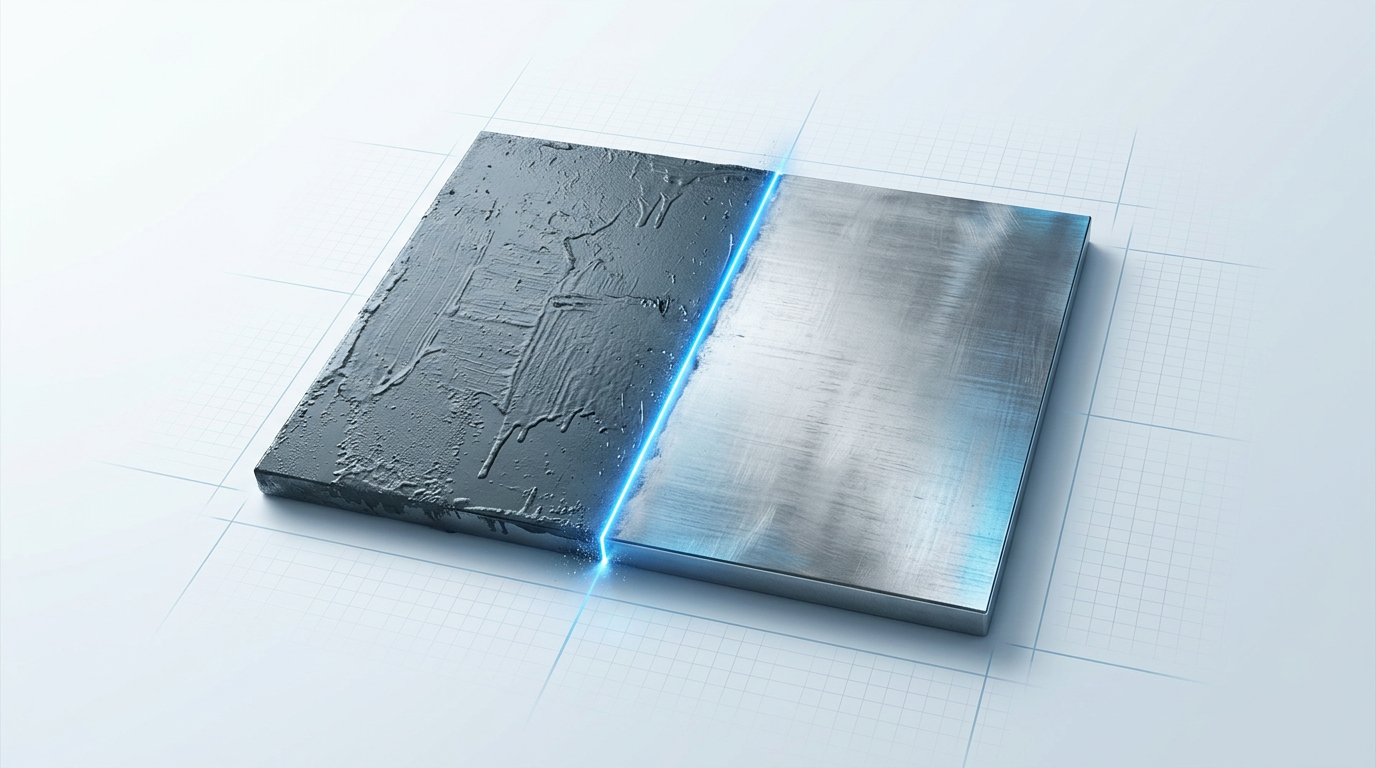
Paint, Powder Coating, Lacquer and Primer
Removes paint, powder coating, lacquer, primer and mill scale — including thick industrial coatings.
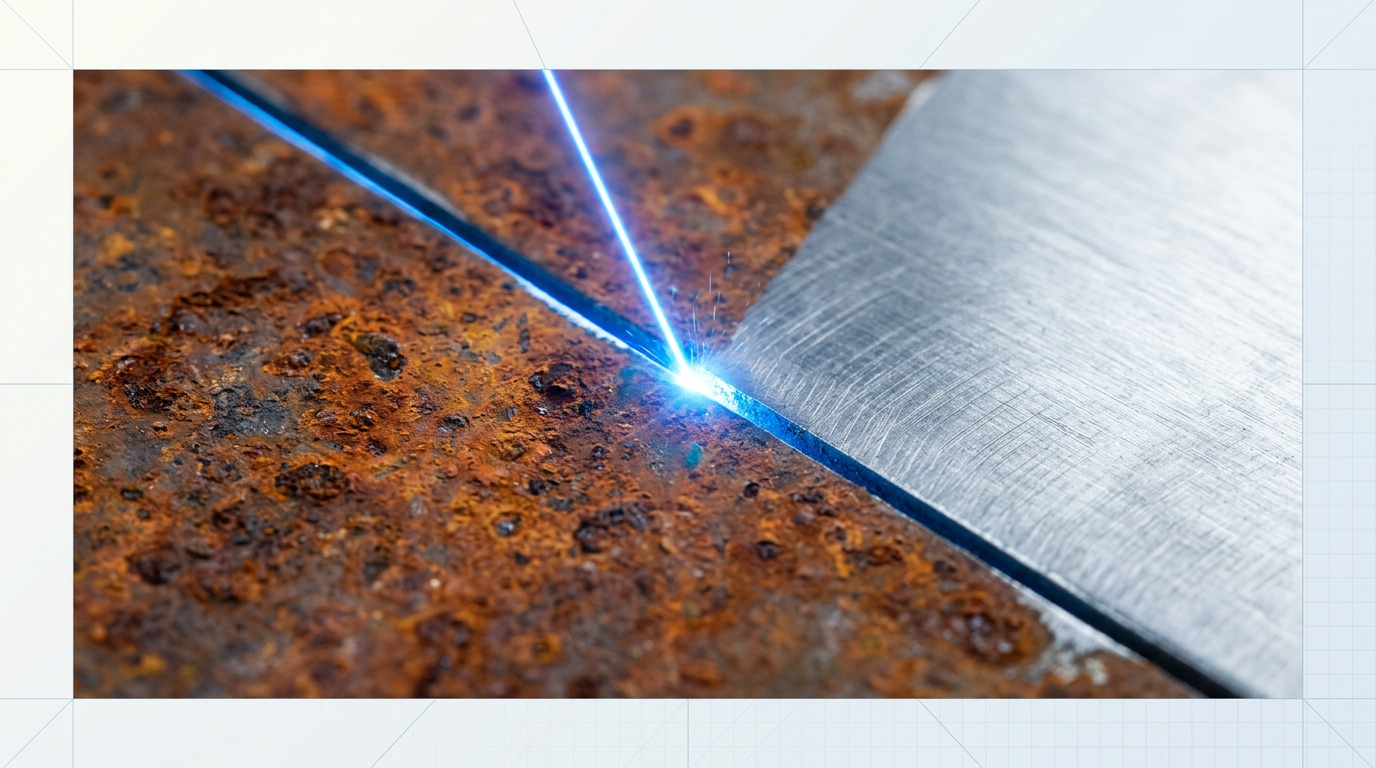
Rust, Oxides, Tarnish and Weld Discolouration
Precisely removes rust, oxides, tarnish and weld discolouration without disturbing the base metal.
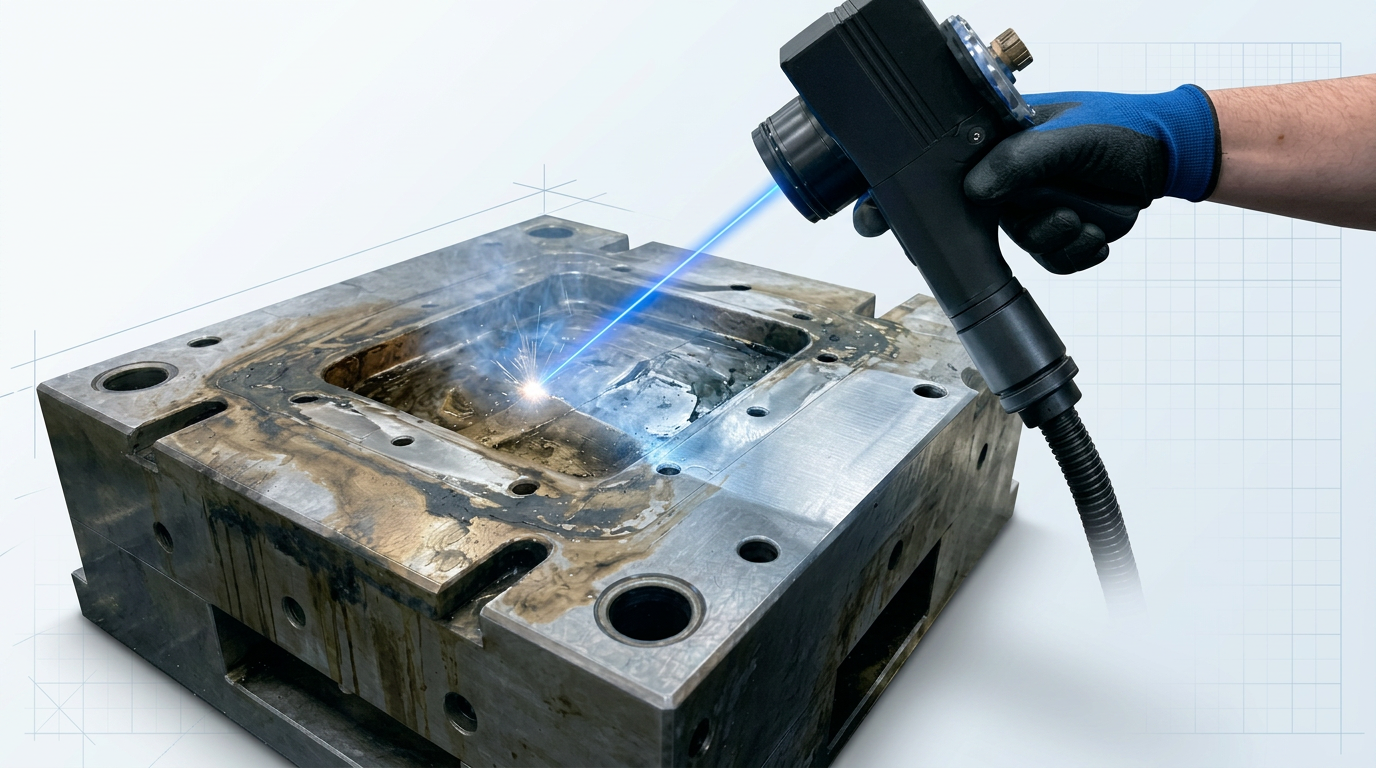
Oil, Carbon, Adhesives and Release Agents
Clears oil, grease, carbon, soot, adhesives, residues and release agents from components and tooling.
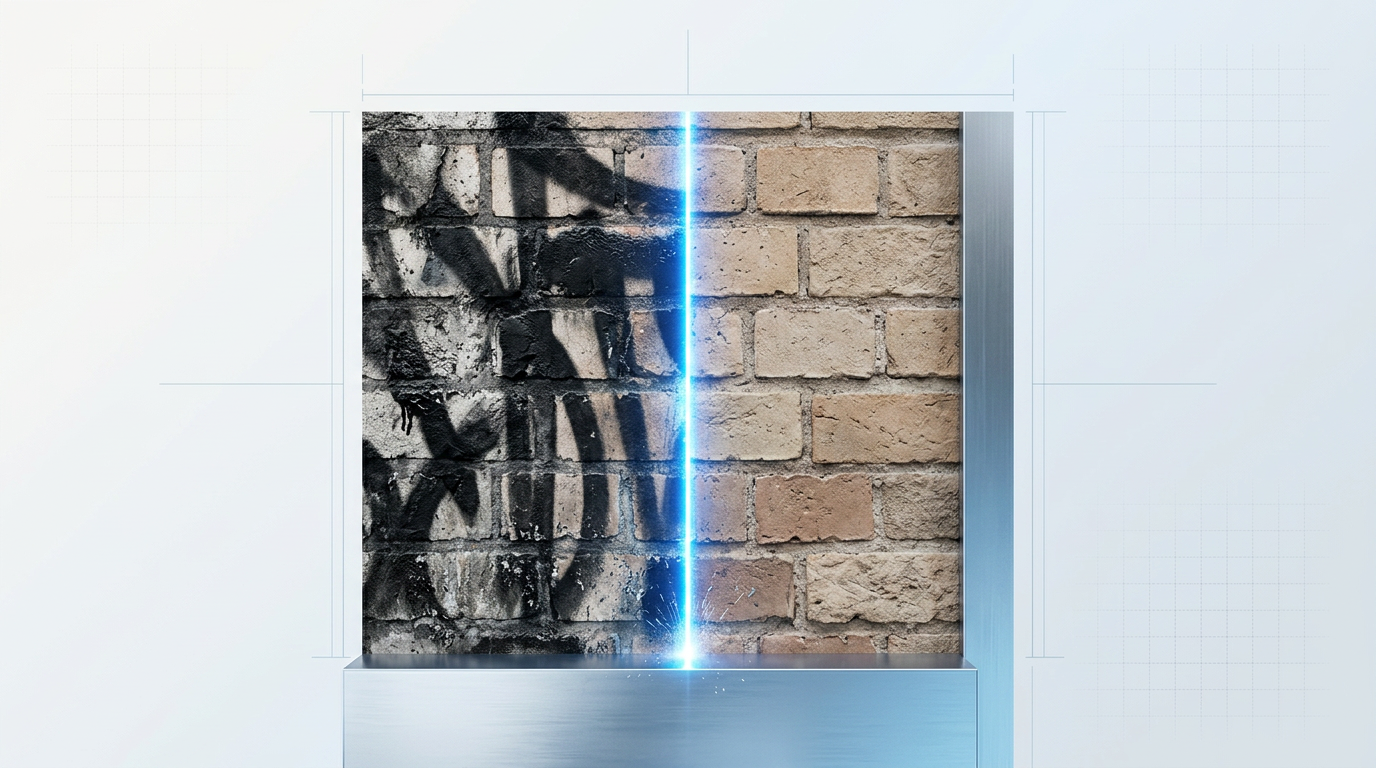
Graffiti and Surface Soiling
Removes graffiti and mould from stone, brick and masonry surfaces cleanly and without chemicals.
Field Applications: Where ELASER Works
These are deployment contexts where portability is the deciding factor. ELASER goes to the work — on site, in the field, without fixed infrastructure.
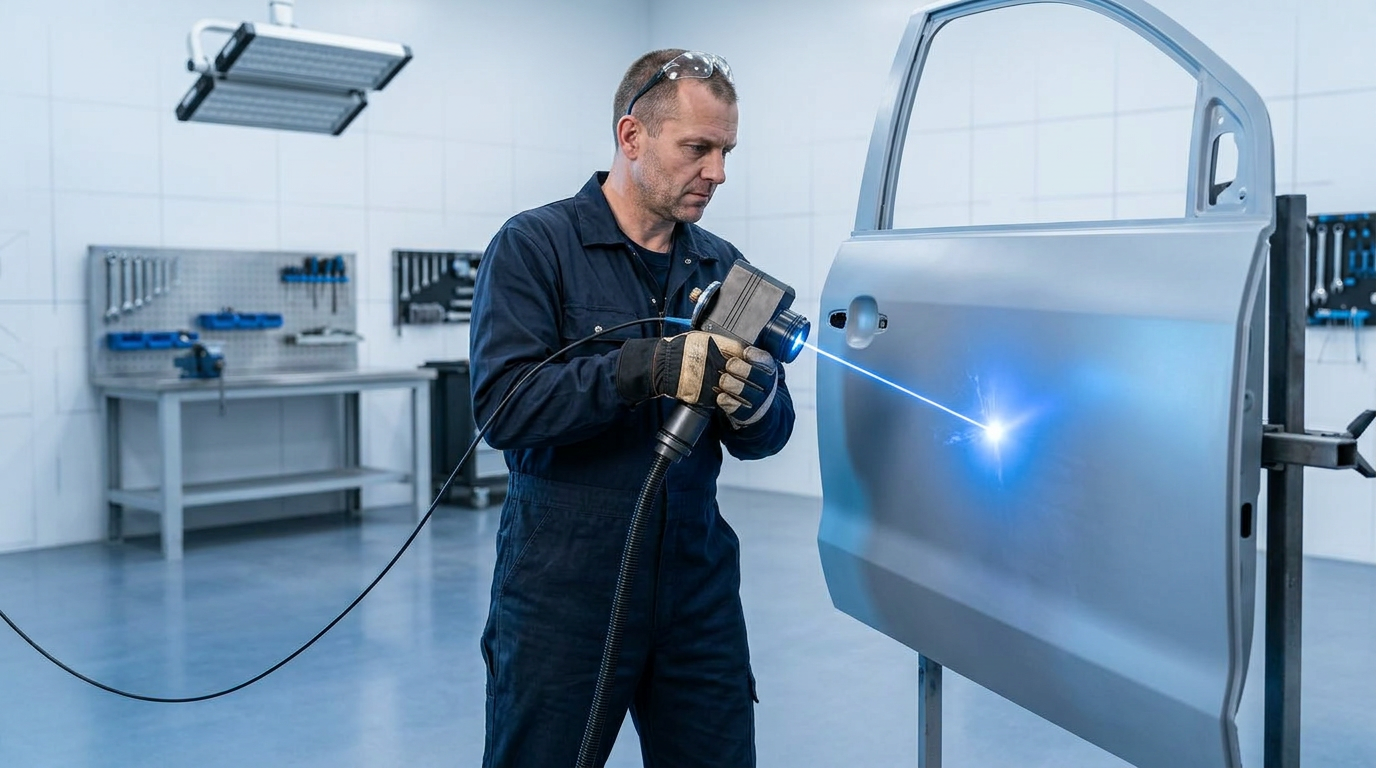
Automotive: Pre-Weld Prep, Rust and Paint Removal
From pre-weld surface preparation on the line to rust and paint removal in the bodyshop — ELASER goes to the vehicle, no fixed installation required.
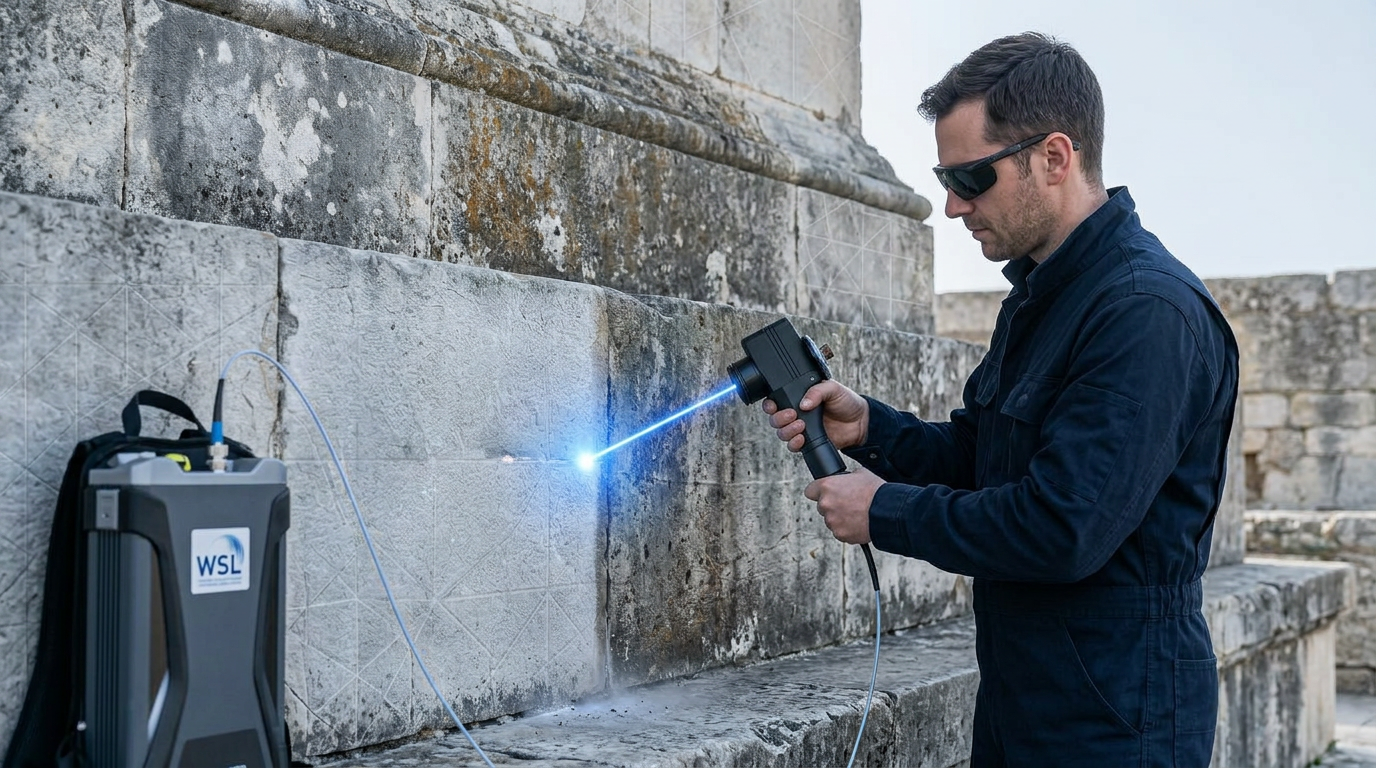
Heritage and Restoration: Stone, Metal and Masonry
Gentle on original surfaces. The ELASER-RHZ variant suits publicly accessible heritage sites where conventional laser cleaning would require the area to be cleared.
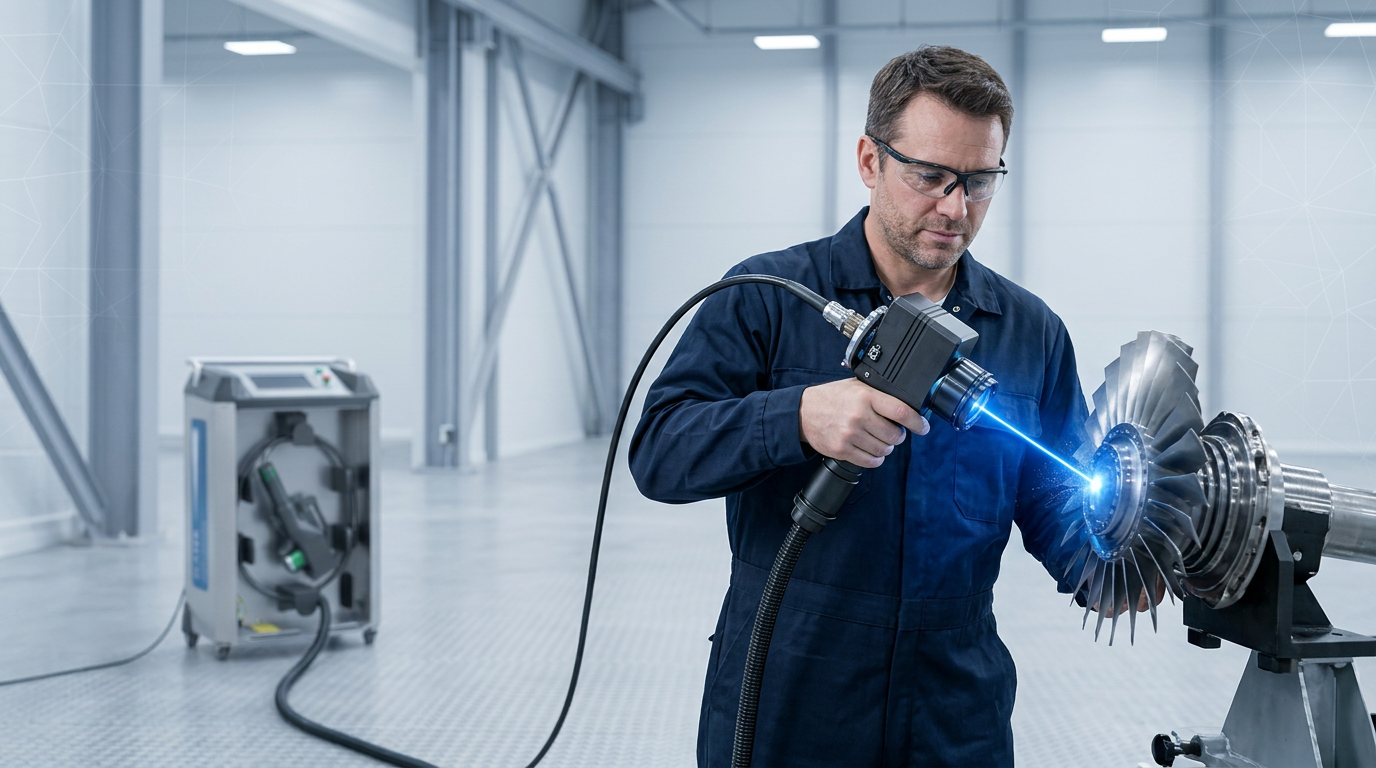
Aerospace: Precision Field Maintenance Cleaning
Precise surface prep and component cleaning to tight tolerances — brought to assemblies in the field that cannot be moved to a fixed system.
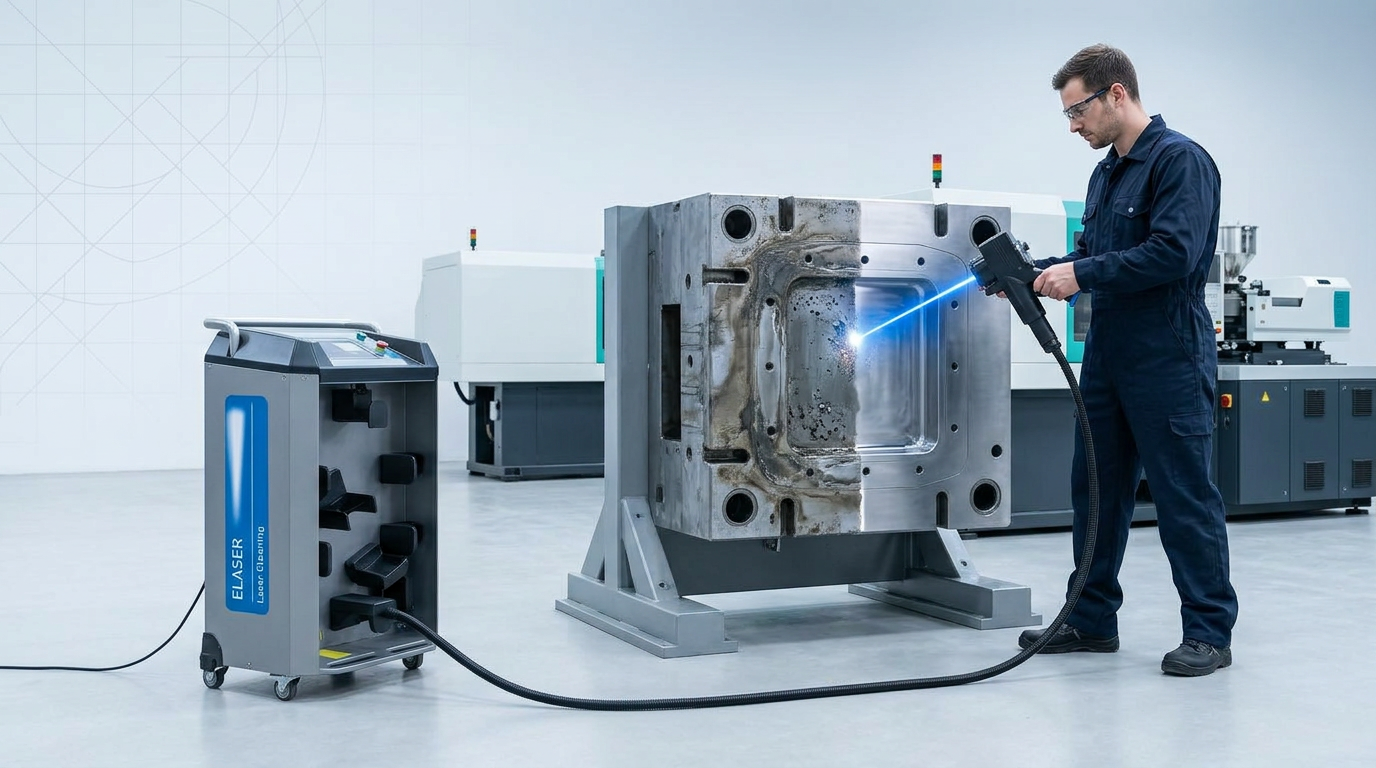
Injection Moulding and Tooling: Clean In Place
Strip residue, release agents and build-up from moulds and tooling in place. No disassembly, no downtime from pulling and reinstalling the mould.
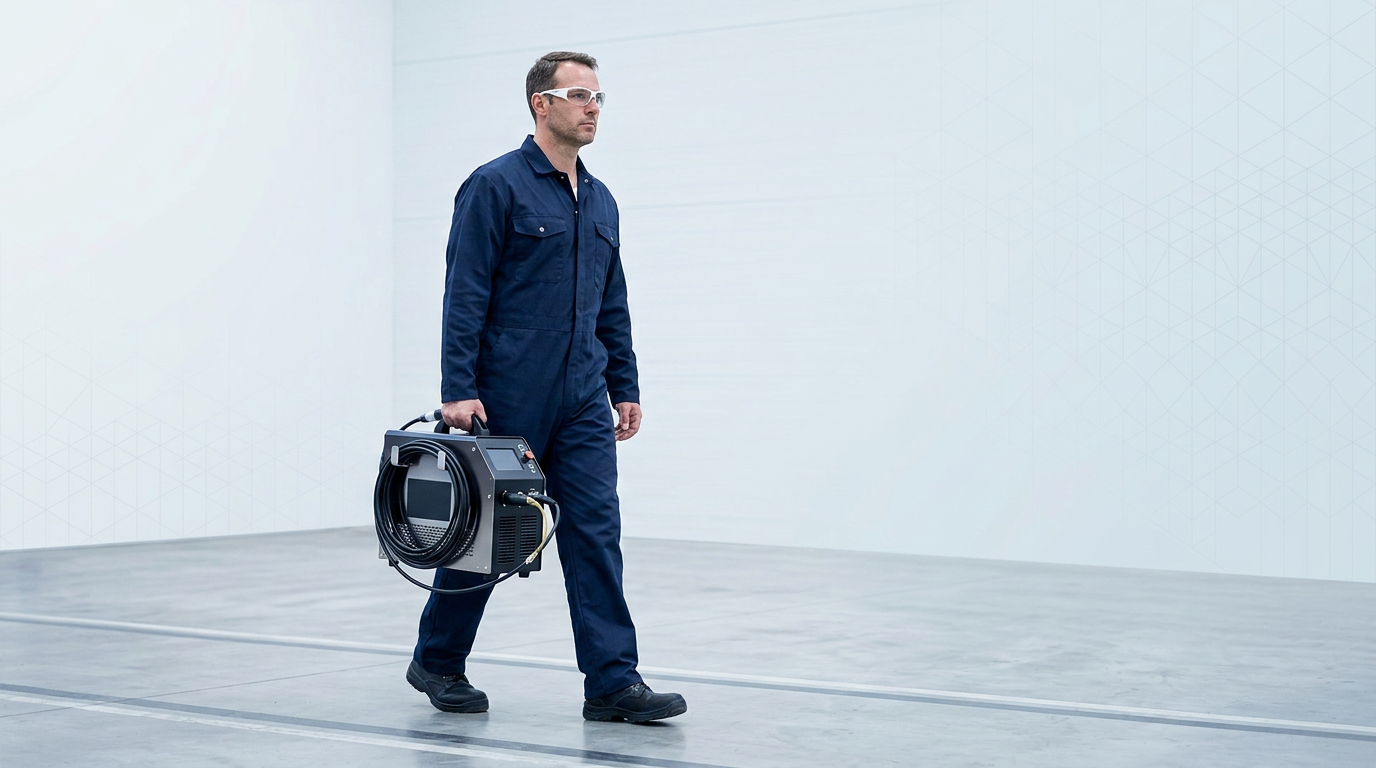
Launch a Commercial Laser Cleaning Service
A portable system paired with full WSL operator training gives service providers everything needed to offer on-site laser cleaning commercially.
ELASER-RHZ: Laser Cleaning Without Sealing Off the Area
Every portable laser cleaner on the market is a Class IV system, requiring the surrounding area to be sealed off and evacuated before work begins. In open-plan facilities, mixed-use workshops, and publicly accessible sites, that overhead makes laser cleaning impractical.
ELASER-RHZ removes that barrier entirely. WSL's patented, world-first technology confines the laser hazard to a small zone immediately around the work. No competitor offers equivalent capability — opening open-plan manufacturing floors, heritage restoration sites, and field locations where full evacuation is not feasible.
The result is a Class I rated system. Full operator training is included as standard.
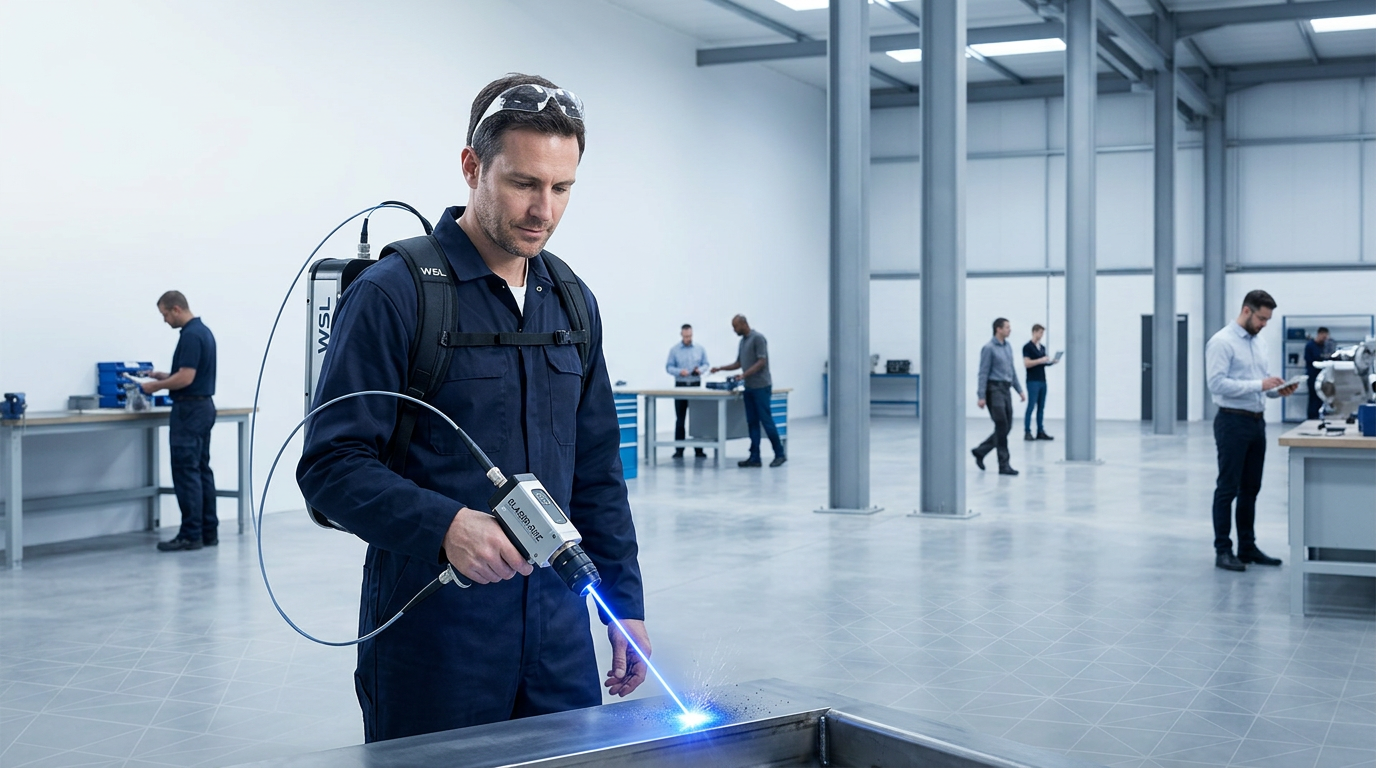
Explore the ELASER-RHZ in Detail
The ELASER-RHZ brings world-first hazard-confinement technology to open-plan facilities and publicly accessible sites. Download the full datasheet or explore the product page to see the complete specification.
Hidden Costs Add Up
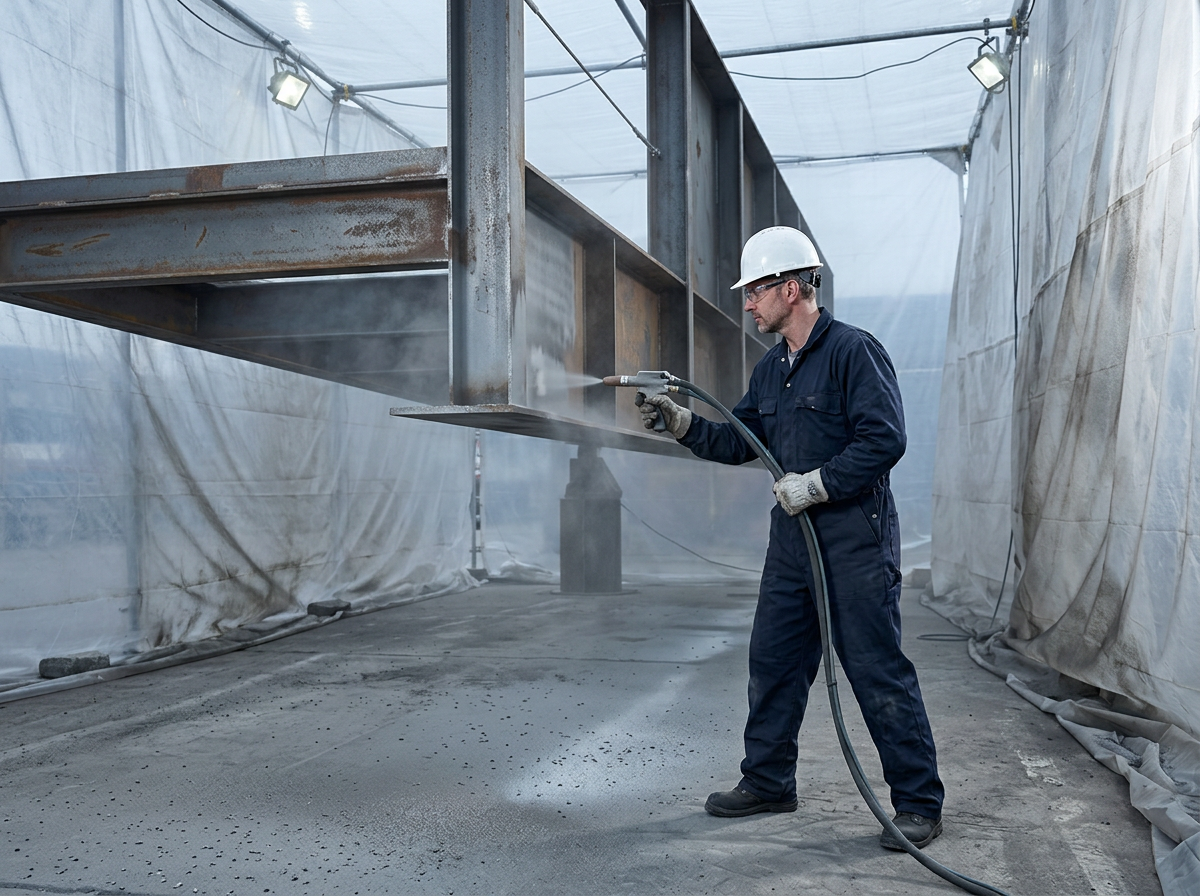
Sandblasting requires abrasive media as an ongoing consumable, plus containment setup, post-job cleanup and media disposal — all time and cost beyond the cleaning itself.
Chemical stripping adds PPE requirements, chemical storage, regulated waste disposal and dwell time that extends every job. Grinding generates heat that risks substrate distortion, produces debris and can cause surface damage requiring rework — a cost that rarely appears on the initial job estimate.
No Consumables. No Waste.
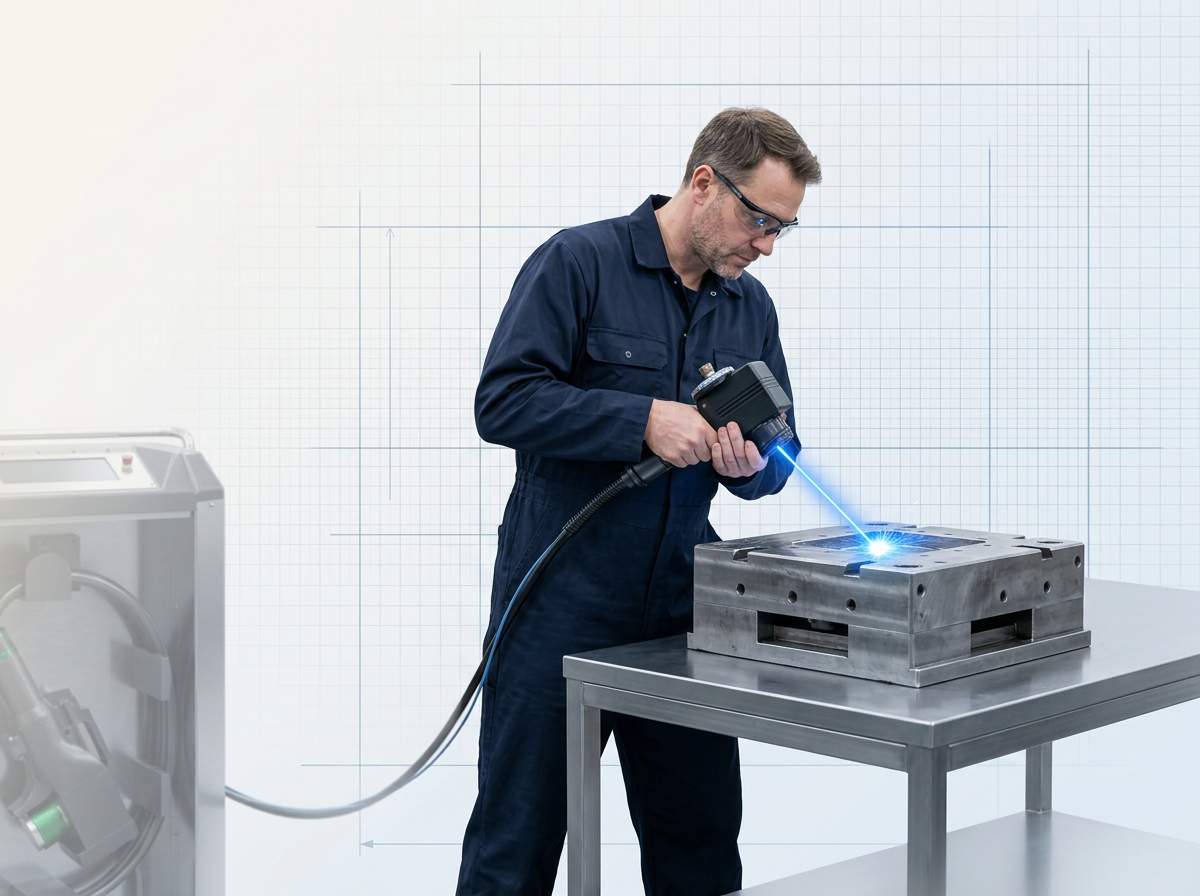
Laser cleaning requires no abrasive media, no chemicals, no masking, no containment setup and no waste disposal. The only ongoing input is electricity. This is not a marketing claim — it is how laser ablation works by design.
ELASER is air-cooled and needs no compressor or water supply, so there is nothing to connect, stock or dispose of between jobs. Zero consumable running cost and less setup time per job changes the operational cost picture significantly over the machine's working life.
Less Rework. More Precision.
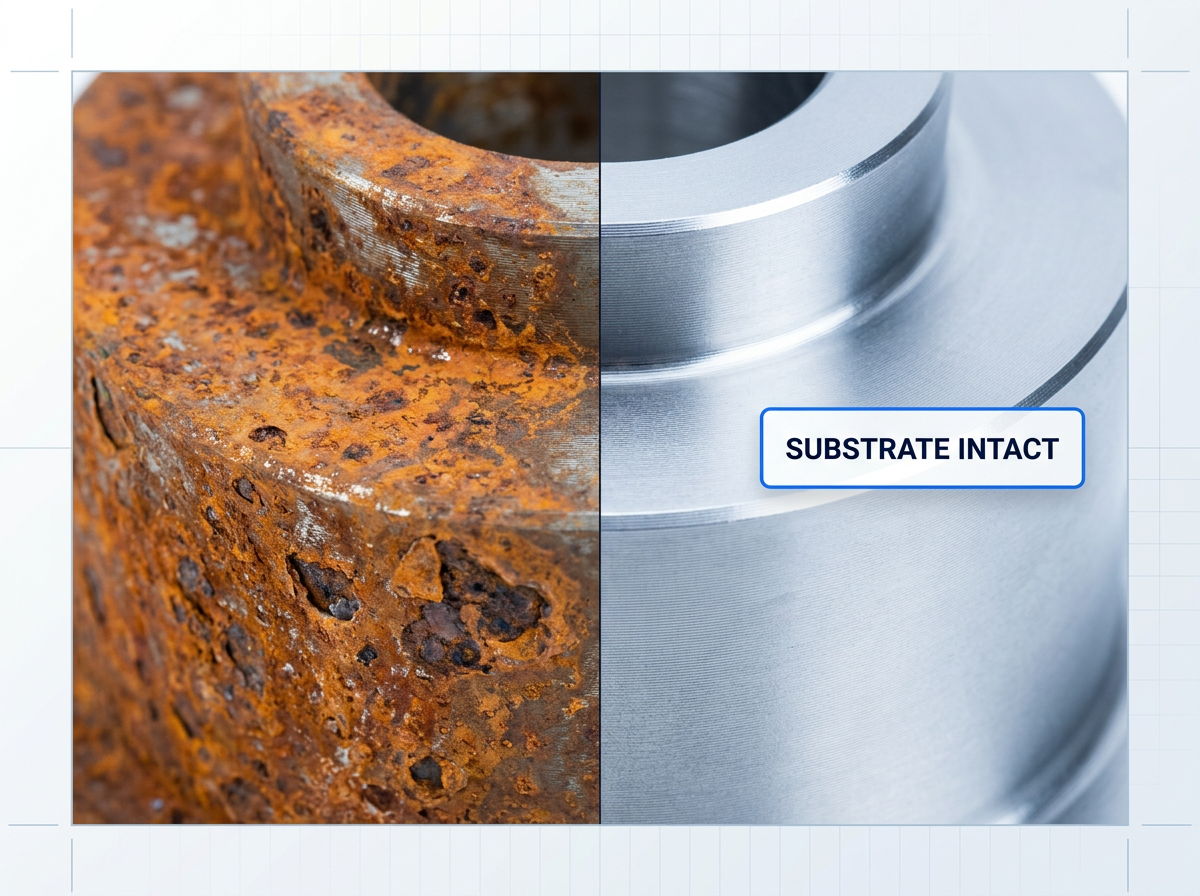
Laser ablation stops at the base material. The beam removes the contaminant selectively, without attacking the substrate beneath — so over-cleaning is largely eliminated.
The practical consequence: rework from substrate damage (re-machining, re-coating, re-welding) is reduced. For precision components, heritage surfaces, or anything where dimensional integrity matters, that reduction in rework represents a direct saving in time and cost — one that traditional abrasive or thermal methods cannot reliably match.
Do Laser Cleaners Really Work?
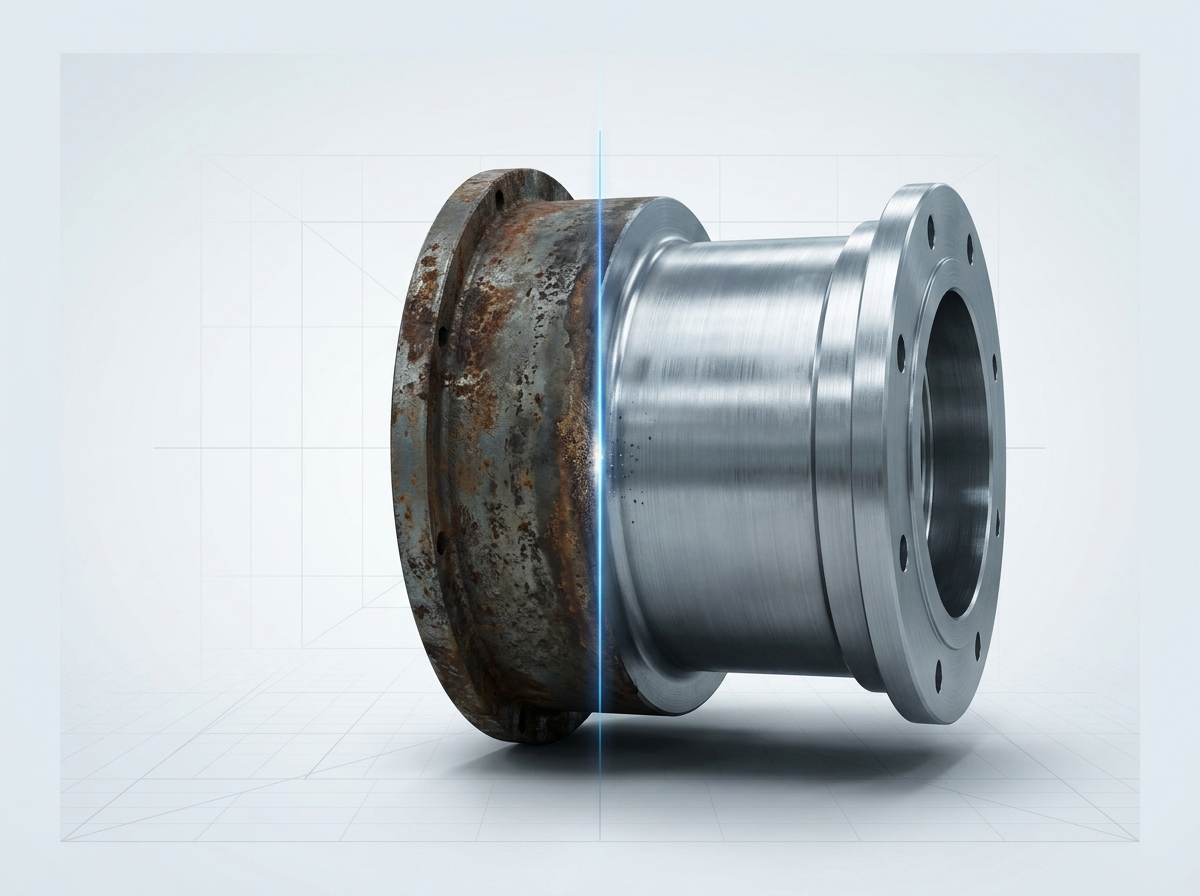
Yes — and the evidence comes from established industrial and technical sources, not promotional material. Laser cleaning is documented as effective on metals, stone and masonry, removing rust, paint, mill scale, coatings, oil and more. ASM International testing confirms laser ablation's effectiveness for coating and corrosion removal. Photonics.com industrial coverage places the technology in automotive, aerospace, heritage restoration and general industrial maintenance.
This is a mature industrial process with a well-documented performance record. The question for procurement is not whether it works — it is which system fits your operation.
The Only UK Laser Cleaning Manufacturer
Woodrow Scientific Limited is the only UK-based laser cleaning manufacturer — founded 2012, with 200+ years of combined engineering experience. WSL designs, builds, services and improves every machine in-house. That distinction matters: much of the laser cleaning market is resellers rebadging third-party imports, meaning support staff who didn't build the machine and cannot genuinely fix it. WSL's engineers did — so spare parts, configuration queries and improvements are resolved without third-party escalation.
Every ELASER is CE and UKCA certified for UK and European markets. First-class operator training is available as standard, and bespoke engineering is offered for buyers with non-standard requirements.
How Much Does a Portable Laser Cleaning Machine Cost?
Mobile industrial laser cleaning systems span a wide market range — from around €40,000 to €500,000 depending on power class, configuration, and manufacturer.
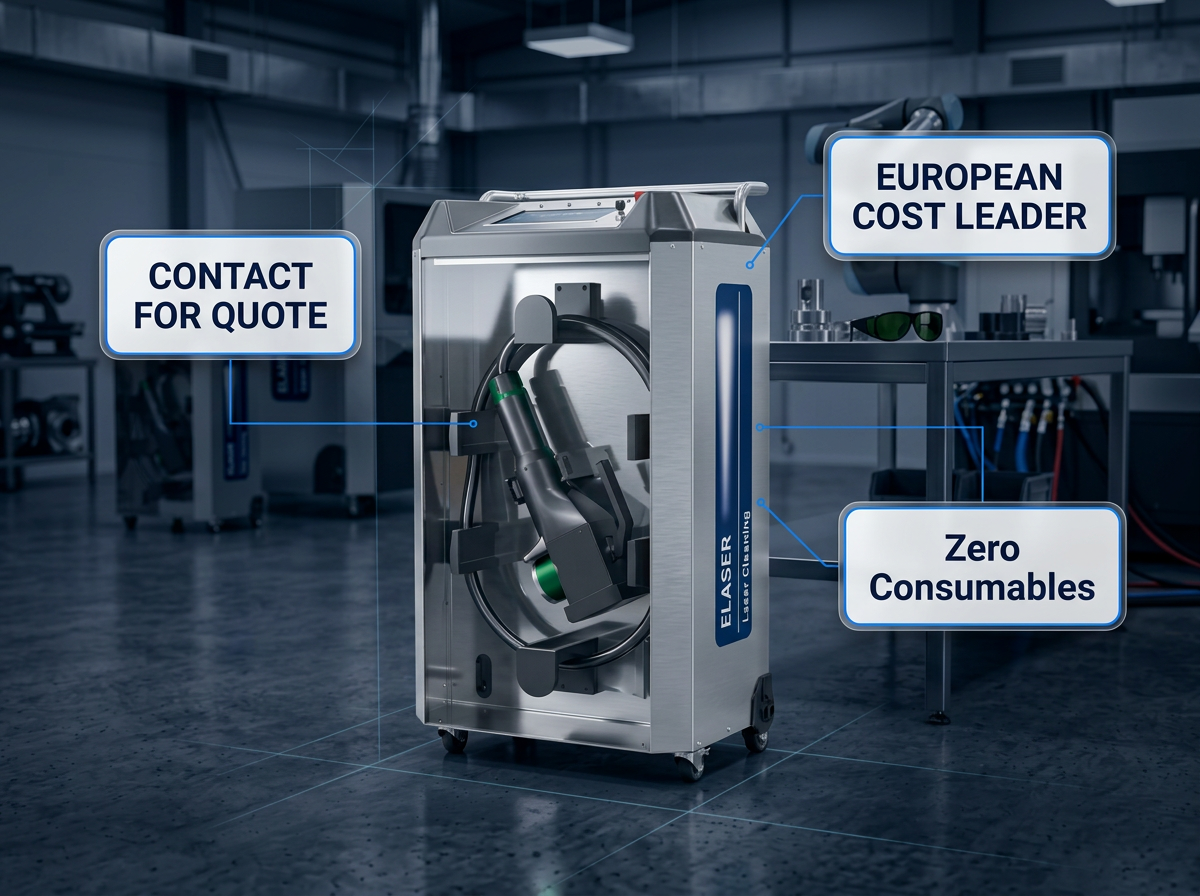
ELASER is the European cost leader among comparable industrial-grade portable laser cleaners. Competitive pricing is achieved through in-house manufacturing efficiency, not by cutting quality. Price is by quotation: the right configuration depends on power level, cable length, lens options, and whether the ELASER-RHZ variant is required.
Factor in zero consumables, reduced downtime, and less rework over the machine's working life and the investment picture shifts. Contact WSL for a tailored quotation.
Request a Quote for the ELASER from WSL
WSL's engineering team can advise on the right configuration for your application — power level, cable length, or variant. UK manufacturer, CE and UKCA certified, with bespoke engineering available for non-standard requirements.
Frequently Asked Questions
Common questions about ELASER and ELASER-RHZ — covering capabilities, certifications, training, pricing, and how laser cleaning compares to traditional methods.
The ELASER-RHZ uses WSL's patented reduced hazard zone (RHZ) technology — a world-first — to confine the laser hazard to a small area immediately around the work. This means cleaning can proceed in open workshops, mixed-use manufacturing facilities, and publicly accessible spaces such as heritage sites or graffiti removal jobs, without sealing off or evacuating the surrounding area. No other laser cleaner in the world offers this capability. The standard ELASER operates as a Class IV laser system, which requires a controlled laser zone to be established before work begins. The ELASER-RHZ operates at Class I. Both are portable, wheeled systems with the same sub-3 kg handheld scanner and up to 50 m cable reach — the RHZ variant simply unlocks a far wider range of deployment environments.
ELASER cleans a broad range of surfaces: steel, carbon steel, aluminium alloys, cast iron, copper, brass, bronze, titanium, galvanised steel, stone, concrete, brick and masonry. Contaminants removed include rust, oxides, mill scale, paint, powder coating, lacquer, primer, oil and grease, carbon and soot, mould, graffiti, adhesives and residues, tarnish, weld discolouration, and release agents. Power is tunable from 0–100%, so one machine spans delicate tasks — lifting light tarnish or thin oxides — through to heavy-duty removal of thick industrial coatings and mill scale. The beam stops at the base material throughout, leaving the substrate intact.
Yes. WSL provides first-class laser cleaning safety and operation training as a standard part of the ELASER offering. Appropriate operator training is a practical and regulatory requirement for Class IV laser equipment in the UK — the HSE's guidance on laser safety sets out these expectations clearly. WSL delivers training in-house, carried out by the engineers who design and build the machines. As the only UK-based laser cleaning manufacturer, WSL is uniquely positioned to provide training that is directly tied to the product — not a generic course from a third party. Training covers both safe operation and optimisation for your specific applications.
ELASER holds both CE certification and UKCA certification, and is manufactured in Britain. CE confirms compliance with the relevant product safety and electromagnetic compatibility requirements for European markets. UKCA is the UK conformity marking required for the GB market following the UK's departure from the EU. Both certifications confirm that ELASER meets the applicable product safety standards for its respective markets. The gov.uk product marking guidance provides a clear explanation of what each marking means in practice for buyers who want to understand the regulatory context in more detail.
Yes. Laser cleaning is a well-established industrial process, not an emerging or experimental technology. Pulsed laser energy is absorbed by the contaminant — rust, paint, mill scale, oil, carbon, and others — which vaporises or is ablated from the surface. The beam stops at the base material, leaving the substrate intact. The technology is in active use across automotive manufacturing, aerospace maintenance, heritage restoration, and general industrial cleaning. It is effective on metals, stone, concrete, and masonry. Independent technical sources including ASM International confirm laser cleaning's effectiveness on industrial substrates. The practical results — clean surface, no substrate damage, no consumables — are consistent across applications.
Pricing for portable industrial laser cleaning machines varies significantly by power class, configuration, cable length, and manufacturer. ELASER is priced by quotation — contact WSL for a tailored figure based on your specification. Among comparable industrial-grade portable laser cleaners, ELASER is the European cost leader, with competitive pricing achieved through in-house manufacturing efficiency rather than any compromise on quality. The more meaningful comparison, however, is total cost of ownership: laser cleaning requires no abrasive media, no chemicals, no waste disposal, and causes minimal substrate damage — reducing rework. Over a machine's working life, those savings change the cost picture substantially against traditional methods such as sandblasting or chemical stripping. Contact WSL to discuss the configuration that fits your application and budget.
Cleaning speed depends on power and contaminant type. Higher power cleans faster; thick coatings across large surface areas take longer than light oxides on small components. For very high-throughput cleaning of large areas, higher-power or automated systems may be more efficient than a handheld portable unit. Operator training is required. Class IV laser equipment demands qualified, trained operators — this is a practical reality, not a barrier. WSL provides full safety and operation training as standard. The initial investment is higher than some traditional methods such as sandblasting or grinding. That said, laser cleaning carries no ongoing consumable costs, no media disposal overhead, and causes minimal substrate damage — reducing rework. Across a machine's working life, the total cost of ownership picture is typically stronger than traditional alternatives.