Why Laser Ablation Removes Varnish, Not the Substrate
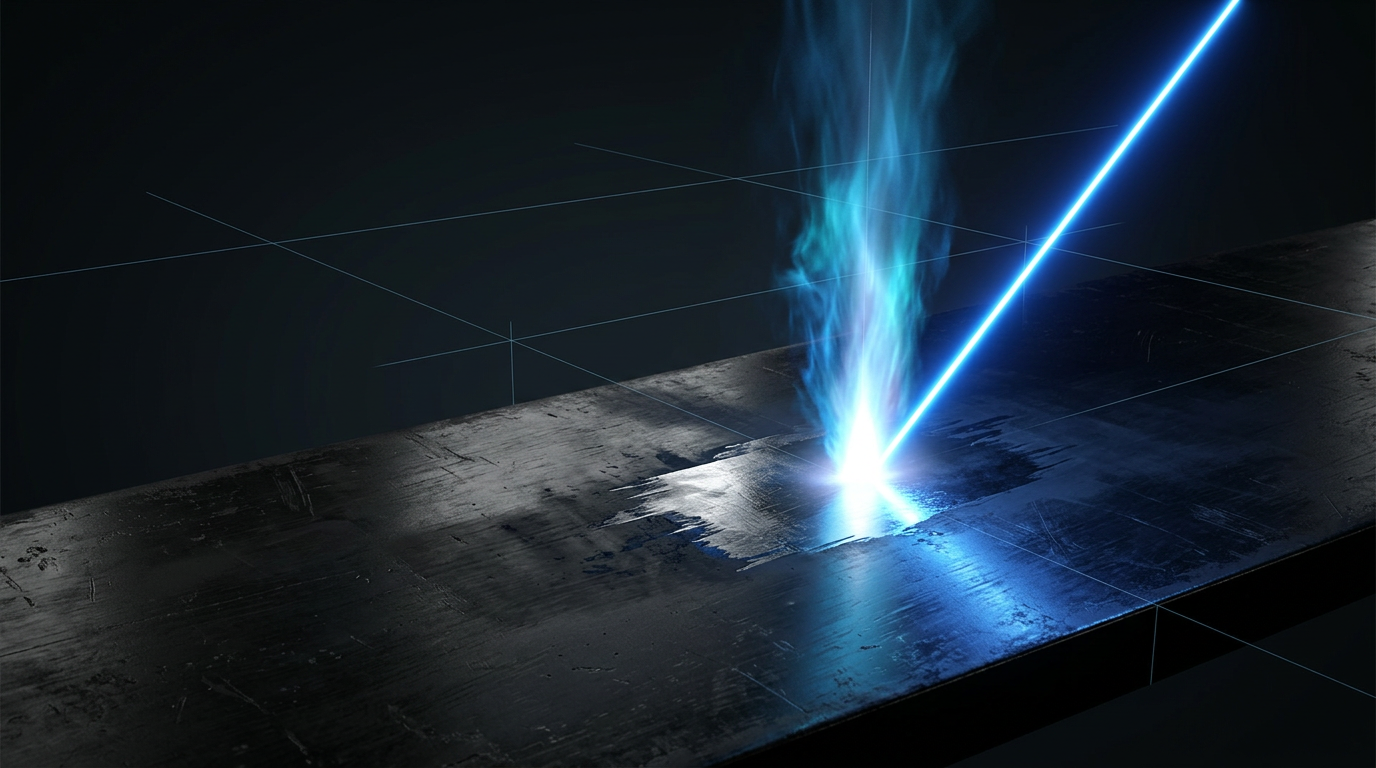
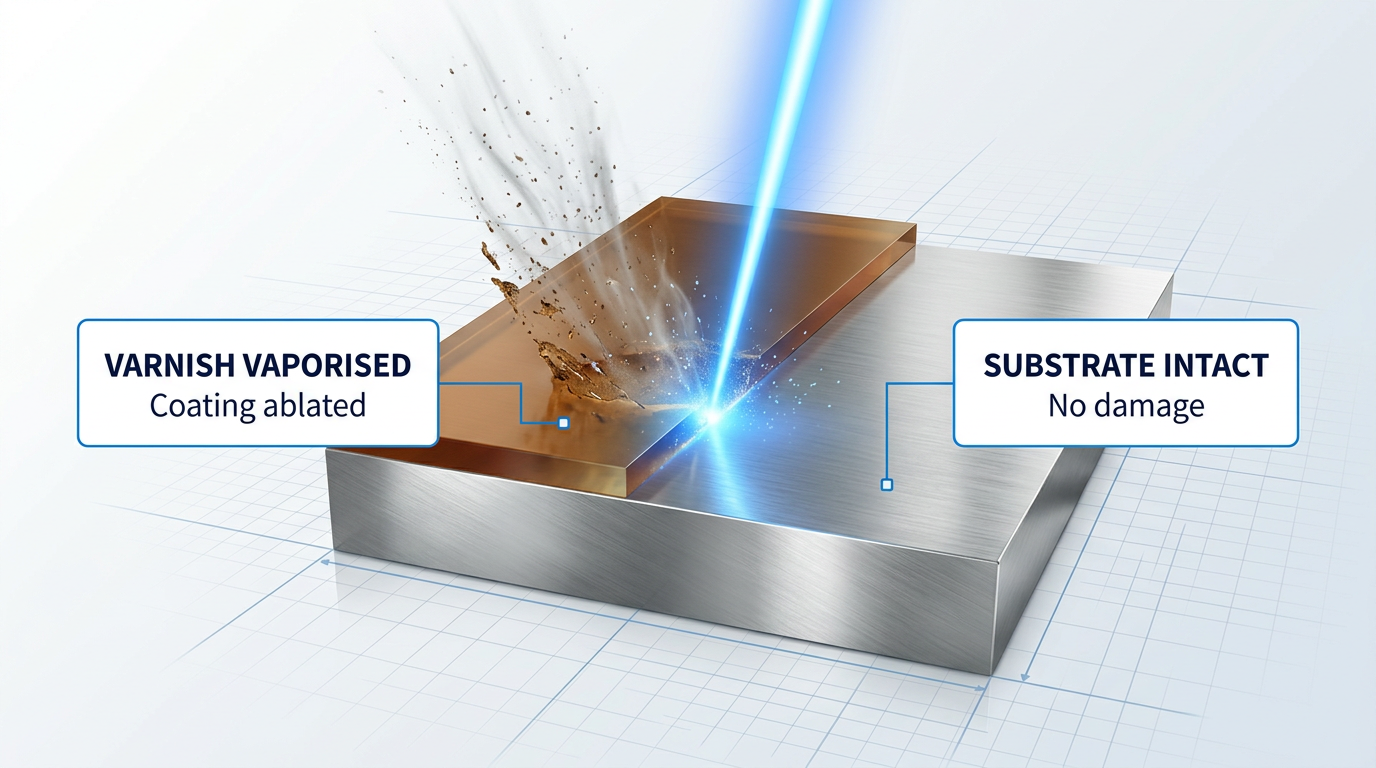
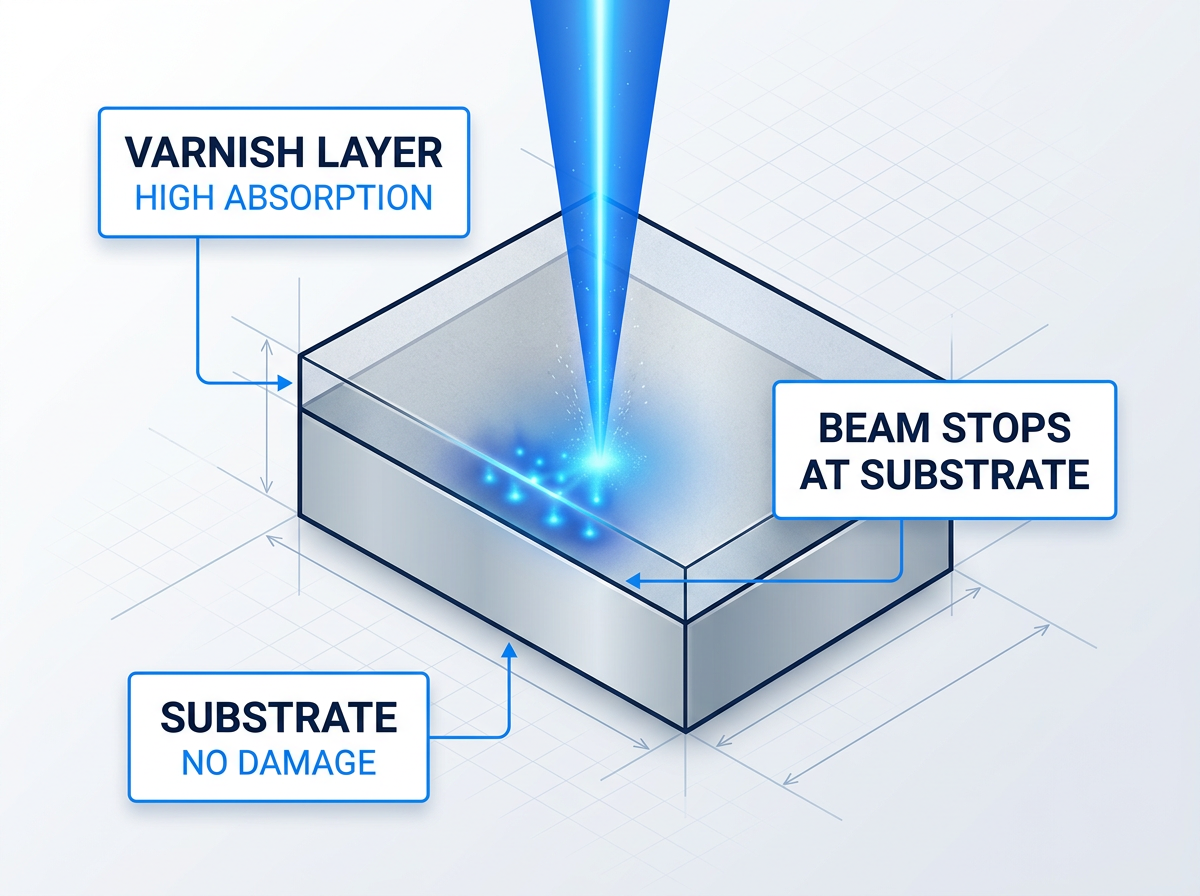
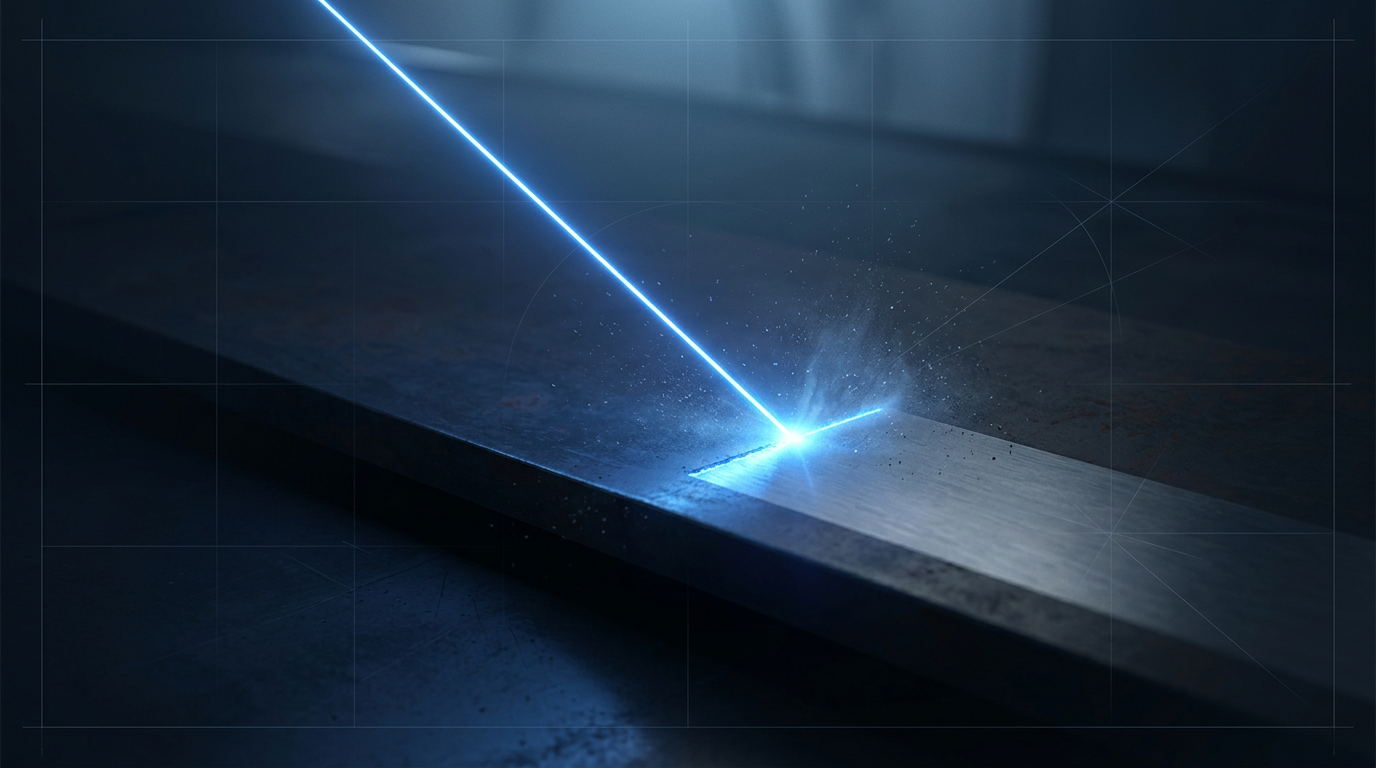
A laser pulse is absorbed by the varnish layer, heating it rapidly until it vaporises and is ejected from the surface. The beam's energy is consumed within the coating itself. Organic varnishes absorb infrared laser energy far more strongly than metal, stone, or masonry substrates — so the ablation process stops naturally at the coating-substrate interface, a consequence of material physics rather than operator precision.
Adjustable power output means the same tool handles thin decorative lacquers and thick multi-layer industrial coatings without switching systems. The substrate is left dimensionally intact: no abrasive thinning, no chemical residue, no rework.
ELASER & ELASER-RHZ: Portable Laser Varnish Removal Tool
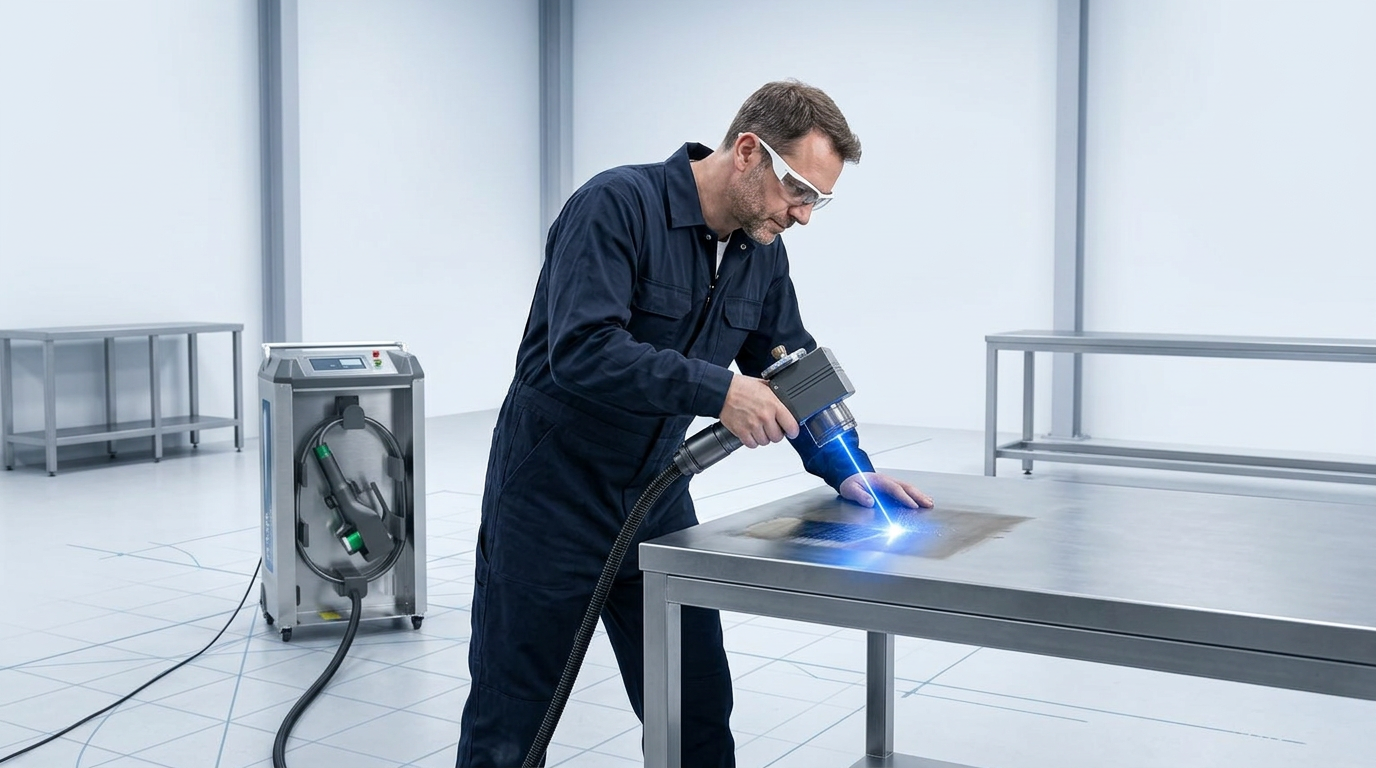
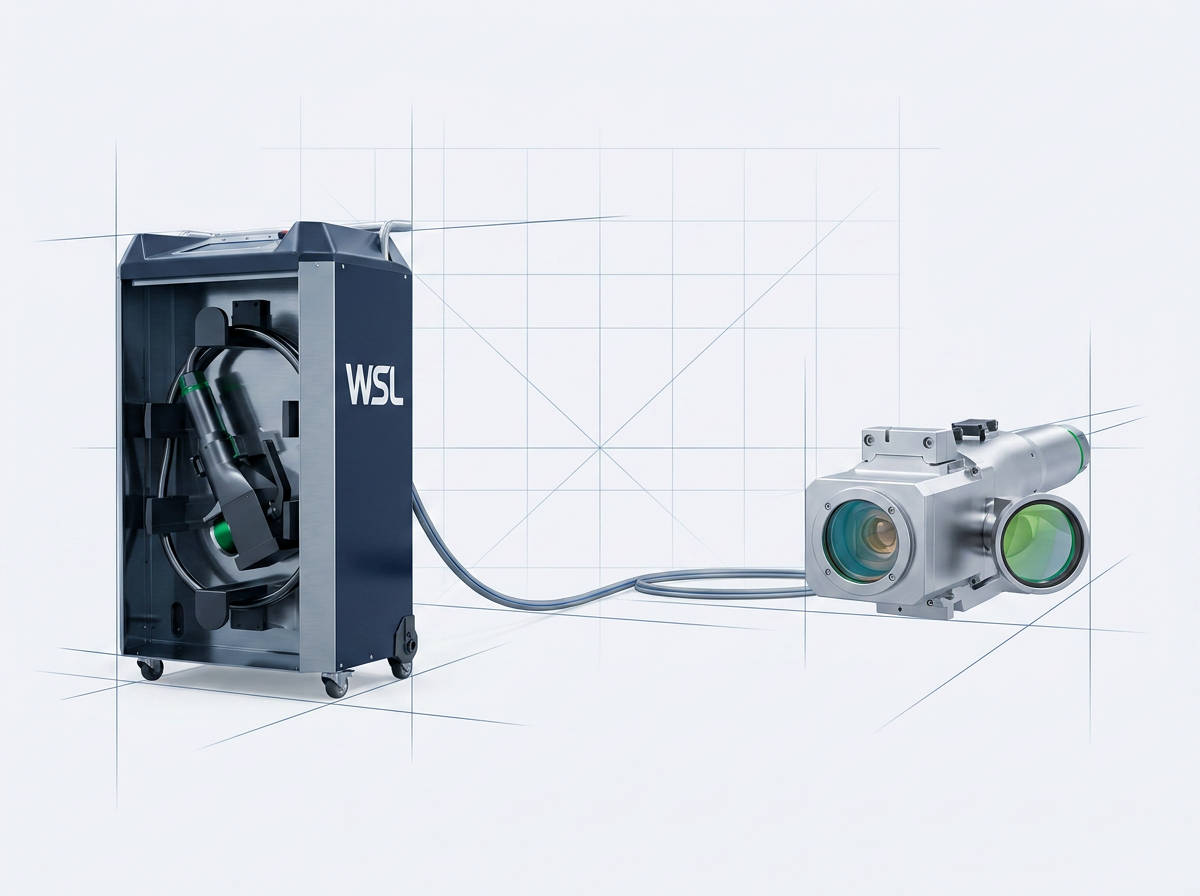
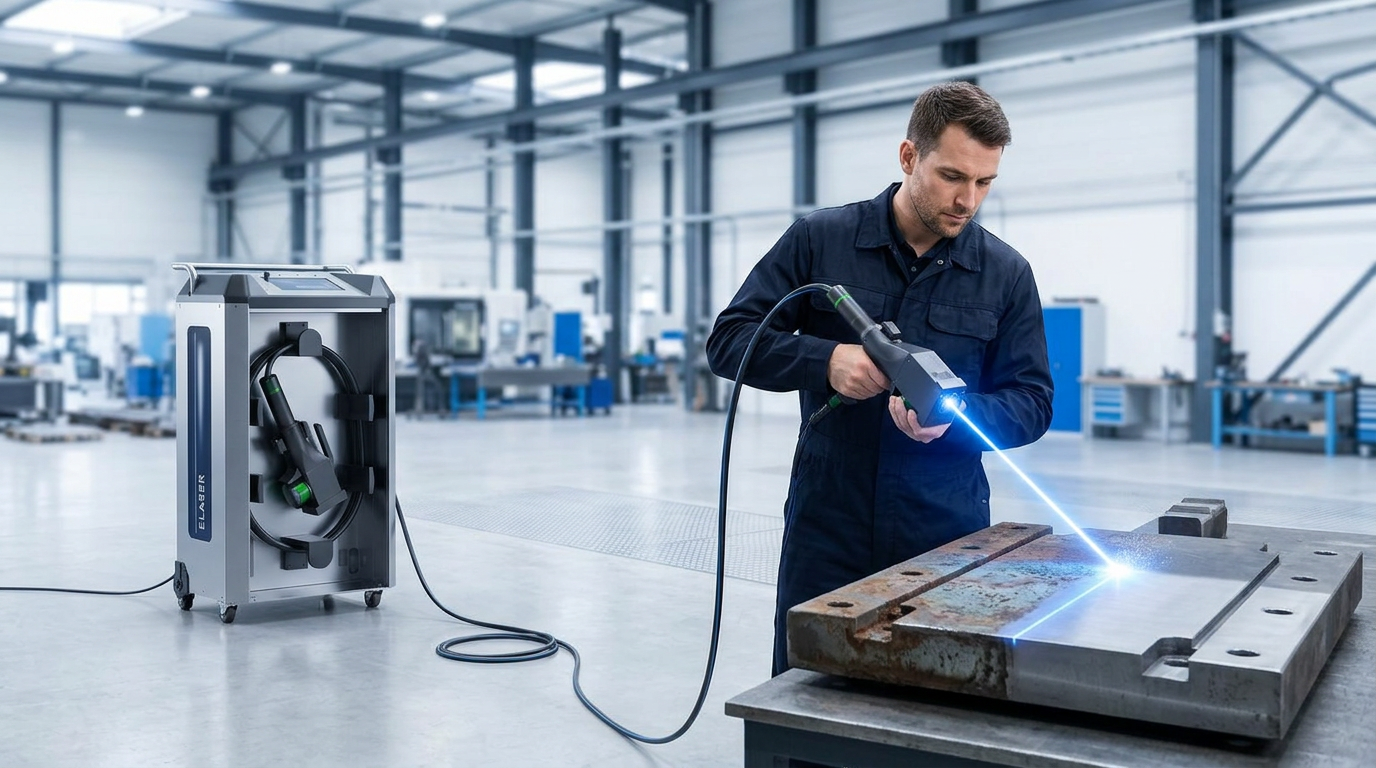
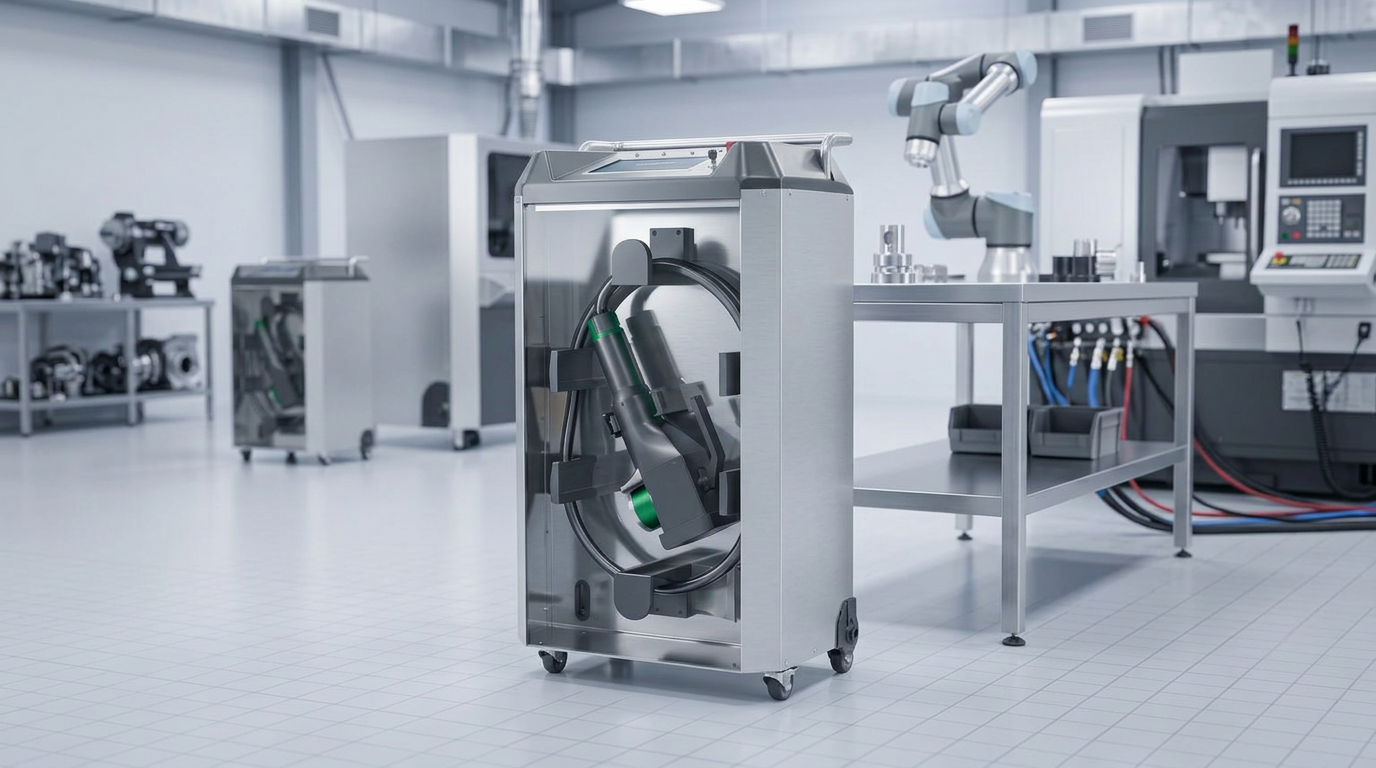
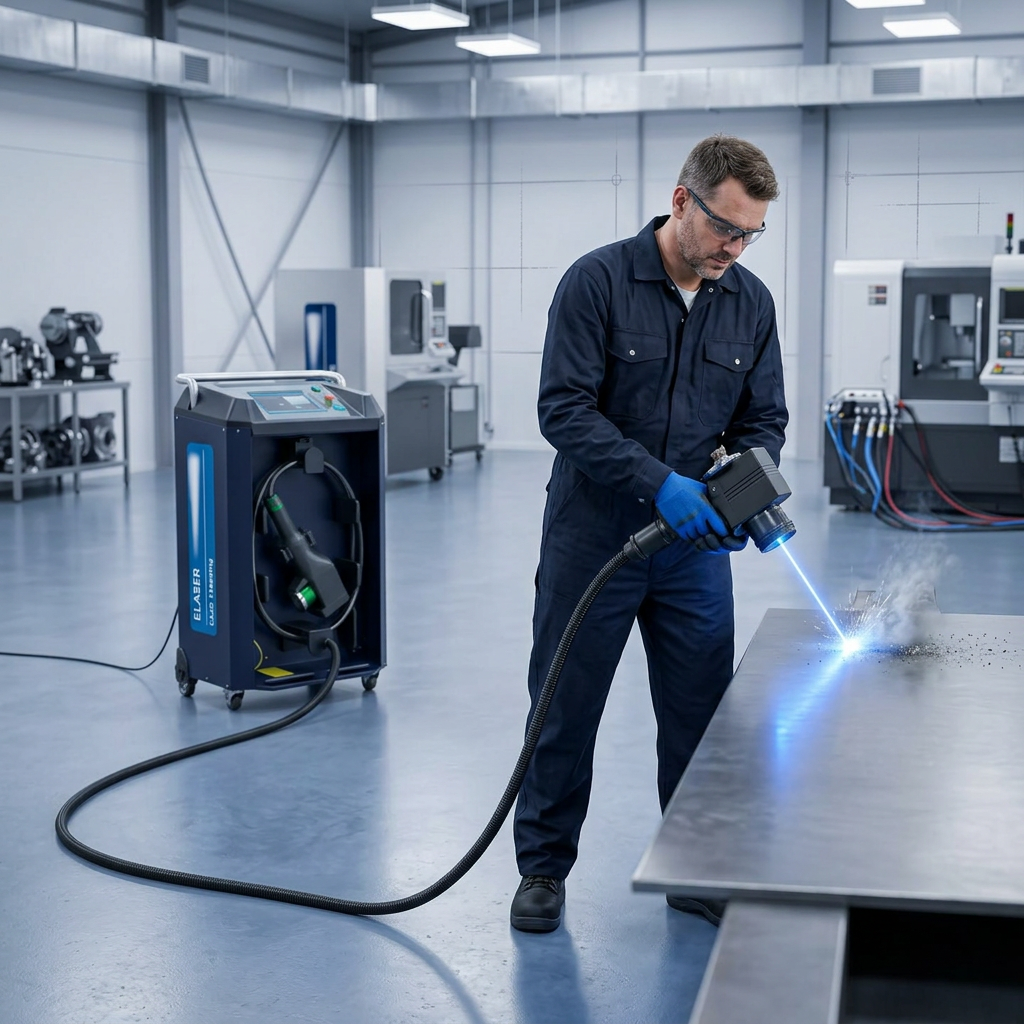
A wheeled unit under 50 kg, a handheld scanner under 3 kg, and up to 50 m of delivery cable — the ELASER deploys on-site with no compressor, no chiller, no consumables. Plug into any standard single-phase supply and work immediately.
The ELASER-RHZ adds WSL's patented, world-first reduced-hazard-zone technology, collapsing the laser hazard zone to a small area around the work. Varnish removal in open workshops and mixed-use facilities — where conventional laser cleaning cannot operate — becomes practical.
Fully tunable 0–100% power (up to 300 W) handles thin lacquers to thick industrial coatings. CE and UKCA certified, with operator training from WSL.
AutoLASE: Automated Laser Varnish Removal for Production Lines
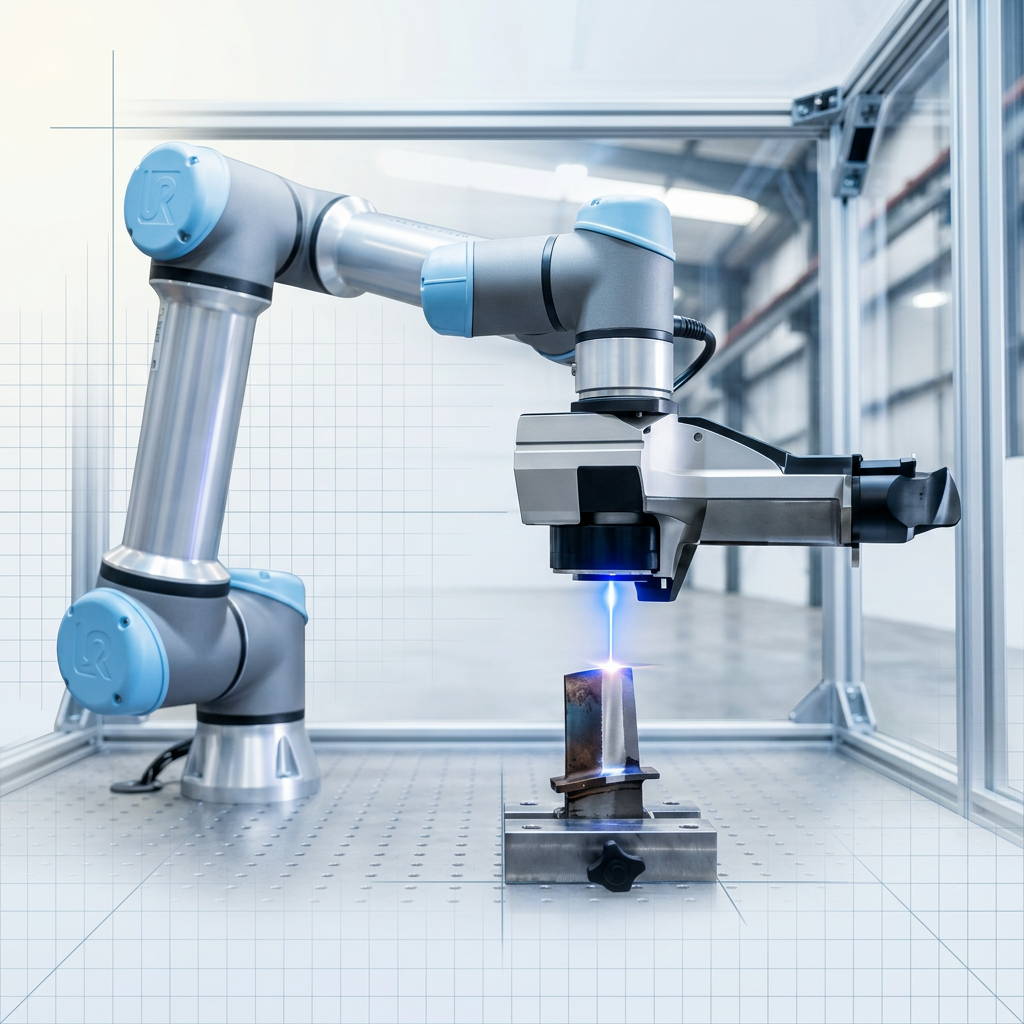
Where ELASER is the portable operator tool, AutoLASE is built for production. Load the part and the integrated 3D machine-vision system scans it, builds a surface map, and generates the cleaning path automatically — no programming, no path-setting, no knowledge of part geometry required. Unlike conventional programmed robotic cells, anyone can run it.
With the optional RHZ upgrade, AutoLASE is the world's only automated laser cleaning system that operates without a safety enclosure. It attaches to your existing robots or is supplied as a complete custom cell. CE and UKCA certified. Contact WSL to discuss your requirements.
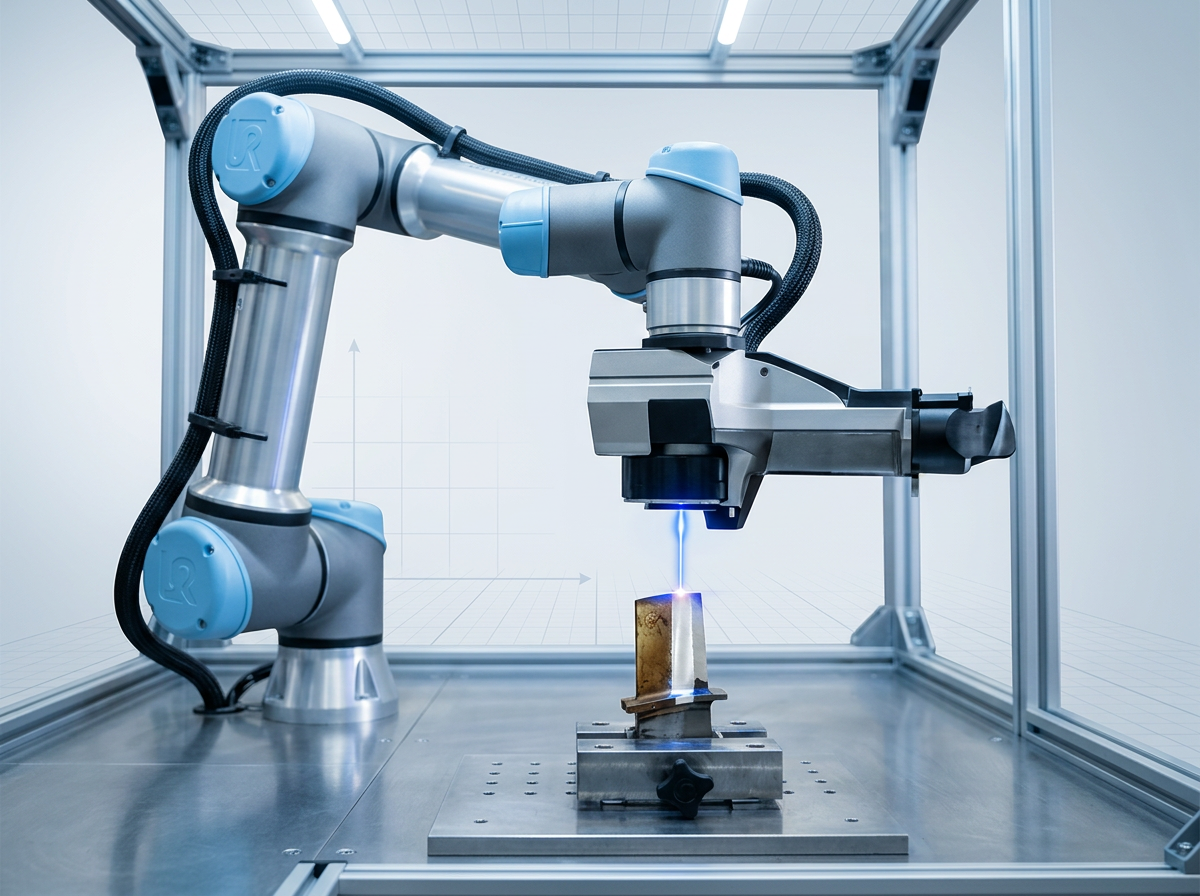
Explore the ELASER and AutoLASE in Detail
Portable operator tool or fully automated production system — both are built on the same proven laser platform. Visit the product page for the system that fits your workflow.
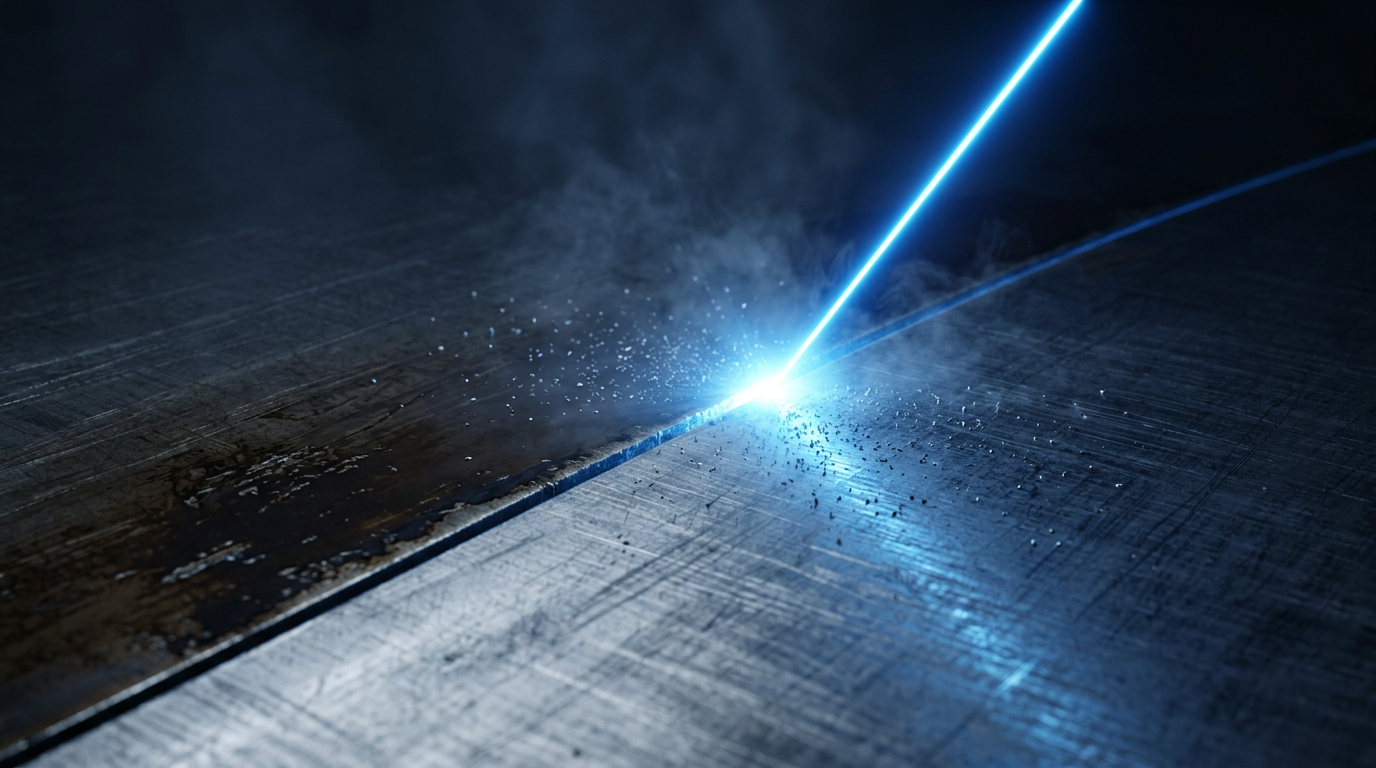
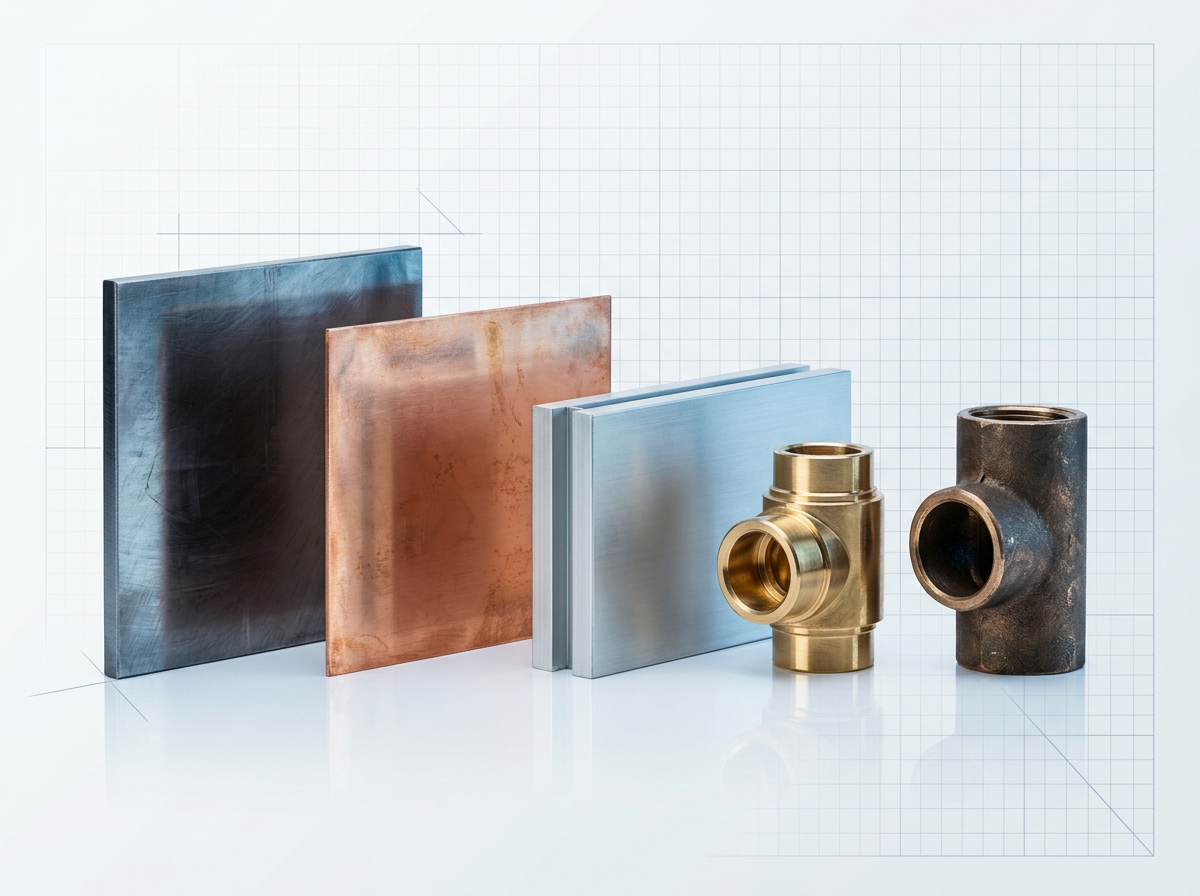
Industrial and Heritage Metals
Both ELASER and AutoLASE handle the full spectrum of industrial and non-ferrous metals: steel, carbon steel, aluminium alloys, cast iron, copper, brass, bronze, titanium, and galvanised steel.
From common structural metals through to heritage and precision alloys, the substrate list covers virtually every material a buyer is likely to bring to a laser varnish removal tool.
Varnish, Lacquer, and More
These systems remove varnish, lacquer, paint, powder coating, primer, adhesives and residues, and tarnish — thin decorative layers through to thick industrial coatings, all on a single system.
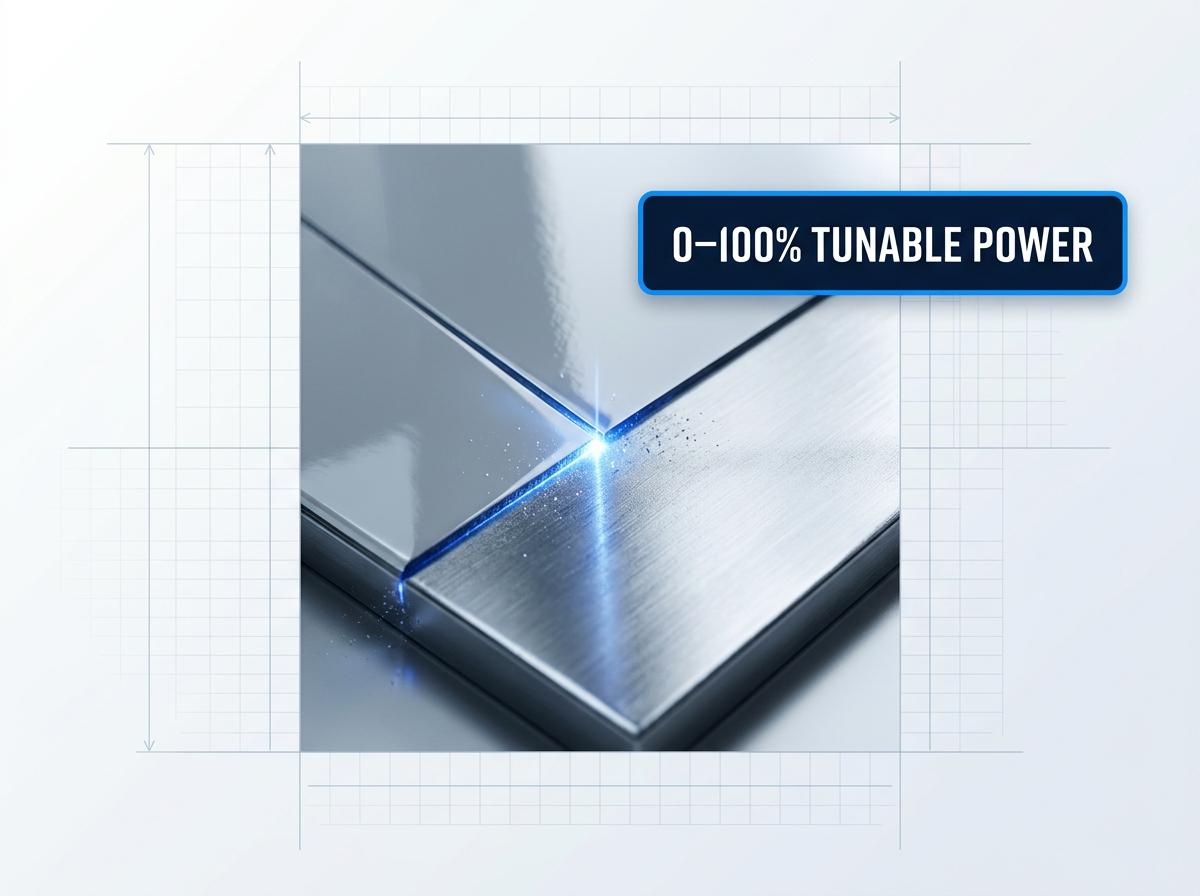
With power tunable from 0–100%, the beam adapts to each coating's absorption characteristics. No tool change, no reconfiguration — one laser varnish removal tool covers the full range.
Stone, Brick, and Masonry
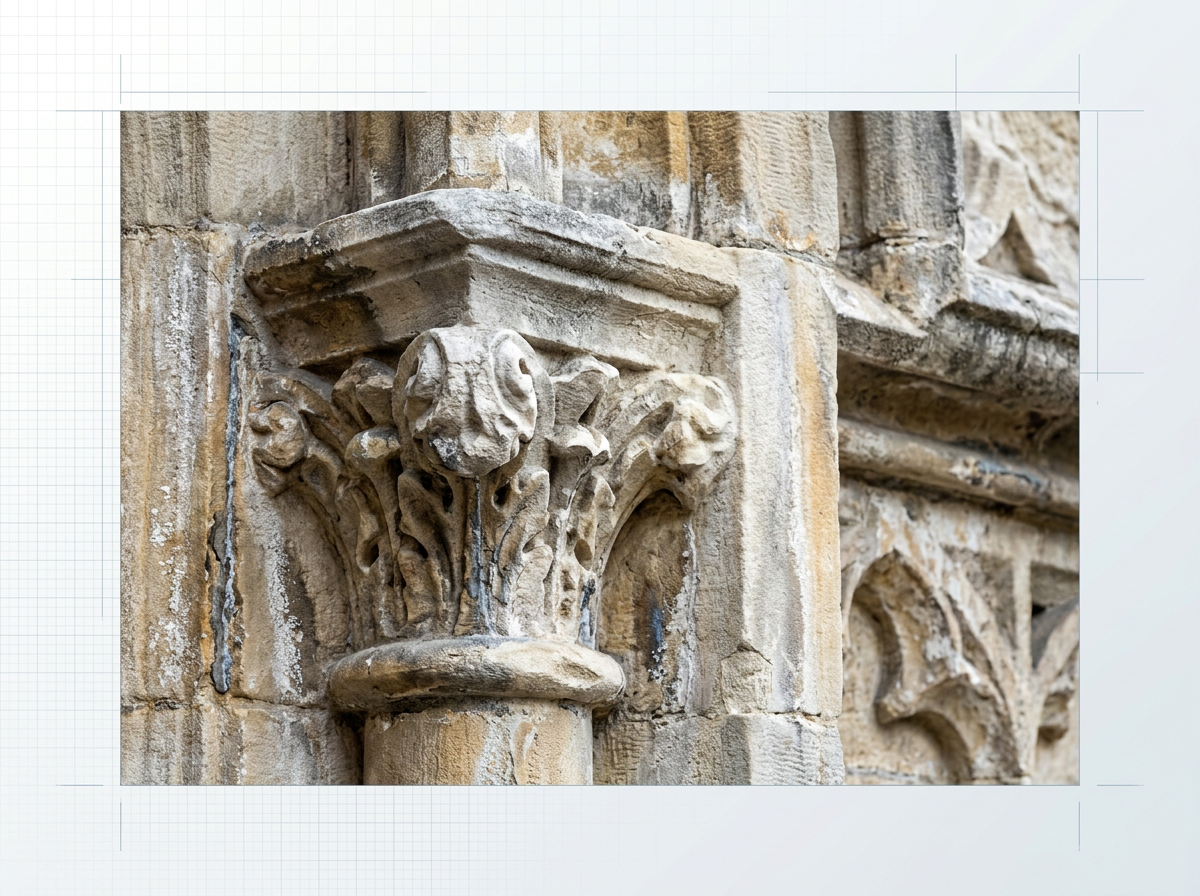
ELASER and AutoLASE clean stone, concrete, brick, and masonry with the same selective ablation principle applied to metals: the beam lifts the coating or soiling without attacking the underlying surface.
For heritage conservators and restoration contractors working on sensitive original stonework, listed buildings, or monuments, this means varnish and soiling removal that respects the substrate beneath.
Why the Beam Stops Here
Substrate compatibility is not a setting — it is a consequence of physics. Varnishes and coatings absorb infrared laser energy far more strongly than the base material beneath them. The beam's energy is consumed by the coating; the substrate does not absorb enough to be affected.
This differential absorption is why the same system moves from steel to aluminium to stone without reconfiguration and without substrate damage — confirmed across peer-reviewed laser ablation literature.
Power & Pulse Specifications
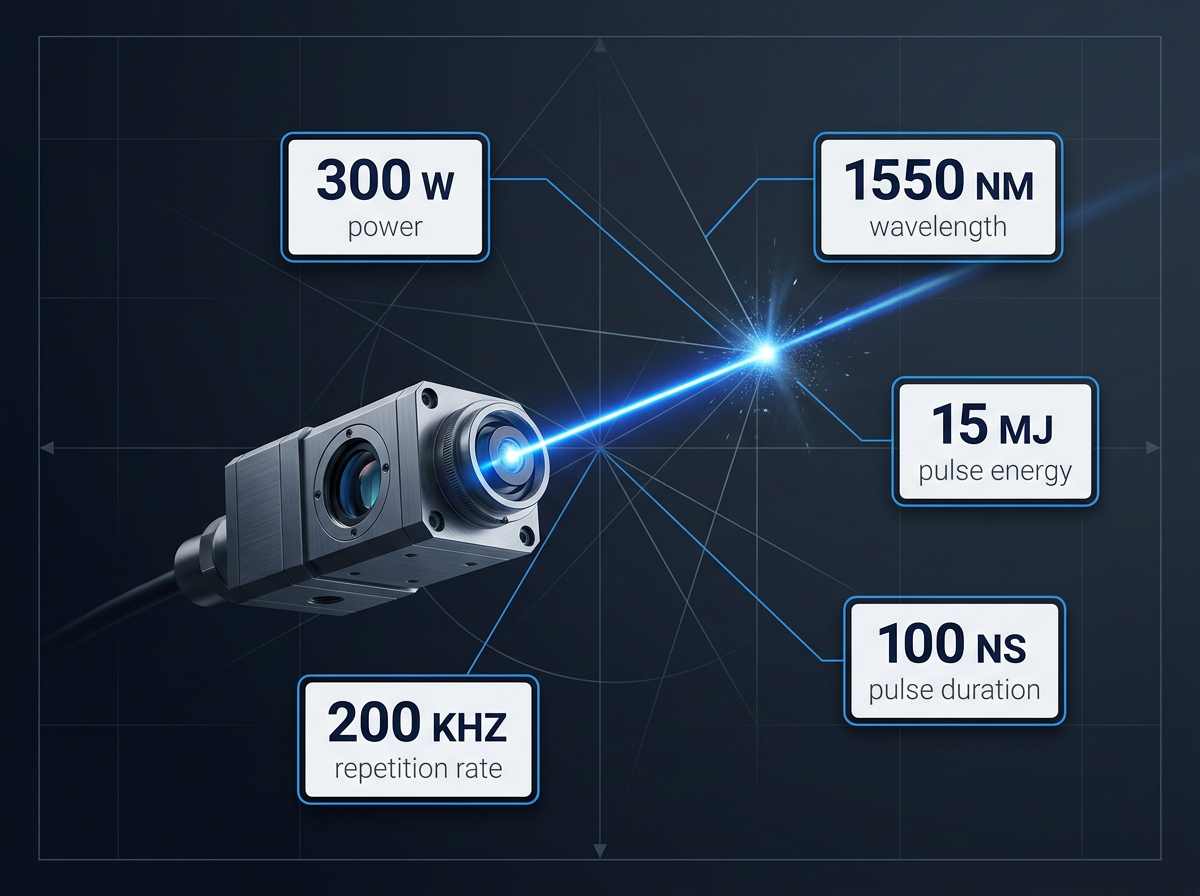
Max power: up to 300 W. Wavelength: 1550 nm (retina-safe / reduced hazard zone). Power tunability: 0–100%.
Pulse energy: up to 15 mJ. Pulse duration: 100 ns. Pulse repetition rate: adjustable up to 200 kHz (CW). Specifications are identical across both ELASER/ELASER-RHZ and AutoLASE systems.
Scanner & Lens Specifications
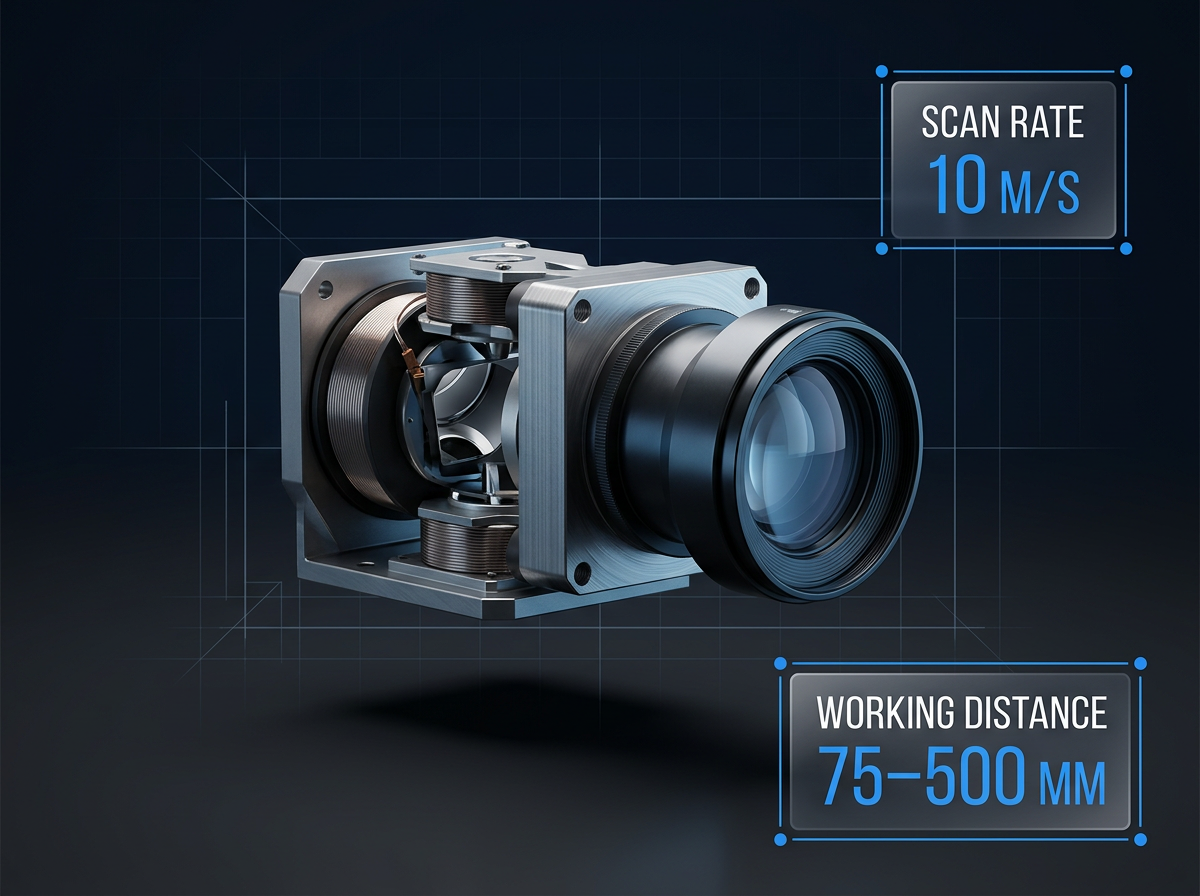
Scanner: 2-D galvanometer, 10 m/s max scan rate. F-Theta lenses: interchangeable, 75–500 mm working distance. Scan shapes: fully programmable through GUI. Lens-protection windows: included and replaceable. Applies to both ELASER/ELASER-RHZ and AutoLASE.
Weight, Cable & Interface
System weight: under 50 kg (wheeled). Handheld scanner: under 3 kg. Delivery cable: up to 50 m (5 m / 15 m standard). Interface: Ethernet + touchscreen. These portability specifications apply to the ELASER and ELASER-RHZ systems.
Power Supply & Cooling
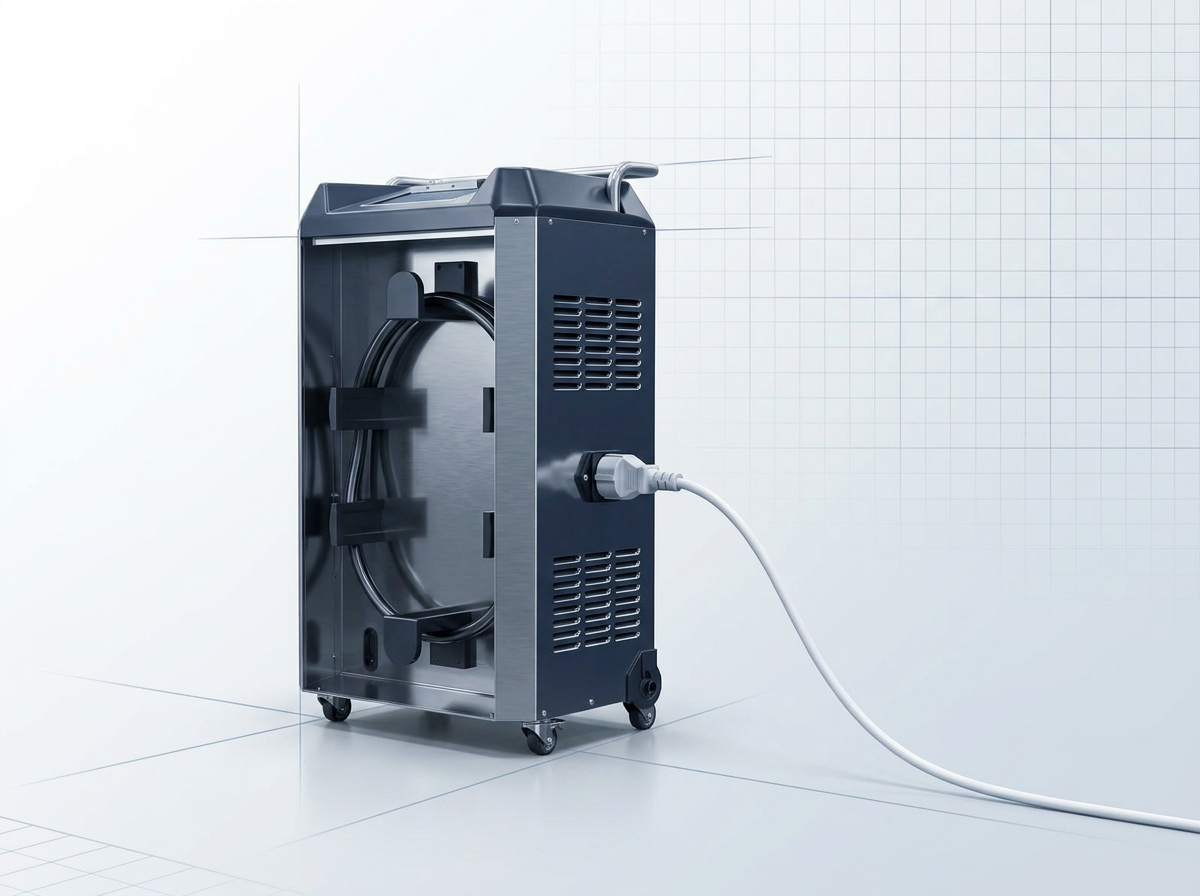
Power supply: 110–250 VAC single-phase. Power consumption: under 2000 W. Cooling: air-cooled. No chiller, no water circuit, no compressor, no consumables required. Applies to both ELASER/ELASER-RHZ and AutoLASE systems.
Safety Class & Certifications
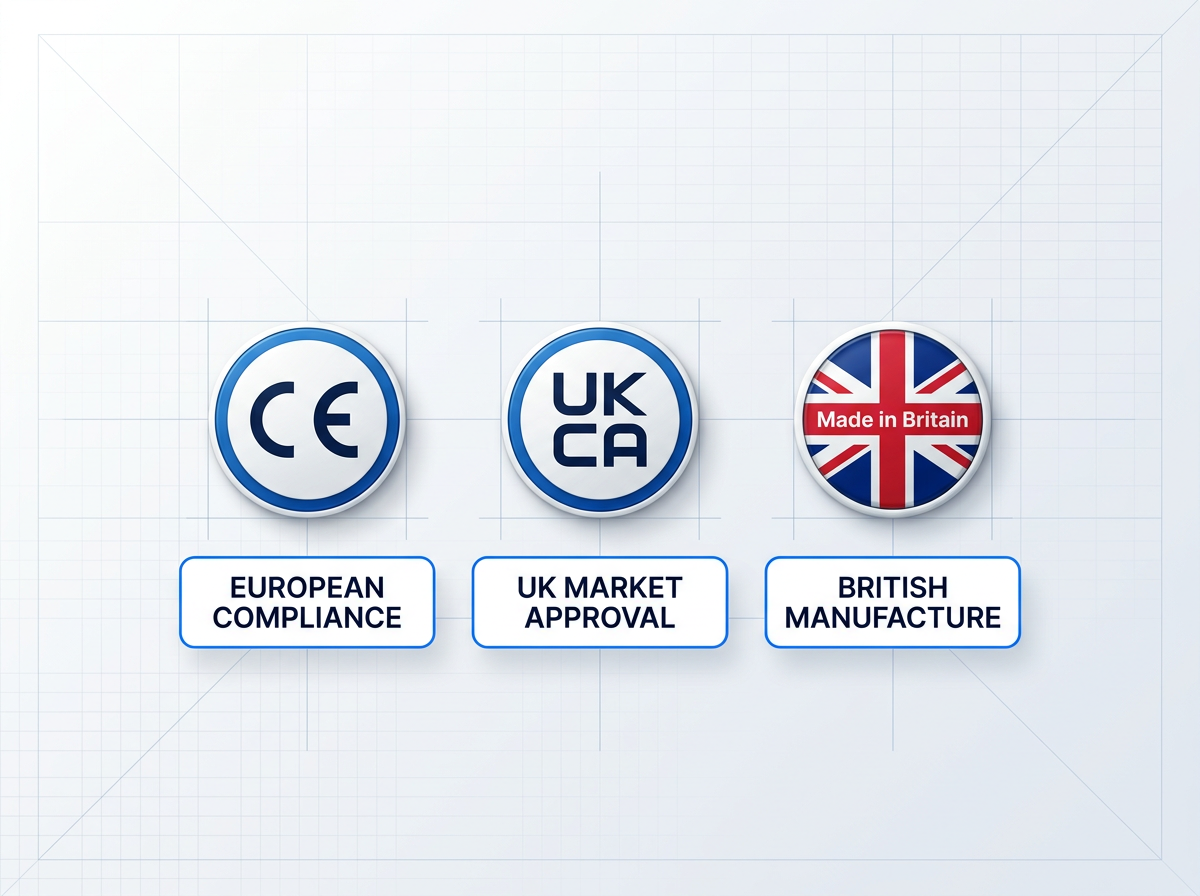
Laser class: Class IV (standard) or Class I (ELASER-RHZ variant). Certifications: CE and UKCA — both systems. Manufacture: Made in Britain. Applies to both ELASER/ELASER-RHZ and AutoLASE.
No Chemical Waste Stream
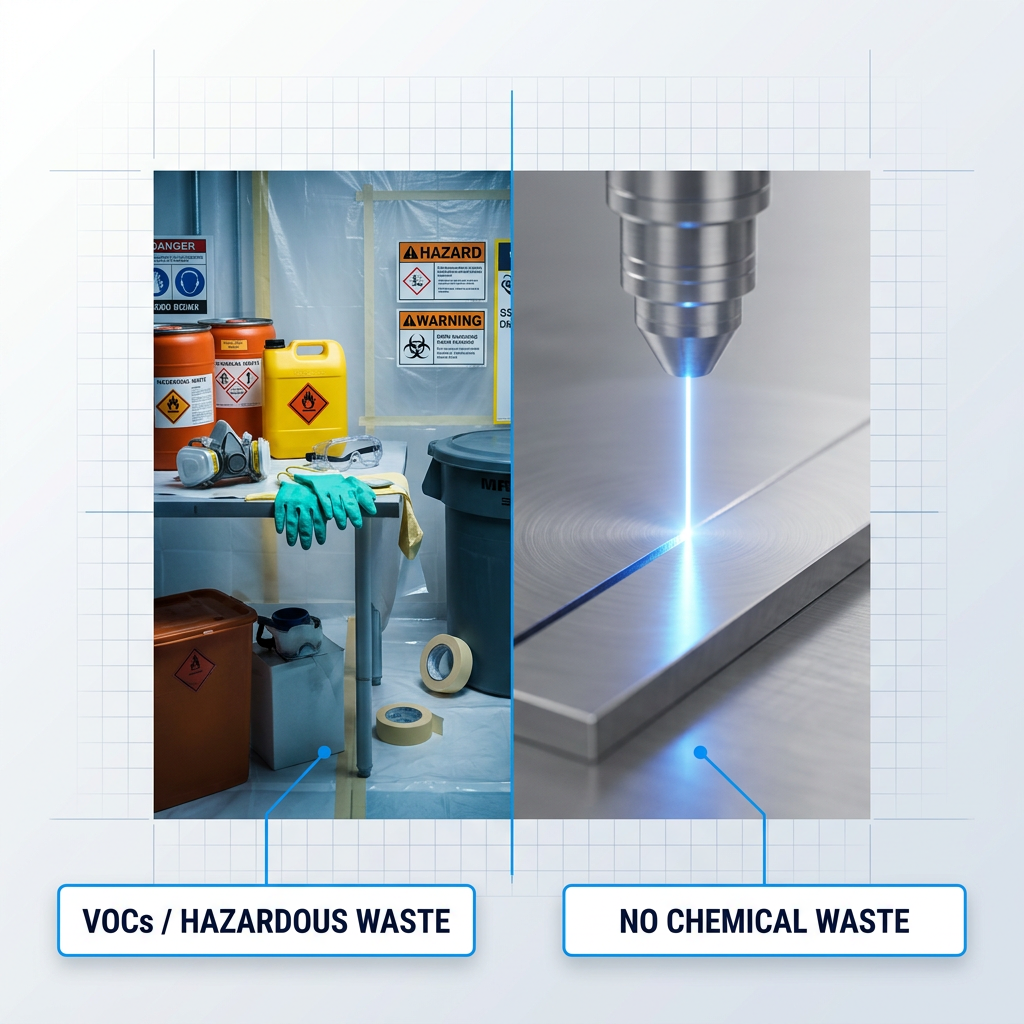
Chemical strippers commonly contain methylene chloride (MeCl) — regulated as a hazardous air pollutant under the Clean Air Act, managed as hazardous waste under RCRA, and subject to strict OSHA exposure limits. Operations using significant quantities must maintain written minimisation plans and compliance records. COSHH obligations apply in the UK.
Solvents in chemical paint strippers release volatile organic compounds (VOCs) and toxic air pollutants. Workers require respiratory protection, specialist gloves, and face protection throughout.
Laser cleaning uses light alone. It generates no chemical waste stream, no solvent sludge, and no associated disposal or regulatory reporting obligations.
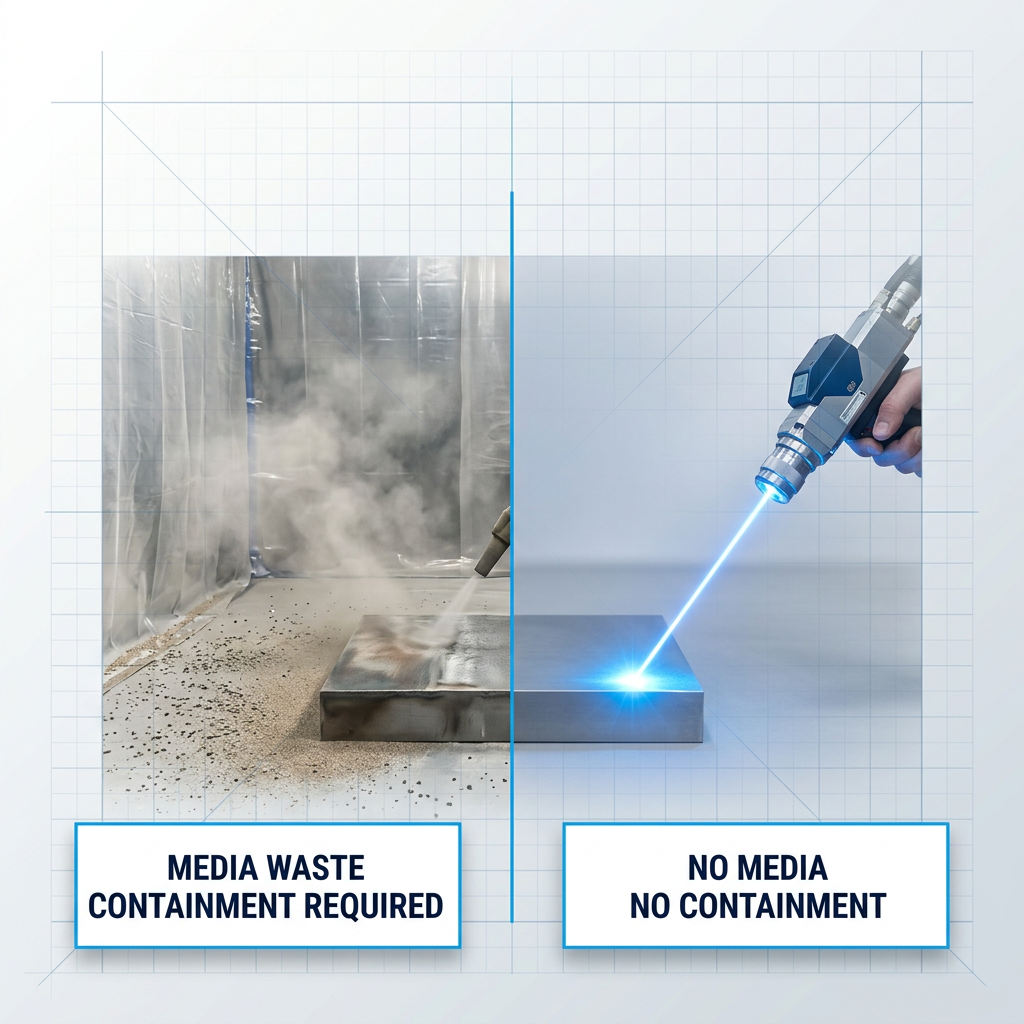
Media Waste, Dust, and Containment
Abrasive blasting removes coating by forcing media against the surface at high velocity. This generates large volumes of abrasive waste — contaminated with the stripped material — subject to environmental regulation and disposal costs. It also produces dust requiring containment infrastructure, PPE, and post-process cleanup.
Laser ablation is non-contact and non-kinetic. No media is consumed, no containment zone is needed, and no post-blast cleanup is required. The ELASER-RHZ reduces the laser hazard zone further still, shrinking safety overhead compared to conventional laser cleaning and enabling use in open workshops without sealing off the area.
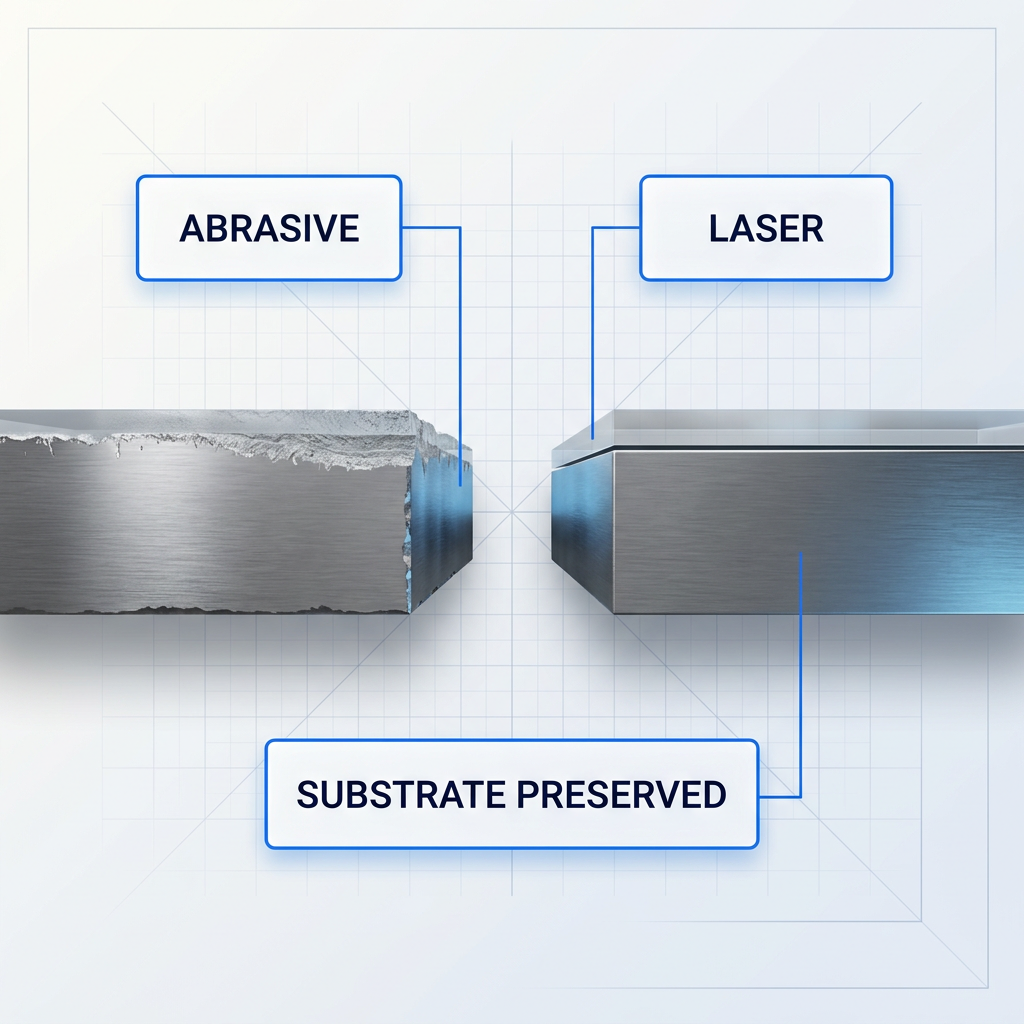
Geometry Preserved, Less Rework
Abrasive methods remove material from the substrate surface as well as the coating. Repeated cleaning cycles thin and roughen the base material, compromising geometry and surface finish — a significant concern in aerospace, precision tooling, and heritage applications.
Laser ablation stops at the coating-substrate interface. The beam's energy is absorbed by the coating; the substrate beneath experiences only minimal temperature increase. Geometry and surface integrity are preserved, and parts cleaned by laser require less post-cleaning remediation than those processed by abrasive methods.
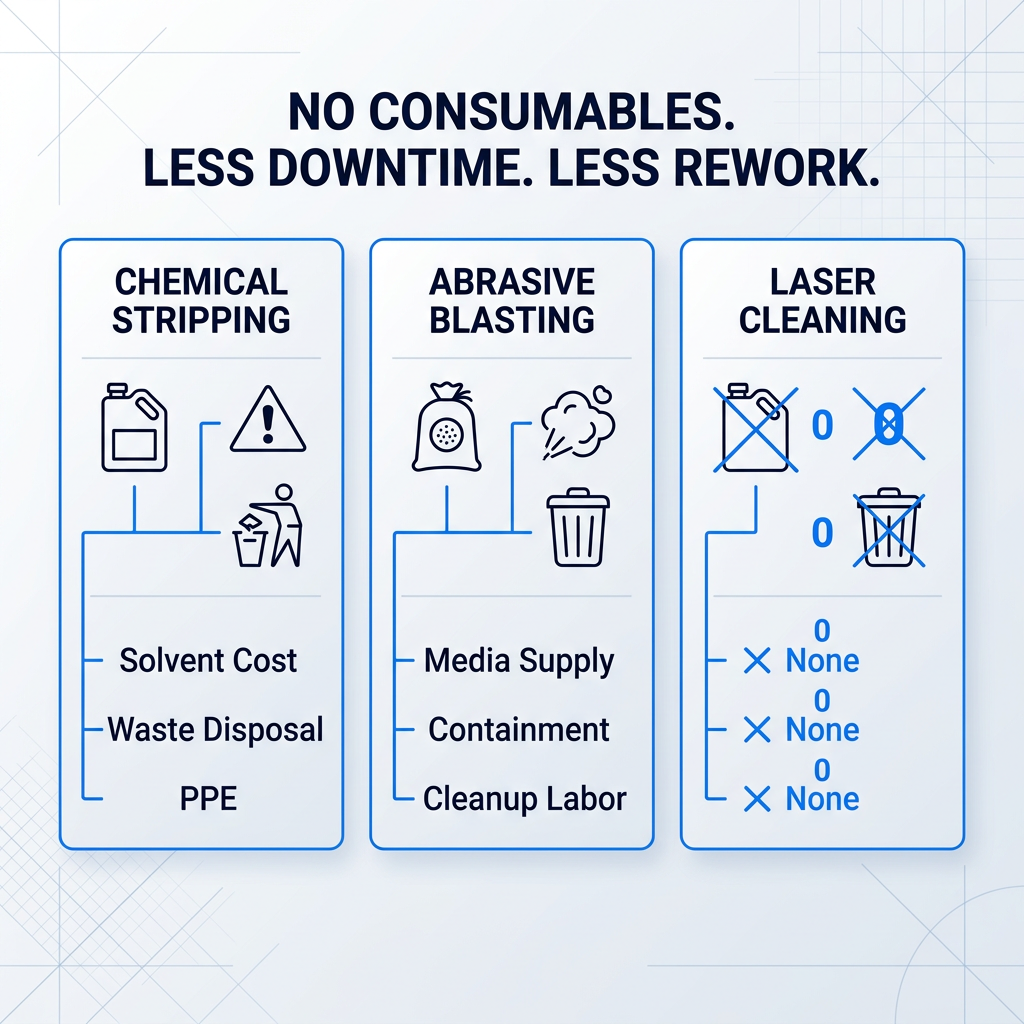
No Consumables, Less Downtime
Chemical stripping carries ongoing costs: solvent procurement, hazardous waste disposal contracts, compliance record-keeping, and PPE. Abrasive blasting requires continuous media supply, containment setup, and waste disposal. Both methods generate rework costs when substrate damage occurs.
Laser cleaning has no consumables — no media, no chemicals, no disposal contracts. Setup and cleanup are faster, reducing downtime per job. Lower substrate damage means less rework. The TCO advantage compounds with volume: the more frequently a facility cleans, the stronger the running-cost case for laser.
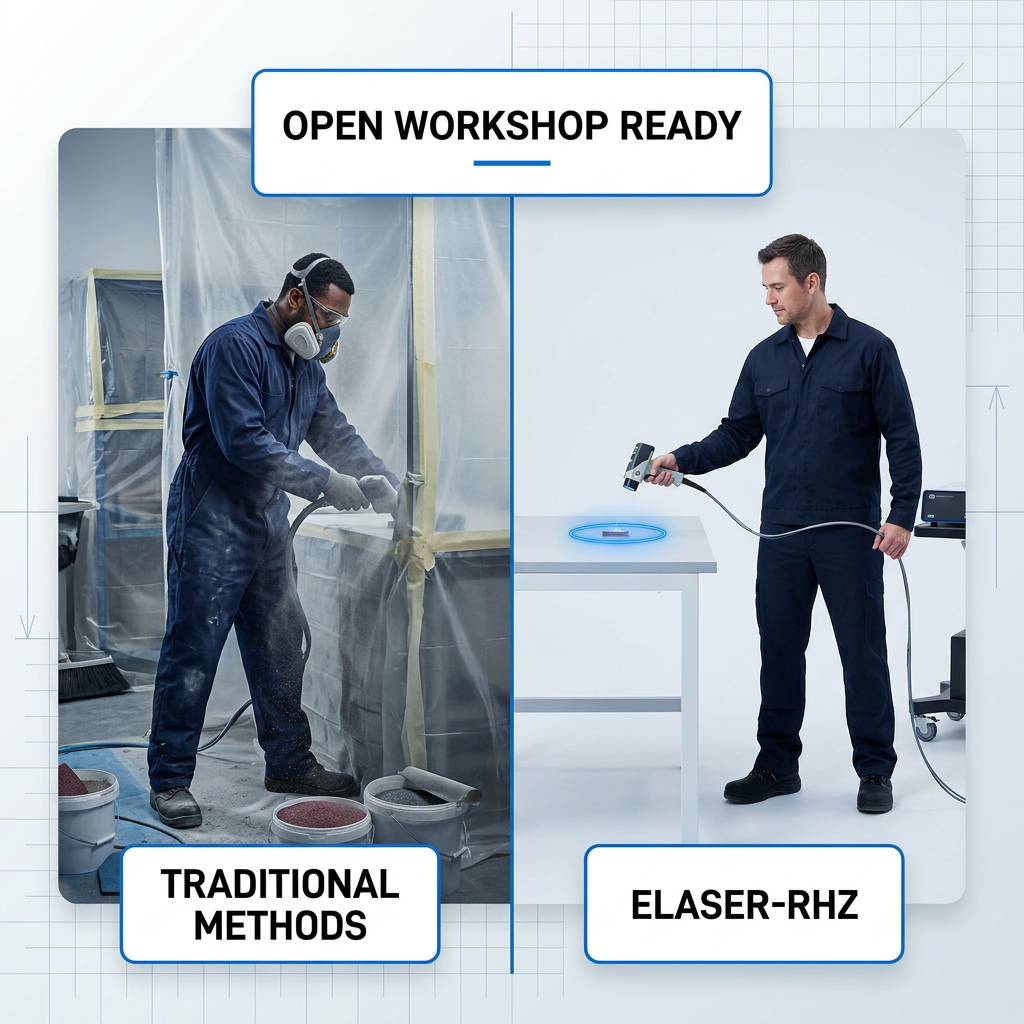
No Masking, No Containment, No Cleanup
Chemical stripping and abrasive blasting both demand significant preparation: masking adjacent areas, erecting containment, donning PPE, preparing media or chemical baths, and clearing up afterwards. Each step adds time before and after the cleaning work itself.
Laser cleaning requires none of this. There is no masking, no containment setup, no media to clear. The ELASER-RHZ goes further: its patented reduced hazard zone technology confines the laser hazard to a small area around the work, enabling varnish removal in open workshops and mixed-use facilities without sealing off the area — a world-first capability unavailable from any other system.
Why Buy from Woodrow Scientific
The manufacturer behind your laser varnish removal tool matters. WSL designs, builds, and supports every machine in-house — giving buyers genuine engineering expertise and long-term support.
200+ Years of Combined Engineering Experience
The WSL team brings over 200 years of combined engineering experience — built and supported by engineers, not a sales team reselling imported hardware.
World-First Patented Eye-Safe Laser Cleaning
WSL's patented RHZ technology is the world's first and only eye-safe laser cleaning system — an exclusive, globally unique capability no other manufacturer holds.
European Cost Leader Among Comparable Machines
WSL is the European cost leader for comparable industrial laser cleaning machines — competitive pricing achieved through in-house engineering efficiency, not quality compromise.
CE Certified, UKCA Certified, Made in Britain
Both ELASER/ELASER-RHZ and AutoLASE carry CE and UKCA certification and are manufactured in Britain — verifiable compliance credentials for procurement and safety teams.
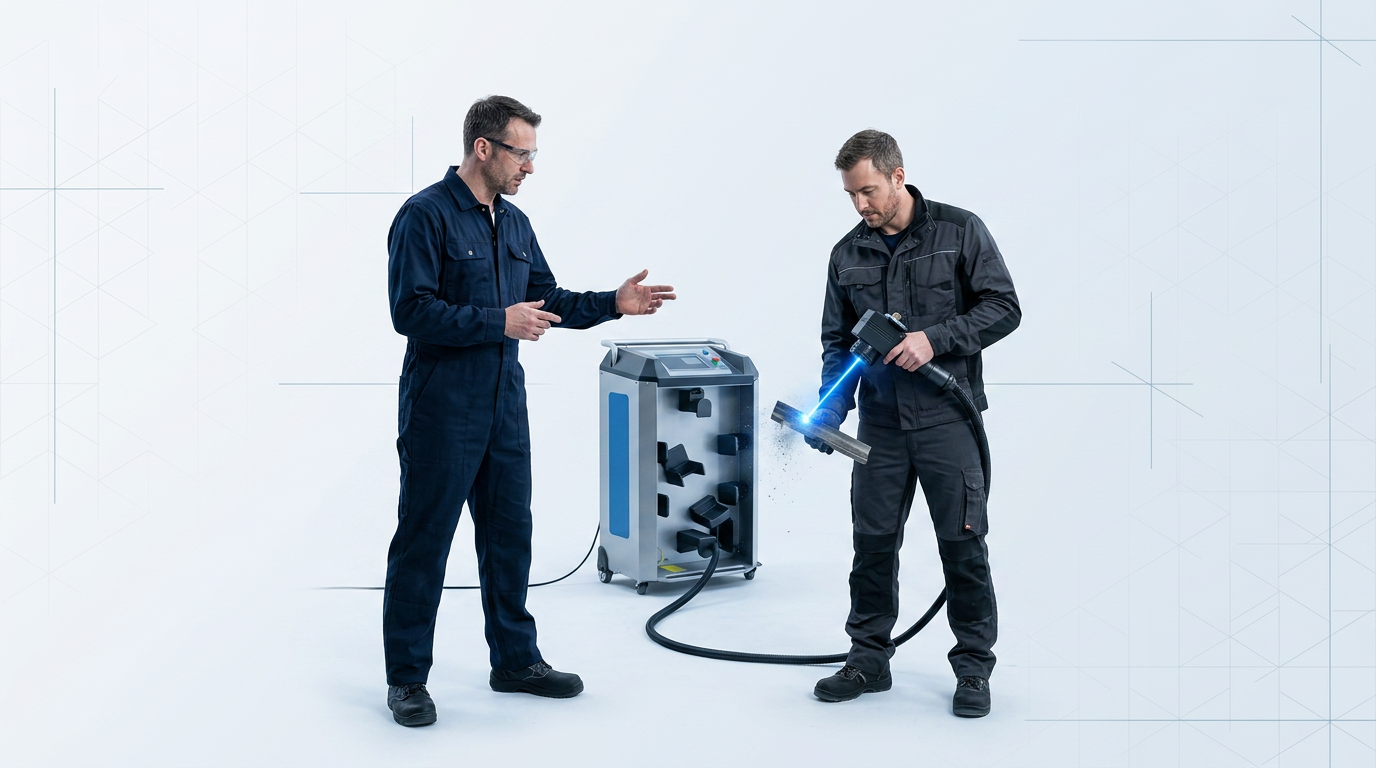
Full Operator Training from WSL
WSL provides first-class laser cleaning safety and operation training for both ELASER and AutoLASE operators — practical support to deploy your system confidently and compliantly.
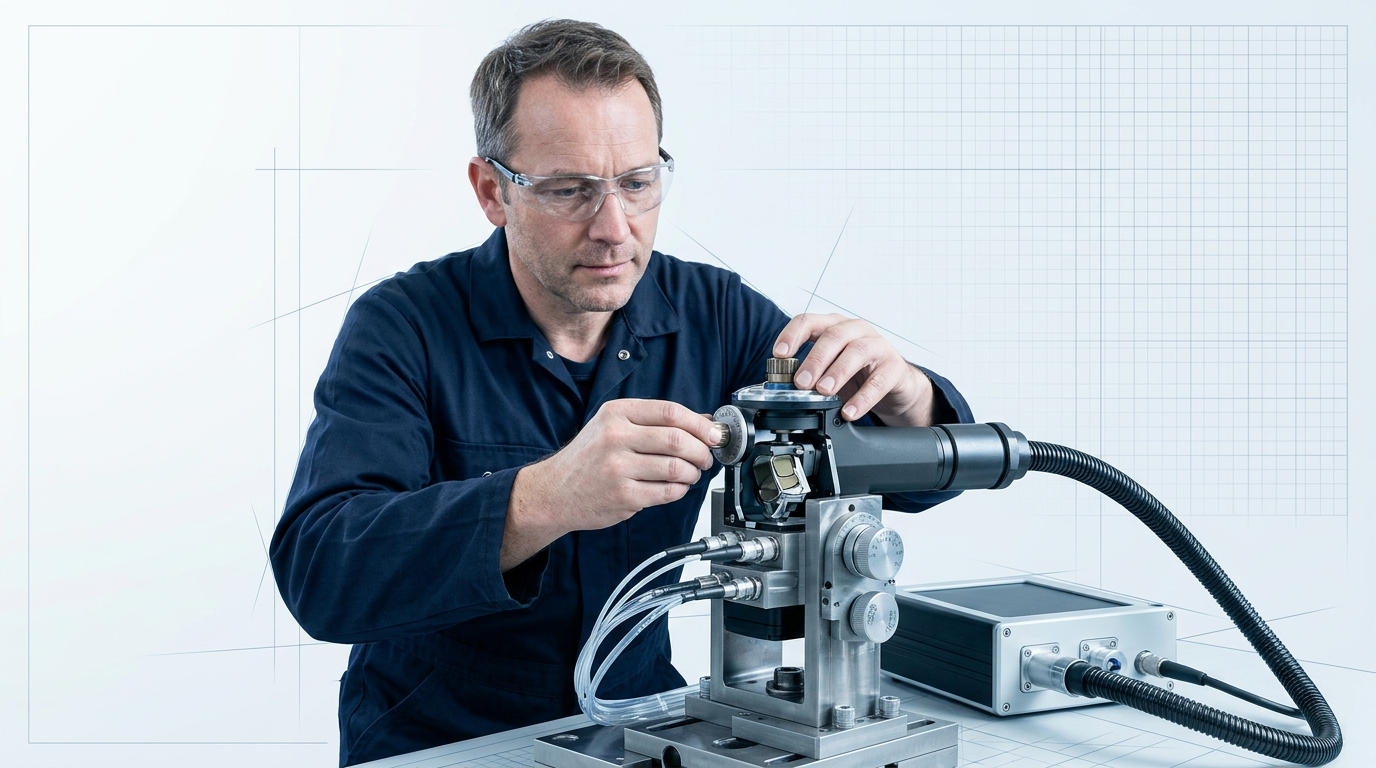
Bespoke Engineering for Specific Requirements
WSL offers bespoke engineering and customisation capability. If your varnish removal application has specific requirements, get in touch to discuss what is possible.
Laser Varnish Removal Across Industries
From bodyshops to aerospace facilities, these systems are deployed wherever varnish and coating removal demands precision. The application changes; the laser varnish removal tool stays the same.
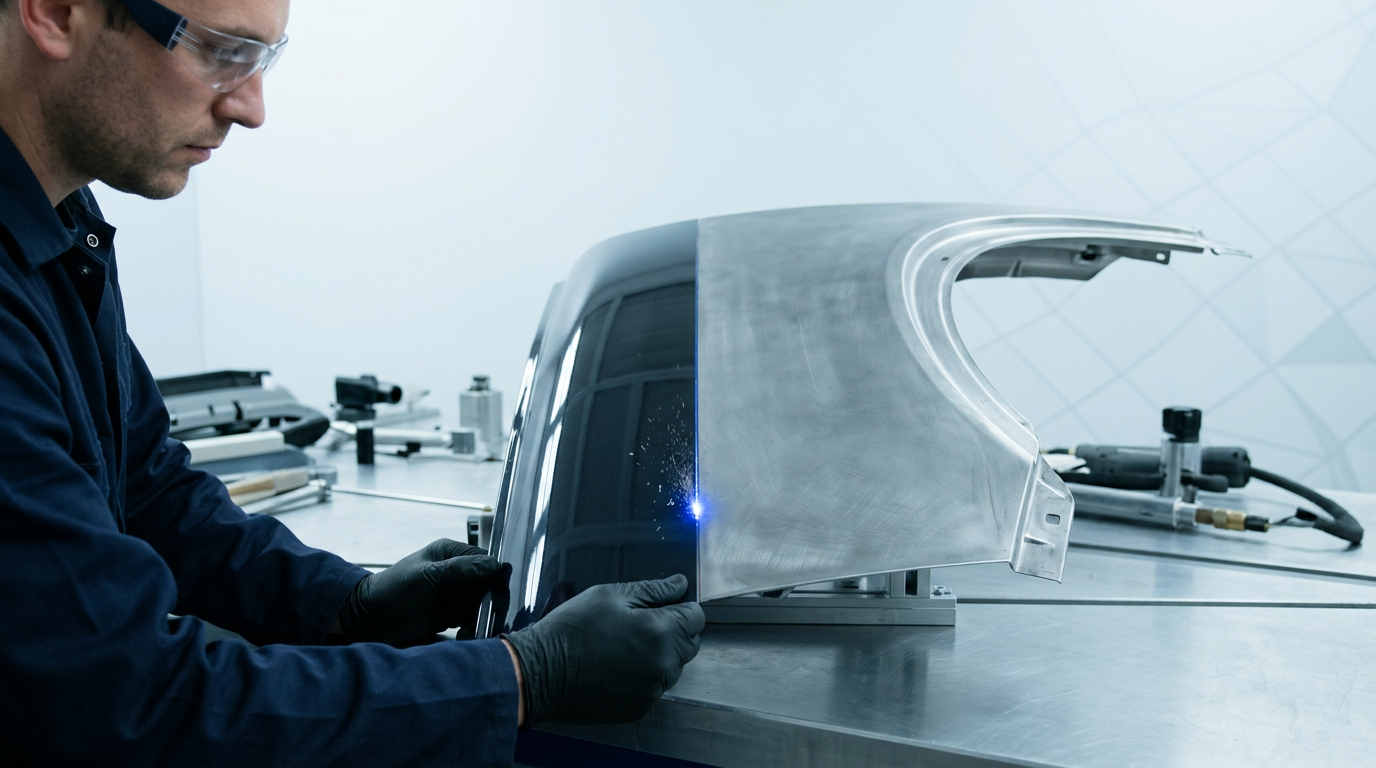
Automotive Paint and Varnish Removal
Removes paint and varnish from body panels for surface prep and bodyshop refinishing work.
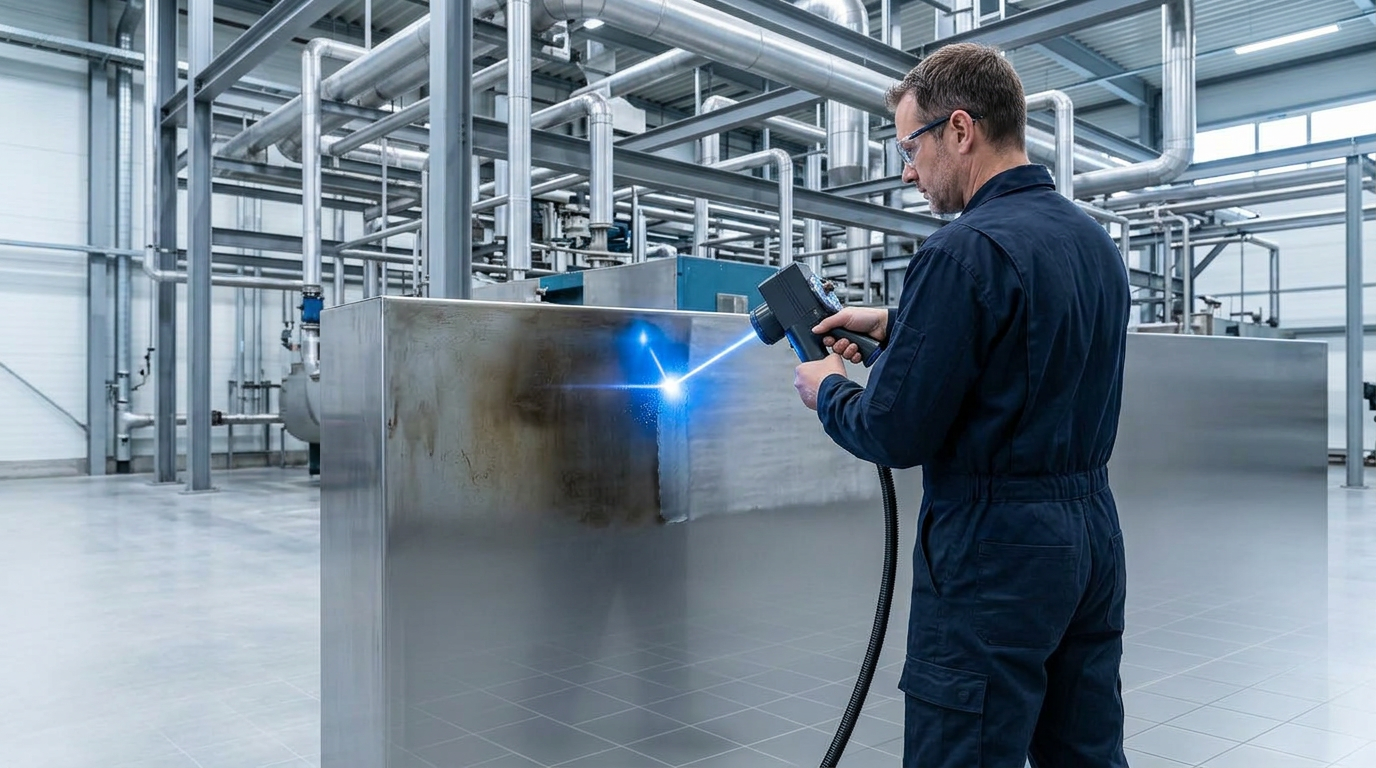
Industrial Maintenance: On-Site Varnish Stripping
Strips varnish and lacquer from plant and equipment in place, without masking or disassembly.
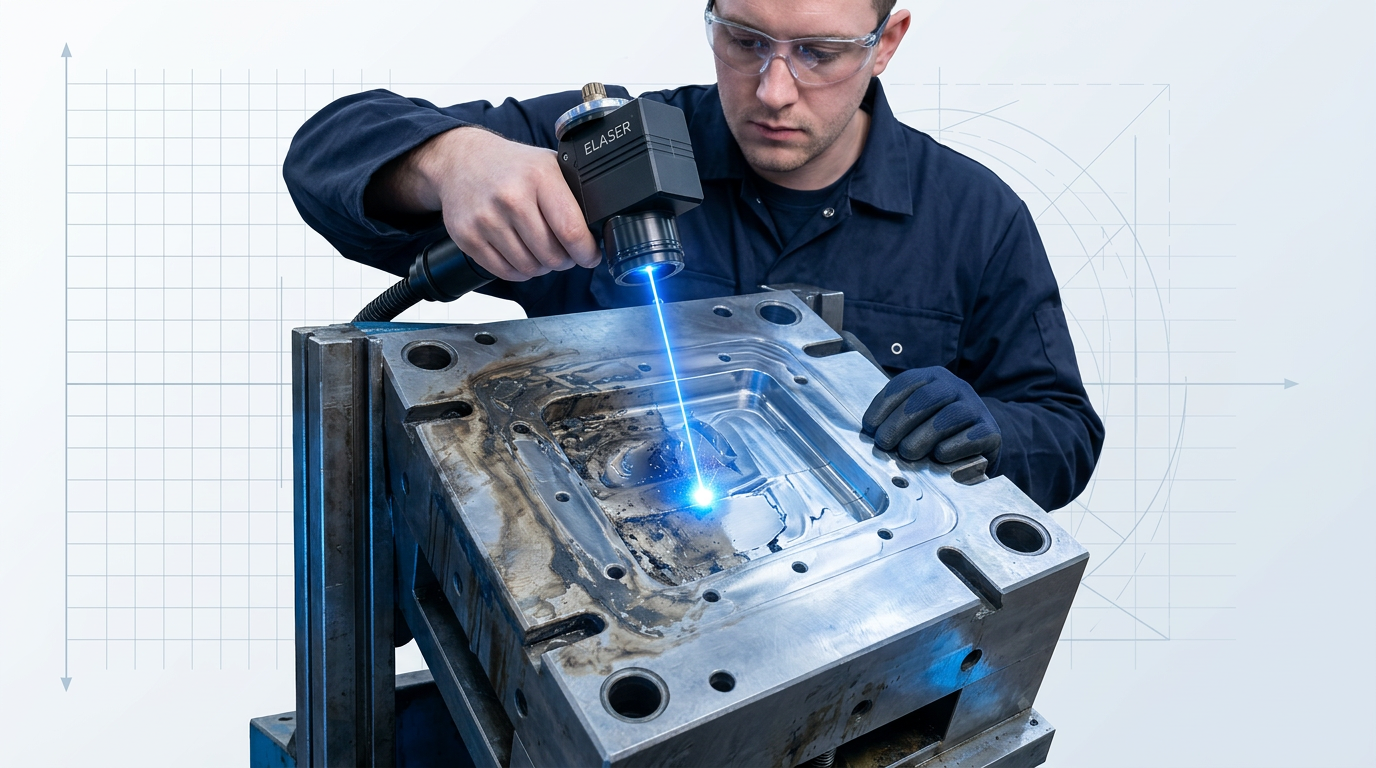
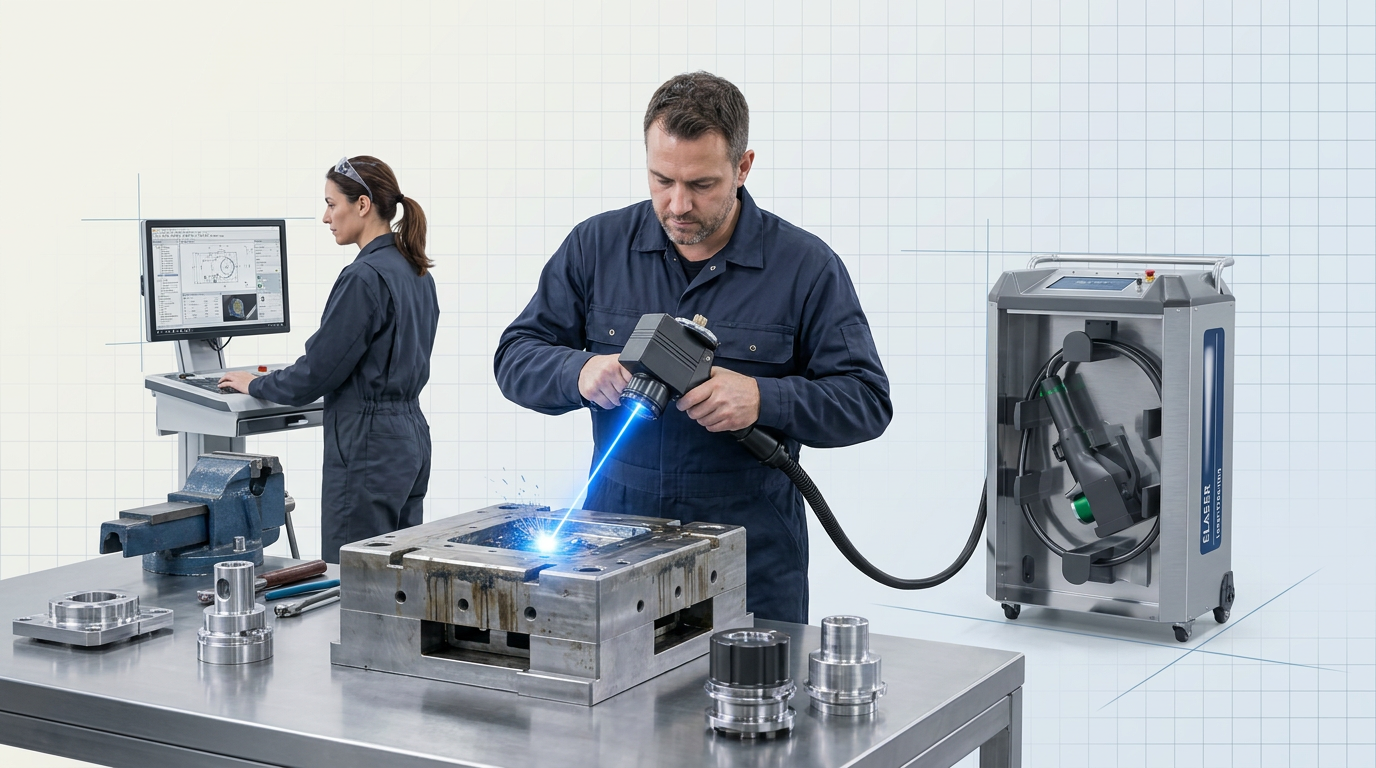
Injection Moulding and Tooling Cleaning
Removes release agents and residue from mould cavities in place, preserving tooling precision.
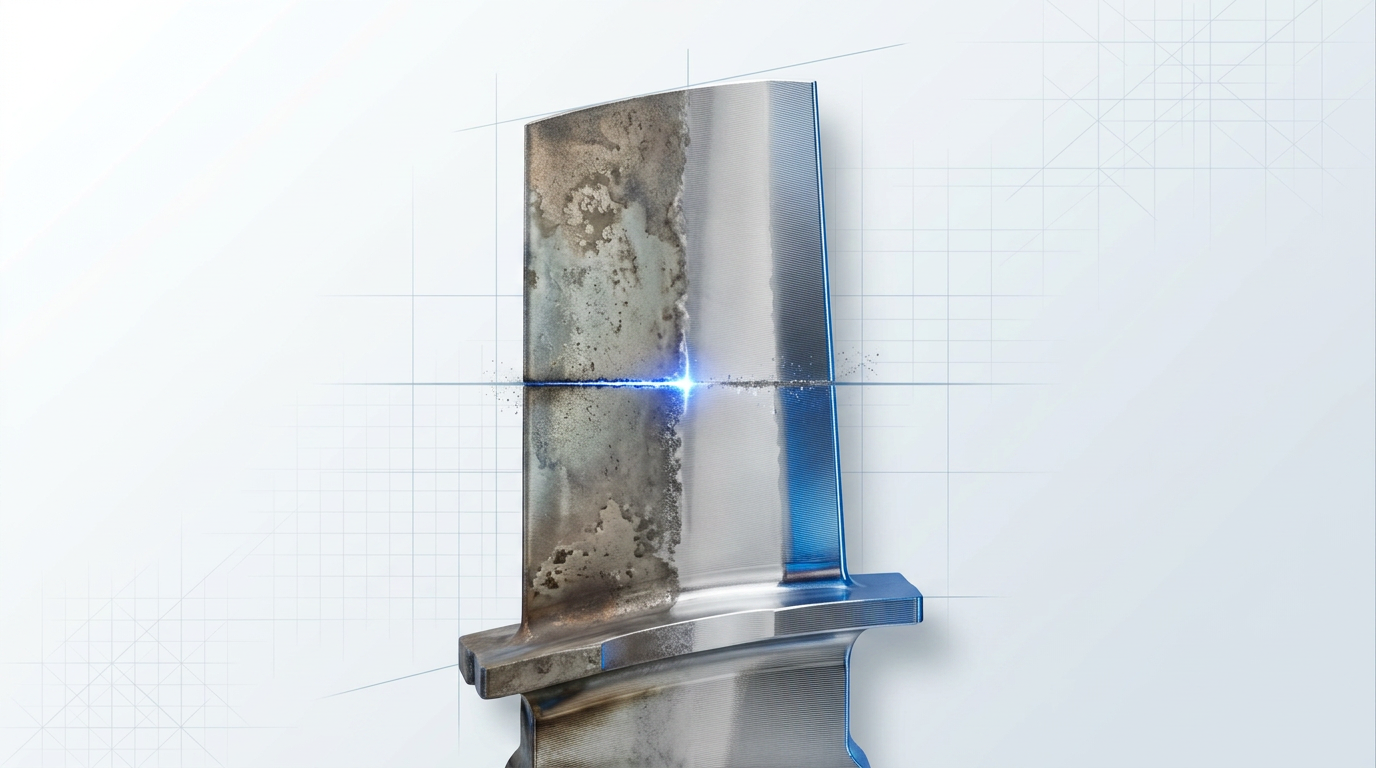
Aerospace Component Varnish Removal
Removes varnish and coatings from aerospace components to tight tolerances, substrate intact.
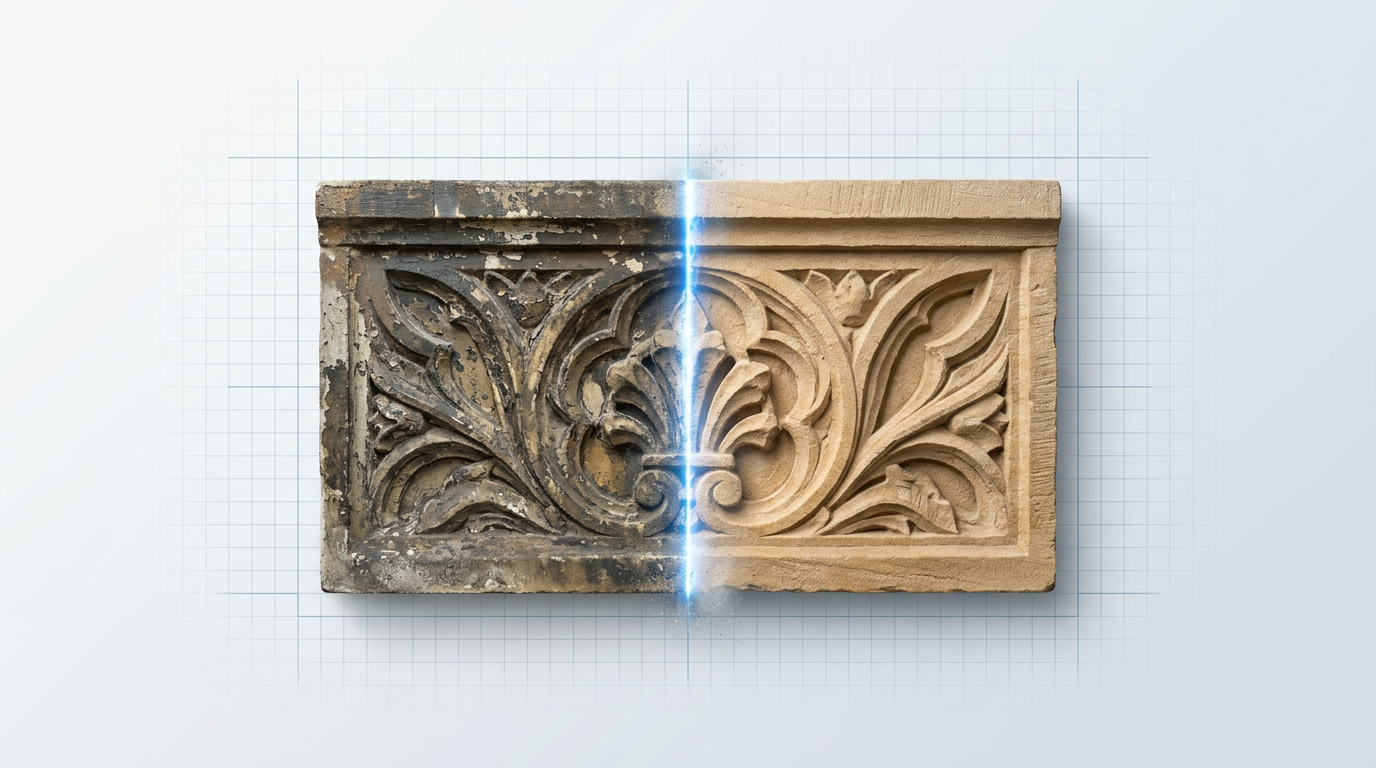
Heritage and Restoration Varnish Removal
Lifts varnish, paint, and soiling from stone, metal, and masonry without harming original surfaces.
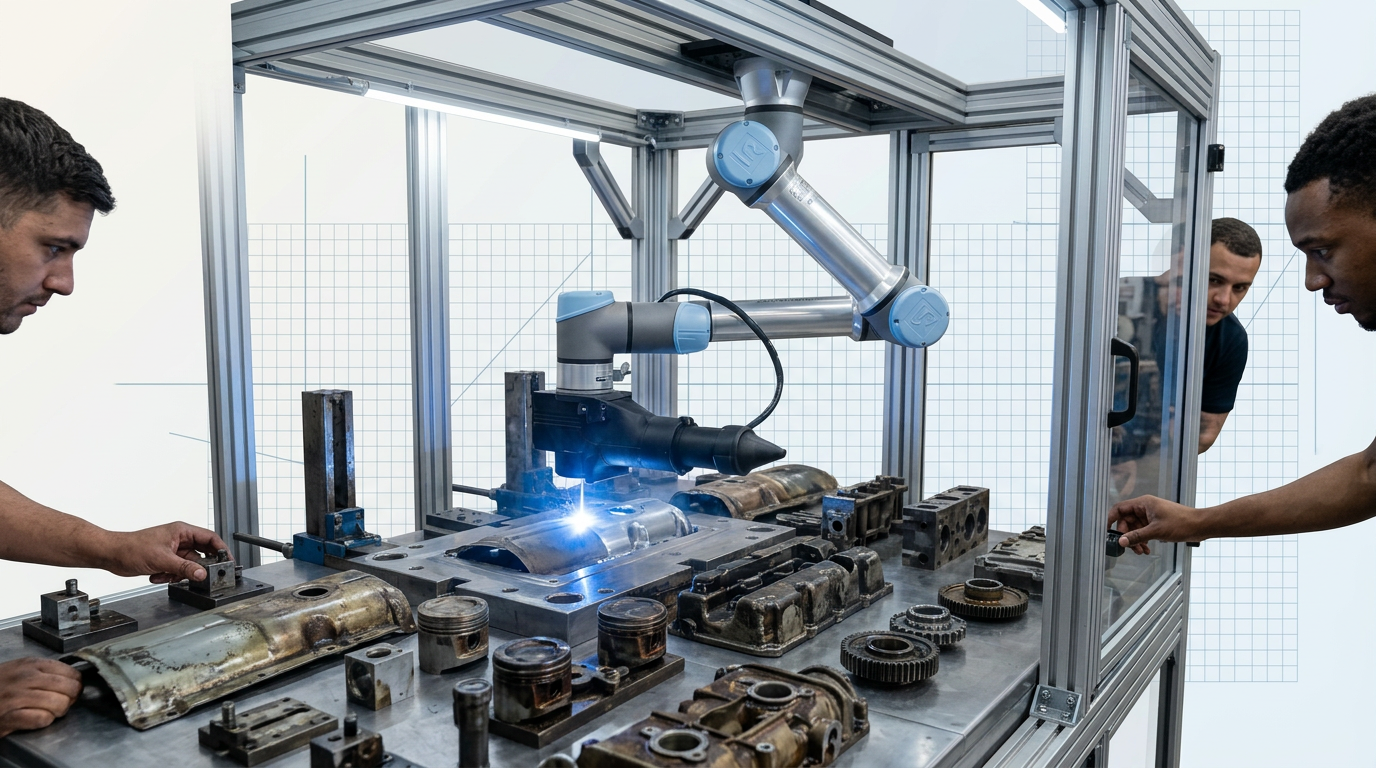
Remanufacturing and Refurbishment Batch Cleaning
Strips varnish and coatings from worn components before rebuild, cleaned consistently batch after batch.
Portable, On-Site Varnish Removal
If your varnish removal tasks vary, move between locations, or involve large fixed structures, the ELASER is the right tool. A sub-3 kg handheld scanner with up to 50 m of delivery cable means one operator can work across a site without relocating the wheeled unit.
For open workshops or mixed-use facilities, the ELASER-RHZ is in a class of its own. WSL's patented reduced-hazard-zone technology collapses the laser hazard zone, so varnish removal continues without sealing off the area — the world's only laser cleaning tool of its kind.
Production-Scale Automated Cleaning
If you run repetitive, high-volume varnish removal and want hands-off operation with no skilled-operator dependency, AutoLASE is built for your workflow. Load the part — the integrated vision system scans it, builds a 3D map, and generates the cleaning path automatically. No programming, no path-setting, no technical skills required.
It attaches to your existing collaborative or industrial robots, or WSL supplies a complete custom cell. With the optional RHZ upgrade, AutoLASE is the only automated laser cleaning system in the world that operates without an enclosure.
Same Laser, Different Deployment
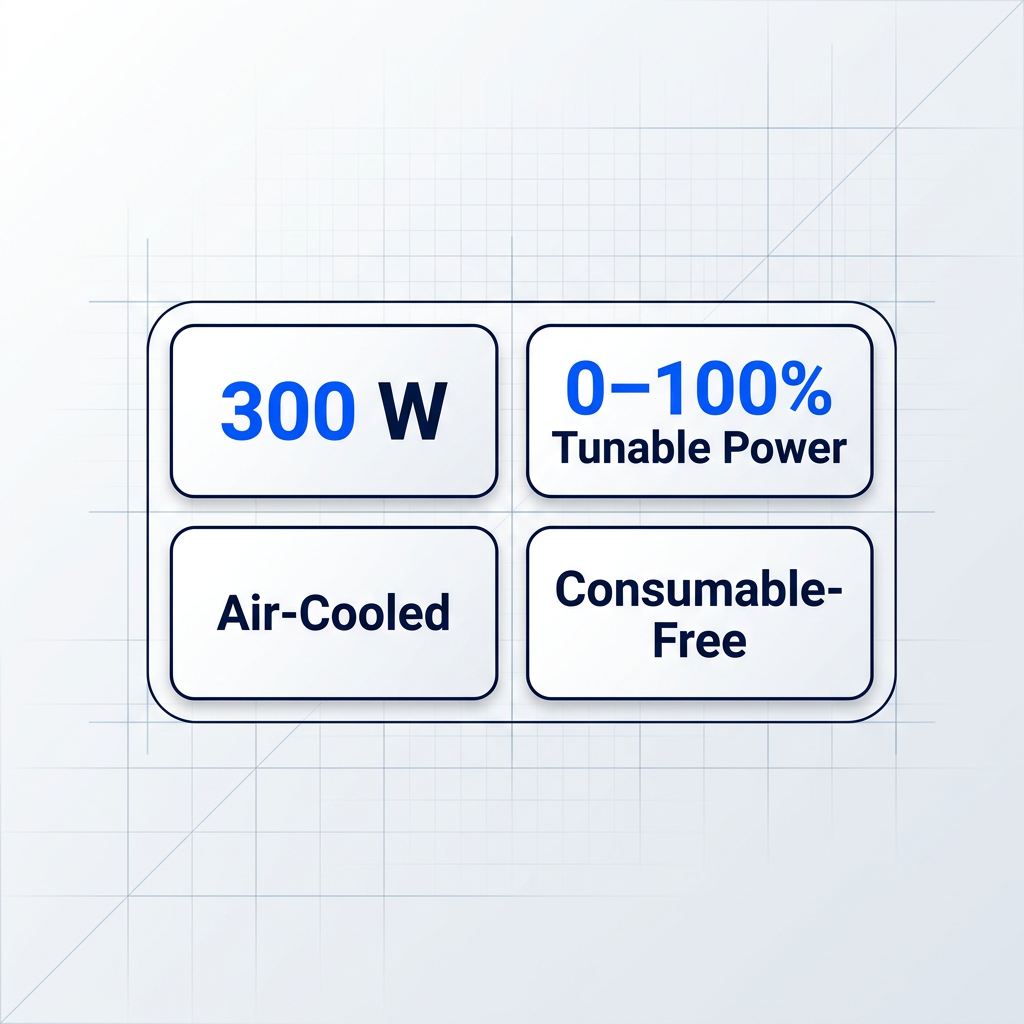
Both systems run on the same proven laser foundation: up to 300 W, power tunable 0–100%, air-cooled, and consumable-free. The difference between ELASER and AutoLASE is how the cleaning head is deployed and operated — not the underlying laser capability.
Whichever system fits your workflow, you get the full WSL laser performance. Neither is a compromise.
Talk to WSL
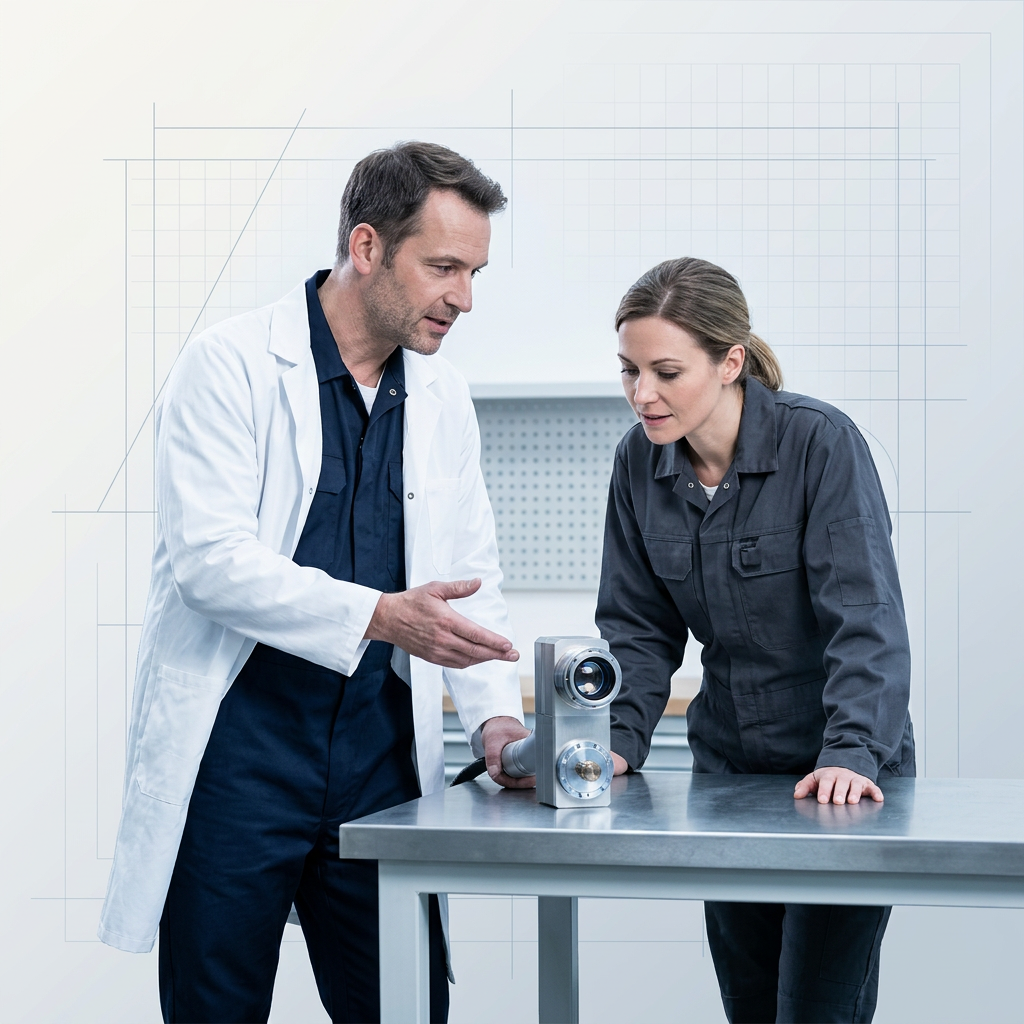
If your varnish removal application doesn't fit neatly into either scenario, the right starting point is a conversation. WSL designs, builds, and supports every machine in-house — which means they can advise on, and adapt, the right system for non-standard requirements.
Get in touch to discuss your specific requirements and request a quote. There's no obligation — just practical guidance from the engineers who built the system.
Get a Quote for Your Laser Varnish Removal Tool
WSL is the UK's only laser cleaning manufacturer — CE and UKCA certified, Made in Britain, with world-first patented RHZ technology. Pricing is by application. Contact us to discuss your requirements.
Frequently Asked Questions: Laser Varnish Removal
The questions buyers most commonly ask when evaluating a laser varnish removal tool, answered directly.
No. The laser beam is absorbed by the varnish layer and its energy is consumed there — it does not transmit into the substrate beneath. This is a function of selective absorption: organic varnishes absorb infrared laser energy far more strongly than metals, stone, or masonry, so the beam stops at the coating-substrate interface. The practical result is minimal substrate loss — no thinning, no surface roughening, and no rework caused by damage to the base material.
Both ELASER and AutoLASE remove varnish, lacquer, paint, powder coating, primer, adhesives and residues, and tarnish, alongside a wide range of other contaminants including rust, mill scale, carbon, soot, and release agents. The enabling mechanism is power tunability from 0–100%: the same system adapts to different coating types and thicknesses without tool changes, handling everything from light surface films through to thick industrial coatings on a single platform.
These systems work across a broad range of substrates: steel, carbon steel, aluminium alloys, cast iron, copper, brass, bronze, titanium, and galvanised steel on the industrial metals side, plus stone, concrete, brick, and masonry for heritage and restoration work. The selective ablation principle applies regardless of substrate type — because the beam stops at the coating-substrate interface as a consequence of differential absorption between the varnish and the base material, not as a setting specific to any one substrate.
The ELASER-RHZ is WSL's world-first reduced-hazard-zone laser cleaning system — the only laser cleaner of its kind anywhere in the world. Its patented technology collapses the laser hazard zone to a small area immediately around the work. That single capability changes what is operationally possible: varnish removal can be carried out in open workshops, mixed-use facilities, and on-site without sealing off or evacuating the surrounding area, which conventional laser cleaning systems require. No other laser cleaning system offers this. WSL also provides first-class safety and operation training for ELASER-RHZ operators, so teams are supported from day one.
The upfront investment in a laser varnish removal tool is higher than chemical stripping consumables — that is a straightforward fact. But the total cost of ownership tells a different story. Laser cleaning uses zero consumables: no solvents to procure, no hazardous waste to dispose of, no VOC emissions to manage. Chemical strippers commonly contain regulated substances subject to strict handling and disposal requirements under environmental and occupational health legislation, carrying ongoing compliance costs that accumulate with every cleaning cycle. Add to that less downtime (no masking, no containment setup, no cleanup) and less rework from reduced substrate damage, and the TCO advantage of laser grows steadily with volume and frequency of use. WSL's systems are competitively priced among comparable industrial laser cleaning machines — the entry point to an ownership model with no running consumable costs.
The ELASER runs from a standard 110–250 VAC single-phase supply — a normal industrial or site socket. Power consumption is under 2000 W. The system is air-cooled, so there is no water connection, no chiller, and no coolant circuit required. Plug in and work: no special electrical infrastructure, no site modifications.
Yes. WSL provides first-class laser cleaning safety and operation training for both ELASER/ELASER-RHZ and AutoLASE operators. Training is a positive part of WSL's service offering — the team that designs and builds these machines in-house is the same team supporting operators through the transition to laser cleaning. You will not be left to figure it out independently.
Yes. AutoLASE attaches to collaborative or industrial robots, or can be supplied as a complete custom cell — use your robots or WSL's. WSL offers bespoke engineering and integration support, so the right configuration for your production line is available rather than a fixed off-the-shelf arrangement. To discuss your specific integration requirements, get in touch with WSL directly.