What Is a Laser Sandblaster?
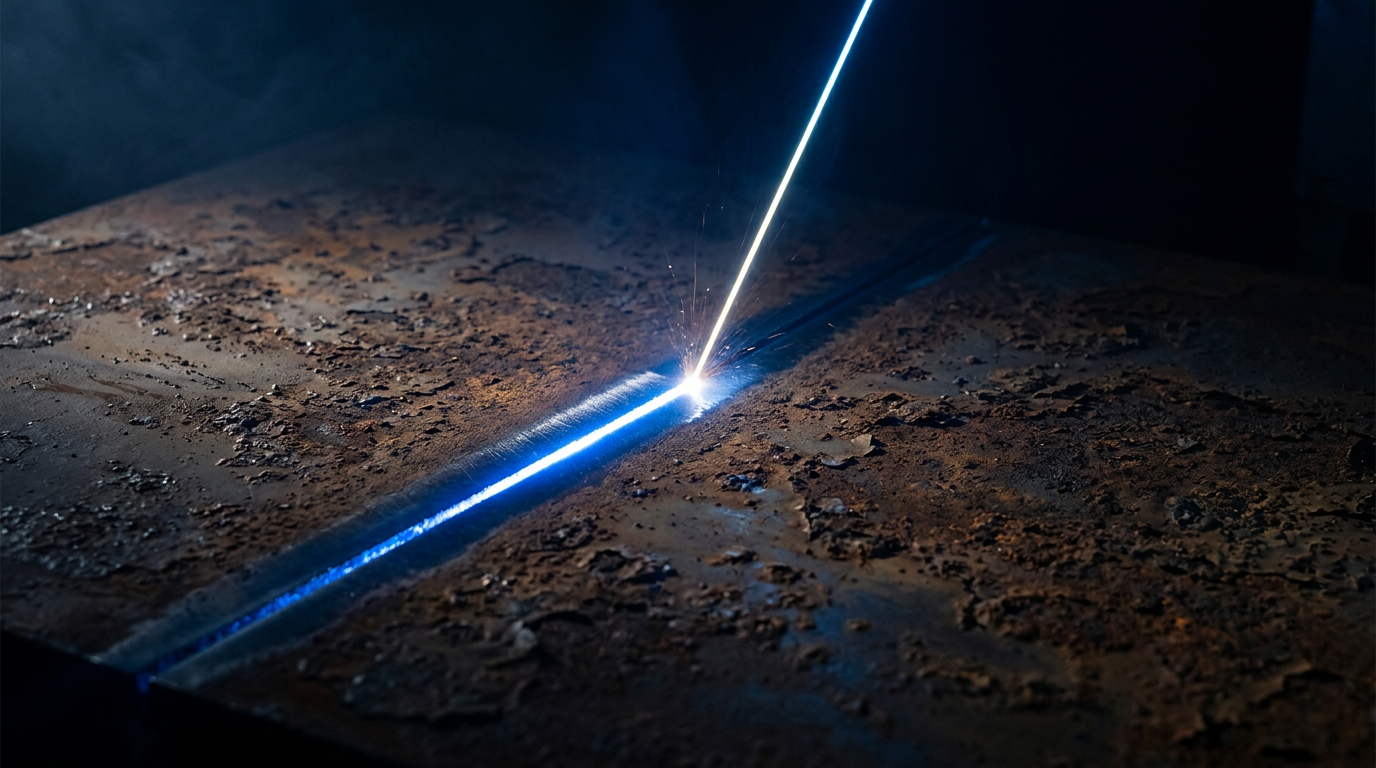
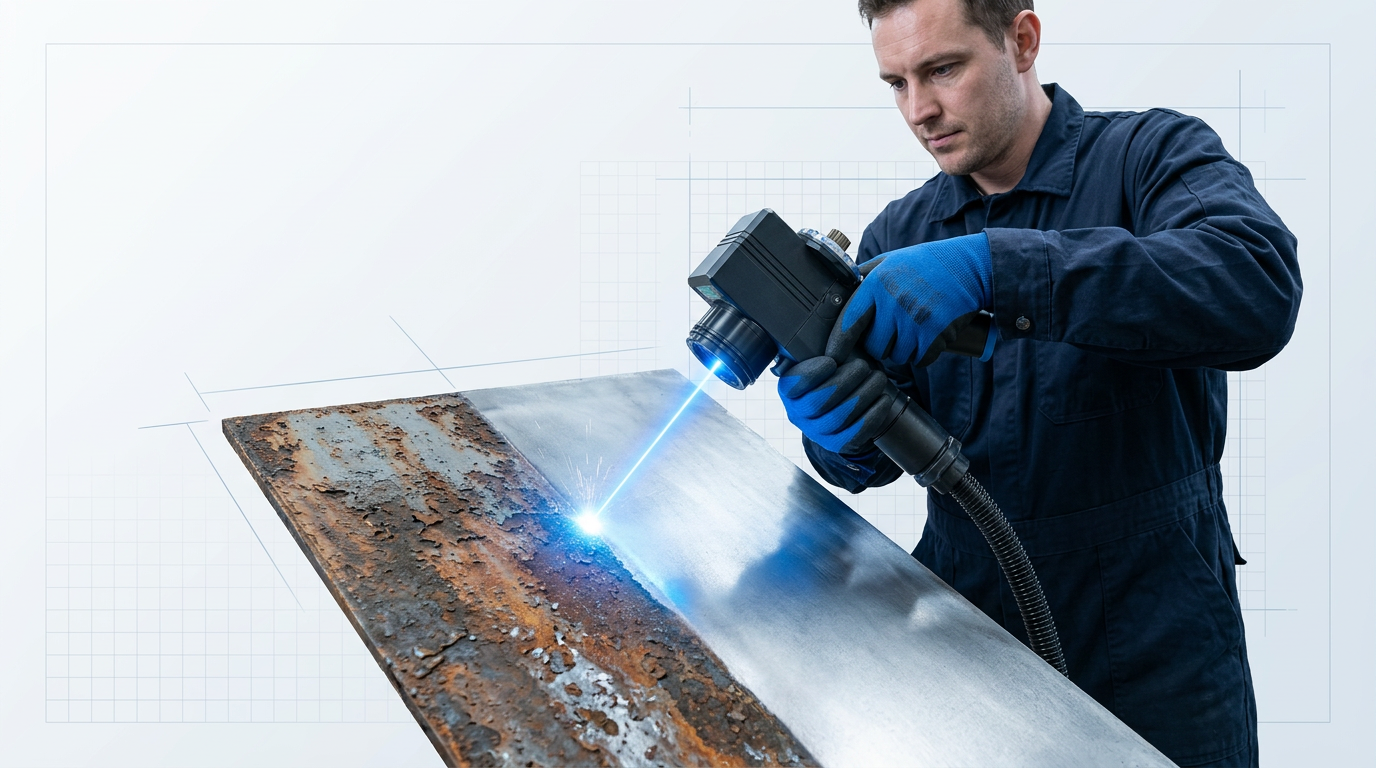
A laser sandblaster does the same job as a conventional sandblaster — removing rust, paint, mill scale, oxides, weld discolouration, and surface contamination — using a focused laser beam instead of abrasive media. Pulsed laser energy is absorbed by the contaminant layer, causing rapid thermal shock and vaporisation through ablation. The beam stops at the base material, leaving the substrate intact.
What disappears from the workflow: no abrasive media, no compressor, no blast cabinet, no secondary waste to dispose of. WSL makes two systems for this: the portable ELASER/ELASER-RHZ and the automated AutoLASE — both covered on this page.
Zero Consumables, Zero Supply Chain
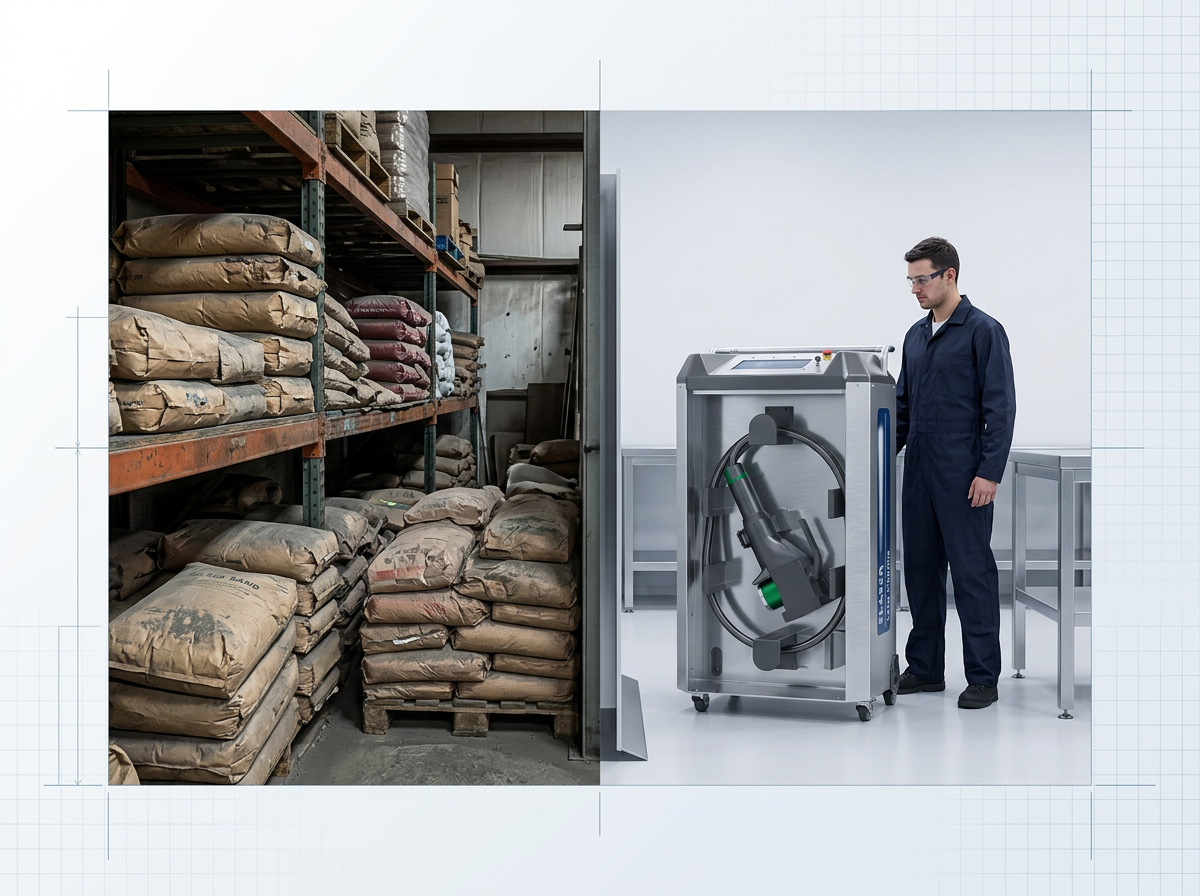
Every sandblasting job depends on a continuous supply of abrasive media — silica sand, garnet, steel grit, or coal slag. That means purchasing, storing, and replenishing stock on every project, with lead times and logistics attached to each one.
Laser cleaning runs on electricity alone. There is no media to order, no storage to manage, and nothing to run out of mid-job. Switching to laser removes an entire supply-chain dependency from your workflow.
No Waste Stream to Dispose Of
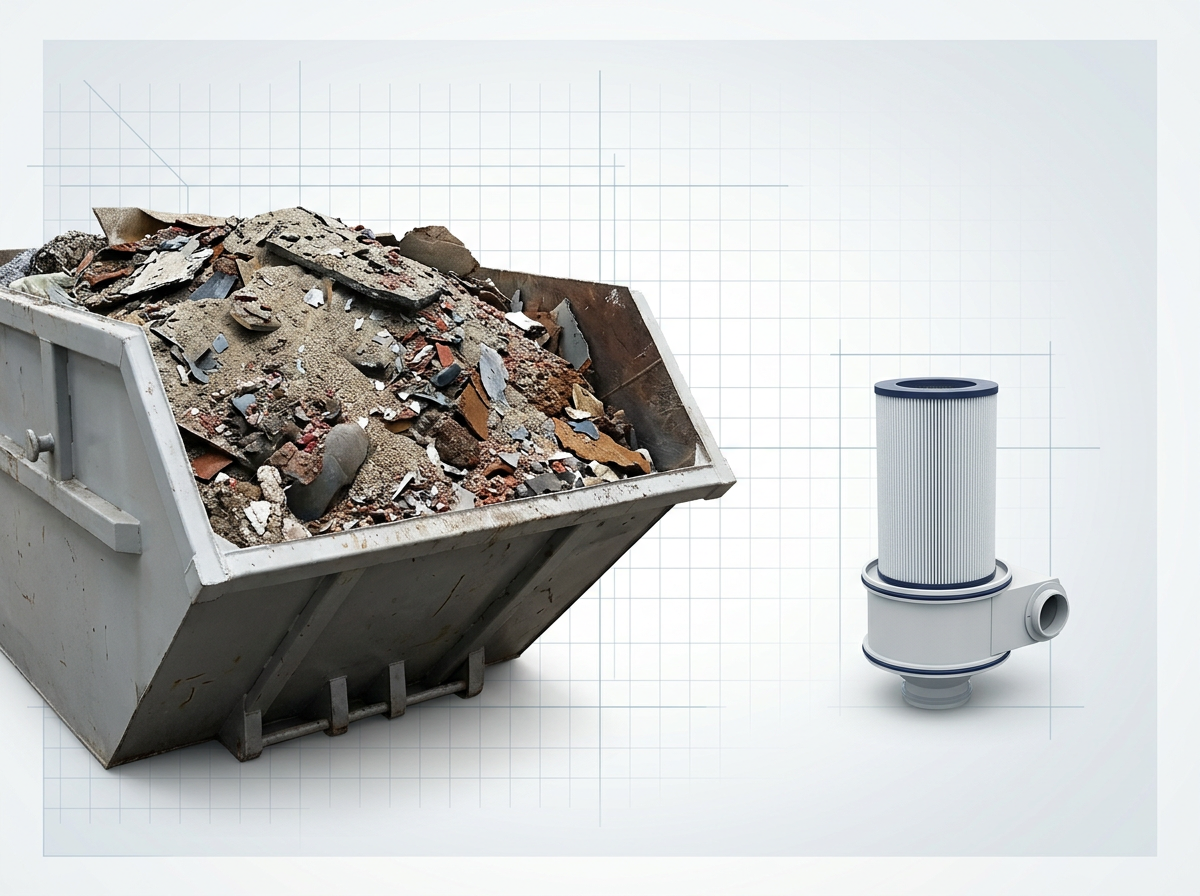
Sandblasting produces large volumes of spent abrasive mixed with paint chips, rust, and contaminants. Depending on what was removed, this waste may be classified as hazardous, requiring compliant disposal on every job — a recurring cost and compliance overhead.
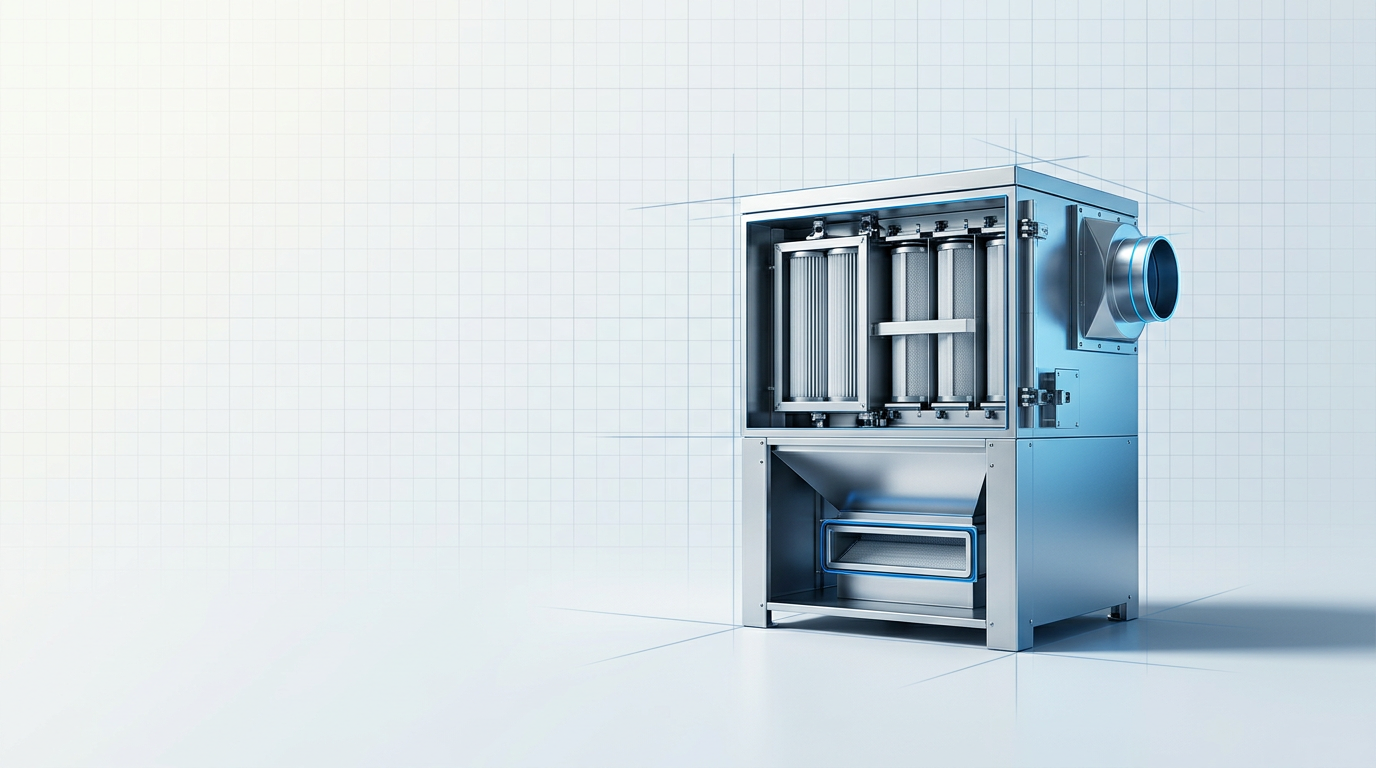
Laser cleaning generates only a small fume and fine particulate stream, captured by an integrated extraction unit. The waste footprint shrinks from skips of contaminated grit to a filter cartridge — and the regulatory burden shrinks with it.
Stops at the Base Material
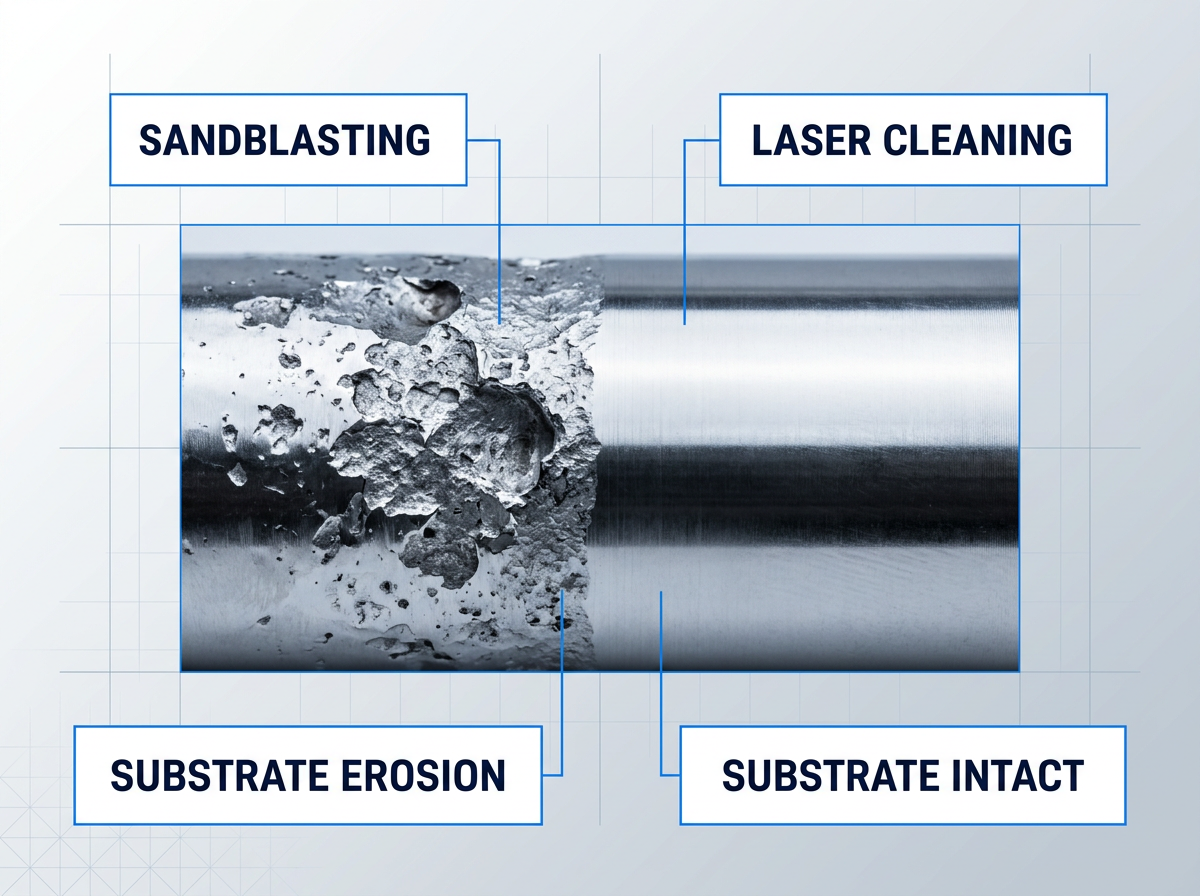
Sandblasting removes contamination through physical impact, which means some base material is always eroded alongside the coating or rust. On precision components or thin-wall sections, that surface loss creates rework — or worse, scrapped parts.
Laser ablation interacts selectively: the beam's energy threshold discriminates between contaminant and substrate, stopping at the base material. A clean that damages what it is meant to preserve is not a good clean. Substrate integrity is the standard, not a bonus.
Eliminates the Silica Dust Hazard
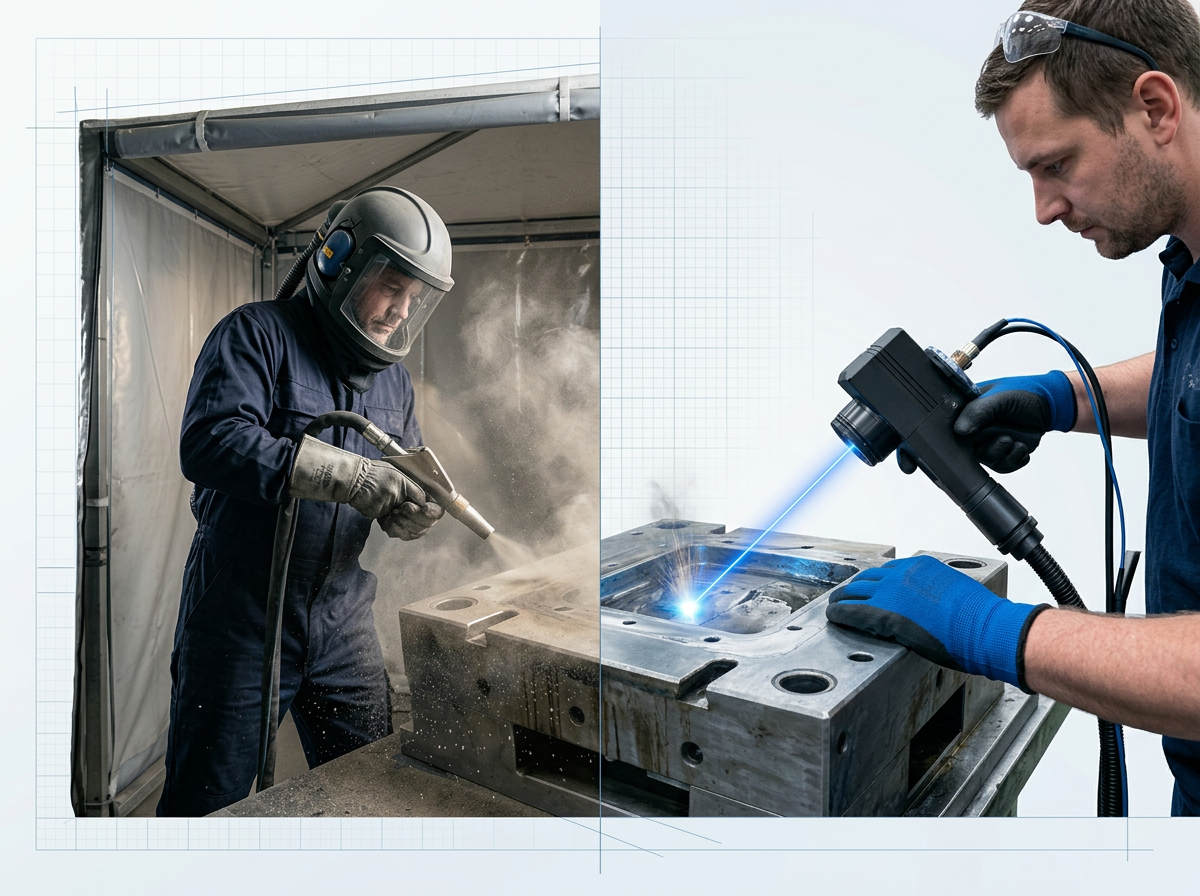
Abrasive blasting with silica-containing media generates respirable crystalline silica dust — a documented cause of silicosis and lung cancer, subject to strict exposure limits set by OSHA and the HSE. Open-air blasting requires containment zones, restricted access, air-supplied respirators, hearing protection, and full coveralls.
Laser cleaning eliminates the airborne particulate hazard profile of abrasive blasting. There is no silica dust, no blast containment to erect, and no restricted exclusion zone for particulate exposure. Setup time drops significantly, and the health risk profile of the task changes fundamentally.
Near-Zero Cost Per Job
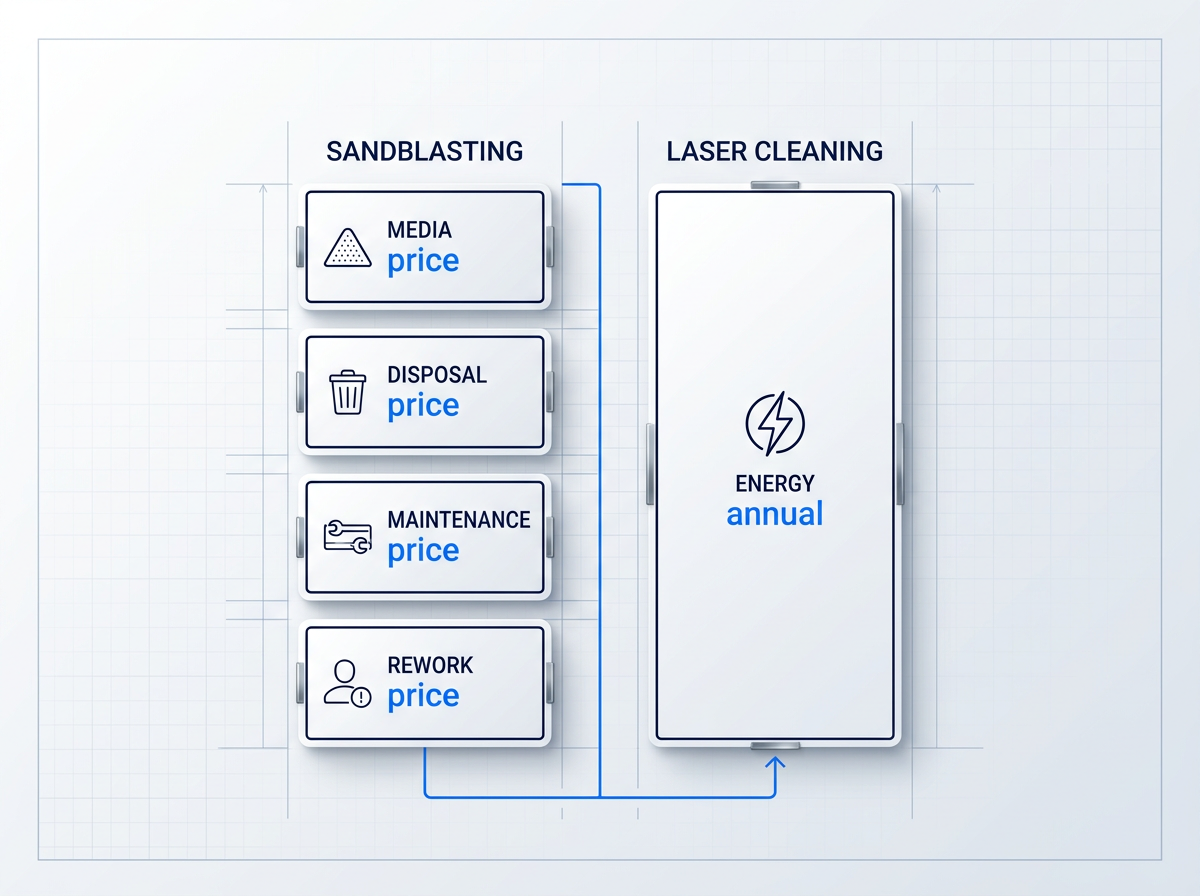
Sandblasting carries a cost on every job: media, waste disposal, compressor maintenance, rework from substrate damage, and significant setup and cleanup time. Those per-job costs accumulate steadily across a working year.
Laser cleaning is a capital investment with running costs limited largely to electricity. No media spend, no disposal fees, no rework from surface damage. Quieter operation also removes the hearing protection requirement that blasting demands. Over equipment lifetime, the total cost of ownership comparison favours laser — a fuller breakdown follows later on this page.
ELASER & ELASER-RHZ: Portable Laser Sandblasting
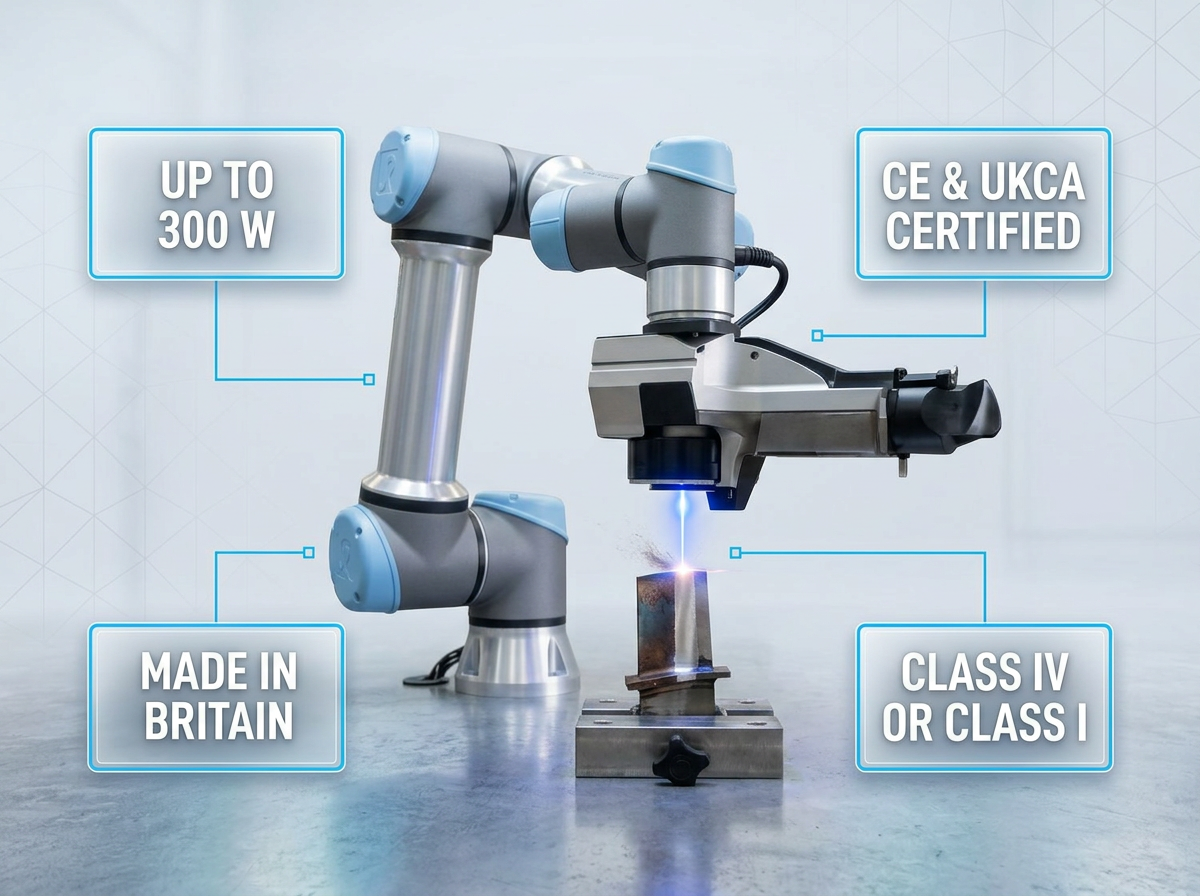
The ELASER-RHZ is the world's only laser cleaner with patented Reduced Hazard Zone (RHZ) technology — collapsing the laser hazard to a small area around the work, so cleaning continues in open workshops, mixed-use facilities and public-facing sites without sealing off the area. The system is wheeled and self-contained: a sub-3 kg handheld scanner, up to 50 m delivery cable, single-operator operation, no compressor, no water, no consumables.
Up to 300 W of fibre-laser power, tunable 0–100%, handles light oxides through thick coatings on metals, stone and masonry. Air-cooled and consumable-free — plug in and clean.
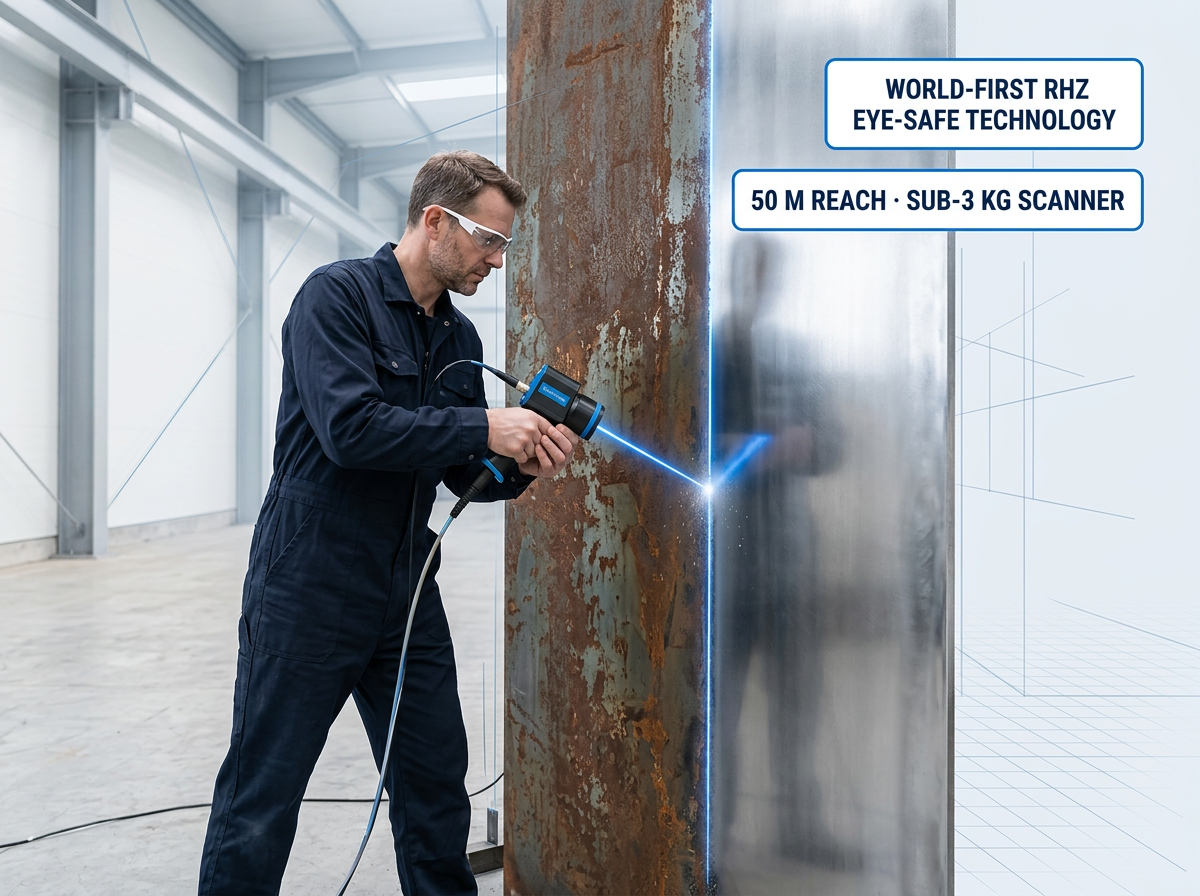
See the ELASER-RHZ in Full Detail
The ELASER-RHZ is the world's only laser cleaner with patented Reduced Hazard Zone technology. Explore the full product page or download the datasheet to review specifications.
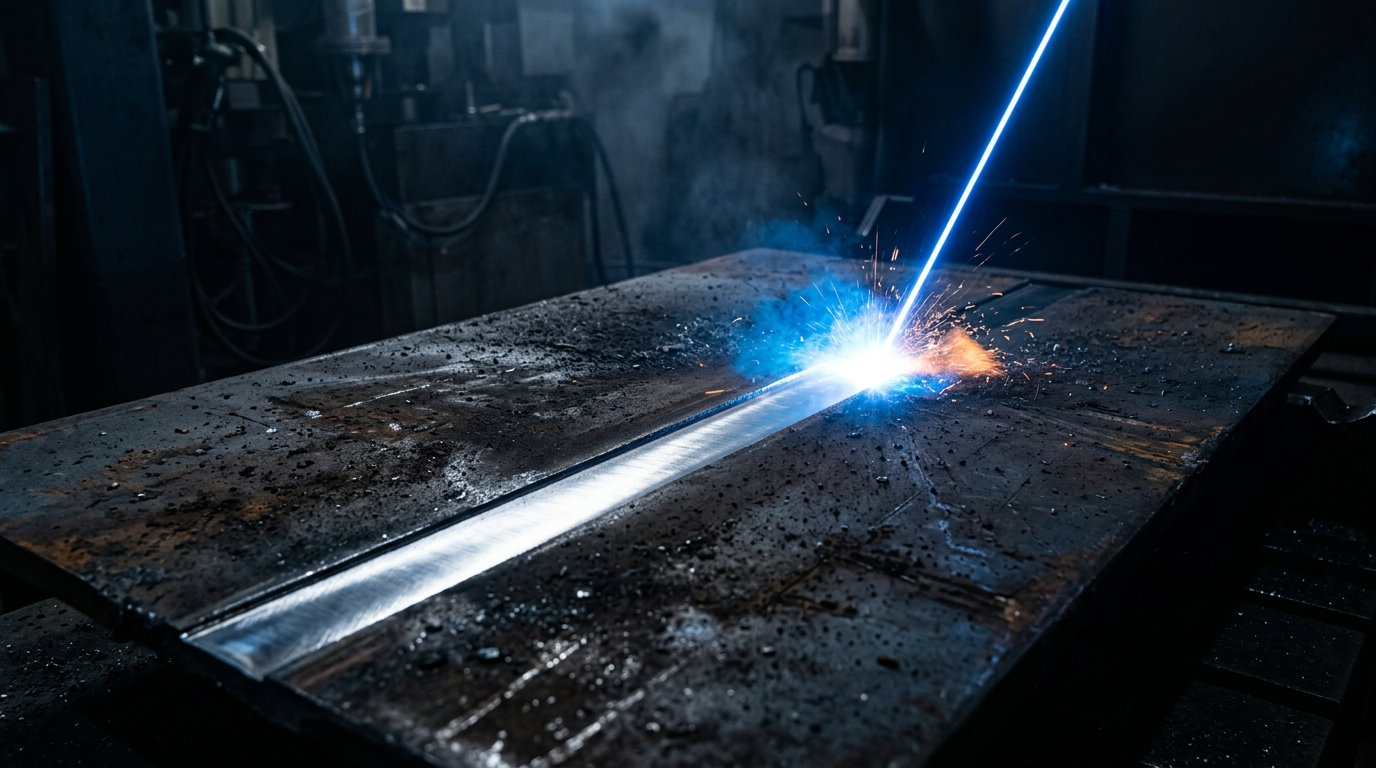
AutoLASE: Automated Laser Sandblasting for Production Lines
Load the part — AutoLASE does the rest. 3D machine-vision software scans the component, builds a spatial map, and generates the clean path automatically. No programming, no path-setting, no knowledge of part geometry required. Anyone can run it.
With the optional RHZ upgrade, AutoLASE is the only automated laser cleaning system in the world that operates without a full enclosure. Integrates with your existing collaborative or industrial robots, or supplied as a complete custom cell — ready for injection moulds, automotive, aerospace, tyre moulds, and remanufacturing.
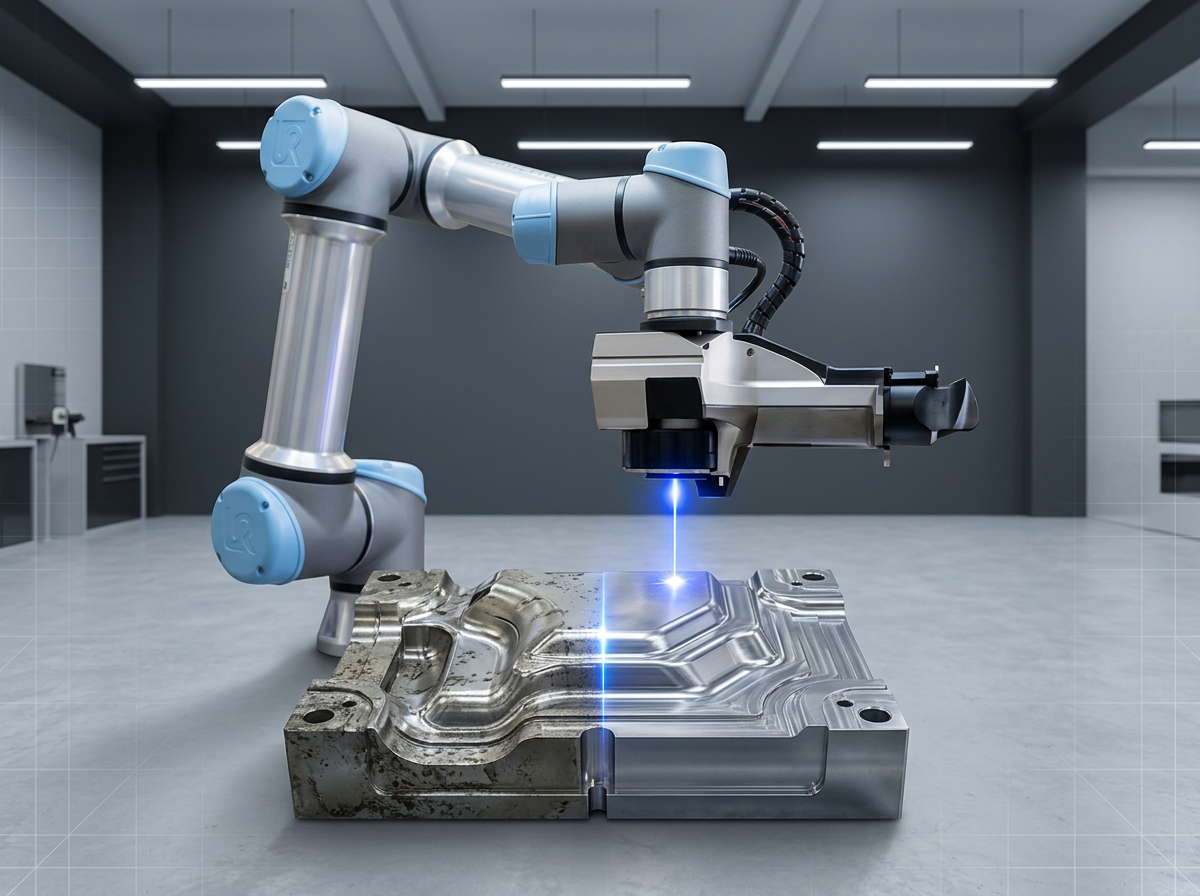
ELASER & ELASER-RHZ Specs
Max power: up to 300 W · Wavelength: 1550 nm · Pulse energy: up to 15 mJ · Pulse duration: 100 ns · Rep rate: up to 200 kHz (CW) · Power tunability: 0–100%
Scanner: 2-D galvanometer, 10 m/s max · Cable: up to 50 m · Handheld scanner: under 3 kg · System weight: under 50 kg · Power supply: 110–250 VAC single-phase · Consumption: <2000 W
Laser class: Class IV or Class I · Interface: Ethernet + touchscreen · Certifications: CE & UKCA · Manufacture: Made in Britain. Contact WSL for configuration guidance.
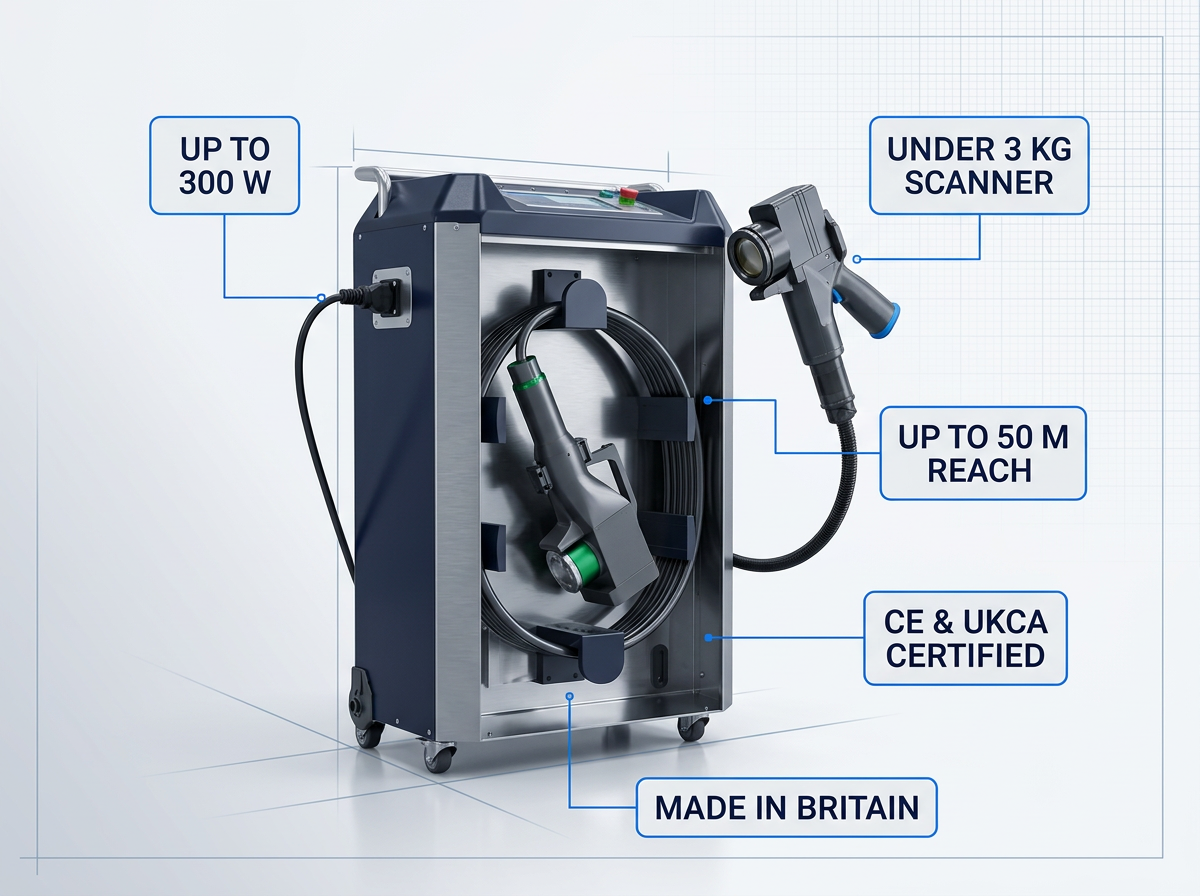
AutoLASE Specifications
Max power: up to 300 W · Wavelength: 1550 nm · Pulse energy: up to 15 mJ · Pulse duration: 100 ns · Rep rate: up to 200 kHz (CW) · Power tunability: 0–100%
Scanner: 2-D galvanometer, 10 m/s max · Cable: up to 50 m · System weight: under 50 kg · Power supply: 110–250 VAC single-phase · Consumption: <2000 W
Laser class: Class IV or Class I · Interface: Ethernet + touchscreen · Certifications: CE & UKCA · Manufacture: Made in Britain. Contact WSL for configuration guidance.
Every Common Contaminant, Covered
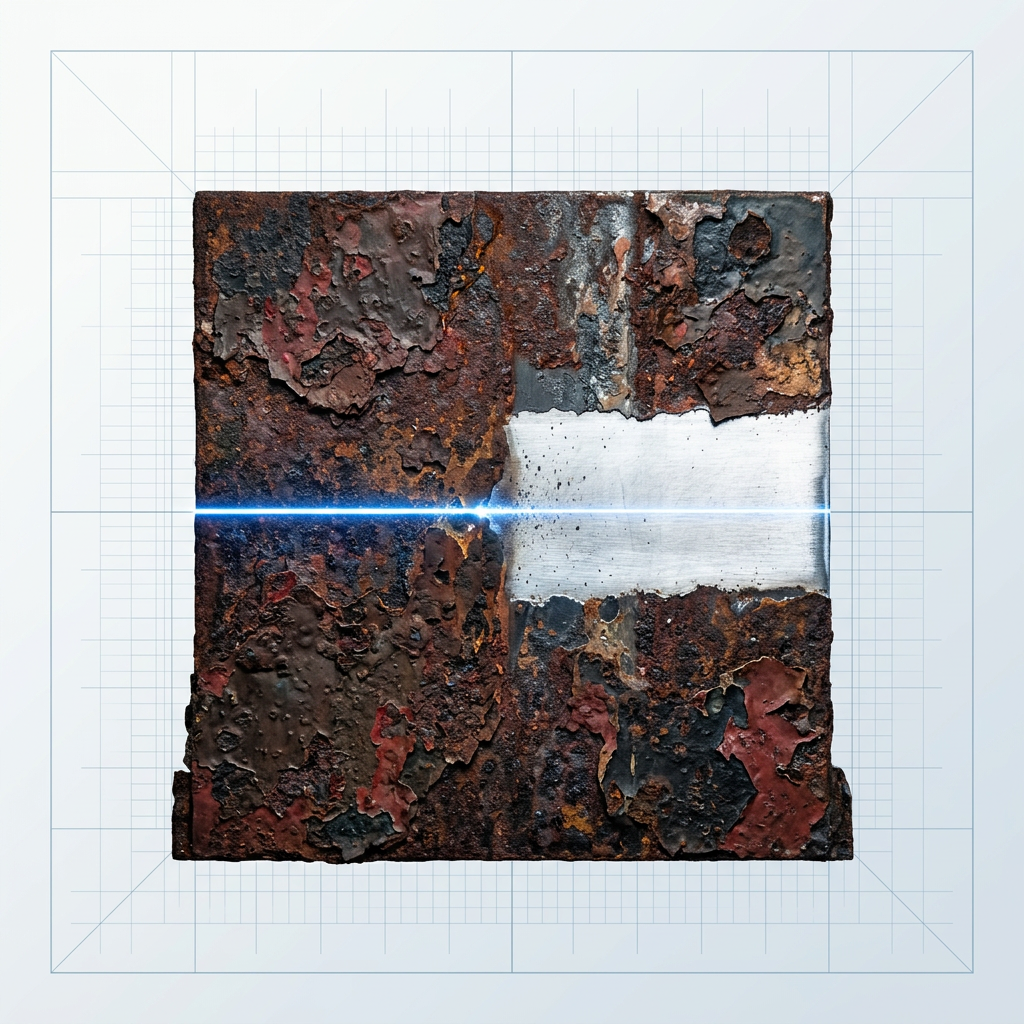
WSL's systems remove rust, corrosion, and mill scale; paint, primer, powder coating, and lacquer; weld discolouration and heat tint; and oil, grease, carbon, soot, adhesives, release agents, and mould.
If you're stripping, prepping, or decontaminating a surface, your job is almost certainly in this list. Both portable and automated WSL systems cover the same full contaminant range.
Metals, Stone, and Masonry
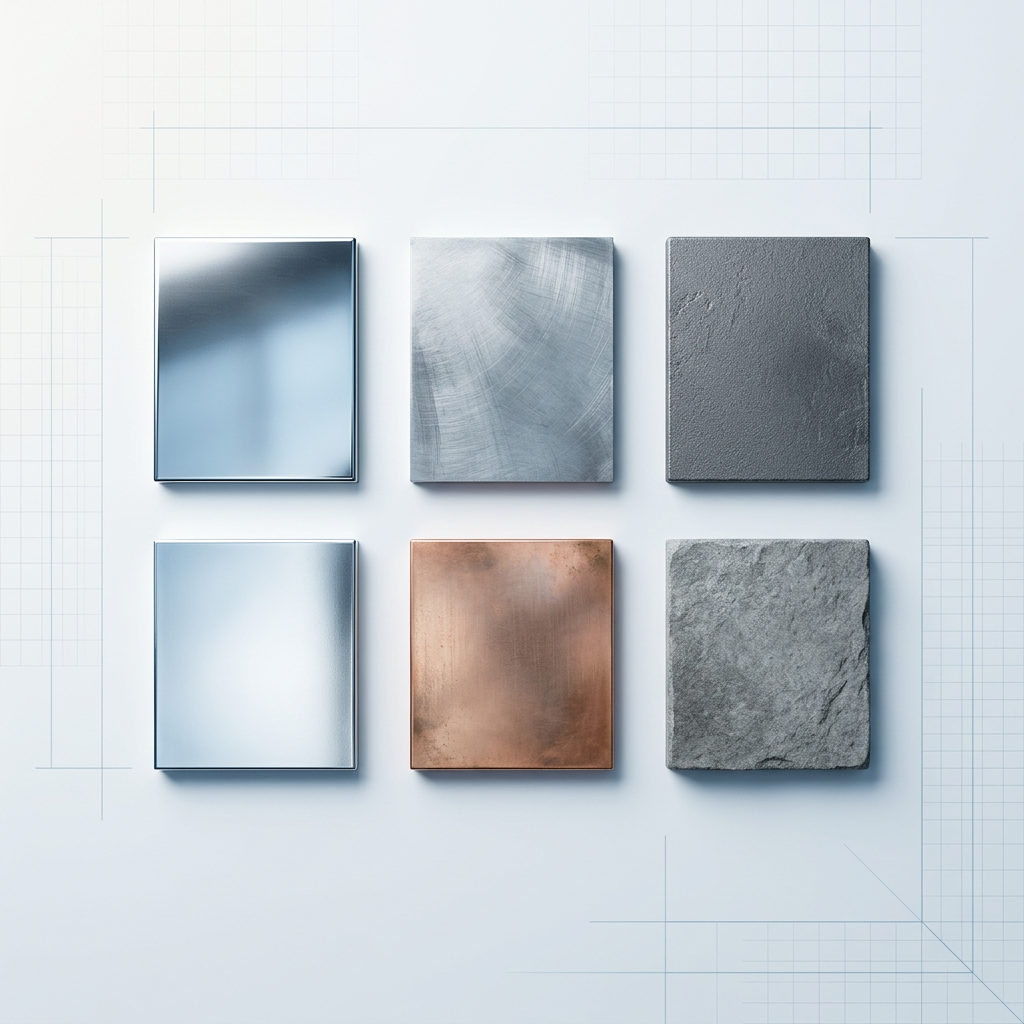
WSL's systems clean the full range of ferrous and non-ferrous metals — steel, carbon steel, cast iron, aluminium alloys, copper, brass, bronze, titanium, and galvanised steel — through to stone, concrete, brick, and masonry.
One system handles all of these substrates. No substrate-specific machine, no media grade change, no reconfiguration between jobs.
The Clean Stops at the Base
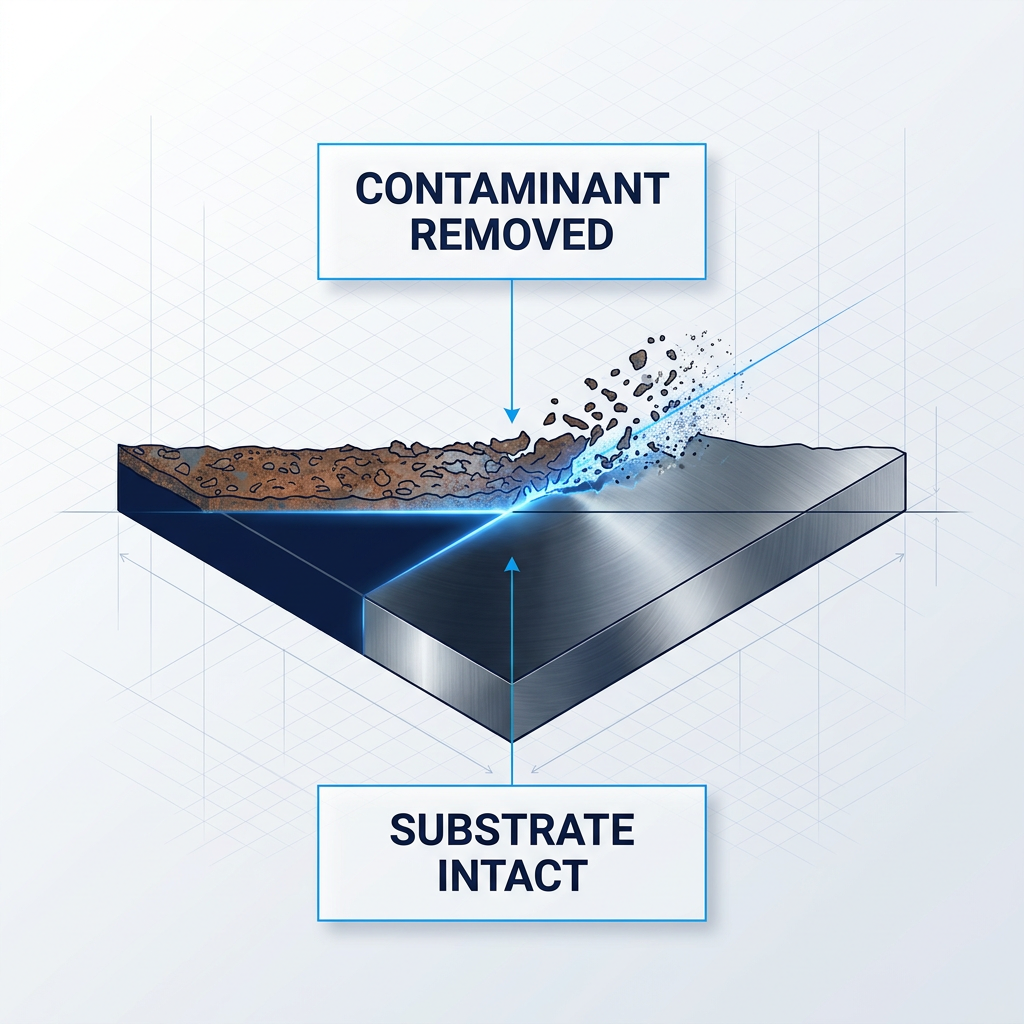
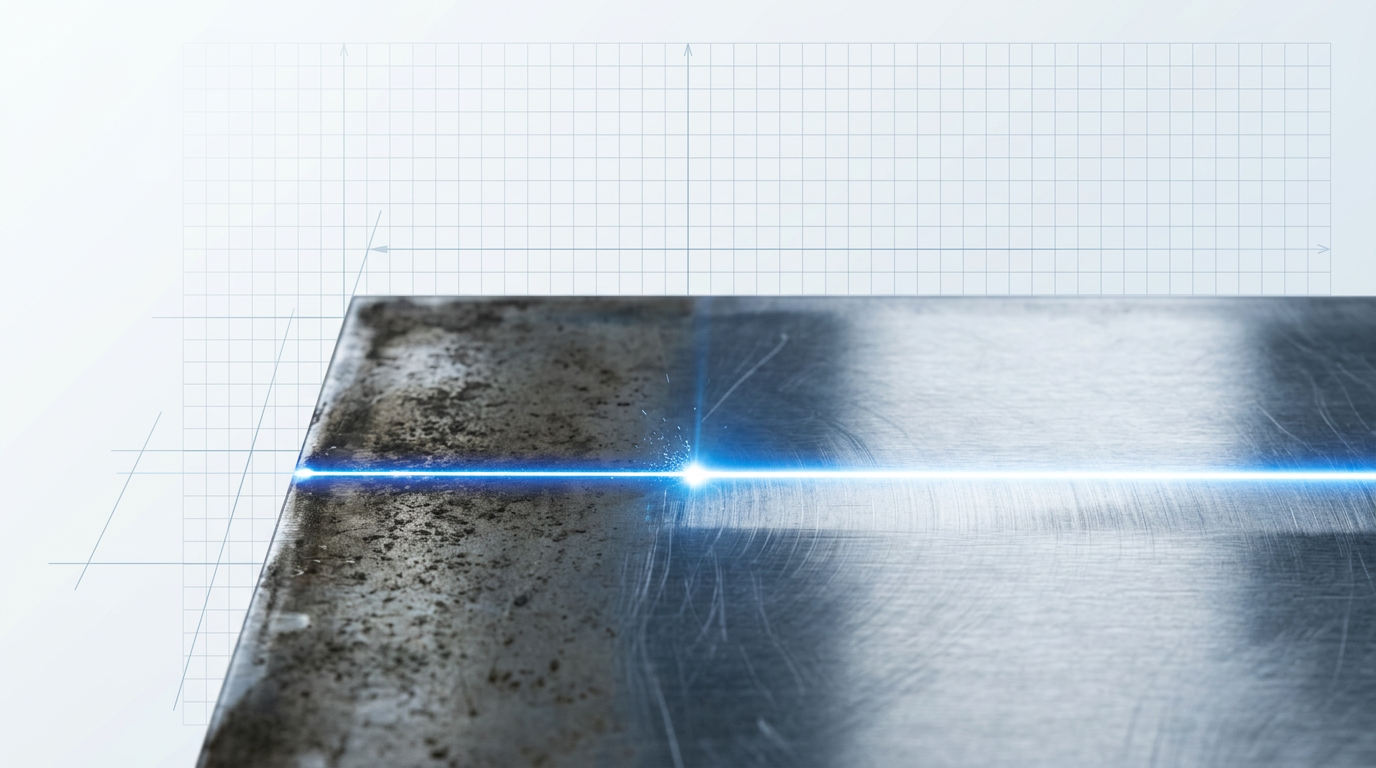
The laser's energy is absorbed by the contaminant layer. Once that layer is gone, the interaction stops — the base material is left intact. This is the correct standard for surface preparation: clean what needs cleaning, preserve what needs preserving.
In practice, that means surfaces arrive at the coating or welding stage without substrate erosion to correct. Less rework, tighter tolerances, better outcomes downstream.
One System, Every Job
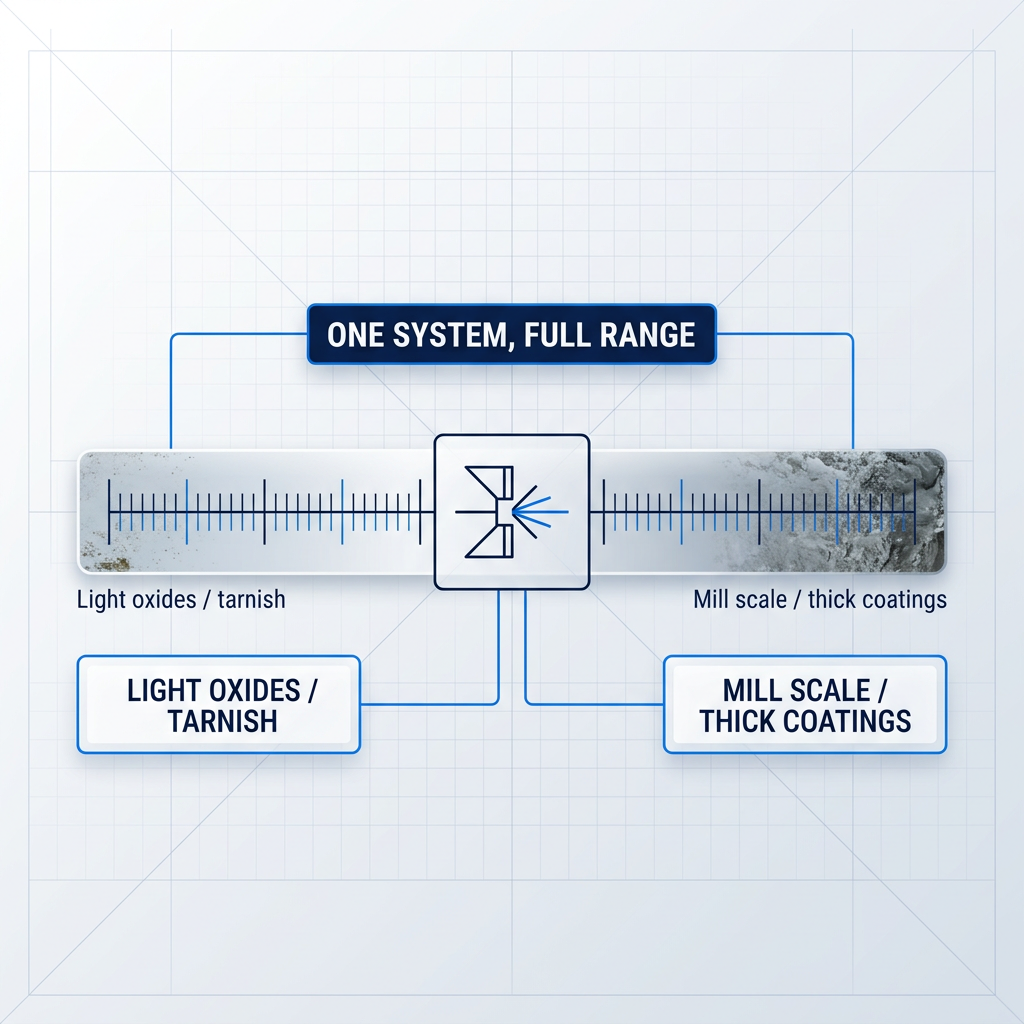
Power is tunable from 0–100% (up to 300 W). At low settings: light oxides, tarnish, and delicate surfaces. At high settings: thick paint, heavy mill scale, and powder coating. One WSL system covers the full spectrum.
Sandblasting requires different abrasive grades and pressures for different jobs. A WSL laser sandblaster needs no media changes, no machine swaps, and no job-by-job reconfiguration.
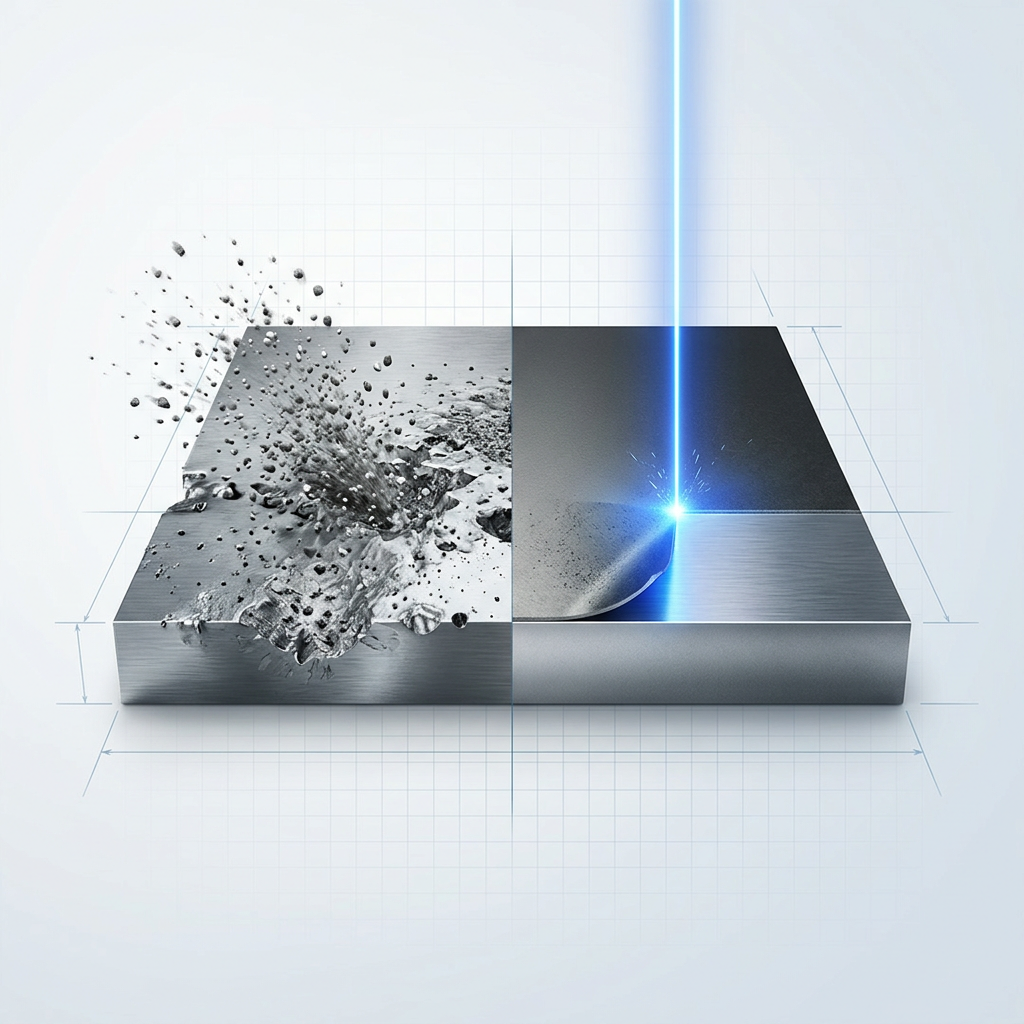
Ablation Discriminates. Abrasion Cannot.
Sandblasting works by physical impact. It cannot discriminate between the contaminant layer and the substrate beneath it — some base material is always lost. That is a fundamental limit of the method, not a calibration problem.
Laser ablation stops at the substrate. The beam's interaction threshold is the discriminator: contaminant gone, interaction ends. What you're cleaning is removed; what you're keeping is untouched.
The Real Cost Comparison: Laser Cleaning vs Sandblasting
Sandblasting carries a recurring cost on every job: media, waste disposal, compressor upkeep, rework, and setup time. Laser cleaning runs on electricity alone. Over the lifetime of the equipment, those per-job savings compound into a total cost of ownership that decisively favours laser.
No abrasive media to buy, ever
Sandblasting consumes garnet, steel grit, or coal slag on every job. Laser runs on electricity.
No hazardous waste disposal costs
Spent abrasive mixed with contaminants often requires compliant disposal. Laser produces a captured fume stream.
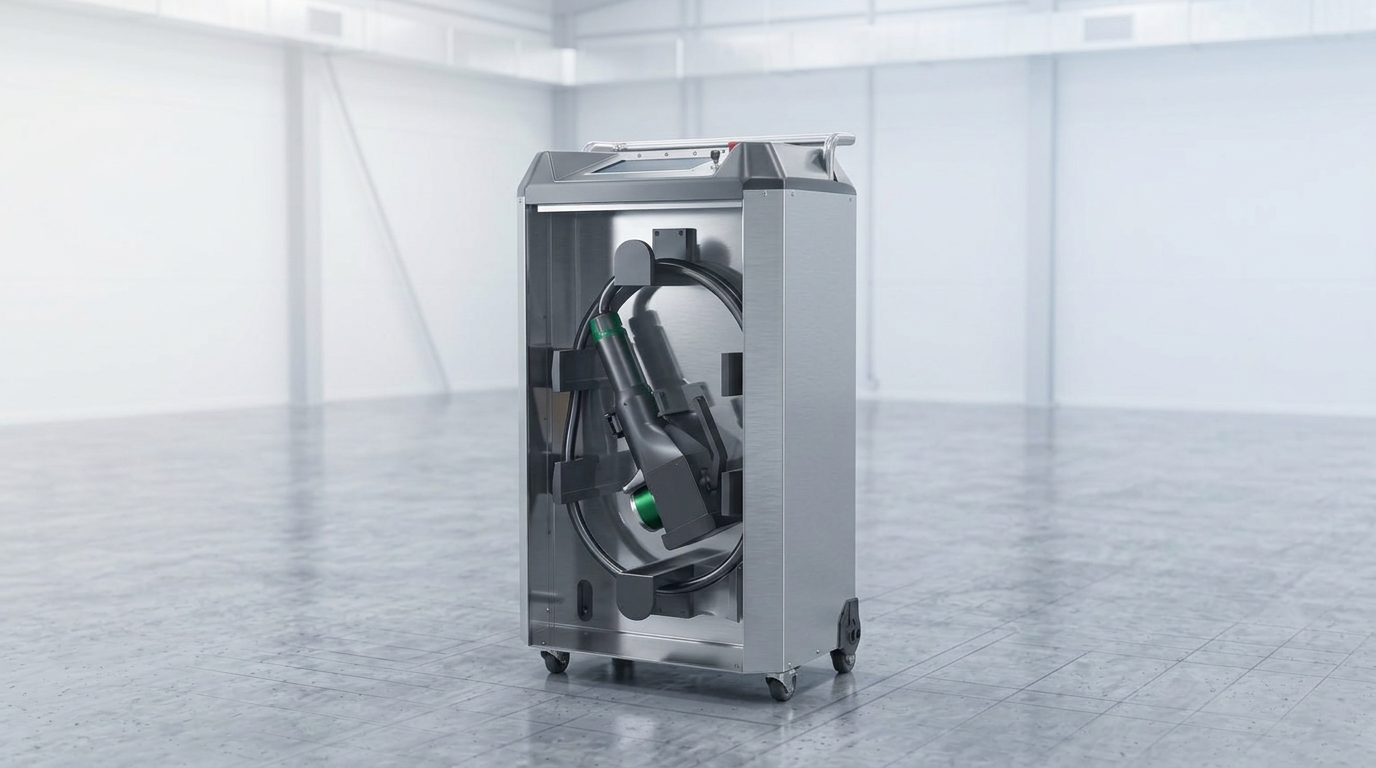
No compressor to maintain or power
Sandblasting rigs need compressed air systems with ongoing servicing costs. Laser is self-contained and air-cooled.
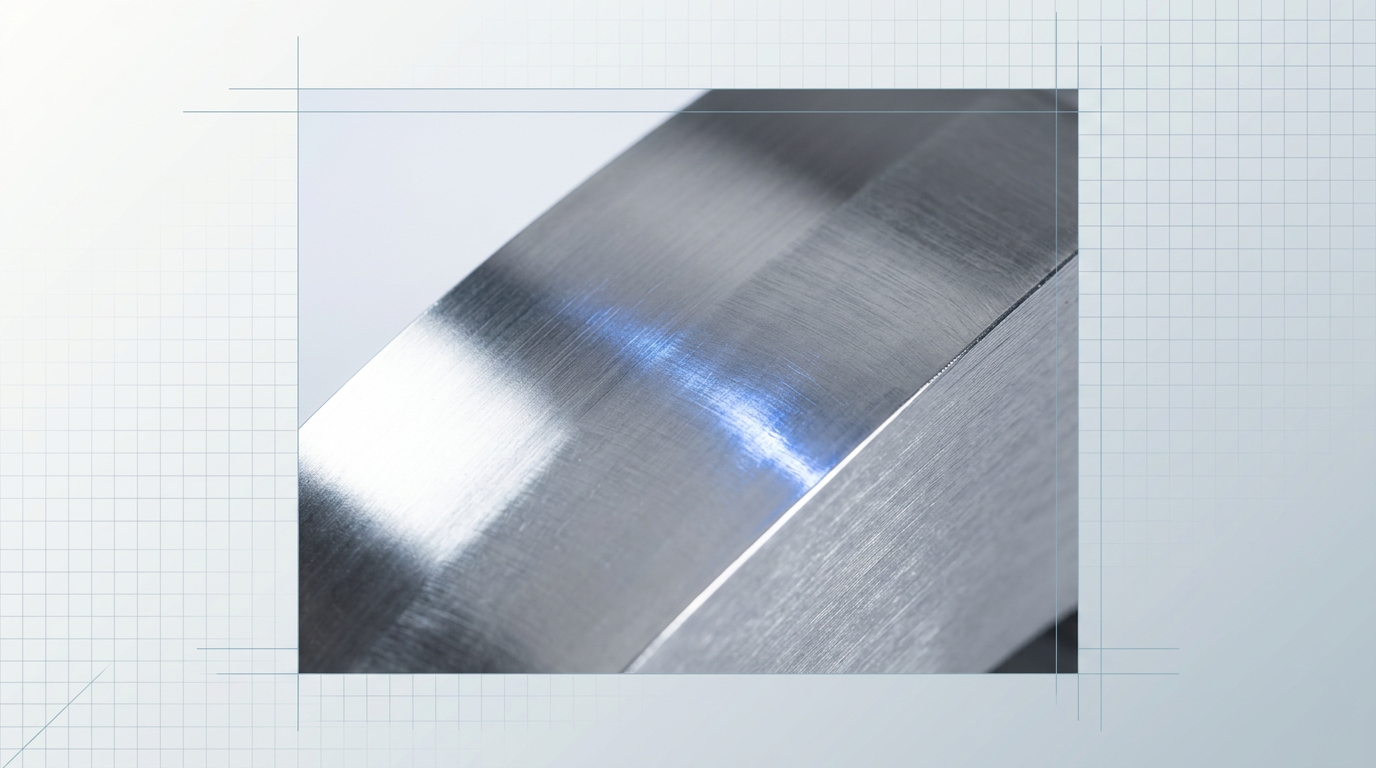
Substrate-safe cleaning reduces downstream rework
Abrasive impact erodes the substrate, creating damage requiring rework before coating or welding. Laser stops at the base.
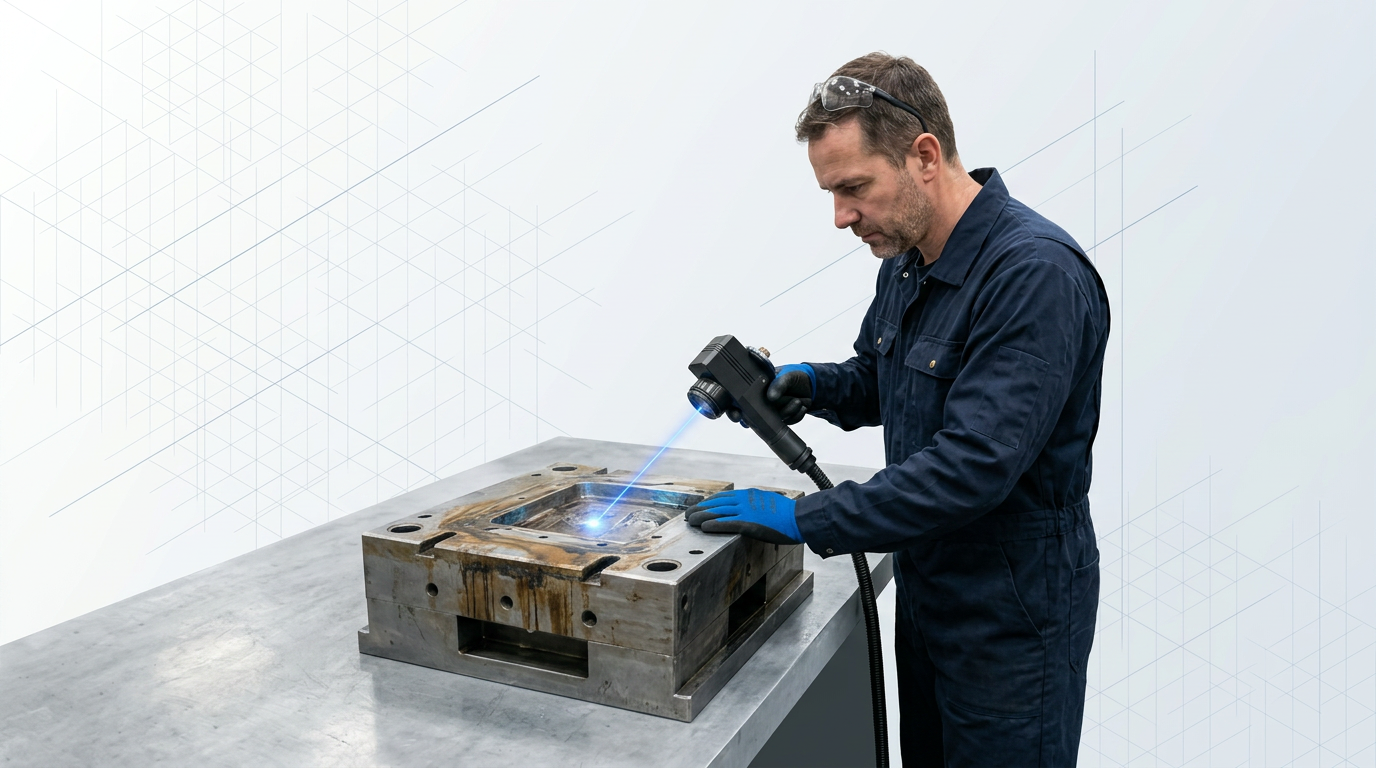
No media fill, no containment, no cleanup
No media to fill, no containment to erect, no spent abrasive to clear. That overhead disappears.
Silica Dust: A Documented Risk
Abrasive blasting with silica-containing media generates respirable crystalline silica dust — a documented cause of silicosis and lung cancer. OSHA sets a permissible exposure limit of 50 µg/m³ as an 8-hour TWA for respirable crystalline silica, reflecting the severity of the hazard.
Operators require air-supplied respirator helmets, hearing protection, coveralls, and gloves as standard. This is the baseline hazard profile that laser sandblasting replaces.
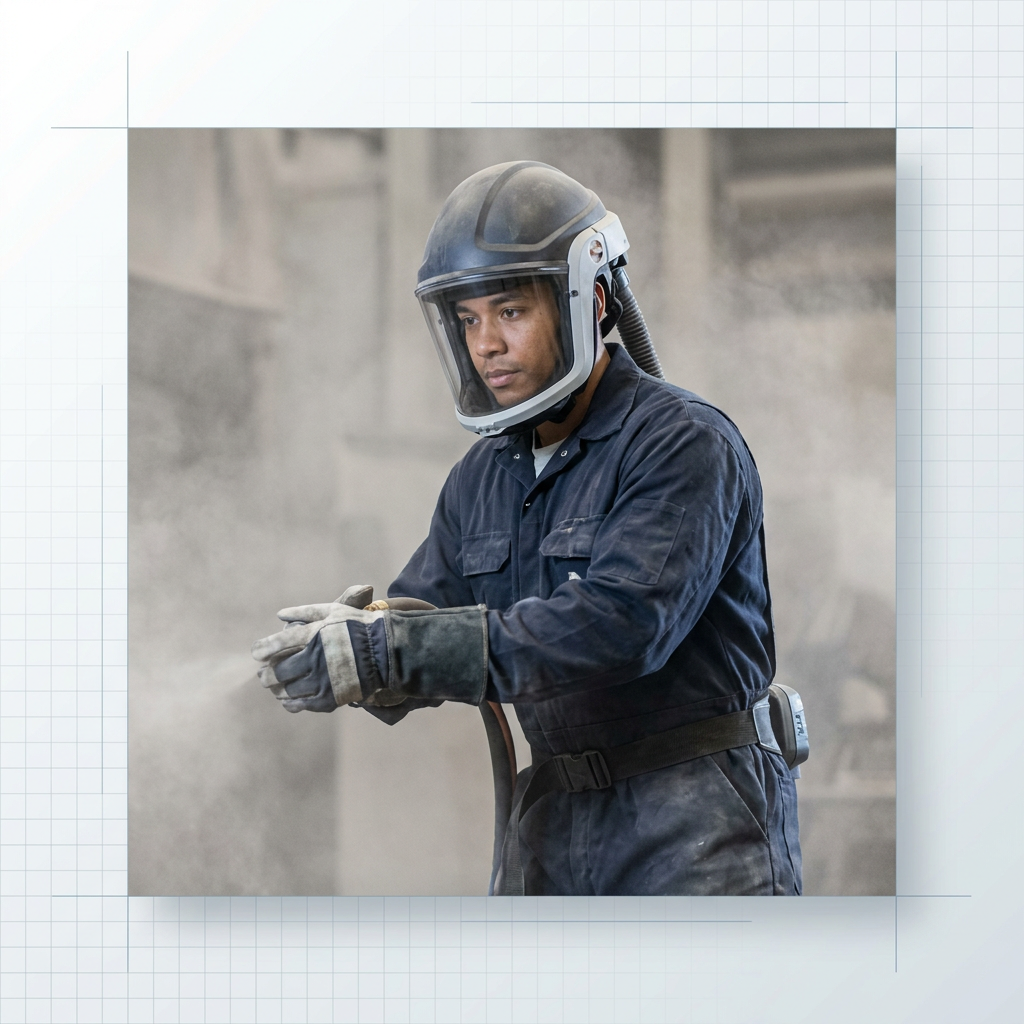
Dust Spreads Beyond the Operator
Open-air sandblasting generates airborne silica dust that can travel significant distances from the blast point. Workers in the vicinity — not just the operator — face respiratory exposure risk and require protection.
Many operations mandate restricted zones, blast cabinets, containment tents, or fully sealed enclosures to control dust spread. That containment overhead adds time, logistics, and coordination to every job before a single pass is made.
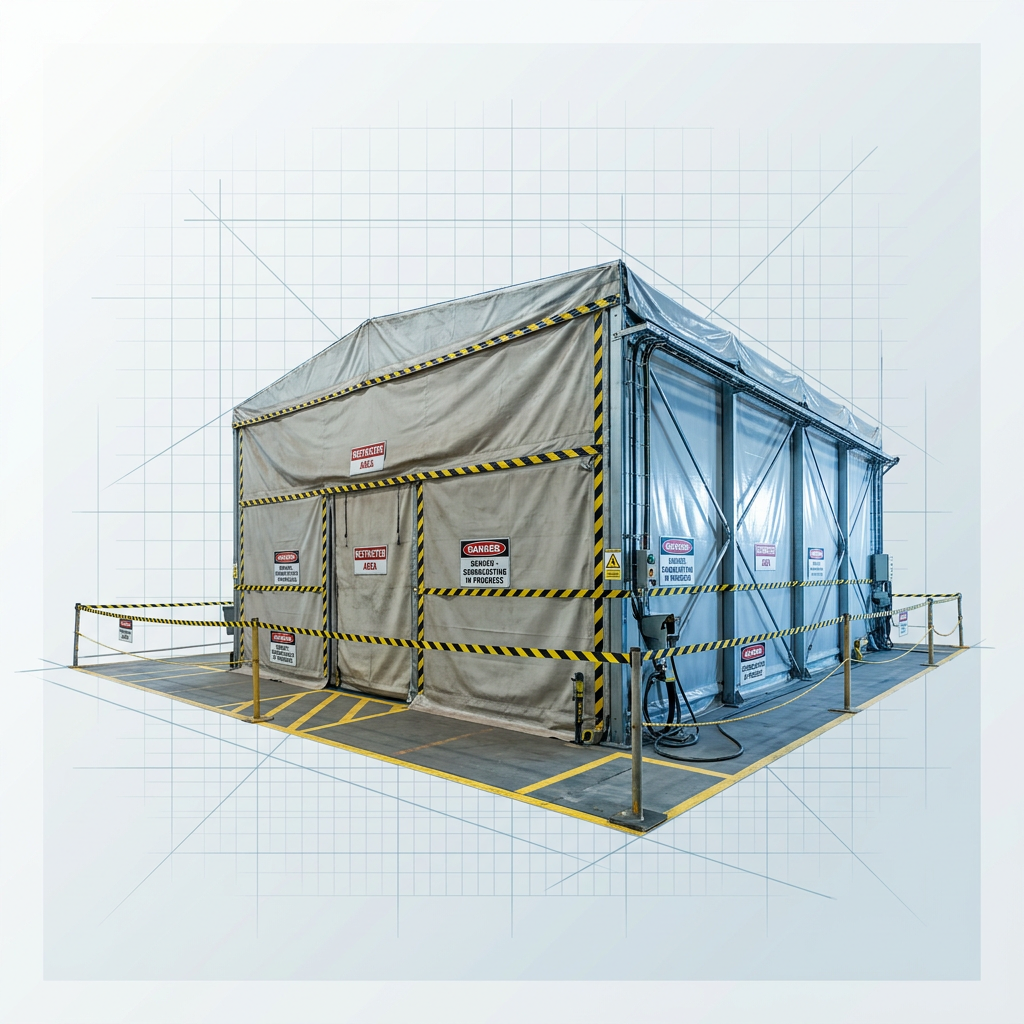
No Dust, No Silica Risk
Laser cleaning uses focused photon energy, not abrasive impact. Because there is no abrasive media, there is no silica dust generation — and no airborne particulate hazard from the cleaning process itself.
The respiratory disease risk associated with abrasive blasting is not mitigated by laser cleaning — it is eliminated at source. The mechanism is fundamentally different, and the hazard simply does not exist when you switch to a laser sandblaster.
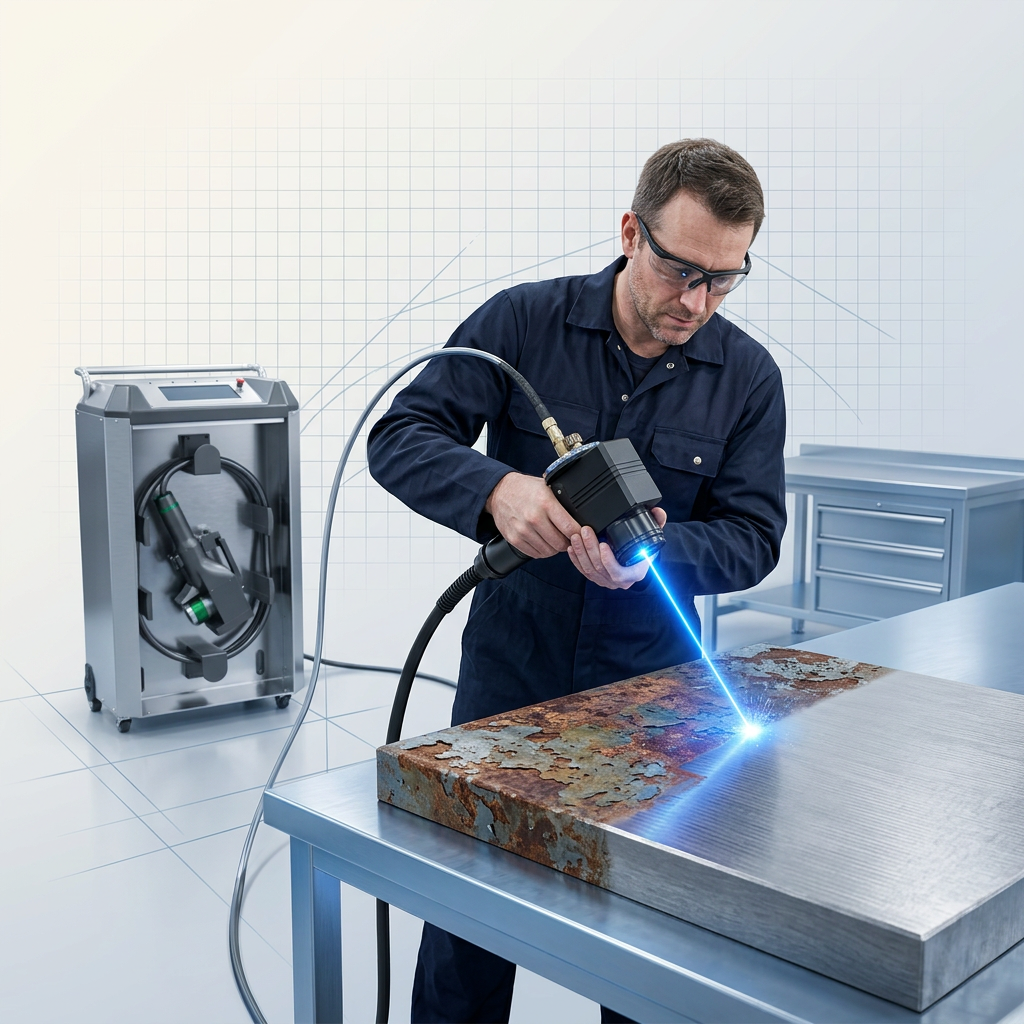
WSL's Reduced Hazard Zone
Industrial laser cleaning systems are Class IV lasers that ordinarily require defined hazard zones. WSL's patented Reduced Hazard Zone (RHZ) technology collapses that zone to a small area around the work — enabling cleaning in open workshops, mixed-use facilities, and public-facing settings without sealing off the area.
This capability is available on the ELASER-RHZ and on AutoLASE with the RHZ upgrade. It is the only technology of its kind in the world, provided exclusively by WSL.
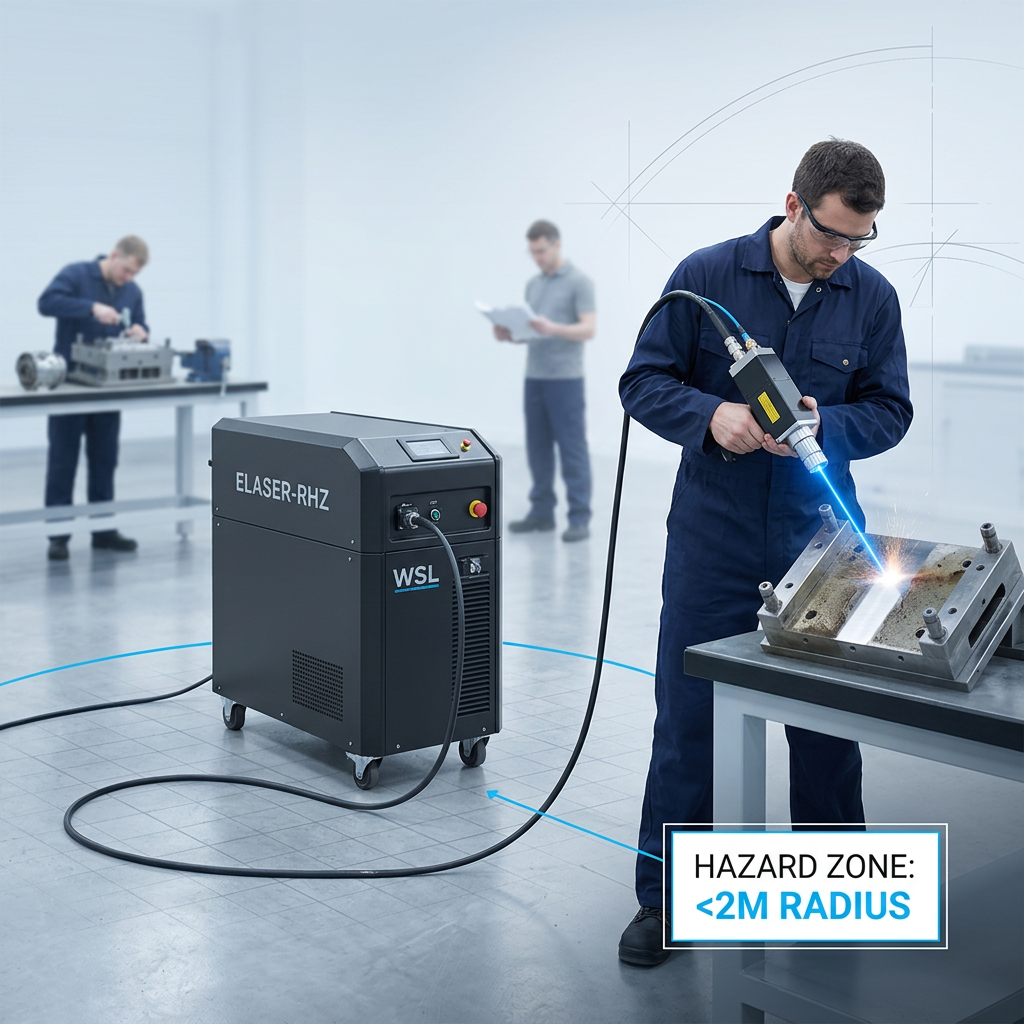
A Materially Safer Cleaning Method
WSL provides first-class operator training for all systems as a core part of the package. Safety competence is built in from day one, not treated as an afterthought.
The net verdict: laser sandblasting replaces a well-documented chronic occupational health hazard — silica dust, silicosis, lung cancer risk — with a different hazard profile that WSL's RHZ technology and training programme substantially mitigate. For operators making the switch, the safety case is clear.
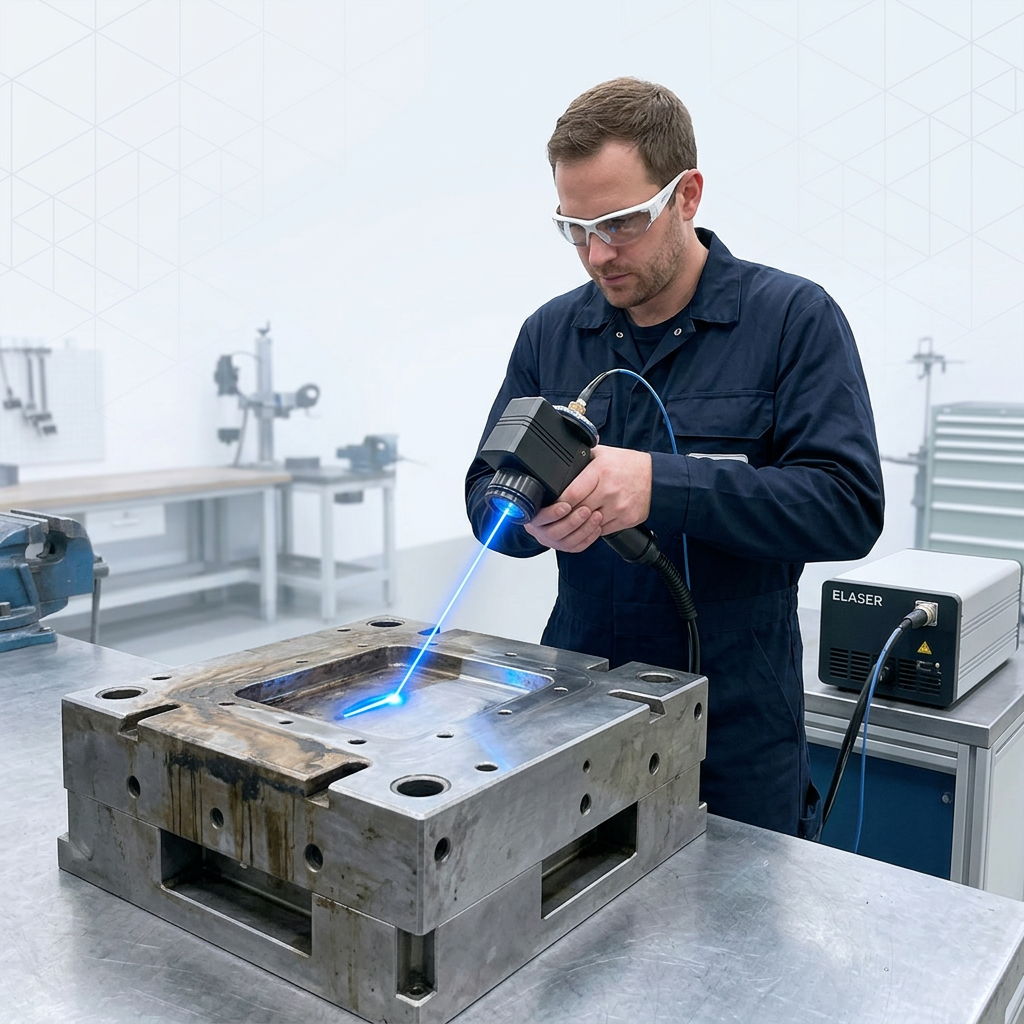
Britain's Only Laser Cleaning Manufacturer, Built In-House
WSL is the only UK-based laser cleaning manufacturer — designing, building, servicing, and improving every system in-house at its British facility. That matters: many laser cleaning systems sold in Europe are imported and rebadged by distributors with no engineering team behind them. When support is needed, they go back to the foreign OEM. WSL does not.
Founded in 2012, with over 200 years of combined engineering experience, WSL developed and patented the world-first RHZ eye-safe system — not licensed, not sourced elsewhere. All systems are CE and UKCA certified, with bespoke engineering available. Get in touch to discuss your requirements.
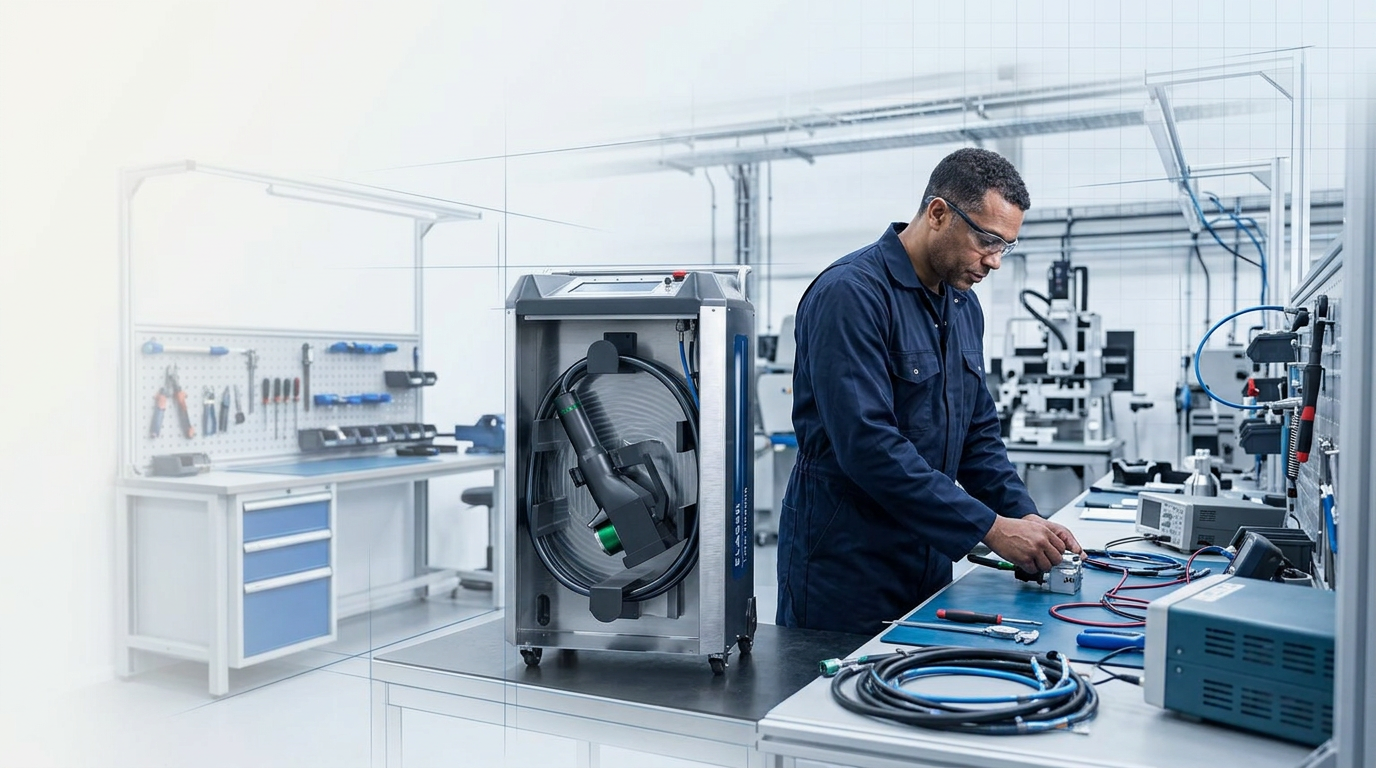
Which WSL Laser Sandblaster Is Right for You?
Both systems deliver laser-based surface cleaning without abrasives, media, or secondary waste. The right choice depends on your operational context, not on cleaning performance.
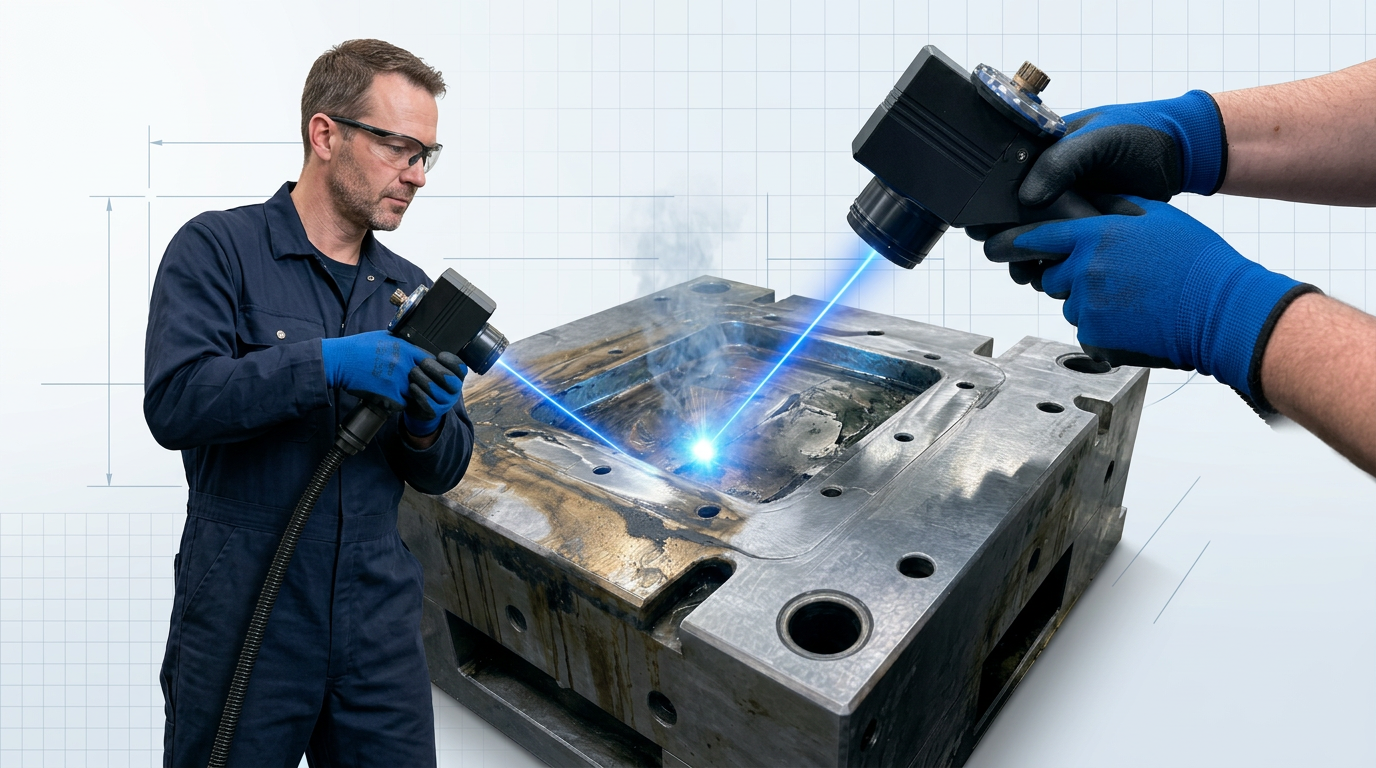
Choose ELASER: On-Site and Mobile Cleaning
Varied jobs, different locations, single operator. The ELASER's sub-3 kg scanner with up to 50 m reach replaces handheld or mobile sandblasting on site.
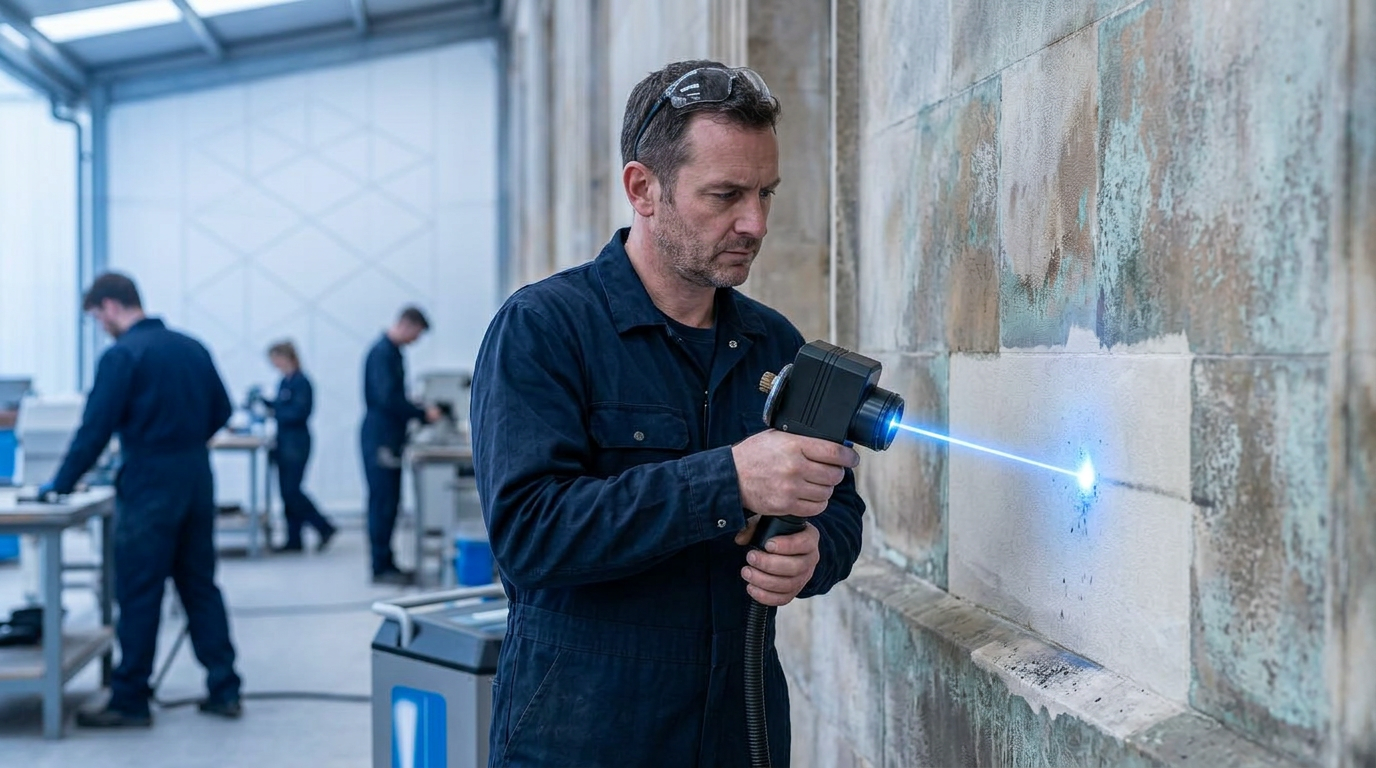
Choose ELASER-RHZ: Open or Public Settings
When your environment is open, mixed-use, or public-facing, the ELASER-RHZ's world-first patented RHZ technology enables cleaning without sealing off the area.
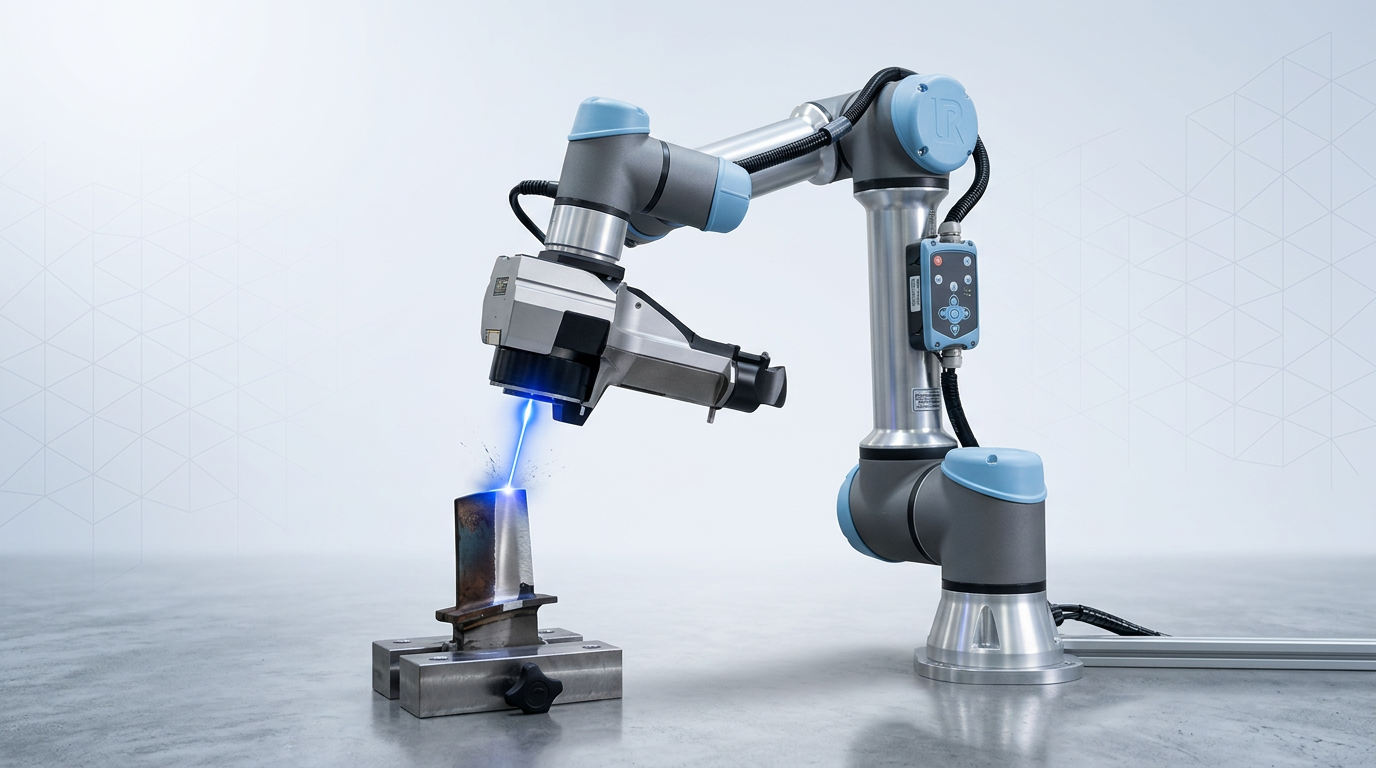
Choose AutoLASE: Production and Batch Cleaning
Repetitive cleaning requirement? Load the part and AutoLASE does the rest. Machine vision generates the clean automatically — no programming, no manual labour.
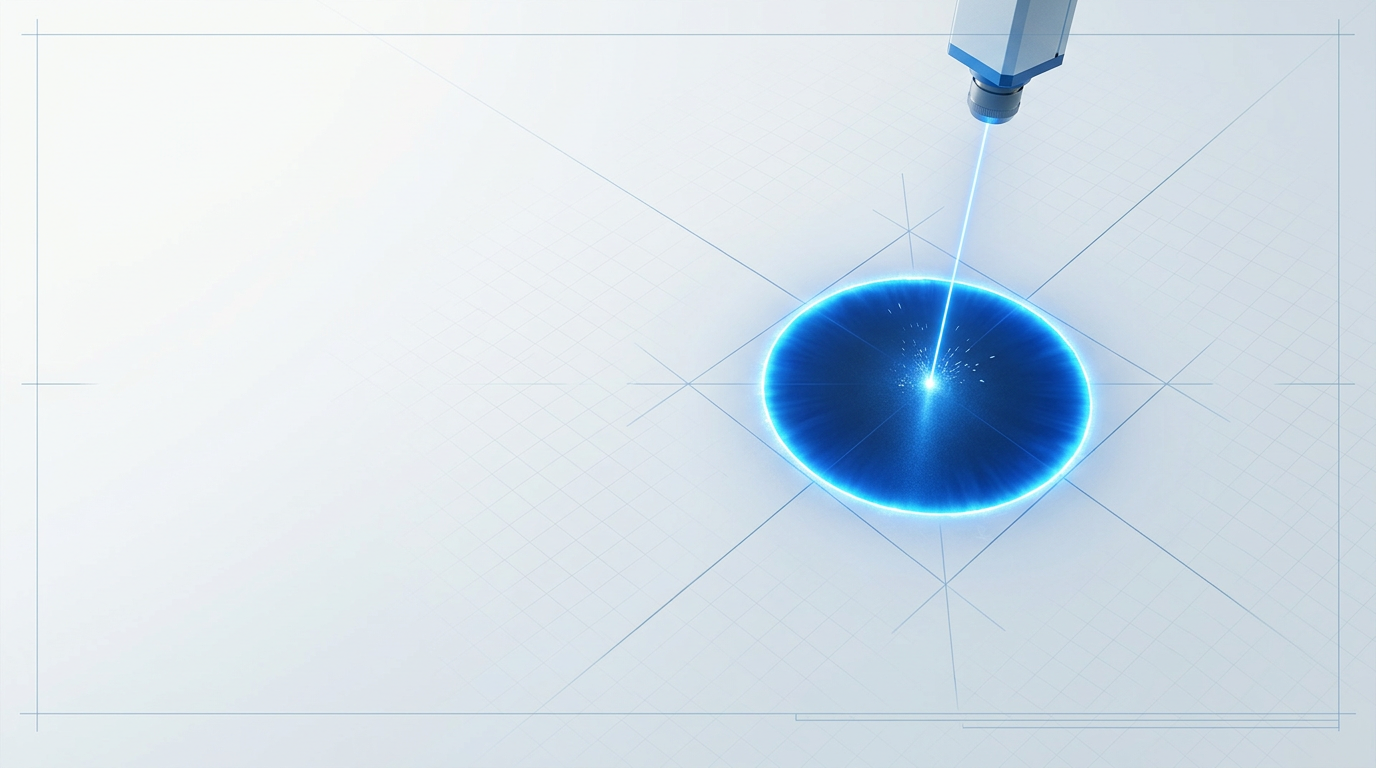
RHZ Technology Available on Both Systems
ELASER-RHZ and AutoLASE (with optional RHZ upgrade) both support reduced-hazard-zone operation, enabling cleaning without full area clearance or a sealed enclosure.
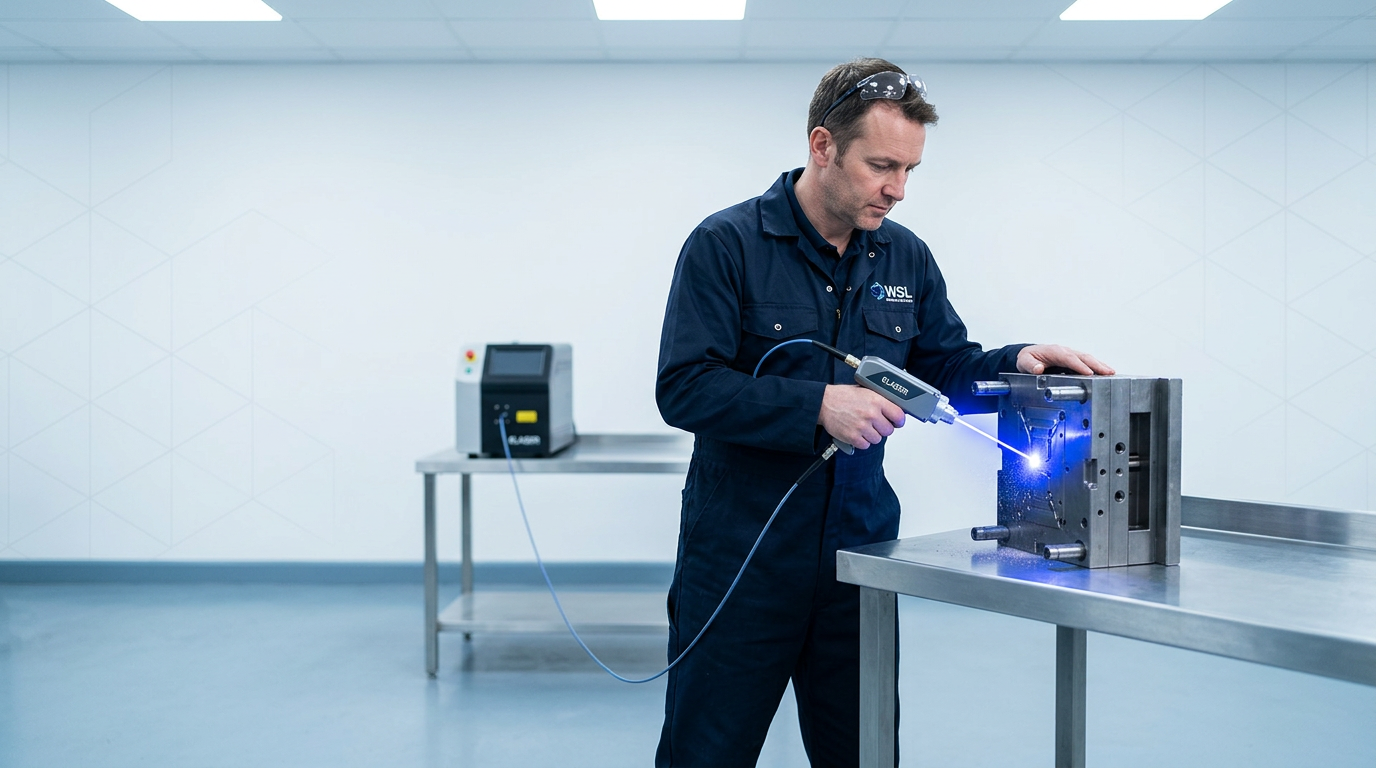
Both Built in Britain, Certified, Fully Supported
Both systems are made in Britain by WSL, CE and UKCA certified, and backed by WSL's in-house engineering and support team.
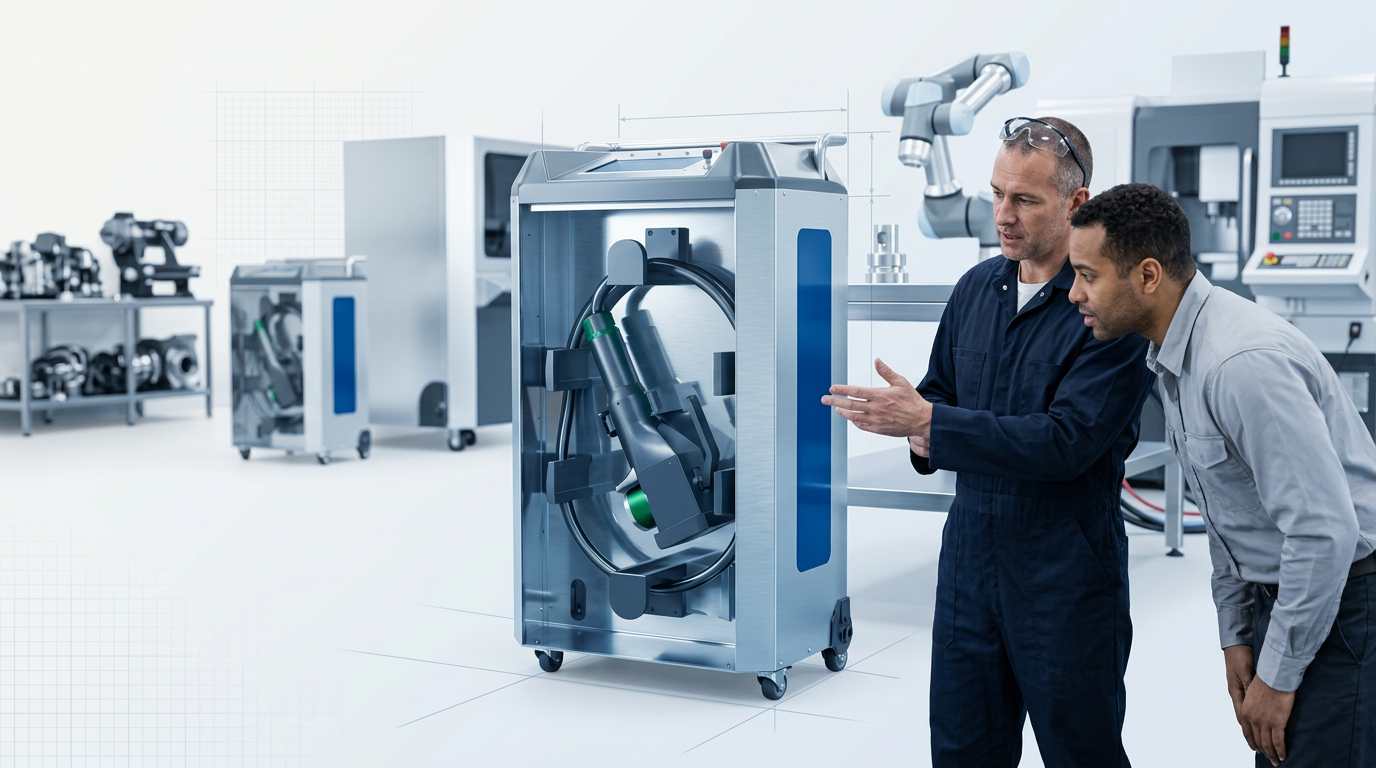
Not Sure? WSL's Team Can Advise
WSL's engineers can assess your application and recommend the right system. Get in touch to discuss your requirements and arrange a consultation.
Laser Sandblaster: Frequently Asked Questions
Common questions about WSL laser sandblasting systems, answered directly. If your question isn't covered here, WSL's engineering team is happy to help — get in touch.
Yes. WSL laser sandblasting systems remove rust, mill scale, paint, powder coating, weld discolouration, oxides, oil, grease, carbon, adhesives and more from steel, aluminium, cast iron, copper, brass, bronze, titanium, stone, masonry and other surfaces — the full range of use cases a conventional sandblaster covers. The key difference is that a laser does all of this without any abrasive media. Power is tunable from 0–100%, so one system handles everything from light surface oxides through to heavy mill scale and thick coatings.
Pulsed laser energy is absorbed by the contaminant layer, causing rapid thermal expansion that vaporises or sublimates the contamination — a process called ablation. The beam's interaction threshold discriminates between the contaminant and the base material beneath it: once the contaminant is gone, the energy is no longer absorbed in the same way, and the substrate is left intact. There is no physical impact, no abrasive, and no media involved. The result is precise, controlled removal — the laser takes off only what needs removing and stops at the base material.
Yes, with appropriate controls and trained operators. Industrial laser cleaning systems are Class IV lasers, which require defined safety controls and operator training — this is standard for the technology class. WSL addresses this directly on two fronts. First, WSL's patented Reduced Hazard Zone (RHZ) technology dramatically shrinks the laser hazard zone, enabling cleaning in open workshops, mixed-use facilities, and public-facing settings without sealing off the area. Second, WSL provides first-class operator training with every system as a core part of the package — safety competence is built in from day one. For operators familiar with the PPE and containment demands of sandblasting, laser cleaning with WSL's systems represents a materially simpler safety picture.
The ELASER-RHZ is the world's only laser cleaner with patented eye-safe Reduced Hazard Zone (RHZ) technology — a world first, exclusive to WSL. Conventional laser cleaners require the hazard zone to be sealed off before work begins. The ELASER-RHZ collapses that zone to a small area immediately around the work, so cleaning can continue in open workshops, mixed-use facilities, and publicly accessible spaces without evacuating the area. No other laser cleaner in the world offers this capability. It is the same portable, handheld ELASER platform — air-cooled, consumable-free, single-operator — with the RHZ technology built in, removing the biggest practical barrier to laser cleaning adoption.
No. WSL's laser sandblasting systems are air-cooled and consumable-free — they require only a standard single-phase electrical supply (110–250 VAC). There is no compressor, no water circuit, and no coolant infrastructure needed. Plug in and clean.
WSL does not publish fixed pricing — both systems are available on a contact-for-quote basis. What can be said clearly: WSL is the European cost leader among comparable industrial laser cleaning machines, with competitive pricing achieved through in-house manufacturing efficiency, not by compromising on quality. On the question of cost versus sandblasting, the right frame is total cost of ownership. Laser cleaning carries no consumable costs, no abrasive media, no waste disposal, no compressor maintenance, and less rework from substrate damage. Those savings compound over equipment lifetime. Contact WSL for a quote and a TCO discussion specific to your application.
The difference is operational context, not cleaning capability — both systems deliver the same laser sandblasting performance. The ELASER / ELASER-RHZ is a portable, handheld system designed for on-site and mobile cleaning. A single operator wheels it to the job, picks up the sub-3 kg scanner, and works across surfaces manually. It suits varied jobs, different locations, and field use. AutoLASE is an automated system with a robotic arm and machine-vision 3D scanning. Load a part, and the system scans it, builds a 3D map, and generates the cleaning path automatically — no programming or path-setting required. It is built for repetitive production cleaning where consistency and throughput matter. Both can be configured with RHZ technology for reduced-hazard-zone operation.
Yes, with the optional RHZ upgrade. WSL's eye-safe Reduced Hazard Zone technology is the only solution worldwide that enables automated laser cleaning without a full enclosure cell. No other automated laser cleaning system can offer this. The RHZ upgrade collapses the hazard zone to a small area around the work, removing the need to build or install a sealed enclosure. For production environments where floor space, installation cost, or operational flexibility matter, this is a significant advantage — automated laser sandblasting with no enclosure overhead.
Woodrow Scientific Limited (WSL) — the only UK-based laser cleaning manufacturer. Founded in 2012, WSL designs, builds, services, and improves every system in-house at its British facility. It is not a reseller. This distinction matters: a significant portion of laser cleaning systems sold in Europe are imported and rebadged by distributors with no in-house engineering capability — meaning slower support, no genuine product improvement, and no real accountability when something needs fixing. WSL's in-house model means genuine engineering support, direct access to the people who built the machine, and a product that can actually be developed over time. The team brings over 200 years of combined engineering experience, including the patented, world-first RHZ technology.