
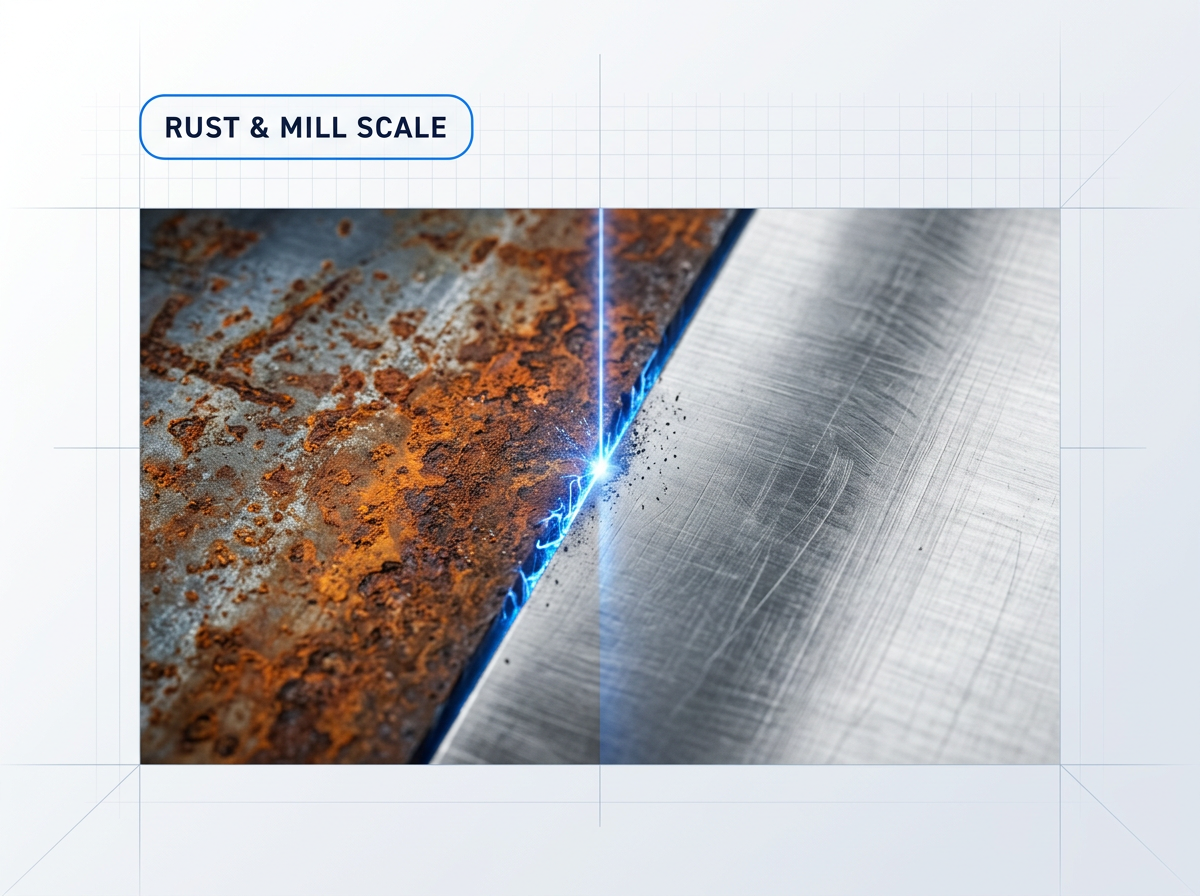
Every Common Contaminant, Covered
Coverage spans every major category of industrial contamination. Corrosion products — rust, oxides, mill scale, tarnish, and weld discolouration. Coatings — paint, powder coating, lacquer, and primer. Organic contamination — oil, grease, carbon, soot, and mould. Residues — adhesives, release agents, and graffiti. Whether the task is light surface oxidation or a heavy coating build-up, the same machine handles it without chemicals, abrasives, or consumables.
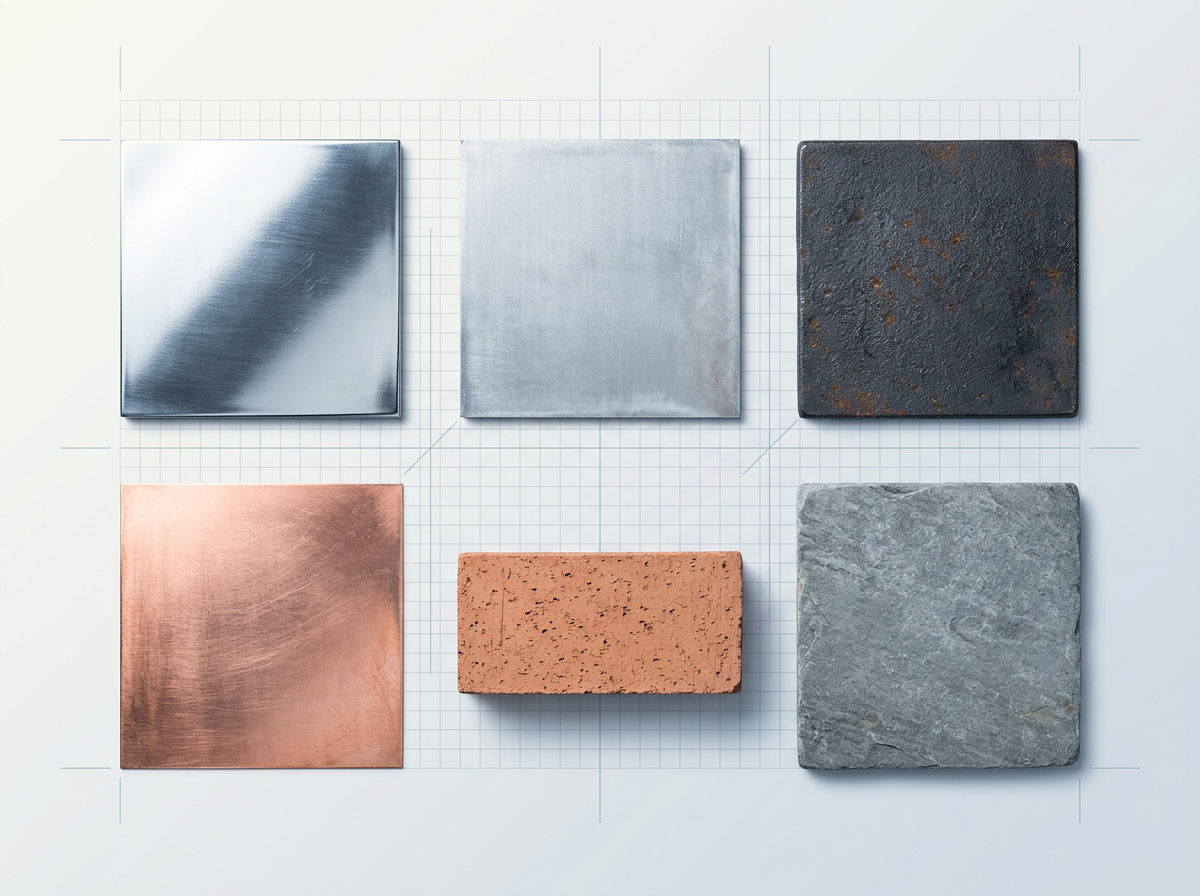
Metals, Stone and Masonry
Coverage is not limited to a single metal or material class. Ferrous metals include steel, carbon steel, cast iron, and galvanised. Non-ferrous metals include aluminium alloys, copper, brass, bronze, and titanium. Beyond metals, the same machine cleans stone, concrete, brick, and masonry — making it equally suited to industrial metalwork and heritage or structural surfaces. One machine, one consistent cleaning approach, across the full range of substrates you are likely to encounter.
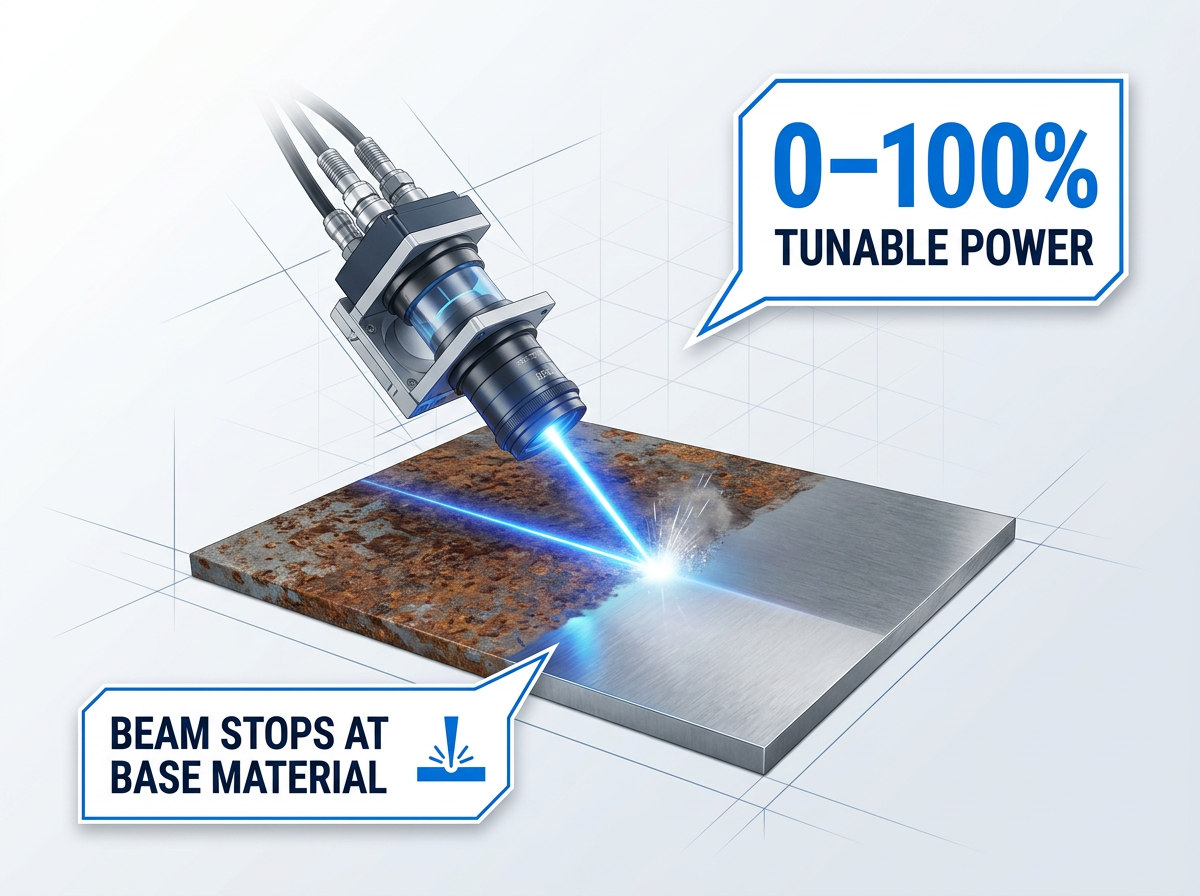
One Machine, Any Task
Power is tunable from 0–100%, so a single machine spans light surface oxides through to thick, heavy coatings — no need for separate systems configured to different cleaning tasks. Precision is matched to breadth: the beam stops at the base material, removing only the contamination and leaving the substrate intact. Less surface damage means less rework and better part outcomes. Breadth of coverage and precision of control come from the same machine.
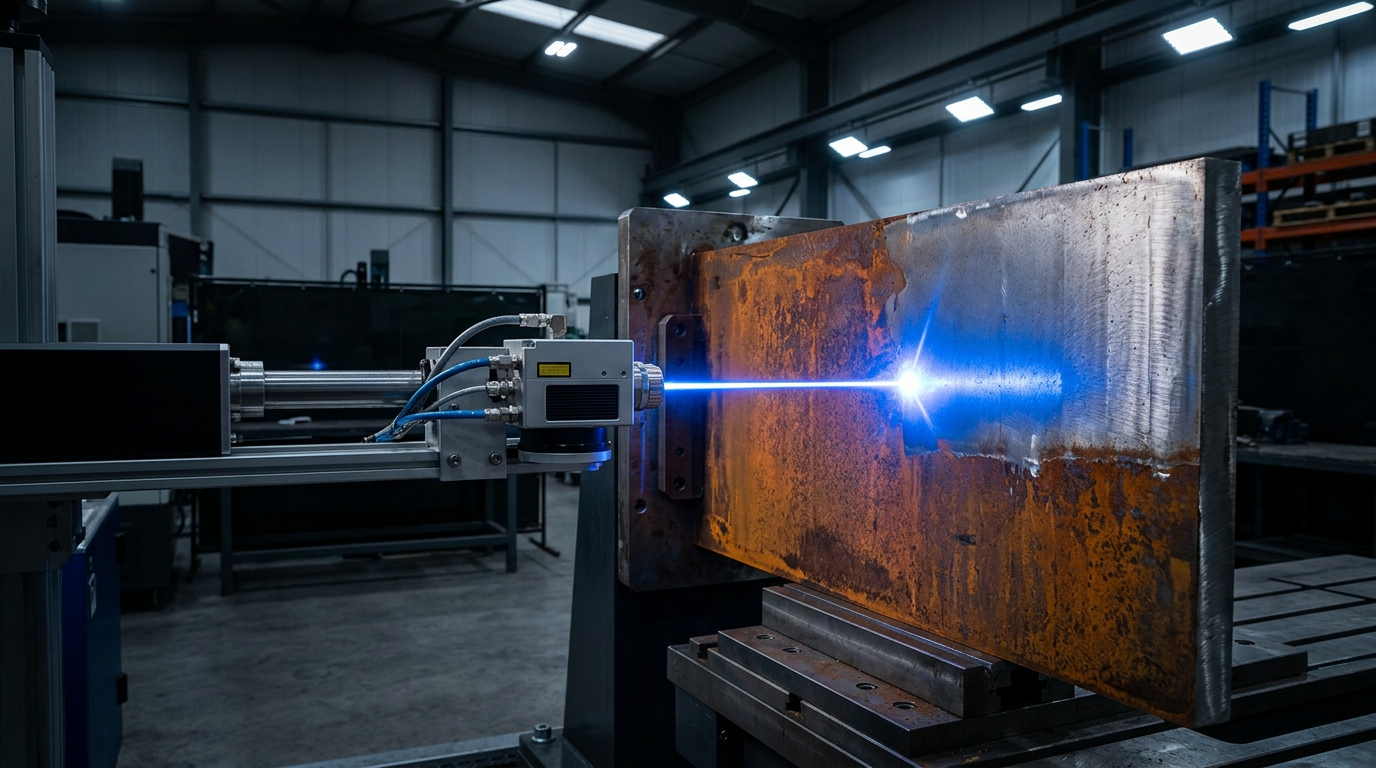
ELASER and ELASER-RHZ: Portable Industrial Laser Cleaning
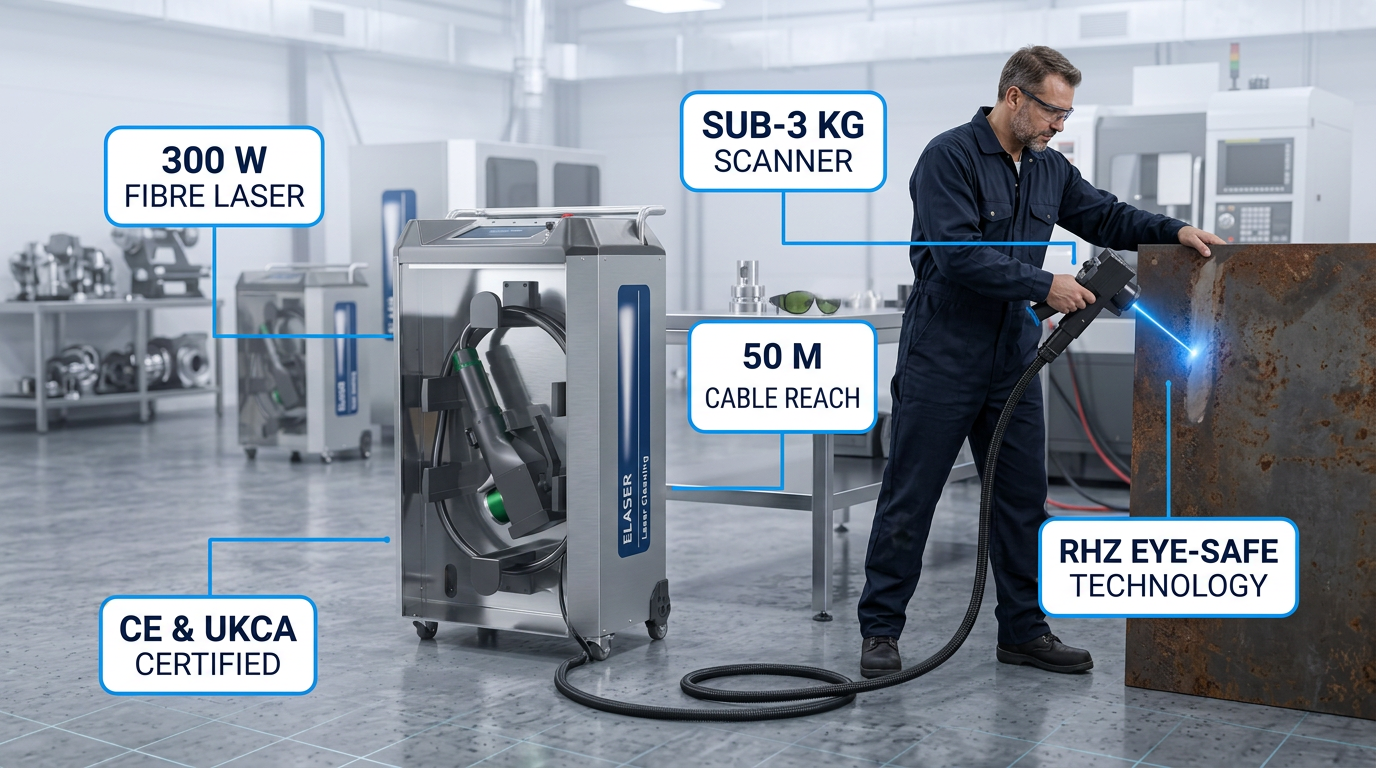
The ELASER-RHZ is the world's only laser cleaner with WSL's patented Reduced Hazard Zone (RHZ) technology, which collapses the laser hazard to a small area around the work. That means cleaning in open workshops, mixed-use facilities, and public-facing environments where conventional laser cleaning cannot operate.
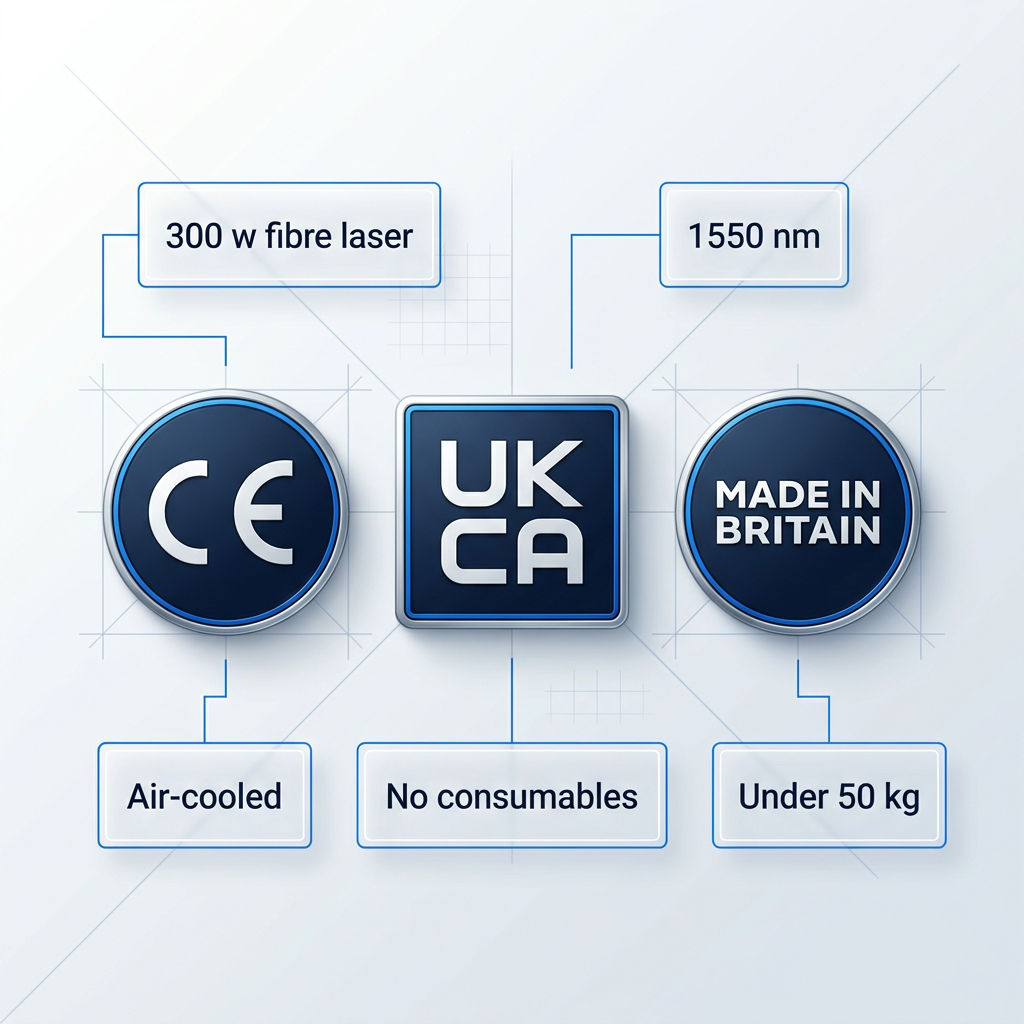
Self-contained and wheeled, with a sub-3 kg handheld scanner and up to 50 m delivery cable — no compressor or consumables. Power reaches 300 W at 1550 nm, tunable 0–100%, air-cooled. Competitively priced across Europe, CE and UKCA certified, Made in Britain — covering automotive, aerospace, heritage, tooling, and beyond.
AutoLASE: Automated Laser Cleaning for Production Lines
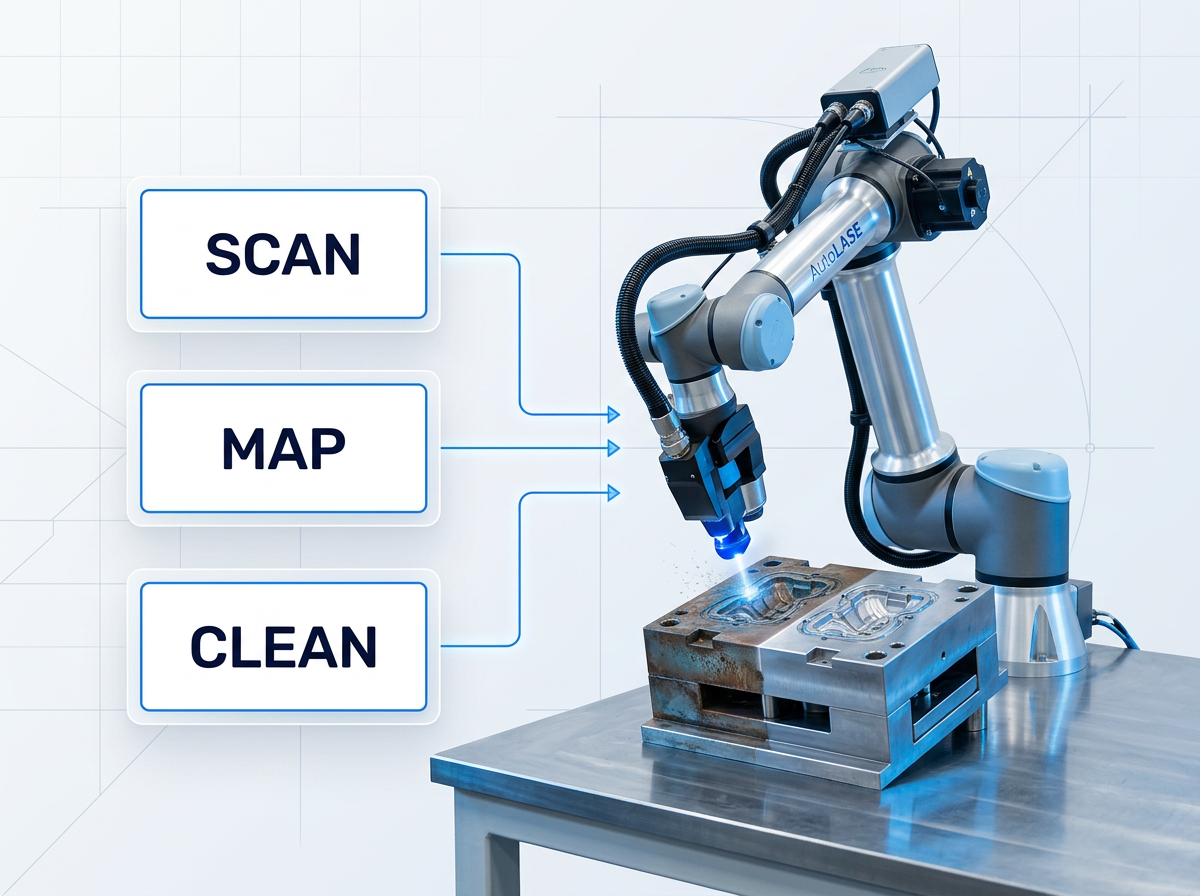
Load the part — AutoLASE does the rest. Machine vision scans it, builds a 3D map, and generates the optimal cleaning path automatically. No programming, no path-setting, no specialist knowledge required. Anyone on the production floor can run it.
Configured with WSL's optional Reduced Hazard Zone (RHZ) upgrade, AutoLASE needs no enclosure — a capability no other automated laser cleaning system offers. The multi-axis articulated arm reaches complex 3D contours and integrates with your existing robots or arrives as a complete custom cell.
Up to 300 W, air-cooled, no consumables. CE and UKCA certified. Made in Britain. Proven across injection moulds, automotive and aerospace components.
See AutoLASE in Full Detail
Load the part and walk away. AutoLASE handles scanning, path planning, and cleaning automatically — no programming, no specialist operator. Explore the full product page to see specifications and capabilities.
The Only Laser Cleaning Manufacturer Built in Britain
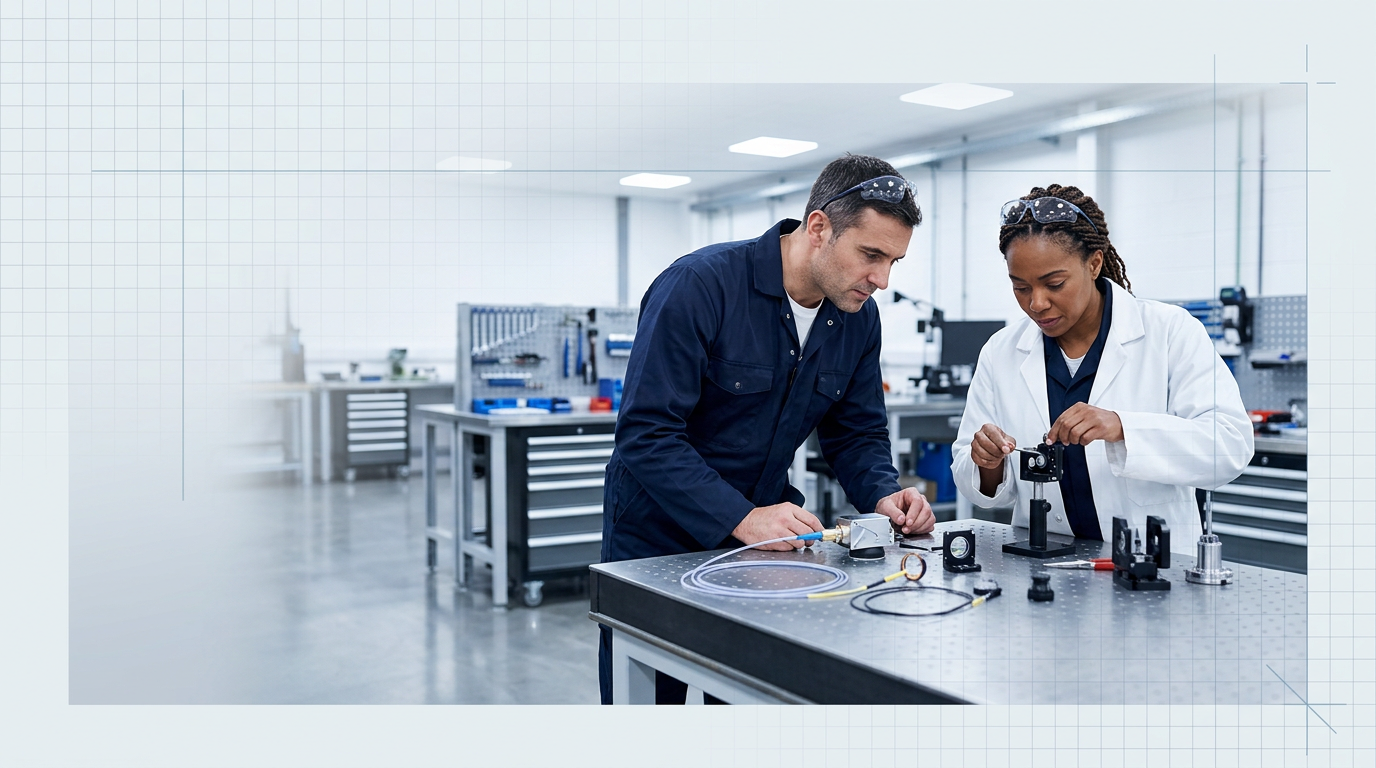
Woodrow Scientific has designed, built, and supported its own laser cleaning machines in-house since 2012 — drawing on 200+ years of combined engineering experience and patented, world-first technology. We are not a reseller rebadging imported hardware. That distinction matters for capital equipment: it means direct access to the engineers who built your machine and no third-party intermediary slowing support.
Both machines carry CE and UKCA certification — the conformity marking required for machinery placed on the GB market. Consult the HSE machinery guidance and GOV.UK product-marking resources for what this means for your procurement.
No media. No chemicals. No consumables.
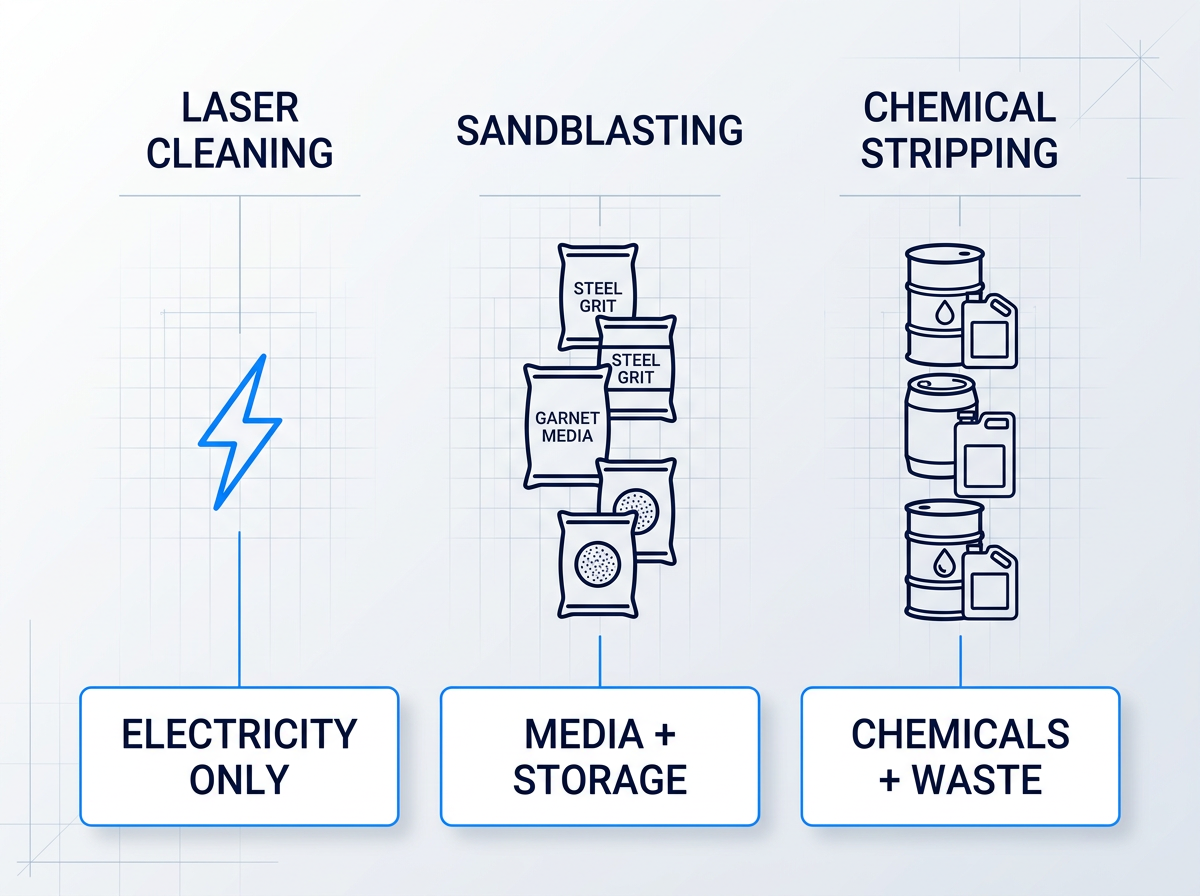
Laser cleaning runs on electricity alone. There is no abrasive media to purchase, store, or replenish, and no chemical supply chain to manage. Sandblasting requires continuous procurement of abrasive media — steel grit, garnet, glass bead — along with the containment and handling infrastructure that comes with it. Chemical stripping adds ongoing chemical purchasing, safe storage obligations, and replenishment cycles.
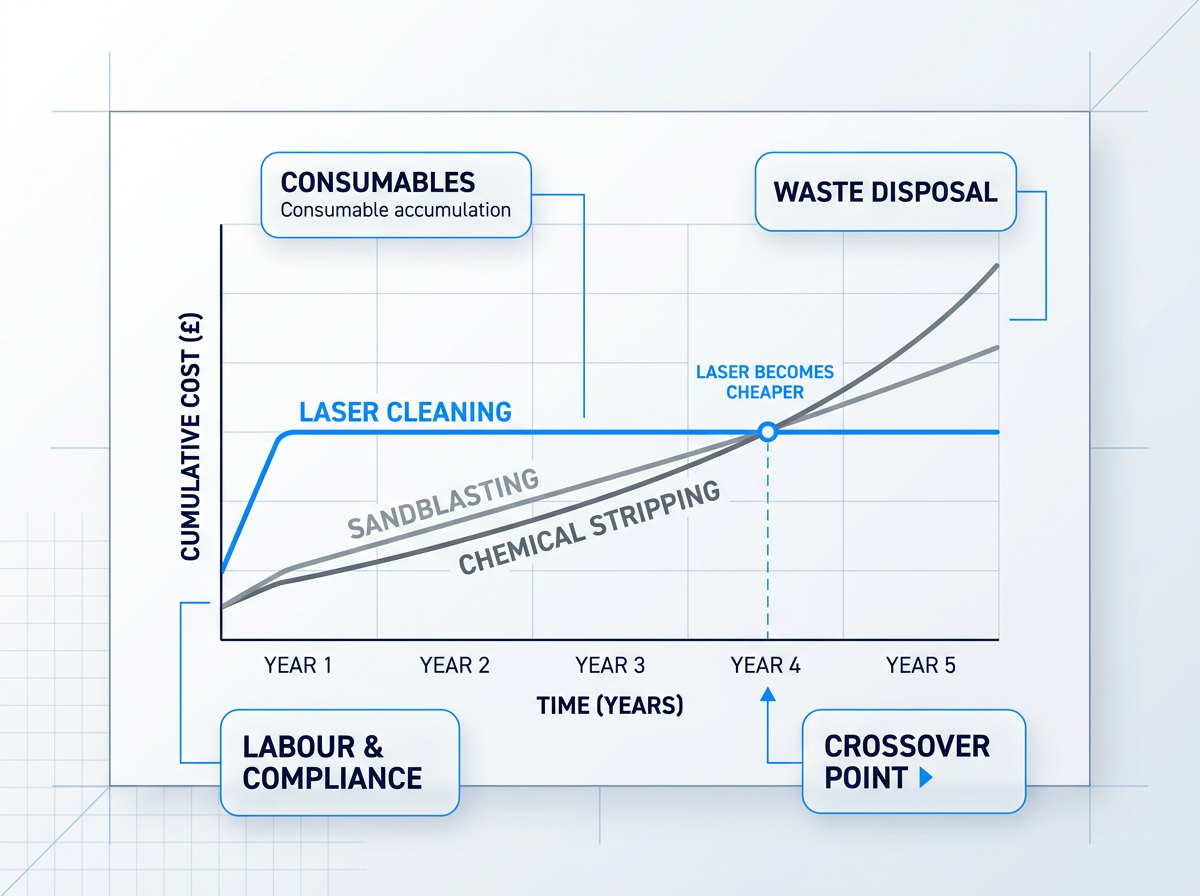
This is a structural cost difference, not a marginal one. The longer a laser system operates, the wider the gap between its running costs and those of either alternative method.
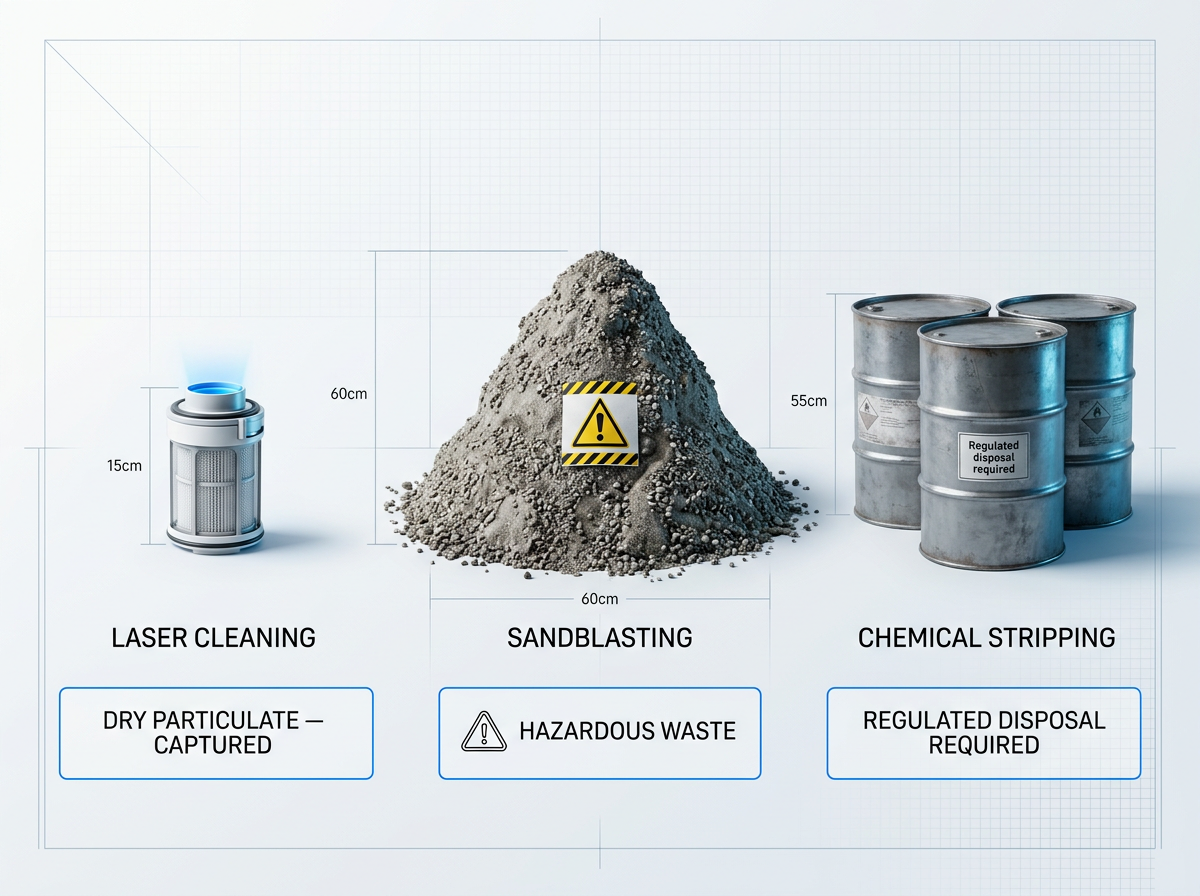
Near-zero waste. Fewer compliance obligations.
Laser cleaning produces near-zero VOC emissions and no hazardous liquid waste. Ablation debris is captured as dry particulate by an integrated extraction system. Chemical stripping generates spent solvents and rinse effluent that must be collected, transported, and disposed of under UK environmental law — including duty-of-care obligations under the Environmental Protection Act and, where regulated substances are involved, UK REACH documentation requirements.
Sandblasting produces spent abrasive that may classify as hazardous waste if lead-based coatings are present. Both methods carry compliance costs that compound as regulatory requirements tighten. Consult a qualified environmental adviser for your specific regulatory position.
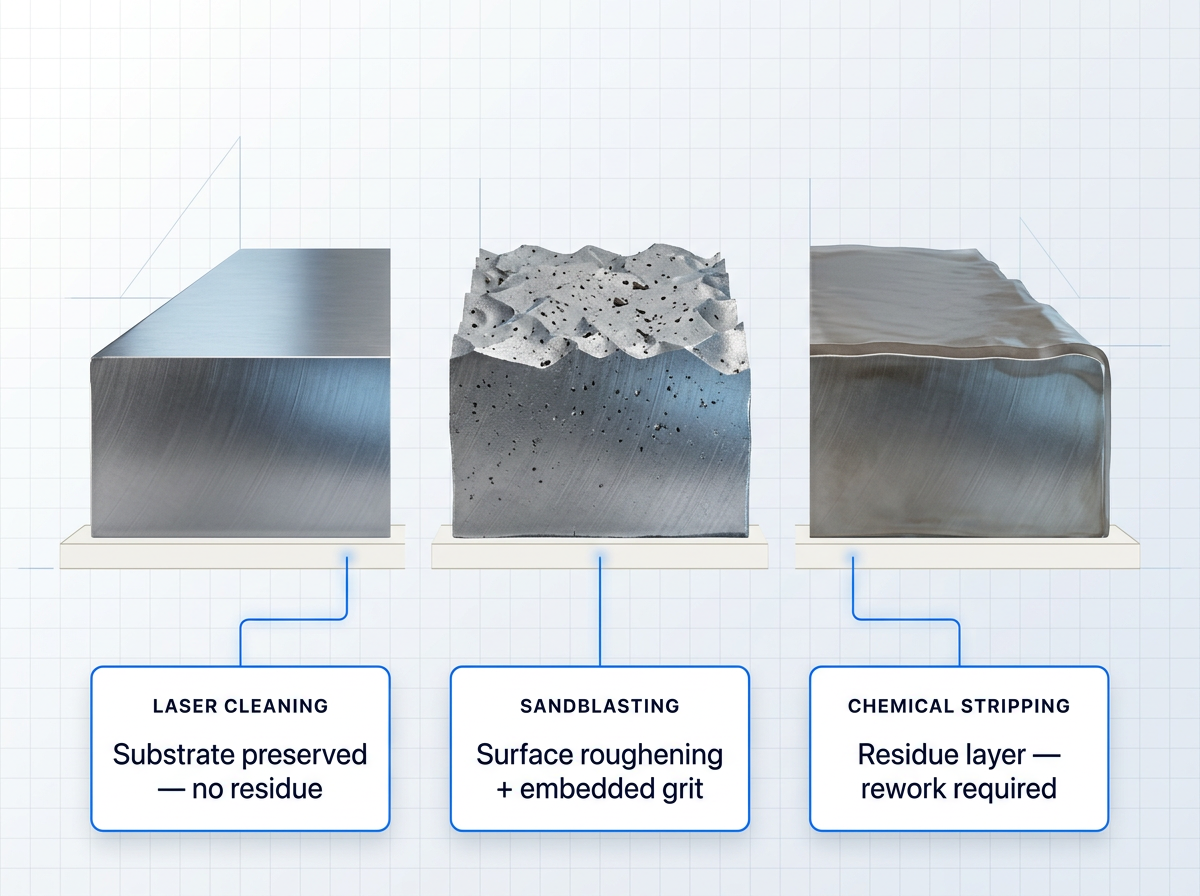
Substrate intact. No residue. Less rework.
The laser beam is absorbed preferentially by the contamination layer — rust, oxide, paint — which vaporises, leaving the base material intact. Dimensions are preserved and there is no abrasive residue embedded in the surface. Sandblasting physically impacts both contaminant and substrate simultaneously: on precision components or soft metals, this creates surface roughening and dimensional changes that can compromise part tolerances.
Chemical stripping risks attacking base materials or leaving reactive residue requiring additional processing steps. Both outcomes add rework cost and reduce downstream coating adhesion quality.
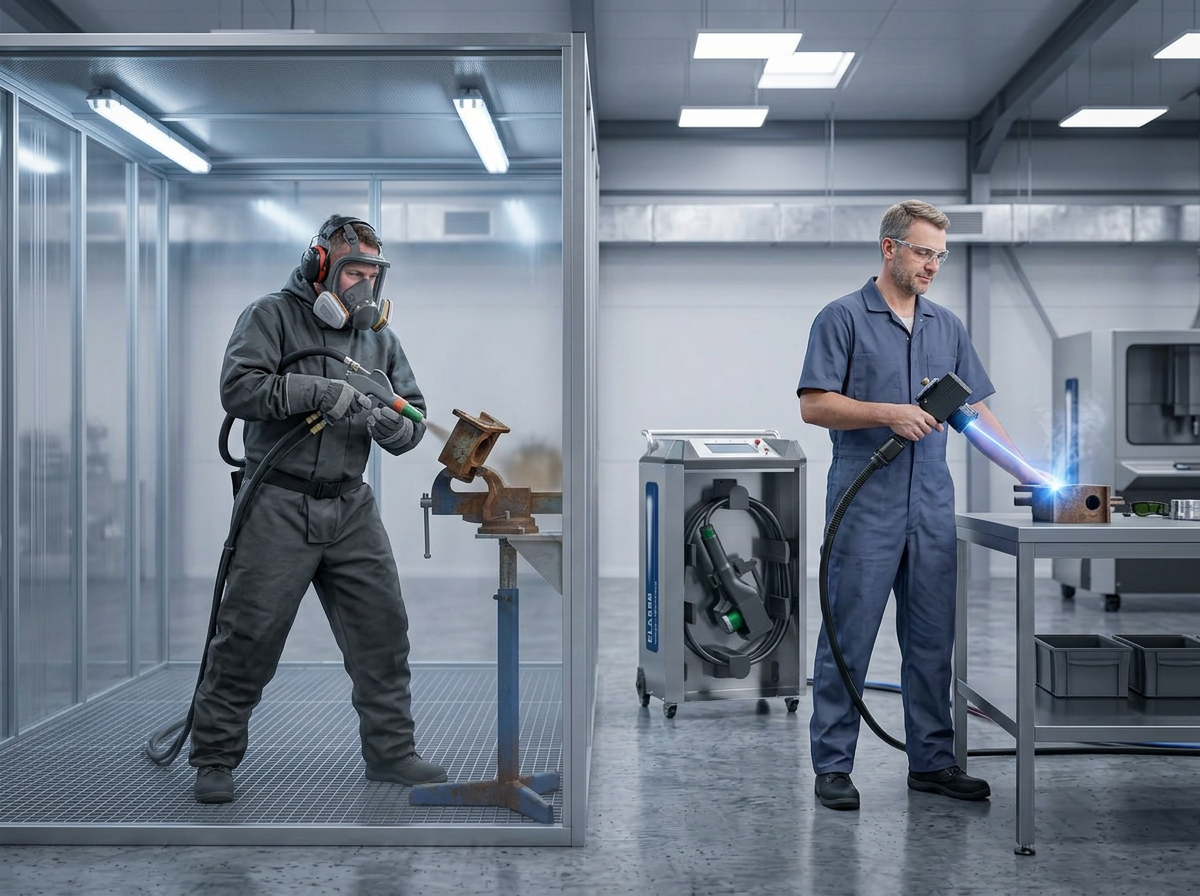
A different hazard profile
Sandblasting carries a well-documented silica dust exposure risk. HSE guidance identifies silicosis — a serious, progressive lung disease — as a recognised occupational hazard of abrasive blasting, with a workplace exposure limit for respirable crystalline silica of 0.1 mg/m³ (8-hour TWA). Chemical stripping involves toxic fume exposure, chemical handling hazards, and mandatory PPE, training, and health surveillance requirements under COSHH.
Laser cleaning's hazard profile is different in kind: the primary risk is optical, not respiratory or chemical. That risk is well-defined and manageable with appropriate controls — it does not require the same infrastructure burden as either alternative.
TCO: the right evaluation lens
Laser cleaning integrates naturally into automated production lines via standard digital interfaces, enabling consistent, repeatable cleaning cycles without manual intervention. Sandblasting and chemical stripping are significantly harder to automate to the same standard, typically requiring more operator involvement and generating more variable results.
For operations running regular cleaning cycles, the consumable and waste savings compound with every hour of use. Total cost of ownership — not purchase price — is the correct evaluation framework for any capital equipment decision of this kind. The higher the cleaning frequency, the stronger the payback case becomes.
UK Pricing: Competitive, Quote-Based, Application-Specific
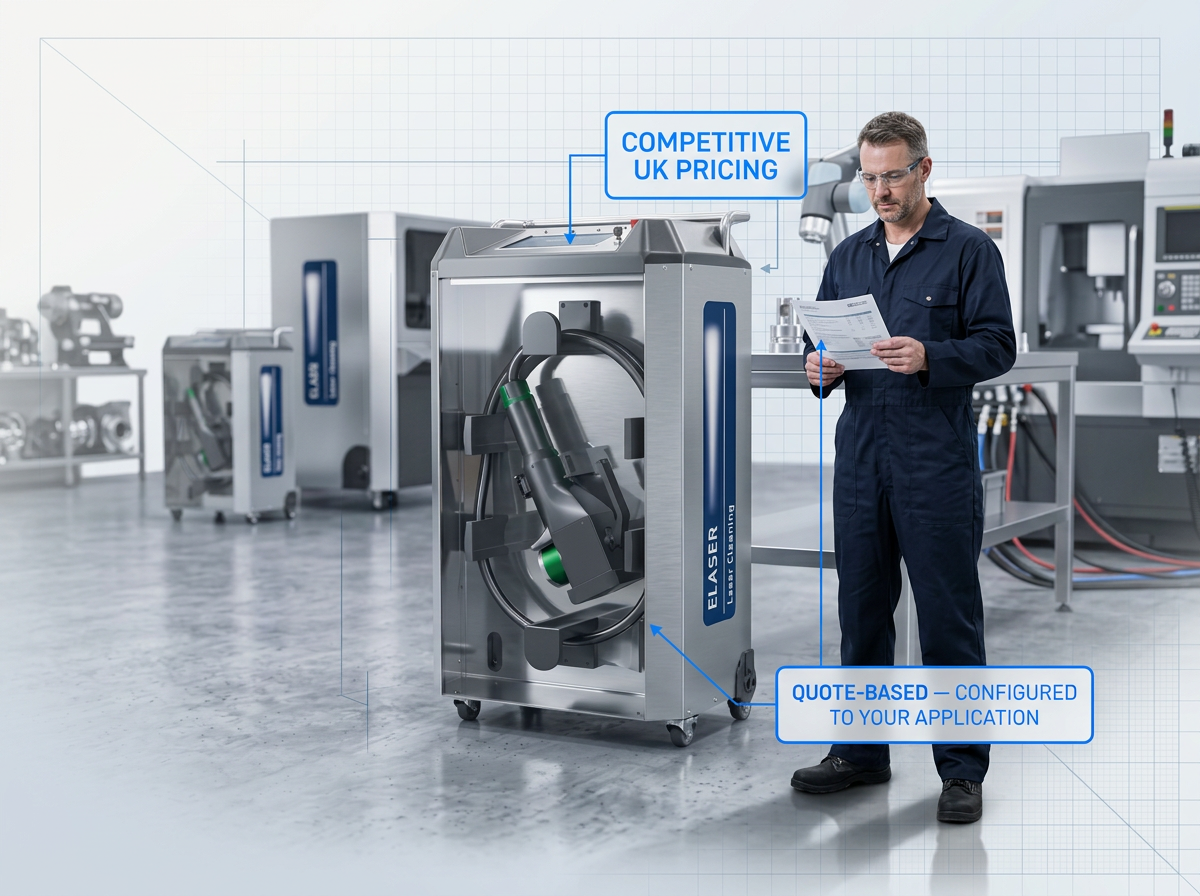
Laser cleaning machines are configured to the application — power level, options, and integration requirements vary by job. A single list price would be meaningless. Pricing is quote-based because proper specification requires knowing your process.
The ELASER and AutoLASE are the most competitively priced comparable industrial laser cleaning machines in Europe — achieved through in-house manufacturing efficiency, not quality compromise.
As the operating cost comparison shows, the relevant number is total cost of ownership: zero consumables, less downtime, less rework. Training, support, and in-house engineering are part of the WSL relationship — not extras from a third party.
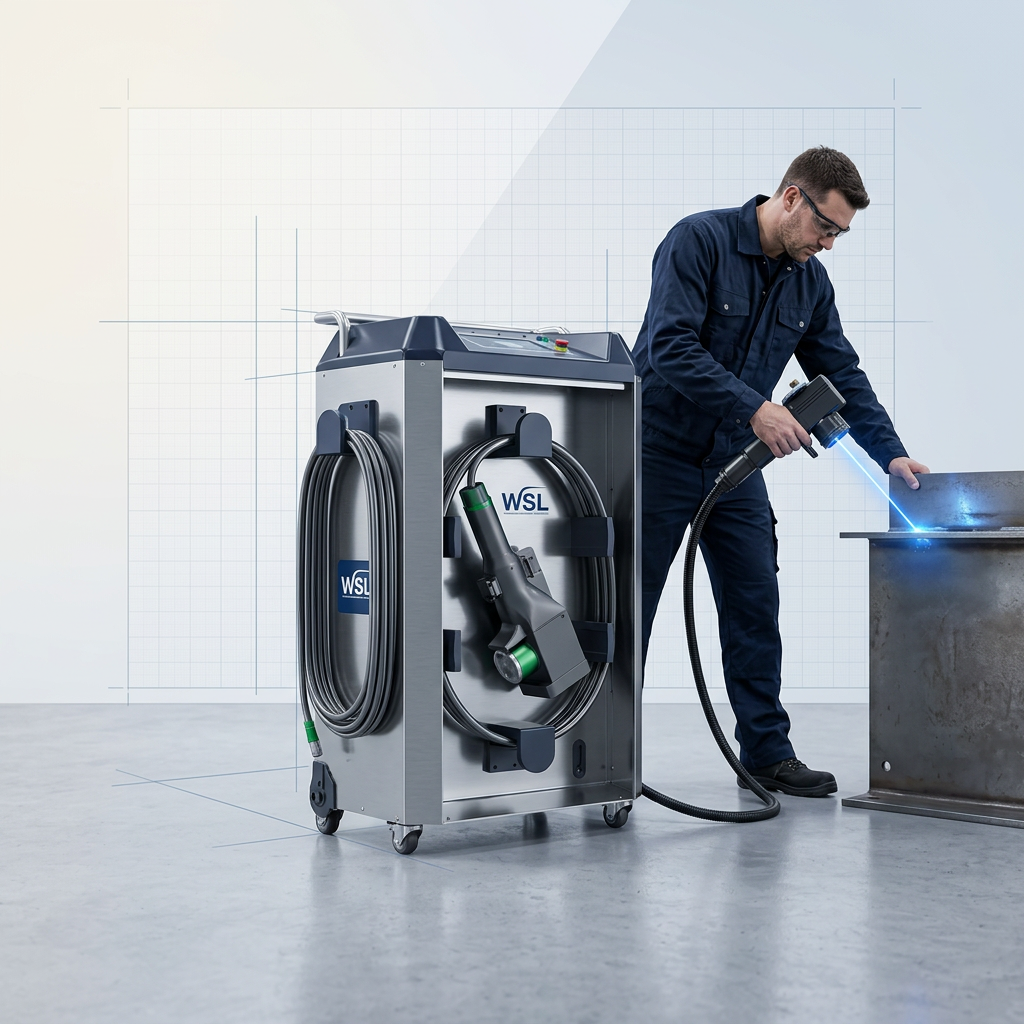
Portable Laser Cleaning System
Max power: Up to 300 W. Wavelength: 1550 nm. Pulse energy: Up to 15 mJ. Pulse duration: 100 ns. Pulse repetition rate: Adjustable up to 200 kHz (CW). Power tunability: 0–100%.
System weight: Under 50 kg (wheeled). Handheld scanner: Under 3 kg. Delivery cable: Up to 50 m (5 m / 15 m standard). Single-operator operation. Touchscreen GUI with password-protected access and per-user logins.
ELASER-RHZ: WSL's world-first patented Reduced Hazard Zone technology — Class I configuration confines the laser hazard to a small area around the work. No other laser cleaner offers this capability.
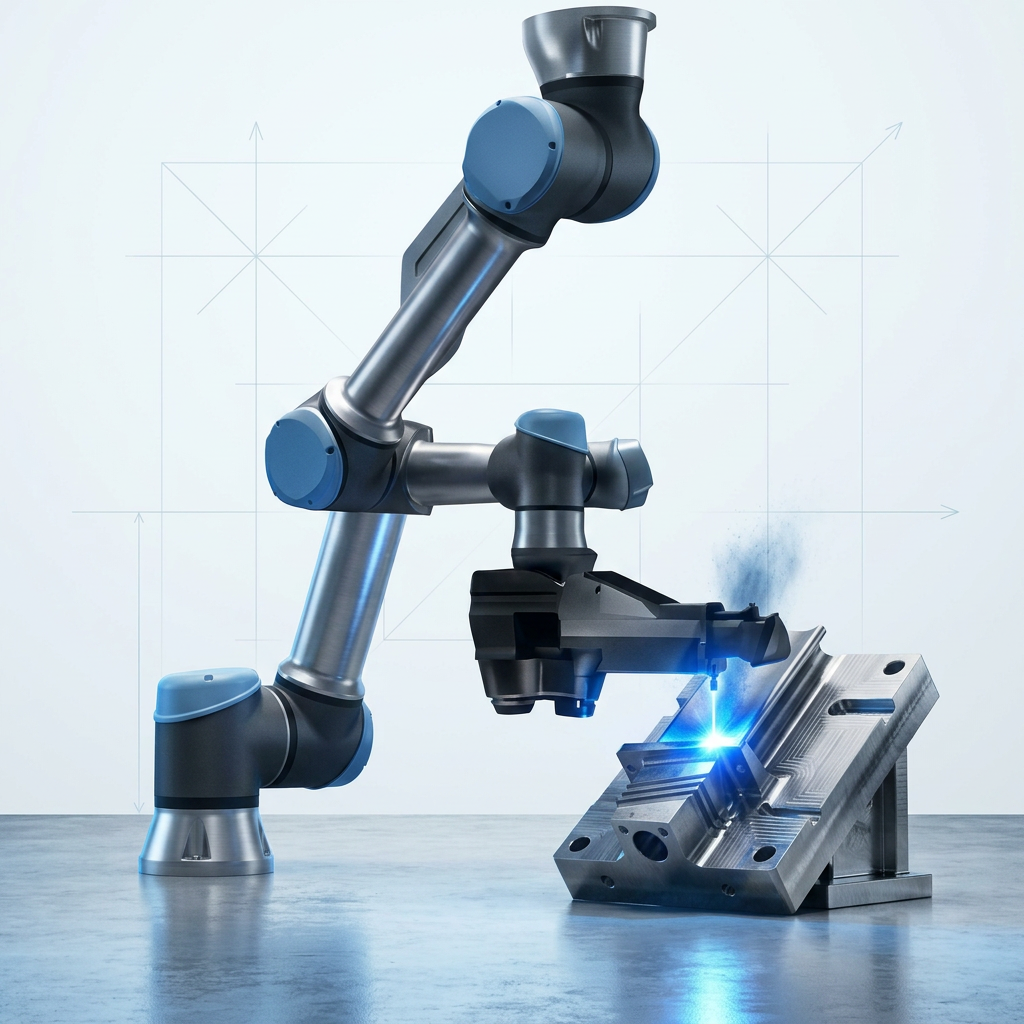
Automated Robotic Laser Cleaning
Max power: Up to 300 W. Wavelength: 1550 nm. Pulse energy: Up to 15 mJ. Pulse duration: 100 ns. Pulse repetition rate: Adjustable up to 200 kHz (CW). Power tunability: 0–100%.
Cleaning head: Mounted on articulated robotic multi-axis arm. Operation: No programming required — machine vision scans the part, builds a 3D map and generates the clean automatically. Works with existing robots or supplied as a complete custom cell.
Optional RHZ upgrade: AutoLASE can be configured with WSL's eye-safe Reduced Hazard Zone technology, eliminating the need for an enclosure. No other automated laser cleaning system offers this.
Certifications and Core Platform
Laser class: Class IV or Class I. Power supply: 110–250 VAC single-phase. Power consumption: Under 2000 W. Scanner: 2-D galvanometer, 10 m/s max scan rate. System weight: Under 50 kg (both products). Air-cooled. No consumables.
Certifications: CE certified. UKCA certified. Manufacture: Made in Britain. Both products share the same core fibre laser platform — up to 300 W, 1550 nm — designed, built and supported in-house by Woodrow Scientific.
Industries and Applications Across UK Manufacturing
From production lines to heritage sites, ELASER and AutoLASE serve the full breadth of British industry. Find your sector below.
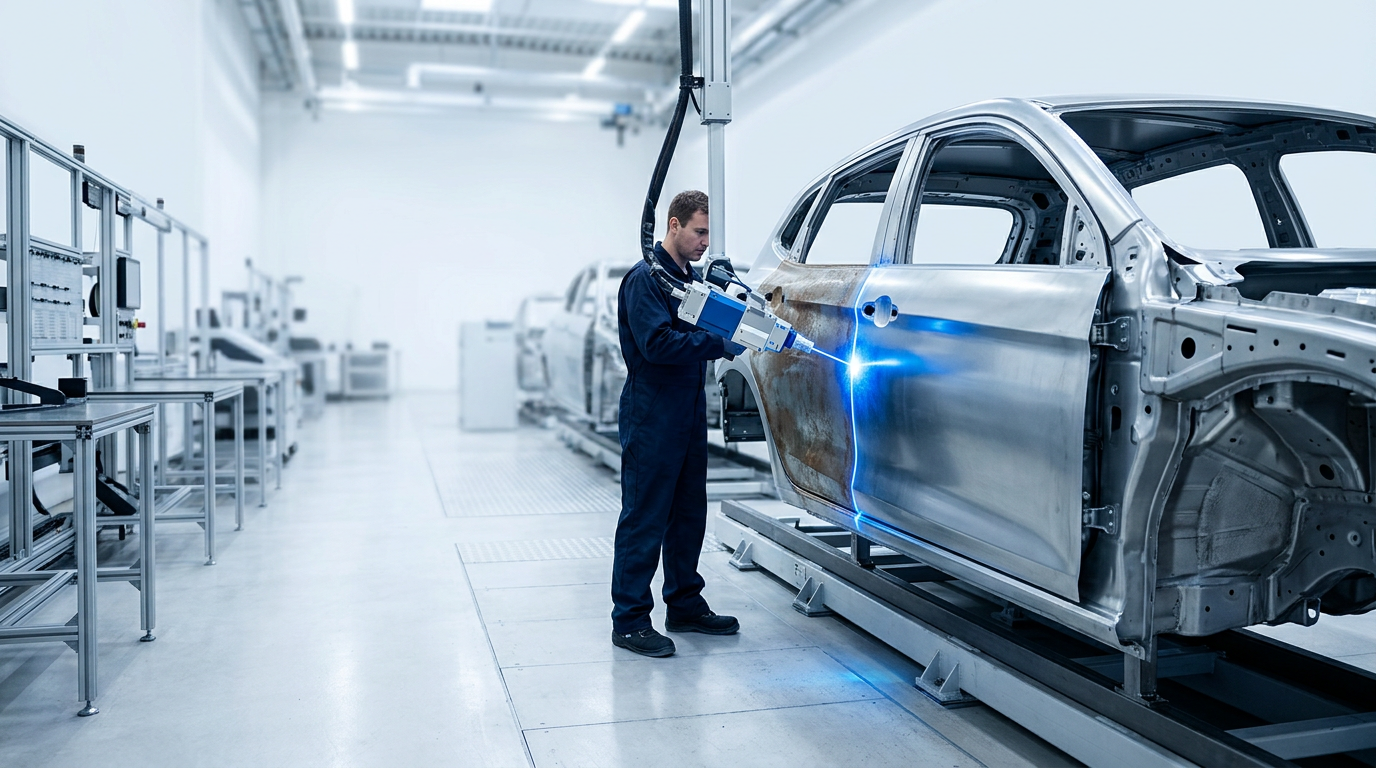
Automotive
Pre-weld prep, bodyshop rust and paint removal, and EV battery component cleaning.
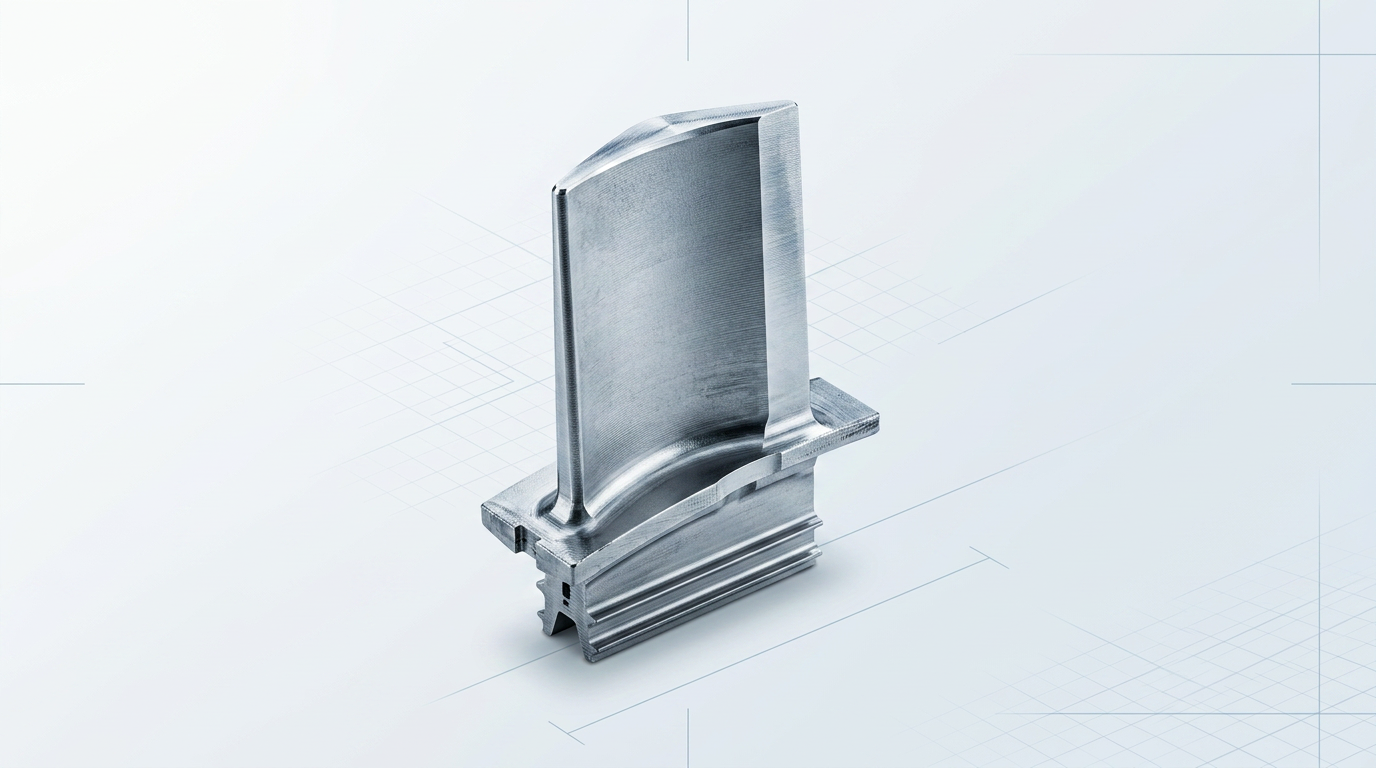
Aerospace
Surface prep and component cleaning on turbine blades and engine parts, to tight tolerances.
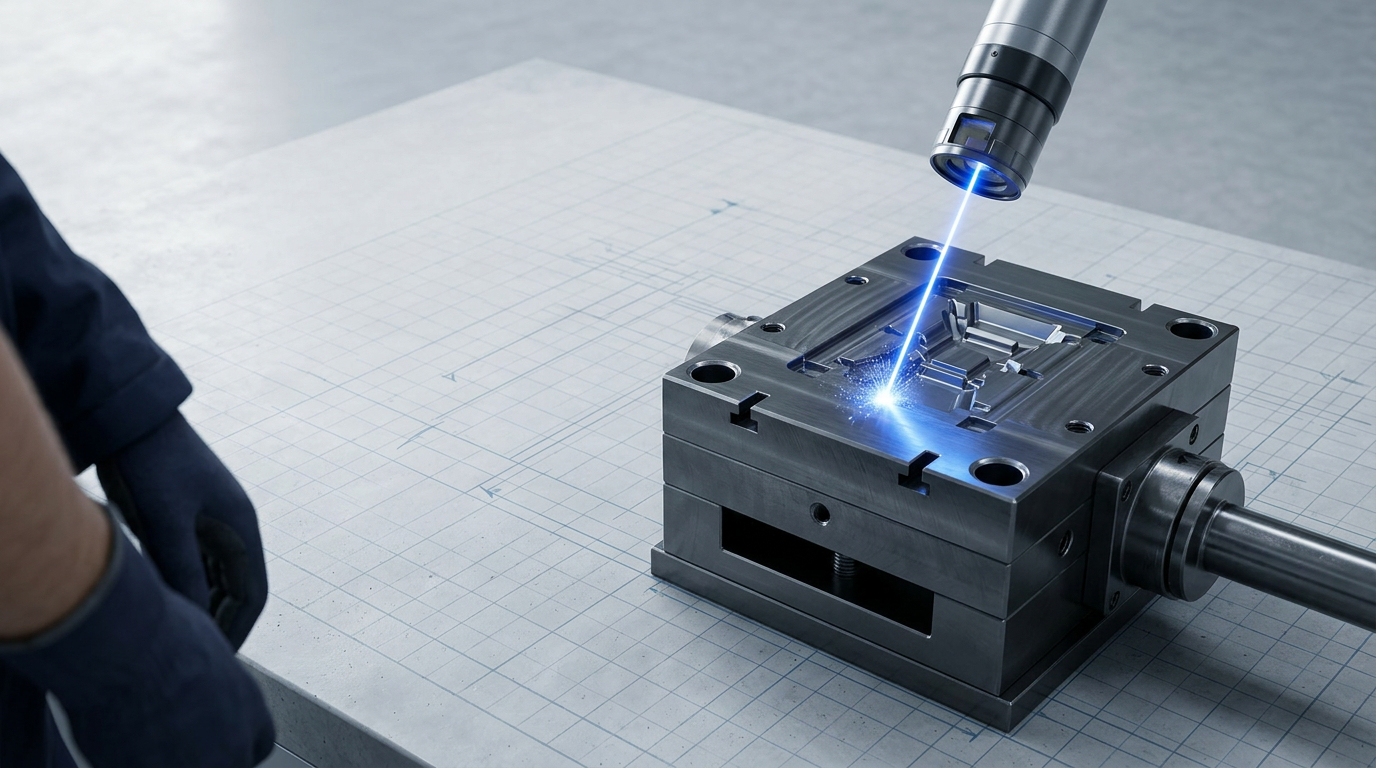
Injection Moulding and Tooling
Strip release agents and residue from mould cavities in place, without disassembly.
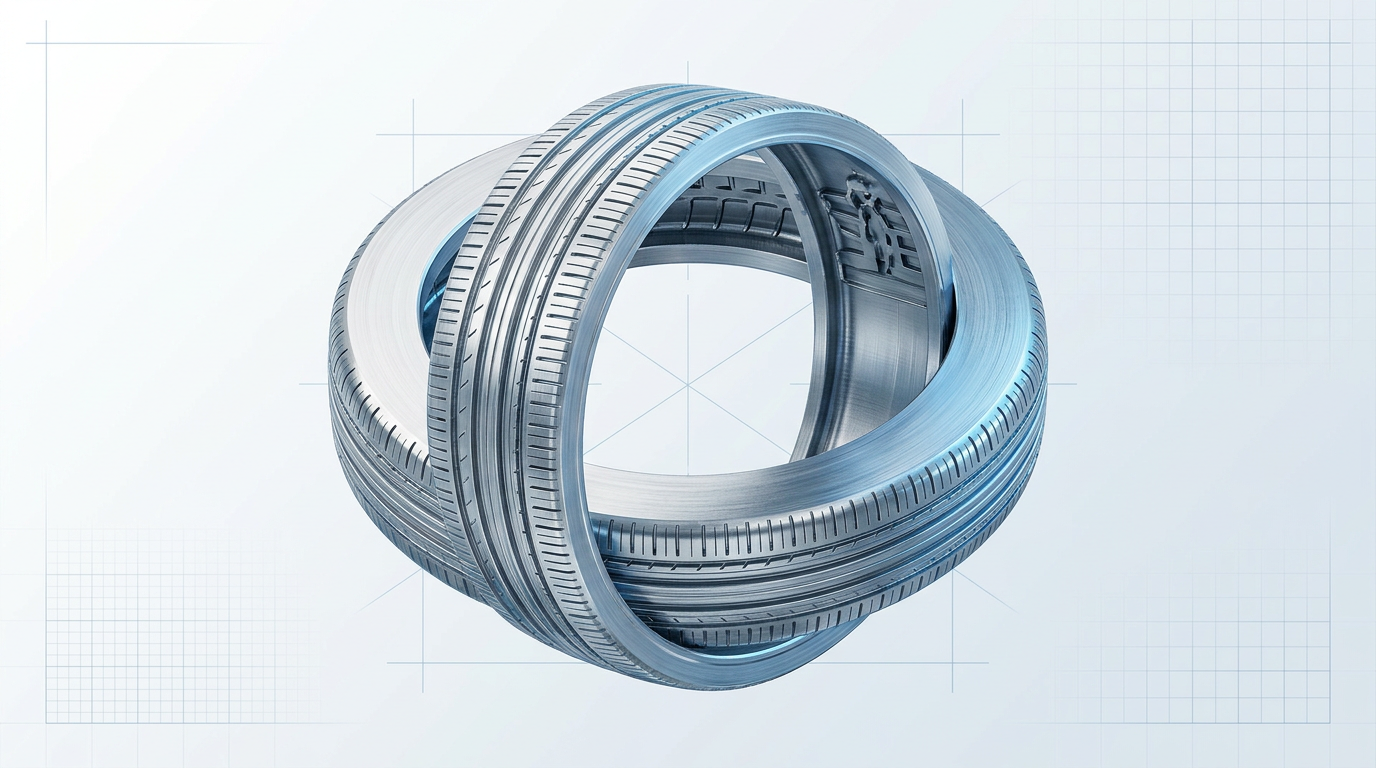
Tyre and Rubber
Remove vulcanisation residue from moulds, segments and vents — no abrasives, no mould wear.
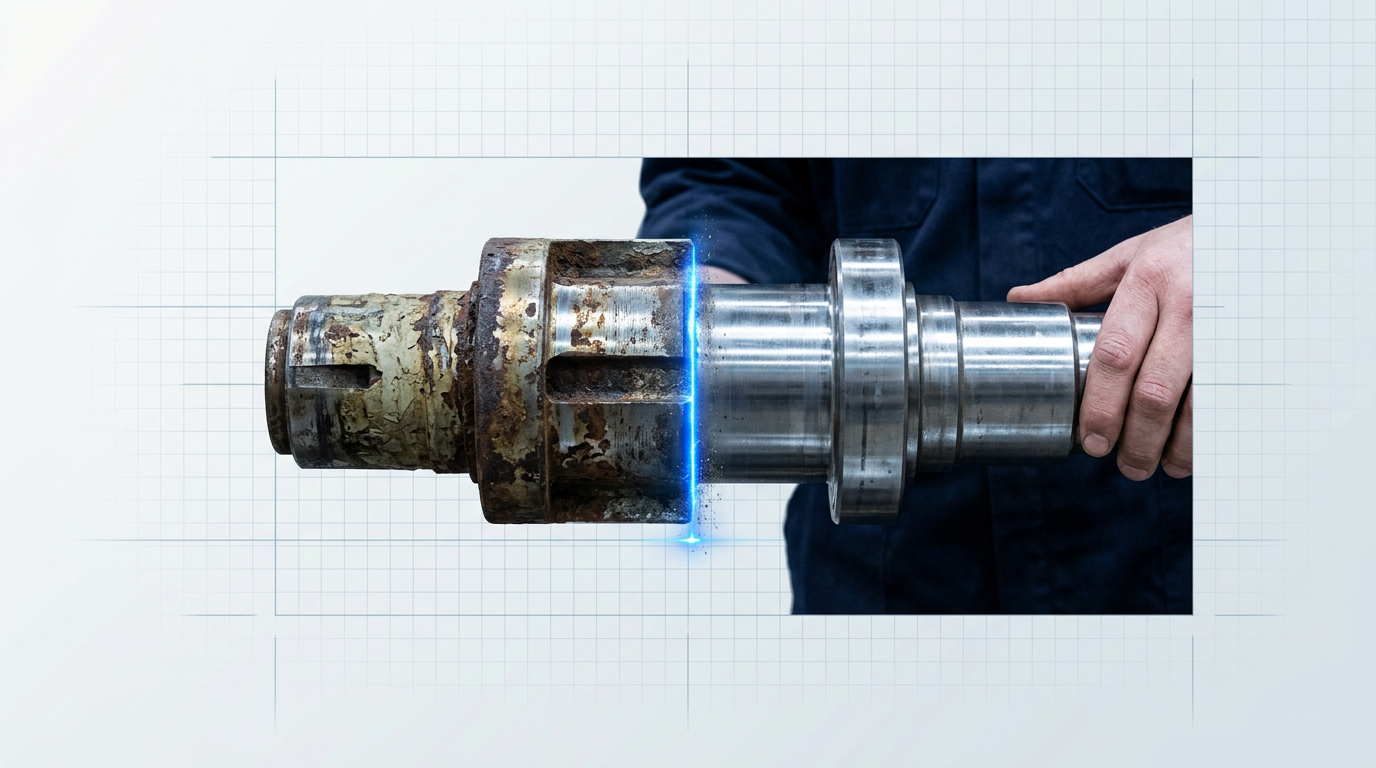
Remanufacturing and Refurbishment
Strip corrosion, coatings and contamination from worn components before rebuild.
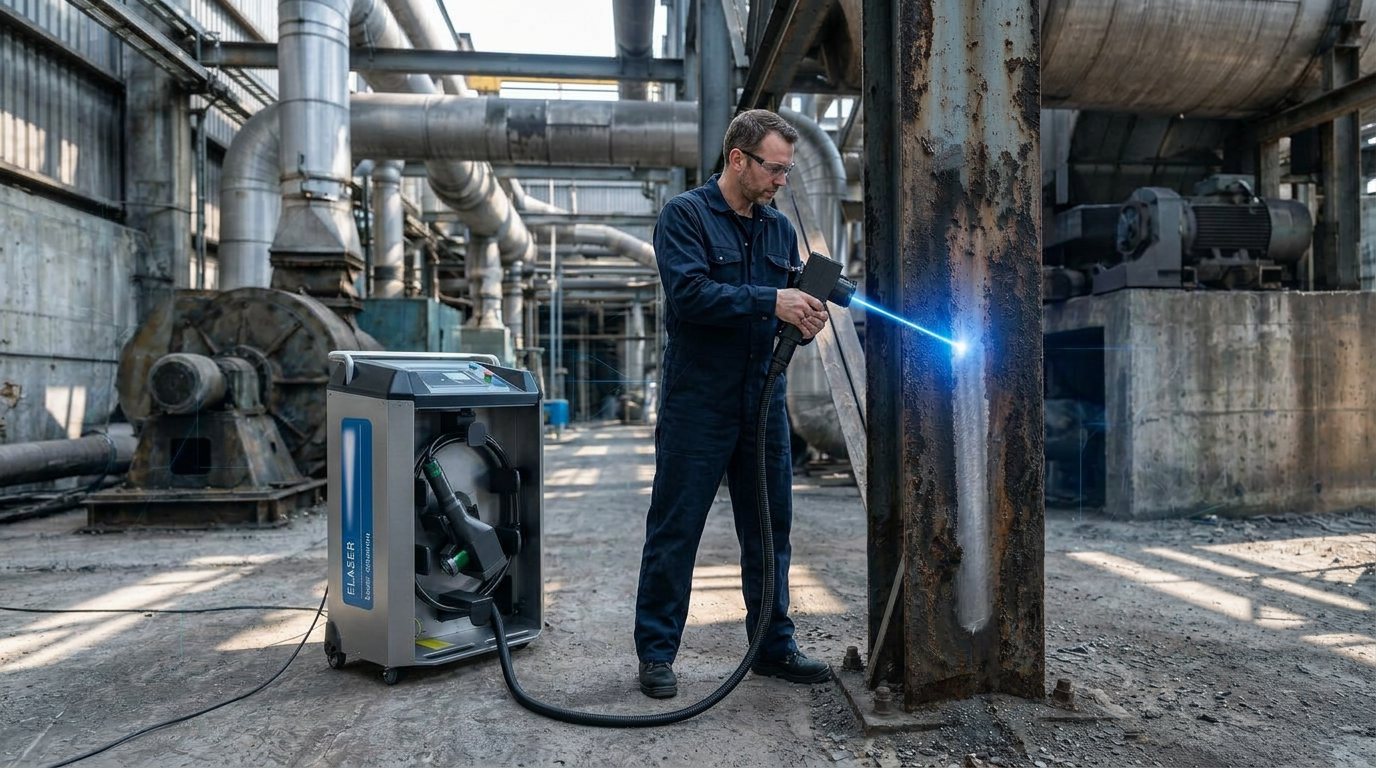
Industrial Maintenance
Clean plant and equipment on site — nothing to mask off, no media to clear.
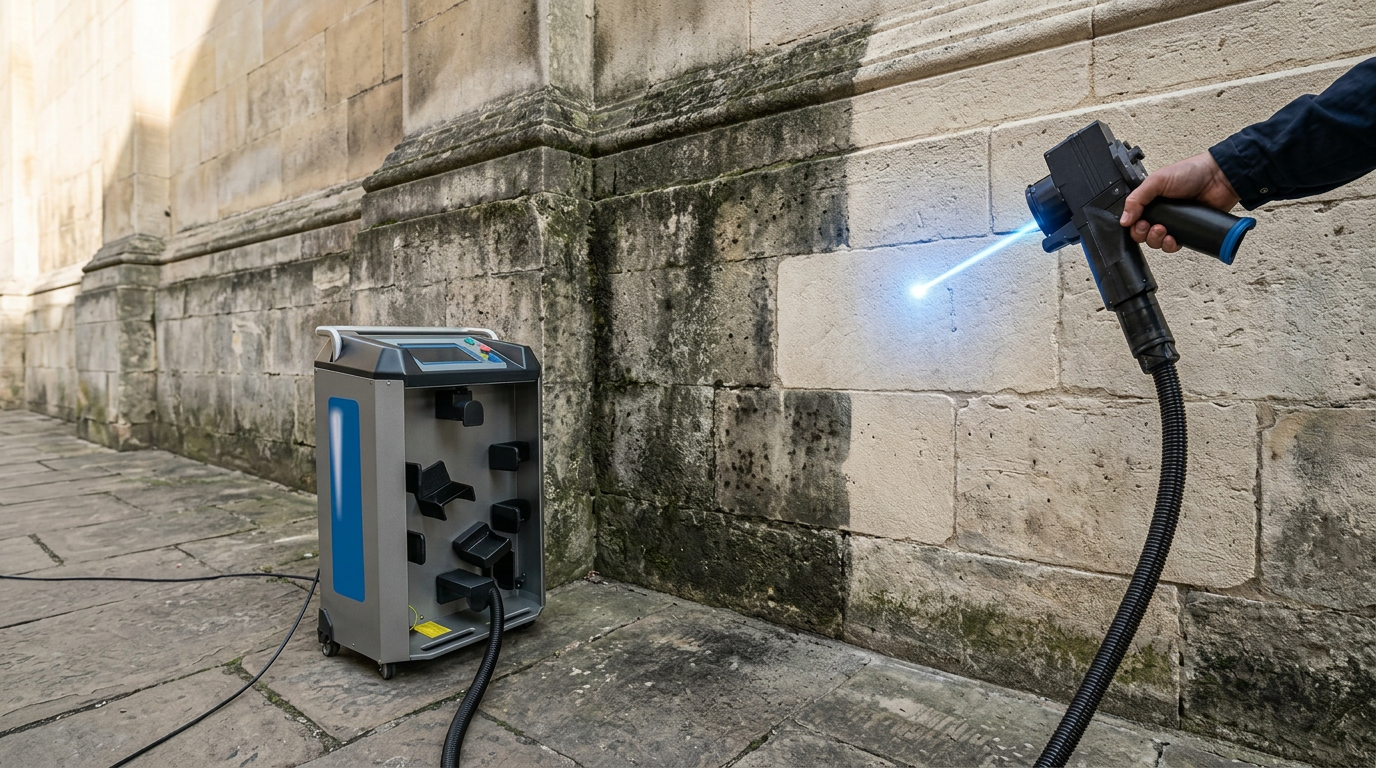
Heritage and Restoration
Lift soiling, paint and corrosion from stone, metal and masonry — gentle on the surface.
Frequently Asked Questions
Answers to the questions UK industrial buyers most commonly ask about laser rust removal machines, pricing, and compliance.
Pricing for Woodrow Scientific's laser rust removal machines — the ELASER, ELASER-RHZ, and AutoLASE — is quote-based and application-specific. WSL is the European cost leader among comparable industrial laser cleaning machines, with the most competitive upfront pricing in its class, achieved through in-house manufacturing efficiency rather than quality compromise. Contact Woodrow Scientific for a UK price. The right number for evaluating capital equipment is not the sticker price but the total cost of ownership over the machine's working life. Laser cleaning runs on electricity alone — zero consumables, no abrasive media to restock, no chemical waste to dispose of. Combined with less downtime and less rework from minimal substrate damage, those savings compound significantly over time.
Industrial laser cleaning machine prices vary widely by power class. According to Allied Scientific Pro, entry-level 100 W systems typically start around $10,000–$20,000, mid-range 200–500 W systems run from roughly $20,000–$50,000, and high-end systems above 1,000 W can reach $50,000–$100,000 or more — figures that translate broadly to the UK market depending on specification and supplier. The purchase price, however, is only part of the calculation. Running costs are where the real difference lies. Laser cleaning uses electricity as its only input — there is no abrasive media to purchase and replenish, no chemical supply chain to manage, and no regulated waste to dispose of. A higher-specification machine with near-zero consumable costs will often carry a lower lifetime cost than a cheaper alternative burdened with ongoing media or chemical spend. Evaluate the full picture, not just the upfront figure.
The ELASER-RHZ is Woodrow Scientific's eye-safe laser cleaning system, featuring patented Reduced Hazard Zone (RHZ) technology — a world-first that confines the laser hazard to a small area immediately around the work. No other laser cleaning system in the world offers this capability. In conventional laser cleaning, the surrounding area must be sealed off and cleared of personnel before work can begin. The RHZ eliminates that requirement entirely. Cleaning can take place in open workshops, mixed-use manufacturing facilities, and even publicly accessible spaces — without shutting down the surrounding area or erecting safety cordons. This dramatically reduces the compliance overhead and opens up applications where conventional laser cleaning was previously impractical: graffiti removal in public spaces, heritage restoration on monuments, and cleaning within busy production environments where area shutdowns are disruptive or impossible. Woodrow Scientific provides full operator training with every system.
Yes. Both the ELASER/ELASER-RHZ and AutoLASE hold CE and UKCA certification. The UKCA mark is the UK Conformity Assessed marking required for machinery placed on the Great Britain market following the UK's departure from the EU — it is the GB-market equivalent of CE marking, and from 1 January 2025 it is the required standard for new machinery sold in Great Britain. UK buyers should confirm their supplier's machines carry UKCA certification before purchase. On laser safety, UK employers operating laser equipment have duties under the Control of Artificial Optical Radiation at Work Regulations 2010, enforced by the HSE. WSL's machines — particularly the ELASER-RHZ with its patented reduced hazard zone — are designed to reduce the compliance overhead associated with those obligations. For authoritative guidance on laser safety law and UKCA requirements, consult the HSE directly at hse.gov.uk.
The deciding question is simple: is cleaning a flexible task, or a fixed production step? The ELASER is a portable, single-operator system with a sub-3 kg handheld scanner and up to 50 m reach. It is the right choice when cleaning moves around — different parts, different surfaces, on-site work, or varied tasks across a facility. The AutoLASE is an automated robotic system built for repetitive, high-throughput production. Load the part and the machine vision scans it, builds a 3D map, and generates the optimal cleaning path automatically — no programming, no path-setting, no specialist knowledge required. Anyone on the production floor can run it. If your cleaning requirement is a fixed, repeatable production step, AutoLASE delivers consistent results cycle after cycle with minimal operator involvement. Both systems share the same core laser platform (up to 300 W, air-cooled, no consumables), both are available with the RHZ eye-safe option, and both are CE and UKCA certified, Made in Britain.
For most industrial cleaning applications, laser cleaning delivers a structurally better outcome across the dimensions that matter most to a professional buyer. On surface quality: the laser beam is absorbed preferentially by the contamination layer and stops at the base material, preserving dimensions and leaving no abrasive residue embedded in the surface. Sandblasting physically impacts both the contamination and the substrate, creating surface roughness that can be a problem wherever tolerances must be held. On running costs: laser cleaning uses electricity only — no abrasive media to purchase, no chemical supply chain to manage. Sandblasting requires continuous media procurement; chemical stripping requires ongoing chemical spend plus formal arrangements for regulated waste disposal. On operator safety: sandblasting carries a well-documented silica dust and silicosis risk; chemical stripping requires chemical-resistant PPE, respiratory protection, and formal waste handling. Laser cleaning's hazard profile is well-defined and manageable, particularly with the RHZ option. On automation: laser cleaning integrates cleanly into automated production lines (as with AutoLASE); sandblasting and chemical stripping are significantly harder to automate to the same standard. For operations running regular cleaning cycles, the consumable and waste savings compound — making TCO the right lens for this comparison.
Yes. Woodrow Scientific offers demonstrations of the ELASER, ELASER-RHZ, and AutoLASE before you commit to a purchase. It is a normal part of the buying process for industrial capital equipment, and WSL is set up to support it. Get in touch to arrange a demonstration or to request a UK price.