What Drives the Cost of a Laser Cleaning Machine?
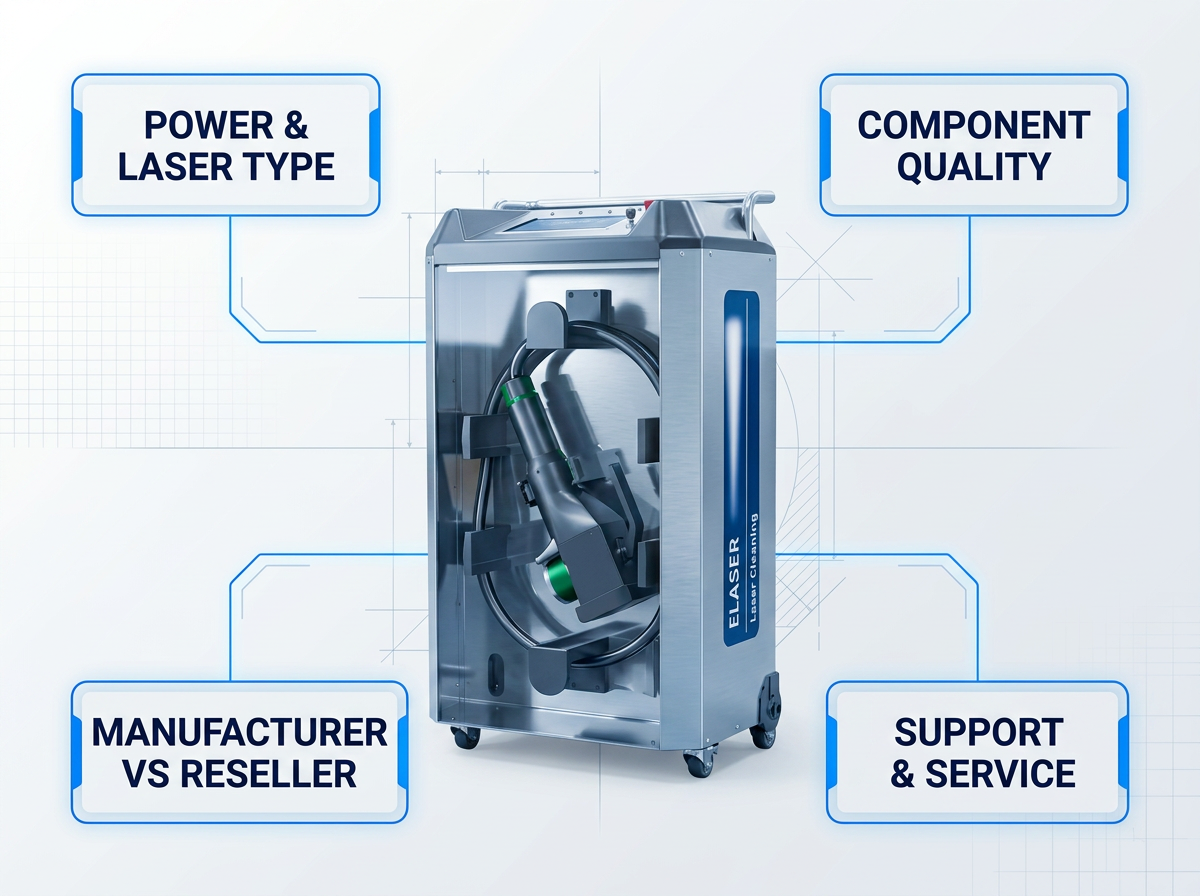
Four factors genuinely determine what a laser cleaning machine costs. Power output and laser type matter: pulsed fibre systems require precision optics and pulse electronics, costing more per watt than simpler continuous-wave alternatives. Component quality — the laser source, scan head, and cooling system — separates durable industrial machines from cheaper builds that cut corners. Beyond hardware, manufacturer versus reseller structure is critical: importers rebadging third-party machines have no in-house engineering, meaning slower spares and weaker support. Finally, warranty scope, training, and after-sales service are real costs embedded in a genuine manufacturer's price — and absent from grey-market units.
Why Is Laser Rust Removal So Expensive?
The upfront cost of an industrial pulsed laser system reflects genuine engineering: fibre laser sources, precision optics, and air-cooled components built for continuous operation. That is the honest answer to the question. But it is only part of the calculation.
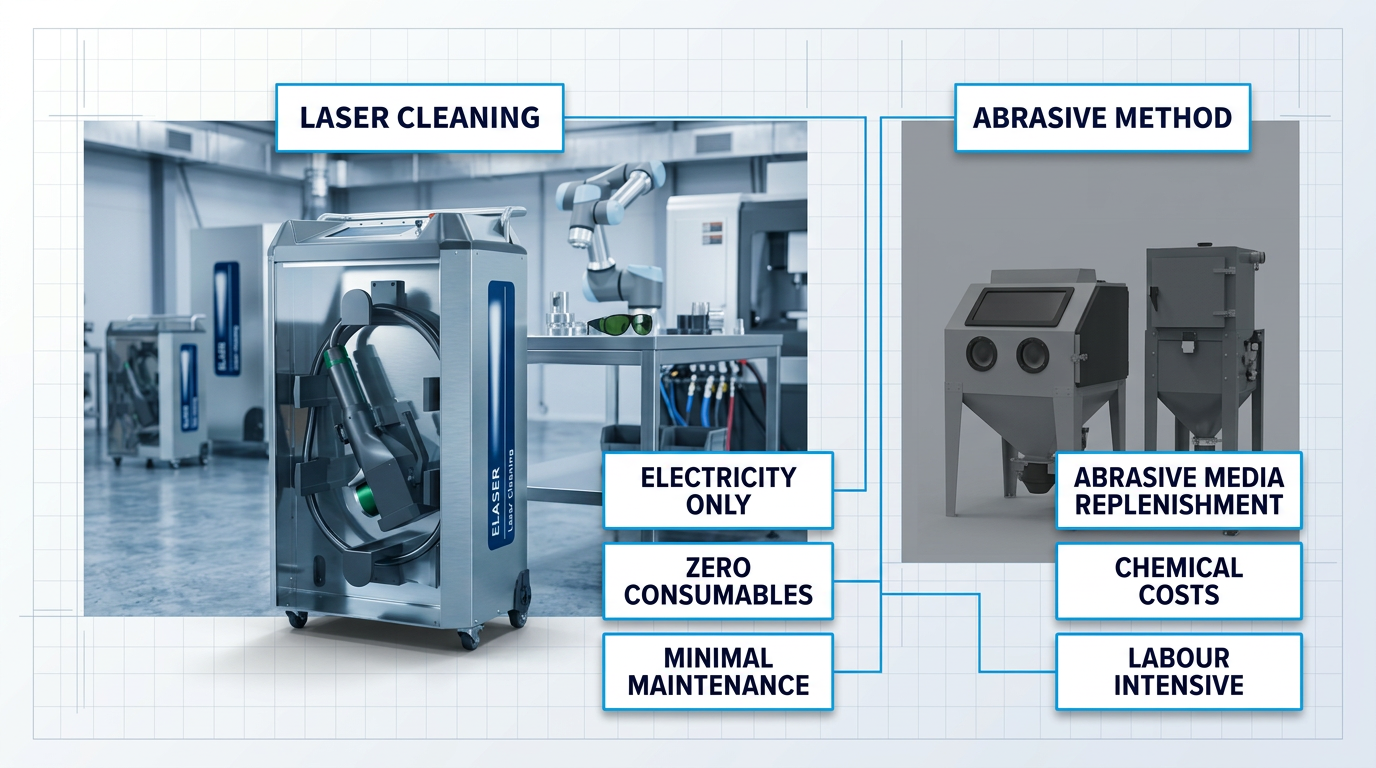
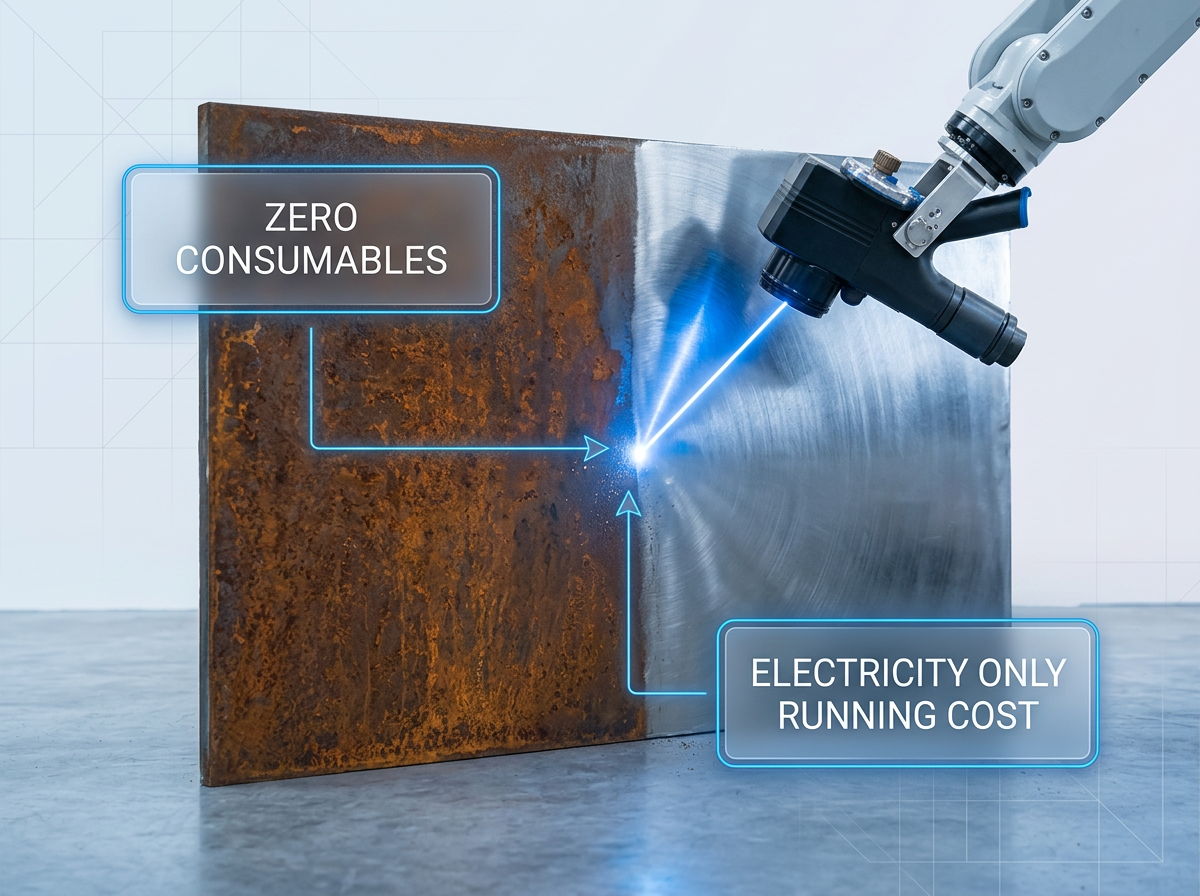
Unlike abrasive or chemical methods, laser cleaning carries no ongoing consumable costs. There is no media to replenish, no chemicals to procure, no abrasives to replace. For facilities with regular cleaning requirements, those eliminated costs compound into significant payback potential over the machine's working life.
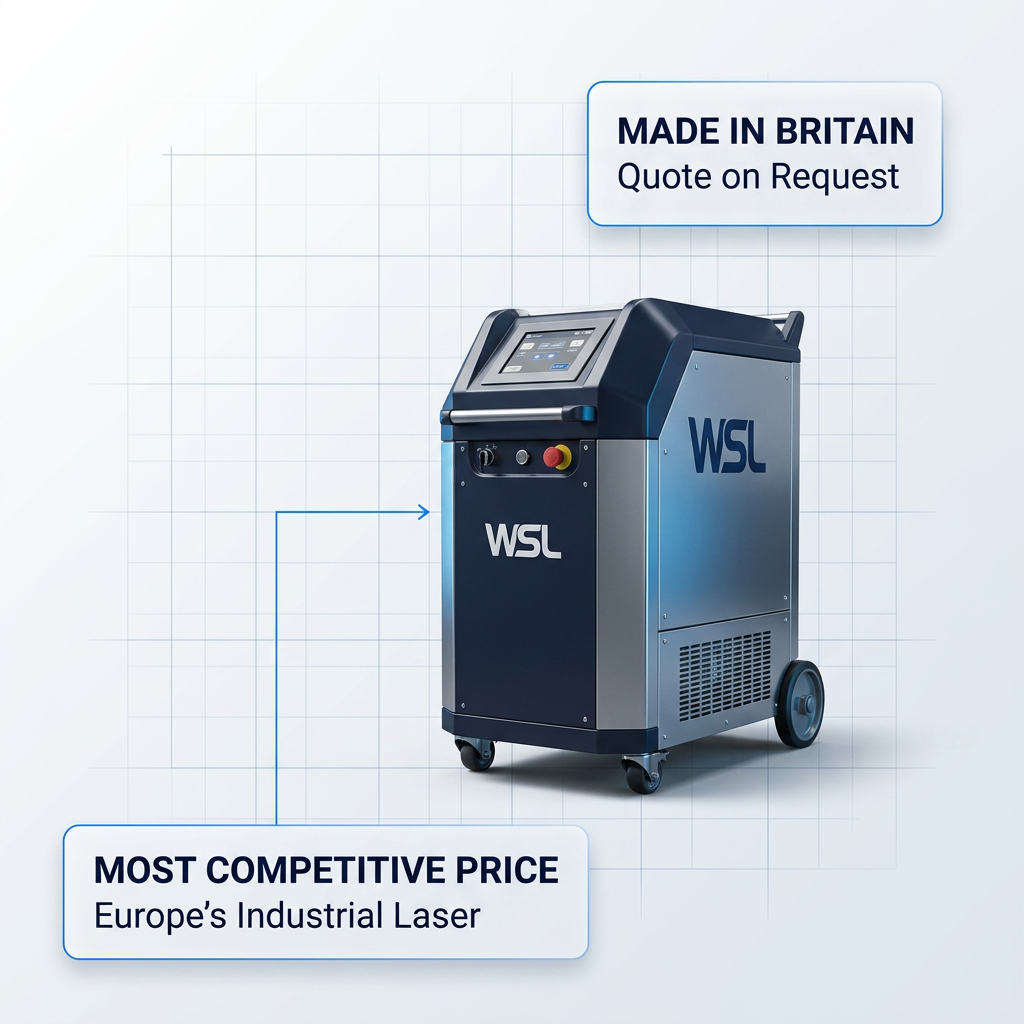
Europe's Most Competitive Industrial Laser Price
The ELASER and ELASER-RHZ are the most competitively priced comparable industrial laser cleaning machines in Europe. That position is achieved through WSL's engineering and operational efficiencies — not through any compromise on build quality, components, or support.
Pricing is available on request. The WSL team is ready to engage with serious buyers and provide a direct quote. Contact WSL to discuss your requirements and receive pricing.
World-First Patented Eye-Safe Cleaning
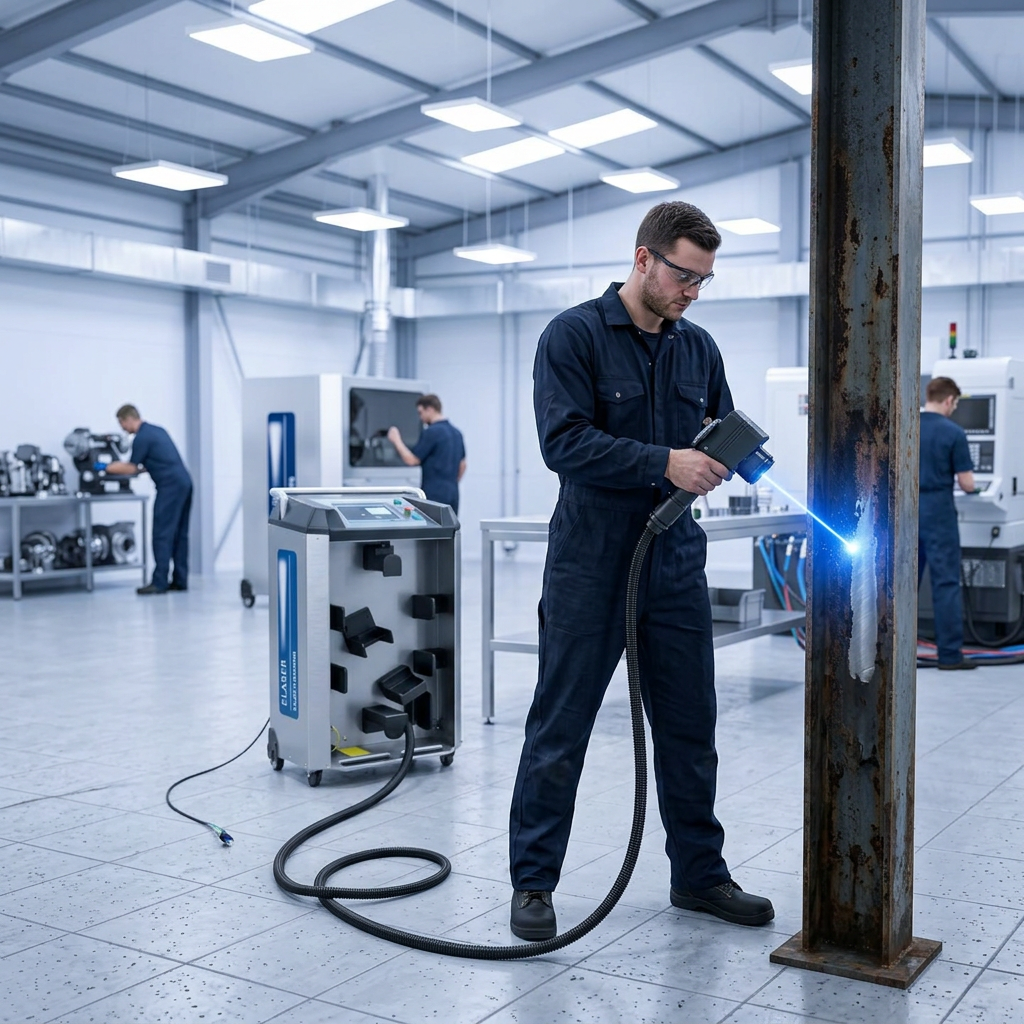
The ELASER-RHZ is the only laser cleaner of its kind in the world. WSL's patented Reduced Hazard Zone technology collapses the laser hazard to a small area around the work itself — no full area evacuation, no shutting down adjacent operations.
This unlocks cleaning in open workshops, mixed-use facilities, and public-facing environments where conventional laser cleaning simply cannot go. WSL provides full operator training as standard, so your team is equipped and compliant from day one.
Key Specs at a Glance
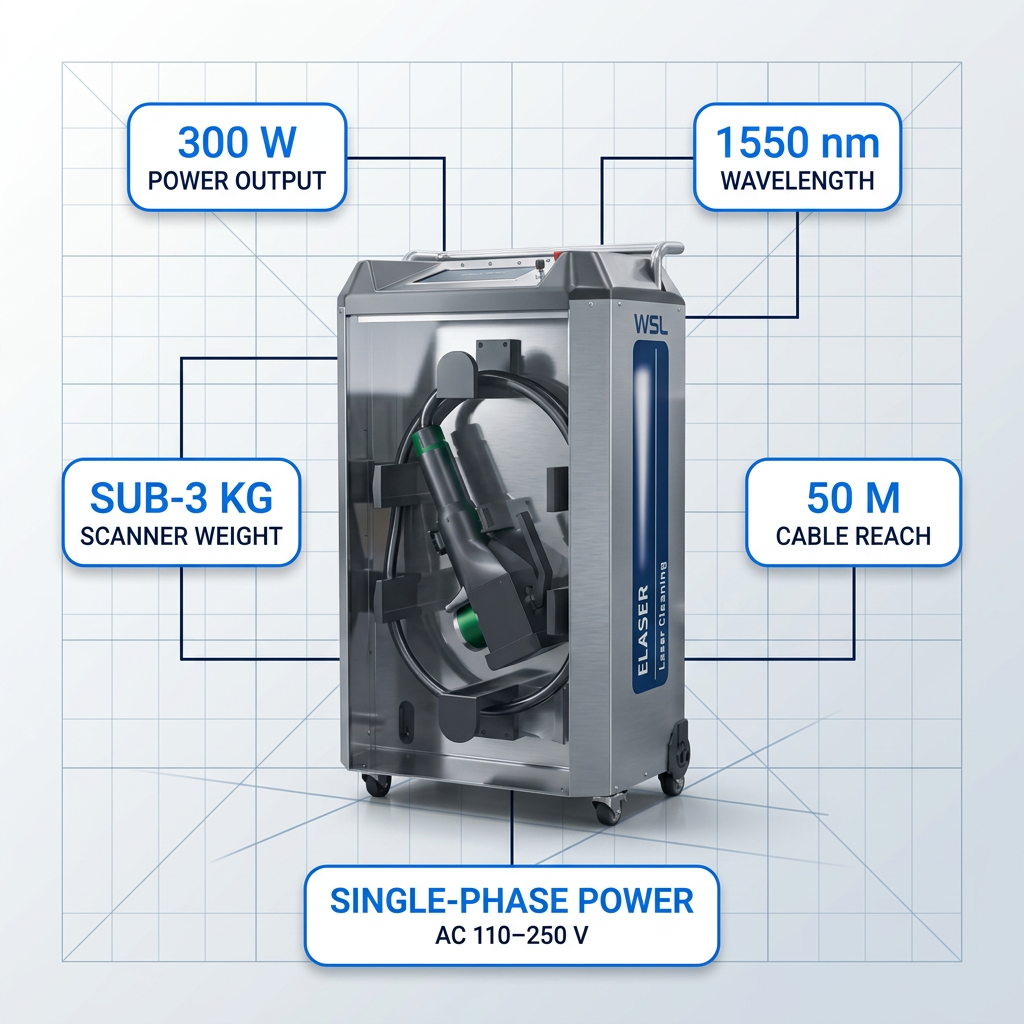
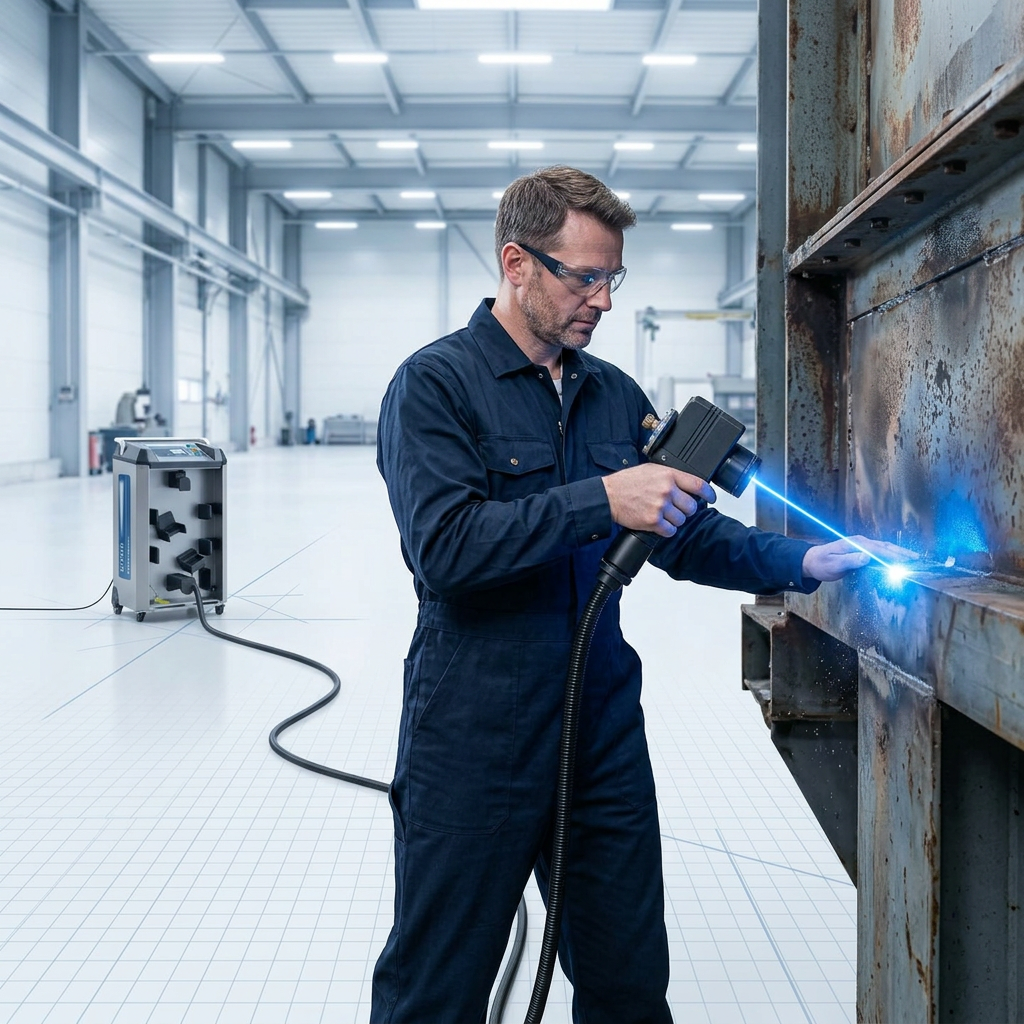
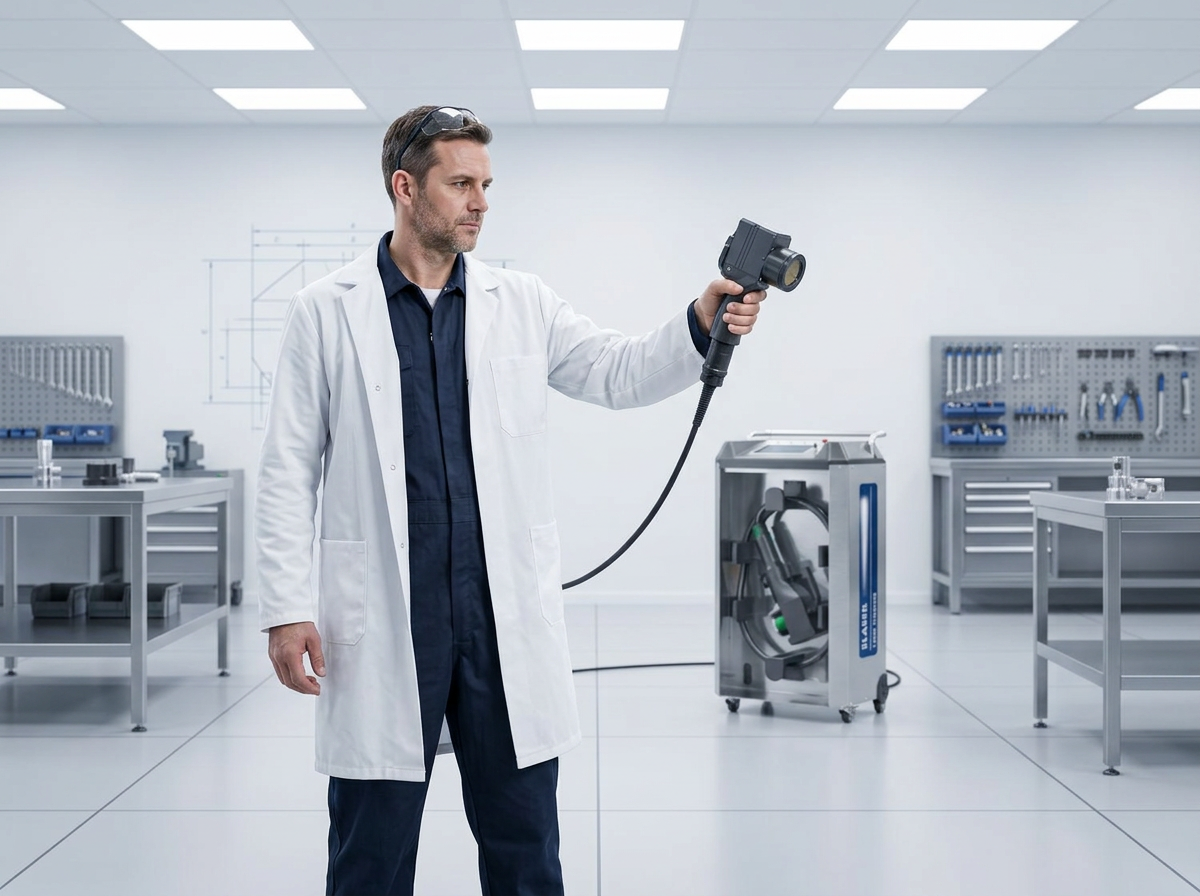
Up to 300 W fibre laser at 1550 nm wavelength, with power fully tunable from 0–100% to handle everything from light surface oxides to thick coatings. The handheld scanner weighs under 3 kg; the full system under 50 kg on wheels.
A delivery cable of up to 50 m puts the scanner wherever the work is. Runs on standard 110–250 VAC single-phase supply, drawing under 2,000 W. CE and UKCA certified. Made in Britain.
Air-Cooled, No Consumables Required
The ELASER is air-cooled — no water circuit, no chiller, no coolant infrastructure to install or maintain. It uses no chemicals, abrasives, or media of any kind. Electricity is the only running cost.
This means no consumables budget, no chemical handling procedures, and no infrastructure investment beyond a standard single-phase socket. The machine connects, operates, and the only ongoing cost is the power it draws.
One Operator, 50 Metres of Reach
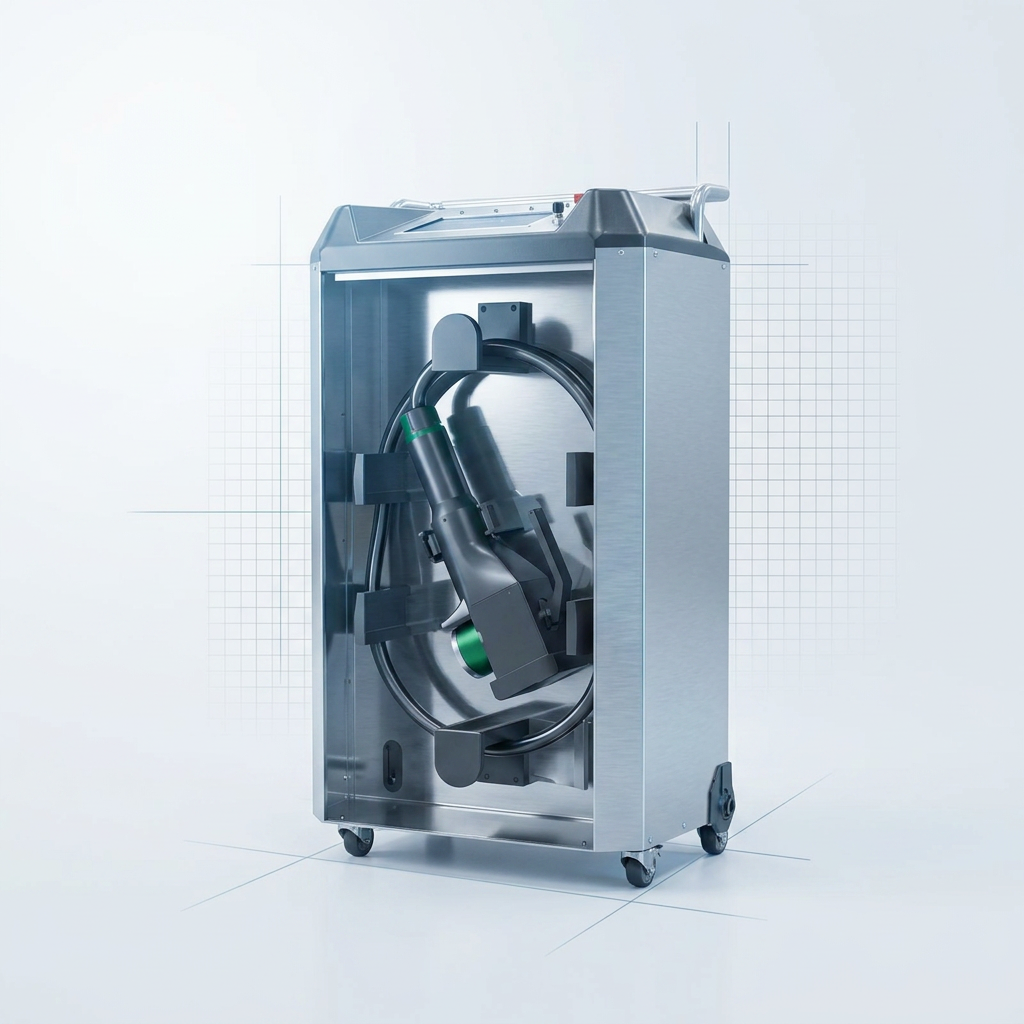
The handheld scanner weighs under 3 kg and connects via a delivery cable of up to 50 m — giving a single operator the range to clean large structures, vehicles, or plant without repositioning the main unit.
The system travels on wheels. No compressor, no water supply, no media to manage. Plug into a standard single-phase socket and the machine is ready. One person, one cable, the work gets done wherever it is.
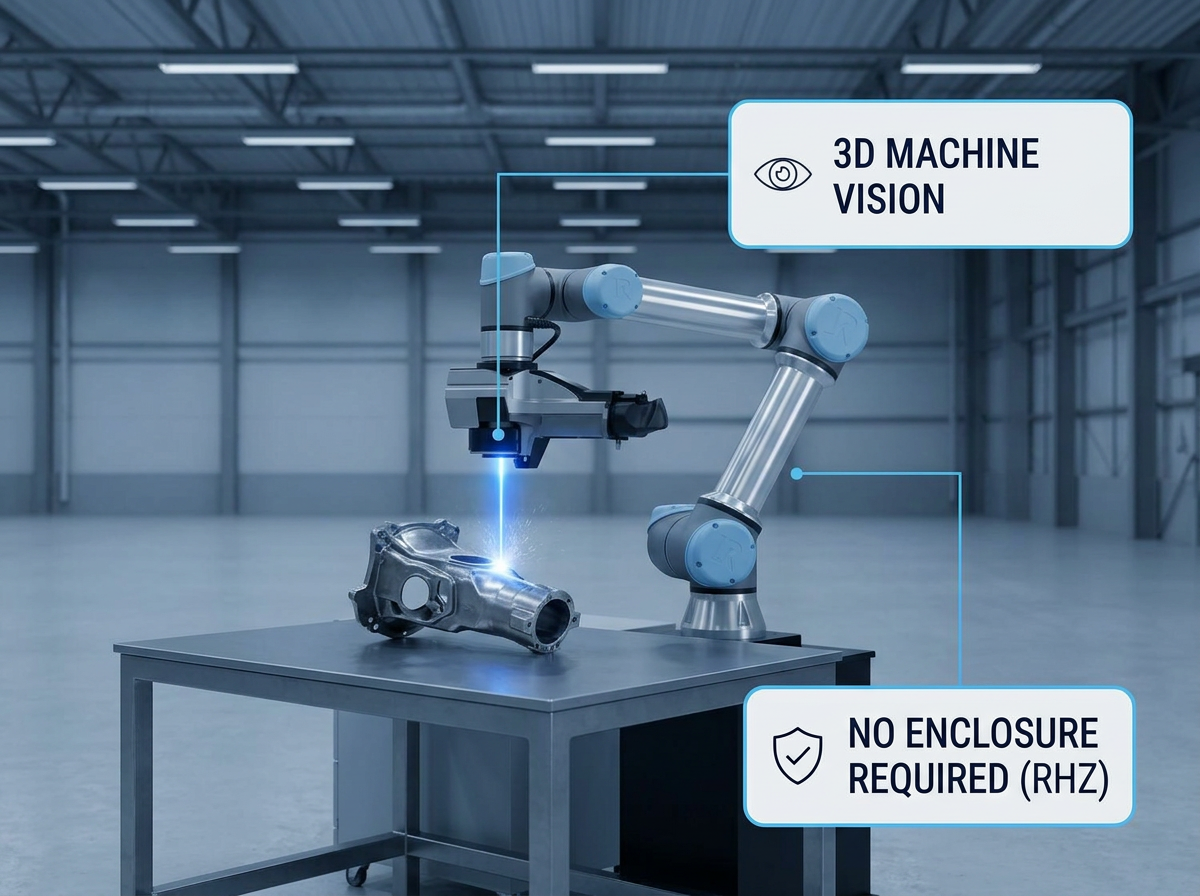
AutoLASE: Automated Laser Cleaning for Production Environments
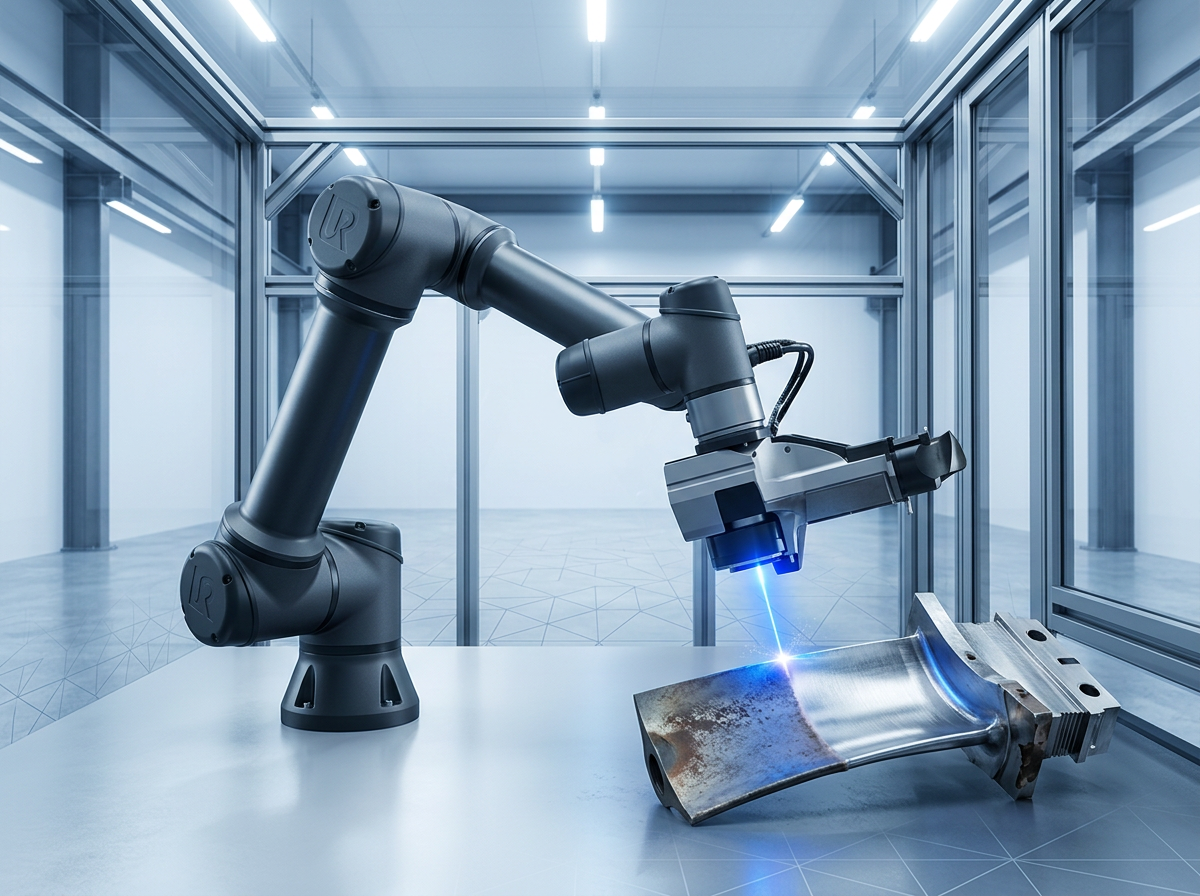
Load the part. AutoLASE's 3D machine vision scans it, builds a map, and generates the cleaning path automatically — no programming, no path-setting, no specialist skills required. For high-throughput production lines, that means consistent results on every cycle without the manual overhead.
The optional RHZ upgrade applies WSL's patented eye-safe technology to the cell, making AutoLASE the only automated laser cleaning system in the world that can operate without an enclosure. An articulated robotic arm handles complex 3D geometry, integrating with your existing robots or supplied as a complete custom cell. Competitively priced — contact WSL for a quote.
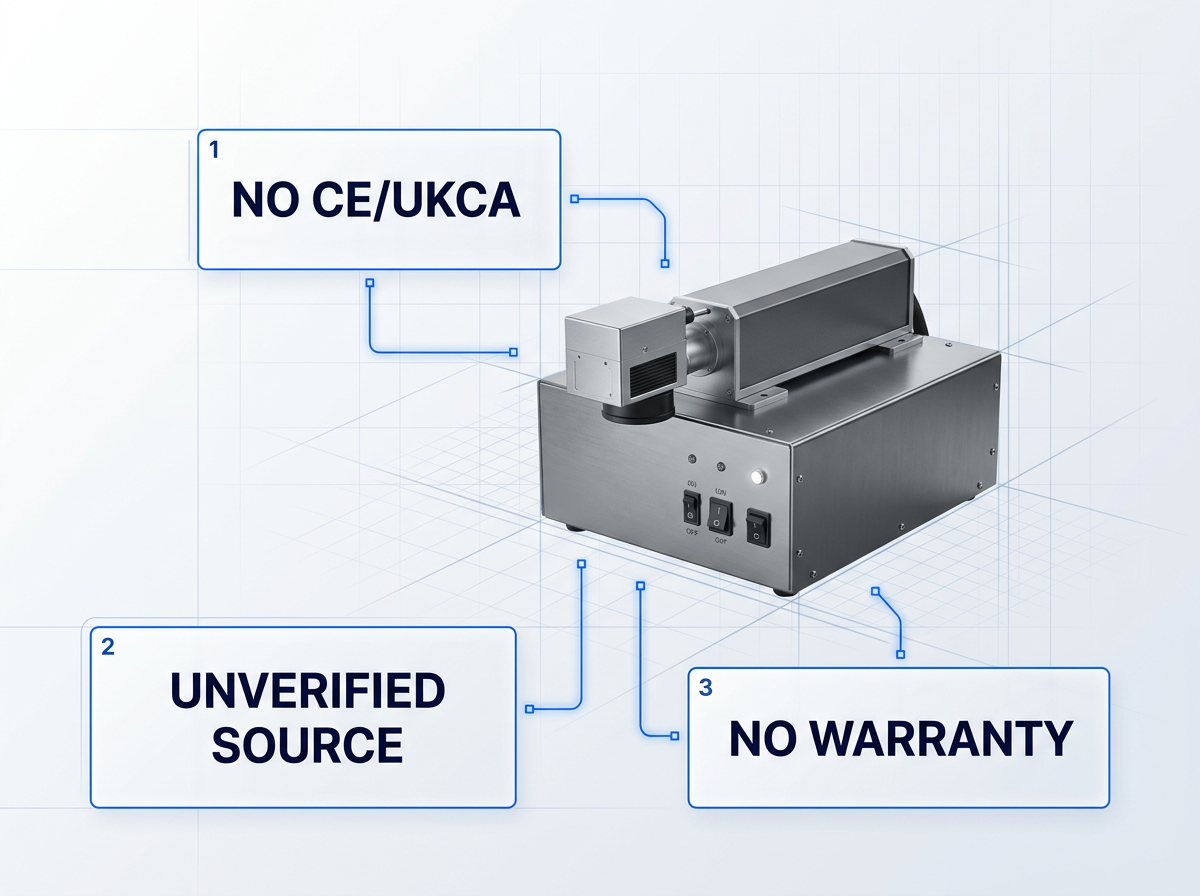
E-Commerce Laser Cleaners
Online marketplace machines — typically labelled as 1,000W or 1,500W CW — occupy the lowest price bracket. The low sticker price is achieved through recycled or unverified laser sources, minimal cooling infrastructure, and no genuine manufacturer support.
For a capital equipment purchase, the gaps matter: no CE or UKCA certification, no warranty infrastructure, and slow or unavailable spares. The upfront cost looks attractive; the procurement risk is real.
Established CW Systems, Broader Price Range
Continuous-wave systems in the 1,000–3,000 W range from established suppliers represent a legitimate industrial tier. Verified laser sources, proper cooling circuits, and genuine support infrastructure are what the price reflects — a meaningful step up from the e-commerce bracket.
The key distinction from the pulsed tier is technology type. CW systems deliver higher average power and faster throughput on heavy rust and thick coatings, while pulsed systems are generally preferred for precision-critical applications where minimal surface impact is a priority.
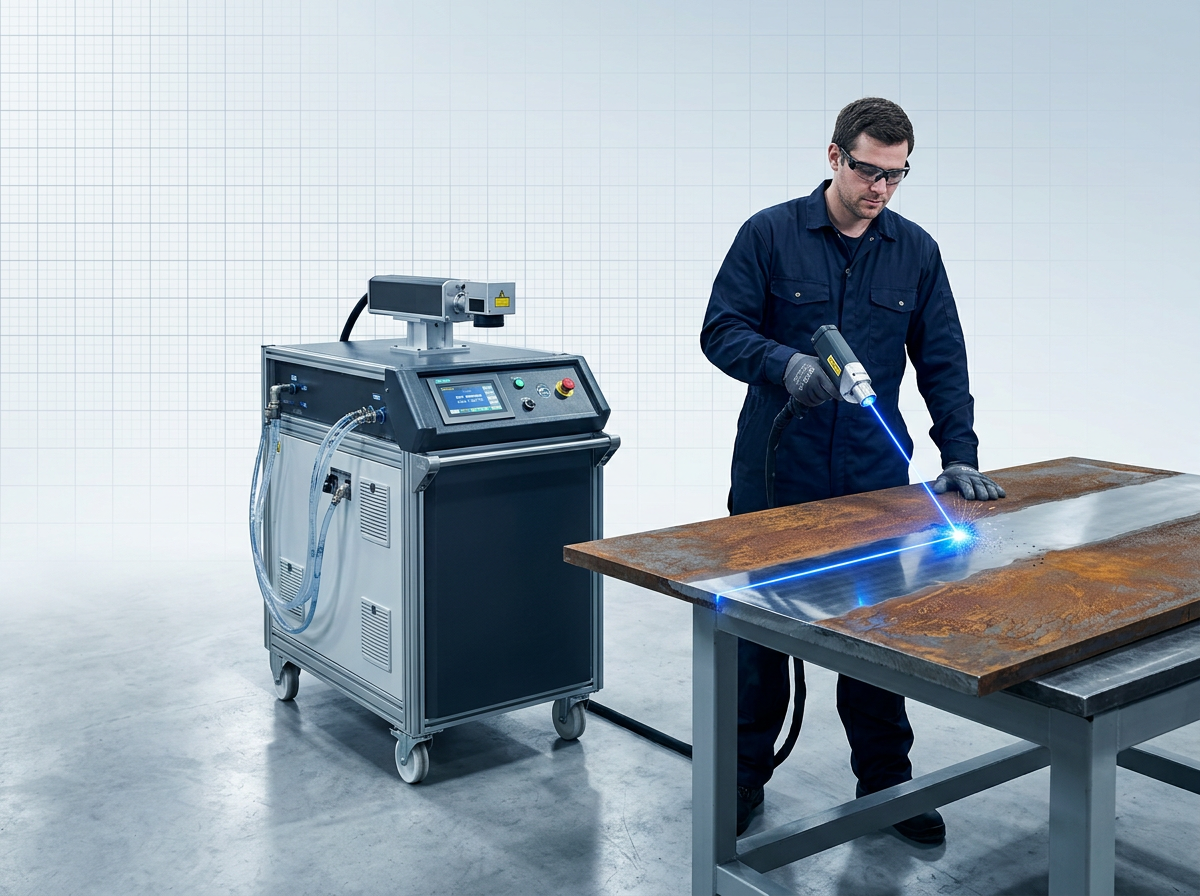
Precision Pulsed Systems: WSL's Tier
Pulsed systems in the 100–500 W range carry a higher cost per watt than CW, reflecting precision optics, pulse electronics, and the non-destructive cleaning capability that makes them the right choice for aerospace, tooling, heritage, and fine surface preparation.
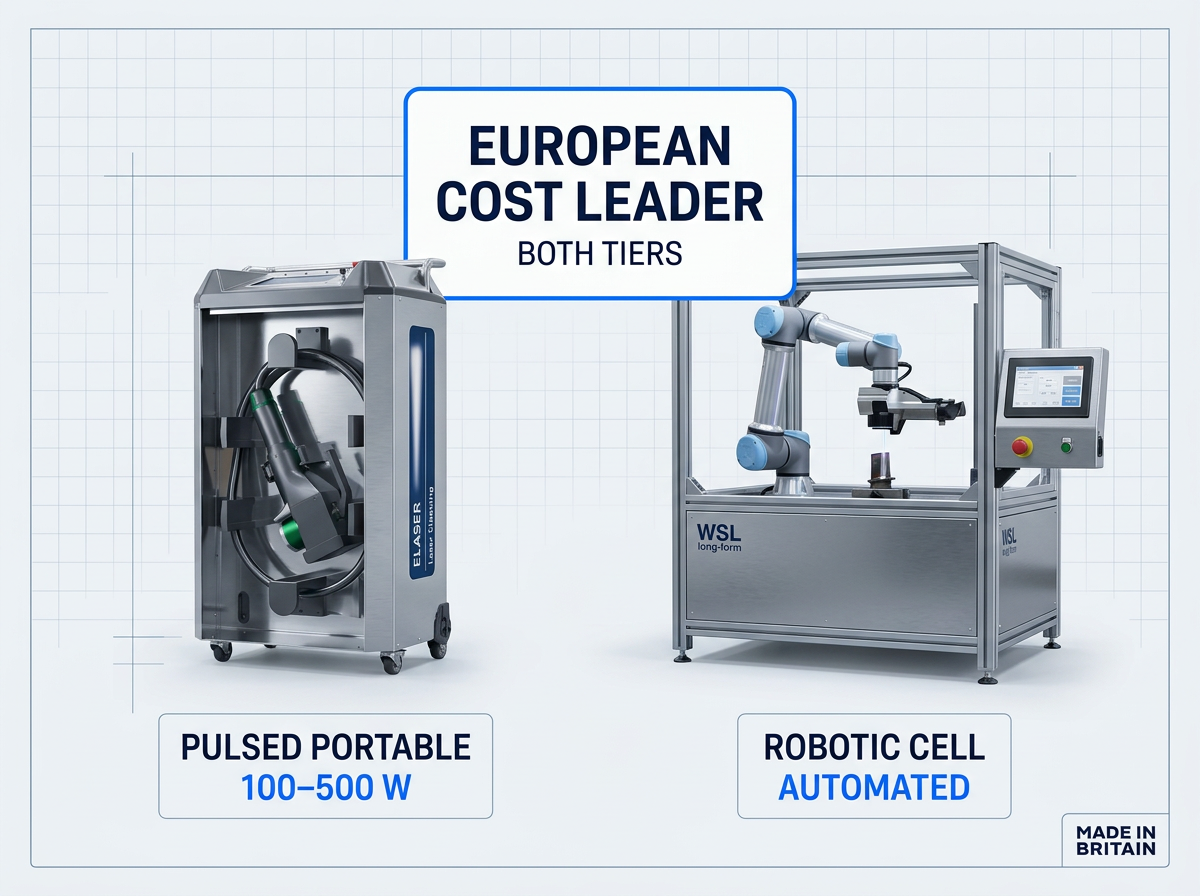
Within this tier, the ELASER and ELASER-RHZ are the European cost leaders — the most competitively priced comparable industrial pulsed portable systems available. That position is achieved through WSL's in-house manufacture and engineering efficiency, not through any reduction in component quality or support.
Robotic Laser Cleaning Cells
Robotic laser cleaning cells represent a significant capital investment, with price driven by integration complexity, cell engineering, and configuration scope. Systems from established manufacturers in this tier are built for high-throughput production environments where consistency and automation justify the outlay.
AutoLASE is the European cost leader in this tier. Its optional RHZ upgrade makes it uniquely capable of operating without an enclosure — a capability no competitor in the automated cell market offers. Competitive pricing is delivered through WSL's in-house manufacture, not by simplifying the specification.
European Cost Leader, Both Tiers
WSL is the European cost leader in both the industrial pulsed portable tier (ELASER/ELASER-RHZ) and the automated cell tier (AutoLASE). Competitive pricing in both cases is the product of in-house design, build, and engineering — not a reduction in quality or support.
The ELASER-RHZ is the only laser cleaner of its kind in the world, with patented RHZ technology that no comparable portable system can match. For automated cells, AutoLASE's optional RHZ upgrade enables enclosure-free operation — a capability no competitor in that tier offers. Request a quote to see where WSL's pricing sits for your application.
See the AutoLASE Automated Cleaning System
AutoLASE is WSL's automated laser cleaning cell — 3D machine vision, no manual path programming, and the European cost leader in its tier. Explore the full product details.
Built in Britain: Why the Manufacturer Matters
WSL is the only UK-based laser cleaning manufacturer — founded in 2012, with 200+ years of combined engineering experience. Every machine is designed, built, serviced and improved in-house. That means fast spares availability, genuine engineering diagnosis when something goes wrong, and a product that gets better over time because the people who built it are the people supporting it.
Many sellers in this market are importers rebadging third-party machines — slower fixes, uncertain spares, and no real ability to improve the product. WSL also offers bespoke engineering for non-standard applications; if your requirements are unusual, get in touch.
CE and UKCA Certified: What It Means for Buyers
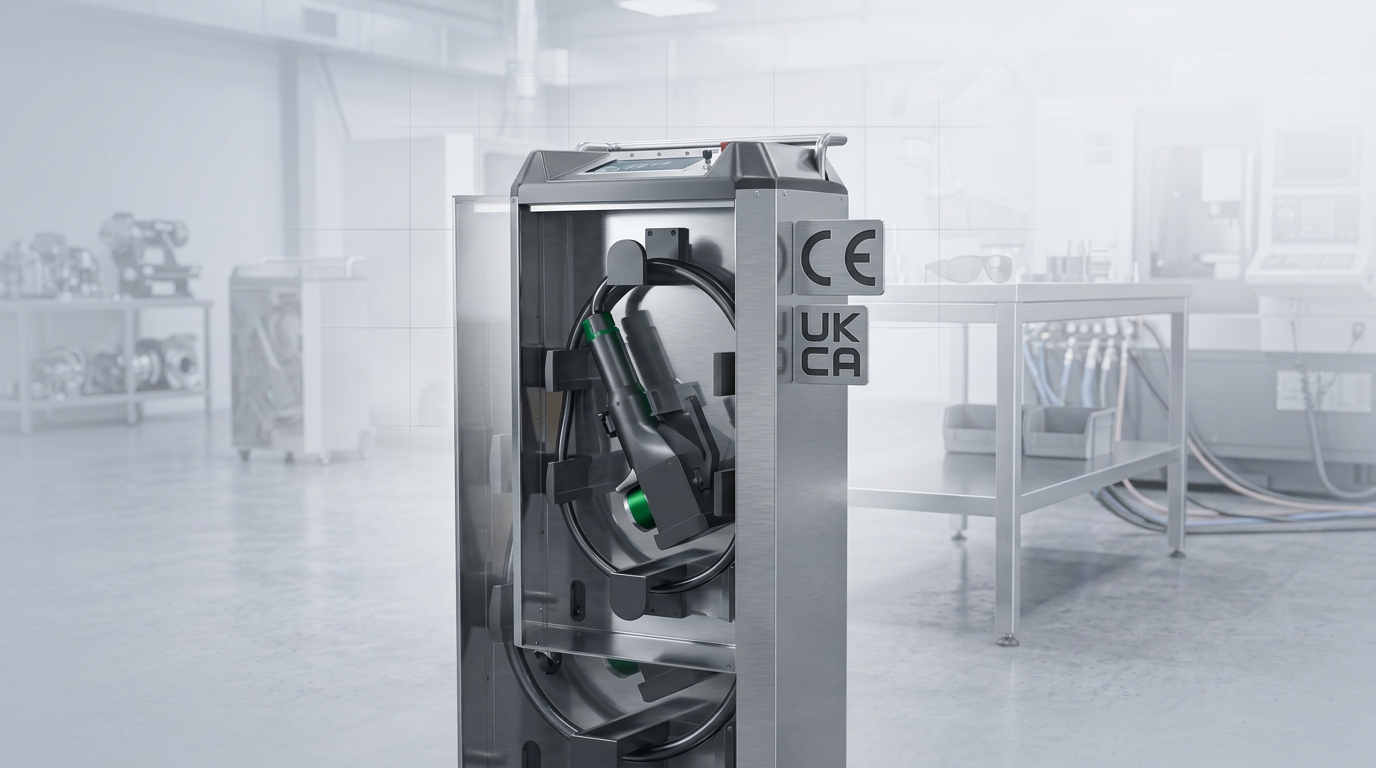
Every WSL machine — ELASER, ELASER-RHZ and AutoLASE — carries both CE and UKCA certification. These marks are not self-declaration; they require demonstrated conformity to defined safety and engineering standards, independently verified. Certification is a proxy for build quality and system integrity: a machine that has been through the process has faced external scrutiny.
Many cheaper imported machines available online carry no CE or UKCA mark. For capital equipment procurement, verifying compliance is straightforward due diligence. WSL also provides first-class laser safety and operation training, giving buyers a complete compliance picture from day one.
Is Laser Rust Removal Worth the Investment?
The right question is not whether laser cleaning is expensive — it is what the machine costs to own over its working life. With no consumables, no chemicals, and no abrasives to replenish, electricity is the only ongoing running cost. That is a fundamentally different cost structure from sandblasting or chemical stripping.
For facilities with regular rust removal or surface preparation needs, that difference compounds quickly. The investment pays for itself through eliminated consumable spend, reduced cleanup time, and less rework — within the machine's working life.
What You Get When You Buy from Woodrow Scientific
Every WSL purchase includes more than a machine. Here is the complete ownership package.
CE and UKCA Certified
Every WSL machine carries CE and UKCA certification — independently verified conformity to UK and European standards, not self-declaration.
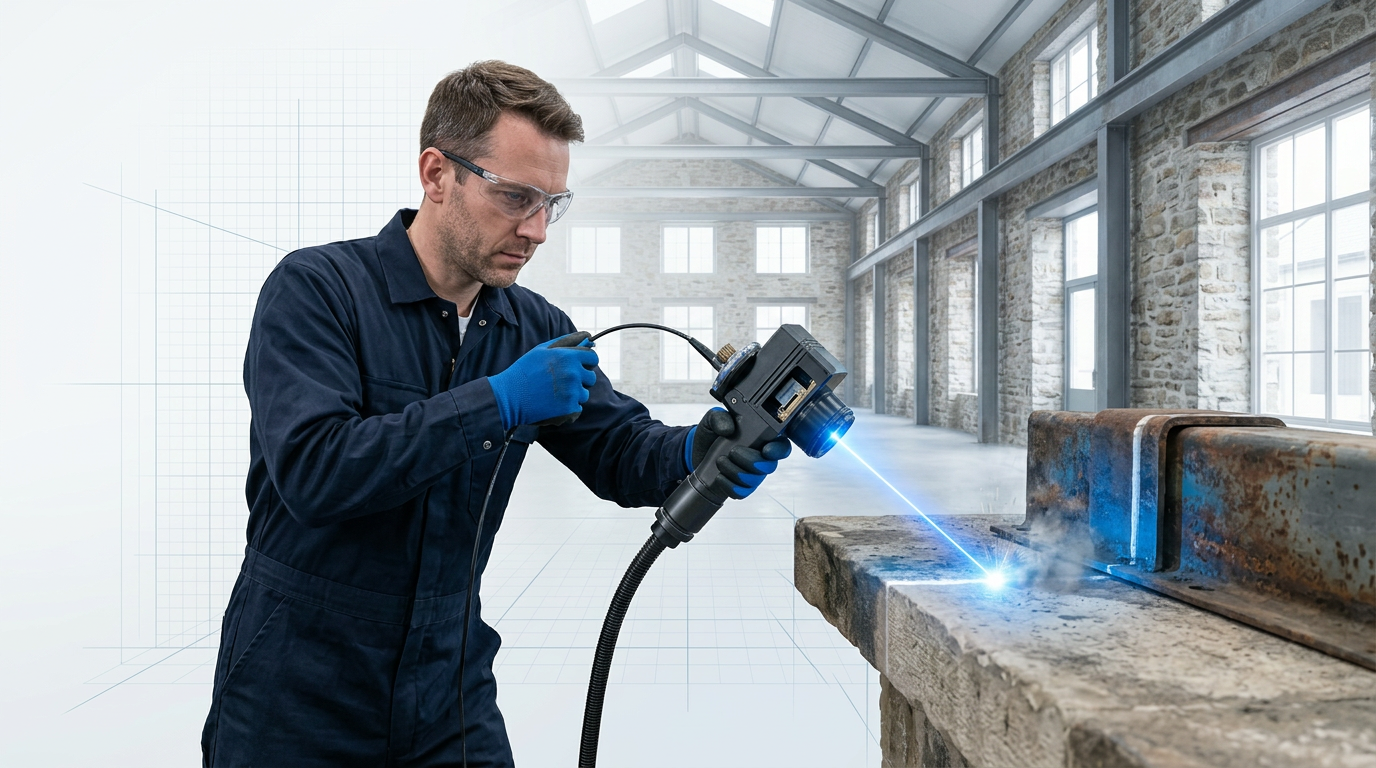
World-First Patented Eye-Safe RHZ Technology
WSL's patented RHZ technology collapses the laser hazard zone, enabling cleaning in open workshops and public-facing spaces without sealing off the area.
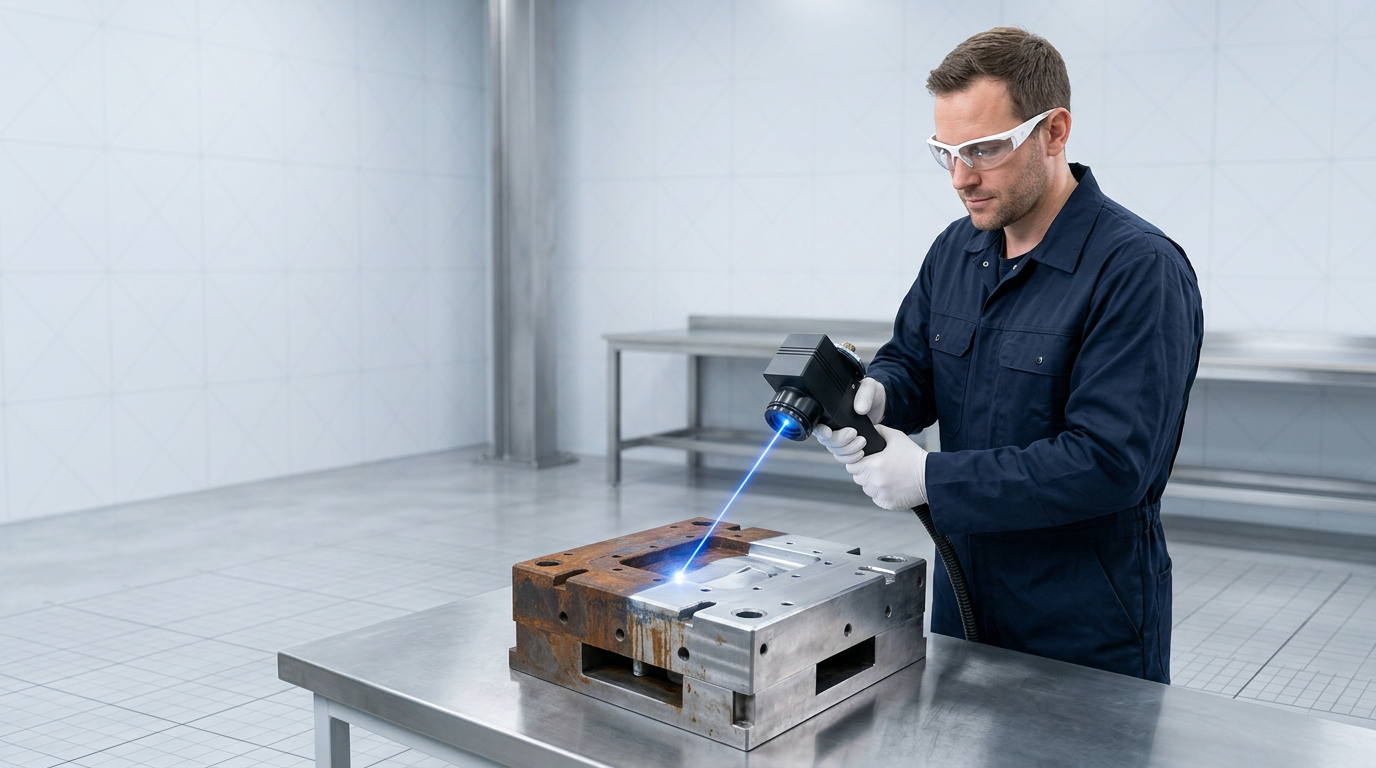
Safety and Operation Training Included
WSL provides first-class laser cleaning safety and operation training, giving buyers everything needed to operate safely and compliantly from day one.
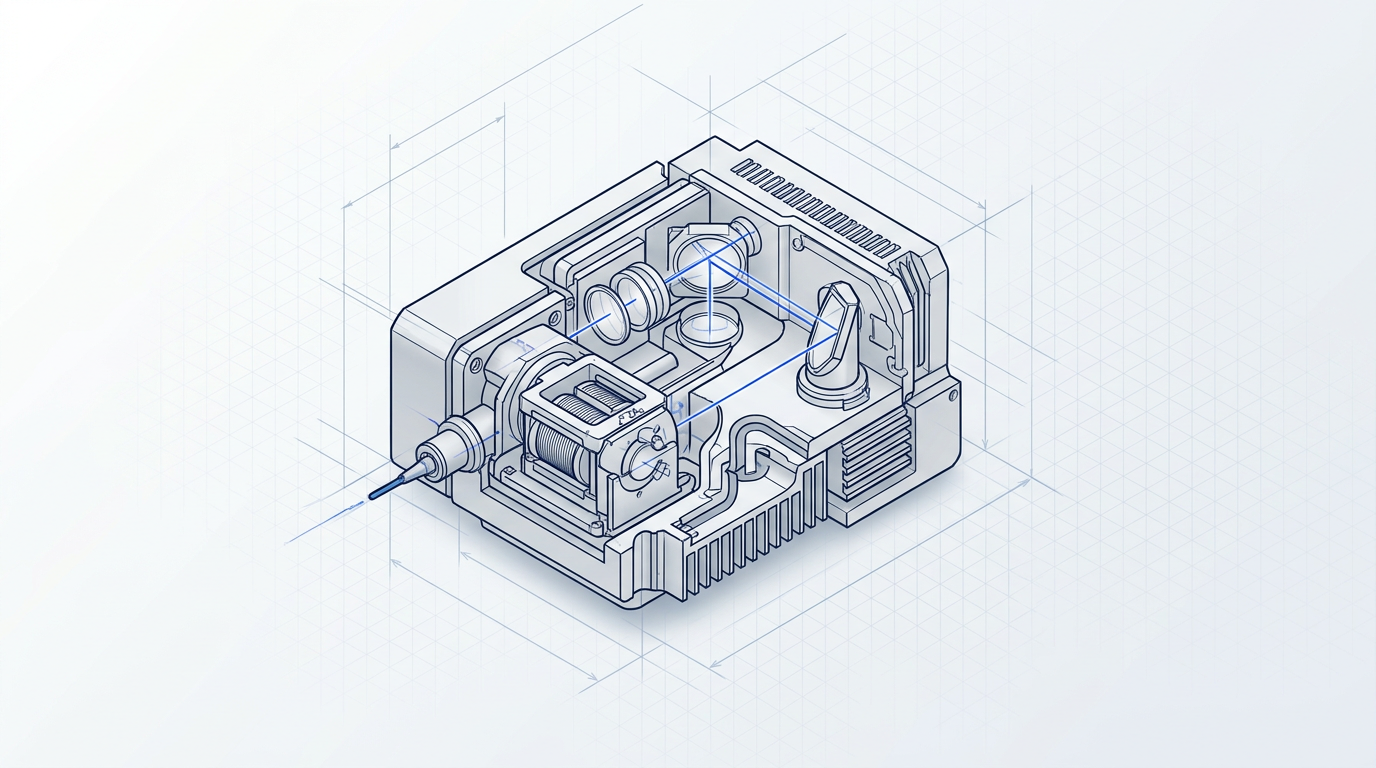
Bespoke Engineering and Custom Configurations
WSL's in-house engineering team handles non-standard applications and custom configurations — get in touch to discuss your specific requirements.
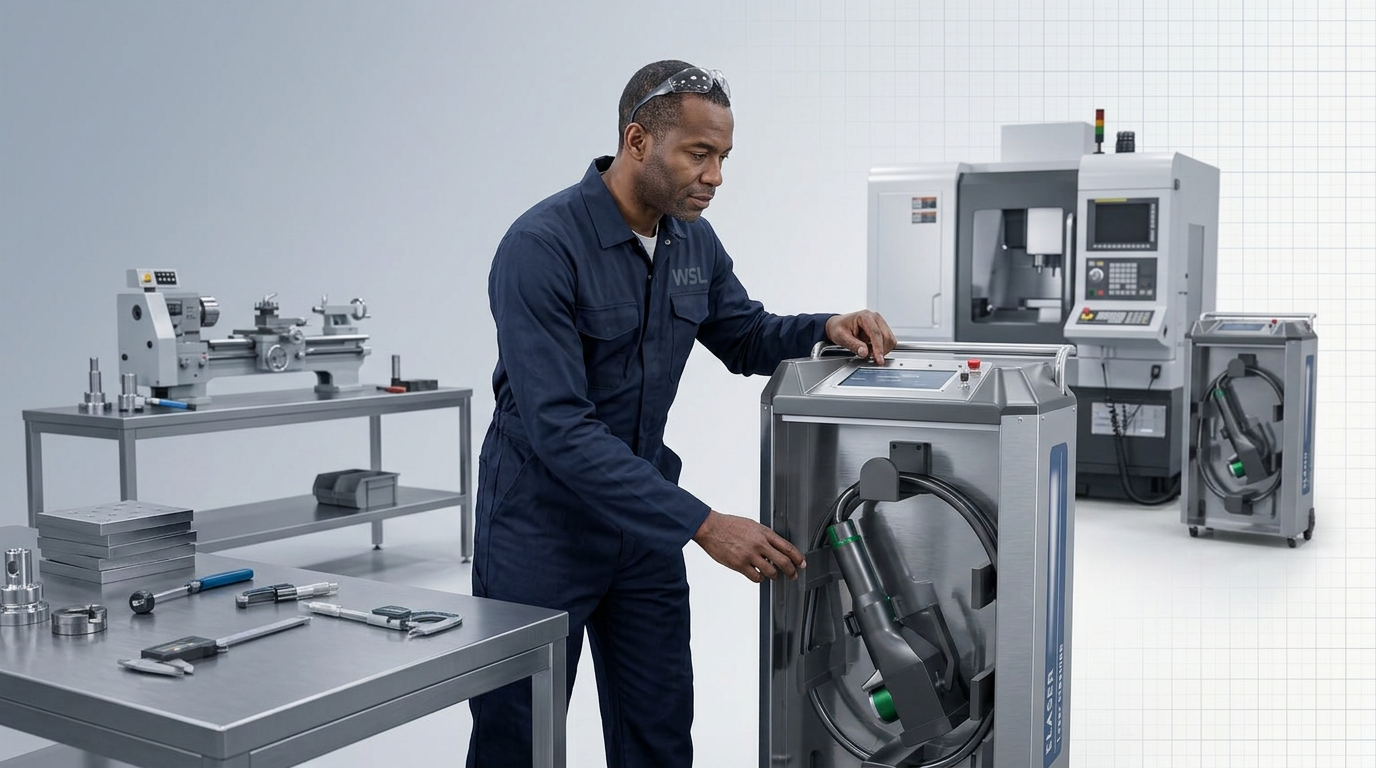
In-House After-Sales Engineering Support
When you need support, you reach WSL engineers — the same people who built the machine — for genuine diagnosis and fast resolution.
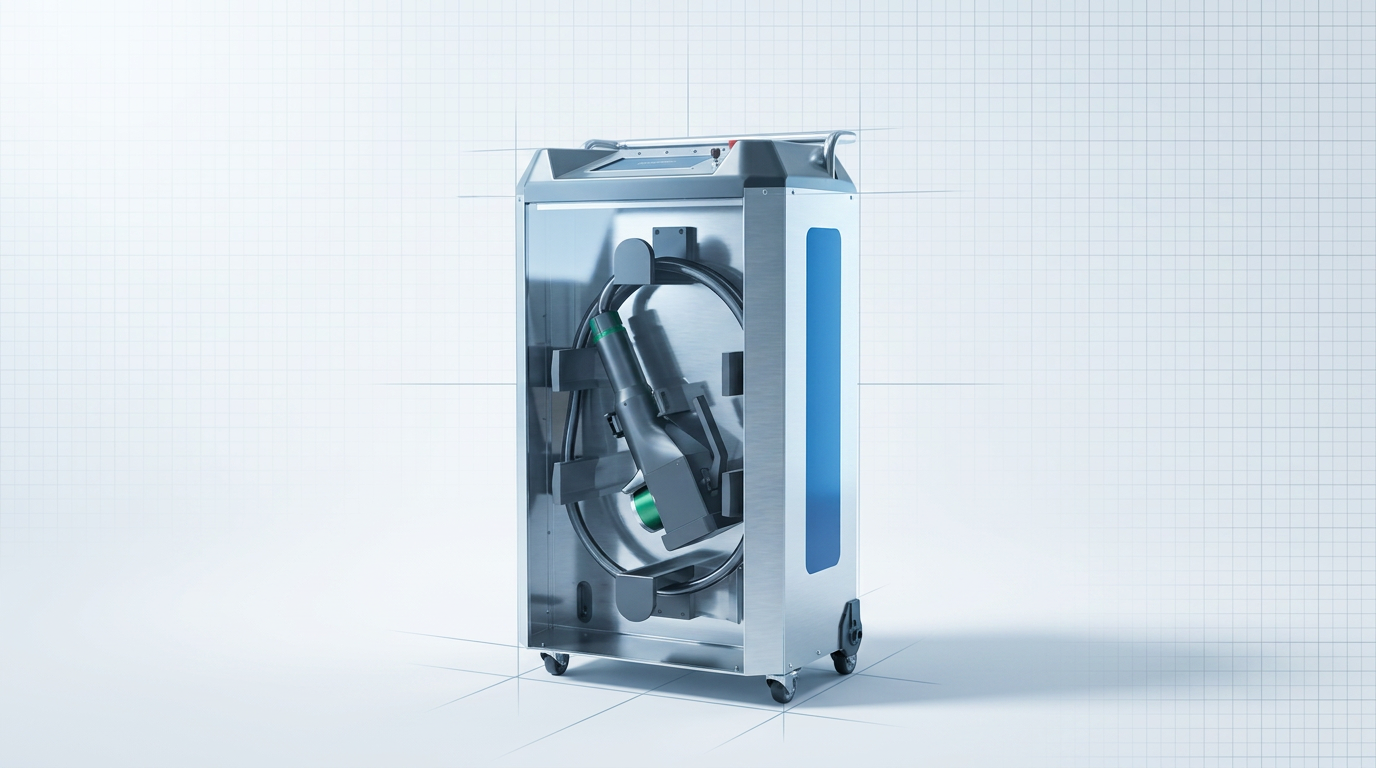
European Cost Leader in Industrial Laser Cleaning
WSL's pricing is the most competitive in Europe for comparable industrial laser cleaning machines, achieved through manufacturing efficiency — not quality compromise.
Get a Quote for Your Laser Cleaning Machine
WSL is the only UK-based laser cleaning manufacturer. Describe your application and we will provide a specific, no-obligation quote — whether you need a portable ELASER or an automated AutoLASE cell.
Frequently Asked Questions: Laser Rust Removal Machine Cost
Common questions from buyers evaluating laser rust removal machine costs.
No. The ELASER and AutoLASE clean using laser light alone — no chemicals, abrasives, water, or media of any kind to replenish. Both systems are air-cooled, with no water circuit or coolant infrastructure required. The only running cost is electricity. Over a machine's working life, that means zero ongoing consumable expenditure — a significant factor in total cost of ownership that separates laser cleaning from abrasive and chemical methods, where media and disposal costs accumulate continuously.
For UK and European buyers, CE and UKCA certification are the relevant standards to look for. Both the ELASER/ELASER-RHZ and AutoLASE carry CE and UKCA certification. These marks are not self-declaration — they require demonstrated conformity to defined safety and engineering standards, independently verified. That makes them a meaningful signal of build quality and system integrity, not a marketing badge. This matters in practice because cheaper imported machines available online frequently carry no CE or UKCA mark at all. WSL also provides first-class laser safety and operator training, so buyers have a complete compliance picture from day one — not just a certified machine, but the knowledge to operate it correctly.
A genuine manufacturer designs, builds, and supports its own machines in-house. That means faster spares availability, real engineering diagnosis when something goes wrong, and a product that can be genuinely improved over time. A reseller rebadging a third-party machine cannot offer any of these. The laser cleaning market includes a significant population of importers who rebadge machines but have no in-house engineering capability — the practical consequences are slower fixes, uncertain spares lead times, and no route for product improvement. WSL is the only UK-based laser cleaning manufacturer, founded in 2012, with 200+ years of combined engineering experience. Every machine is designed, built, serviced, and improved in-house. When evaluating any supplier, it is worth asking directly: do you manufacture this machine in-house, or are you a reseller? The answer tells you a great deal about the support you can expect after the sale.
For light surface rust and precision work on sensitive substrates, 100–300 W pulsed systems are the appropriate choice — they remove oxidation selectively without damaging the base material. For heavy rust, thick scale, or high-throughput production, higher-power continuous-wave systems may be considered. The ELASER covers the full industrial pulsed range up to 300 W, with power tunable from 0–100% — a single machine handles everything from light surface oxides through to thick coatings. The right power level also depends on the substrate material and the specific application. Buyers with particular cleaning challenges are encouraged to speak with WSL directly — the team can advise on the most appropriate configuration for the work at hand.
Contact WSL directly — pricing for both the ELASER/ELASER-RHZ and AutoLASE is available on request, with specific quotes provided based on application and configuration. Buyers who are unsure which system suits their needs can discuss requirements with the WSL team first; there is no obligation, and the process is straightforward. Because WSL is the only UK-based laser cleaning manufacturer, you are speaking directly with the people who design and build the machines — not a sales intermediary. Get in touch to start the conversation.
Industrial pulsed laser systems reflect genuine engineering costs: precision fibre laser sources, high-grade optics, and air-cooled systems built for continuous industrial operation. These are not commodity components, and the price reflects that. The more useful question, though, is what the machine costs to own — not just to buy. With zero consumables across its working life, no chemicals, no abrasives, and no media to replenish, electricity is the only ongoing running cost. For facilities with regular rust removal or surface preparation needs, that changes the calculation considerably. The upfront investment is offset by the elimination of consumable and disposal costs that accumulate continuously with abrasive or chemical methods. Over time, laser cleaning typically pays for itself through those eliminated costs alone.
Yes — for facilities with regular rust removal or surface preparation requirements. No consumables, no chemical disposal costs, minimal substrate damage, and a long working life make the total cost of ownership compelling against abrasive or chemical methods, where media and handling costs recur indefinitely. The speed advantage is also real when the full process is considered: no media to replenish, no masking, no chemical handling, and no cleanup of spent abrasive. Maintenance demands are low — air-cooled systems with no water circuit have fewer components to service. The right framing is not whether laser cleaning is expensive, but what it costs to own over five years. For most industrial applications, the machine pays for itself within its working life through eliminated consumable and labour costs.