

Introduction
If you've spent any time researching laser wood stripping, you've likely come across content that covers the basics — contactless, no chemicals, eco-friendly — and then stops there, leaving the questions that actually matter unanswered.
This guide goes further: into how the laser actually behaves on different wood species and coatings, what the operational realities look like day-to-day, and how to evaluate machines and suppliers with a clear head rather than a brochure.
It follows the natural shape of a buying decision — starting with how the technology works, moving through its real-world limitations, and finishing with a practical framework for choosing the right machine.
TL;DR
Laser wood stripping is genuinely capable — but only when the machine is correctly configured, the substrate is well understood, and the operational setup matches the application.
Get those variables right, and it outperforms traditional methods on precision and substrate care. Get them wrong, and the wood pays the price.
This article covers:

How laser ablation works on wood
Pulsed vs continuous wave laser modes
How coatings respond to laser stripping
Wood species, grain, and charring risk
Laser vs traditional stripping methods compared
What to look for when buying
What is a laser wood stripping machine?
Most people understand intuitively that a laser can cut or engrave wood — but stripping a coating from wood without touching it, without chemicals, and without damaging the grain beneath is a different proposition entirely, and understanding why it works is the key to understanding when it works and when it does not.
A laser wood stripping machine is an industrial device that directs a precisely controlled laser beam at a coated wood surface to remove paint, varnish, stain, lacquer, epoxy, or other surface finishes — without mechanical contact and without chemical agents.
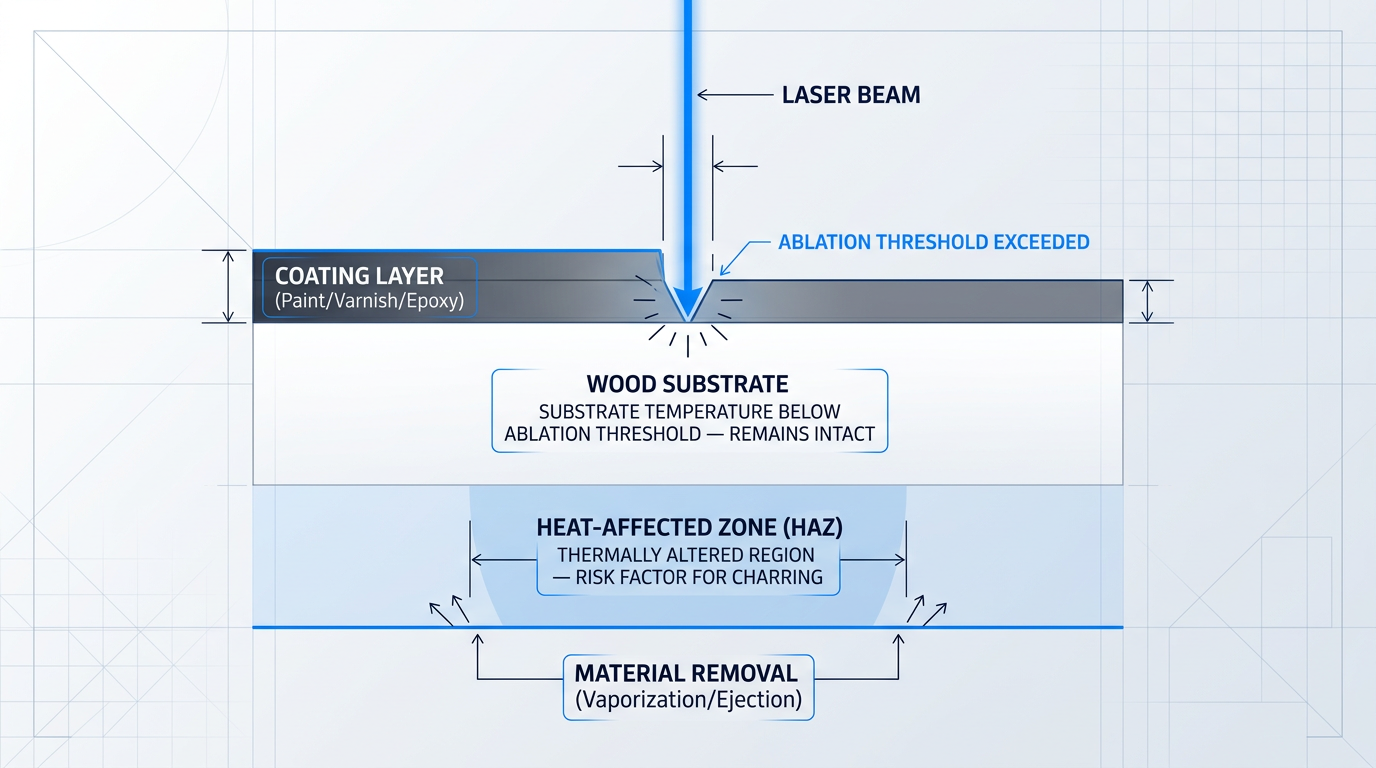
The removal happens through a physical process called laser ablation: the coating material absorbs the laser energy, heats extremely rapidly, and is either vaporised or physically ejected from the surface, while the wood substrate beneath it remains largely intact.
The reason the coating and the substrate respond so differently to the same beam comes down to their differing optical absorption properties and thermal responses — the coating absorbs the laser wavelength strongly and heats fast enough to ablate, while the wood beneath absorbs the energy differently and at a lower rate, leaving it largely undisturbed when parameters are correctly set.
The ablation threshold
Central to understanding laser stripping is the concept of the ablation threshold: the minimum energy density, or fluence, at which material removal begins to occur. Below this threshold, the beam deposits heat but removes little or no material; above it, the coating ablates.
The selectivity of the process depends on the coating having a lower ablation threshold than the wood substrate beneath it — this difference in thresholds is the physical mechanism that allows the laser to remove the coating and effectively stop at the coating-to-wood interface.
The heat-affected zone
Even when ablation is proceeding correctly, the laser deposits heat not only at the ablation point but in the surrounding material — the region that is thermally altered but not removed is called the heat-affected zone (HAZ), and on wood it is the primary risk factor for charring and substrate damage.
Why wood is a more challenging substrate
Laser stripping is well-established on metal substrates, where the physics are relatively predictable — but wood presents a fundamentally different set of material challenges that make the process significantly harder to control.
- Low thermal diffusivity: Wood conducts heat away from the surface far more slowly than metals like steel, so energy accumulates at the ablation site rather than dissipating.
- Anisotropic grain structure: Thermal and optical properties differ along and across the grain, meaning there is no single uniform response across even one piece of timber.
- Species variability: Density, resin content, and char threshold vary significantly between species and within a single board — what suits oak may char pine.
- Biological complexity: Porosity, moisture content, and fibre orientation all influence how laser energy couples into the substrate at any given point.
Taken together, these properties mean that heat management is the central engineering challenge of laser wood stripping in a way it simply is not for metal — and that laser parameters such as power, scan speed, and pulse frequency must be calibrated carefully for each species and coating combination rather than set once and left.
This contrast with metal is worth holding in mind throughout the rest of the guide: on steel or aluminium, excess heat dissipates rapidly through the substrate; on wood, it builds at the surface, and the HAZ expands accordingly.
The viability of laser wood stripping rests on one physical fact: the coating absorbs the laser energy and ablates; the wood beneath, absorbing differently, largely does not. Managing the boundary between those two responses — the ablation threshold and the heat-affected zone — is what separates a clean strip from a charred substrate.
Pulsed and continuous wave operation
Laser wood stripping machines operate in one of two fundamental modes. A pulsed laser delivers energy in discrete bursts separated by intervals, with each pulse depositing a controlled quantity of energy before the beam pauses.
A continuous wave (CW) laser, by contrast, delivers a constant, uninterrupted beam with no intervals between energy deposits — the two modes represent opposite ends of how laser energy is delivered over time.
In terms of coating types, laser stripping on wood can address a broad range of surface finishes: oil-based and latex paint, varnish, shellac, stain, epoxy, polyurethane, and lacquer — with the specific behaviour of each coating under the beam covered in a later section.
It is worth establishing clearly at this point that a laser wood stripping machine is an industrial-grade process tool, not a consumer product: it requires appropriate fume extraction equipment, laser safety measures, and trained operators to use safely and effectively.
With wood's low thermal diffusivity and the HAZ risk now established, the most consequential technical decision in laser wood stripping becomes clear: the choice between pulsed and continuous wave operation — and why that choice has direct consequences for the substrate, which the next section examines in detail.
Pulsed vs continuous wave: why laser mode matters for wood
Choose the wrong laser mode for wood stripping and the result is not merely poor cleaning — it is a charred, scorched substrate that must be mechanically sanded to recover, which eliminates the non-contact advantage that made laser stripping worth considering in the first place.
The root cause is physical, not operational. A continuous wave (CW) laser delivers a sustained, uninterrupted stream of energy to the surface. Because wood's thermal diffusivity is so low — as established earlier in this guide — that heat accumulates at the surface faster than it can dissipate into the material beneath.
The surface temperature climbs past the charring threshold before the coating has been fully removed, producing carbonisation of the wood fibres. This is not operator error; it is a predictable consequence of applying CW energy to a thermally sluggish substrate. The JLMN academic literature on laser-material interaction confirms that ablation of wood with a CW or quasi-CW laser is a thermal process in which heat-affected zone formation and carbonisation must be expected.
Pulsed laser operation solves this by restructuring when energy arrives, not just how much. Energy is delivered in discrete, short, high-peak-power bursts — and between each burst, there is an inter-pulse interval during which the wood surface can cool.
That cooling interval is the primary mechanism preventing heat accumulation from reaching the charring threshold. The same total energy delivered in pulses is far safer for the wood substrate than the same energy delivered continuously, because the temporal distribution of energy is what governs substrate temperature, not the total dose alone.
The parameters that matter: PRF and pulse duration
Pulse repetition frequency (PRF) is the dominant parameter the operator controls to manage heat accumulation on wood. Lower PRF means longer inter-pulse intervals, which means more cooling time between successive energy deposits.
For wood, lower PRF is structurally safer — it is the primary dial the operator adjusts when working on thermally sensitive species or thick, stubborn coatings. Operator-facing technical guidance is explicit on the threshold: a machine that cannot reduce PRF to 30 Hz or below is unlikely to be suitable for most wood stripping applications, and machines with a minimum frequency of 50 Hz or higher should not be used on wood substrates.
Pulse duration is the secondary but equally important parameter. Shorter pulses — in the nanosecond range — confine the energy deposition to a shallower depth within the coating, reducing how much thermal energy reaches the wood substrate beneath and minimising the heat-affected zone.
Ultrashort pulses in the picosecond or femtosecond range approach non-thermal ablation — material is removed so rapidly that heat transfer to the substrate is negligible, and the JLMN literature confirms that only ultrashort pulsed sources can ablate wood with negligible heat input and no carbonisation. In practice, however, ultrashort pulse systems are rarely used in industrial wood stripping due to their cost and operational complexity.
- PRF: 30 Hz or below: The minimum threshold for most wood applications. Ideally adjustable to 10 Hz or lower for sensitive species. Any machine with a minimum PRF above 50 Hz is not designed for wood.
- Pulse duration: 50 ns or shorter: The baseline for any serious wood stripping application. Below 20 ns is preferable for precision or antique restoration work where stopping at an original finish is required.
- MOPA source: independent parameter control: A MOPA pulsed fibre laser allows PRF and pulse duration to be set independently, giving finer control than a simpler Q-switched design where parameters are coupled.
A machine that cannot reach these thresholds is not a wood stripping machine, regardless of its wattage — buyers who evaluate machines on output power alone and overlook pulse parameter range will end up with a tool that damages the substrate rather than cleans it.
A MOPA pulsed fibre laser offers independent control of both pulse duration and pulse repetition frequency — the two parameters that govern heat accumulation on wood. A Q-switched laser couples these parameters, limiting the operator's ability to tune for sensitive substrates. For wood stripping, MOPA is not a premium feature; it is the correct architecture.
With the pulse parameters understood, the next variable shaping the result is the coating itself — and different coatings respond to laser ablation in ways that demand their own parameter adjustments.
How laser ablation behaves on different wood coatings
Not every coating on wood responds to laser ablation the same way — and knowing why before you start is the difference between a clean result and a damaged substrate.
The governing principle is optical absorption differential: the coating must absorb the laser wavelength more strongly than the wood beneath it, and its ablation threshold must be lower than the substrate's.
When that differential is wide, the laser vaporises the coating while the wood beneath remains largely unaffected — which is precisely the selectivity that makes a laser wood stripping machine worth considering.
If the coating absorbs the laser wavelength more strongly than the wood beneath it, ablation is selective. If that differential narrows or reverses, the risk of substrate damage rises — no parameter adjustment fully compensates.
Use this principle as your diagnostic lens for any coating you encounter: the question is always whether the absorption and threshold differential favours the coating over the substrate.
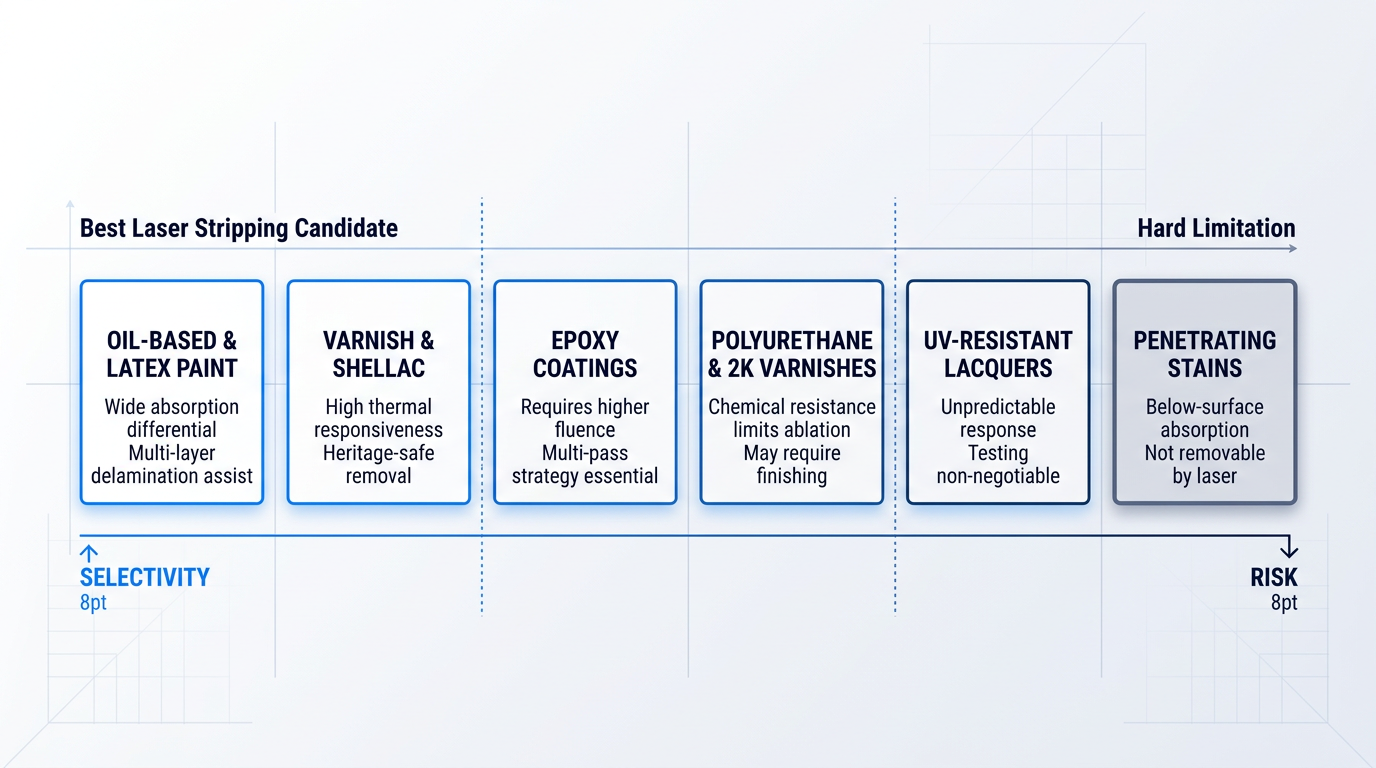
Working from best candidates to hard limits, here is how the most common wood coating types behave under pulsed laser ablation.
Coating types: best candidates to hard limits
Oil-based and latex paint
Paint is the most reliable laser stripping candidate on wood: both oil-based and latex formulations absorb laser energy well, producing a wide ablation threshold differential against the wood substrate.
Counterintuitively, multi-layer paint stacks are often easier to initiate than single-layer targets, because thermal expansion mismatch between dissimilar paint layers creates inter-layer stress that assists delamination, effectively lowering the cleaning threshold at each interface.
Multiple controlled passes allow layer-by-layer removal, giving the operator precise command over how much material is taken off at each stage.
Varnish and shellac
Traditional oil-based varnishes and shellac respond well to pulsed laser cleaning, with shellac being one of the most consistently successful applications in antique furniture and heritage restoration work.
Aged, yellowed, or crazed shellac is particularly well suited: the laser removes it without the solvent exposure and grain-raising that chemical stripping causes on historic surfaces, preserving the patina of the wood beneath.
Epoxy coatings
Epoxy responds to laser ablation but demands higher fluence than paint or shellac, because its thermally stable, chemically cross-linked structure requires more energy to initiate the ablation process.
The practical consequence is that higher fluence increases the risk of heat build-up in the wood beneath, so multi-pass strategies at moderate fluence are strongly preferable to a single high-energy pass.
Polyurethane and two-component varnishes
Polyurethane and 2K varnishes present genuine limitations: engineered for chemical and climatic resistance, these coatings resist laser ablation for the same reasons they resist environmental degradation.
Some formulations do not absorb the laser wavelength effectively; others partially ablate but leave residue that does not fully volatilise, requiring light mechanical finishing to complete the job.
Preliminary testing is essential, and operators should plan for a combined approach — laser stripping followed by mechanical finishing — rather than expecting laser to be the complete solution.
UV-resistant lacquers and cellulose-based paints
These occupy an unpredictable middle ground: UV-resistant additives and certain cellulose chemistry can cause the coating to absorb energy in ways that produce discolouration rather than clean vaporisation, depending on the specific formulation.
Some formulations respond well; others do not — the issue is unpredictability, not impossibility, which makes testing on an inconspicuous area non-negotiable before any visible surface is treated.
Penetrating stains: a hard limit
Penetrating stains are not removable by laser ablation — this is a hard physical limit, not a parameter optimisation problem.
Laser ablation removes material from the top down; a stain absorbed into wood fibres sits below the surface where the laser acts, and ablating deep enough to reach it destroys the substrate.
If the coating in question is a penetrating stain, laser stripping is not the right tool — no adjustment to pulse parameters or fluence changes that conclusion.
For the coating types that are viable, the pattern is consistent: the wider the absorption and threshold differential between coating and wood, the more controllable and reliable the result.
Lead paint warrants separate treatment because it introduces a safety dimension rather than a capability limitation: laser stripping of lead paint is technically viable, but ablating it generates lead-containing particulate that requires certified HEPA filtration and appropriate containment.
The waste form produced — dry particulate captured in a filter — differs from the wet residues associated with other removal methods, which has implications for how waste is collected and stored, though disposal requirements under hazardous waste regulations apply regardless of removal method.
The specific extraction requirements for lead paint — filtration grades, containment protocols, and air monitoring — are covered in detail in the fume extraction section of this guide.
Regardless of coating type, always test on an inconspicuous area before treating any visible surface: coating thickness, adhesion quality, and any history of re-coating or incompatible product layering all affect the outcome in ways that parameters alone cannot predict.
Experienced operators treat this not as a caveat but as professional practice — testing before committing is standard on all but the most familiar coating-substrate combinations.
Coating chemistry is only one half of the selectivity equation; the wood species and grain structure beneath introduce their own constraints on how aggressively the laser can be applied — which is what the next section addresses.
Wood grain, species, and charring: managing the substrate
The previous section established how different coatings respond to laser ablation. But even with the same coating and the same laser settings, the wood beneath it can determine whether the result is a clean surface or a charred one — because wood is not a uniform substrate.
Thermal diffusivity, density, resin content, and char threshold vary substantially across species, and the practical consequence is direct: parameter settings that strip paint cleanly from oak may carbonise the surface of pine before the coating is fully removed.
The char threshold is the surface temperature at which wood begins to carbonise — broadly in the range of 220–280°C depending on species, with pyrolysis reactions typically beginning around 225–275°C according to fire science literature. This is the ceiling the operator must stay below.
The table below compares the three principal species groups across the parameters that govern laser stripping behaviour, drawn from USDA Forest Products Laboratory thermal data and operator-level testing on pulsed fiber lasers.
| Species group | Example species | Air-dry density (kg/m³) | Thermal conductivity at 12% MC (W/m·K) | Approx. char threshold (°C) | Minimum scan speed (mm/s) | Typical passes required |
|---|---|---|---|---|---|---|
| Dense hardwoods | Oak, maple, ash | 670–750 | 0.16–0.19 | 260–275 | 400 | 2–3 |
| Medium-density hardwoods | Walnut, cherry, teak | 580–690 | 0.11–0.13 | 245–255 | 500 | 3–4 |
| Low-density hardwoods and softwoods | Poplar, alder, pine, cedar | 310–510 | 0.08–0.11 | 220–230 | 700+ | 4–6 |
Comparison of wood species groups by density, thermal conductivity, char threshold, and laser stripping difficulty to guide parameter selection
The pattern in the table is not simply that denser wood is easier to work with — it is that denser, more conductive species have more capacity to absorb and dissipate heat, which provides greater margin before the char threshold is reached and allows more forgiving power and frequency settings.
Teak is the instructive exception: despite its moderate density (around 690 kg/m³), its thermal diffusivity is comparably low (approximately 1.1 × 10⁻⁷ m²/s), meaning heat accumulates at the surface rather than dispersing into the wood mass — making it behave more like a low-density species than its density alone would suggest.
Teak also contains silica deposits and resin pockets where laser energy concentrates, producing localised over-charring even when the average surface temperature is within a nominally safe range — which is why testing on the specific teak material in use is more important than for other hardwood species.
At the challenging end of the table, low-density softwoods such as pine and cedar introduce a variable that goes beyond charring: resin content. Pine resin begins forming tar products around 250–350°C, and at sustained temperatures above approximately 300–350°C, resins can ignite, producing acrid, irritating smoke.
Working on resinous softwoods requires fire suppression capability in the work area — CO₂ or dry powder — and the fume extraction requirements are more demanding than for other species. The full extraction and safety treatment is covered in the fume extraction section of this guide; the point here is that the operating window for pine and cedar is the narrowest of any common wood type, and operator discipline must be at its highest.
Once charring occurs, it cannot be corrected by the laser. The operator must sand the surface — which is precisely the manual, substrate-contact process that laser stripping was chosen to avoid. Getting species-specific parameters right is not a refinement; it is the whole point.
Grain direction adds a further layer of variability that operators working on furniture, carved surfaces, or log ends will encounter directly. End grain — the cross-section that exposes the ends of wood fibres — absorbs heat differently from face grain and requires scan speeds approximately 30–40% faster at equivalent power settings to avoid overheating.
Research on wood pyrolysis confirms that heat flux applied perpendicular to the grain direction produces substantially more exothermic reaction than parallel heating — a physical basis for the practical observation that end-grain surfaces are more sensitive to heat accumulation than face-grain surfaces at equivalent energy inputs.
Varying the scan angle relative to the grain also affects ablation depth and surface texture uniformity, which is why a second pass perpendicular to the first is standard practice rather than an optional refinement.
The multi-pass strategy: why slower is not safer
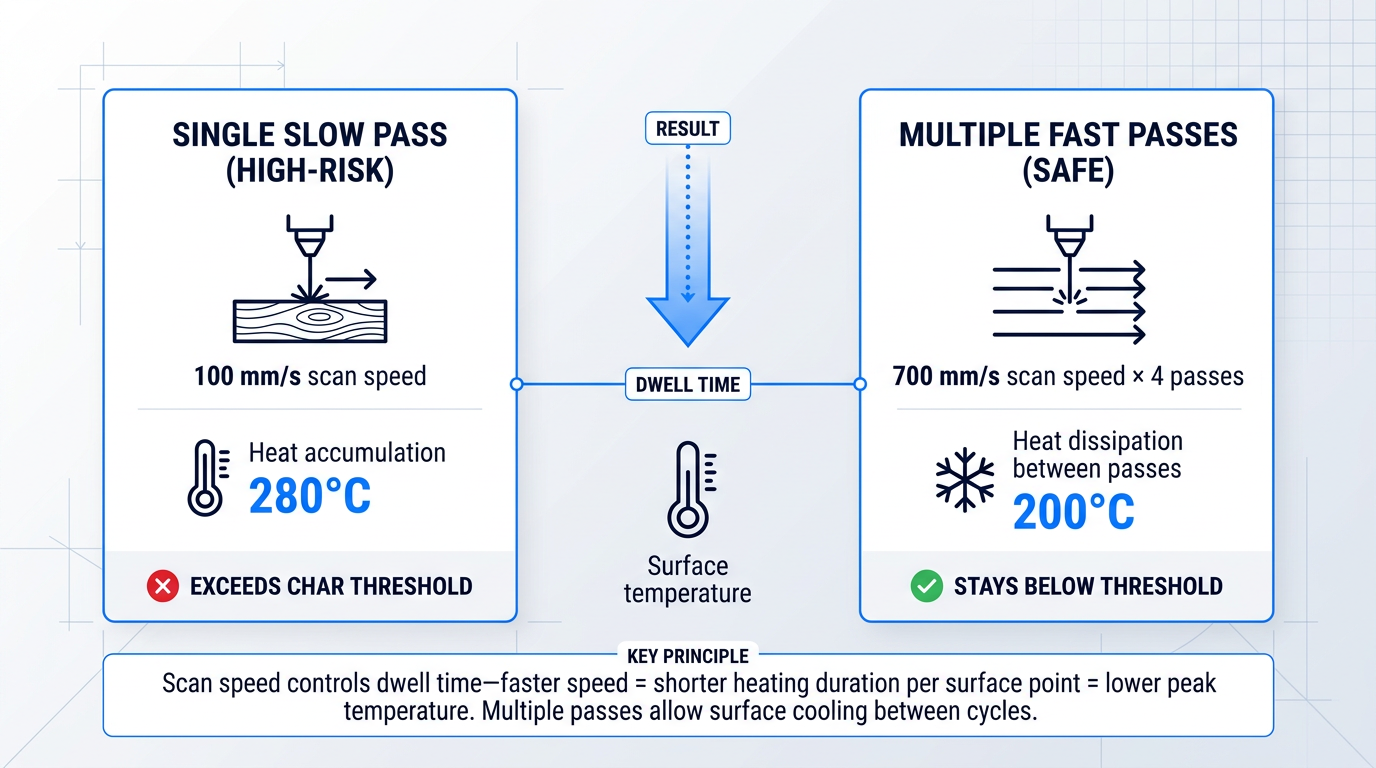
Across all species, the most reliable method for preventing charring is replacing a single slow, high-power pass with multiple fast, low-power passes — and the physics are straightforward: multiple passes allow the wood surface to cool between passes, preventing cumulative heat build-up that a single slow pass would cause.
This is the macro-level application of the same inter-pulse cooling principle established in the pulsed-vs-CW section: just as gaps between pulses allow the surface to dissipate heat between energy deposits, gaps between passes allow the surface to return toward ambient before the next energy load arrives.
In practice, the maximum surface temperature reached with a multi-pass approach is typically 40–60% lower than with a single-pass approach delivering the same total energy — which is the difference between staying below the char threshold and exceeding it.
The protocol is to allow 30–60 seconds between passes for the surface to return to ambient, inspect under good lighting after each pass, and rotate the scan direction by 90° on the second pass to address grain-orientation residue and produce a more uniform surface texture.
Scan speed: the primary charring-prevention lever
Within a given pass, scan speed is the dominant variable controlling how much heat reaches the wood surface at any point — because it governs dwell time directly: a 10 mm spot at 100 mm/s delivers three times the heat per surface point as the same spot at 300 mm/s.
The correct speed is a function of species, power setting, pulse frequency, and spot diameter simultaneously — it cannot be read from a table and applied without testing, because the interaction between these variables is non-linear.
Too slow and heat accumulates to charring; too fast and the coating is incompletely removed, requiring additional passes that compound the heat load over multiple cycles — often a worse outcome than a single slightly slower pass would have been.
As a practical reference: minimum safe scan speeds for dense hardwoods (oak, maple) typically start around 400 mm/s at 100–150W; for low-density species and softwoods (pine, cedar), minimum speeds of 700–1,000 mm/s are required at reduced power (50–80W) to stay below the char threshold.
Experienced operators develop an intuitive feel for the interplay of these variables over time. New operators should start at the most conservative end of the species-appropriate range and adjust incrementally — increasing power by no more than 10% per test, assessing for surface yellowing (acceptable) or darkening and blackening (charring: stop, sand back, retest).
Understanding how species variables shape parameter decisions is the foundation — but those decisions also have direct consequences for how quickly a job gets done and which use cases laser stripping genuinely suits, which is what the next part of this guide addresses.
Operational realities: speed, throughput, and where laser stripping fits
Understanding the physics of laser ablation is one thing — knowing what it looks like to actually run a machine across a painted timber beam is another. The gap between theoretical capability and operational reality is where purchasing decisions are won or lost, and this section addresses it directly.
The most reliable throughput figure in the published literature for a 200W pulsed fibre laser stripping paint from wood is 1–3 square metres per hour, depending on coating type, layer count, and species. That range comes from comparative cleaning data and is consistent with the broader 0.5–8 m²/hour operational envelope reported for pulsed laser cleaning across substrates.
Coating type is the dominant variable. Single-layer latex paint on structural timber sits toward the faster end of the range — published data puts a 200W system at approximately 2.0–3.0 m²/hour on this application. Multiple layers of oil-based paint (four to six coats is common on older joinery) drops the rate to around 1.0–1.8 m²/hour, often requiring two passes.
Species and layer count interact with each other. The multi-pass strategies required for sensitive species — covered in the preceding section on substrate management — reduce effective throughput further on hardwood furniture-scale work, where conservative parameters and cooling intervals between passes are non-negotiable.
A 200W pulsed laser strips 1–3 m² of painted wood per hour — coating type, layer count, and species all move the dial within that range. Use this figure in ROI calculations, not vendor marketing claims.
Where laser stripping earns its place
Laser stripping is not the right tool for every wood cleaning job — but for a specific set of applications, it is genuinely the best tool available, and no traditional method comes close.
- Heritage timber and antique furniture: Non-contact, depth-controlled ablation preserves substrate integrity and surface detail that sanding destroys and chemicals risk.
- Fire and smoke remediation: Removes charred surface layers and embedded soot from structural beams, often saving timbers that would otherwise be written off.
- Graffiti removal from wood: Spray paint lifts cleanly in a single pass on most wood surfaces, with no chemical waste and no abrasive media to contain.
- Mould and mildew on exterior timber: Vaporises surface hyphae without introducing the moisture that water-based biocides require — particularly valuable on exterior cladding.
- Chemical-free environments: Food-adjacent settings, heritage buildings, and ecologically sensitive sites where solvent use is restricted or undesirable.
- On-site work with no media disposal: No abrasive media to contain, no chemical waste to manage — a significant logistical advantage on remote or access-restricted sites.
The thread connecting these applications is substrate preservation combined with operational cleanliness: laser stripping removes the coating without touching the wood beneath, leaves no chemical residue, and generates only fine particulate captured by extraction — rather than spent media, stripped paint slurry, or solvent waste.
That combination becomes especially valuable when the work is on-site and access is varied — elevated structural beams, heritage facades, log cabin exteriors, or curved surfaces that defeat flat-bed methods entirely.
A wheeled, handheld system with a long delivery cable reach is the natural fit for this class of work. The operator can position the main unit at ground level and carry only a lightweight scanner head to wherever the surface is — up a scaffold, around a curved log, into the angle of a structural joint.
Woodrow Scientific Limited's ELASER is a concrete example of what a portable laser wood stripping system looks like in practice: a sub-3 kg handheld scanner with up to 50 m of delivery cable reach, mounted on a wheeled unit under 50 kg — single-operator capable, CE and UKCA certified, and designed, built, and supported entirely in-house by the only UK-based laser cleaning manufacturer.
The ELASER-RHZ variant carries Woodrow Scientific's patented world-first reduced-hazard-zone technology, which collapses the laser hazard zone to a fraction of conventional size. This is directly relevant to on-site wood stripping scenarios: it enables cleaning on heritage facades, in open workshops, and in publicly accessible spaces — graffiti removal in a town centre, restoration work on a listed building — without sealing off the surrounding area.
It is worth noting that many laser cleaning products on the market are imported and rebadged by resellers rather than manufactured in-house — which typically means slower spares, limited engineering support, and no real ability to improve the machine. Woodrow Scientific designs, builds, and supports its machines entirely in-house, with first-class operator training available as part of the package.
Log cabin and exterior timber restoration illustrates the portability advantage in practice. Laser cleaning reaches into checks (the natural cracks that develop along log surfaces) and crevice joints that pressure washing cannot enter without driving water deep into the wood. Across curved log surfaces, it removes weathered grey fibre, old stain, and mould uniformly — something sanding cannot achieve efficiently on a curved substrate.
Where laser stripping is less competitive
Honest evaluation requires naming the scenarios where laser stripping is not the right tool. Knowing the boundaries of a method is as important as knowing its strengths — and buyers who understand the full picture make better decisions.
- Large flat surfaces, bulk removal: On very large areas where throughput is the primary concern, abrasive methods are faster and cheaper. Laser stripping does not compete on raw speed at scale.
- Deeply penetrating stains: As established in the coating behaviour section, stains that have soaked into the wood fibre cannot be fully removed by surface ablation — laser clears the surface but not the deep pigment.
- Painted MDF and particleboard: The UF resin binder in engineered boards begins to degrade thermally at relatively low temperatures, making selective ablation of just the paint coating difficult to achieve reliably.
- Inaccessible beam geometry: Narrow recesses, internal cavities, and surfaces the scanner head cannot reach at the correct standoff distance are outside the practical scope of laser cleaning.
The MDF and particleboard limitation is worth pausing on. Research into the thermal degradation of urea-formaldehyde resin — the binder used in most MDF and particleboard — shows that significant decomposition begins between 180 °C and 320 °C, a range that overlaps with the temperatures generated during paint ablation. Unlike solid wood, where the coating and substrate have meaningfully different absorption characteristics, the resin matrix in engineered board responds to laser energy in ways that make clean selective removal harder to guarantee.
For buyers with genuinely high-volume or repetitive batch requirements, robotic laser cleaning systems represent the other end of the spectrum. Woodrow Scientific's AutoLASE uses machine vision to scan a loaded part, build a 3D map, and generate the cleaning path automatically — no manual programming required. This is the relevant option where consistency and throughput matter more than portability, though it is outside the scope of most operator-driven wood stripping applications this guide focuses on.
Operational fit — speed, use-case match, and portability — is only part of the picture. The extraction and safety requirements that govern where and how a laser wood stripping machine can legally and safely operate are the next essential consideration.
See the theory in practice
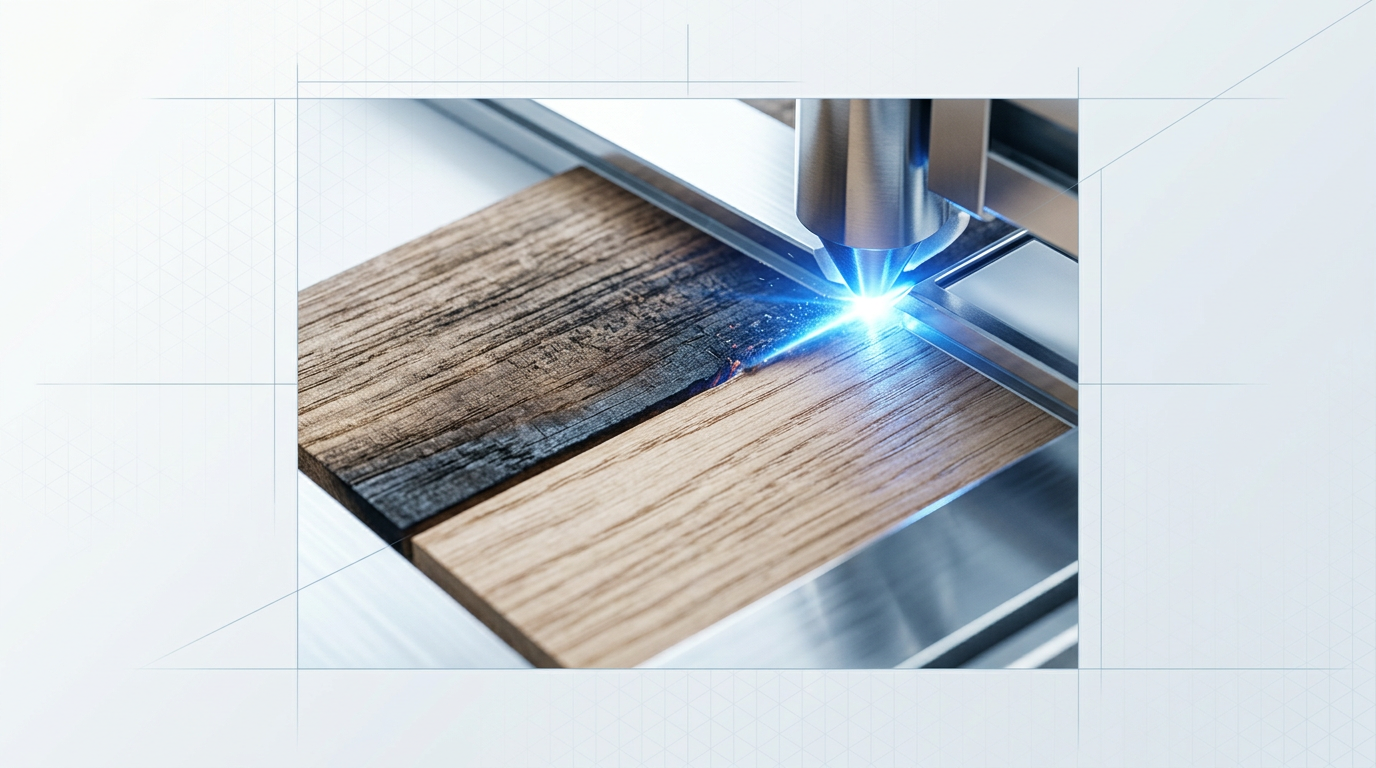
You now know how laser ablation works on wood and where it fits operationally. Browse the ELASER product range to see how those principles translate into a real machine specification.
Fume extraction, safety, and regulatory requirements
The machine itself is only part of what you are buying. A laser wood stripping machine without a properly specified extraction system, without trained operators, and without a compliant site setup is not ready to run — it is a liability. The infrastructure around the machine is not optional, and the regulatory framework that governs it is not advisory.
The hazard profile generated during laser wood stripping is not uniform — it depends entirely on what is being removed. Wood char and fine wood dust particulate are produced whenever the laser interacts with the substrate. Ablated paint and coating particles, including pigment-specific hazards from older formulations, become airborne during the ablation event. When oil-based paints, varnishes, shellac, or similar organic coatings are volatilised, they also release volatile organic compounds (VOCs) as gaseous decomposition products. These three hazard categories require different control approaches, which is why the extraction specification must be matched to the actual coating being stripped — not set once and forgotten.
Extraction specification: matching the filter to the hazard
For wood char and paint particle capture, H13 or H14 HEPA filtration is the minimum standard. An H13 filter achieves 99.95% efficiency at the most penetrating particle size; H14 reaches 99.995%. Both are capable of capturing the respirable wood char particles in the 0.3–2.5 µm range that represent the primary inhalation hazard during laser stripping.
HEPA filtration alone is insufficient when stripping oil-based paints, varnishes, or shellac. VOC molecules are gaseous — they pass through HEPA filter media unchanged because HEPA operates by mechanical particle capture, not molecular adsorption. An activated carbon secondary stage is required to capture these gas-phase contaminants. Properly designed carbon adsorbers can achieve VOC removal efficiencies of 95–99% at relevant concentrations. The decision to specify activated carbon is not a blanket upgrade — it is a coating-type decision. Strip water-based coatings on clean softwood and HEPA alone may be adequate. Strip alkyd, epoxy, or shellac and the carbon stage is non-negotiable.
Lead paint is a categorically distinct case and must be treated as such. Where there is any possibility that paint predates the early 1980s — when lead pigments were still in widespread use — the work falls under the Control of Lead at Work (CLAW) Regulations 2002. This means HEPA-rated extraction with hazardous material containment protocols, an enclosed or contained work area to prevent lead dust spread, and a programme of air monitoring to verify that lead-in-air concentrations remain below the occupational exposure limit. The substrate being wood rather than metal does not reduce the lead hazard — the fume generated is lead fume regardless of what it was applied to, and the control requirements are the same.
Laser hazard class and site safety
Industrial laser wood stripping machines operate as Class 4 lasers — the highest hazard classification in the laser safety framework. Class 4 lasers present a hazard to the eye and skin from the direct beam, from specular reflections, and potentially from diffuse reflections at close range. The beam energies involved are sufficient to cause immediate, permanent eye injury without any warning sensation. These are not theoretical risks; documented laser eye injury incidents have been caused by specular reflections from reflective objects placed inadvertently in the beam path.
Operating a Class 4 laser requires three non-negotiable site controls in addition to any machine-level engineering safeguards.
- Wavelength-matched laser eyewear: Safety eyewear must be selected for the specific operating wavelength and optical density required — eyewear rated for the wrong wavelength provides no protection.
- Controlled laser exclusion zone: A marked, access-controlled area must be established. Warning signs are required at all entry points; unauthorised personnel must not enter while the laser is active.
- Reflective surface management: Watches, jewellery, polished metal fittings, and any mirror-like surface within the beam path must be removed or shielded before operation begins.
In a workshop setting, these requirements are relatively straightforward to implement. The challenge arises in on-site environments — heritage buildings, log cabin exteriors, or occupied structures — where the working area cannot be fully enclosed and reflective surfaces are harder to control. In these situations, Class 4 laser-rated barrier curtains around the work zone are the practical solution, and the exclusion zone must be enforced through physical means, not just signage.
UK regulatory framework
UK operators work within a clear regulatory framework, anchored by the Control of Substances Hazardous to Health (COSHH) Regulations 2002. COSHH places a duty on employers to prevent or adequately control employee exposure to hazardous substances generated by work processes. Laser wood stripping generates wood dust, paint fume, and VOCs — all of which are substances hazardous to health under COSHH. The duty to control is not discretionary; it applies as soon as the exposure risk exists.
For wood dust specifically, HSE has set legally binding Workplace Exposure Limits (WELs) under EH40. These limits apply to the inhalable fraction of wood dust and must not be exceeded.
| Wood Dust Type | WEL (8-hour TWA) | Notes |
|---|---|---|
| Hardwood dust | 3 mg/m³ | Also classified as a carcinogen (nasal cancer risk). Where hardwood and softwood dusts are mixed, the 3 mg/m³ limit applies to the entire mixture. |
| Softwood dust | 5 mg/m³ | Associated with occupational asthma. Where mixed with hardwood dust, the hardwood WEL of 3 mg/m³ applies. |
Comparison of legally binding HSE wood dust Workplace Exposure Limits for hardwood and softwood, showing the 8-hour TWA limits operators must comply with.
These limits are the benchmark against which your extraction system must perform. HSE data from woodworking environments shows that without local exhaust ventilation (LEV), background dust concentrations can reach 15–30 mg/m³ — well above both WELs. With properly positioned LEV operating at source, personal exposure levels can be reduced by approximately 90%. The lesson for laser wood stripping is direct: extraction at source is what achieves compliance, not general room ventilation.
There is a further regulatory dimension worth understanding, particularly for operators considering the alternatives. Dichloromethane (DCM), commonly known as methylene chloride, is the active ingredient in many traditional chemical paint strippers. OSHA classifies it as a potential occupational carcinogen, and its use is subject to strict exposure limits — 25 ppm as an 8-hour TWA permissible exposure limit, with an action level of 12.5 ppm. Laser wood stripping eliminates solvent chemical use from the stripping process entirely, removing DCM exposure from the operator's environment. This is not a claim that laser stripping is hazard-free; it is an honest observation that the hazard profile it substitutes — wood dust and coating fume, controlled by extraction — is a different and more manageable regulatory challenge than a classified carcinogen with strict air monitoring requirements.
There is no single extraction specification for laser wood stripping. Stripping water-based paint on clean hardwood requires HEPA H13 or H14 minimum. Stripping varnish, shellac, or alkyd paint adds a mandatory activated carbon stage for VOC capture. Stripping any pre-1980s paint that may contain lead triggers CLAW Regulations 2002, requiring containment, air monitoring, and hazardous waste disposal. Specify the extraction system for the coating you are actually removing.
Operator training and practical extraction setup
Class 4 laser operation requires trained and authorised operators — this is a safety requirement, not an industry convention. Training for laser wood stripping should cover safe operating procedures for the specific machine; parameter setting for different wood species and coating types; PPE requirements including wavelength-matched eyewear and respiratory protection appropriate to the coating being stripped; extraction system management including filter change protocols; and emergency shutdown procedures. A machine purchased without a credible training pathway attached to it is an incomplete purchase — the training is part of what makes the technology deployable.
In practice, effective extraction setup means positioning the HEPA extractor inlet within 150mm (6 inches) of the ablation point — extraction at source is substantially more effective than attempting to capture fume once it has dispersed into the room. Extraction flow rate should be matched to the scan head width; a rule of thumb from the field is 50–100 m³/hr per 10 mm of scan width. Where an activated carbon stage is specified, filter saturation must be monitored — carbon beds have a finite adsorption capacity and lose effectiveness as they load up. Contaminated filters, particularly those used when stripping lead paint or toxic coating particles, are themselves classified as hazardous waste and must be disposed of through appropriate licensed channels, not in general waste.
One practical note from the resinous softwood context covered earlier in this guide: where pine, teak, or similar resinous species are being stripped, wood terpenes and resin volatiles are released as respiratory irritants even when the coating itself is water-based. An activated carbon stage is worth specifying for these species regardless of paint type, and fire suppression awareness is appropriate given the combustibility of resin-rich char.
With the safety and extraction requirements clearly mapped, the natural next question is how this hazard profile compares to the alternatives — chemical stripping, sanding, and heat guns each carry their own regulatory and operator-exposure burden, and that comparison looks quite different once you understand what laser stripping actually requires.
Laser stripping vs traditional methods: a concrete comparison
The question buyers reach at this point in their evaluation is rarely "is laser stripping good?" — it is "is it worth it compared to what I already use?" That question deserves an honest answer, and the honest answer depends entirely on which costs you count. Buyers who compare only sticker price against a chemical stripper or a belt sander will reach the wrong conclusion almost every time, because the ongoing cost structure of laser stripping is so fundamentally different from traditional methods that the upfront figure is meaningless without the full picture.
The correct evaluative lens is total cost of ownership (TCO) combined with fitness for purpose. That framing shapes every comparison that follows.
Chemical stripping vs laser
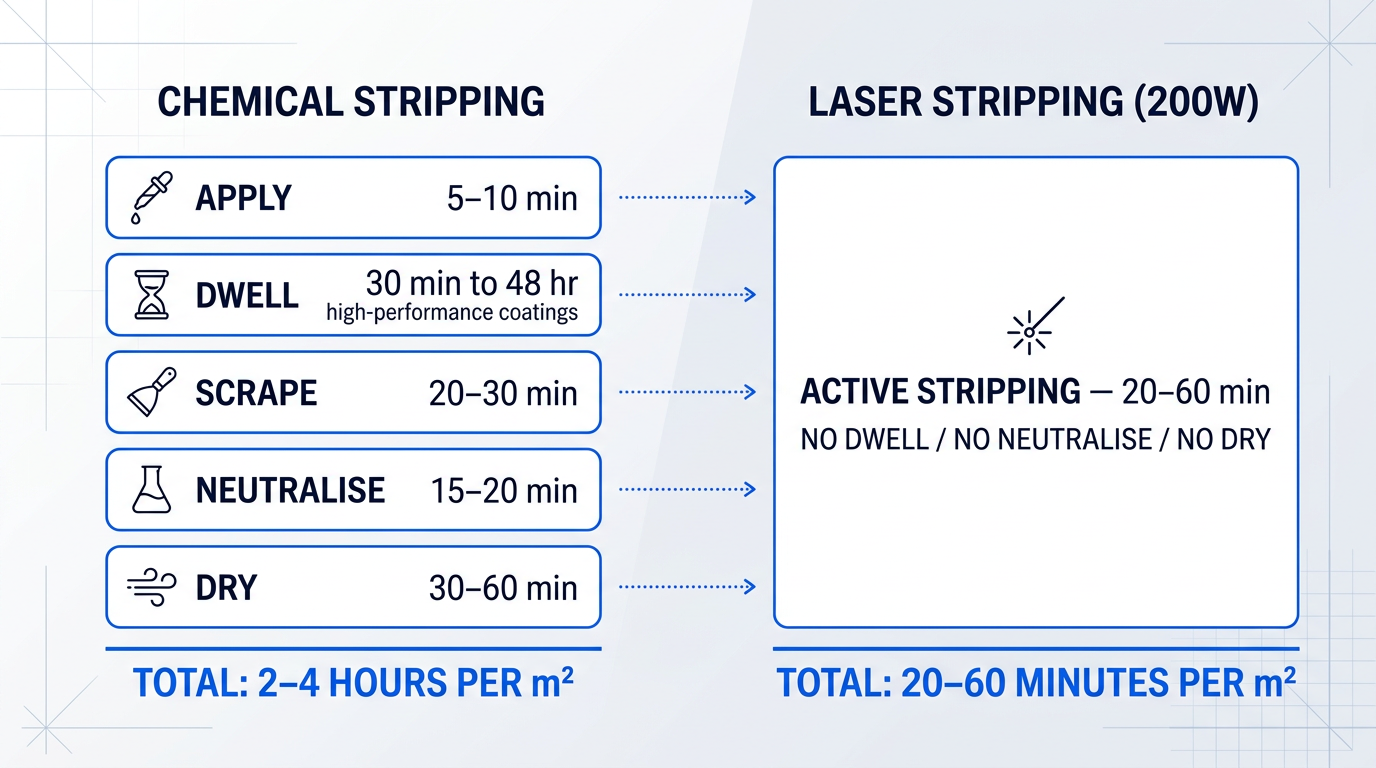
Chemical stripping works by applying a solvent-based product to the coating, allowing it to dwell until the coating softens, then scraping the residue away and neutralising the surface. Dwell times vary considerably by product and coating type: standard formulations typically require 30 minutes to several hours, while high-performance or high-solids coatings can require up to 48 hours according to AkzoNobel product data.
The full process chain — apply, dwell, scrape, neutralise, dry — typically takes 2 to 4 hours per square metre for standard applications on wood, according to third-party comparison data from yhlaserclean.com. A 200W laser, as established earlier in this guide, strips the same area in 20 to 60 minutes with no dwell time, no scraping, and no neutralisation step.
The substrate effects are where the chemical method's hidden costs accumulate. Chemical strippers applied to porous wood are absorbed into the grain, raising the fibres, drawing salts deep into the timber, and leaving residue that can bleed through new finish layers and compromise adhesion.
Laser leaves a dry, clean surface that is immediately ready for recoating with no drying time and no neutralisation required.
The waste profile is categorically different. Chemical stripping waste — solvent-laden sludge, contaminated rags, and spent stripper — is classified as hazardous waste under UK regulations (EWC codes 08 01 17* and 08 01 21* under the Hazardous Waste Regulations SI 2005/894), requiring licensed carrier collection and disposal documentation. Laser produces dry captured particulate, which is handled according to what was removed — a fundamentally simpler and lower-cost waste stream.
The DCM issue is worth stating plainly, because it is a regulatory constraint, not merely a preference. As covered in the safety section of this guide, dichloromethane (DCM)-based strippers — the most effective solvent formulations for removing durable coatings — are restricted under UK REACH regulations and HSE guidance to industrial premises with appropriate safety measures. Professional use outside an industrial installation requires an HSE-issued certificate of competence. Laser stripping removes this chemical hazard from the operator's environment entirely.
Sanding vs laser
Sanding is the most labour-intensive of the traditional methods and the one with the least precision. Abrasive action removes material indiscriminately — it cannot be stopped at the coating-wood interface, and on thin substrates or veneered surfaces, the margin between "stripped" and "destroyed" is measured in seconds of operator inattention.
The damage profile for sanding on detailed work is irreversible. Carved surfaces, mouldings, turned profiles, and veneers are all vulnerable to abrasive contact in ways that cannot be recovered — woodworking trade guidance notes that sanding veneer requires removing approximately half the veneer thickness to reach an active wood surface, leaving almost nothing before burn-through.
Laser's preservation advantage here is direct: the beam can be stopped at the coating-to-wood interface, leaving the substrate geometry intact. For restoration work on period joinery, carved architectural elements, or any surface where detail preservation matters, this is not a marginal benefit — it is the deciding factor.
Sanding also generates large volumes of airborne fine particulate requiring containment and extraction — a cost and logistics overhead that is easy to underestimate on site. That said, sanding retains a genuine advantage on flat, solid-wood surfaces with a single light coating layer where speed matters and detail preservation does not.
Heat guns vs laser
Heat guns work by directing hot air at the painted surface to soften the coating for scraping. The heated area per application is small — typically 3 to 5 inches — making coverage of larger areas slow and labour-intensive.
The scorching risk is real and well-documented. Wood begins to undergo active pyrolysis above approximately 250°C, and colour change becomes noticeable above 200°C according to USDA Forest Products Laboratory research. Heat guns operating at higher temperature settings can push surface temperatures well above these thresholds if the operator dwells too long in one spot — and scorched wood fibres must be mechanically sanded out, adding a rework step.
The lead paint hazard is the most significant regulatory constraint on heat gun use. US EPA guidance prohibits heat guns above 1,100°F on pre-1978 painted surfaces in residential settings, because heating lead-based paint generates toxic fumes — fine lead particulate that travels deep into the lungs. UK HSE guidance on lead paint similarly identifies heat guns as a significant exposure risk and advises against overheating leaded paint.
Correctly parameterised pulsed laser operation keeps average substrate temperatures substantially lower than sustained heat gun application, significantly reducing the scorching and fire risk. Heat guns also carry a genuine fire risk from igniting adjacent dry materials — dust, bird nests, and debris within wall cavities can smoulder and ignite hours after the work crew has left, as noted in US General Services Administration preservation guidance.
Where heat guns retain a genuine advantage: low cost of entry, no training requirement for basic use, and effectiveness on thick paint on robust solid-wood substrates where scorching risk is low and the operator can manage dwell time carefully.
Full-process speed: the comparison that matters
Single-metric speed comparisons — active stripping rate only — systematically misrepresent how the methods perform in practice. The table below presents the full process chain for each method, using figures from vendor data sheets, third-party comparison sources, and regulatory guidance.
| Method | Full process time per m² | Consumable cost profile | Substrate damage risk | Waste disposal | Lead paint safety |
|---|---|---|---|---|---|
| Laser (200W pulsed) | 20–60 min; no dwell, no neutralise, no dry | Electricity only; near-zero ongoing cost | Low when correctly parameterised; charring risk managed by pulsed mode | Dry captured particulate; no hazardous classification for non-lead coatings | Fumes captured by extraction; no toxic fume generation from heating |
| Chemical stripping | 2–4 hr per m² total (apply, dwell, scrape, neutralise, dry); high-performance coatings may require up to 48 hr dwell | Ongoing chemical purchase; hazardous waste disposal costs per job | Grain raising, solvent absorption, residue compromising finish adhesion | Hazardous waste (EWC 08 01 17*, 08 01 21*); licensed carrier required | DCM-based strippers restricted under UK REACH; HSE certificate of competence required |
| Sanding (power) | Variable; no dwell but rework common on detailed or veneered surfaces | Ongoing abrasive media; HEPA extraction consumables | High on veneers, mouldings, carved detail; irreversible material removal | Dust as solid waste; hazardous if lead paint present — HEPA tools required | High dust generation; HEPA-shrouded tools required on lead paint |
| Heat gun | Slow per m² due to 3–5 inch heated area; rework if scorching occurs | Low equipment cost; no consumables beyond scraper blades | Scorching risk above 200–250°C substrate temp; veneer glue failure from heat | Paint chips as solid waste; hazardous if lead paint present | Prohibited above 1,100°F on pre-1978 surfaces (EPA); HSE advises against overheating leaded paint |
Full-process comparison of four wood stripping methods across time, consumable costs, substrate risk, waste profile, and lead paint safety
The pattern in the table is instructive. Laser's full process time of 20 to 60 minutes per square metre looks unremarkable against chemical stripping's active application — but chemical stripping's dwell time alone can exceed the laser's total time for the same area, and on jobs with multiple coating layers, the dwell repeats while the laser simply passes again.
The waste and safety columns reveal costs that rarely appear in a single-job estimate but accumulate significantly over time. Hazardous waste disposal for chemical stripping carries a paper trail, a recurring cost per job, and a compliance overhead that laser simply does not generate.
Total cost of ownership: the right frame
TCO analysis for a laser wood stripping machine starts with zero consumables: no chemicals to purchase, no abrasive media to replenish, no disposal manifests to file — the ongoing running cost is essentially electricity.
The second component is reduced labour intensity: no manual scraping, no neutralising step, and no waiting for surfaces to dry before the next trade can proceed.
Third, lower rework risk. Substrate damage from chemical absorption or abrasive over-sanding creates rework costs that are invisible in a single-job comparison but accumulate over time. A surface that must be re-sanded after chemical stripping, or a veneer lost to belt sanding, represents a cost that never appears in the method's headline price.
Fourth, no hazardous waste disposal overhead: chemical waste disposal is a regulated, recurring cost with licensed carrier fees and documentation requirements, while laser produces dry captured particulate that is far simpler to handle.
Independent cost analysis from a CARB-commissioned government research study found that laser stripping cost less than conventional methods in three out of four industrial applications tested — with the exception being cases involving very large surface areas or exceptionally thick coatings. That finding aligns with the TCO logic: laser's economics improve with frequency of use and deteriorate when the job is a single large flat area where throughput is the only variable that matters.
Laser stripping has near-zero consumable costs, no hazardous waste disposal overhead, and lower rework risk than chemical or abrasive methods. Buyers who compare only upfront equipment cost against a drum of chemical stripper are comparing the wrong numbers — the economics only become visible across the full process chain.
Where traditional methods genuinely win
An honest guide names where the alternative is better, and there are three situations where traditional methods retain genuine advantages over laser stripping.
First, very intricate small items that fit fully inside a chemical dip tank. For objects where the tank can reach every recess simultaneously — small carved components, ironwork, intricate mouldings — immersion is faster and more thorough than scanning a beam across every surface.
Second, bulk material removal across very large flat areas where substrate preservation is not a concern. If the job is stripping a large flat surface quickly and some material loss is acceptable, abrasive methods can still win on throughput — sandblasting covers larger areas per hour on open structural surfaces.
Third, situations where volume cannot justify capital investment. For very low-volume or one-off work, the economics of laser ownership do not stack up regardless of TCO. For those situations, outsourcing to a laser cleaning service is often the better route than ownership.
With the method comparison complete and TCO established as the correct evaluative lens, the next question is what to look for in the machine and supplier — because not all laser wood stripping systems are equally suited to wood substrates, and the support infrastructure behind the machine matters as much as the specifications on the data sheet.
Key Criteria for Buying a Laser Wood Stripping Machine
Having worked through the science of laser ablation on wood, the behavioural differences between coatings, the charring risks across species, the operational throughput realities, and the total-cost-of-ownership case against traditional methods, you are now equipped to evaluate a machine with genuine precision — not just compare wattage figures on a spec sheet.
Machine Specifications That Matter for Wood
Most laser cleaning spec sheets lead with output power. For wood stripping, that is the least informative number on the page. The five criteria below are the buyer-facing translation of everything the earlier sections established about pulse behaviour, species sensitivity, and coating response.
- Pulse duration range: The machine must reach short pulse durations suited to precision work on sensitive species. Longer minimum pulse durations mean more heat per pulse and higher charring risk.
- PRF control range: A machine that cannot reduce pulse repetition frequency below approximately 50 Hz is not designed for wood — softwoods require the lowest achievable PRF to avoid thermal accumulation.
- Maximum scan speed: High scan speeds enable the multi-pass strategies that protect sensitive grain. Confirm the scanner's rated maximum rather than accepting a single-pass cleaning claim.
- Software parameter access: Numerical parameter adjustment is essential. Preset-mode-only interfaces prevent the fine-tuning that wood stripping demands across different species and coating types.
- Extraction specification: The system specification should include HEPA H13-rated extraction as a minimum, with activated carbon filtration for VOC-generating coatings such as polyurethane and epoxy.
On power range, a machine rated up to 300 W gives sufficient headroom to lift thick, tenacious coatings — but higher power is not automatically better on wood. As the earlier sections on pulsed mode and species sensitivity established, excess power must be compensated for with faster scan speeds, lower PRF, and shorter pulse durations, and there is a ceiling to how far those adjustments can go before the process margin disappears.
The Supplier Question
Before evaluating a machine's specification in detail, ask the supplier a direct question: what laser source is inside the unit, and who manufactured it? A credible supplier will answer immediately and specifically. Reluctance or vagueness on this point is itself a signal worth taking seriously.
A significant portion of the laser cleaning market consists of resellers and importers rebadging third-party machines under their own branding — this is a category reality, not a criticism of any specific supplier. The practical consequence for buyers is that in-house engineering support, speed of spares and fixes, and the ability to genuinely improve the product are all materially weaker when the supplier did not design or build what they are selling.
This distinction matters most not when the machine is working well, but when it is not — and the difference between a supplier with in-house engineers and one reading the same manual you have becomes very clear, very quickly.
A machine specification describes peak capability. The supplier's manufacturing and support infrastructure determines whether that capability is sustained over the working life of the system — and whether problems get resolved by engineers who understand the machine from the inside, or escalated to a factory the supplier has never visited.
Training, Support, and Pre-Purchase Due Diligence
As the safety and regulatory section of this guide established, Class IV laser operation and fume management for wood stripping are not skills that come with the machine — they require structured training. A supplier who cannot point to a credible training pathway is leaving the buyer exposed on both compliance and operational quality.
Before committing to a purchase, the following questions should have clear, specific answers from any supplier under evaluation.
- Service response commitment: What is the guaranteed response time for a service call, and is that commitment backed by in-house engineers or a third-party service network?
- Spare parts availability: Which components are wear items, what is the lead time for replacements, and are they held in stock domestically or shipped from overseas?
- Material demonstration: Will the supplier run a demonstration on your actual substrate and coating before you commit? Any credible supplier should say yes without hesitation.
On portability, the on-site, varied-geometry nature of most wood stripping work — log cabin restoration, heritage building facades, furniture with complex profiles — means a handheld, single-operator system with substantial delivery cable reach is not a convenience feature; it is a practical requirement.
What Good Looks Like in Practice
Woodrow Scientific Limited (WSL) is the only UK-based laser cleaning manufacturer — designing, building, servicing, and improving its machines entirely in-house since 2012, with over 200 years of combined engineering experience across its team. The ELASER is a concrete example of the criteria this section describes: a sub-3 kg handheld scanner, up to 50 m delivery cable reach, power tunable from 0–100% across up to 300 W, and air-cooled operation with no water circuit, chiller, or consumables.
The ELASER-RHZ variant carries WSL's patented reduced-hazard-zone technology — a world-first that collapses the laser hazard zone to a fraction of conventional size, enabling cleaning in open workshops and mixed-use facilities without sealing off the surrounding area. For operators working in heritage settings, active workshops, or any environment where a full evacuation zone is impractical, this capability fundamentally changes what laser wood stripping can be deployed to do.
The ELASER is competitively priced as Europe's cost leader among comparable industrial laser cleaning machines — achieved through WSL's technological and operational efficiencies rather than any compromise on build quality. CE and UKCA certification is standard, and WSL provides first-class laser cleaning safety and operation training as part of the complete package.
With the evaluation framework in place and a concrete reference point for what a well-specified, properly supported laser wood stripping machine looks like, the final section brings everything together — helping you self-qualify and determine whether laser stripping is the right choice for your specific application.
Ready to evaluate a machine for your application?
You have the framework. Now see how it applies to a real machine. Browse the ELASER product page, or book a call to talk through your specific coating, substrate, and throughput requirements with an expert.
Conclusion
Making the right decision for your application
A laser wood stripping machine earns its place where substrate preservation, chemical elimination, or on-site flexibility genuinely matter — but where bulk throughput on low-value surfaces is the only measure, traditional methods can still win on cost.
If your application fits the former, the buying framework in the previous section gives you the right criteria to evaluate with; if you want to see the technology on your own material before committing, that conversation is worth having.
Frequently Asked Questions
Common questions about how laser wood stripping machines work, what they cost, and what to expect as a buyer or operator.
Yes — but with important conditions. Laser wood stripping works reliably on oil-based and latex paints, traditional varnish, shellac, and most surface coatings on hardwoods, provided the equipment is correctly configured for the coating type and species. The technology is well-established and delivers clean, repeatable results in these applications. The genuine limitations are worth knowing: penetrating stains that have soaked into the wood fibres cannot be reached by surface ablation, and two-component polyurethane varnishes and UV-resistant lacquers may not absorb laser energy effectively enough to fully volatilise. For the right combination of coating and substrate, the answer is an unqualified yes.
The correct choice is a pulsed fibre laser, typically operating at 1064 nm wavelength. Pulsed mode is essential for wood: the short, high-peak-power bursts remove coating material while the gap between pulses allows the wood surface to cool, keeping it below its char threshold. Within pulsed fibre lasers, MOPA (master oscillator power amplifier) systems are the preferred type for wood stripping because they offer precise, independent control over pulse duration and repetition frequency — giving operators the fine-tuning needed to handle different coatings and species safely. Continuous wave (CW) lasers are not suitable for wood stripping: the sustained energy delivery causes charring and scorching that the substrate cannot recover from without mechanical intervention. When evaluating machines, ask any supplier specifically whether their system is pulsed fibre and whether it uses MOPA architecture.
Entry-level handheld pulsed systems typically start at around £8,000–£15,000, with higher-power production units rising to £30,000 or more. The right evaluation lens, however, is total cost of ownership rather than capital outlay alone. Laser wood stripping machines run with near-zero consumables: there are no chemicals to purchase, no abrasive media to replenish, and no hazardous waste disposal costs. Combined with reduced labour intensity compared to chemical or abrasive stripping, the investment typically becomes economically superior to traditional methods within 12 to 36 months at production scale. For low-volume or one-off work, outsourcing to a laser cleaning service is worth considering — it avoids capital commitment while still accessing the technology's precision. The purchase price is the starting point of the calculation, not the conclusion.
There are several genuine disadvantages worth understanding before committing. Throughput on large flat surfaces is lower than abrasive methods such as sanding or media blasting — where speed across area is the primary requirement, laser stripping is not the fastest option. Capital cost is higher than chemical strippers or sanding equipment, which matters for low-volume operations. The process requires trained operators and a properly specified extraction system, adding to setup complexity. Laser ablation cannot address penetrating stains or certain modern high-resistance coatings, including two-component polyurethane and UV-resistant lacquers. Finally, there is a charring risk on sensitive species — softwoods and low-density hardwoods in particular — if power, frequency, or scan speed parameters are set incorrectly. For the applications where laser stripping is well-matched, these trade-offs are generally outweighed by the precision and operational benefits it delivers.
Yes, when correctly configured. Pulsed operation at appropriate frequency, scan speed, and power keeps the wood surface below its char threshold throughout the process. The key mechanism is ablation selectivity: because the coating and the wood substrate absorb laser energy at different rates, a correctly set beam removes the coating while leaving the substrate largely unaffected — it effectively stops at the coating-wood interface. The risk condition is incorrect settings. CW mode, excessive power, too-high pulse frequency, or too-slow scan speed — particularly on softwoods or low-density hardwoods — can cause charring or scorching that requires mechanical sanding to correct, which defeats the purpose of non-contact processing. Properly configured and operated, the process is safe for the substrate; the conditional is not a caveat to dismiss but the practical boundary that separates good results from poor ones.
Yes, specialist training is required. Industrial laser wood stripping machines operate as Class IV lasers — the highest laser hazard classification — which carries both legal and practical obligations for operators. Training needs to cover safe operating procedures, parameter configuration for different wood species and coating types, extraction management (including HEPA filtration and activated carbon for VOC-generating coatings), correct PPE selection (laser-rated safety eyewear matched to the operating wavelength), and emergency procedures. Reputable suppliers provide structured operator training as part of the purchase package; a machine sold without a credible training pathway is an incomplete purchase and a meaningful red flag during evaluation. Class IV laser operation requires ongoing vigilance — training establishes the foundation, but safe practice is a continuous discipline, not a one-time box to tick.