

Introduction
A laser wood cleaning machine uses focused laser energy to remove paint, coatings, grime, and mould from wood surfaces — no abrasives, no chemicals, no water.
Wood is a far more demanding substrate than metal: it has a low tolerance for heat, and the margin between clean and charred is narrower than most buyers expect.
Every entry on this list is assessed on power tunability, portability, heat-damage risk, after-sales support, and pricing — the axes that actually matter for wood.
Whether you work in heritage restoration, industrial production, or trade stripping, a selection guide at the end helps you identify the right fit.
TL;DR
For wood, precision control over energy delivery matters far more than raw wattage — a machine well-suited to steel can easily scorch a timber surface.
The right choice depends on your context: heritage conservation, industrial cleaning, or trade replacement of chemical stripping each demands a different set of priorities.
This article covers:

Which laser cleaners work best on wood
How to evaluate machines for wood surfaces
Use cases: restoration, industrial, and trade buyers
What laser wood cleaning machines cost
Disadvantages and limitations on wood surfaces
How to Choose a Laser Wood Cleaning Machine
Most buyers arrive at the laser cleaning market asking the same question: how many watts do I need? For wood, that is precisely the wrong question — and asking it can lead to a machine that scorches or chars the very surface it was purchased to restore.
Wood has a significantly lower ablation threshold than metals or stone, meaning it responds to laser energy at intensities that would barely register on harder substrates. That low threshold makes machine selection more consequential: the margin between effective cleaning and irreversible surface damage is narrow, and the features that govern that margin are not the ones listed in bold on a spec sheet.
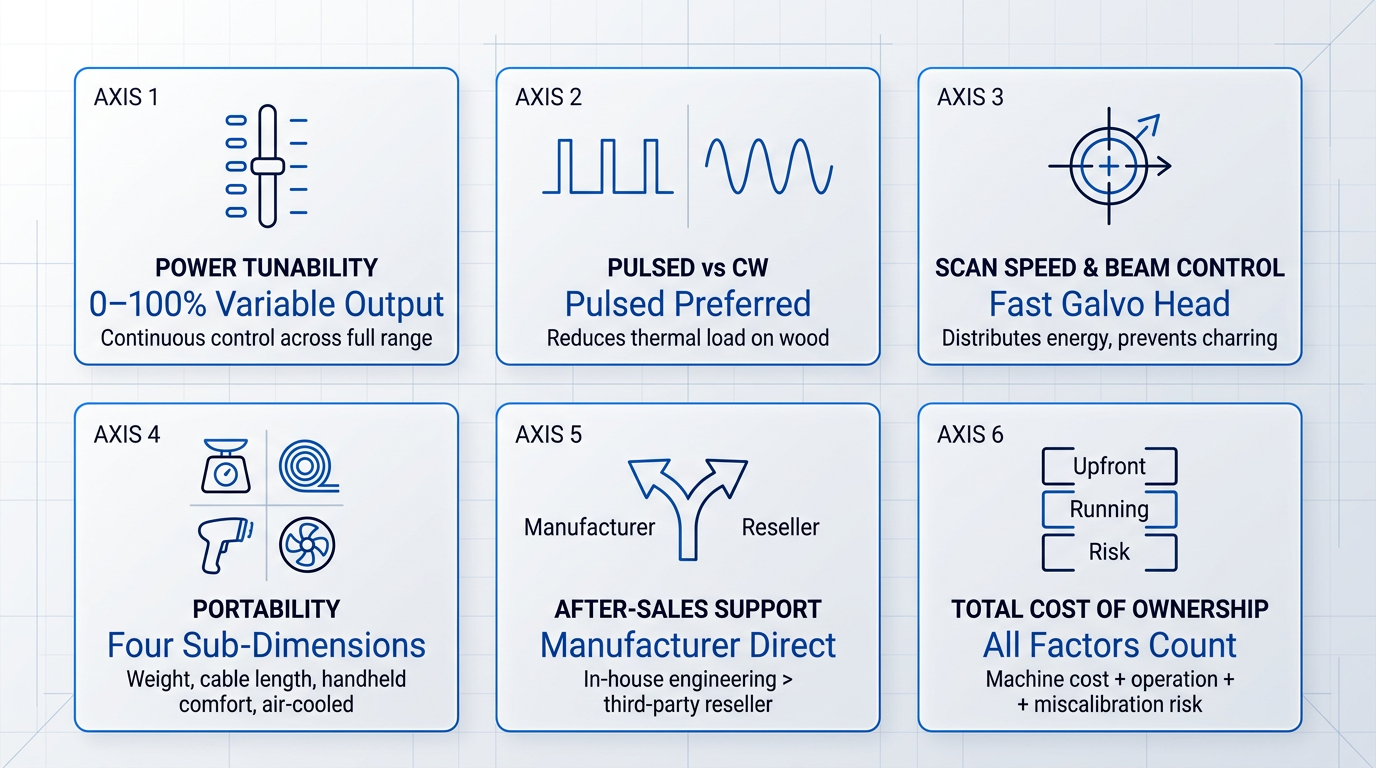
The six evaluation axes below reframe the selection process around what actually matters for wood applications: precision of control, pulse behaviour, beam management, operational portability, post-sale support, and total cost of ownership.
Power Tunability Over Raw Wattage
The relevant capability is not peak power — it is power tunability: the ability to dial output finely across the full range from low to high.
A machine with continuously variable, 0–100% adjustable output lets the operator work at energy levels safely below the ablation threshold of the specific wood species and coating being treated.
A machine locked to fixed high-power settings offers no such safety margin; on sensitive or historic timber, that rigidity is a liability rather than a strength.
When evaluating any laser machine for cleaning wood surfaces, the question to ask is not "what is the maximum wattage?" but "how precisely can the operator control the energy delivered at any given moment?"
Pulsed vs Continuous-Wave Operation
Laser cleaning systems operate in one of two fundamental modes: pulsed laser operation, which delivers energy in discrete, controlled bursts, or continuous-wave (CW) operation, which delivers energy as an uninterrupted beam.
For wood, pulsed operation is the technically preferred approach. The gaps between pulses allow the substrate to dissipate heat before the next energy burst arrives, reducing cumulative thermal load and the risk of carbonisation at the surface.
CW lasers deposit energy without interruption, making heat management harder to control on organic substrates. Research into laser interaction with wood surfaces confirms that uncontrolled heat accumulation is the primary driver of scorching and subsurface damage — the very outcome a cleaning application must avoid.
This is not a brand preference; it is grounded in the physics of how laser energy interacts with low-density, thermally sensitive materials.
Scan Speed and Beam Control
Even with a well-tuned pulsed laser, localised charring remains a risk if the beam dwells too long on any single point — and this is where scan speed becomes a critical variable.
A fast galvanometer-driven scanning head moves the beam rapidly across the surface, distributing energy over a wider area per pass and reducing the peak thermal load at any given point.
A slow or manually moved beam concentrates heat in one location, replicating precisely the conditions that cause charring on wood grain.
Programmable scan patterns and interchangeable focusing lenses extend this control further, allowing the operator to match beam geometry and coverage to the specific geometry and condition of the surface being cleaned.
Portability and On-Site Usability
Industrial metal cleaning typically brings the workpiece to the machine. Wood cleaning — particularly in heritage, conservation, and architectural restoration contexts — almost always requires the machine to come to the work.
Listed buildings, historic monuments, on-site structural timbers, and outdoor joinery cannot be moved to a workshop. For these applications, portability is not a convenience feature; it is a non-negotiable operational requirement.
Evaluating portability means assessing four specific sub-dimensions: total system weight (can it be transported and positioned on site?), handheld scanner weight (can it be operated comfortably for extended periods?), delivery cable length (does the operator have sufficient reach around large or complex structures?), and whether the unit is air-cooled (eliminating the need for a water supply on site, which is frequently unavailable at heritage locations).
After-Sales Support: Manufacturer vs Reseller
The laser cleaning market includes both genuine manufacturers with in-house engineering capability and resellers who import and rebadge hardware built elsewhere.
The distinction matters acutely for wood applications, where the margin for parameter error is smaller than on metals and where settings advice for a new timber species, coating type, or contamination profile may be needed at short notice.
A true manufacturer can respond quickly: their engineers understand the hardware at a component level, can push firmware updates, and can advise on process parameters from direct technical knowledge.
A reseller depends on the original equipment manufacturer for any substantive technical response — adding delay and uncertainty to support interactions at precisely the moments when fast, accurate guidance is most valuable.
Buyers should ask directly: does this company design and build the laser system, or do they source it from a third party? The answer shapes the entire post-purchase relationship.
Total Cost of Ownership
Sticker price is the least informative number in the evaluation. Total cost of ownership (TCO) encompasses the upfront machine cost, running costs (laser cleaning systems have no consumables to speak of, which is a meaningful advantage over chemical or abrasive methods), operator time, and — uniquely for wood — the cost of getting settings wrong.
On irreplaceable historic timber, a single miscalibrated pass can cause damage that no subsequent treatment can reverse. That risk has a real economic value, and it should be factored into the evaluation of any machine that lacks precise tunability or reliable support.
Most industrial-grade systems are priced on a quote basis, with configuration variables — laser power, cooling method, portability setup, fibre length, and whether the source is a direct manufacturer or a reseller — all influencing the final figure.
Evaluating TCO honestly means accounting for all of these factors together, not comparing headline prices across machines with different configurations and support models.
For wood applications, the right evaluation question is not 'how powerful is this machine?' but 'how precisely can I control the energy it delivers?' Tunability and pulse behaviour matter more than peak wattage — and getting that distinction wrong risks permanent damage to irreplaceable surfaces.
The diagram below summarises all six axes as a reference framework you can return to when reading each product entry.
With these six criteria defined, the sections that follow apply them directly to the leading machines currently available — so you can see exactly how each one measures up against the demands of real wood cleaning work.
Product 1
WSL ELASER / ELASER-RHZ
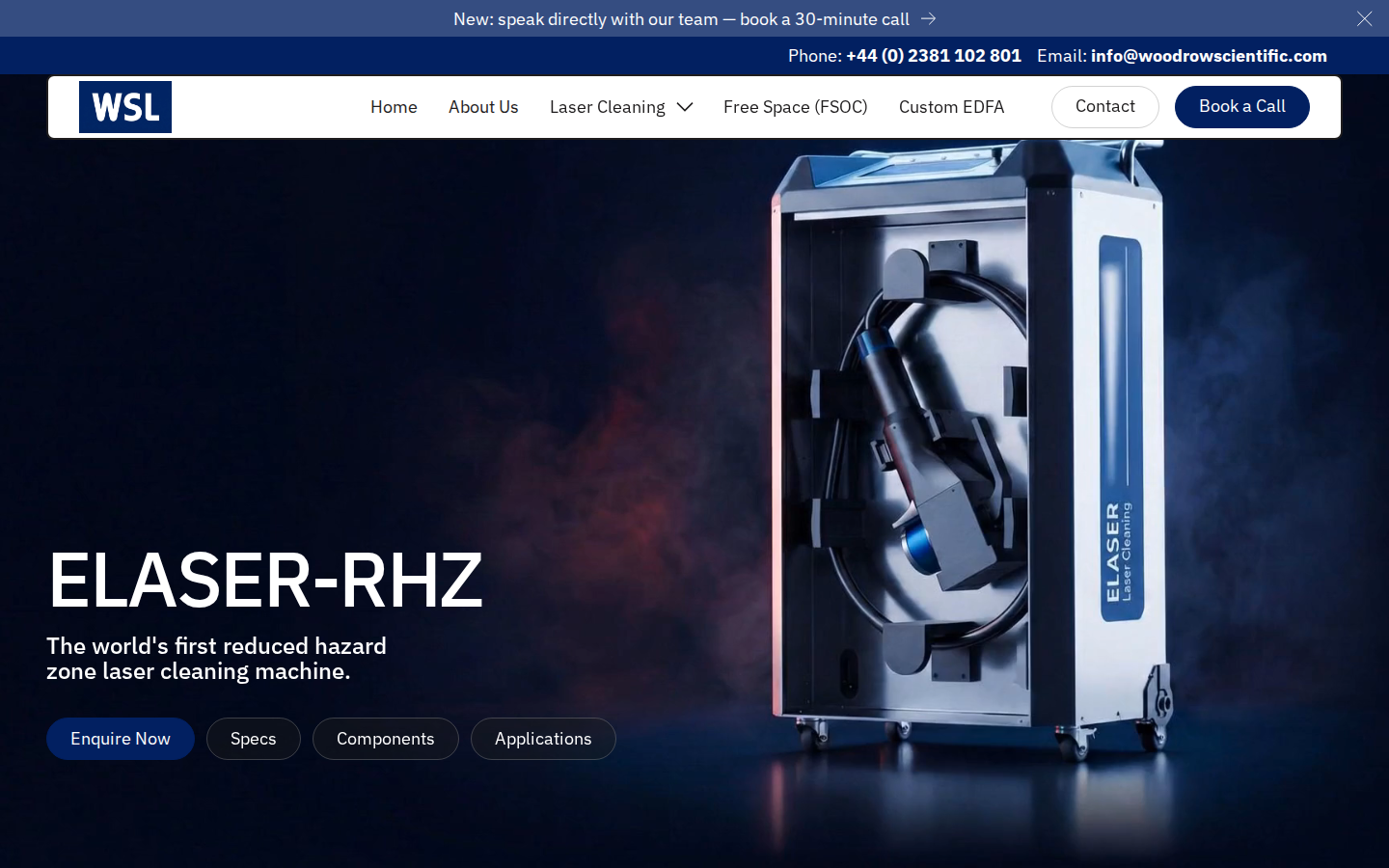
The WSL ELASER is a portable, air-cooled, consumable-free industrial fibre laser cleaning system made in Britain — and the ELASER-RHZ variant adds WSL's world-first, patented reduced-hazard-zone technology, collapsing the laser hazard zone to a small area around the work so cleaning can proceed in open workshops, heritage buildings, and publicly accessible spaces without evacuating the area.
Pros:

World-first patented reduced hazard zone technology
Finest power tunability for precise wood cleaning
Sub-3 kg scanner with 50 m cable reach
Only UK-based in-house laser cleaning manufacturer
Cons:

Pricing is quote-based; no public list price
Wood not explicitly named as an application
Reduced Hazard Zone: The Capability That Changes Everything
The single most important differentiator for wood cleaning in real-world settings is the ELASER-RHZ's world-first, patented reduced hazard zone technology.
Conventional laser cleaning requires the surrounding area to be sealed off and cleared before work can start — a serious operational barrier in the environments where wood cleaning most commonly happens: churches, listed buildings, heritage monuments, open workshops, and on-site joinery.
WSL's patented technology collapses the laser hazard zone to a small area immediately around the work, enabling cleaning to continue while the wider space remains in use — no full evacuation, no sealed-off zones, no shutdown of adjacent activity.
Heritage timber, decorative woodwork, and listed building interiors are almost always in publicly accessible or mixed-use spaces. The RHZ capability is what makes laser cleaning operationally viable in those environments — without it, the safety overhead alone rules out the technology for many restoration projects.
The standard ELASER operates as a Class IV laser system; the ELASER-RHZ achieves Class I classification through WSL's proprietary engineering — no competitor currently offers equivalent eye-safe laser cleaning capability.
The Company Behind It: In-House Manufacturing Matters
WSL is the only UK-based laser cleaning manufacturer — it designs, builds, services, and continuously improves its machines entirely in-house, drawing on over 200 years of combined engineering team experience.
This distinction matters more than it might initially appear. A significant portion of the laser cleaning market consists of resellers and importers rebadging third-party hardware, which means limited engineering support, slower spare parts and repairs, and no genuine ability to improve or customise the product.
For wood cleaning specifically, dialling in the right settings for a particular wood species, coating type, or substrate condition often requires genuine engineering input — and that input is only available when the company selling the machine also built it.
Wood Suitability: Control Over Raw Power
The evaluation framework established that for sensitive substrates like wood, control matters more than raw wattage — and the ELASER's specification set is built around precisely that principle.
| Specification | ELASER Value |
|---|---|
| Max power | Up to 300 W (tunable 0–100%) |
| Wavelength | 1550 nm |
| Pulse duration | 100 ns |
| Pulse repetition rate | Adjustable up to 200 kHz |
| Pulse energy | Up to 15 mJ |
| Scanner | 2-D galvanometer, 10 m/s max scan rate |
| Scan shapes | Fully programmable via GUI |
| F-Theta lens working distance | 75–500 mm (interchangeable) |
| Delivery cable | Up to 50 m |
| Handheld scanner weight | Under 3 kg |
| System weight | Under 50 kg (wheeled) |
| Laser class | Class IV (standard) / Class I (RHZ) |
| Certifications | CE and UKCA |
Gives the reader a fast, scannable reference for the ELASER's key technical specifications — directly relevant to the wood-suitability axes of power control, pulse behaviour, portability, and reach.
The 0–100% tunable output means the operator is never forced to work at a fixed power level — they can step down precisely to the threshold that lifts a paint layer or removes soiling without touching the wood fibres beneath.
The 100 ns pulse duration, combined with a repetition rate adjustable up to 200 kHz, allows the operator to stay below the ablation threshold of the specific wood type being cleaned — reducing heat transfer and protecting the substrate in a way that continuous-wave operation cannot match.
The 10 m/s galvanometer scanner with fully programmable scan shapes adds another layer of control: faster scan speeds distribute energy across a wider area per pass, further reducing localised heat build-up on sensitive grain structures.
Interchangeable F-Theta lenses covering 75–500 mm working distances extend that adaptability to varying surface geometries — from flat panel faces to carved relief details on heritage joinery.
Portability
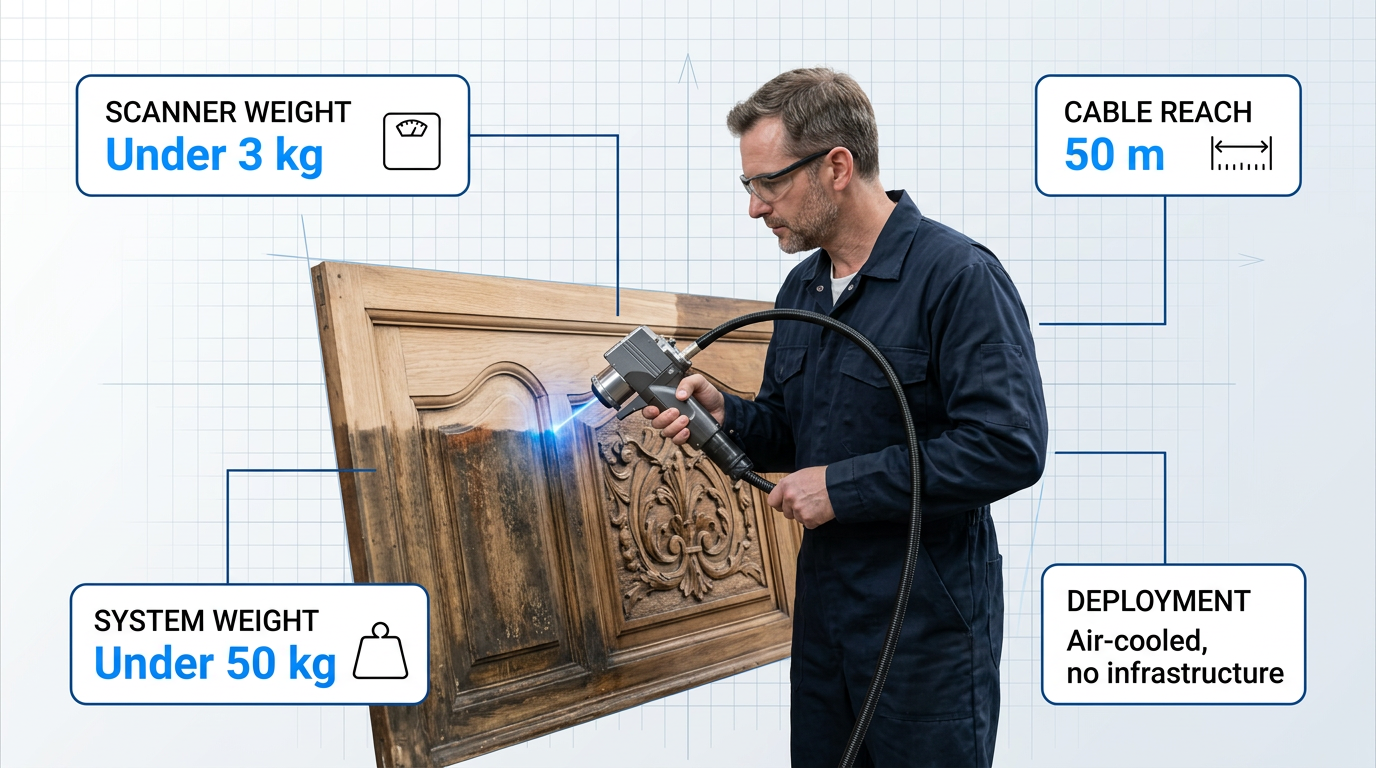
The ELASER is genuinely field-deployable in a way that matters for wood cleaning work: the handheld scanner weighs under 3 kg, the full system rolls in under 50 kg on wheels, and the delivery cable reaches up to 50 m.
That 50 m cable reach is a practical advantage on large heritage sites — the operator can work across an entire building facade, a nave interior, or a multi-bay workshop without repositioning the main unit.
Air-cooled operation removes the need for a water supply, chiller unit, or external compressor, so the system can be deployed anywhere a single-phase power outlet exists — no infrastructure prerequisites, no consumables to manage on site.
After-Sales Support and Training
WSL provides first-class operator training as standard, and the in-house manufacturing model means support queries go directly to the engineers who built the machine — not a third-party service desk working from a manual.
- Operator training: First-class safety and operation training available for all ELASER users.
- Bespoke engineering: Customisation and bespoke engineering capability available — contact WSL directly to discuss specific requirements.
- CE and UKCA certified: Certified for UK and European markets, confirming regulatory compliance for professional buyers.
- In-house support: All service, spares, and improvements handled by the same engineering team that designs and builds the machine.
ELASER Pricing
Pricing is quote-based — there is no public list price, which is the one genuine friction point for buyers who want to self-qualify quickly before engaging.
Among comparable industrial laser cleaning machines in Europe, the ELASER is the European cost leader — competitive pricing achieved through WSL's technological and operational efficiencies, not through component compromises.
The correct frame for evaluating cost is total cost of ownership: zero consumables, minimal downtime, and less rework from the ELASER's substrate-preserving precision all reduce the ongoing cost of ownership relative to less controlled cleaning approaches.
Best For
- Heritage and restoration professionals: Particularly those working in publicly accessible or open settings — churches, listed buildings, monuments — where the RHZ capability is the operational difference between viable and not.
- Trade operators needing on-site portability: Single-operator deployment with a sub-3 kg scanner and 50 m reach suits contractors working across varied sites without fixed infrastructure.
- Buyers prioritising precision and support quality: The finest power control available for wood cleaning, backed by an in-house engineering team that can assist with wood-specific setting optimisation.
See the ELASER-RHZ Full Specifications
The ELASER-RHZ's reduced hazard zone technology sets it apart for wood cleaning in open or public settings. Download the datasheet for full technical specs, or explore the product page.

Product 2
cleanLASER streamLINE / CL-series
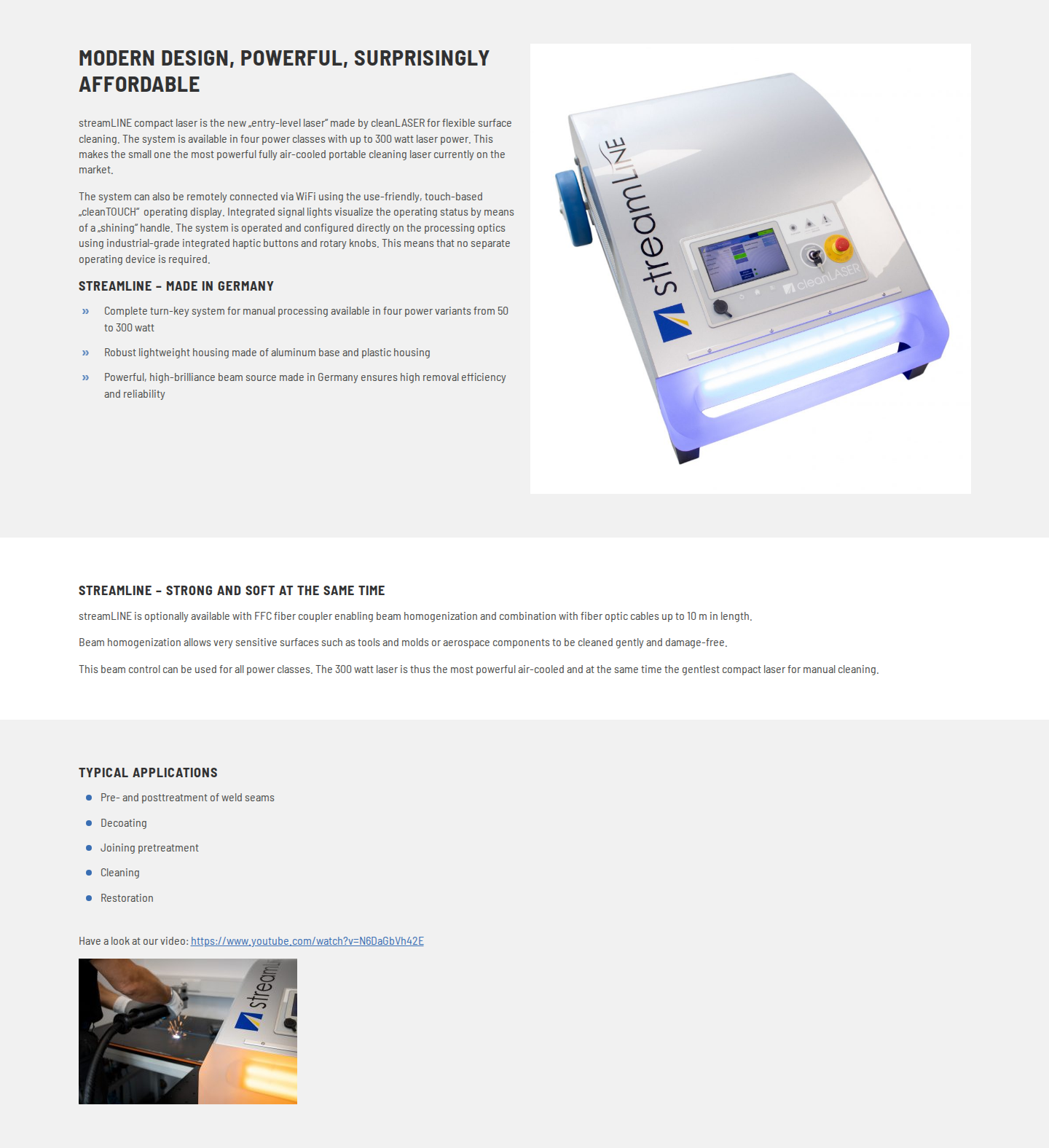
cleanLASER (IPG | cleanLASER) is the originator of commercial laser cleaning — founded in 1997, with approximately 2,000 installed systems globally — offering the portable streamLINE compact (up to 300 W, fully air-cooled) and the CL mid-power series (150–600 W) as its most relevant options for wood and heritage surface cleaning applications.
Pros:
Originator of laser cleaning; 25+ years pedigree
Wood and fabric validated on restoration application pages
0–100% power dosability for sensitive surface control
Fully air-cooled portable unit; no water supply needed
Cons:
Conventional Class 4; full hazard zone required
Standard fibre reach (2.8 m) limits working distance
No open-space or public-facing operation capability
Clean-Lasersysteme GmbH (IPG | cleanLASER) is widely recognised as the inventor of commercial laser cleaning, having pioneered the technology from its founding in 1997 out of the Fraunhofer Institute for Laser Technology in Aachen. With approximately 2,000 installed systems, partners in over 20 countries, and customers in more than 40 countries, it holds the world's largest install base in the category.
For wood surface cleaning applications, two product lines are most relevant: the streamLINE compact — a portable, fully air-cooled handheld system available in power variants from 50 to 300 W — and the CL mid-power series, spanning 150 to 600 W and built around a diode-pumped solid-state laser with pulse power up to 400 kW.
Wood Suitability and Restoration Pedigree
cleanLASER's own building and facade restoration application page explicitly confirms that processing wood and fabric is achievable with the very short-duration laser pulses these systems deliver.
The same page cites a key capability directly relevant to sensitive wood surfaces: fine power dosability from 0–100% combined with interchangeable laser optics, giving the operator precise control over both power and intensity. This level of tunability is what separates a laser wood cleaning machine from a blunt industrial tool.
The CL mid-power series (CL 150 / CL 300 / CL 500 / CL 600) uses a diode-pumped solid-state laser with a minimum pulse duration of 65 ns, a repetition rate of 18–40 kHz, and peak pulse power up to 400 kW. These parameters are sourced from the CL-500 datasheet and are representative of the mid-power line's short-pulse capability.
Pulse duration and repetition rate data for the streamLINE compact are not publicly available in a verified spec table; buyers evaluating that variant for wood applications should request the full technical datasheet directly from cleanLASER.
- Validated restoration applications: Sandstone, marble, granite, terracotta, concrete, wood, and fabric are all cited on cleanLASER's restoration application pages.
- Heritage project track record: Documented case studies include the Jefferson Memorial dome (Washington D.C.) and the Driehaus Museum (Chicago), demonstrating reliable performance on sensitive historic surfaces.
- Two decades of restoration research: cleanLASER hosted a 2023 symposium on laser use in monument conservation, citing projects at Cologne Cathedral and Aachen Cathedral among others.
This depth of validated restoration experience is a genuine differentiator for buyers working on heritage timber, historic joinery, or architectural woodwork — it signals that the technology has been stress-tested on delicate surfaces across real-world conservation projects, not just controlled lab conditions.
Portability
The streamLINE compact is designed for field deployment, housed in a robust lightweight aluminium and plastic enclosure. Exact system and scanner weights are not confirmed in the publicly available research material for this variant; prospective buyers should verify current figures directly with cleanLASER.
The lightCASE variant within the streamLINE family (20–300 W) carries a body weight of approximately 29–39 kg depending on power configuration, with a standard fibre length of 2.8 m and an extended option of 8 m. For operators working on large-scale or elevated surfaces, the standard 2.8 m fibre reach is a practical constraint worth confirming against your specific site requirements before purchase.
Hazard Zone: The Key Operational Constraint
The cleanLASER streamLINE compact and CL-series operate as standard Class 4 lasers. There is no reduced-hazard-zone or eye-safe capability. Every work area must be controlled, cleared, and appropriately screened before operation. For operators working in open heritage buildings, churches, or publicly accessible monuments, this means coordinating full area exclusion — a logistical and sometimes contractual challenge that is worth factoring into project planning.
This is not a flaw unique to cleanLASER — it is the standard operating condition for the vast majority of industrial laser cleaning systems. It becomes a meaningful constraint specifically in open or mixed-use public-facing environments where clearing and controlling a hazard zone is impractical or prohibited by site access agreements.
After-Sales Support
cleanLASER is a genuine manufacturer, not a reseller. All systems are designed and produced in-house at its headquarters in Herzogenrath, Germany, under IPG Photonics ownership since 2024.
A named UK partner is listed on cleanlaser.de's locations page, serving buyers in Great Britain. The scope of that partner's service and training offering is best confirmed directly with cleanLASER or through their website.
cleanLASER also operates the cleanACADEMY, a structured training and education programme covering operator training, safety-related courses, and individual process engineering sessions — available to both end-users and service partners.
cleanLASER Pricing
No public pricing is listed for the streamLINE compact or CL-series on cleanlaser.de. As with most industrial laser cleaning systems at this specification level, pricing is available on request through cleanLASER directly or via their regional partner network.
Best For
cleanLASER's streamLINE compact and CL-series are best suited to operators who value established technology with a long track record, broad application validation across heritage and industrial surfaces, and the engineering backing of a genuine manufacturer. They are best deployed in controlled environments where standard Class 4 hazard zone management is operationally feasible — and where the site does not require open-access or public-facing operation.
Product 3
P-Laser QF-Compact

P-Laser is a Belgian specialist that develops and produces its own pulsed industrial laser cleaning systems, with every product in the range built around pulsed operation as a core design commitment. The QF-Compact portable range (50–300 W, air-cooled) earns its place on this list because P-Laser explicitly supports wood as a suitable substrate and offers rental access from approximately €550/day — a meaningful entry point for project-based buyers.
Pros:
All-pulsed design; every model suits wood
50–300 W range covers fine and larger work
Rental available from approx. €550/day
Wood explicitly listed as supported substrate
Cons:
Carry-the-whole-unit; heavier than scanner-only
Conventional Class 4; full hazard zone required
Purchase price from approx. €60,000
P-Laser is a Belgian specialist that develops and produces its own pulsed industrial laser cleaning equipment, describing its systems as the world's most advanced pulsed industrial laser cleaning equipment. The company began activities in 2008 and was founded by a surface-treatment expert with approximately 30 years of experience in the field.
What sets P-Laser apart structurally is its all-pulsed design commitment: every product in the range is pulsed, from the smallest 50 W portable unit to the largest 3,000 W fixed system. This is not a mode or a variant — it is the company's core engineering philosophy.
P-Laser QF-Compact: Wood Suitability
For wood cleaning applications, P-Laser's all-pulsed approach is directly relevant. Pulsed operation delivers energy in short bursts rather than continuously, allowing the operator to ablate surface contaminants without accumulating heat in the substrate — precisely what thermally sensitive wood demands.
P-Laser explicitly lists wood as a suitable surface for its low and mid power range, with appropriate Cleansweep software settings to manage sensitivity. The applications page states that with the right focal lenses and software configuration, the systems can be soft on sensitive surfaces including wood.
| Model | Power | Typical Wood Use Case | Key Notes |
|---|---|---|---|
| QFC-50 / QFC-100 | 50–100 W | Small-scale or detailed work: furniture restoration, carved surfaces, fine coatings | 13 kg; air-cooled; most portable carry-the-whole-unit option in the range |
| QFC-200 / QFC-300 | 200–300 W | Faster cleaning at moderate scale: structural timbers, larger panel areas | 30–35 kg; air-cooled; higher pulse rate than 50–100 W models; wheeled with extendable handle |
Maps the QF-Compact power tiers to wood cleaning tasks, giving the reader a practical reference for which model suits their application scale.
The lower-power models (QFC-50/100) suit operators working on small, intricate, or particularly sensitive wood surfaces where fine control matters most. The QFC-200/300 increases throughput for larger areas while remaining air-cooled and portable — a practical balance for project-based site work.
Portability
The QF-Compact uses a carry-the-whole-unit design: the laser source and scanner are integrated into a single self-contained unit rather than split between a remote system and a lightweight fibre-fed handpiece. This is a meaningful distinction for operators working at height or in confined spaces.
The QFC-50/100 weighs approximately 13 kg — genuinely hand-portable for ground-level work. The QFC-200/300 comes in at 30–35 kg, fitted with an extendable handle and wheels, making it manageable for most project-based site tasks even if it requires more physical effort to reposition than a scanner-only design.
For many ground-level or workshop-based wood cleaning tasks, a wheeled unit is entirely practical. The trade-off becomes more relevant when the work surface is elevated, awkwardly positioned, or requires the operator to move frequently — contexts where a lighter handheld scanner head offers a clear ergonomic advantage.
Cleansweep, P-Laser's dedicated cleaning software, allows the operator to adjust frequency, intensity, beam shape, and beam size — the combination of variables that determines how the laser interacts with a given surface. Up to eight custom job profiles can be stored and recalled via the rotary encoder on the unit, without needing a connected tablet for routine operation.
For wood applications, this parameter control is practically significant: different wood species, coating types, and contamination depths all respond differently to laser energy, and the ability to save and recall dialled-in settings reduces trial-and-error time on site. No named wood-specific presets were confirmed in the available documentation, so operators should expect to develop and save their own profiles.
P-Laser QF-Compact Pricing
Purchase pricing for P-Laser systems starts at approximately €60,000 for low-power machines, according to P-Laser's own FAQ. Pricing in individual markets is set by authorised distributors, so the actual figure will vary by region.
Rental is a genuine differentiator for this entry. P-Laser offers day, week, and month rates directly: the QFC-100 rents from approximately €550 per day (€1,430 per week; €4,950 per month), and the QFC-300 from approximately €950 per day (€2,350 per week; €9,700 per month). For restoration contractors or buyers evaluating laser cleaning on specific wood types before committing capital, this substantially lowers the barrier to entry.
P-Laser also offers an on-site service option at approximately €95 per hour, with no transport charge within a 50 km radius of their facility — a useful fallback for operators who want to trial the technology on a specific project without purchasing or self-operating.
On the hazard zone axis, the QF-Compact is a conventional Class 4 laser system. Standard hazard zone protocols apply: the working area must be controlled and cleared before operation. This is a shared limitation across most machines on this list and does restrict use in open, public-facing, or mixed-use heritage environments where access control is difficult.
For after-sales support, P-Laser operates through an authorised distributor network across Europe and beyond. The Belgian headquarters handles direct sales and service inquiries, and the rental programme itself functions as an accessible entry point to the brand's support infrastructure.
P-Laser QF-Compact suits operators who want an all-pulsed system from an established specialist — particularly for project-based or lower-volume wood cleaning where the rental option provides a low-commitment entry point. It is also a strong fit for buyers who specifically want a European pulsed laser specialist with a documented track record in sensitive surface applications.
Product 4
Allied Scientific Pro LaserBlast
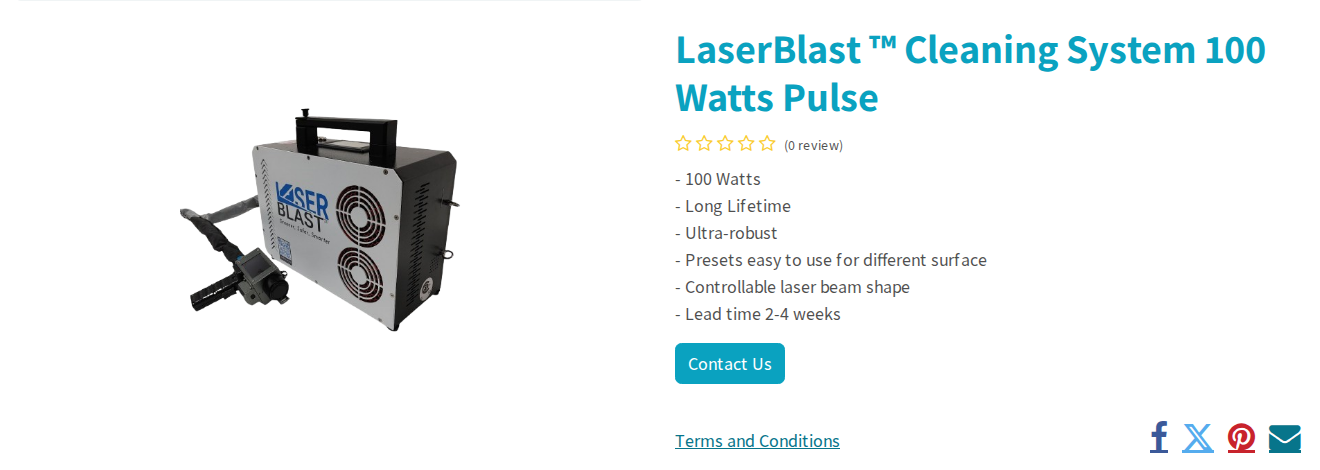
Allied Scientific Pro (ASP) is a Canadian conservation and NDT specialist founded in 2009; the LaserBlast 100W is its entry-level pulsed laser cleaning system, explicitly marketed for wood conservation, artefact cleaning, and building restoration, with documented use on major North American heritage projects since 2017.
Pros:
Explicitly marketed for wood and artefact conservation
Documented use on major heritage projects since 2017
Wide pulse range (20–350 ns) for substrate tuning
16 kg, air-cooled; no water supply needed on-site
Cons:
Conventional Class 4; full hazard zone required
No UK/European distribution listed; verify before buying
Short fibre reach (10–13 m) vs some competitors
Allied Scientific Pro (ASP) is a Canadian specialist founded in 2009, focused on laser cleaning for conservation and non-destructive testing applications — a notably different starting point from the generalist industrial vendors elsewhere on this list.
The LaserBlast range spans 100 W to 2000 W, but for wood and artefact conservation work, the 100 W pulsed model is the relevant entry point: it is explicitly marketed for wood conservation, building restoration, art, sculpture, and artefact conservation.
ASP states on its own site that LaserBlast systems have been used since 2017 in major North American conservation projects, including the restoration of the Canadian parliament building — one of the few manufacturers in this category able to point to a named, large-scale heritage project.
That real-world validation matters for buyers in the conservation sector, where marketing claims about "gentle" operation are common but independently documented project use is rare.
LaserBlast 100W: Key Specifications
The 100 W pulsed model's specifications are confirmed from ASP's own product page.
| Parameter | LaserBlast 100W |
|---|---|
| Laser power range | 10–100 W |
| Pulse duration | 20–350 ns |
| Scan speed | 1,000–14,000 mm/s |
| System weight | 16 kg |
| Fibre cable length | 10 m or 13 m |
| Cooling | Air-cooled |
| Electrical draw | 0.5 kW |
Presents the verified LaserBlast 100W specifications in a scannable format, allowing readers to directly compare power range, pulse duration, scan speed, and portability figures against the other machines evaluated on this page.
The 10–100 W power range is particularly significant for wood applications: the ability to operate at genuinely low energy levels gives the operator fine control over ablation intensity on sensitive substrates.
The pulse duration range of 20–350 ns is one of the widest available in this class, which matters when adapting parameters to different wood species, coating types, and contaminant profiles.
For context, the 200 W model shares the same 20–350 ns pulse range, while the 500 W model narrows slightly to 30–350 ns — buyers stepping up in power should verify pulse parameters for their specific model before purchase.
Portability and On-Site Use
At 16 kg, the 100 W system is reasonably portable for conservation fieldwork, and air-cooled operation means no water supply or compressor is required on site — a practical advantage when working in historic buildings or remote heritage locations.
The fibre cable options of 10 m or 13 m provide adequate reach for most room-scale conservation tasks, though buyers with larger structures or scaffolding setups should note this is shorter than some alternatives on the market.
Hazard Zone Considerations
The LaserBlast operates as a conventional Class 4 laser, which means a standard hazard zone applies: the working area must be controlled and cleared of bystanders before operation begins.
This is a meaningful operational constraint for conservation work in publicly accessible settings such as churches, monuments, or open heritage sites, where clearing and controlling the surrounding area may not always be straightforward.
Allied Scientific Pro LaserBlast Pricing
Pricing is not publicly listed on ASP's website — all shop listings show $0.00, indicating a quote-based sales process. Prospective buyers should contact ASP directly at sales@alliedscientificpro.com or via their toll-free line for a current quote.
ASP's conservation specialism and heritage project credentials position the LaserBlast as a specialist instrument rather than a commodity purchase, and pricing should be evaluated accordingly.
After-Sales Support
ASP's headquarters are in Gatineau, Quebec, Canada, with no European distribution partners listed on their website. UK and European buyers should contact ASP directly to confirm whether local support, training, or service is available before committing to a purchase.
Best for: Conservation professionals and heritage restorers with a specific need for wood, art, and artefact cleaning — particularly those working on North American projects, or buyers who require a machine with explicit, manufacturer-stated wood conservation application credentials and documented heritage project use.
Product 5
4JET JETLASER
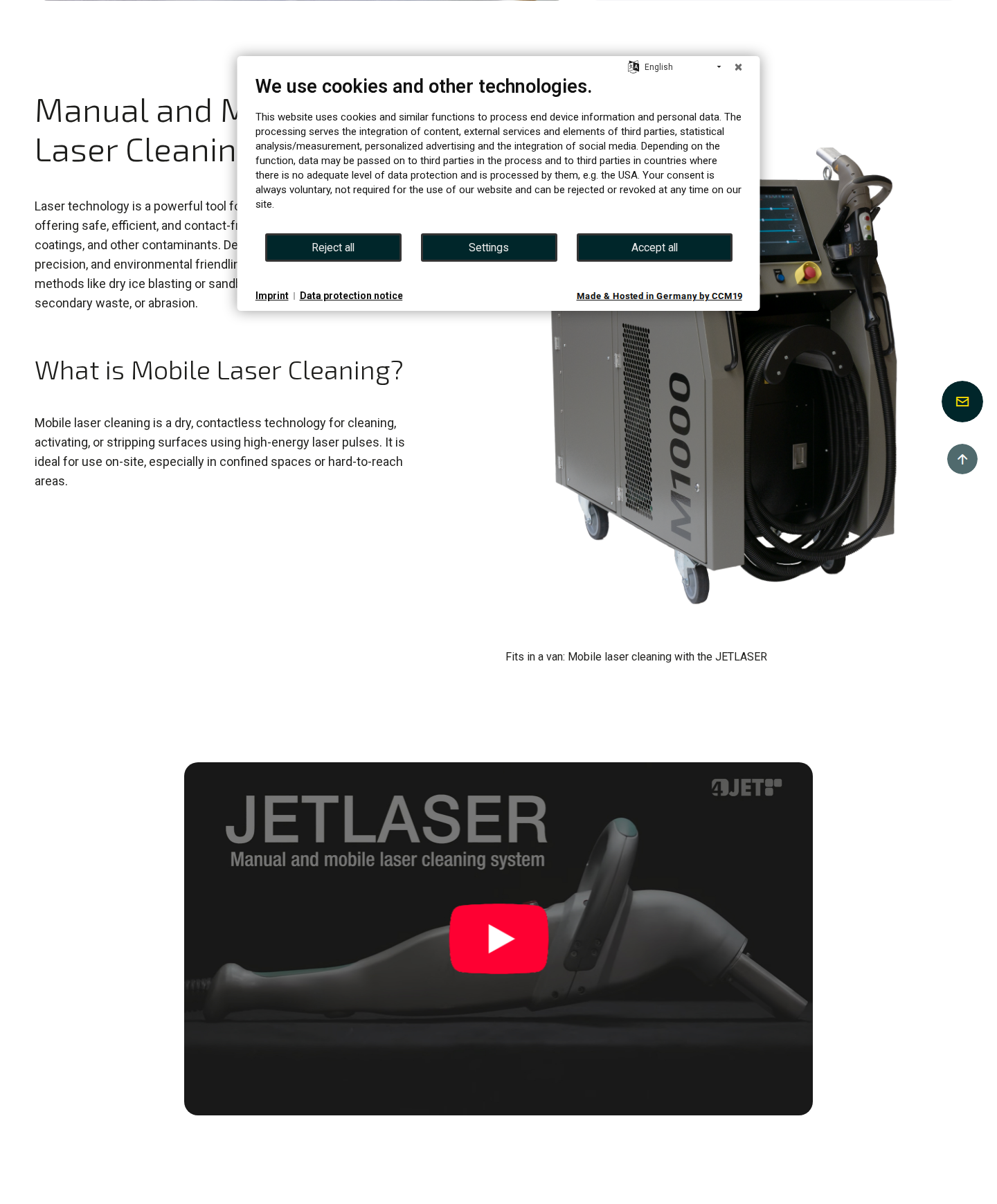
4JET Technologies is a German laser surface processing specialist; the JETLASER handheld range is one of the few systems in this category with an explicit, manufacturer-stated wood application listing, covering facade cleaning, restoration, and paint removal on wood surfaces, in a modular platform that scales from 100 W manual use up to 2 kW robot integration.
Pros:
Manufacturer-stated wood surface application listing
Modular power range: 100 W to 2 kW
Air-cooled M100 and M200; no water supply needed
Cons:
Conventional Class 4; full hazard zone required
Range pricing from €219,000; M100 price unconfirmed
4JET Technologies GmbH, headquartered in Alsdorf, Germany, is a laser surface processing specialist whose JETLASER range is available in power classes from 100 W up to 2 kW average laser power, built for manual handheld use or integration with a robot or cobot.
What sets the JETLASER apart in this category is a detail that most laser cleaning manufacturers leave implicit: 4JET explicitly names wood as a supported substrate on its own product pages.
4JET's own sources list "paint removal on wood or sensitive surfaces", "facades or wooden surfaces", and "restoration" as confirmed JETLASER applications — one of the few machines in this category where wood is named, not assumed.
The JETLASER M100 is the entry-level model in the range, described by 4JET as a "low-cost laser cleaning solution for industry and trade" that combines favourable investment costs with high application versatility.
The system uses pulsed laser radiation to remove organic layers: short light pulses cause the coating to be abruptly heated and either vaporised or flaked off, while the substrate beneath remains unaffected — the mechanism that makes pulsed operation well-suited to sensitive surfaces such as wood.
JETLASER Power Range and Wood Suitability
The JETLASER lineup spans four confirmed models: the air-cooled M100 and M200 at the compact end, and the M500 and M1000 as higher-throughput options.
For wood cleaning applications, the M100 is the most relevant starting point — lower average power reduces the risk of charring on sensitive wood grain, and the air-cooled design means no water supply is needed on-site, which matters for facade and restoration work in the field.
Pulse duration and repetition rate parameters for the M100 are not published on 4jet.de at the time of writing; buyers with precision requirements for a specific wood substrate should request the full technical datasheet directly from 4JET or their UK distributor.
Portability and Fibre Reach
The standard JETLASER fibre cable is 15 metres, with longer variants available on request — a practical reach for on-site facade cleaning and monument restoration without repositioning the supply unit repeatedly.
The laser head (end effector) weighs approximately 6 kg according to the UK distributor spec sheet, with an ergonomic two-hand design that received the 2018 Good Design Award.
The supply unit is a rugged steel trolley; distributor spec sheets give figures in the range of 307–365 kg depending on configuration, though 4JET does not publish a primary weight figure on its own site — confirm with the manufacturer for your specific model.
The M100 news release notes that the compact system can be transported in a standard car, which is a meaningful practical advantage for trade operators running multi-site work.
Hazard Zone
The JETLASER is a conventional Class 4 laser system. Standard laser hazard zone management applies: controlled access to the work area, appropriate PPE for operators and bystanders, and restricted operation in publicly accessible spaces.
This is a practical constraint for buyers planning facade cleaning or restoration work in open, publicly accessible, or mixed-use heritage settings, where controlling a full Class 4 hazard zone requires additional planning and site management.
4JET JETLASER Pricing
4JET lists a starting price of €219,000 for the JETLASER range, depending on configuration.
The M100 is positioned as the low-cost entry point for industry and trade, and 4JET's German-language release notes that monthly lease or finance costs can fall below €1,500 with operating costs under €1 per hour — though these figures should be verified with 4JET directly, as they may reflect earlier pricing or specific financing arrangements.
A confirmed M100-specific purchase price is not published on 4jet.de; contact 4JET Technologies or TLM Laser (UK and Ireland distributor, Bromsgrove) for a configuration-specific quotation.
After-Sales Support
4JET offers VPN remote access for 24/7 online support, built into the JETLASER system as standard — a practical provision for operators who cannot afford downtime on active site contracts.
UK and Ireland buyers are served by TLM Laser in Bromsgrove, an authorised 4JET distributor. 4JET also maintains a named distributor network across Europe, including coverage in Germany, Austria, the Netherlands, Spain, Italy, and Poland, among others.
As a genuine manufacturer rather than a reseller, 4JET controls its own engineering and service chain — a relevant quality signal for buyers who prioritise direct manufacturer accountability over distributor-mediated support.
Best For
- Industrial operators and trade buyers: Who need a manufacturer-validated wood application listing and want confidence that the system has been specifically positioned for facade, restoration, and paint-removal-on-wood use cases.
- Buyers planning for scalability: The modular JETLASER architecture — from 100 W handheld to 2 kW robot-integrated — means the investment can grow with operational demands without switching platforms.
- European and UK buyers: Who value German engineering provenance, CE certification, and access to a named regional distributor network including a dedicated UK and Ireland partner.
Ready to See the ELASER-RHZ Up Close?
You've compared five machines. If the ELASER-RHZ's reduced hazard zone capability caught your attention, explore the product page or book a 30-minute call with a laser cleaning specialist.

Conclusion
Which laser wood cleaning machine is right for you?
For heritage, restoration, and public-facing settings, the ELASER-RHZ is in a category of its own — its world-first reduced hazard zone is the only capability on this list that enables cleaning in open, publicly accessible spaces without sealing off the area, backed by WSL's in-house operator training for sensitive wood substrates.
For trade and industrial buyers, prioritise tunability and portability over raw wattage; the ELASER leads here, with P-Laser and 4JET as credible alternatives depending on your region and application.
Not ready to commit capital? P-Laser's rental programme and 4JET's JobShop contract service let you validate laser cleaning on your specific wood before purchasing.
Laser wood cleaning: frequently asked questions
Common pre-purchase questions about laser cleaning on wood — covering effectiveness, cost, and trade-offs.
Yes. A laser wood cleaning machine can effectively remove paint, coatings, varnish, grime, mould, and other surface contaminants from wood — without abrasives, chemicals, or water. The process is non-contact and leaves no residue to clean up. Wood is, however, a thermally sensitive substrate with a significantly lower ablation threshold than metals. Too much power, too slow a scan speed, or incorrectly set pulse parameters can char or scorch the surface. The margin for error is narrower than on steel or aluminium. Success depends on a machine with fine, tunable power control and pulsed operation, combined with careful parameter selection matched to the specific wood species and contaminant. This is not a set-and-forget process — operator skill and machine precision both matter. Peer-reviewed research published in scientific literature confirms that carbonisation-free ablation is achievable on wood substrates for specific parameter sets using pulsed infrared lasers, supporting the technology's viability for professional wood cleaning applications when applied correctly.
Industrial-grade laser cleaning machines suitable for wood are almost universally quote-based — list prices are rarely published, and readers should expect to contact manufacturers directly for a figure tailored to their application. As general orientation: entry-level portable systems around 100 W typically start in the £10,000–£20,000 range internationally. Industrial-specification machines with the precision, power tunability, and support infrastructure appropriate for professional wood cleaning typically sit higher. The WSL ELASER is competitively priced among comparable European industrial laser cleaning machines. Several factors drive price variation across the market: laser power output, cooling method (air-cooled vs water-cooled), portability configuration, fibre delivery cable length, and whether you are sourcing direct from the manufacturer or through a reseller. On total cost of ownership, laser cleaning compares favourably over a machine's working lifetime — there are no consumables and maintenance requirements are minimal, so the running cost picture is substantially better than upfront investment alone suggests. Contact manufacturers directly for a quote specific to your wood application and configuration.
There are five genuine trade-offs worth understanding before buying. First, and most important: risk of charring or scorching. Wood is thermally sensitive, and the margin for error is smaller than on metals — incorrect power, pulse, or scan speed settings can damage the surface you are trying to restore. Second, higher upfront cost compared to traditional wood stripping methods such as sanding or chemical stripping. Total cost of ownership over the machine's lifetime is typically more favourable given zero consumables and reduced rework, but the initial capital outlay is greater. Third, slower throughput on large, flat areas. Wood's thermal sensitivity limits how aggressively you can push cleaning speed, so high-volume flat-area work takes longer than equivalent operations on metal. Fourth, operator training is required. The machine's precision is only as good as the parameter settings the operator applies — good results depend on trained, skilled operation. Fifth, standard laser cleaning requires hazard zone management — area control and PPE before operation. This is a real operational overhead in shared or public settings. One notable exception: WSL's ELASER-RHZ uses patented reduced-hazard-zone technology to collapse the laser hazard to a small area around the work itself, enabling cleaning in open workshops, mixed-use facilities, and publicly accessible spaces without evacuating the area.