

Introduction
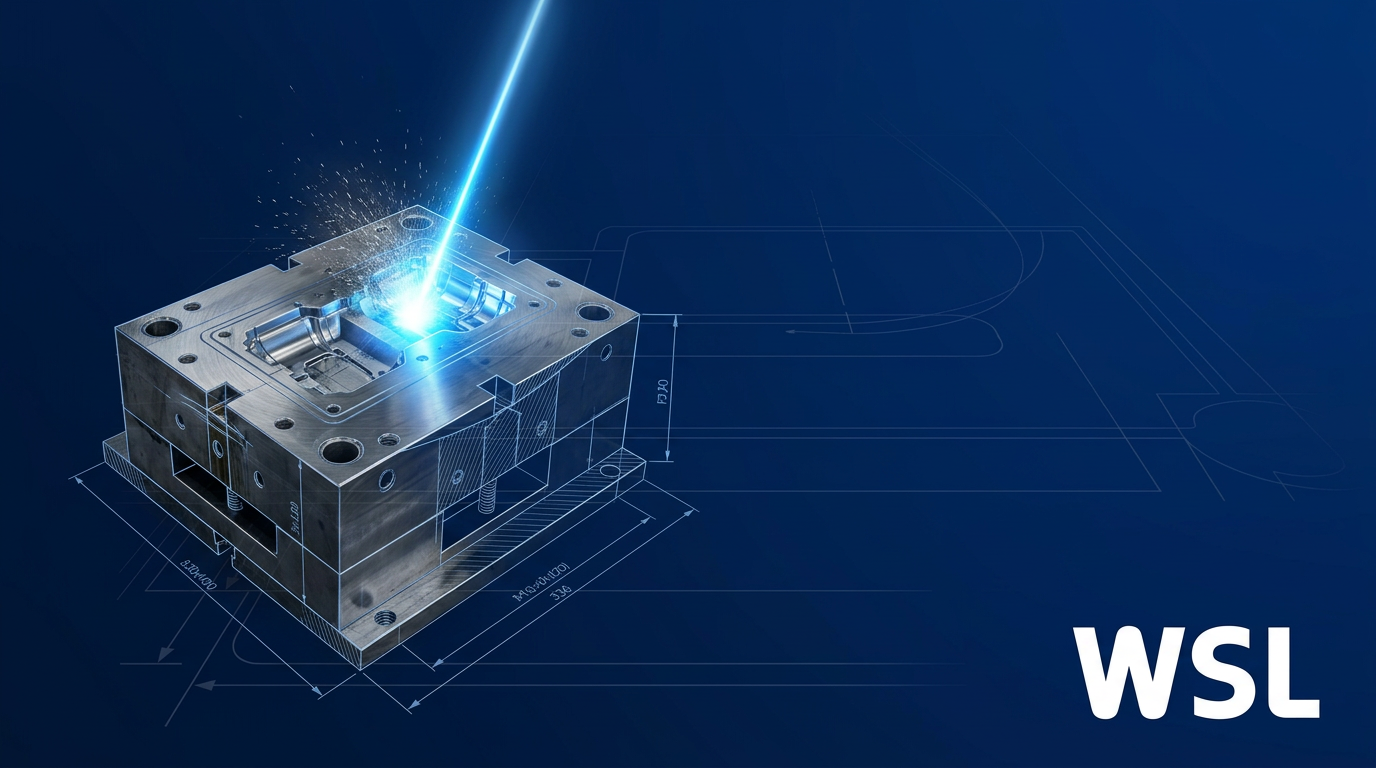
In industrial manufacturing, a mold removing machine means a laser-based cleaning system that strips release agents, vulcanisation residue, and carbon build-up from precision tooling — injection moulds, tyre moulds, composite tooling — without abrasive contact or chemical agents.
If you're looking for building mould remediation equipment or household cleaning products, this page is not for you.
Abrasive and chemical cleaning methods damage mould surfaces, generate hazardous waste, and extend downtime; laser ablation has become the standard for high-value tooling precisely because it avoids all of that.
Each machine below is assessed against a consistent set of criteria — cleaning mode, portability, substrate compatibility, and total cost of ownership — so you can compare on what actually matters.
TL;DR
Laser cleaning is the technically superior choice for precision industrial moulds — but not all laser mould cleaning machines suit the same operation. The critical split is between automated consistency at scale and portable flexibility on the floor, and the right answer depends on your tooling, your facility, and how you weigh upfront cost against long-term running costs.
This article covers:

What laser mould cleaning machines are
The criteria used to assess each machine
Five machines: robotic cells to handheld systems
Automated vs. portable: how to choose
Laser vs. dry ice and abrasives on TCO
How to evaluate a laser mould cleaning machine
Most buyers who regret their choice of mold removing machine did not choose badly — they evaluated on the wrong criteria. They picked on upfront price, or on laser power alone, without asking how the machine would behave inside their specific facility, against their specific contaminants, on their specific production schedule. The seven criteria below are the ones that actually determine whether a laser mould cleaning system delivers on its promise in a real manufacturing environment.
Cleaning mode: automated vs. portable
The industrial market divides into two primary configurations: automated systems (robotic-arm or gantry-based, typically enclosed or semi-enclosed, designed for high-volume repetitive cleaning cycles) and manual portable systems (wheeled trolley units with handheld scanning heads, designed for flexible in-place operation).
The right choice depends on four practical questions: How frequently do your moulds need cleaning? Can they be disassembled and transported to a dedicated cleaning cell, or must cleaning happen in-press? How complex is the mould geometry? And does your production volume justify the capital and footprint of an enclosed automated cell?
High-volume tyre manufacturers running the same mould geometry repeatedly are natural candidates for automation. Toolrooms handling varied injection mould geometries, or facilities where moulds cannot be removed from the press, will typically find a portable system more practical — and more cost-effective to deploy.
Laser power output and tunability
Higher power increases cleaning speed and throughput: a 500 W system will clear heavy carbon build-up from a steel tyre mould faster than a 100 W unit. But raw power is only part of the picture.
What matters equally is power tunability — the ability to dial the output up or down across a wide range within a single machine. A system that can run at low power for delicate aluminium injection moulds and scale up for aggressive carbon removal on steel avoids the cost and disruption of running separate machines for different substrates.
Practical power ranges in the industrial mould cleaning market span from around 50 W to 500 W and above, with the 100–300 W mid-range covering the majority of injection mould and tyre mould cleaning applications. Buyers should be cautious of machines that offer only fixed or narrowly adjustable power settings — substrate damage risk rises sharply when you cannot tune the output to the job.
Substrate and contaminant compatibility
A laser mould cleaning machine must be matched to the specific combination of mould materials and contaminant types the buyer actually works with — not just the broadest possible range listed in a brochure.
Common mould materials include hardened steel, aluminium alloys, and cast iron; aerospace tooling may also involve titanium. Contaminants range from silicone release agents and vulcanisation residue (particularly significant in tyre mould cleaning) to carbon build-up and surface oxides. Each combination has a different optimal parameter set.
The critical buyer question is whether a given machine's tunable parameter range can handle your specific combination without damaging the substrate. A setting that strips carbon from tool steel at full power may be too aggressive for a polished aluminium injection mould cavity at the same setting. Validated application parameters — not just maximum power specs — are what separate a well-engineered machine from one that looks capable on paper.
Consumable-free operation
One of the most significant practical advantages of laser cleaning is that it requires only electricity to operate. There is no abrasive media to purchase, no chemical agents to procure and store, and no CO₂ supply to manage. This is not a minor convenience — it fundamentally changes the economics and operational complexity of the cleaning process.
Consider what the alternatives actually require on an ongoing basis:
- Dry ice blasting: Requires a continuous CO₂ supply that sublimates whether used or not. Deliveries must be timed carefully; unused dry ice is a sunk cost.
- Chemical cleaning: Ongoing procurement of chemical agents, controlled storage, and regulated hazardous waste disposal — all adding cost and compliance burden.
- Abrasive blasting: Continuous media purchase, containment infrastructure, and spent-media disposal — sometimes classified as hazardous waste depending on the coating removed.
The consumable-free advantage is best understood as a total cost of ownership (TCO) benefit, not just a per-use saving. It also reduces supply-chain risk: a laser cleaning system cannot be brought to a halt by a delayed CO₂ delivery or a chemical supplier shortage.
Safety profile
Safety classification is an operationally significant criterion that buyers frequently underestimate until it disrupts production. Most industrial laser cleaning systems operate as Class 4 lasers under BS EN 60825-1 — the highest hazard class, where even brief accidental exposure to the beam can cause serious eye injury and skin burns. Under the Control of Artificial Optical Radiation at Work Regulations 2010, employers using Class 4 lasers must conduct risk assessments and implement adequate control measures, which in practice means area evacuation and laser enclosures before operation begins.
In a busy manufacturing environment, clearing the surrounding area every time a mould needs cleaning is a genuine productivity cost — one that rarely appears in a vendor's demonstration but accumulates quickly in daily production.
There are two engineering approaches that reduce this burden. The first is full Class 1 enclosure: the laser is contained within a sealed cell so that no hazardous radiation is accessible during operation. No PPE or area clearance is required while the machine runs. The second is reduced-hazard-zone (RHZ) technology, which shrinks the laser hazard zone to a small area immediately around the cleaning head, enabling operation in open workshops and mixed-use facilities without requiring full area evacuation.
RHZ capability is a meaningful operational differentiator for any facility where shutting down surrounding activity for a cleaning cycle is disruptive or impractical. It is a capability available in the market, and buyers should ask specifically whether a given machine offers it.
On certification: CE marking (required for the EU market) and UKCA marking (required for the GB market from 1 January 2025 under UK product safety legislation) confirm that a machine has been assessed against applicable machinery and safety requirements. Treat these as a minimum filter — any machine without appropriate certification for your market should not reach a serious buyer's shortlist. They are not a differentiator between certified machines, but their absence is disqualifying.
Total cost of ownership over upfront price
The most common purchasing mistake in this category is evaluating on sticker price. Laser cleaning systems carry a higher capital cost than dry ice blasting rigs or chemical cleaning setups — but that comparison only holds at the point of purchase.
Over a 3–5 year operating horizon, the calculation shifts substantially. Laser cleaning has near-zero consumable costs, typically shorter cleaning cycles (which reduce mould downtime), and eliminates the substrate damage and rework costs that abrasive methods accumulate over time. Modern laser sources are rated for operational lifetimes exceeding 100,000 hours — several years of intensive industrial use without replacement.
The right question is not 'what does this machine cost?' It is 'what does cleaning cost per year — including consumables, downtime, waste disposal, and rework?' That reframe consistently favours laser cleaning for high-frequency mould cleaning applications.
A useful TCO framework includes: machine cost per productive hour, operator labour, electricity, extraction filter replacement, maintenance, and any facility or compliance costs. Set that against the current method's full cost — consumables, waste handling, PPE, and the downtime cost when a mould is out of service for cleaning. The payback period calculation follows directly from that comparison using your own operational data.
Manufacturer provenance and support capability
The laser cleaning market contains a wide range of vendors, and not all of them are manufacturers in any meaningful sense. Some design, build, and support their machines entirely in-house; others are importers or resellers who rebadge third-party equipment under their own brand.
For industrial buyers, this distinction is material. A genuine manufacturer can provide in-house engineering support, faster access to spares, and genuine product development informed by real application feedback. A reseller typically cannot — and when something goes wrong at 2am before a production run, that difference matters.
The practical buyer question is: who actually designed and built this machine, and who will support it when something fails? Note that CE or UKCA certification does not answer this question — a reseller can certify a rebadged machine. Certification confirms regulatory compliance; it does not confirm in-house manufacturing capability or the depth of post-sale technical support.
With these seven criteria as your evaluation framework, the machines on this list can be assessed with genuine rigour — not just on headline specs, but on the factors that determine real-world performance and long-run cost in an industrial manufacturing environment.
Product 1
AutoLASE by Woodrow Scientific Limited
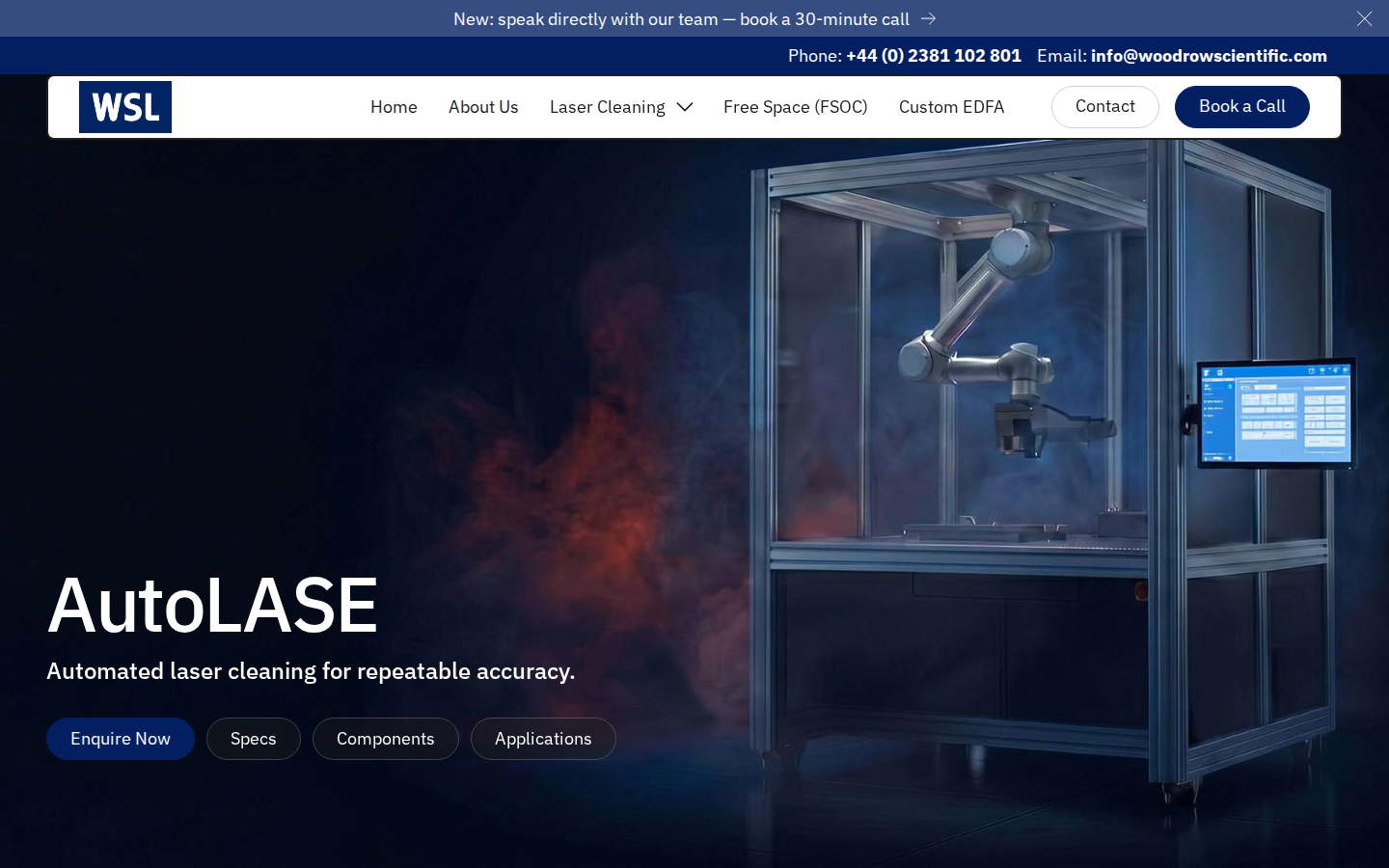
Best for high-volume, repetitive mould cleaning operations — injection mould shops, tyre mould facilities, and aerospace tooling — where consistent cleaning quality at production scale is the primary requirement.
Pros:

Load-and-go: any operator can run it.
Optional RHZ upgrade: enclosure-free cleaning.
Robotic arm reaches complex mould geometries.
No consumables, no coolant circuit.
Cons:

Not suited to large fixed tooling.
Moulds must be brought to the cell.
AutoLASE is built for production environments where the same moulds are cleaned repeatedly and cleaning quality cannot vary cycle to cycle — injection mould shops, tyre mould facilities, aerospace tooling lines, and similar high-throughput operations.
The defining characteristic is not automation itself — several systems on the market offer programmed, repeatable cleaning cells. What separates AutoLASE is how effortless it is to operate: load the part, and the system's 3D machine-vision software scans it, builds a 3D map, and generates the cleaning path automatically.
There is no manual path-setting, no programming interface to learn, and no requirement for the operator to know anything about the part's geometry. Any member of the production team can run it.
AutoLASE Against the Evaluation Framework
| Criterion | AutoLASE |
|---|---|
| Cleaning mode | Automated cell — vision-driven, load-and-go operation |
| Portability / installation | Fixed cell installation; mould must be brought to the machine |
| Laser power | Up to 300 W fibre laser, tunable 0–100% |
| Substrate & contaminant compatibility | Steel, aluminium alloys, cast iron, titanium, copper, brass, and more; removes release agents, vulcanisation residue, carbon build-up, oxides, paint, and a wide range of other contaminants |
| Consumable-free operation | Yes — laser light only; no chemicals, abrasives, or water |
| Safety profile | Class IV or Class I; optional RHZ upgrade enables enclosure-free operation (exclusive to WSL) |
| Total cost of ownership | Competitive pricing; zero consumables, automated labour savings, reduced downtime, and minimal substrate damage reduce long-run costs |
Applies the seven evaluation criteria declared in the preceding framework section directly to AutoLASE, giving the reader a structured, scannable reference rather than requiring them to extract the same information from prose.
The multi-axis articulated robotic arm gives AutoLASE reach into the complex 3D geometries — mould cavities, cores, inserts, tyre tread segments — that manual cleaning approaches cannot address with consistent results.
AutoLASE attaches to the buyer's existing collaborative or industrial robots, or WSL can supply a complete custom cell. Bespoke engineering and integration options are available — contact WSL directly to discuss your specific requirements.
AutoLASE can be configured or upgraded with WSL's patented Reduced Hazard Zone (RHZ) technology, making it eye-safe without a full laser enclosure. No other automated laser cleaning system in the world offers this capability — for facilities that cannot accommodate or do not want a full enclosure around their cleaning cell, AutoLASE is the only option.
The fibre laser is tunable across the full 0–100% power range, which means a single AutoLASE cell handles everything from light oxide removal through to thick coating stripping — on steel, aluminium alloys, cast iron, titanium, copper, brass, and more.
Operation is consumable-free: laser light does the work, with no chemicals, abrasives, or water involved. The air-cooled design eliminates the need for a chiller or coolant circuit, keeping the installation footprint and maintenance burden low.
A point worth noting for buyers applying the manufacturer-provenance filter from the evaluation framework: a meaningful share of laser cleaning 'manufacturers' are actually resellers or importers rebadging third-party machines. This typically means slower spares, limited engineering support, and no genuine ability to improve the product over time.
WSL is the only UK-based laser cleaning manufacturer, founded in 2012, with 200+ years of combined engineering experience across its team. Every AutoLASE is designed, built, serviced, and improved in-house — the patented RHZ technology is a direct product of that in-house capability. CE and UKCA certification is confirmed. Laser cleaning safety and operation training is available directly from WSL.
AutoLASE Pricing
AutoLASE is competitively priced among comparable industrial laser cleaning machines — WSL's in-house design and manufacturing efficiency, rather than quality compromise, drives that positioning.
The stronger lens for evaluating cost is total cost of ownership: zero consumables, automated labour savings on repetitive cleaning cycles, reduced downtime versus abrasive or chemical methods, and less rework from minimal substrate damage all contribute to long-run economics that traditional cleaning methods cannot match.
Pricing is available on a contact-for-quote basis — reach out to Woodrow Scientific Limited directly to discuss your application and volume requirements.
See AutoLASE in Action for Your Mould Cleaning Cell
AutoLASE is built for high-volume, repetitive mould cleaning where consistency at production scale is non-negotiable. Explore the full system specifications and capabilities on the AutoLASE product page.

Product 2
ELASER and ELASER-RHZ by Woodrow Scientific Limited
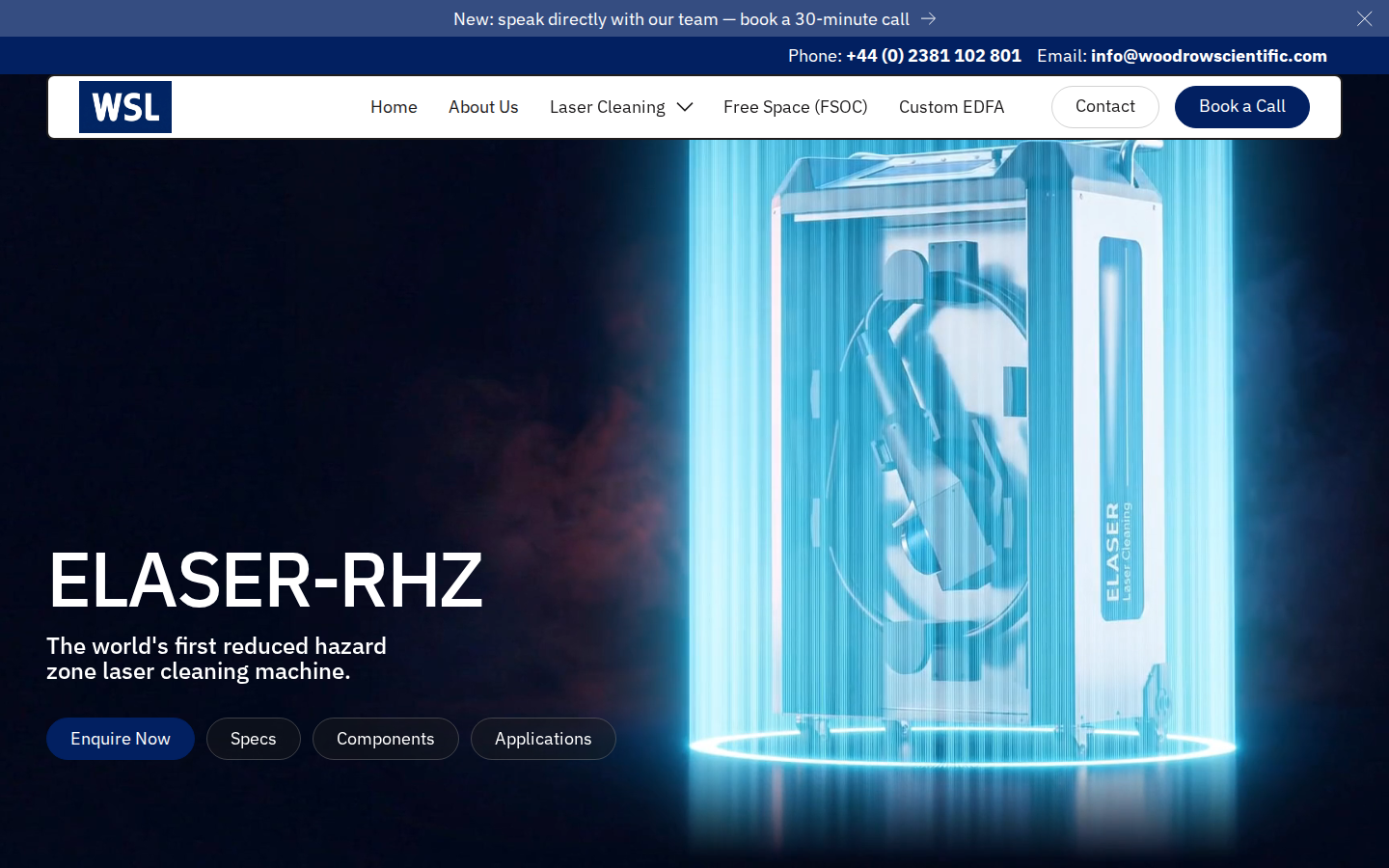
The ELASER and ELASER-RHZ are WSL's portable industrial laser mould cleaning systems — wheeled, air-cooled, and consumable-free, with a sub-3 kg handheld scanner on up to 50 m of delivery cable for true single-operator use. The ELASER-RHZ variant adds WSL's world-first patented Reduced Hazard Zone technology, enabling cleaning in open workshops and mixed-use manufacturing facilities without area evacuation or production shutdown.
Pros:
World-first RHZ — open-workshop cleaning, no evacuation.
Cleans moulds in place — press stays running.
Sub-3 kg scanner, 50 m cable, single-operator.
Consumable-free, air-cooled — no chemicals or coolant.
Cons:
Manual operation — consistency depends on operator technique.
Contact-for-quote — no published list price.
Where AutoLASE is built for high-volume automated cleaning at a fixed cell, the ELASER and ELASER-RHZ are designed for operations that need to move — facilities cleaning varied mould sizes in place, multi-site service operations, and production environments where taking moulds offline is not an option.
The ELASER-RHZ is the only laser cleaning system worldwide to carry WSL's patented Reduced Hazard Zone technology — collapsing the laser hazard zone to a fraction of conventional size and enabling cleaning in open workshops and mixed-use manufacturing facilities without area evacuation.
ELASER-RHZ: Reduced Hazard Zone Technology
Every conventional portable laser cleaner on the market operates under a Class IV hazard zone — meaning surrounding work stops, barriers go up, and personnel evacuate before cleaning can begin.
The Reduced Hazard Zone (RHZ) technology changes that calculus entirely: WSL's patented system confines the hazard to a small area immediately around the work surface, so cleaning can continue in open-plan production environments without disrupting adjacent operations.
For a busy manufacturing facility, that safety overhead is a genuine productivity cost — and RHZ removes it, unlocking continuous, in-production cleaning that no other portable laser system can match.
WSL provides full operator safety and operation training alongside every system, ensuring teams are confident and competent from day one.
ELASER Portability and Specifications
The ELASER is a genuinely single-operator system: the wheeled unit weighs under 50 kg, and the handheld scanner comes in at under 3 kg — connected via a delivery cable available up to 50 m in length.
| Specification | ELASER / ELASER-RHZ |
|---|---|
| Max laser power | Up to 300 W |
| Power tunability | 0–100% |
| Wavelength | 1550 nm (retina-safe) |
| Handheld scanner weight | Under 3 kg |
| System weight | Under 50 kg (wheeled) |
| Delivery cable reach | Up to 50 m (5 m / 15 m standard) |
| Laser class | Class IV (ELASER) / Class I (ELASER-RHZ) |
| Power supply | 110–250 VAC single-phase |
| Power consumption | Under 2,000 W |
| Certifications | CE and UKCA certified |
| Origin | Made in Britain |
Industrial buyers evaluating portable laser cleaning systems need specific technical parameters at a glance — power, weight, cable reach, laser class, and certifications are the key decision-relevant specs for this product.
No compressor, no water supply, and no consumables are required — the system runs on a standard single-phase supply and is ready to deploy anywhere on the production floor, including remote or multi-site locations.
In-Place Mould Cleaning
The ELASER cleans injection moulds, tyre moulds, and tooling in situ — the mould stays in the press, with no disassembly, no transport to a cleaning tank, and no drying stage before production resumes.
For tyre and rubber moulds specifically, the laser removes vulcanisation residue and cleans vents without abrasives, eliminating mould wear that accumulates with mechanical cleaning methods.
Power, Substrates, and Contaminants
At up to 300 W with power tunable across the full 0–100% range, a single ELASER spans light oxide removal through heavy contamination build-up on the same shift.
- Compatible substrates: Steel, carbon steel, aluminium alloys, cast iron, copper, brass, bronze, titanium, and galvanised metals — among others.
- Contaminants removed: Release agents, vulcanisation residue, carbon and soot, oxides, mill scale, oil and grease, paint, adhesives, and weld discolouration.
- Substrate protection: The beam stops at the base material — contaminant is removed selectively, leaving the mould surface intact and reducing rework.
Because output is operator-directed via the handheld scanner, cleaning consistency depends on operator technique — a genuine trade-off versus an automated system, and one worth factoring in for high-cycle, tolerance-critical applications.
WSL: In-House British Manufacturer
WSL has designed, built, and supported its own laser cleaning machines in Britain since 2012 — the only UK-based laser cleaning manufacturer, with 200+ years of combined engineering experience and a portfolio of patents that includes the RHZ technology.
In a market where a significant number of laser cleaning suppliers are resellers or importers rebadging third-party machines, that distinction matters practically: in-house manufacturers can supply spares faster, provide genuine engineering support, and actually improve the product over time.
WSL also offers bespoke engineering and customisation — contact WSL directly to discuss specific requirements.
ELASER and ELASER-RHZ Pricing
Pricing is available on request, and the ELASER/ELASER-RHZ holds the position of European cost leader among comparable portable industrial laser cleaning machines — a result of WSL's in-house manufacturing efficiencies rather than any compromise on build quality.
The more useful economic frame is total cost of ownership: zero consumables, reduced press downtime through in-place cleaning, and minimal substrate damage that cuts rework costs — these running advantages compound over the system's service life in ways that upfront price comparisons do not capture.
Product 3
4JET STMCS Automated Tyre Mould Cleaning System
A fully automated laser tyre mould cleaning cell from 4JET Technologies (Germany), purpose-built for high-volume tyre mould cleaning with 50+ installations at top-ten tyre makers across all continents.
Pros:
50+ installs at top-ten tyre makers globally.
6-axis head cleans complex 3D sipes automatically.
Class 1 enclosed — no PPE needed during operation.
Near-consumable-free: electricity, compressed air, filter cartridges.
Cons:
Tyre moulds only — not general-purpose.
Full-enclosure cell — no in-place cleaning.
Teach-in recipe programming required per mould type.
The 4JET STMCS is the right choice for tyre manufacturers that want a dedicated, turnkey automated laser cleaning cell with a proven production track record — it is the most widely deployed purpose-built tyre mould laser cleaning system in the world.
Automated Cleaning Process
The cleaning process is fully automated: the operator loads the mould by crane or forklift, selects the appropriate cleaning recipe, and the system takes over — performing automatic mould centring and mould recognition before the cleaning cycle begins.
A 6-axis operating head traverses all tread and sidewall geometry, including the complex 3D sipes found in winter tyre moulds, delivering consistent, repeatable cleaning across every surface without manual intervention.
4JET reports more than 50 installations at top-ten tyre makers on every continent — a scale of deployment that speaks directly to industrial-grade reliability in demanding, high-throughput production environments.
STMCS Cycle Times
Cycle time varies by mould complexity; the figures below reflect 4JET's published data, with the double-table option included as a throughput consideration for production planners.
| Mould Type | Approximate Cycle Time | Double-Table Option |
|---|---|---|
| Summer tyre mould | ~30 minutes | Load/unload second mould during active cycle — approx. 20% utilisation improvement |
| Winter tyre mould (with 3D sipes) | ~60 minutes | Load/unload second mould during active cycle — approx. 20% utilisation improvement |
Concrete cycle time figures are the most useful data point for a production planner evaluating throughput — a table communicates the summer vs. winter contrast and the double-table benefit far more clearly than prose.
The optional double-table configuration allows one mould to be loaded or unloaded while the other is being cleaned, improving overall system utilisation by approximately 20% — a meaningful gain in a continuous production environment.
Safety Profile
The STMCS is a Class 1 laser system, meaning all laser activity is fully enclosed within the cell — no additional PPE or area evacuation is required while a cleaning cycle is running.
It is important to be precise about what this means: the Class 1 rating is an enclosure-based safety approach, not eye-safe open-space technology — operators cannot run the laser in an open workshop environment, and moulds must always be loaded into the cell.
The system operates below 78 dB(A) and fully contains cleaning dust within the enclosure, both of which are relevant considerations for production-floor integration and operator comfort.
Running Costs and Consumables
On the consumable-free axis, the STMCS performs well: the only inputs required are electricity and compressed air, with periodic filter cartridge replacement as the sole consumable cost.
This is a near-consumable-free running cost profile — substantially lower than dry ice blasting (which requires a continuous CO₂ supply) or chemical cleaning (which generates hazardous waste streams) — though buyers should account for filter cartridge replacement in their TCO model.
Trade-Offs to Consider
The STMCS is a strong system within its defined scope, but that scope has clear boundaries that buyers should evaluate honestly before committing.
- Tyre moulds only: The STMCS is designed specifically for tyre mould cleaning. Facilities that also clean injection moulds, composite tooling, or other mould types will need a separate solution for those applications.
- Full-enclosure cell required: Cleaning happens inside a closed cell. There is no in-place or open-space cleaning capability — every mould must be transported to and loaded into the system.
- Teach-in recipe programming: The STMCS uses conventional recipe programming: each mould type requires an initial teach-in session before automated cleaning can run. Once set, operation is fully automatic — but the upfront programming effort requires time and technical knowledge, unlike vision-driven systems where no pre-programming is needed.
For a facility cleaning a stable library of tyre mould types at high volume, the recipe programming investment is a one-time overhead that pays back quickly; for operations with highly variable mould sets, the setup burden is worth factoring into the decision.
4JET STMCS Pricing
4JET does not publish pricing for the STMCS — contact 4JET Technologies directly for a quotation tailored to your production configuration.
For capital equipment at this level, total cost of ownership is the right evaluation lens: near-zero consumable running costs, predictable cycle times, and the system's capacity for 24/7 operation combine to make the per-mould cleaning cost highly competitive against chemical or dry ice alternatives over a multi-year horizon.
Product 4
cleanLASER CL-Series Portable Laser Cleaning System
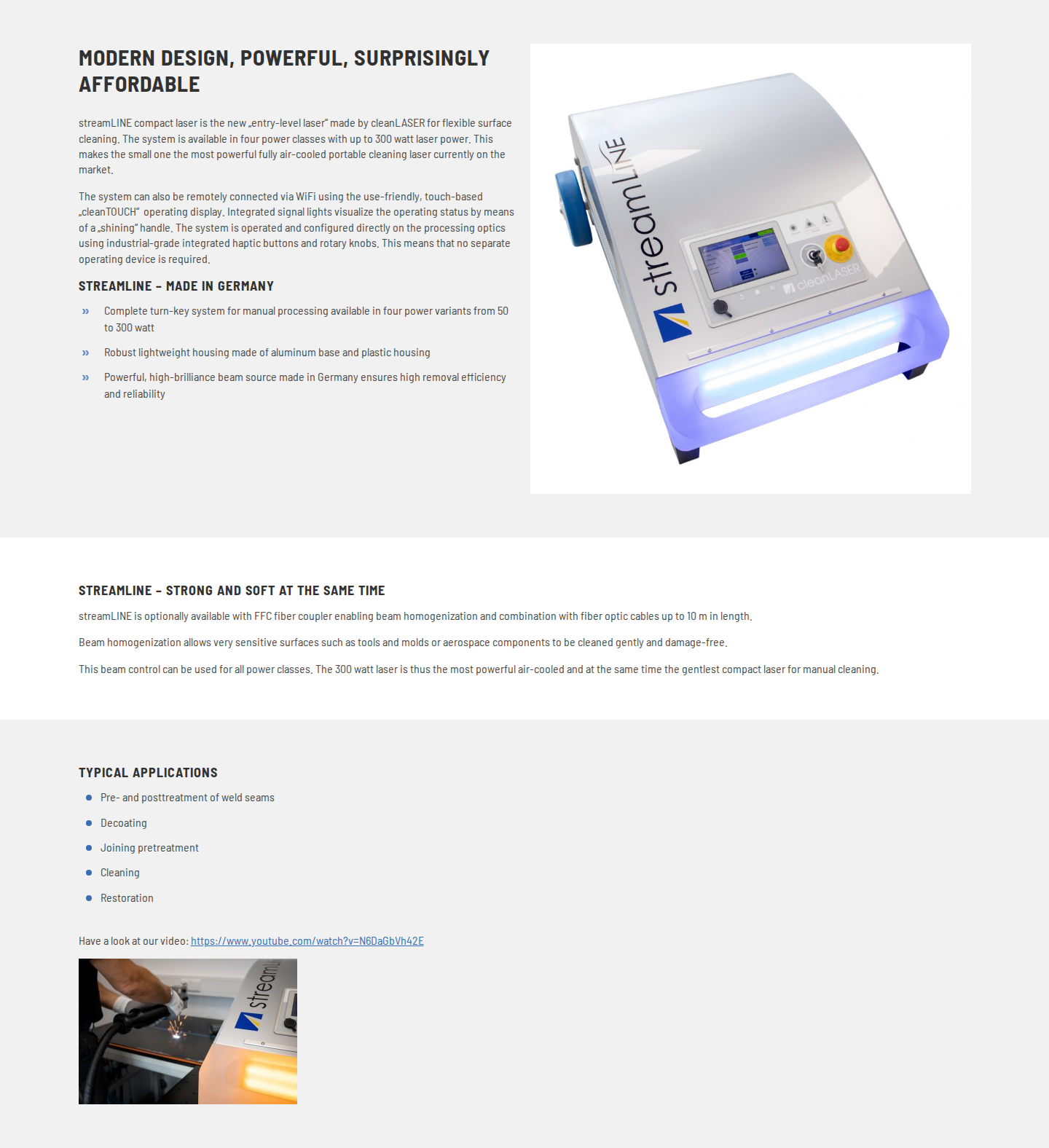
cleanLASER's CL-series portable systems bring over 25 years of industrial laser cleaning heritage and approximately 2,000 global installations to mould cleaning applications — best for buyers who want a well-proven, German-engineered portable system with a broad power range from 50 W to 500 W and the long-term backing of IPG Photonics.
Pros:
Founded 1997 — originator of laser cleaning.
~2,000 systems installed globally across industrial applications.
Proven portable mould cleaning, broad power choice.
streamLINE (50–300 W): fully air-cooled.
Cons:
Class 4 — standard PPE and area clearance required.
CL 500 may require water cooling infrastructure.
cleanLASER, founded in Herzogenrath, Germany in 1997, is one of the originators of industrial laser cleaning as a commercial discipline — with approximately 2,000 systems installed globally, it carries a deployment record that few competitors can match.
In 2024, cleanLASER was acquired by IPG Photonics, the world's largest fibre-laser manufacturer, bringing significant laser source manufacturing depth and R&D resources behind the product line — a meaningful consideration for buyers evaluating long-term vendor stability and support.
Across the evaluation framework, the CL-series portable lineup scores well on portability, laser power range, and mould cleaning application history; the key trade-offs sit on the safety profile and, for higher-power models, cooling infrastructure.
The portable lineup spans a wide power range, letting buyers select the class that matches their specific mould cleaning throughput requirements without over- or under-specifying.
| Model | Power | Cooling | Key characteristic |
|---|---|---|---|
| streamLINE 50 | 50 W | Air-cooled | Entry-level portable; no water infrastructure required |
| streamLINE 100 | 100 W | Air-cooled | Mid-light portable; no water infrastructure required |
| streamLINE 200 | 200 W | Air-cooled | Mid-power portable; no water infrastructure required |
| streamLINE 300 | 300 W | Air-cooled | High-end air-cooled portable; no water infrastructure required |
| CL 500 | 500 W | Air or water-cooled | Highest-power portable; water cooling required on some configurations |
Comparing the key specifications across the CL-series portable models helps buyers quickly identify which power tier suits their mould cleaning operation — this information is clearer in tabular form than in prose.
Mould cleaning is an explicitly documented application across the cleanLASER range — this is a validated use case, not a generic capability claim.
On the streamLINE series, an optional beam homogenisation feature enables gentle, damage-free cleaning of sensitive mould surfaces, which is particularly relevant for buyers cleaning precision injection moulds or fine-detail tooling where surface integrity cannot be compromised.
All CL-series portable systems are Class 4 lasers operating within a conventional laser hazard zone. Standard area clearance and appropriate PPE are required during operation. This is the standard classification for industrial laser cleaning systems of this type — buyers should plan facility access controls accordingly.
The streamLINE models up to 300 W are fully air-cooled, simplifying deployment in facilities without water cooling infrastructure.
The CL 500 at 500 W is available in air or water-cooled configurations, though some configurations require water cooling — a practical consideration for facilities that do not have cooling water circuits in place.
All systems are manufactured in Herzogenrath, Germany and carry CE certification, meeting the baseline regulatory compliance requirements for European industrial deployment.
cleanLASER CL-Series Pricing
cleanLASER does not publish list pricing for the CL-series portable lineup. Contact cleanLASER directly or through IPG Photonics for current pricing and availability.
Talk to a Laser Cleaning Expert About Your Moulds
Every mould cleaning requirement is different. Speak with a specialist who can assess your tooling, production cycle, and facility constraints — and help you identify the right system.

Product 5
P-Laser QF-Compact

A compact, self-contained Belgian-manufactured portable laser cleaning system covering rubber, plastic, glass, and composite industrial moulds — best for buyers who need the whole unit to travel, not just a scanner.
Pros:
Self-contained unit — no fixed base needed.
Air-cooled Compact range — no cooling infrastructure.
Rubber, plastic, glass, and composite moulds covered.
CleanSweep: 8 job presets via wireless tablet.
Cons:
Full system weight moves with operator.
Class 4 hazard zone — PPE and area clearance required.
The P-Laser QF-Compact is the right choice for buyers whose primary requirement is a genuinely portable, self-contained laser cleaning unit — one that travels as a complete system rather than requiring a separate base unit to stay behind.
P-Laser is a genuine manufacturer, not a reseller or importer. Based in Heusden-Zolder, Belgium, the company engineers and builds its own systems in-house, drawing on over 35 years of group-level surface treatment expertise. With 450+ systems installed worldwide, its deployment record is proportionate to its positioning as a specialist manufacturer.
QF-Compact Design: The Whole Unit Travels
The QF-Compact's defining characteristic is its self-contained architecture: the laser source, optics, controls, and filtration all sit in one portable enclosure.
This differs from fibre-fed scanner designs, where a heavier base unit stays in place and a lightweight handheld scanner is carried to the work on a delivery cable. Both approaches have their place — the QF-Compact's advantage is that the entire system can be repositioned without fixed infrastructure, making it suited to carry-anywhere deployment across a facility or between sites.
The trade-off is that the operator moves the full system weight rather than just a lightweight scanner. For work at height, in confined spaces, or at significant distance from a fixed power unit, this is worth considering when evaluating fit.
| Model | Power | Weight | Cooling |
|---|---|---|---|
| QFC-50 / QFC-100 | 50–100 W | 13 kg | Air-cooled |
| QFC-200 / QFC-300 | 200–300 W | 30–35 kg | Air-cooled |
| QF-500 / QF-1000 (upgrade path) | 500–1000 W | Verify with P-Laser | Water-cooled |
Gives buyers a clear, scannable view of the QF-Compact power range — the two key spec axes (power and weight) that determine which unit fits their application — sourced directly from P-Laser's product pages.
The lower-power QFC-50 and QFC-100 units weigh just 13 kg — genuinely hand-portable. The QFC-200 and QFC-300 step up to 30–35 kg, which remains trolley-moveable without specialist lifting equipment. All Compact models are air-cooled, removing the need for a water cooling circuit.
For buyers who outgrow the Compact range, P-Laser's QF-500 and QF-1000 series provide a higher-throughput upgrade path within the same manufacturer ecosystem — though these are water-cooled and outside the scope of this evaluation.
Mould Cleaning Coverage and CleanSweep Software
P-Laser explicitly lists mould cleaning as a core application. The QF-Compact is suited to rubber, plastic, glass, and composite tooling moulds — covering the substrate and contaminant compatibility range that most industrial mould cleaning buyers need.
On the software side, every QF-Compact ships with CleanSweep — P-Laser's dedicated cleaning software, accessible via a wireless tablet. Operators can store up to 8 custom job presets, which reduces parameter setup time when cycling through repeated cleaning jobs on the same mould types.
Startup time is approximately 10 seconds, and maintenance requirements are minimal — the primary consumable is a dust filter replaced periodically. Laser source longevity is rated at over 40,000 hours.
Safety Profile
The QF-Compact operates with a conventional laser hazard zone. Standard PPE and area clearance protocols apply during operation — this is the baseline safety overhead for open-beam laser cleaning systems generally.
There is no reduced-hazard-zone or open-space cleaning capability on this system. Buyers for whom safety overhead is a primary constraint — particularly in shared workshop environments — should factor this into their evaluation.
Framework Assessment
- Cleaning mode: Manual handheld operation. Cleaning consistency depends on operator technique.
- Portability: Self-contained carry-anywhere unit. The full system relocates — no fixed base unit or long delivery cable required.
- Laser power: 50–300 W across the air-cooled Compact range, scaling with the model selected. Higher-power options exist as an upgrade path.
- Substrate and contaminant compatibility: Rubber, plastic, glass, and composite moulds explicitly covered. Pulsed 1064 nm fibre laser — the standard for industrial mould cleaning.
- Consumable-free operation: No blast media, no chemicals. Periodic dust filter replacement is the only maintenance consumable — consistent with laser cleaning as a category.
- Safety profile: Conventional laser hazard zone. Standard PPE and area clearance required. No reduced-hazard-zone capability.
- TCO: Air-cooled across the Compact range eliminates cooling infrastructure costs. No consumables beyond filter maintenance. Purchase pricing is not publicly listed.
P-Laser also offers rental pricing publicly — the QFC-100 is listed at €550/day, €1,430/week, or €4,950/month, with the QFC-200 and QFC-300 scaling upward from there. This rental availability is a practical option for buyers who want to trial the system or cover a short-term production requirement before committing to purchase.
P-Laser QF-Compact Pricing
Purchase pricing for the QF-Compact is not publicly listed on p-laser.com. Contact P-Laser directly at sales@p-laser.com for a quote. Rental rates are published and provide a useful reference point for budget planning.
Conclusion
Choosing the right laser mould cleaning machine for your operation
If consistent cleaning quality at production scale is the priority, the choice sits between two automated systems: AutoLASE for varied mould types, and the 4JET STMCS for dedicated tyre mould facilities.
For moulds that stay in the press, or cleaning that moves with the work, the ELASER/ELASER-RHZ, cleanLASER CL-series, and P-Laser QF-Compact each offer a different shape of portable capability.
Whichever direction fits, evaluate on total cost of ownership rather than list price — and confirm you are buying from a genuine manufacturer with the engineering depth to support the machine long-term.
Frequently asked questions about laser mould cleaning machines
Common questions from industrial buyers evaluating laser mould cleaning machines — covering in-place cleaning, certification requirements, surface damage risk, and how laser cleaning compares with dry ice blasting.
Portable laser cleaning systems support in-place mould cleaning — the mould stays in the press, with no disassembly, no transport to a cleaning tank, and no drying stage required. Automated cell-based laser cleaning systems typically require the mould to be loaded into the cleaning cell. In-place cleaning significantly reduces press downtime: the mould is cleaned and back in production faster. The choice between in-place (portable) and cell-based (automated) cleaning depends on mould volume, geometry, and whether the facility has the throughput to justify a dedicated cleaning cell. High-volume operations cleaning the same mould type repeatedly often benefit from the consistency and speed of an automated cell. Facilities with varied mould sizes, large fixed tooling, or multi-press operations typically find portable systems more practical — the cleaning comes to the mould, not the other way around.
CE marking and UKCA certification are the baseline requirements for laser mould cleaning machines sold and operated in the UK and European markets. They confirm the machine has been assessed against applicable machinery safety and electromagnetic compatibility regulations. Any machine without the appropriate marking for its target market should be treated as a serious risk flag, not a minor omission. CE marking covers the EU and EEA. UKCA is the UK's post-Brexit equivalent — from 1 January 2025, new machinery placed on the GB market requires UKCA marking; CE-only marking is no longer sufficient for Great Britain. UK buyers should verify which marking applies to any machine they are purchasing. For laser-specific safety, buyers should also confirm the machine's laser class classification: Class I enclosed systems contain the beam within the enclosure, while Class IV open-beam systems require trained operators, wavelength-rated eye protection, and a controlled exclusion zone. The HSE (hse.gov.uk) is the authoritative UK source for machinery regulations and laser safety requirements — buyers should consult it directly and seek their own compliance advice before purchase.
When laser parameters are correctly matched to the mould material and the contaminant type, laser cleaning removes only the contamination layer and leaves the base material intact. Incorrect parameters — too high a power setting, too slow a scan speed, or an unsuitable frequency — can cause surface effects such as micro-roughening or localised heating. This is why parameter validation and operator training from a reputable manufacturer are essential before production use. The risk of surface damage is significantly lower with laser cleaning than with abrasive methods such as sandblasting or wire brushing, which remove base material along with contamination by design. Laser power tunability is the key mechanism: the same machine can be adjusted from low power for light release agent removal up to higher power for heavy carbon build-up, allowing it to handle different mould materials and contaminant types without risking the mould surface. Buyers should ask manufacturers for parameter validation support and operator training as part of the purchase — this is not an optional add-on, it is what makes the technology safe for precision tooling.
Laser cleaning requires no consumables — dry ice must be continuously ordered, stored in insulated containers, and used before it sublimates; laser cleaning runs on electricity alone. Laser cleaning also offers finer parameter control and is significantly quieter in operation. Dry ice cannot be stockpiled: a delivery loses mass by the hour and is typically gone within a day or two, which turns mould cleaning into a supply-chain task. Laser cleaning eliminates that dependency entirely. On precision, a pulsed laser allows the operator to adjust power, pulse frequency, spot size, and scan speed to match the contaminant and substrate — dry ice blasting offers less of that dial-in control at the surface. On noise, dry ice blasting is a loud process: Cold Jet's published data puts operational blasting noise at the operator's ear between 85 dB at lower pressures and 118 dB at maximum blasting pressure. Laser cleaning produces a modest hum and extraction noise by comparison. On upfront cost, laser cleaning machines carry a higher capital cost than dry ice blasting equipment. However, the zero-consumable running cost, finer surface control, and elimination of supply-chain logistics make laser cleaning the stronger long-run choice for most mould shop applications where cleaning precision and predictable operating costs matter.
In the industrial manufacturing context, laser mould cleaning machines remove mould contamination — release agents, vulcanisation residue, and carbon build-up — from industrial tooling surfaces through laser ablation. The laser beam vaporises the contamination layer without physical contact with the mould substrate. This is distinct from building mould remediation devices such as ozone generators, air scrubbers, and biocide foggers, which address biological mould growth in buildings. Industrial laser mould cleaning machines are precision manufacturing tools designed for cleaning metal moulds used in injection moulding, tyre manufacturing, and composite tooling. They are not household or commercial building remediation devices. Readers looking for solutions to biological mould growth in buildings should consult specialist remediation resources — this page covers industrial tooling only.
For precision industrial moulds — injection moulds, tyre moulds, composite tooling — laser cleaning is the technically superior method. It removes contamination without abrasive contact or chemical agents, preserving mould surface integrity and dimensional tolerances that abrasive and chemical methods degrade over time. The most effective laser mould cleaning machine depends on the buyer's operation type. For high-volume, repetitive mould cleaning where consistent quality at production scale is the priority, an automated laser cleaning system with robotic delivery and recipe-based operation is the right fit. For flexible, in-place, or on-site cleaning across varied mould types and sizes, a portable laser system with a handheld scanner on a long fibre delivery cable is the stronger choice. Both categories eliminate consumables, avoid abrasive contact, and leave no chemical residue — the deciding factor is whether the cleaning comes to a fixed cell or travels to the mould.