

Pump Laser Applications and Wavelengths
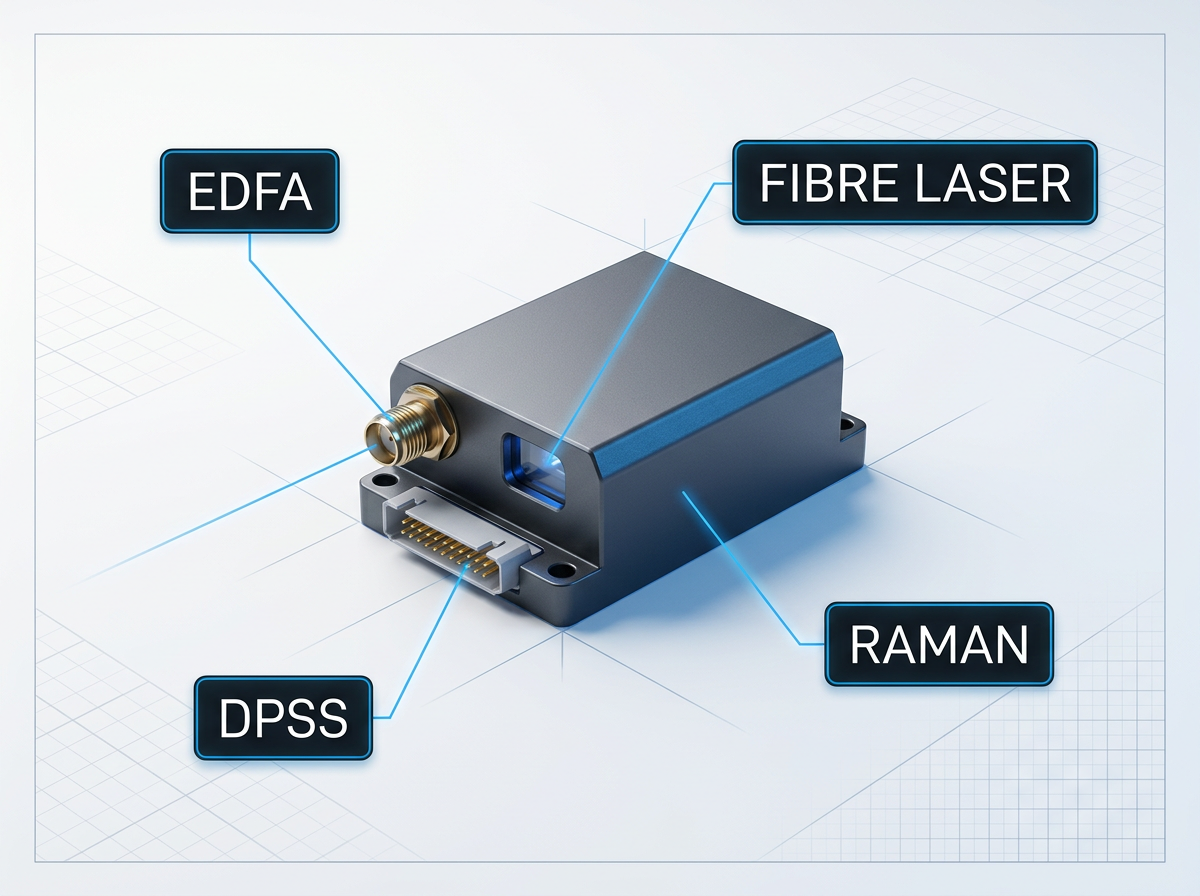
Pump laser diodes deliver optical energy into a gain medium to drive the downstream optical system. In telecom, 980 nm and 1480 nm pump erbium-doped fibre amplifiers (EDFA); 14xx nm sources (1420–1480 nm) drive distributed and discrete Raman gain across C- and L-band spans.
For industrial and scientific systems: 976 nm / 915 nm / 940 nm pump ytterbium-doped double-clad fibre lasers into the kilowatt range. Solid-state and DPSS systems use 808 nm for Nd:YAG and Nd:YVO₄, 940 nm for Yb:YAG disc lasers, and 880 nm / 888 nm as lower-quantum-defect alternatives for Nd-doped gain media.
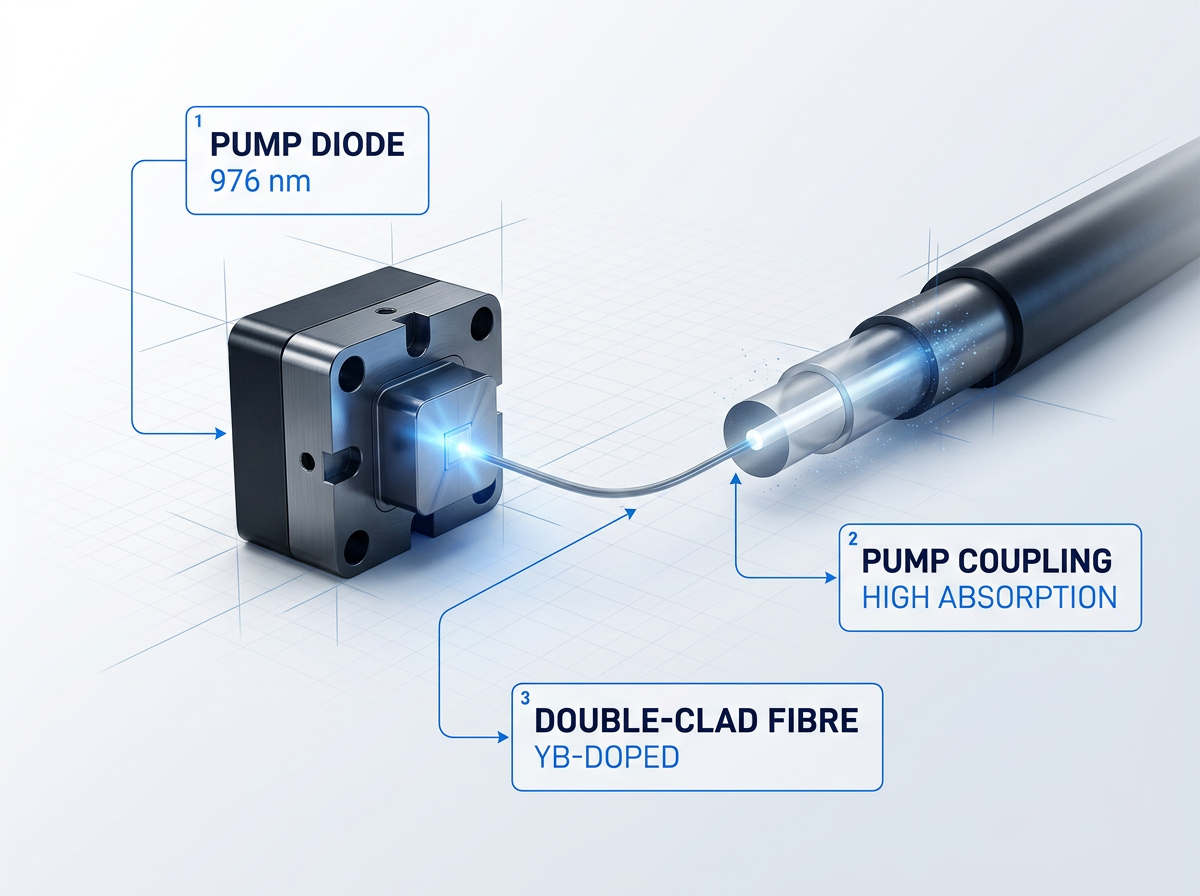
Ytterbium Fibre Laser Primary Pump
976 nm targets the peak absorption band of ytterbium-doped double-clad fibre, delivering high pump absorption efficiency and shorter active fibre lengths compared to broader-band alternatives.
The tight absorption peak at this wavelength demands correspondingly tight wavelength tolerance from the source. Temperature-induced wavelength drift must be controlled, making this band the primary application for wavelength-stabilised, cooled pump laser formats.
Ytterbium Fibre Laser Broadband Pump
915 nm and 940 nm sit within the broader absorption band of Yb-doped fibre, where the acceptable wavelength variation is significantly wider than at 976 nm. This tolerance advantage makes these bands well suited to uncooled or air-cooled pump sources operating in thermally variable environments.
The trade-off is reduced absorption efficiency relative to the 976 nm peak, which typically requires longer active fibre or higher pump power to achieve equivalent inversion. For thermally demanding installations, this band offers a practical alternative where strict wavelength control is not viable.
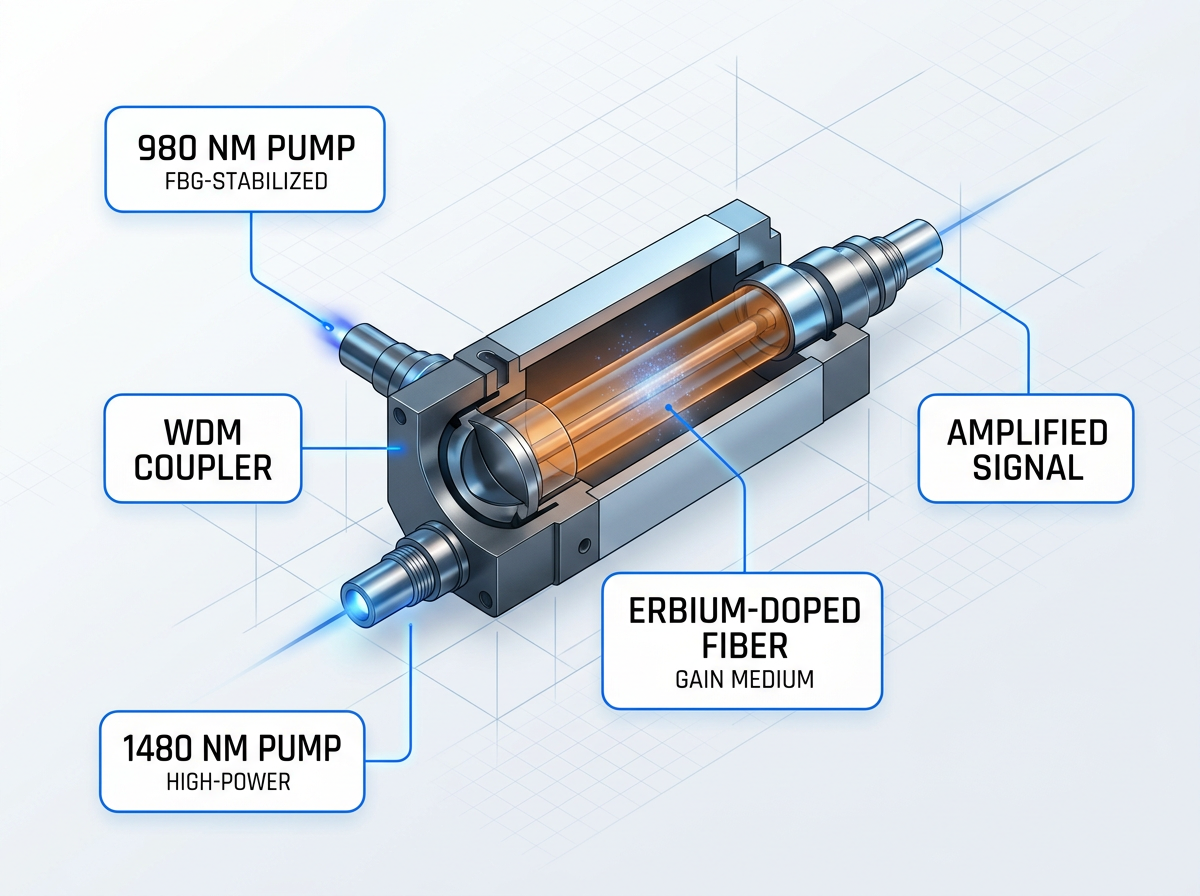
EDFA Pump Bands
980 nm targets a narrow erbium absorption peak and requires FBG-stabilised sources to hold wavelength within the band. It delivers the lowest noise figure in co-propagating EDFA configurations, making it the standard choice where noise performance is the primary constraint.
1480 nm is the alternative EDFA pump band, suited to high-power and submarine amplifier configurations with a long track record of reliability in long-haul systems. Both bands are well established in telecom infrastructure, with source selection governed by amplifier topology and power budget.
Distributed Raman Amplification Pump
The 1420–1480 nm band serves as the pump source for distributed Raman amplification of C- and L-band signals in long-haul telecom spans. The governing principle is that the pump wavelength sits approximately 100 nm shorter than the target signal wavelength, which directly determines the required pump band for a given amplification window.
Raman pump lasers operate at high power levels within the transmission fibre itself, placing premium demands on source stability and spectral purity across the operating range.

Solid-State and Specialty Pumps
808 nm is the established pump wavelength for Nd:YAG and Nd:YVO₄ solid-state and DPSS lasers, targeting the primary neodymium absorption band. Source brightness and spectral width both influence coupling efficiency into the gain crystal.
880 nm pumps Nd-doped gain media at a lower-quantum-defect transition, reducing thermal lensing and improving beam mode quality in high-power DPSS designs. 793 nm pumps thulium-doped fibre for 2 µm eye-safe output.

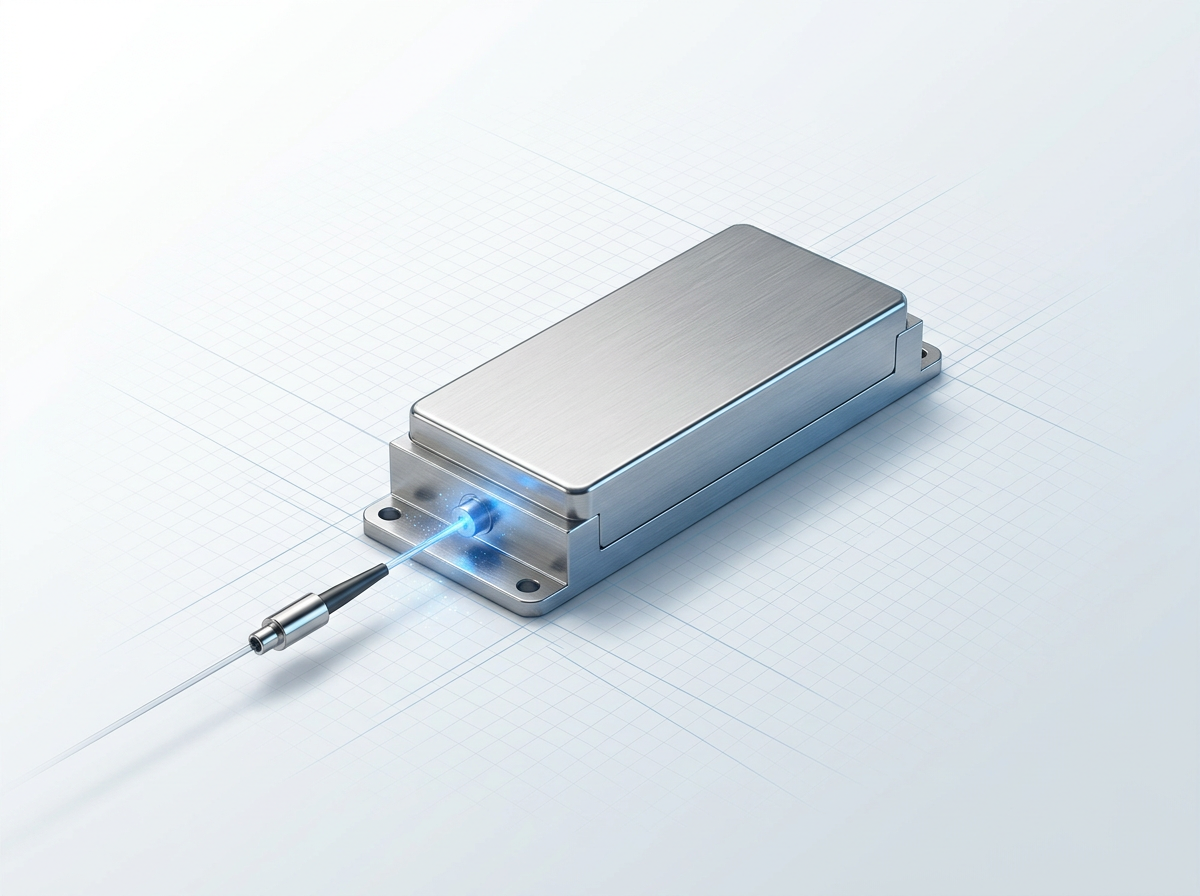
TEC-Cooled Butterfly Package
The 14-pin and 10-pin butterfly package integrates a thermoelectric cooler and hermetic sealing, holding the laser junction at a controlled temperature regardless of ambient conditions. The TEC maintains emission wavelength within the narrow absorption band required for DWDM and telecom EDFA operation, delivering the tightest wavelength stability available in a pump laser package.
This format is the standard choice for C-band EDFA and low-noise telecom applications where wavelength precision is a hard system requirement.
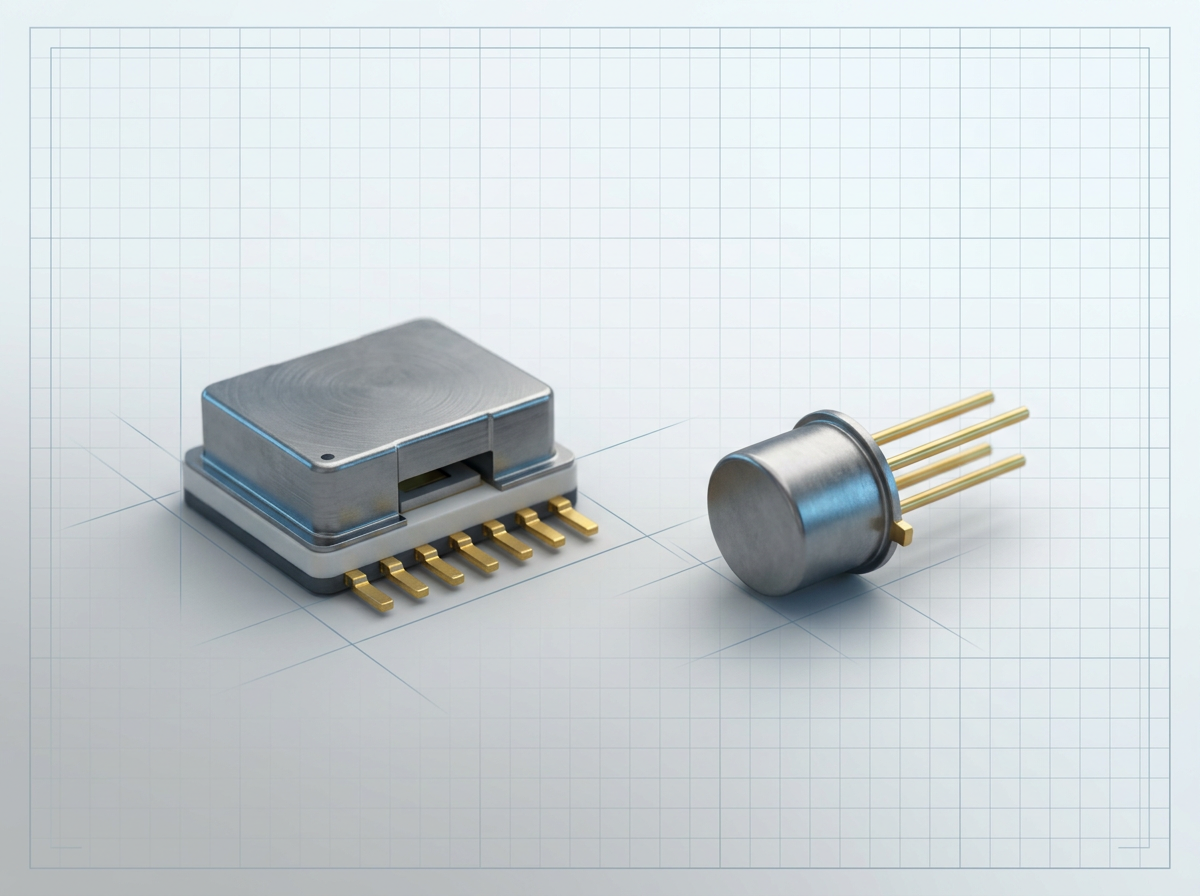
Mini-Butterfly and Ultra-Compact
The 10-pin mini-butterfly (mBTF) delivers high-power uncooled operation within a footprint compatible with standard 14-pin BTF board layouts, suiting high-power EDFA stages and compact SFF module integration where a full TEC is not required by the thermal architecture.
The 3-pin ultra-compact package offers the smallest footprint in the telecom pump family, targeting QSFP-DD and CFP transceiver integration at lower output levels. Both formats are uncooled, suited to applications where the system manages its own thermal path.
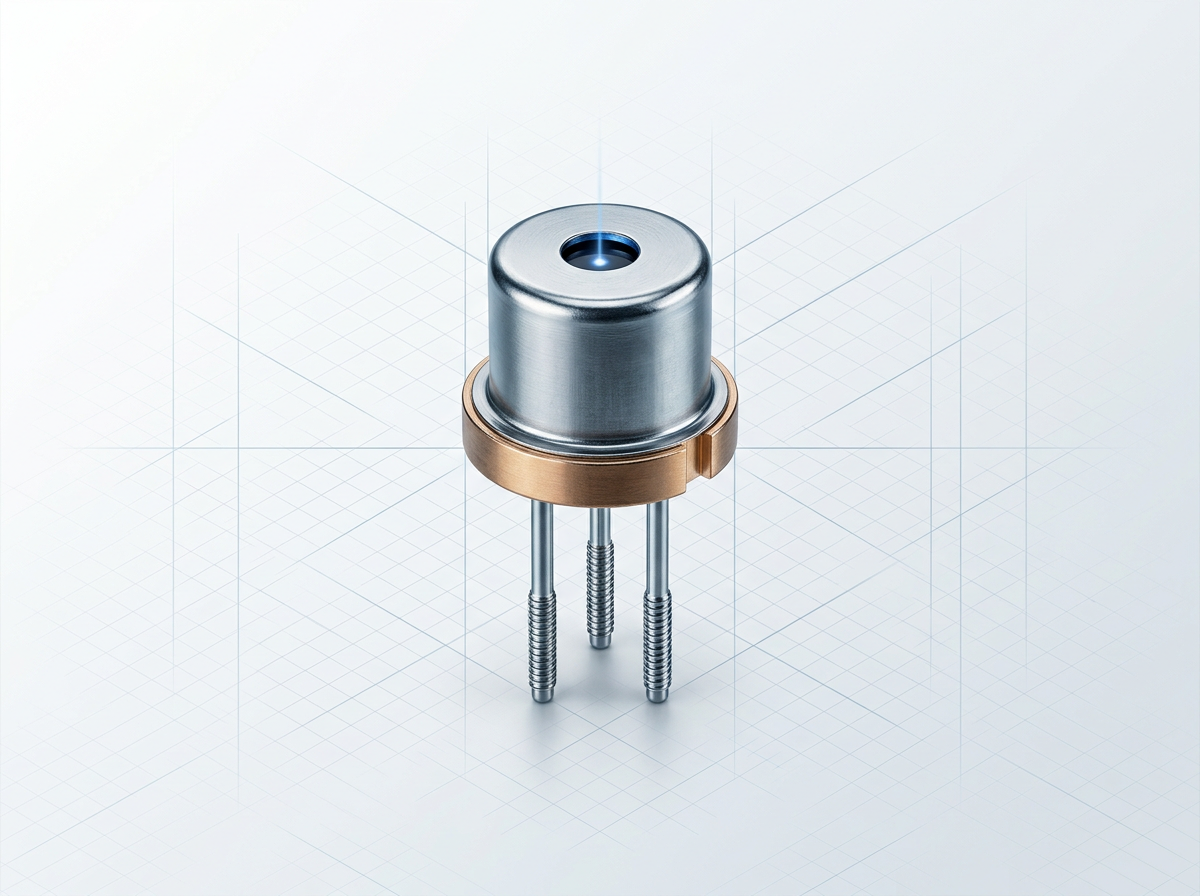
TO-Can Package
The TO-can format is a passively cooled package with no integrated TEC, available in free-space or pigtailed configurations. Thermal management relies entirely on the mounting interface and ambient conditions. This format suits laboratory, R&D, and lower-power pump applications where system simplicity and ease of handling take priority over the tight wavelength control that active cooling provides.
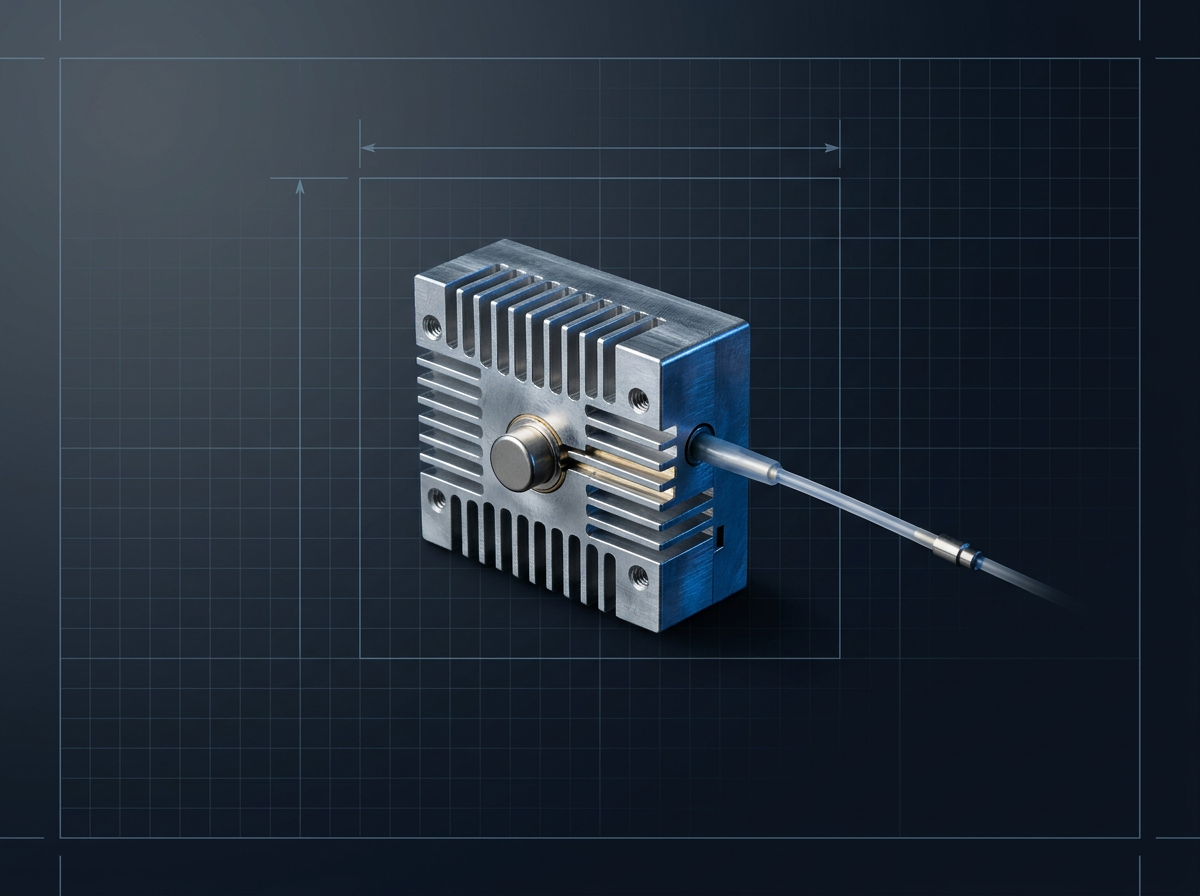
Conduction-Cooled Single-Emitter
Fibre-coupled single-emitter modules in conduction-cooled configurations operate at 915 nm, 940 nm, and 976 nm, with thermal management handled externally via a heatsink or cold plate rather than an integrated TEC. The system provides the thermal path.
This format bridges telecom-class packaging and high-power bar formats, and is the standard choice for fibre laser pumping and industrial pump source assemblies requiring per-emitter power in the watt-to-tens-of-watts range.
Water-Cooled Bar and Stack
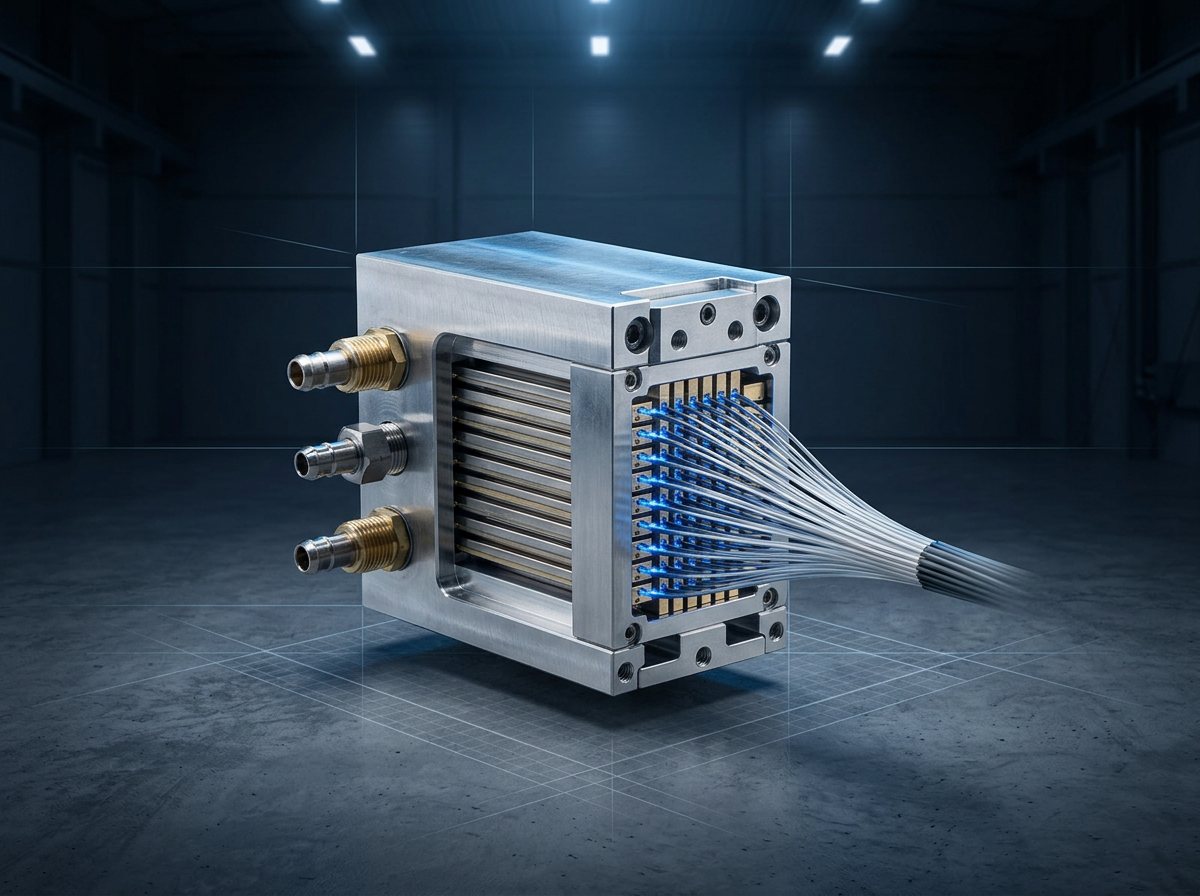
Single-bar and multi-bar stacked modules at 976 nm span a wide power range per module, requiring active water cooling at these output levels. Thermal management is a system-level responsibility, with water-cooled heatsinks integrated into the module assembly.
This format is appropriate for kilowatt-class fibre laser pumping and direct-diode industrial applications where per-module power density and scalability through bar stacking are the governing design parameters.
Output Stability: What Every Pump Laser Must Deliver
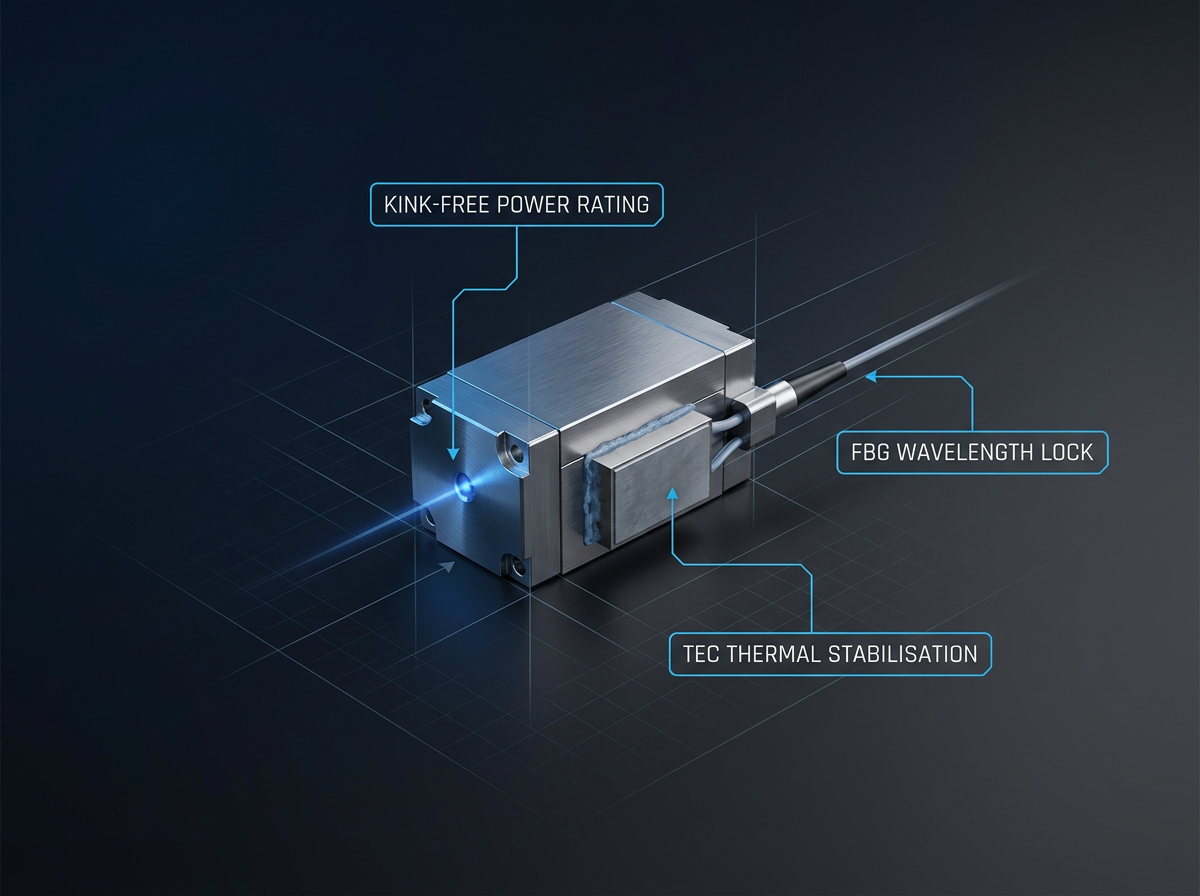
The kink-free power rating is the operative design limit — not the CW or peak power headline. Kinking introduces abrupt power discontinuities that propagate as gain fluctuations in an EDFA, output noise in a fibre laser, or Raman gain variation. Specify the kink-free ceiling, then design below it.
FBG stabilisation is the standard for wavelength-critical applications, not an upgrade. Erbium's 980 nm absorption peak is narrow; without FBG locking, drive current and temperature variation shift emission wavelength and degrade pump absorption efficiency.
TEC-cooled modules deliver tightest wavelength control for DWDM-precision applications; uncooled FBG-stabilised designs achieve comparable wavelength lock at lower power draw. The application defines the requirement.
Fibre Coupling, Brightness, and Power Scaling
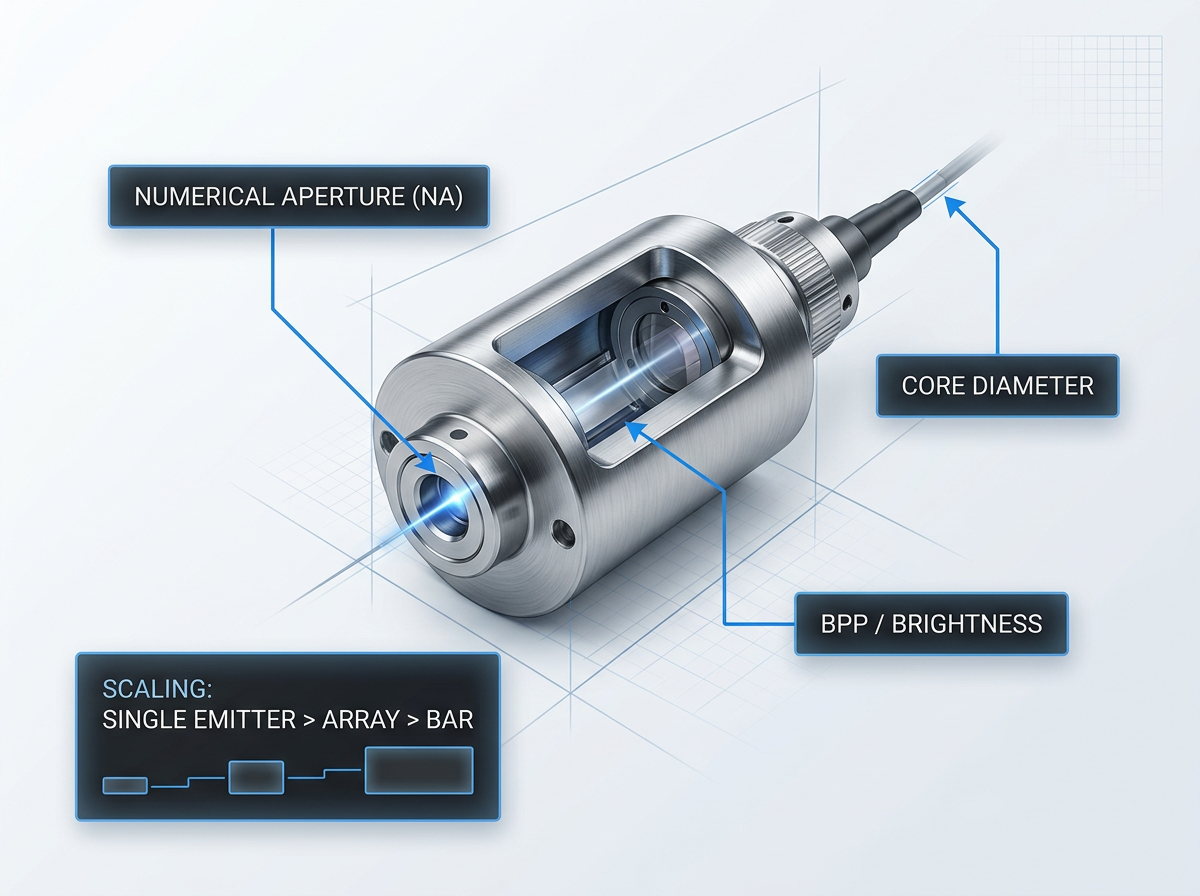
Rated output power tells only part of the story. Fibre core diameter and numerical aperture (NA) determine compatibility with your gain fibre and pump combiner — single-mode fibres suit EDFA core pumping; larger-core, higher-NA multimode fibres serve cladding-pumped fibre lasers.
Brightness and BPP govern coupling efficiency. Higher-brightness sources — including VBG-locked single-emitter designs — launch into smaller cores with lower loss, converting more rated power into usable pump power at the gain medium.
Scaling from single emitters through multi-emitter arrays to bar configurations affects BPP and combiner compatibility, not just power output. TFB combiners enable kilowatt-class fibre laser systems; pump combiners aggregate multiple diodes for EDFA scaling.
Pump Laser Specs at the EDFA System Level
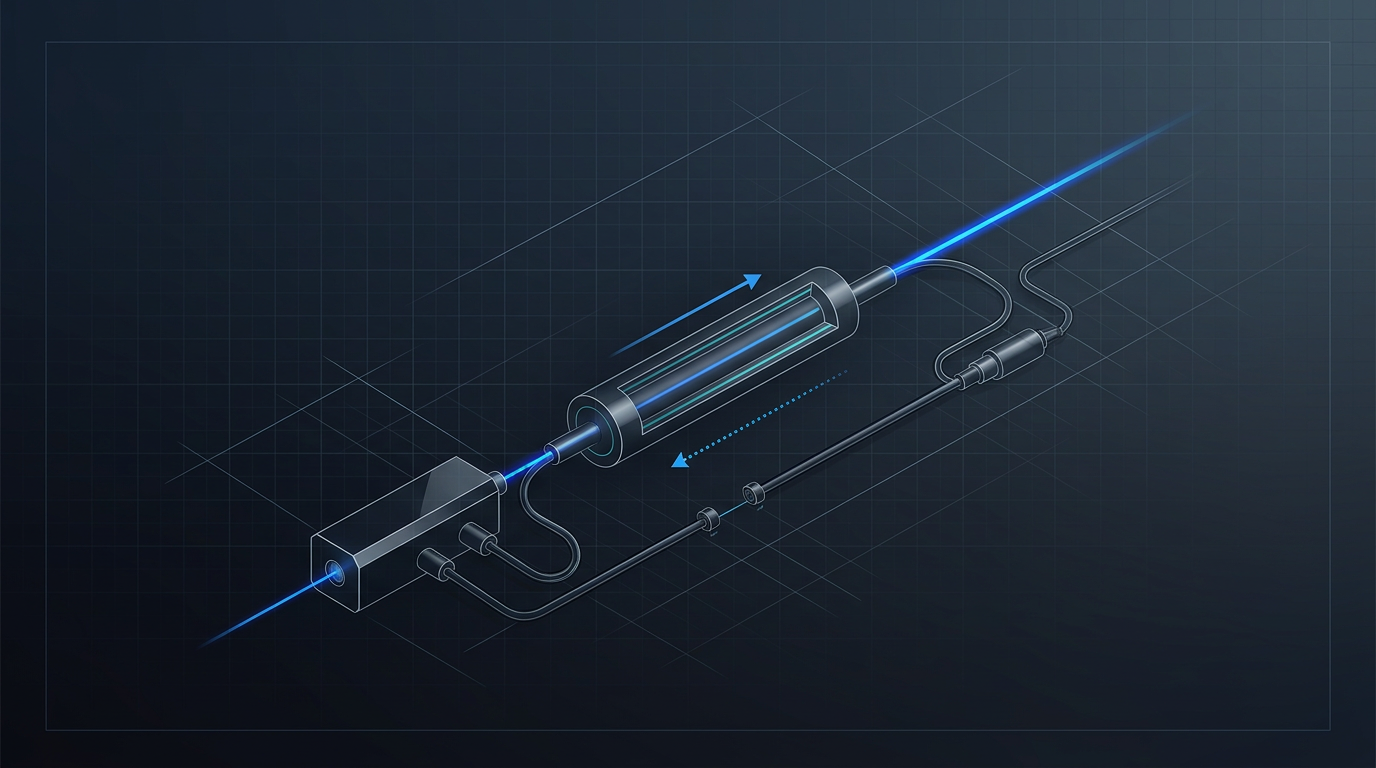
Pump wavelength is the foundational EDFA design decision. 980 nm minimises noise figure in forward-pumped configurations, owing to the three-level erbium transition; 1480 nm suits high-power and backward-pumped stages, with a long track record in submarine systems. Bidirectional pumping broadens gain and flattens the spectral profile.
Woodrow Scientific's custom EDFA platform is engineered around pump laser performance, not assembled from catalogue parts. That in-house design experience, rooted in Southampton's ORC, is why WSL's pump laser specifications are grounded in what those numbers actually mean at the amplifier output.
Key Pump Laser Specifications at a Glance
Six parameters determine whether a pump laser diode is the right fit for your system. Headline output power is only the starting point — tolerance, stability, spectral width, fibre geometry, thermal range, and efficiency all shape real-world performance.
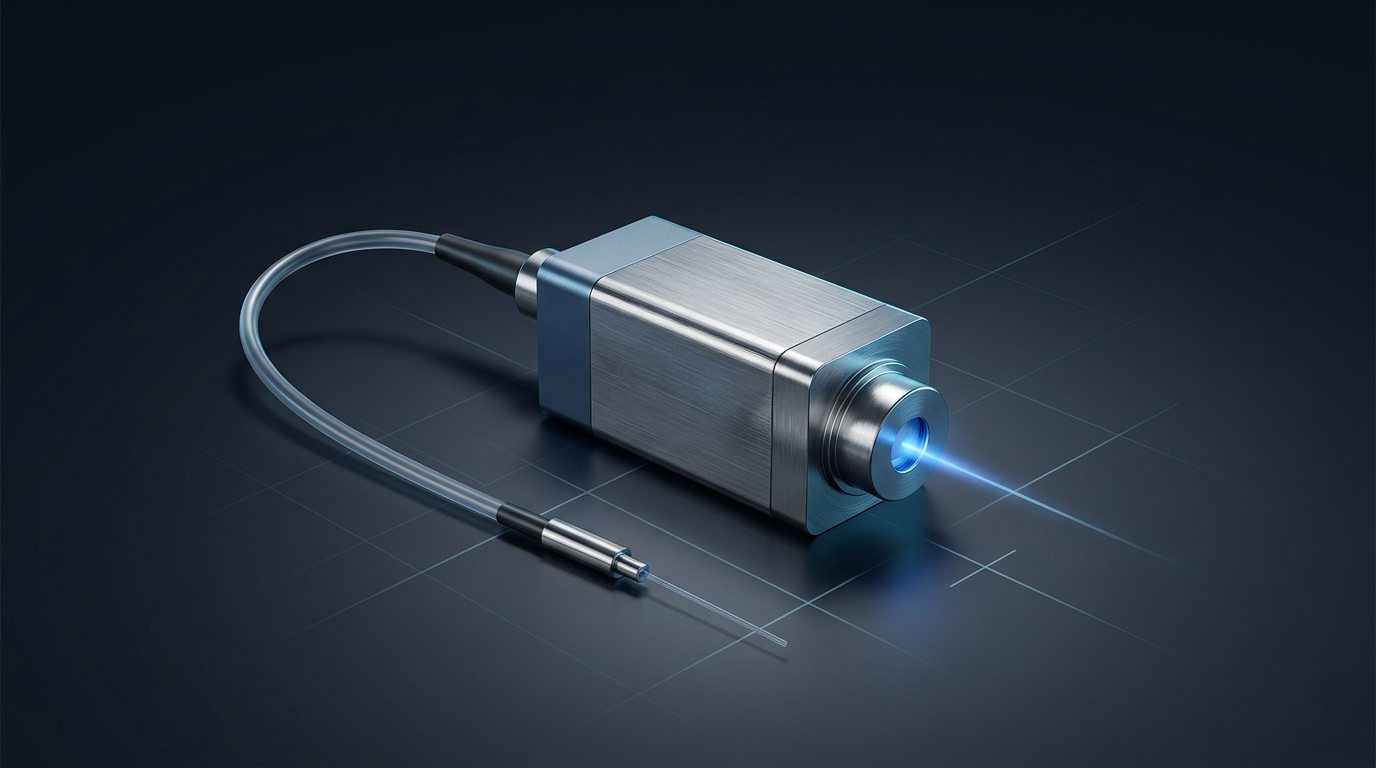
Centre Wavelength and Tolerance
Tolerance directly determines pump absorption efficiency within the gain medium's narrow spectral window.
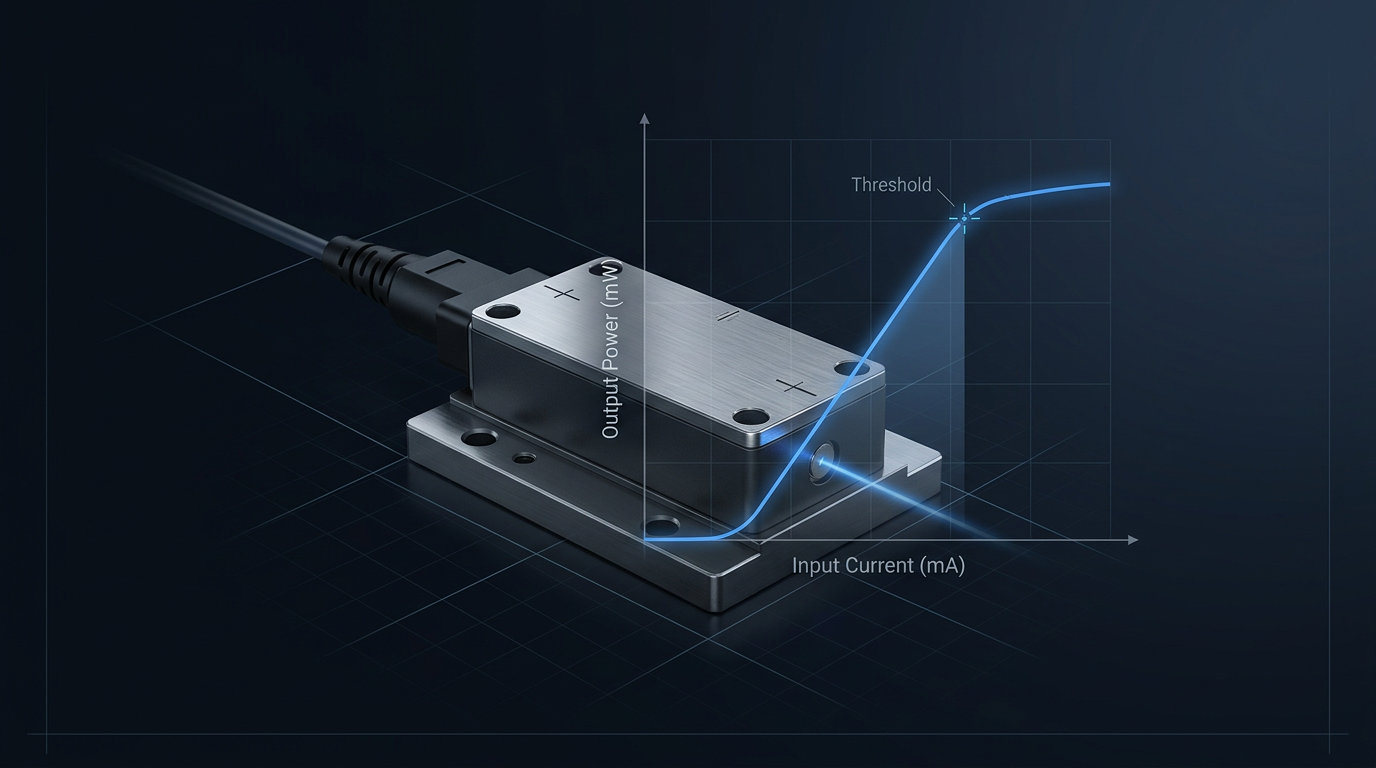
Kink-Free Output Power
The stable operating ceiling, not CW peak power, is the correct design figure.

Spectral Width (FWHM)
Narrower linewidth improves pump absorption efficiency at spectrally selective gain medium peaks.

Fibre NA and Core Diameter
Mismatched NA or core diameter prevents pump light from coupling into the active medium.
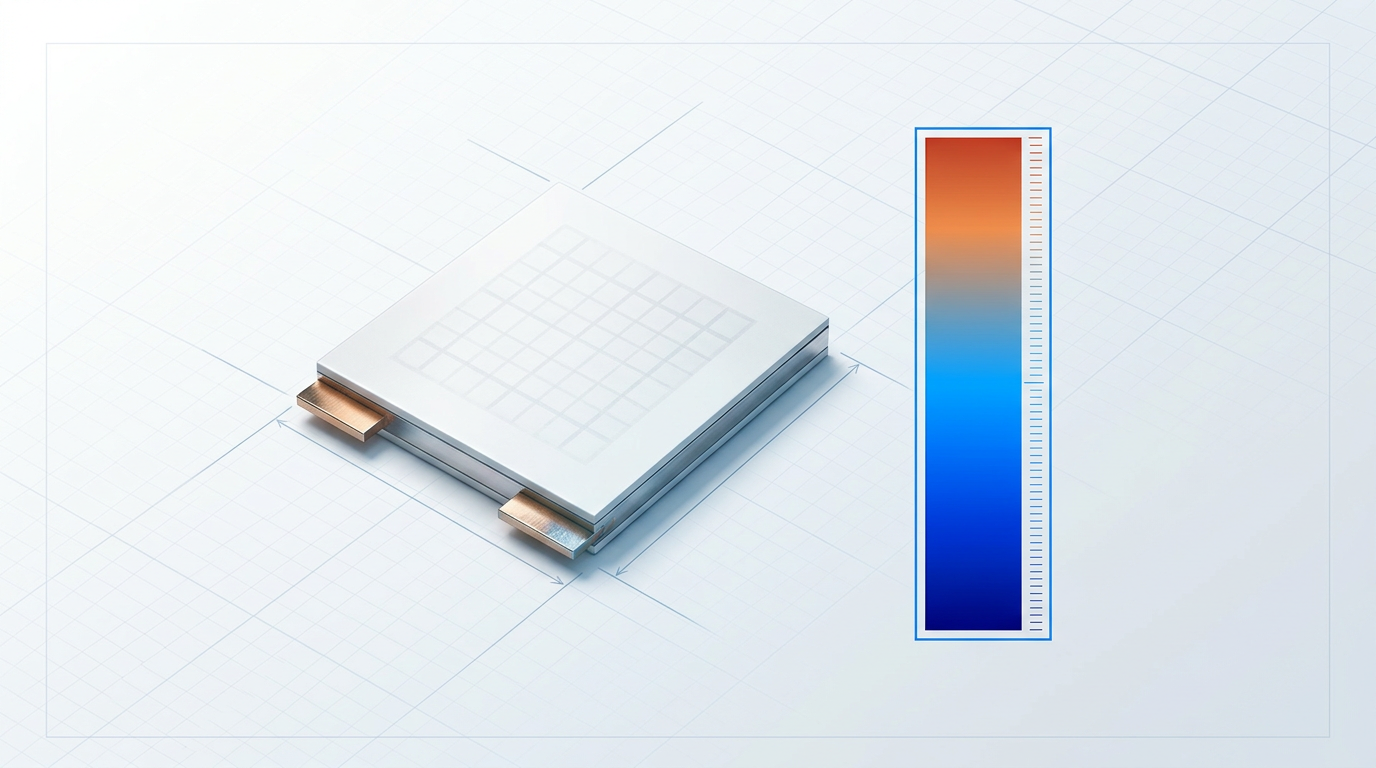
Operating Temperature Range
Thermal range sets deployment boundaries and governs wavelength drift in uncooled configurations.

Power Conversion Efficiency (PCE)
Higher PCE means less waste heat per watt of pump output, reducing system thermal load.
Pump Laser FAQs
Practical answers to the questions buyers ask when evaluating pump laser diode components — application fit, wavelength selection, cooling format trade-offs, and the specifications that matter beyond headline output power.
Pump laser diodes deliver optical energy into a gain medium to drive stimulated emission in the downstream system. The four principal application classes are erbium-doped fibre amplifiers (EDFAs), fibre lasers, Raman amplifiers, and solid-state/DPSS systems. Each application draws on a specific wavelength band matched to the gain medium's absorption characteristics. Wavelength-to-application mapping: 980 nm and 1480 nm target erbium absorption in EDFAs; 976 nm, 915 nm, and 940 nm pump ytterbium-doped fibre lasers; the 14xx nm band (1420–1480 nm) drives distributed Raman amplification; and 808 nm, 880 nm, and 888 nm pump neodymium-doped solid-state and DPSS systems.
Both wavelengths target rare-earth absorption bands, but they serve different primary applications and carry different wavelength tolerance requirements. 976 nm is the peak absorption wavelength for ytterbium-doped double-clad fibre — it maximises pump absorption efficiency and allows shorter active fibre lengths, but demands tight wavelength tolerance from the pump source to stay on the narrow absorption peak. 980 nm is the standard telecom designation for EDFA pump modules targeting erbium's absorption band. In practice, FBG-stabilised 980 nm modules are typically locked to 974–977 nm to hold emission within the usable erbium absorption window. The two designations are not interchangeable: selecting the wrong one for your gain medium will degrade system efficiency.
Cooling format is an application-level decision, not a cost hierarchy. TEC-cooled butterfly packages hold the laser junction at a controlled setpoint, maintaining the tightest wavelength stability across ambient temperature variation — the right choice for telecom EDFA and other precision applications where wavelength drift directly degrades system performance. Uncooled and conduction-cooled formats suit high-power industrial and fibre laser pumping, where thermal management is handled at the system level and constraints on size or power consumption make an integrated TEC impractical. One important nuance: FBG-stabilised uncooled modules can achieve wavelength stability comparable to TEC-cooled designs by locking emission to the grating wavelength, often at lower power consumption. Where wavelength lock matters but TEC power budget is a constraint, FBG stabilisation in an uncooled package is a practical alternative worth evaluating.
Kink-free power is the maximum output power at which a pump laser operates in a stable single spatial mode without mode-hopping. It is defined by the onset of the first discontinuity on the laser's L-I curve. Beyond this threshold, mode-hopping produces abrupt, discontinuous power jumps that propagate directly into the downstream system — manifesting as gain fluctuations in an EDFA, output noise in a fibre laser, or Raman gain variation in an amplifier chain. The critical implication for system design: kink-free power is the operative design limit, not the CW or peak power figure quoted in the headline specification. Specifying a pump to its kink-free rating, with appropriate headroom, is the correct approach to ensuring stable downstream performance.
A fibre Bragg grating (FBG) written into the pump laser's pigtail reflects a narrow wavelength band back into the laser cavity, locking emission to the grating wavelength regardless of temperature variation or drive current changes. This decouples the output wavelength from the thermal and electrical operating conditions of the diode. FBG stabilisation is required in applications where wavelength drift would degrade system performance. The two primary cases are 980 nm EDFA pumping — where erbium's absorption peak is narrow enough that an unstabilised source drifts out of the usable band, wasting pump power — and Raman pumping at 14xx nm, where pump wavelength accuracy directly determines the Raman gain band position. FBG stabilisation also enables uncooled pump modules to achieve wavelength stability comparable to TEC-cooled designs, making it a key enabler for compact, lower-power-consumption system architectures.
The parameters that determine real-world fit go well beyond the headline power figure: kink-free power rating, centre wavelength and tolerance, spectral width (FWHM), fibre NA and core diameter, coupling efficiency, power conversion efficiency (PCE), operating temperature range, and Telcordia GR-468-CORE qualification for telecom applications. Of these, fibre coupling parameters are the most consistently underweighted. Fibre NA and core diameter, together with coupling efficiency, determine how much of the rated pump power actually reaches the gain medium — a pump with impressive headline output but a mismatched fibre geometry will deliver less usable power than a lower-rated source that is correctly matched to your pump combiner or gain fibre. Evaluate coupling parameters with the same rigour as output power.