

Introduction
If you have watched a video of rust disappearing from steel plate in seconds — no grit, no chemicals, no residue left behind — and found yourself wondering whether that technology is real and whether it could work in your operation, you are exactly the person this guide is written for.
What follows covers the full picture: the science behind why it works, the hardware options, the real-world applications, an honest comparison with conventional methods, and the practical and financial case for making the switch.
No prior knowledge of laser technology is assumed — the guide builds from first principles, so you can follow every step regardless of where you are starting from.
TL;DR
Laser cleaning is a mature, proven surface treatment technology — not an emerging curiosity. Its combination of surface quality, zero consumables, and a cleaner environmental footprint makes it a genuinely compelling alternative to abrasive and chemical methods. Whether it is right for your operation depends on specifics this guide is designed to help you work through.
This article covers:

The science of laser ablation
Laser parameters — power, pulse, and wavelength
Machine types — handheld vs automated
Key applications — rust, paint, weld prep
Method comparison, including total cost
Operational realities and investment case
What Is Laser Clean?
Most surface cleaning methods work by attacking the surface — grinding it, blasting it with abrasive particles, or dissolving it with chemicals. Laser cleaning takes a fundamentally different approach: it delivers focused energy directly to the contamination, causing it to vaporise or detach, while the material underneath is left essentially untouched.
More precisely, laser cleaning is a non-contact, dry surface treatment process that uses a focused laser beam to remove unwanted material from a surface — with no abrasives, no chemicals, no water, and no mechanical contact with the substrate.
The process is energy-based and highly controllable. The laser beam is scanned across the contaminated surface, and the contaminant layer absorbs that energy and is either vaporised directly or physically ejected through rapid thermal expansion. The base material, which absorbs the laser energy at a much lower rate, remains largely intact.
What Laser Cleaning Removes
Laser cleaning is a versatile process, not a single-application tool. The range of contaminants it can address is broad, spanning both organic and inorganic surface deposits across industrial and restoration contexts.
- Rust and corrosion: Surface rust, flash rust, oxide scale, and localised corrosion on steel, iron, and other metals.
- Paint and coatings: Industrial paints, epoxy coatings, powder coatings, primers, and anti-corrosion layers.
- Mill scale and oxides: Hot-rolled mill scale, heat-treatment oxides, and post-weld heat-affected zone discolouration.
- Oils, grease, and residues: Cutting fluids, lubricants, release agents, and machining residues from metal surfaces.
- Carbon and soot: Carbon deposits, soot, smoke residue, and burnt polymer fouling on moulds and industrial components.
- Adhesive films and sealants: Adhesive residue, label backing, thin sealant layers, and rubber or polymer deposits.
- Pollution crust and biological growth: Atmospheric soiling, soot crusts, and biological growth on masonry, stone, and brick.
The process works across a wide range of substrate materials too: metals including carbon steel, stainless steel, aluminium, cast iron, copper, titanium, and galvanised steel, as well as stone, brick, masonry, and concrete.
The Selectivity Principle
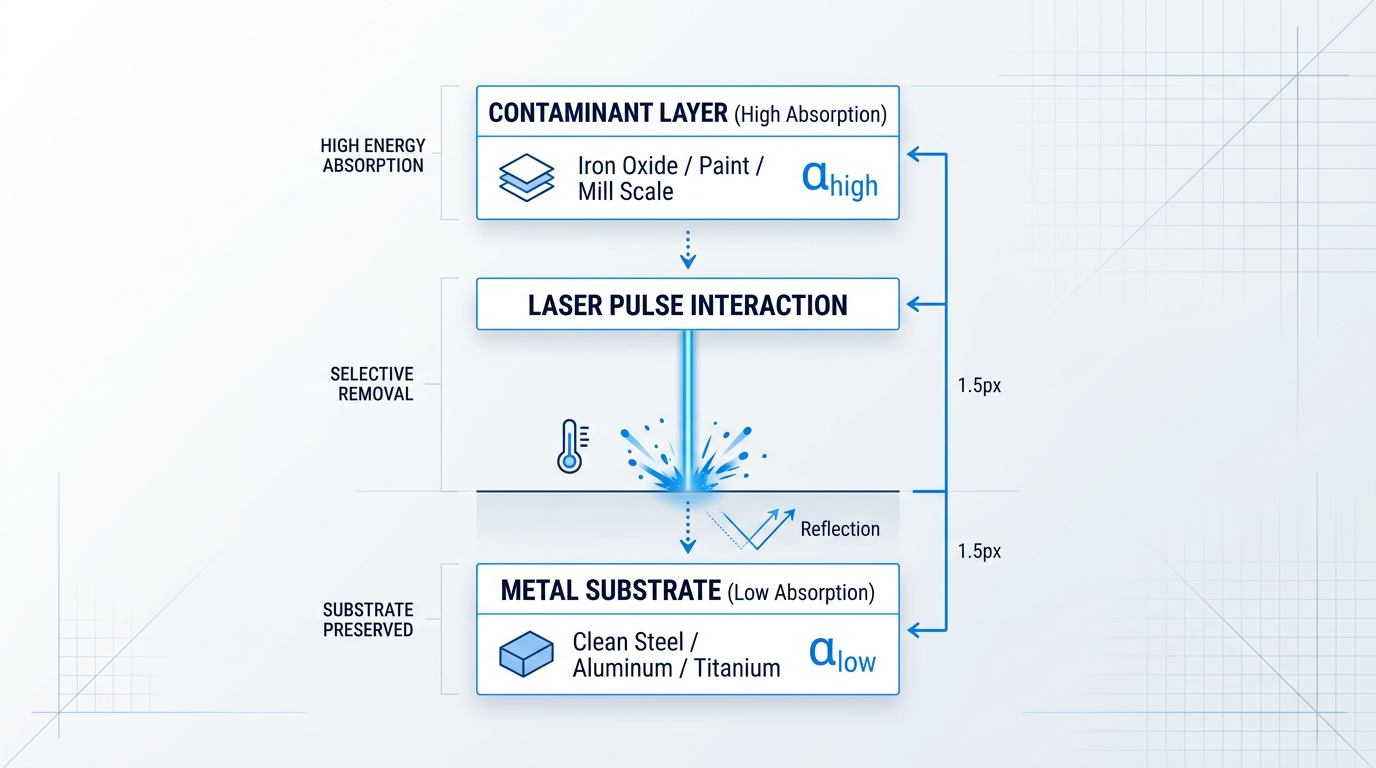
The characteristic that sets laser cleaning apart from every other method is selective absorption. The contaminant layer — rust, paint, oxide, carbon — absorbs the laser energy at a much higher rate than the underlying base material. This difference in absorption is what makes targeted removal possible: the contamination reaches vaporisation temperature while the substrate surface temperature stays comparatively low.
The result is a process that is inherently selective by nature. The laser targets the contamination, not the substrate. Once the surface layer is removed, additional laser exposure has little effect on the clean base material beneath.
Laser cleaning works because contaminants absorb laser energy far more readily than the substrate beneath them. The contamination vaporises; the base material does not. No other industrial cleaning method achieves this kind of layer-specific selectivity.
How It Differs from Abrasive and Chemical Methods
Abrasive methods — sandblasting, grinding, wire brushing — remove contamination through mechanical force. The problem is that the abrasive cannot distinguish between contaminant and substrate: it erodes both simultaneously. The substrate is inevitably worn in the process, and the degree of wear is difficult to control precisely.
Chemical methods — acid stripping, solvent cleaning — dissolve contamination through chemical reaction. They can reach complex shapes effectively, but they require full-surface contact, generate liquid waste streams (spent acids, solvents, effluent) that require licensed disposal, and leave chemical residues that must be rinsed away before the next process step.
Laser cleaning does neither. It vaporises contamination using energy alone, leaving the substrate intact and generating no liquid waste. The only output is a small volume of dry particulate and vapour, captured by an extraction system. This makes it a categorically different class of process — not simply a better version of blasting or chemical stripping, but a different approach entirely.
With that definition in place, the next section examines the physical mechanism in detail — specifically, how the laser pulse interacts with the contaminant layer at the material level, and why that interaction is so reliably selective.
How Laser Cleaning Works: The Ablation Mechanism
The reason laser cleaning works at all — why it strips rust from steel without cutting into the metal beneath — comes down to a single physical principle that governs the entire process: different materials absorb light energy at fundamentally different rates.
Selective Absorption: Why the Substrate Survives
When a laser pulse strikes a contaminated surface, the energy is not absorbed uniformly. Contaminant layers — rust, paint, oxides, mill scale — absorb laser radiation at a significantly higher rate than the clean base metal beneath them.
This difference is captured by the material's absorption coefficient: a measure of how efficiently a substance converts incoming light into heat. Iron oxides and carbonaceous residues have high absorption coefficients at the wavelengths used in industrial laser cleaning, particularly around 1064 nm.
Clean metallic substrates, by contrast, tend to reflect a substantial portion of incident laser energy and conduct the remainder away rapidly through the bulk of the material. The contaminant layer heats up; the substrate largely does not.
What Happens to the Contaminant Under Irradiation
Once the contaminant layer absorbs the laser energy, the temperature of that layer rises with extreme rapidity — within nanoseconds of pulse impact.
Depending on the material and the energy density delivered, the contaminant is removed through one or more distinct physical mechanisms.
- Vaporisation: The contaminant converts directly from solid to gas phase, sublimating away from the surface without passing through a liquid state.
- Phase explosion: The material superheats beyond its boiling point and undergoes explosive ejection of a liquid-gas mixture — a sudden, violent phase transition.
- Thermal shock: Extreme thermal stress gradients cause mechanical fracture and ejection of the contaminant layer without full vaporisation.
In practice, all three mechanisms can operate simultaneously or in sequence, depending on the contaminant's thermal properties and the laser parameters applied. The key point is that the material is physically ejected or sublimated from the surface — not dissolved, abraded, or chemically altered.
The Fluence Window: Operating Between Two Thresholds
The operative control variable in laser cleaning is fluence: the energy delivered per unit area of the irradiated surface, expressed in J/cm².
Every cleaning application involves two critical fluence values. The first is the ablation threshold (F_thr) — the minimum fluence at which the contaminant begins to be removed. The second is the damage threshold (F_damage) — the fluence above which the laser pulse begins to damage the underlying substrate.
Research published in Nature (2025) on laser cleaning of technical mock-ups found an ablation threshold of F_thr = 0.1 J/cm² and a critical damage fluence of F_damage = 2.1 J/cm² — a gap of more than an order of magnitude between the two limits.
Effective laser cleaning operates within this window: above the ablation threshold to ensure the contaminant is removed, and below the damage threshold to ensure the substrate is not harmed. The width of this window varies with the contaminant type, the substrate material, and the laser wavelength — which is precisely why parameter selection is central to the process.
Pulsed Operation and Thermal Management
Industrial laser cleaning systems use pulsed lasers rather than continuous-wave (CW) operation, and the reason is thermal: pulsed delivery is the mechanism by which high peak energy is delivered to the contaminant while keeping average energy — and therefore heat accumulation — in the substrate low.
A nanosecond pulse delivers its energy in an extremely short burst, then switches off entirely. During the off-period between pulses, the substrate dissipates the small amount of heat it did absorb before the next pulse arrives.
With continuous-wave irradiation, energy accumulates in the substrate progressively — even if the instantaneous power is within safe limits, the integrated heat load will eventually exceed the damage threshold. Research confirms that low duty cycle pulsed operation allows surface temperatures to rise and fall rapidly, protecting the substrate in a way that CW methods cannot.
The practical result is very high peak power density at the contaminant surface — sufficient to drive vaporisation or phase explosion — combined with a low average power that the substrate never accumulates as damaging heat.
Self-Limiting Behaviour: Built-In Precision
Perhaps the most consequential property of the ablation mechanism is one that is rarely obvious at first: the process is inherently self-limiting.
As the contaminant layer is progressively removed, the laser beam begins to interact with the clean base material rather than the contaminant. Because the substrate has a lower absorption coefficient — and therefore a higher ablation threshold — it does not respond to the same fluence that was sufficient to remove the contaminant.
Ablation effectively decelerates at the interface between the contaminant and the substrate, then stops. At 1064 nm, the gap between the ablation thresholds of common incrustations and the underlying metal substrate reaches a maximum, which is why this wavelength is widely used for precision cleaning applications.
Once the contaminant layer is gone, the exposed base metal reflects or conducts the laser energy rather than absorbing it — so ablation ceases at the interface. Abrasive methods carry no equivalent mechanism: they continue removing material regardless of which layer they have reached.
This is a structural difference from mechanical abrasion. An abrasive particle impacts whatever surface it reaches — contaminant or substrate — with equal force. It has no way of knowing the contaminant has been cleared. Laser cleaning, by contrast, is physically governed by the material it encounters: the process modulates itself based on what is actually absorbing the energy.
The practical consequence is that laser cleaning preserves substrate dimensions and surface integrity in applications where tolerances are tight — a property that flows directly from the physics, not from operator skill or careful calibration alone.
Understanding this mechanism is the foundation for everything that follows: the parameters operators adjust to control it, the machine configurations built around it, and the applications it enables. The next section examines exactly how those parameters — power, pulse duration, repetition rate, and wavelength — are selected and tuned for different cleaning tasks.
Laser Parameters: Power, Pulse, and Wavelength
Knowing that a fluence window exists between the contaminant's ablation threshold and the substrate's damage threshold is one thing — hitting it reliably in practice is another. That is the job of parameter control: five physical variables that operators adjust to land energy precisely where it is needed.
Each parameter acts on the laser-surface interaction differently, and none of them operates in isolation. Understanding what each one does is what separates informed parameter selection from trial-and-error.
The Five Parameters That Govern Laser Cleaning
- Power (watts): Sets the rate of energy delivery. Higher power increases cleaning speed and tackles thicker coatings, but must be matched to substrate sensitivity — more is not always better.
- Pulse duration (nanoseconds): Controls how long each energy burst lasts. Shorter pulses limit heat diffusion into the base material, delivering high peak power while keeping average thermal input low.
- Pulse repetition rate (frequency): Determines how many ablation events occur per second. Higher frequency raises throughput but reduces the inter-pulse interval the substrate needs to dissipate heat.
- Wavelength (nanometres): Governs which materials absorb the beam efficiently. Matching wavelength to contaminant absorption is what makes selective removal physically possible.
- Fluence (energy per unit area): The composite control variable — the result of adjusting power, pulse duration, spot size, and scan speed together to land energy within the operational window.
These parameters do not act independently. Fluence — the energy delivered per unit area of surface — is the quantity that ultimately determines whether the contaminant is removed and whether the substrate survives intact. Every adjustment to power, pulse duration, spot size, or scan speed is, in effect, an adjustment to fluence.
The thermal dimension of this is worth emphasising. Pulse duration in the nanosecond range is the industrial standard for laser cleaning precisely because it functions as a thermal management mechanism: the energy spike is brief enough that heat has minimal time to conduct into the substrate between pulses. Raise the pulse repetition rate too far, however, and that advantage erodes — heat accumulates across successive pulses faster than the substrate can dissipate it, reintroducing the damage risk that short pulses were designed to prevent.
Wavelength operates on a different axis. Fibre lasers in the near-infrared range (approximately 1064–1550 nm) dominate industrial laser cleaning because common contaminants — rust, oxides, paint, mill scale — absorb strongly at these wavelengths, while metal substrates tend to reflect or conduct the energy away rather than absorbing it destructively.
Power, pulse duration, frequency, spot size, and scan speed are all individual dials — but fluence is what they collectively set. Operators are always tuning fluence, whether they think of it that way or not.
This is what makes parameter tunability the defining capability of a capable laser cleaning system. A machine with adjustable power across its full range and programmable pulse parameters is not simply more powerful than a fixed-parameter system — it is a fundamentally different tool, able to span from delicate light-oxide removal on sensitive substrates to aggressive stripping of thick, tenacious coatings on structural material, with the same hardware.
With this parameter framework in place, the hardware discussion that follows becomes meaningful rather than a catalogue of numbers — power ratings, tunability ranges, and programmable controls all map directly back to the physics covered here.
Laser Cleaning Machines: Portable Systems and Automated Cells
Understanding the science of laser ablation and the role of power, pulse, and wavelength is one thing — but at some point the question becomes practical: what does a laser cleaning machine actually look like, and which configuration suits which job? The market offers two fundamentally different hardware approaches, and the choice between them shapes everything from how the operator interacts with the workpiece to what throughput is realistically achievable.
Portable and Handheld Systems
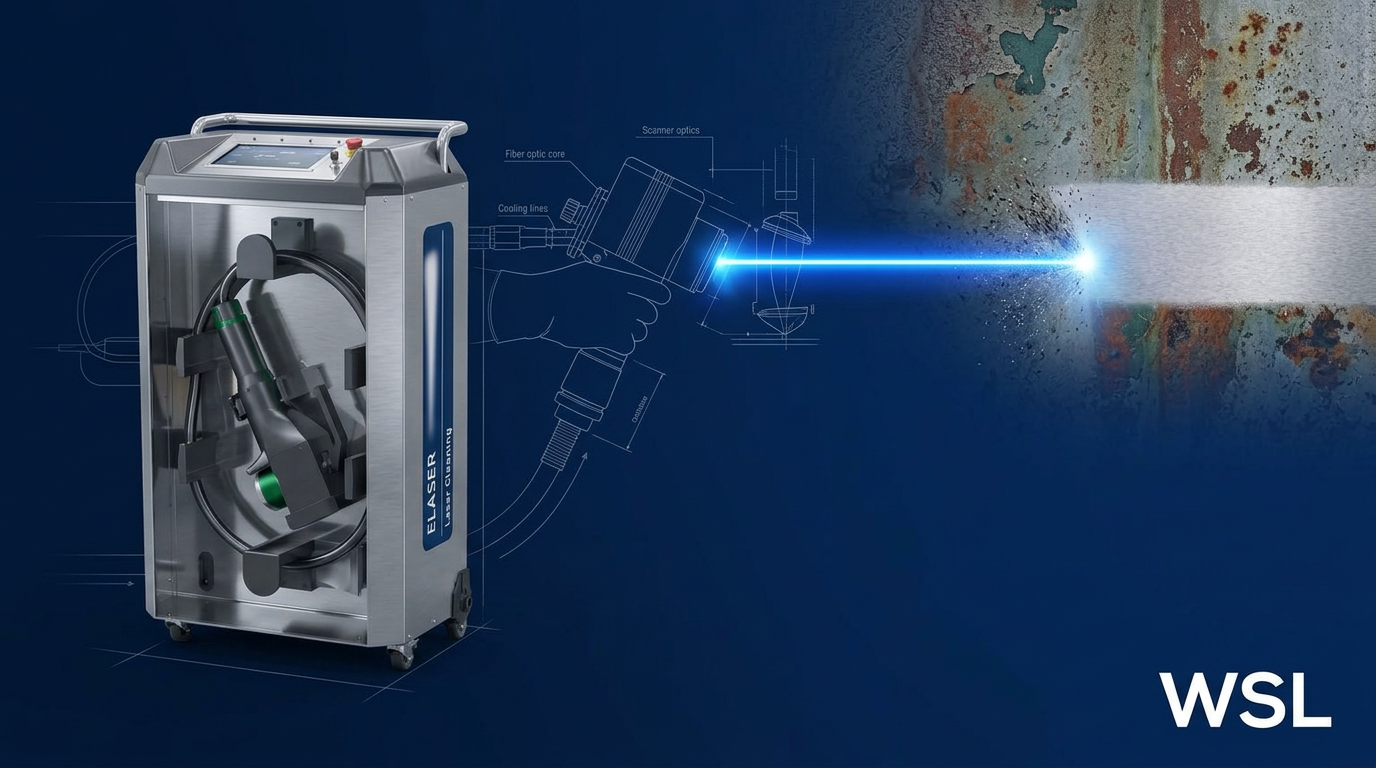
A portable laser cleaning system is built around a self-contained wheeled unit that houses the laser source, power supply, and controls — all in a single mobile package.
A lightweight handheld scanner head connects to the main unit via a fibre-optic delivery cable, allowing a single operator to carry the scanner to the workpiece rather than the other way around.
This form factor makes portable systems well suited to on-site and field use: structural steelwork, heritage stonework, large fabrications, and any application where moving the workpiece to a fixed machine is impractical or impossible.
Power outputs across the portable category span a wide range, from low-wattage precision systems through to several hundred watts for demanding industrial field work — and the power rating is the primary variable that determines what a given system can tackle.
- Sub-100W: Precision and heritage work, delicate substrates, light surface oxides, and fine detail cleaning where controlled energy delivery matters most.
- 100–500W: The working range for most industrial maintenance, weld preparation, and moderate coating removal — the broadest segment of real-world applications.
- 1000W and above: Large-area structural rust removal, thick coatings, and high-throughput production environments where cleaning speed is the primary constraint.
These bands are indicative rather than fixed — the right power level depends on the specific contaminant, substrate, and throughput requirement, as covered in the parameter discussion above.
Woodrow Scientific's ELASER is a well-engineered example of what a portable system looks like when the design is taken seriously, and it illustrates some of the category's more advanced possibilities.
The standout capability of the ELASER-RHZ variant is WSL's patented Reduced Hazard Zone (RHZ) technology — a world first that collapses the laser hazard zone to a fraction of the size produced by conventional laser cleaning systems.
In practice, this means the ELASER-RHZ can operate in open workshops, mixed-use facilities, and public-facing settings — graffiti removal on public infrastructure, heritage restoration on occupied sites — where conventional laser cleaning cannot be used without sealing off the surrounding area entirely.
No other laser cleaner in the world offers this capability; the RHZ technology is exclusively WSL's, developed and patented in-house at its UK facility.
WSL is also the only UK-based laser cleaning manufacturer: it designs, builds, services, and improves its own machines entirely in-house, rather than sourcing and rebadging third-party hardware as many suppliers in this market do.
On pricing, the ELASER is competitively positioned among comparable industrial laser cleaning machines — WSL achieves this through its own technological and operational efficiencies, not by compromising on build quality.
The ELASER's handheld scanner weighs under 3 kg and connects via a delivery cable of up to 50 metres, so the operator can cover large structures or awkward geometries without repositioning the main unit.
Power is fully tunable from 0–100%, air-cooled operation removes the need for a water circuit or chiller, and there are no consumables to manage — one machine spans the full range from light oxides through to thick coatings.
The system is CE and UKCA certified, and WSL offers bespoke engineering and customisation for applications with specific requirements — prospective buyers are encouraged to get in touch to discuss what their cleaning challenge demands.
Automated Robotic Cells
In an automated laser cleaning cell, the laser cleaning head is mounted on an articulated robotic arm or gantry, which moves the head programmatically over the part rather than relying on an operator to guide it.
The operator loads the part into the system; the machine does the rest — making automated cells the natural choice for repetitive, high-volume production tasks where part-to-part consistency and cycle-time repeatability are the governing requirements.
Conventional automated systems are typically enclosed or semi-enclosed to manage the laser hazard, which constrains where they can be installed and adds to the footprint and infrastructure requirements of the installation.
WSL's AutoLASE illustrates what automated laser cleaning looks like when the engineering focus is placed on ease of operation rather than just automation itself.
The defining characteristic of AutoLASE is its machine-vision 3D scanning software: load a part, and the system scans it, builds a three-dimensional map, and generates the cleaning path automatically — no manual programming, no path-setting, and no knowledge of the part geometry required.
The practical consequence is that anyone can operate it after loading the part; the technical complexity is absorbed by the software, not pushed onto the operator.
AutoLASE can also be configured with WSL's RHZ technology, which removes the need for a full enclosure entirely — enabling automated laser cleaning in environments where a conventional safety enclosure is impractical.
No other supplier worldwide can offer enclosure-free automated cleaning; this capability is exclusively WSL's, built on the same patented RHZ platform as the ELASER-RHZ.
AutoLASE integrates with the buyer's existing collaborative or industrial robots, or can be supplied as a complete custom cell — CE and UKCA certified, and with the same competitive pricing position as the rest of WSL's range.
As with ELASER, bespoke engineering and integration support is available; buyers with specific production requirements are best served by contacting WSL directly to scope the right configuration.
One practical question that applies to any laser cleaning system purchase — portable or automated — is whether the supplier actually manufactures what they sell.
A significant portion of laser cleaning suppliers in the market are resellers or importers rebadging third-party machines. That arrangement limits what they can offer after the sale: no in-house engineering support, slower spares, and no genuine ability to improve the product over time. Establishing whether a supplier designs and builds their own machines is a straightforward due-diligence question that protects the buyer's long-term support position.
WSL, founded in 2012, is the only UK-based laser cleaning manufacturer — every machine it sells is designed, built, and supported from its own facility, which is the foundation for the kind of responsive, expert after-sales support that resellers structurally cannot provide.
With the hardware landscape in view — portable systems for on-site flexibility, automated cells for production-line consistency — the natural next question is what these machines are actually deployed to clean, and which industries have adopted laser cleaning as a standard part of their process.
See the ELASER Laser Cleaning Machines
Theory understood — now see the hardware. Woodrow Scientific's ELASER range puts that science into a portable, fieldable system. Browse the product page or download the full spec sheet.
What Can Laser Cleaning Remove? Key Applications
The ablation mechanism and the hardware that delivers it are only half the story — the other half is where this technology actually gets deployed, and across how many different industries the same fundamental physics turns out to be useful.
Rust and Corrosion Removal
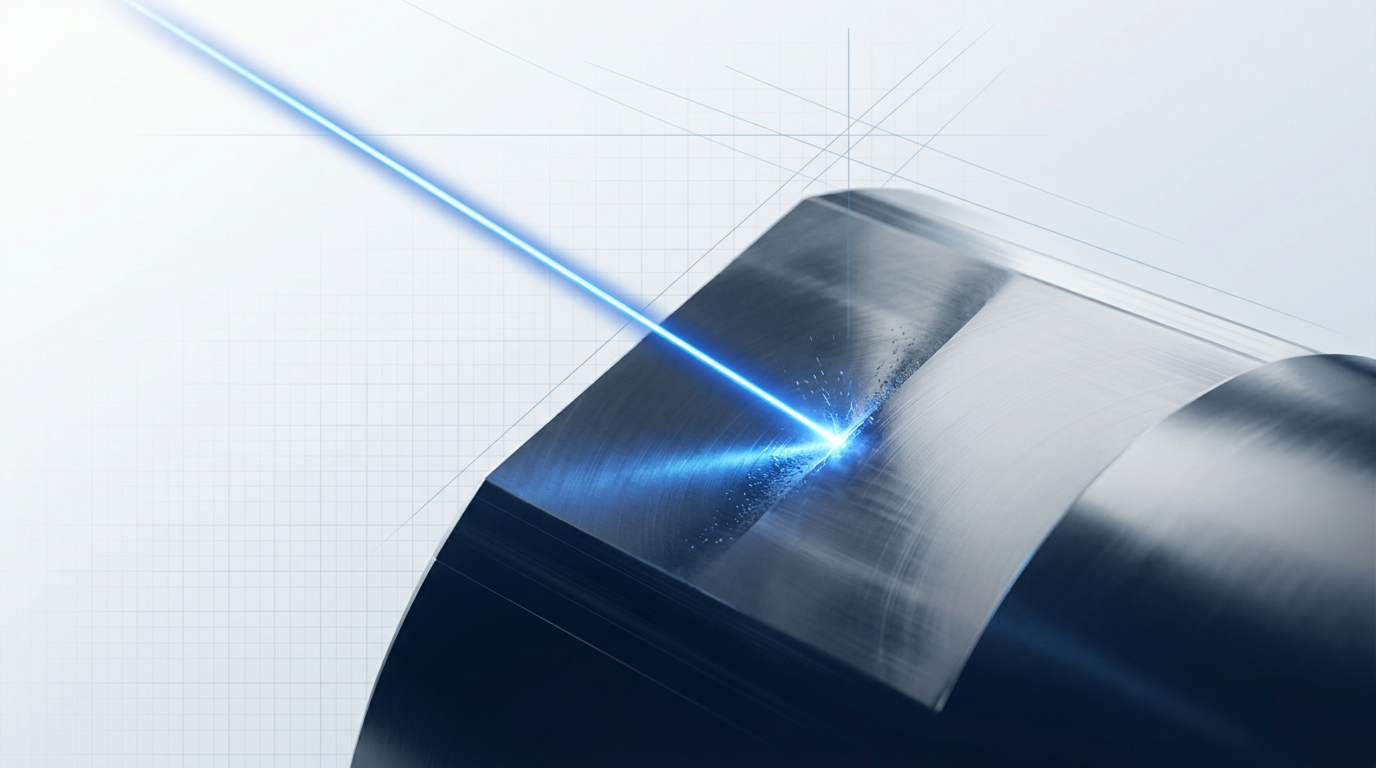
Rust removal is laser cleaning's most intuitive application, and the underlying physics explain precisely why it works so well: iron oxides absorb laser energy far more efficiently than the steel beneath them, making the differential absorption between contaminant and substrate particularly pronounced.
This gives the process a self-limiting character — once the oxide layer is gone, the beam encounters bare steel, which reflects or dissipates the energy rather than absorbing it, so the process effectively stops at the substrate surface without operator intervention.
Because steel reflects laser energy far more efficiently than iron oxide does, the ablation process stops naturally at the substrate — making rust removal one of the most controlled and substrate-safe applications in the laser cleaning toolkit.
The application range runs from flash rust on precision-machined components — where even minor substrate loss is unacceptable — through to heavier corrosion on structural steel, where the same physics apply but throughput becomes the primary operational concern.
Paint and Coating Stripping
Layer selectivity is the capability that sets laser cleaning apart in paint and coating removal: by tuning fluence precisely, the process can be set to ablate a topcoat while leaving a primer intact, or to strip all layers cleanly to bare metal — a level of control that sandblasting cannot offer and chemical stripping cannot replicate.
In aerospace and automotive manufacturing, where substrate integrity is a structural requirement, this matters enormously — and so does the compliance burden that chemical stripping carries, with solvent handling, hazardous waste disposal, and REACH/COSHH obligations all adding cost and regulatory complexity that laser cleaning sidesteps entirely.
Weld Preparation and Post-Weld Cleaning
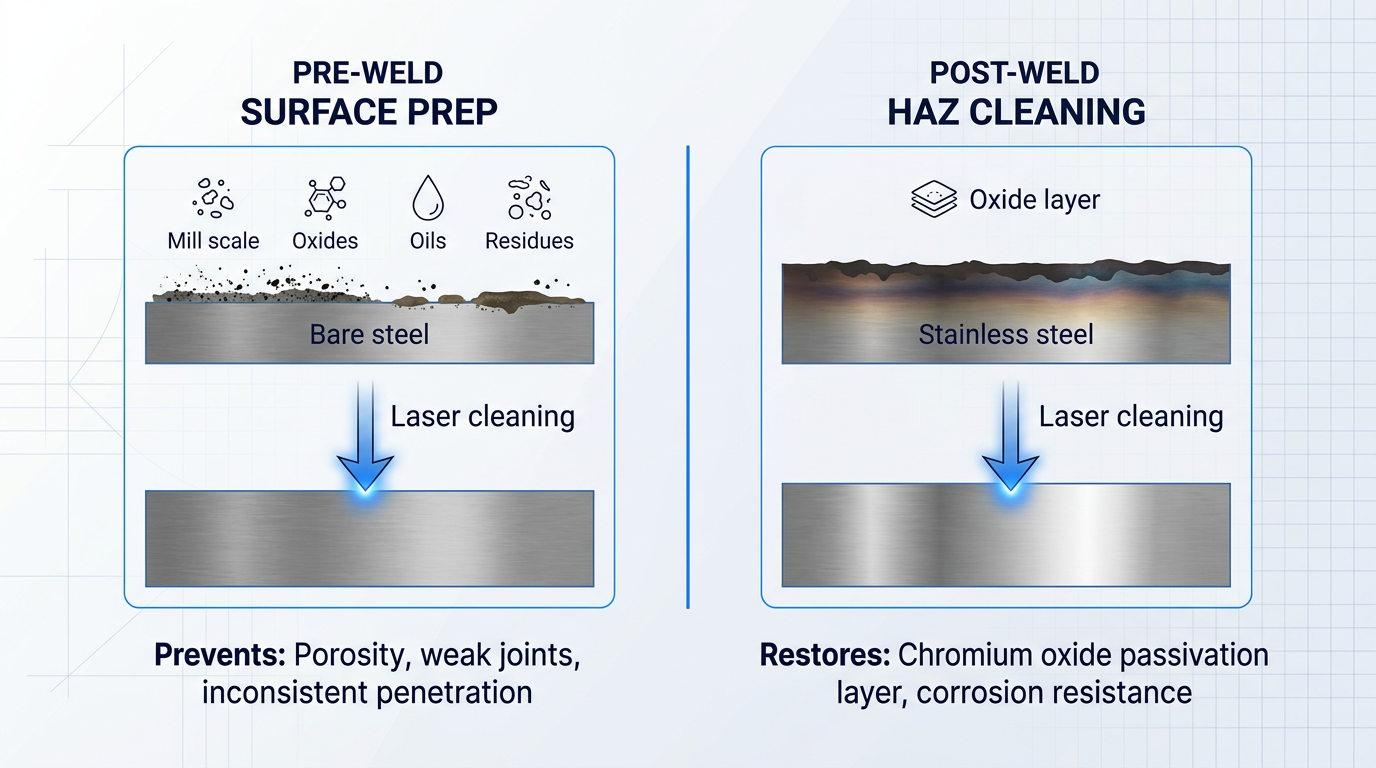
Before welding, surface contaminants on the weld zone — oxides, oils, mill scale, and residues — cause porosity, inconsistent penetration, and weak joints; laser cleaning removes these precisely from the weld line without disturbing the surrounding material, making it a natural fit for automated production welding lines where consistent pre-weld surface condition is a quality gate.
After welding on stainless steel, the heat-affected zone leaves HAZ oxides and heat tint that compromise the passive chromium oxide layer responsible for the metal's corrosion resistance — restoring the passivation layer conventionally requires pickling paste (a hazardous acid treatment) or grinding, both of which introduce their own contamination and dimensional risks.
Laser cleaning removes those HAZ oxides and restores the passivation layer without either, which addresses a genuine quality and compliance problem in stainless steel fabrication in a single, controlled step.
Mould Cleaning
Injection moulds, tyre moulds, and die-casting tools accumulate carbonised polymer residues, release agents, and rubber deposits over production runs — deposits that degrade surface finish, dimensional accuracy, and release characteristics if left unchecked.
The conventional approach — taking the mould out of service, disassembling it, and cleaning it chemically or abrasively — risks damaging fine textures, tolerances, and mould geometry; laser cleaning removes the deposits in place, without disassembly, and without any abrasive contact with the mould surface, enabling maintenance on a scheduled basis that does not interrupt production.
Heritage Conservation and Restoration
At the lower end of the power spectrum, carefully controlled laser systems can lift soiling, paint, and corrosion from stone, metal, and masonry with no substrate loss — the precision of fluence control allows an operator to work right up to the ablation threshold of the contamination layer without crossing the damage threshold of the material beneath, a level of selectivity that no abrasive or chemical method can match.
This makes laser cleaning genuinely useful for monuments, sculptures, historic buildings, and museum artefacts where even minor surface loss is unacceptable — though it is worth stating clearly that this is a specialist application requiring careful parameter selection and experienced operators, not a plug-and-play process.
Surface Preparation for Bonding and Coating
Laser cleaning does more than remove contamination — the treated surface emerges with a chemically activated profile and consistently elevated surface energy that improves adhesion for paints, adhesives, and coatings beyond what mechanical or chemical cleaning alone can achieve.
Battery tab and busbar preparation for laser welding and bonding in EV manufacturing is one of the fastest-growing applications of this capability: consistent surface condition across high volumes of cells is a quality-critical requirement, and laser cleaning delivers that consistency in a way that integrates naturally into automated production lines.
With the application landscape now mapped — from structural rust removal through to EV battery production — the natural next question is how laser cleaning compares to the established methods it increasingly displaces, which is where the next section turns.
Laser Cleaning vs Sandblasting, Chemical Stripping, and Dry Ice
Most operations already have a surface treatment method in place — and switching requires more than a performance argument. It requires an honest accounting of what each method actually costs, what waste it generates, and where it genuinely falls short. The comparison below covers all four principal methods across the axes that matter to engineers and procurement professionals: surface integrity, consumable spend, waste generation, environmental impact, and total cost of ownership.
The 4JET environmental whitepaper provides the clearest quantified baseline for this comparison, measuring waste output and energy consumption per pound of paint removed across all four methods under controlled conditions.
| Evaluation Axis | Sandblasting | Chemical Stripping | Dry Ice Blasting | Laser Cleaning |
|---|---|---|---|---|
| Surface Integrity | Substrate eroded alongside contaminant; creates anchor profile (useful for paint adhesion, problematic for toleranced parts). | Chemical attack risk on substrate; effective for batch immersion but can affect base material if chemistry is mismatched. | Non-abrasive; preserves existing surface texture and profile. Cannot create a new anchor profile independently. | Contaminant removed selectively; substrate remains intact. Layer-precise removal with substrate damage under 5 µm when correctly configured. |
| Consumable Spend | Ongoing abrasive media purchase (steel grit, garnet, etc.) at $0.50–$2.50/lb; nozzle and hose wear adds further recurring cost. | Ongoing chemical reagent purchase and replenishment; additional cost for neutralisation agents and rinse water treatment. | CO₂ pellets at $0.60–$3.00/lb; consumption of 0.7–3.0 lbs/min means supply-chain dependency and ongoing delivery costs. | Near-zero: electricity and occasional protective lens replacement. No abrasive media, no chemical reagents to procure. |
| Waste Generation | 70–800 lbs of spent abrasive grit per hour of use. Classified as hazardous waste if lead paint or heavy metals are present. | Spent acids or solvents require licensed hazardous disposal; rinse water and chemical sludge add further regulated waste streams. | No blasting media residue (CO₂ sublimates). Displaced contamination remains and requires collection and disposal separately. | Per lb of paint removed: approx. 0.5 lbs of dry solid waste (vs 4.1 lbs for blast cleaning, 9.1 lbs solid + 160 lbs liquid for chemical stripping). |
| Environmental Impact | Energy: ~20 kWh/operating hour; ~8 kg CO₂/hr. Spent abrasive may require hazardous disposal. Silica sand use restricted in many jurisdictions. | Energy: ~75 kWh/operating hour; ~30 kg CO₂/hr. Generates liquid hazardous waste; VOC emissions during stripping; high regulatory burden. | Energy: ~60 kWh/operating hour; ~24 kg CO₂/hr. Uses recycled CO₂; no chemical waste stream; dry ice is FDA/USDA approved. | Energy: ~7 kWh/operating hour; ~2.8 kg CO₂/hr. No chemical waste stream, no abrasive media disposal. Lowest emissions of the four methods. |
| TCO Profile | Low capital cost. Ongoing media, PPE, waste disposal, and containment infrastructure costs accumulate significantly over time. | Medium capital cost (tanks, ventilation). High ongoing chemical, compliance, and licensed hazardous waste disposal costs at scale. | Medium capital cost ($15,000–$55,000). Ongoing CO₂ supply costs; no media disposal, but contamination collection still required. | Higher upfront capital cost. Annual operating costs (electricity + lens replacements) are a fraction of abrasive or chemical methods at volume. |
Side-by-side comparison of sandblasting, chemical stripping, dry ice blasting, and laser cleaning across five operational evaluation axes relevant to maintenance engineers and procurement managers.
The table reveals a clear structural pattern: sandblasting and chemical stripping both carry low-to-medium entry costs but accumulate significant recurring expenditure — on consumables, waste disposal, compliance, and containment infrastructure — that compounds with every operating hour.
Dry ice blasting occupies a distinct middle position: it avoids the abrasive waste stream and produces no chemical effluent, but CO₂ supply is a genuine ongoing cost with supply-chain dependencies, and the energy draw (approximately 60 kWh per operating hour) is substantially higher than laser cleaning's 7 kWh figure.
Laser cleaning's cost structure is front-loaded — the capital investment is higher than a sandblasting setup — but its annual operating costs are a fraction of the alternatives once consumable spend, waste disposal, and compliance overhead are properly counted.
Sandblasting: Proven Strengths and Real Limitations
Sandblasting has earned its place in industrial surface treatment for good reasons: it offers low upfront equipment cost, proven throughput on large-area structural rust removal, and — critically — the ability to create an anchor profile that gives paint and protective coatings the mechanical grip they need for long-term adhesion.
That anchor profile is not a trivial benefit. The Society for Protective Coatings (SSPC) standards for near-white blast cleaning (SSPC-SP-10 / Sa 2.5) are specified in many structural coating contracts precisely because the surface roughness created by abrasive impact cannot be replicated by non-abrasive methods.
The limitations are equally real. Sandblasting is not selective: the abrasive erodes substrate alongside contaminant simultaneously, making it unsuitable for precision parts or components with tight dimensional tolerances.
Spent abrasive media — ranging from 70 to 800 lbs per hour of operation depending on nozzle size and PSI — becomes hazardous waste when the stripped coating contains lead or heavy metals, triggering RCRA classification and licensed disposal requirements. Dedicated blast rooms, dust collection systems, and containment infrastructure are prerequisites, not optional extras.
Chemical Stripping: Batch Capability and Compliance Burden
Chemical stripping is genuinely well-suited to specific tasks: batch passivation of stainless steel, full-surface immersion treatments, and descaling applications where the chemistry is matched to the contaminant and the geometry favours immersion over selective treatment.
The process involves applying acid, alkali, or solvent — by spray, brush, or dip — allowing the chemistry to react with the coating, then rinsing and neutralising.
For full-surface batch work in a controlled facility, this is an effective and repeatable approach — but it is poorly suited to on-site or selective-zone work, where the immersion-based process model simply does not translate.
The compliance burden is substantial. Spent acids and solvents require licensed carrier collection and specialist disposal; the regulatory overhead covering chemical storage, worker exposure under COSHH (UK) or OSHA standards, and effluent discharge is high and rising across most jurisdictions.
Dry Ice Blasting: A Genuine Niche, Honestly Assessed
Dry ice blasting occupies a well-defined niche that it fills genuinely well. Because the CO₂ pellets sublimate on contact, no blasting media remains on the surface — an important property in food processing, pharmaceutical manufacturing, and electronics environments where any residual media is unacceptable.
It is also non-abrasive (dry ice rates 1.5–2.0 on the Mohs hardness scale), making it suitable for sensitive substrates including electrical components, plastic moulds, and finished surfaces where the existing profile must be preserved. For heavy organic contamination — grease, baked-on production residue, food buildup — dry ice can remove large volumes of loosely bonded material quickly.
The limitations are worth stating plainly. The removed contamination does not disappear with the CO₂: grease, paint fragments, and other debris remain and must be collected and disposed of after treatment.
OSHA notes that after dry ice paint removal, a brush-off blast may still be required to create a surface profile adequate for coating adhesion. CO₂ supply is an ongoing consumable cost with geographic price variability ($0.60–$3.00/lb) and supply-chain dependencies that laser cleaning simply does not carry.
Laser Cleaning: Cost Structure and Genuine Capability
Laser cleaning has a cost structure that looks different from every other method in this comparison: higher upfront capital, but recurring annual costs that consist almost entirely of electricity and occasional protective lens replacement — no abrasive media to procure, no chemicals to source, no liquid hazardous waste stream to manage.
The environmental data from the 4JET whitepaper makes the operational contrast concrete: laser cleaning generates approximately 0.5 lbs of dry solid waste per pound of paint removed, compared to 4.1 lbs for blast cleaning and 9.1 lbs of solid waste plus approximately 160 lbs of liquid waste for chemical stripping.
For precision parts, complex geometries, weld preparation, and selective-zone cleaning, laser cleaning offers capabilities that no other method in this group can match: sub-millimetre spatial control, layer-selective removal without substrate erosion, and full compatibility with automated robotic integration.
Comparing laser cleaning against sandblasting on upfront equipment cost alone ignores the cost structure that actually determines total expenditure. For operations running several hundred hours per year, the accumulated savings on abrasive media, waste disposal, containment infrastructure, and compliance overhead typically outweigh the capital difference within the operating horizon of the equipment.
That said, two scenarios exist where traditional methods retain a genuine and honest advantage. First, large-area structural blasting where a specific anchor profile is contractually required for paint adhesion: laser cleaning cannot replicate the mechanical surface roughness that abrasive blasting creates, and for applications governed by SSPC-SP-10 or equivalent specifications, sandblasting remains the correct tool.
Second, very high-throughput large-area applications where the economics of high-volume blasting — lower capital spread across massive area coverage — cannot currently be matched by laser speed at any commercially available power level.
Understanding which category your operation falls into is the practical starting point — and that question leads directly into the operational realities of running a laser cleaning process: what thick coatings and complex geometries actually demand, and what extraction and setup requirements look like in practice.
Operational Realities: What Professional Deployment Looks Like
Most laser cleaning guides stop at the demonstration reel — the clean sweep across a rusty plate, the paint lifting cleanly from steel. What they rarely cover is what a maintenance manager or production engineer actually needs to plan for before the system ships: how thick coatings affect cycle time, how workpiece geometry shapes the system choice, and why fume extraction is not an accessory but a planned infrastructure requirement. These are the operational realities that determine whether a deployment runs smoothly from day one.
Thick Coatings and Realistic Throughput Expectations
Cleaning throughput is not a fixed number — it scales directly with coating thickness, contamination severity, and the fluence settings the operator selects for the task.
Very thick or heavily bonded coatings require multiple passes: each pass removes a layer, and the total number of pulses needed is a function of how much material must be ablated and at what energy per pulse.
| Power Class | Contamination Type | Indicative Speed Range | Practical Notes |
|---|---|---|---|
| 100–200W pulsed | Light surface rust (Sa 1–Sa 2) | 1–5 m²/h | Well-matched to precision and small-part maintenance; heavy mill scale drops to 0.1–0.5 m²/h at this power level. |
| 300–500W pulsed | Heavy rust, mill scale, thick paint | 6–15 m²/h | Right tool for industrial maintenance volumes; bonded mill scale and thick coatings sit toward the lower end. |
| 1,000W pulsed/CW | Moderate rust, pre-weld cleaning, coating removal | 12–25 m²/h | Production-line capable; heavy mill scale toward 12 m²/h, light flash rust toward 25 m²/h. |
| 2,000–3,000W CW | Large-area rust, structural steel, thin coatings | 35–60 m²/h | Heavy-industry volumes; upper range on thin/loosely adherent contamination on flat steel only. |
Indicative cleaning speed ranges by power class and contamination type, drawn from multiple industry sources, to help operators match system power to their specific task volume.
The pattern is consistent: match the system power to the task, not to the minimum spec that can technically do the job. A 100W system cleaning thick mill scale on structural steel will achieve the result, but at 0.1–0.5 m²/h on heavily bonded oxide, the cycle time makes it commercially impractical for any meaningful volume. For operators cleaning heavily contaminated structural steel or multi-layer paint systems at production volumes, 300W or above is the realistic starting point — and 1,000W or higher for continuous throughput requirements.
Complex Geometries: Handheld vs Automated Systems
The geometry of the workpiece is a key selection variable that should be resolved before a system is specified, not after.
Handheld systems are inherently flexible: a skilled operator can follow irregular surfaces, internal radii, textured profiles, and awkward access angles that no fixed-path system could replicate without bespoke tooling.
Automated systems with multi-axis robotic arms are better suited to consistent, repeatable cleaning of complex 3D parts at production volumes — particularly where part-to-part consistency is required and manual variation is unacceptable for downstream processes like bonding or coating adhesion.
Certain automated systems incorporate 3D machine-vision scanning, which generates cleaning paths automatically from a scanned part geometry — removing the need for manual path programming and making complex-geometry automation practical even where parts vary slightly between batches.
Fume Extraction: A Standard Operational Requirement
When a laser pulse vaporises a contaminant, what was solid on the surface becomes airborne: a stream of fine particulate and fume that must be captured before it disperses into the work area.
There are two reasons fume extraction is non-negotiable. The first is operator health: fine metal oxide particulate and VOC-laden fumes from coating removal are serious inhalation hazards. The second is process quality: airborne particulate that is not captured can redeposit on the freshly cleaned surface, directly undermining the cleaning result.
A fume extraction system is a planned infrastructure requirement on the same level as the laser system itself — specifying the laser without the extraction is an incomplete deployment.
Extraction should be positioned as close to the cleaning head as possible to capture by-products at source, before they spread into the operator's breathing zone — consistent with UK HSE guidance on local exhaust ventilation (LEV) under COSHH, which requires LEV to be maintained in efficient working order and examined at least every 14 months.
Contaminant-Specific Filtration: Know What You Are Removing
The composition of the fume stream depends entirely on what is being removed, and filtration must be specified for the actual contaminant — not for a generic industrial fume.
Rust and corrosion removal generates metal oxide particulate — primarily iron oxide, but also manganese, chromium, and nickel compounds depending on the alloy. Peer-reviewed measurements of PM₁₀ concentrations during laser rust removal found mean values around 7,000 µg/m³ at the cleaning site, with instantaneous peaks above 10,000 µg/m³. UK HSE EH40 sets the workplace exposure limit for iron oxide fume at 5 mg/m³ (8-hour TWA) — extraction must be effective enough to keep concentrations well below this threshold.
Paint and coating removal generates a more complex fume stream: VOCs including benzene, toluene, and acrolein; PAHs from incomplete combustion; and, where polyurethane layers are present, diisocyanates — which carry sensitisation and respiratory damage risks requiring specific filtration and, in some cases, supplied-air respiratory protection.
A standard particulate filter is insufficient for VOC-laden paint fumes. For coating removal, the recommended configuration combines local extraction at the head with HEPA-class particulate filtration plus an activated-carbon stage for organic gases and VOCs. For hazardous metal oxide particulate, a high-specification industrial extraction unit rated for fine and hazardous particulate is required — the appropriate filtration class should be confirmed with the extraction equipment supplier based on the specific contaminant and applicable local regulations. When coating chemistry is unknown or contains PU components, treat the fume stream as requiring both particulate and organic filtration as a conservative baseline.
PPE and Laser Hazard Zone Controls
Laser cleaning operators require three categories of PPE, each well-understood and standard across industrial laser processes.
- Laser eye protection: Laser-rated eyewear or visor matched to the system's specific wavelength and optical density (OD) class — the primary and most critical PPE item for any laser operator.
- Respiratory protection: At minimum FFP3/P3-class for particulate; a full-face respirator with organic vapour cartridges for VOC-generating coatings or any unknown coating system.
- Hearing protection: Industrial earmuffs where noise levels warrant — measurements on high-power pulsed systems have recorded values around 104 dB, requiring appropriate hearing protection.
Conventional Class IV laser cleaning systems require a defined laser exclusion zone (LEZ) — a controlled area around the work where access is managed, appropriate PPE is worn by all personnel present, and warning systems are active. Per OSHA and ANSI Z136.1 guidance, this includes entryway controls, warning lights, and a clearly marked emergency stop. These are standard requirements for any Class IV laser installation and are well-understood in industrial settings.
Certain systems incorporate reduced-hazard-zone (RHZ) technology, which collapses the hazard zone to a small area immediately around the cleaning head rather than requiring a full room or bay to be controlled. This is a meaningful operational differentiator for applications where sealing off a large area is impractical: heritage restoration in public spaces, cleaning within a live production facility, or field maintenance work on infrastructure.
With these operational requirements clearly understood — throughput by power class, geometry-driven system selection, extraction infrastructure, contaminant-specific filtration, and area controls — the investment question becomes concrete. The next section addresses the business case: capital cost, consumable savings, and the conditions under which laser cleaning delivers a compelling return.
Investment and ROI: Making the Business Case for Laser Cleaning
The sticker price of a laser cleaning system will almost always be higher than the equivalent entry cost for abrasive blasting equipment. If that is where the comparison stops, the decision is straightforward — and wrong.
The correct evaluation lens is total cost of ownership (TCO): what the cleaning method actually costs to operate over two, three, and five years, accounting for consumables, labour, waste disposal, rework, and the operational overhead covered in the previous section.
Laser cleaning's cost structure is heavily front-loaded: the capital investment is the primary expenditure, and recurring costs after that are minimal — electricity and occasional protective lens replacements, typically under $500 per year for a single system.
Competing methods run the opposite profile: lower entry cost, but a compounding annual spend on abrasive media ($0.10–$0.50 per pound, burning through 50–200 lbs per hour on a working blaster) or chemical replenishment that accumulates relentlessly across the operating life of the equipment.
One cost category that procurement budgets consistently underestimate is hazardous waste disposal: spent abrasive containing lead paint residue, heavy metal coatings, or chromate primers is classified as regulated waste in most jurisdictions, with licensed disposal running $0.50–$3.00 per pound — a single shift of production blasting can generate 500–2,000 lbs of contaminated grit.
| Method | Year 1 Cost | Year 2 Cost | Years 3–5 (each) | 5-Year Total |
|---|---|---|---|---|
| Pulsed Laser (200W) | $44,250 | $9,250 | $9,250 | $81,250 |
| CW Laser (500W) | $65,750 | $7,250 | $7,250 | $94,750 |
| Sandblasting (Grit) | $32,250 | $32,250 | $32,250 | $161,250 |
Five-year total cost comparison across laser cleaning and sandblasting at 5,000 m²/year cleaning volume, showing how the front-loaded capital cost of laser is offset by near-zero ongoing costs.
The table makes the cost structure visible: sandblasting starts cheaper in Year 1, but by Year 2 the laser system is the lower-cost option, and the gap widens every year thereafter — reaching a $67,000–$80,000 difference at the five-year mark on a 5,000 m²/year cleaning volume.
The crossover point accelerates when hazardous waste disposal costs are factored in: operations displacing a chemical stripping process with high disposal fees typically reach payback faster than those replacing a low-media-cost blasting setup with cheap labour.
A further cost-avoidance lever that does not always appear in procurement models is substrate preservation: because laser cleaning removes contaminants without mechanical contact, parts cleaned by laser are less likely to fail dimensional tolerances or require rework — a particularly significant saving for precision components, injection moulds, and high-value assets.
On the labour side, automated laser cells eliminate manual cleaning labour for repetitive production tasks entirely, while handheld systems typically outpace manual grinding or wire brushing on common applications; reduced setup time — no masking, no media management, no post-cleaning media removal — adds further productive hours per shift.
Taken together, these savings translate into documented payback periods of 12–36 months for operations running meaningful cleaning volumes, with the shorter end of that range typical when replacing chemical stripping with high disposal costs, and the longer end when displacing a low-cost blasting setup.
Sandblasting consumables, media, and disposal typically accumulate to $60,000–$200,000 over five years. Laser cleaning operating costs over the same period generally stay below $8,000–$35,000 — a difference that compounds with every year the equipment runs.
When Laser Cleaning Is Not the Right Economic Choice
An honest TCO framework has to include the conditions under which the economics do not favour laser cleaning — and two such conditions are well-documented.
- Low-volume or one-off jobs: Below roughly 300–500 m²/month, the capital cost cannot be amortised across sufficient throughput to achieve payback within a justifiable window. Contract services are typically the better economic fit.
- Large-area structural blasting: On open structural steel requiring aggressive surface profiling and anchor patterns, sandblasting's higher throughput (10–25 m²/hr vs. laser's 1–10 m²/hr) can make it the lower cost-per-square-metre option.
- Very thick coatings (over 2mm): Extremely thick coatings may require multiple laser passes, eroding the throughput advantage and extending payback beyond what the application can justify.
These exclusions are not a weakness of the technology — they are an accurate map of where the economics work and where they do not, and any analysis that ignores them is not credible.
The financial case for laser cleaning is reinforced by a parallel environmental one: the same properties that eliminate consumable spend also eliminate the waste streams that carry regulatory and disposal costs — a dimension the next section examines in full.
Ready to Put Laser Cleaning to Work?
The economics stack up. The next step is finding the right system for your application. Book a call with a laser cleaning expert to discuss your requirements directly.
Environmental and Sustainability Benefits of Laser Cleaning
The environmental case for laser cleaning is not a marketing claim — it is a measurable process characteristic that shows up in waste profiles, energy consumption figures, and peer-reviewed lifecycle assessments.
The most fundamental advantage is also the simplest: laser cleaning introduces nothing into the process. No solvents, no acids, no alkalis, no abrasive media — only focused laser light interacts with the surface.
For operations currently using chemical stripping, this matters directly. Spent acids and solvents are classified as hazardous liquid waste under most jurisdictions, requiring neutralisation, licensed carrier collection, and formal disposal reporting — obligations that simply do not exist when the process generates no chemical effluent.
The contrast with abrasive blasting is equally stark. As the method comparison section established, sandblasting generates 40–50 kg of spent abrasive waste per square metre of blasted surface in heavy industrial applications such as ship hull maintenance. When the substrate carries lead-based paint or heavy metal coatings, that spent abrasive is classified as RCRA hazardous waste under U.S. federal regulations — requiring EPA-manifested disposal by licensed hazardous waste haulers. Laser cleaning, by comparison, produces only vaporised contamination captured by the extraction system as a small volume of dry particulate.
The energy differential between methods is also significant at scale. Industry data from the 4JET environmental whitepaper puts laser system power consumption at approximately 7 kWh per operating hour, against 20 kWh for compressed-air blasting and 75 kWh for solvent-based wet chemical processes — which carry the additional energy burden of heating baths, running pumps, and drying treated components.
These operational differences compound into a measurable lifecycle advantage, quantified by peer-reviewed research.
A lifecycle assessment study published in PMC (using SimaPro 9.0 and the CML-IA baseline methodology) found that laser cleaning for stain removal reduces total environmental impact by approximately 40% versus traditional solvent-ultrasonic cleaning, and by approximately 83% versus sandblasting — measured across nine indicators including global warming, human toxicity, and freshwater ecotoxicity.
These figures are not point-of-use comparisons — they are full lifecycle assessments that account for energy consumption, waste generation, chemical production and disposal, and associated emissions across the entire process chain. An operation switching from sandblasting to laser cleaning is not simply eliminating one waste stream; it is reducing its total process-related environmental burden by more than four-fifths on that axis.
For operations with formal ESG commitments or sustainability reporting obligations — supply chain audits, Scope 3 emissions reporting, or procurement criteria that require a documented process classification — laser cleaning offers a clear and defensible position: it is a clean, dry process with no chemical waste stream and a quantified lifecycle advantage over the methods it replaces.
The regulatory trajectory reinforces this advantage. In the European Union, dichloromethane (DCM) in paint strippers has been restricted under REACH Regulation (EU) No 276/2010 since 2010; NMP is subject to strict concentration and exposure limits under REACH Annex XVII Entry 71; and chromic acid — widely used in surface treatment — is listed under REACH Annex XIV as a substance requiring authorisation, with ECHA mandated to prepare a restriction proposal covering chromium (VI) substances. The U.S. EPA issued its final rule banning most commercial uses of methylene chloride in April 2024, with the prohibition taking effect in April 2026. Operators still dependent on solvent-based chemical stripping face a compliance landscape that is tightening, not stabilising.
A process that generates no chemical waste stream is not merely cleaner in the abstract — it is structurally insulated from chemical regulation risk, now and as that regulatory environment continues to evolve.
With the full technical, operational, financial, and environmental picture now assembled, the final section draws together the key conclusions and points toward the practical next steps for evaluating laser cleaning for your application.
Conclusion
Is laser cleaning right for your operation?
The science is sound, the applications are broad, the economics are defensible, and the environmental case is real — laser cleaning is a mature technology, and the question is no longer whether it works but whether your operation is the right fit.
If you have recurring high-value cleaning tasks, precision substrates where material loss is costly, or compliance pressure to eliminate chemicals, you now have the mental model to evaluate that seriously.
The practical next move is to speak with a specialist, run an application test on your actual parts, and build a total cost of ownership comparison using your own data.
Frequently Asked Questions About Laser Cleaning
Practical answers to the questions that come up most often when evaluating laser cleaning technology.
Laser cleaning has three well-defined limitations worth knowing. First, deep pitting corrosion: the laser removes surface contamination and rust effectively, but it cannot reshape the pit geometry left behind in the metal — the physical damage profile remains after cleaning. Second, highly reflective bare metals such as copper present a challenge because the substrate reflects rather than absorbs the laser energy, making controlled cleaning more difficult and requiring carefully tuned or specialised parameters. Third, applications where the coating specification requires a defined anchor profile for adhesion — laser cleaning produces a clean, smooth surface, but it does not create the mechanical roughness that grit blasting imparts. Where a specific surface roughness is a contractual or process requirement before recoating, laser cleaning alone cannot satisfy it. For any new application, testing on representative parts before committing to a production process is always the right approach.
Correctly configured laser cleaning does not damage the base material. The process is self-limiting: once the contaminant layer is removed, the clean substrate beneath has different optical absorption characteristics and reflects or dissipates the laser energy rather than absorbing it, so ablation naturally stops at the surface. This is the same mechanism described in the ablation science sections of this guide. The honest caveat is that incorrect parameters — excessive fluence, wrong pulse settings, or dwelling the beam too long in one spot — can cause surface discolouration, heat tinting, or texture changes. This is why application-specific parameter testing on a sample piece before production cleaning is standard professional practice, not an optional step. Reputable systems and operators treat parameter validation as a non-negotiable part of the process.
Cleaning speed depends on laser power class, contamination type and thickness, and the substrate — there is no single answer. As indicative ranges: a 100W pulsed system typically achieves roughly 1–3 m²/hr on moderate rust or light coatings; a 1,000W continuous-wave system can reach 15–25 m²/hr on heavier contamination; and high-power systems above 2,000W can exceed 40 m²/hr on light surface oxidation under optimised conditions. High-power sandblasting can achieve higher raw area rates on large, open surfaces. For precision tasks, complex geometries, and jobs where no setup, masking, or media containment and cleanup is required, however, laser cleaning is often faster in total cycle time even when its raw cleaning rate is lower. The comparison depends heavily on what you count: raw cleaning speed alone, or the full job from start to finished, clean surface.
Yes, laser cleaning can be used indoors, provided the appropriate controls are in place. Two requirements are non-negotiable. The first is fume extraction: vaporised contamination and fine particulate — including potentially toxic VOCs and aerosols when organic coatings are involved — must be captured at the source using a system with appropriate particulate and organic filtration. This is an operational necessity, not an optional extra. The second is laser hazard zone management: conventional Class IV laser cleaning systems require a defined exclusion zone around the work area, with access controls, laser-rated eye protection for all personnel present, and appropriate warning systems, as required under OSHA and ANSI laser safety standards. Certain systems use technology that reduces the laser hazard zone to a small area immediately around the cleaning head itself, which can simplify operation in open workshops or mixed-use facilities. This distinction — between systems requiring a sealed exclusion zone and those with a collapsed hazard footprint — is an important practical consideration when evaluating equipment for indoor or shared-space use.
Operators need laser safety training covering the specific hazards associated with the laser class of the system they are using. For industrial laser cleaning systems, which are Class IV under IEC 60825-1 and ANSI Z136.1, this covers hazard zone management, correct PPE selection (laser-rated eye protection matched to the system's wavelength and power class, plus respiratory protection appropriate to the contaminant type), and extraction requirements. OSHA guidelines require training for all personnel working with Class IV laser installations. CE/UKCA-certified systems from reputable manufacturers typically include operator training as part of commissioning — this is a standard expectation, not an add-on. Systems with reduced-hazard-zone technology have a smaller hazard footprint, which can simplify certain aspects of site safety management, but operator training remains necessary regardless of system type. Laser safety training is a well-understood, manageable requirement — not a barrier to practical deployment.
Machine cost varies widely by power class, configuration, and manufacturer. Entry-level pulsed systems start in the low tens of thousands; high-power industrial systems and automated cells are priced significantly higher. Pricing is competitive relative to the total value delivered, but the more useful frame is total cost of ownership rather than sticker price. Laser cleaning systems operate with near-zero consumables — no abrasive media, no chemicals, no significant waste disposal costs — and fiber laser sources are rated to around 100,000 operating hours. When consumable savings, eliminated waste disposal costs, reduced rework, and productivity gains are factored in, the TCO picture is typically far more favourable than a headline price comparison suggests. For facilities cleaning at production scale, payback periods in the 18–36 month range are commonly reported. The right system depends on your application, contamination type, throughput requirements, and operational context — contact manufacturers directly for application-specific guidance and indicative pricing.