What Is a Laser Sander? Here's the Real Term
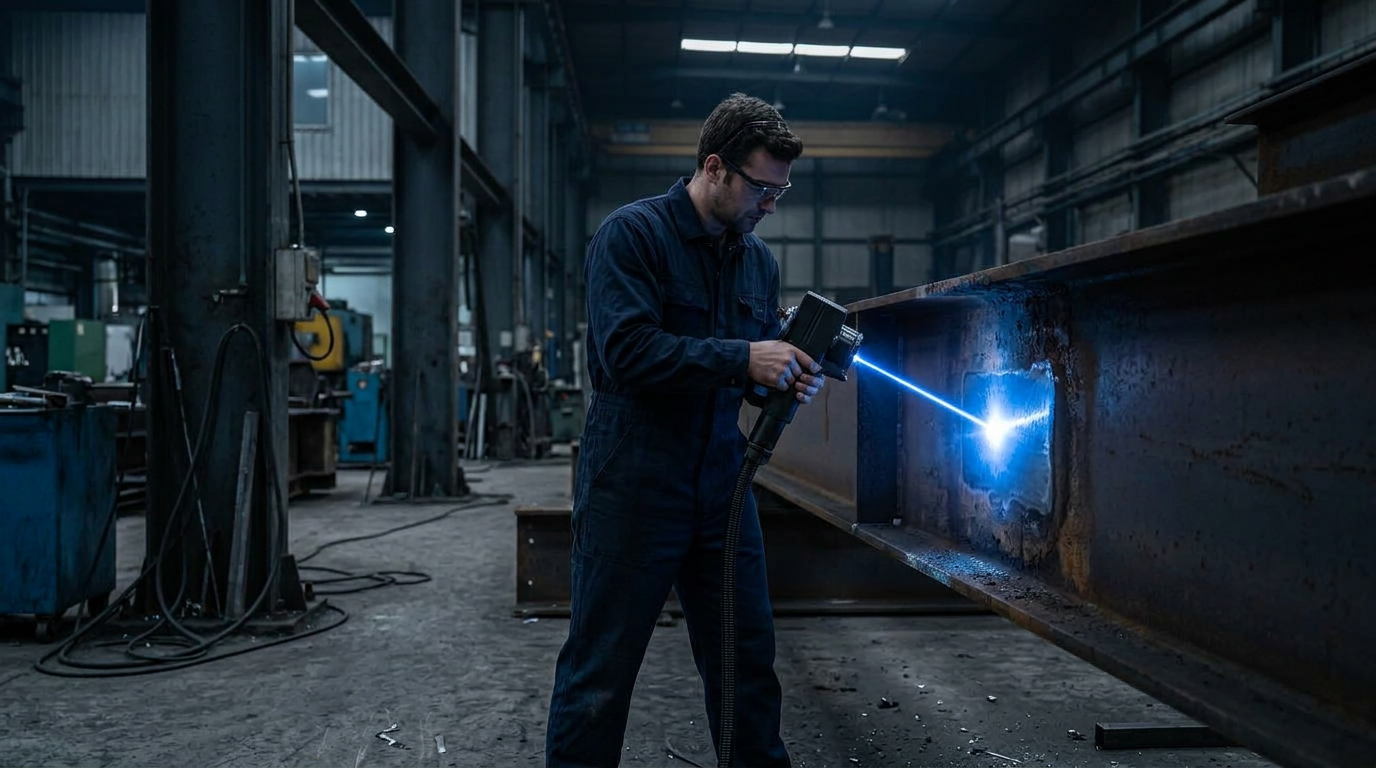
Laser sander is a widely used informal label for portable laser cleaning equipment, and if that's the term you searched, you're in exactly the right place. The correct name for the technology is a laser cleaning machine (or laser ablation system) — it uses focused laser energy to vaporise surface contamination without any contact with the substrate. No sanding, no abrasive media, no grinding. The result is the same as sanding: clean, prepared base material ready for the next stage. WSL hires precisely this type of machine — the ELASER portable laser cleaning system.
ELASER: WSL's Portable Laser Cleaning System for Hire
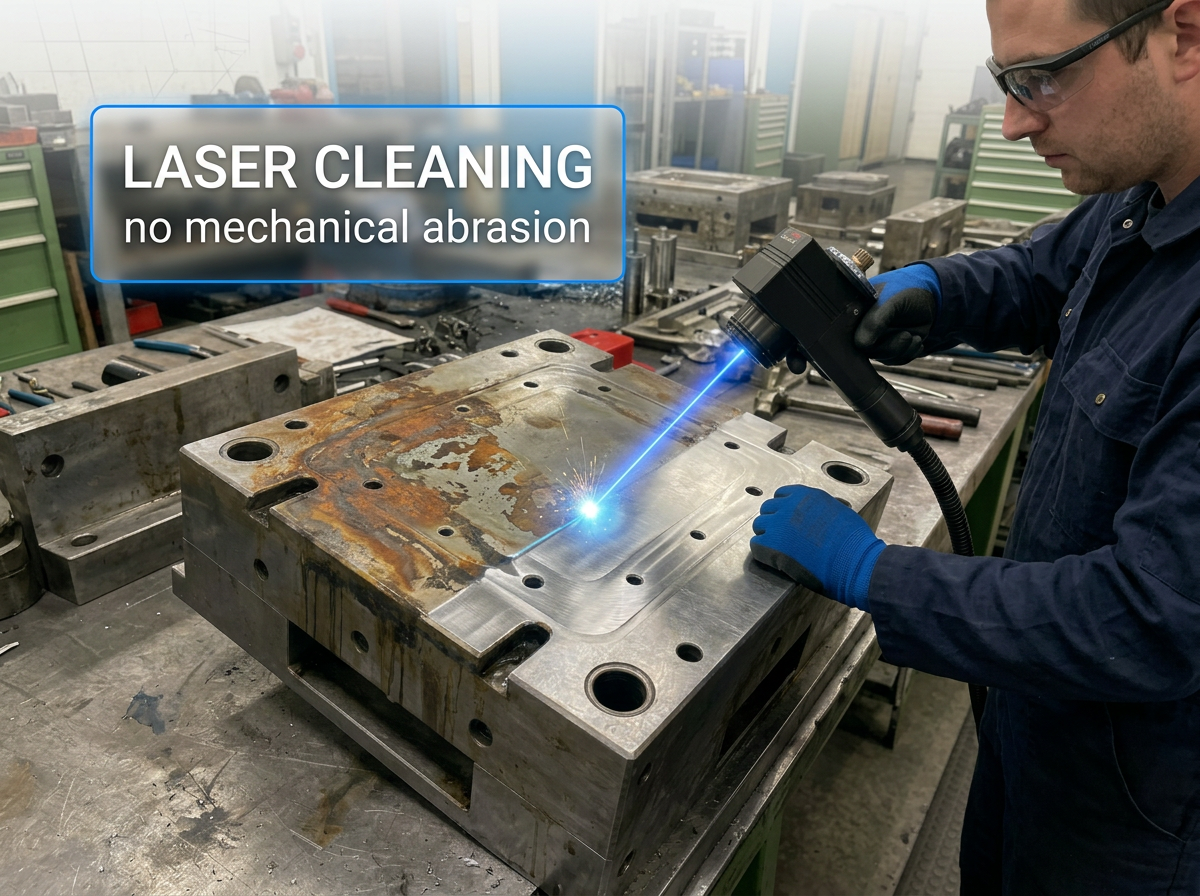
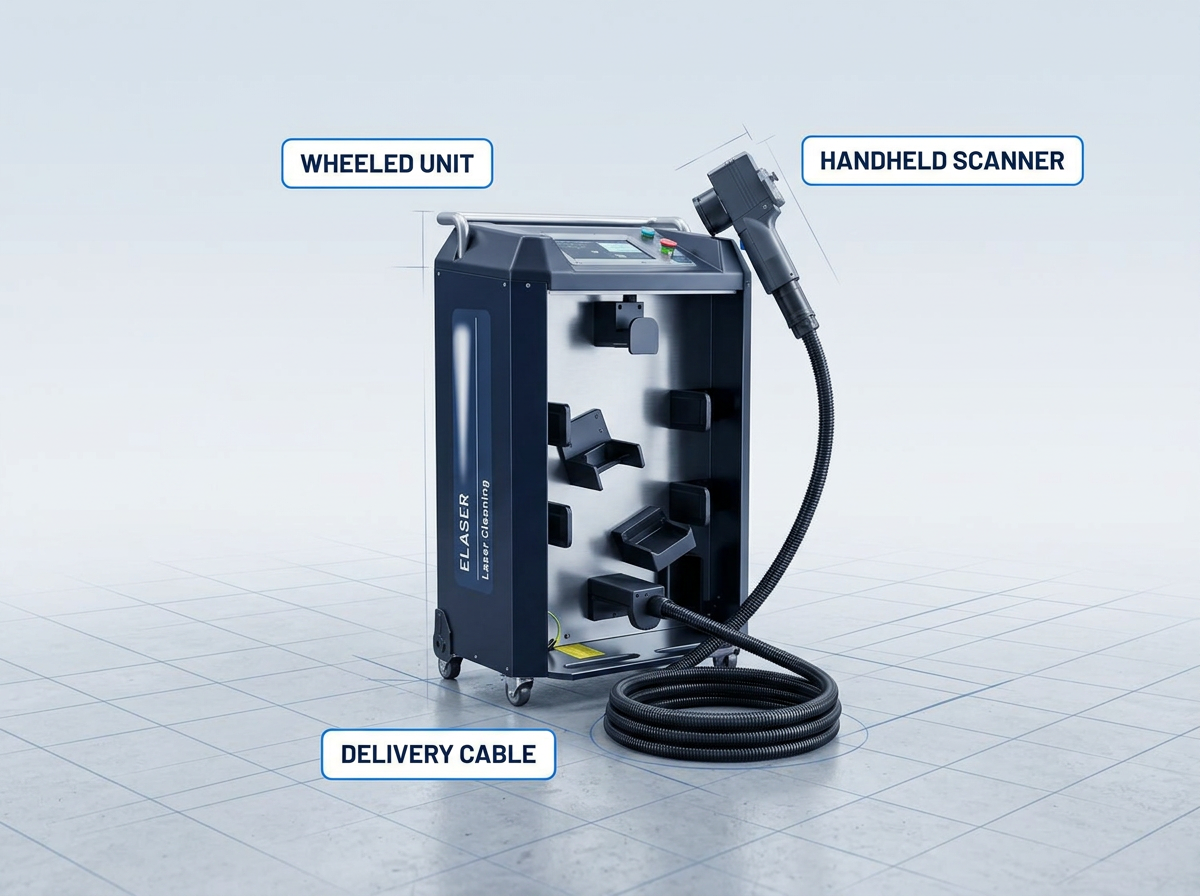
The ELASER is an industrial fibre laser cleaning system built by WSL — the UK's only laser cleaning manufacturer. WSL designs and builds every machine in-house, so the engineers supporting your rental are the same people who built it. The wheeled unit is under 50 kg; the handheld scanner under 3 kg, with a delivery cable reaching up to 50 m.
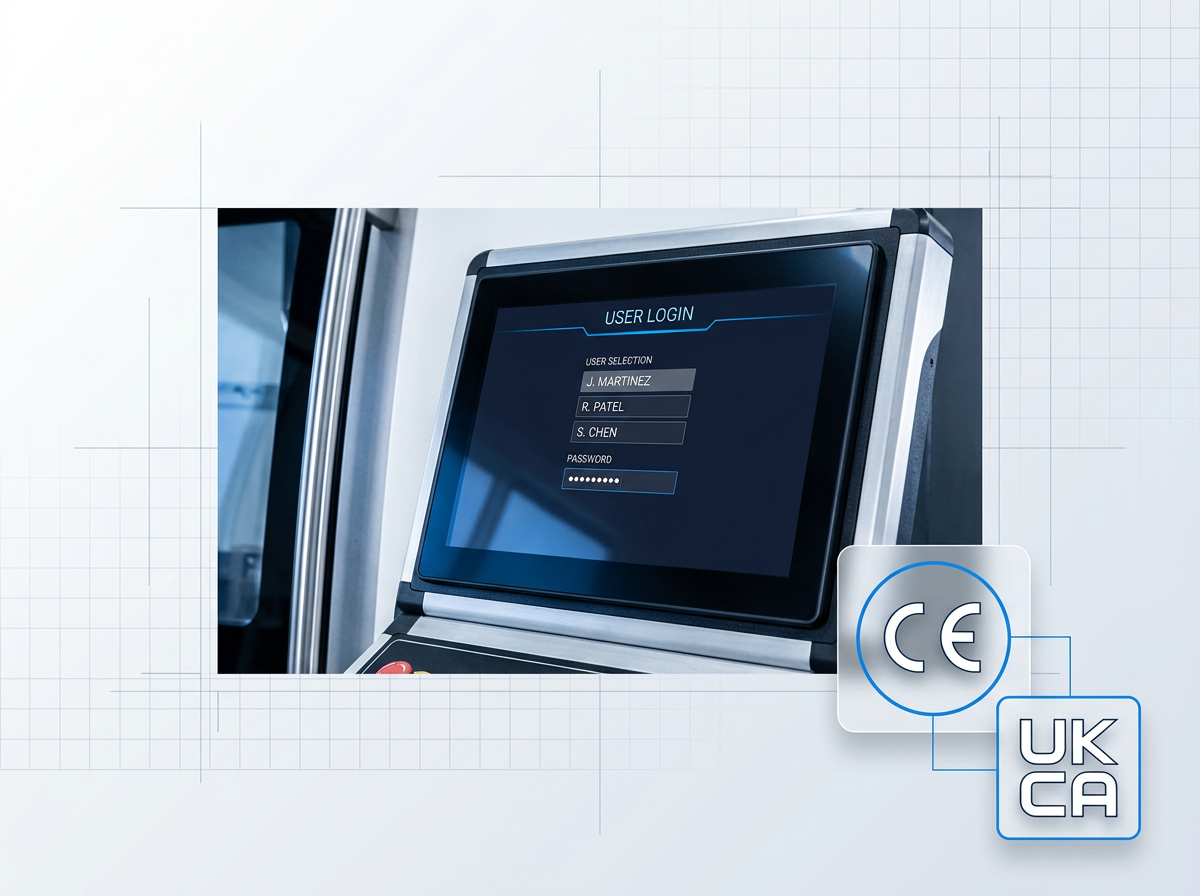
No compressor, no chiller — just standard 110–250 VAC single-phase power. A touchscreen GUI with per-user logins means one operator can set up and run the machine on site without specialist knowledge. Both the ELASER and ELASER-RHZ variants are available to hire.
Selective Cleaning, No Substrate Damage
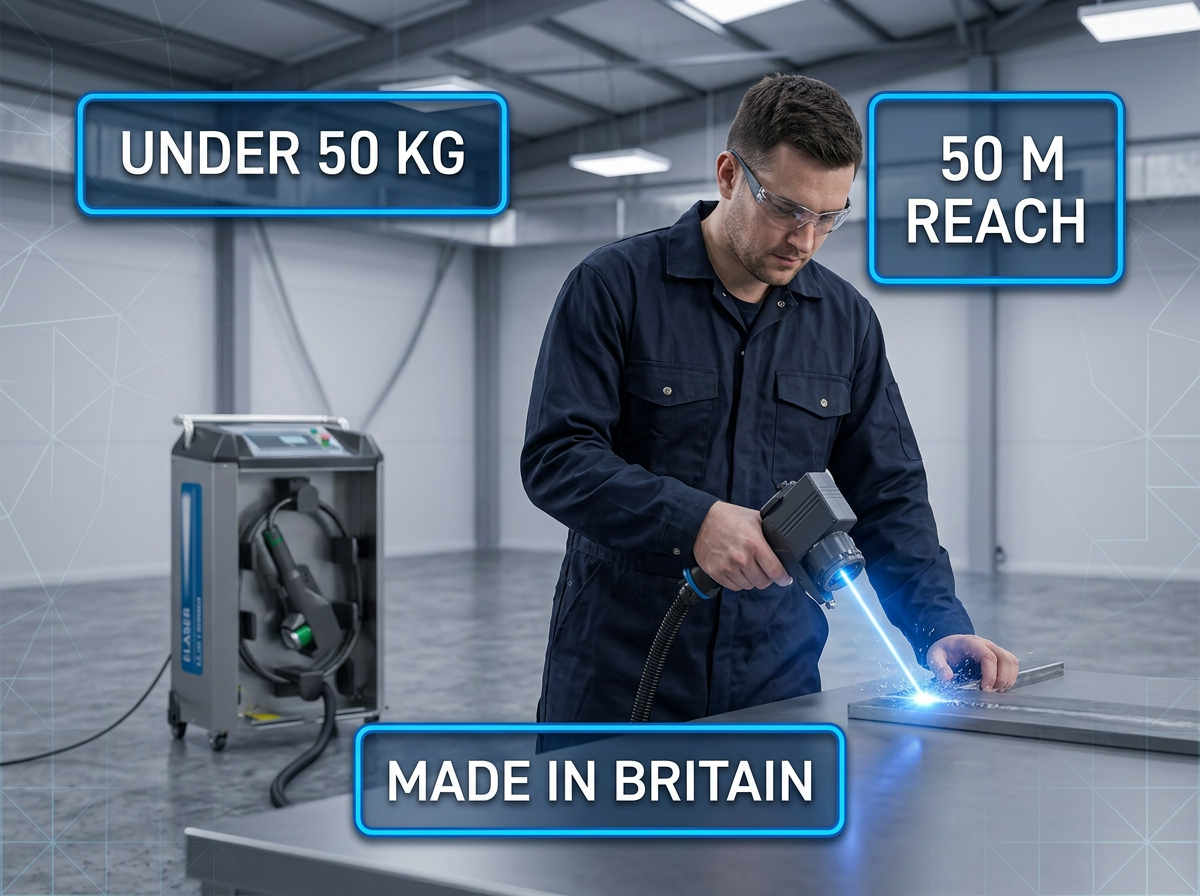
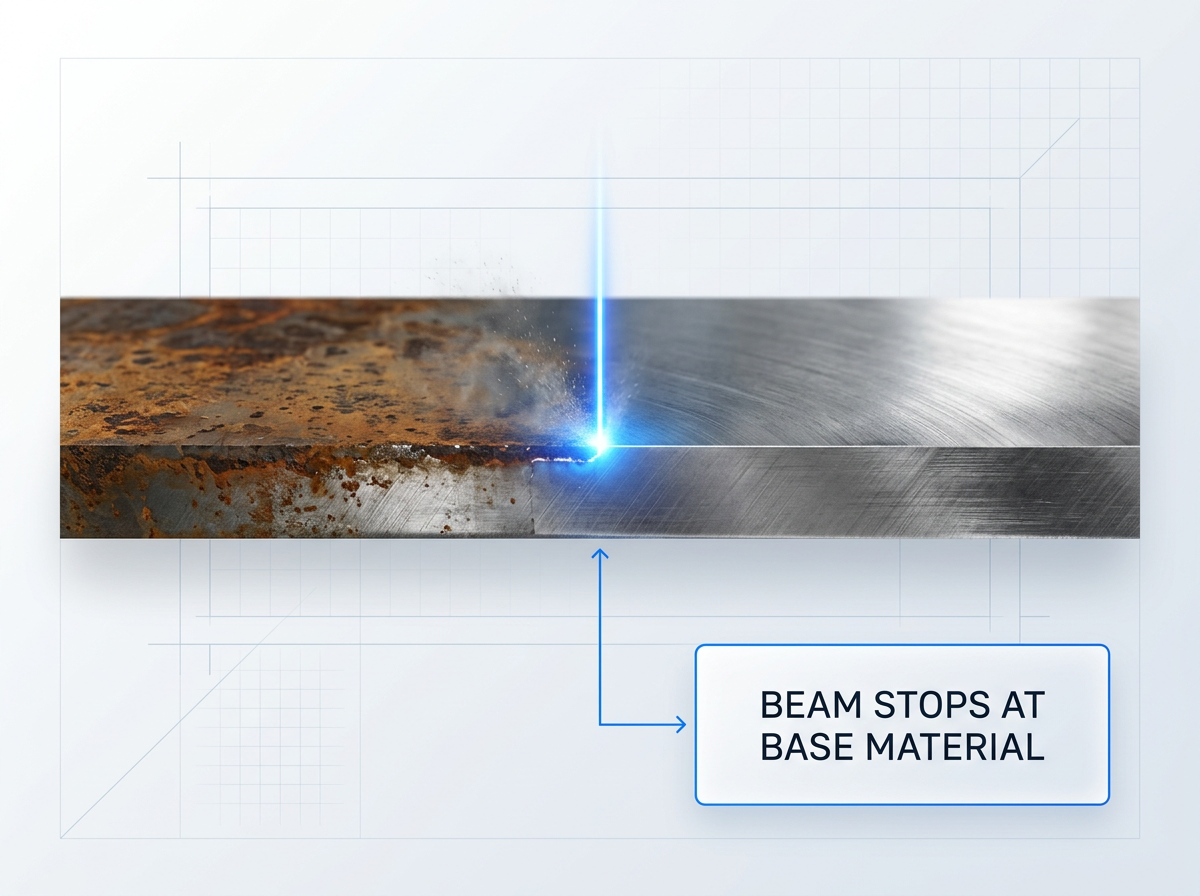
The ELASER removes the contaminant layer only — the beam stops at the base material, leaving the substrate intact. This is why one machine can clean metals, stone, brick and masonry without damaging the surface beneath.
Power is tunable from 0–100% via the touchscreen, so a single hired machine covers everything from light surface oxides to heavy rust and thick coatings. No need to switch equipment or hire multiple machines for different tasks.
Compatible Surfaces
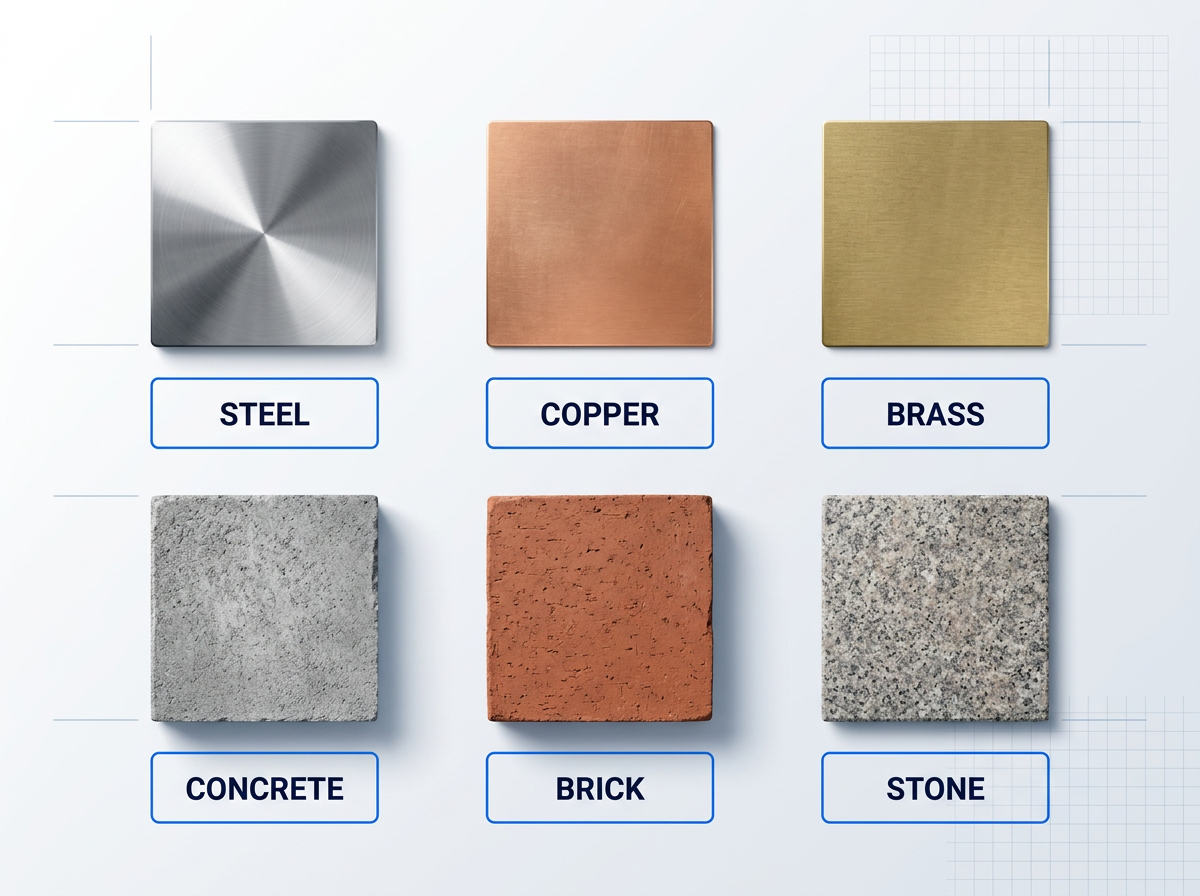
The ELASER cleans: steel, carbon steel, aluminium alloys, cast iron, copper, brass, bronze, titanium, galvanised, stone, concrete, brick and masonry.
Contaminants Removed
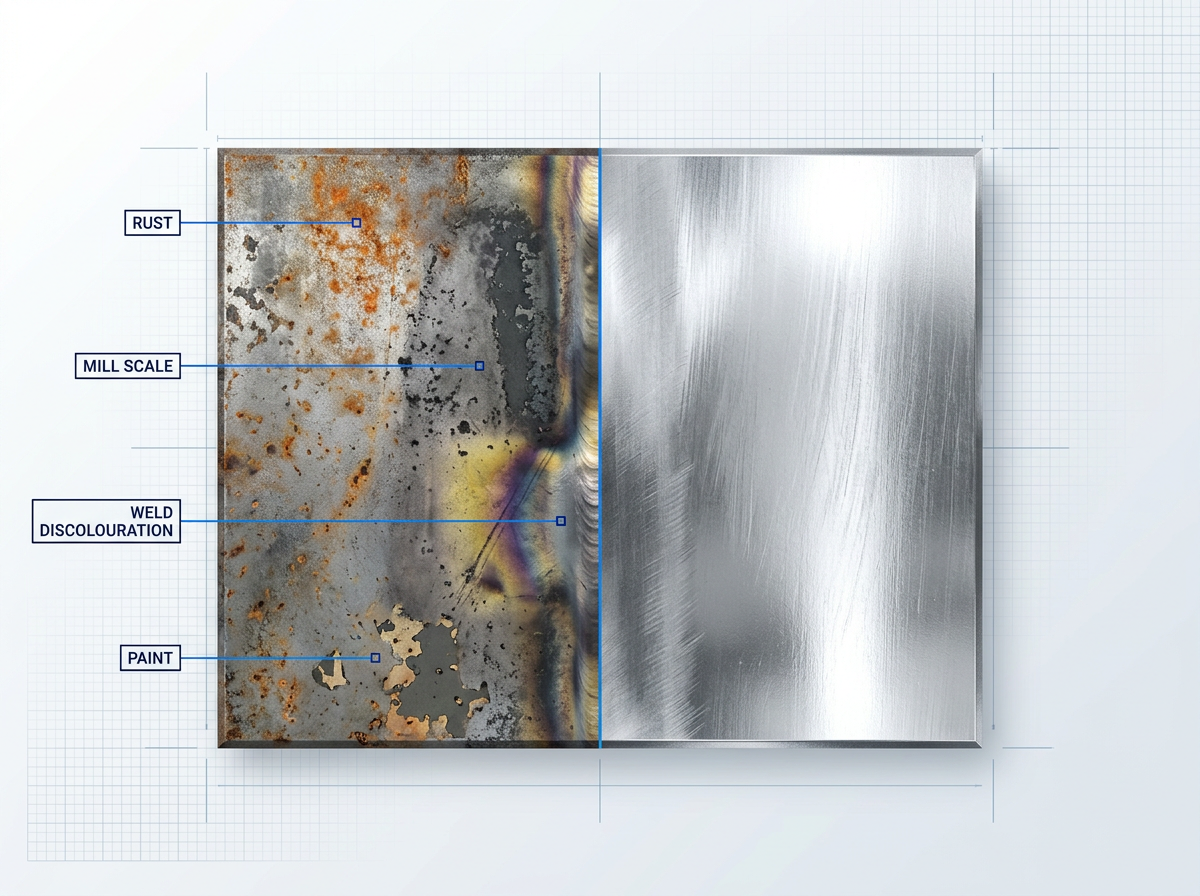
The ELASER removes: rust, oxides, mill scale, paint, powder coating, lacquer, primer, oil and grease, carbon and soot, mould, graffiti, adhesives and residues, tarnish, weld discolouration and release agents.
Up to 300 W Fibre Laser
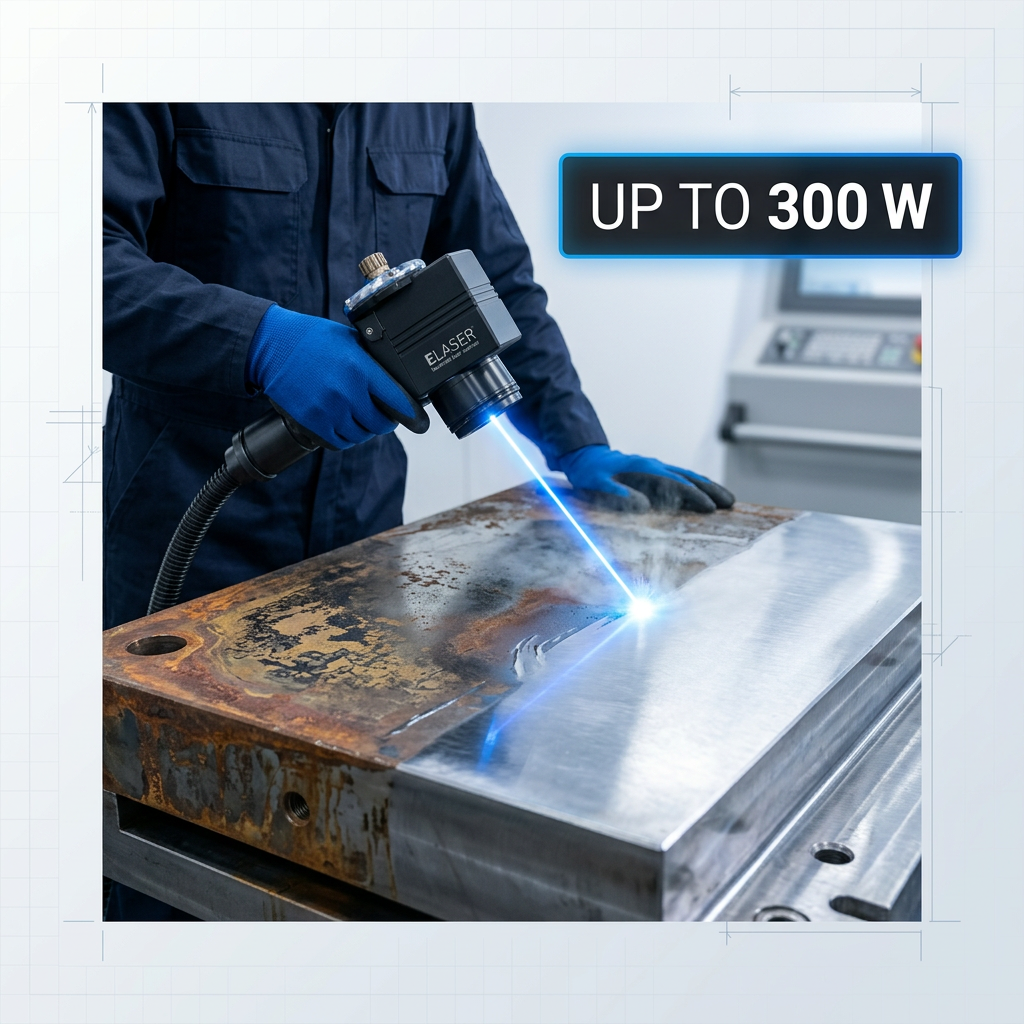
The ELASER delivers up to 300 W of fibre laser output — the capability ceiling for a rental cleaning machine designed and built in-house by WSL. That output is sufficient for the most demanding tasks a hire user is likely to face: thick paint, heavy rust, mill scale, powder coating, and stubborn coatings across metals and masonry. One machine, one hire, with the power headroom to handle it all.
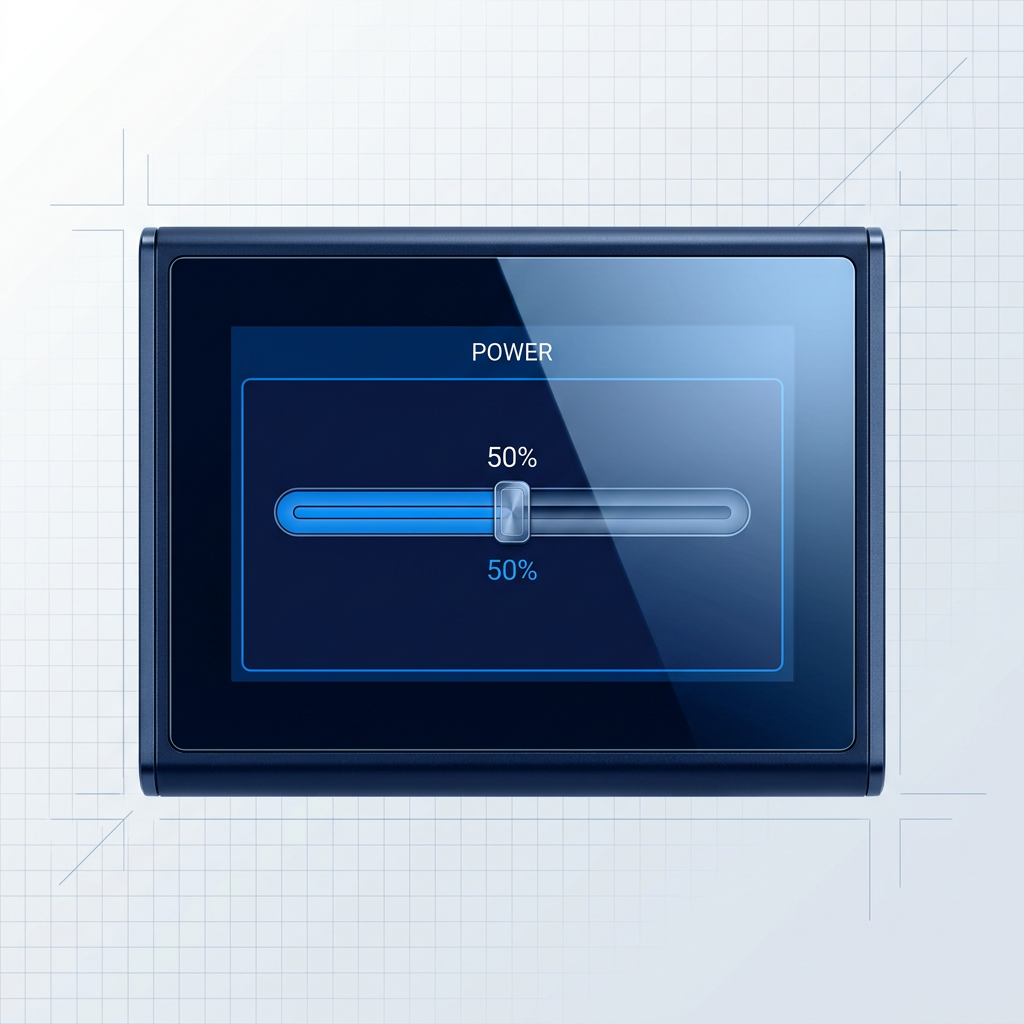
0–100% Adjustable via Touchscreen
Power is tunable across the full 0–100% range through the touchscreen GUI — no hardware swaps, no technician call. Dial down for light oxides, tarnish, or weld discolouration where preserving the substrate is the priority; dial up for thick coatings, heavy rust, and mill scale. For a rental user without specialist laser knowledge, this means adapting the machine to your specific job is a straightforward on-screen parameter change.
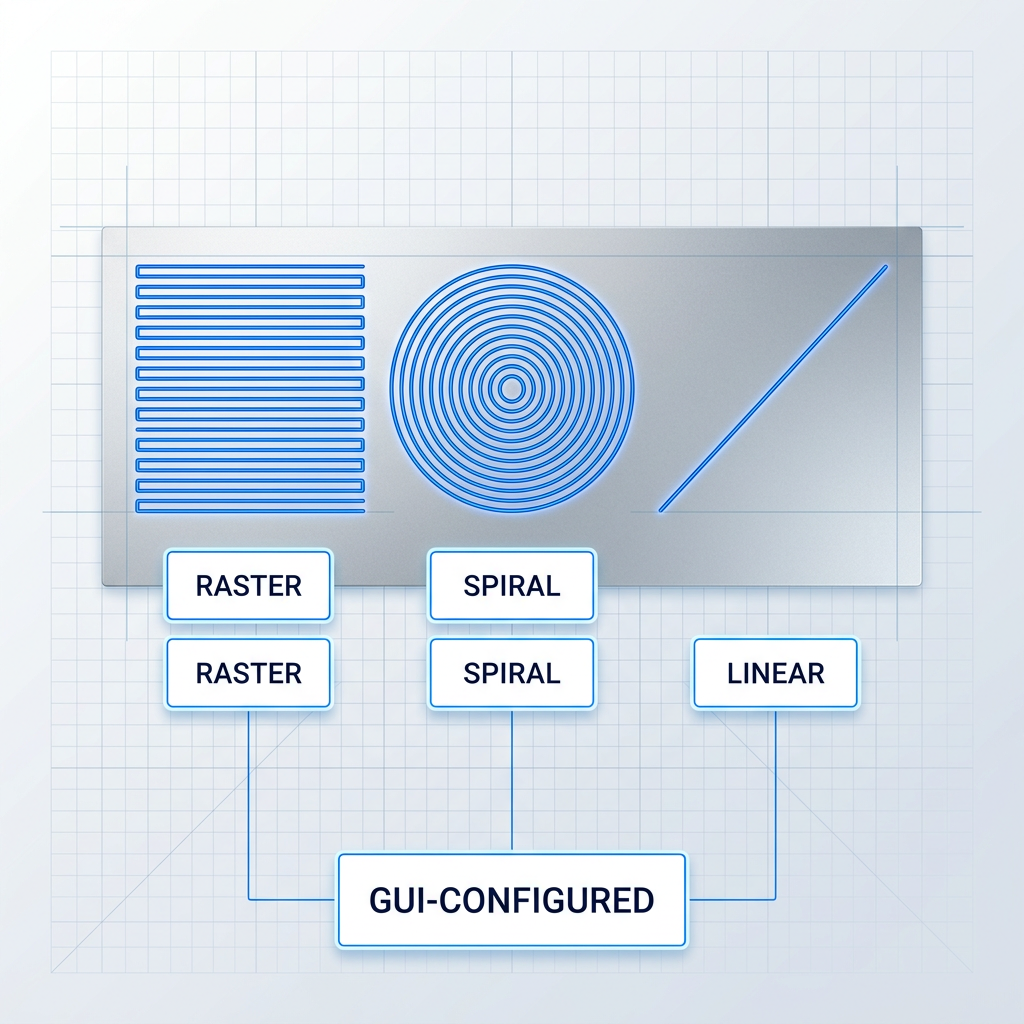
Fully Programmable Cleaning Patterns
The 2-D galvanometer scanner supports fully programmable scan shapes, configured through the same touchscreen GUI. The operator sets the path and pattern the laser traces across the surface to match the geometry of the job — no specialist laser knowledge required. Whether the workpiece is flat, irregular, or awkward, the machine adapts to it. At up to 10 m/s scan rate, pattern changes are a software adjustment, not a hardware problem.
75–500 mm Working Distance
Interchangeable F-Theta lenses give the ELASER a working distance range of 75–500 mm, covering the access constraints you are likely to encounter on site: tight recesses, elevated structures, and awkward surface geometry. Rather than being locked to a fixed focal length, the operator selects the lens that suits the physical situation. Lens-protection windows are included and replaceable, keeping the optics protected across the duration of the hire.
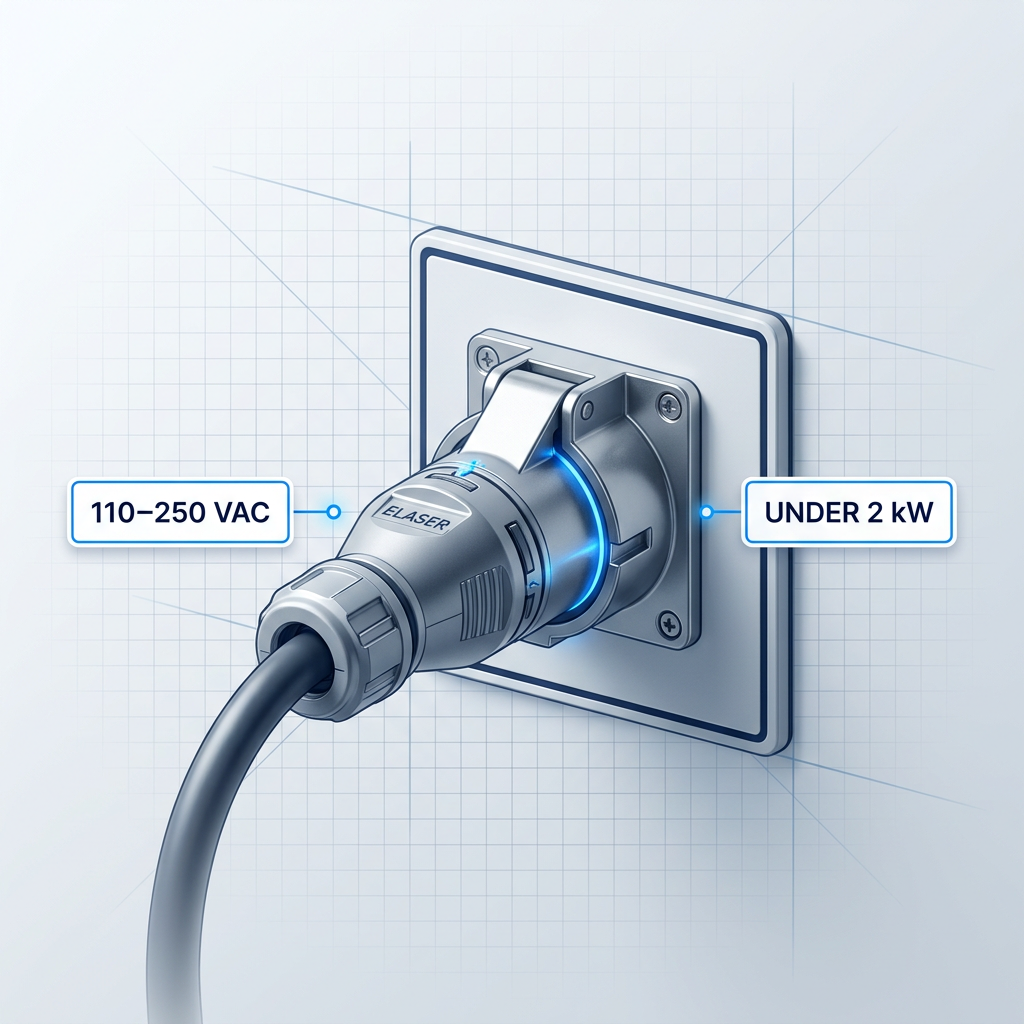
Runs from Any Site Socket
The ELASER runs on a standard single-phase supply (110–250 VAC) and draws less than 2,000 W. For a rental user arriving at an unfamiliar site, that means no dedicated power circuit, no generator, and no electrician. If there is a standard socket available, the machine can run from it. Practical site compatibility is built into the specification — not something you need to plan around.
ELASER-RHZ: Clean Without Clearing the Area
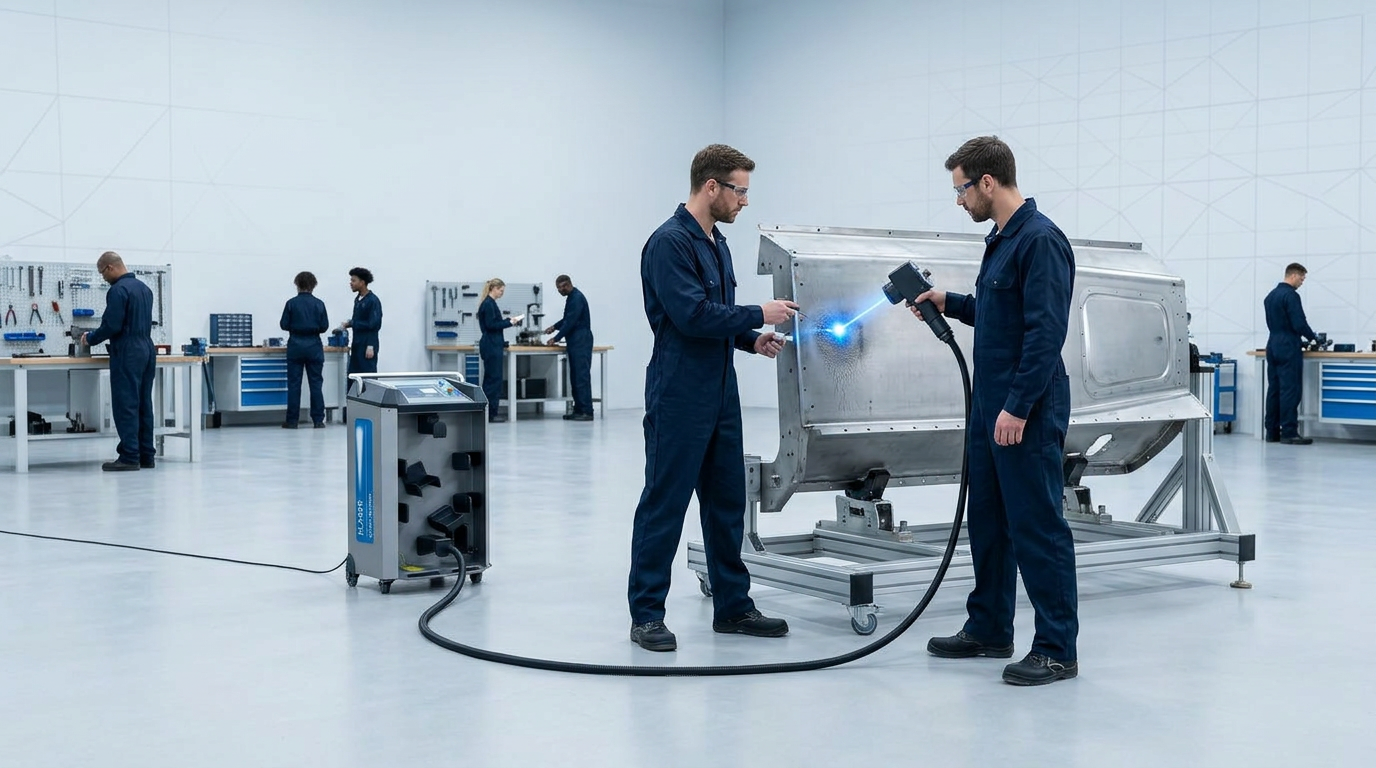
Conventional laser cleaning demands the surrounding area be cleared before work begins — a barrier that rules it out on live sites. The ELASER-RHZ removes that overhead. WSL's patented, world-first eye-safe technology confines the laser hazard zone to a small area around the work. No evacuation. No shutdown. The rest of the site keeps running.
This unlocks laser cleaning in open-plan manufacturing, mixed-use facilities, and public-facing settings such as graffiti removal and heritage restoration. For rental users without a dedicated laser safety officer or the ability to halt adjacent operations, the RHZ makes the machine deployable where a standard laser cannot go.
See the ELASER-RHZ in Full Detail
The ELASER-RHZ brings patented eye-safe technology to live industrial sites. Explore the full product page to understand its specifications and capabilities before enquiring about rental.
Electricity Only. Nothing Else.
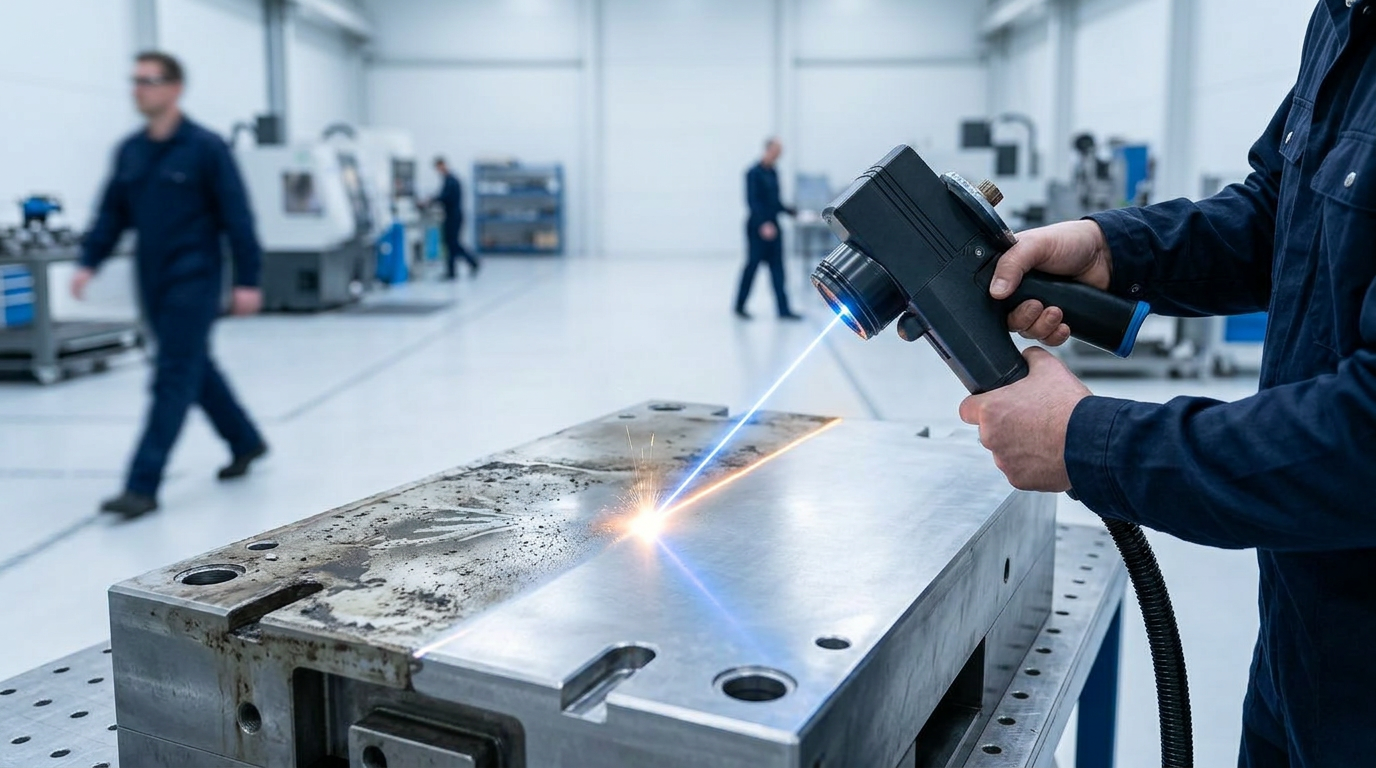
Laser cleaning runs on electricity alone. There is no abrasive media to purchase and replenish, no chemicals to source, store, or dispose of. Sandblasting carries ongoing media costs plus hazardous waste disposal; chemical stripping adds chemical procurement, compliance, and licensed carrier collection on top.
With laser cleaning, the running cost per job is near zero once the machine is in operation — no consumables means the total cost of the work is just electricity and operator time.
Beam Stops at the Base
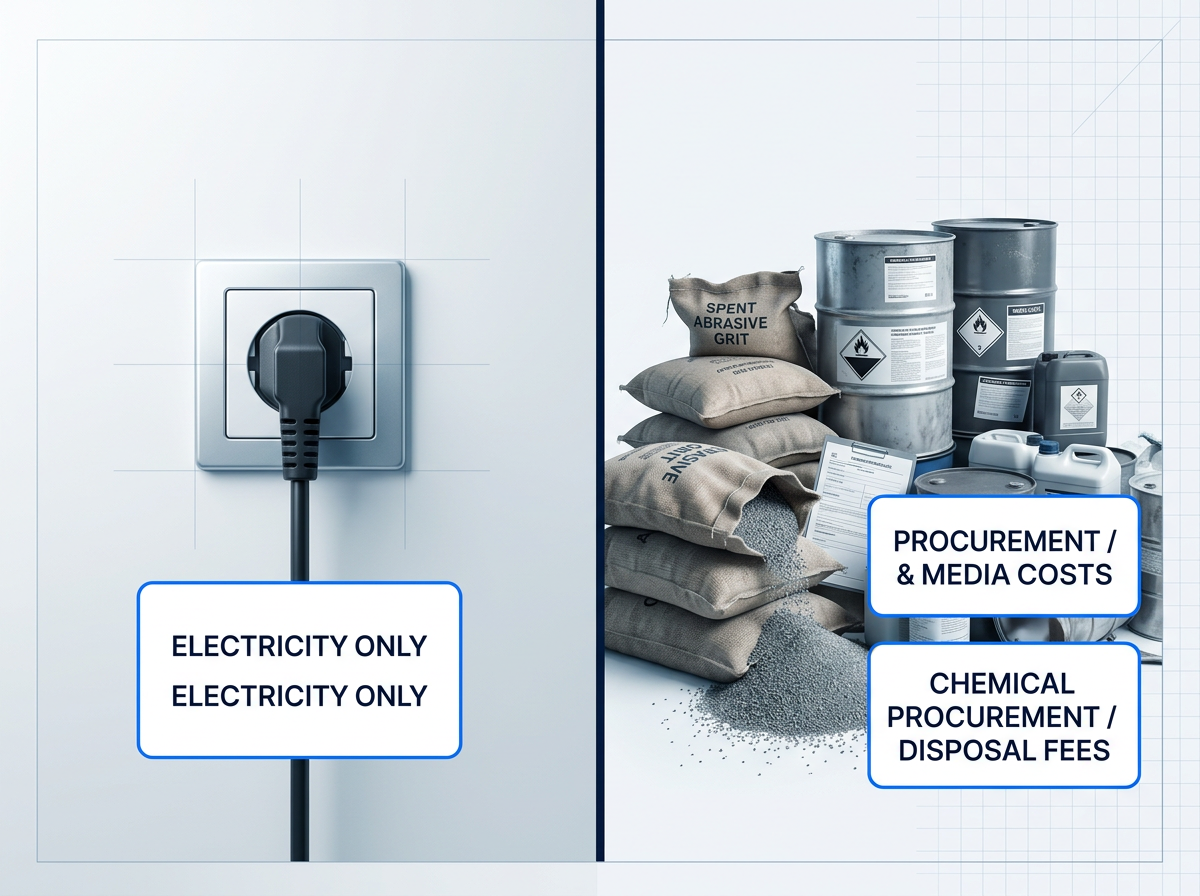
The laser beam is absorbed preferentially by the contamination layer — rust, paint, oxide — which vaporises and is ejected. The base material absorbs far less energy and remains largely intact. Sandblasting works differently: it abrades both contaminant and substrate simultaneously, creating surface roughness and altering geometry where tolerances matter.
Minimal substrate loss means the cleaned surface is accurate, dimensions are preserved, and less rework follows. For precision components or surfaces that must hold tight tolerances, this is not a minor distinction.
Only Extractable Fumes
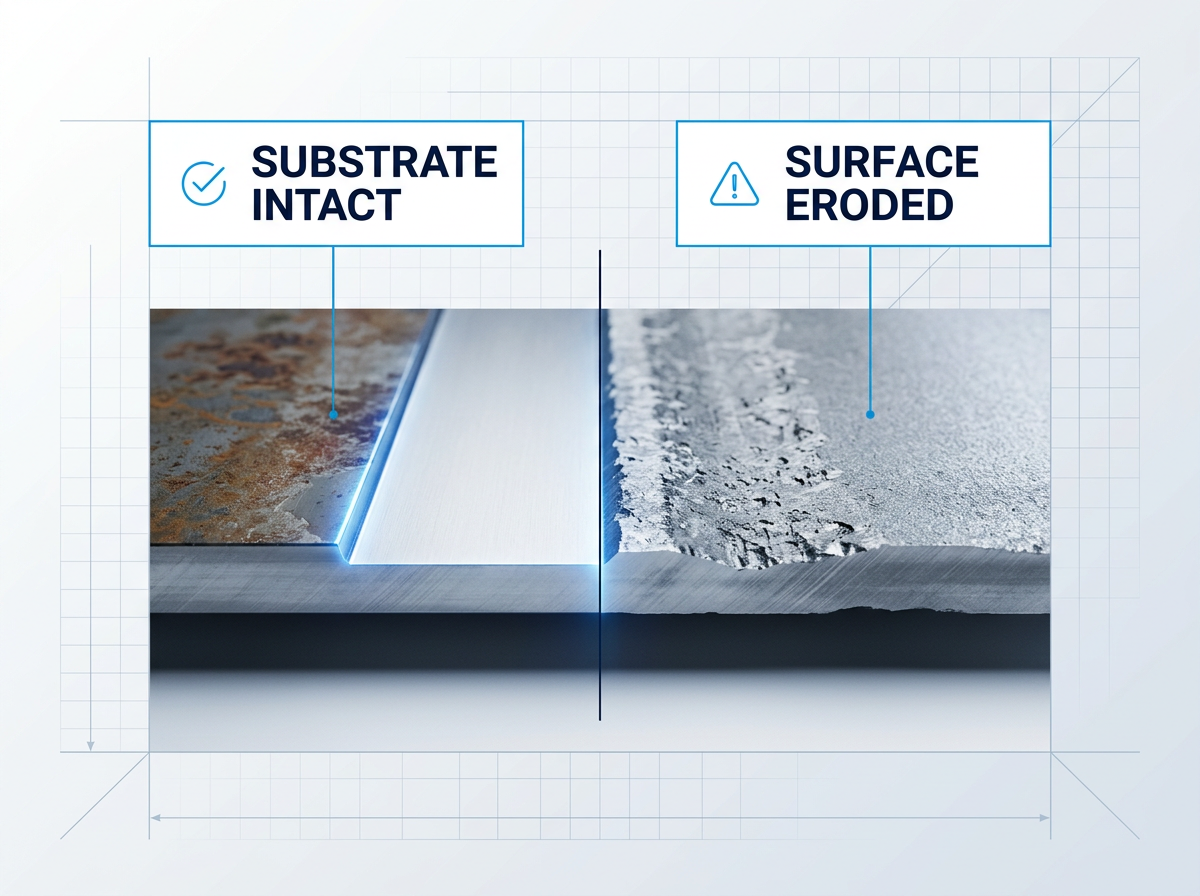
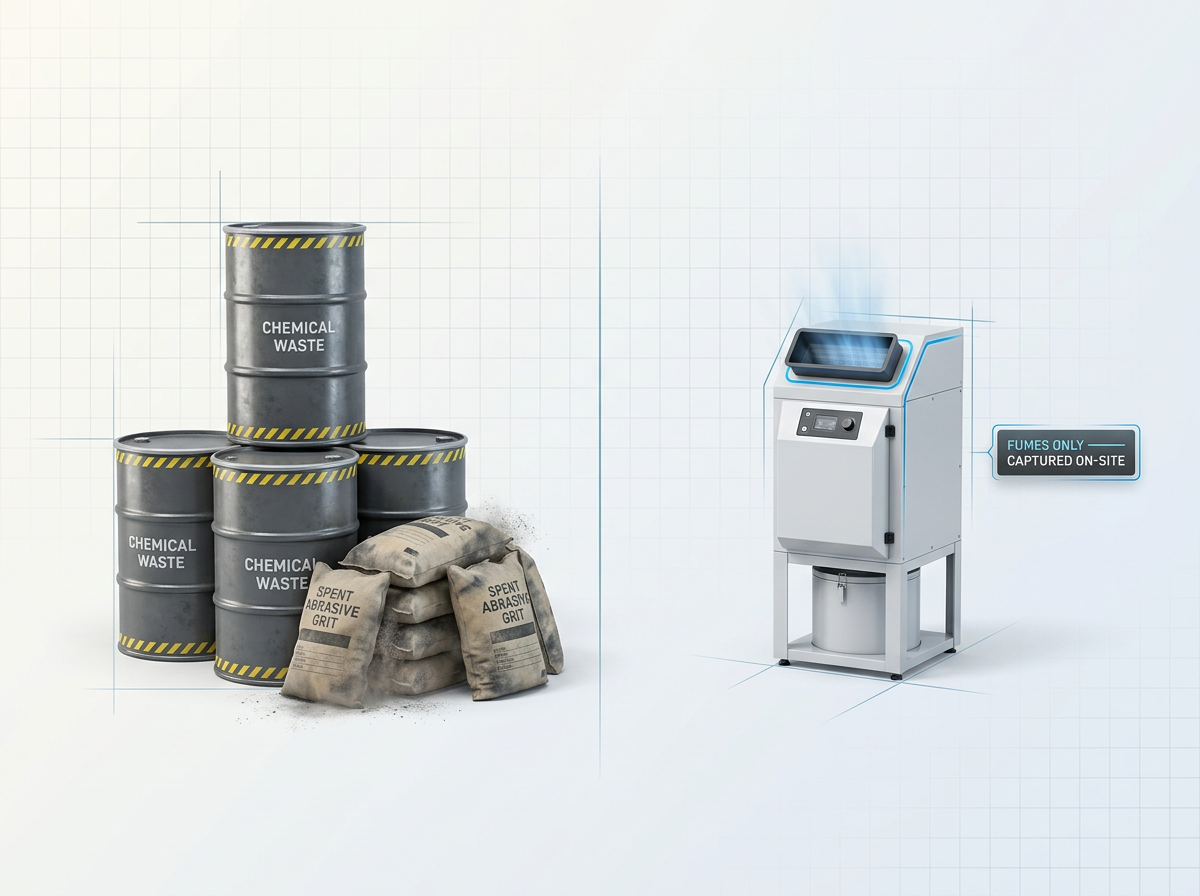
Sandblasting generates spent abrasive media and dust, both requiring containment, collection, and disposal — and if the coating being removed contains lead or heavy metals, the spent media becomes classified hazardous waste. Chemical stripping produces spent acids or solvents that almost always require formal waste disposal reporting and licensed carrier collection.
Laser cleaning produces only extractable fumes: a localised, manageable output captured by the extraction unit. No media to bag, no chemical waste to handle. On a job site, that is a practical advantage that directly reduces time and overhead.
Arrive, Set Up, Clean, Leave
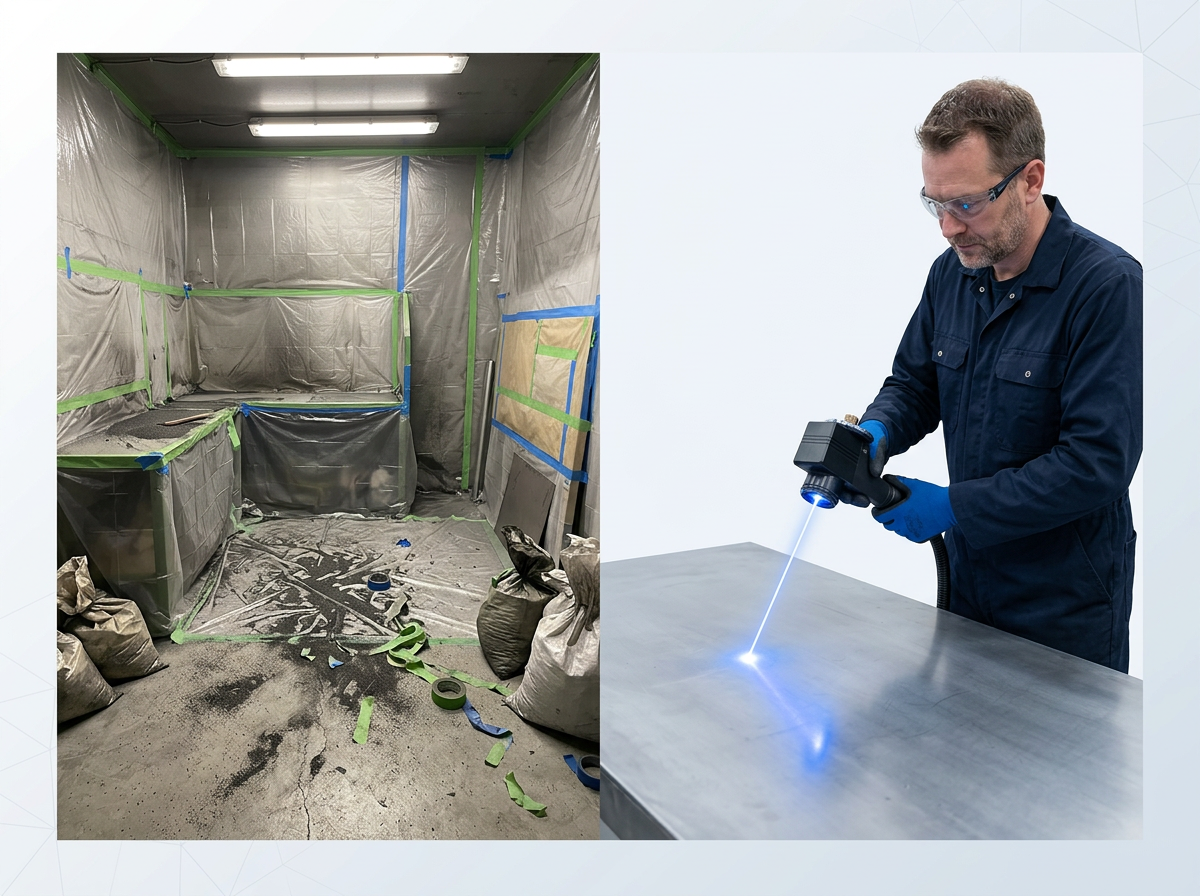
Blasting requires masking adjacent surfaces, erecting containment, and clearing spent media after the job. Chemical stripping adds application time, dwell time, neutralisation, and cleanup before the site is clear. Neither method is fast to mobilise or demobilise.
Laser cleaning requires none of that. There is no masking, no containment to erect, and no post-process media to remove. For a rental user paying for time on site, the difference in mobilisation speed is direct and measurable — the job starts sooner and finishes cleaner.
Clean Only What Needs It
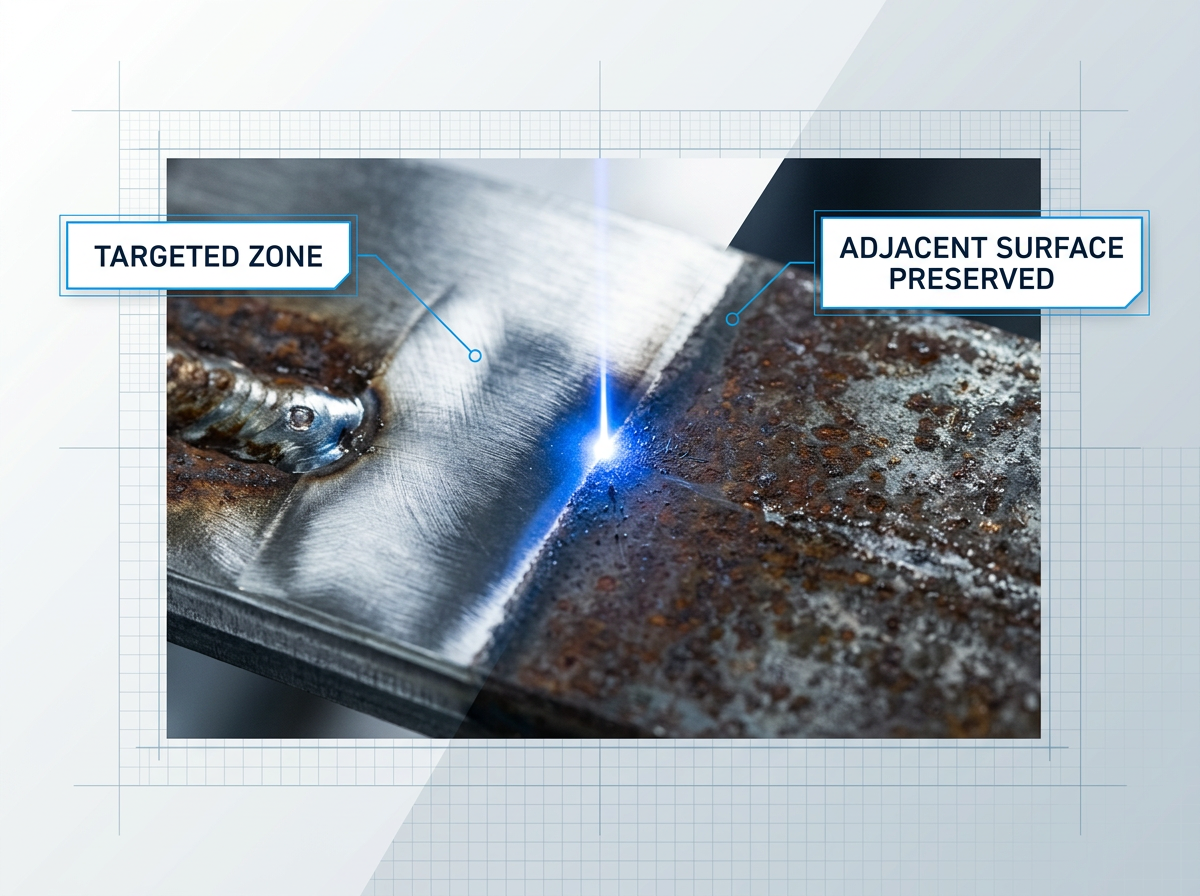
A laser can be directed to treat a specific zone — a weld bead, a corroded patch, a graffiti mark — without affecting adjacent coated or treated surfaces. Sandblasting cannot achieve this: the blast pattern is wide and the media contacts everything in range, making selective treatment impractical.
For maintenance and restoration work where surrounding surfaces must be preserved, this selectivity is a decisive practical advantage. It is also why laser cleaning is the method of choice for partial decoating, post-weld HAZ treatment, and heritage restoration where precision is non-negotiable.
What's Included and How to Hire the ELASER
The rental package includes the wheeled unit, handheld scanner, and delivery cable. Contact WSL to confirm the exact contents for your hire. First-class laser cleaning safety and operation training is available from WSL, so your operator is productive from day one.
Both the ELASER and the ELASER-RHZ (WSL's patented, world-first eye-safe variant) are available to hire. Describe your working environment when you enquire and WSL will recommend the right machine. Pricing is by quote. As the UK's only laser cleaning manufacturer, WSL supports every rental directly — no reseller chain.
Certified Equipment, Declared Class, Full Operator Training
The ELASER is CE and UKCA certified, meeting UK and EU machinery safety requirements. Laser class is declared: the standard ELASER is Class IV; the ELASER-RHZ is Class I when RHZ technology is active. Fume extraction is recommended as standard good practice during operation.
WSL provides first-class laser cleaning safety and operation training before your hire period begins — delivered by the engineers who designed and built the machine. The touchscreen interface includes password-protected access and per-user logins, so usage is tracked and access stays controlled across your team throughout the rental.
Laser Sander Rental: Frequently Asked Questions
Common questions about laser cleaning rental — from how the technology works to what to expect when hiring the ELASER.
Yes — WSL offers the ELASER portable laser cleaning system for hire, and both the standard ELASER and the ELASER-RHZ (reduced hazard zone) variants are available for rental. Pricing is by quote, so contact WSL to discuss your application, required hire duration, and delivery logistics.
The ELASER can be used on certain wood surfaces — including heritage timber and painted or coated wood — but laser cleaning on wood requires careful parameter selection to avoid scorching or surface damage. Before booking, contact WSL to confirm the right approach for your specific application.
Yes — laser cleaning is a well-established industrial process, not an emerging experiment. The principle is laser ablation: a focused beam is absorbed by the contamination layer (rust, paint, oxides, coatings), which vaporises and is ejected, while the base material beneath absorbs far less energy and remains intact. It is used industrially for rust removal, paint stripping, weld cleaning, and coating removal across metals, stone, and masonry. WSL's ELASER delivers up to 300 W of tunable fibre laser power and is in active industrial use across multiple sectors — designed, built, and supported in-house by the UK's only laser cleaning manufacturer.
Two genuine trade-offs are worth knowing. First, purchasing a laser cleaning machine outright carries a higher upfront cost than sandblasting or chemical stripping. Second, on very large, flat surfaces, laser cleaning is generally slower than high-power blasting methods. These are real, and it is better to be straightforward about them. That said, context matters significantly. For precision work, selective cleaning, and applications where substrate preservation and waste minimisation are priorities, laser cleaning is typically the superior choice — no consumables, no chemical waste, and less rework from surface damage. The ELASER rental model removes the upfront cost barrier entirely: you pay only for the hire period, with none of the capital outlay of ownership. Contact WSL to discuss whether the ELASER is the right fit for your job.