
Introduction
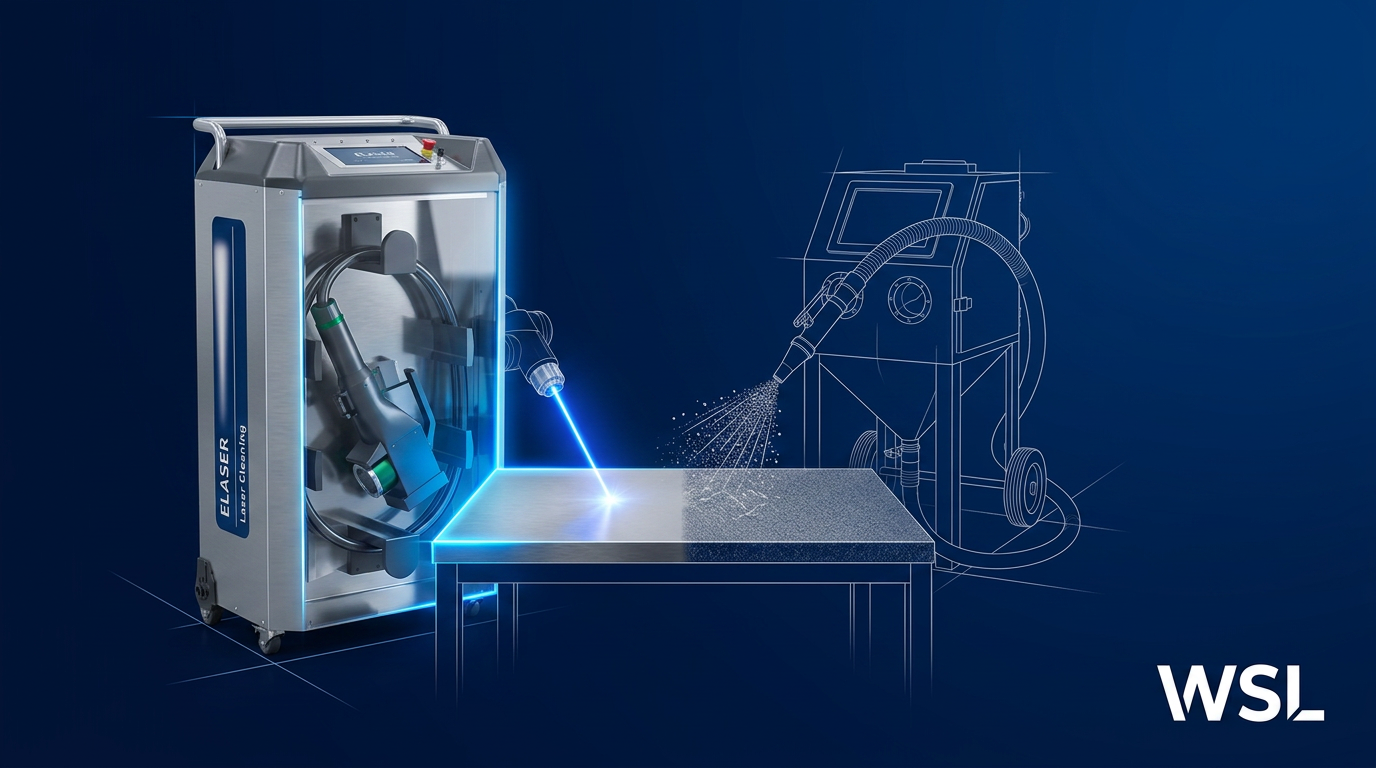
If you work in surface preparation, you already know sandblasting — its strengths, its quirks, and the jobs it handles without complaint.
Laser cleaning has been entering that conversation more often lately, and the question of whether it belongs in your operation deserves a straight answer: the right method depends on your application, not on which technology is newer.
Sandblasting remains the better fit for plenty of work — this guide exists to help you work out which side of that line your situation falls on.
TL;DR
Neither laser cleaning nor sandblasting wins outright. The stronger choice shifts depending on your substrate, the scale of the job, the environment you are working in, and what the surface needs to do afterwards. Understanding why the answer is conditional — not just what the answer is — is what makes the difference between a good equipment decision and a costly one.
This article covers:

How laser cleaning and sandblasting work
Where each method has a clear advantage
The honest limitations of laser cleaning
Environmental and safety profile of both methods
Cost and total cost of ownership
How to match the right method to your application
What is laser sand blasting? Understanding the two technologies
The term laser sand blasting is itself a small puzzle: it fuses the name of one technology onto the mechanism of another. Laser cleaning and sandblasting both remove surface contamination, but they do so through fundamentally different physical processes. Understanding each mechanism precisely is what makes every comparison in this guide meaningful.
How laser cleaning works
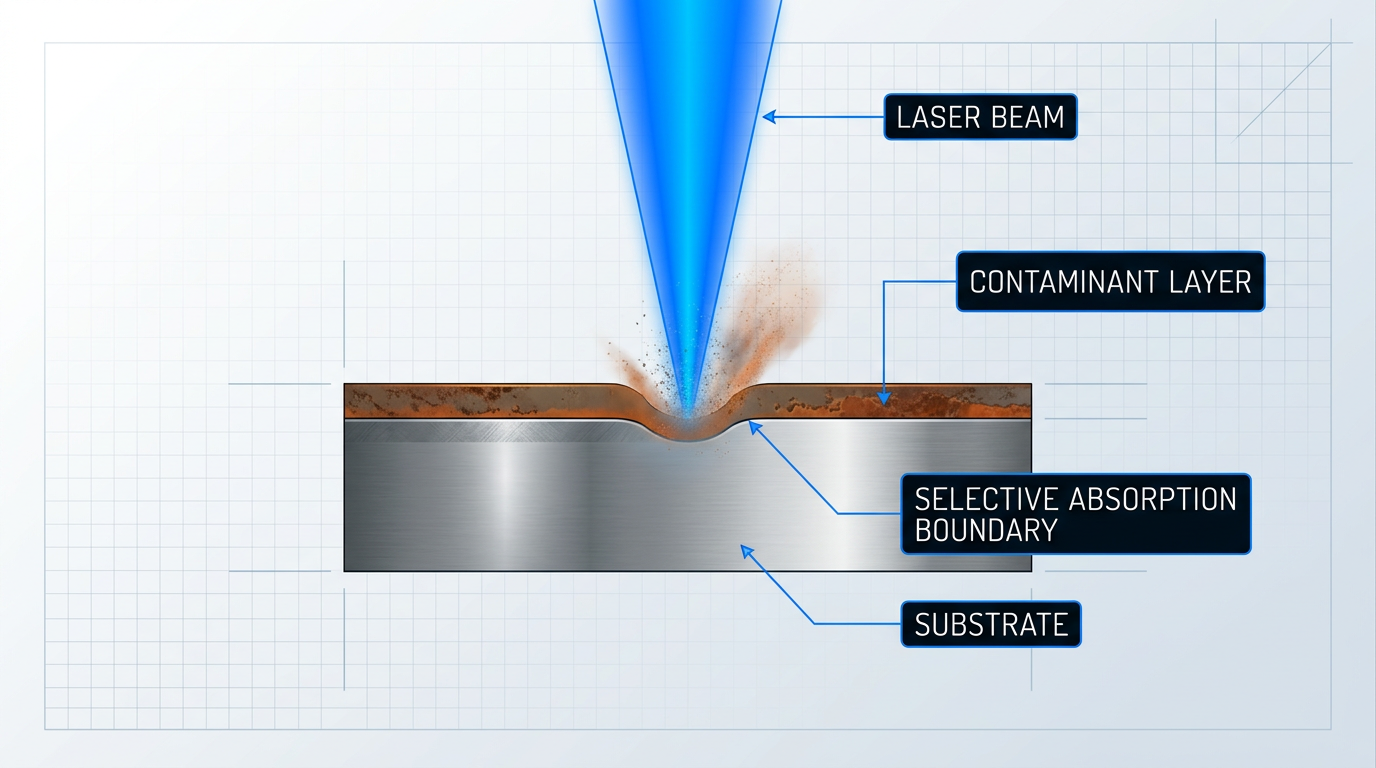
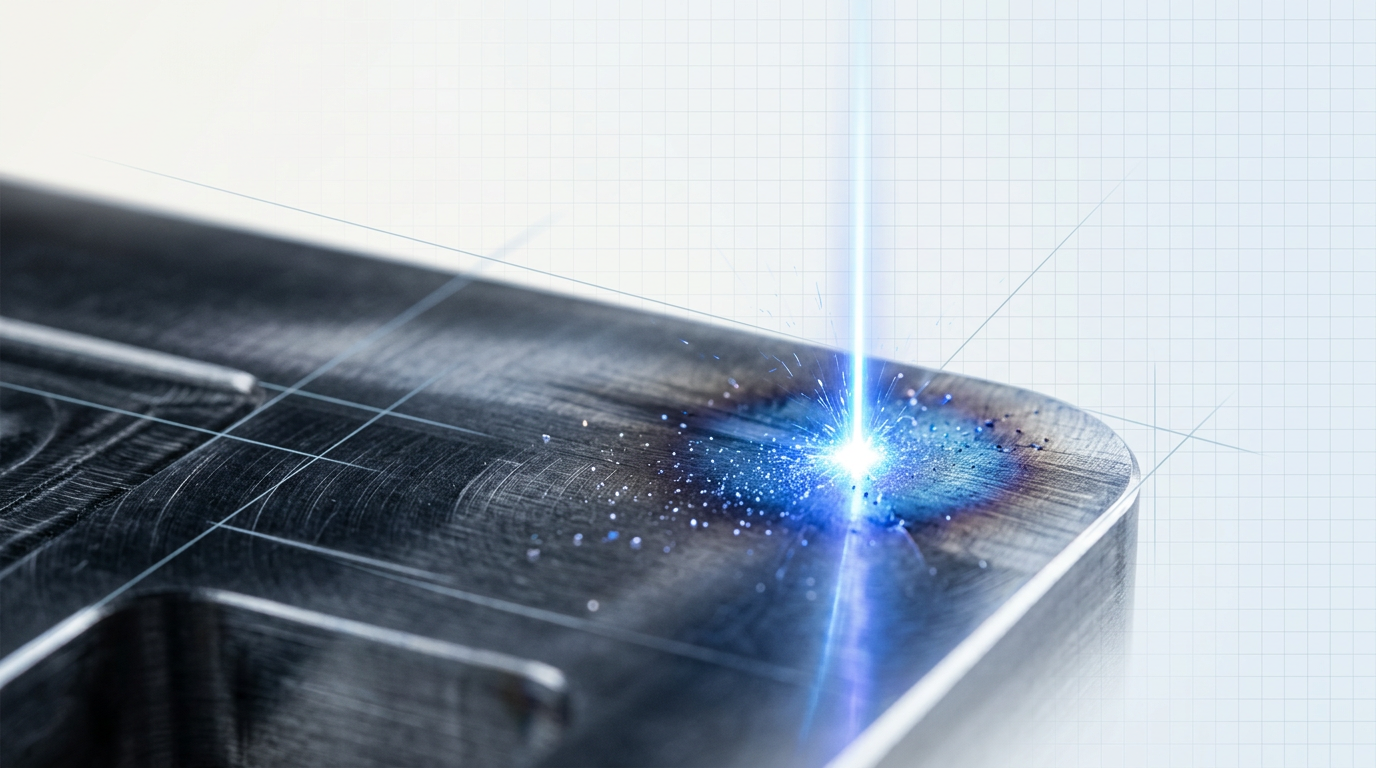
Laser cleaning applies the principle of laser ablation to surface contamination: a focused beam delivers concentrated energy directly onto the unwanted layer, causing it to heat rapidly, vaporise, or detach from the substrate — all without any physical contact between the tool and the surface.
The key to understanding why this works so precisely is selective absorption: contaminant materials such as rust, paint, or oxide films absorb laser energy far more efficiently than the underlying substrate metal beneath them.
Because the contaminant layer reaches its ablation threshold before the substrate does, the beam preferentially removes the unwanted material while leaving the base material largely unaffected — the physics of the process does the discriminating, not the operator.
Depending on the contaminant type and the energy delivered, ablation occurs through one of three mechanisms: thermal (heating and vaporisation), photomechanical (stress-induced spallation from rapid expansion), or photochemical (direct bond-breaking at the molecular level).
In industrial practice, pulsed fibre lasers have become the standard platform for laser cleaning. Short, high-energy pulses deliver precise energy doses to the surface without allowing sustained heat to build up in the substrate — giving operators repeatable, controllable ablation across a range of contaminant types.
How sandblasting works
Sandblasting, more accurately called abrasive blasting, works on a straightforward kinetic principle: abrasive media is accelerated by compressed air through a nozzle and propelled at high velocity against the target surface, mechanically dislodging contaminants through repeated impact.
Unlike laser cleaning, the process is inherently non-selective: the abrasive particles cannot distinguish between the contaminant layer and the substrate beneath it, so some base material is always removed as a by-product of the mechanical action.
The surface outcome is governed by four interacting process variables: blast pressure, nozzle distance, impact angle, and media type and grit size. Adjusting any one of these shifts the balance between cleaning aggressiveness and substrate removal depth.
The measurable result of this interaction is expressed as a surface roughness profile — quantified using Ra (average roughness) and Rz (mean peak-to-valley height) values. These figures describe the texture the blasting process leaves on the substrate, which becomes directly relevant when evaluating substrate impact and coating preparation later in this guide.
A terminology note worth carrying forward: sandblasting is a legacy name. Modern industrial practice rarely uses actual silica sand as the abrasive medium. Engineered media — garnet, aluminium oxide, steel grit, and glass bead — have largely replaced it, each selected for specific hardness, grit size, and surface finish requirements.
Laser cleaning is a selective, non-contact process: it stops at the substrate boundary because the physics of absorption make it do so. Sandblasting is a mechanical abrasion process: it profiles the substrate as an unavoidable by-product of how it removes contaminants. This difference underpins every comparison that follows.
With both mechanisms established, the operational consequences of that distinction start to carry real weight — beginning with how each method treats the surface it cleans.
Precision and substrate impact: how each method treats material
When evaluating laser cleaning versus sandblasting, the sharpest practical difference is not speed or cost — it is what each method does to the base material sitting beneath the contamination layer.
Laser cleaning removes contaminants through selective absorption: rust, oxide, and paint absorb the laser pulse at a far higher rate than the clean metal substrate beneath them, so the contaminant superheats and vaporises while the base material remains essentially at ambient temperature.
The practical consequence is that substrate loss is negligible — pulsed laser systems reliably hold dimensional tolerances of ±0.02–0.05 mm on precision components, a level of control that matters directly on machined surfaces, bearing journals, and thin-walled parts where any material removal is a quality failure.
Sandblasting works by a fundamentally different mechanism: abrasive particles transfer kinetic energy on impact, displacing both the contaminant and a measurable layer of the base material simultaneously.
This is not a flaw that better technique can eliminate — it is inherent to kinetic abrasion, and it produces a measurable surface profile characterised by Ra (average roughness) and Rz (mean peak-to-valley height) values that vary with media type, grit size, and blast pressure.
The table below shows representative Ra and Rz values for the most common sandblasting media across the grit sizes used in industrial coating preparation, drawn from production measurements on mild steel substrates.
| Media Type | Grit / Size | Ra (µm) | Rz (µm) | Typical Coating Application |
|---|---|---|---|---|
| Glass Bead | #220 | 0.4–0.6 | 2.5–3.5 | Cosmetic / aesthetic finish |
| Glass Bead | #100 | 0.8–1.2 | 4.5–6.5 | General cosmetic blast |
| Aluminum Oxide | #120 | 1.3–1.7 | 8–10 | General coating preparation |
| Aluminum Oxide | #80 | 1.8–2.3 | 10–14 | Industrial coating prep, aerospace primer |
| Aluminum Oxide | #36 | 3.2–4.0 | 18–24 | Heavy fabrication prep |
| Garnet | 30/60 mesh | 2.5–3.5 | 15–22 | Marine, offshore, structural steel |
| Garnet | 20/40 mesh | 4.0–5.5 | 25–32 | Aggressive structural blast |
| Steel Grit | G-80 | 2.0–2.8 | 12–16 | Pre-paint, fine industrial |
| Steel Grit | G-40 | 3.6–5.0 | 22–30 | Heavy fabrication, shipyards |
| Steel Grit | G-25 | 5.5–7.5 | 35–45 | Aggressive descaling |
| Coal Slag | 20/40 mesh | 4.0–7.0 | 25–42 | Heavy field blasting |
Surface roughness (Ra and Rz) produced by common sandblasting media types and grit sizes on mild steel, with typical coating application context.
The practical range is significant: fine glass bead produces Ra values as low as 0.4 µm, while coarse steel grit reaches 7.5 µm — and Rz values, which measure the extreme peak-to-valley depth that coatings must bridge, run five to eight times higher than Ra on the same surface.
For downstream processes sensitive to surface condition variability — welding, adhesive bonding, precision coating — this range matters: manual blasting introduces operator-to-operator inconsistency in both profile depth and cleanliness, and parts with thin walls or tight tolerances may be dimensionally out of specification after blasting removes 25–75 µm of substrate material.
Laser cleaning's precision extends beyond depth control to spatial selectivity: the beam can be directed to clean a defined zone without disturbing adjacent surfaces, features, or materials — relevant for components with mixed substrates, sensitive coatings on neighbouring surfaces, or complex geometry where abrasive media physically cannot be confined.
Sandblasting cannot replicate this spatial control: abrasive media scatters across the work area on impact, and there is no practical way to restrict cleaning action to a precise target zone once the blast is initiated.
Both laser cleaning and sandblasting can achieve ISO 8501-1 Sa 2.5 (near-white) and Sa 3 (white metal) on carbon steel. The critical distinction is that laser cleaning reaches those cleanliness grades without increasing surface roughness above the original substrate condition, while sandblasting achieves them while simultaneously creating an anchor profile. Whether that profile is needed is determined entirely by the downstream application.
That last point deserves emphasis: the anchor profile created by sandblasting is a designed outcome, not a by-product to be minimised.
For heavy-build coating systems — epoxy, zinc-rich primer, inorganic zinc silicate, thermal spray (HVOF) — coating manufacturers specify a minimum Ra and Rz precisely because mechanical interlocking between the coating and substrate is what drives long-term adhesion; without that profile, the coating specification cannot be met regardless of cleanliness grade.
If your downstream coating specification calls for an Ra of 4–8 µm or an Rz of 25–80 µm, sandblasting with the appropriate media and grit is the correct preparation method — laser cleaning's dimensional precision is irrelevant to that requirement, and its smooth post-clean surface would actually work against coating adhesion targets.
The substrate-integrity axis, then, is not a universal argument for laser cleaning: it is the dominant decision criterion when dimensional tolerance, thin-wall geometry, or surface condition consistency governs the application, and it yields to sandblasting's anchor profile advantage when the coating specification demands mechanical interlocking.
How each method treats the substrate is only one dimension of the comparison — the working environment, waste streams, and safety requirements generated by each process diverge just as sharply, and those differences are covered next.
Environmental and safety profile: dust, waste, and site requirements
For many practitioners, the environmental and safety profile of a surface preparation method is not a compliance checkbox — it is the deciding factor that determines whether a job is even feasible on a given site, in a given building, or within a given regulatory environment.
Sandblasting: airborne dust and the silica hazard
Sandblasting generates significant airborne dust during operation, drawn both from the abrasive media itself and from the stripped surface material — paint residues, rust particles, and metal oxides all become airborne as the blast stream works.
The most serious component of that dust cloud is respirable crystalline silica (RCS): microscopic particles capable of penetrating deep into the lungs, where they can cause silicosis, lung cancer, and COPD — the basis for OSHA's crystalline silica standard (29 CFR 1926.1153) and the UK's COSHH framework.
The regulatory response has been direct: under COSHH Schedule 2, the use of sand or any substance containing 1% or more free silica for abrasive blasting of articles is prohibited in the UK, a position HSE has held since the repeal of the Blasting (Castings and Other Articles) Special Regulations 1949.
In the US, OSHA sets a permissible exposure limit (PEL) of 50 µg/m³ as an 8-hour time-weighted average, with an action level of 25 µg/m³ that triggers mandatory exposure assessment — limits that reflect the severity of the health risk, not a precautionary preference.
Modern engineered media — garnet, aluminium oxide, steel grit — reduces but does not eliminate the dust hazard: HSE's OC 273/18 notes that substitute abrasives can themselves pose health risks depending on their composition, and OSHA's OSHA3697 publication confirms that employers must protect workers from hazardous dust generated by both the blasting material and the underlying substrate.
PPE and employer compliance obligations
The personal protective equipment requirements for sandblasting operators are substantial — and go well beyond a dust mask.
- Airline respirator (Type CE): A NIOSH-certified abrasive blasting helmet with positive-pressure airline supply — not a filtering facepiece. Required by both OSHA and HSE CN7 guidance.
- Full coveralls and gloves: Blasting suits that do not retain dust, protective gloves extending to the forearm, and safety footwear. Contaminated clothing must not be laundered at home.
- Hearing protection: Required under OSHA's Occupational Noise standard; blasting operations routinely exceed safe exposure levels without protection.
- Eye and face protection: Visor replacement required as soon as pitting or frosting occurs; the blast environment degrades protection rapidly.
- Support personnel RPE: HSE CN7 requires RPE with an APF of at least 20 for nearby workers (the 'kettleman'), not just the primary blaster.
Beyond individual PPE, the employer compliance burden is significant: OSHA's silica standard requires a written exposure control plan, designation of a competent person to conduct regular site inspections, an air monitoring programme, and medical surveillance — including chest X-rays and lung function tests every three years — for any worker required to wear a respirator for 30 or more days per year.
These are not optional best-practice recommendations; they are enforceable regulatory requirements under both the OSHA construction standard and the HSE COSHH framework, and they represent a real overhead in project planning, administration, and cost.
Containment, site setup, and post-blast waste
Effective sandblasting requires containment structures — sheeting, barriers, and curtain walls — to prevent media and dust migration beyond the work area, along with exhaust ventilation systems to capture airborne particulate within the enclosure.
Post-blast, spent abrasive media must be collected, managed, and disposed of — a logistical overhead that scales directly with the surface area processed, potentially reaching hundreds of kilograms of waste per shift.
Where the substrate carries hazardous coatings — lead-based paint is common in heritage structures, older infrastructure, and industrial fabrications — spent media contaminated with lead compounds may be classified as hazardous waste, requiring licensed transport, signed manifests, and regulated disposal facilities.
This disposal burden is a real project cost that rarely appears in headline hourly rates for sandblasting, and practitioners should account for it explicitly when comparing methods on total project economics.
Laser cleaning: waste profile and environmental advantages
Laser cleaning produces no abrasive media waste at all — the process is entirely dry, with no blast material introduced to the work area and none to collect or dispose of afterwards.
The only by-product is a small volume of dry particulate — vaporised contaminant captured at source by a local exhaust ventilation (LEV) system equipped with HEPA filtration, typically HEPA H14 grade, which achieves greater than 99.97% capture efficiency at 0.3 micron.
Because the contaminant is captured dry at the point of ablation rather than mixed with spent abrasive, the waste volume per shift is dramatically lower and disposal is considerably simpler — in most rust and oxide removal applications on clean steel, the collected filter particulate classifies as ordinary industrial solid waste rather than hazardous waste.
This chemical-free, media-free profile is a practical operational advantage in specific contexts: indoor operations where dust migration is unacceptable, food-adjacent environments where no-rinse validation is required, heritage and public-facing settings where containment infrastructure is impractical, and sites with environmental discharge controls on watercourses, drains, or air quality permits.
One important caveat: where the substrate carries lead-based paint, chromate primers, or zinc-rich coatings, the ablation plume will carry those compounds — and the collected filter cartridge may still require hazardous waste disposal, with classification determined by the coating chemistry rather than the cleaning method itself.
Laser cleaning: safety requirements — an honest account
Laser cleaning is not a zero-risk process, and any comparison that presents it as such is not credible.
All industrial laser cleaning systems operate as Class IV lasers under ANSI Z136.1 and IEC 60825-1 — the highest hazard classification, covering lasers that are hazardous under any viewing condition, including diffuse reflection, and that present both skin and fire hazards.
Class IV operation requires a defined laser-controlled area encompassing the Nominal Hazard Zone (NHZ), mandatory laser-rated eye protection matched to the system's wavelength for all personnel within that area, a designated Laser Safety Officer (LSO), operator training, and a written standard operating procedure.
Where a Class IV laser system is fully enclosed within an interlocked protective housing, it can be operated as a Class I system — meaning no additional controls are required for the operator during normal operation, because beam access is prevented by design.
For open-beam portable systems, the hazard zone is confined to the immediate work area rather than requiring site-wide evacuation: the optical hazard is localised at the point of work, the particulate is captured at source, and the site-management burden is substantially lower than sandblasting's diffuse, area-wide controls.
Sandblasting's hazards are diffuse — airborne dust, media migration, waste contamination — and demand site-wide controls. Laser cleaning's hazards are localised — an optical hazard zone and captured particulate — and are managed at the point of work. For indoor, heritage, or discharge-controlled sites, this difference in character is often the deciding factor.
With the environmental and safety profiles of both methods understood, the next practical question is throughput — and that is where the comparison shifts considerably in sandblasting's favour.
Laser Cleaning Without the Hazard Zone Problem
Site restrictions and eye-safety requirements are often what tips the decision. The ELASER-RHZ is designed specifically to address those concerns — see how it handles them.
Speed and throughput: where each method has the advantage
On raw area coverage, sandblasting wins — and any honest comparison has to say so plainly.
On open structural steel, experienced blast crews achieve 10–25 m²/hour depending on coating thickness and nozzle configuration; high-power continuous-wave laser systems at comparable industrial scale typically reach 1–10 m²/hour on the same substrates at equivalent contamination depths.
| Method / Configuration | Typical Area Rate | Conditions |
|---|---|---|
| Sandblasting — open structural steel | 10–25 m²/hr | Flat plate, experienced crew, established containment |
| Laser cleaning — 200W pulsed | 1–5 m²/hr | Moderate rust on mild steel; precision/detail work |
| Laser cleaning — 500W pulsed | 4–8 m²/hr | Heavy rust on carbon steel, scan-width dependent |
| Laser cleaning — 1,000W pulsed | 12–18 m²/hr | Mill scale / medium rust, Sa 2.5 target cleanliness |
| Laser cleaning — 2,000W CW | 35–50 m²/hr | Light flash rust or thin mill scale, flat surface, optimised scan |
| Laser cleaning — 6,000W CW (gantry) | 70–120 m²/hr | Mass de-rust/de-coat, automated platform, heavy industry |
Direct numeric throughput comparison between sandblasting and laser cleaning across power classes and application types, grounding the raw rate discussion in traceable figures.
The picture shifts significantly as laser power scales up: a 1,000W pulsed system already approaches sandblasting rates on moderate rust, and high-power CW platforms at 2,000W+ exceed typical blast crew throughput on light contamination — though those power classes represent a different capital investment entirely, and their advantage is most realised in automated deployment rather than handheld use.
The more important point, however, is that the raw blasting rate is not the same as the project rate — and the gap between the two is where the comparison gets genuinely interesting.
- Containment setup: Erecting sheeting, frames, negative-pressure enclosures, and dust collectors before a single pound of media flies — often adding hours to mobilisation.
- Post-blast blowdown and inspection: Surface must be blown down, inspected, and cleared of residual media before coating or welding can proceed.
- Abrasive media recovery: Spent media must be vacuumed, collected, and processed — a time-consuming step that follows every blasting session on a job site.
- Waste segregation and disposal: Contaminated media requires classification, segregation, and compliant disposal — a regulated waste stream that adds handling time beyond the blast itself.
- Re-mobilisation between areas: Moving containment infrastructure between work zones adds non-productive time that does not appear in any headline m²/hour figure.
Each of these steps is real project time — and none of it appears in the headline throughput figure that sandblasting is quoted at.
The full process cycle for sandblasting narrows the throughput gap considerably in practice, though it does not close it for large open-structure work where containment infrastructure is already in place and the crew is running continuously.
Laser cleaning's throughput profile is most competitive — and often superior — in several specific contexts: small-to-medium surface areas where sandblasting's setup overhead dominates total cycle time; complex or contoured geometry where blast nozzles require repositioning, masking, or specialist nozzle work; in-situ maintenance on plant and equipment where erecting containment would be prohibitively time-consuming; and selective cleaning tasks where sandblasting cannot clean a defined zone without affecting adjacent surfaces, requiring masking that laser cleaning eliminates entirely.
The throughput advantage that receives the least attention in most comparisons is production-line integration: when a laser cleaning station sits inline — immediately before a welding cell, bonding station, or coating line — cleaned parts move directly to the next process with no intermediate handling, no media clearance, and no drying time.
It lives in cycle time reduction across the whole line. An inline laser station eliminates the inter-process delays — media clearance, drying, re-handling — that sandblasting cannot avoid, compressing total work-in-progress time in ways that a raw cleaning rate figure never captures.
A concrete example from automotive production illustrates the scale of this benefit: dual-station inline laser cleaning operating within an existing 42-second takt achieved a weld porosity defect rate of 0.0% across 148,000 production joints — a result that sandblasting, with its media clearance requirements, could not have delivered within the same takt constraint.
For repetitive batch work, automated laser cleaning extends this case further still: systems such as WSL's AutoLASE mount the cleaning head on an articulated robotic arm with machine-vision 3D scanning that builds a cleaning path automatically — load the part and the system generates the clean with no manual programming required, delivering consistent results cycle after cycle without per-part setup time.
That said, the honest answer for large open-structure applications is unambiguous: for bridge re-coating campaigns, ship hull preparation, and new fabrication yard work — where you are processing hundreds of square metres per shift, containment infrastructure is already in place, and the deliverable is a measurable anchor profile — sandblasting remains faster and cheaper per square metre, and pretending otherwise serves no one making a real capital decision.
How throughput translates into project economics over time is the natural next question — and that is where the comparison between these two methods becomes particularly revealing.
Cost and total cost of ownership: beyond the sticker price
The upfront capital cost objection to laser cleaning is real, and it deserves a straight answer rather than a deflection: a sandblasting rig — blast pot, compressor, nozzles, hoses — can be acquired for £2,000 to £15,000, while an industrial laser cleaning system starts at roughly £15,000 for a mid-power unit and climbs well past £50,000 for high-power configurations. That gap is genuine, and any cost analysis that minimises it is not credible.
The more useful question is not what the equipment costs to buy, but what it costs to operate across a realistic working life — and that is where the comparison changes shape entirely.
The consumables burden: sandblasting's structural ongoing cost
Abrasive media — garnet, aluminium oxide, steel grit, glass bead — must be purchased, delivered, stored, and replenished continuously for every hour a sandblasting rig runs. At typical industrial consumption rates, a working blaster burns through 50–200 lbs of media per hour depending on nozzle size, pressure, and job type, at roughly $0.10–$0.50 per pound.
Across a representative mid-scale operation running approximately 2,000 hours per year, published industry benchmarks put annual consumables spend for abrasive blasting at $35,000–$90,000 — a cost line that recurs every single year with no ceiling.
Laser cleaning's consumable footprint is structurally different: the only ongoing consumable-category costs are electricity (a 1,000W system running one shift per day draws roughly $700–$1,200 per year at typical industrial electricity rates) and occasional replacement of inexpensive protective lens windows. Total annual consumables for a laser cleaning system typically run under $500.
Waste disposal: the cost that rarely appears in quotes
Spent abrasive media contaminated with stripped coatings — particularly lead paint, chromate primers, or other hazardous substrates — may require regulated hazardous waste disposal, and this cost is rarely included in headline hourly rates or simple per-square-metre comparisons.
Disposal costs vary by region and waste classification, but $0.50–$2.00 per pound for regulated disposal is not unusual; on a project generating 500–1,000 lbs of contaminated blast grit, that is a $250–$2,000 disposal charge for a single job, before containment is counted. At the annual operation level, waste disposal and treatment for abrasive blasting runs $20,000–$60,000 per year at the same mid-scale basis.
Laser cleaning's waste stream is a fraction of that by volume: per shift, total solid waste typically runs 0.5 to 5 lbs of dry particulate — oxidised contaminant residue captured at source by a local exhaust ventilation system with HEPA filtration. In most jurisdictions, where the substrate coating is non-hazardous, this is manageable as standard industrial waste with near-zero disposal cost.
PPE and equipment maintenance as cumulative costs
Sandblasting's PPE requirements — airline-fed respirators, coveralls, hearing protection — represent a recurring cost per operator per shift that accumulates steadily across a year of operation. Blast nozzles wear and must be replaced; hoses, couplings, and compressors require regular servicing.
None of these items are large individually, but cumulatively across a full operating year they add meaningful weight to the true cost of a sandblasting operation — weight that rarely appears in the back-of-envelope comparison a buyer makes when they first see the equipment price difference.
Five-year TCO: how the economics evolve over time
When capital, consumables, disposal, and maintenance are modelled across five years at a representative utilisation of 5,000 m² per year, the cumulative picture shifts substantially from what the upfront price suggests.
| Cost Category | Laser Cleaning (Pulsed) | Sandblasting (Grit) |
|---|---|---|
| Equipment (capital) | $35,000–$55,000 (one-off) | $5,000–$15,000 (one-off) |
| Consumables per m² | $0.02 (electricity only) | $2.50–$4.00 (media) |
| Waste disposal per m² | $0 | $1.50–$3.00 |
| Annual consumables (2,000 hrs/yr) | $200–$500 | $35,000–$90,000 |
| Annual waste disposal (2,000 hrs/yr) | Near zero | $20,000–$60,000 |
| 5-year total (5,000 m²/yr basis) | ~$81,000–$95,000 | ~$161,000+ |
| Typical payback period | 8–14 months (at qualifying volume) | N/A (no capital to recover) |
Five-year total cost comparison between laser cleaning and sandblasting across key cost categories, based on published industry benchmarks at 5,000 m²/year utilisation.
The table makes the structural dynamic visible: laser cleaning is heavily front-loaded, with high Year 1 cost and very low ongoing costs; sandblasting has a low entry cost but a cost line that repeats in full every year. By Year 2 at moderate utilisation, laser cleaning is typically the cheaper option on a cumulative basis, and the gap widens every year thereafter.
The annual volume threshold matters: published analysis suggests that for operations cleaning above roughly 2,500–3,500 m² per year, the economics of laser cleaning typically justify the capital investment with payback periods in the range of 8–14 months.
Laser cleaning's TCO advantage is real but conditional. For operations running 400+ hours per year on recurring work, the cumulative savings on consumables and disposal close the capital gap within a calculable timeframe and then compound. For occasional or very low-volume applications — below roughly 100 hours per year — sandblasting may remain the more economical choice on a pure cost basis. The right question is not 'which method is cheaper?' but 'how many hours per year will this equipment run?'
Beyond cost: eliminating the consumables supply chain
The absence of consumables carries an operational benefit that is separate from the direct cost saving: there is no media to order, no delivery lead times to manage, no storage space required, and no supply chain dependency to maintain.
For operations where media availability or storage is a practical constraint — confined facilities, remote sites, or environments where abrasive storage creates its own compliance overhead — this logistics simplification has real value independent of what the media itself costs.
The TCO case is strongest where utilisation is consistent and the work type is well-suited to laser cleaning's capabilities. The natural next question, then, is what constraints define those well-suited applications — and where laser cleaning's genuine limitations come into play.
What are the disadvantages of laser cleaning?
Most guides on laser sand blasting alternatives either skip this question entirely or bury the answer in qualifications. This one won't. Both laser cleaning and sandblasting have genuine constraints — not marketing caveats, but real operational limits that should directly inform which method you choose for a given job.
Laser cleaning: the real limitations
Laser cleaning's constraints are specific and worth understanding clearly — because they tend to affect particular application types rather than making the technology broadly unsuitable.
- Throughput on large open surfaces: On open structural steel — ship hulls, bridge spans, storage tanks — sandblasting covers 10–30 m²/hour. Pulsed laser systems at comparable power levels cover 1–8 m²/hour on the same surfaces. That gap is real and shouldn't be minimised.
- Line-of-sight access only: The laser beam requires unobstructed access to the surface. Deep cavities, blind holes, and tightly recessed internal features cannot be reached without specialised delivery optics or significant repositioning.
- Operator learning curve: Consistent results require correctly configuring laser power, scan speed, pulse repetition rate, pulse energy, and working distance. Setup and optimisation for a new material or application takes time and trained operators.
- Safety zone overhead: Class IV laser operation requires a controlled hazard zone: the area must be restricted, appropriate laser protective eyewear worn by all personnel present, and entry by non-involved personnel controlled.
The throughput limitation is the most consequential for bulk industrial work: for routine large-area blast cleaning on structural steel where containment is already erected and speed drives the economics, sandblasting is faster and cheaper per square metre cleaned.
The line-of-sight constraint is a genuine geometric limitation, not a trivial one — applications involving complex 3D parts with internal features may require sandblasting or alternative methods for those specific areas, even if laser cleaning handles the external surfaces well.
The safety zone requirement under OSHA and HSE frameworks (and the IEC 60825-1 / ANSI Z136.1 classification system) means that in open-plan facilities or shared workshops, work in adjacent areas may need to pause or be scheduled around laser operations. It is worth noting that reduced-hazard-zone laser technology — which confines the controlled area to a small zone immediately around the work head — addresses this constraint for certain system types, though not all.
The operator learning curve is a skill investment, not a fatal flaw: once a process is dialled in for a given material and contamination type, it runs repeatably — but the initial setup time for a new application is real and should be factored into project planning.
Sandblasting: its own genuine constraints
Sandblasting's limitations are equally real, and they affect a different set of application types — which is exactly why the choice between methods is always application-specific.
- Substrate damage on sensitive materials: On thin sheet metal, aluminium, copper, or precision-machined components, abrasive blasting carries a genuine risk of dimensional distortion or surface profile overshoot.
- Abrasive embedment in the surface: Highly angular abrasives can fracture and embed into the substrate, particularly with softer materials. Embedded grit reduces coating adhesion and requires post-blast inspection to detect and remediate.
- Operator-dependent surface profiles: Blast pressure, nozzle distance, angle, and dwell time all measurably affect the resulting surface roughness. Inconsistent technique between operators produces variable profiles that affect downstream coating adhesion.
- No selective zone treatment: Sandblasting cannot reliably clean one defined area without affecting adjacent surfaces — a real constraint when a weld zone needs treatment without disturbing a nearby coated or finished area.
- Containment and PPE burden: As covered in the environmental section, sandblasting requires significant dust containment, media handling, and PPE infrastructure — operational constraints that limit where and when it can be used.
The abrasive embedment issue is particularly relevant to coating longevity: surface preparation specialist sources note that highly angular abrasives can fracture on impact, leaving fragments embedded in the substrate — and that even at near-white metal blast standards, significant embedment can be present without being visible to the naked eye, compromising coating adhesion.
Research into abrasive blasting parameters confirms that surface roughness and adhesion properties vary measurably with both abrasive type and process settings — and that the type of abrasive used has a more significant effect on surface properties than the blasting parameters alone, meaning inconsistency is built into the process at a material-selection level, not just operator technique.
Laser cleaning's constraints cluster around scale and geometry: it is slower on large open surfaces and cannot reach internal features. Sandblasting's constraints cluster around precision and control: it risks substrate damage, produces variable profiles, and cannot treat selective zones. These are different failure modes affecting different application types — which is precisely why neither method dominates universally.
Understanding where each method falls short is the foundation for matching method to application — which is exactly what the next section addresses.
Ready to Evaluate Laser Cleaning for Your Application?
You now have a clear picture of where each method excels and where it falls short. If laser cleaning fits your use case, speaking with an expert is the fastest way to narrow down the right machine.
Is laser cleaning better than sandblasting?
The honest answer is: it depends on what you are cleaning, at what scale, and what the downstream process requires. But that conditional answer has a clear structure — and working through it use case by use case gives a practitioner a concrete steer, not a shrug.
Rust removal: scale and substrate determine the winner
For precision components, thin-gauge materials, and heritage metalwork, laser cleaning is the stronger choice: the beam stops at the base material, preserving dimensional tolerances and surface texture where substrate loss is unacceptable.
For large-scale structural rust on open carbon steel — bridge sections, structural frames, heavy fabrications — sandblasting holds the throughput advantage, and the anchor profile it creates is often acceptable or actively specified for subsequent coating.
Neither method universally wins here; the substrate type and the scale of the job are the deciding variables.
Paint stripping: precision versus bulk throughput
Laser cleaning's advantage in selective paint stripping is its ability to remove a specific coating layer, clean a defined zone, or strip without affecting adjacent surfaces — making it the method of choice for aerospace components (tight tolerances, no embedded grit risk) and heritage surfaces where original texture must be preserved.
Sandblasting is faster for bulk stripping of large flat areas where a surface profile is acceptable — this is a precision-versus-throughput trade-off, not a verdict on which method is superior.
Pre-weld surface preparation: a functional requirement
Laser cleaning is increasingly specified for pre-weld oxide and contamination removal because it leaves no embedded grit, no moisture, and a chemically clean surface — all of which reduce porosity risk and improve weld quality.
This matters most for aluminium and stainless steel, where oxide layers are the primary concern and substrate damage from abrasive methods creates costly rework — making laser cleaning's precision a functional requirement, not merely a preference.
Coating adhesion preparation: sandblasting wins
This is a use case where sandblasting is the correct answer, and it is worth saying so plainly: the Ra/Rz anchor profile created by abrasive blasting provides the mechanical interlocking that heavy-build coatings — epoxy, zinc-rich primer, thermal spray — require.
Laser cleaning leaves the substrate clean but smooth; it does not create a blast profile, so where the coating specification requires a defined surface roughness, sandblasting is the specified method and laser cleaning is not a substitute.
Heritage and restoration: laser cleaning's natural domain
For historic metalwork, stone, masonry, and monuments, laser cleaning is the preferred method — it preserves original surface texture, creates no blast profile, and can operate in publicly accessible spaces where sandblasting containment is impractical or prohibited.
Portability and site safety overhead are the practical differentiators here: Woodrow Scientific's ELASER-RHZ uses WSL's patented, world-first reduced-hazard-zone technology to confine the laser hazard to a small area around the work, enabling cleaning in open workshops, mixed-use facilities, and public-facing settings without sealing off the area — a capability that is genuinely unique in the market.
Production-line cleaning: automation holds the standard
For repetitive cleaning of moulds, tooling, automotive components, or aerospace parts, automated laser cleaning delivers consistent results part-after-part with no operator variability — holding the same cleaning standard every cycle in a way that manual methods cannot.
WSL's AutoLASE illustrates what this looks like in practice: load the part, and machine-vision 3D scanning builds a map of it automatically, generating the clean with no manual programming or path-setting required — anyone can run it, regardless of technical background.
In-situ maintenance: portable laser cleaning's advantage
For on-site maintenance of plant, equipment, and infrastructure, a portable laser cleaning system allows a single operator to clean without a compressor, blast media, or containment setup.
To illustrate the practical capability: Woodrow Scientific's ELASER carries a sub-3 kg handheld scanner with up to 50 m of delivery cable on a wheeled self-contained unit under 50 kg — in maintenance contexts where sandblasting setup overhead (containment, compressor, media logistics, post-blast cleanup) is prohibitive, this changes the economics of the job entirely.
The five use cases above point toward a consistent pattern: laser cleaning wins on precision, substrate sensitivity, and site constraints; sandblasting wins on large-scale throughput and where an anchor profile is a coating requirement.
No single method wins across all applications. The right choice is determined by substrate sensitivity, surface area, site constraints, required downstream profile, and how frequently the work repeats — not by which technology is newer.
Applying that pattern to your own situation means working through five practical axes — use them as a decision checklist rather than a theoretical model.
- Substrate sensitivity: Does the base material need to be preserved exactly? Precision parts, thin gauge, and heritage surfaces favour laser cleaning.
- Scale and surface area: Large open surfaces with high throughput demands favour sandblasting; smaller, complex, or high-value parts favour laser.
- Environment and site constraints: Confined spaces, public settings, or mixed-use facilities where containment is impractical push toward laser cleaning.
- Required downstream surface profile: If the coating specification requires a defined anchor profile, sandblasting is the correct method — laser cleaning cannot replicate it.
- Operational frequency and utilisation: High-frequency or production-line cleaning justifies laser automation; infrequent, large-area blasting may still favour sandblasting.
Work through these five axes against your specific application and the answer to the laser sand blasting question becomes considerably less ambiguous — each axis either narrows the field or confirms a clear fit.
Conclusion
Choosing the right surface preparation method
Neither laser cleaning nor sandblasting is the objectively superior choice — each earns its place on different axes, and the stronger option is always the one that fits the specific job.
The framework this guide has built — weighing substrate sensitivity, scale, environment, required surface profile, and operational frequency — gives you a practical way to make that call with confidence rather than defaulting to habit.
If laser cleaning looks like the right fit for your application, the natural next step is speaking with a manufacturer who can assess your specific substrate, throughput requirements, and site conditions in detail.
Frequently asked questions: laser cleaning vs sandblasting
Answers to the most common questions about how laser cleaning and sandblasting compare, including the four queries people search most often on this topic.
Yes — though laser sanding is not the standard industry term. The correct term is laser cleaning (also called laser ablation), and it is a proven, mature technology with decades of real-world deployment. What people typically mean by "laser sanding" is using a focused laser beam to remove rust, paint, oxide, or other surface contamination without abrasive contact. It is used routinely across aerospace, automotive, heritage restoration, and precision manufacturing — not a marketing concept, but an established industrial process.
It depends on the application. Laser cleaning is the stronger choice for precision work, substrate-sensitive materials, confined spaces, environmental compliance, and operations with moderate-to-high annual utilisation where total cost of ownership matters. Sandblasting remains the stronger choice for large-scale open structural work where raw throughput is the priority and a mechanical anchor profile is required by the coating specification. Neither method wins outright — the right answer depends on what you are cleaning, at what scale, and what the downstream process requires.
Laser cleaning has genuine limitations that are worth knowing before committing to the technology. Throughput on large flat surfaces is slower than sandblasting — typically 1–10 m²/hour versus 5–30 m²/hour for abrasive blasting on open structural steel. The process has a line-of-sight requirement, so blind holes, deep recesses, and complex internal geometries are challenging. There is an operator learning curve: parameters such as pulse frequency, scan speed, and power must be calibrated to the specific material and contamination type. Safety overhead is real — laser cleaning equipment operates as a Class IV laser, requiring a controlled area, appropriate eye protection, and documented operator training. Finally, upfront capital cost is higher than a comparable sandblasting rig. These are decision factors, not dealbreakers — the right method depends on the application.
Upfront equipment cost is higher than sandblasting: a sandblasting rig can be set up for a few thousand pounds, while an industrial laser cleaning system starts significantly higher. But upfront cost is only part of the picture. Laser cleaning has near-zero operating costs — no consumable media to buy, store, or dispose of, and minimal maintenance. Sandblasting consumables, media disposal, and PPE accumulate to substantial ongoing spend over a multi-year period. Over a 3–5 year horizon at moderate-to-high utilisation, total cost of ownership typically favours laser cleaning. The economics depend heavily on how many hours per year the equipment runs — for low-utilisation or occasional-use operations, sandblasting may remain more economical on a pure upfront basis.
On cleanliness grades, yes: both methods can achieve ISO 8501-1 Sa 2.5 (near-white metal) and Sa 3 (white metal) on carbon steel, as confirmed by independent surface characterisation studies. On surface profile, no: sandblasting creates a mechanical anchor profile (surface roughness) through abrasive impact, while laser cleaning preserves the existing surface profile without adding roughness. This distinction matters for coating specifications that require a defined anchor profile for mechanical interlocking — heavy-build epoxy, zinc-rich primer, and thermal spray coatings are common examples. If your coating system specifies a particular surface profile, sandblasting is typically the correct preparation method. If cleanliness grade is the primary requirement and the existing profile is acceptable, laser cleaning meets the specification.
It can be, but the answer depends on the laser class and the site setup. Conventional laser cleaning equipment operates as a Class IV laser, which requires a controlled area: personnel cleared from the hazard zone, appropriate laser-rated eye protection worn by all present, warning signs posted, and documented operator training in place. This creates a meaningful site-management overhead for open-plan or shared facilities. Some laser cleaning systems use reduced-hazard-zone technology, where the laser hazard is confined to the immediate work area rather than requiring full room evacuation — this significantly lowers the overhead and enables use in open workshops, mixed-use facilities, and even publicly accessible spaces. That said, even with reduced-hazard-zone systems, operator training and appropriate precautions still apply. There is no zero-risk configuration for industrial laser cleaning; the controls are well-defined and manageable, but they cannot be skipped.