
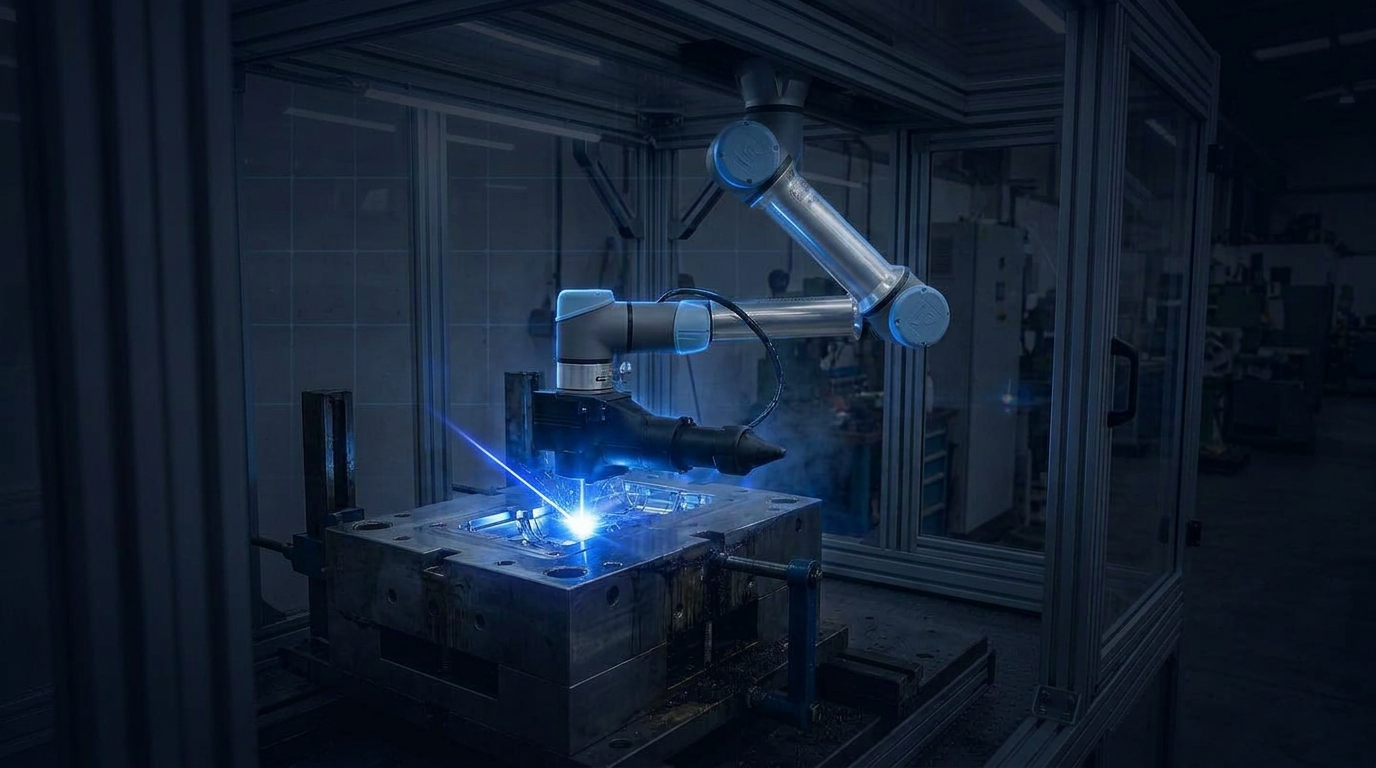
The Mould Cleaning Problem That Costs You Production Time
Resin residue, release agents, carbon build-up, rust, and grease accumulate across injection, tyre, and rubber tooling with every production cycle. Left unchecked, contamination drives part defects, flash from blocked vents, surface finish degradation, sticking parts, and dimensional drift — quality failures that compound into rework costs and rejected batches.
Every cleaning cycle that demands mould removal, manual intervention, or abrasive treatment adds unplanned downtime. A serious mould cleaning solution must reach complex geometries, preserve surface integrity, and minimise operator involvement — without taking the tool out of production.
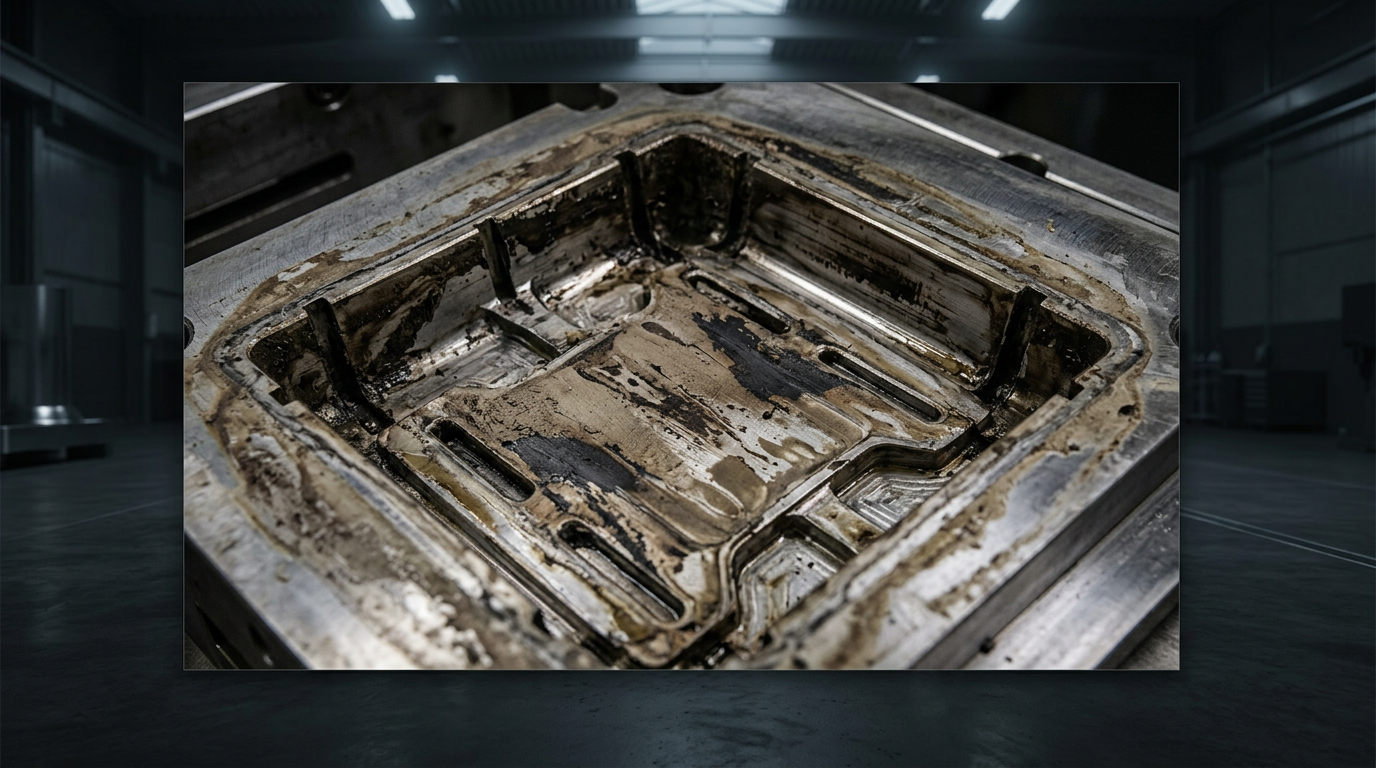
Load the Part. AutoLASE Handles the Rest.
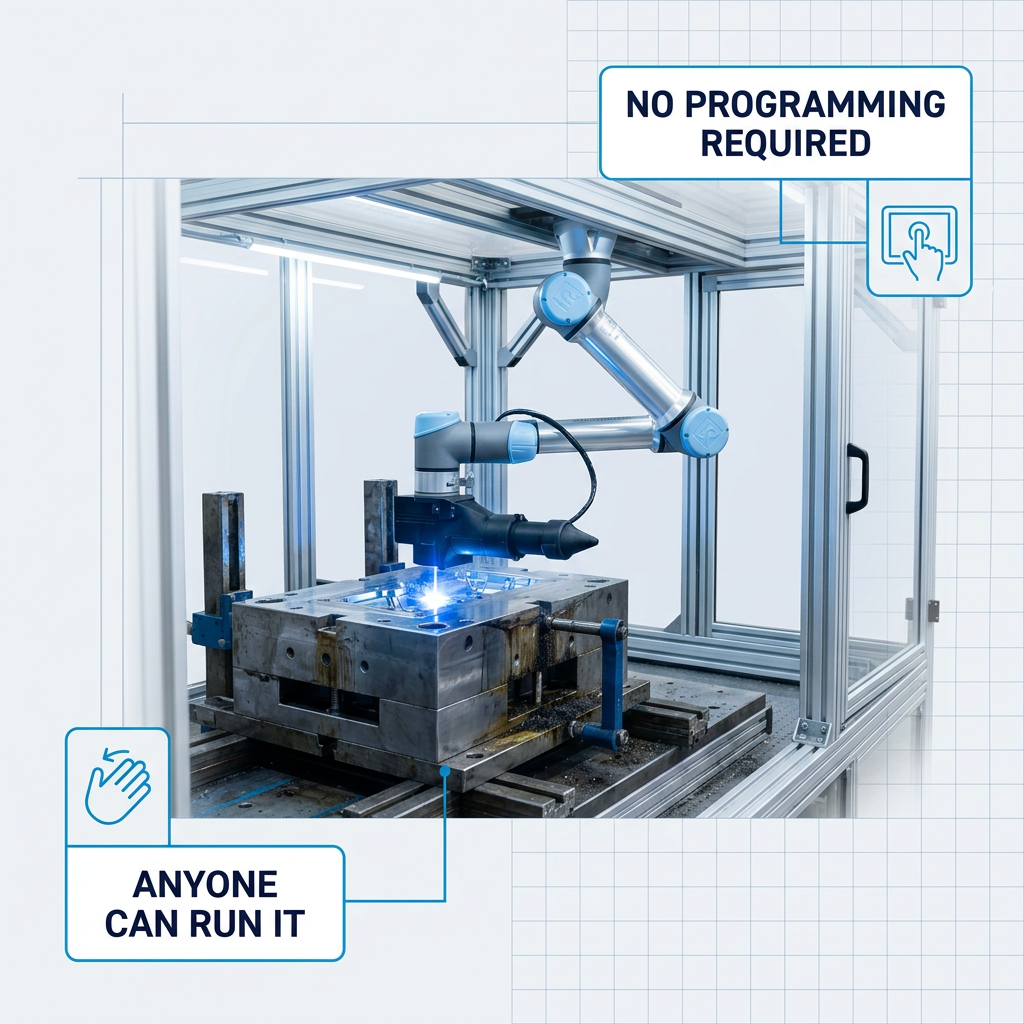
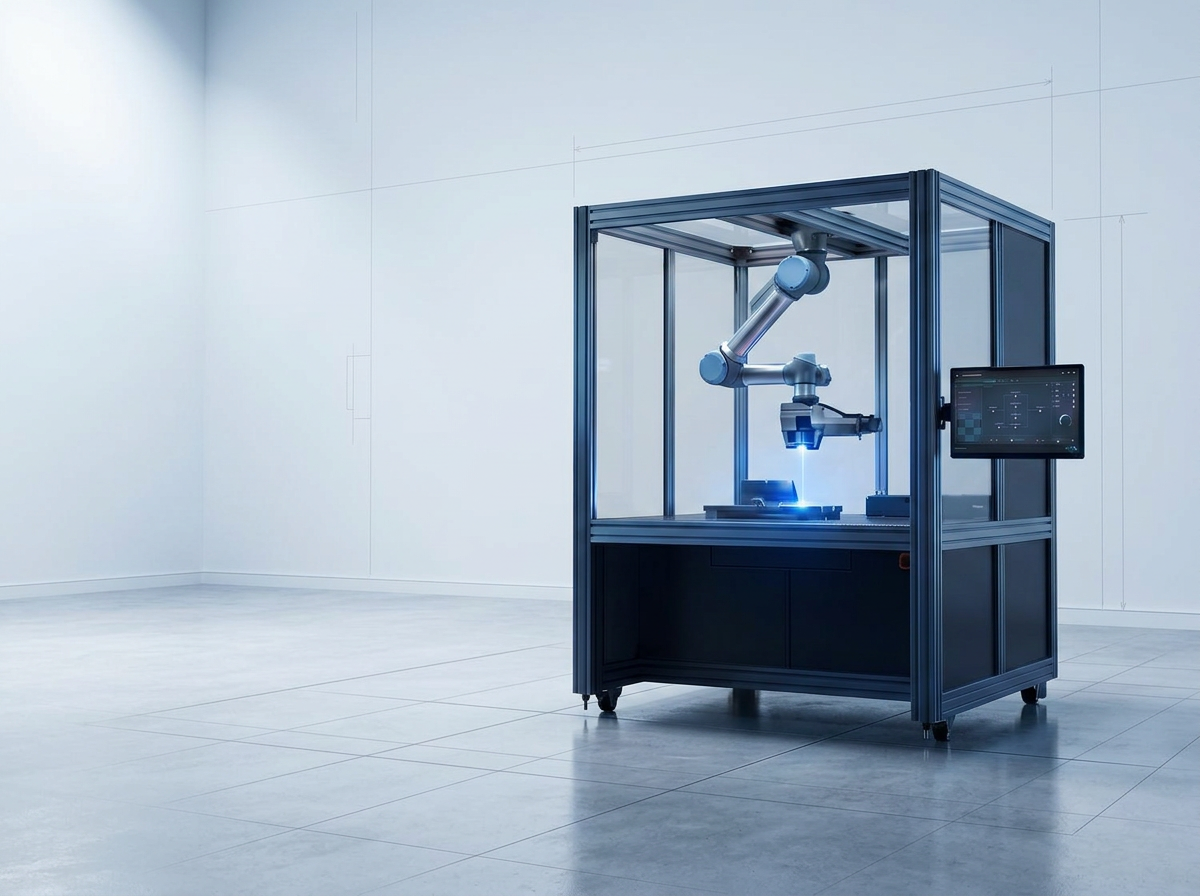
Load the mould and AutoLASE does the rest. The built-in machine-vision system scans the part, builds a 3D map, and generates the cleaning path automatically — no programming, no path-setting, no knowledge of the part geometry required. Any operator can run it. Unlike other automated laser cleaning cells, which require technician setup before each job, AutoLASE needs none.
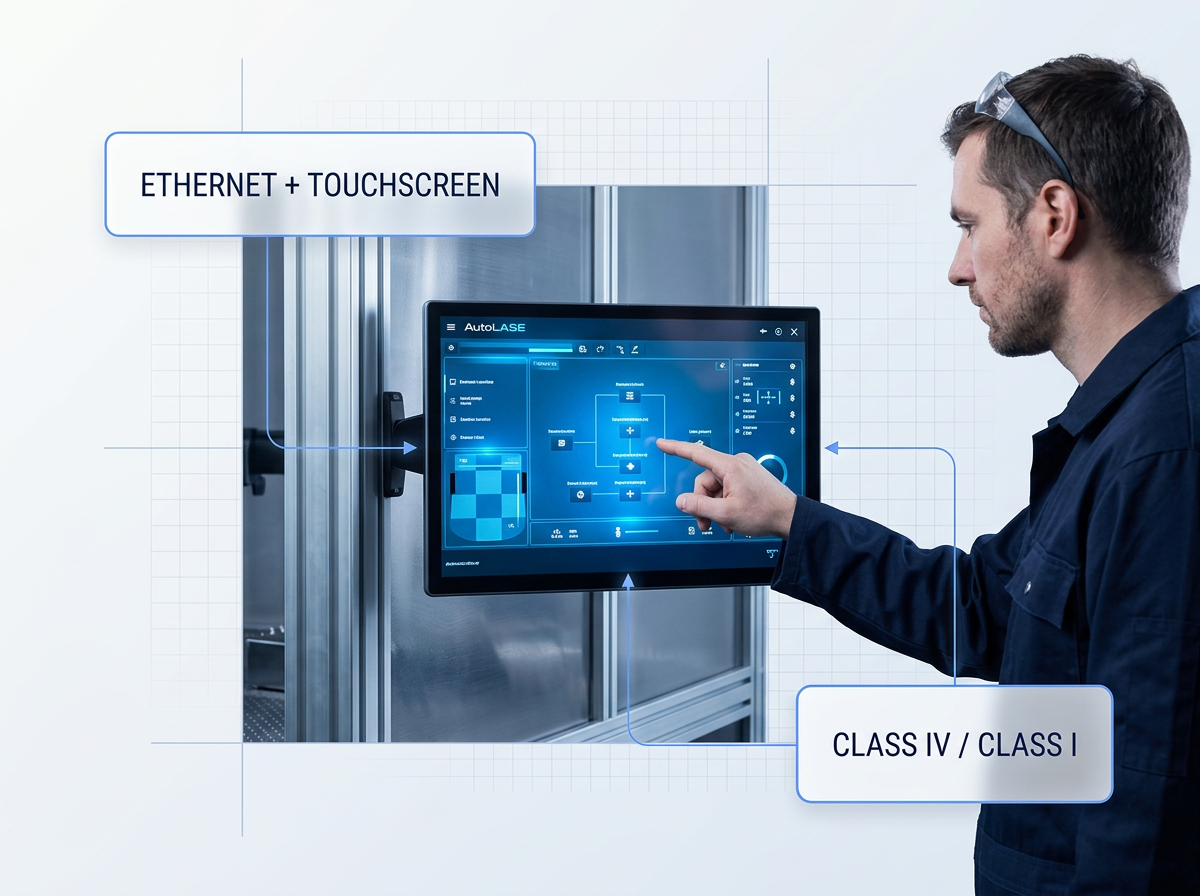
Configurable control software sets optimal cleaning parameters autonomously, delivering the same result on every cycle. A graphical touchscreen with secure user access keeps operation straightforward from start to finish.
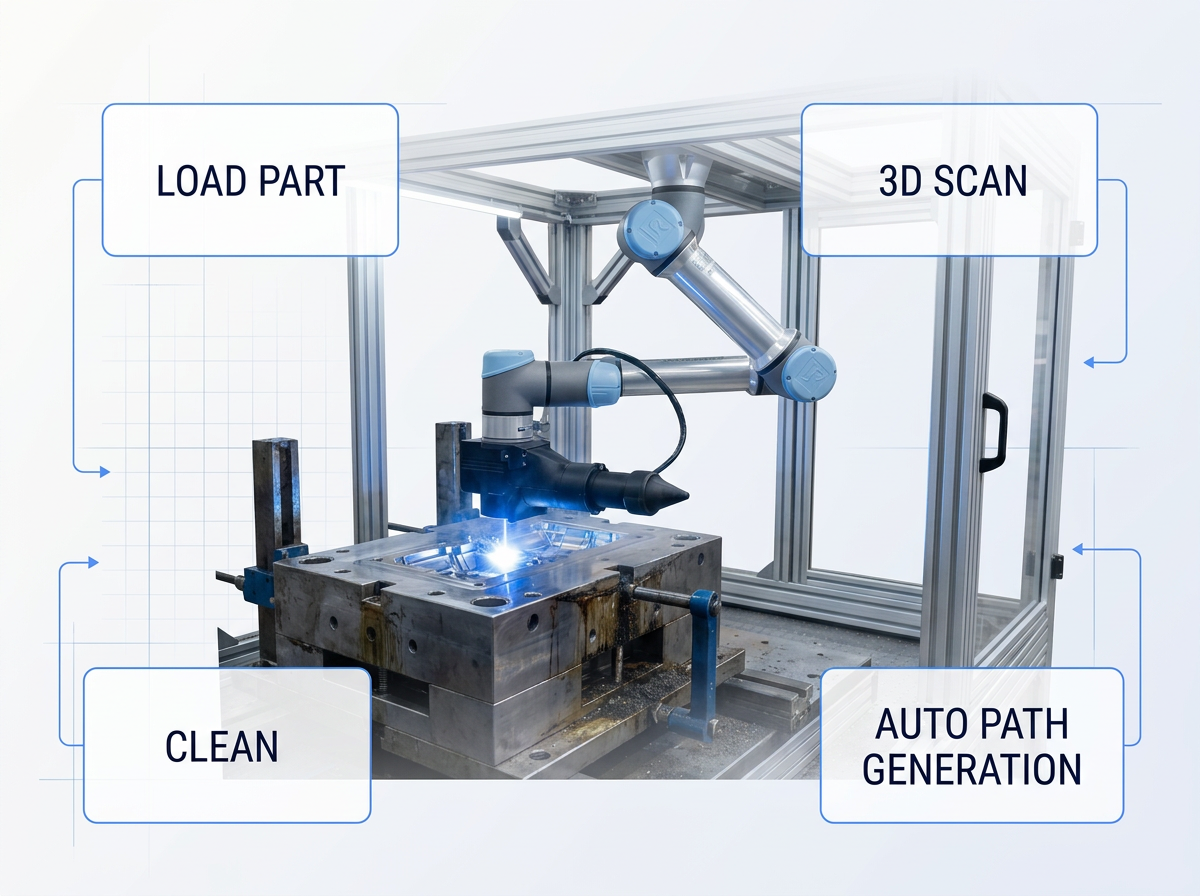
Robotic Multi-Axis Reach Into Every Mould Geometry
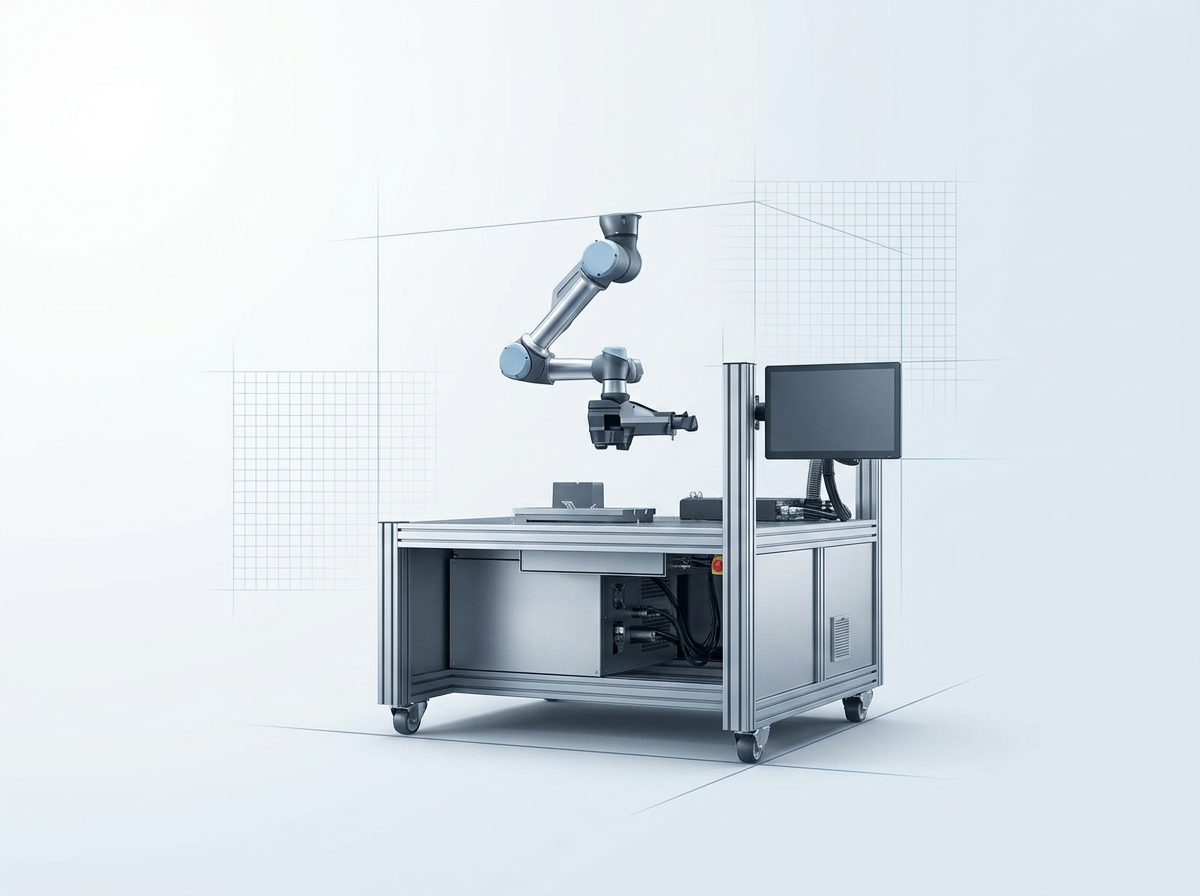
AutoLASE's articulated robotic arm carries the laser head through precise three-dimensional paths, accessing the cavities, cores, vents, inserts, and tread details where contamination accumulates — features that fixed-head rigs and manual methods cannot reliably reach. The vision system directs the arm automatically; no operator defines routes or needs knowledge of the part geometry.
The beam follows surface contours without physical contact, cleaning fine vent channels and engraved detail without rounding or filling them. AutoLASE attaches to your existing collaborative or industrial robots, or is supplied as a complete custom turnkey cell — if a component fits the enclosure, it can be cleaned automatically.
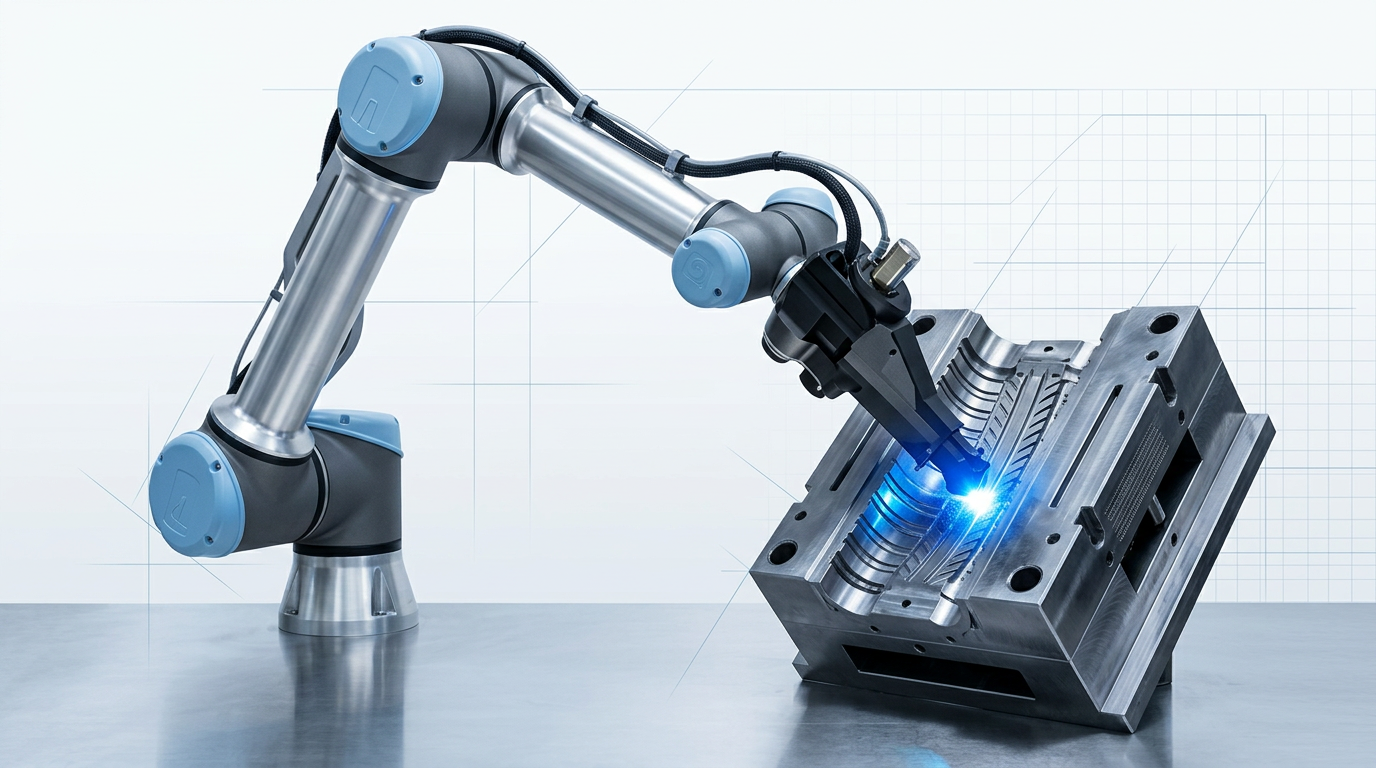
Non-Contact Cleaning That Preserves Mould Surface Integrity
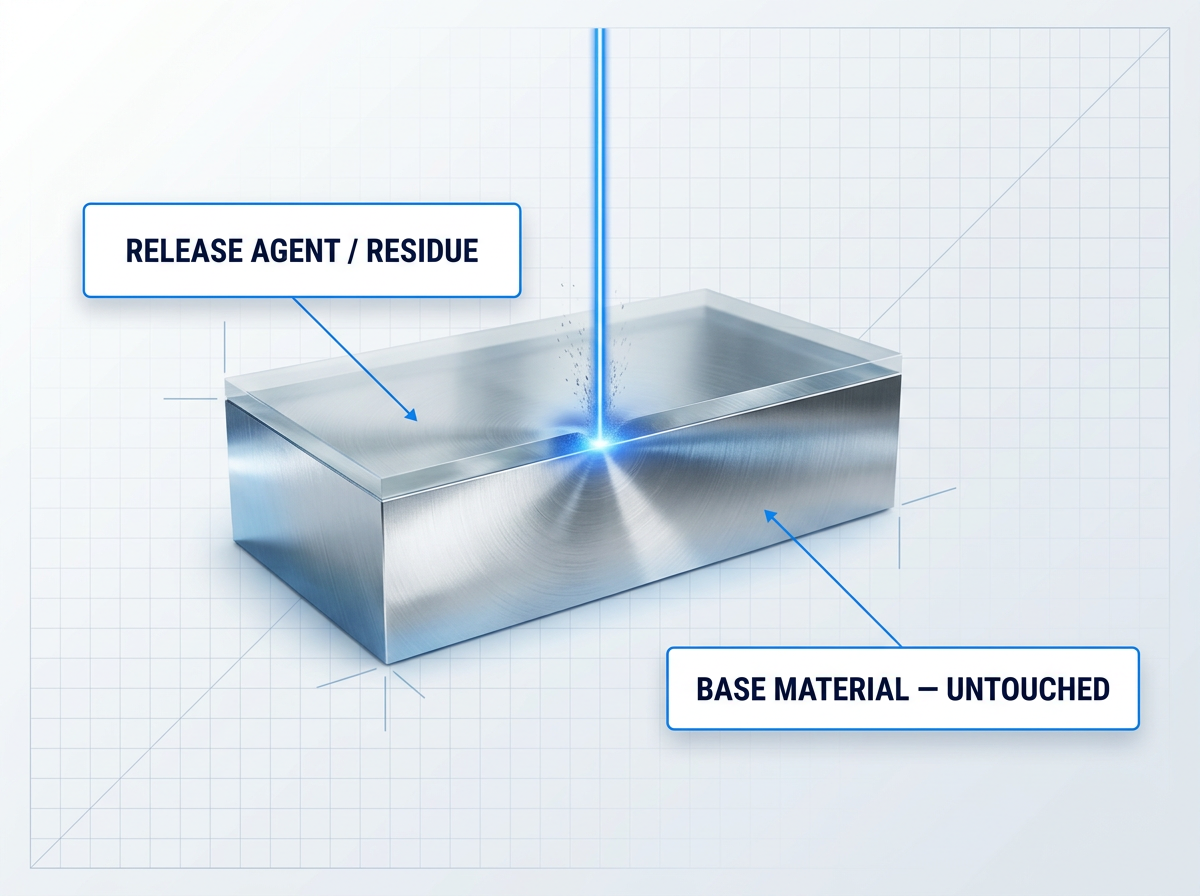
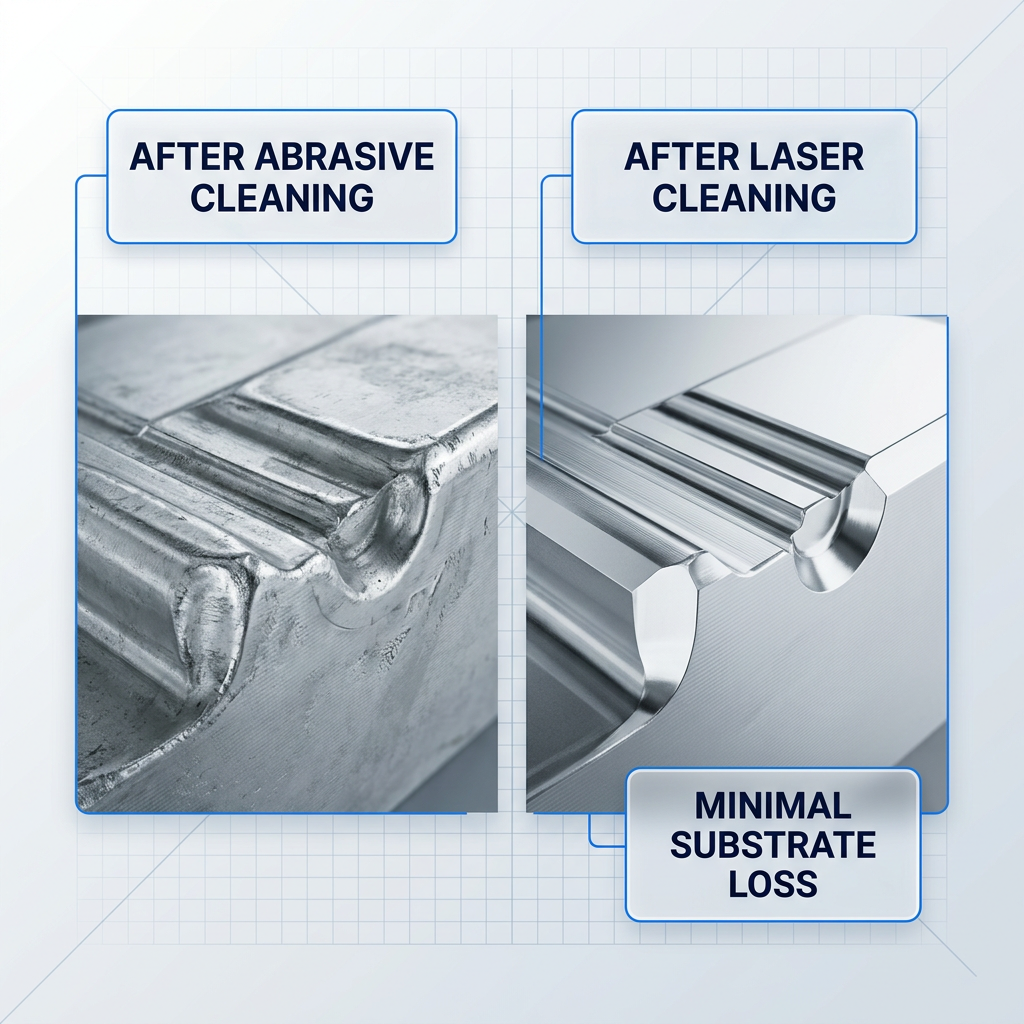
Laser ablation works because mould contaminants — release agents, carbon build-up, residue — absorb laser energy and vaporise at a lower threshold than the underlying tool steel or aluminium. The beam stops at the base material. Fine engraving, sharp edges, vent geometry, and surface texture are preserved through repeated cleaning cycles.
Abrasive methods such as sandblasting erode mould detail with every pass. That cumulative wear degrades part quality and shortens tooling life. AutoLASE removes the contaminant only, leaving the substrate untouched.
Mould Types and Contaminants AutoLASE Cleans
AutoLASE covers the main industrial mould categories and contaminant types. If your mould type or substrate appears below, the system is built for your application.
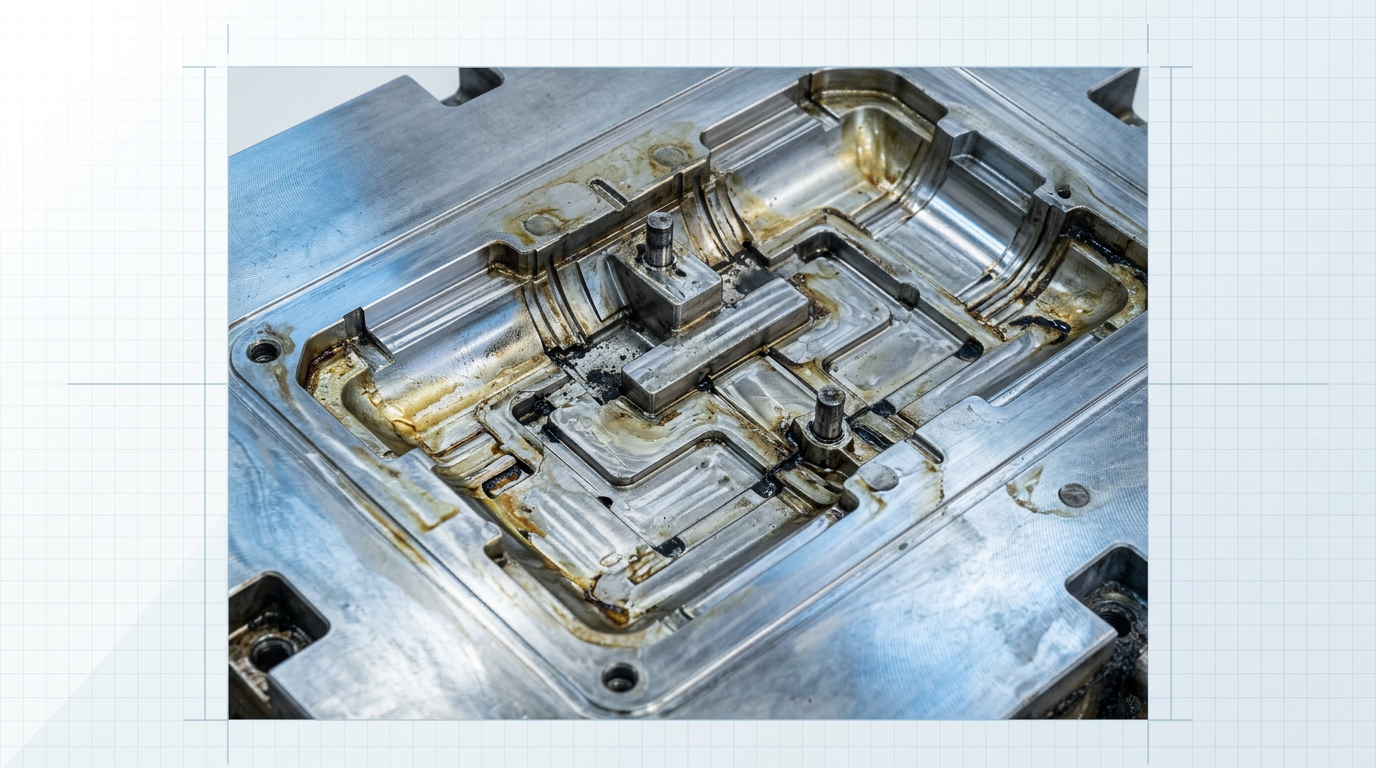
Injection Moulds and Tools
Release agents, resin residue and build-up stripped. Fine detail restored, no abrasive wear.
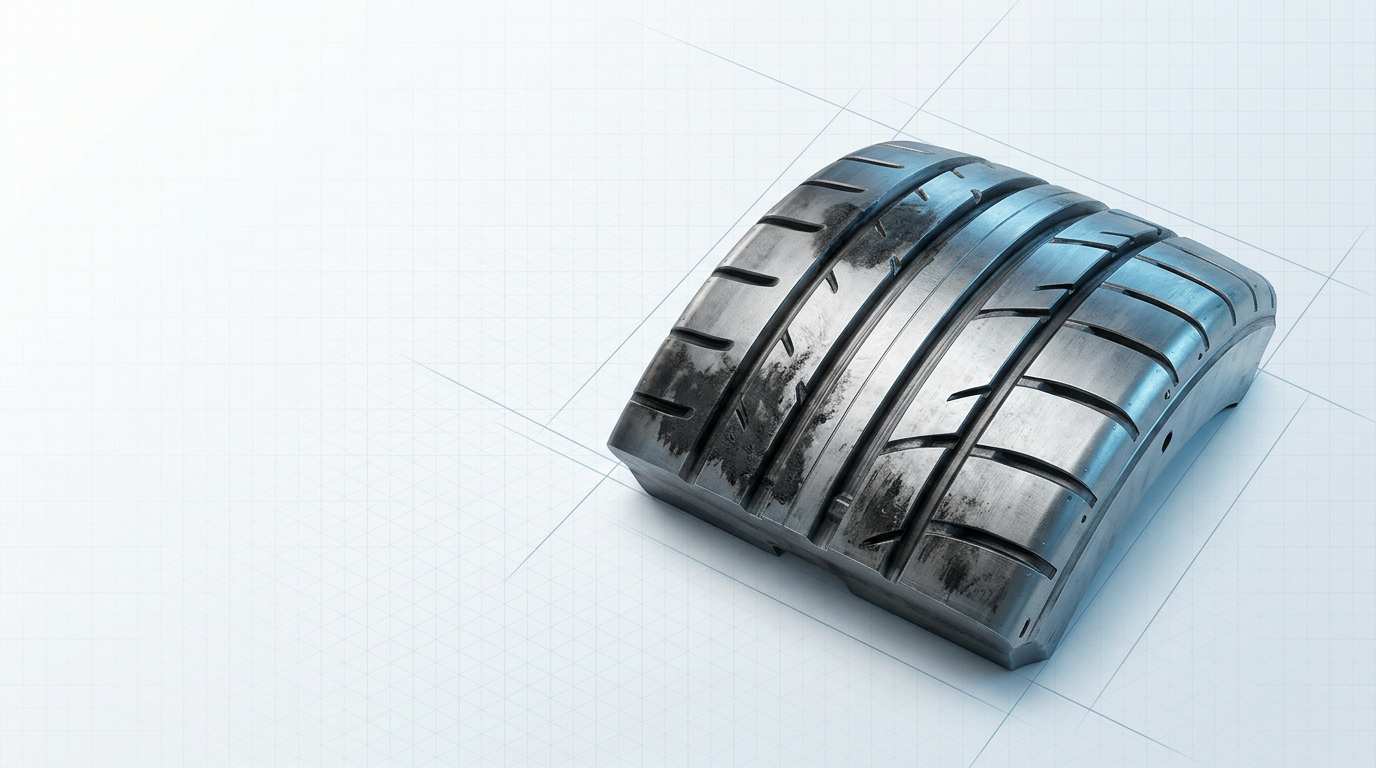
Tyre and Rubber Moulds
Vulcanisation residue removed from moulds, segments and vents. No abrasives, no mould wear.
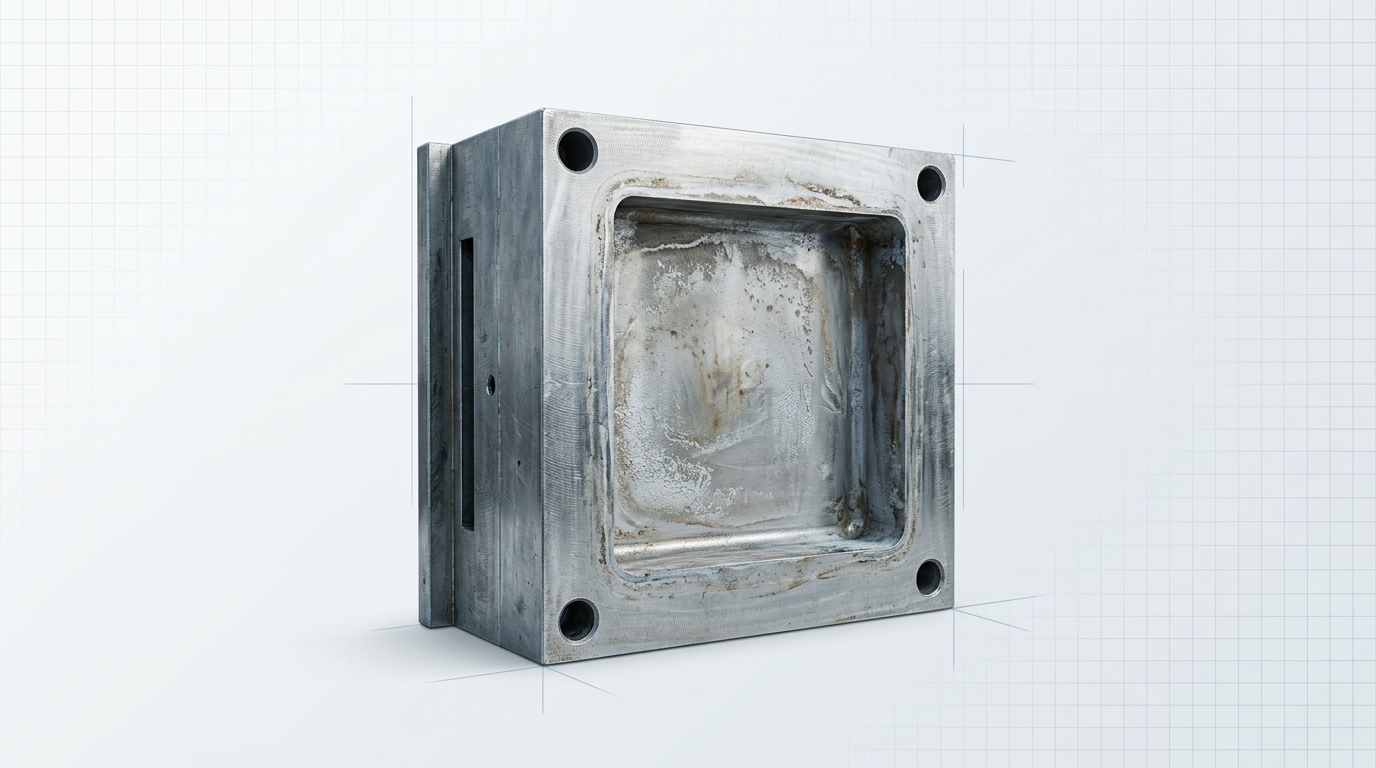
Die-Cast and Composite Tooling
Release agents and scale removed from heavy-duty die-cast and composite mould surfaces.
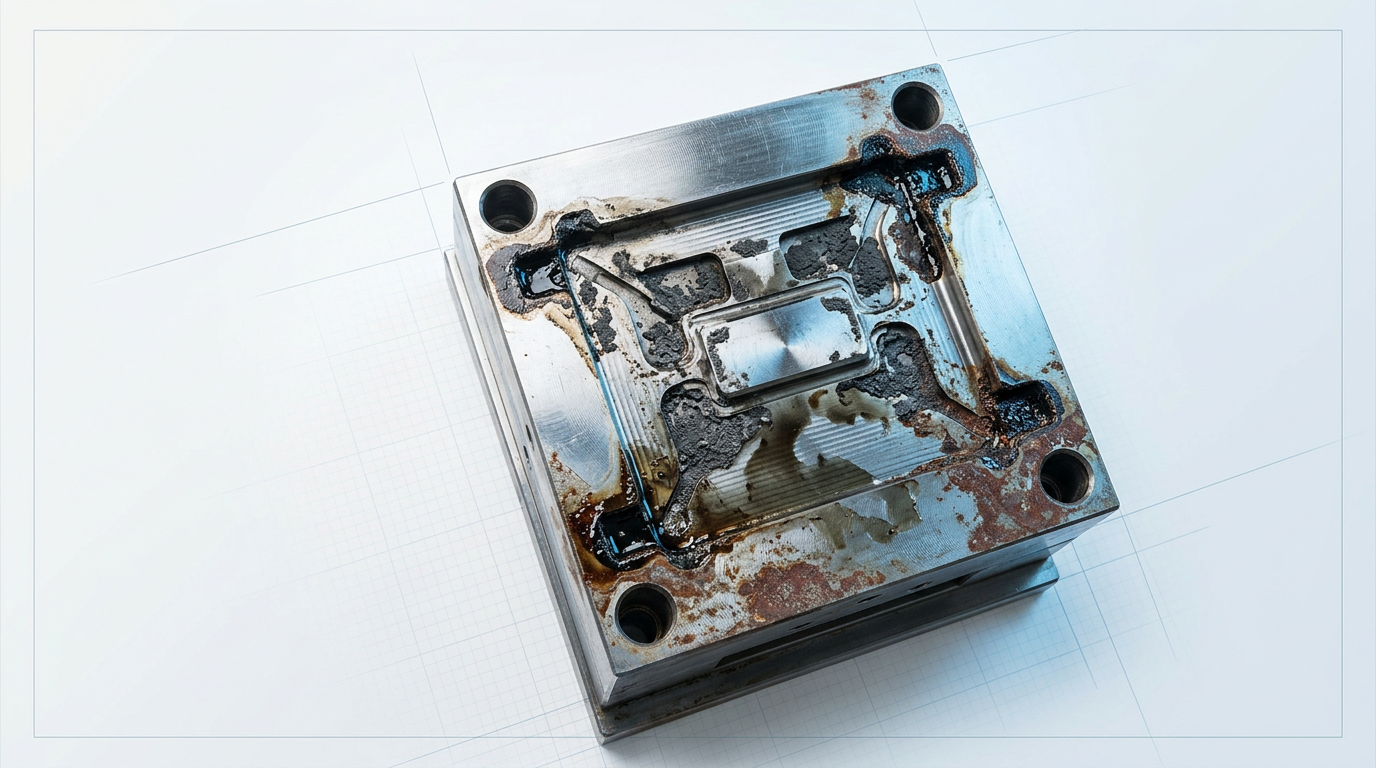
Full Range of Mould Contaminants
Resin, release agents, carbon, rust, oil and grease — the complete mould contaminant range.
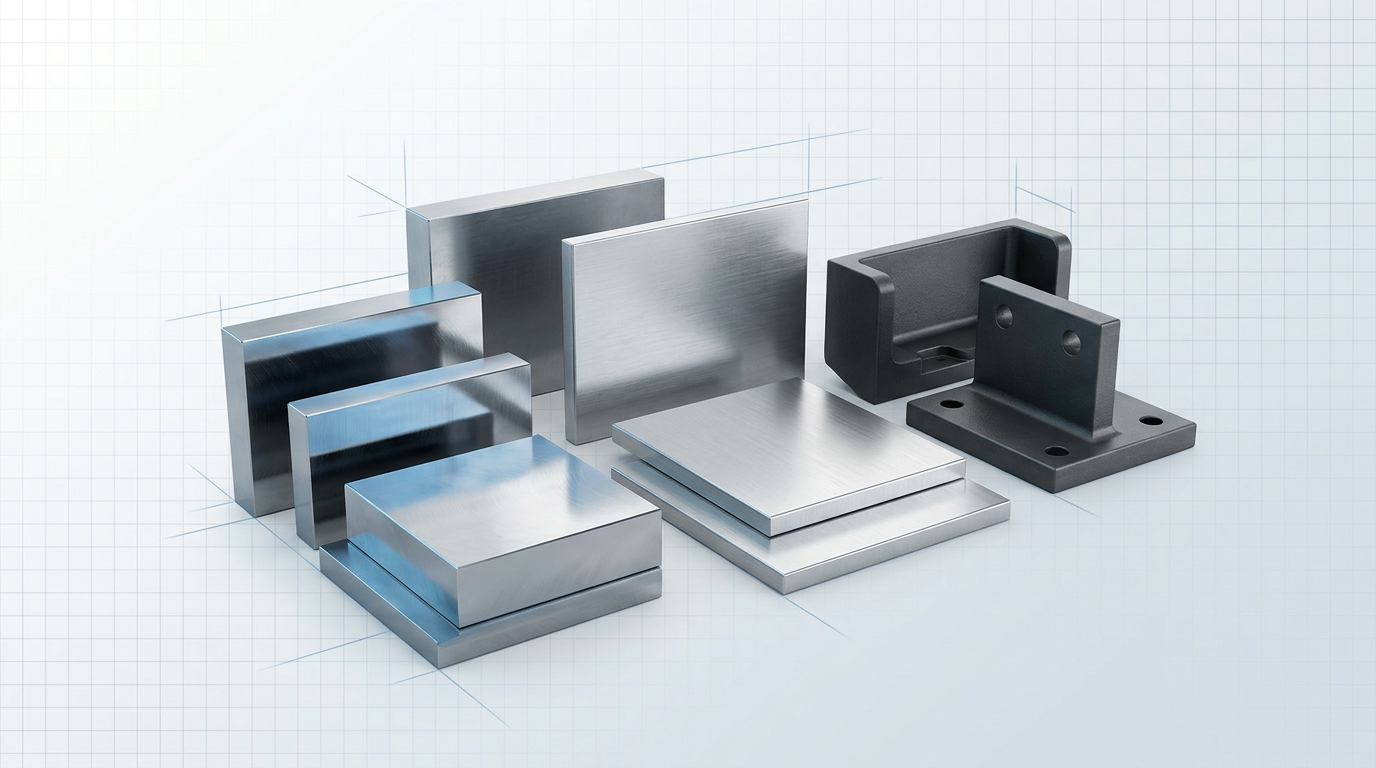
Tooling Substrate Compatibility
Steel, carbon steel, aluminium alloys, cast iron — core tooling substrates all supported.
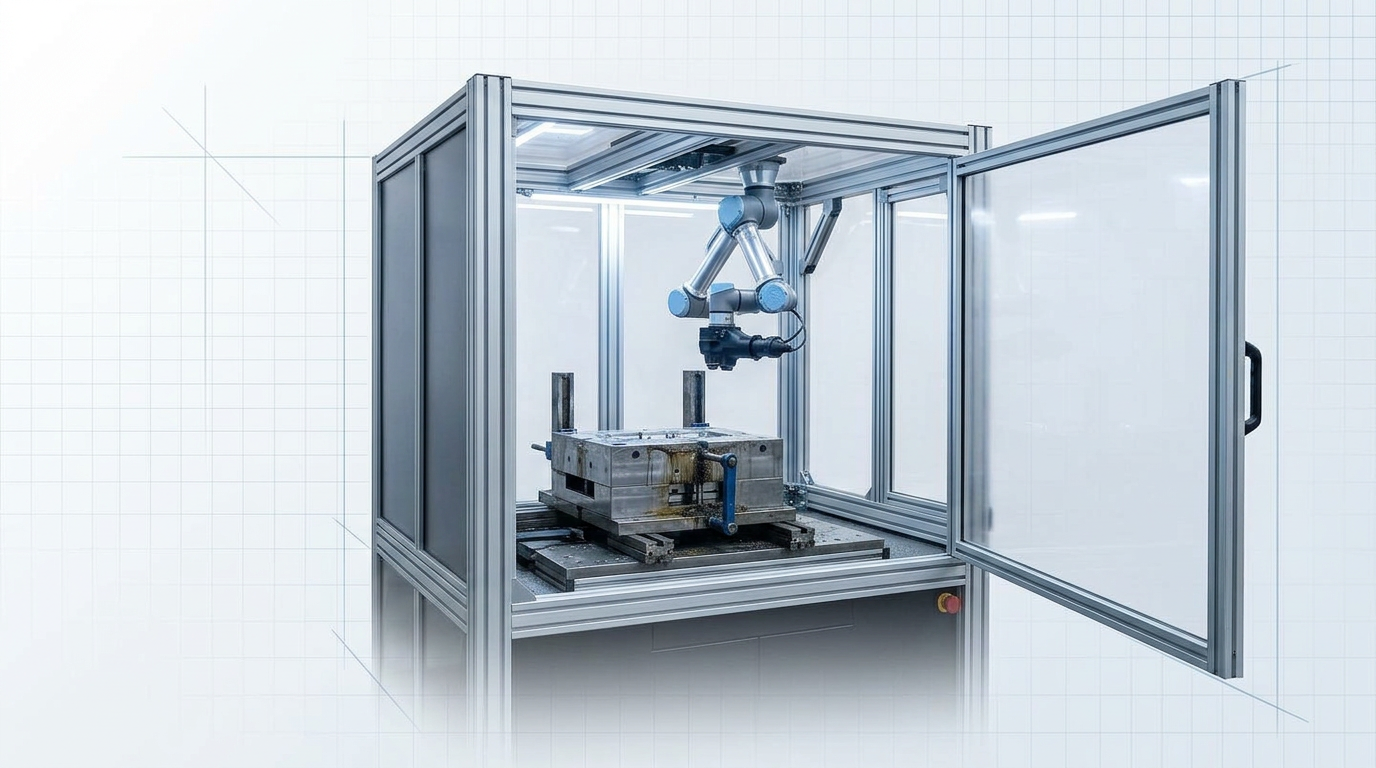
Configurable for Any Part That Fits
If a component fits the enclosure, it can be cleaned automatically.
See AutoLASE Across Every Mould Type
From tyre and rubber moulds to injection tooling and die-cast surfaces, AutoLASE is built for the full range of industrial mould cleaning applications. Explore the dedicated product page for full details.
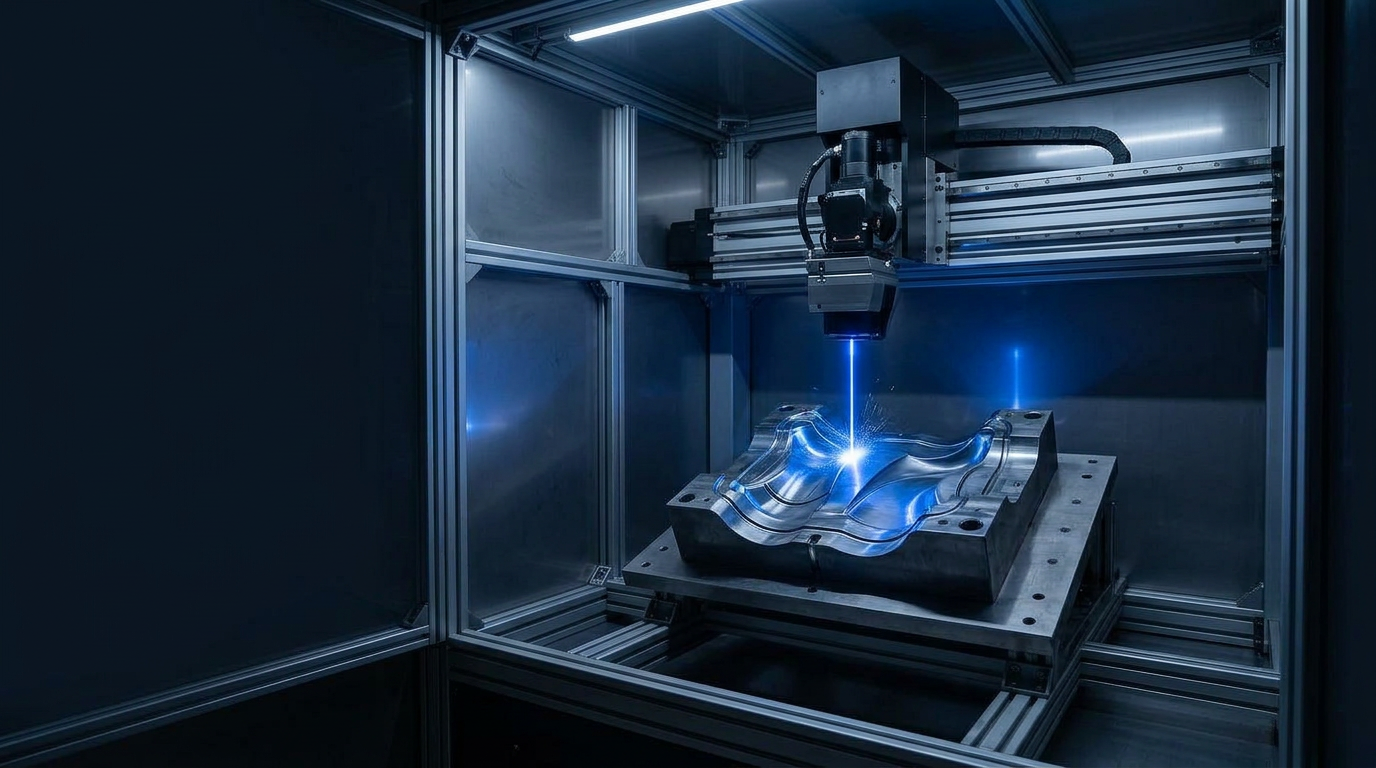
No Removal. No Transport. No Disassembly.
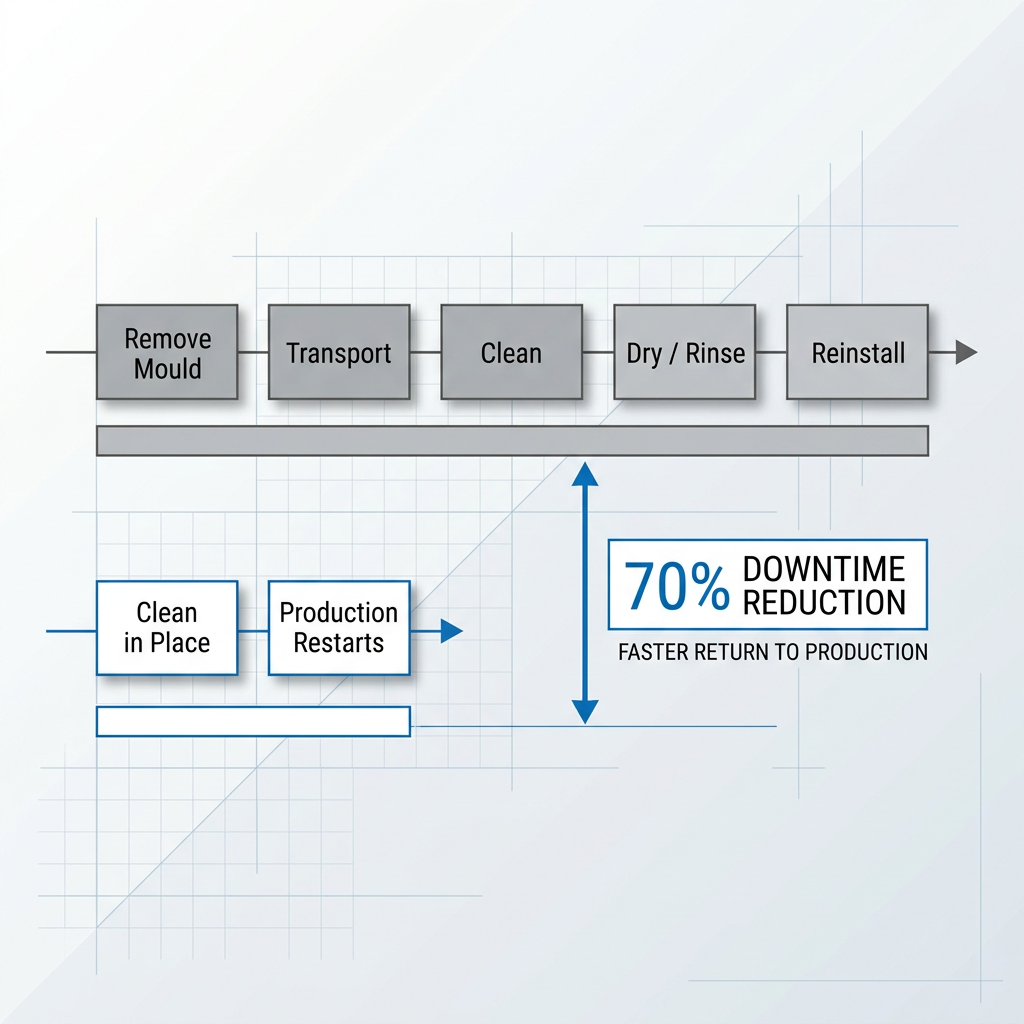
AutoLASE cleans the mould where it sits. There is no removal from the press, no transport to a separate cleaning station, and no disassembly of mould components. Load the part and the system handles the rest — the mould goes from production to clean and back to production without leaving the press area. Every stage that other methods add to the cleaning cycle is a block of press time AutoLASE gives back.
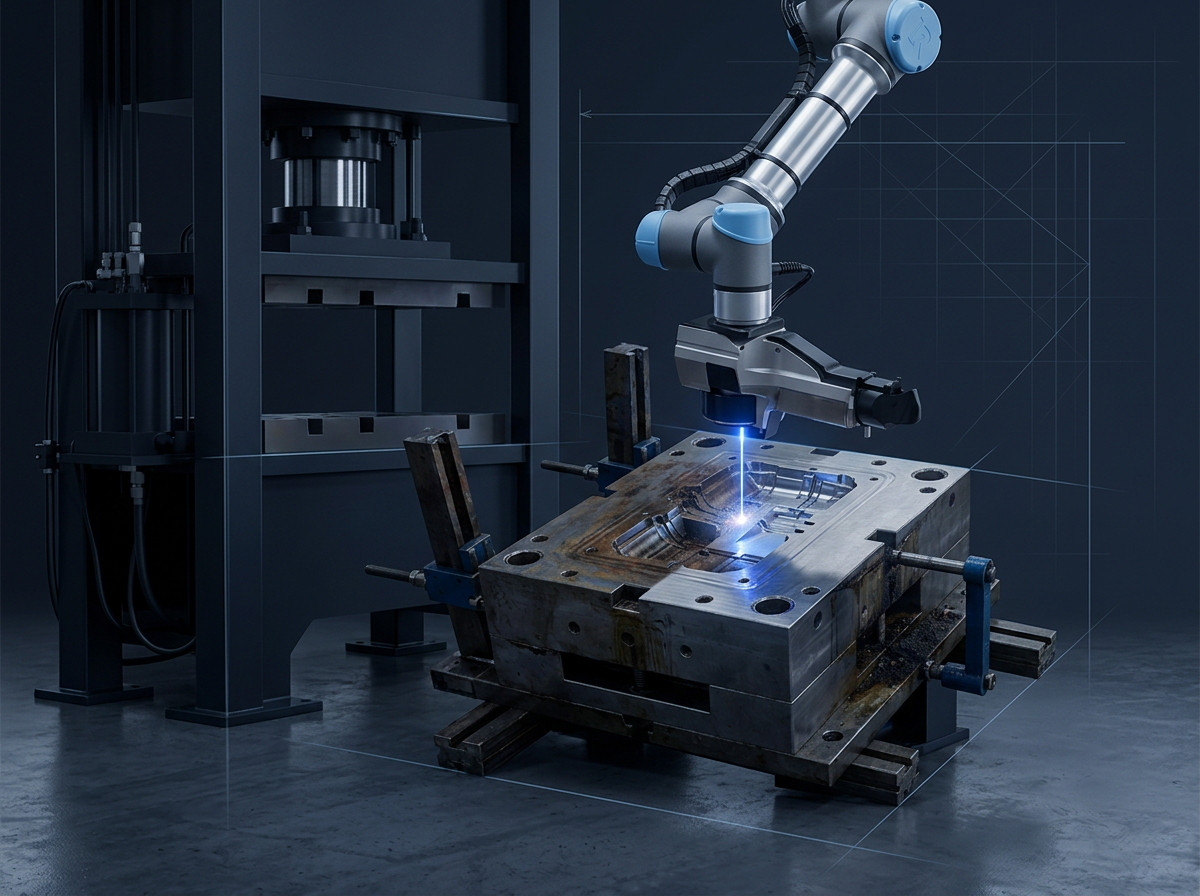
Clean Ends. Production Restarts Immediately.
Once the laser cycle ends, the mould is ready for the next shot. There is no chemical residue to rinse away and no surface to dry before production can restart. Chemical and ultrasonic immersion methods impose a waiting stage between cleaning and production — rinsing, drying, and verification before the mould is safe to run. With AutoLASE, the cleaning cycle and the production cycle are separated by nothing.
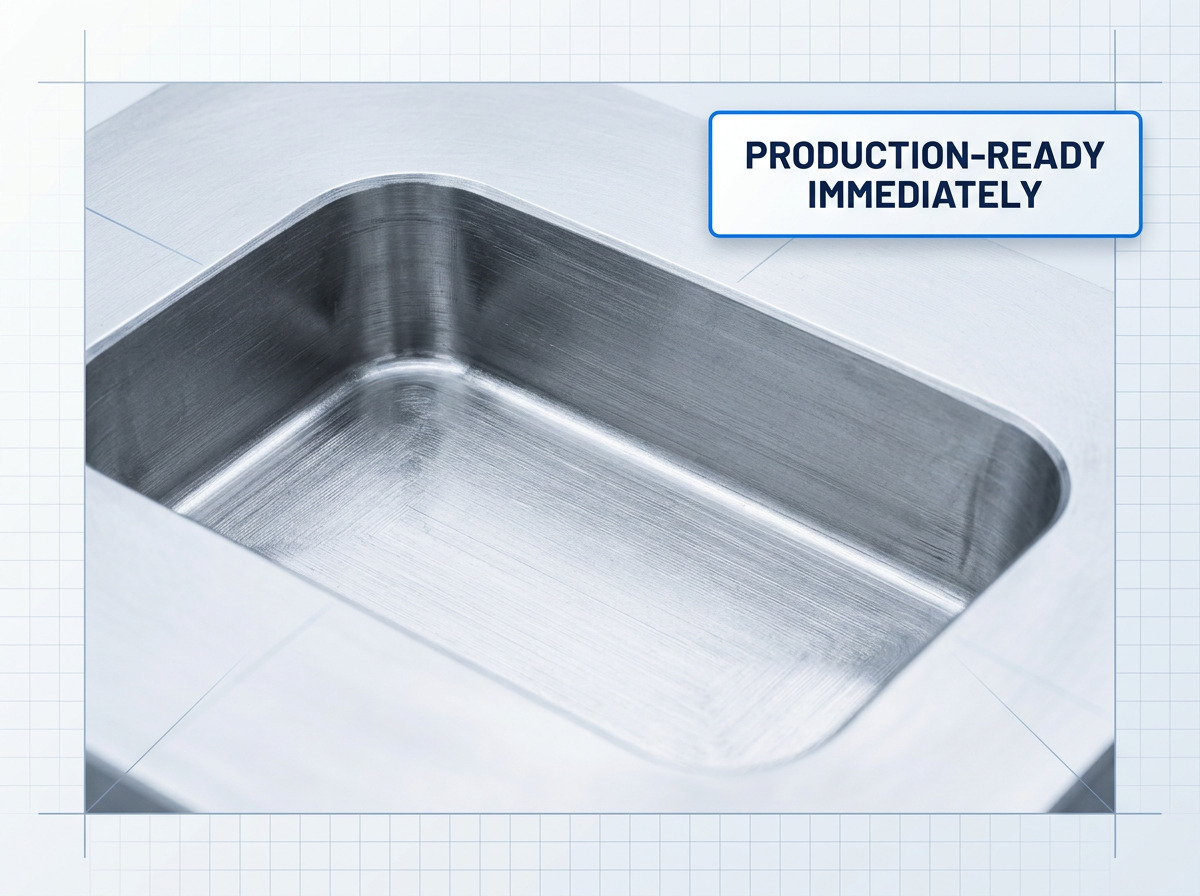
Debris Captured, Not Left Behind
Laser ablation debris is drawn directly to the extraction unit — it does not settle across the mould surface, into vent channels, or within blind features. There is no post-cleaning verification stage to confirm the mould is clear, and no additional wipe-down before production can restart. Other methods distribute secondary waste across the mould and surrounding area, adding a clean-up and inspection step before the press can run. AutoLASE removes that step entirely.
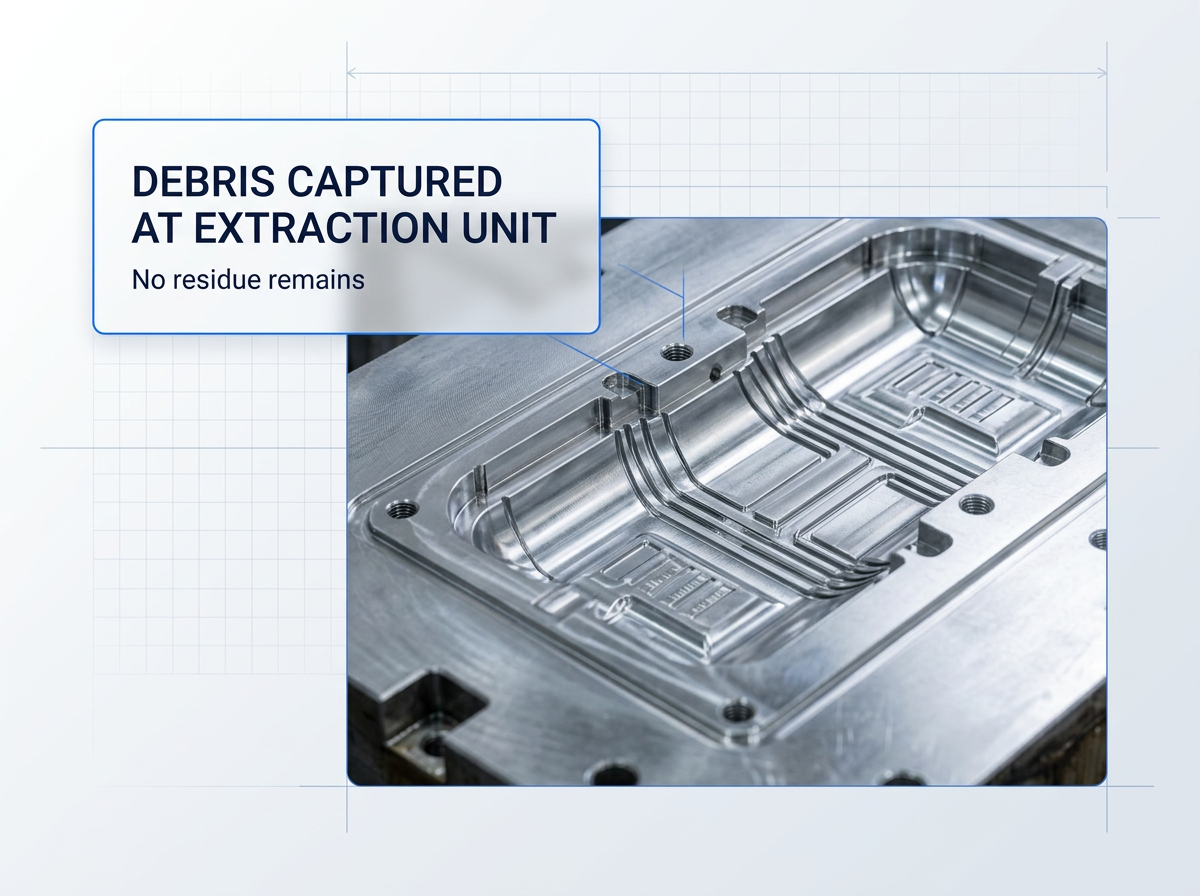
Laser vs Ultrasonic vs Dry Ice
Ultrasonic cleaning requires removing the mould from the press, transporting it to a cleaning tank, submerging it, and completing a drying stage before it can return to production — each step is lost press time.
Dry ice blasting can be performed in-press, but dislodged contamination debris remains and requires capture or collection. CO₂ supply, storage, ventilation, and debris management add operational overhead to every cleaning cycle.
With AutoLASE, ablation debris is captured at the extraction unit. No removal, no drying, no debris management — the cleaning cycle closes and the press runs.
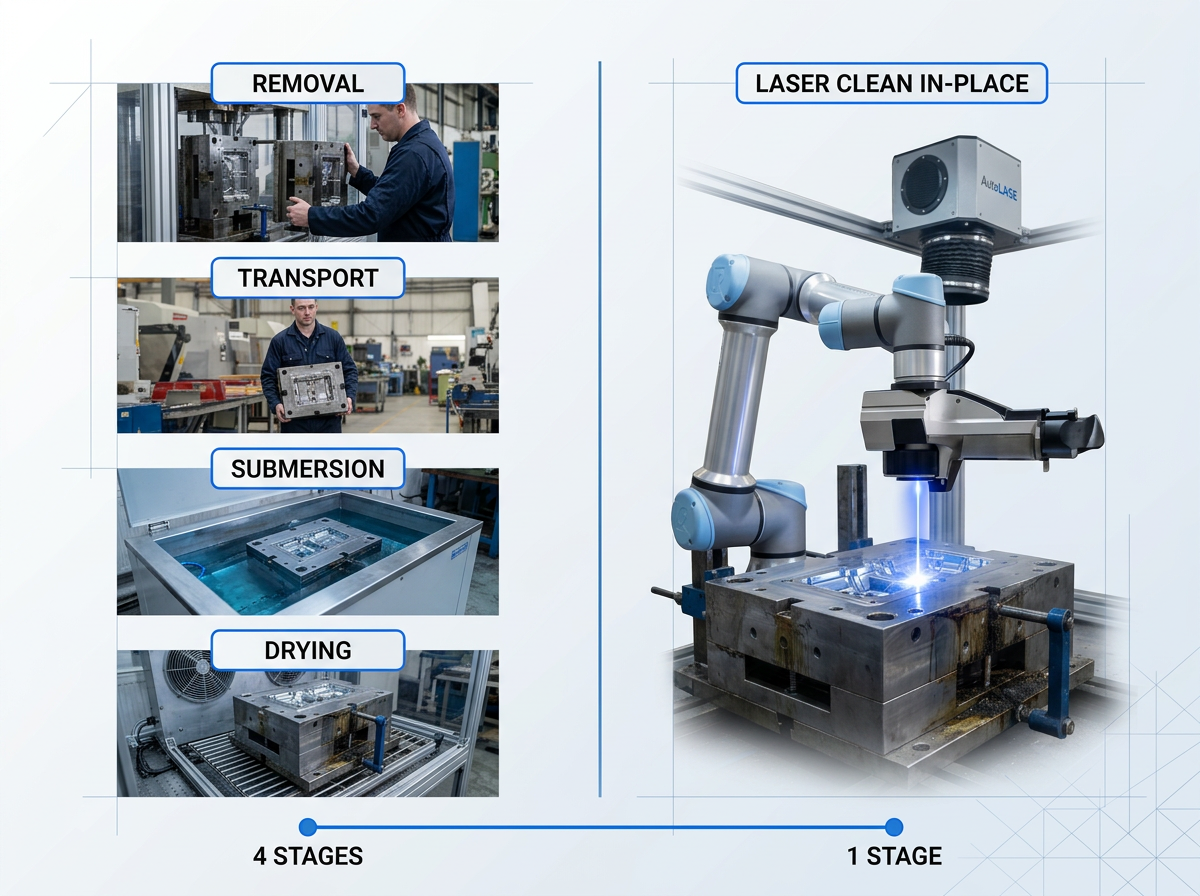
Shorter Cleaning Windows, More Press Cycles
In-place cleaning, with no rinsing, no drying, and no debris clear-up, compresses the cleaning window at every cycle. Across a shift, a week, or a full production run, that recovered time compounds into more press cycles from the same tooling. The mould cleans faster, returns to production faster, and the press runs more. That is the operational case for AutoLASE — not a single cycle saved, but every cycle shortened.
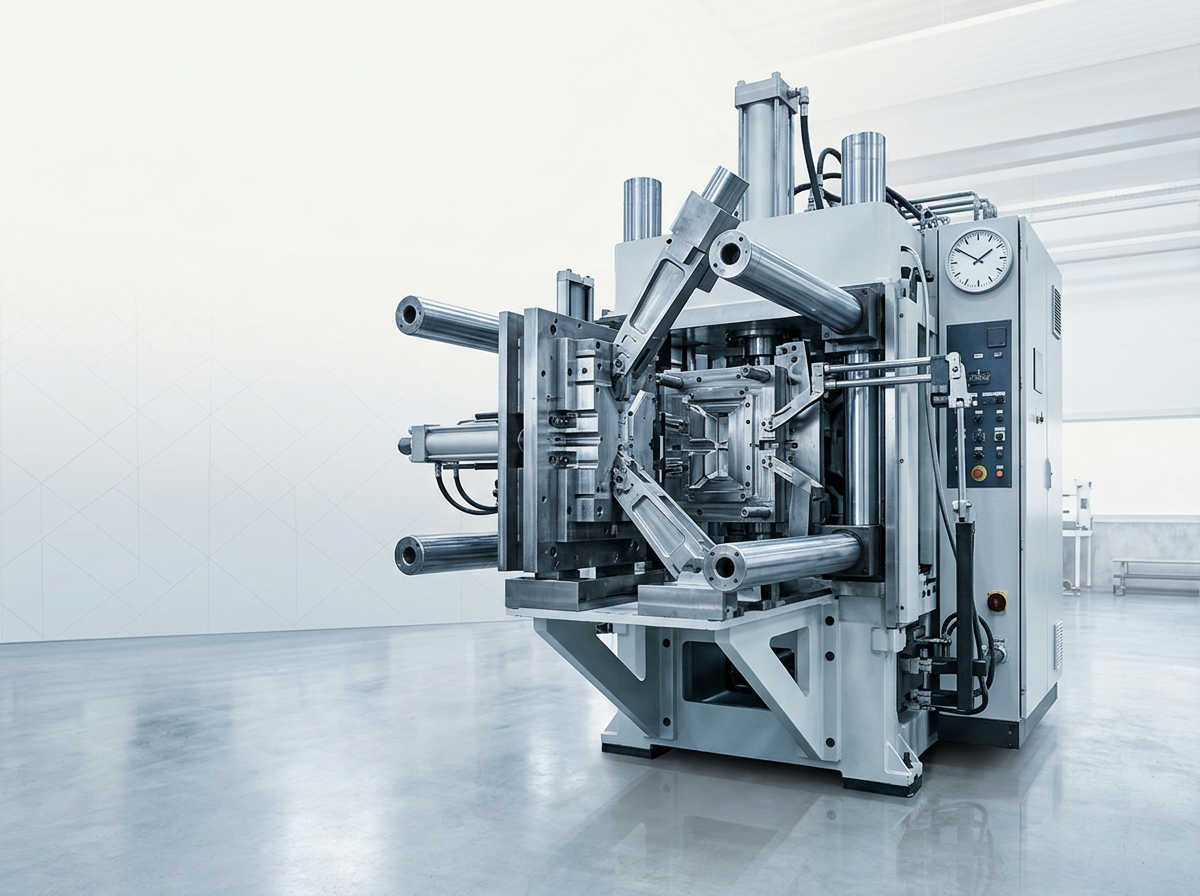
Laser Light. Nothing Else.
AutoLASE cleans using laser light alone — no chemicals, no abrasives, no water, no consumables of any kind. The system is air-cooled, so there is no water chiller or coolant circuit to install or maintain. Plug in, load the part, and the machine is ready to run. No infrastructure beyond a single-phase power supply is required.
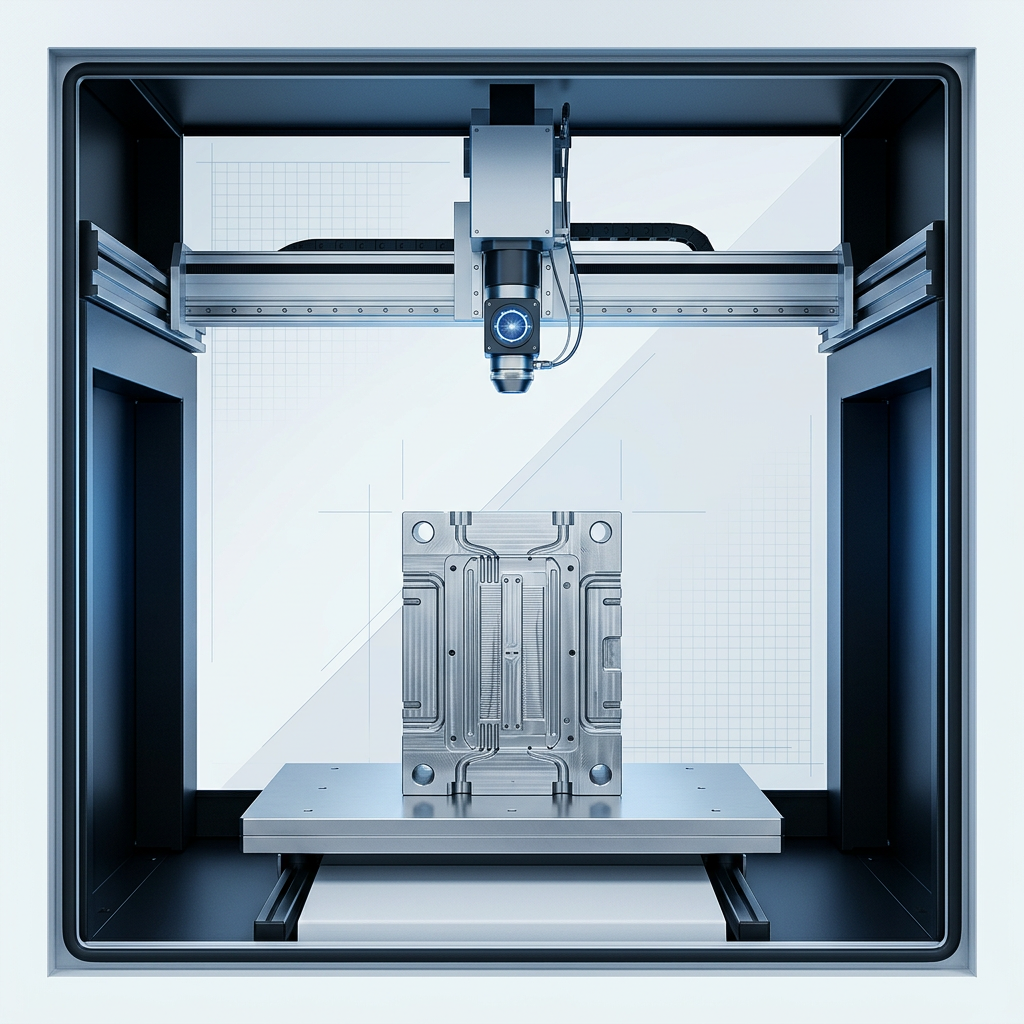
Chemical Chain Eliminated Entirely
Laser cleaning produces no contaminated wastewater, no spent blasting media, and no hazardous waste requiring disposal. There are no solvents to store, no safety data sheets to maintain, and no PPE requirements for chemical exposure.
For the mould shop, this removes a real compliance and logistics burden — fewer regulated materials on site, less administrative overhead, and a significantly smaller environmental footprint from the cleaning process itself.
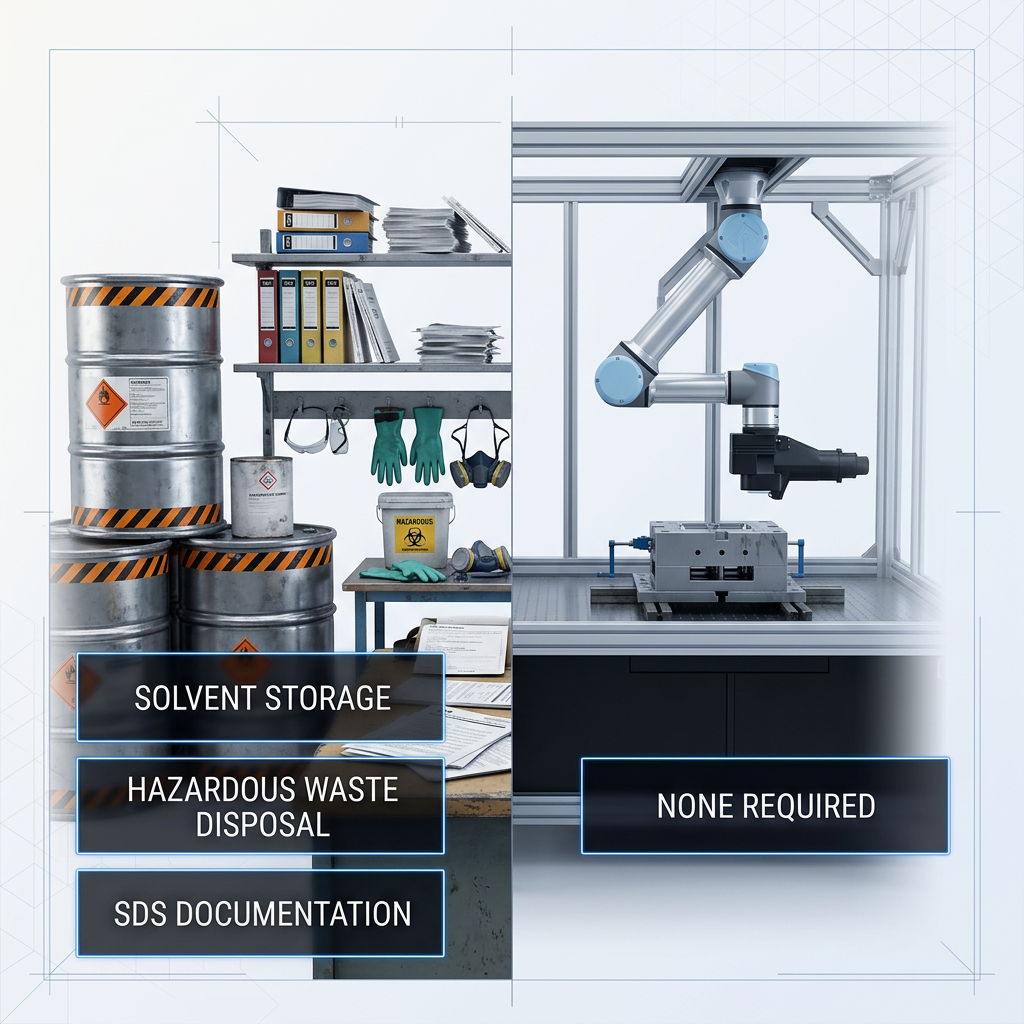
Dry Ice Carries Operational Burdens
Dry ice blasting is non-abrasive and chemical-free, but it carries operational burdens laser cleaning does not. CO2 pellets remain viable for only 5–7 days from production, requiring a just-in-time supply chain with no scope for stockpiling. Noise levels range from 70 to over 130 dB(A), requiring ear protection and often restricting blasting to off-shift hours.
Dry ice also subjects the mould surface to extreme cold (reaching approximately −40°C), which can create thermal shock stress in tooling. Dislodged debris becomes airborne and settles across the surrounding work area rather than being captured at source.
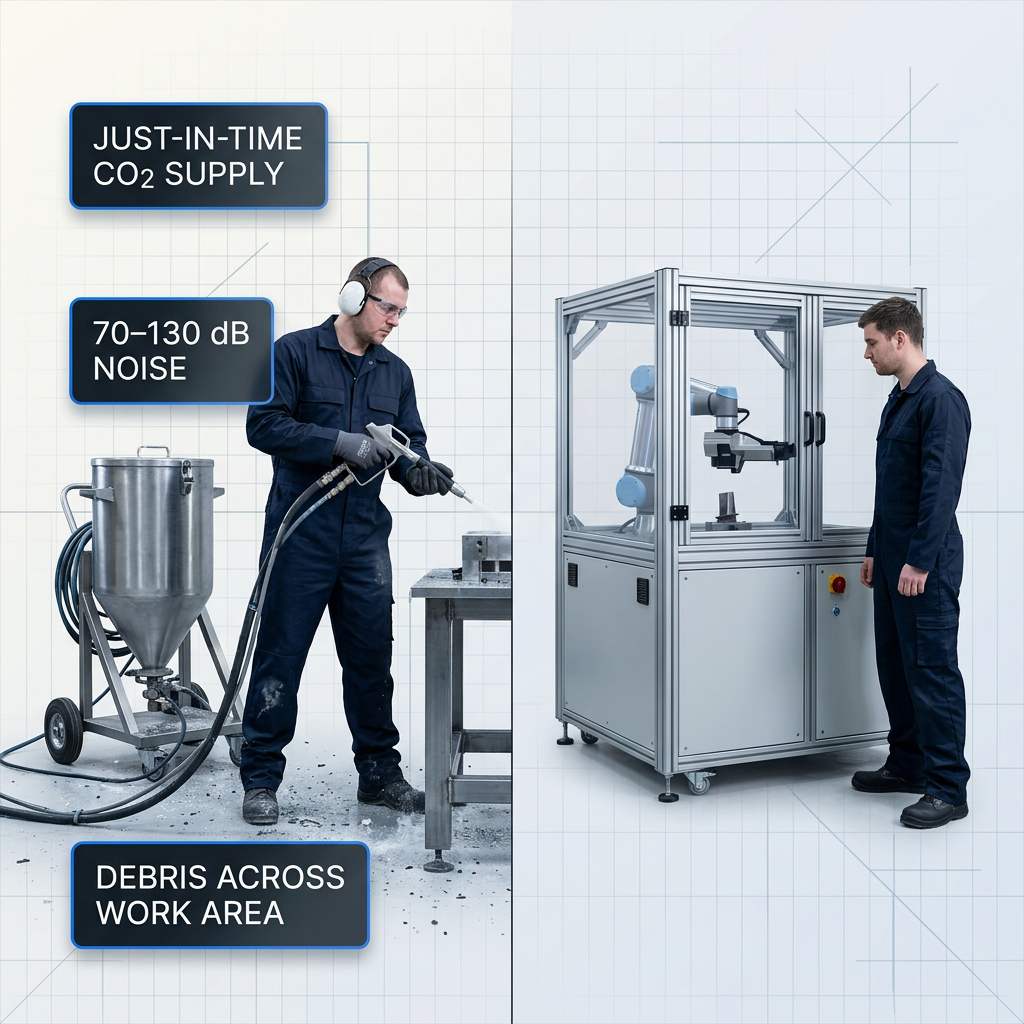
Two Running Costs. That Is All.
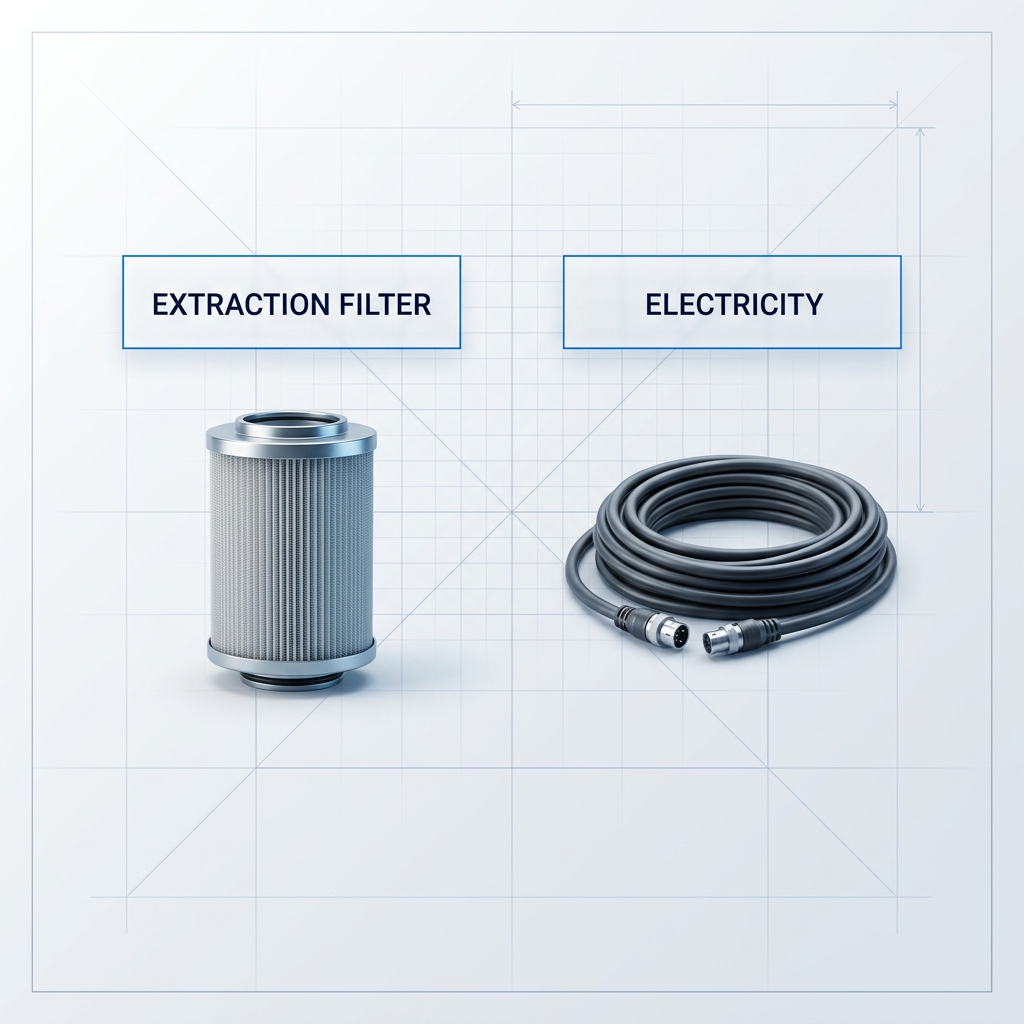
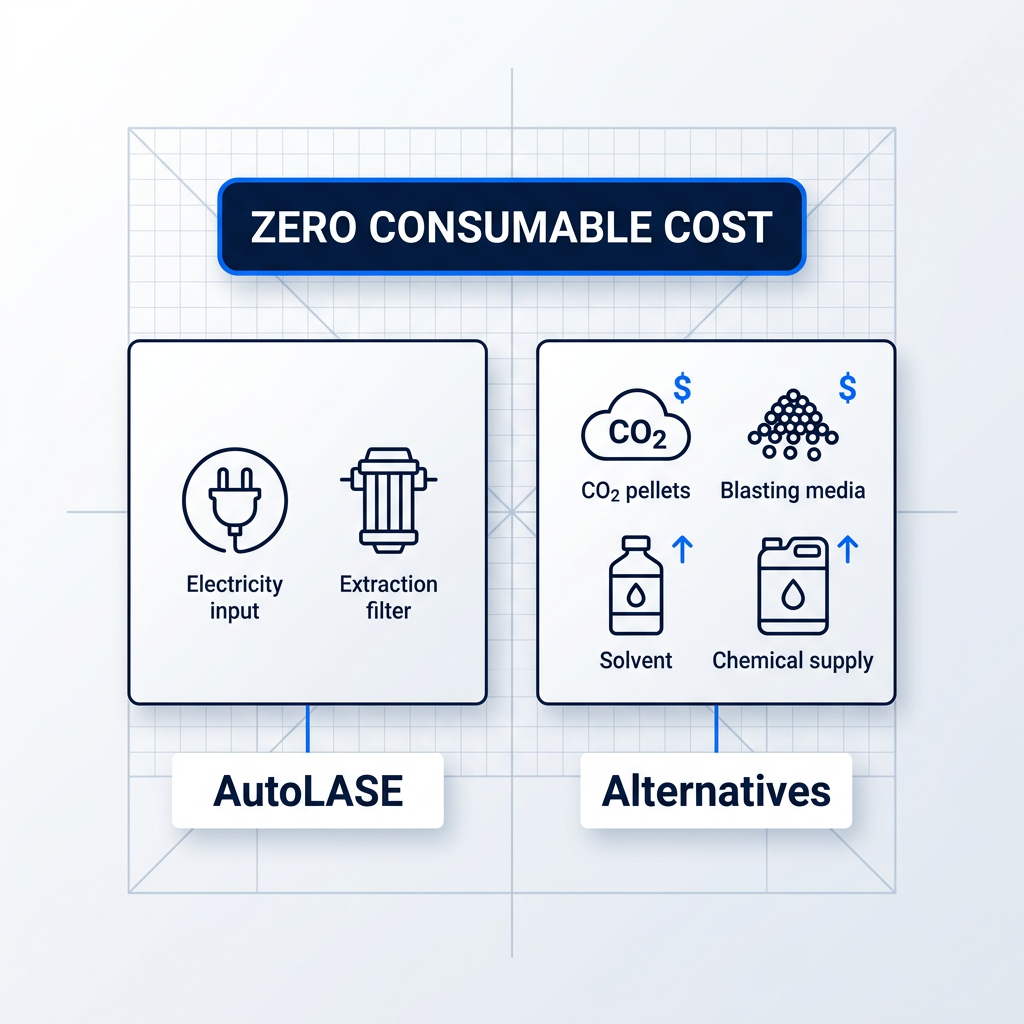
The full running cost picture for laser mould cleaning is electricity and extraction filter replacement — nothing else. There are no solvents to reorder, no blasting media to procure, and no supply chain to manage between cleaning cycles. The extraction filter is the only consumable the system requires.
Nothing Left Behind on the Mould
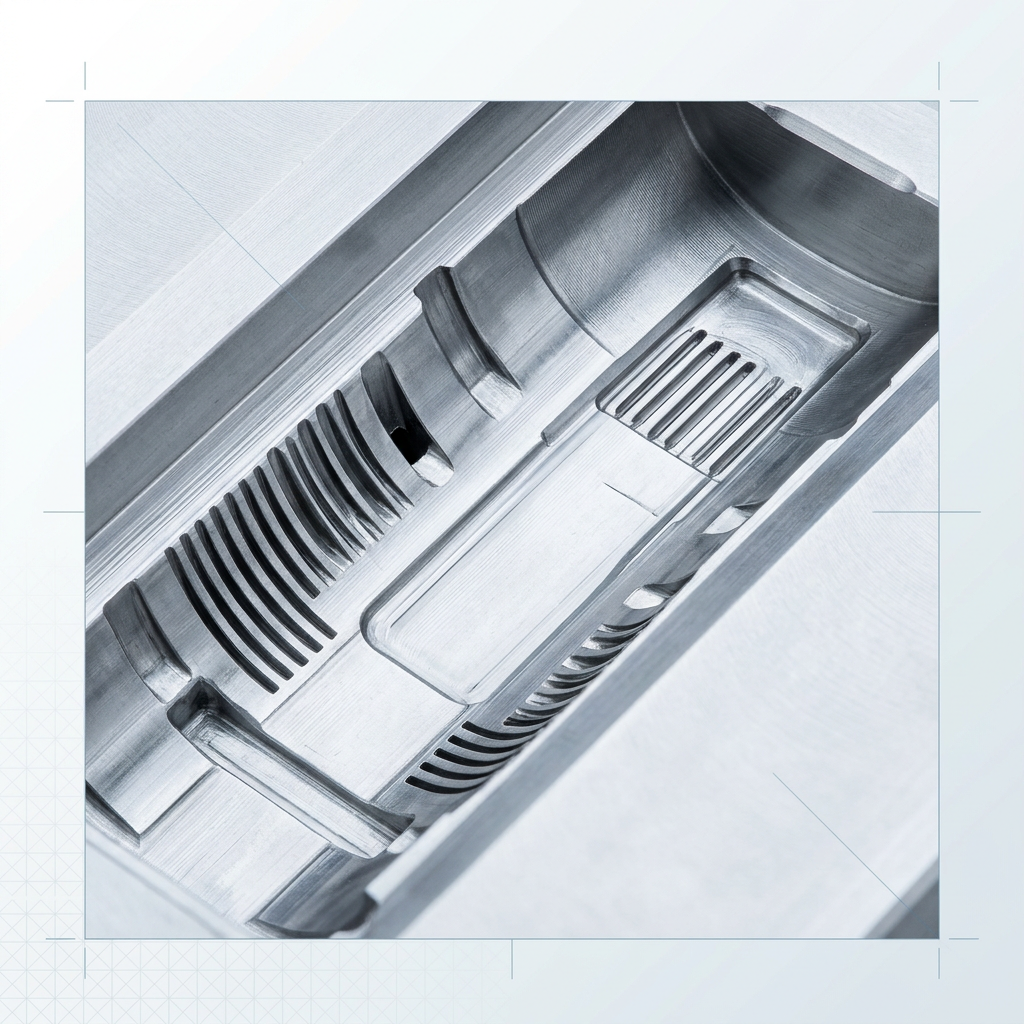
When the laser cycle ends, nothing is left on the mould — no chemical film to rinse off, no blasting media lodged in fine grooves, no CO2 residue. The only output from the process is debris captured at the extraction unit.
The mould is immediately ready for the next production shot. No post-cleaning steps, no verification stage, no contaminated outputs. Minimum waste volume, fully contained at source.
Laser Source Parameters
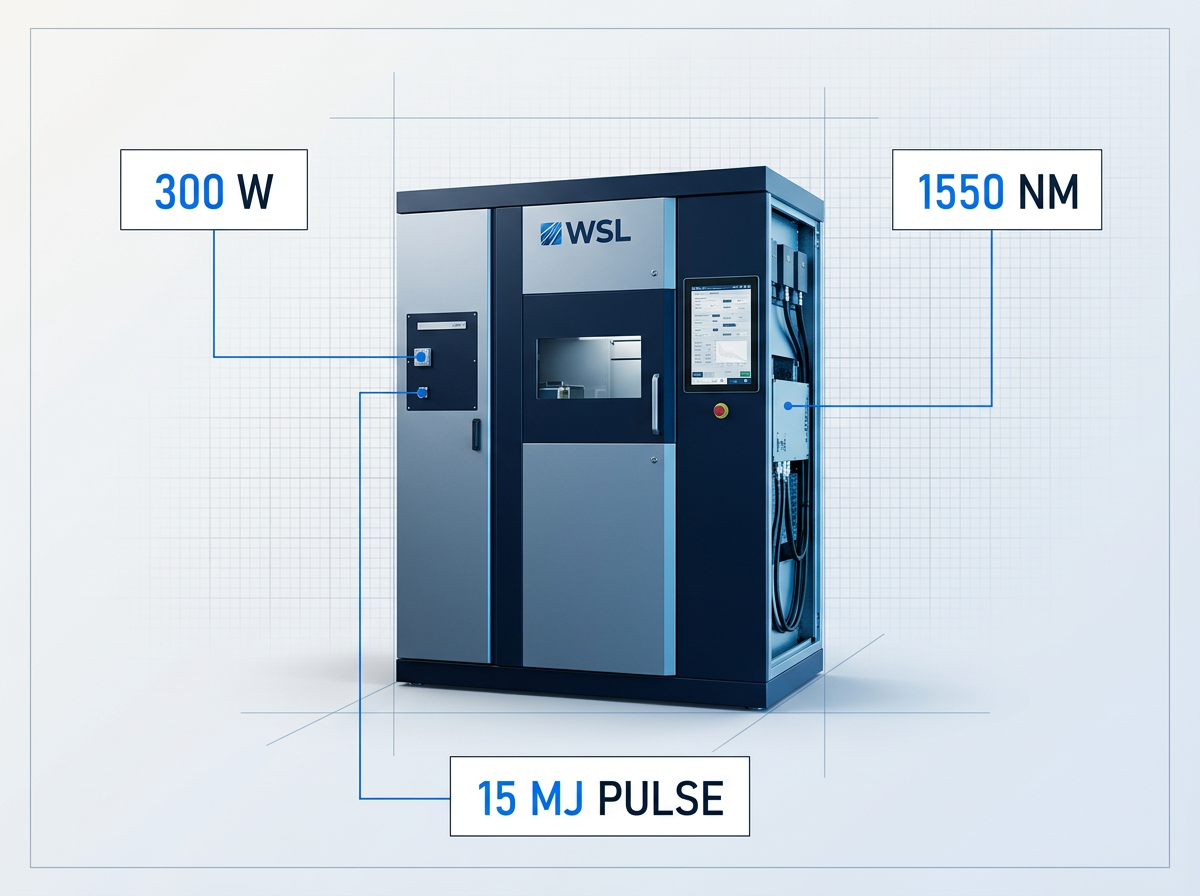
Max power: Up to 300 W. Wavelength: 1550 nm. Pulse energy: Up to 15 mJ. Pulse duration: 100 ns. Pulse repetition rate: Adjustable up to 200 kHz (CW). Power tunability: 0–100%.
Scanner and Optics
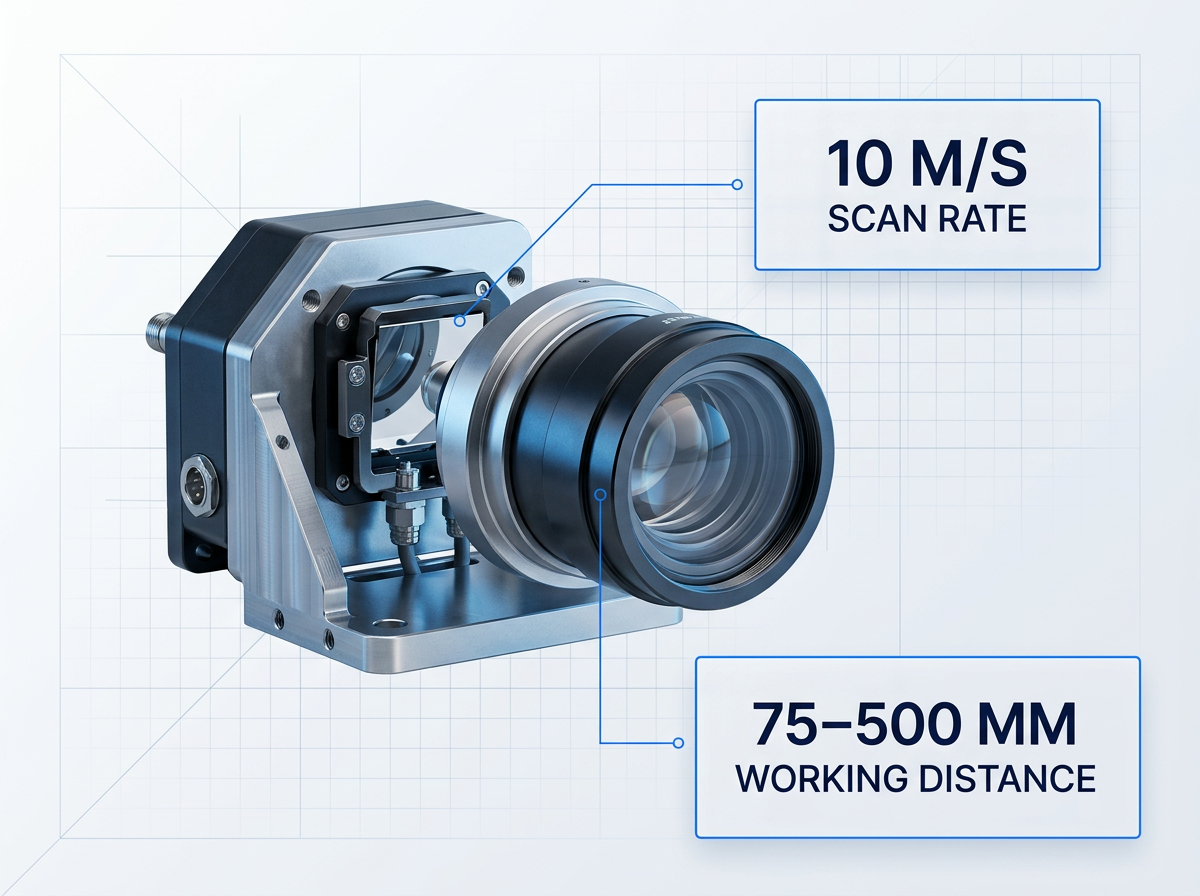
Scanner: 2-D galvanometer. Max scan rate: 10 m/s. Scan shapes: Fully programmable through GUI. F-Theta lenses: Interchangeable; 75–500 mm working distance. Lens-protection windows: Included and replaceable.
Physical and Installation
Delivery cable: Up to 50 m (5 m / 15 m standard). Handheld head weight: Under 3 kg. System weight: Under 50 kg. Power supply: 110–250 VAC single-phase. Power consumption: Under 2000 W. Cooling: Air-cooled; no water chiller or coolant circuit required.
Interface and Control
Interface: Ethernet + touchscreen. Laser class: Class IV or Class I. Scan shapes: Fully programmable through GUI. Job start: Touchscreen. User access: Secure.
Certifications and Manufacture
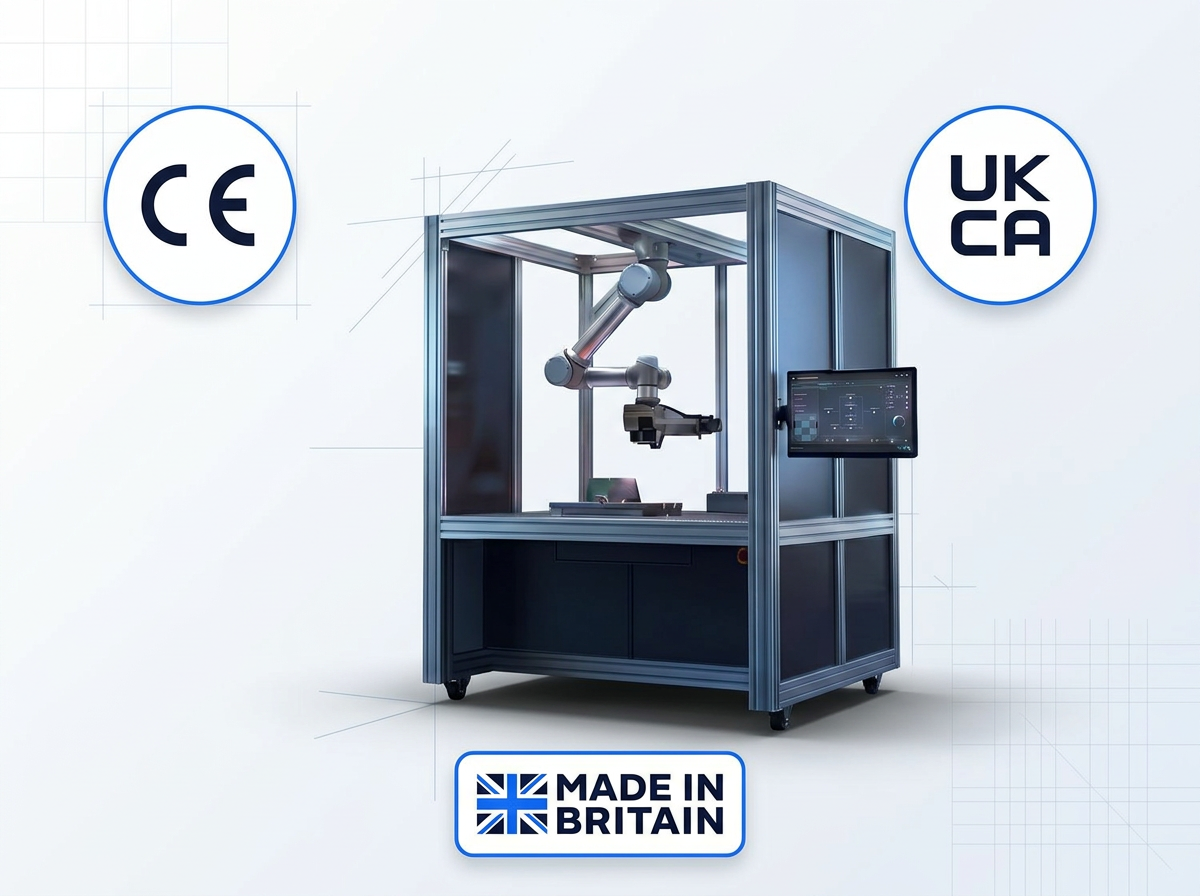
CE: Certified. UKCA: Certified. Manufacture: Made in Britain (UK).
Beyond the Purchase Price
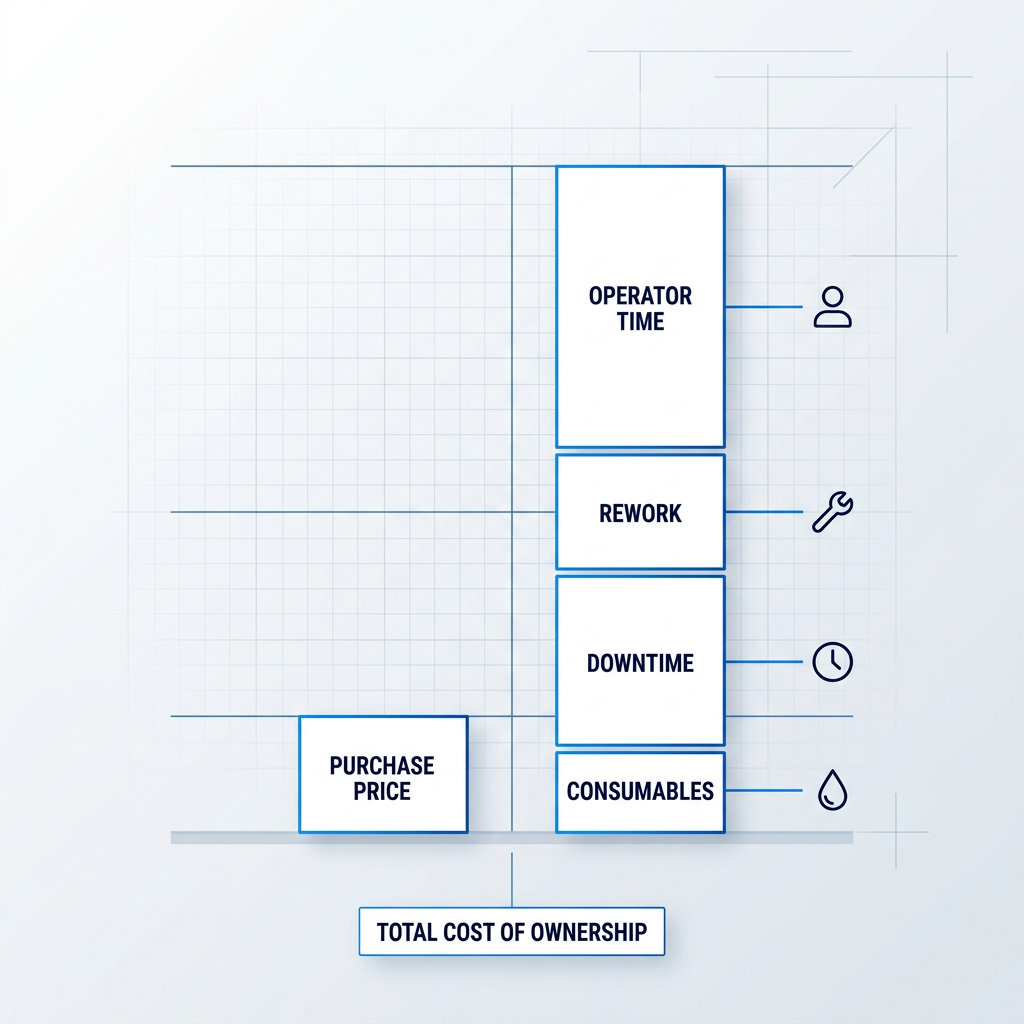
Purchase price is one input. The costs that accumulate over a mould cleaning machine's working life — consumables, production downtime, rework from surface damage, and operator time — are the inputs that actually determine what the machine costs you.
For any production-critical mould cleaning machine, total cost of ownership is the right financial lens. Capital expenditure is a single event; running costs repeat on every cleaning cycle, compounding across the machine's life.
No Consumables. Electricity Only.
AutoLASE runs on electricity and extraction filters alone. No dry ice pellets, no blasting media, no solvents. The consumable cost line is effectively zero compared to dry ice or media blasting alternatives, where material supply is a recurring operational overhead on every cycle.
AutoLASE is the European cost leader among comparable automated laser cleaning machines — competitively priced relative to the market, achieved through WSL's manufacturing and operational efficiencies.
Faster Return to Production
AutoLASE cleans the mould in place, with no disassembly, no rinsing, and no drying stage. The mould returns to production at the end of the cleaning cycle — nothing else required.
Traditional methods that require mould removal, transport to a cleaning station, or lengthy manual intervention each add non-productive time to every cycle. That cost compounds across a production run: more cycles, more lost press time.
Less Damage, Less Rework
Abrasive cleaning methods gradually erode mould detail. That wear accumulates in part defects, scrap, and eventual re-machining of expensive tooling — costs that repeat every time the mould degrades past an acceptable threshold.
Laser cleaning removes the contaminant only. The beam stops at the base material, leaving mould surfaces, fine engraving, and sharp edges untouched. Fewer defects, less re-machining, and a longer interval between tooling refurbishments.
Anyone Can Run It
Manual and operator-directed cleaning methods require trained personnel on every cycle. Their time is a recurring labour cost that scales with cleaning frequency.
AutoLASE's vision-driven system scans the part, builds a 3D map, and generates the cleaning path automatically — no programming, no path-setting, no specialist knowledge required. Anyone on the team can load a part and run it. Labour cost per cleaning cycle drops significantly when the machine handles the work.
The UK's Only Laser Cleaning Manufacturer
Woodrow Scientific Limited is the only UK-based laser cleaning manufacturer — designing, building, servicing, and improving every machine in-house since 2012. Many suppliers in this category are importers or resellers rebadging third-party machines: no in-house engineering means slower spares, slower fixes, and no genuine ability to develop the product.
WSL holds patents including the world-first eye-safe Reduced Hazard Zone (RHZ) technology — proof of a company that invents, not just assembles. AutoLASE is CE and UKCA certified for GB and EU market compliance. If your application has specific requirements, get in touch to discuss bespoke engineering and integration.
Also Available: ELASER Portable Laser Cleaning
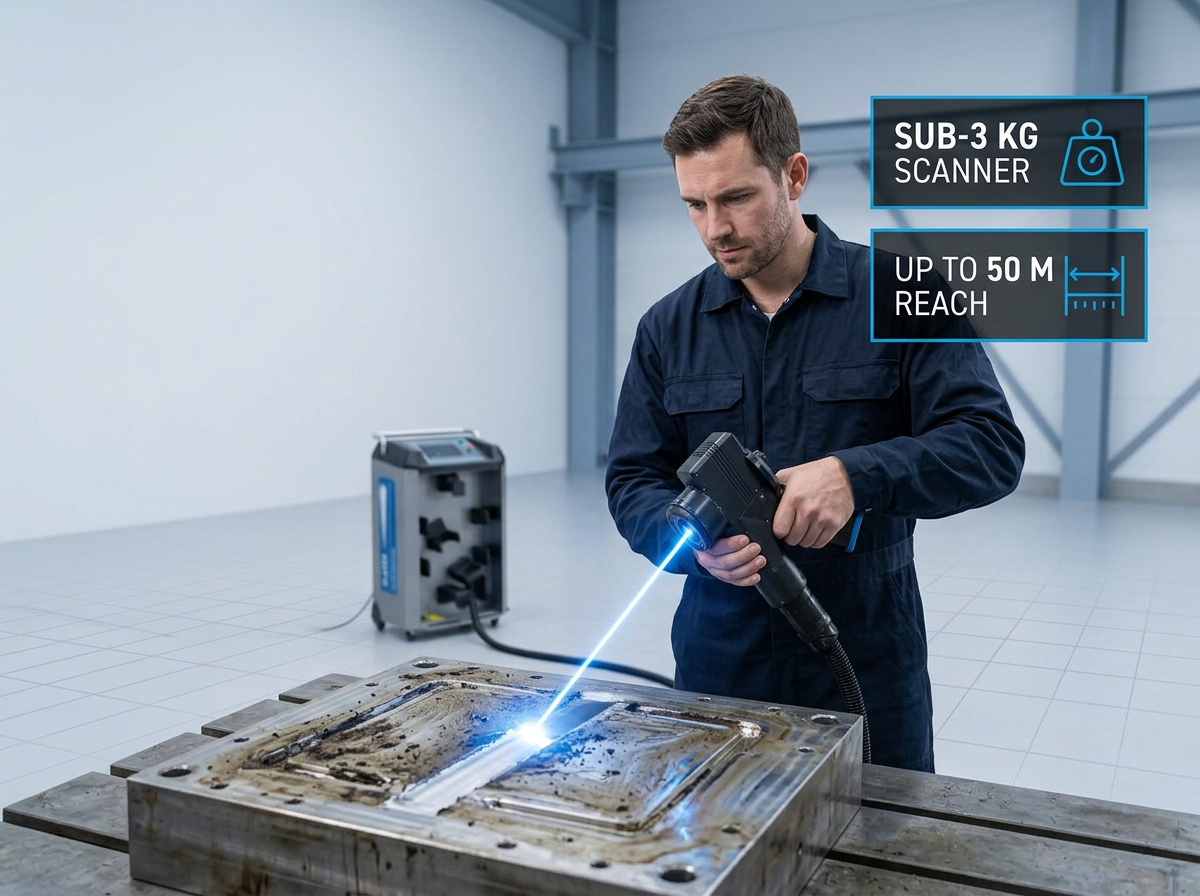
Where full automation is not the right fit, WSL's ELASER delivers the same chemical-free, consumable-free laser ablation principle in a portable, operator-directed format. A sub-3 kg handheld scanner with up to 50 m of delivery cable strips residue, release agents, and build-up from moulds in place — no disassembly, single-operator operation.
The ELASER-RHZ variant goes further: WSL's patented, world-first Reduced Hazard Zone technology collapses the laser hazard zone, so cleaning proceeds in open workshops and mixed-use facilities without sealing off the area — a capability exclusive to WSL worldwide.
Frequently Asked Questions: Laser Mould Cleaning Machine
Answers to the questions buyers most commonly ask before enquiring about AutoLASE.
Yes. When parameters are correctly set, laser cleaning leaves the mould surface completely untouched. Mould contaminants — resin, release agents, carbon, rubber residue — absorb laser energy and vaporise at a lower fluence than the tool steel or aluminium substrate beneath them. The beam stops at the base material. AutoLASE's power tunability (0–100%) means the system is set precisely for the contamination type and substrate in use, so there is no over-application of energy to the surface. The result is contaminant removal only — fine engraving, sharp edges, and polished cavity detail are preserved exactly as they were.
Yes. AutoLASE is designed to clean moulds in place, without removal from the press — no disassembly, no transport to a separate cleaning station, no reassembly required. This eliminates the handling risk and the time lost moving tooling between production and cleaning. Once the laser cycle ends, there is no rinsing, no drying, and no media clean-up stage. The mould is ready for the next production shot immediately.
AutoLASE removes the full range of contaminants encountered in industrial mould cleaning: resin residue, release agents, vulcanised rubber, carbon and soot, oil and grease, rust and oxides, adhesives and residues, and tarnish. This covers the contamination profile across injection moulding, tyre and rubber, and die-casting applications. Power tunability from 0–100% means a single system handles everything from light surface films through to heavy carbon build-up — without changing equipment or method.
No — no programming, no path-setting, and no technical skills are required to run AutoLASE. This is what sets it apart: the built-in 3D machine-vision software scans the loaded part, builds a 3D map, and generates the cleaning path automatically. There is no need for the operator to know the part geometry, configure a cleaning sequence, or set any paths manually. Anyone on the production team can load a part and run a cycle. Job start is via a graphical touchscreen with secure user access, keeping operation straightforward and controlled.
Both methods are non-abrasive and avoid chemical solvents, but they differ significantly in practice. Dry ice blasting can suit broad residue removal on hot tooling, but it carries operational burdens that laser cleaning does not: CO2 pellets remain viable for only a short window after production, requiring a just-in-time supply chain with no scope for stockpiling. Noise levels during dry ice blasting typically require hearing protection, and the method carries a thermal shock risk on sensitive mould surfaces. Laser cleaning has no consumable supply chain, no extreme noise, and no thermal shock risk. It is also the stronger option for selective cleaning, fine geometry access (vents, engravings, blind features), repeatable results, and full automation — the laser path is generated precisely and held to the same standard on every cycle. For production environments where consistency, automation, and zero consumable overhead matter, laser cleaning is the more capable method.
AutoLASE is built for the main categories of industrial production tooling. Mould types served include injection moulds and tools, tyre and rubber moulds, die-casting tools, and composite tooling. The system is configurable — if a component fits the enclosure, it can be cleaned automatically, which extends its reach to related manufacturing tooling beyond these named categories. Industries served include automotive, rubber, tyre, and plastics manufacturing, where tooling cleanliness directly affects part quality and production uptime.
AutoLASE holds both CE certification (covering EU conformity requirements) and UKCA certification (covering UK conformity for the GB market). Both are confirmed. This matters for buyers placing equipment on the EU or GB market, where conformity marking is a requirement for lawful use. AutoLASE is designed, built, and certified in Britain by Woodrow Scientific Limited — the only UK-based laser cleaning manufacturer. Because WSL engineers and manufactures its own machines in-house, it can stand behind its certifications with full technical accountability. That is a meaningful distinction in a market where many suppliers are resellers of third-party machines with no in-house engineering capability.
Contact Woodrow Scientific Limited directly via the enquiry form on this page or by telephone. AutoLASE is priced on a contact-for-quote basis — there is no published price list, because the right configuration depends on your specific application. When you enquire, it helps to describe your mould type, the contamination you are dealing with, and your production volume, so WSL's in-house team can advise on the best setup. Bespoke engineering, integration, and customisation are available — if you have specific requirements around cell design, robot integration, or process fit, WSL can discuss those directly. Demonstrations can also be arranged to show the system working on your application before you commit.