
Introduction
If you are an engineer, maintenance manager, or industrial buyer looking at fibre laser cleaning, you have probably already read the brochures — and found them unconvincing.
Most people arriving here are already running sandblasting, chemical stripping, or abrasive media operations, and the question they are really asking is: is this genuinely better than what I already do?
This guide works through that question honestly — covering how the technology works, how it compares to established methods, and what the economics actually look like over time.
It also addresses the scepticism directly, including the real limitations, so you can make a grounded assessment rather than take anyone's word for it.
TL;DR
Fibre laser cleaning's advantages over traditional methods are rooted in physics, not marketing copy. Once running costs, consumable spend, waste disposal, and rework are counted honestly, the economics look very different from the purchase-price comparison most buyers start with — and the technology's limitations are narrower than its critics suggest.
This article covers:

How fibre laser cleaning works and why it is selective
Substrate integrity and what it means for rework
Laser cleaning vs sandblasting — waste, damage, and overhead
Laser cleaning vs chemical stripping — hazards and compliance
Total cost of ownership over a multi-year horizon
Environmental performance, safety, and genuine limitations
What is a Fibre Laser Cleaner?
Most surface cleaning methods work by hitting a problem with brute force — abrasive particles, aggressive chemicals, high-pressure water. A fibre laser cleaner takes a fundamentally different approach, and understanding that difference is what makes every subsequent advantage in this guide make sense.
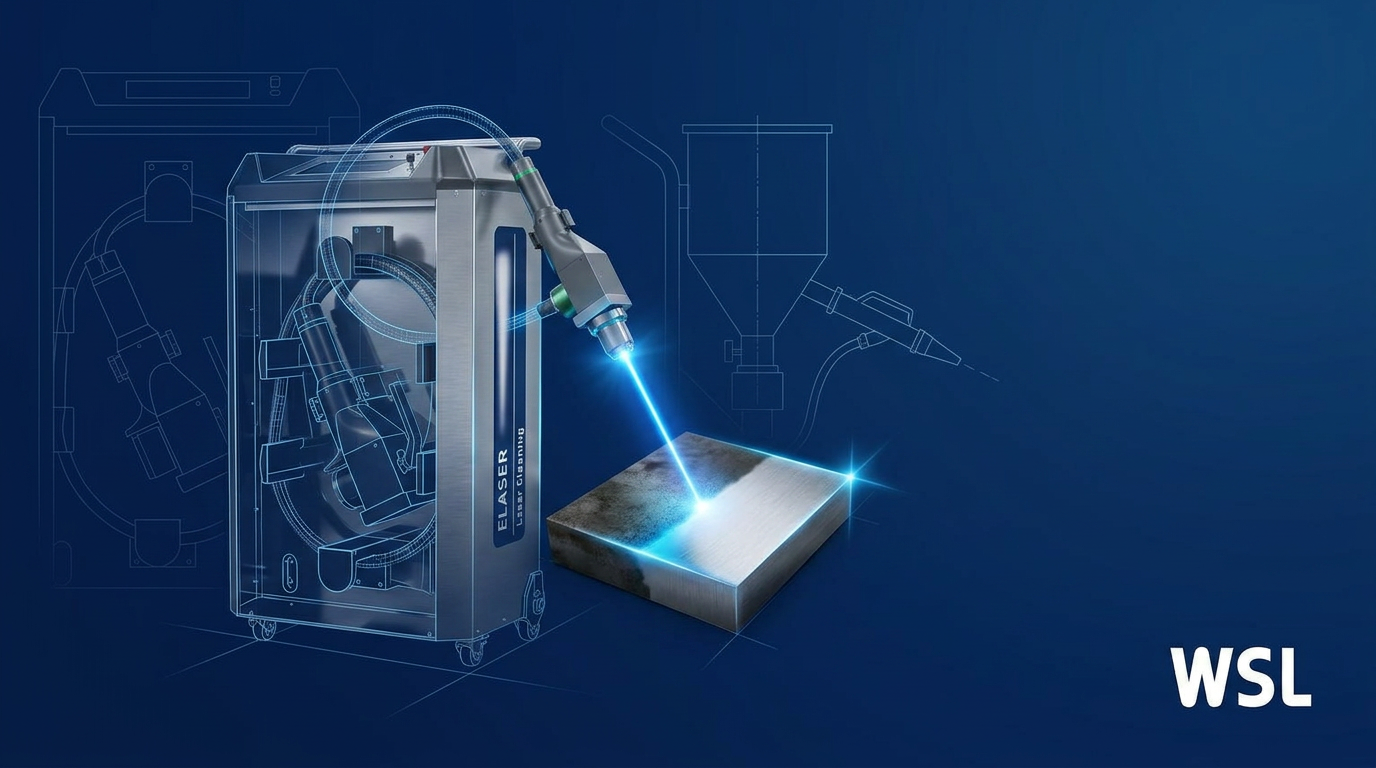
At its core, a fibre laser cleaner is a physical industrial machine: a self-contained system integrating a fibre laser source, beam delivery optics, and a scanning head into a deployable unit that directs a focused laser beam across a contaminated surface to remove rust, paint, coatings, oxides, and other unwanted material.
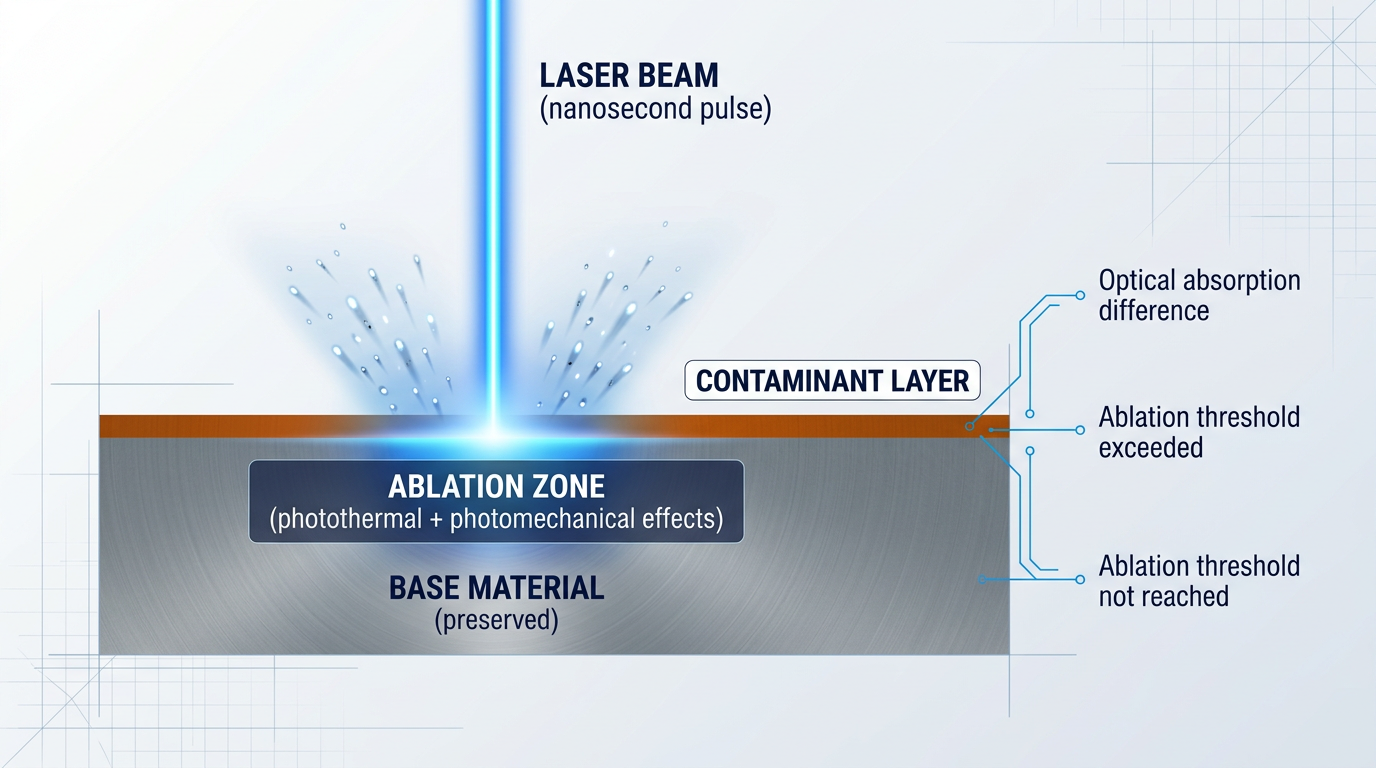
The removal mechanism is ablation — the laser beam delivers concentrated energy to the surface in very short bursts, typically in the nanosecond pulse range (billionths of a second).
When those pulses strike the contaminant layer, two physical effects drive removal: the photothermal effect heats the contaminant so rapidly that it vaporises before heat can conduct meaningfully downward, while the photomechanical effect generates stress waves through rapid thermal expansion that fracture and eject contaminant particles from the surface.
Critically, nothing physically strikes the surface — this is an energy-deposition process, not a mechanical impact process.
Why the Beam Stops at the Base Material
The contaminant layer and the substrate beneath it have different optical absorption properties — they interact with the laser wavelength differently, and they have different ablation thresholds: the energy density required to remove material.
Laser parameters — pulse duration, power, and repetition rate — are set so that the energy delivered per pulse exceeds the contaminant's ablation threshold while remaining below the substrate's.
Once the contaminant is gone, the base material simply does not absorb enough energy to be affected — the beam effectively stops at the substrate boundary.
The beam stops at the base material because the substrate's ablation threshold is never reached. This is a physical property of the laser-material interaction — not a function of operator skill or careful hand movement.
This inherent selectivity is why fibre laser cleaning is trusted in precision-critical environments where substrate integrity cannot be compromised — a point the next section examines in practical depth.
Pulsed Fibre: The Industrial Standard
Nanosecond pulsed fibre lasers have become the preferred technology for industrial surface cleaning because their short, high-peak-power pulses drive the photothermal and photomechanical effects that remove contamination efficiently without sustained thermal loading of the substrate.
Continuous-wave (CW) lasers deliver energy as a steady stream rather than discrete pulses; this sustained thermal delivery makes it harder to stay below the substrate's ablation threshold, which is why pulsed operation is the established choice wherever substrate condition matters.
Power tunability is a key practical consequence of this architecture: operators adjust power, pulse duration, and repetition rate to match the contamination and substrate at hand, allowing a single machine to handle everything from light surface oxides on aluminium to heavy mill scale on structural steel.
As for waste, the process generates only what it removes: vaporised particles and fume from the contaminant itself, captured by an extraction system integrated with or connected to the machine — no spent abrasive media, no chemical effluent, no secondary waste stream.
With the mechanism established, the practical consequence of that material selectivity becomes the first major advantage worth examining: what it actually means for the surface left behind.
Substrate Integrity: Why the Base Material Stays Intact
What separates a fibre laser cleaner from every other cleaning method at the physics level is not speed, not cost, and not convenience — it is selectivity: the ability to remove the contamination layer while leaving the base material beneath it essentially untouched.
Every material has a specific ablation threshold — the energy density required to overcome the molecular binding energy of that material and decompose it. The key to laser cleaning's selectivity is that the contaminant layer (rust, oxide scale, paint, grease) and the substrate beneath it have different ablation thresholds.
Laser parameters are set so that the energy delivered exceeds the contaminant's ablation threshold while remaining below that of the substrate. Metals, for instance, have high reflectivity at the typical 1064 nm solid-state wavelength used by fibre lasers, while surface impurities and oxides absorb that radiation far more readily — meaning moderate beam intensities remove the contamination without the energy coupling into the metal beneath.
This is not a tuning trick applied after the fact. It is a direct consequence of how different materials interact with laser energy, and it means the beam effectively stops at the interface between contaminant and substrate rather than continuing to remove material indiscriminately.
Where Traditional Methods Face a Structural Limit
Abrasive blasting removes contamination through mechanical impact: abrasive particles are accelerated at high velocity and physically dislodge the surface layer. The structural problem is that the same kinetic energy that removes the contaminant also acts on the substrate — as the abrasive impacts the surface, it creates an anchor profile of peaks and valleys that represents real removal of base material, not just the contamination layer sitting on top of it.
This anchor profile is an inherent outcome of how blasting works, not a calibration failure. As one industry source characterises it, abrasive air blasting is fundamentally a destructive process between the abrasive and the impacted substrate — the impact that cleans the surface also destroys a layer of it.
Chemical stripping presents a different but equally structural limitation. Solvents and chemical strippers dissolve or react with the surface material, and chemistry cannot perfectly distinguish between the contaminant and the substrate beneath it. On sensitive alloys such as aluminium or titanium, aggressive chemistries will attack the base material too, with the degree of substrate attack depending on concentration, dwell time, and substrate composition — variables that are genuinely difficult to control precisely in production environments.
What Substrate Preservation Means in Practice
Because laser cleaning removes contamination without the mechanical indentation of blasting or the chemical dissolution of stripping, dimensional tolerances are preserved after cleaning: the part exits the process with the same geometry it entered with, and surfaces do not require re-profiling, re-grinding, or secondary finishing.
This property is not optional in aerospace and precision tooling applications, where any surface modification introduced during cleaning would itself constitute a quality failure. The adoption of laser cleaning at Rolls-Royce for aero-engine component preparation — applied across 24 different component types — was driven in part by the reduction of scrap rates that came from replacing conventional cleaning with a method that does not alter the substrate.
There is also a downstream cost implication that is easy to overlook in method comparisons: when abrasive cleaning creates surface damage, the cleaned part may fail dimensional inspection or require secondary finishing before it can proceed to the next production stage. That rework overhead — labour, time, and material — is a real cost that laser cleaning's gentler action reduces, a point the total cost of ownership picture develops in full later in this guide.
MOPA pulsed fibre laser cleaning achieves surface roughness values close to or even lower than the original substrate. CW (continuous-wave) laser cleaning, by contrast, increases surface roughness by approximately 1.5× compared to the original. The substrate preservation discussed throughout this section is a property of the nanosecond pulsed regime specifically — not of laser cleaning as a blanket category.
With the selectivity mechanism and its practical consequences established, the next section examines the sandblasting comparison in full — looking at how the anchor profile limitation, media waste, and operational overhead of abrasive blasting weigh against the laser approach across real production conditions.
Fibre Laser Cleaning vs Sandblasting
Sandblasting is a proven, widely specified method that has prepared metal surfaces in fabrication shops and shipyards for decades — this comparison is not a dismissal of it. The goal here is to look honestly at how the two methods work and what the operational consequences of each actually are for facilities that run cleaning tasks regularly.
Sandblasting works by projecting abrasive particles at high velocity onto a surface; the mechanical impact removes rust, mill scale, and coatings through physical force. That same impact creates an anchor profile — a pattern of peaks and valleys physically indented into the substrate, measured in mils deep according to SSPC/NACE standards. Per The Fabricator, a typical post-blast profile runs 1.5 to 3 mils deep, representing real material removal from the base substrate.
As established in the substrate integrity section, the laser beam stops at the base material by design — sandblasting's mechanism works very differently, and that distinction matters most when the substrate itself has value. Beyond surface profile, sandblasting carries several operational consequences that compound across frequent or precision cleaning tasks.
- Media waste and hazardous disposal: Spent abrasive media contaminated with lead paint or chromate primers enters the RCRA regulated hazardous waste stream, adding classification, handling, and disposal costs.
- Containment and cleanup overhead: Blast booths or sealed containment areas are required to control abrasive dust spread, creating setup time, production downtime, and post-job cleanup labour.
- Silica dust regulatory burden: Silica-containing abrasives generate respirable crystalline silica (RCS). OSHA standards 29 CFR 1910.1053 and 29 CFR 1926.1153 require written exposure control plans, monitoring, and medical surveillance.
- Surface profile on precision parts: For aerospace components, precision tooling, or thin-walled sections, the anchor profile from blasting may exceed acceptable dimensional tolerance — the geometry change is inherent to the method.
What these four trade-offs share is that none of them is a failure of execution — they are all structural consequences of the mechanical impact method itself. A facility can run a perfectly operated blast booth and still generate hazardous spent abrasive media, still require containment overhead, and still expose operators to respirable crystalline silica. For facilities evaluating a switch, this is the critical distinction: the problems do not go away with better technique.
Laser cleaning avoids each of these consequences by design rather than by being a more refined version of the same approach. The waste output is the vaporised contaminant captured by an extraction system fitted with HEPA H14 and activated carbon filtration — there is no spent media to classify or dispose of. Containment overhead is substantially reduced, and the silica dust hazard is eliminated at source.
That said, sandblasting retains a genuine advantage in specific contexts. For very large open structural surfaces — shipyard plate preparation, bridge steelwork, large structural steel fabrication — where throughput speed and low per-square-metre cost are the primary criteria, and where an anchor profile is required for subsequent coating adhesion, sandblasting can remain the more economical choice. The laser cleaning comparison is strongest for frequent cleaning tasks, precision or high-value components, and downtime-sensitive production environments.
Sandblasting's trade-offs — hazardous media waste, containment overhead, silica dust compliance, and substrate profile damage — are built into its mechanism. A fibre laser cleaner avoids them not by doing the same thing more carefully, but by using a fundamentally different physical process.
The trade-offs of sandblasting are primarily mechanical and physical in nature; chemical stripping introduces a different category of operational burden — one centred on hazardous liquid waste, worker chemical exposure, and a distinct regulatory framework that the next section examines in detail.
Fibre Laser Cleaning vs Chemical Stripping
Chemical stripping works — that is not in dispute. Solvents dissolve contaminants effectively, and for decades the method has been absorbed into industrial operations as a known cost of doing business. The problem is not that chemical cleaning is reckless; it is that the method generates a mandatory waste stream by design, and that waste stream carries a compliance overhead that no amount of process discipline can eliminate.
When a solvent cleans a surface, it picks up the contamination it was meant to remove. The spent chemical — now contaminated — does not disappear. It becomes a regulated waste that must be classified, stored, transported, and disposed of through licensed channels under the Resource Conservation and Recovery Act (RCRA).
RCRA Classification: The Compliance Cost Built Into Every Batch
Under RCRA, spent solvents used in degreasing and cleaning operations are classified as F-listed hazardous wastes (waste codes F001–F005), covering halogenated solvents such as trichloroethylene and methylene chloride through to non-halogenated solvents including toluene, xylene, and acetone.
The regulatory obligations a facility faces depend on how much hazardous waste it generates per month. The EPA defines three generator categories, each carrying a different compliance burden.
| Generator Category | Monthly Waste Threshold | On-Site Accumulation Limit | Accumulation Time Limit |
|---|---|---|---|
| Very Small Quantity Generator (VSQG) | ≤100 kg/month | ≤1,000 kg on site | None (reduced requirements) |
| Small Quantity Generator (SQG) | >100 kg and <1,000 kg/month | ≤6,000 kg on site | 180 days (270 days if >200 miles to disposal) |
| Large Quantity Generator (LQG) | ≥1,000 kg/month | No on-site limit | ≤90 days; full Part 262 requirements apply |
Comparison of RCRA generator categories by monthly waste volume and key compliance obligations
A facility running a chemical cleaning line at any meaningful production volume will typically cross the SQG or LQG threshold, triggering requirements for EPA identification numbers, hazardous waste manifests, regulated storage conditions, and contracted disposal with a licensed treatment, storage, and disposal facility.
These are not one-time setup costs. They recur with every batch of spent solvent generated — and the disposal contract itself is an ongoing line item, with licensed hazardous waste disposal running $0.30–$1.20 per litre depending on classification and region.
VOC and HAP Compliance Under the Clean Air Act
Many industrial cleaning solvents are volatile organic compounds (VOCs) or contain hazardous air pollutants (HAPs) regulated under the Clean Air Act. Facilities emitting at least 6.8 kg/day of VOC before controls in ozone nonattainment areas fall under EPA Control Techniques Guidelines (CTG) for industrial cleaning solvents, which recommend a VOC content limit of 50 grams per litre and work practice standards covering use, storage, and disposal.
The compliance overhead this creates is ongoing: emissions controls, permit applications, air monitoring, and reporting obligations are not one-time investments but recurring operational costs that facilities must maintain for as long as solvent cleaning continues.
Worker Exposure: A Recurring Cost, Not Just a Safety Note
Trichloroethylene (TCE) is a widely used industrial degreaser and one of the most thoroughly documented examples of solvent risk. The EPA has characterised TCE as carcinogenic to humans by all routes of exposure — including inhalation and dermal contact — based on evidence linking it to kidney cancer, non-Hodgkin lymphoma, and liver cancer.
OSHA sets a permissible exposure limit (PEL) for TCE of 100 ppm as an 8-hour time-weighted average under 29 CFR 1910.1000 Table Z-2. Maintaining compliance with that limit requires local exhaust ventilation, respiratory protection programmes, and ongoing air monitoring — each of which adds to the operational cost of running a chemical cleaning line.
TCE is one example from a broader category. Methylene chloride, perchloroethylene, and other common cleaning solvents carry analogous exposure risks, with dedicated OSHA standards requiring exposure monitoring, regulated areas, PPE provision, and in some cases medical surveillance programmes for affected workers.
- Hazardous waste disposal: Spent F-listed solvents require licensed disposal contracts; costs run $0.30–$1.20/litre depending on classification and region.
- VOC and HAP compliance: Facilities above EPA CTG thresholds face emissions controls, permits, air monitoring, and ongoing reporting under the Clean Air Act.
- Worker exposure controls: Solvents such as TCE and methylene chloride require ventilation systems, PPE programmes, and potentially medical surveillance as recurring costs.
- Rinsing and neutralisation: Contaminated rinse water and neutralisation sludge add their own waste classification and disposal obligations on top of the base solvent cost.
These four cost categories are not additive in a neat linear way — they interact. Higher solvent volumes push a facility into a more demanding generator category, which increases manifest and reporting obligations, which in turn increases compliance labour. The apparent cost of the chemistry understates the true process cost significantly.
Once rinsing, neutralisation, and disposal contracts are factored in, waste handling alone typically adds 30–45% on top of the base chemical cost — a structural multiplier that applies regardless of how efficiently the cleaning process itself is run.
What Fibre Laser Cleaning Eliminates at Source
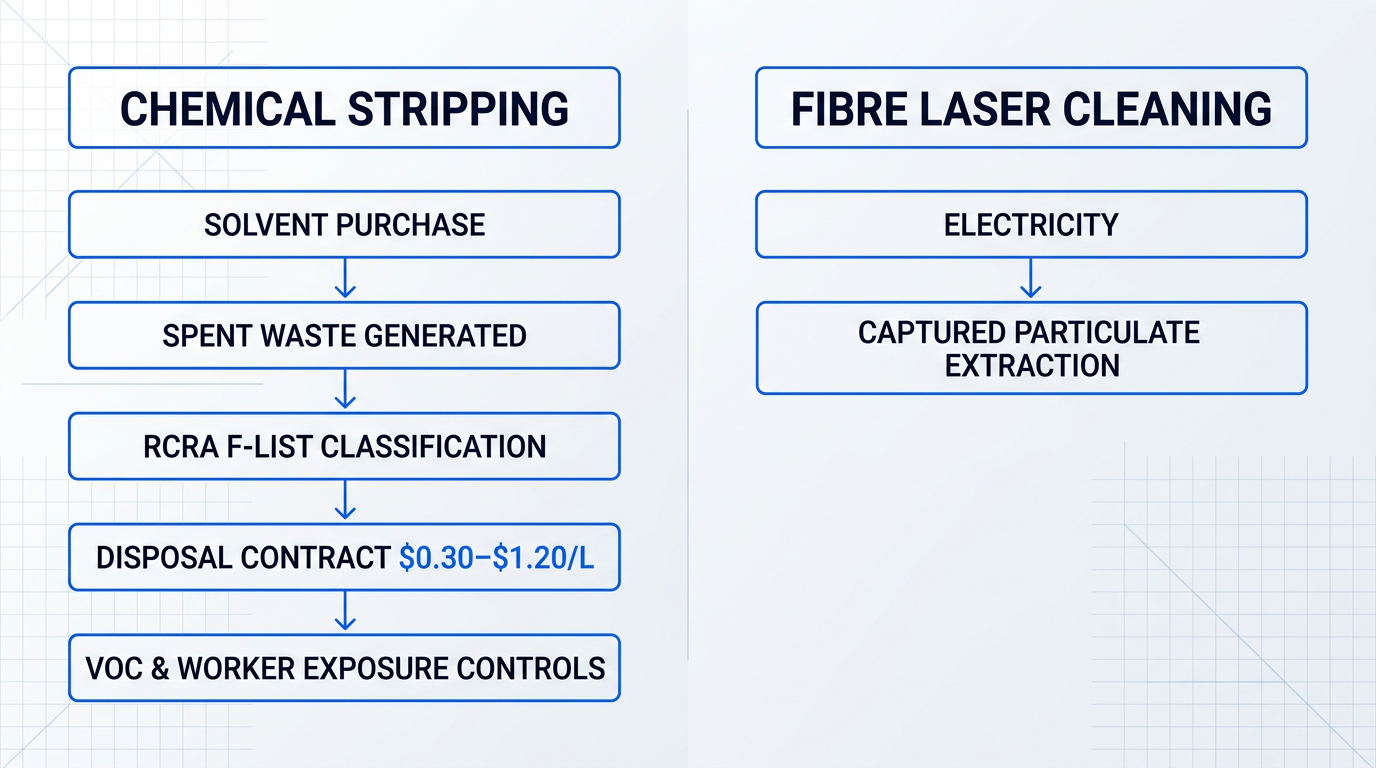
A fibre laser cleaner uses no process chemistry. The only output is the vaporised contaminant, captured by an extraction system. Because no solvent is introduced, no spent solvent is generated — which means the entire compliance structure built around chemical waste management does not apply.
The logic follows directly: no spent solvent means no RCRA F-list classification; no VOC-generating chemistry means no Clean Air Act permit tier for solvent emissions; no solvent vapour exposure means no solvent-specific PPE programme or medical surveillance obligation.
This is not mitigation — it is elimination. The compliance overhead is removed at source because the mechanism that generates it is absent from the process entirely.
For facilities where chemical cleaning was previously the only viable option — particularly in applications requiring full surface contact or complex geometries — the regulatory freedom that laser cleaning offers opens up new possibilities, and the precision and selectivity of the method determines exactly which applications it can serve.
Precision, Selectivity, and the Range of Applications
The technical properties that make a fibre laser cleaner precise and selective are not ends in themselves — they are what make the technology genuinely useful across a remarkable range of industrial and conservation contexts. Because pulse energy, frequency, and scan speed are all tunable, a single machine can address light surface oxides on aluminium welds and thick mill scale on structural steel without changing the fundamental process. The operator adjusts the parameters to match the contamination and the substrate; the physics does the rest.
That tunability is the unifying thread running through every application that follows. It is not marketing breadth — it is a direct consequence of the parameter-controlled process established earlier in this guide.
Welding Preparation and Post-Weld Cleaning
Welding quality is highly dependent on surface cleanliness before the arc is struck. Oxides, oils, grease, and corrosion-inhibiting agents on the weld zone can create gas pockets trapped in the solidifying metal, producing weld porosity that reduces yield strength, tensile strength, ductility, and fatigue life.
Laser pre-weld cleaning removes all of these contaminant types in a single pass, with perfect repeatability — a consistency that manual wire-brushing and solvent degreasing cannot match across high-throughput production environments.
According to Laserax's technical paper on laser cleaning for welding applications, remaining weld porosities are two to three times smaller after laser pre-cleaning compared to uncleaned surfaces — a concrete, measurable quality improvement, not a vague claim.
The benefit extends past the weld itself. Post-weld laser cleaning removes the oxide layer and discolouration that forms on stainless steel and aluminium after welding, restoring surface appearance and preparing the joint for coating or inspection — without any contact with the weld bead or the surrounding heat-affected zone.
For battery and EV manufacturing, where aluminium tab welding demands both oxide-free surfaces and real-time weld monitoring, laser pre-cleaning has become a natural fit: the process is automation-friendly and delivers the consistent surface quality that weld validation systems require.
Mould and Tooling Cleaning
Injection moulds accumulate release agents, resin residue, and contamination build-up in fine detail features over repeated production cycles. The cleaning challenge is not just removing the residue — it is doing so without altering the mould geometry that determines the quality of every part the tool produces.
Abrasive cleaning methods wear the mould surface progressively, degrading fine detail features and shortening tool life with each cleaning cycle. As established earlier in this guide, laser cleaning's non-contact process preserves substrate geometry precisely because the energy interaction is at the contamination layer, not the metal beneath it.
The practical implication is significant: laser cleaning can be performed in place, without disassembly, reducing downtime and avoiding the handling risk that comes with removing precision tooling from production. Laser Focus World notes that laser cleaning does not degrade the precise geometry of expensive tooling in the way abrasive methods do — a property that makes it well suited to automated integration into existing production lines.
Aerospace and Precision Components
Turbine blades, vanes, and other precision-tolerance aerospace components present a cleaning challenge that abrasive methods cannot reliably solve: the dimensional tolerances are too tight to absorb the surface loss that grit blasting creates, and the components are too high-value to risk.
Laser cleaning satisfies these demands because the process is non-contact and the energy delivery is controllable to micrometer precision. Coatings and oxides are removed without dimensional change to the substrate — the same part geometry that entered the process exits it, cleaned and prepared for subsequent joining or coating operations.
Laser Focus World identifies automotive and aerospace manufacturers' need for a fast, reliable method to treat and clean composite and metal parts before bonding as one of the primary market drivers for laser cleaning adoption — a signal of how deeply the technology has penetrated demanding, quality-critical production environments.
Heritage Conservation and Restoration
The heritage and conservation sector is where laser cleaning's gentleness is perhaps most strikingly demonstrated — and where the stakes of getting the method wrong are highest. Stone, masonry, and historic metalwork are irreplaceable; abrasive or acid treatments cause surface erosion that cannot be undone.
Laser cleaning removes centuries of atmospheric soiling, black gypsum crusts, biological growth, and graffiti from sandstone, marble, limestone, and granite through the same selective absorption principle that protects metal substrates in industrial use: the dark contamination layer absorbs the laser energy and vaporises, while the lighter stone beneath reflects it and remains essentially untouched.
The British Museum has been researching and applying laser technology in conservation since 2005. A formal research project running from 2016 to 2021 investigated the use of laser cleaning across a wide range of museum materials beyond stone — including archaeological metals, ceramics, and polychrome surfaces — finding it effective for removing old adhesives, cemented dust, and corrosion from gilded silver objects, among other applications. The project concluded that laser cleaning is now used by British Museum conservators on a wide range of materials.
At a larger architectural scale, the Parliament Hill rehabilitation programme in Ottawa has applied laser cleaning to the sandstone stonework of the Parliamentary Precinct. A symposium paper presented at the 15th Canadian Masonry Symposium documents the design-assist approach used for the Centre Block, describing laser ablation as currently the safest and most feasible method for removal of atmospheric soiling on architectural sandstone. The West Block of Parliament Hill — over 13,000 square metres of Nepean and Berea sandstone — was cleaned by laser between 2012 and 2017 using high-power systems originally developed for industrial applications.
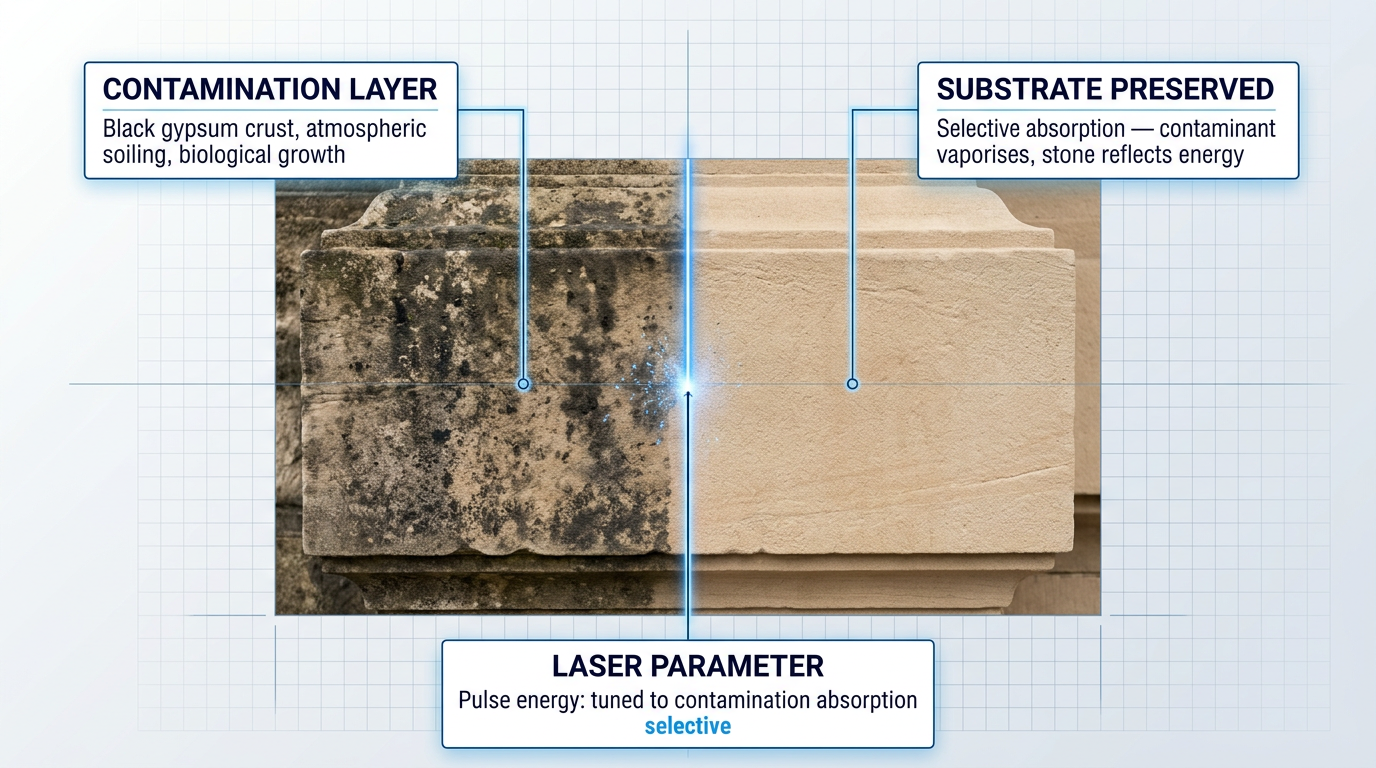
These are not experimental trials. They are documented production deployments on irreplaceable materials, overseen by institutional conservators who had every reason to choose the most cautious method available — and chose laser cleaning.
Is the Technology Proven? Addressing the Evidence
The question of whether laser cleaning actually delivers in practice — beyond controlled demonstrations — is a reasonable one, and the evidence answers it directly. The technology is in active production use at automotive manufacturers, aerospace facilities, battery producers, and heritage conservation institutions worldwide, and has been for years.
Laser Focus World, covering the industrial laser sector, characterises laser cleaning as approaching the mainstream — driven by real adoption in automotive, aerospace, and electronics manufacturing, not by promotional claims. The mechanism is well understood, and the results are documented across peer-reviewed research and industrial case studies spanning multiple sectors and substrate types.
That said, the technology is not a universal solution that requires no thought. Correct parameter selection matters: pulse energy, frequency, and scan speed must be matched to the contamination type and substrate. Applied without that discipline, any high-energy process carries risk. The point is not that laser cleaning is infallible — it is that the evidence base for its effectiveness, when properly applied, is now substantial and spans some of the most demanding cleaning contexts that exist.
Having seen where fibre laser cleaning is trusted — from automotive production lines to the stonework of national parliamentary buildings — the natural next question is what operating these systems safely looks like for the people running them, and how the safety picture compares to the chemical and abrasive hazards the technology replaces.
See the Technology in Practice
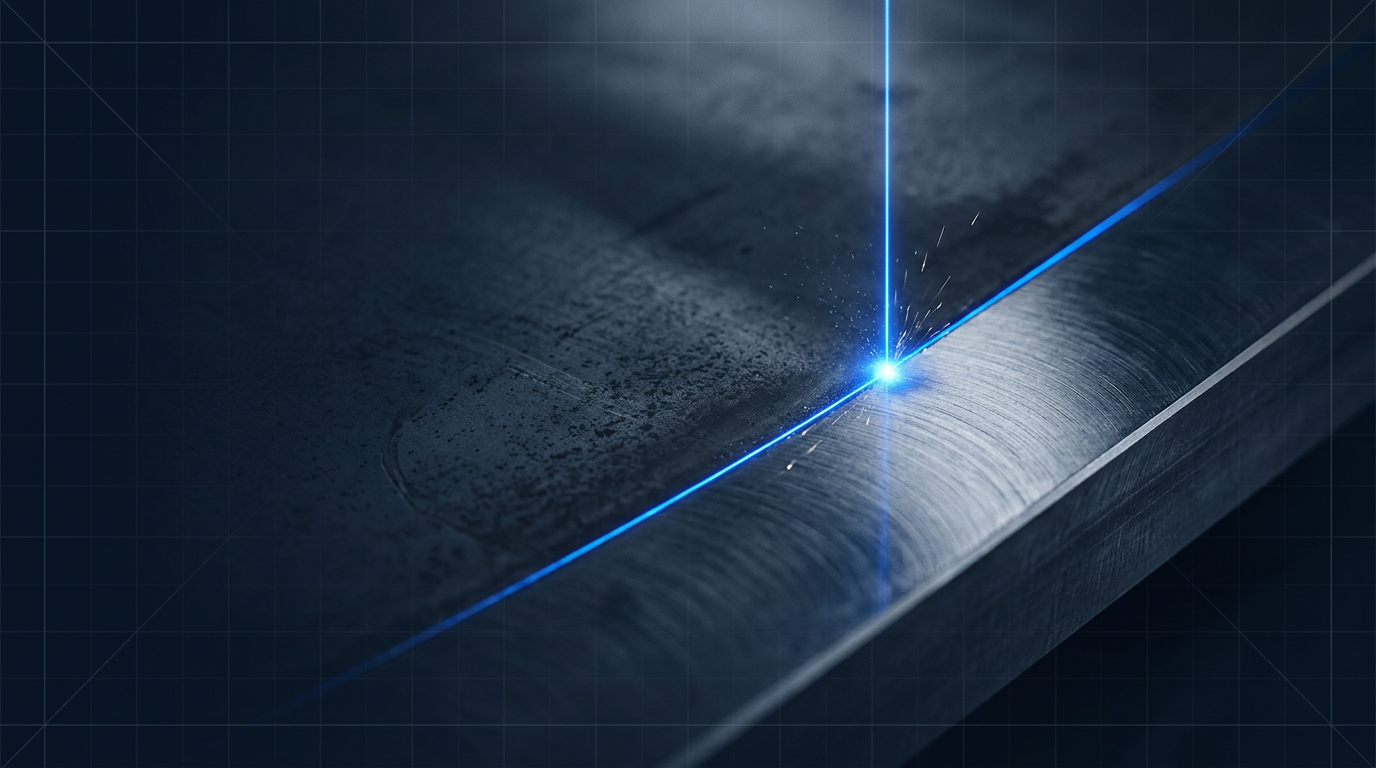
The technical case for fibre laser cleaning is clear. The next step is seeing what a purpose-built machine actually looks like — specifications, configurations, and capabilities for your application.
Laser Cleaning and the Changing Safety Landscape
Switching from chemical or abrasive cleaning to a fiber laser cleaner does not simply swap one tool for another — it removes entire categories of workplace hazard from the equation entirely.
Hazards Eliminated at Source: Chemical and Abrasive Methods
Chemical cleaning exposes operators to volatile organic compounds (VOCs) and hazardous air pollutants (HAPs) including solvents such as trichloroethylene (TCE), methylene chloride (DCM), and 1,1,1-trichloroethane (TCA) — each of which carries documented risks to the central nervous system, liver, kidneys, and reproductive system, as characterised by the EPA.
Beyond inhalation, operators face dermal exposure to these same compounds through skin contact with liquids, requiring chemical-specific gloves, respirators, and local exhaust ventilation infrastructure just to make the working environment legally compliant.
Laser cleaning uses no solvents at all — so there is no VOC exposure to mitigate, no dermal hazard to control, and no ventilation system to maintain or certify.
Abrasive blasting presents a different but equally serious hazard profile: silica sand fractures into respirable particles during use, and when workers inhale crystalline silica, lung tissue develops fibrotic nodules and scarring — a condition known as silicosis that OSHA describes as incurable and potentially fatal.
OSHA's silica standard (29 CFR 1926.1153) requires employers to keep exposures below a permissible exposure limit of 50 µg/m³ (8-hour TWA), with an action level of 25 µg/m³ — obligations that carry engineering controls, air monitoring, written exposure control plans, medical surveillance programmes, and mandatory respirator use when controls fall short.
A laser cleaning system produces no abrasive media, generates no airborne silica particulate, and requires none of the associated PPE infrastructure — not a lower level of the hazard, but the complete absence of it.
Laser cleaning does not reduce the chemical and abrasive hazards of traditional methods — it removes those categories of hazard entirely. There are no solvents to control, no silica dust to measure, and no blasting PPE to maintain.
The Safety Consideration Laser Cleaning Introduced
Industrial laser cleaning systems operate as Class IV lasers — the highest hazard classification under ANSI Z136.1, covering lasers capable of causing immediate eye or skin injury from direct, reflected, or scattered radiation.
For any Class IV installation, ANSI Z136.1 and OSHA guidance require that a Nominal Hazard Zone (NHZ) be established: the space within which beam radiation exceeds the maximum permissible exposure level for eyes and skin during normal operation.
In practice, controlling the NHZ means designating a laser controlled area, posting warning signage, fitting entryway interlocks or safety latches, excluding non-authorised personnel, providing approved protective eyewear to everyone inside, and appointing a laser safety officer — a substantial engineering and administrative overhead.
This is not a flaw in laser cleaning; it is an honest engineering reality that came with the technology when it replaced chemical and abrasive methods.
The practical problem emerged wherever that controlled area could not easily be established: open workshops with other workers present, mixed-use manufacturing floors where sealing off a section disrupts production flow, and public-facing environments such as heritage restoration sites or graffiti removal in accessible spaces.
In those settings, the overhead of managing a conventional laser hazard zone was often impractical enough to rule laser cleaning out entirely — even as the technology was proving itself in enclosed industrial environments.
Reduced Hazard Zone: Opening Up New Environments
WSL's ELASER-RHZ is the world's first laser cleaner to address this barrier directly, using WSL's patented eye-safe technology to collapse the laser hazard zone to a small area immediately around the work — the only laser cleaner of its kind currently available.
The technical basis for the eye-safe designation is the 1550 nm wavelength at which the ELASER-RHZ operates: at this wavelength, the beam is absorbed by the eye's cornea and lens before it can reach the retina, giving it a retina-safe classification that conventional fibre laser cleaning wavelengths do not share.
WSL is the only UK-based laser cleaning manufacturer — designing, building, and improving its machines entirely in-house — and the RHZ technology exists precisely because of that in-house engineering capability; it is a patented, proprietary development, not something sourced from a third-party supplier.
The practical consequence is significant: the ELASER-RHZ can operate in open workshops, mixed-use manufacturing facilities, and publicly accessible spaces without sealing off the area or evacuating personnel — unlocking applications that conventional laser cleaning systems cannot reach.
- Open manufacturing floors: Continuous cleaning in open-plan facilities without shutting down adjacent operations or excluding nearby workers.
- Mixed-use industrial sites: Maintenance and surface preparation in shared workshops where establishing a sealed laser controlled area would disrupt production.
- Public-facing environments: Graffiti removal and heritage or monument restoration in accessible public spaces — previously impractical with conventional laser systems.
The ELASER-RHZ is CE and UKCA certified, and WSL provides full operator training as a standard part of the system — covering safe operation, system setup, and optimisation.
Reduced hazard zone does not mean no training: proper operator training remains important for any industrial laser cleaning system, and the benefit the ELASER-RHZ delivers is a dramatic reduction in area-control overhead — the burden of sealing zones, managing interlocks, and excluding personnel — rather than the elimination of responsible safety practice.
The reduction in safety overhead also has a direct bearing on operating costs: fewer compliance obligations, no chemical waste contracts, and no PPE infrastructure all feed into the total cost of ownership picture explored in the next section.
Total Cost of Ownership: The Right Economic Lens
The most common objection to a fiber laser cleaner is the sticker price — and it is a reasonable thing to notice. But comparing laser cleaning to sandblasting or chemical stripping on purchase price alone is the wrong comparison, in the same way that comparing a car's purchase price to the cost of a bus pass misses everything that happens over the following five years.
The correct lens is total cost of ownership (TCO): what does each method actually cost to operate over a multi-year horizon, once consumables, labour, waste disposal, and rework are all on the table?
The Consumable Cost Structure Is Fundamentally Different
Sandblasting and chemical stripping both carry a structural consumable burden — abrasive media is consumed and replenished after every job, and chemical strippers are purchased per use and reordered continuously. These are not incidental expenses; they are baked into how the methods work.
Laser cleaning's running cost after capital is electricity and periodic replacement of lens-protection windows — filter costs typically run under $560 per year, and electrical consumption is generally under 5 kW according to Laser Focus World's industrial analysis. There is no abrasive media to purchase and no chemicals to reorder.
The per-area cost difference that results from this structural gap is significant. Published industrial benchmarks put laser cleaning operating cost at roughly $0.50–$4.00 per square metre, compared to $8–$20 per square metre all-in for abrasive blasting once media, containment, and disposal are factored in.
The five-year TCO picture makes this concrete. The table below draws on published cost modelling for a mid-scale operation running approximately 2,000 hours per year.
| Cost Category | Laser Cleaning | Abrasive Blasting | Chemical Stripping |
|---|---|---|---|
| Consumables (5 yr) | $300–$1,200 | $12,000–$35,000 | $20,000–$60,000 |
| Labour (5 yr) | $25,000–$50,000 | $40,000–$75,000 | $45,000–$80,000 |
| Waste disposal / compliance (5 yr) | $500–$2,000 | $4,000–$12,000 | $15,000–$40,000 |
| Downtime / process idle time (5 yr) | $3,000–$8,000 | $10,000–$25,000 | $12,000–$30,000 |
| Equipment maintenance (5 yr) | $2,000–$5,000 | $5,000–$14,000 | $3,000–$8,000 |
| Estimated 5-year total | $43,000–$88,000 | $76,000–$176,000 | $98,000–$228,000 |
Five-year TCO comparison across cleaning methods for a mid-scale industrial operation (~2,000 operating hours/year), sourced from published cost modelling.
The pattern across the table is consistent: laser cleaning's higher capital cost is offset by substantially lower spend in every recurring cost category. The consumable gap alone — near-zero versus tens of thousands over five years — is the dominant driver, and it compounds with each passing year of operation.
Labour and Downtime: The Uncounted Hours
Traditional methods carry a significant labour overhead that rarely appears in a simple cost-per-job estimate. Sandblasting requires blast booth setup and teardown, post-clean media recovery, and dust containment. Chemical stripping requires tank preparation, masking, dwell time management, rinsing, and neutralisation steps. None of that labour is free.
A fiber laser cleaner requires minimal setup by comparison: no booth to construct, no masking of adjacent surfaces, no post-clean recovery phase. Published labour benchmarks put laser cleaning at roughly 0.02–0.10 labour hours per square metre, against 0.10–0.40 for abrasive blasting and 0.15–0.50 for chemical stripping (excluding dwell time).
The downtime advantage is equally real but often goes unquantified. Because laser cleaning can happen in place — without disassembling equipment or relocating components off the production floor — cleaning fits into a maintenance window rather than requiring a full production stop. The component stays where it is; the laser comes to it.
Waste Disposal: A Recurring Cost That Disappears
As covered in the earlier comparisons with sandblasting and chemical stripping, both methods generate waste streams that carry real disposal costs. When the surface being cleaned carries hazardous coatings — lead paint, chromate primers — spent media and chemical waste are classified as hazardous waste, and disposal costs rise accordingly.
Published cost data puts waste disposal at $500–$2,000 per tonne for spent abrasive media and $800–$3,000 per tonne for chemical waste. Laser cleaning produces only captured fume from the vaporised contaminant, with negligible disposal cost. This is not just an environmental benefit — it is a line item that disappears entirely from the operating budget.
Rework Reduction: A Real Cost, Rarely Counted
As established in the substrate integrity section, laser cleaning preserves the base material in a way that abrasive methods cannot. When abrasive cleaning causes dimensional loss or surface profile damage, the cleaned part may fail inspection, require re-machining, or need secondary finishing before it can proceed.
Rework costs are measurable — re-machining time, failed inspection writeoffs, delayed production — but they almost never appear in the upfront cost comparison between methods. They are, however, a genuine TCO component that laser cleaning structurally avoids by not damaging the substrate in the first place.
Laser cleaning's annual consumable cost is typically under $500. Abrasive blasting consumables alone run $12,000–$35,000 over five years at production scale — before waste disposal, labour overhead, or rework costs are added.
Building Your Own TCO Model
Laser cleaning systems do carry a higher upfront capital cost than some traditional methods. The question is not whether that capital cost exists — it does — but whether the annual savings from eliminated consumables, reduced labour, avoided disposal costs, and lower rework rates add up to a compelling payback case for your specific operation.
For facilities cleaning above roughly 500 m² per month, most operators report payback in the 18–36 month range when replacing abrasive or chemical workflows, with the lower end of that range typical when high-cost disposal processes are being replaced. Below that volume threshold, the economics are harder to close.
The honest answer is that the exact payback period depends on variables only you know: your local labour rates, your current waste disposal contract costs, your cleaning volume and frequency, and which method you are replacing. A universal figure would be misleading.
The practical approach is to pull twelve months of actual cleaning-related costs — consumables, contracted labour, disposal invoices, and any rework costs attributable to cleaning failures — then compare that annual total against laser cleaning's running cost profile: electricity plus optics maintenance, with capital amortised over the system's expected life. When you run your own numbers, the payback case becomes concrete rather than theoretical.
The same consumable-free, waste-free operation that reshapes the cost picture also carries a separate dimension worth understanding: its environmental and regulatory compliance footprint, which is where the next section picks up.
Environmental Performance: No Consumables, No Waste Streams
Step back from the method-by-method comparisons covered earlier in this guide and the picture that emerges is striking: every traditional cleaning method generates a distinct category of waste or regulated output, and a fiber laser cleaner eliminates all of them simultaneously.
- Sandblasting: Generates spent abrasive media that becomes RCRA-regulated hazardous waste when the surface carries lead paint, chromate primers, or other regulated coatings.
- Chemical stripping: Produces spent solvents and chemical effluent — VOC emissions during use, hazardous waste classification under RCRA upon disposal.
- Water-jetting / wet cleaning: Creates rinse water and effluent contaminated with removed material, requiring treatment or regulated disposal under applicable wastewater rules.
- CO₂ / dry ice blasting: Consumes dry ice that sublimes on contact — not a waste stream in the traditional sense, but a continuous consumable input with its own supply chain and handling requirements.
Laser cleaning uses laser light alone to remove contaminants. As trade press reporting in Laser Focus World confirms, the photonic process requires no consumables — the only output is the removed coating itself, which is transformed into small quantities of particles and fume.
Fewer Permits, Less Monitoring, Fewer Obligations
The compliance consequence of eliminating these waste streams is concrete and operational, not abstract. Facilities using solvent-based cleaning carry VOC emissions obligations under the Clean Air Act, including potential Title V permitting requirements where annual emissions meet or exceed major-source thresholds — and, as EPA guidance confirms, sources can be "major" on the basis of their potential to emit, not just actual measured emissions.
Removing solvent-based cleaning from operations eliminates the activity that generates those VOC emissions, which can move a facility out of the compliance tier that triggers monitoring programmes, permit requirements, and periodic inspections — a simplification with real overhead implications.
The same logic applies to RCRA hazardous waste obligations. EPA's generator classification system sets three tiers based on monthly hazardous waste generation: Very Small Quantity Generators (VSQGs, up to 100 kg/month), Small Quantity Generators (SQGs, 100–1,000 kg/month), and Large Quantity Generators (LQGs, over 1,000 kg/month). The compliance obligations attached to each tier differ substantially.
LQGs face the full set of federal hazardous waste regulations: mandatory hazardous waste manifests for all off-site shipments, biennial reporting to EPA, 90-day on-site accumulation limits, full contingency planning, and employee training requirements. SQGs carry a reduced but still significant set of obligations, including manifest requirements and 180-day accumulation limits. VSQGs, by contrast, must meet only three basic requirements and are not subject to federal manifest or biennial reporting obligations.
A facility that eliminates chemical cleaning waste — and thereby reduces its monthly hazardous waste generation — may drop to a lower generator tier, shedding the compliance obligations that attach to the higher classification. Facilities should assess their own situation with qualified environmental compliance guidance, since generator status depends on all hazardous waste streams combined, not chemical cleaning alone.
The aggregate effect across both frameworks is a meaningful reduction in regulatory touch-points: no chemical storage permits, no VOC emissions monitoring programme, no hazardous waste manifests, no disposal contractor relationships, no biennial reporting tied to chemical cleaning waste. Each of these represents real administrative overhead that laser cleaning structurally avoids.
The Only Output: Captured Fume and Particles
Laser cleaning is not a zero-output process. The vaporised contaminant — particles and fume from the removed coating — must be managed. An extraction system with multi-stage filtration is a genuine requirement, not an optional accessory: the fume must be captured at source.
Manufacturer documentation and industry sources confirm that appropriate filtration for laser cleaning typically involves a pre-filter for coarse particles, a HEPA-stage for fine particulate, and an activated carbon stage for gases and vapours — with the specific configuration depending on the materials being cleaned.
The volume of this output is small compared to the spent media or chemical effluent that traditional methods generate, and the regulatory complexity of managing filtered fume is fundamentally different from managing drums of hazardous solvent waste or tonnes of contaminated abrasive. The category of output has changed, not just the quantity.
Under RCRA, the difference between a Very Small Quantity Generator and a Large Quantity Generator is not just paperwork — it is the difference between three basic requirements and the full set of federal hazardous waste regulations, including manifests, biennial reporting, and 90-day accumulation limits. Eliminating chemical cleaning waste can shift that classification.
Regulations Are Tightening: A Structural Advantage
EPA's Toxics Release Inventory data shows a sustained trend: facilities in fabricated metals, automotive, and aerospace manufacturing have progressively reduced TRI solvent releases over recent years, driven in part by process modifications that eliminate solvent use entirely — including switching to alternative removal methods that require no solvent at all.
The regulatory direction is clear. The EPA's Clean Air Act guidelines maintain specific standards for solvent use and industrial cleaning, including National Emissions Standards for Hazardous Air Pollutants (NESHAP) and Control Technique Guidelines (CTG) for solvent metal cleaning. These frameworks are subject to revision and tightening as EPA pursues pollution prevention objectives under the Pollution Prevention Act.
Facilities that have already eliminated solvent-based cleaning and abrasive media from their operations are not simply meeting today's compliance requirements — they have removed the regulated inputs that future tightening would target. That is a structural compliance advantage, not a prediction of specific future rules. It is worth noting that regulatory obligations vary by jurisdiction and individual facility circumstances; readers should assess their own compliance position with qualified professional guidance.
With the environmental and compliance picture now consolidated across all the methods covered in this guide, the final question is the one that matters most for your facility: given the technical performance, the TCO, the safety profile, and the regulatory posture, is a fibre laser cleaner the right choice for your specific application?
Ready to Move Beyond Traditional Cleaning Methods?
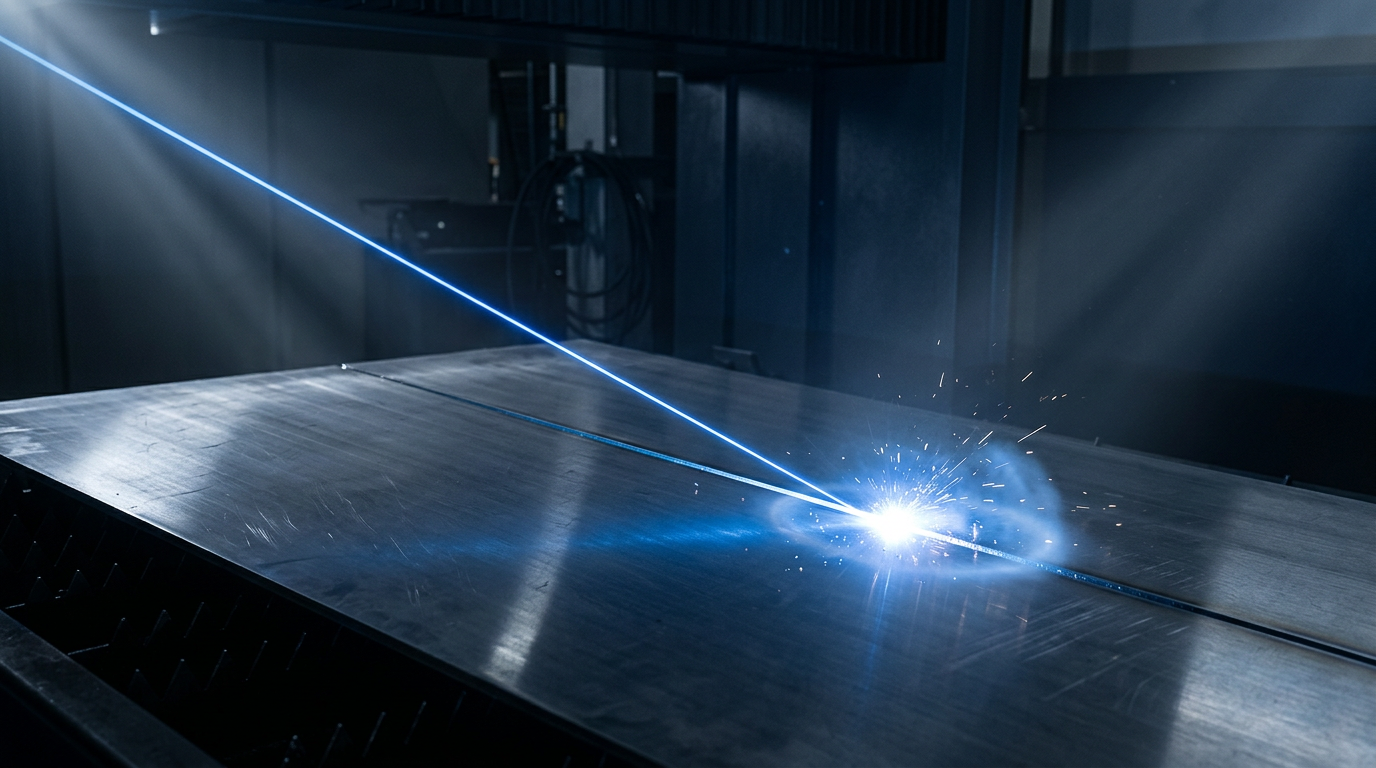
The case for laser cleaning is clear. Explore a purpose-built fiber laser cleaner and see the specifications, configurations, and capabilities for your application.
Conclusion
Is Fibre Laser Cleaning the Right Choice?
The advantages this guide covered are not selling points layered on top of the technology — they are consequences of how laser ablation works at a physics level, which is why they hold up under honest scrutiny on substrate integrity, total cost, safety, and environmental compliance.
It delivers its clearest value where those criteria matter most: frequent cleaning cycles, precision or high-value components, and operations where chemical or abrasive hazards carry a real compliance burden.
If that describes your application, evaluate specific machines against your cleaning volume and substrate types — ideally with a specialist who knows the technology well.
Frequently Asked Questions About Fibre Laser Cleaning
Answers to the questions buyers and engineers ask most often about fibre laser cleaning, including how it compares to other methods and what its real limitations are.
Yes — and this is not experimental technology. Fibre laser cleaning is in active production use across automotive manufacturing, aerospace component preparation, heritage restoration, and heavy industrial maintenance. The underlying mechanism is well understood, and results are documented in peer-reviewed research and verified industrial case studies spanning decades of deployment. Scepticism is understandable given the price point, but it is not warranted. That said, effectiveness does depend on correct parameter selection for the specific contamination type and substrate in question. A machine configured for thick mill scale requires different settings than one removing light surface oxides from aluminium. This is true of any precision industrial process, not a weakness unique to laser cleaning — it simply means the right setup matters.
Fibre laser cleaning is a process in which a focused pulsed fibre laser beam is directed at a contaminated surface to remove rust, paint, coatings, oxides, and other unwanted material. The laser energy is absorbed by the contamination layer, which vaporises or is ejected from the surface — leaving the base material beneath intact. It is a physical, contact-free process: no abrasive media, no chemicals, no solvents. The method is used across a wide range of industries and substrates, including steel and aluminium components in automotive and aerospace manufacturing, stonework and masonry in heritage conservation, and tooling and mould surfaces in precision engineering.
There are four genuine disadvantages worth knowing. First, upfront capital cost is higher than some traditional methods such as sandblasting or chemical stripping — laser cleaning is a precision technology and is priced accordingly. Second, on very large open surfaces (structural steelwork, shipyard-scale projects), throughput may be lower than high-volume abrasive blasting rigs. Third, operators require appropriate training and laser safety controls — this is a managed overhead, not an insurmountable barrier, but it is real. Fourth, not every contamination type and substrate combination is suitable without prior parameter testing; some pairings require validation before production use. These are honest trade-offs of the method category. For most precision, repeated-use, or compliance-sensitive cleaning tasks, the total cost and operational picture still favours laser cleaning — but the upfront investment and throughput considerations are worth factoring into any evaluation.
Fibre laser cleaners handle a wide range of substrates and contaminants, making them one of the most versatile industrial cleaning methods available. On the substrate side, compatible surfaces include steel, carbon steel, aluminium alloys, cast iron, copper, brass, bronze, titanium, and galvanised metals, as well as stone, brick, concrete, and masonry. On the contamination side, the method removes rust, oxides, mill scale, paint, powder coating, lacquer, primer, oil and grease, carbon deposits and soot, mould, graffiti, adhesives and residues, tarnish, weld discolouration, and mould release agents. The key variable is always the pairing of contamination type with substrate — most combinations are well within the method's capability, and parameter testing confirms suitability for any edge cases before production use begins.
Both dry ice blasting and laser cleaning avoid abrasive media and chemical waste streams, making them cleaner alternatives to sandblasting or solvent stripping. The practical difference lies in running costs and substrate interaction. Dry ice blasting requires a continuous CO₂ supply — liquid cylinders or on-site generation — which creates ongoing consumable costs and handling logistics that do not disappear after the initial equipment purchase. Laser cleaning runs on electricity alone; once the capital cost is met, consumable overhead is essentially zero. There is also a substrate sensitivity consideration: the CO₂ stream in dry ice blasting can cause localised thermal shock on thin-walled or precision components, whereas a laser cleaner's pulse parameters can be dialled in to suit the substrate. For high-frequency cleaning tasks or precision components where substrate integrity matters, laser cleaning holds a clear advantage on both running cost and process control.
Yes — and it is meaningfully safer than the methods it typically replaces. Laser cleaning eliminates chemical and abrasive hazards at source: no solvents means no VOC inhalation or dermal exposure; no abrasive media means no airborne silica dust and no risk of occupational respiratory disease. These hazard categories are removed entirely, not merely mitigated with PPE. Industrial laser cleaners are Class IV devices, which means a Nominal Hazard Zone (NHZ) applies — the area around the work where the beam could cause eye or skin injury must be controlled, and operators require appropriate training and safety procedures in line with ANSI and OSHA laser safety guidance. This is a managed requirement, not an unusual burden. Advances in laser safety engineering have produced reduced-hazard-zone systems that collapse the NHZ to a small area immediately around the work head, enabling use in open or mixed-use environments with significantly reduced safety overhead — while still requiring trained operators.