
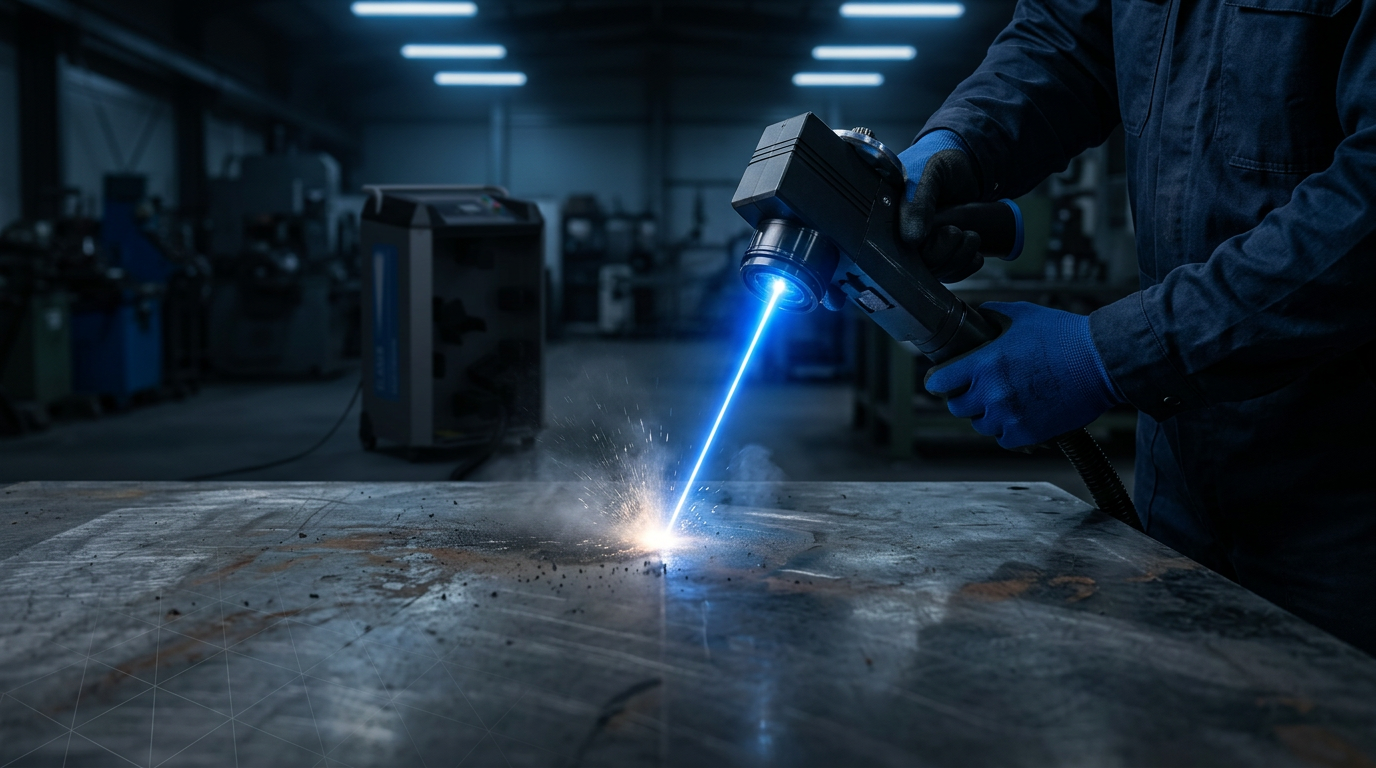
cleanLASER and ELASER: Who Makes Each Machine?
Clean-Lasersysteme GmbH was founded in Herzogenrath, Germany in 1997. Its portfolio spans portable handheld units through to high-power stationary systems and turnkey robotic cells. In 2024, IPG Photonics Corporation completed its acquisition of all shares in the company, which continues to trade under its existing name.
ELASER and ELASER-RHZ are made by Woodrow Scientific Limited (WSL) — the only UK-based laser cleaning manufacturer. Founded in 2012, WSL designs, builds, services and improves every machine in-house. The ELASER-RHZ adds WSL's patented, world-first eye-safe technology: the only laser cleaner of its kind in the world.
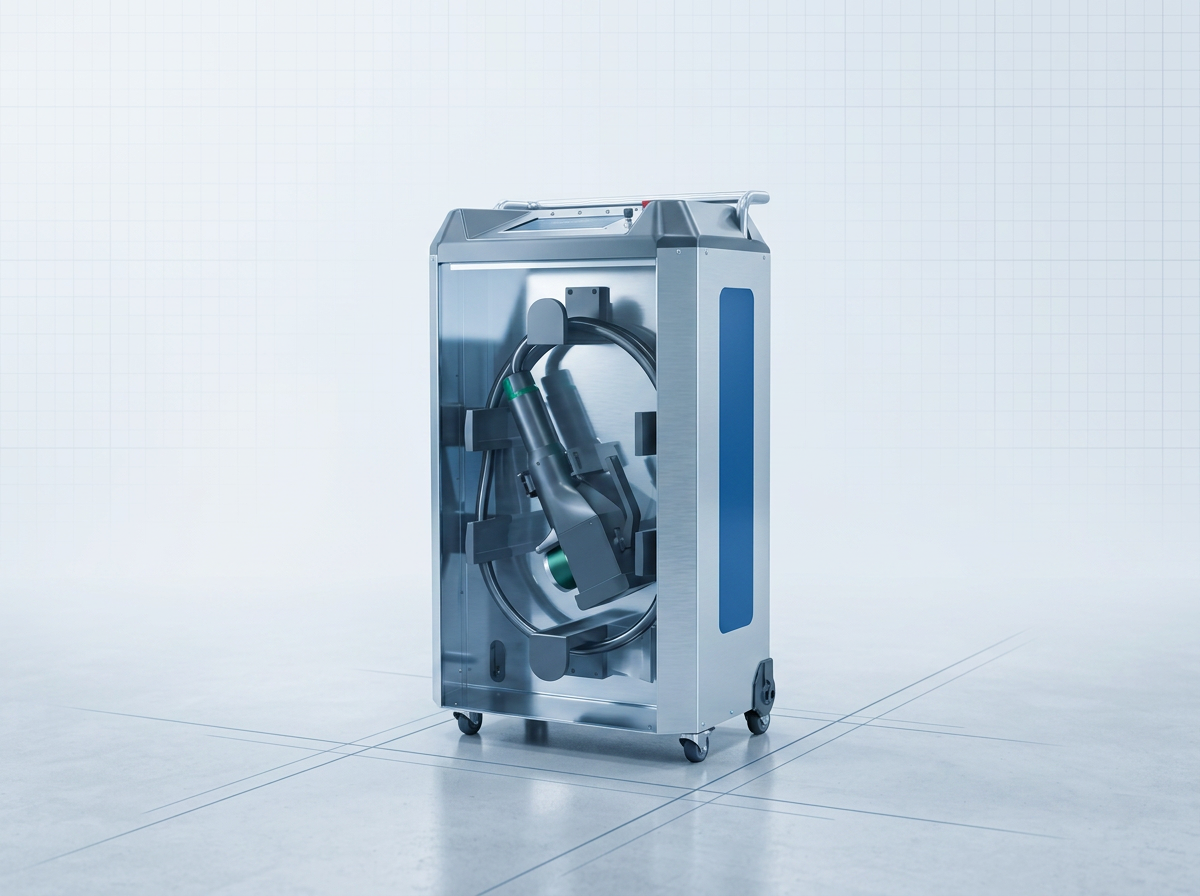
300 W, tunable 0 to 100%
Both ELASER and cleanLASER's streamLINE compact range top out at up to 300 W — peak power is a point of parity between them. The differentiator is tunability: ELASER's fibre laser adjusts continuously from 0–100%, meaning a single machine spans light surface oxides through heavy coatings without swapping units or settings.
That range of adjustability translates directly into versatility on the job — one system, one operator, one power outlet.
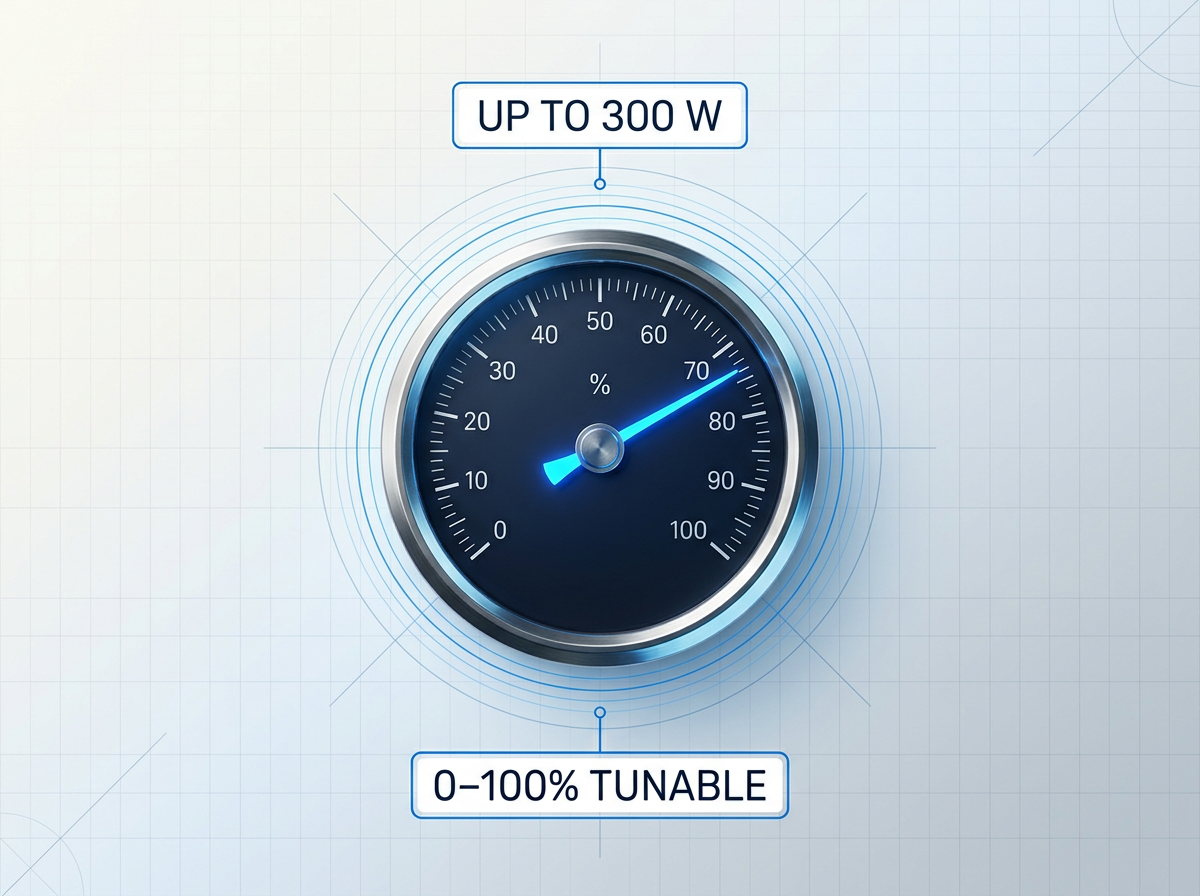
1550 nm: retina-safe, unique worldwide
The ELASER-RHZ operates at 1550 nm — a retina-safe wavelength and the technical foundation of its world-first Reduced Hazard Zone classification. At this wavelength, the system can achieve Class I (eye-safe) laser classification. No other portable laser cleaner on the market offers this.
cleanLASER's portable CL-series operates at 1064 nm — the conventional near-infrared wavelength used across the industry — and is rated Class 4. The full operational implications of the 1550 nm difference, including what the Reduced Hazard Zone means in practice, are covered in the next section.
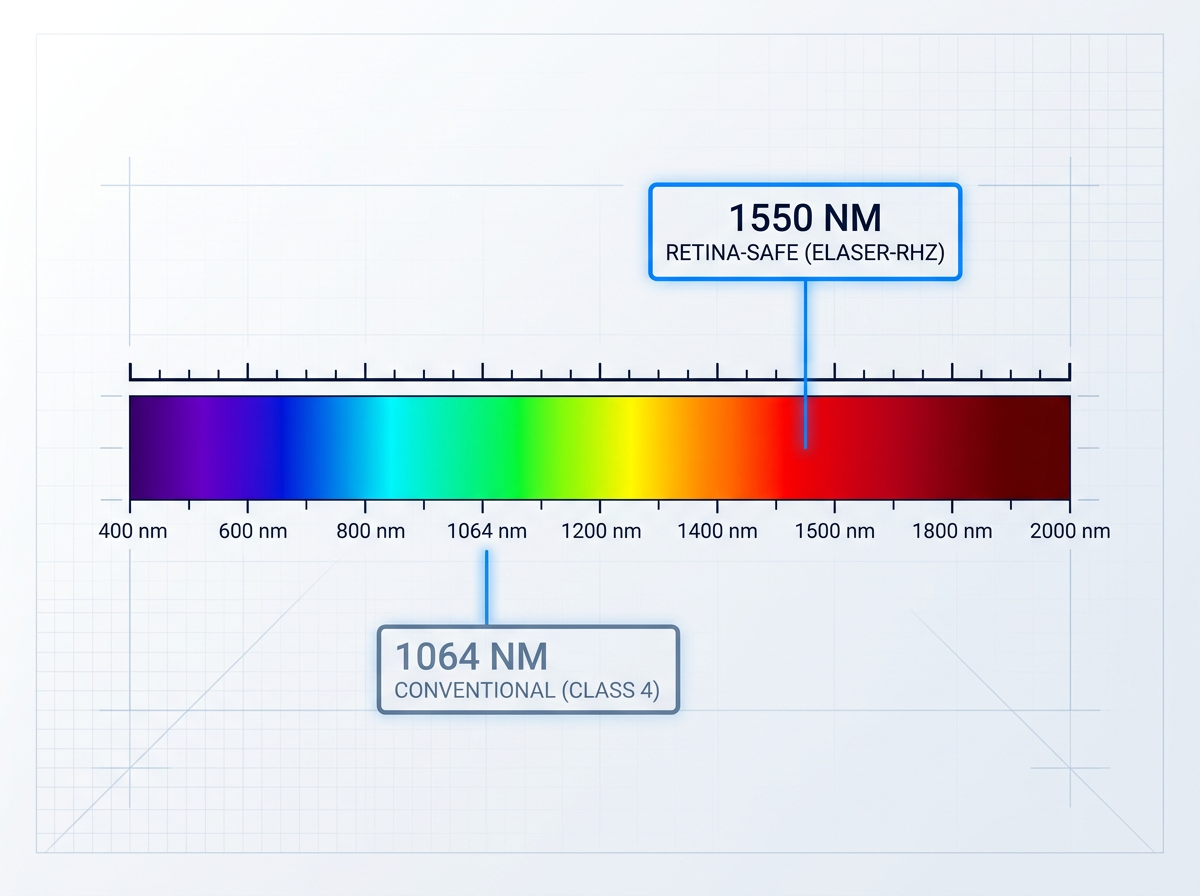
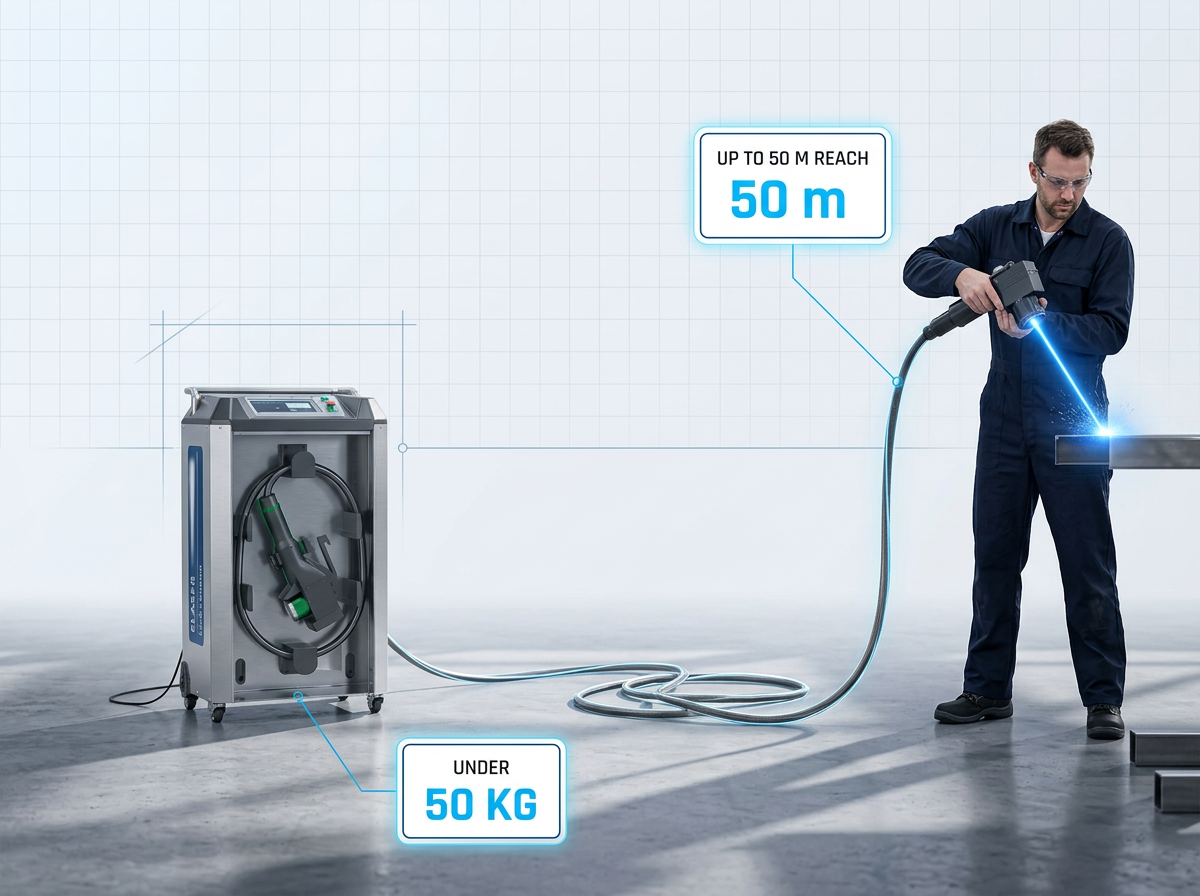
50 m reach, under 50 kg
ELASER ships on wheels at under 50 kg, with a handheld scanner weighing under 3 kg and a delivery cable reaching up to 50 m. That cable length allows the power unit to stay on the ground while the operator works at height, inside confined structures, or across large surface areas.
By comparison, cleanLASER's CL 500iM uses a seven-metre fibre-optic cable — a significant reach differential that limits access to elevated, confined, or remote work positions. Both systems are air-cooled and require no water supply or compressor.
Air-cooled, single-phase power supply
ELASER requires no water, chiller, or coolant circuit — air-cooled operation is built in. Power supply is 110–250 VAC single-phase, with total consumption under 2000 W. The only site requirement is a standard single-phase outlet.
cleanLASER's streamLINE compact range is also air-cooled, so cooling method is a point of parity. The differentiator for ELASER is the combination: air-cooling alongside universal single-phase input and sub-2000 W draw, making deployment straightforward across virtually any industrial or site environment.
CE, UKCA, Made in Britain
ELASER carries both CE and UKCA certification — covering European and UK market requirements respectively. UKCA is particularly relevant for UK industrial buyers following Brexit. The machine is designed, built, and supported in Britain by Woodrow Scientific Limited, the only UK-based laser cleaning manufacturer.
WSL is not a reseller: every ELASER is engineered and assembled in-house, with full in-house support capability. cleanLASER is a German manufacturer, headquartered in Herzogenrath and now part of IPG Photonics. Both hold CE certification for their respective product ranges.
ELASER-RHZ: World-First Reduced Hazard Zone Technology
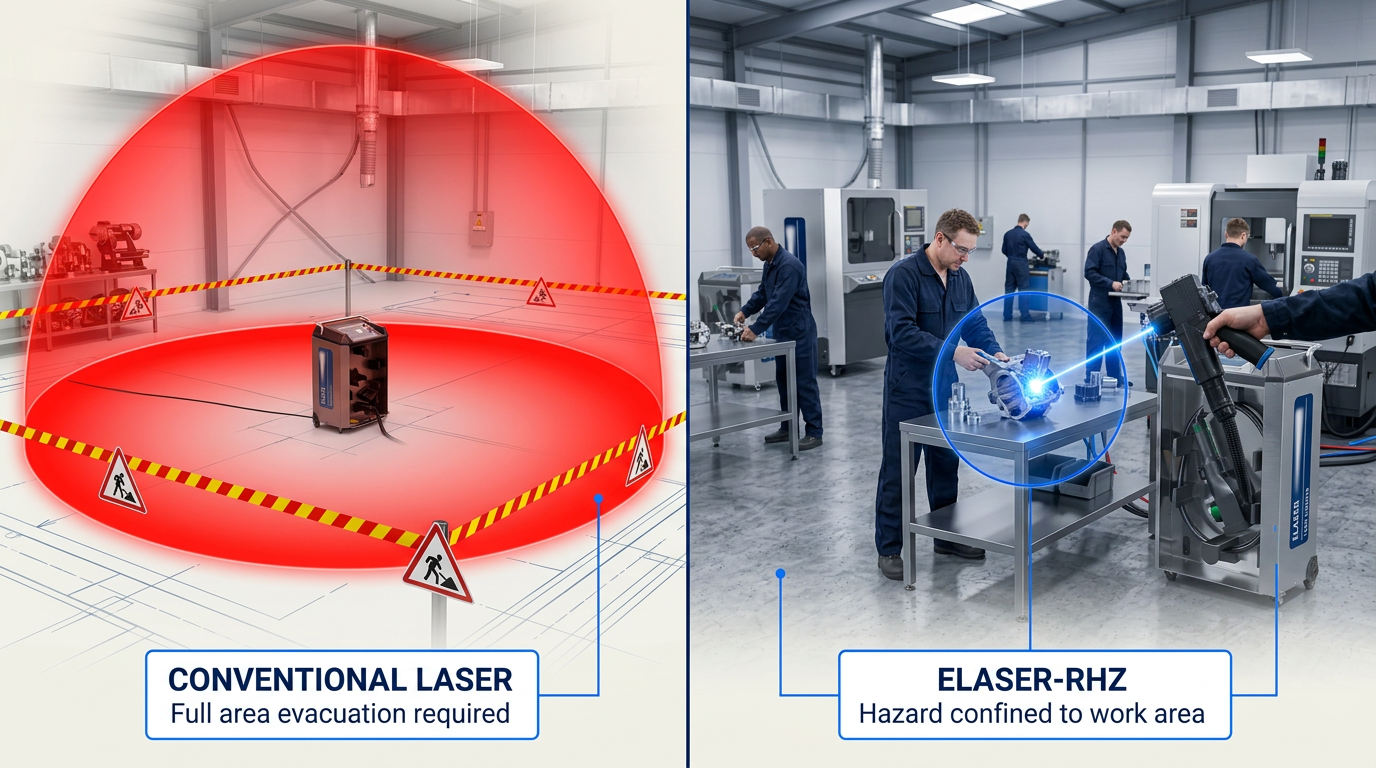
Every conventional laser cleaner — including cleanLASER's portable range — operates at wavelengths requiring full area evacuation before work begins. That is not a minor compliance step; it is a hard stop on using laser cleaning in open workshops, shared facilities, or publicly accessible spaces.
The ELASER-RHZ changes this entirely. WSL's patented 1550 nm technology is the world's first to collapse the laser hazard zone to a small area around the work itself — no shutdown, no sealed-off zone required.
The result: continuous cleaning in open-plan manufacturing, mixed-use facilities, and public-facing environments where conventional laser cleaning simply cannot operate.
See the ELASER-RHZ Full Specifications
The ELASER-RHZ is the only laser cleaner operating at 1550 nm with a reduced hazard zone. Download the datasheet to review the full specifications, or explore the product page for deeper detail.
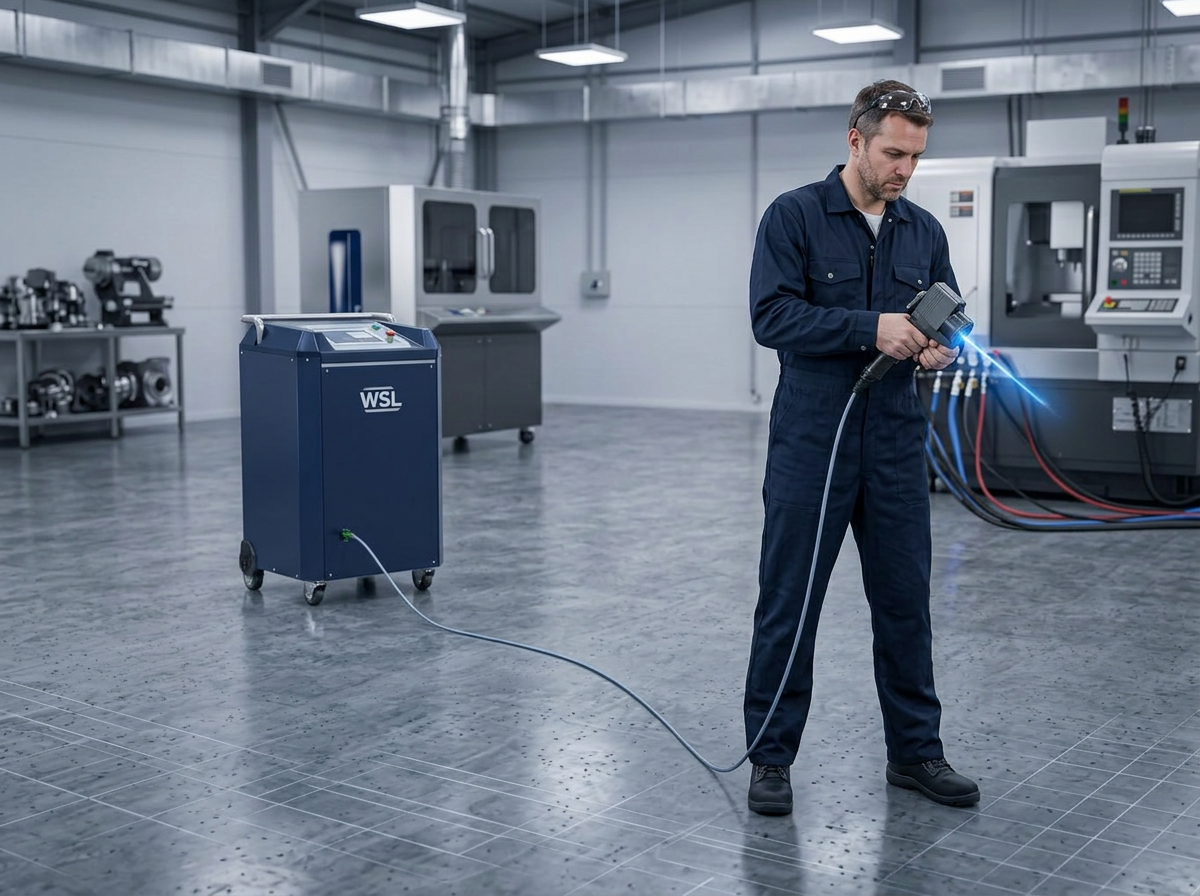
One operator. One power outlet.
The ELASER ships as a wheeled unit under 50 kg, with a handheld scanner weighing under 3 kg and a delivery cable reaching up to 50 m. A single-phase supply (110–250 VAC) is the only site requirement — no compressor, no water, no consumables to procure or manage on site. One trained operator mobilises, cleans, and packs down. The machine comes to the work, wherever that work happens to be.
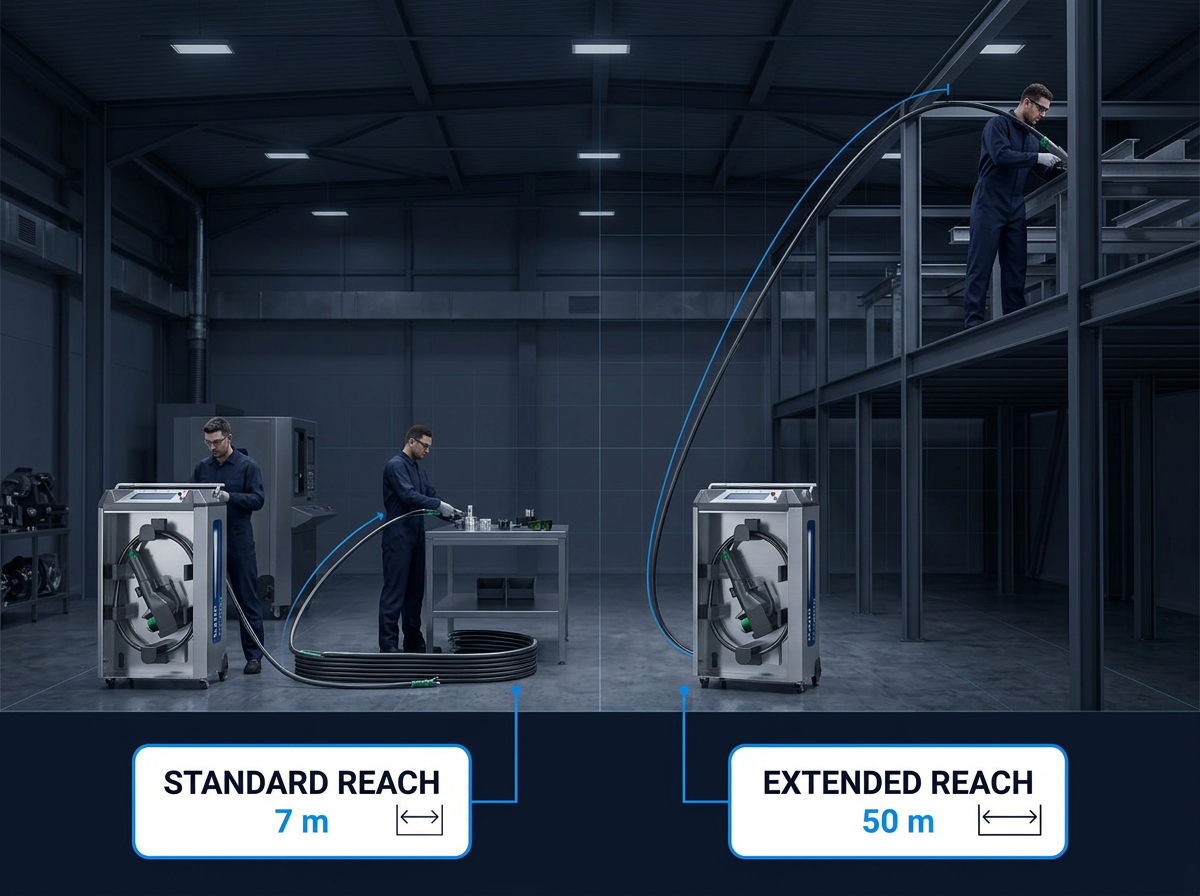
Reach the work, wherever it is
The ELASER's delivery cable reaches up to 50 m. The cleanLASER CL 500iM ships with a seven-metre fibre-optic cable. That difference is not a spec detail — it is an access difference. With 50 m of reach, the power unit stays at ground level while the operator works at height on elevated steelwork, inside a confined space, or at distance from where the machine can safely be positioned. A seven-metre cable keeps the operator tethered close to the machine, which limits the range of access scenarios the system can practically cover.
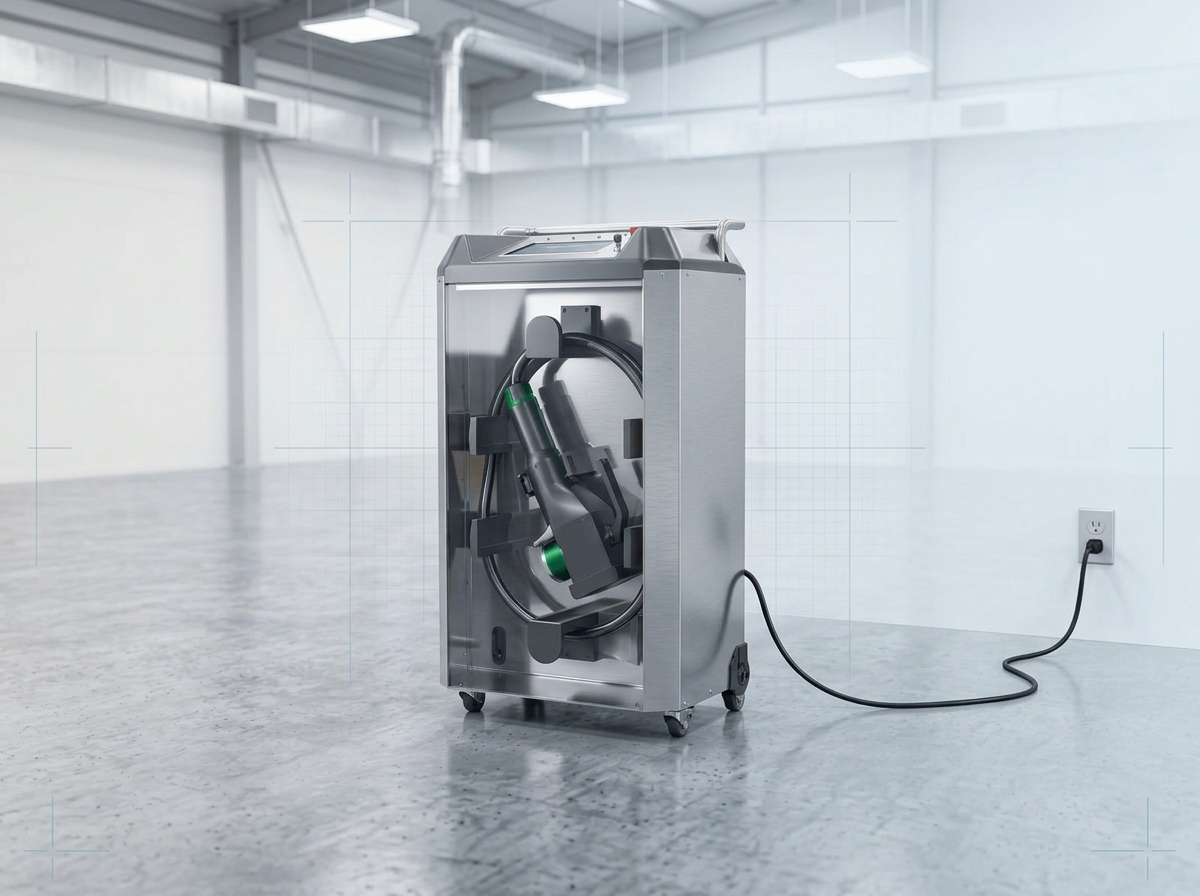
Truly self-contained on site
Air-cooled operation removes the need for a water chiller, coolant circuit, or external compressor. The ELASER's only site input is electricity: single-phase, under 2000 W. Nothing to fill, drain, or set up before work begins. This is the third pillar of deployability — 50 m of cable reach and a sub-3 kg scanner mean little if the machine cannot run without a water supply. Wherever there is a standard power outlet, the ELASER is ready to clean.
Bring the machine to the work
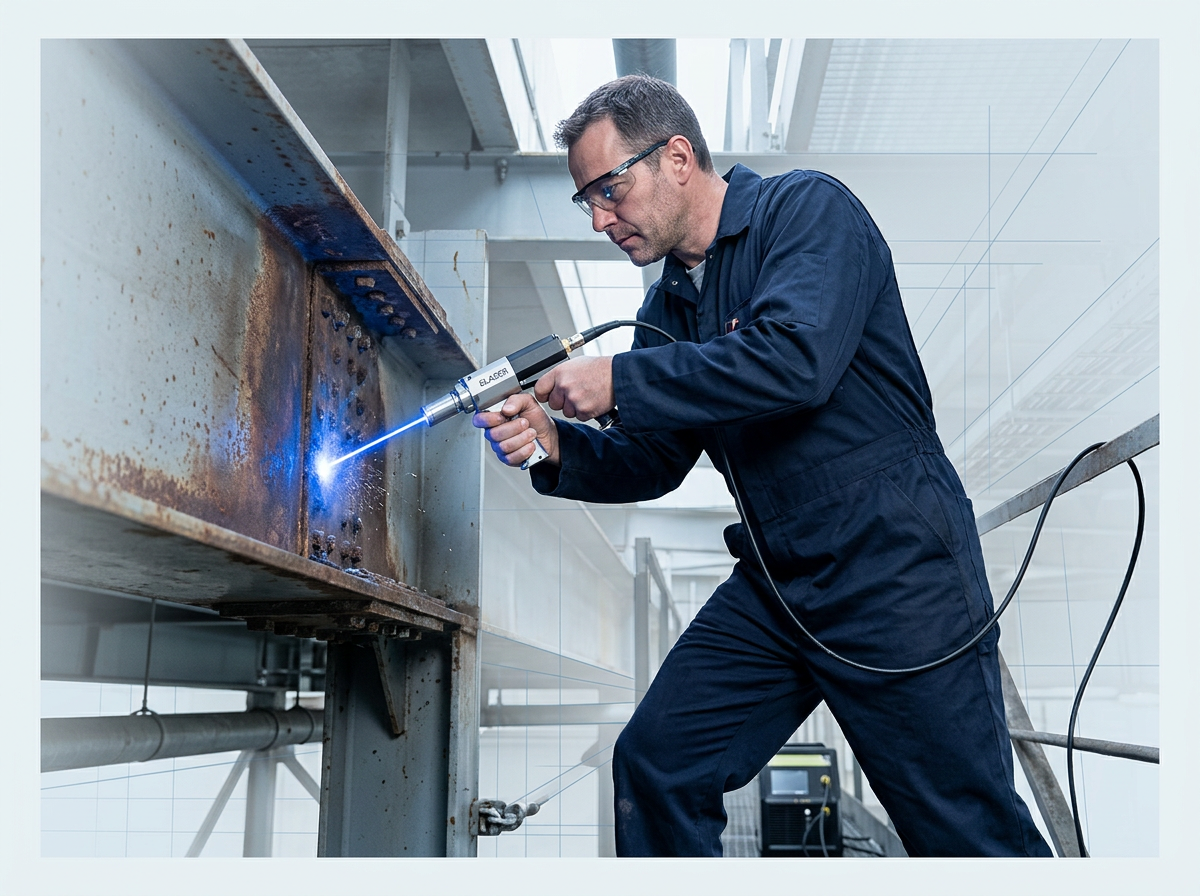
Portability expands the range of jobs a maintenance team or service business can realistically take on. Infrastructure maintenance on elevated steelwork or bridge components, in-situ mould cleaning without disassembly or production shutdown, field rust removal directly at the workpiece — these are jobs where bringing the work to a fixed machine is impractical or impossible. The machine has to come to the work. The ELASER's combination of cable reach, low weight, and self-contained operation makes that viable across a broad range of site conditions.
Air-Cooled, Consumable-Free: What It Means for Running Costs
Sandblasting, chemical stripping, and water-jetting carry costs you know well: abrasive media, chemical procurement, waste disposal, regulatory compliance. The ELASER eliminates that entire cost structure. No consumables. No chemicals. No disposal overhead. The only input is electricity, under 2,000 W.
Air-cooled operation removes the chiller, coolant circuit, and compressor from your running cost equation entirely. And with competitively priced upfront investment — the most competitive among comparable industrial laser cleaners in Europe — the TCO case is clear from day one.
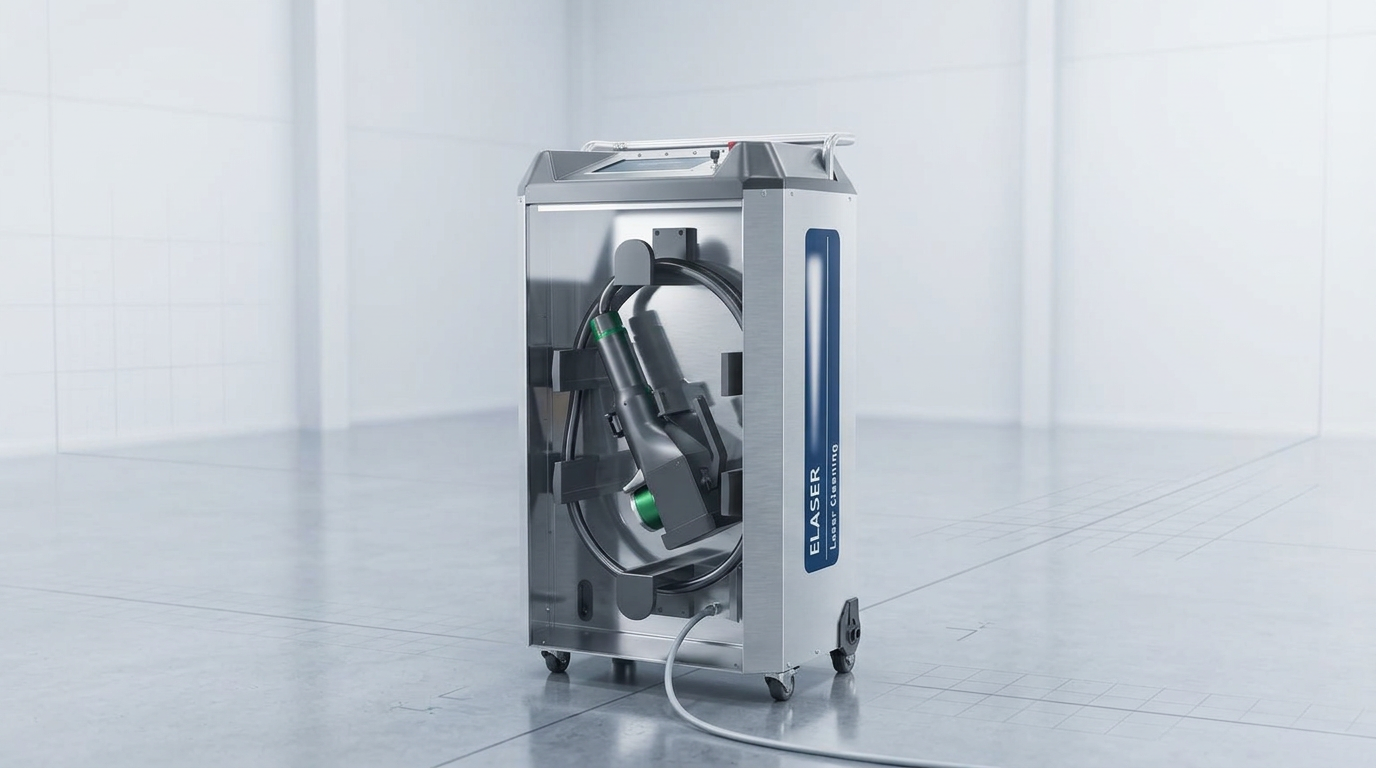
ELASER Applications Across Seven Industrial Verticals
The ELASER family is deployed across a wide range of industrial contexts. Whether your operation is in manufacturing, maintenance, or heritage work, the cards below show where the machine is already proven.
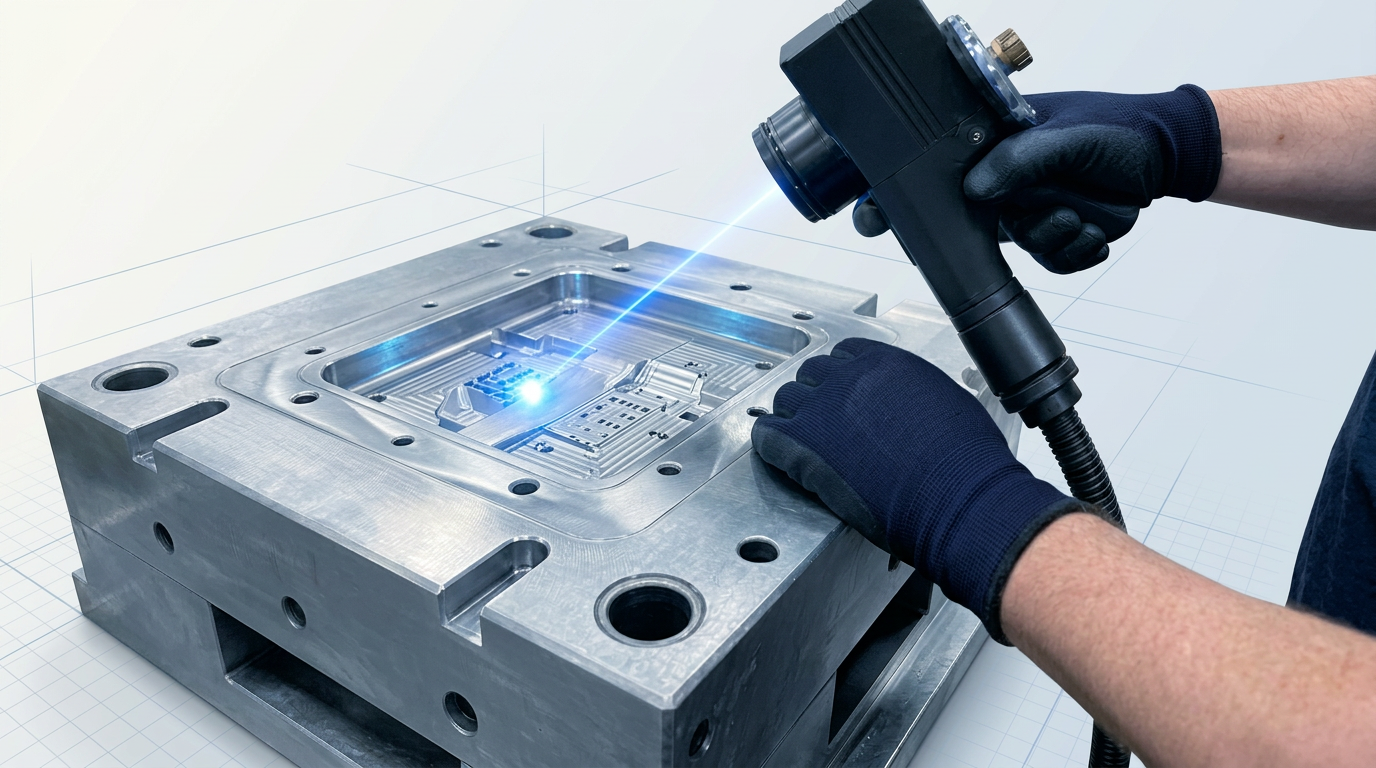
Injection Moulding and Tooling
Strip release agents and residues from moulds in place, with no abrasive wear.
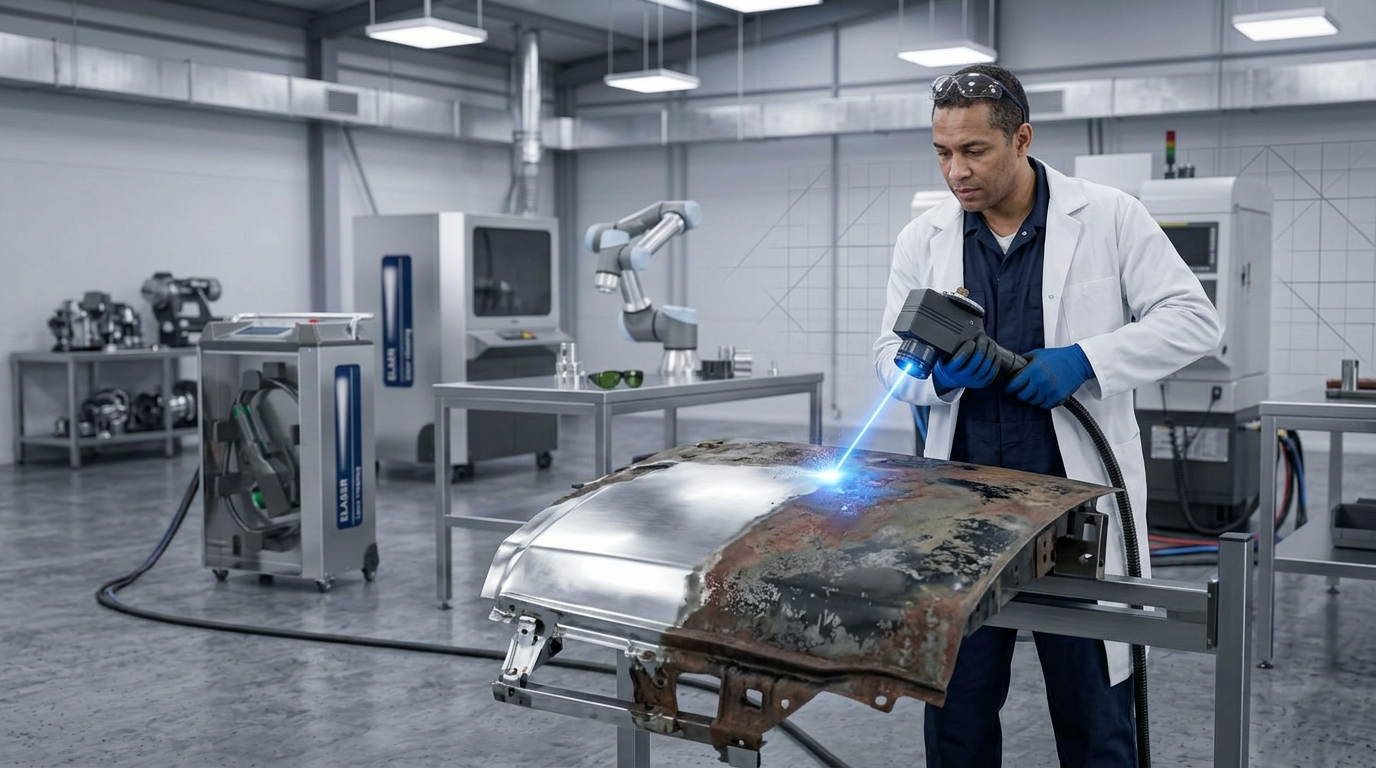
Automotive
One machine spans pre-weld surface prep through to rust and paint removal in the bodyshop.
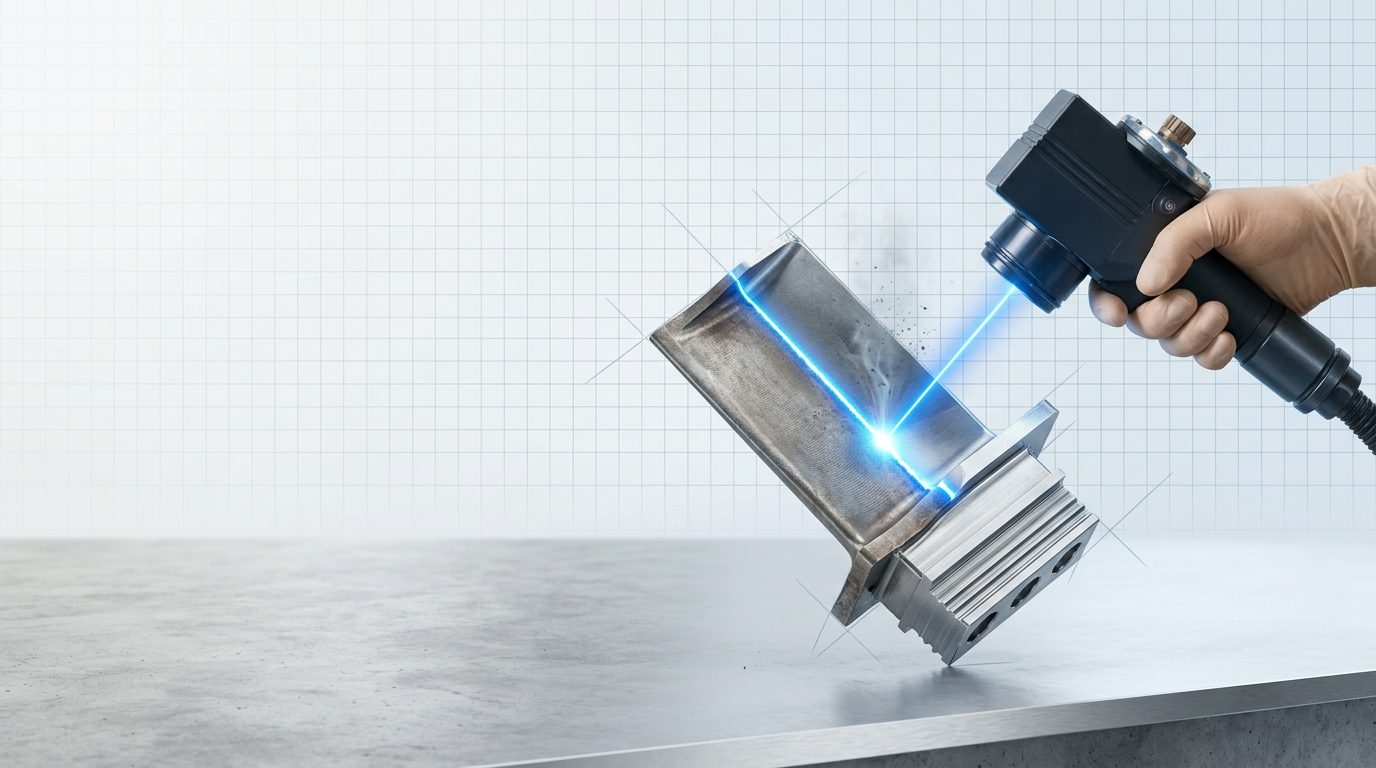
Aerospace
Precise surface prep and component cleaning to tight tolerances, with minimal substrate loss.
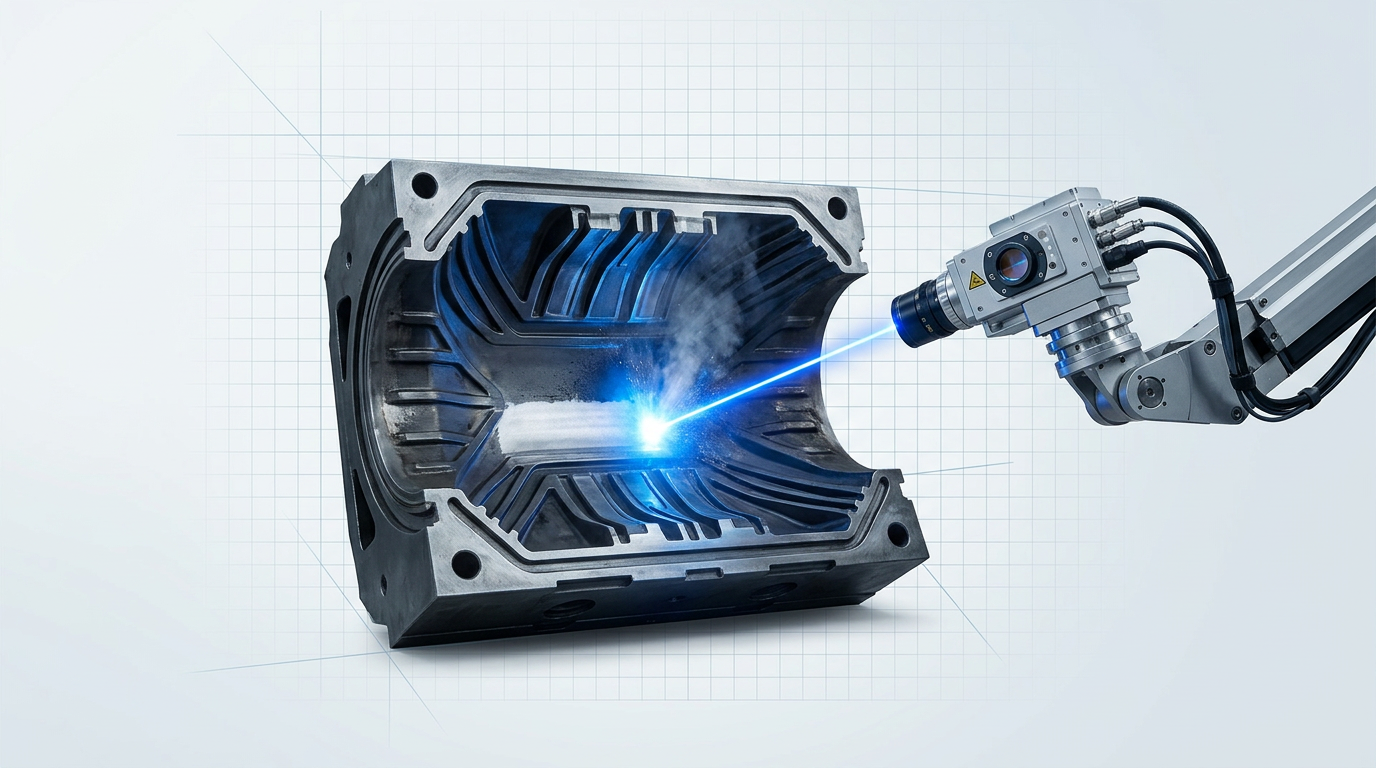
Tyre and Rubber
Clean moulds, vents and vulcanisation residue without abrasives or mould wear.
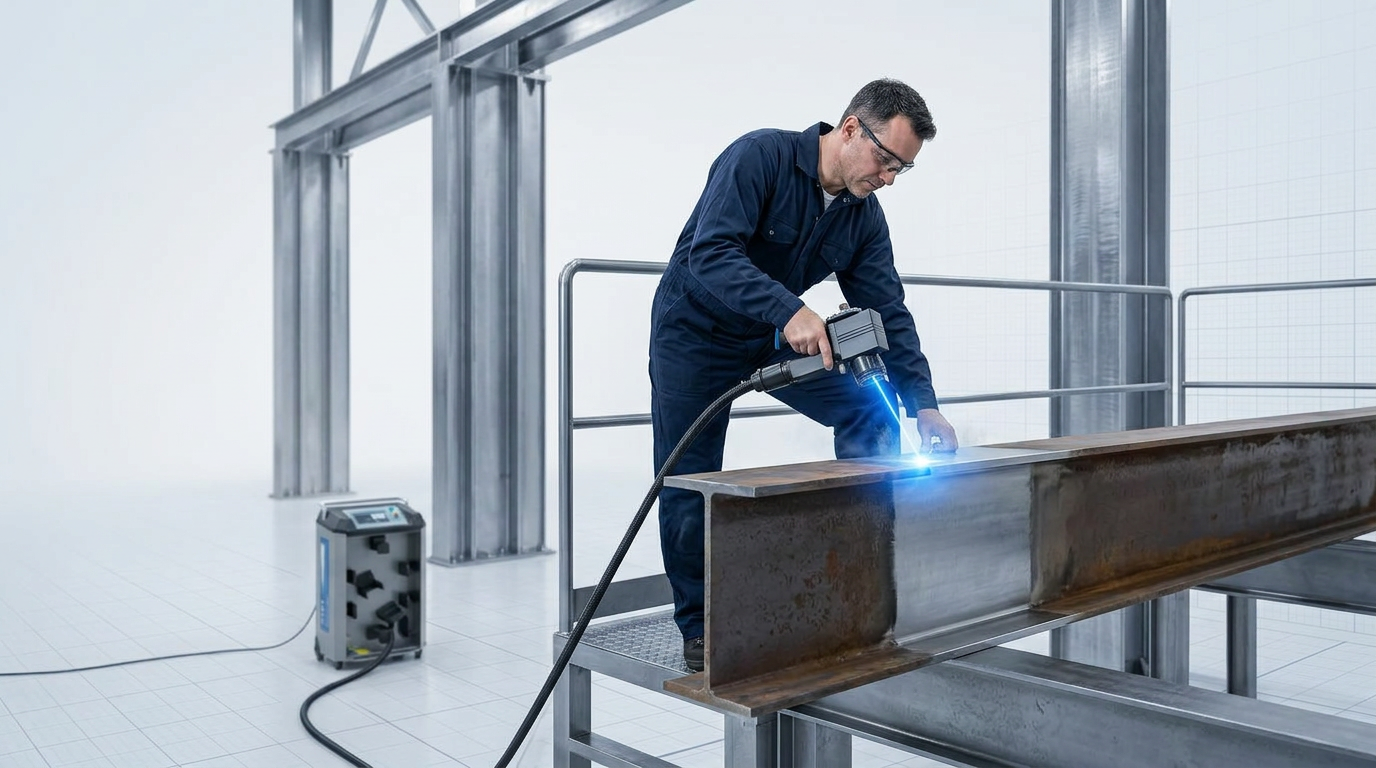
Industrial Maintenance
Clean plant and infrastructure on site, self-contained, with up to 50 m cable reach.
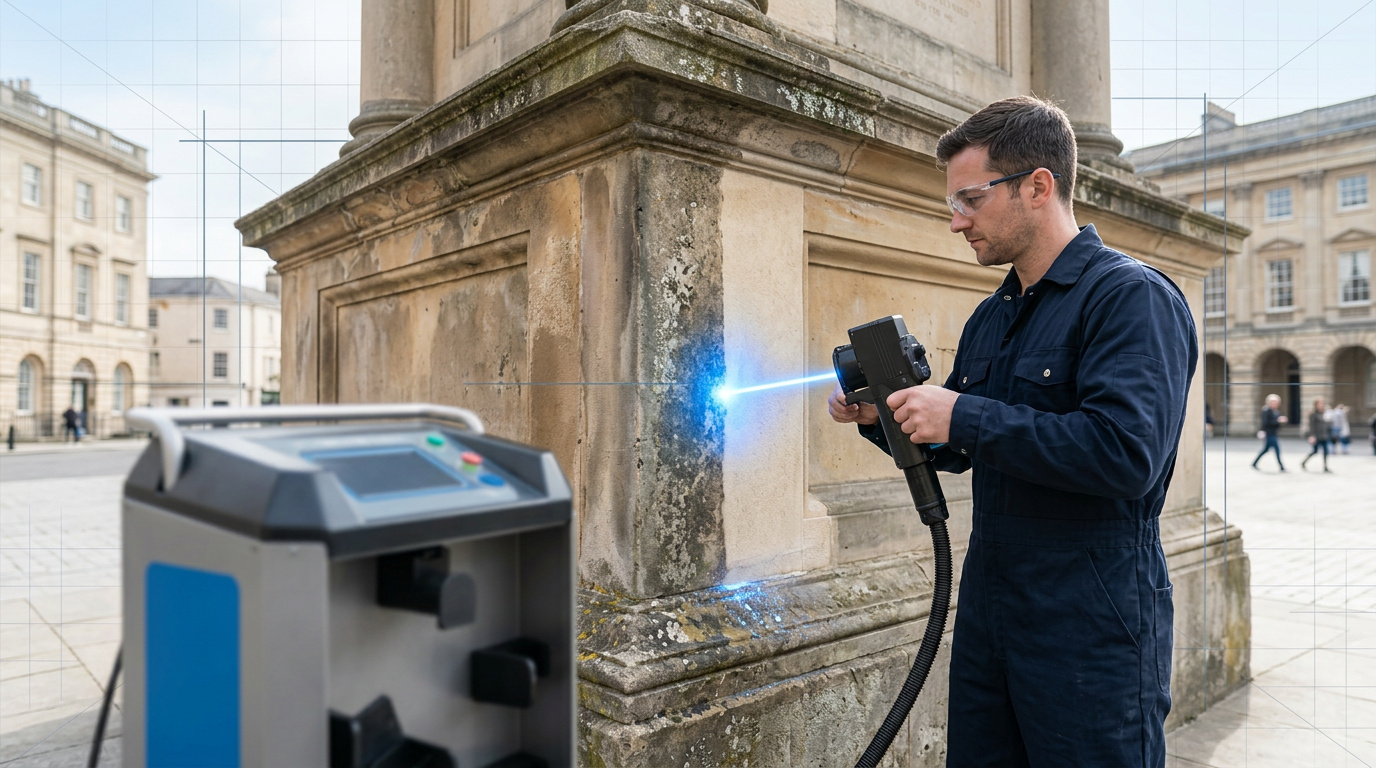
Heritage and Restoration
ELASER-RHZ cleans stone, metal and masonry in publicly accessible spaces without area shutdown.
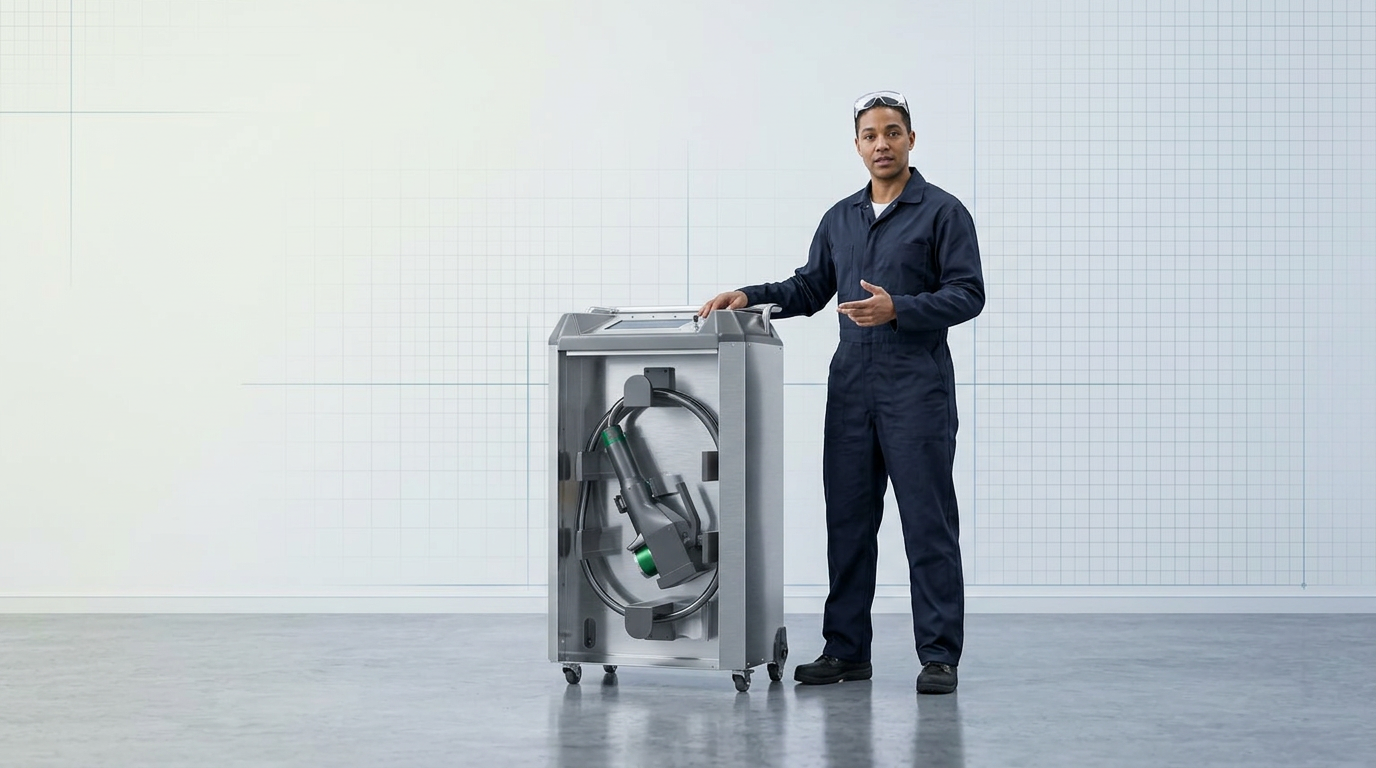
Launch a Laser-Cleaning Service Business
A portable system plus full operator training provides the foundation for a commercial service operation.
Built in Britain: WSL's In-House Manufacturing and Support
Woodrow Scientific Limited is the only UK-based laser cleaning manufacturer — designing, building, servicing and improving every machine in-house since 2012, with over 200 years of combined engineering experience. A significant portion of laser cleaning suppliers are resellers or importers rebadging third-party hardware: no in-house engineering, slower spares, and no genuine ability to improve the product.
With WSL, support comes from the engineers who built the machine. That in-house capability is also what made patented innovations like the RHZ eye-safe system possible — the kind of development a reseller simply cannot do. CE and UKCA certified.
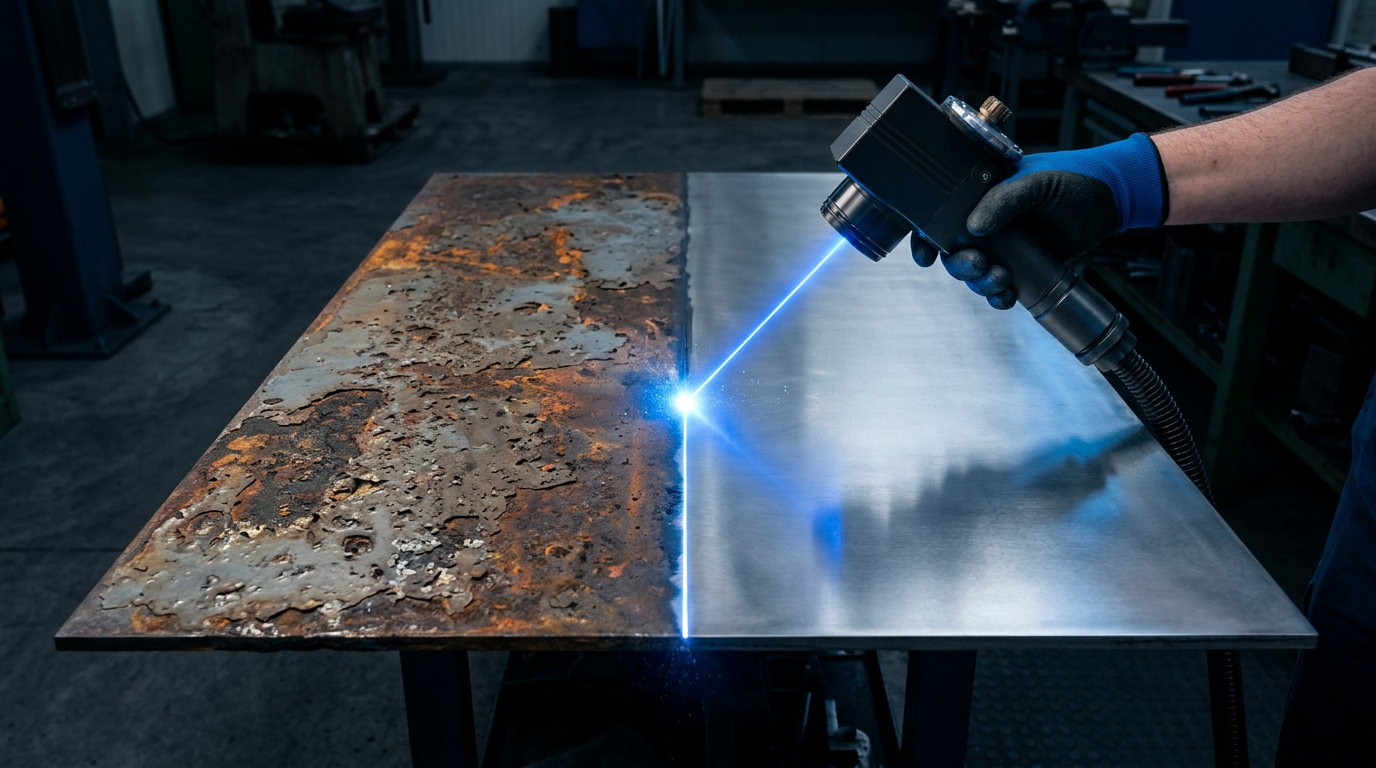
ELASER in Action
See the ELASER Clean on Real Surfaces
Watch the ELASER remove rust and strip paint from real steel surfaces — the contaminant lifts cleanly, leaving the substrate intact. What you see is the result, not a simulation.
Need High-Volume Production Cleaning? Meet AutoLASE
A handheld system is the right tool for portable and field cleaning. For repetitive production cleaning at volume, AutoLASE is built for exactly that use case.
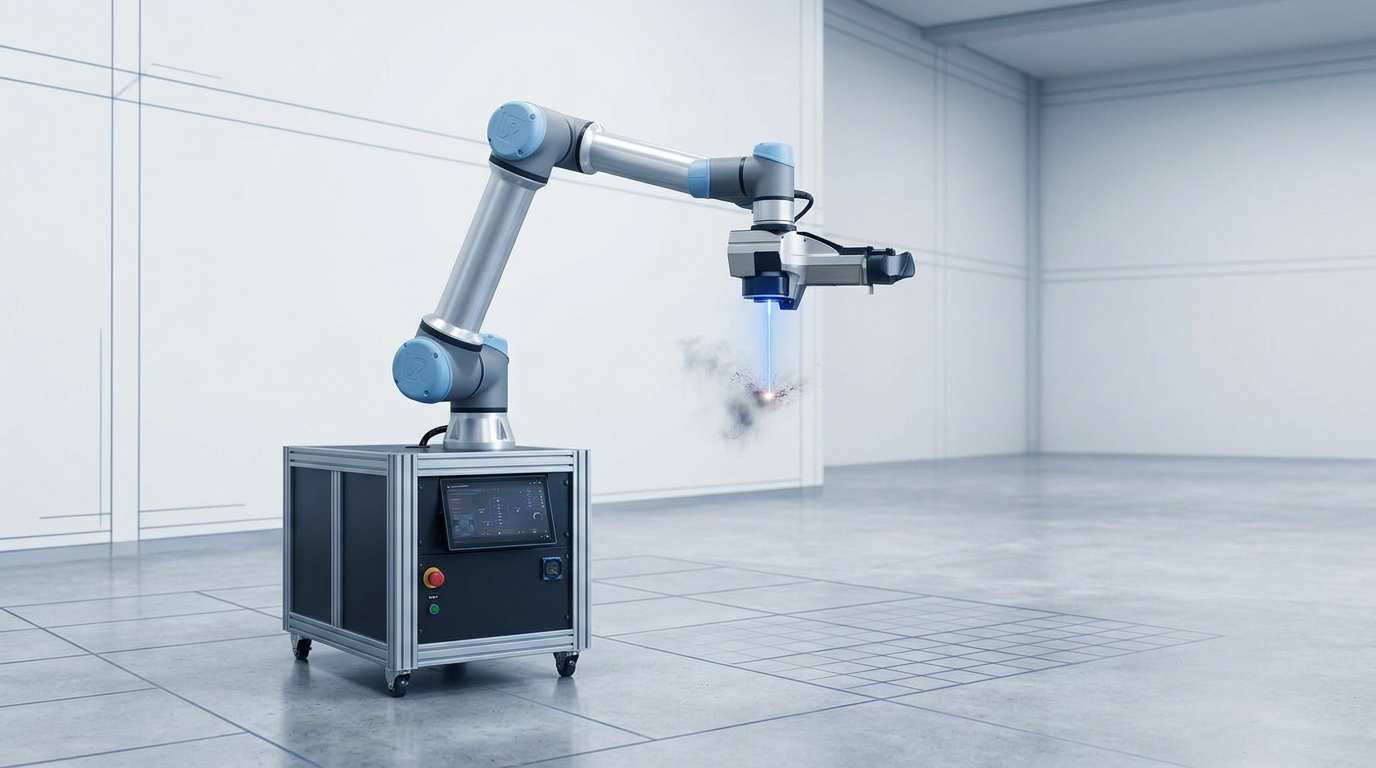
Automated Cleaning With No Enclosure Required
With the optional RHZ upgrade, AutoLASE is the only automated laser cleaning system in the world that operates without an enclosure.
Discuss Your Production Cleaning Requirements
If your requirement is high-volume or repetitive production cleaning, get in touch with WSL to discuss whether AutoLASE is the right fit.
Five Reasons to Choose ELASER Over cleanLASER
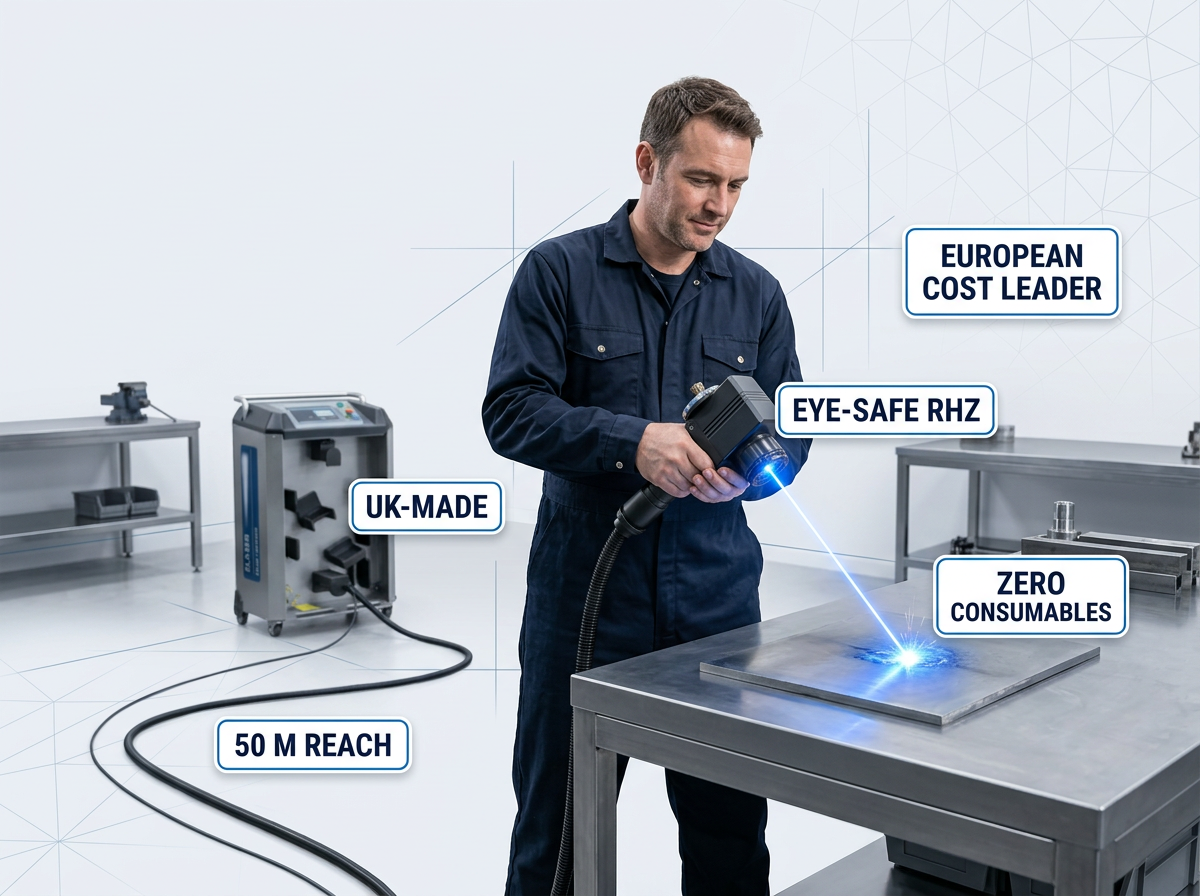
Eye-safe RHZ: The only laser cleaner in the world with patented reduced-hazard-zone technology — clean in open workshops and public spaces without shutting the area down. European cost leader: The most competitive upfront pricing among comparable industrial laser cleaners in Europe, built in-house. 50 m cable reach: Seven times the reach of cleanLASER's CL 500iM (7 m). UK-made, in-house supported: WSL is the only UK-based laser cleaning manufacturer — faster, more expert support from the engineers who built your machine. Zero consumables, air-cooled: No chiller, no abrasives, no chemicals.
Frequently Asked Questions About Laser Cleaning
Buying decisions, safety questions, and general laser cleaning queries — answered directly.
The ELASER-RHZ is the world's only laser cleaner with patented reduced hazard zone (RHZ) technology. Operating at 1550 nm — a retina-safe wavelength — it collapses the laser hazard zone to a small area around the work itself. The practical consequence is significant: cleaning can take place in open workshops, mixed-use facilities, and public-facing spaces without sealing off the area or evacuating personnel. Conventional laser cleaners, including standard portable units operating at wavelengths such as 1064 nm, require full Class IV laser safety precautions before work can begin — area evacuation and sealed zones as standard. The RHZ technology changes not just the safety profile but the deployment envelope entirely: jobs that were previously impractical become straightforward. This technology is patented and unavailable from any other laser cleaning manufacturer in the world. WSL provides full operator training with every machine.
Contact WSL directly for a quote — pricing is application-specific and the team can advise on the right configuration for your use case. ELASER and ELASER-RHZ are competitively priced: WSL is the European cost leader among comparable industrial laser cleaning machines, a position achieved through in-house manufacturing efficiency rather than any compromise on quality. Get in touch to discuss your requirements and receive a tailored price.
The handheld ELASER is designed for portable, single-operator use — it is not an automated production-line system. For high-volume, repetitive production cleaning, WSL's purpose-built AutoLASE is the right tool. Load a part and AutoLASE's machine vision scans it, builds a 3D map, and generates the cleaning path automatically — no manual programming or path-setting required. With the optional RHZ upgrade, AutoLASE is the only automated laser cleaning system in the world that can operate without an enclosure. If your requirement is production-line automation, get in touch with WSL to discuss whether AutoLASE fits your application.
Yes — unambiguously. Laser ablation works by directing a focused laser beam at the contaminated surface: the beam vaporises the contaminant while stopping at the base material, leaving the substrate intact. It is not experimental technology. Laser cleaning is in active industrial use across aerospace, automotive, injection moulding, tyre and rubber manufacturing, and heritage restoration. The ELASER delivers up to 300 W with power tunable from 0–100%, handling everything from light surface oxides through to thick coatings and heavy rust on a single machine. The process works across metals, stone, brick, concrete and masonry — and removes contaminants including rust, paint, mill scale, release agents, weld discolouration, oil, and graffiti.
It depends on the application, contaminant type, surface area, and whether you are purchasing a machine or commissioning a cleaning service. For machine buyers, the more useful frame is total cost of ownership: laser cleaning has no consumables — no abrasives, chemicals, or water — and causes minimal substrate damage, reducing downtime and rework. Over time, TCO is significantly more favourable than sandblasting or chemical stripping, even accounting for the higher upfront investment. For buyers considering offering laser cleaning as a service, a portable system paired with WSL's operator training programme provides the foundation for a commercial operation — so service rates vary by operator and application. If you are evaluating a machine purchase, contact WSL for a quote specific to your use case.
Two genuine considerations are worth knowing. First, upfront capital cost is higher than traditional methods such as sandblasting or chemical stripping. That said, laser cleaning carries no consumable costs — no abrasives, chemicals, or waste disposal — and causes less substrate damage, meaning less downtime and less rework. Total cost of ownership over time is considerably stronger than those alternatives. Second, laser cleaning requires trained operators to use safely and effectively. This is a real requirement, not a minor footnote — but it is entirely manageable: WSL provides full operator training with every machine. These are practical considerations, not dealbreakers, and both are well within the reach of any serious industrial operation.