

Fixed Architecture & Parameters
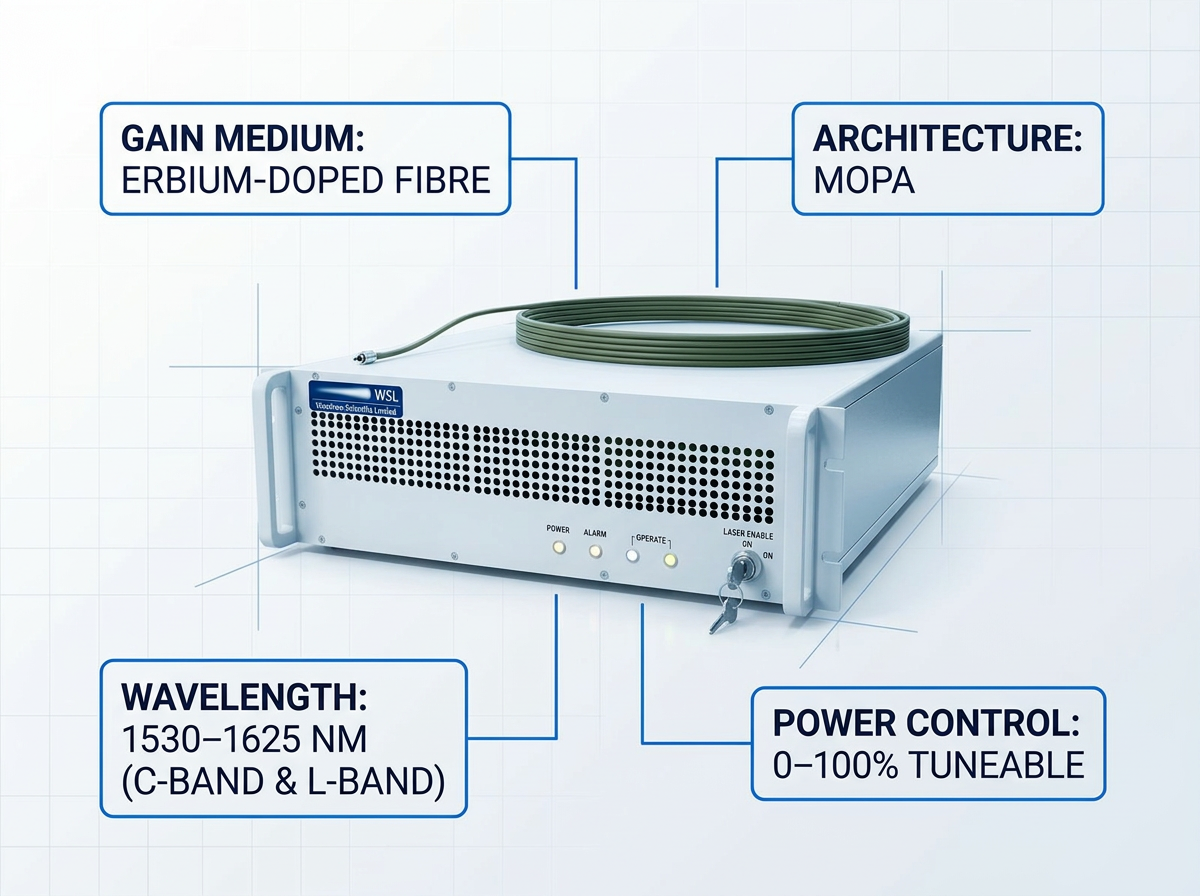
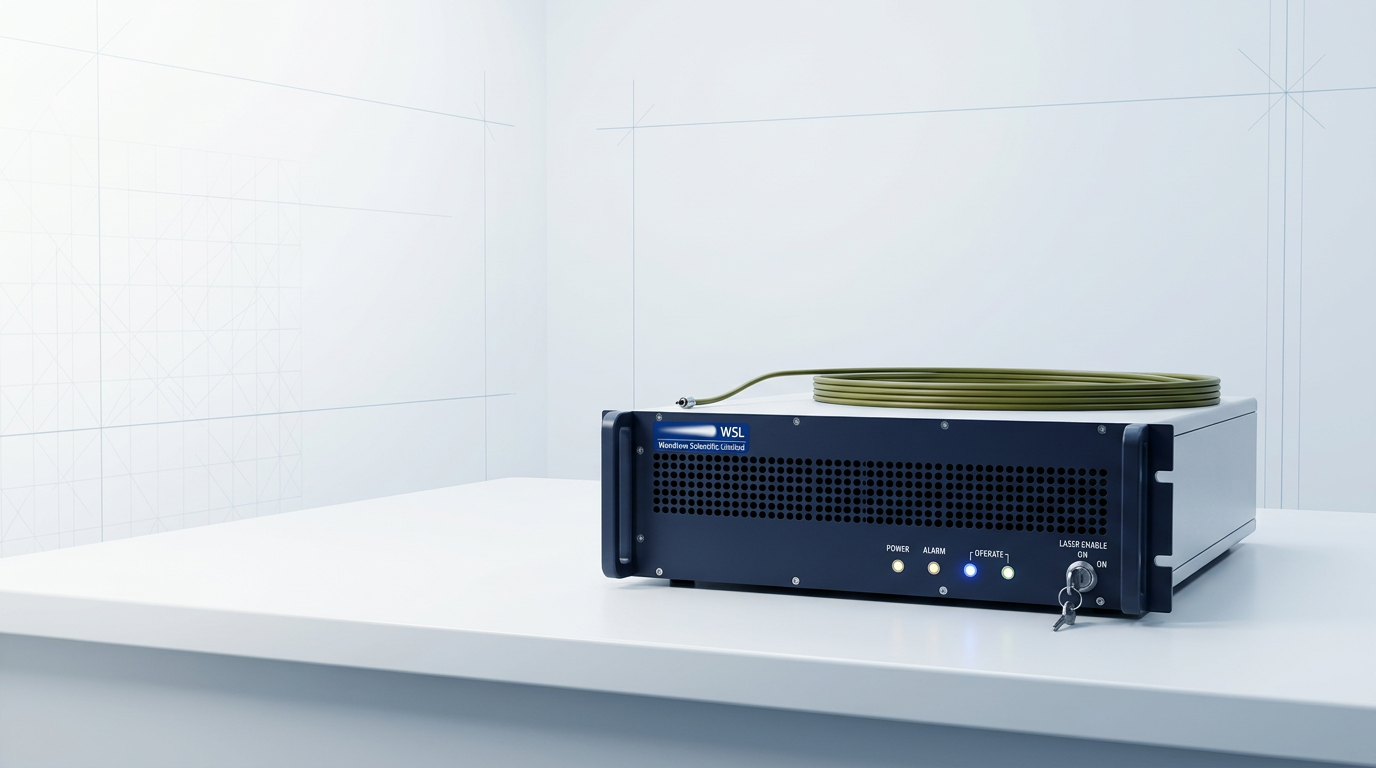
Gain medium: Erbium-doped fibre. Architecture: MOPA. Wavelength window: 1530–1625 nm, covering C-band (1530–1565 nm) and L-band (1565–1625 nm).
Power control: 0–100% of rated output, continuously tuneable on every build. Only the erbium physics and the platform are fixed; everything else is configured per project.
Power, Pulse Energy, Peak Power
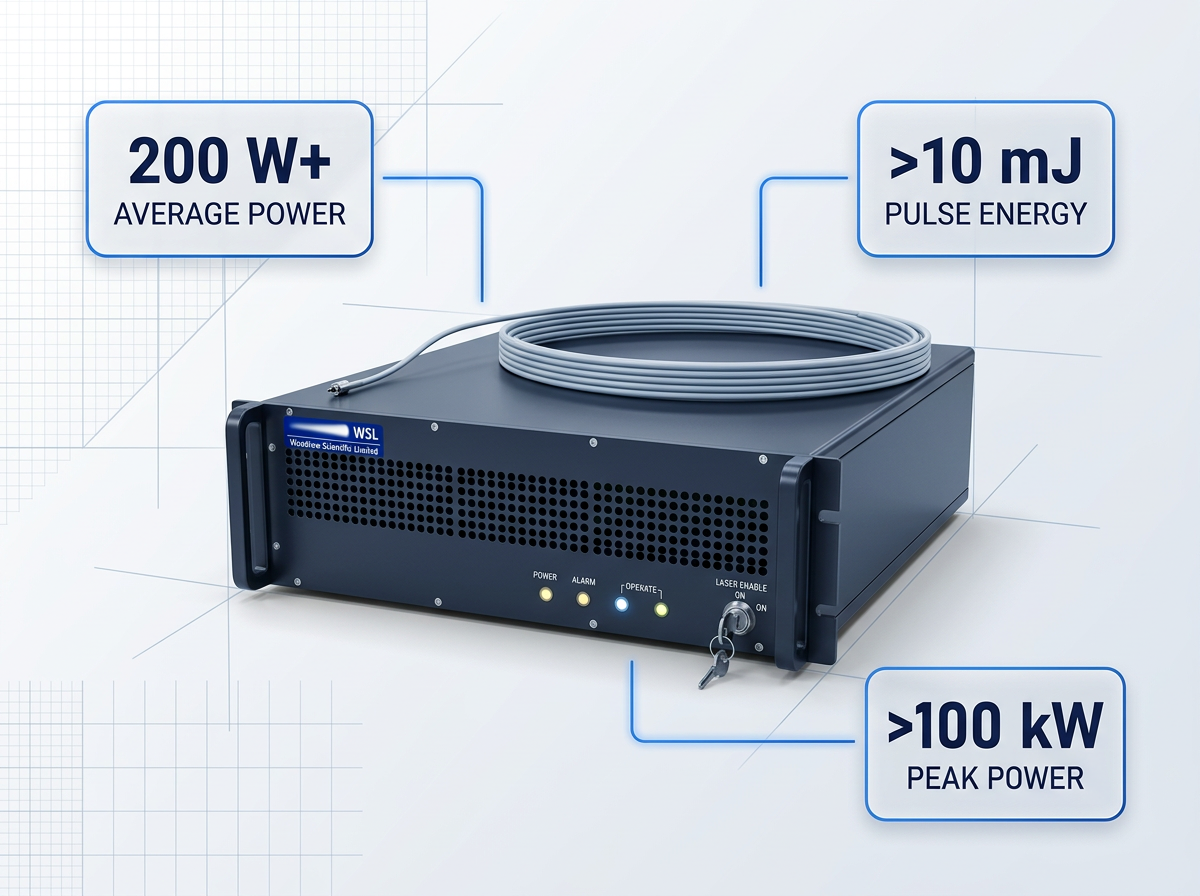
WSL builds to 200 W or more average power — the highest average power commercially available in a benchtop EDFA. Pulse energy is configurable to above 10 mJ; peak power to above 100 kW.
Operating modes: CW, short-pulse (100–500 ns), or a custom pulse regime. Every figure is specified per project, not fixed — from low-power units (e.g. 5 W) up to the performance ceiling above.
Built in Southampton, UK
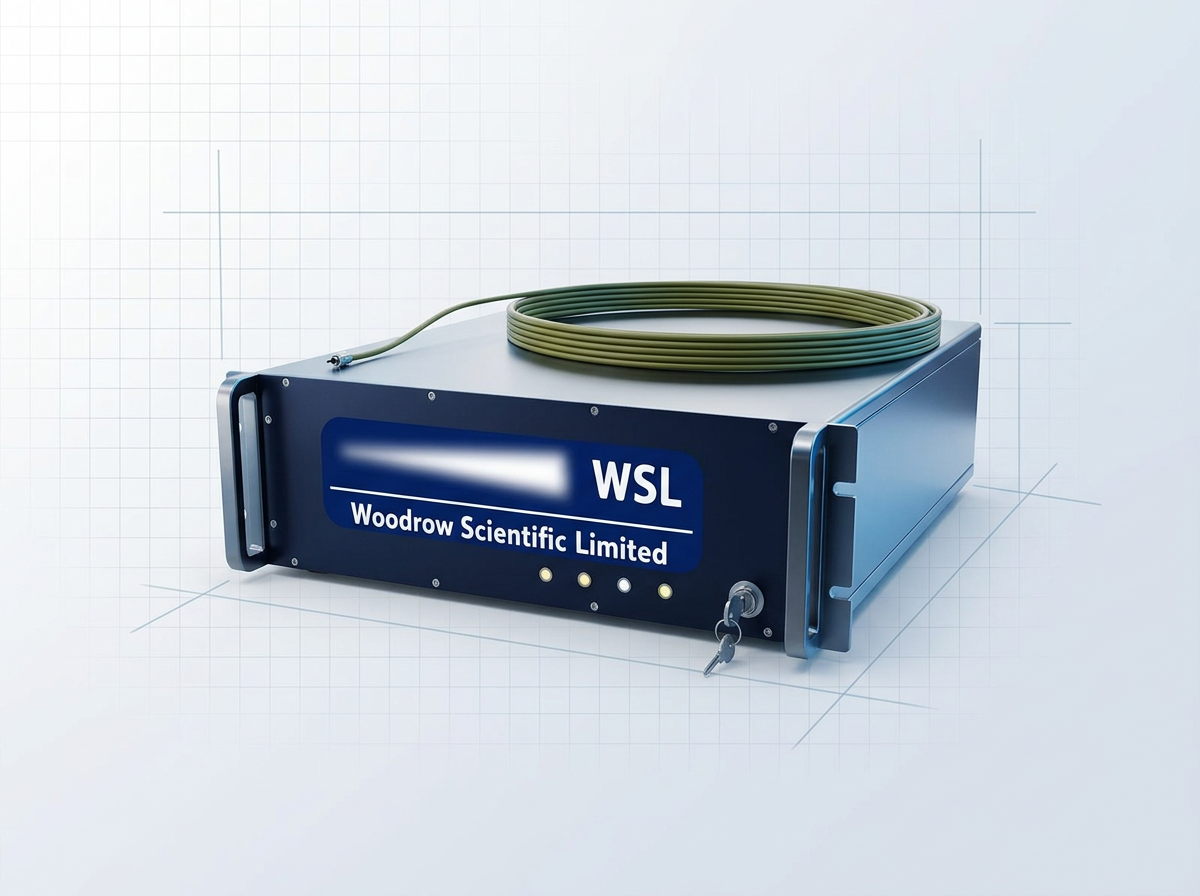
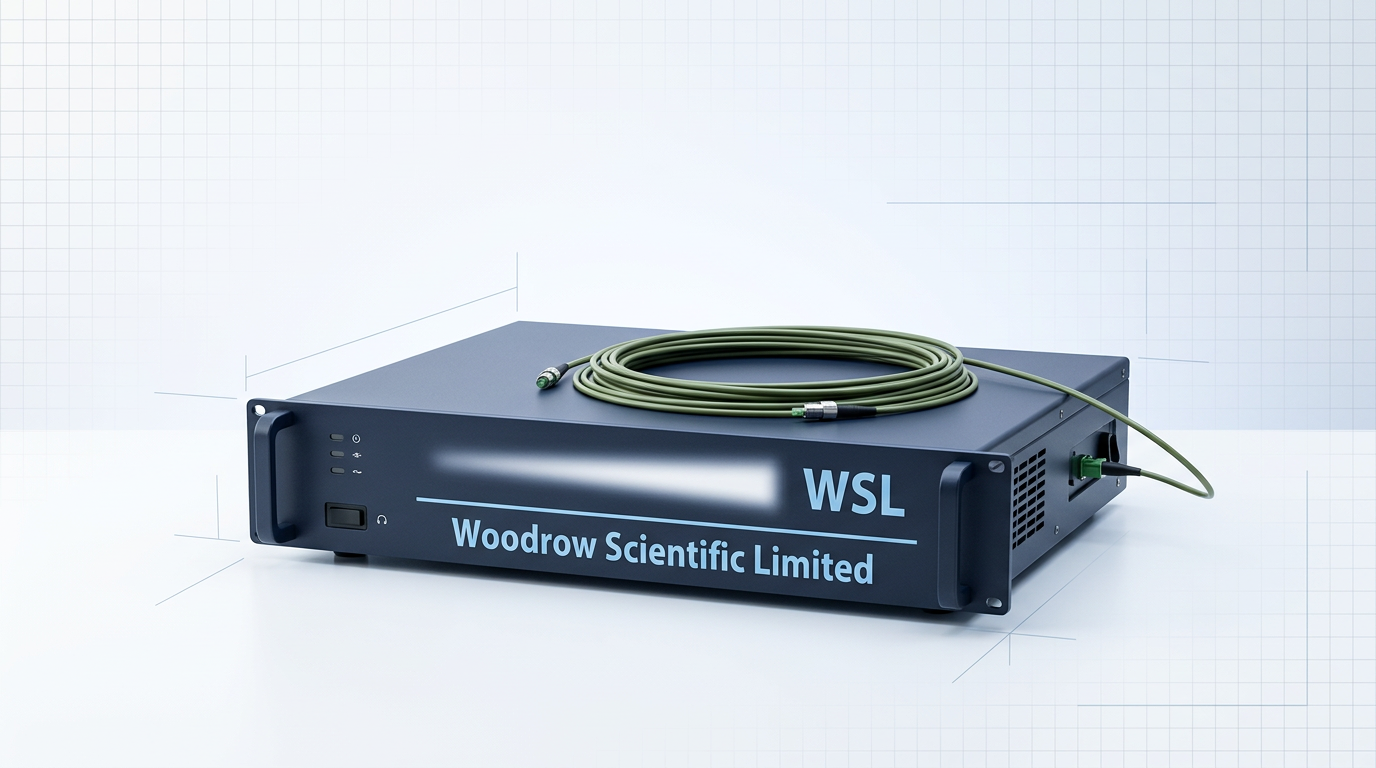
Every WSL benchtop EDFA is designed and built in Southampton, UK, on patented in-house technology. Certified to CE and UKCA standards as standard, meeting the baseline compliance requirements for professional and laboratory procurement across the UK and EU. Supplied worldwide, direct from WSL.
C-band, L-band, or Dual C+L
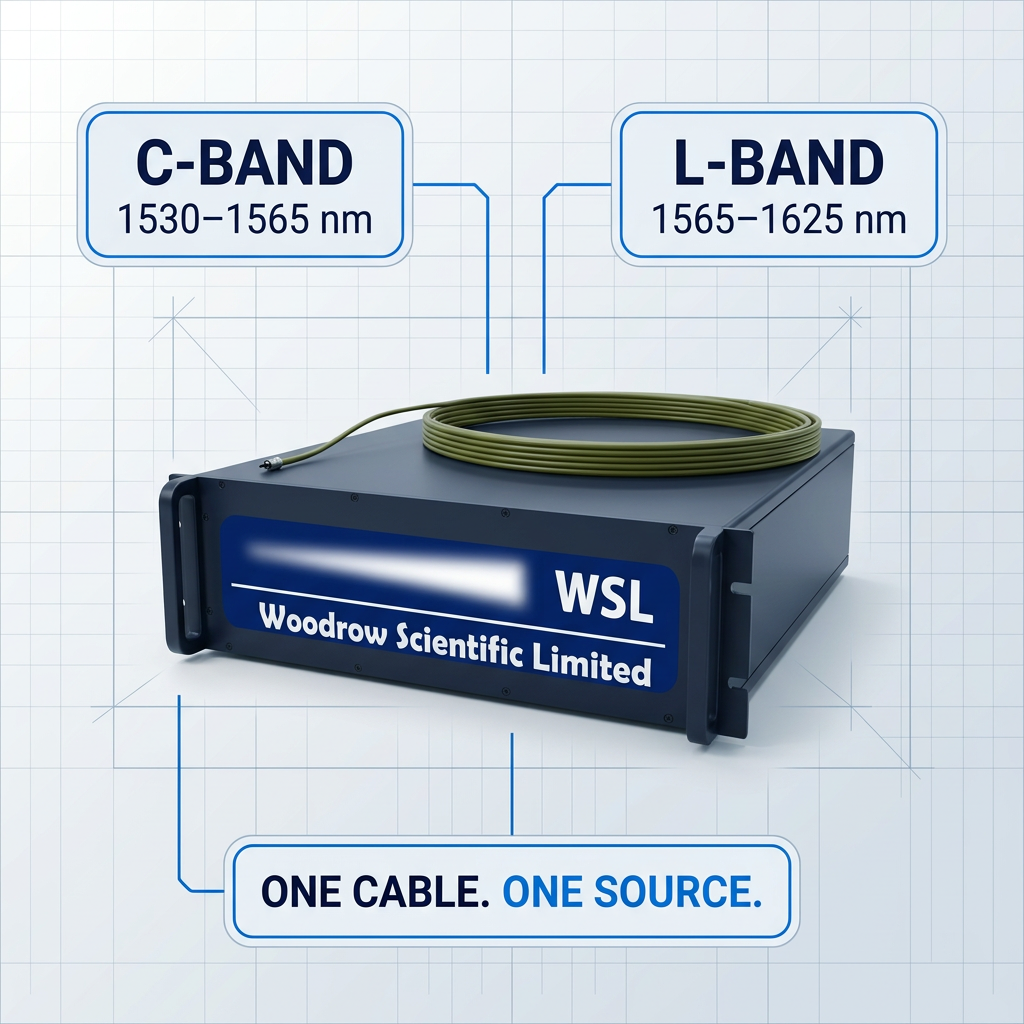
Specify C-band (1530–1565 nm), L-band (1565–1625 nm), or dual C+L — both bands delivered from a single source through one cable, with no second amplifier required.
This single-source dual-band configuration is specified per project, giving you full wavelength coverage within one integrated unit rather than two separate amplifier chains.
Up to 200 W and Beyond
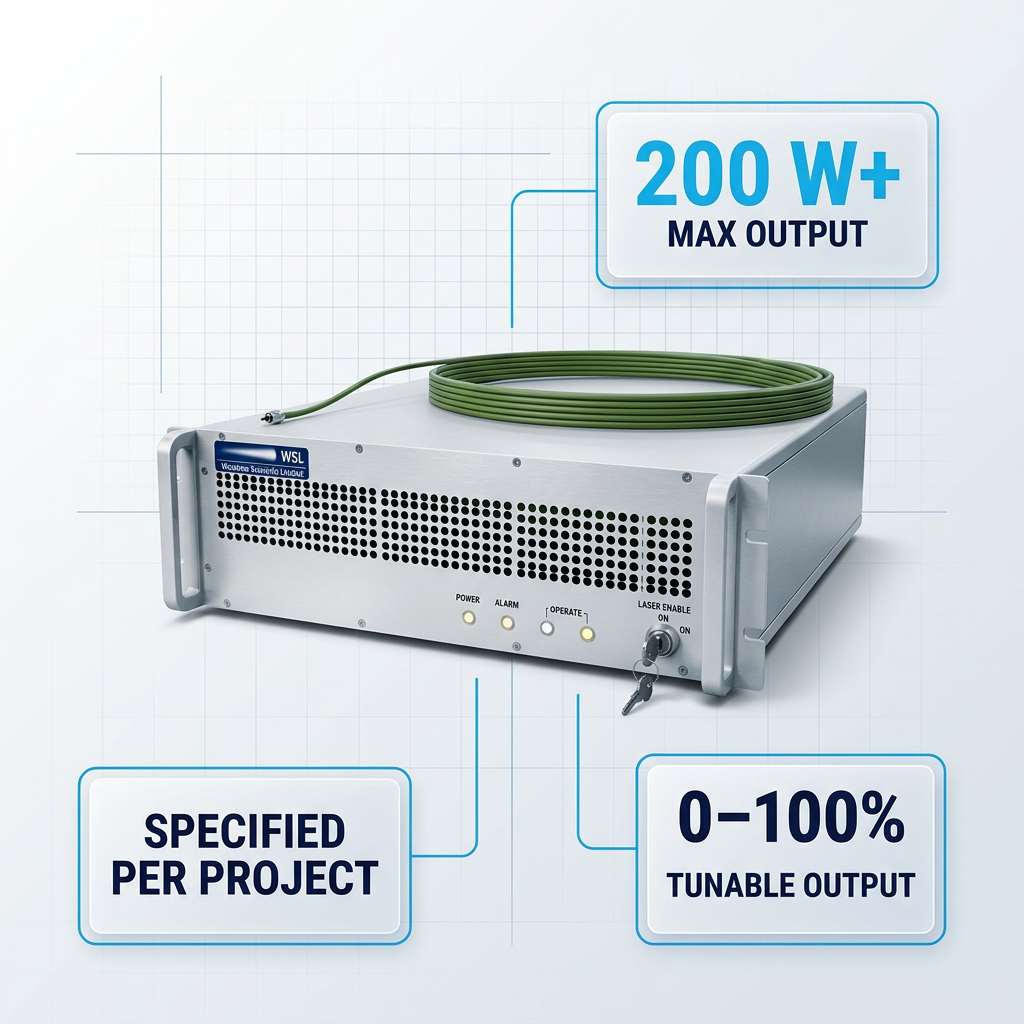
Output power is specified per project across the full range. WSL builds from low-power units to 200 W or more average power — the leading commercially available power ceiling for a benchtop EDFA.
Output is tunable from 0 to 100% of rated power, giving precise control at every point in the range. Whatever your power requirement, the unit is built to it.
CW, Short-Pulse, or Custom
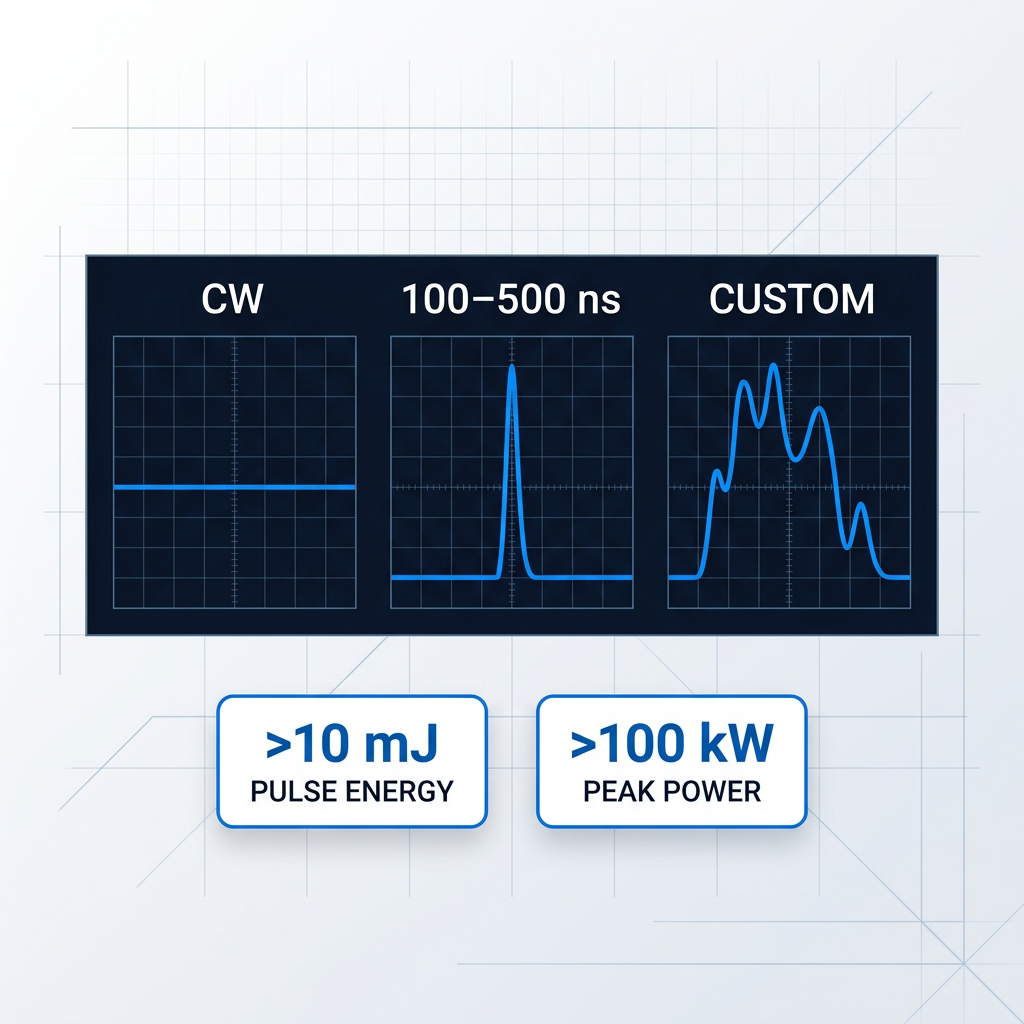
Pulse regime is specified per project: CW, short-pulse (100–500 ns), or a fully custom temporal profile. Pulse energy and peak power are both configured to your requirement.
Pulse energies above 10 mJ and peak powers above 100 kW are achievable. Every temporal output parameter — regime, energy, and peak power — is set at the project specification stage.
Air-Cooled as Standard
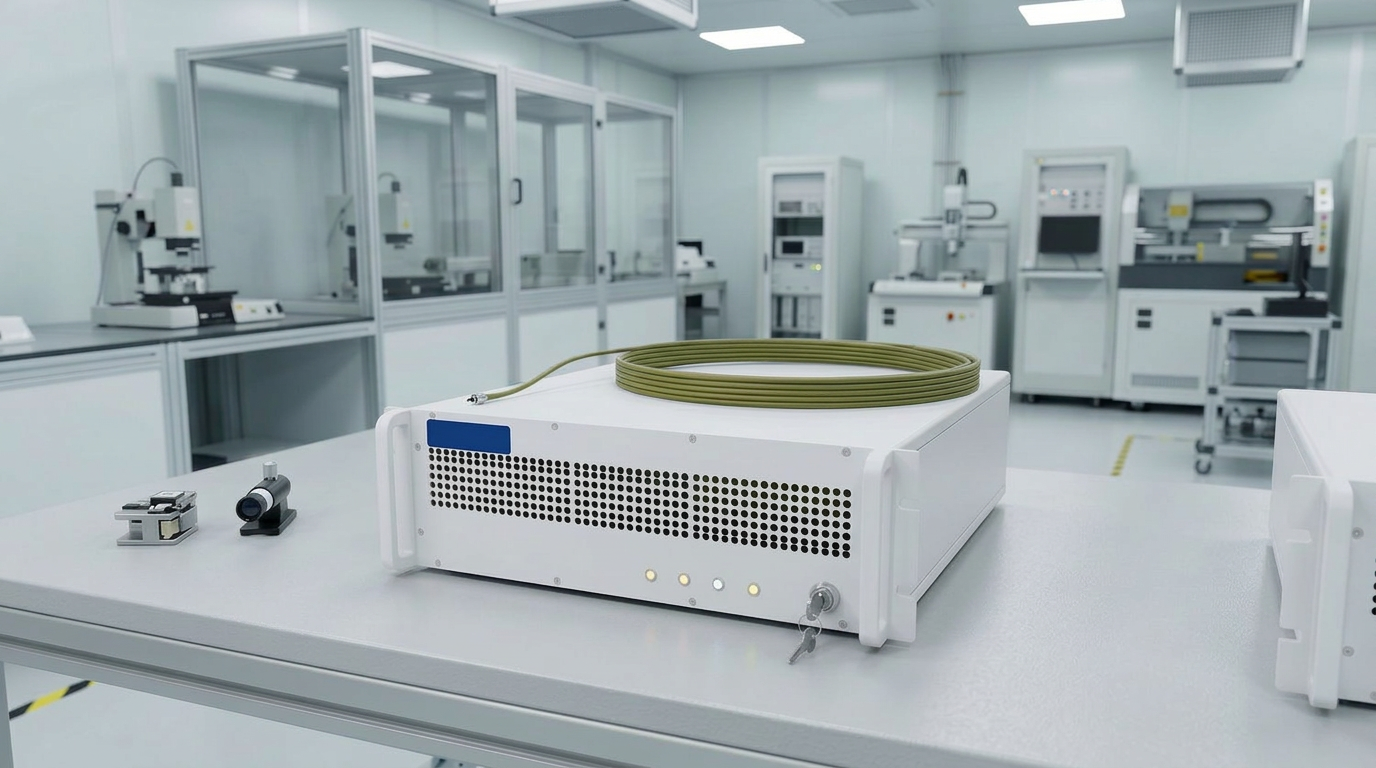
Every WSL benchtop EDFA is air-cooled as standard — no chiller or coolant loop required, which simplifies integration significantly. Water cooling is available as an option for installations where it is preferred.
Delivery cable length and termination are both specified per project, so the physical interface between the amplifier and your application environment is matched precisely to your installation.
Custom Envelope, Firmware & Comms
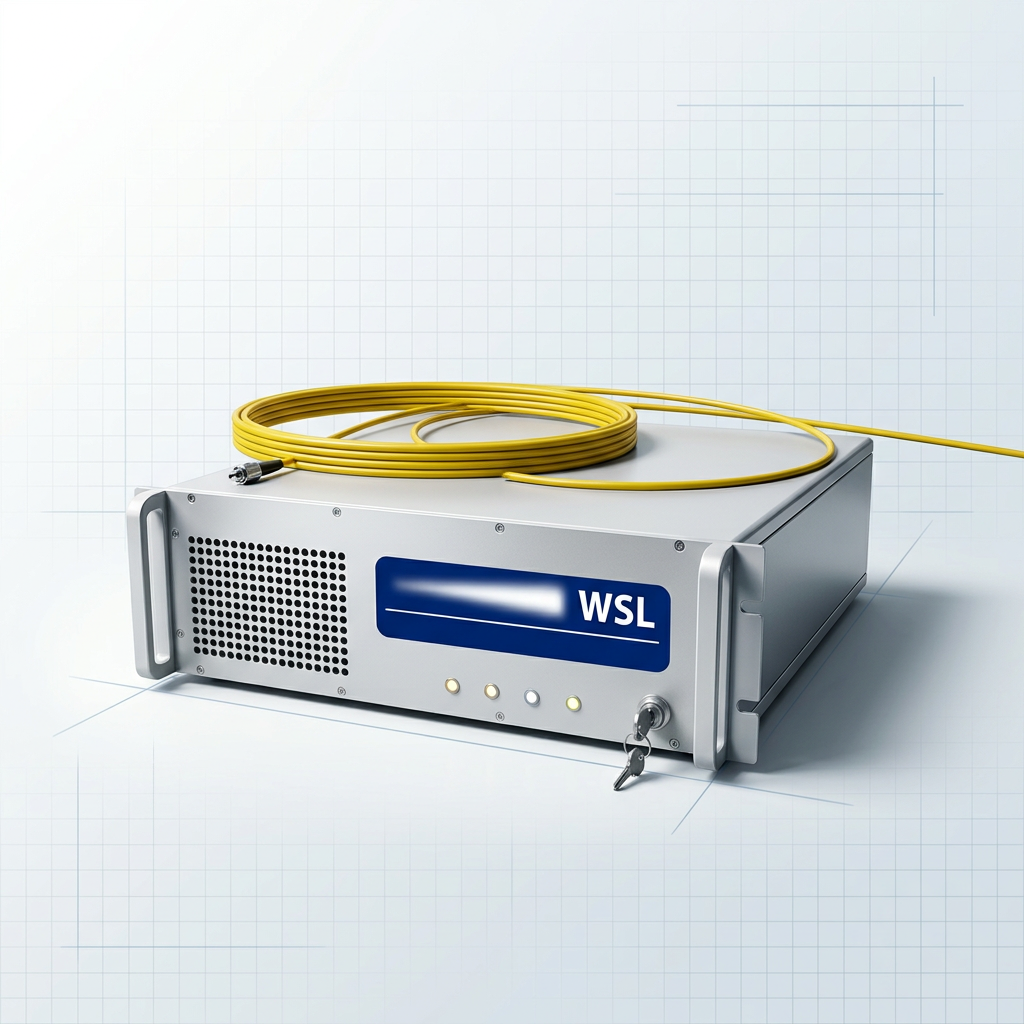
Form factor and integration envelope are configured per project — whether the unit must fit a benchtop instrument, an OEM build, or a field-deployed system. Control firmware and communication standards are equally configurable.
WSL engineers each unit end-to-end, so the control interface, protocol, and physical integration envelope are all specified alongside the optical parameters — not bolted on afterwards.
Eye-Safe 1550 nm Operation
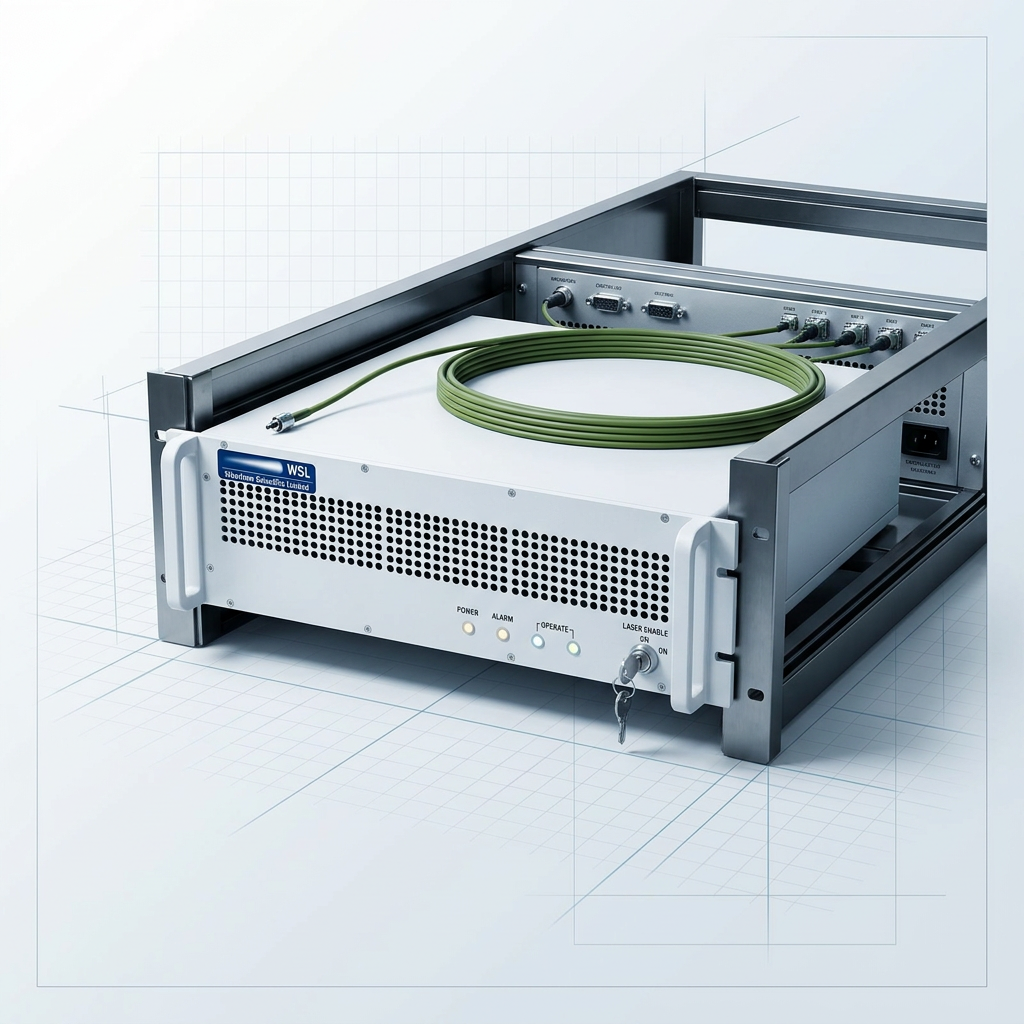
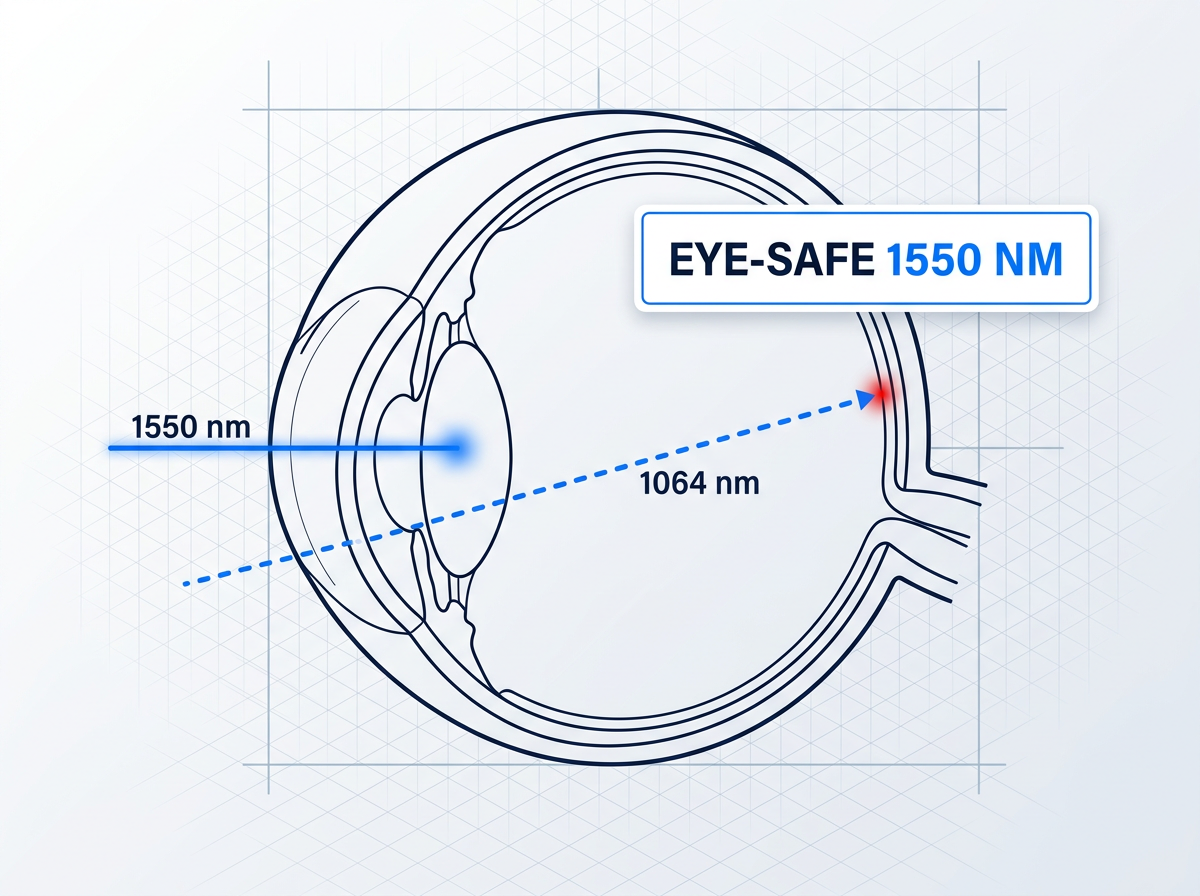
At 1550 nm, light is absorbed by the cornea and lens before reaching the retina, producing a significantly higher eye-damage threshold than 1064 nm sources, where radiation transmits through the ocular media and focuses directly on the retina. This is well-established laser physics, reflected in regulatory guidance from OSHA and adopted across modern photonics programmes.
WSL offers Reduced Hazard Zone builds, shrinking the nominal ocular hazard distance and simplifying deployment in LiDAR, FSOC, and field sensing programmes. The MOPA erbium-fibre platform delivers this at 200 W or more average power — no safety–performance trade-off.
Applications of the WSL Benchtop EDFA
The WSL platform — engineered end-to-end across band, power, and pulse regime — serves demanding programmes across a broad range of high-power, eye-safe erbium-fibre applications.
LiDAR
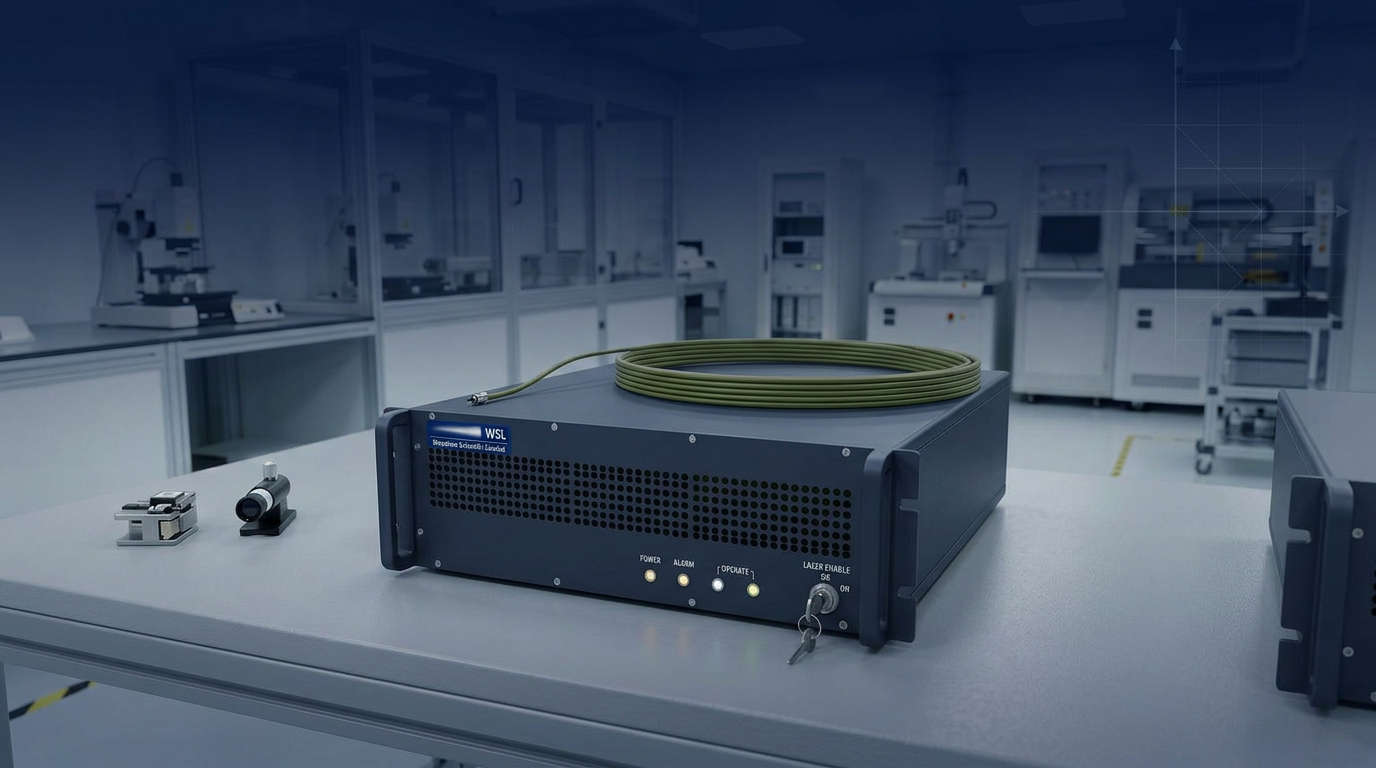
Eye-safe 1550 nm amplification allows higher permissible pulse energy than 905 nm sources, supporting longer detection range with simpler safety compliance.
Free-Space Optical Communications (FSOC)
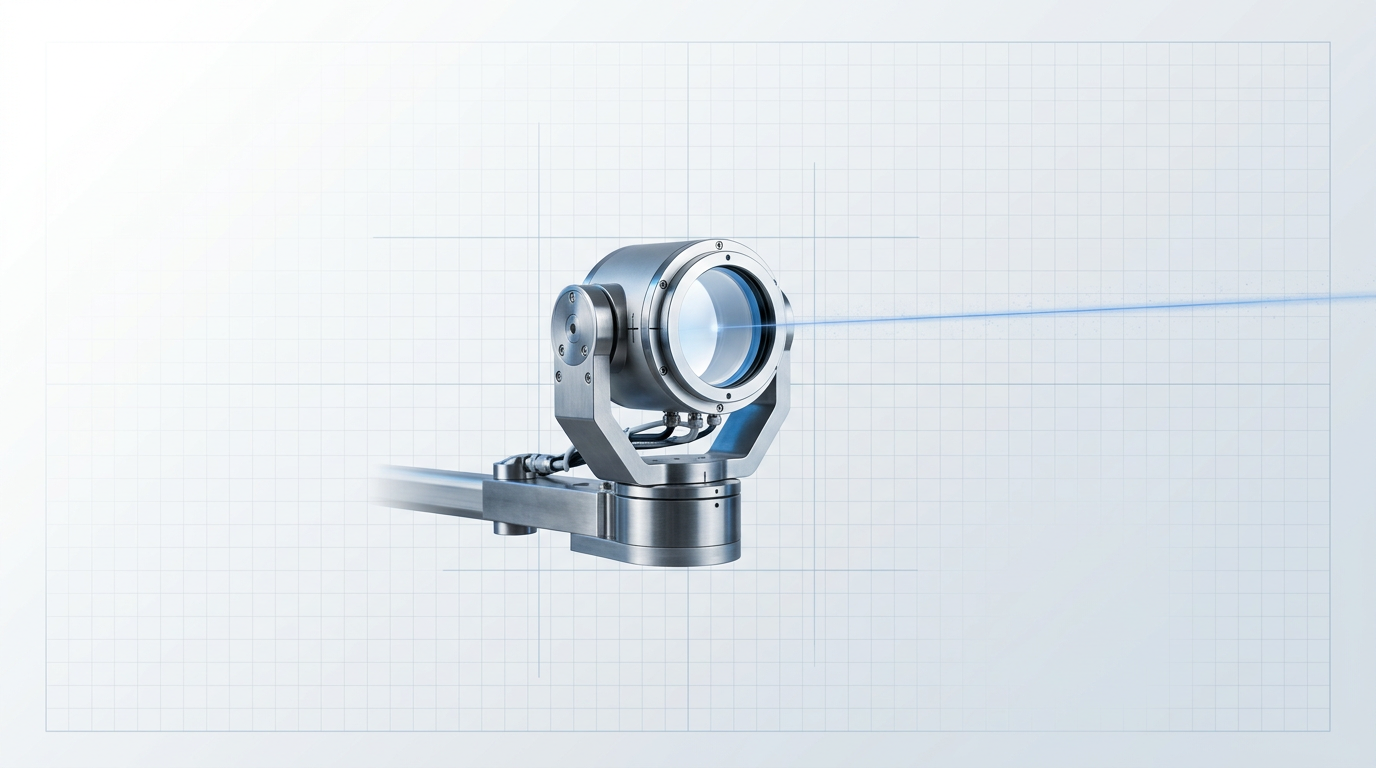
High-power C+L-band amplification across 1530–1625 nm for ground-station uplink and beacon applications. The EDF-UL-10 is a named reference build for FSOC uplink.
Quantum Sensing and Communications
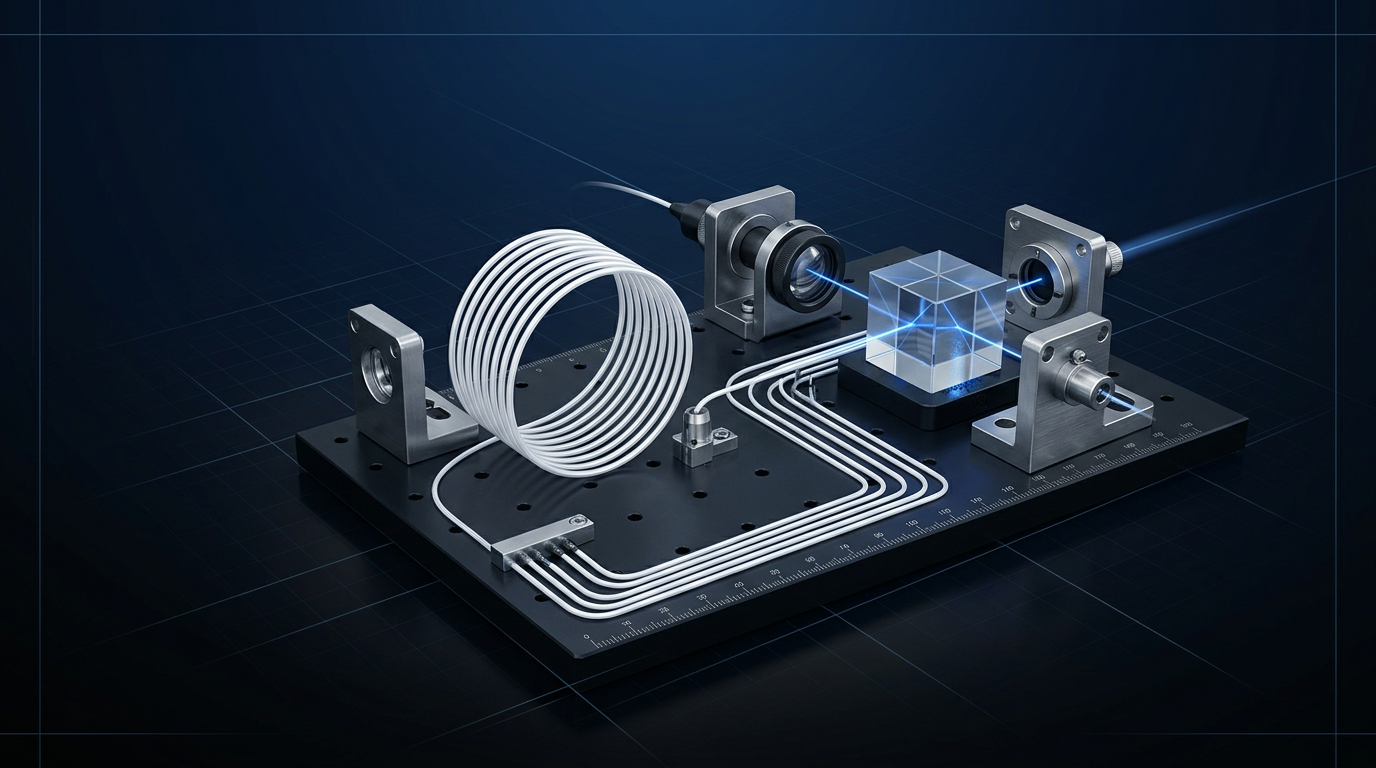
Amplification across the full 1530–1625 nm window suits quantum photonics systems operating in this band, covering both C-band and L-band from a single source.

Fibre Sensing: DAS and Structural Monitoring
High average power erbium-fibre amplification across the 1530–1625 nm platform serves distributed acoustic sensing and structural monitoring interrogation requirements.
Defence and Directed-Energy Research
Average power to 200 W or more, peak power above 100 kW, and full CW, short-pulse, or custom pulse-regime flexibility suit directed-energy programme requirements.
Scientific and Research Instrumentation
Pulse regime, band, power, and firmware are tailored per project. The EDF100 short-pulse build is one example configured for a specific instrument.
Remote Sensing and Further Applications
Requirements beyond those listed are a question for WSL's engineers — the platform suits further high-power, eye-safe erbium-fibre amplification use cases beyond this list.
When Specs Are Supplier-Defined
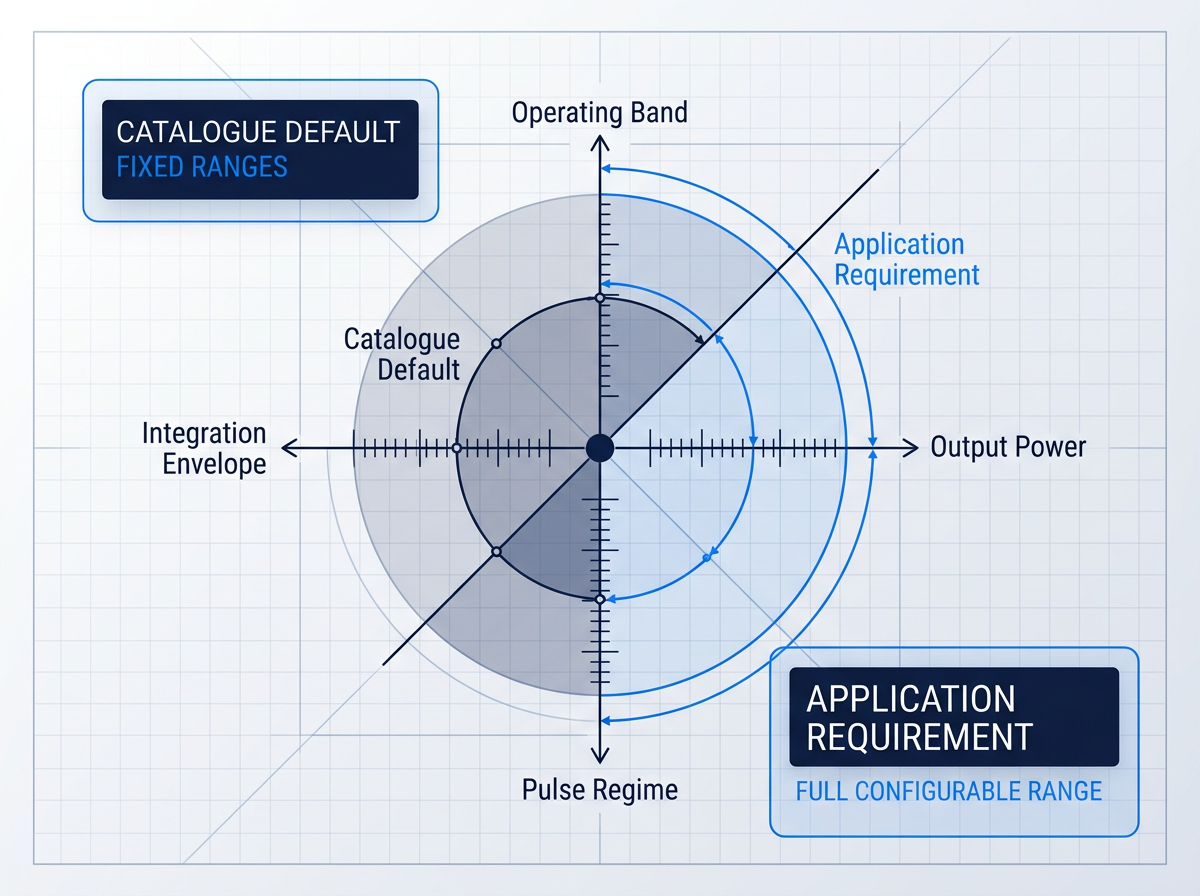
Operating band, output power, pulse regime, and integration envelope are not peripheral details — they determine whether an amplifier actually fits the application. A catalogue build fixes these at the supplier's default.
When those variables are locked, the performance gap falls on the buyer. The application adapts to the amplifier, not the other way around. In demanding programmes, that compromise rarely stays contained to one parameter.
Resellers Have No Engineering Depth
A significant portion of the photonics supply market consists of resellers and importers sourcing third-party modules rather than building amplifiers themselves. That distinction is structural, not cosmetic.
When a specification needs to change, a problem emerges post-supply, or the application evolves, a reseller has no in-house engineering to draw on. The buyer's post-supply position depends entirely on a supply chain the reseller does not control.
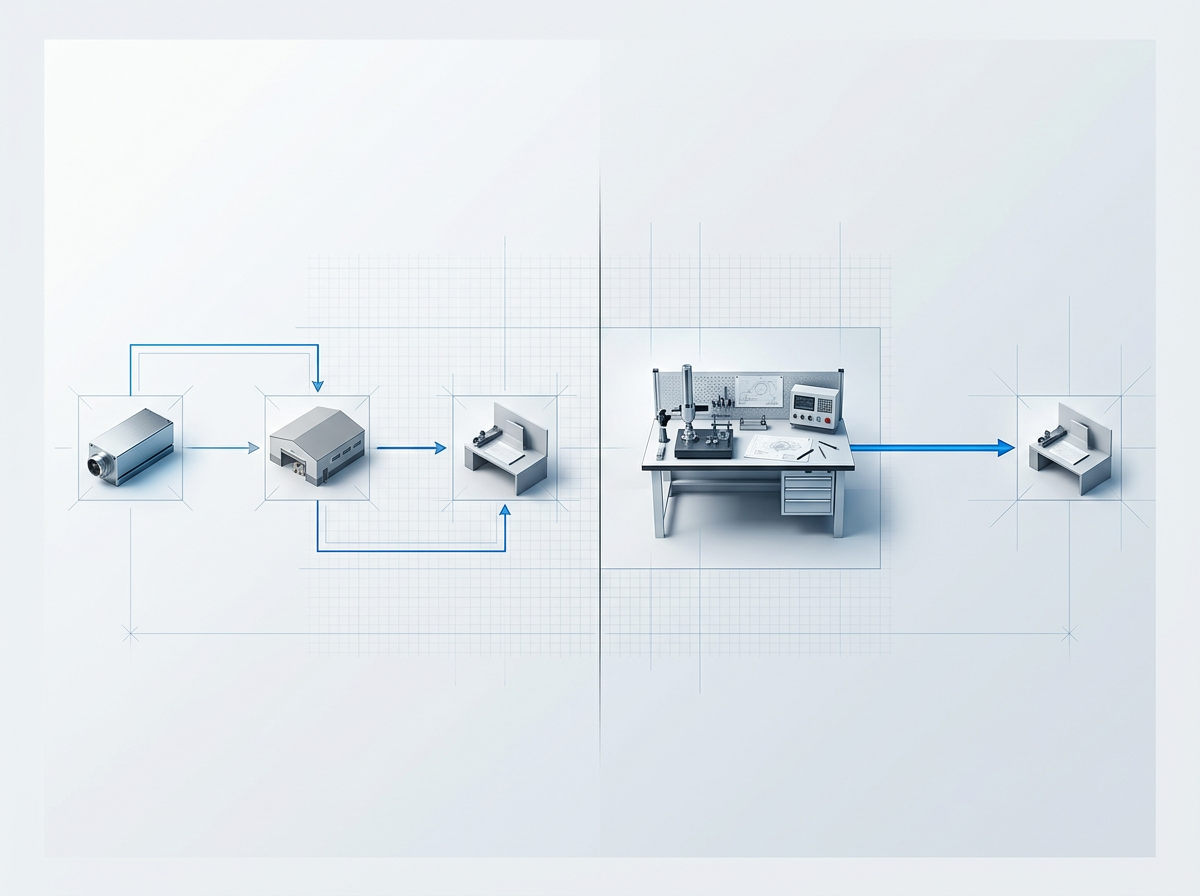
Designed, Built, Qualified, Supported In-House
WSL designs, builds, qualifies, and supports its own amplifiers entirely in-house, on patented technology. Every stage of the process — from specification through to final qualification — is controlled by the same engineering team. That is what makes end-to-end tailoring seamless rather than constrained.
After supply, support is direct from the engineers who built the unit. There is no intermediary, no handoff to a third-party module supplier, and no dependency on an external roadmap.

What the Power Ceiling Tells You
A platform scalable to 200 W or more average power, pulse energies above 10 mJ, and peak powers above 100 kW is not just a headline figure. It reflects the engineering rigour required to solve thermal management, gain stability, and pulse fidelity at extremes — rigour that is present in every unit the platform produces.
For buyers whose current requirement sits well below those ceilings, the platform's headroom is still a relevant criterion: it tells you what the engineering behind your unit is capable of, and it leaves room for applications to evolve without changing supplier.
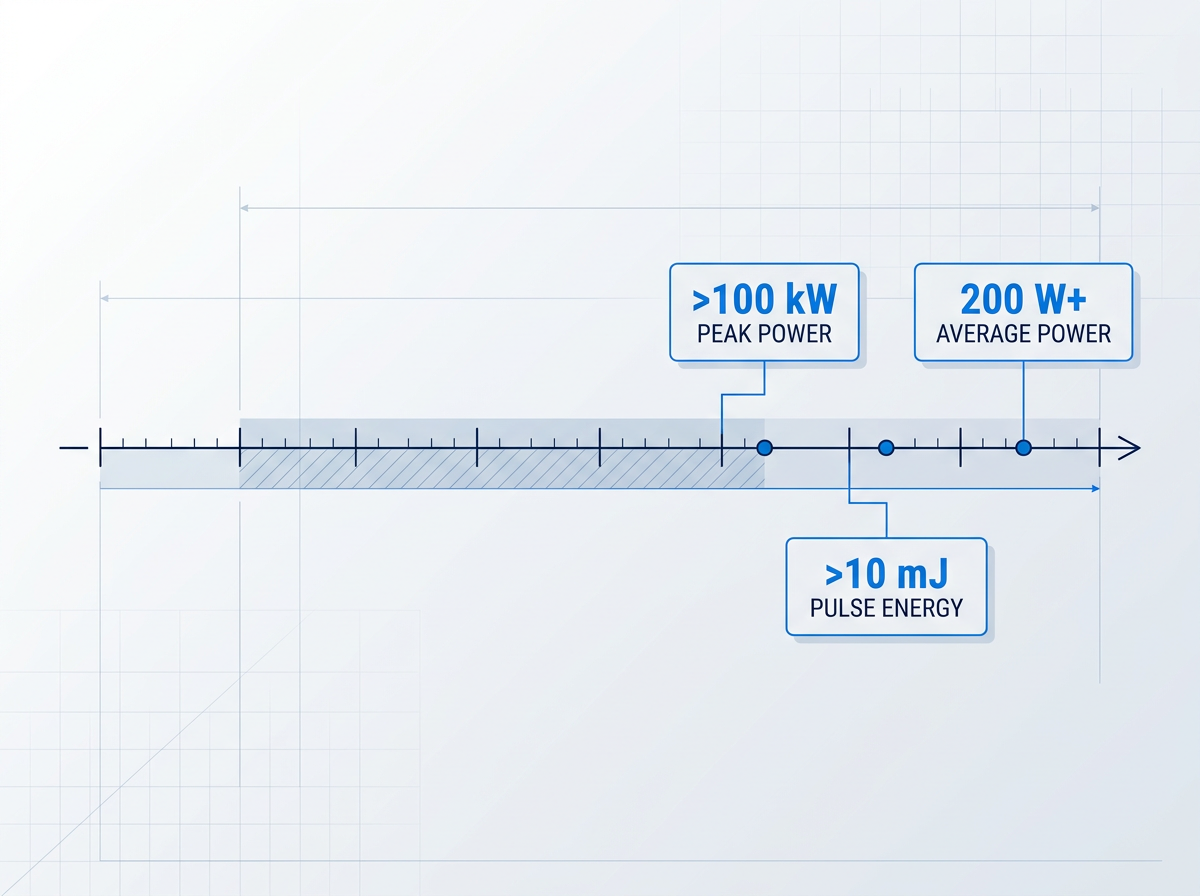
Three Axes for Any EDFA Evaluation
When comparing a custom benchtop EDFA against catalogue alternatives, three axes carry the most weight for demanding applications.
Configurability breadth: Does the supplier configure across band, power, pulse regime, cooling, form factor, and firmware — or does the buyer adapt to a fixed build? Manufacturer directness: Does the supplier design and build in-house, or resell third-party modules? Post-supply support depth: Are the engineers who built the unit accessible after delivery, with the ability to modify, diagnose, and support it directly?

UK Manufacturer: Designed, Built, and Supported In-House
Woodrow Scientific is a genuine UK manufacturer, not a reseller. Every benchtop EDFA is designed, built, qualified, and supported in-house on patented technology — which means the engineers who built your unit are the ones who support it.
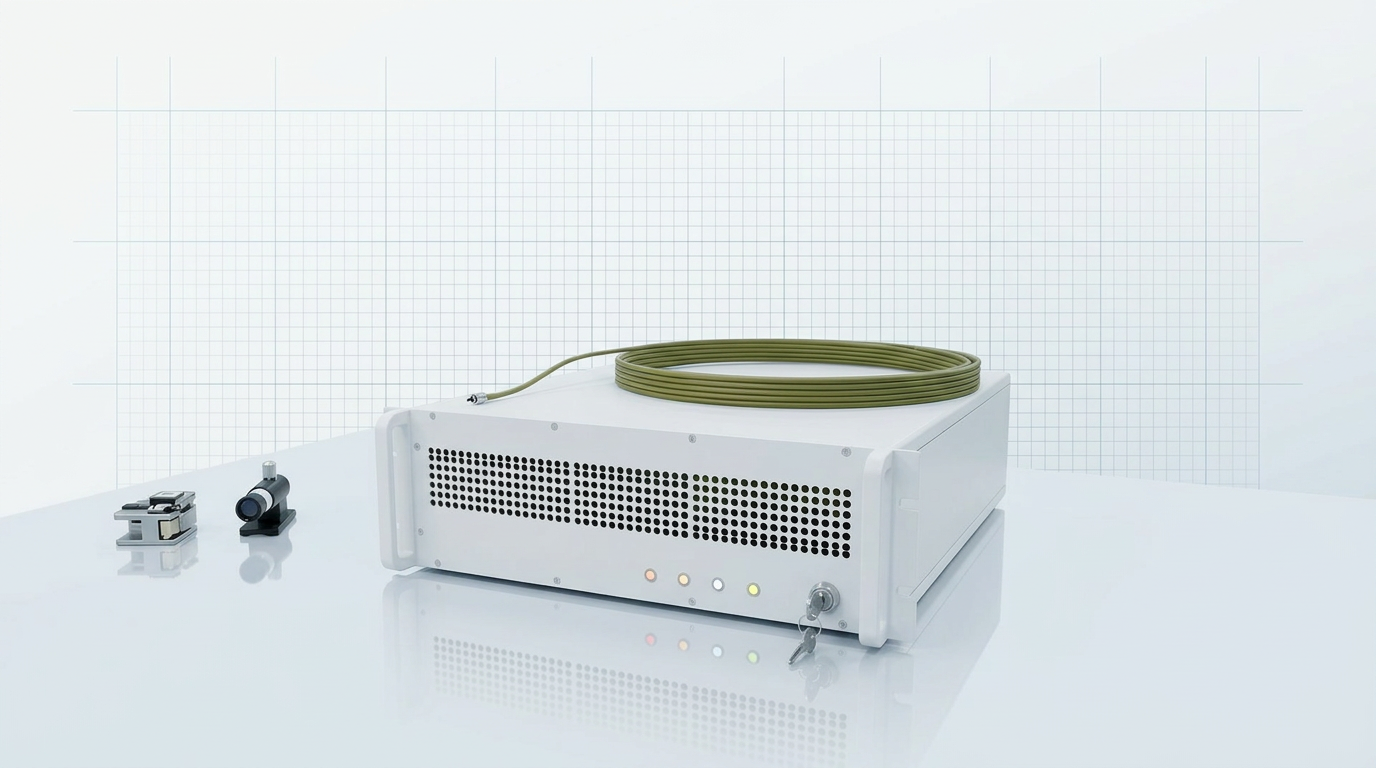
Founded 2012, Built in Southampton, UK
All amplifiers are designed, built, qualified, and supported in-house since 2012.

Rooted in the Birthplace of the EDFA
WSL's fibre-amplifier expertise traces directly to Southampton's ORC, where the EDFA was invented.

200+ Years of Combined Engineering Experience
The WSL team brings over 200 years of combined engineering experience to every build.
Built on Patented In-House Technology
WSL owns the technology it builds on — end-to-end tailoring, with no third-party modules.

Direct Support from the Original Design Engineers
The engineers who designed your unit provide direct support throughout and after integration.
CE and UKCA Certified
Certified to CE and UKCA standards, meeting baseline compliance for UK and EU procurement.

Supplied Worldwide, Direct from WSL
Buyers in any country order direct from WSL, with no distributor or regional intermediary.
Enquire and Specify Your Benchtop EDFA
Every WSL benchtop EDFA is configured to your project — submit your requirements and WSL's engineers assess them directly with you. Requirements that sit outside the published specification are not ruled out in advance; each one is evaluated on its own terms.
Pricing is by quote, reflecting the fit-for-application engineering that goes into each build. WSL supplies direct to buyers worldwide, with direct engineering support accessible from first enquiry through to integration.

Benchtop EDFA: Frequently Asked Questions
Direct answers to the specification and procurement questions engineers ask most about the WSL benchtop EDFA.
WSL builds across the full range — from low-power units (such as 5 W) up to 200 W or more average power, with every unit specified per project. Pulse energies above 10 mJ and peak powers above 100 kW are achievable, and output is controllable from 0 to 100% of rated power. The 200 W+ average power ceiling represents the leading commercially available level for a benchtop EDFA. Whether the requirement is modest or demands the highest power the market offers, the output figure is set at specification time to match the application exactly.
Yes. WSL delivers both C-band (1530–1565 nm) and L-band (1565–1625 nm) from a single source through one cable, covering the full 1530–1625 nm window. This eliminates the need for a second amplifier to cover both bands — the complete dual-band output comes from one unit, through one cable.
The WSL benchtop EDFA supports CW (continuous wave), short-pulse (for example, 100–500 ns), and fully custom pulse regimes. Pulse energy and peak power are both specified per project alongside the pulse regime itself. The regime is set at the time of specification as part of the end-to-end build process — it is a configurable parameter, not a fixed characteristic of the platform.
Yes. Polarisation-maintaining (PM) fibre configuration is available and is specified at the time of order alongside other delivery parameters — including cable length and termination. It is one of the configurable parameters set per project during the specification process.
The WSL benchtop EDFA is air-cooled as standard — no chiller or coolant loop is required, which simplifies integration considerably. Water cooling is available as an option for installations where it is preferred. Both are specified at the time of order.
Every WSL benchtop EDFA is designed and built in Southampton, UK. WSL supplies worldwide — buyers in any country order direct, with no distributor or regional intermediary involved. WSL designs, builds, qualifies, and supports its own amplifiers entirely in-house, on patented technology, which means the same engineering team that built the unit is the one that supports it throughout and after integration.
Pricing is quote-based: submit your requirements and WSL's engineers assess them directly with you. Because every unit is configured to the application — across band, power, pulse regime, cooling, form factor, and firmware — there is no off-the-shelf price list. The quote process is the first step in a direct engineering conversation, giving you a specification and price matched precisely to what your project needs.
WSL builds to order, and requirements beyond the published specification are assessed directly with the client by WSL's engineers — they are not ruled out in advance. The published specifications represent what WSL has offered so far, not the limit of what it builds. Submit your requirement and WSL's engineers will engage with it on its own terms.