

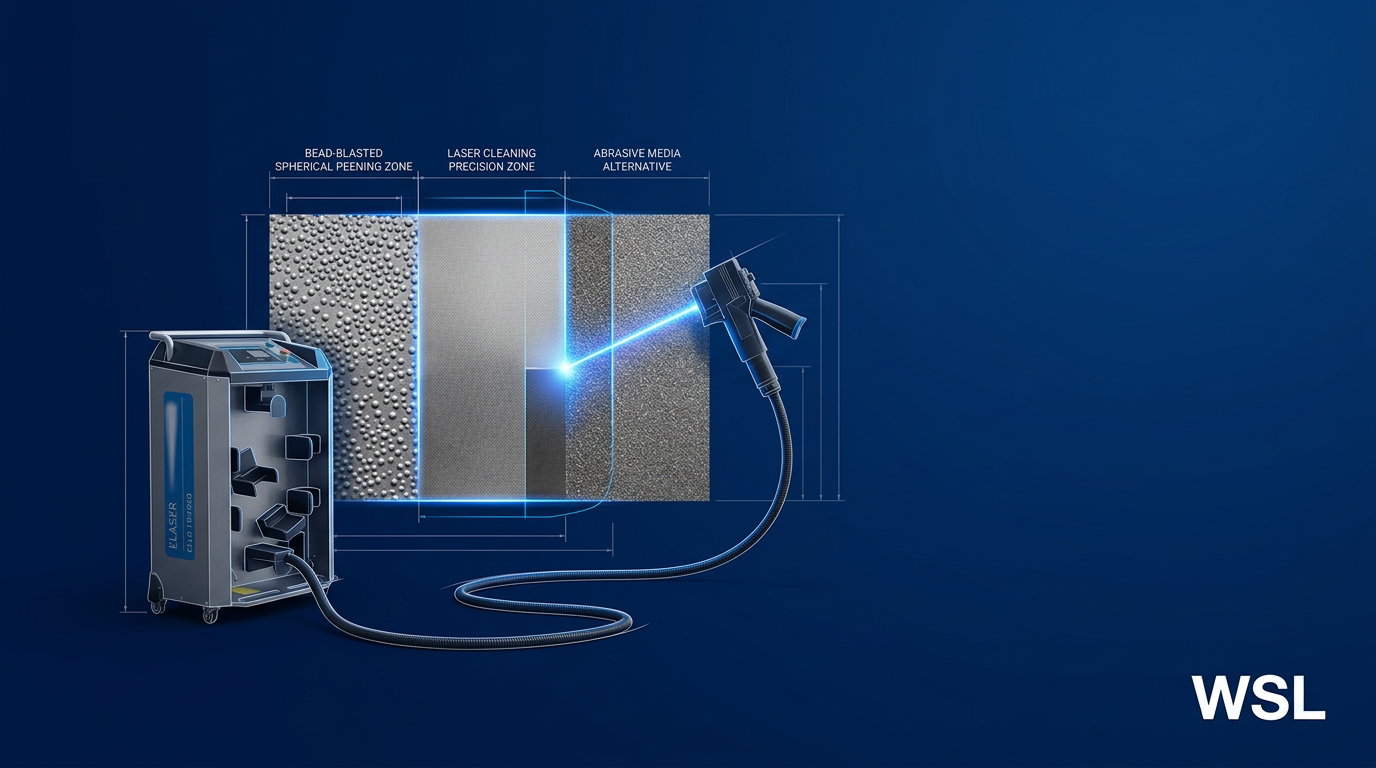
Introduction
Bead blasting works well — until it doesn't.
For many operators, the trigger is a substrate that can't take the aggression, a health or regulatory concern, a process that generates too much waste, or simply the sense that a different approach would produce a better result.
The landscape of alternatives spans two broad territories: different abrasive media that produce different surface effects, and fundamentally different methods that don't rely on abrasive media at all.
This guide is not an operating manual, a brand comparison, or a compliance document — it's a clear-eyed look at the options.
By the end, you'll have enough grounding to shortlist the approach that fits your material, your application, and your working environment.
TL;DR
There is no single best alternative to bead blasting. The right choice turns on substrate sensitivity, the nature of the contamination, the surface profile the coating or finish requires, and the operational constraints of your environment.
The options range from familiar abrasive media swaps to methods — laser cleaning, dry ice blasting — that work on entirely different principles.
This article covers:

Alternative abrasive blasting media types and uses
Non-abrasive alternatives including laser and dry ice
How to match method to your application
Health, safety, and environmental considerations
Common media selection mistakes to avoid
What is bead blasting — and why look for an alternative?
Glass bead blasting delivers a consistently attractive surface finish, preserves tight tolerances on precision components, and has earned its place as the default choice for cosmetic finishing across industries. So why do so many operators end up searching for an alternative to bead blasting? The answer lies in the gap between what the spherical bead is physically capable of and what a growing range of applications actually demands.
How bead blasting works
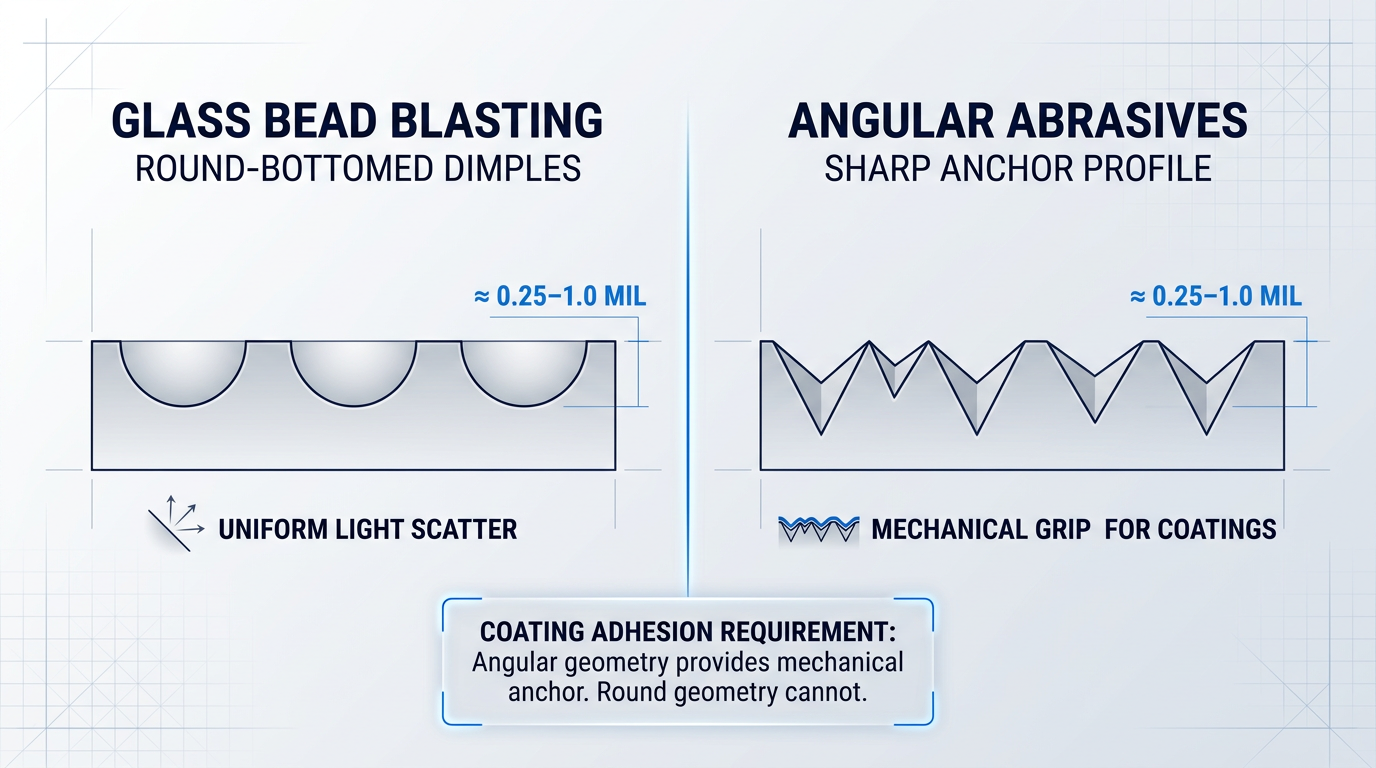
Bead blasting propels spherical glass beads at a substrate surface using compressed air. The defining characteristic is that spherical shape: where an angular abrasive cuts into the surface, a round bead peens it.
That peening action produces round-bottomed dimples across the substrate — tiny concave impressions that scatter light uniformly and create the characteristic matte-to-satin sheen. It is a surface effect, not a cutting one.
The practical applications follow directly from this mechanic: cosmetic finishing, light cleaning, descaling, mould and die reconditioning, light deburring, and low-intensity shot peening on precision parts.
The surface profile glass bead produces ranges from 0.25 to 1.0 mil, according to the Blastone Abrasive Selection Guide (B3047-2). Crucially, those dimples are round-bottomed, not angular — and that geometry is the root cause of bead blasting's most significant limitation.
High-build coatings, structural coating systems, and specialist coatings specify a sharp anchor profile — a deeply textured, angular surface that gives the coating mechanical grip. Round-bottomed dimples do not provide that geometry, regardless of blast pressure or dwell time.
Glass bead is also chemically inert and iron-free, which matters on non-ferrous substrates where ferrous contamination from the blasting media itself would cause problems downstream. When used correctly, it cleans without dimensionally altering the part — a genuine advantage over angular abrasives for precision components.
Why operators look for an alternative
The five pain points below are distinct failure modes — each one specific enough that an operator in that situation will recognise it immediately.
- Substrate damage on soft metals: The margin for error is narrow. On thin-gauge aluminium and soft alloys, mismatched pressure or bead size risks buckling or distortion — a real risk in high-throughput production.
- Health and regulatory pressure: Blasting operations generate respirable dust from the substrate, coatings being removed, and media breakdown. Regulatory scrutiny of abrasive blasting is increasing, as OSHA publications make clear.
- Media cost and disposal burden: Glass bead recycles around 10–20 cycles at approximately 50 psi, then becomes waste. Spent media mixed with coating debris carries a disposal cost, especially where coatings contain hazardous residues.
- Surface preparation ceiling: Bead blasting cannot achieve the aggressive profile needed for high-build coatings, or the cutting action required for heavy rust, mill scale, or thick elastomeric coating removal.
- Application scope mismatch: Glass bead is the right tool for cosmetic finishing. Where a deep angular anchor profile is required, it is the wrong tool — not because it is used incorrectly, but because the method is mismatched to the task.
The substrate damage risk deserves particular attention in production environments. The Blastone guides note that fine grades require care to ensure buckling does not occur on lighter alloys — and in a production setting, process consistency is rarely perfect.
The regulatory dimension is directional rather than static. OSHA's published guidance on abrasive blasting operations addresses hazardous dust levels from both the blasting material and the substrate and coatings being blasted — and the direction of regulatory travel is toward tighter controls, not looser ones.
The disposal burden is both a volume and a cost issue. At 10–20 cycles per charge, glass bead has moderate recyclability — but in single-use or high-turnover operations, spent media accumulates quickly, and where it is contaminated with hazardous coating residue, disposal costs rise accordingly.
When bead blasting falls short on coating adhesion preparation, the cause is not poor technique — it is that a round-bottomed 0.25–1.0 mil profile is physically incapable of meeting the sharp angular anchor profile specifications that demanding coating systems require.
These five pain points collectively define what alternative to bead blasting means throughout this guide: any method that addresses one or more of them, whether by delivering a sharper surface profile, reducing dust exposure, eliminating media waste, or extending the range of substrates and coatings that can be handled safely and effectively.
The sections that follow map that landscape — starting with alternative abrasive media that share bead blasting's compressed-air delivery but differ fundamentally in shape, hardness, and the surface profiles they can achieve.
Alternative abrasive media: soda, crushed glass, and aluminium oxide
Choosing the wrong abrasive medium doesn't just affect finish quality — it can damage the substrate, create unnecessary waste, or simply fail to remove what needs removing. Three variables determine whether a medium is right for a given job: particle shape (spherical media peen and compact; angular media cut and profile), hardness (measured on the Mohs scale, which runs from 1 for talc to 10 for diamond), and profile depth — the anchor pattern left on the surface, measured in mils, which dictates how well a subsequent coating will bond.
Equally important is the distinction between two fundamentally different goals: surface preparation (creating a profile for coating adhesion) and cleaning (removing contamination while leaving the substrate dimensionally unchanged). Several of the media below are well-suited to one but poorly suited to the other — conflating the two is one of the most common causes of media selection errors.
Soda blasting (sodium bicarbonate)
Sodium bicarbonate — baking soda — sits at 2.5 on the Mohs scale, making it one of the softest blasting media in industrial use. Published abrasive selection guides describe it as a weaker grain that disintegrates on contact, which limits how deeply it acts on the substrate surface.
This characteristic makes soda blasting effective at removing paint and coatings from soft or delicate substrates while leaving the underlying material essentially undisturbed. Profile depth ranges from approximately 0.25 to 2.0 mil depending on the formulation used — standard maintenance-grade soda produces 0.25–0.5 mil, while formulations blended with grit can reach up to 2.0 mil.
Soda is well-suited to automotive bodywork restoration, graffiti removal from brickwork, cleaning of heritage surfaces, and any application where the substrate must not be profiled or dimensionally altered. A practical advantage for intricate components is that sodium bicarbonate is water-soluble: media residue rinses away cleanly, eliminating the trapped-media problem that affects less soluble abrasives in blind holes or recesses.
Its limitations are significant. Soda is non-recyclable — single use only — and generates a medium dust factor during operation. The EPA IRTA factsheet describes it as not particularly aggressive, making it unsuitable for heavy-duty surface preparation tasks; it also cannot produce the profile depth required for high-build coating systems.
OSHA classifies sodium bicarbonate as an alternative, less toxic blasting material. The EPA notes that soda blasting generates significant waste material during operation and that sodium bicarbonate runoff can affect stormwater systems. Containment and appropriate waste disposal are required, and where the coatings being removed contain hazardous constituents such as lead, the spent waste stream requires assessment before disposal.
Crushed glass
Crushed glass is made from 100% recycled bottle glass — amorphous silica — and its angular, irregular particle shape produces a fundamentally different surface effect from glass bead. Where glass bead peens and compresses, crushed glass cuts and profiles, behaving more like a mineral abrasive than a peening medium.
The EPA IRTA graffiti factsheet puts crushed recycled glass at 6 on the Mohs scale, making it significantly harder and more aggressive than soda. Profile depth ranges from approximately 0.5 to 4.5 mil across available grades: extra-coarse grades (10/20 mesh) deliver 3.5–4.5 mil on steel; fine grades (40/70 mesh) produce 1.0–2.5 mil; extra-fine grades reach down to 0.5–1.5 mil.
Its recycled-material origin gives crushed glass a genuine environmental credential: it diverts waste glass from landfill. EPA sources confirm it contains less than one percent free silica and is free of heavy metals such as arsenic, lead, and beryllium — which are found in some coal and mineral slag abrasives. This makes it a health improvement over slag media.
Crushed glass is not recommended for stainless steel or aluminium substrates. Glass particles can become embedded in these surfaces, causing surface contamination: on aluminium, this creates contamination beneath applied coatings; on stainless steel, embedded particles cause surface contamination problems.
Recyclability is low — rated 1/10 in published abrasive selection guides — which effectively makes crushed glass a single-use medium in practice. In continuous operations, this means high media consumption and correspondingly high waste volumes, which should factor into total cost of use calculations.
Aluminium oxide
Aluminium oxide — also known as corundum or alumina — is the hardest of the common non-metallic abrasives, with a Mohs hardness of 9.0, placing it just below diamond on the scale. Its angular particles do not fracture on impact the way softer media do; instead, they spend their kinetic energy removing contaminants from the surface, which gives the medium exceptional cutting efficiency.
This hardness translates into the widest profile range of any common non-metallic abrasive. Across available grades, aluminium oxide delivers profiles from approximately 0.5 to 3.0 mil — fine grades (120 mesh) produce 0.5–1.0 mil, while coarser grades (60 mesh) reach 2.0–3.0 mil — making it suitable for demanding surface preparation requirements across a broad range of coating systems.
Brown fused aluminium oxide is used for high-performance applications and general industry use. White fused aluminium oxide is also available for high-performance and delicate blasting projects, including cleaning of high-specification metals.
Aluminium oxide is the right choice for surface preparation prior to hard chrome plating — applications where a deep, sharp anchor profile is essential for coating adhesion. It is also the preferred medium where ferrous contamination must be avoided: unlike steel grit, aluminium oxide introduces no iron to the blasted surface, eliminating the risk of rust staining or galvanic corrosion under coatings applied to non-ferrous substrates.
Recyclability is a meaningful operational advantage: aluminium oxide can be reclaimed and reused multiple times, making it cost-effective when a recovery system is in place. EPA sources confirm that synthetic abrasives such as aluminium oxide are more durable and create less dust than sand.
The table below sets out the key properties of all three media side by side.
| Medium | Particle Shape | Mohs Hardness | Profile Range (mil) | Recyclability | Primary Use Case | Substrate Restrictions |
|---|---|---|---|---|---|---|
| Sodium bicarbonate | – | 2.5 | 0.25–2.0 | Non-recyclable | Cleaning; coating removal from delicate substrates | Not suited to heavy-duty surface preparation |
| Crushed glass | Angular, irregular | – | 0.5–4.5 | Single-use (1/10) | Moderate-to-heavy coating removal; concrete blasting | Not recommended for stainless steel or aluminium |
| Aluminium oxide | Angular | 9.0 | 0.5–3.0 | Multi-use (recyclable) | Surface preparation for demanding coatings; non-ferrous substrates | – |
Three non-metallic abrasive media compared across particle shape, Mohs hardness, profile depth range, recyclability, primary use case, and substrate restrictions. Profile ranges reflect published figures across available grades. – Particle shape for sodium bicarbonate: not publicly listed. – Mohs hardness for crushed glass: the EPA IRTA factsheet reports 6 Mohs; see the crushed glass section above. – Substrate restrictions for aluminium oxide: not publicly listed.
The table makes the selection logic visible. Soda and crushed glass are both effectively single-use, which drives high waste volumes in sustained operations — a real cost that recyclability figures alone don't fully capture. Aluminium oxide's multi-use characteristic changes the economics substantially when a recovery system is in place. The hardness progression from 2.5 to 9.0 Mohs also maps directly onto aggressiveness: an operator who needs to clean without profiling should reach for soda; one preparing a hard substrate for a demanding coating system should reach for aluminium oxide.
Soda and crushed glass are primarily cleaning and coating-removal media — they strip what is on the surface. Aluminium oxide is primarily a surface preparation medium — it creates the profile a coating bonds to. Choosing between them without answering this question first is the most common source of media selection errors.
OSHA classifies sodium bicarbonate as a less toxic blasting alternative, and EPA sources confirm crushed glass contains less than one percent free silica — both represent a meaningful health improvement over silica sand. Where any of these media is used to remove lead-based paint, the spent waste stream — media mixed with paint debris — warrants hazardous waste assessment, as EPA guidance on lead paint abatement debris makes clear.
All three media sit within the non-metallic abrasive category, with recyclability ranging from none to moderate. The next step along the abrasive spectrum moves into metallic media — steel shot and steel grit — where recyclability is dramatically higher and the substrate and profile considerations shift accordingly.
Steel shot and steel grit blasting
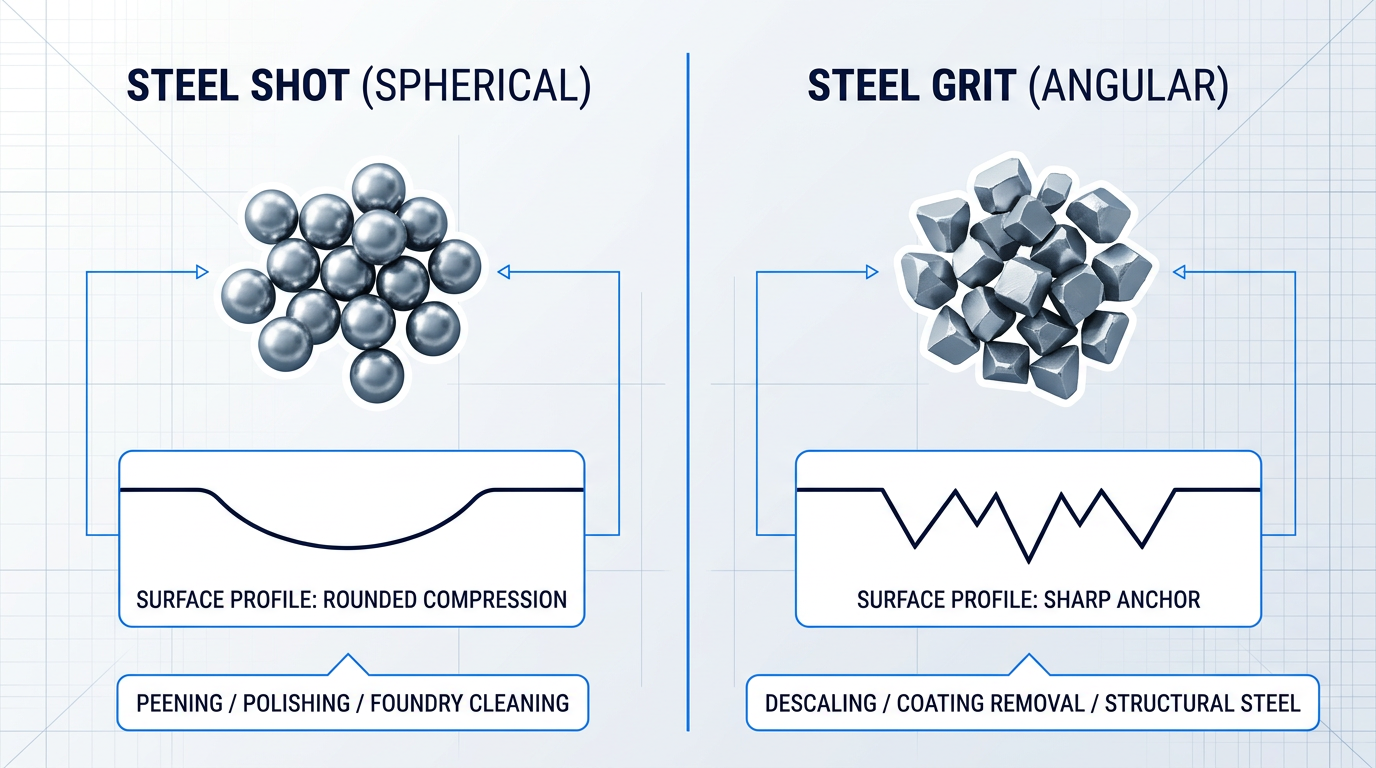
Steel shot and steel grit are often mentioned in the same breath, but they are not interchangeable — they produce fundamentally different surfaces and serve different purposes. The distinction comes down to shape: steel shot is spherical, whilst steel grit is angular. That single difference determines the surface effect, the application, and the profile the reader ends up with.
Steel shot: peening, polishing, and compressive profiles
When spherical shot strikes a surface, it peens and compresses rather than cuts. The result is a rounded, compressive surface profile — not the sharp angular anchor pattern that heavy-duty coating preparation demands.
That compressive effect is precisely what makes shot the right choice for specific applications: cleaning foundry castings (removing flash and foundry sand in one pass), shot peening of components where induced compressive stress in the surface layer improves fatigue resistance, surface polishing of metallic objects, and concrete floor preparation using portable trackblast wheel blast machines.
Shot's surface effect is not simply a gentler version of grit's — it is a categorically different outcome, and choosing shot where a sharp anchor profile is required for coating adhesion will produce an inadequate result regardless of operating pressure.
Steel grit: aggressive profiling and descaling
Angular steel grit cuts into the surface on impact, generating the sharp anchor profile that heavy-duty coating systems require for adhesion. It is the dominant medium in blast rooms handling structural steel, and is well suited to descaling, coating removal, and surface preparation ahead of high-build coatings.
One practical operational detail: grit's sharp edges gradually round over with successive recycling cycles, which progressively reduces its cutting aggressiveness and blast speed. Operators running high volumes need to monitor the working mix and refresh media at the point where the rounded particles can no longer achieve the required profile.
Recyclability: the operational economics of steel abrasives
The defining operational advantage of both steel shot and steel grit over most non-metallic alternatives is recyclability. Steel abrasives can be recovered, cleaned, and reused — producing approximately 25–50 cycles before the media degrades, with the actual figure varying depending on operating pressure and the substrate being blasted.
That cycle count transforms the cost calculation in a contained blast room running high volumes. Single-use media such as soda or crushed glass is consumed entirely on each pass; steel abrasives are recovered by the underfloor system, cleaned of dust and fines, and returned to the blast pot ready to use again.
According to the EPA, total particulate matter emissions from abrasive blasting with steel grit are approximately 24% of those from sandblasting; with steel shot, approximately 10%. In contained blast operations, this reduction is a meaningful benefit for both worker health and environmental compliance.
The OSHA blasting guidance corroborates this picture, noting that steel grit and shot have less potential to cause lung damage than silica sand, coal slag, and several other commonly used abrasives — a meaningful distinction in any operation where dust exposure is a management priority.
Constraints: substrate compatibility and infrastructure
Steel abrasives carry two firm constraints that define where they should not be used.
- Ferrous substrates only: Steel abrasives must not be used on aluminium or other non-ferrous substrates. Ferrous particles can become impregnated in soft surfaces, compromising the substrate and any subsequent coating.
- Contained operations only: Steel abrasives require airless wheel blast machines or blast rooms with automated media recovery. Open blasting makes recovery impractical, eliminating the recyclability advantage entirely.
The infrastructure requirement is not merely a preference — the economics of steel abrasives only hold when the media is actually recovered and reused. Without an automated recovery and recycling system, the per-cycle cost advantage disappears, and the case for steel abrasives over expendable alternatives collapses.
Steel abrasives are optimised for ferrous industrial substrates where aggressiveness and recyclability are assets — the next section covers the opposite end of the spectrum, where the substrate itself is the primary constraint and the goal is to remove as little material as possible.
Plastic media and agricultural media blasting
At the gentler end of the abrasive spectrum sit two media families that share a common purpose: removing coatings and surface deposits from substrates that cannot tolerate the cutting action of harder abrasives. Plastic media blasting and agricultural media — walnut shell and corn cob — occupy this low-aggressiveness niche, and understanding where each excels, and where each falls short, is essential for anyone working with aluminium components, composites, soft tooling, or delicate surface finishes.
Plastic media blasting (PMB)
Plastic media is granulated or irregular-form thermoset plastic, engineered in several hardness grades to suit different substrate sensitivities. Mohs hardness across the range runs from 3.0 for soft grades up to 4.0 for hard grades, with medium grades sitting at 3.5 — well below the 5.5 of glass bead and the hardness of any mineral abrasive.
The removal mechanism is primarily impact-based: particles strike the coating, cracking and dislodging it, rather than cutting into the substrate beneath. Because the media does not create a surface profile or dimensionally alter the base material, it is fundamentally different in action from angular mineral abrasives — a critical distinction when working with precision components where tolerances must be preserved.
Plastic media's application range reflects that substrate-safe characteristic. Maxiblast's product literature lists the following as established use contexts for its acrylic and medium-grade plastic media:
- Aerospace depainting: Stripping coatings from aircraft wheels, brakes, landing gear, and fuselage components without damaging the aluminium or composite substrate.
- Ground vehicle stripping: Removing paint from aluminium-bodied panel trucks and fiberglass vehicles where harder abrasives would warp or gouge panels.
- Mould and tooling cleaning: Cleaning steel and aluminium moulds of baked-on resin and polymer residue without introducing abrasive wear to cavity surfaces.
- Deflashing moulded parts: Removing flash from die-cast metal, thermoset plastic, and electronic components without altering critical tolerances.
- Powder coat stripping: Removing powder coat from reject parts prior to rework, preserving the substrate for recoating.
Two grades — Aero-Clean (acrylic, 3.5 Mohs) and Multi-Blast (medium grade, 3.5 Mohs) — are approved under the Mil-P-85891A military specification for plastic blast cleaning media, as stated in Maxiblast's published product specifications. This approval is a meaningful credential for defence and aerospace depainting operations where media qualification is a procurement requirement.
One of plastic media's most practically significant characteristics is its service life. Because the granules are engineered thermoset plastic with sharp, angular edges, they retain their cutting geometry throughout use — unlike agricultural media, which rounds off progressively. Guyson's published comparison notes that plastic media's life cycle is typically four to five times longer than natural media.
Plastic media also generates significantly less dust than walnut shell or glass bead, as noted across multiple Maxiblast product datasheets. In contained-blast operations, lower dust levels improve operator visibility and reduce the burden on filtration and ventilation systems.
The limitations are real and worth stating plainly. Plastic media is slower than aggressive abrasives, and it cannot remove heavy corrosion — the media is not hard enough to dislodge scale or deep rust. Where coatings being stripped contain lead or chromates, the resulting paint dust and media fines may require hazardous waste treatment; the EPA has noted in its coating removal guidance that spent plastic media containing paint chips may constitute hazardous waste under applicable regulations. Operators should confirm waste classification requirements with their relevant regulatory authority before disposal.
Agricultural media: walnut shell and corn cob
Agricultural media are naturally derived, biodegradable abrasives used at low blast pressures to remove superficial deposits without profiling or cutting into the substrate. Both walnut shell and corn cob work by light abrasion or scrubbing action rather than the impact-fracture mechanism of plastic media.
The two materials differ in hardness and aggression. Walnut shell is angular and sits in the 4.5–5.0 Mohs range, as confirmed by Guyson's walnut shell datasheet. Corn cob is softer and lower in density, at approximately 4.5 Mohs, making it the gentler of the two and better suited to the most delicate surfaces.
Agricultural media is the established choice in environments where biodegradability and the absence of synthetic residues are practical priorities. Concrete application contexts include:
- Food and pharma tooling: Mould and die cleaning where biodegradable media with no synthetic chemical residues is preferred to avoid contamination concerns.
- Automotive restoration: Stripping paint from body panels and classic vehicle components where a gentle abrasive action is needed to preserve original contours.
- Soft substrate cleaning: Cleaning soft metals, fibreglass, and wood where a light abrasive touch is appropriate and no surface profile is required.
- Light cosmetic cleaning: Removing surface deposits, smoke damage, or light contamination where no surface profile is needed or wanted.
The principal limitation of agricultural media is that walnut shell rounds off and loses its cutting action over time. As the angular edges degrade, cleaning consistency across a blasting run deteriorates — meaning the first passes and the last passes of the same media charge may not deliver the same result. This is a meaningful process-control disadvantage in precision or production environments.
Biodegradability is a genuine advantage in certain contexts, but it does not eliminate waste handling requirements. Once agricultural media has been used to strip a coated surface, it is mixed with the removed coating and any contaminants it carried. Where those coatings contain hazardous constituents, the mixed waste stream may carry its own disposal obligations regardless of the media's natural origin.
Plastic vs agricultural media: the key differences
The choice between plastic and agricultural media comes down to five practical axes, each of which can be decisive depending on the application.
Stripping speed is the most striking differentiator. Guyson's published comparison states that plastic media strips at approximately four times the speed of natural media — a difference that has direct implications for throughput in production or maintenance operations.
Plastic media strips at approximately 4 times the speed of natural media such as walnut shell, and its life cycle is typically 4–5 times longer — according to Guyson's published comparison of plastic versus natural blasting media.
On service life and consistency, plastic media retains its sharp edges throughout use; walnut shell rounds off progressively. This affects not just total media cost per cycle but also the uniformity of the cleaning result across a single blasting run.
Biodegradability is the one axis where agricultural media holds an unambiguous advantage. In food processing, pharmaceutical, or outdoor environments where synthetic media residues are undesirable, walnut shell or corn cob is often the preferred option — SurfacePrep notes that walnut shell is a good consideration for blasting components used in food preparation equipment cleaning.
Finally, on dust generation: plastic media produces significantly less dust than walnut shell, as confirmed by Maxiblast's product datasheets for multiple grades. For contained-blast operations and operator health management, this is a meaningful operational advantage.
Both media families are still abrasive in nature, even at this gentle end of the spectrum — they remove material through physical contact with the substrate or coating. The next category of alternatives takes a fundamentally different approach, eliminating the blast media itself entirely and leaving no residue on the surface at all.
Dry ice blasting
Every method covered so far — from soda and crushed glass through to plastic and agricultural media — has worked by putting abrasive particles against a surface. Dry ice blasting crosses a different line: it uses solid CO₂ pellets that sublimate completely on impact, leaving no spent media behind, and it does not abrade the substrate at all.
The cleaning action is produced by three mechanisms that occur nearly simultaneously, and it is their combination — not any single one — that gives dry ice blasting its distinctive profile.
- Kinetic impact: Pellets accelerated by compressed air strike the surface at high velocity, dislodging contamination mechanically — similar to any blast medium, but at far lower hardness.
- Thermal shock: Pellets are extremely cold (below -100°F / approximately -73°C). The thermal differential causes the contaminant and substrate to contract at different rates, weakening the adhesive bond between them.
- Sublimation expansion: On impact, each pellet converts directly from solid to gas, expanding rapidly in volume. This gas expansion beneath and around the contaminant lifts and expels it from the surface.
Together, these three mechanisms produce a cleaning action that can remove grease, soot, weld slag, spatter, resin, and sealant without the mechanical cutting or profiling that abrasive media produce.
Because CO₂ sublimates completely on impact, there is no spent media to collect, recover, or dispose of. The only material left on the floor after blasting is the contamination itself.
This residue-free profile is what opens applications that abrasive methods cannot serve. Where any spent media would contaminate sensitive equipment, circuits, or production environments, dry ice blasting leaves nothing behind.
As The Fabricator notes, dry ice is a very soft medium that can clean even sensitive electronic equipment without etching, profiling, or changing surface dimensions. With a Mohs hardness of approximately 2, it cannot create a surface anchor profile for coating adhesion — a genuine limitation, not merely a trade-off, for any application where abrasive blasting would normally be specified to prepare a substrate for coating.
Where dry ice blasting is best suited
The residue-free, non-abrasive, and non-conductive characteristics of dry ice make it particularly well suited to a specific set of industrial niches.
In-place cleaning of production equipment is the application where dry ice blasting is hardest to match. As reported in The Fabricator, it can clean weld line robots, jigs, fixtures, trunnions, transfer cases, and weld tables without disassembly — removing slag, spatter, soot, grease, and resin while equipment is hot and online, significantly reducing shutdown time.
Because CO₂ is non-conductive, it is safe for use around live or sensitive electrical components — an important distinction from any media that leaves residue or carries electrical charge. Food-grade processing environments also benefit: the process introduces no chemical residue and no media contamination into the production area, as noted by both EPA and USDA research into its use in food processing facilities.
Practical limitations to consider
OSHA's technical guidance notes that production rate with dry ice blasting is sometimes slow compared with conventional abrasive blasting — a meaningful constraint for heavy or large-area work. It is a maintenance-cleaning and contamination-removal method, not a high-throughput surface preparation process.
For heavy graffiti or thick, strongly adherent coatings, dry ice alone is often insufficient. EPA and IRTA testing found it most effective on light contamination; removing heavy deposits typically requires pairing it with a more aggressive abrasive system.
There are also infrastructure requirements to account for: solid CO₂ pellets must be sourced, transported, and stored — an ongoing consumable cost that can be prohibitive for operations without ready access to CO₂ supply chains. The process also requires compressed air at significant volume and pressure, which is not a trivial infrastructure commitment.
CO₂ safety in enclosed and confined spaces
The safety dimension of dry ice blasting in enclosed environments is non-negotiable. As OSHA's technical guidance makes clear, CO₂ gas is denser than air — approximately 1.5 times heavier — so when pellets sublimate during blasting, the released gas accumulates at low levels: in pits, trenches, below-grade areas, and enclosed rooms.
CO₂ is colourless and odourless at low concentrations, giving no immediate sensory warning as it displaces oxygen. OSHA describes this as a significant asphyxiation hazard that must always be guarded against when blasting in confined spaces. NIOSH sets the immediately dangerous to life or health (IDLH) concentration for CO₂ at 40,000 ppm, with a recommended short-term exposure limit (REL STEL) of 30,000 ppm.
Adequate ventilation — designed to exhaust from the lowest level and admit make-up air from a higher point — and continuous atmospheric monitoring are essential precautions in any enclosed or below-grade workspace. Operators should consult OSHA and NIOSH guidance directly, and engage a qualified safety professional for their specific operating environment.
For applications where the CO₂ supply chain, compressed air infrastructure, or confined-space safety requirements make dry ice blasting impractical, or where an even finer level of substrate preservation is needed, laser cleaning offers a different non-abrasive approach — one that requires neither consumable media nor the ventilation demands that CO₂ sublimation creates.
Laser cleaning
Every method covered so far removes material by putting something against the surface — abrasive particles, dry ice pellets, pressurised gas. Laser cleaning works on an entirely different principle: it delivers precisely controlled energy to the surface, and the contaminant does the rest, removing itself.
How laser cleaning works: four removal mechanisms
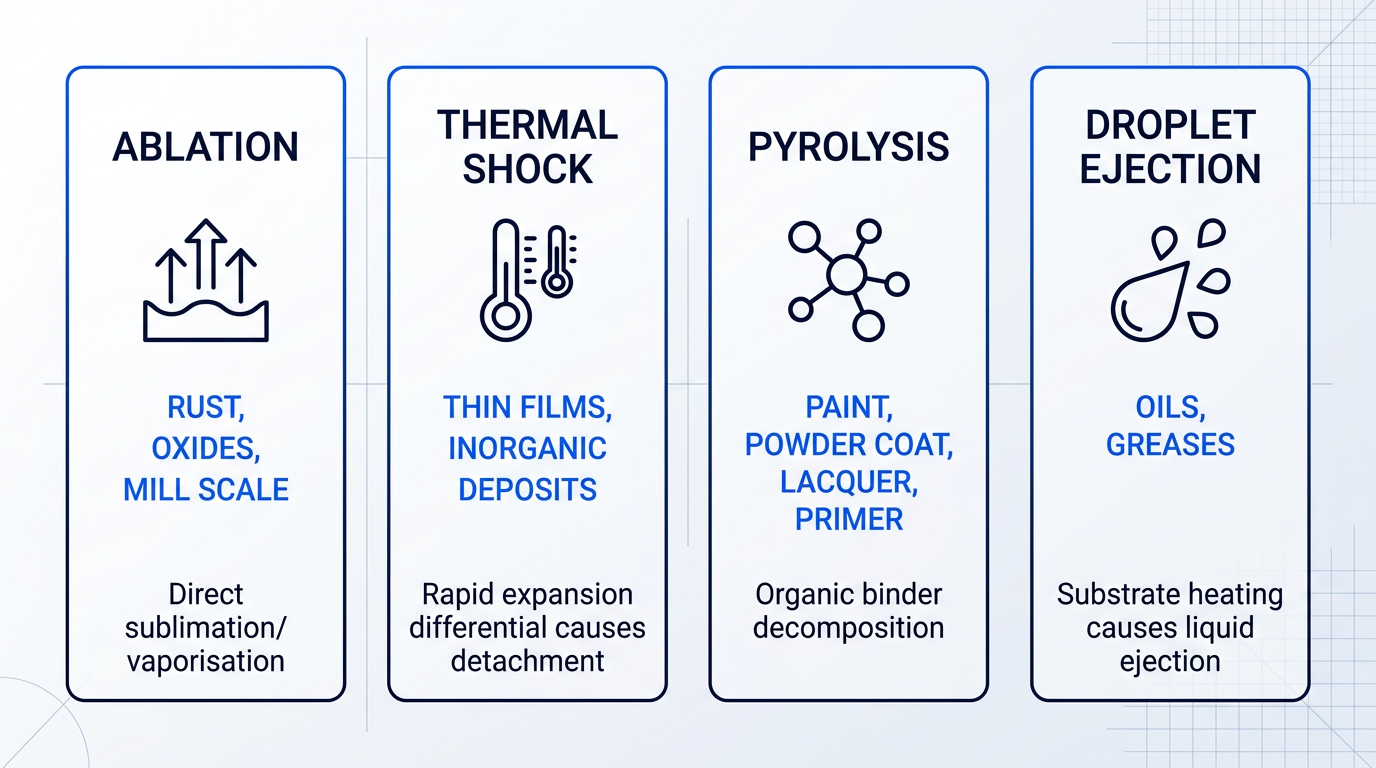
Laser cleaning is not a single process — it is a family of mechanisms, and which one activates depends entirely on what the beam encounters at that moment on the surface.
Ablation is the defining mechanism for rust, oxides, and mill scale. The contaminant absorbs the laser energy and undergoes a direct solid-to-gas phase change — sublimation or vaporisation — without the base metal being touched.
Thermal shock operates differently: the laser creates a rapid temperature differential between the contaminant and the substrate beneath it. Because the two materials expand at different rates, the contaminant layer cracks and detaches — an effect particularly useful for thin films and inorganic surface deposits.
For organic coatings such as paint, powder coat, lacquer, and primer, the mechanism is pyrolysis: the laser energy decomposes the organic binder, breaking down the coating chemically rather than simply heating it away.
Oils and greases present a different challenge because they are largely transparent to laser light and cannot be removed by direct ablation. Instead, the laser heats a small area of the substrate beneath the oil, causing droplet ejection — individual droplets of liquid contaminant vaporise and are thrown clear of the surface, where a fume extraction system captures them.
The practical significance of this variety is that a single laser system adapts automatically to whatever it encounters: the correct removal mechanism engages based on the contaminant's optical and thermal properties, without the operator changing media or equipment.
Why the beam stops at the base material
The self-limiting nature of laser cleaning is its most important distinguishing characteristic. Metals have high reflectivity at the wavelengths used by industrial fibre lasers, whilst contaminants and oxides absorb that energy readily.
Once the absorbing contaminant layer is gone, the reflective base material simply deflects the beam rather than absorbing it, and the removal process ceases naturally — without the operator having to stop and check.
The result is minimal dimensional loss: no surface profile is imposed on the substrate unless intentionally set, and the precision geometry of expensive tooling or tight-tolerance components is preserved in a way that abrasive methods cannot guarantee.
Because reflective metals deflect rather than absorb laser energy, the removal process is self-limiting: once the contaminant layer is gone, the beam cannot cut further into the base material. No abrasive method can offer this inherent safeguard.
Contaminants and substrates: the practical range
Power is tunable across the full range — from a gentle setting for light oxide removal through to maximum output for thick coating stripping — without changing media or reconfiguring equipment. This tunability is a meaningful operational advantage: with abrasive methods, changing aggressiveness typically means changing the media or the machine.
The contaminants laser cleaning removes include rust, oxides, mill scale, paint, powder coating, lacquer, primer, oil and grease, carbon deposits, weld discolouration, mould release agents, adhesive residues, and tarnish.
The substrates it suits span steel, aluminium alloys, cast iron, copper, brass, titanium, galvanised steel, stone, concrete, brick, and masonry.
Where laser cleaning has genuine limitations
Thick mill scale on heavy hot-rolled plate is the application where laser cleaning is most challenged. Removing deep, tenacious scale at high throughput is slow compared with aggressive abrasive methods such as steel grit blasting, and for high-volume structural steelwork this remains a practical constraint.
The physics also set a hard boundary with transparent or highly reflective surfaces. Absorption is the prerequisite for every removal mechanism — ablation, thermal shock, pyrolysis, and droplet ejection all begin with the contaminant or substrate absorbing laser energy. Where neither the contaminant nor the surface can absorb the beam, none of those mechanisms engage, and the laser simply passes through or reflects away without doing useful work.
Operational and environmental profile
Laser cleaning uses no consumables: no media to purchase, store, or dispose of, and no chemicals in the process stream. The cost structure is fundamentally different from abrasive or chemical methods, where ongoing media and disposal costs accumulate continuously over the system's working life.
Two operational requirements apply to any laser cleaning installation. Fume extraction is essential — the vaporised contaminants must be captured at source, and extraction is considered as integral to the process as the laser itself. Appropriate laser safety controls, including PPE and hazard zone management, also apply; the specifics are covered in the health and safety section later in this guide.
Portable laser cleaning: the ELASER-RHZ
Portable laser cleaning opens up field maintenance, on-site restoration, and in-place production cleaning that cannot be brought to a fixed installation. The practical constraint with conventional portable laser cleaners has always been the hazard zone: sealing off and evacuating an area before work can start is a significant overhead in any shared or active environment.
WSL's ELASER-RHZ addresses this with patented, world-first reduced-hazard-zone technology. The system is a Class 4 laser, but advanced engineering controls prevent access to radiation above Class 1 levels, confining the laser hazard to a small area around the work itself — enabling cleaning in open workshops, mixed-use facilities, and public-facing settings without sealing off the area.
The ELASER's handheld scanner weighs under 3 kg, with a delivery cable reaching up to 50 m from the main unit, and the system runs air-cooled with no compressor, no media, and no media disposal — a single operator can work from the unit directly.
Automated production cleaning: the AutoLASE
For repetitive production batch cleaning, the practical challenge with automated laser systems has traditionally been setup: programming a cleaning path for each new part geometry requires technical expertise and time.
WSL's AutoLASE removes that barrier entirely. Machine vision scans each part as it is loaded, builds a 3D map of the geometry, and generates the cleaning path automatically — no manual programming, no path-setting, and no knowledge of the part's geometry required. Anyone can load a part and run it; every part is cleaned to the same standard on every cycle.
AutoLASE is also available with an optional RHZ upgrade, enabling automated cleaning with no enclosure — a configuration that no other automated laser cleaning system can offer.
Laser cleaning is one of two remaining non-abrasive alternatives covered in this guide — the next section looks at ultrasonic cleaning and chemical stripping, which address specific niches where part geometry or immersion changes what is practical.
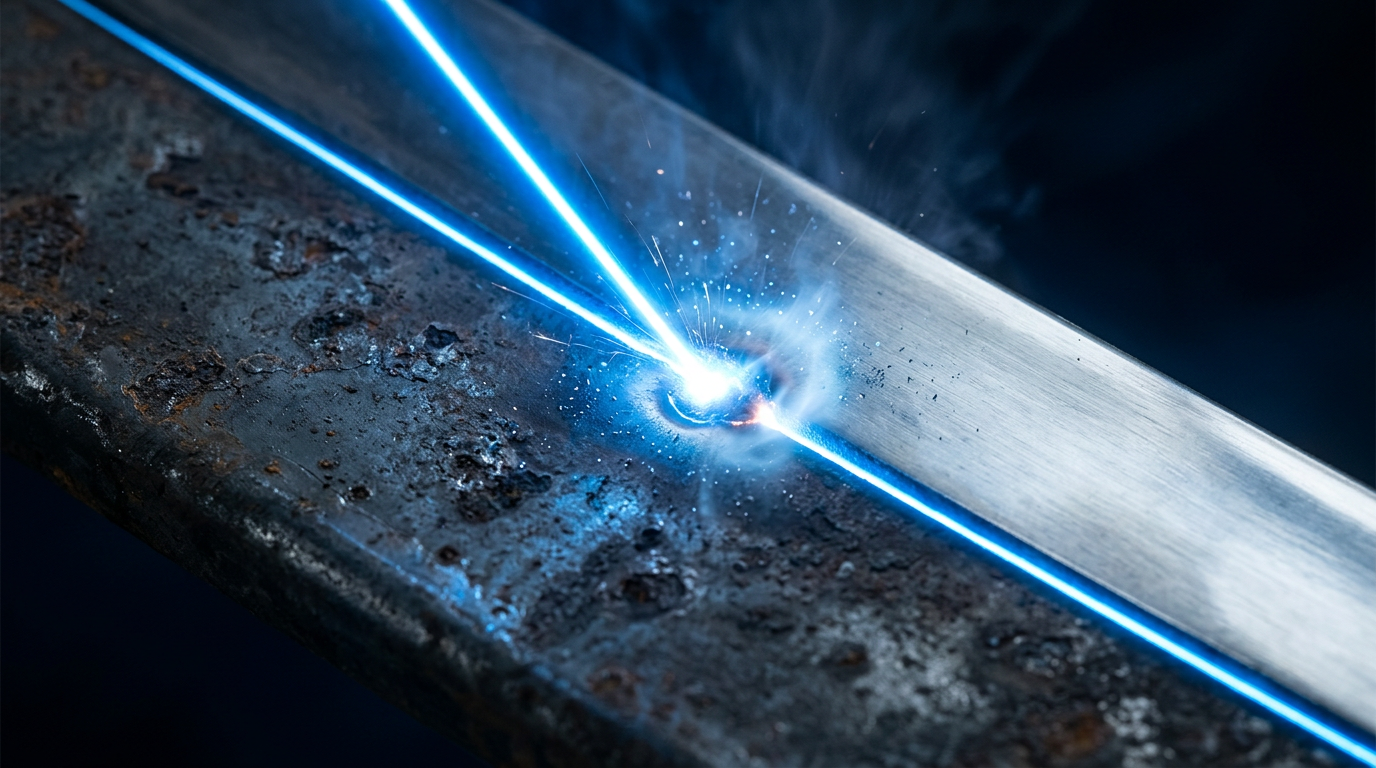
See laser cleaning in action
No abrasives, no media disposal, no surface damage. Woodrow Scientific's laser cleaning machines bring a fundamentally different approach to surface preparation — explore the ELASER range to see what that means for your application.
Ultrasonic cleaning and chemical stripping
Every method covered so far in this guide — from steel grit to plastic media, dry ice to laser — works in line of sight: the energy or media travels from a nozzle or emitter to the surface it can reach. Two alternatives break that rule entirely. Ultrasonic cleaning and chemical stripping are both immersion or contact-based, which means they reach into crevices, blind holes, and internal cavities that no blast nozzle can access. That shared geometry advantage is the reason they belong together in this section.
Ultrasonic cleaning
The working principle behind ultrasonic cleaning is cavitation: high-frequency sound waves, applied to a liquid cleaning solution, generate alternating zones of high and low pressure throughout the liquid.
In the low-pressure zones, the boiling point of the liquid drops and microscopic vacuum bubbles form. When those zones become high-pressure zones a half-cycle later, the bubbles implode — releasing intense, localised shock waves that perform the actual scrubbing action.
Industrial ultrasonic systems typically operate at frequencies below 60 kHz, with 20 to 40 kHz being common for most cleaning applications, as confirmed by EPA technical documentation.
The critical practical advantage is that cavitation is non-directional: the implosion events occur across every wetted surface simultaneously, including the inside of blind holes, engraved features, and internal passages that line-of-sight methods cannot reach.
Heartthrob Exhaust, profiled in The Fabricator, found this advantage decisive: a dab of lubricant placed at the midpoint of a five-bend tube — the most inaccessible location — was fully removed in a single ultrasonic cycle.
The method handles a broad range of contaminants: oils, inorganic particulates, polishing compounds, and other soils that respond to the combination of cavitation and an appropriate cleaning solution.
One significant environmental benefit arises when aqueous rather than solvent-based cleaning solutions are used. EPA documentation confirms that aqueous ultrasonic cleaning reduces VOC emissions associated with equipment cleaning and reduces hazardous waste generated by the facility — in some applications replacing solvent-based processes entirely.
The constraints are equally concrete. The part must be fully immersible in the cleaning solution — a hard physical limit that rules out large structures, in-situ cleaning, and any component that cannot be submerged. Drying is required after cleaning, and the wastewater generated by aqueous systems must be treated and discharged in compliance with applicable environmental regulations.
Parts with blind holes also require careful orientation in the tank: ultrasonic energy does not pass from liquid into trapped air, so any air pocket prevents cavitation from reaching that portion of the surface.
Chemical stripping
Chemical stripping uses liquid chemical agents to soften or dissolve a coating, which is then removed by scrubbing or high-pressure water washing. OSHA's shipyard surface preparation guidance identifies the main agent classes: corrosive acids (such as hydrochloric and phosphoric), alkalis (such as sodium hydroxide), chlorinated hydrocarbons (such as trichloroethane), and carcinogens (such as methylene chloride).
The method's genuine strengths are significant. Because the stripper is applied as a liquid — by spraying, brushing, or immersing parts in a dip tank — it reaches complex three-dimensional geometries and internal surfaces where blast nozzles cannot.
It can strip multiple coating layers in a single application, and it leaves the underlying surface profile undisturbed — an important consideration where the substrate's dimensional integrity or existing texture must be preserved.
For flat or readily accessible surfaces, however, the waste burden of chemical stripping typically makes it less attractive than mechanical alternatives: the process generates large volumes of contaminated wastewater containing spent stripper, dissolved coating, and potentially paint sludge.
EPA documentation confirms that solvent-based chemical stripping waste streams are subject to disposal procedures under the Resource Conservation and Recovery Act (RCRA), which establishes cradle-to-grave responsibility for hazardous wastes and requires waste generators to maintain waste minimisation programmes — costs that accumulate quickly in high-volume operations.
The most historically effective chemical stripper for many coatings is methylene chloride (also called dichloromethane), and it carries the most substantial occupational health burden of any agent in this category.
OSHA classifies methylene chloride as a potential occupational carcinogen. Its standard at 29 CFR 1910.1052 sets a permissible exposure limit (PEL) of 25 ppm as an eight-hour time-weighted average, a short-term exposure limit (STEL) of 125 ppm over any 15-minute period, and an action level of 12.5 ppm — the threshold at which employers must begin exposure monitoring and medical surveillance.
OSHA's own historical record shows how seriously the risk was taken: the 1997 final rule reduced the prior 8-hour TWA PEL from 500 ppm to 25 ppm, primarily to protect workers from the risk of cancer.
In 2019, EPA prohibited methylene chloride in all consumer paint and coating removers under TSCA. In April 2024, EPA finalised a rule prohibiting most industrial and commercial uses of methylene chloride, with most prohibited uses phased out within two years. Operators relying on methylene chloride-based stripping face an accelerating compliance transition, not a stable regulatory environment.
Beyond the carcinogen classification, OSHA's shipyard eTool documentation identifies fire and explosion hazards from flammable cleaning solvents used in stripping operations, as well as the risk of oxygen-deficient atmospheres when toxic vapours — which are often heavier than air — displace breathable air in confined or enclosed spaces.
The regulatory direction of travel is unambiguous. Controls on methylene chloride and other chlorinated solvents have tightened consistently over decades, and operators who build processes around these agents face increasing compliance costs, more complex waste management obligations, and the practical challenge of transitioning to alternatives as prohibition timelines take effect.
That does not make chemical stripping the wrong choice for every application. For complex geometries, multiple coating layers, or situations where surface profile must not be disturbed, it may still be the most practical tool available — particularly where the geometry genuinely cannot be addressed any other way. The compliance overhead is the honest cost of using it.
With the full method landscape now mapped — from abrasive media through to these two immersion-based alternatives — the next step is building a structured framework for matching the right approach to your specific application and constraints.
How to choose: matching method to your application
Knowing what each method does is only half the job. The harder question is which method belongs on your job — and the answer follows a sequence of filters, each one narrowing the field before the next is applied.
- Substrate hardness and sensitivity: This is the first filter. Hard substrates — structural steel, cast iron — tolerate aggressive abrasives. Aluminium alloys, magnesium alloys, composites, and thin-gauge sheet metal cannot. For sensitive substrates, only low-aggressiveness methods apply: plastic media, soda blasting, walnut shell, laser cleaning, or ultrasonic cleaning. These remove contamination without mechanically attacking the material.
- Required surface profile: If the downstream coating specification demands a measurable anchor profile, an abrasive method is mandatory — laser, dry ice, ultrasonic, and chemical stripping do not create one. Profile depth must also match the spec: too shallow risks adhesion failure on high-build coatings; too deep wastes coating material and can shorten the life of thin-film systems.
- Contamination type and weight: Heavy rust, mill scale, and thick adherent coatings need aggressive mechanical energy: steel grit, aluminium oxide, or high-power laser. Light contamination — thin oxides, release agents, weld discolouration, or graffiti on soft substrates — is within the range of soda blasting, dry ice, plastic media, ultrasonic, or laser at lower power settings.
- Part geometry and access: Abrasive blasting requires a clear line of sight from nozzle to surface. Blind holes, internal passages, and deep recesses cannot be reached this way. Ultrasonic cavitation and chemical action penetrate these areas regardless of geometry. A handheld laser scanner can navigate complex 3D surfaces that fixed nozzles cannot, because the operator can angle the scanner to suit the geometry.
- Operational context: in-place vs contained: Dry ice blasting and portable laser cleaning can work in-place on large structures and installed equipment without disassembly. Abrasive blasting requires containment infrastructure — blast room, enclosure, or tent — for media recovery and dust control. Ultrasonic and chemical stripping require parts to be brought to a fixed bath or tank.
These five filters work in sequence: substrate sensitivity eliminates methods that would cause damage before any other consideration applies, and the remaining criteria progressively narrow the shortlist until the operational context determines what is actually feasible on site.
No single method wins on every axis. A method that passes the substrate and profile filters may fail the geometry test; one that handles complex geometry may not be deployable in-place. The goal is to reach a shortlist of two or three methods that satisfy all five criteria, then apply the cost frame below to make the final call.
The true cost of a cleaning method is the total cost per square metre cleaned over its operating life — media consumption, disposal, infrastructure, and downtime — not the purchase price of the equipment. Methods with no consumables, such as laser cleaning, or highly recyclable media, such as steel grit and aluminium oxide, have fundamentally different long-run cost structures from single-use media such as soda or crushed glass, where disposal costs accumulate at scale.
When modelling operational cost, the full picture includes: media consumption rate and unit cost, disposal costs for single-use or hazardous waste streams, infrastructure requirements such as compressor capacity, water supply, chemical procurement, and containment build and maintenance, and downtime spent on setup, teardown, media management, and waste treatment.
The Blastone abrasive selection guide notes that overall operational costs when using a non-recyclable abrasive can be significantly higher than when using a recyclable media, even when the per-unit cost of the recyclable media is considerably greater — because disposal, labour, and cleanup multiply with every tonne of spent media.
Common selection mistakes to avoid
Most method selection errors fall into one of four patterns, each with a predictable and costly consequence.
- Over-aggressive media on sensitive substrates: Using steel grit or coarse aluminium oxide on aluminium, composites, or precision components causes dimensional damage and surface contamination that can be irreversible and expensive to remediate.
- Under-aggressive media leaving contamination: Choosing a gentle method for heavy rust or thick adherent coatings leaves residual contamination beneath the new coating, causing adhesion failure, delamination, or premature corrosion.
- Ignoring disposal costs on single-use media: Soda and crushed glass appear inexpensive per bag, but at project scale their disposal costs accumulate rapidly, making a seemingly cheap method significantly more expensive than a recyclable alternative.
- Choosing on equipment cost alone: Selecting a method because its equipment is the cheapest to buy, without modelling media consumption, waste management, and infrastructure over time, routinely produces the highest total cost.
The technical and operational criteria above cover the dimensions that determine whether a method will work and what it will actually cost to run.
The next consideration — health, safety, and environmental profile — cuts across all of these methods and increasingly shapes the regulatory and compliance context for surface preparation operations, which is where the following section picks up.
Health, safety, and environmental considerations across methods
Each method section in this guide has carried its own safety notes — but stepping back across the full landscape reveals patterns that individual method comparisons cannot show: which hazard categories the alternatives collectively eliminate, where new hazards appear in their place, and how the regulatory direction of travel is reshaping the compliance calculus for operators choosing between them.
Silica elimination: the headline health distinction
The primary regulatory driver pushing operators away from silica sand blasting is respirable crystalline silica exposure. Under OSHA's general industry standard (29 CFR 1910.1053), the permissible exposure limit (PEL) for respirable crystalline silica is 50 µg/m³ as an 8-hour time-weighted average (TWA), with an action level of 25 µg/m³ (8-hour TWA) that triggers monitoring and medical surveillance obligations.
Every alternative covered in this guide — glass bead, crushed glass, soda, aluminium oxide, steel shot and grit, plastic media, and agricultural media — is free of free crystalline silica as a constituent of the abrasive itself.
None of the abrasive alternatives to bead blasting covered in this guide — glass bead, crushed glass, soda, aluminium oxide, steel shot and grit, plastic media, or agricultural media — contain free crystalline silica. This is a meaningful regulatory distinction from sandblasting with silica sand, where OSHA's 50 µg/m³ PEL (8-hour TWA) applies directly to the abrasive itself.
This does not mean silica exposure is impossible — substrates and coatings may themselves contain crystalline silica, and OSHA's standard applies wherever abrasive blasting is conducted on substrates that contain it. But the abrasive medium is no longer the primary silica source, which is a material improvement in the baseline hazard profile.
Dust generation across the abrasive hierarchy
Silica-free status and dust volume are separate questions. As EPA abrasive blasting documents confirm, steel shot generates approximately 10% of the total particulate matter of sand blasting, and steel grit approximately 24% — a substantial reduction that carries real implications for respiratory burden and engineering control requirements.
Mineral abrasives such as aluminium oxide and garnet are reported to create significantly less dust than sand and slag abrasives, while plastic media and agricultural media sit at the gentler end of the dust hierarchy, generating low particulate volumes consistent with their softer, lower-velocity operating profiles.
Non-abrasive methods — laser cleaning, dry ice blasting, ultrasonic cleaning, and chemical stripping — generate no abrasive dust at all, but this is not the same as being hazard-free.
Laser cleaning vaporises contaminants, generating fume from the surface material that requires active extraction. Dry ice blasting, as covered in the dry ice section, carries a CO₂ asphyxiation risk in enclosed spaces that demands atmospheric monitoring. Chemical stripping generates solvent vapour and contaminated wastewater, with the associated fire, explosion, and toxicity profile detailed in the ultrasonic and chemical stripping section.
A note on slag abrasives
Slag abrasives — coal slag, copper slag, and nickel slag — are sometimes used as sand substitutes on the basis of their lower free silica content, but operators should evaluate the full hazard profile before treating lower silica as equivalent to lower risk. NIOSH research has found that blasting with these materials can result in elevated airborne concentrations of metals including arsenic, beryllium, cadmium, chromium, lead, manganese, and vanadium — in some cases at levels higher than those generated when blasting with silica sand.
Substituting slag for silica sand may reduce respirable quartz exposure, but it does not eliminate hazardous airborne exposures. Operators considering slag should assess the complete airborne contaminant profile, not only the silica fraction.
Waste disposal and RCRA hazardous waste classification
Spent abrasive media mixed with paint debris — particularly debris from lead-painted surfaces — may be characteristically hazardous for toxicity under the Resource Conservation and Recovery Act (RCRA). EPA guidance confirms that waste generators must determine whether their spent abrasive waste exhibits the toxicity characteristic, either through process knowledge or by applying the Toxicity Characteristic Leaching Procedure (TCLP).
The choice of abrasive media has a direct bearing on waste volumes. Single-use media — soda blasting and crushed glass in particular — generate the full spent volume as waste after each use. Recyclable media — steel shot, steel grit, and aluminium oxide — dramatically reduce waste volumes through repeated reuse: EPA documents note that waste can be reduced by more than 80% in operations using steel grit with a media recovery system.
The waste classification question applies regardless of media type when lead paint is involved. TCLP testing or documented process knowledge is the mechanism for making that determination — and operators working on structures with aged or industrial coatings should factor this into their method selection and waste management planning.
PPE requirements across the method landscape
OSHA's abrasive blasting guidance sets out the core PPE requirements that apply across all abrasive blasting operations, regardless of which alternative medium is in use.
- Respiratory protection: A Type CE NIOSH-certified blasting airline respirator with positive pressure blasting helmet is required; the respirator must cover the head, neck, and shoulders.
- Hearing protection: Abrasive blasting generates high noise levels; hearing protection and a hearing conservation programme are required under OSHA's Occupational Noise standard.
- Eye and face protection: Full face and eye protection is required for all blasting operators and support personnel in the blast zone.
- Body protection: Leather gloves protecting to the full forearm, aprons or coveralls, and safety footwear are required for blast operators.
Beyond this baseline, each method family adds its own layer. Dry ice blasting requires CO₂ concentration monitoring in enclosed or confined spaces, as covered in the dry ice section. Laser cleaning requires laser-appropriate eye protection and dedicated fume extraction for the vaporised contaminant plume. Chemical stripping carries the solvent exposure and fire and explosion risk profile covered in the chemical stripping section, where OSHA's methylene chloride standard (29 CFR 1910.1052) sets the regulatory framework.
The practical picture is that no method in this guide is PPE-free — the nature and severity of the protection required varies, but operator protection planning is a constant across the landscape.
The regulatory direction of travel
Three regulatory trends have been consistent across the period in which these alternatives have come to prominence, and the direction of each is clear.
First, silica controls have tightened progressively. OSHA's current general industry PEL of 50 µg/m³ (8-hour TWA) represents a significant reduction from earlier limits, with the action level at 25 µg/m³ bringing monitoring and medical surveillance obligations into play at half the PEL threshold.
Second, chlorinated solvent controls have tightened substantially. OSHA's methylene chloride standard (29 CFR 1910.1052) reduced the 8-hour TWA PEL from 500 ppm to 25 ppm — a twentyfold reduction — reflecting the recognition of methylene chloride as a potential occupational carcinogen. The broader regulatory trajectory on chlorinated solvents points in one direction.
Third, abrasive waste disposal requirements have grown more demanding, with RCRA's toxicity characteristic framework placing a compliance burden on operations that generate spent media mixed with hazardous coating debris.
Taken together, these trends favour methods that generate less dust, use no chlorinated chemistry, and reduce or eliminate spent media volumes. From a compliance standpoint, media-free and chemical-free methods are not merely a modern preference — they represent the direction the regulatory environment has been moving for decades, and there is no credible signal that this trajectory will reverse.
With the health, safety, and environmental picture now complete across all methods, the guide closes with a summary of the key decision logic and the practical next steps for operators ready to move from evaluation to action.
Conclusion
Choosing the right alternative to bead blasting
Every method in this guide has its place — the skill is in matching the right one to your substrate, your contamination, your required surface profile, and the operational realities of your environment.
And when you make that match, judge it on total cost: media, disposal, containment, and downtime routinely outweigh the equipment line over a system's lifetime.
If that evaluation has led you toward laser cleaning, WSL can help you work through the specifics — whether portable or automated is the right fit for your application.
Frequently asked questions: alternatives to bead blasting
Common questions about bead blasting alternatives — covering terminology, substrate compatibility, health and safety, and environmental disposal.
Bead blasting and sandblasting differ in two fundamental ways: media shape and surface effect. Bead blasting uses spherical glass beads that produce a smooth, satin finish by creating round-bottomed dimples across the surface — without profiling or dimensionally altering the substrate. Sandblasting uses angular silica sand that cuts into the surface, creating a rough, angular profile suited to coating adhesion. The two methods serve different purposes and are not interchangeable. Bead blasting is a cosmetic and finishing process — it improves appearance, blends surface marks, and prepares parts for anodising or similar treatments. Sandblasting (or abrasive blasting with angular media more broadly) is a surface preparation process, used where a coating system requires a defined anchor profile to bond correctly. Choosing the wrong method for the job produces the wrong result: bead blasting will not create the profile a coating system needs, and angular abrasive blasting will not deliver the satin finish a cosmetic application requires.
No — bead blasting and shot blasting are distinct processes and are not interchangeable. They differ in three ways: media type, equipment, and surface effect. Bead blasting uses spherical glass beads propelled by compressed air in a cabinet or pressure-blast system. Shot blasting uses steel shot — much harder and denser — propelled by a centrifugal wheel machine rather than compressed air. The surface effects are equally different. Glass bead blasting produces a light, satin cosmetic finish without profiling the substrate, and is used for precision finishing, peening, and cosmetic work. Steel shot blasting is a high-throughput industrial process used for descaling, cleaning castings, and preparing steel surfaces at scale — it creates a more aggressive surface effect suited to heavy industrial applications. The two methods occupy different ends of the spectrum: bead blasting is a precision finishing process; shot blasting is a bulk surface preparation process.
Non-abrasive methods — including laser cleaning, dry ice blasting, and ultrasonic cleaning — generate no abrasive dust at all and sit at the top of the health hierarchy. Among abrasive alternatives, EPA data shows that total particulate matter emissions from blasting with steel grit are around 24% of those from sand, and emissions from steel shot are around 10% of sand's — a significant reduction in airborne dust exposure. The critical point for any operator moving away from silica sand is that none of the alternatives covered in this guide contain free crystalline silica. OSHA's respirable crystalline silica standard (29 CFR 1910.1053) sets a permissible exposure limit of 50 μg/m³ as an 8-hour TWA and an action level of 25 μg/m³ — thresholds that silica sand operations routinely exceed. That regulatory driver alone is why most shipyards and many industrial operators have moved away from silica sand. That said, no blasting method is risk-free. All abrasive blasting operations generate dust, noise, and potential exposure to surface coatings being removed. Appropriate PPE, engineering controls, and ventilation remain necessary regardless of which alternative is used. Consult OSHA, NIOSH, and your relevant safety authority for requirements specific to your operating environment.
Laser cleaning is increasingly used for surface preparation before painting and coating in industrial contexts. It removes rust, oxides, mill scale, paint, and contamination effectively without attacking the base material — and it does so without abrasives, chemicals, or secondary waste streams. Whether it meets a specific coating system's surface profile requirements depends on the application, the substrate, and the coating specification. Laser technology can also be used for surface structuring and texturing — not just cleaning — which means it can generate a defined surface texture where the application requires one. For operators considering laser cleaning as a pre-paint surface preparation step, the right approach is to verify the surface profile requirements of your specific coating system and consult a laser cleaning specialist to confirm suitability.
Steel abrasives — steel shot and steel grit — are not suitable for aluminium. Iron particles from steel media can embed in the aluminium surface, causing rust staining or corrosion beneath any subsequent coating. The alternatives that work well on aluminium include: plastic media blasting (removes coatings without etching or profiling the substrate), soda blasting (gentle degreasing and paint removal), walnut shell (light polishing and coating removal on soft metals), and aluminium oxide (non-ferrous, so no contamination risk — suitable where a defined surface profile is needed for coating adhesion). Laser Focus World sources note that laser cleaning is used for pre-treatment of aluminium surfaces in welding preparation, removing oxides, hydrates, and lubricants without damaging the base material. The right choice among these depends on two variables: what you are removing (heavy corrosion, light oxide, coatings, or oil contamination) and whether the subsequent coating system requires a surface profile for adhesion. If a profile is needed, an abrasive method such as aluminium oxide or plastic media is required. If not, a non-abrasive approach may be preferred for its precision and lack of abrasive residue.
Spent abrasive blasting media mixed with coating debris — particularly debris from lead-based paint — may be characteristically hazardous under the Resource Conservation and Recovery Act (RCRA) for toxicity. Under the EPA's Toxicity Characteristic rule, waste generators are required to determine whether their spent media is hazardous, either through process knowledge or by applying the Toxicity Characteristic Leaching Procedure (TCLP). If the waste exhibits the toxicity characteristic, it must be managed and disposed of as hazardous waste under applicable RCRA requirements, including land disposal restrictions. EPA guidance makes clear that treated waste must continue to pass the TCLP until the point of disposal to remain excluded from hazardous waste regulation — a waste that passes initially but later fails is still regulated as hazardous waste. Requirements vary by jurisdiction: state and local regulations may be more stringent than the federal framework. Operators should contact their relevant EPA regional office and state regulatory agency for site-specific requirements. Residential lead paint abatement debris is subject to separate rules under the household waste exclusion — again, consult the relevant authority for your specific situation.
Yes — dry ice blasting can be used indoors, but it requires adequate ventilation to be used safely. The key hazard is CO₂ accumulation. Carbon dioxide is a colourless, odourless gas that is denser than air, meaning it accumulates at low levels and in below-grade or confined spaces rather than dispersing upward. As OSHA notes, high concentrations of CO₂ displace oxygen and can cause asphyxiation. NIOSH has established an Immediately Dangerous to Life or Health (IDLH) value for CO₂ of 40,000 ppm, and the current OSHA permissible exposure limit is 5,000 ppm as an 8-hour TWA. When dry ice blasting is carried out in enclosed or below-grade work areas, CO₂ levels can build to hazardous concentrations quickly. OSHA guidance on CO₂ hazards recommends that ventilation systems be designed to exhaust from the lowest level, since CO₂ concentrates there, and that atmospheric monitoring be implemented where levels may exceed the PEL. The method is used safely indoors routinely when proper controls are in place. Consult OSHA and your relevant safety authority for the specific ventilation and monitoring requirements applicable to your work environment.