
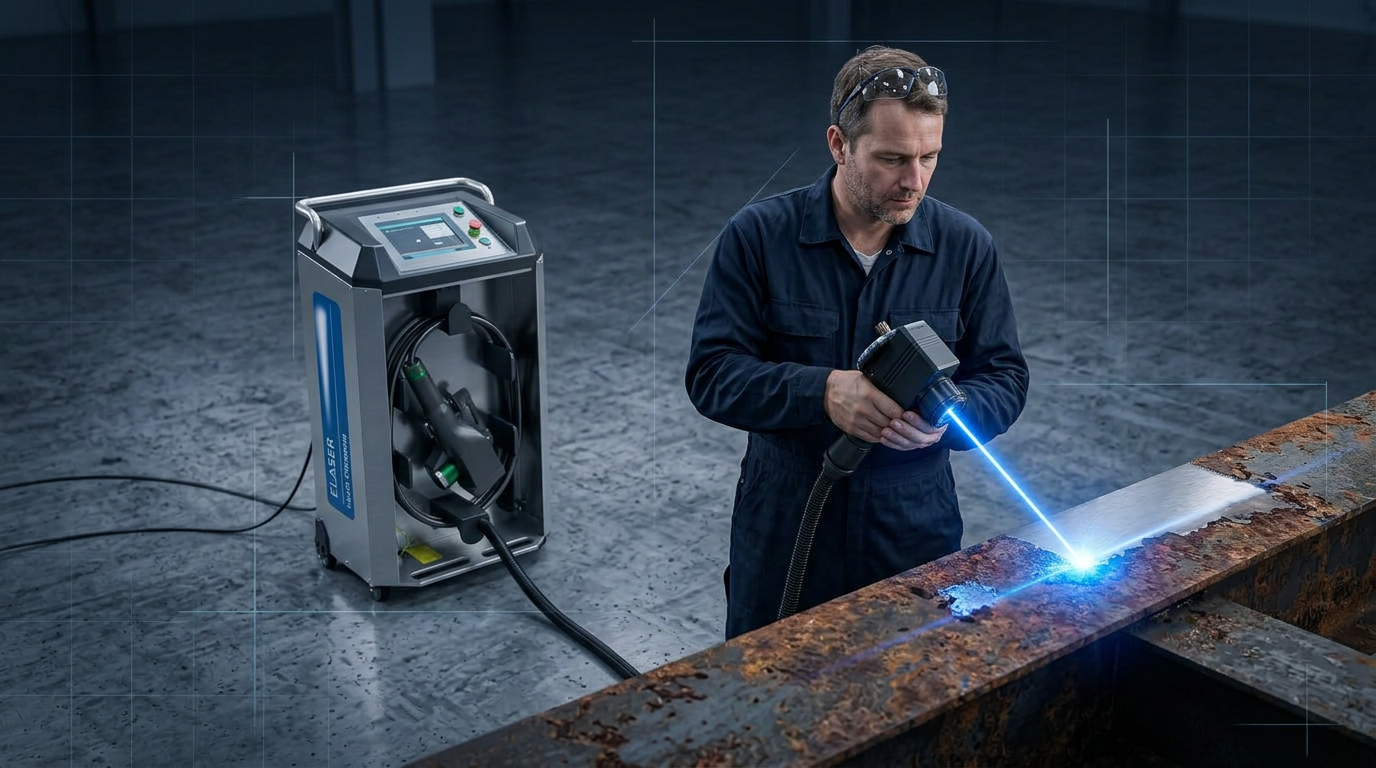
Industrial Laser Cleaning, Deployable Anywhere
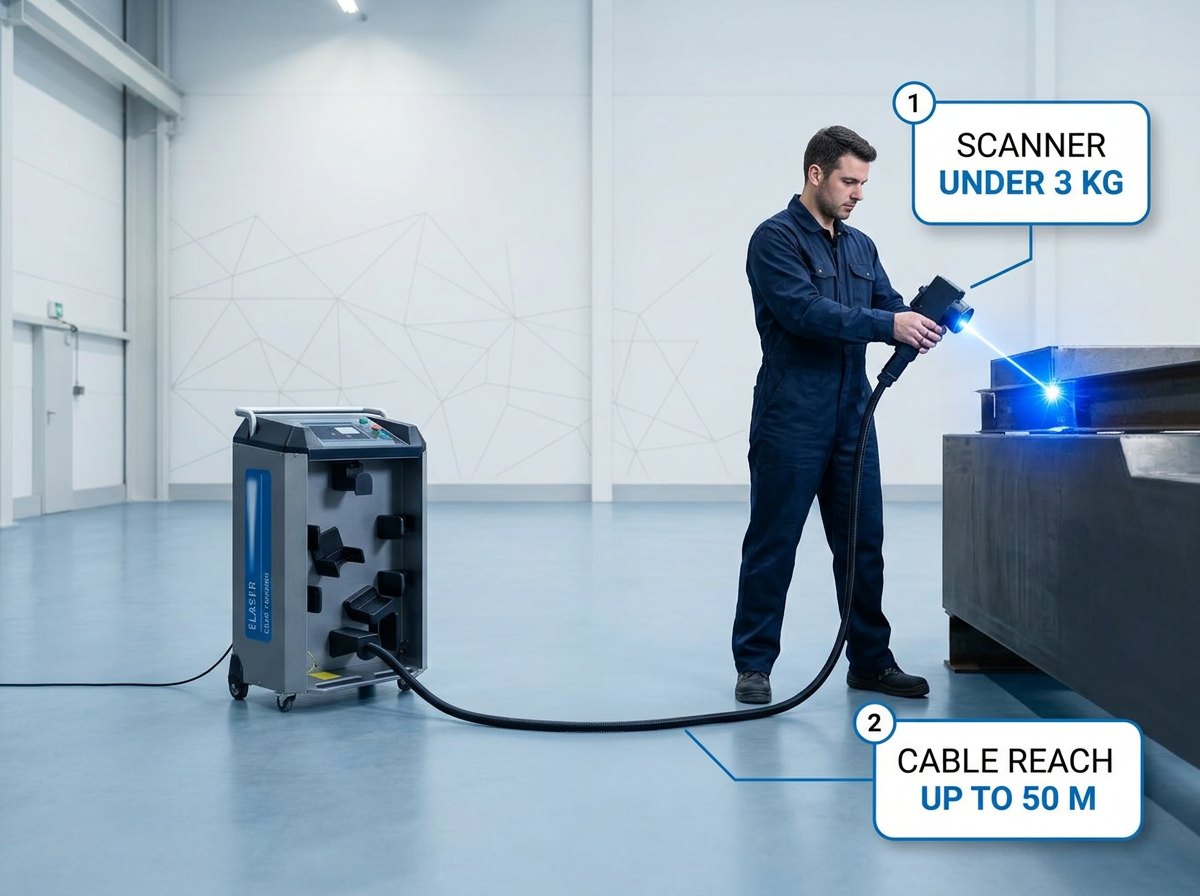
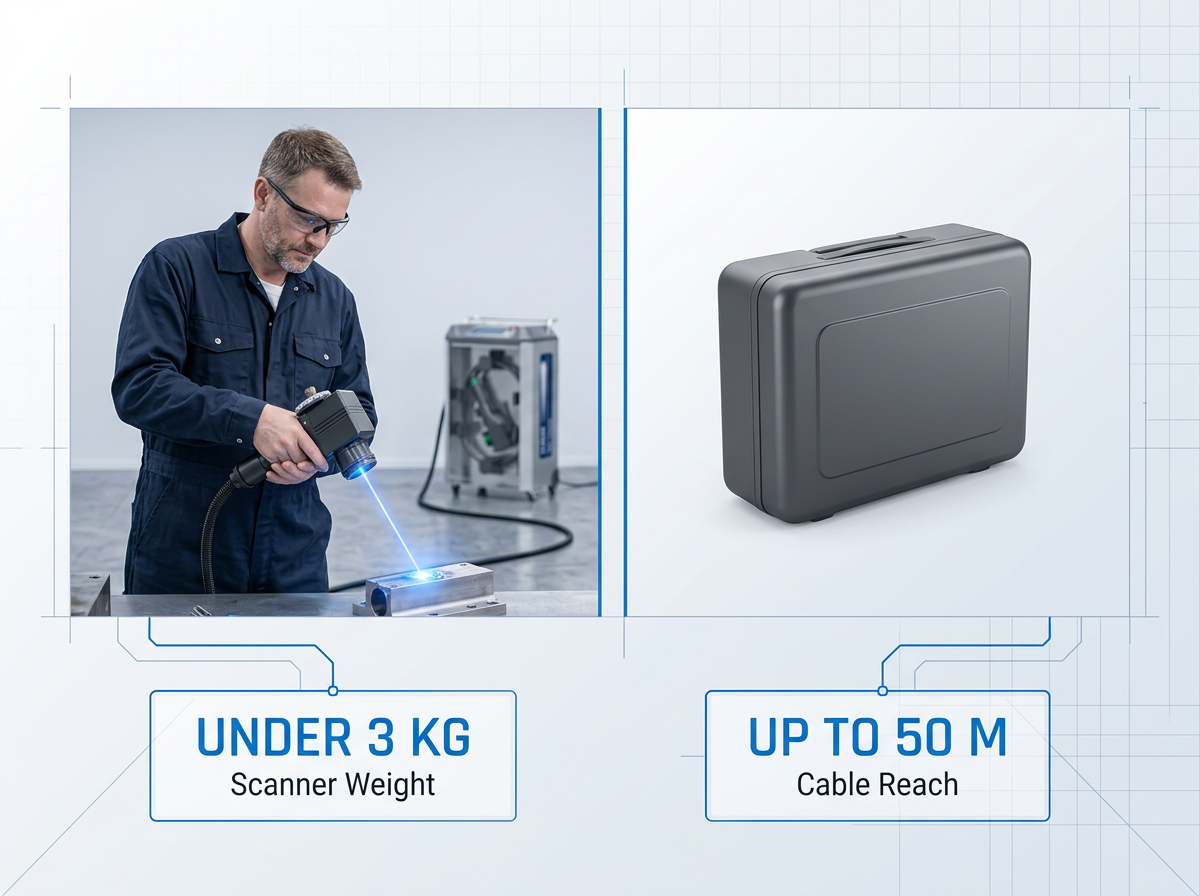
The ELASER is an industrial fibre laser cleaning system — removing rust, paint, oxides and coatings by laser ablation while leaving the base material intact. It's a wheeled, self-contained unit with a sub-3 kg handheld scanner and up to 50 m of cable reach: one operator, no compressor, no water, no consumables.
Power is fully tunable 0–100%, handling light oxide removal through thick coating stripping on the same shift — without the secondary waste or substrate damage of sandblasting, chemical stripping, or water-jetting.
The ELASER-RHZ adds WSL's world-first reduced hazard zone technology, collapsing the laser hazard zone to enable cleaning in open workshops and public-facing settings.
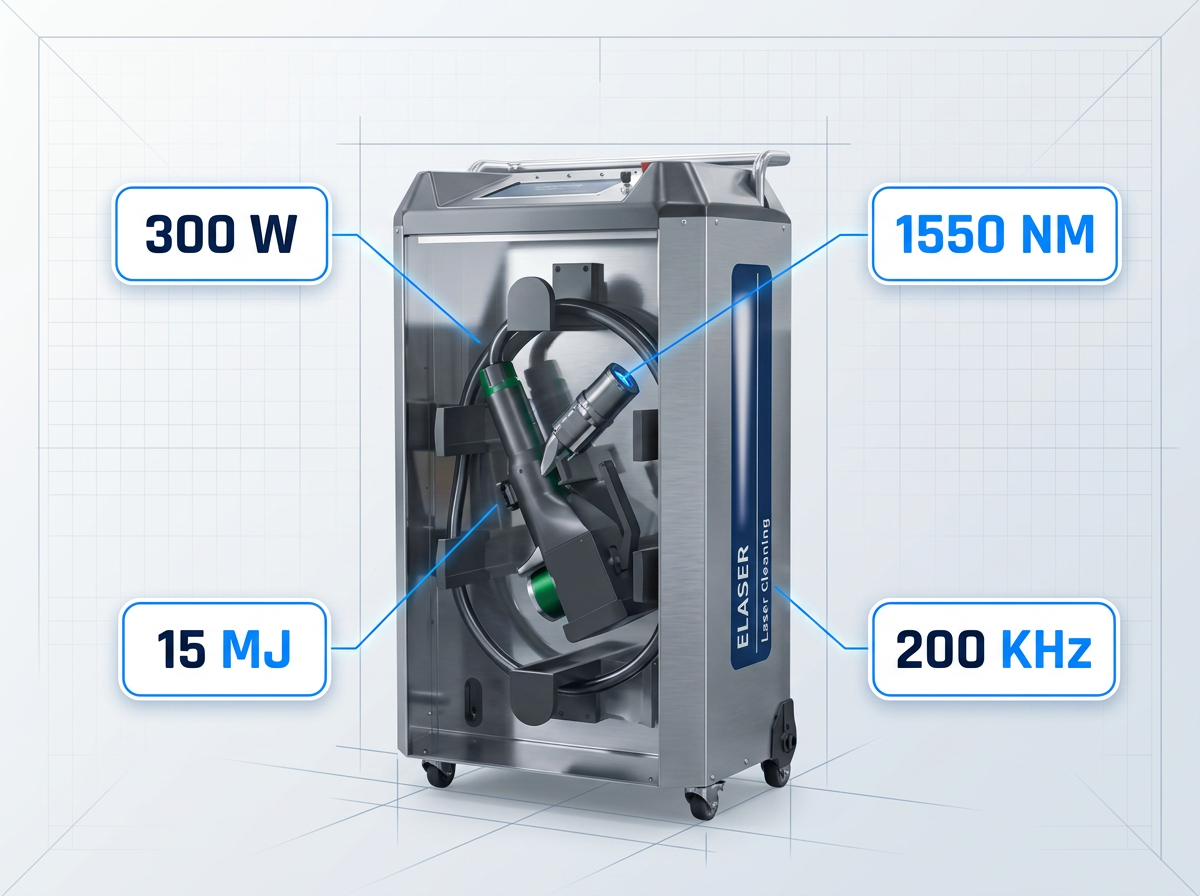
Laser Source
Max power: Up to 300 W fibre laser. Power tunability: 0–100%. Wavelength: 1550 nm (retina-safe / reduced hazard zone).
Pulse energy: Up to 15 mJ. Pulse duration: 100 ns. Pulse repetition rate: Adjustable up to 200 kHz (CW).
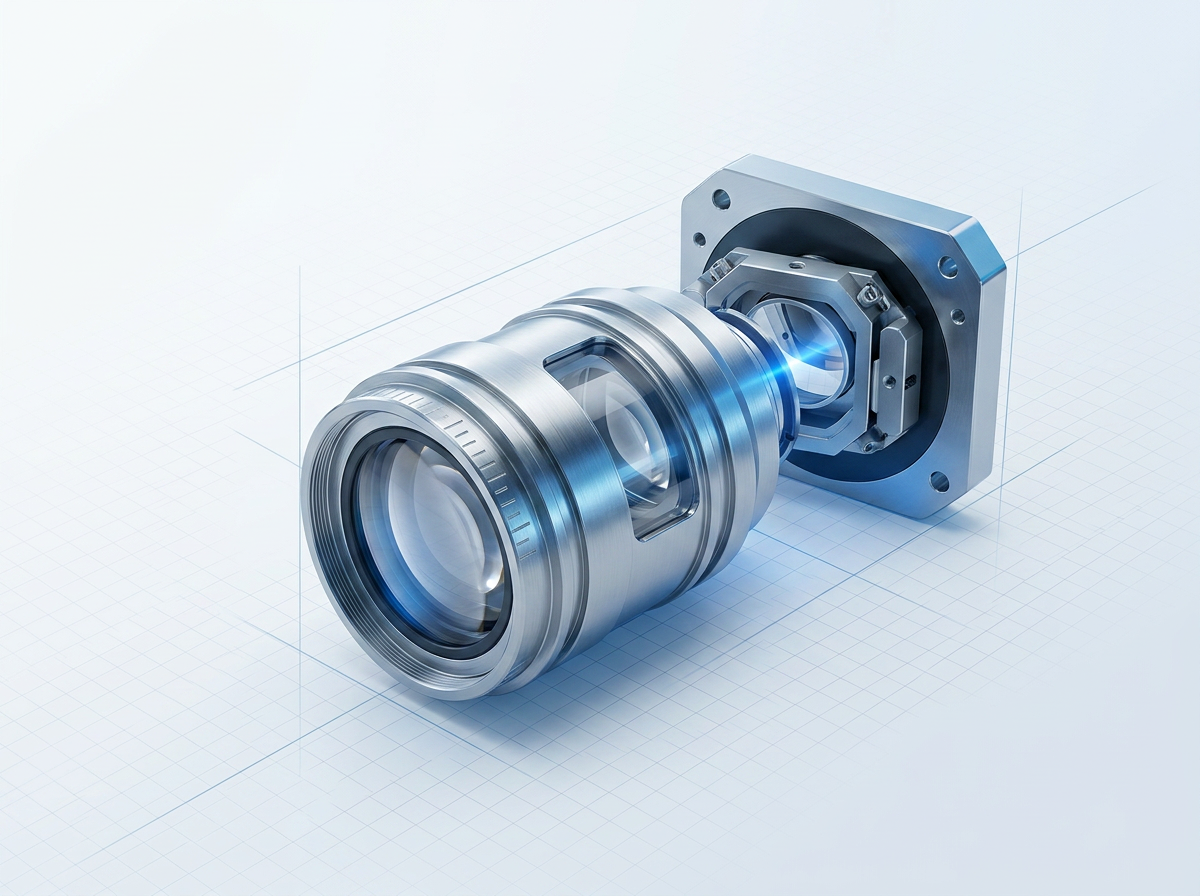
Beam Delivery & Scanning
Scanner type: 2-D galvanometer. Max scan rate: 10 m/s. Scan shapes: Fully programmable via touchscreen GUI.
F-Theta lenses: Interchangeable; working distance: 75–500 mm. Lens-protection windows: Included and field-replaceable.
Form Factor & Reach
Handheld scanner weight: Under 3 kg. Full system weight: Under 50 kg (wheeled unit). Delivery cable: Up to 50 m; standard configurations of 5 m and 15 m.
A single operator can carry the scanner to the workpiece and reach up to 50 m from the cabinet — no repositioning of the main unit required.
Power & Cooling
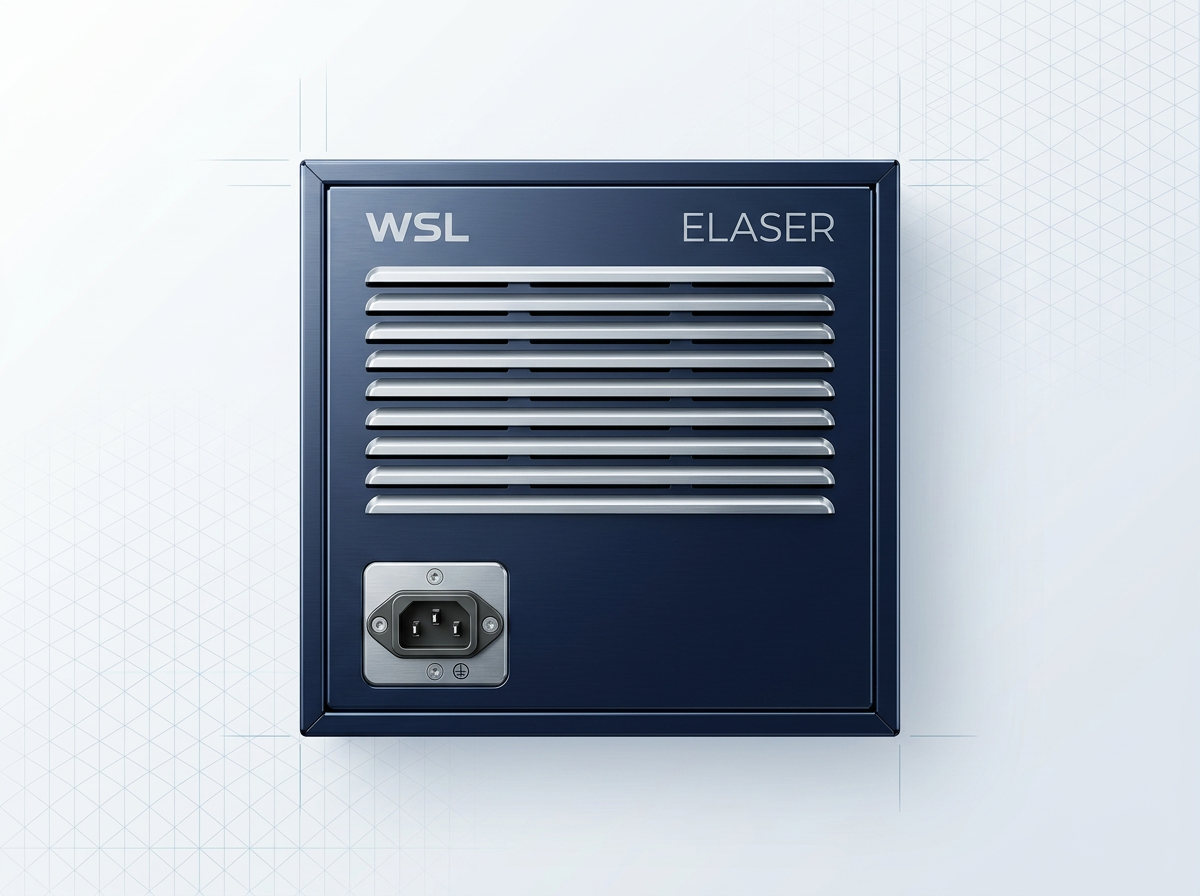
Input voltage: 110–250 VAC single-phase. Power consumption: Under 2000 W.
Cooling: Air-cooled. No chiller unit or coolant circuit is required, simplifying site installation and reducing setup time.
Interface & Compliance
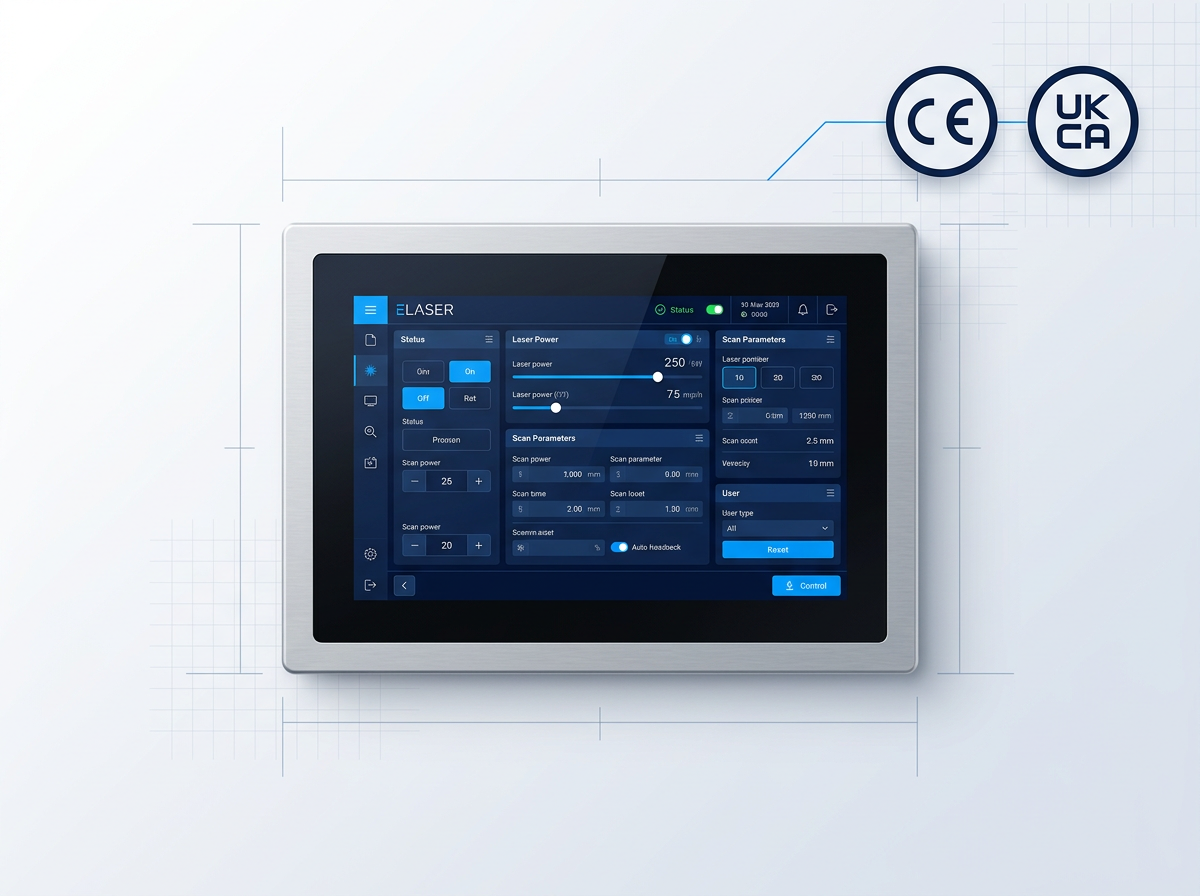
Interface: Ethernet + touchscreen GUI. Access control: Password-protected with per-user logins and usage tracking. Laser class: Class IV or Class I.
Certifications: CE certified; UKCA certified. Manufacture: Made in Britain (UK).
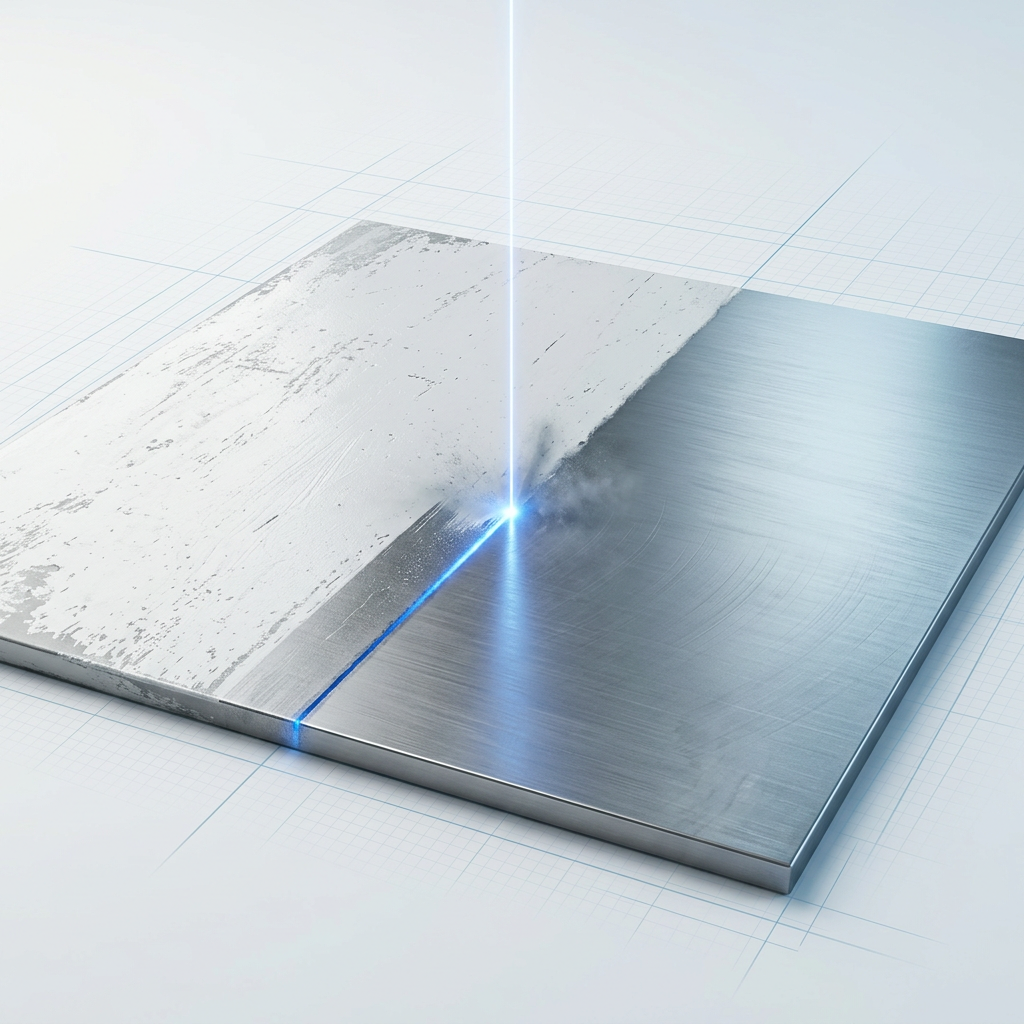
Metals the ELASER Cleans
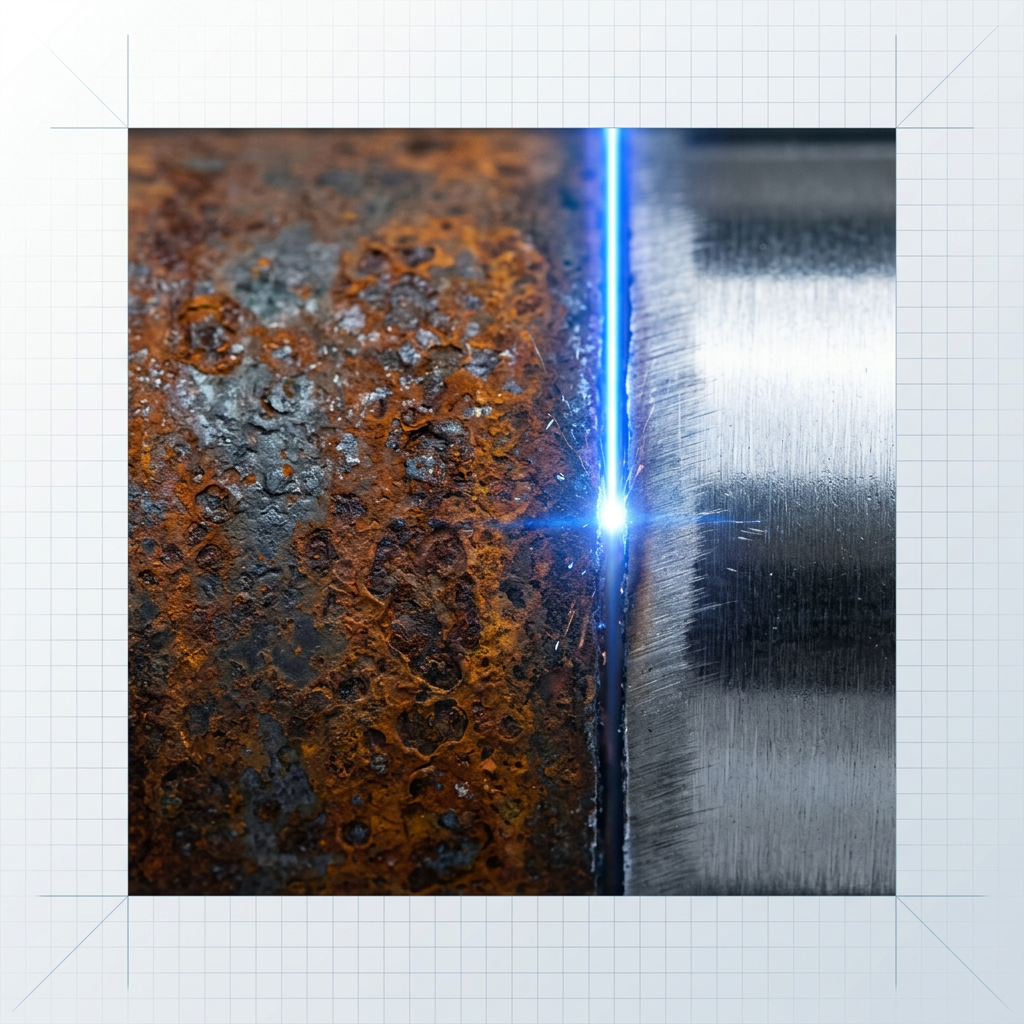
The ELASER cleans a broad range of metal substrates without abrasives or chemicals.
Verified metals: steel, carbon steel, aluminium alloys, cast iron, copper, brass, bronze, titanium, galvanised.
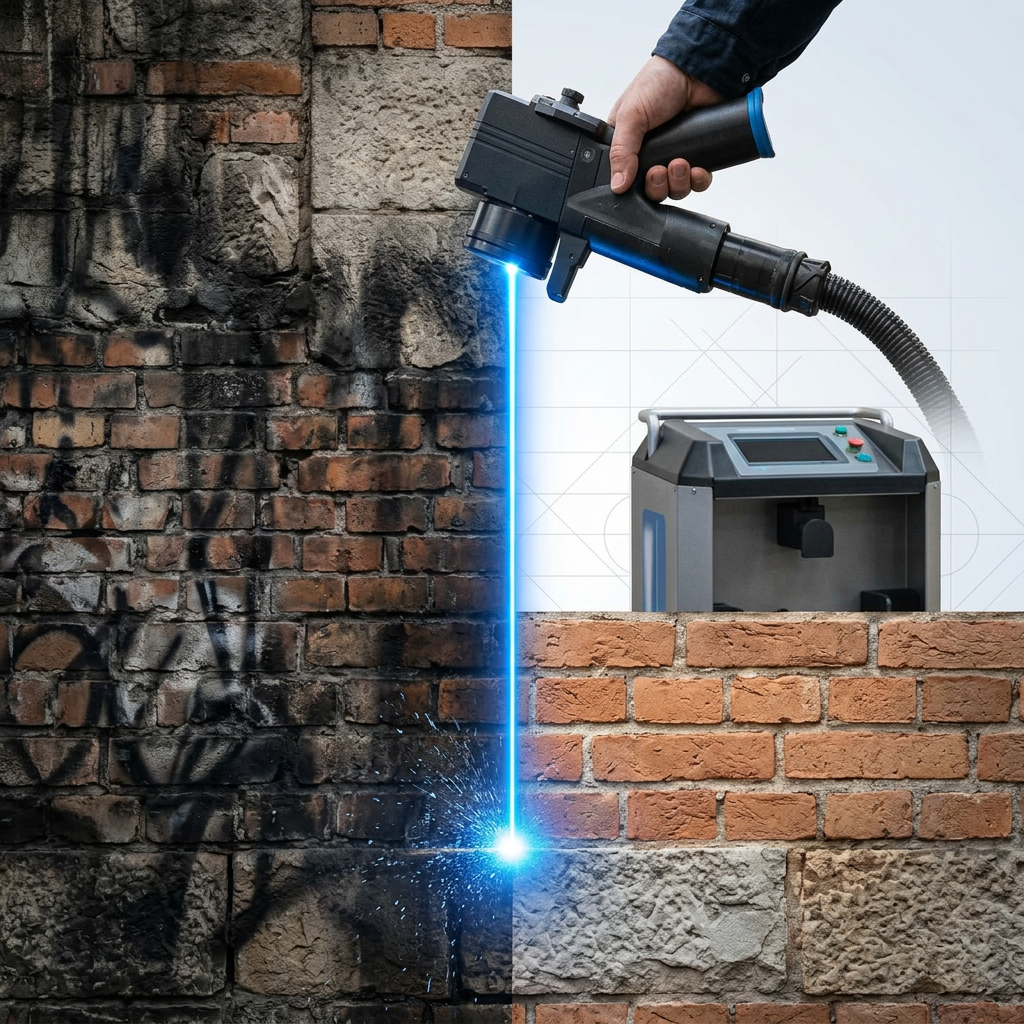
Stone, Brick and Masonry
The ELASER also cleans non-metal surfaces: stone, concrete, brick, and masonry.
These substrates are common in infrastructure cleaning, monument work, and structural surface preparation — applications where preserving the original material is critical.
Applied Surface Treatments Removed
The ELASER strips applied surface treatments cleanly, without abrasives or solvents.
Verified coatings: paint, powder coating, lacquer, primer.
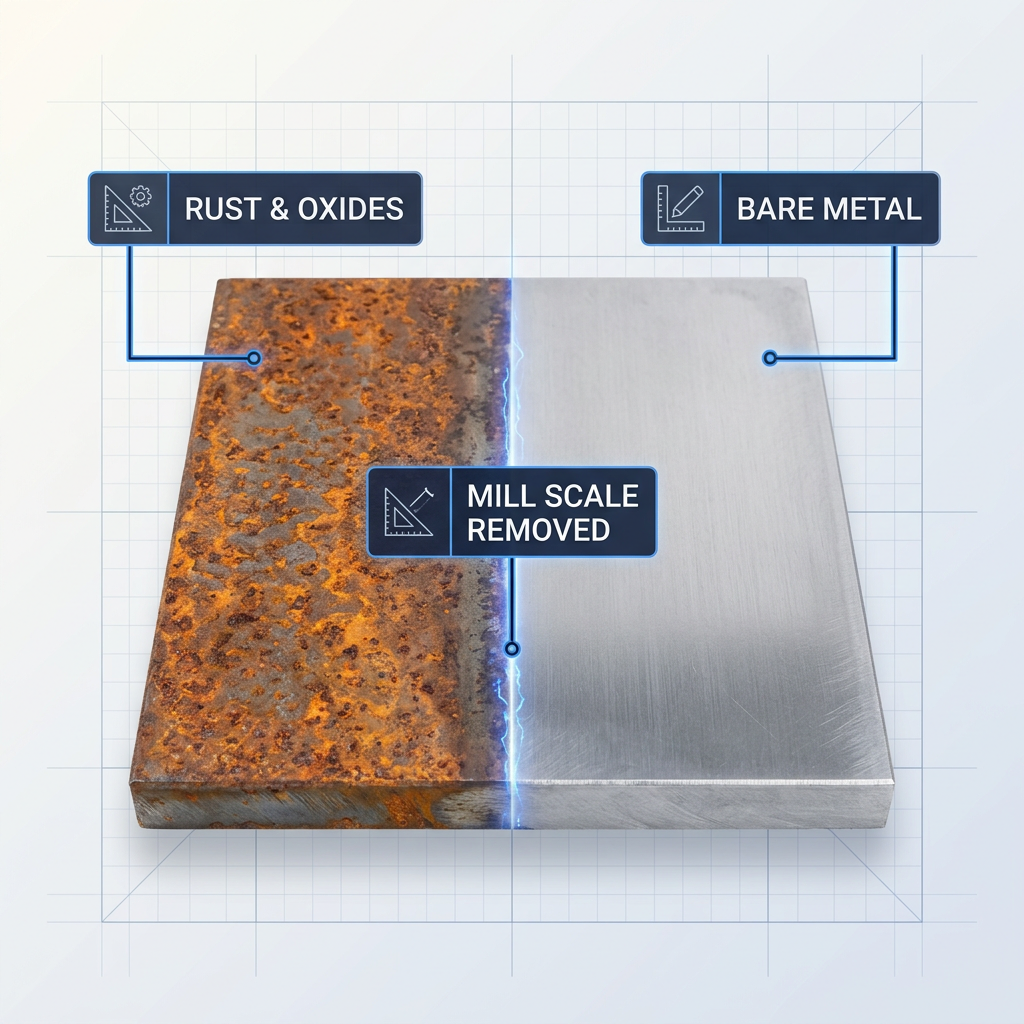
Corrosion, Residues and More
The ELASER removes a wide range of industrial contamination and corrosion types.
Verified contaminants: rust, oxides, mill scale, oil and grease, carbon and soot, mould, graffiti, adhesives and residues, tarnish, weld discolouration, release agents.
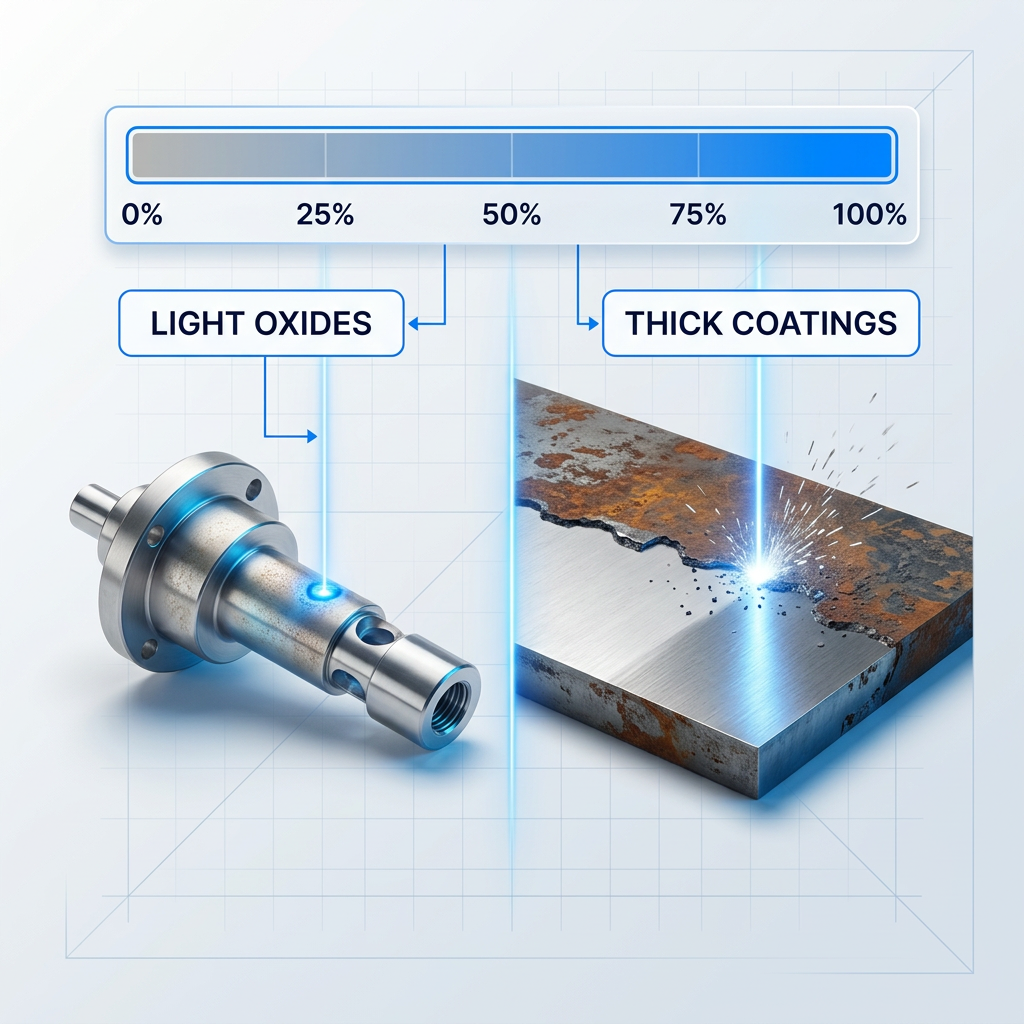
One Machine, Full Range
Power is tunable from 0–100%, so a single ELASER spans the full cleaning spectrum: from light oxide removal on a delicate surface through to stripping thick coatings on heavy steel. One machine handles the complete range of tasks across a multi-application facility.
The beam stops at the base material, leaving the substrate intact. This minimal substrate loss means less rework compared to abrasive or chemical methods — the surface is clean, not consumed.
Industry Applications
These are representative sectors where the ELASER is actively used. If your industry is not listed, contact WSL to discuss your specific cleaning requirements.
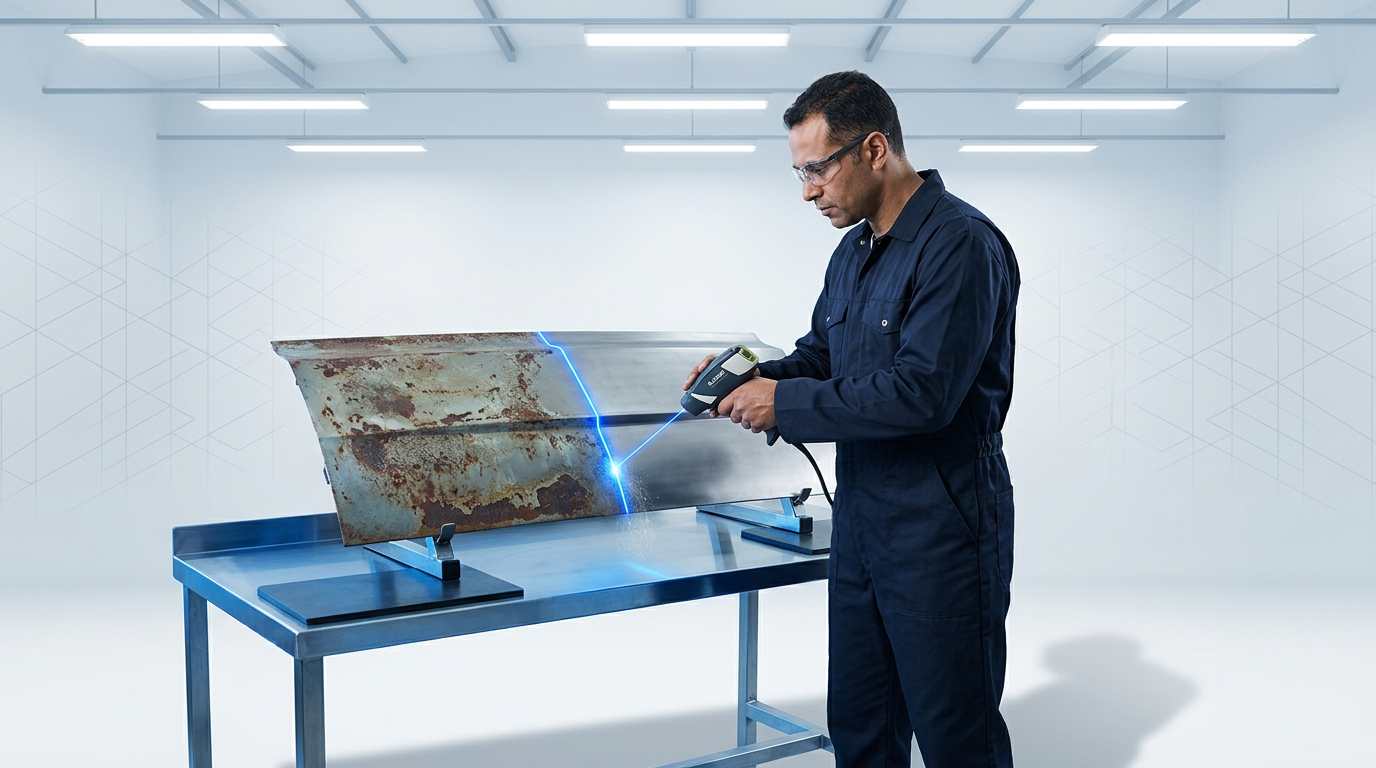
Automotive
Pre-weld prep on the line and rust or paint removal in the bodyshop.
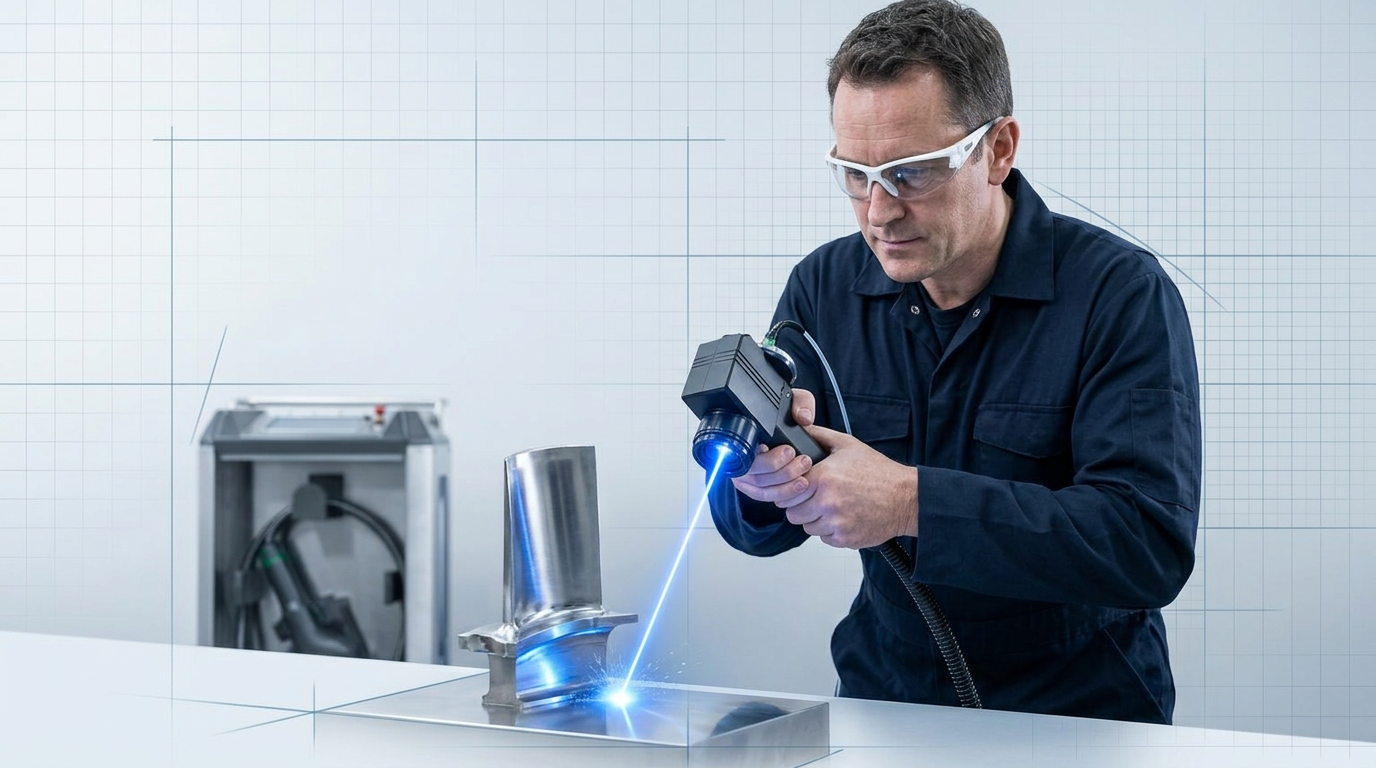
Aerospace
Precise surface prep and component cleaning to tight tolerances.
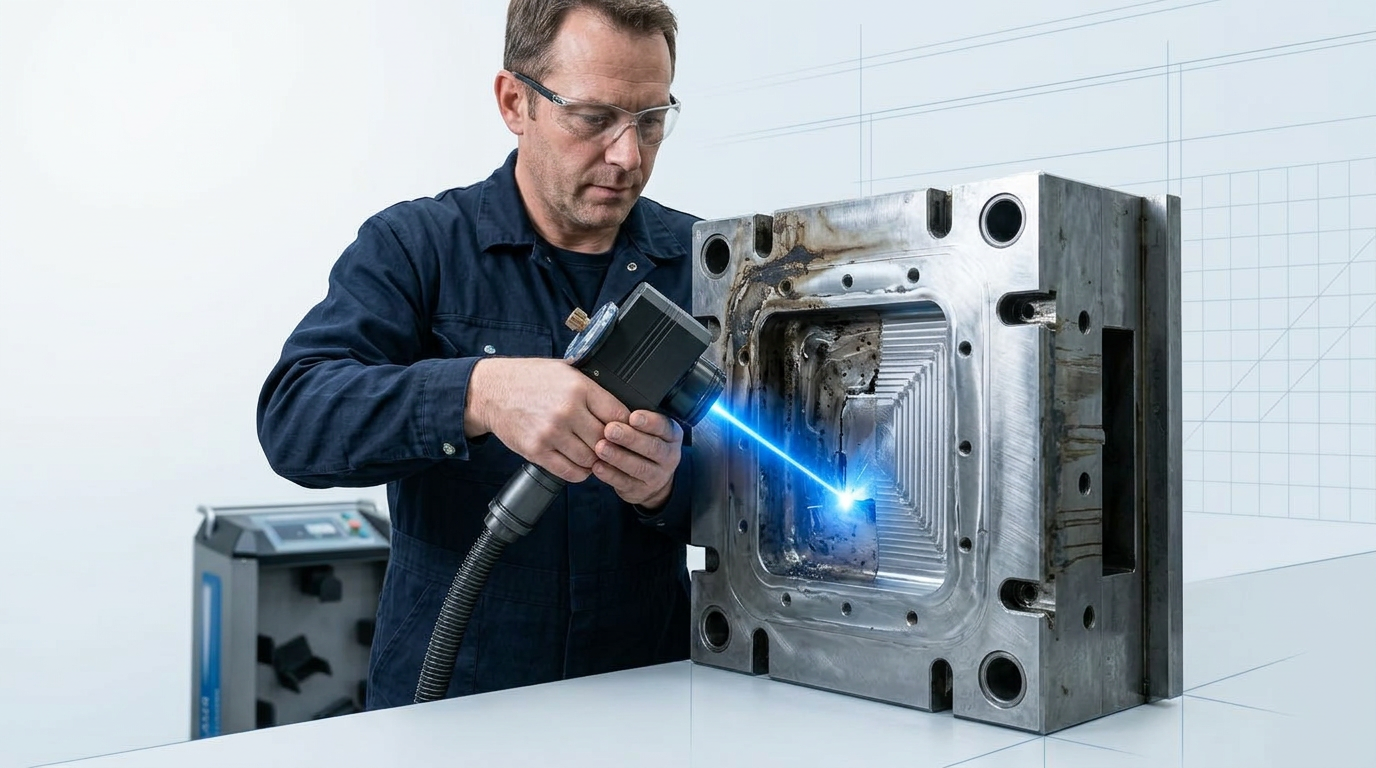
Injection Moulding & Tooling
Strip residue, release agents and build-up from moulds in place, no disassembly.
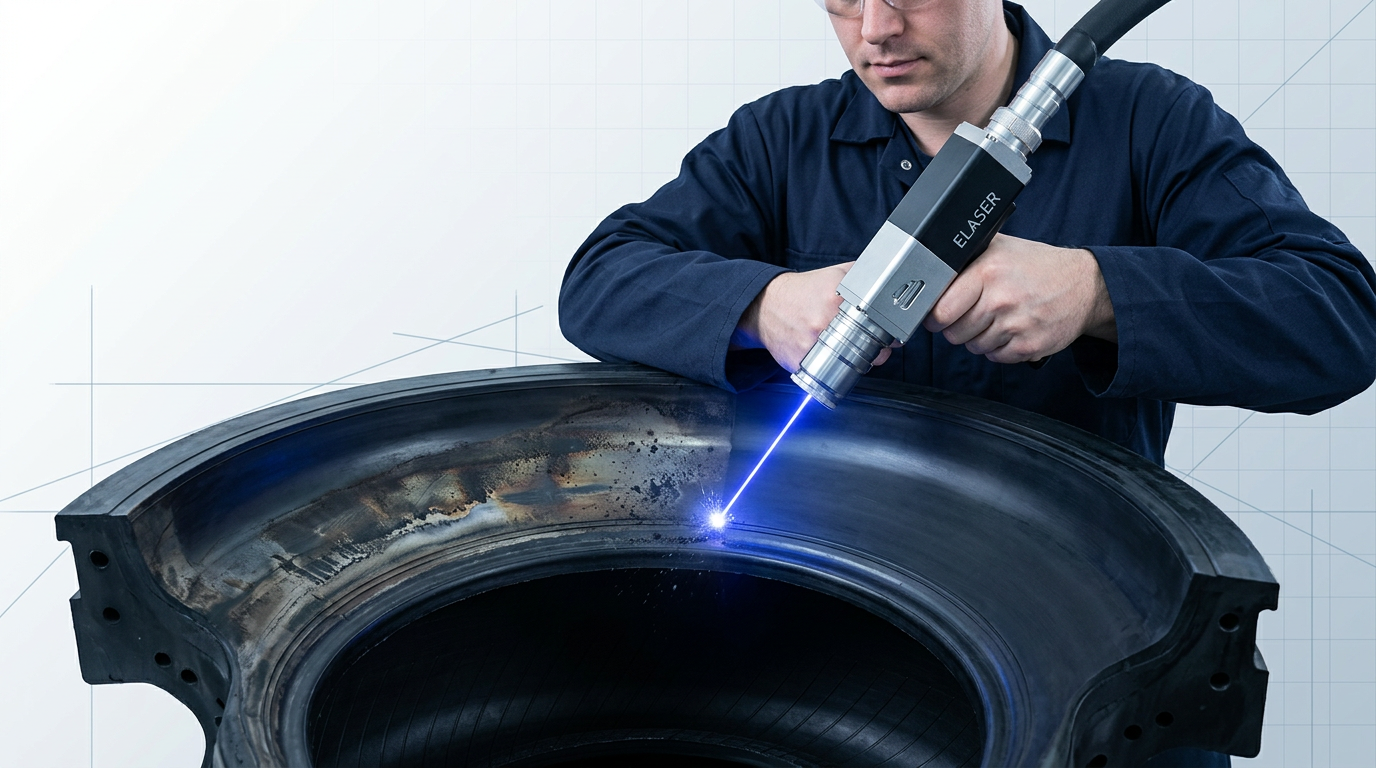
Tyre & Rubber
Clean moulds, vents and vulcanisation residue without abrasives or mould wear.
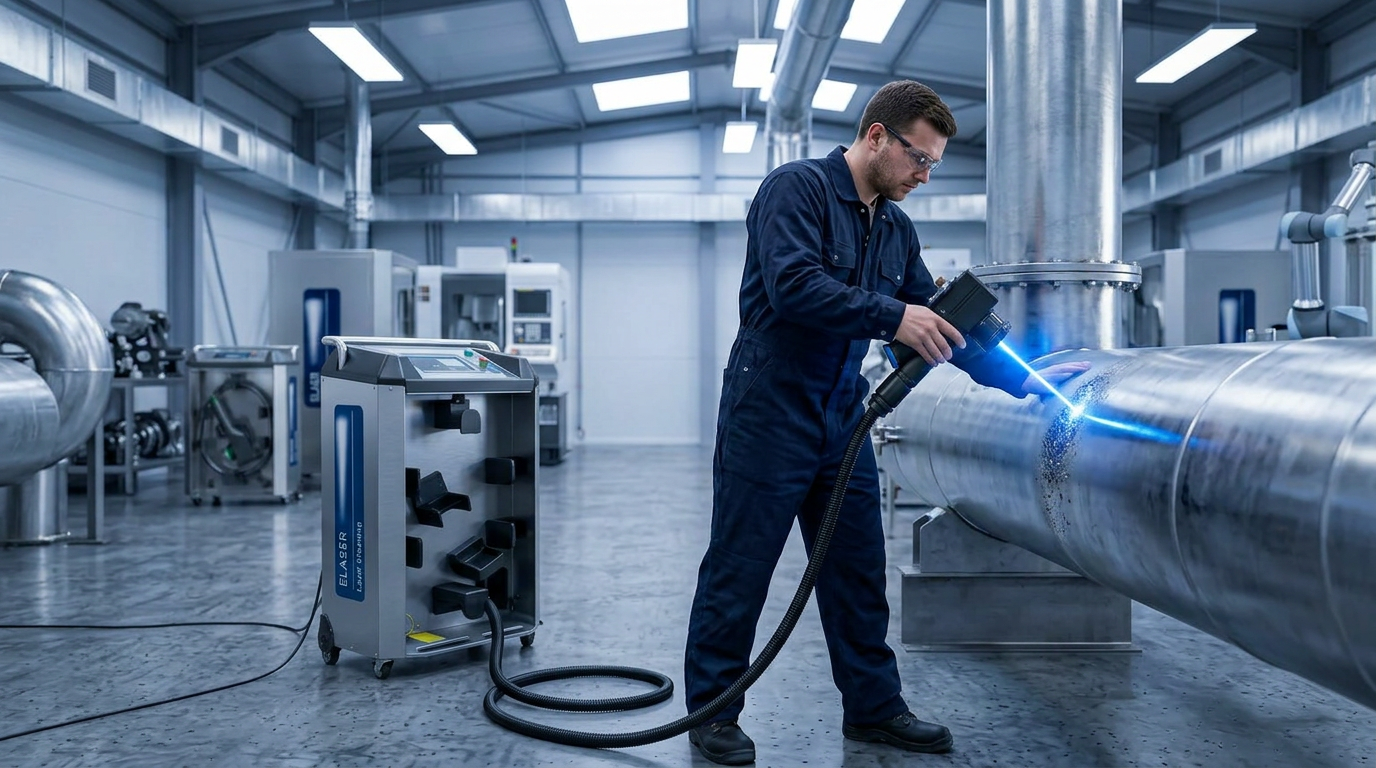
Industrial Maintenance
Clean plant, equipment and infrastructure on site. Nothing to mask, no media to clear.
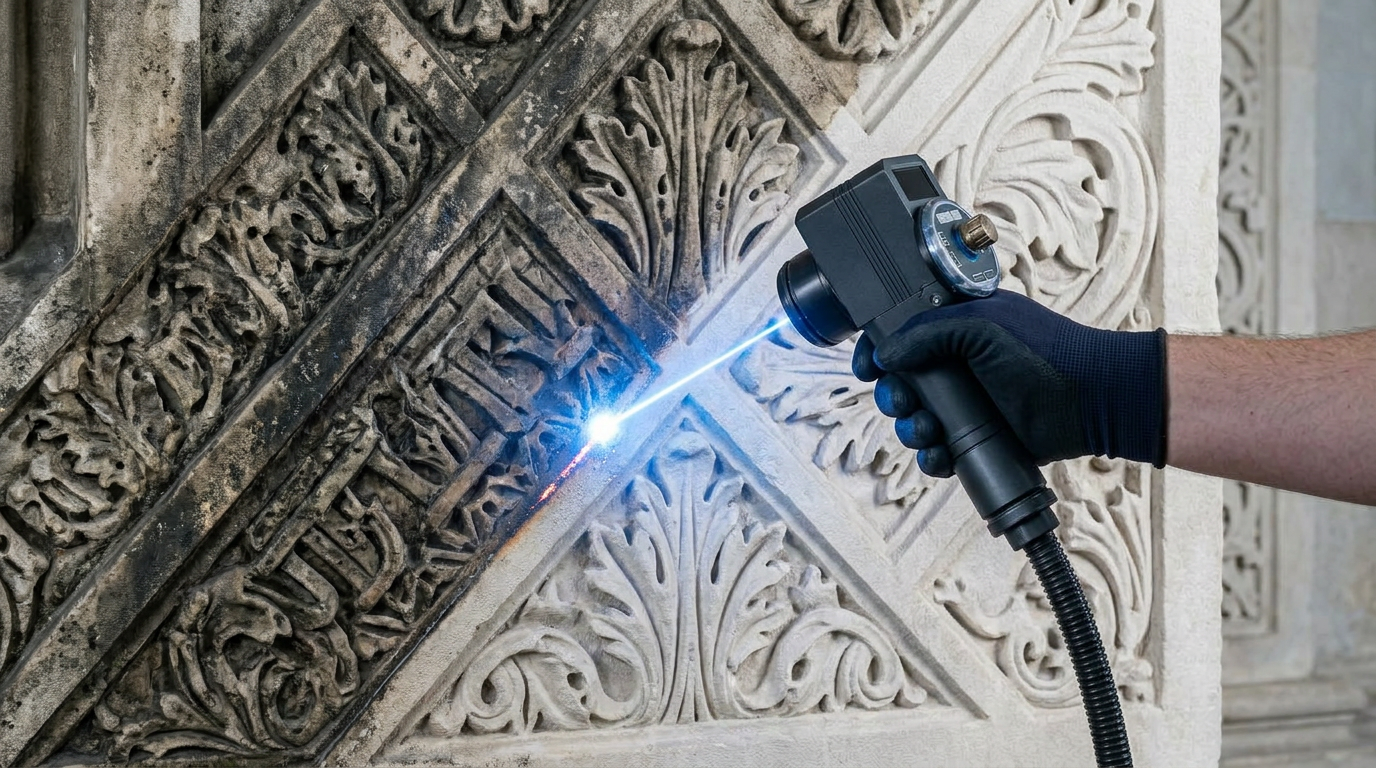
Heritage & Restoration
Lift soiling, paint and corrosion from stone, metal and masonry, gentle on original surfaces.
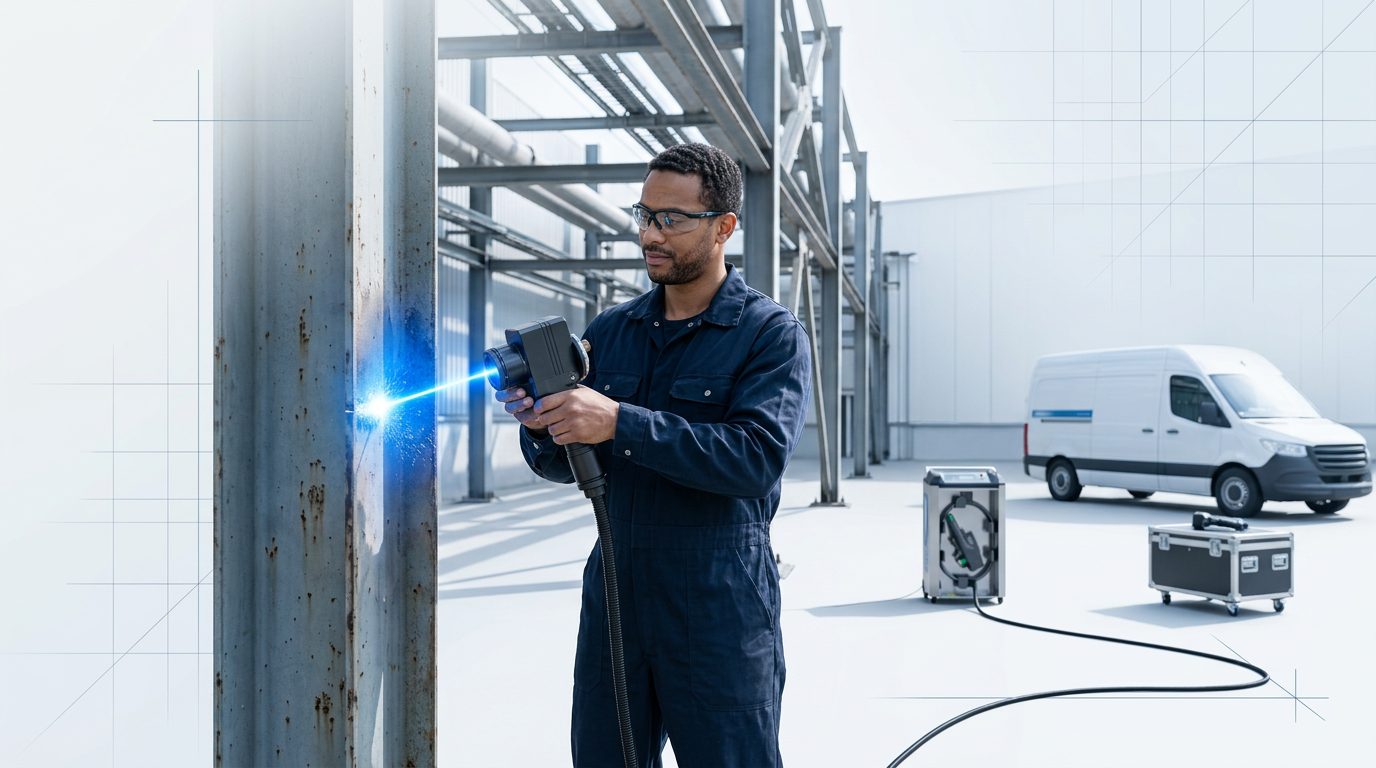
Laser Cleaning Service Business
A portable system and full operator training to launch your own service.
ELASER-RHZ: Laser Cleaning for Open Environments
Conventional laser cleaning requires the surrounding area to be sealed off and evacuated before work can begin. The ELASER-RHZ removes that constraint entirely. WSL's patented technology confines the hazard to a small area around the work itself — so cleaning proceeds while adjacent operations continue uninterrupted.
This opens environments that laser cleaning simply could not serve before: live production floors, mixed-use workshops, and publicly accessible sites such as heritage monuments and graffiti-affected structures. No competitor offers this. The ELASER-RHZ is a world-first, and it is exclusive to WSL.
See the ELASER-RHZ Full Specifications
The ELASER-RHZ brings patented hazard-zone confinement to portable laser cleaning. Download the datasheet for full technical specifications, or visit the product page to learn more.
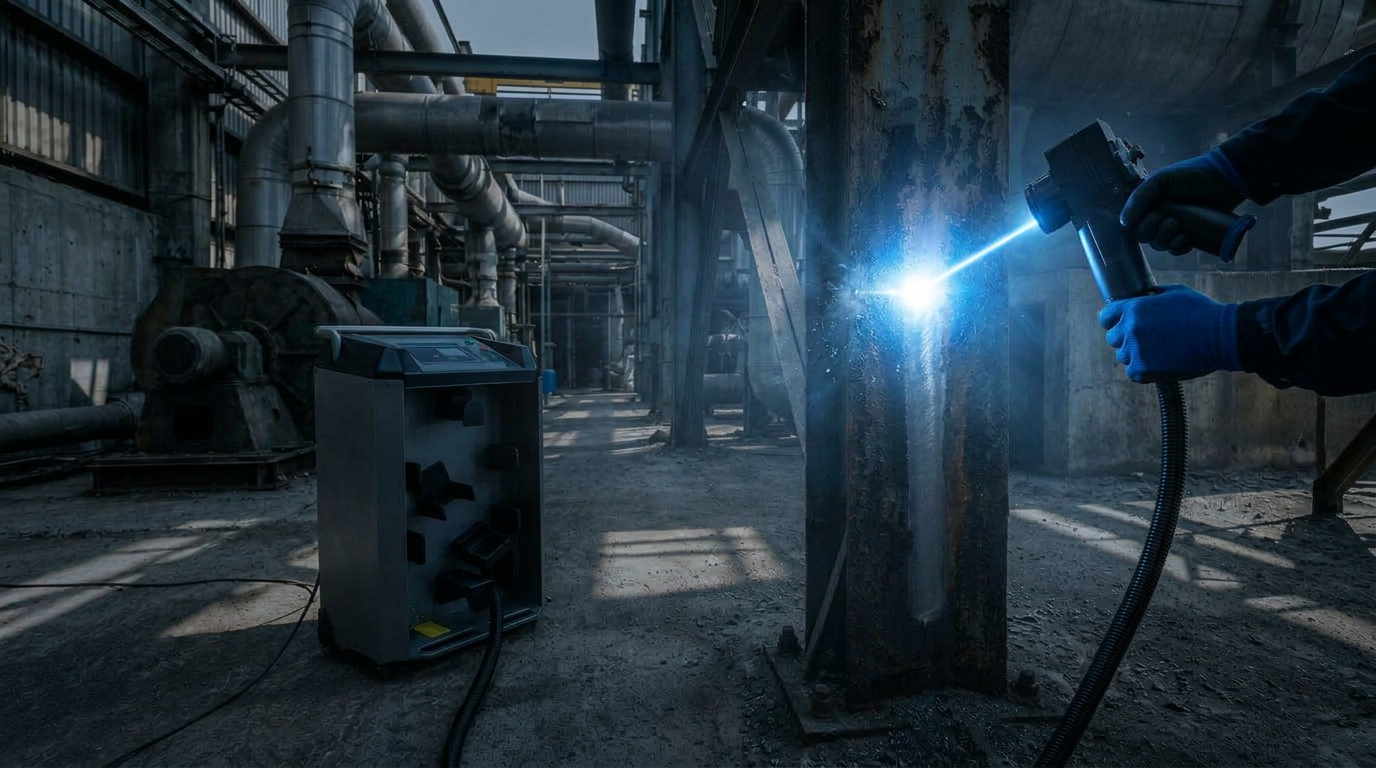
Built and Supported in Britain by Woodrow Scientific
WSL is the only UK-based laser cleaning manufacturer — designing, building, servicing and improving every machine in-house since 2012. With 200+ years of combined engineering experience and patented world-first technology, that in-house capability means faster spares, genuine engineering support, and a product that genuinely improves over time.
A significant share of laser cleaning "manufacturers" are resellers or importers rebadging third-party hardware. Ask who actually built the machine — because that determines the support you receive after purchase.
CE and UKCA certified. First-class operator training available. Bespoke engineering capability to suit your requirements — contact WSL to discuss.
The Right Way to Evaluate a Laser Cleaner's Cost
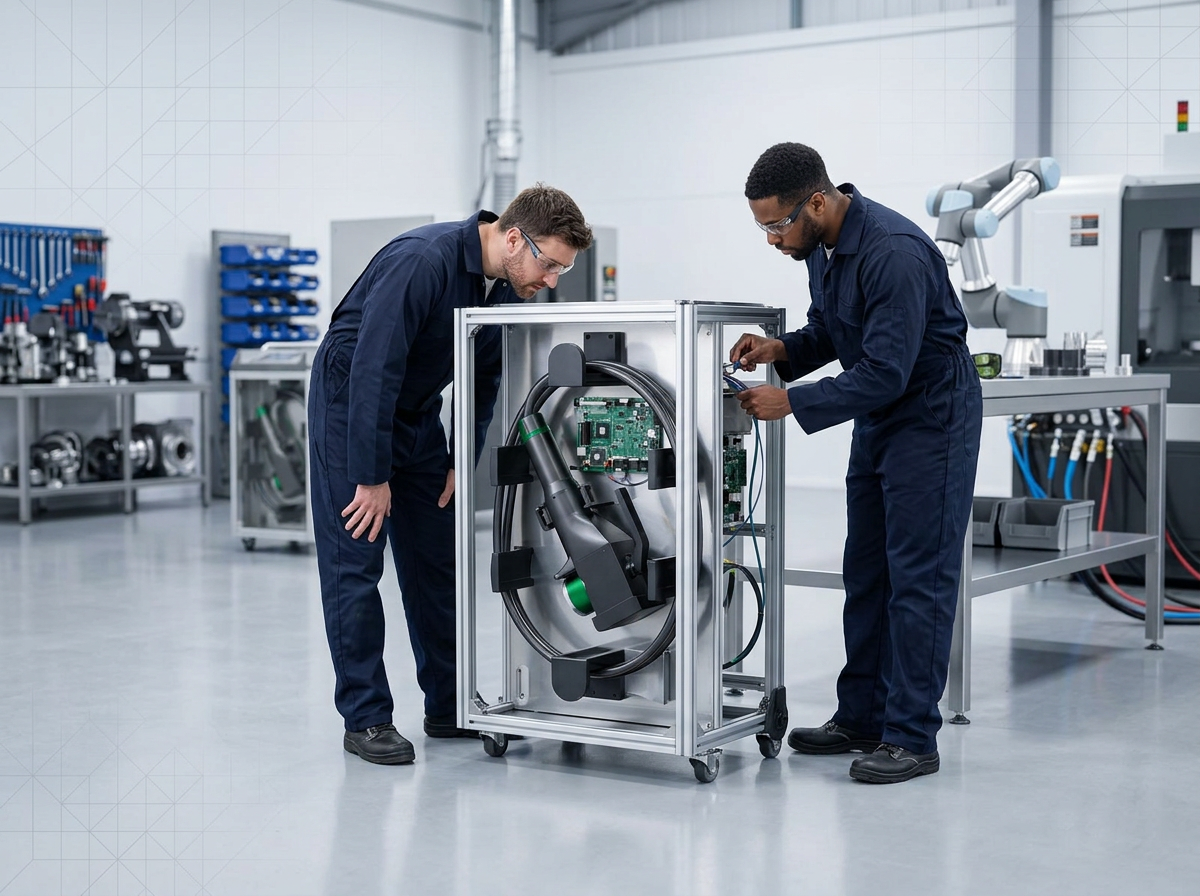
Experienced capital equipment buyers evaluate on total cost of ownership, not machine price alone. The ELASER runs with no consumables — no abrasives, chemicals or media disposal — and because the beam stops at the base material, cleaned surfaces require no remediation before the next process step. Those compounding savings across a machine's working life are what determine the real economics.
On upfront price, the ELASER is the most competitively priced comparable industrial laser cleaner in Europe, achieved through WSL's manufacturing and operational efficiencies. Pricing is configured to your application and specification — contact WSL for a quote.
In Action
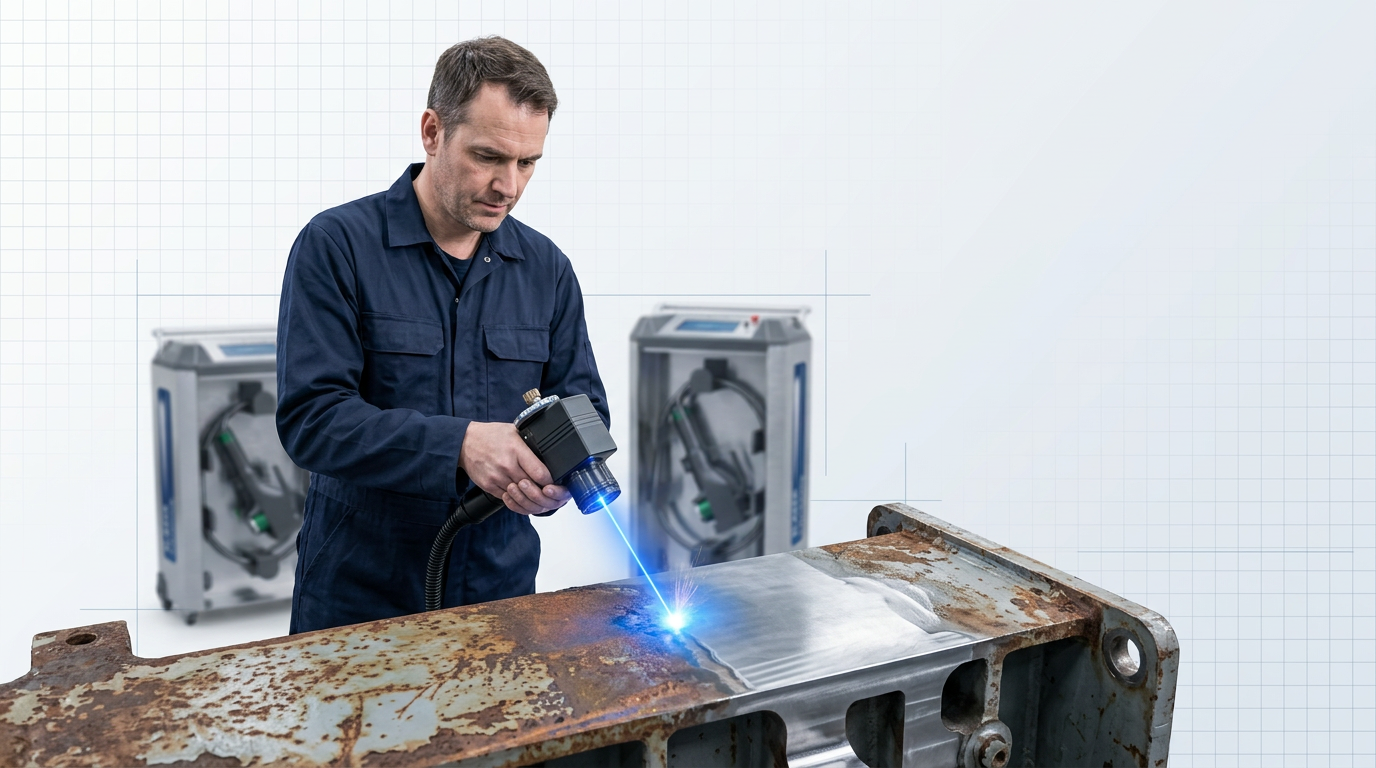
One Operator. Real Rust Removal. No Consumables.
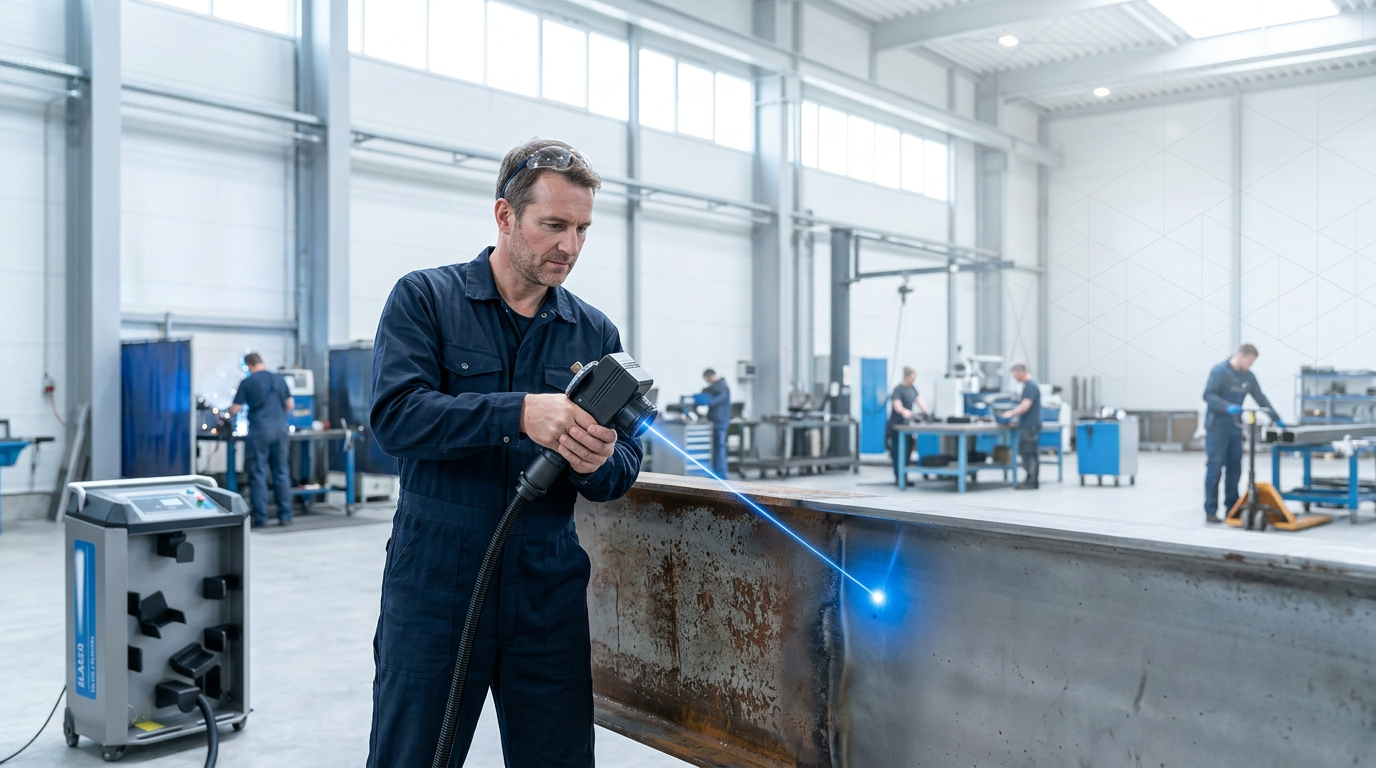
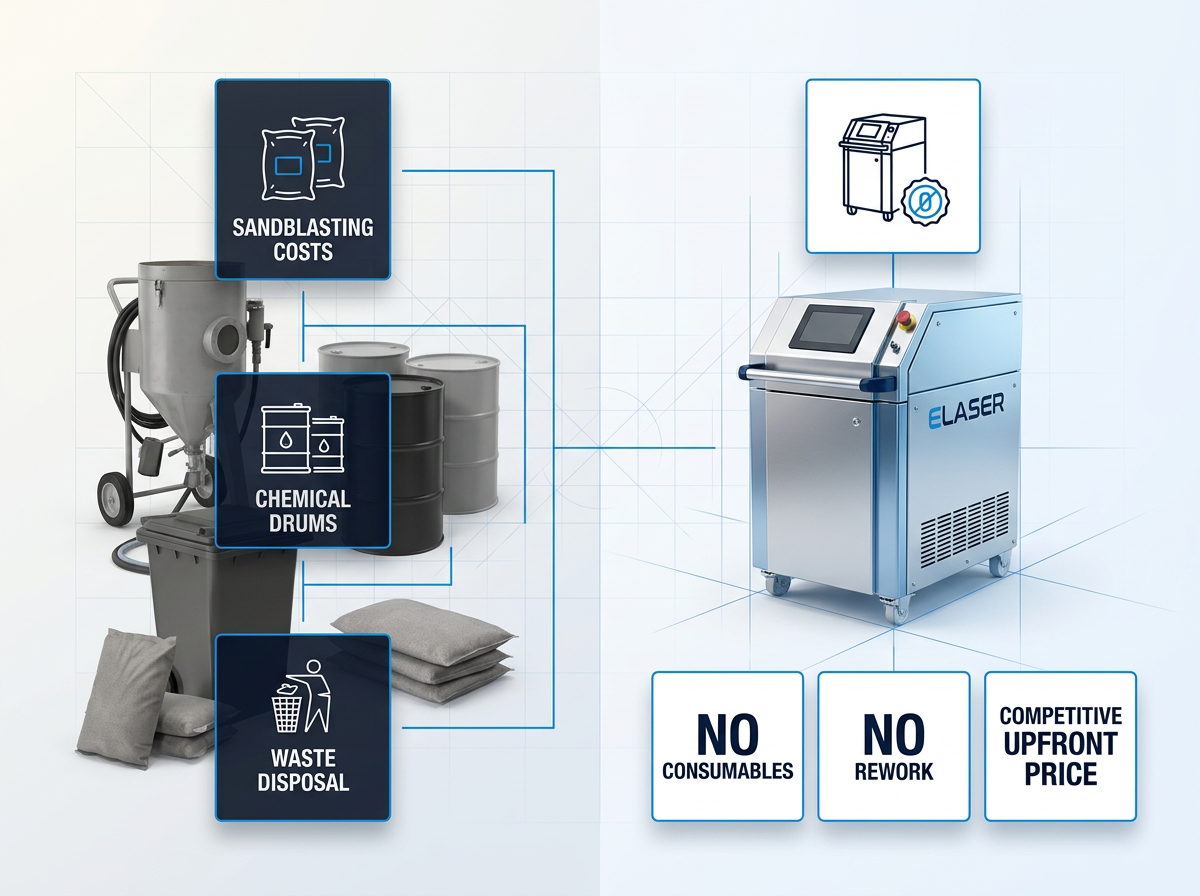
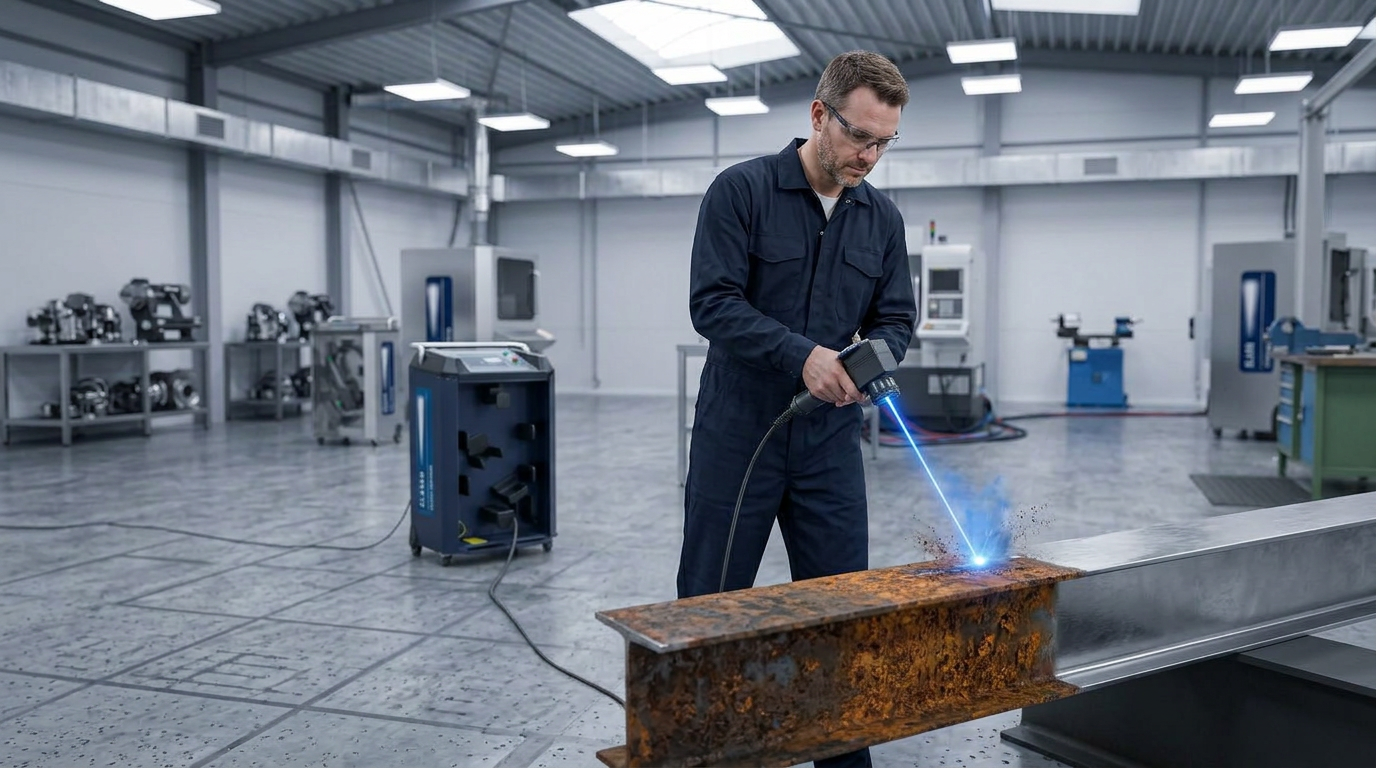
The image shows the ELASER doing exactly what it is built for: a single operator removing rust from steel in an open workshop, with no enclosure, no abrasives, and no support crew. The handheld scanner weighs under 3 kg and reaches up to 50 m from the wheeled cabinet unit, so the operator moves freely around the workpiece rather than the other way around. For open-environment operation without area evacuation, the ELASER-RHZ variant extends this same capability into shared and public-facing settings.
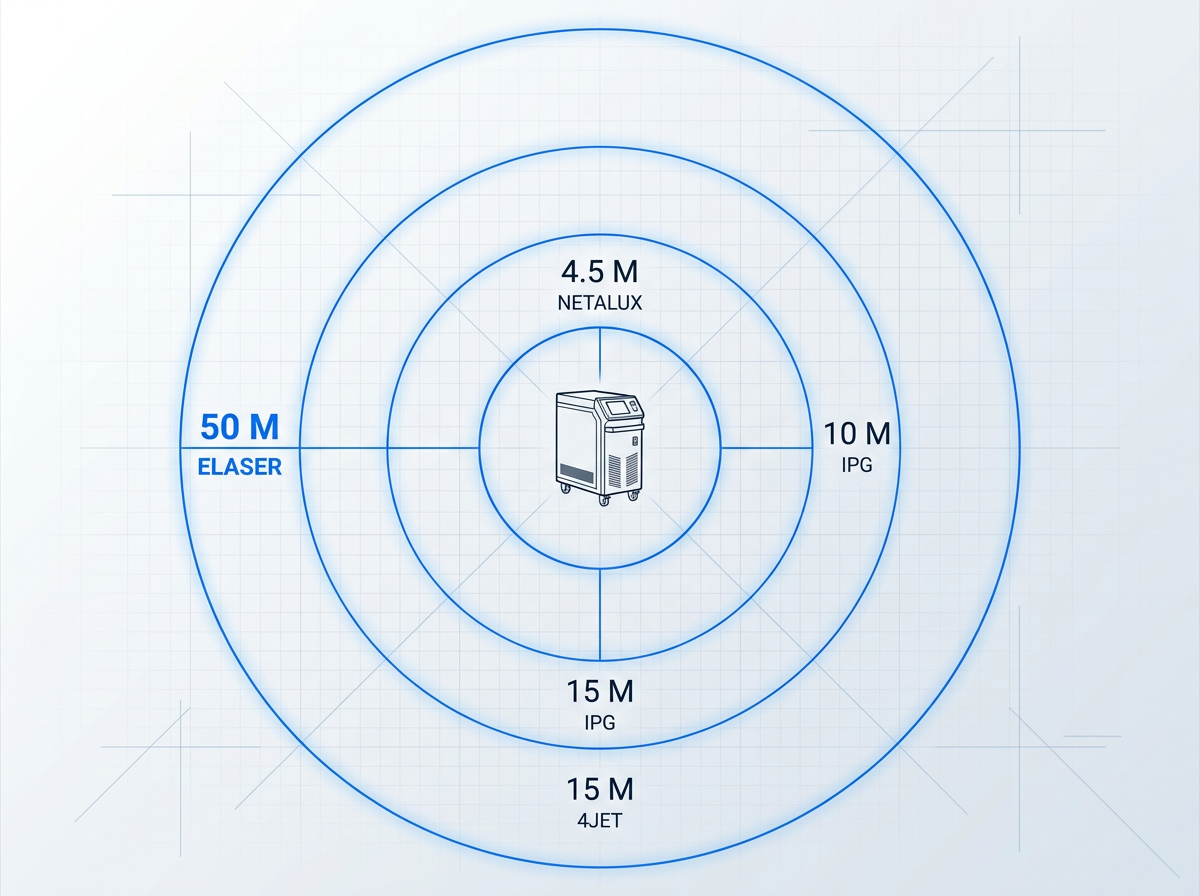
50 m vs. 15 m vs. 4.5 m
The ELASER's delivery cable extends to 50 m — giving one operator a working radius that competitors in the 100W class cannot match. The 4JET JETLASER ships with a 15 m standard cable; the IPG LightWELD reaches up to 10 m; the Netalux Needle approximately 4.5 m.
On large structures, vehicle bodies, or infrastructure sites, that reach difference is the difference between repositioning the unit repeatedly and working freely from a single position.
No Competitor Offers This
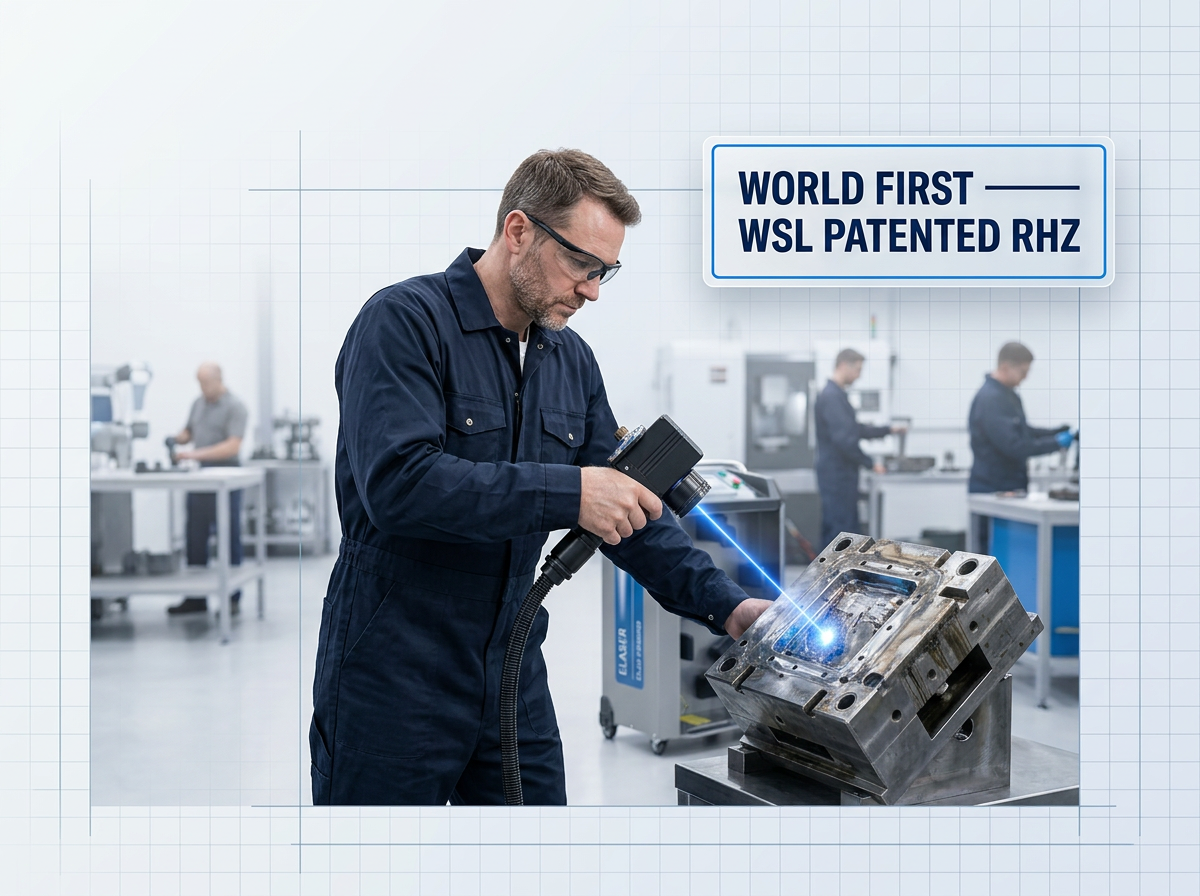
The ELASER-RHZ is the only laser cleaning machine in the world with a patented reduced-hazard-zone capability. Every other 100W portable laser cleaner on the market — cleanLASER, P-Laser, 4JET, IPG, Narran, Netalux, Rocklin and others — operates with a conventional laser hazard zone requiring the area to be sealed and evacuated.
The ELASER-RHZ removes that constraint, enabling cleaning in open workshops, mixed-use facilities, and public-facing settings where conventional laser cleaning simply cannot operate.
Plug In and Work
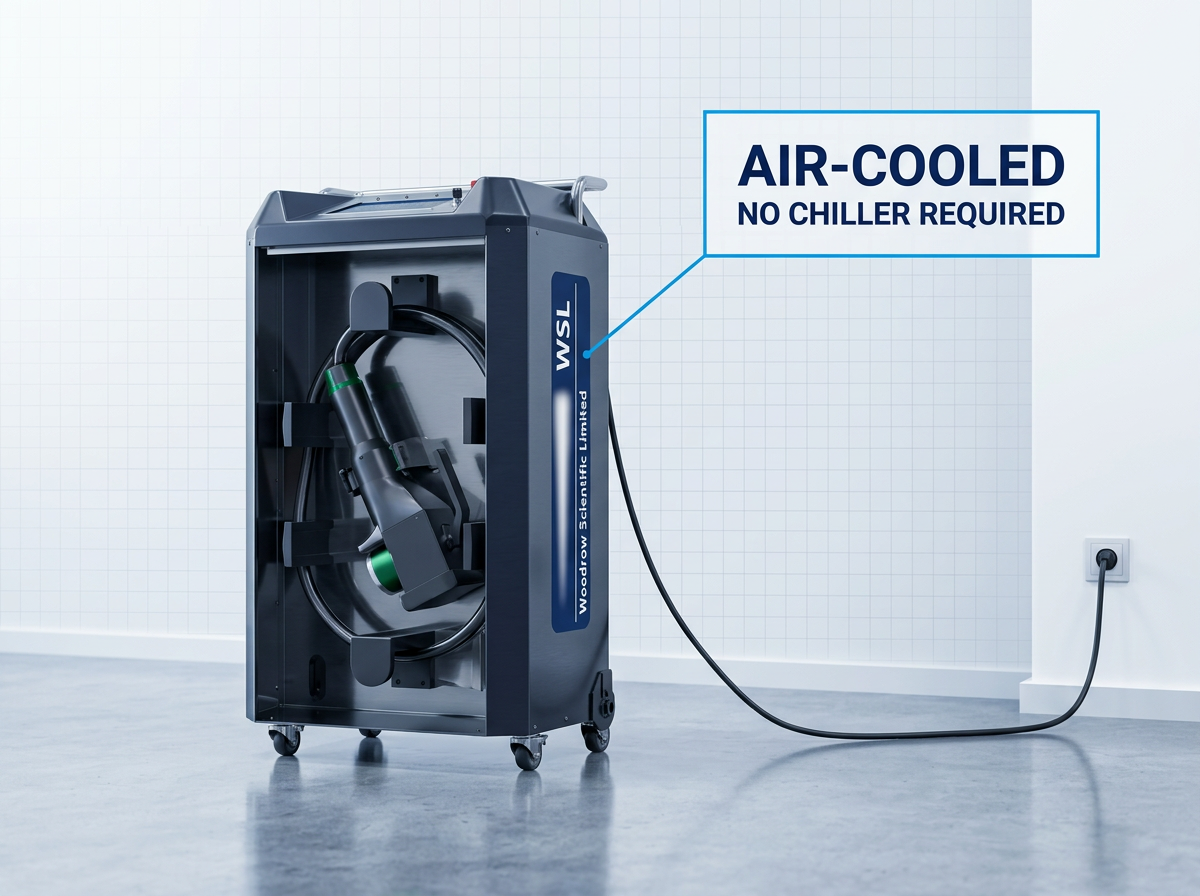
The ELASER is air-cooled — no water connections, no chiller unit to transport, no coolant circuit to maintain. It arrives on site, connects to a standard single-phase supply, and is ready to work.
Fewer components means simpler setup, lower maintenance overhead, and nothing to go wrong between the machine and the job. For site-based and mobile operators, that simplicity has real operational value.
Built in Britain by WSL
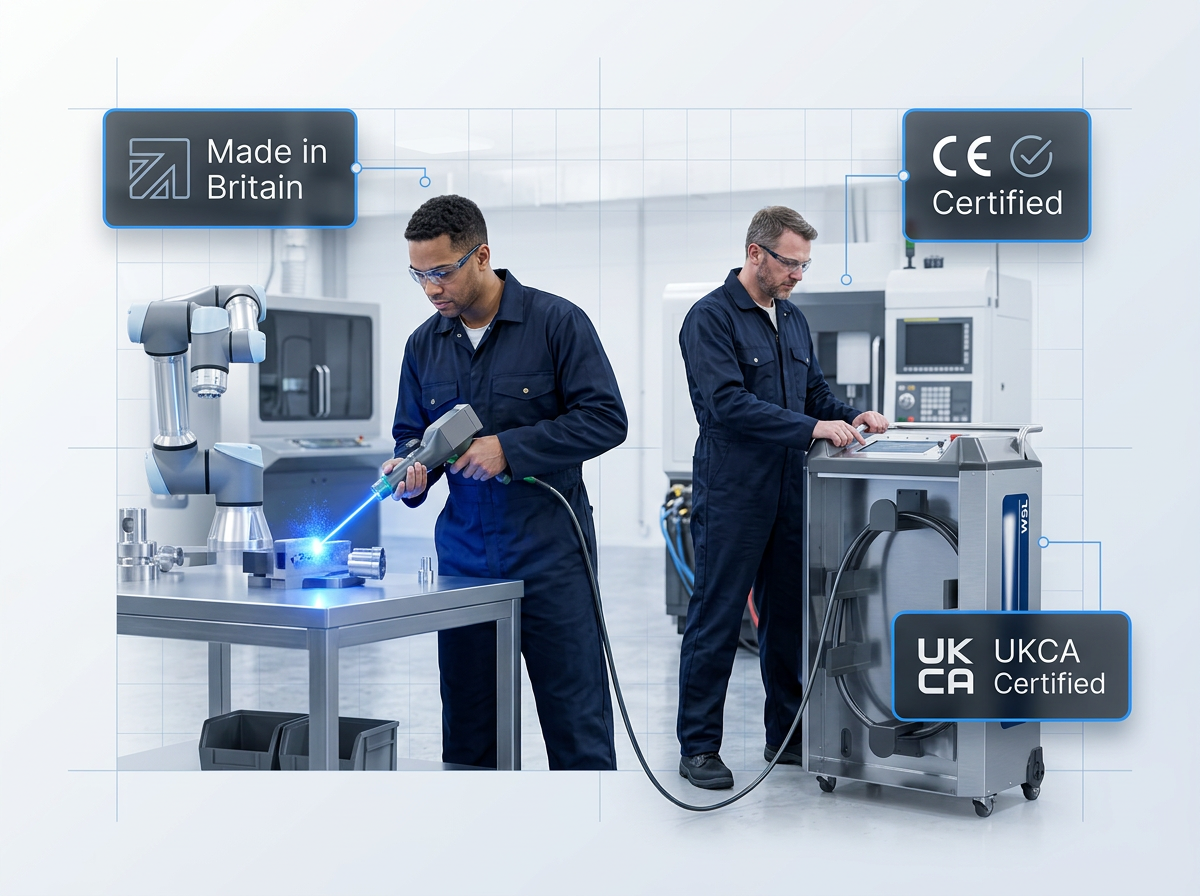
WSL is the only UK-based laser cleaning manufacturer — designing, building, and supporting every ELASER in-house since 2012. A significant share of the laser cleaning market consists of resellers rebadging imported hardware, which limits engineering support and the ability to improve the product.
The ELASER is CE and UKCA certified. UKCA is the post-Brexit conformity mark required for the GB market and is not carried by all competitors. Competitively priced, with full in-house support behind it.
Light Scanner, Long Reach
The ELASER handheld scanner weighs under 3 kg, fed by a cable from a wheeled cabinet the operator leaves in place. The Netalux Needle handset is approximately 2.3 kg; the Rocklin MobiLase handpiece is around 0.64 kg — but its carry unit weighs approximately 60 lbs.
Handset weight alone is not the full portability picture. ELASER's architecture — lightweight scanner plus up to 50 m of reach from a stationary wheeled unit — is a fundamentally different model to a suitcase-carry system.
Frequently Asked Questions
Common questions about the ELASER and laser cleaning machines answered. If your question isn't covered here, contact WSL directly.
A 100W laser is capable of removing rust, oxides, mill scale, paint and light coatings from metal surfaces at practical industrial speeds. It handles the majority of surface preparation and cleaning tasks across automotive, aerospace and general fabrication — and it outperforms abrasive or chemical methods on substrate preservation. The ELASER takes this further: its fibre laser is tunable from 0–100% power and scales up to 300W, so a single machine spans light oxide removal on precision components through to stripping thick coatings on heavy steel. You are not buying a fixed 100W output — you are buying a machine that covers the full cleaning spectrum within one system.
Laser cleaning machines are a capital investment, and the right metric is total cost of ownership — not the upfront price alone. Running costs are genuinely low: no abrasives, no chemicals, no consumables to replenish, and minimal substrate damage means less rework. Those savings compound over the machine's working life. The ELASER is the European cost leader among comparable industrial laser cleaning machines — competitively priced for a machine of this specification and British provenance. Pricing is configured to your specification; contact WSL for a quote.
Yes — laser ablation is an established industrial process with a long track record across automotive, aerospace, heritage restoration, mould cleaning and more. The laser beam vaporises the contaminant at the surface; because the beam stops at the base material, the substrate is left intact. That precision is what makes it reliable across such a wide range of materials and contaminants. The ELASER is CE and UKCA certified and built by WSL, who have been designing and supporting laser cleaning systems since 2012 with 200+ years of combined engineering experience across the team. If you are facing internal scepticism about the technology, that track record is the answer.
The key difference is where you can operate. The standard ELASER is a Class IV laser cleaning system — the conventional configuration requiring a controlled laser zone during operation. The ELASER-RHZ uses WSL's patented reduced-hazard-zone technology to confine the laser hazard to a small area around the work itself, enabling cleaning in open workshops, mixed-use facilities and public-facing settings without sealing off the area or evacuating personnel. If your environment is shared or open-plan, the RHZ removes the single biggest operational barrier to laser cleaning in that setting. No other laser cleaning machine offers this capability. Both variants are available from WSL, and full operator training is provided as standard for either system.
The ELASER is designed for low-overhead operation. It is air-cooled — no chiller unit, no coolant circuit, nothing to top up or replace. There are no abrasives, chemicals or consumable media to replenish. The main maintenance item is the lens-protection window, which is included and replaceable; it will need changing over time, but it is a minor, low-cost item compared to the ongoing consumable spend of abrasive or chemical cleaning. For any service needs, WSL provides in-house engineering support as the manufacturer — not a relay to an overseas supplier, but direct access to the team that built the machine.
The ELASER has a broad verified application base: automotive, aerospace, injection moulding and tooling, tyre and rubber, industrial maintenance, heritage and restoration, and laser cleaning service businesses. If your sector is not on that list, it does not mean the machine is unsuitable — it means the application may not yet be listed. WSL has bespoke engineering and customisation capability and can assess specific requirements directly. The best step is to contact WSL for an application assessment; the in-house engineering team can give you a straight answer on whether the ELASER is the right fit for your cleaning task.